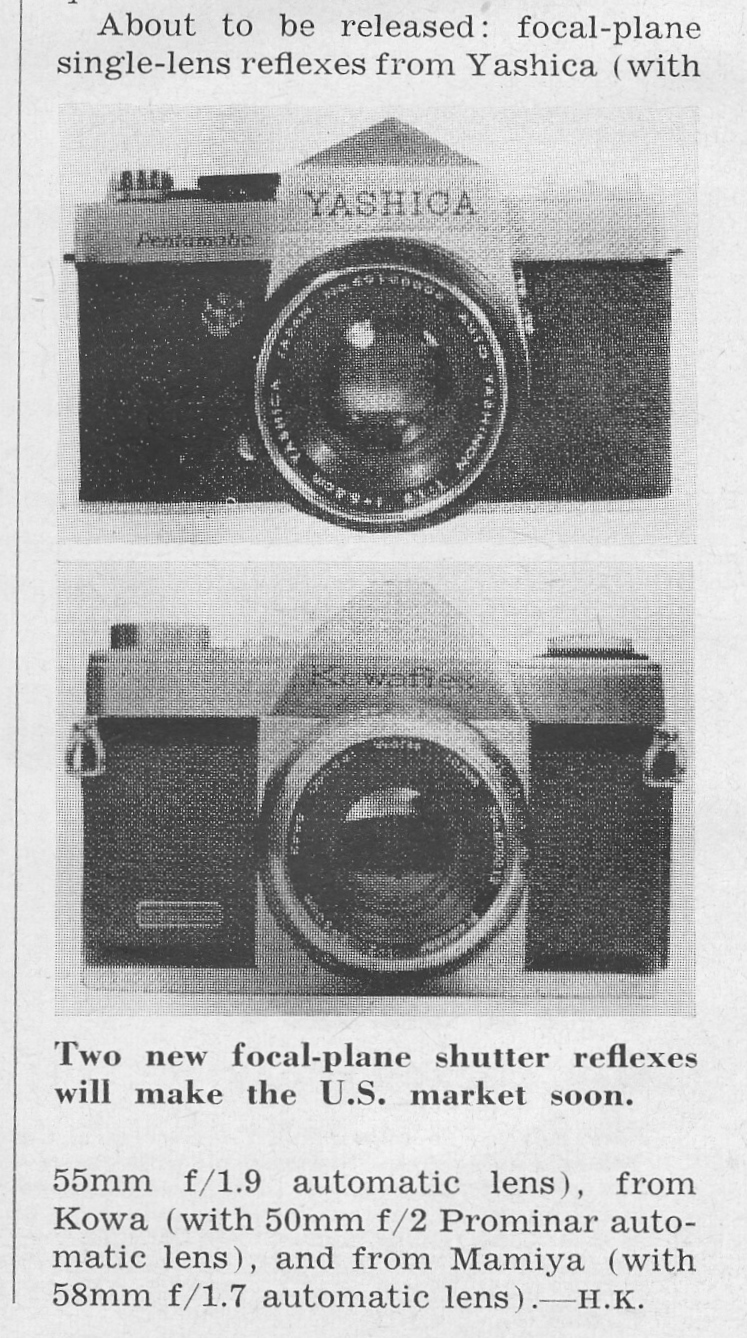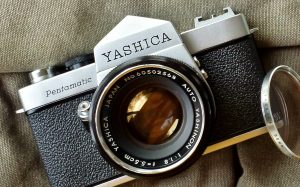
Hallmarks on early Japanese leather camera cases

1953
After 6 decades of use, this leather case for the Yashima Flex TLR camera stands strong. It is relatively rare to see a Yashima-branded item outside of Japan; this represents the first time Yashima used its name on a case.
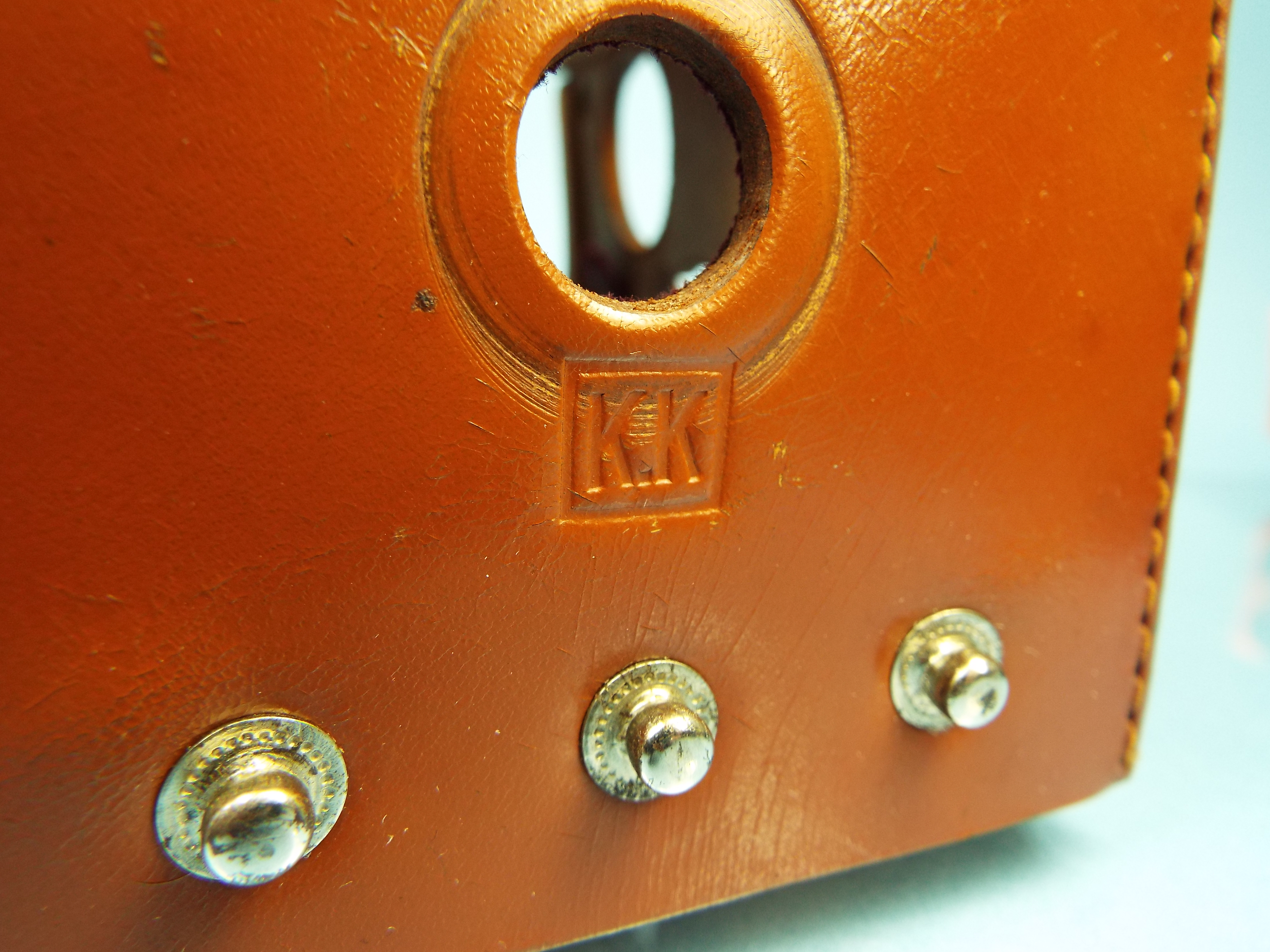
I don’t believe Yashima-Yashica made their own leather cases. As a start-up company back in the early 1950s, Yashima and other camera manufacturers likely contracted outside companies to make their leather cases and branded goods so that they could focus on their core activities. Many of these early cases have distinct markings on the bottom, indicating the hallmark of the company that produced it.

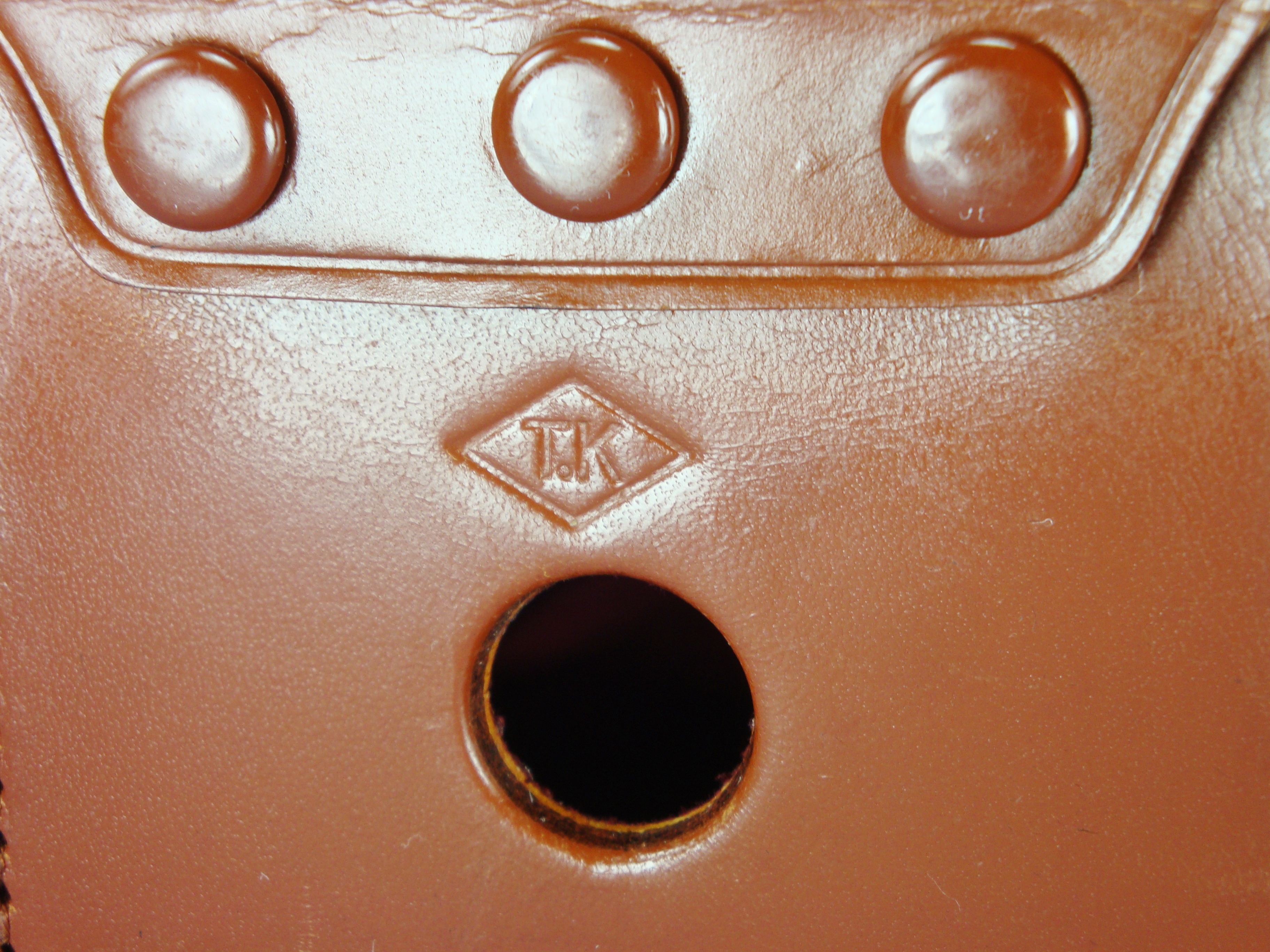
From 1953, a beautiful example of a Yashima leather case.
An early example of a hallmark on the bottom of the case.
Another hallmark.

I have a few additional examples in my collection – time to dig them out and photograph them. Have you seen a Japanese leather case with what appears to be a hallmark? Please, share if you do. Thanks for stopping by, Chris

Follow me on Instagram at @ccphotographyai

Comments are always welcomed as I’ve learned quite a bit from reader feedback. As always, thanks for stopping by, and while you’re at it, feel free to visit my camera shop at http://www.ccstudio2380.com (CC Design Studios hosted by Etsy). – Chris Whelan

Please respect that all content, including photos and text, is this blog’s property and its owner, Yashica Pentamatic Fanatic, Yashica Sailor Boy, Yashica Chris, Chasing Classic Cameras with Chris.

Copyright © 2015-2024 Chasing Classic Cameras with Chris (Yashica Pentamatic Fanatic), Chris Whelan
All rights reserved.

Yashica 35 M

M for mysterious? Maybe not mysterious but missing. It’s not a camera that gets a lot of attention as it was dwarfed by the more popular Minister line. It was one of the first Yashica rangefinder cameras made with a built-in light meter (exposure meter) released at about the same time as the first Minister with the f/2.8 lens.

The exposure meter is located just behind the light gathering window (upper left). That’s what Yashica calls it in the instruction booklet. The meter is a selenium cell that is powered by light so no worries about needing a battery. BTW, the serial number on the booklet camera indicates it was made in January 1960. It’s been reported that the camera was released in June 1960. That’s a big gap even by Yashica’s standards.
The serial number on mine is M2101662 which decodes to October 1962.
The lens is what differentiates this model from the earlier Minister model. The Model M is fitted with a faster Yashinon f/1.9 4.5cm lens and a Copal SVL shutter with speeds from Bulb to 1/500.
In this image, the exposure meter indicates an ‘LVS’ setting of 14 at ASA 200. To set the proper exposure you’d simply turn the outer ring on the lens to match the LVS number and the camera would be properly set (see below).
LVS set to 12 would set the shutter to fire at 1/125 and the aperture at f/5.6.

It’s a fun camera to use as it’s about as old school as you can get. The lens is clean and clear, and the light meter works. It’s available in my camera shop CC Design Studios at http://www.ccstudio2380.com which is hosted by Etsy. Thanks for stopping by, Chris

Follow me on Instagram at @ccphotographyai

Comments are always welcomed as I’ve learned quite a bit from reader feedback. As always, thanks for stopping by, and while you’re at it, feel free to visit my camera shop at http://www.ccstudio2380.com (CC Design Studios hosted by Etsy). – Chris Whelan

Please respect that all content, including photos and text, is this blog’s property and its owner, Yashica Pentamatic Fanatic, Yashica Sailor Boy, Yashica Chris, Chasing Classic Cameras with Chris.

Copyright © 2015-2023 Chasing Classic Cameras with Chris (Yashica Pentamatic Fanatic), Chris Whelan
All rights reserved.

Yashica’s Early 35mm SLRs

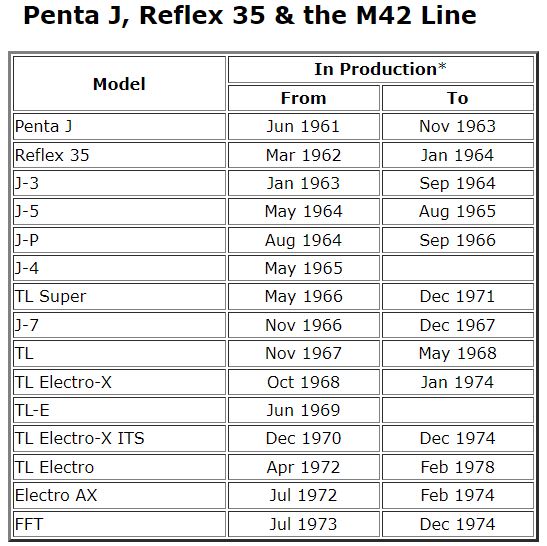
My good friend Paul Sokk from Australia (www.yashicatlr.com) has compiled a great database of almost all of Yashica’s cameras and by decoding serial numbers we’ve been able to come up with a list of manufacturing dates. So, by using these serial numbers here is a general list of when the following models were first and last made.

Penta J      Aug 1961 to Aug 1965

Reflex 35   Mar 1962 to Jan 1964

J-3            Nov 1962 to Sep 1964

J-5            Mar 1964 to Jun 1965

J-P            Aug 1964 to Sep 1966

J-4            Mar 1965 to Jun 1965

J-7            Nov 1966 to Dec 1967

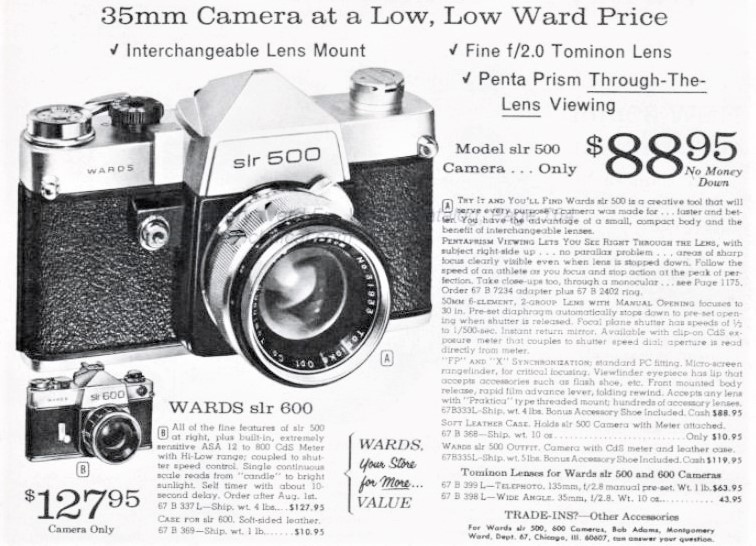
Yashica’s little oddball model. I believe it was only manufactured to be sold by Montgomery Ward as the Wards SLR 500. For Wards, Yashica fitted it with a Tominon C 5cm f/2 lens vice the lens shown here. A true budget model for around $160 US.

The Pnnta J was the first modern style SLR from Yashica with the universal M42 screw mount for a wide variety of lenses. It was the first model after the Pentamatic S. The J-3 was the first model that had a coupled CdS light meter built into the camera’s left shoulder.

Yashica cousins.
From the 1964 Wards catalog. It’s easy to see that the Wards slr 500 is mostly made from the Yashica J-P with the film advance lever used from the Penta J.

One final note. The serial numbers tell when the camera was produced, not when a camera was released for sale to the public. I believe this list represents the most accurate timeline of these early models from Yashica. Many thanks to Paul for his efforts to compile the most accurate data to date. There is no one better.

Follow me on Instagram at @ccphotographyai

Comments are always welcomed as I’ve learned quite a bit from reader feedback. As always, thanks for stopping by, and while you’re at it, feel free to visit my camera shop at http://www.ccstudio2380.com (CC Design Studios hosted by Etsy). – Chris Whelan

Please respect that all content, including photos and text, is this blog’s property and its owner, Yashica Pentamatic Fanatic, Yashica Sailor Boy, Yashica Chris, Chasing Classic Cameras with Chris.

Copyright © 2015-2023 Chasing Classic Cameras with Chris (Yashica Pentamatic Fanatic), Chris Whelan
All rights reserved.

What’s up with that ‘electron’ thingy?

My good friend Paul Sokk (www.yashicatlr.com) asked me this just yesterday and I vaguely remembered writing something about it after finding a definition from Yashica.

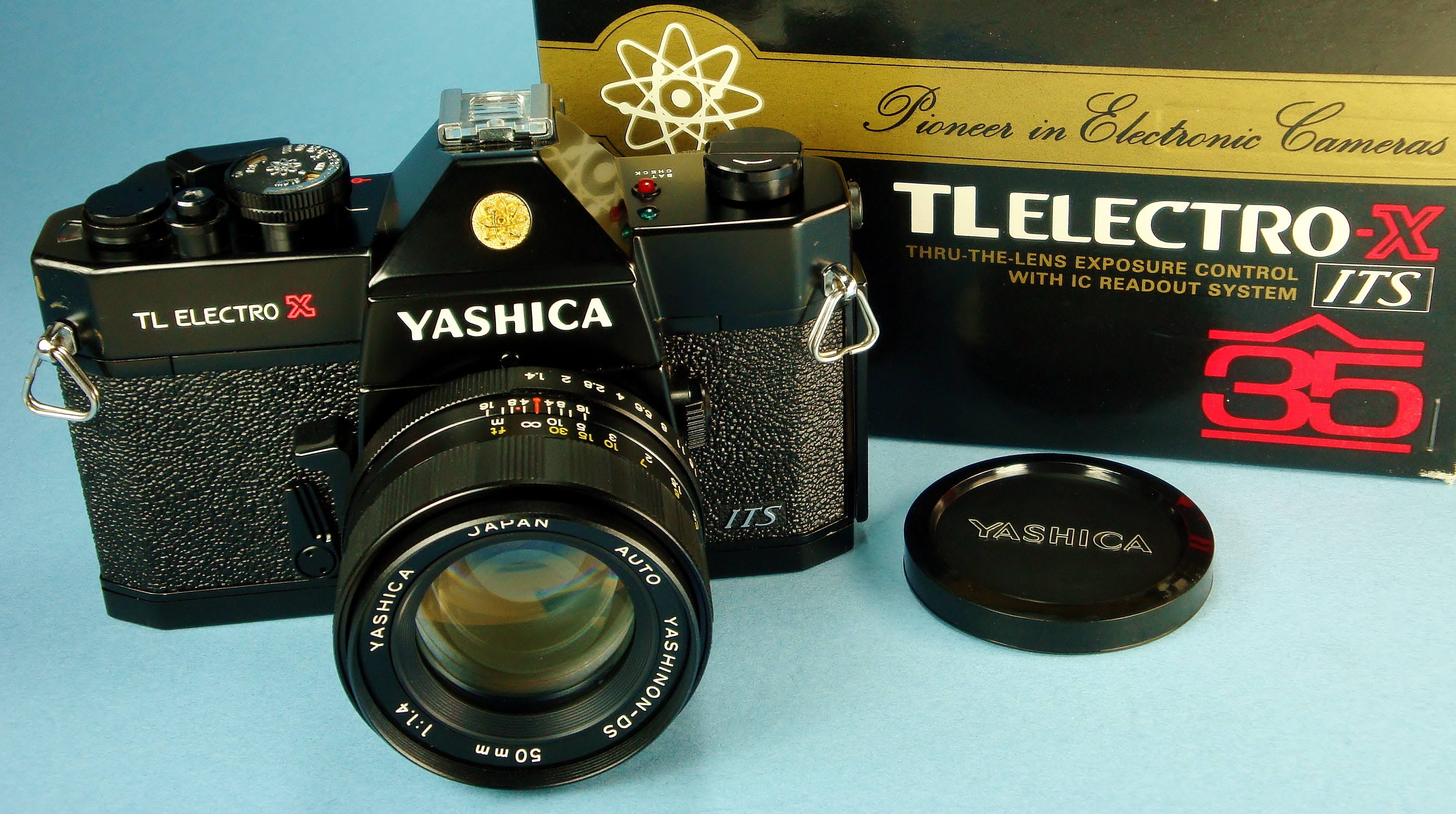
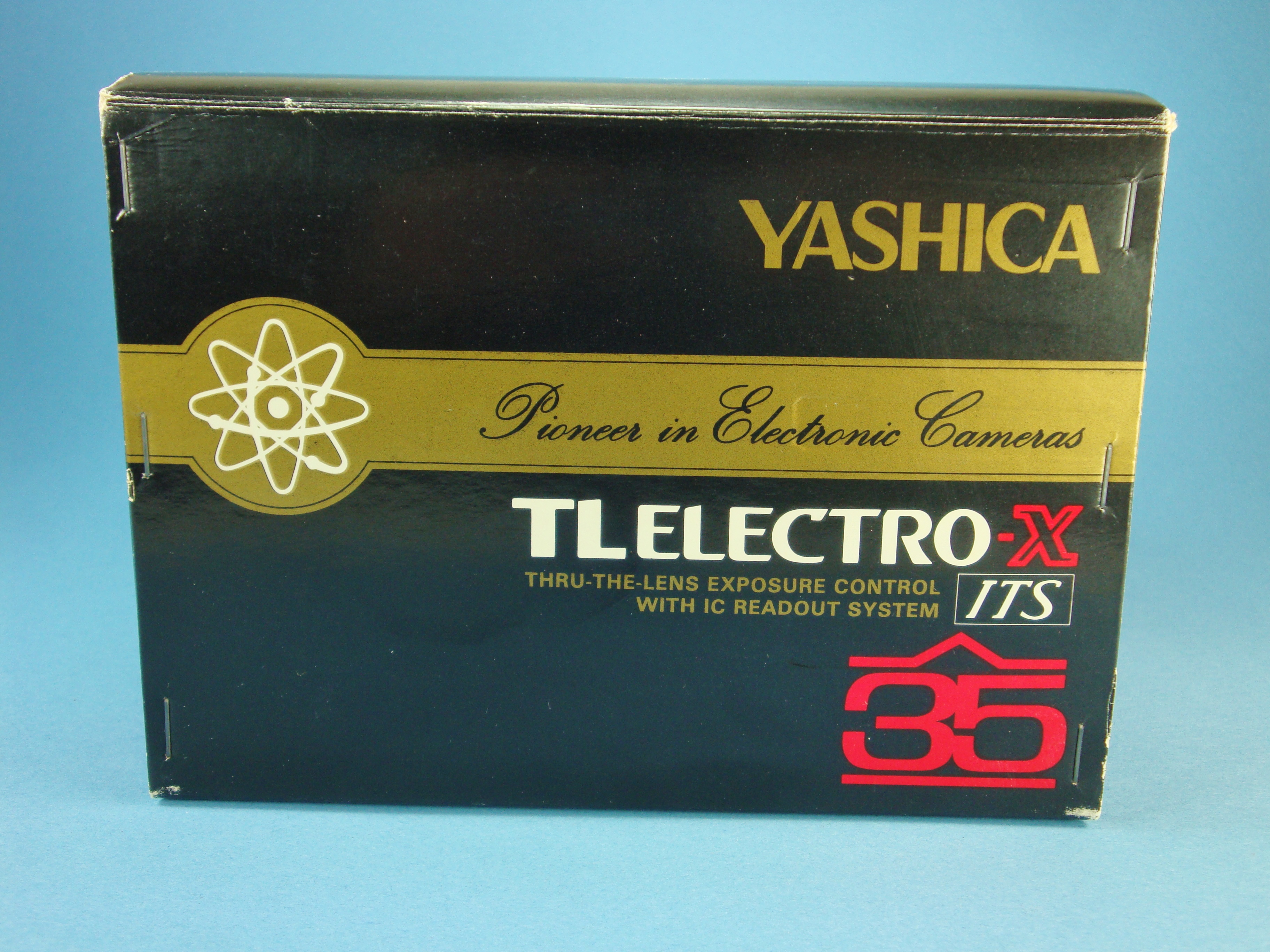
Probably Yashica’s most famous ‘electron’ camera the TL Electro-X ITS.
Yashica wasn’t alone in its use of the symbol. According to Paul it likely started with the Seiko ES shutter on a Minolta Electro Shot 35 camera and since then it was used for the most part to identify cameras with electronically controlled or timed shutters.
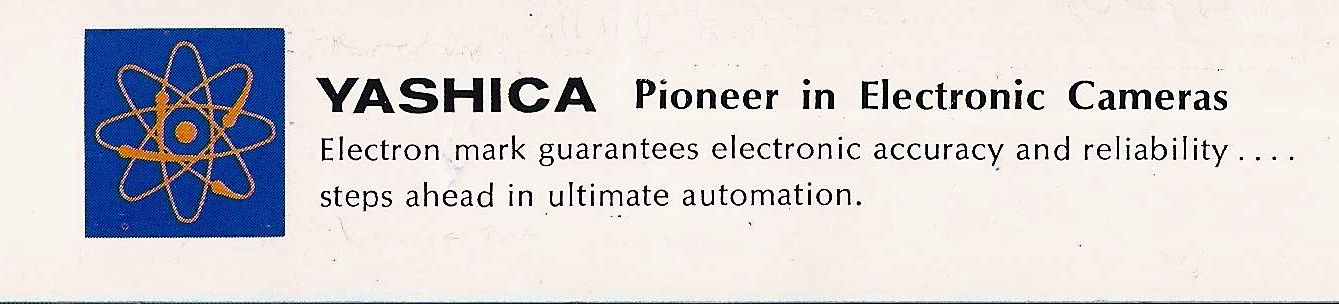
Here’s a snip of a brochure in my collection (mid-1970s) that presents Yashica’s definition of the symbol.
Looks like something Doc would have liked from Back to the Future.

BTW, I’m pretty sure but with no proof from Yashica that ‘ITS’ meant ‘Integrated Technology System’ or something along those lines. The gang at Yashica never bothered to define it officially in a brochure or user manual. I like ‘It’s The Same’ as Paul reminded me of in an email recently.

Thanks for stopping by! – Chris

Comments are always welcomed as I’ve learned quite a bit from reader feedback. As always, thanks for stopping by and, while you’re at it, feel free to visit my camera shop at http://www.ccstudio2380.com (CC Design Studios hosted by Etsy). – Chris Whelan

Please respect that all content, including photos and text, is this blog’s property and its owner, Yashica Pentamatic Fanatic, Yashica Sailor Boy, Yashica Chris, Chasing Classic Cameras with Chris.

Copyright © 2015-2022 Chasing Classic Cameras with Chris (Yashica Pentamatic Fanatic), Chris Whelan
All rights reserved.

Buy Me A Coffee

Yashica’s J-Series of 35mm SLR Cameras from the 1960s

Regular readers know that the main focus of my collection has been centered around cameras made by Yashica. I have collected quite a few examples going back to their 1953 origins. This particular series caught my fancy a few years back when I was lucky enough to find a pristine Yashica J-3 in a pro-black finish with a matching lens. When it comes to chasing classic cameras, the J-3 in black and in pristine condition is no easy task. Here are a few images of what I’ve put together so far.

Chasing these guys has been fun, to say the least. It’s not that any one of these is rare in the true sense of the word but finding pristine examples has been the tough part.
As best as I can tell, the J-7 wasn’t the last one produced in the series as the J-4 came out just a bit later.
The black J-3 was never mentioned in any brochure which was odd considering it was Yashica’s first all-black SLR and was produced in limited numbers.
Since the cameras from Yashica were never meant to be of interest to collectors very few survive to this day in mint and better condition. The little circle on the camera’s left side front is the CdS exposure meter. These cameras did not feature TTL (thru-the-lens metering).

If you decide to collect this series you’ll find a very nice assortment of lenses to choose from as Yashica produced thousands over the years. The body accepts m42 screw-in lenses which for a time was one of the most widespread lenses made.

Here is what a complete in-the-box set looks like for the silver J-3 from around 1962.

As always thanks for stopping by – I hope I’ve shed sufficient light on this often overlooked series from Yashica. Maybe a few of you would enjoy the chase in pursuit of these mid-1960s gems. – Chris

Comments are always welcomed as I’ve learned quite a bit from reader feedback. As always, thanks for stopping by and, while you’re at it, feel free to visit my camera shop at http://www.ccstudio2380.com (CC Design Studios hosted by Etsy). – Chris Whelan

Please respect that all content, including photos and text, is this blog’s property and its owner, Yashica Pentamatic Fanatic, Yashica Sailor Boy, Yashica Chris, Chasing Classic Cameras with Chris.

Copyright © 2015-2022 Chasing Classic Cameras with Chris (Yashica Pentamatic Fanatic), Chris Whelan
All rights reserved.
Buy Me A Coffee

Yashica Camera vs. Rodan!

Back in 1956, the classic Japanese sci-fi monster movie Rodan was released in color to wide acclaim. In the Japanese original Rodan was Radon (Original title: Sora no daikaijû Radon).

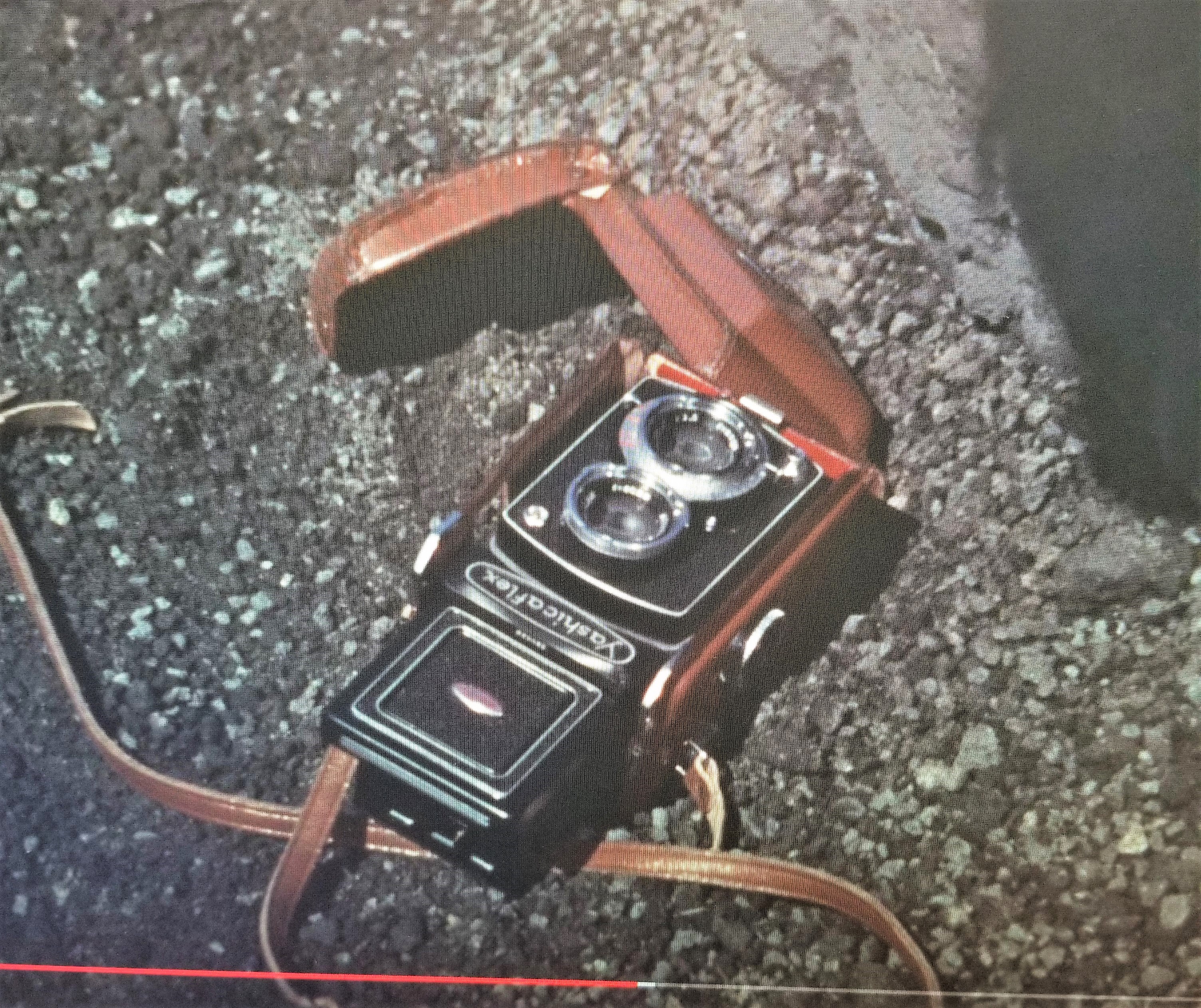
Something that I’ve always liked doing is whenever a camera is used in an older movie I like to see if I can tell which model or at least the brand of the camera that’s depicted. Obviously cameras sometimes just flash across the screen as they are usually just props used to enhance the story so it can be very difficult to identify the camera beyond the basics (TLR, SLR, rangefinder). In this movie at about the 41:15 mark, the young newlywed is about to take his bride’s picture while touring an active volcano. He’s clearly using a Yashima YashicaFlex Model C twin-lens reflex (TLR) camera when he sees Rodan fly towards them. In horror, he runs away while throwing the camera to the ground.

Screen capture of the YashicaFlex after hitting the ground.

The YashicaFlex Model C was produced between September 1955 and June 1957 making it a good choice for this then high-budget flick (it was the first monster movie from this famous studio to be filmed in color). I wonder if Yashima (Yashica) paid for product placement?

https://www.imdb.com/title/tt0049782/?ref_=ttmi_tt

Another camera I’ve spotted in a movie is the Calypso (later Nikonos) camera Bond gives Domino in the classic Thunderball (1965). The camera apparently takes underwater shots and has a built-in Geiger counter! From my IMDb contribution to “goofs” – “When Q hands Bond the underwater camera and tells him it takes 8 shots by pressing a button, the camera is plainly seen as a black Calypso 35mm camera with has black gaffers tape covering the name across the bottom. Later while onboard the yacht, Domino is seen with the camera as she walks in the passageway while using it as a Geiger counter. The camera falls to the deck when Largo confronts her and the lens is seen popping off. We hear the sounds of the counter and see some type of gadget inside just behind where the lens was. When she bends down and picks it up, Largo takes it from her and the camera is briefly seen with the silver lens re-attached”. Another camera in a movie is the Exakta VX 35mm SLR Jimmy Stewart uses in the Hickcock thriller Rear Window (1954).

Thanks for stopping by! Do you have a favorite movie where a camera plays a part? Let me know in the comments. Thanks.

Comments are always welcomed as I’ve learned quite a bit from reader feedback. As always, thanks for stopping by and while you’re at it, feel free to visit my camera shop at http://www.ccstudio2380.com (CC Design Studios hosted by Etsy). – Chris Whelan

Please respect that all content, including photos and text, is this blog’s property and its owner, Yashica Pentamatic Fanatic, Yashica Sailor Boy, Yashica Chris, Chasing Classic Cameras with Chris.

Copyright © 2015-2021 Chasing Classic Cameras with Chris (Yashica Pentamatic Fanatic), Chris Whelan
All rights reserved.

Buy Me A Coffee

My first post…

First Look!

CHRIS AND CAROL

The exciting first look (in print) of the Pentamatic…

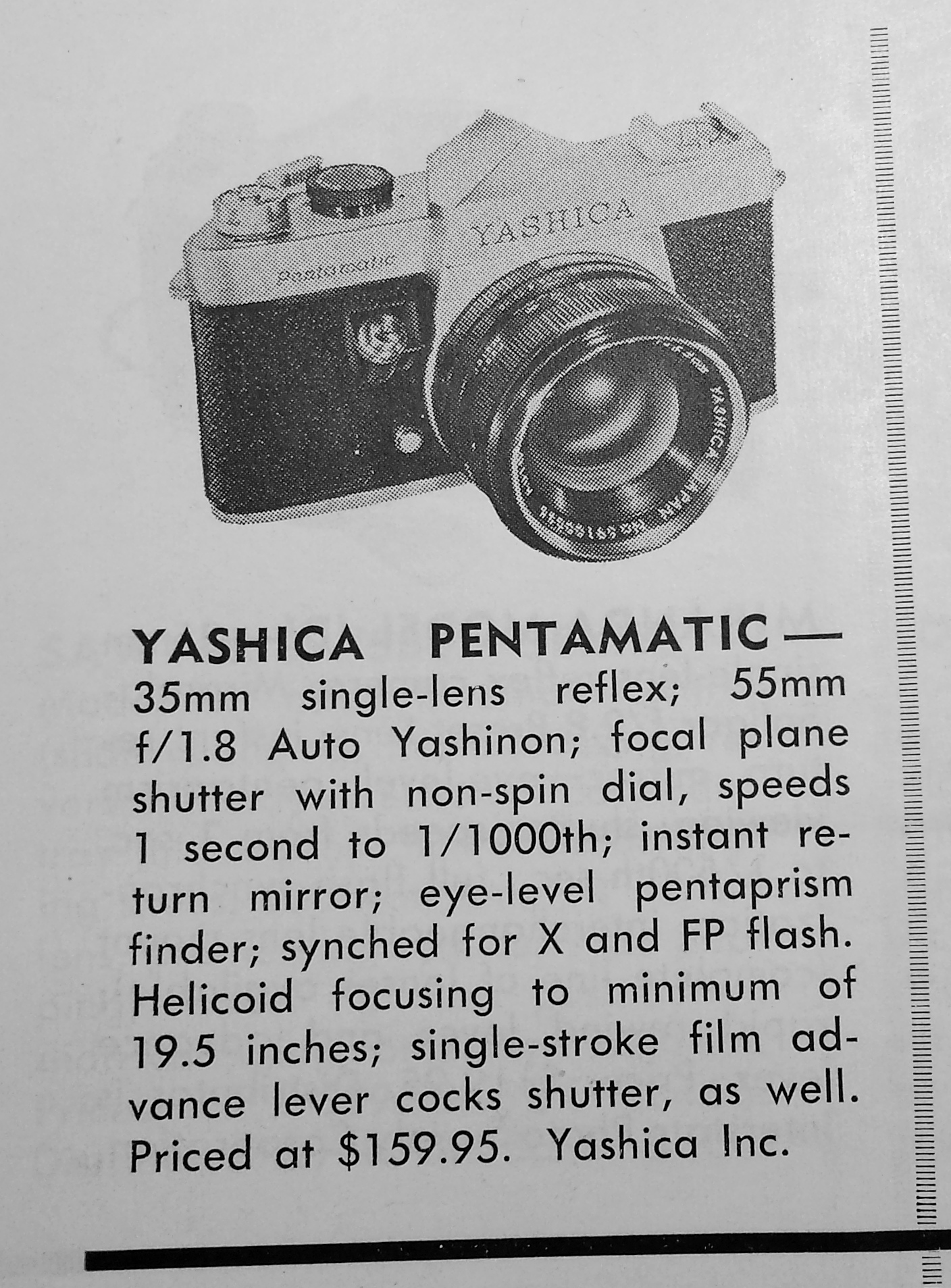
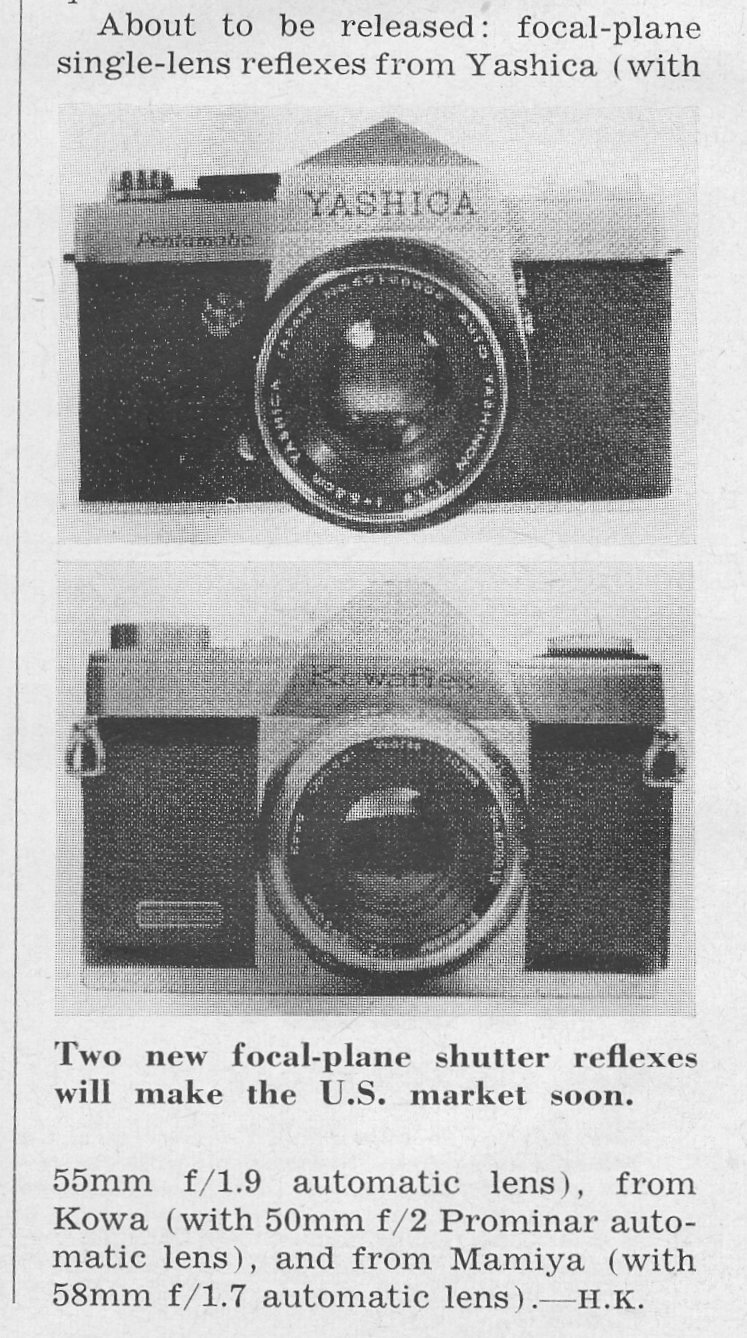
First official appearance of the Pentamatic occurs in the May 1960 issue of Modern Photography magazine. In the June 1960 issues of Modern PhotographyU. S. Camera and Popular Photography, the first full-page ads appeared for the Pentamatic ’35’ reflex camera. The actual release date in the United States has almost always been considered by many to be March of 1960.

As of yet, I haven’t found evidence in print to support the March date. I do know that the Pentamatic was shown at the 36th annual ‘Master Photo DeaIers & Finishers Association’ trade show (MPDFA) held in St. Louis from March 21-25, 1960. I don’t know if the Pentamatic was released in Japan at an earlier date. From the progression of the serial numbers, by March 1960, about 1,500 cameras had been produced since production began in December 1959 at the Yashica Suwa factory. I doubt that there were enough cameras by March to support any widespread release in Japan or in Asia at that time. By June 1960, about 6,000 cameras had been built. There may have been enough to ship to the world markets starting in April and May. At their peak of production (summer 1960), it looks like Yashica was rolling out about 1,200 to 1,400 cameras each month.

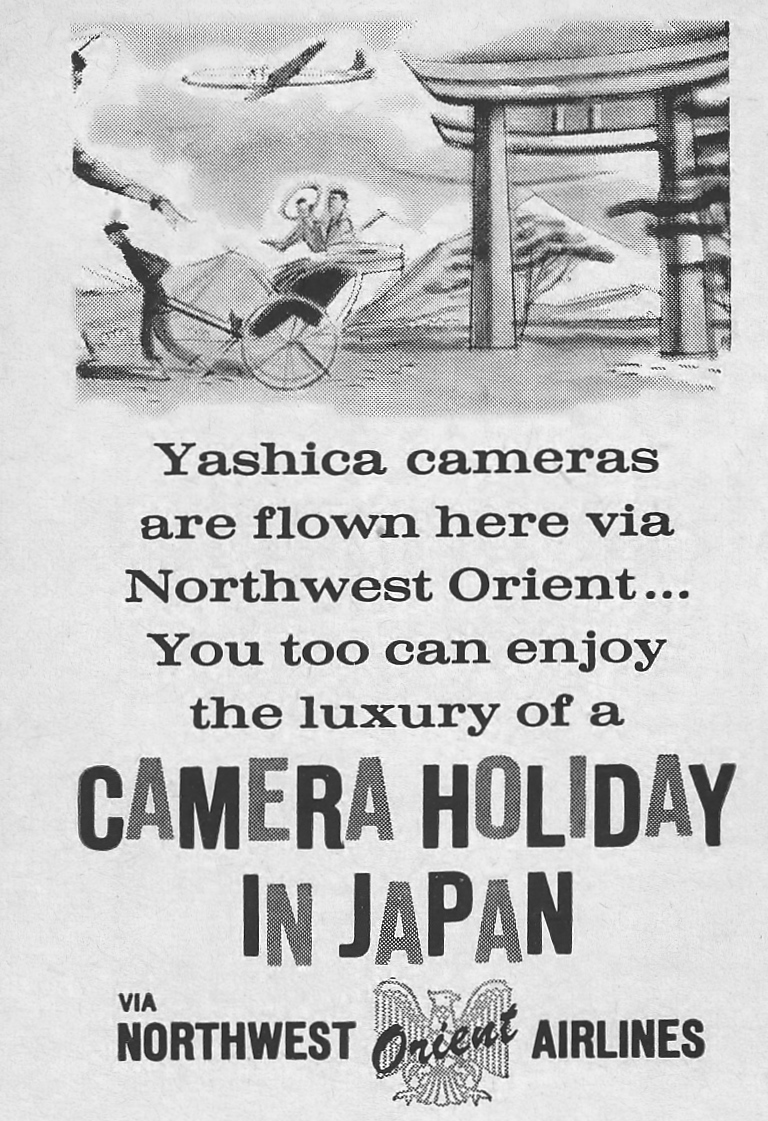
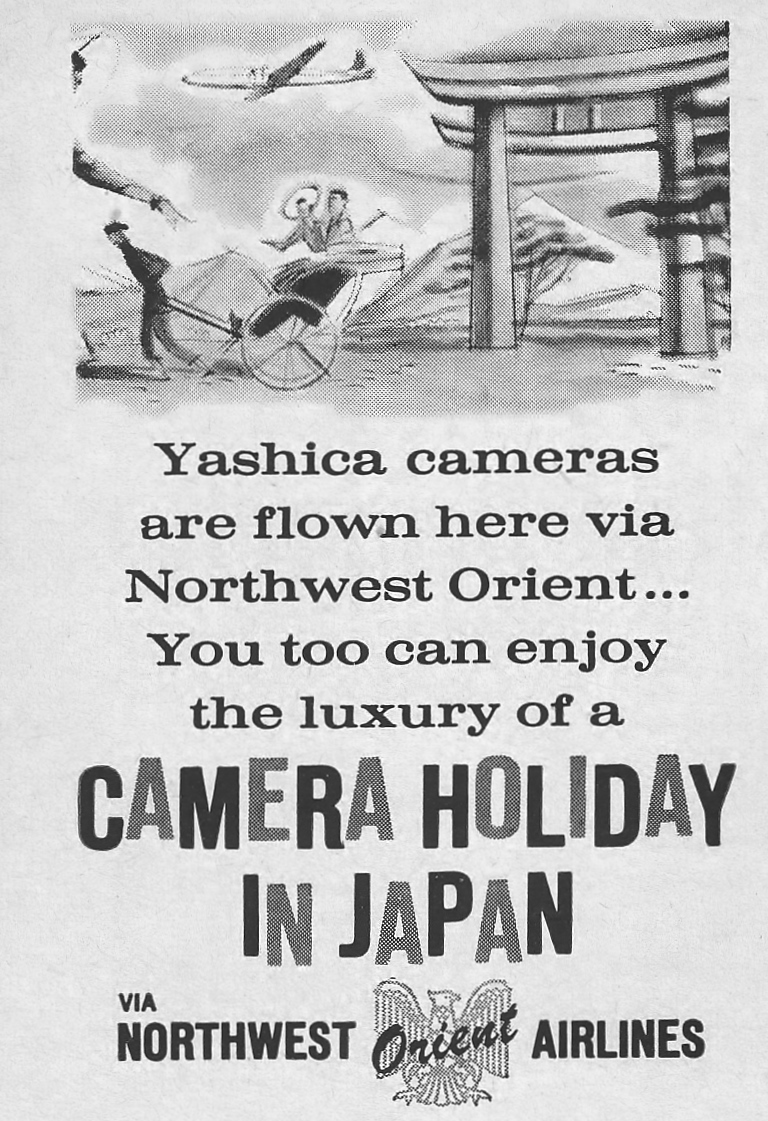
Have a “Camera Holiday” in Japan. May 1960 magazine ad.

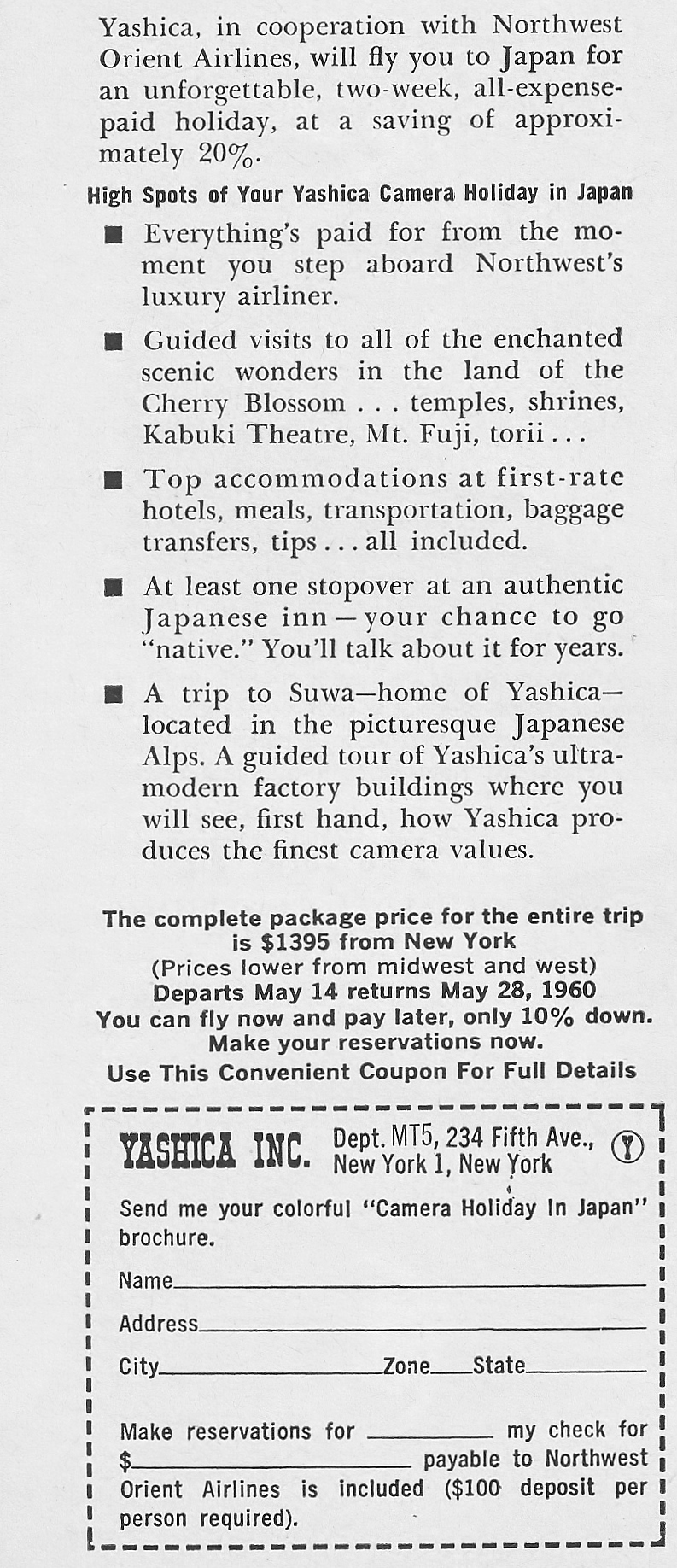
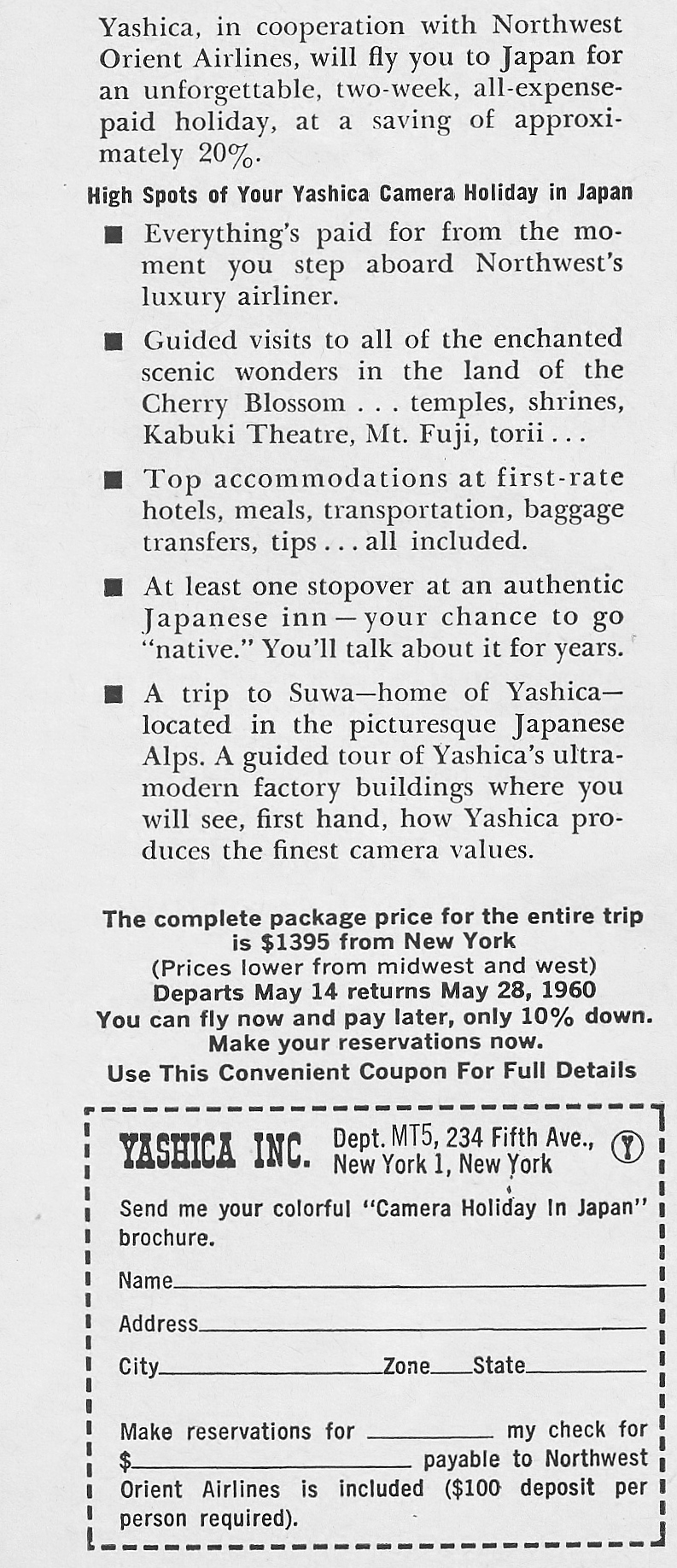
Part two of the “Camera Holiday” in Japan promotion. Very nice mention of Yashica’s factory in Suwa and the wonders of Japan!

Yashica provided this first ever look at their new Pentamatic SLR at the March 1960 MPDFA trade show in St. Louis.

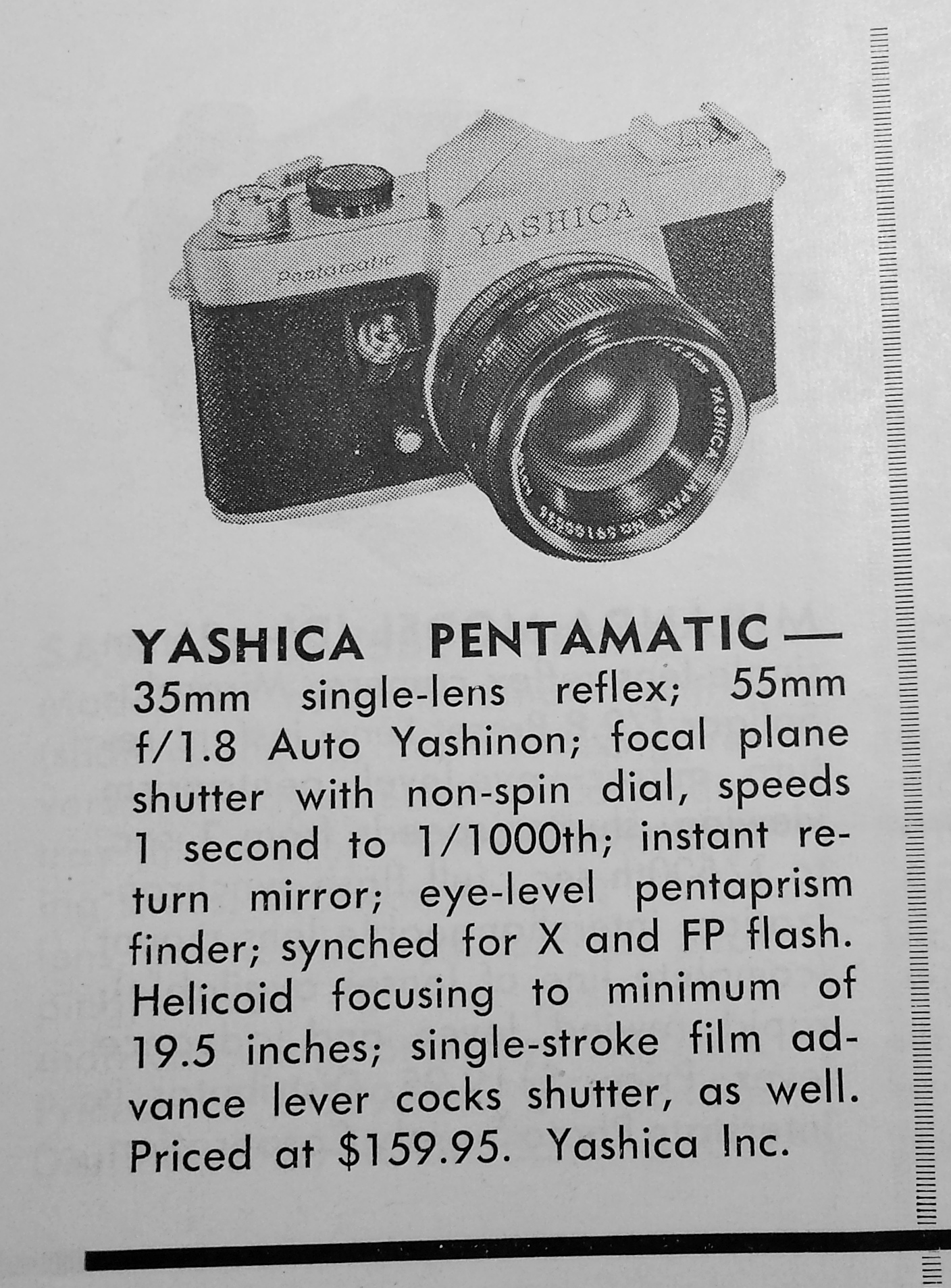
First published look at the new Pentamatic from Yashica. May 1960

Comments are always welcomed as I’ve learned quite a bit from reader feedback. As always, thanks for stopping by and while you’re at it, feel free to visit my camera shop at http://www.ccstudio2380.com (CC Design Studios hosted by Etsy). – Chris Whelan

Please respect that all content, including photos and text, are the property of this blog and its owner, Yashica Pentamatic Fanatic, Yashica Sailor Boy, Yashica Chris, Chasing Classic Cameras with Chris.

Copyright © 2015-2021 Chasing Classic Cameras with Chris (Yashica Pentamatic Fanatic), Chris Whelan
All rights reserved.
Buy Me A Coffee

Rare Zunow 35mm SLR Set

A very rare, no let me say, ultra rare Zunow camera and lens set is for sale via an online auction in Japan. The Zunow was made in extremely limited numbers in 1959 and few remain this complete in the present collector world. Yashica’s first 35mm SLR was designed in early to mid-1959 shortly after Yashica acquired Nicca camera in 1958. The Yashica Pentamatic ’35’ started production in December 1959 with the first units reaching the US market in the Spring of 1960. The Pentamatic and the Zunow share some similar DNA as Yashica purchased lenses from Zunow (mostly cine lenses) and they were for a time dual branded.

Not often seen together original box, lens cap, case with strap, camera body and lens.
Beautiful together.
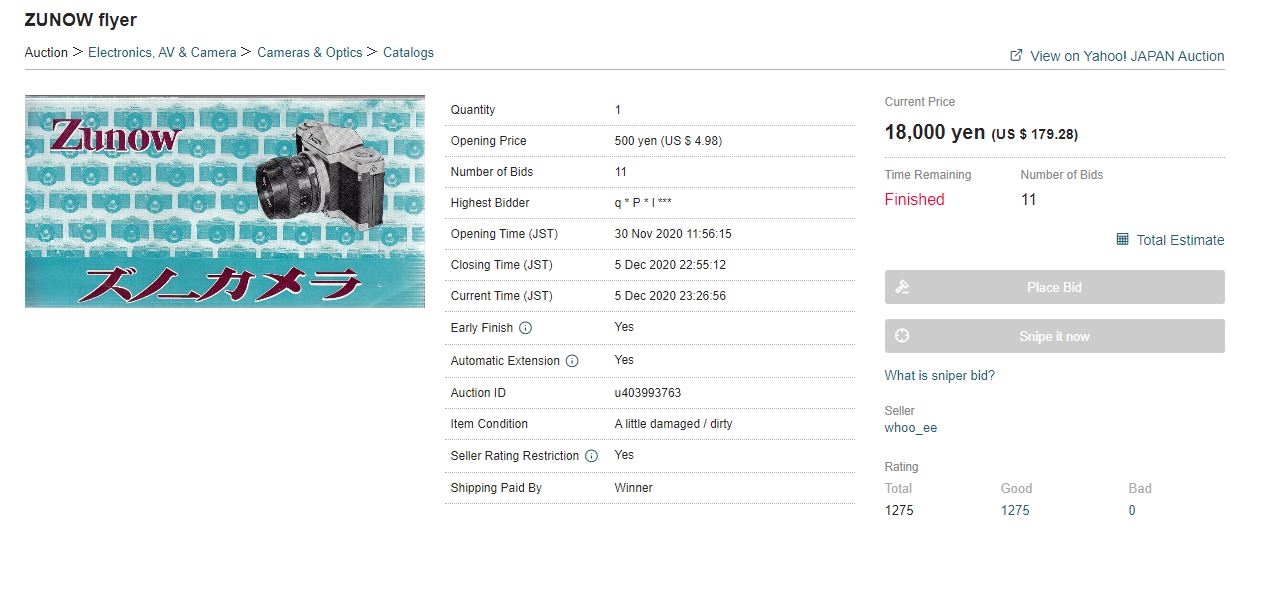
Here’s a snip of a completed auction for just the brochure.
Here’s my first Pentamatic ’35’ with a super-rare Tominon and Yashica branded wide-angle lens.

Looking at the Zunow and the Pentamatic it’s not hard to let your imagination run wild that maybe Zunow, Nicca, and Yashica all shared some design features with one another over a drink or two at a local bar on the outskirts of Tokyo.

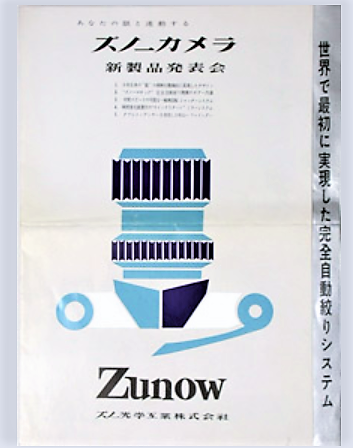
This could be another sales brochure or brochure and instruction booklet combination.
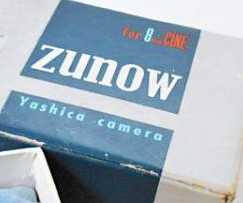
Zunow and Yashica branded box for an 8mm cine camera lens.
An advertisement for a rare dual offering from a well-known Japanese camera dealer a few years back.

If you’re so inclined to bid on the current set online, here’s the link https://www.easyauctionjapan.com/YahooAuction-Yahoo-607566-j736361126.html

Thanks for stopping by! Enjoy your day and please feel free to visit my camera shop at http://www.ccstudio2380.com

Chris

Inside a 1960s transistor radio from Japan

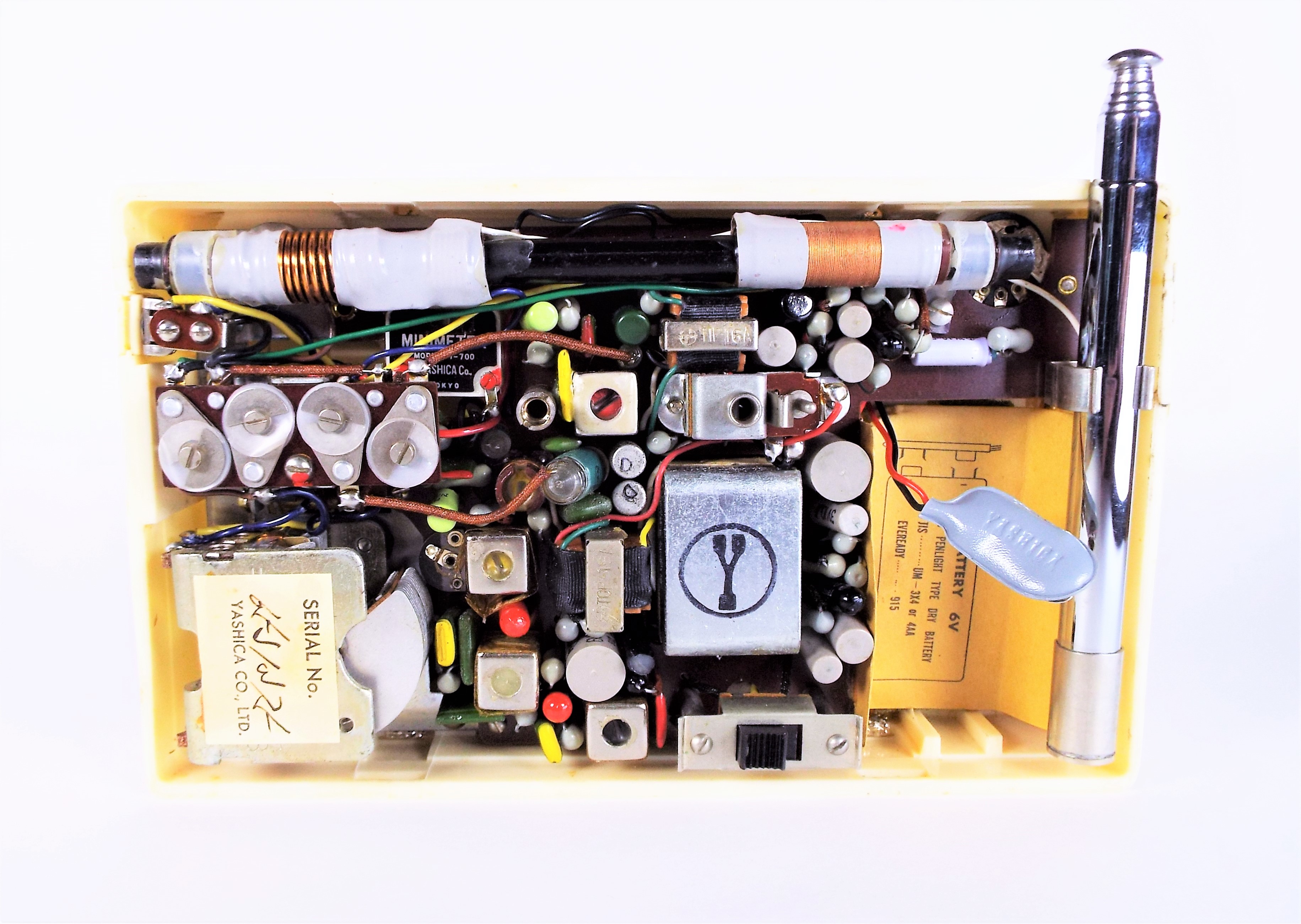
With the back cover removed full 1960s hi-tech is on display. The western looking “Y” was Yashica’s logo during this period. I believe it’s stamped on the back of the speaker.

Yashica Model YT-300 Transistor Radio

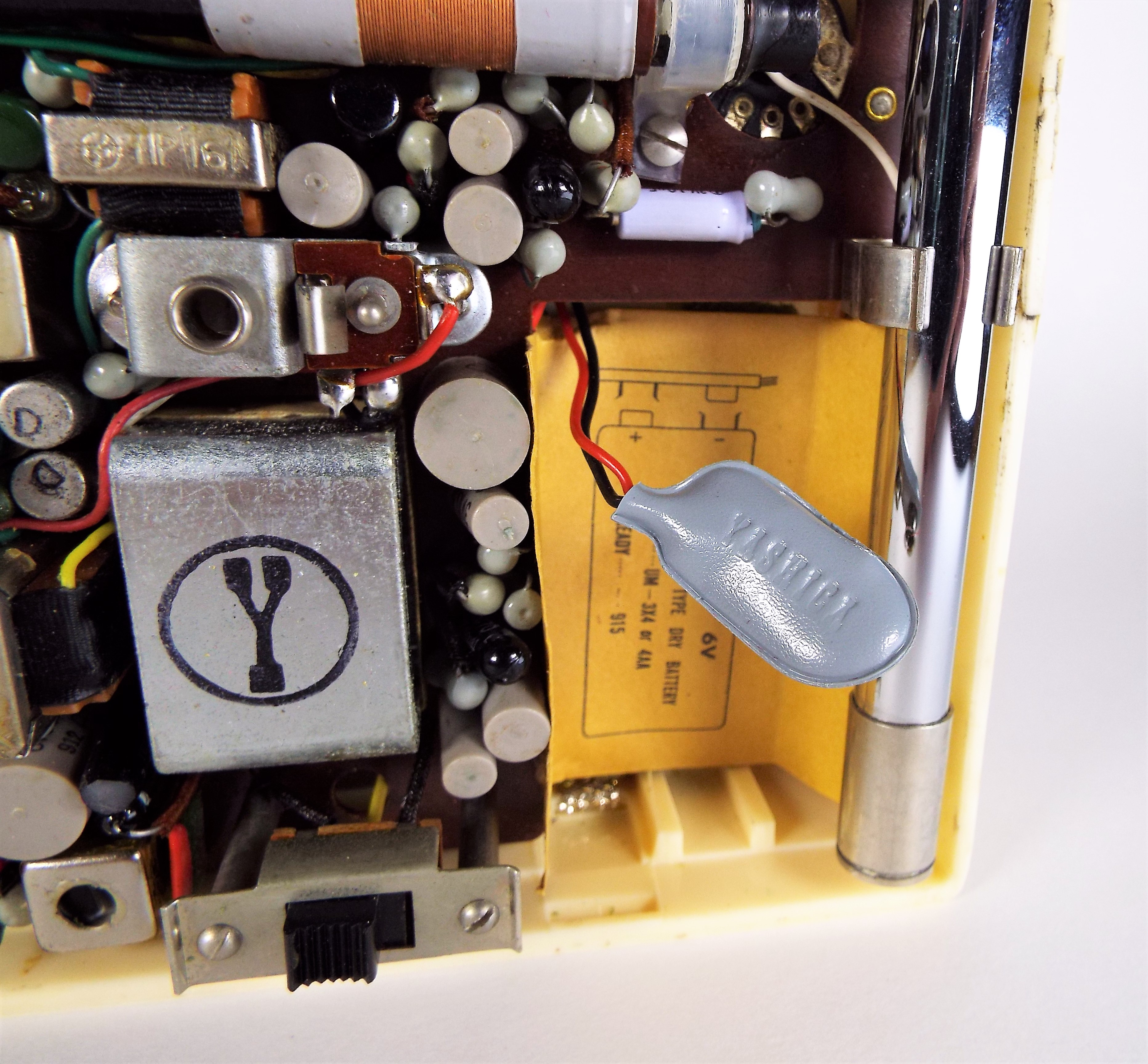
Yashica even put their name on the battery connector cap.
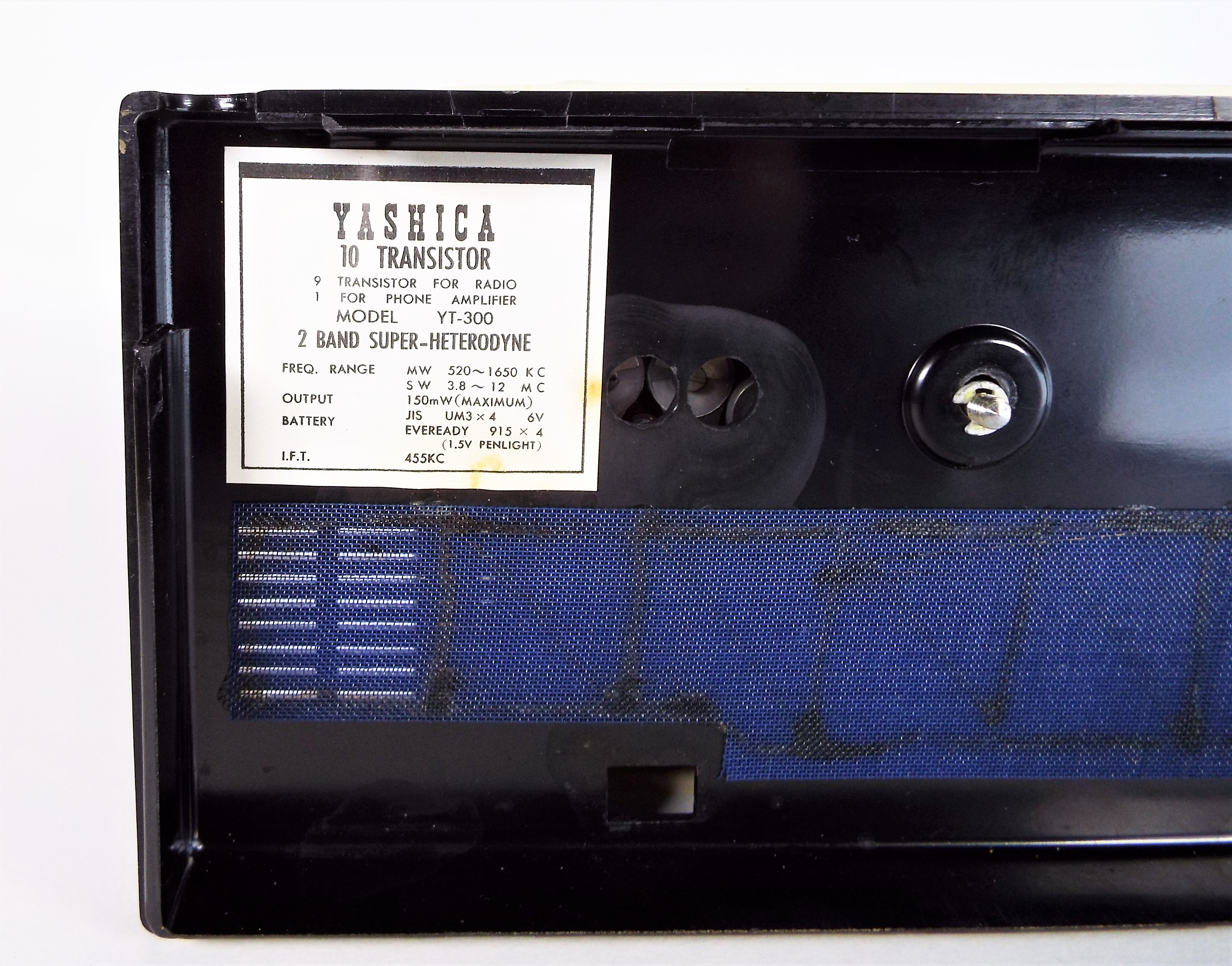
Inside the back cover. In addition to making great cameras, Yashica also made some electronic devices such as movie projectors and editors, radios, tape recorders, and even a record player!
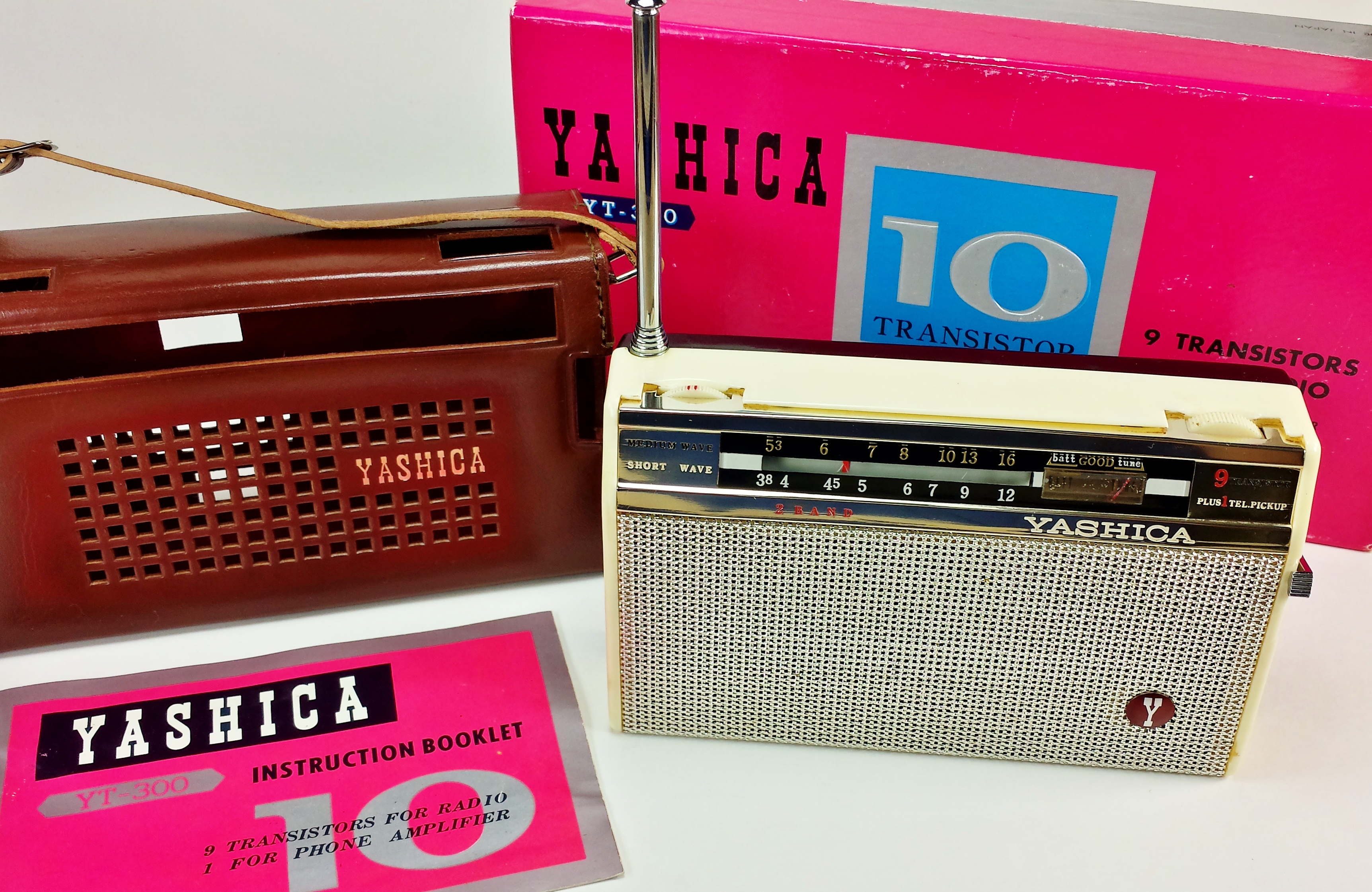
The radio with it’s original goodies still intact. It’s a gorgeous piece of electronics that does not power up. I would love to get it fixed if it is even fixable.

Comments are always welcomed as I’ve learned quite a bit from reader feedback. As always, thanks for stopping by and while you’re at it, feel free to visit my camera shop at http://www.ccstudio2380.com (CC Design Studios hosted by Etsy). – Chris Whelan

Please respect that all content, including photos and text, are the property of this blog and its owner, Yashica Pentamatic Fanatic, Yashica Sailor Boy, Yashica Chris, Chasing Classic Cameras with Chris.

Copyright © 2015-2021 Chasing Classic Cameras with Chris (Yashica Pentamatic Fanatic), Chris Whelan
All rights reserved.
Buy Me A Coffee