Happy SUNday! – Minolta Madness

Another beautiful Minolta has found its way into our collection and to be quite frank, we have more SLRs than we could ever possibly shoot with or even display. So, this lovely Minolta X-700 MPS is available in our camera shop at http://www.ccstudio2380.com

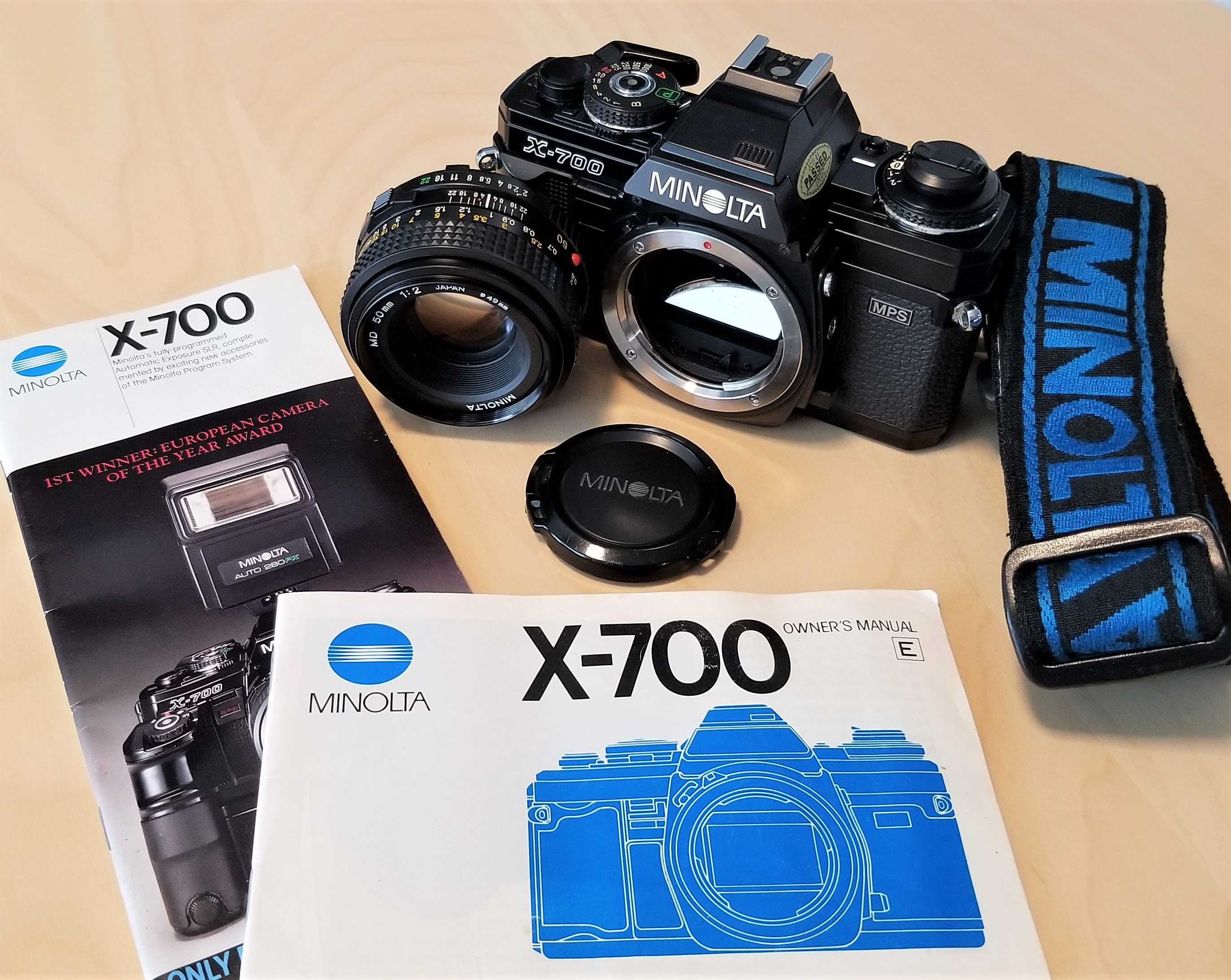
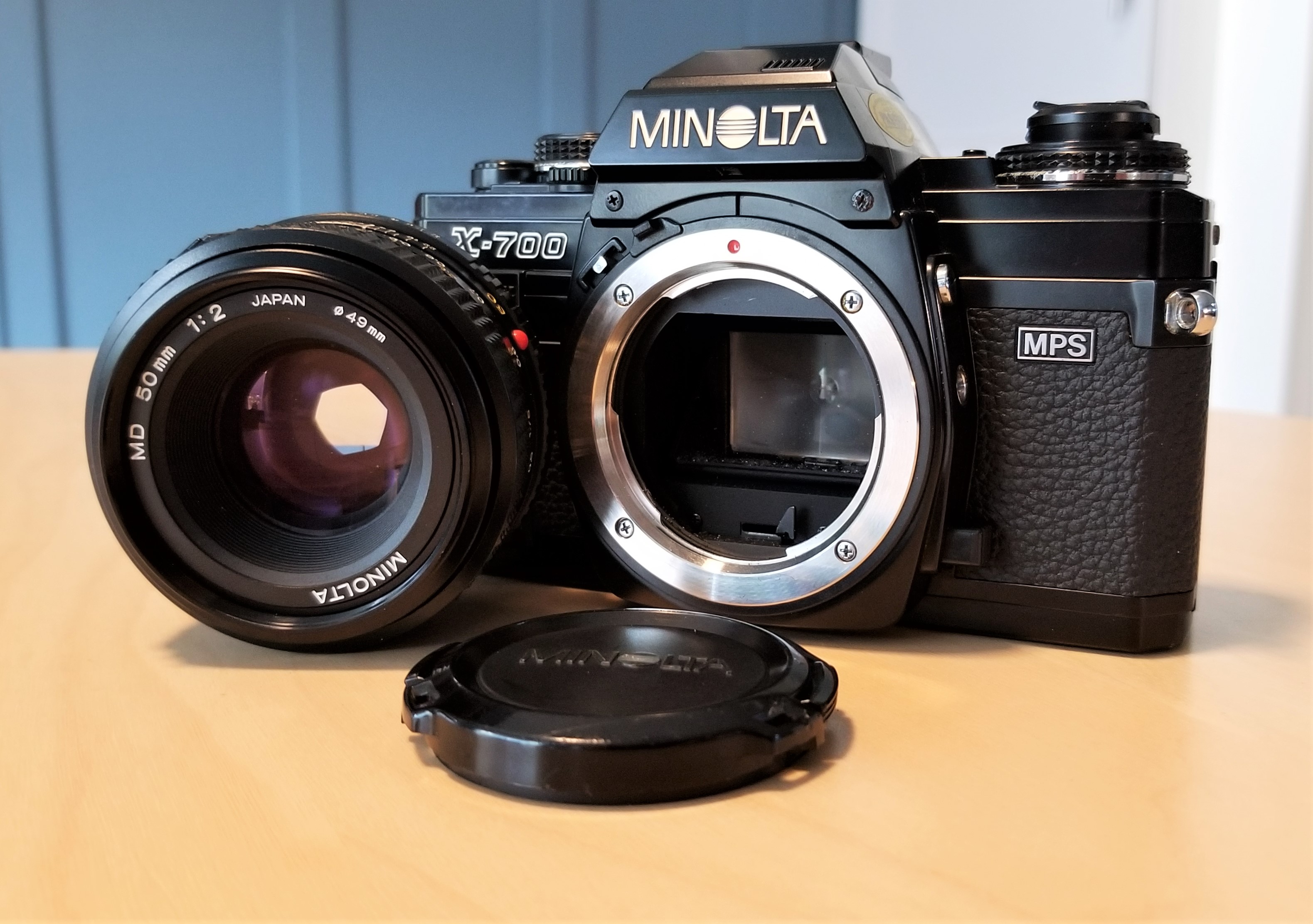
Minolta X-700 35mm film camera set.
Minolta X-700 MPS (Minolta Program System) with sharp Rokkor MD 50mm f/2 lens.
This Minolta can be shot on full automatic exposure, aperture priority, or fully manual where you set both the shutter and aperture.
The X-700 is super easy to use and to me is lightweight enough to carry around all day.
The full-color brochure (over 40 pages) is filled with charts, tables, lists, and features of every Minolta lens and accessory available. The brochure is rather har-to-find and it’s included with the camera.

The Minolta X-700 is truly the heart of a complete system (MPS) of data backs, motor drives, flash units, lenses, focusing screens, close-up and macro accessories, meters, and cases. It’s one of our favorite 35mm SLRs to use. If you’re interested, pop on over to our shop at http://www.ccstudio2380.com which is hosted by Etsy. Thanks for stopping by! – Chris & Carol

Follow me on Instagram at @ccphotographyai

Comments are always welcomed as I’ve learned quite a bit from reader feedback. As always, thanks for stopping by, and while you’re at it, feel free to visit my camera shop at http://www.ccstudio2380.com (CC Design Studios hosted by Etsy). – Chris Whelan

Please respect that all content, including photos and text, is this blog’s property and its owner, Yashica Pentamatic Fanatic, Yashica Sailor Boy, Yashica Chris, Chasing Classic Cameras with Chris.

Copyright © 2015-2022 Chasing Classic Cameras with Chris (Yashica Pentamatic Fanatic), Chris Whelan
All rights reserved.

how i feel today

Camera – Olympus Infinity Stylus Zoom 115 QD

Film – Kodak T-MAX 400 Black & White Negative

Tree – Oak

Thanks for stopping by! – Chris

Follow me on Instagram at @ccphotographyai

Comments are always welcomed as I’ve learned quite a bit from reader feedback. As always, thanks for stopping by, and while you’re at it, feel free to visit my camera shop at http://www.ccstudio2380.com (CC Design Studios hosted by Etsy). – Chris Whelan

Please respect that all content, including photos and text, is this blog’s property and its owner, Yashica Pentamatic Fanatic, Yashica Sailor Boy, Yashica Chris, Chasing Classic Cameras with Chris.

Copyright © 2015-2022 Chasing Classic Cameras with Chris (Yashica Pentamatic Fanatic), Chris Whelan
All rights reserved.

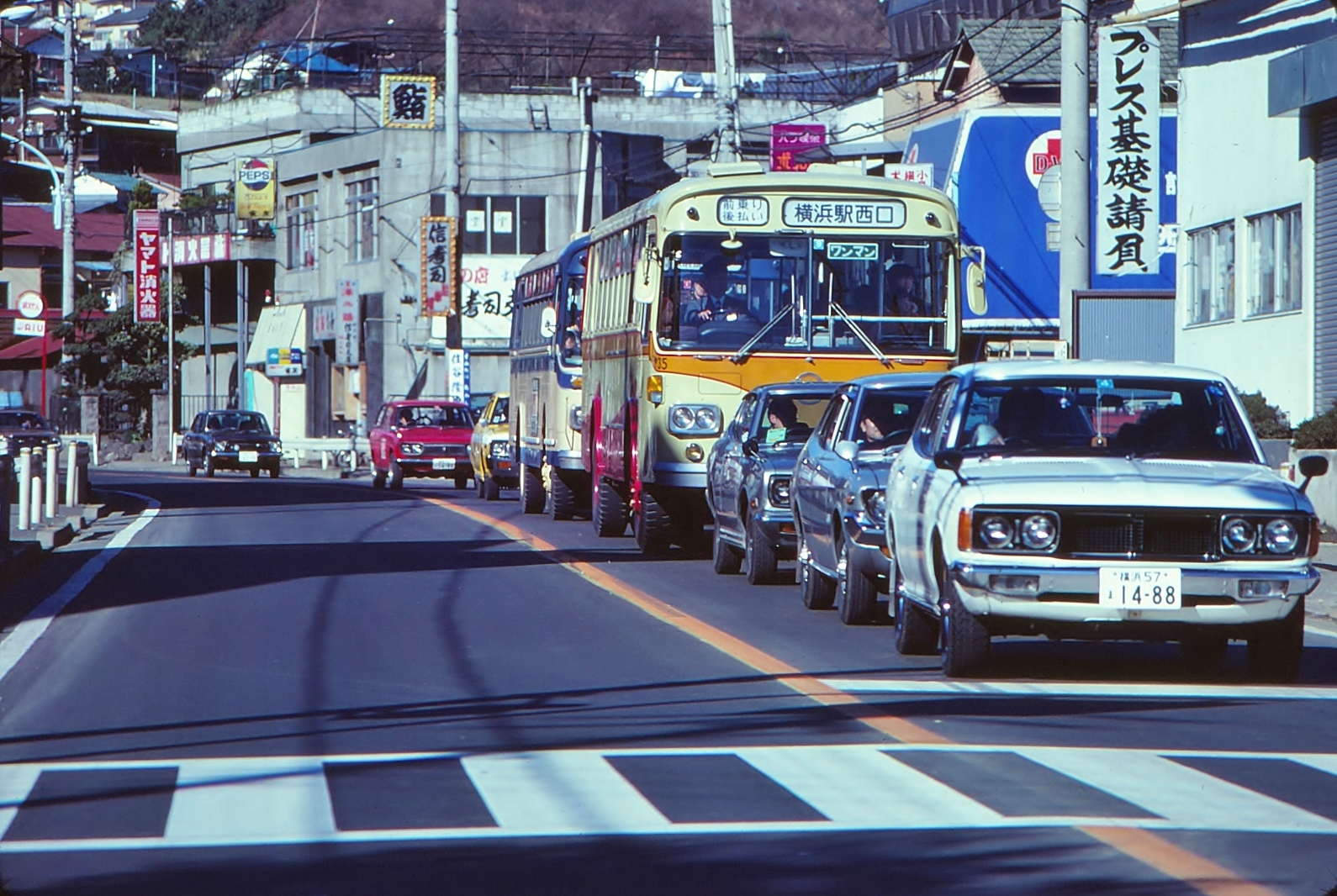
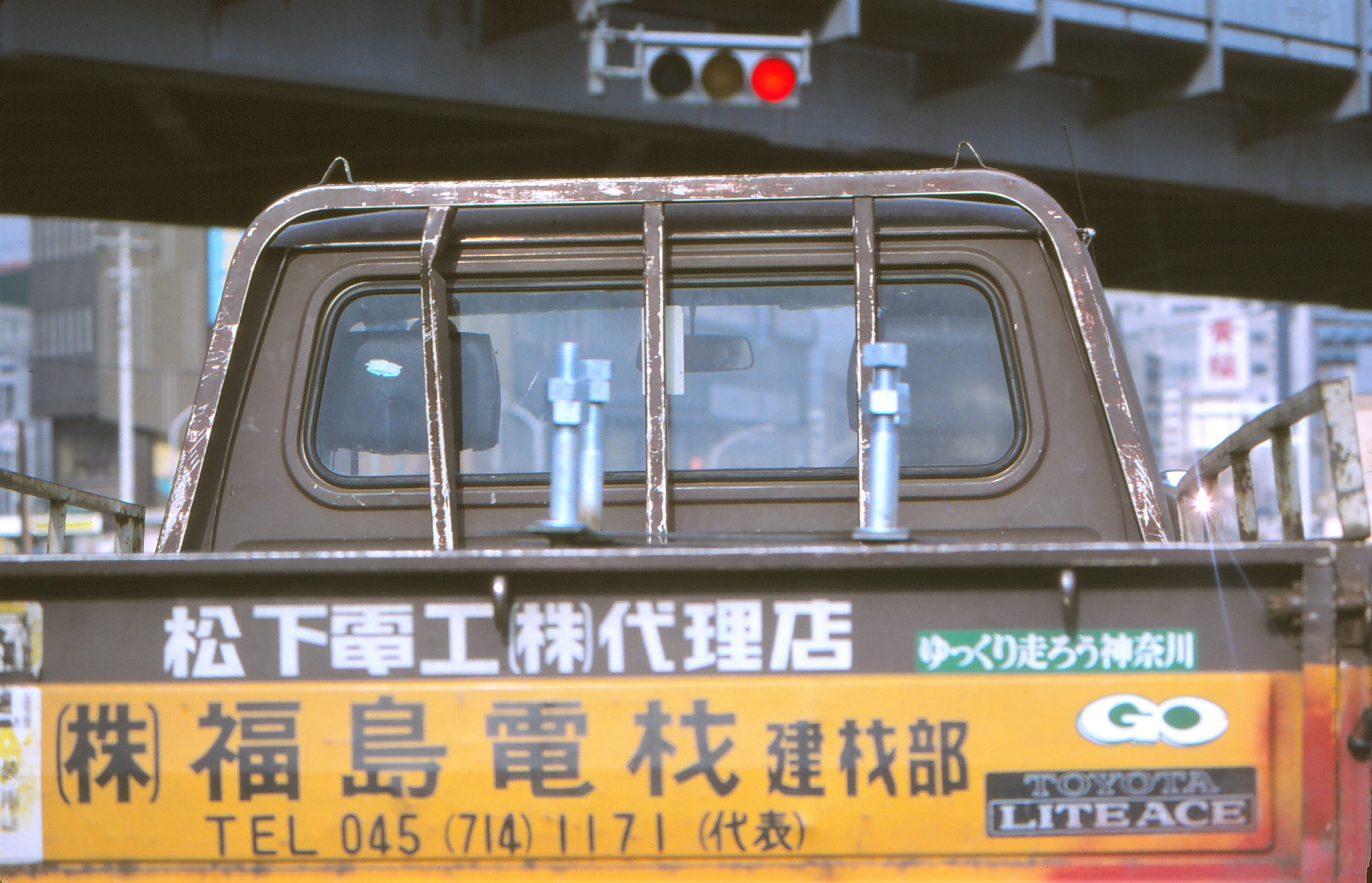
Street photography, Yokohama late 1970s

On the road in Yokohama 1978. Canon F-1 with Canon FD 80-200 f4 lens on Kodak Kodachrome 64.

Thanks for stopping by! – Chris

Follow me on Instagram at @ccphotographyai

Comments are always welcomed as I’ve learned quite a bit from reader feedback. As always, thanks for stopping by, and while you’re at it, feel free to visit my camera shop at http://www.ccstudio2380.com (CC Design Studios hosted by Etsy). – Chris Whelan

Please respect that all content, including photos and text, is this blog’s property and its owner, Yashica Pentamatic Fanatic, Yashica Sailor Boy, Yashica Chris, Chasing Classic Cameras with Chris.

Copyright © 2015-2022 Chasing Classic Cameras with Chris (Yashica Pentamatic Fanatic), Chris Whelan
All rights reserved.

Buy Me A Coffee

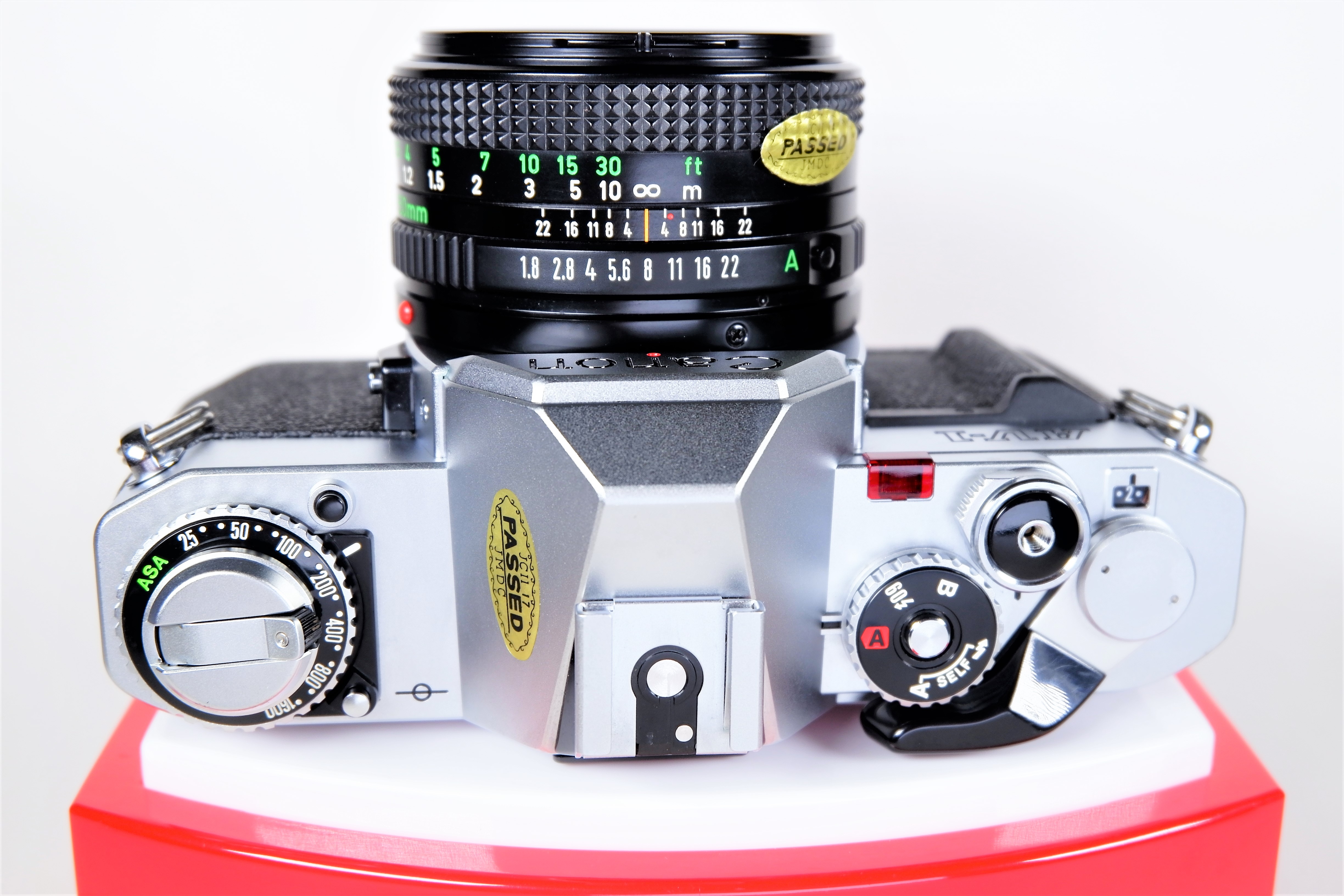
Canon AV-1

I’ve added this lovely Canon AV-1 to my online camera shop at http://www.ccstudio2380.com. If you’re not familiar with this model it’s worth your time to read a bit more about it as it has some very interesting features and is super simple to use (it’s a great camera to use when you’re just starting into film photography).

This one is from 1981. A nearly perfect example of this not often seen Canon 35mm SLR. The AV-1 (Aperture Value) camera is pretty unique in that you select the aperture you want on the FD lens and then the camera selects the proper shutter speed for true auto exposure photography.
The AV-1 accepts all of Canon’s FD mount lenses (tons of them to choose from) and works directly with the dedicated Canon Speedlites like the 133A, 155A, 177A, and 199A.

This one is in collector’s condition – it’s that nice.
Load the film, set the ASA (far left dial) adjust the shutter dial (red A), pick an aperture (here it’s set to f8) compose and focus your subject then fire away.
The AV-1 accepts all of Canon’s FD mount lenses which is a bunch!
The AV-1 uses an easy-to-find and not expensive 6v A544 battery that’s sold pretty much everywhere. I buy these batteries online in groups of 5 to save even more.

Thanks for stopping by! – Chris

Comments are always welcomed as I’ve learned quite a bit from reader feedback. As always, thanks for stopping by and, while you’re at it, feel free to visit my camera shop at http://www.ccstudio2380.com (CC Design Studios hosted by Etsy). – Chris Whelan

Please respect that all content, including photos and text, is this blog’s property and its owner, Yashica Pentamatic Fanatic, Yashica Sailor Boy, Yashica Chris, Chasing Classic Cameras with Chris.

Copyright © 2015-2022 Chasing Classic Cameras with Chris (Yashica Pentamatic Fanatic), Chris Whelan
All rights reserved.

Buy Me A Coffee

Happy SUNday – Pisa, 1986

Gelato vendor.

Men in matching caps.

Canon F-1 with FD80-200mm f/4 on Kodachrome 25. The light was fading fast and ASA 25 doesn’t work well when hand held during telephoto photography.

Comments are always welcomed as I’ve learned quite a bit from reader feedback. As always, thanks for stopping by and while you’re at it, feel free to visit my camera shop at http://www.ccstudio2380.com (CC Design Studios hosted by Etsy). – Chris Whelan

Please respect that all content, including photos and text, are the property of this blog and its owner, Yashica Pentamatic Fanatic, Yashica Sailor Boy, Yashica Chris, Chasing Classic Cameras with Chris.

Copyright © 2015-2021 Chasing Classic Cameras with Chris (Yashica Pentamatic Fanatic), Chris Whelan
All rights reserved.

Buy Me A Coffee

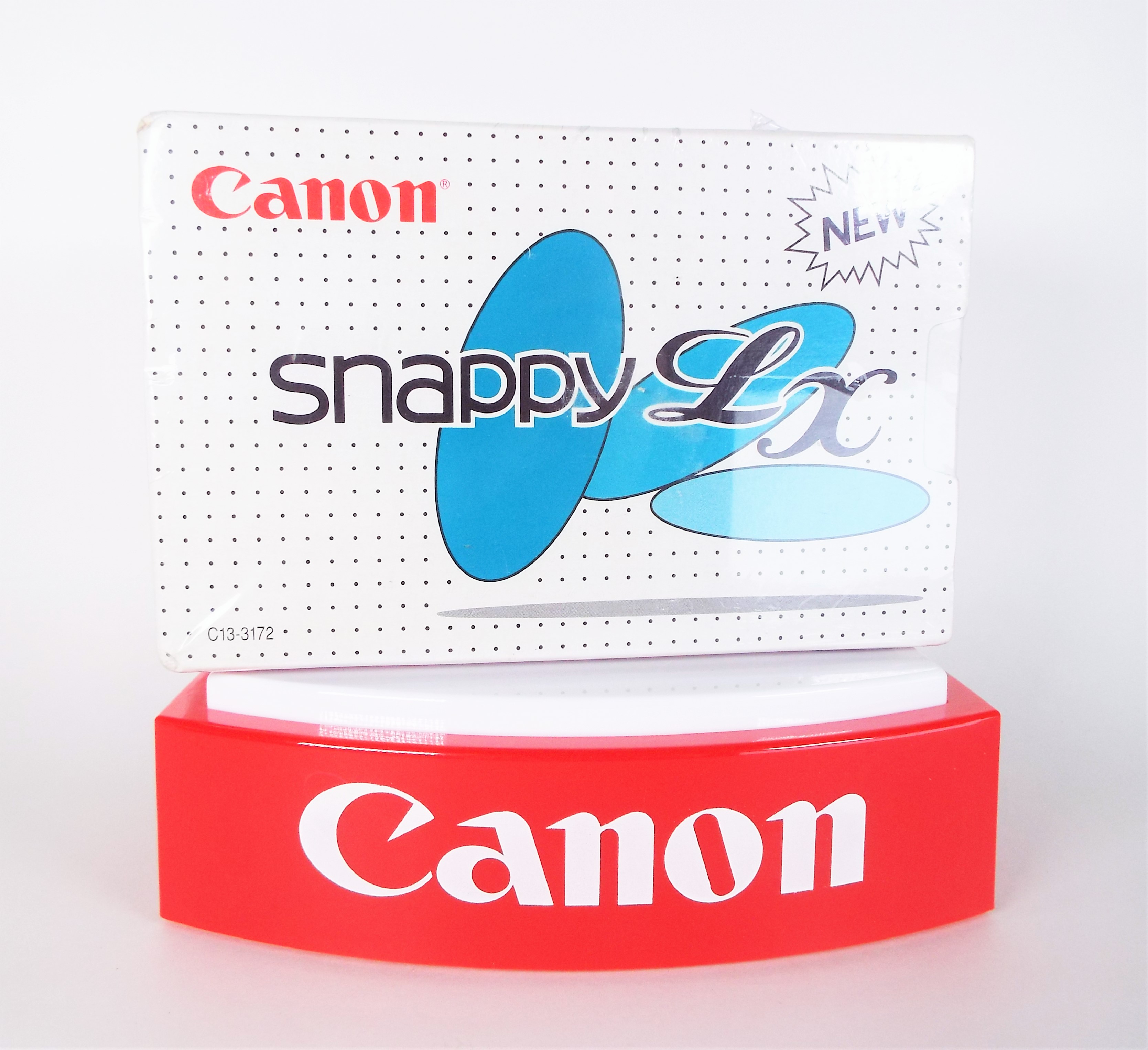
Canon Snappy LX

dscf5023

Canon Snappy LX 35mm Film Camera – New in Unopened Box

The Canon Snappy LX is a fully automatic compact point and shoot film camera that’s simple to operate. It features a large bright viewfinder, built-in flash, and a fixed focus Canon 35mm f/4.5 lens (3 elements/3 groups). The lens cover release acts as an on/off switch, and the built-in flash allows for day and night-time photography, capturing clear photos with good color rendition. Uses (2) AA batteries (not included). Takes standard color negative and slide film capable of 24 or 36 exposures. Automatic film advance and automatic rewinding. DX coded for automatic setting of film speeds. It’s rare to find an unopened film camera from this period so it’s a perfect addition to your collection. I’ll mail it via USPS Priority Mail with tracking and insurance FOR FREE in the USA!

$65.00

Here’s a chance to buy this still new in its original factory box Canon camera directly from my blog at a great price over my Etsy camera shop. PayPal is a secure way to get exactly what you want without a bunch of fees or hassle. I’ll mail this virtually worldwide but please contact me for a shipping quote for purchases outside the US. Thanks a bunch! – Chris

Yashica TL-Electro

The TL-Electro was one of Yashica’s longest-running models in the very successful TL Series of 35mm single-lens reflex (SLR) cameras. Don’t confuse this model with the better known TL Electro X or TL Electro X ITS. It’s a totally different camera but equally important to Yashica’s success during the 1970s.

By analyzing serial numbers my good friend Paul Sokk ( YashicaTlr.com ) and I have determined that the TL-Electro was in production from April 1972 to February 1978. There’s still a chance of finding a few cameras outside of these dates but at this time they look pretty accurate.

IMG_20190924_0002

Original undated sales brochure for the TL-Electro.

IMG_20190924_0004

IMG_20190924_0007

Essentially the TL-Electro is an updated version of the Yashica TL which was first produced in November 1967. The TL used a meter needle centering system vice the lighted arrows in the TL-Electro (same side and location in the viewfinder display).

IMG_20190924_0008

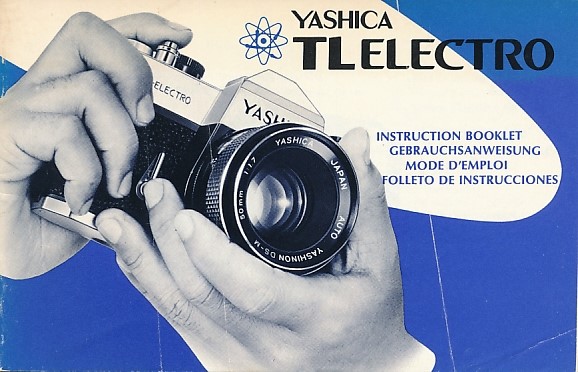
Cover of the instruction booklet dated 1974.

IMG_20190924_0010

From the instruction booklet. These exact batteries are no longer made (due to mercury) but there are replacements available that may do the job. The alkaline replacement is APX-640 or PX-640A (at 1.5v). The batteries only power the exposure meter system and not the shutter.

Yashica TL-Electro Box Logo

Original box that was with a camera that was produced in July 1973.

IMG_20190924_0003

Below is the Yashica TL from late 1967. The TL was the second camera in the TL Series right after the TL-Super (1966).

YASHICA-TL-01

The very basic but highly functional Yashica TL from an undated sales brochure.

The Yashica TL and TL-Electro are almost exact matches with the exception of a few placements of the dials and levers. Of course, the TL uses a mechanical meter display system where the TL-Electro gains the IC Brain and lighted arrows for metering. I haven’t had the opportunity to weigh each body to compare them yet but I would guess that they are pretty close.

When shopping for the TL-Electro or TL obviously choose the best looking and most functional cameras that your budget will allow. The TL, Electro AX and the FFT are the hardest to find in good condition even though plenty were made over the years. All of Yashicas cameras during this period used M42 screw-in lenses so it’s easy to mix and match.

Thanks for stopping by! – Chris

Please respect that all content, including photos and text, are the property of this blog and its owner, Yashica Pentamatic Fanatic, Yashica Sailor Boy, Yashica Chris.

Copyright © 2015-2019 Yashica Pentamatic Fanatic, Chris Whelan
All rights reserved.

The Yashica Pentamatic – Our 8 Year Search – Some Conclusions & Wild Speculations

20171125_133916 (2)

Some Conclusions

The first Pentamatic was “born” in December 1959 but wasn’t available for sale in the U.S. until April 1960. The Pentamatic was Yashica’s first 35mm single-lens reflex camera and was designed with the help of technology obtained from Yashica’s acquisition of Nicca Camera in 1958 and with some involvement with designers from Zunow Optical in 1959. Of course, Yashica designers were involved too as well as collaboration with Tomioka Optical for the first lenses.

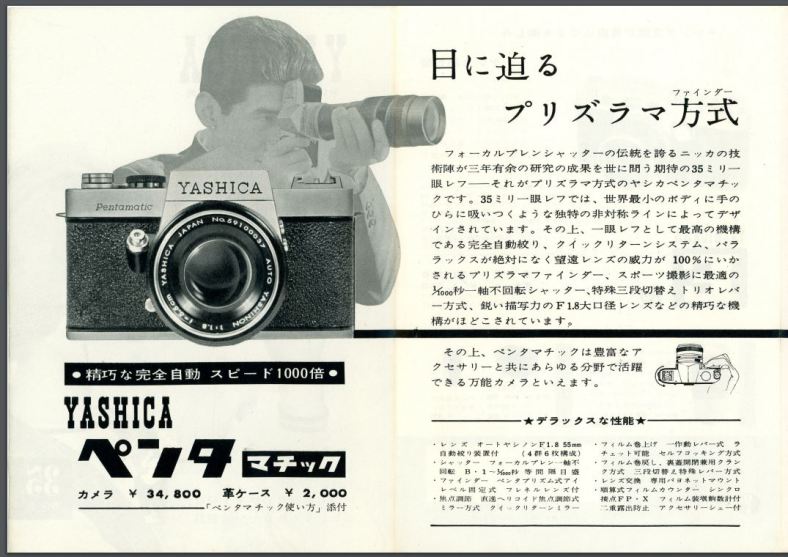
Below is a scan of what appears to be the first sales brochure for the Pentamatic found in Japanese. A machine translation of it proves that Yashica and Nicca designers worked together to jointly develop the camera over a 3-year period. The exact date of this brochure has not been established but it appears to be at least issued in the Spring of 1960. Many thanks to my good friend Paul Sokk for his efforts in researching the Pentamatic with me over the years. His fabulous site can be found at www.yashicatlr.com
Yas inside P1 bro

Below is a scan of the cover of that first sales brochure that features the new Pentamatic.
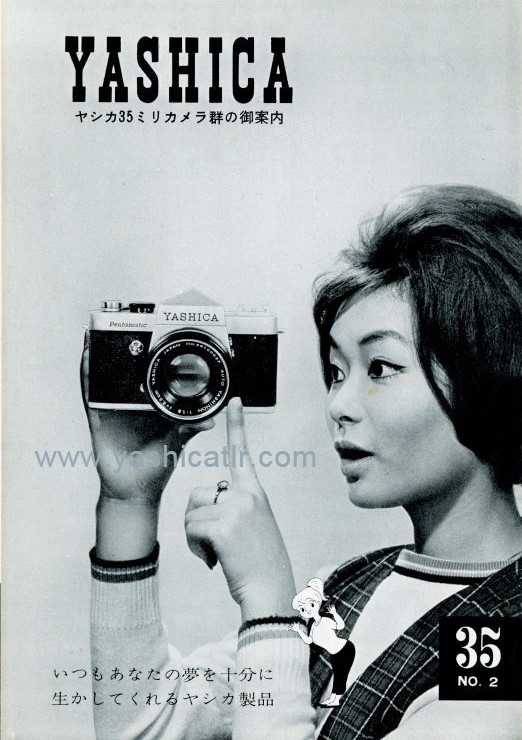
Yas Cover P1 bro (1)

The original Pentamatic was a failure. A beautiful, sleek and modern camera at a great price, but still a failure. A replacement for it (Pentamatic II) was released by September 1960 – just a few short months after the original Pentamatic debuted.

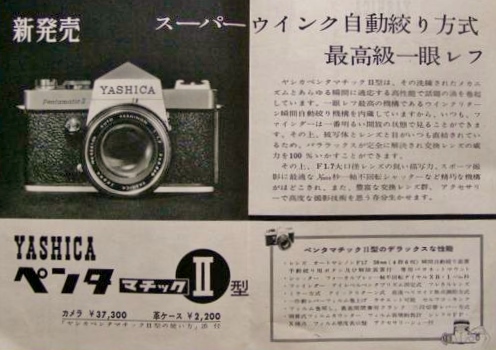
The Pentamatic and the Pentamatic II were both out of production by January 1961. The Pentamatic S didn’t appear until around April 1961. Little was significantly changed over the course of these 3 models during this short timeframe. The Pentamatic II and its one-off lens improved on its semi-automatic capabilities. The body stayed the same with the exception of adding the engraved “II” after the name. No logic to this as Yashica could have simply made the new lens available as an option to the original Pentamatic. There had to be another reason to call it the model II and it appears that there were some internal changes made to accommodate the new lens.

The standard lens that was available for the Pentamatic II was designed and built (quickly?) by Zunow vice Tomioka. Our best guess at this point.

The Pentamatic II was only available for sale in Japan.

The Pentamatic S essentially was the replacement for the original Pentamatic – not the Pentamatic II. The model S added a lug for attaching an accessory exposure meter that coupled to the shutter speed dial. The S also added a self-timer and the body got a redesign (the strap lugs were moved to the front and the shutter release button was no longer at a 45-degree angle).

The Instruction Booklets

The booklets have been an additional source of fun separate from the camera searches. The booklet for the original Pentamatic was relatively easy to find. The first Pentamatic saw about 16,000 units made so the booklet is much more available. The Pentamatic II booklet was the hardest to locate since only around 5,000 cameras were made. The Pentamatic S booklet is even rarer – only around 3,000 cameras produced.

DSCF6534

DSCF6540

Inside the booklets…

DSCF6543

DSCF6545

DSCF6544

Wild Speculations

Wild Spec 1 – The first Pentamatic was not initially released in Japan. Yashica had a slow go with its early production so only a limited number were available for the April to June debut in the U.S. There were only about 4,000 cameras made by then and that just didn’t support a wide release of it in their home market. However, with the discovery of the as yet undated sales brochure found by my friend Paul Sokk it does appear that some of the first Pentamatics were in fact distributed in Japan. We do feel that Yashica had a suspicion that the original model would not go over well at home. Why do we feel this way? During our quest of all things Pentamatic, we’ve yet to find an instruction booklet for the original Pentamatic in Japanese (or any other language besides English). We’ve seen no early 1960s advertisements either. Although we’ve yet to find these items that does not mean they don’t exist.

Wild Spec 2 – The Pentamatic II was only available in Japan and was never intended for widespread availability in the world marketplace. We further feel that the Pentamatic II was the camera Yashica intended to release in Japan vice the original Pentamatic. Why? Same thing… in over 8 years of searching, we’ve never seen a Pentamatic II instruction booklet in English and the only sales brochures we have are in Japanese. No English ads or brochures anywhere (yet). Update: As of April 2019 still no English ads or books.

Wild Spec 3 – The Pentamatic S wasn’t available in Japan. Crazy right? The same thing applies here – no Japanese advertising or brochures and no instruction booklets in anything but English. Again, not finding them does not translate to not being produced but the likelihood looks slim.

Wild Spec 4 – As we stated in the conclusions section above, the standard lens for the Pentamatic II (5.8cm f/1.7) was made for Yashica by Zunow Optical vice Tomioka. This flies in the face of what’s known and we don’t have solid written proof (yet, if ever). Both the original Pentamatic and the Pentamatic II ended production in January 1961. By coincidence, that’s the reported date of Yashica’s acquisition of Zunow (or their bankruptcy). Once Zunow went bust they no longer make lenses for the Pentamatic II.

Wild Spec 5 – Once the Pentamatic II stopped production, Yashica started selling the original Pentamatic in Japan (or at least increased its availability in Japan). We would still like to find a Pentamatic instruction booklet in Japanese to validate this thought.

Wild Spec 6 – Since the Pentamatic S wasn’t sold in Japan, there was a rather large gap in Yashica’s SLR availability. The next camera to be sold widely in Japan (and the U.S.) was the Penta J but that didn’t come out until the Summer of 1961.

These marketing and production missteps led to a less than stellar debut for Yashica in the world of 35mm SLRs. The competition during this same period was “inventing” much more sophisticated (and mostly more expensive) cameras which had a wider range of interchangeable lenses and accessories. It took Yashica a long time to establish a “foot in the door” with their Penta J and their first internally coupled exposure metered SLR, the Yashica J-3 (Jaguar).

Things we would like to find…
600x450-2015111900010

The first thing we would like to discover would be an ad, sales brochure or instruction booklet in English for the Pentamatic II. We don’t think we will as we feel that they don’t exist.

We would like to find a Pentamatic instruction booklet in Japanese. They must exist but we’ve yet to find one.

Pentamatic S instruction booklet and a sales brochure in Japanese. Don’t think they exist but time will tell.

Pentamatic II box!!! They must exist – someone’s got to have one in their collection! Update: Finally found one but we missed acquiring it for our collection so we “borrowed” this image –
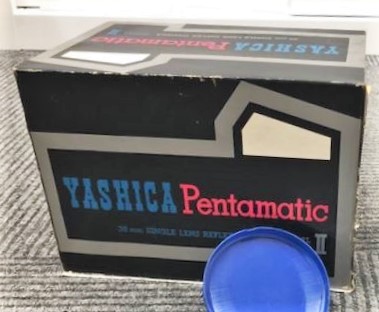
yashica P2 Box

Pentamatic (any model) in its original boxes in factory fresh condition. WooHoo!

***Solid proof that the standard lens for the Pentamatic II was made by Zunow Optical.***

Other than these things, I think we’re good! ^.^

Thanks for your visit! If you’ve made it this far in the post give yourself a big pat on the back! You just may be on your way to becoming a ‘Yashica Pentamatic Fanatic’!

Please stop by our online shop at https://www.ccstudio2380.com and check out some of our classic cameras available for sale.

We are active buyers of quality cameras and equipment – especially anything Yashica, Nicca, Fujica or whatever! Contact us at chriscarol@ccstudio2380.com

Please stop by our camera shop at http://www.ccstudio2380.com

Please respect that all content, including photos and text, are the property of this blog and its owner, Yashica Pentamatic Fanatic, Yashica Sailor Boy, Yashica Chris.

Copyright © 2015-2019 Yashica Pentamatic Fanatic, Chris Whelan
All rights reserved.
A Face in a Crowd – WordPress Weekly Photo Challenge

We went deep into our archives for these two images in response to this week’s challenge – A Face in a Crowd –

20486007322_4f28995e7d_o

Taken along a typical busy shopping street in Sugita, Japan (just south of Yokohama) in the late 1970s. If you look closely you can see the faces of at least two women inside looking out.

21035848375_4fa13d6423_o (1)

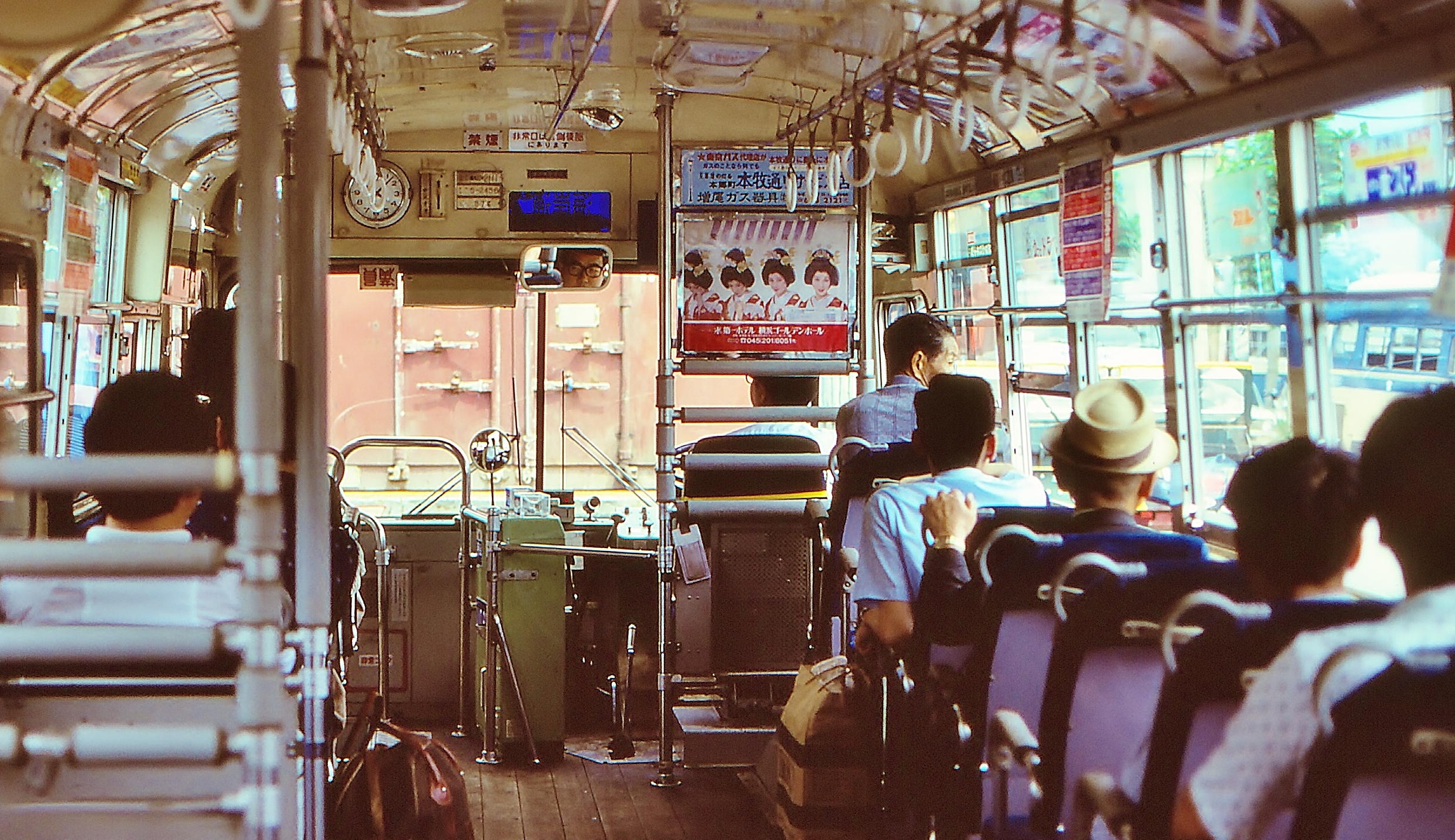
One of our favorite images from our time living in Japan in the late 1970s. The face of the bus driver is clearly seen as he is busy checking me out in his rearview mirror.

Hope you enjoyed our contribution to this week’s challenge. Thanks for stopping by! Be sure to visit our online shop at https://www.ccstudio2380.com

C&C ^.^

Please respect that all content, including photos and text, are the property of this blog and its owner, Yashica Pentamatic Fanatic, Yashica Sailor Boy, Yashica Chris.

Copyright © 2015-2018 Yashica Pentamatic Fanatic, Chris Whelan
All rights reserved.