Pentamatic ’35’… 11.3.2016

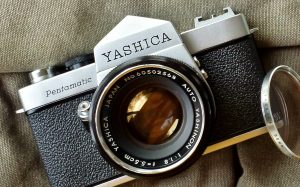
The tank that is the Pentamatic ’35’.

dscf2823

A nice example of an everyday shooter. This one was made in May of 1960 and looks like it saw some regular use. The Auto Yashinon lens is spotless inside and shows a nice patina on the barrel.

The Pentamatic pictured above shows some signs of frequent past usage. Some bright marks on the silver finish, a few dings and dents here and there… some bits of surface corrosion but nothing broken or inop. Per the serial number on the body and on the lens, this camera and lens set were made in May of 1960. The body was the 4,410 th to roll out of the factory since production began in December 1959.

The Pentamatic and its standard lens – the Auto Yashinon f1.8 5.5cm is a beast! Lots of brass and glass went into making these beauties. We love the chrome nose on the lens… a quick swab with some 91% isopropyl alcohol and it shines like new.

dscf2824

As is typical with these 56 year old cameras, the mirror tends to show some grime and “soot”. A very very gentle swab with water and some dish soap does a good job with the dirt and some of the soot but the mirrors never really come fully back to their original shine.

The metal lens cap (52mm) is quite solid and is backed with black felt like material. Occasionally you’ll find some pretty dented up caps but since they were so well built you’ll more than likely find a good example out there.

dscf2827

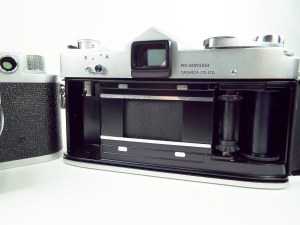
The Nicca Camera Company (Taiho Optical Company) inspired cloth focal-plane shutter. Simple and pretty rugged. This one has some white spots on it as most do… we tend to leave them be rather than trying to clean the them off.

This one (above) has a nice clean film path and film chambers. They’re easy to keep clean with a cotton swab and some canned air. Don’t blow directly on the shutter curtain with the high pressure air!
dscf2831

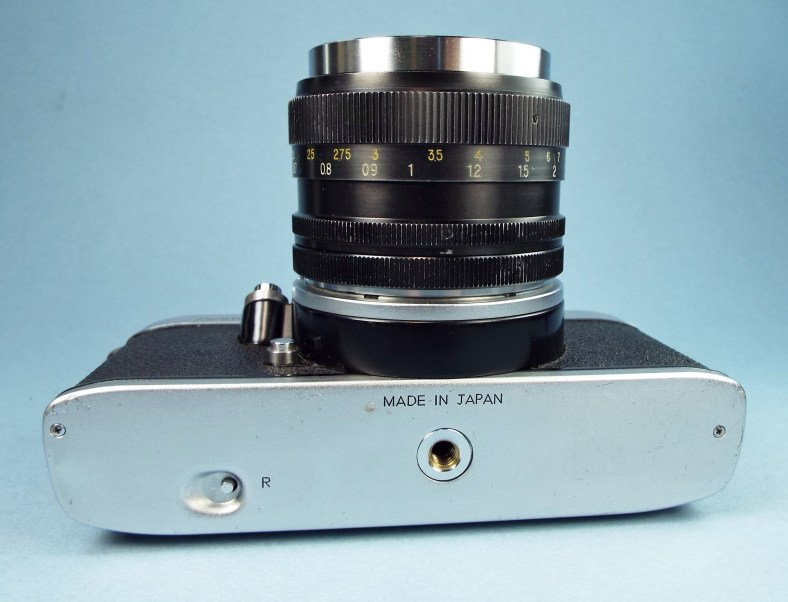
Since the Pentamatic with lens weighs nearly 2.5 pounds, the base plates usually take a beating. This one is rather good and has held up well!

If you’re interested in adding a nice Pentamatic’35’ to your vintage camera collection, hopefully we’ve shown what a super clean but well used camera looks like. Be careful when you’re shopping around – the mirrors often get stuck in the up position. A few little adjustments (and some lube) usually get them working again but they’ll remain “tricky”. Obviously look for evidence of severe damage – a major dent that prevents something from operating properly would be one to definitely stay away from. The lenses often freeze up do to lack of use… a short time with a hair dryer can often get them moving again.

Best of luck on your search! Any questions please feel free to contact us.

Many thanks, C&C
Nicca Pentamatic!?

We know… doesn’t make sense, does it? Doesn’t even sound right… “Nicca Pentamatic”.

Stay with us and we’ll try to make our case. Recently discovered information has filled-in some of the missing links in the development of our favorite obsession camera. The mysterious and seldom seen Pentamatic ’35’… Yashica’s first SLR.

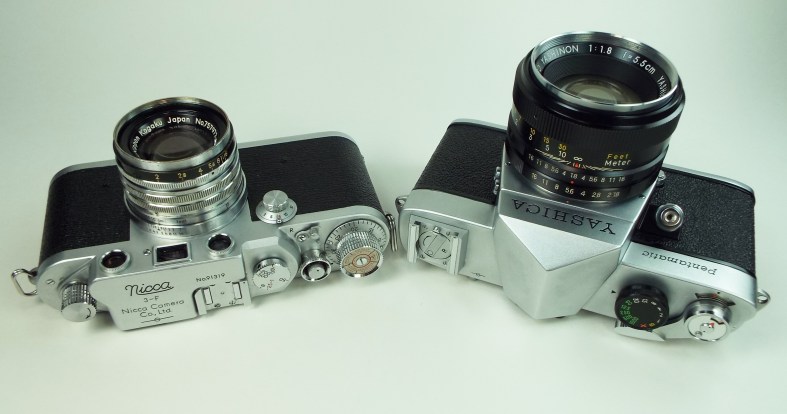
dscf2740

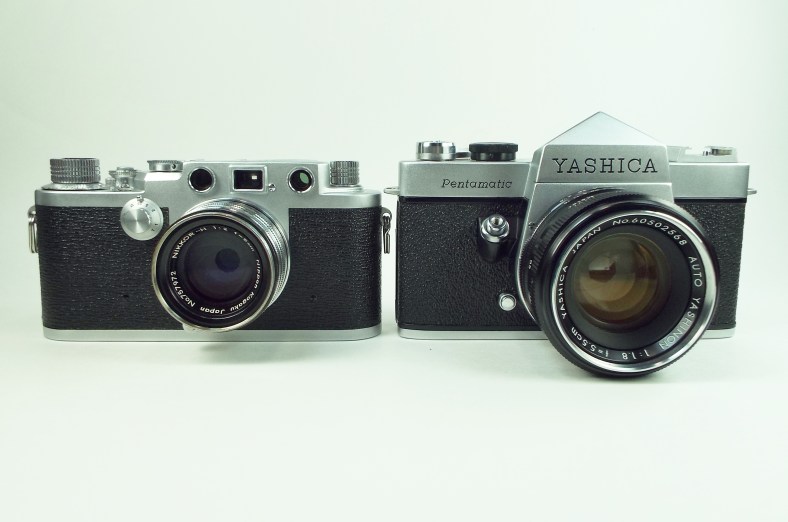
Nicca 3-F 35 mm rangefinder (left) and Yashica Pentamatic 35 mm single-lens reflex SLR (right).

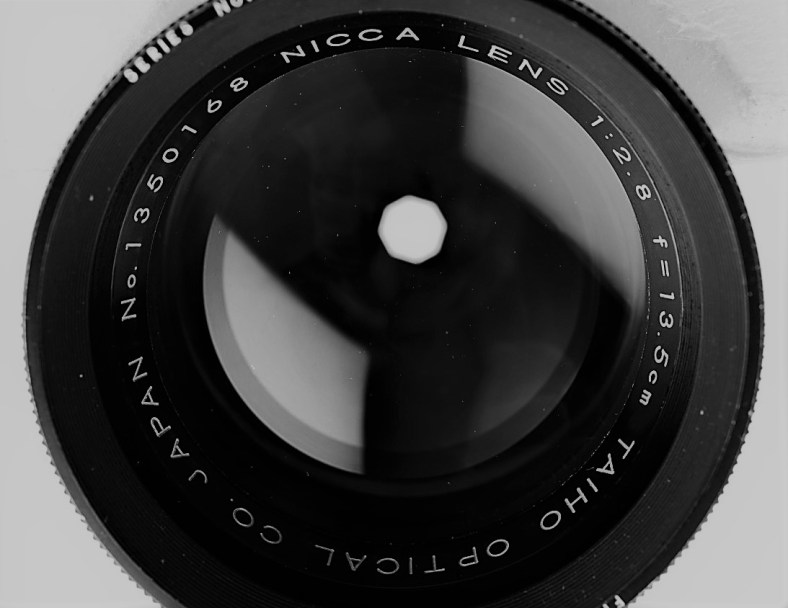
A few interesting bits of info have come to our attention recently. We were alerted to an auction by our friend Paul Sokk (http://www.yashicatlr.com) that listed a 13.5 cm f/ 2.8 lens made by Taiho Optical Company –  Nicca Lens. Having never heard of the company, Taiho Optical, and knowing about Nicca’s history, we couldn’t figure out where and how there could be a Nicca connection.

taiho_optical_co_nicca_135mm_f28_04


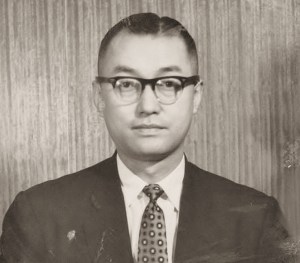
Let’s backtrack a bit with a quick history lesson. Yashima-Yashica was a very successful maker of high quality, low-cost twin-lens reflex cameras but hadn’t moved into the 35 mm market as of early 1957. It appears that the president and founder of Yashima-Yashica, Mr. Yoshimasa Ushiyama could see that although Yashica was successful building TLRs, the market for them would slowly diminish as new, smaller and easier to use 35 mm cameras would grab the marketplace. He wanted in but how? Yashica had no experience in 35 mm cameras, especially rangefinder cameras with cloth focal-plane shutters. There were dozens of Leica copy cameras in Japan (and the world for that matter) but possible patents protected specific manufacturer’s shutter designs. If he could buy into an established company then he could use their shutter design and incorporate it with early Yashima-Yashica designs. In May of 1958, an opportunity presented itself. Nicca Camera Company was apparently experiencing financial difficulties and may have been on the brink of bankruptcy. Nicca cameras were well known and well respected – they made high quality 35 mm rangefinder cameras with focal-plane shutters. They used Nikkor lenses with the L39 screw mount. Mr. Ushiyama was in a rush to purchase Nicca before they went belly up. Advisers cautioned to wait until Nicca went bankrupt arguing that they would be able to acquire it for a better price. Mr. Ushiyama knew that that outcome of a bankruptcy could take longer than he was willing to wait and there would certainly be more suitors to compete with. So the deal went through… sort of. As best as we can glean from our research, a “religionist” “admonished” Mr. Ushiyama for rushing into the deal and cautioned that Yashica itself would suffer a “decline” if all of the transfer were made immediately.

record-image_939x-h3sn-v1

Yashima-Yashica founder Mr. Yoshimasa Ushiyama.

OK, OK! We give!!! We share your feelings dear reader –  what’s the connection between Nicca and the Pentamatic? Taking the advice of the religionist, Mr. Ushiyama created a new company. Nicca would become Taiho Optical Company. Say what? Nicca wasn’t absorbed into Yashica in May of 1958, instead, they became another company that could continue to operate with Yashica but without becoming Yashica. Simple. Confused? Mr. Ushiyama listened to his adviser so nothing bad happened. It appears that the former Nicca employees were now free to develop new processes and designs with the financial and technical support of the much larger Yashica. What did Yashica get for its money? Plenty it would seem. Access to years of 35 mm rangefinder manufacturing experience and access to a proven focal-plane shutter. Important steps in building a 35 mm single-lens reflex camera. We don’t know (yet) which one of the two companies came up with the design of what would become the Pentamatic. Was it mostly a Yashica design that had been kicking around for a while lacking a focal-plane shutter, or was it mostly a Nicca design that lacked the financial means to bring it to market? We feel that it was more than likely a 60 – 40 split with Nicca as the 60%. Just a hunch, no facts at the moment.

dscf2743

Pentamatic’s focal-plane shutter. Thanks to Nicca.

But what did the Taiho Optical Company make? Yashica didn’t make their own lenses, Tomioka Optical of Tokyo did. Was the former Nicca, now that it had become Taiho Optical, going to suddenly start making lenses? At the start of this blog, we mentioned that we were alerted to the existence of a 13.5 cm lens for sale with the Taiho Optical Company-Nicca Japan markings. Other than that, nothing.

So when did Mr. Ushiyama merge the two companies? He apparently listed to his adviser and waited eight long years before merging the two. From 1960 (when the Pentamatic was released) until 1968, when he not only made Yashica whole, but he also acquired long time lens supplier Tomioka Optical.

Now we know how the Pentamatic came to be and why it could be called the Nicca Pentamatic.

dscf2748

Thanks for sticking with us. Comments? Likes?

Chris and Carol

Nicca 3-F… Nicca Camera Co., Ltd. & Yashica

What connection could this attractive 35 mm rangefinder camera have with Yashica? And why on earth is it in a blog about the Yashica Pentamatic???

dscf2631

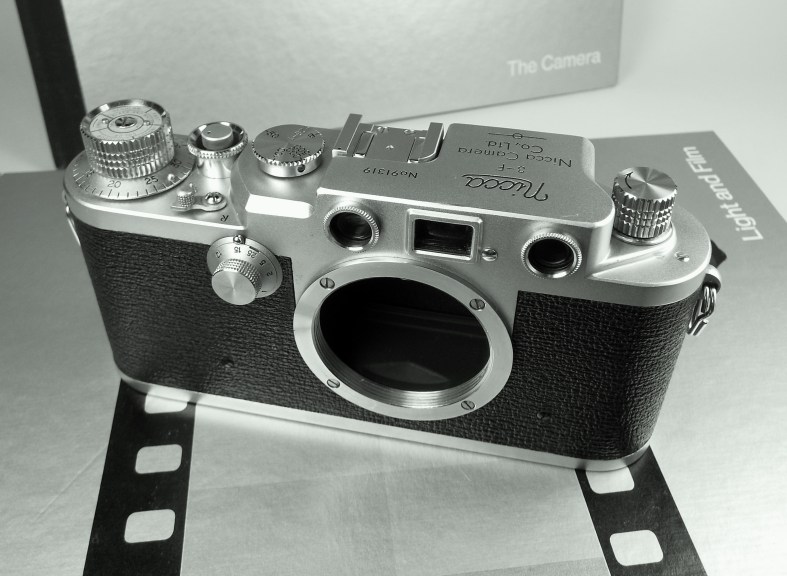
Nicca 3-F from early 1957 (maybe late 1956). Obviously, it is one of many Leica copy cameras that were built during the 1950s and beyond.

First a little bit about Nicca. Nicca was one of the literally hundreds of camera manufacturers in Japan during the late 1940s and through the 1950s. Production appears to have been, on average, anywhere from just a few hundred units per year to nearly 5,000 per year by 1958. Nicca made what many consider to be one of the better Leica copy cameras. The fit and finish of this particular 3-F are extraordinary. After six decades of use, the camera still functions perfectly and the finish is beautiful. Of note, the leatherette is some of the finest we’ve seen from this period. It is still tight and complete and is a joy to hold this camera.

To keep things in perspective, it is a rather simple camera… focal plane shutter, highest speed 1/500th of a second, no built-in exposure meter, no mirror, no self-timer and a straightforward film advance knob vice single stroke lever (later model did add the lever). Simple but executed well.

dscf2635

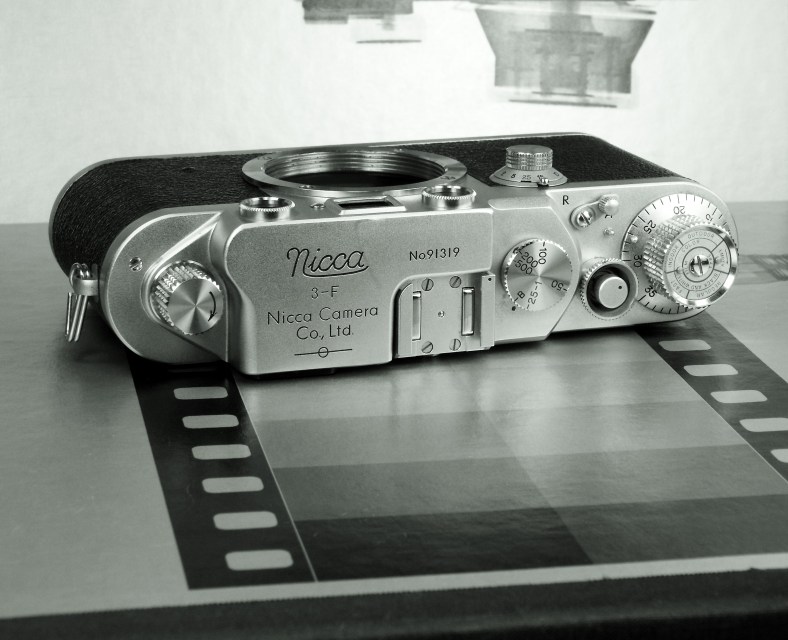
The business side of the 3-F. Traditional layout of the controls… this was Nicca’s last model with the knob film advance (they did produce this model with a film advance lever in late 1957).

Where’s the connection with Yashica? In May 1958, Yashima (pre-Yashica) purchased the Nicca Camera Company which by some accounts was struggling and near bankruptcy. We’ve yet to find proof of the bankruptcy part of this narrative but we will continue to pursue it. Yashima, soon to be Yashica, wanted access to Nicca’s technology, design and small camera manufacturing abilities as Yashima lacked experience in 35 mm camera production. We’re sure there was some desire to acquire Nicca’s focal plane shutter technology as Yashima for the most part only made TLRs (just released an 8 mm movie camera and the Yashica 35). Nicca produced two more models(?) under its own name before Yashica released the Nicca-Yashica YF in 1959. Yashica quickly stopped making rangefinder cameras with interchangeable lenses by 1960. We have always found it to be a bit odd but rangefinders with interchangeable lenses were quickly being pushed aside by 35 mm SLRs for all angles… including Yashica with its Pentamatic ’35’.

What’s the relationship with the Pentamatic? The Pentamatic was more than likely designed in the early part of 1959 and may have been originally a Nicca design (more of that later). Distribution of the Pentamatic occurred in the spring of 1960 with a widescale release and advertising by June 1960 (in the US). The Pentamatic was Yashica’s first 35 mm single-lens reflex (SLR) camera. If featured a focal plane shutter with a top speed of 1/1000th of a second. Nicca’s knowledge was directly used in the Pentamatic.

dscf2636

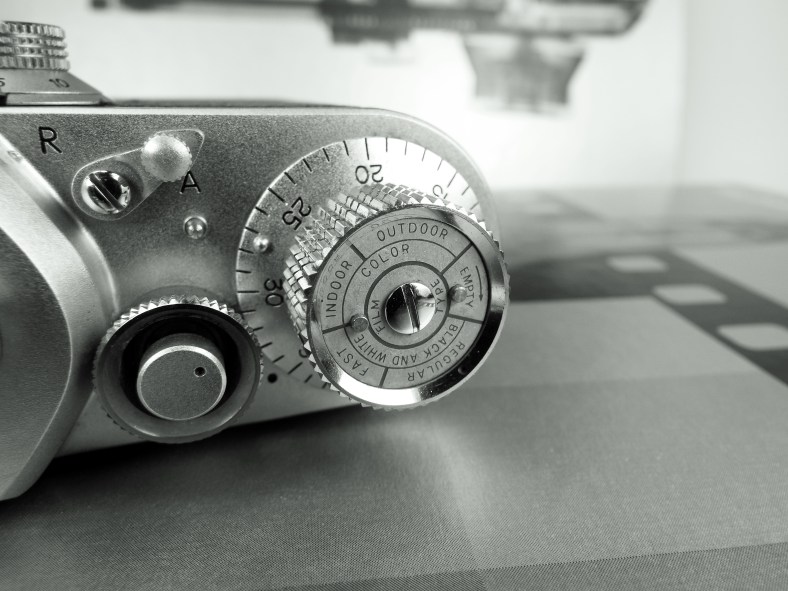
Exposure counter and film reminder dial.

dscf2632

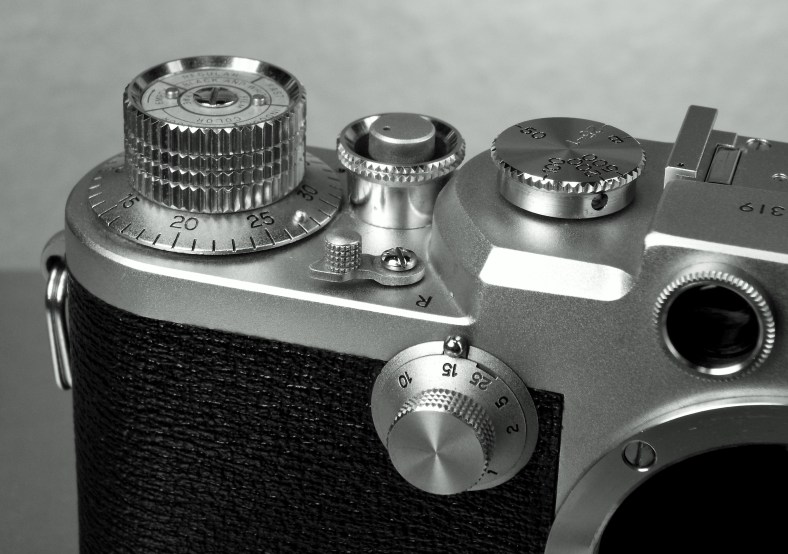
Close-up of the slow speed knob.

It appears that when Yashima purchased Nicca in 1958, there wasn’t an immediate transfer of the company’s assets to Yashima. Instead, Nicca Camera Company became Taiho Optics (or Optical) a subsidiary or new company of the Nicca-Yashica amalgamation. Mr. Ushiyama, founder, and president of Yashica received council that it was not in Yashica’s best interest to proceed with the merger (as the decision to acquire Nicca was made in haste). Instead, Taiho Optics would go on to produce some of its own lenses and lend support and design experience (and personnel) to Yashica. Why? Yashica wanted to build a 35 mm SLR and Nicca was an important stepping stone on that path.

Thanks for your visit… please feel free to leave comments.

Chris & Carol

Fujifilm Instax Wide 300 Review

I wish Yashica was still around… the ‘real’ Yashica from Japan not H.K.

But they’re not so what’s a Yashica freak to do if you want to review new gear and new film formats? Well you turn to my go to camera makers (for the record; Yashica, Canon, Fujifilm)… Fuji Photo Company as they used to be known. Now just Fujifilm. I do appreciate the Fujica line of cameras and would love to own a Fujicaflex and a Fujicarex! But I wander as I often do.

I’ve had my eye on the line of Instax film cameras from Fujifilm ever since they introduced the Instax film (I might have been a little behind the times here). Anyway, since I’ve almost always have had an instant film camera… Polaroids and the Kodak EK4, I decided to splurge and get the Fujifilm Instax Wide 300. Why? The format. I like wide shots and the Wide 300 gives a nearly 62 x 99mm image in bright color.

dscf2118

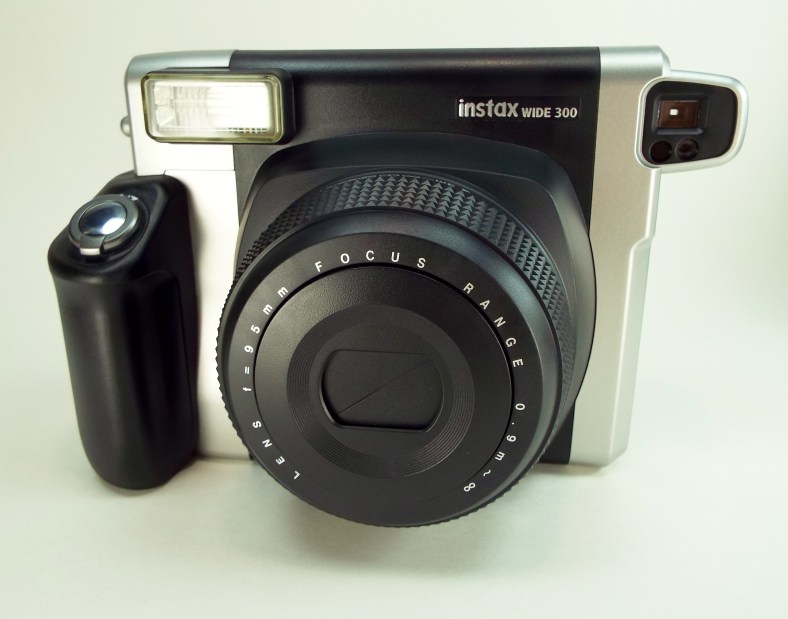
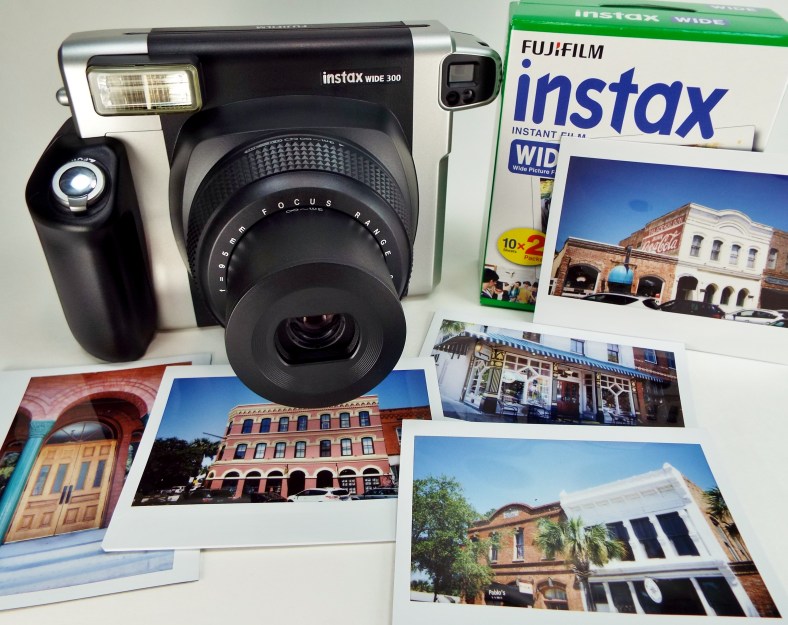
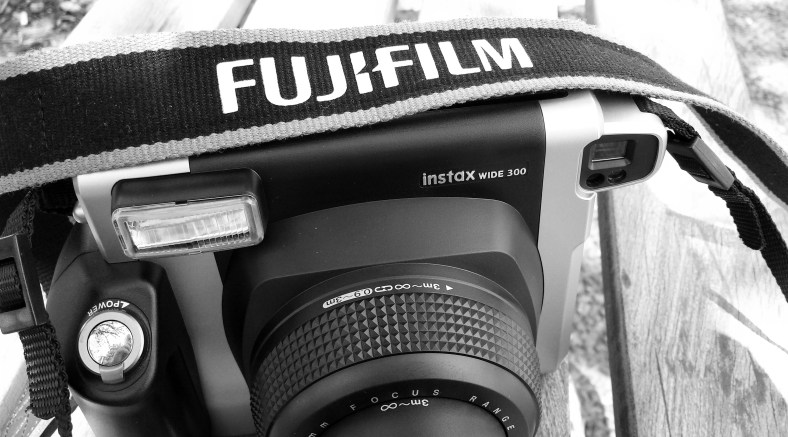
The Instax Wide 300… a simple camera… clean lines and has a nice feel to it.

Plenty of places to get a good grip on this camera… the large handle on the camera’s right side is just the right size (for me) to get a grip. With the camera in off, the built in lens shield slides into place. The shutter release button is in a good spot… my only complaint is that it lacks feedback when you push it. Only the actual sound of the shutter firing inside (if you can hear it) lets you know it’s tripped. Of course the picture does pop out immediately on top with the typical motor noise of an instant camera which confirms the shutter was fired. Minor detail.

dscf2120

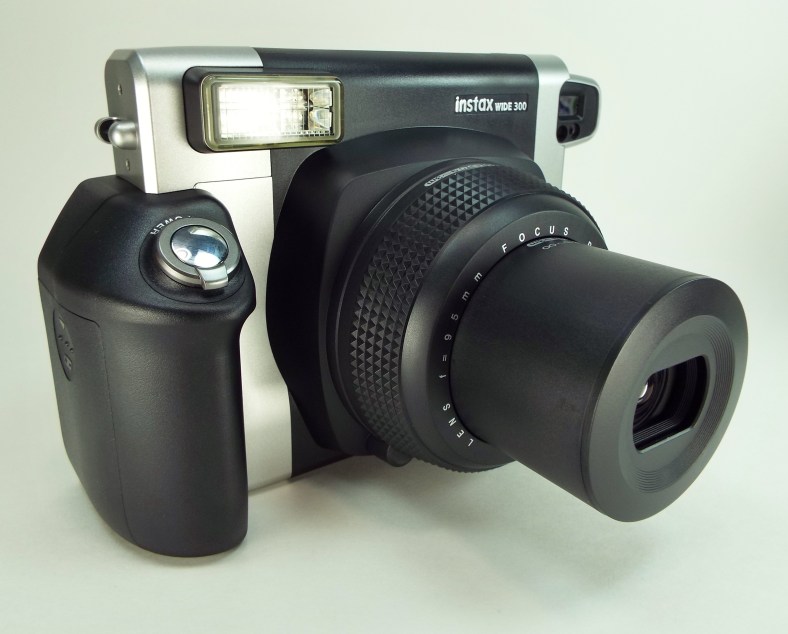
Lens extended in its fully open position (close-up photography).

dscf2121

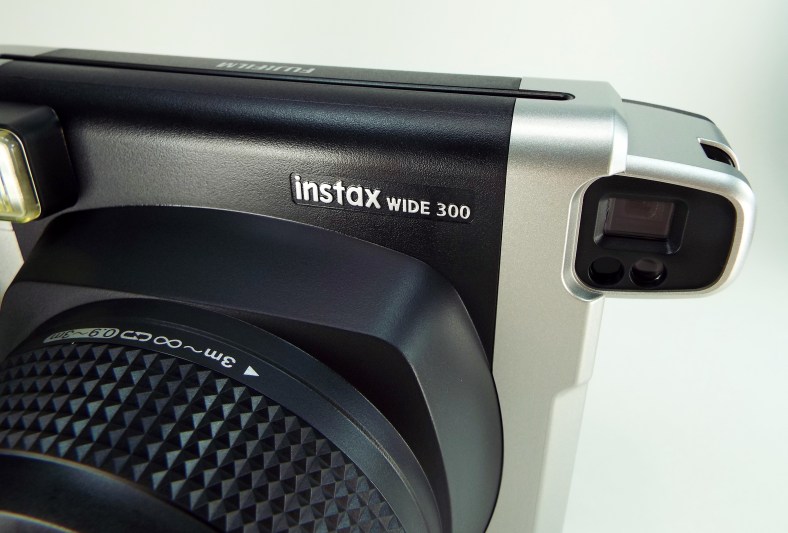
Once you get the feel of where the viewfinder is in relationship to your right eye it’s actually very bright and gives a good view of the actual lens image.

dscf2122

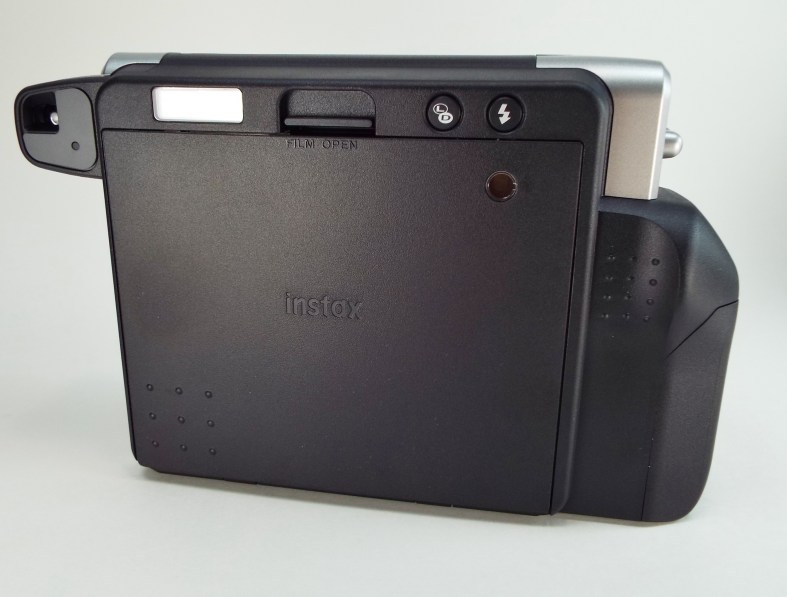
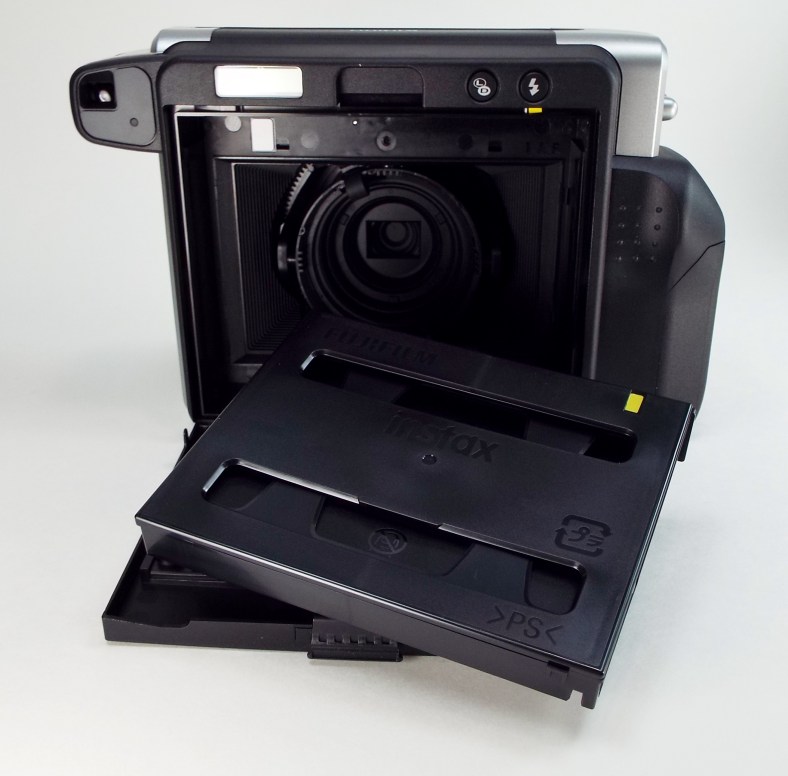
The access to the film compartment couldn’t be easier… it opens a full 90 degrees to make loading film quick and easy. The LCD shows basic info… flash on, image number and the plus or minus exposure compensation.

dscf2123

Open back with empty film pack.

dscf2131

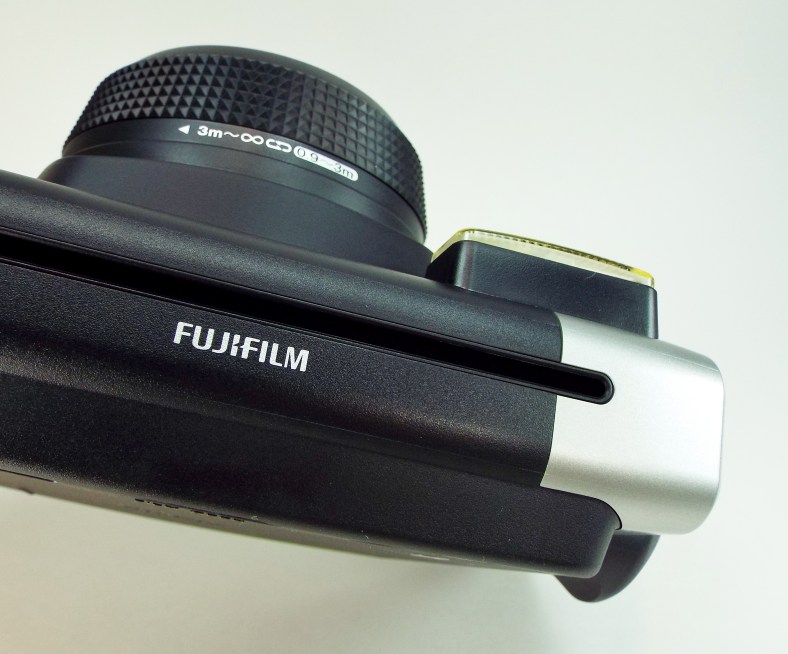
Pictures pop out via this slot on top of the camera.

20160908_144816

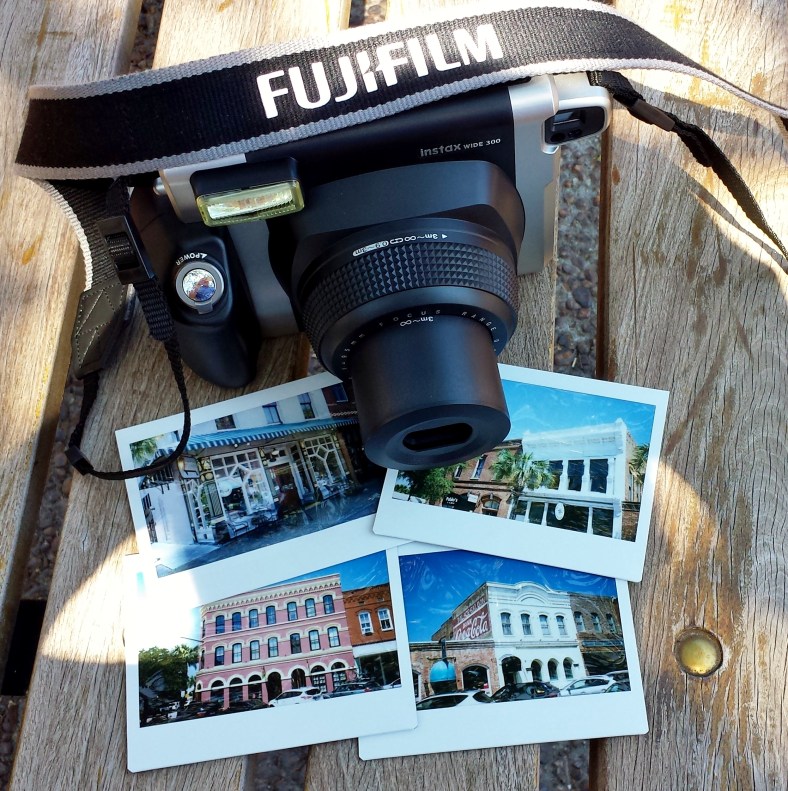
A small sample of the images taken today with the Fuji. Shot at around early afternoon in bright Florida sunlight. The colors are vivid and because the film speed is 800 the sharpness and detail are nice.

dscf2116

Back inside for a studio shot.

20160908_144800

It’s a big camera (really big) and has some heft to it. I had more than a few looks as the picture ejects from the top with that familiar instant camera sound. That’s not the standard strap… it’s a little thing and I like to have something wider around my neck.

dscf2127

Bold colors under bright sunlight. An excellent daylight film.

dscf2128

Back to the future with instant film. The Fujifilm Instax Wide 300 is a hit with me.

The camera is a point and shoot… well OK it does have two settings on the lens… 3 meters to infinity and 3 meters to 0.9. It does have an auxiliary close-up lens that I’ll try out next pack of film. It has a built in flash that worked great for daytime fill ins and you can adjust the exposure plus 1 or minus 1. Takes 4 AA batteries (which I love).

fujifilm_1934

It would be cooler if it sported this logo!

fujifilm_past_logos

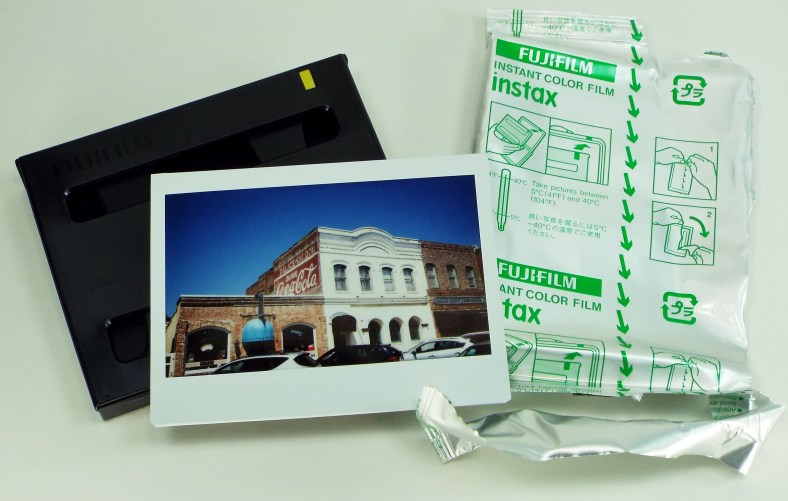
So would I recommend the Fujifilm Instax Wide 300 camera? Yes and Yes! Mine was purchased online for around $86 from B&H and another $10 for two 10 exposure film packs. It was a great deal and it included free shipping. At fifty cents per image you can’t go wrong!

img_20160907_0003

Enjoy!

Thanks for the visit!

Chris and Carol ^.^


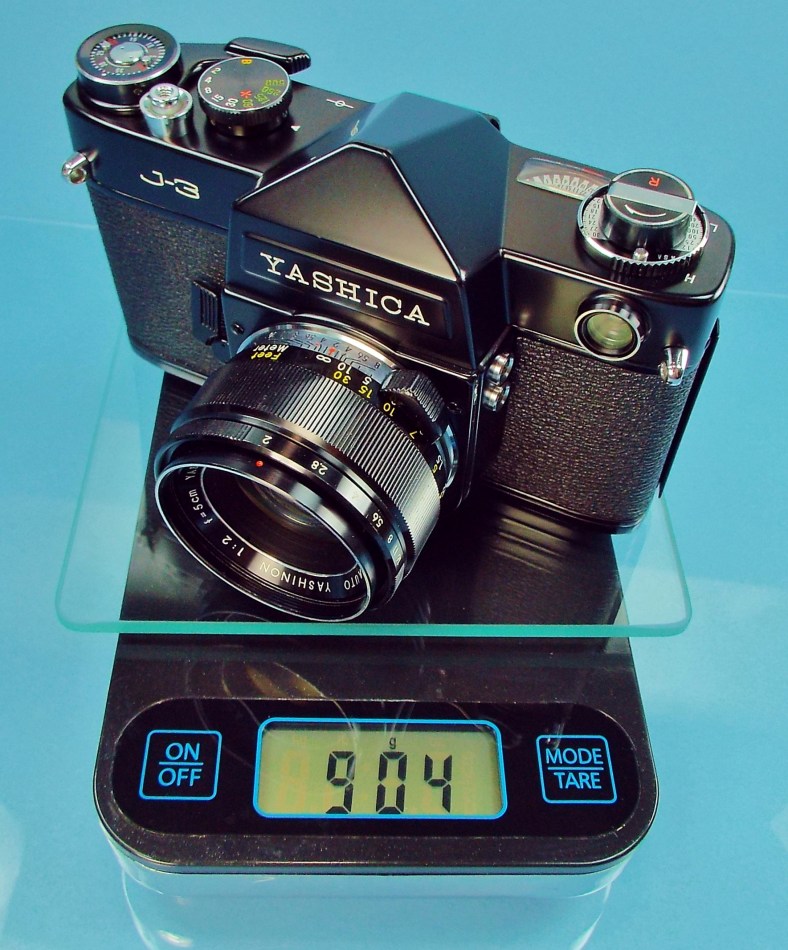
Yashica ヤシカ J-3 in Pro-Black

Another of our favorites in the Yashica family. This limited edition J-3 is rather rare to find in nearly new condition these days. We haven’t found evidence from Yashica of the when and why they chose this model to be their first SLR in black (with matching lens). In all the brochures and pamphlets we’ve been able to read, nothing has ever been written about it and no pictures from Yashica either. We’ve checked Japanese home market sales brochures and of course those available in English. Not one word! The serial numbers (both the bodies and lenses) run within a small time period of mid 1962 (we believe).

***Please if a reader has more information about this elusive J let us know!

007

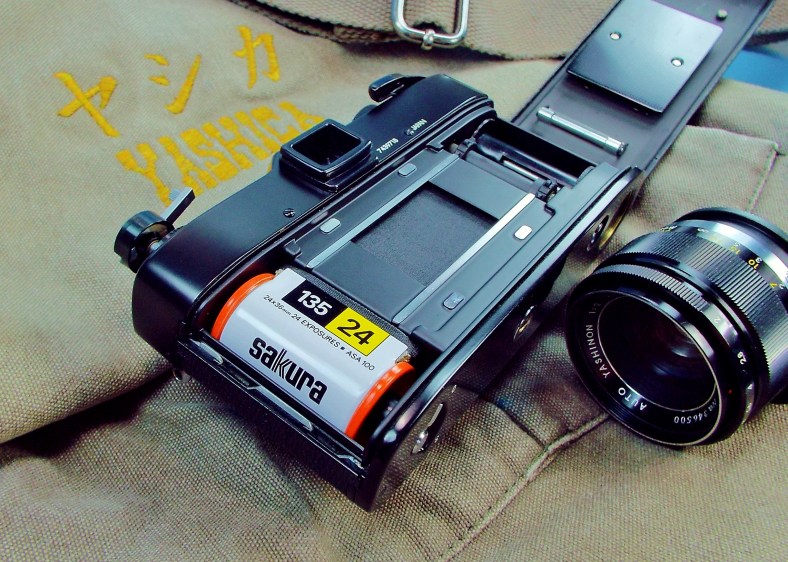
J-3 finished a roll of Sakura film.

003

Not quite the heavyweight the Pentamatic is but still a beast at just over 900 grams!

022

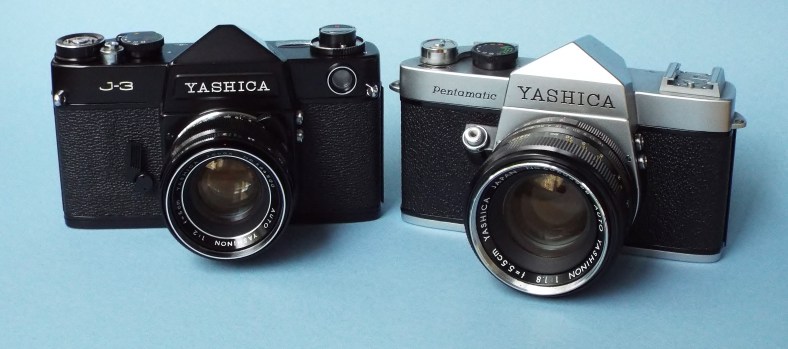
Same family but very distant cousins! Yashica made countless changes in its SLR line-up in just under three years.

As always… thanks for the visit!

Chris & Carol

The Fasinating World of Yashica Photography

A short history of one of the most dynamic and innovative camera manufacturers in Japan during the decades of the 1950s and 1960s.

An amazing start-up before there were start-ups! In less than a decade, the Yashica Company of Tokyo, Japan, became a major player in the field of high quality, low-priced photographic equipment and cameras in the international marketplace. Competing against literally hundreds of other newcomers and established camera manufacturers, Yashica rose to market dominance by 1960.

25262272564_d4dcebb6c5_o

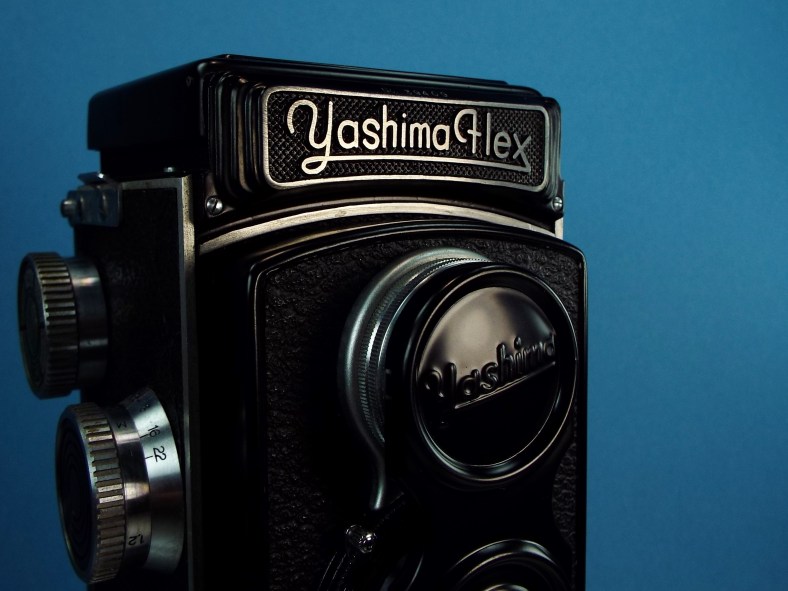
Back when Yashica was Yashima. Yashica’s second TLR in a long line of twin-lens reflex cameras.