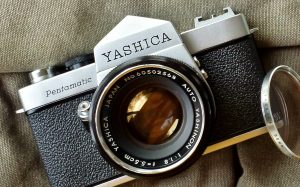
New In the Shop – 11.30.2019

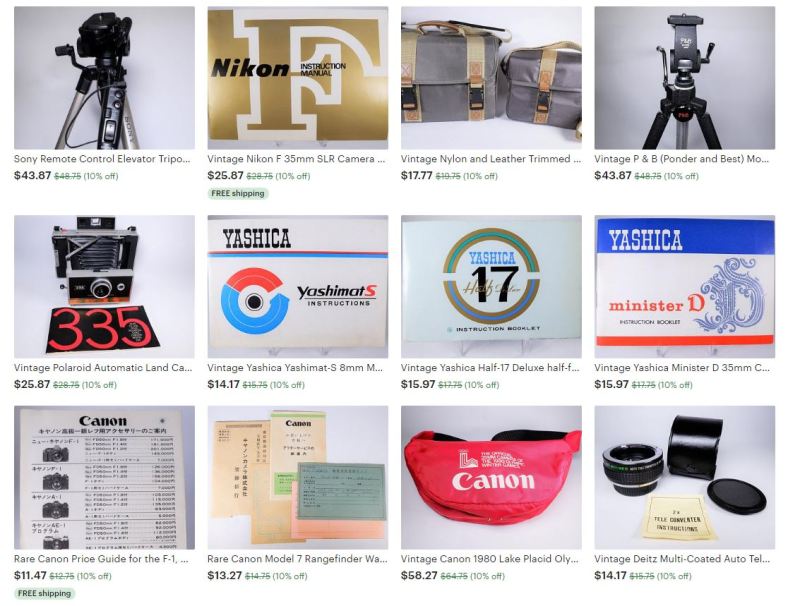
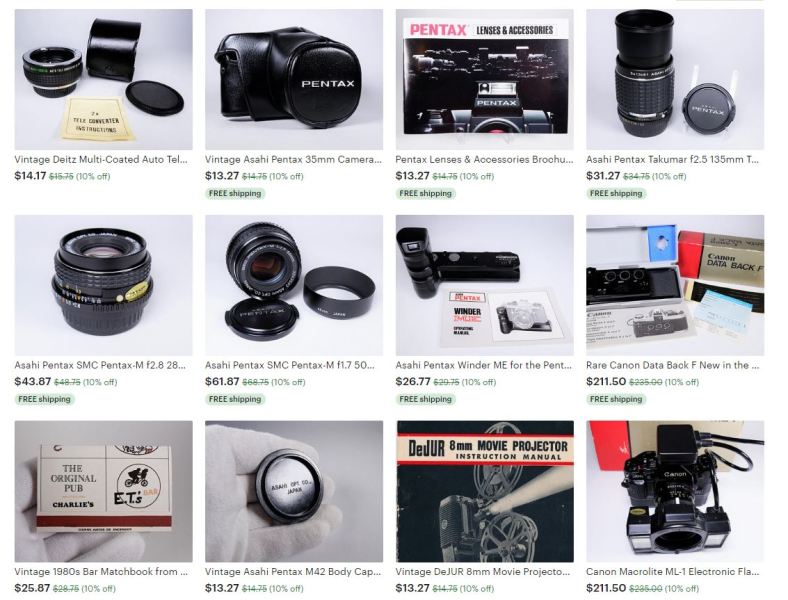
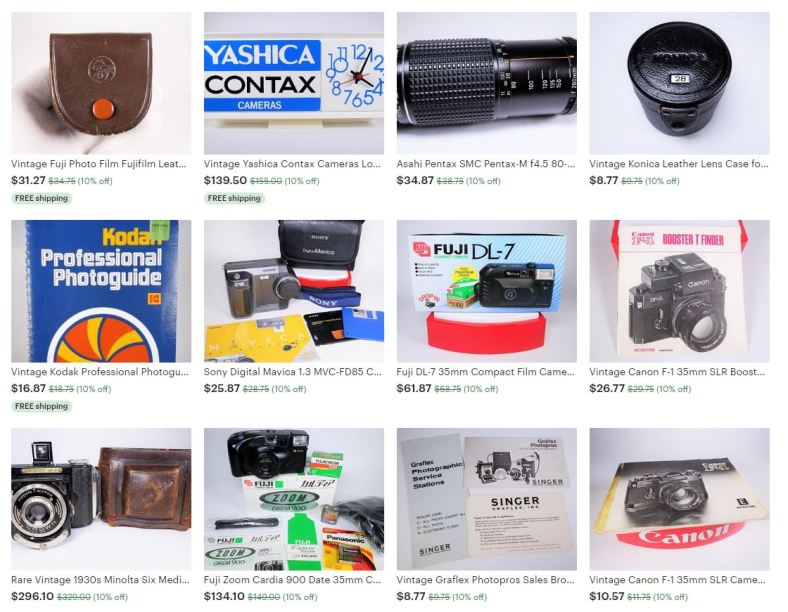
Hi all! Here’s a small sample of what I have on sale in my camera shop at http://www.ccstudio2380.com

I ship nearly worldwide and I ship super fast. All items are from my collection of vintage (and not so vintage) cameras and photogear that I’ve collected over the years.
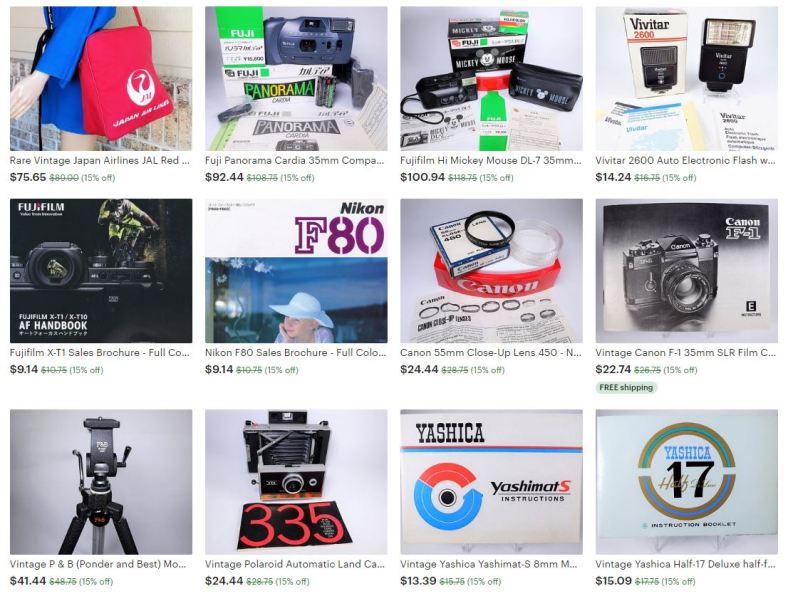
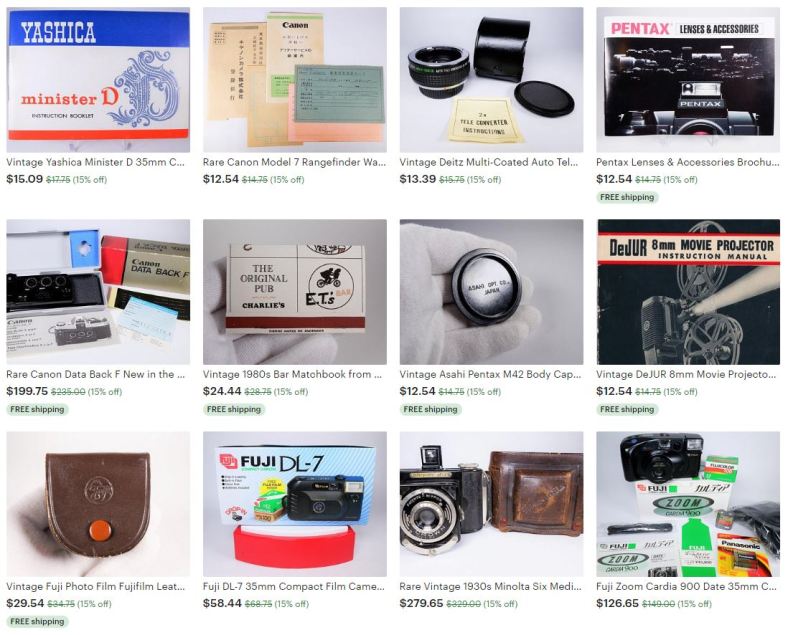
Snip 11.30

Snip 11.30.19

My shop is always open at http://www.ccstudio2380.com
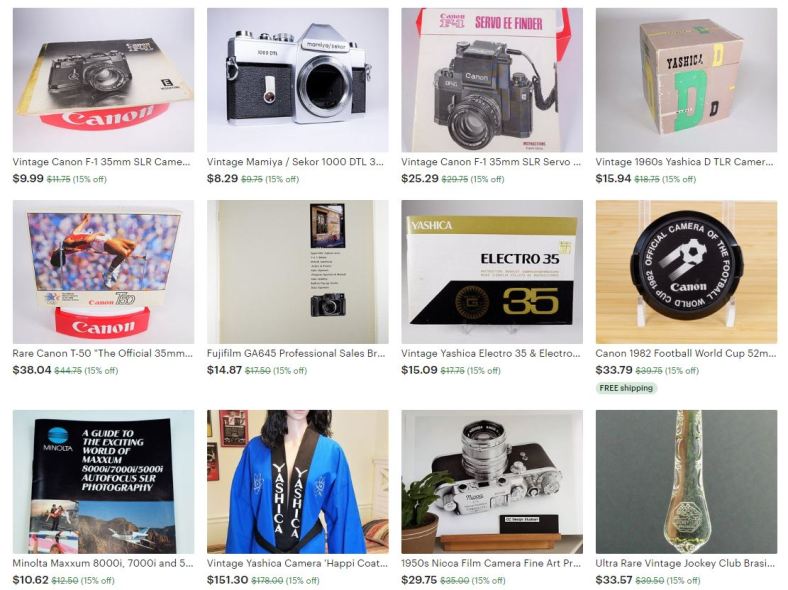
Snip 2

If you’re looking for something specific let me know what it is and I may have it or can get it for you! Contact me at ccphotographyai@gmail.com

I’ll be listing some additional classic and rare cameras in the coming days so check out my shop often at http://www.ccstudio2380.com

Thanks for stopping by! – Chris

Please respect that all content, including photos and text, are the property of this blog and its owner, Yashica Pentamatic Fanatic, Yashica Sailor Boy, Yashica Chris.

Copyright © 2015-2019 Yashica Pentamatic Fanatic, Chris Whelan
All rights reserved.
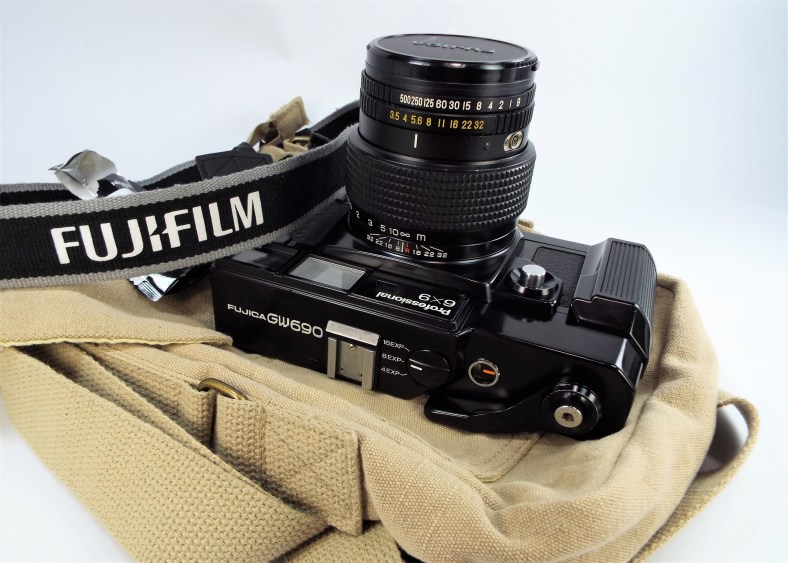
Fujica GW690 Professional – medium format photography on a grand scale

fujica gw690 2

The Fujica GW690 Professional from Fuji Photo Film Company – November 1978. It’s a rather hefty medium format 120/220 roll film camera capable of producing images at an amazingly large 6 x 9 cm.

fujica gw690

Loaded with Fujifilm Neopan 100 Acros.

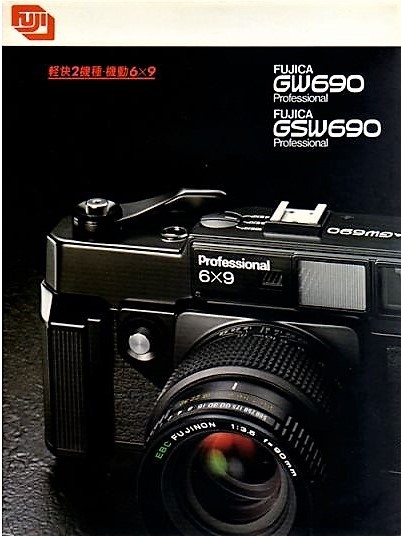
Its original list price was ¥143,500. The camera features a non-interchangeable EBC Fujinon 90mm f/3.5 lens (5 elements in 5 groups) and a Seiko #0 leaf shutter with settings for T, 1-1/500 second. It weighs “just” 1,430 grams. No batteries needed as there is no built-in exposure meter. Simply focus the easy to use rangefinder, meter via a handheld meter (or phone app), set your aperture and shutter speed and you’re good to go. By the way, this beast produces 8 super sharp images so you can eat through a roll of 120 film in a hurry.

20130403_88ff69

Original sales brochure – 1978.

●11FUJI GW690ⅡGOLD

Released in 1985, the now Fuji GW690II in GOLD.

To see all of the cameras in this series please check out this wonderful site.

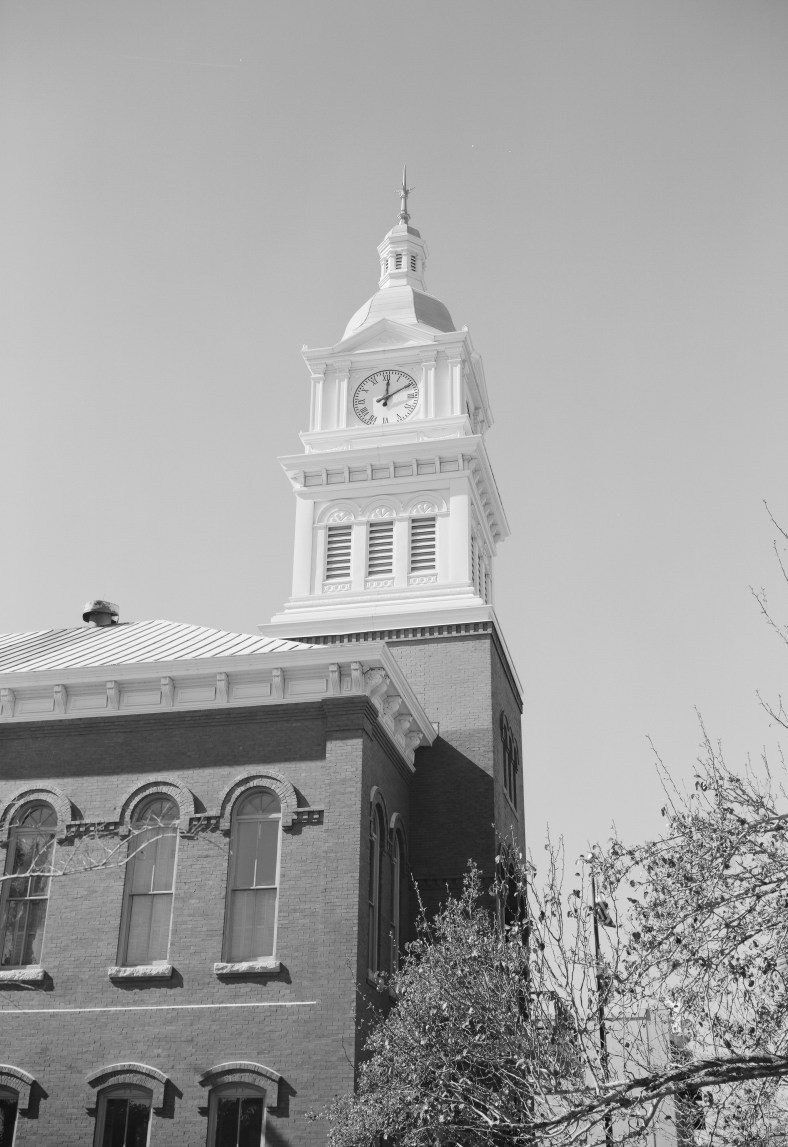
Images were taken with my Fujica. All of the images are as exposed and as scanned. No post-production, really-really.

fujica gw690 pic 1

fujica gw690 pic 2

fujica gw690 pic 3

The Fujica GW690 and Fujifilm Neopan 100 Acros are an almost perfect combination. There’s always plenty of these available via online auctions with a majority of them listed in Japan.

GOOD NEWS!

Fujifilm Acros II

Fujifilm Acros II Box

Yeah! Neopan is not dead!

Thanks for stopping by! – Chris

Please respect that all content, including photos and text, are the property of this blog and its owner, Yashica Pentamatic Fanatic, Yashica Sailor Boy, Yashica Chris.

Copyright © 2015-2019 Yashica Pentamatic Fanatic, Chris Whelan
All rights reserved.


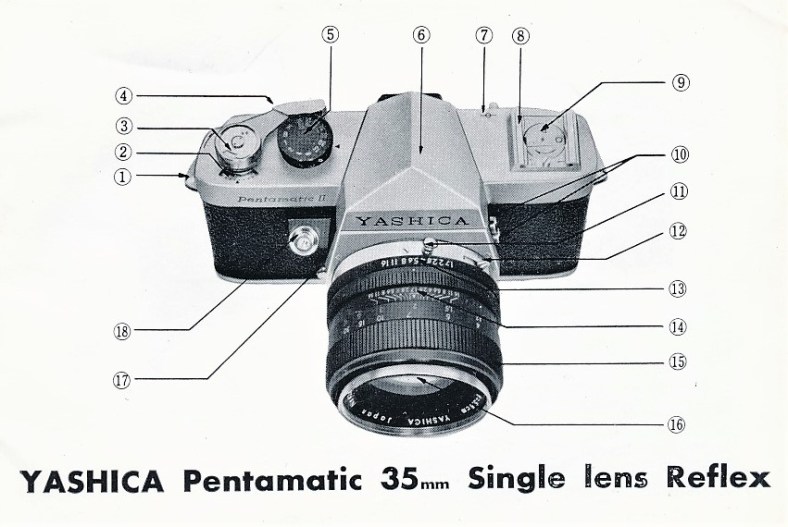
A rare Yashica Pentamatic II instruction booklet surfaces.

Every now and again something new turns up in our never-ending search for the complete history of the Yashica Pentamatic series of 35mm SLR cameras. The first model of the Pentamatic was dated (by serial number) in December 1959 and the last, the Pentamatic S ended in March 1962. In between the Pentamatic II had a short run from August 1960 to January 1961. Fewer than 26,000 Pentamatics were made (of all models) during its brief run which makes the Pentamatic one of the hardest to find models in Yashica’s historical line-up of SLR cameras.

A recent online auction featured this never before seen instruction booklet (below).

Yashica P2 book lolo

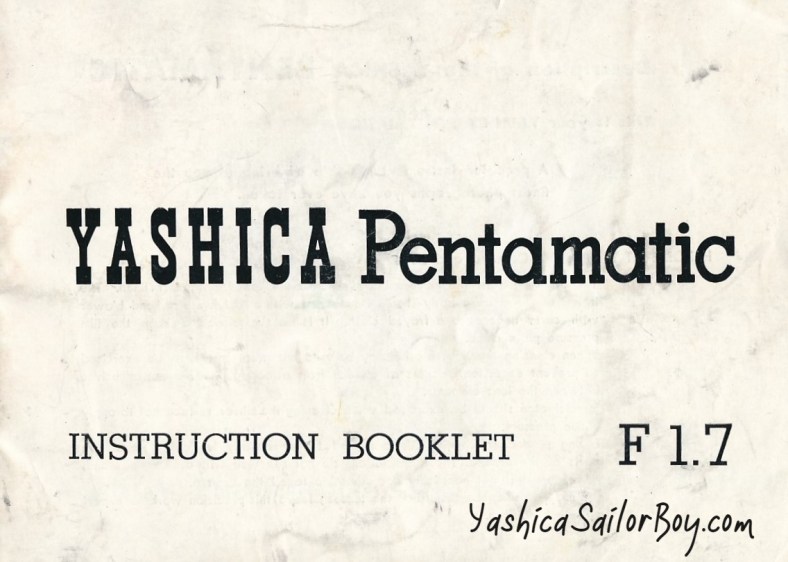
It’s not much to look at as the cover is devoid of any attempt to market the camera.

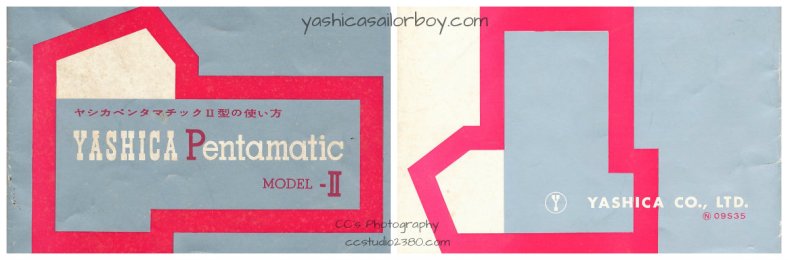
My best guess is that the booklet is an English edition of the Pentamatic II instructions. The Japanese edition (below) is much more in keeping with the style of the other books. My good friend and Yashica collaborator Paul Sokk and I agree that the Pentamatic II was never released for sale outside of Japan which makes the discovery of this white cover booklet for the Pentamatic II that much more interesting.

pentamatic 2 collage

Front and back covers of the Pentamatic II instruction booklet. It’s the only manual found so far that’s printed in Japanese.

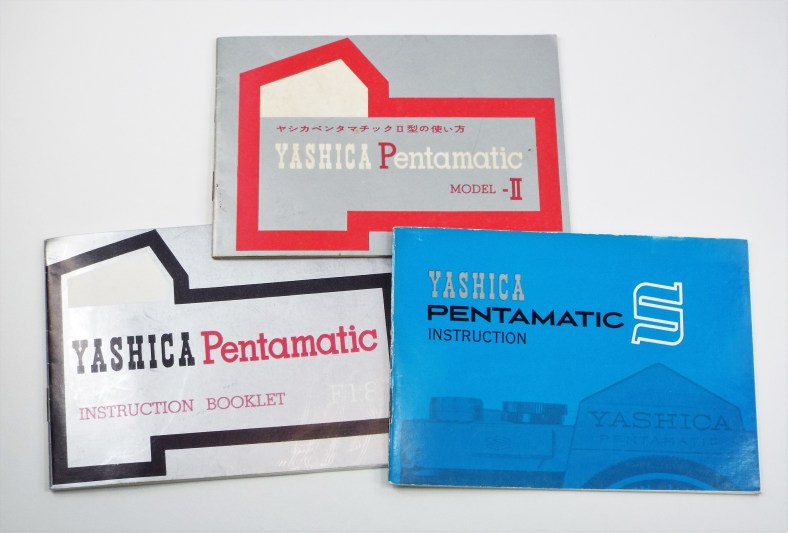
Here are all three of the instruction booklets for the Yashica Pentamatic (below).

DSCF6534

Up to this point, these were the only known Pentamatic instruction booklets.

IMG_20191026_0014

Here’s a scan of the first page inside the white covered booklet – pictured is a Pentamatic II with it’s Zunow sourced 5.8cm f/1.7 lens. The camera is still identified as the original Pentamatic in this image, however.

So the big question is why did Yashica print this instruction booklet in English when from all evidence the Pentamatic II wasn’t released for sale outside of Japan? A secondary question is why did they choose to not title the booklet as being for the Pentamatic II? Our best guess is that a few Pentamatic II models were in fact sold in Japan possibly in military exchanges and in duty-free shops and an English version was needed. It’s also possible that a few Pentamatic II’s were sold outside of Japan and the booklet was produced to supplement the camera. Nothing yet to prove that the Pentamatic II was sold outside of Japan but the existence of this book adds a new wrinkle to the history of this camera.

Thanks for stopping by and as always, if you have additional info about any of the three Pentamatic models please share it with us. Thanks, Chris

Please respect that all content, including photos and text, are the property of this blog and its owner, Yashica Pentamatic Fanatic, Yashica Sailor Boy, Yashica Chris.

Copyright © 2015-2019 Yashica Pentamatic Fanatic, Chris Whelan
All rights reserved.
New In the Shop – 10.10.2019

Lots of goodies were added to my camera shop this week as I continue to list items from my personal collection and some recent acquisitions from other collectors.

My shop is always open and can be found at http://www.ccstudio2380.com

snip 10.10.19

The Sony tripod is in mint condition and it’s rather cool – it features a built-in remote control right in the handle! The Nikon F book is from 1971 and it’s also in mint condition – these are getting much harder to find this nice after all these years.

snip 2 10.10.19

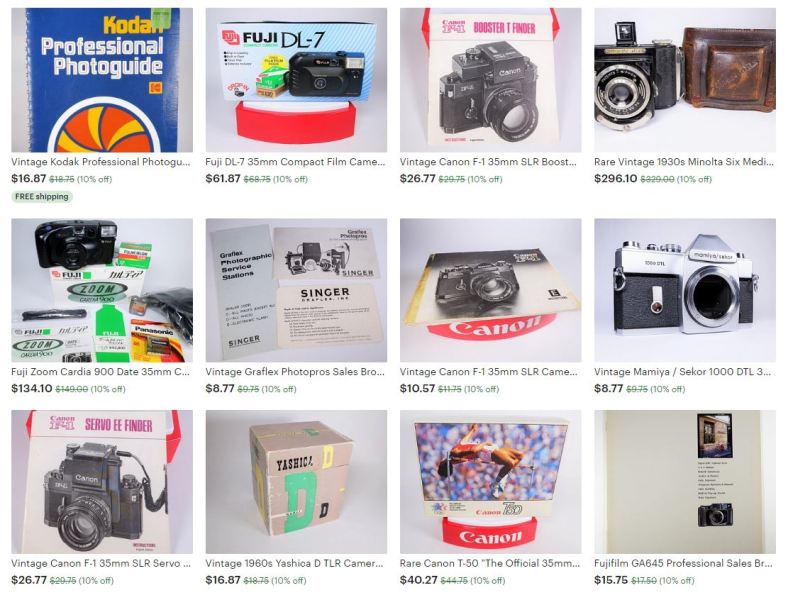
The Fujifilm Fuji DL-7 is awesome as it’s still brand new in the box – never used! The Fuji Zoom Cardia is as close to an SLR slayer that you can get in a 35mm compact point and shoot camera. How about the Minolta Six medium format camera from around 1936! It’s the very first one to carry the Minolta name.

Lots more to see in the shop so pop on over to http://www.ccstudio2380.com

Thanks for stopping by! – Chris

Please respect that all content, including photos and text, are the property of this blog and its owner, Yashica Pentamatic Fanatic, Yashica Sailor Boy, Yashica Chris.

Copyright © 2015-2019 Yashica Pentamatic Fanatic, Chris Whelan
All rights reserved.


Yashica’s TL Series of 35mm SLRs

Yashica’s evolution during the 1960s and beyond started with their first TTL (Thru-the-Lens) exposure metered cameras – the much loved TL Series which were introduced right after the successful J Series (Penta J, Reflex 35, J-3, J-5, J-P, J-4, J-7).

It began with the exceptional TL-Super in April 1966. The chronology is as follows based on serial numbers and not based on advertised or previously known release dates.

  • TL-Super          Apr 1966
  • TL                      Nov 1967
  • TL Electro-X    Oct 1968   Type 1
  • TL-E                  Jun 1969
  • TL Electro X    Jul 1969     Type 2
  • ITS                    Dec 1970
  • Electro AX       Mar 1972
  • TL-Electro       Apr 1972
  • FFT                   Jul 1973

The TL Series ended in 1978 with the last TL-Electro made. All of these Yashicas used the M42 screw-in lenses which were made by a variety of lens makers.

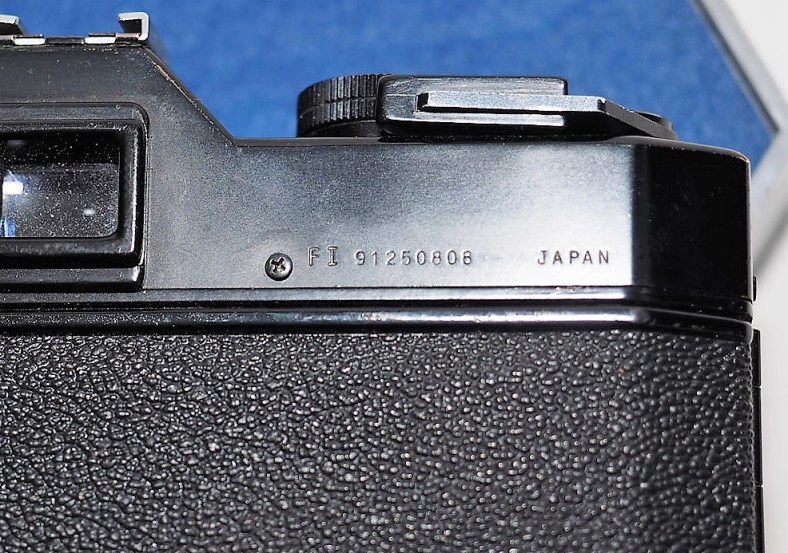
It’s easy to decode your camera’s serial number as Yashica used a 3 or 4 digit date code at the beginning of the serial number. As an example, here’s a serial number on a TL-E (90607952)  9 = 1969, 06 = Jun, 07952 = 7,952nd made that month in sequence from 00001.

Here’s a TL (2816946)  2 = Feb, 8 = 1968, 16946 = 16,946th made that month in sequence.

If you’ve got a serial number that you can’t quite decode send it to me at ccphotographyai@gmail.com

Thanks, Chris

Please respect that all content, including photos and text, are the property of this blog and its owner, Yashica Pentamatic Fanatic, Yashica Sailor Boy, Yashica Chris.

Copyright © 2015-2019 Yashica Pentamatic Fanatic, Chris Whelan
All rights reserved.
Restoring a vintage camera box – carefully.

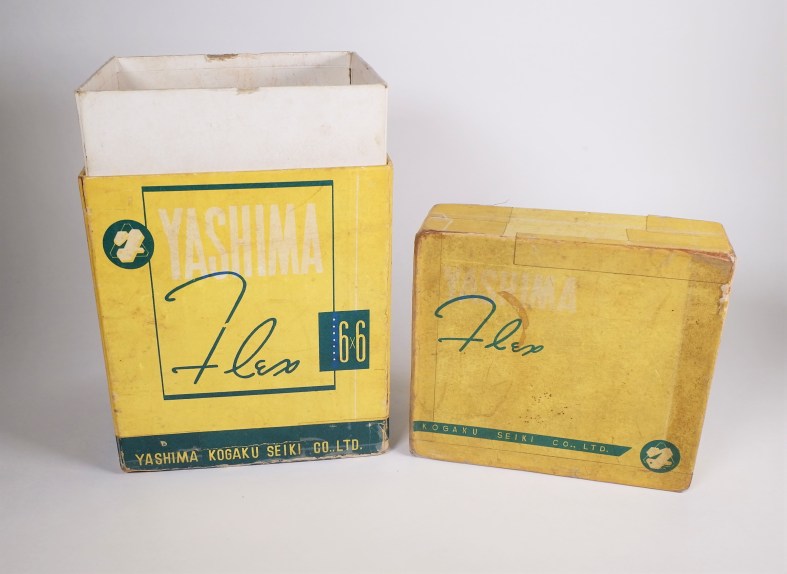
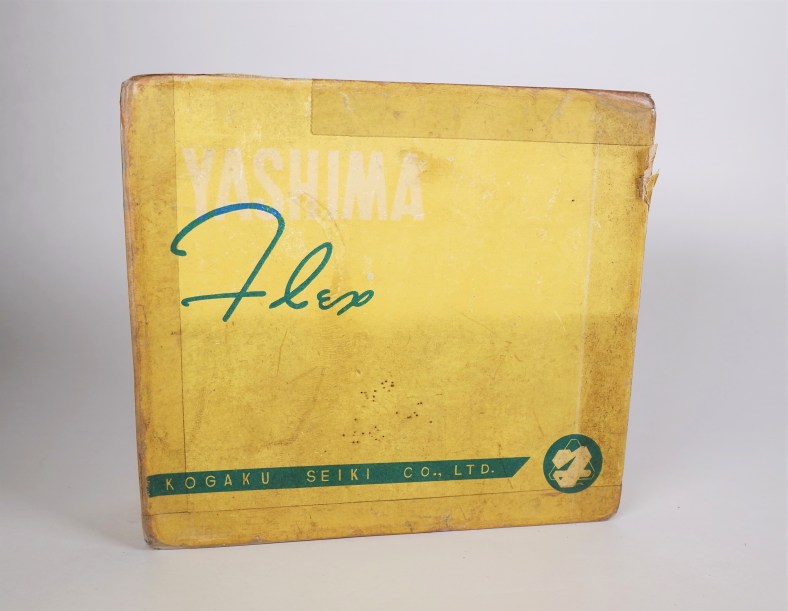
Collectors are a strange lot – for many it’s the thrill of the chase and the found item quickly fades into the background. For me, since I collect vintage cameras and photo gear, the items I purchase are often fifty or more years old and some like this box are as old as I am. In this case, this Yashima Flex box is sixty-five years old – vintage just like me.

When I collect items such as this, I enjoy not only the thrill of the chase but the history behind the item – where was it sold originally and if I can, when was it sold. In this case, Yokohama, Japan and 1954. I also enjoy restoring my cameras and associated bits as not only a way to preserve them but also to increase their value for when it’s time to pass them along to the next collector.

DSCF6585

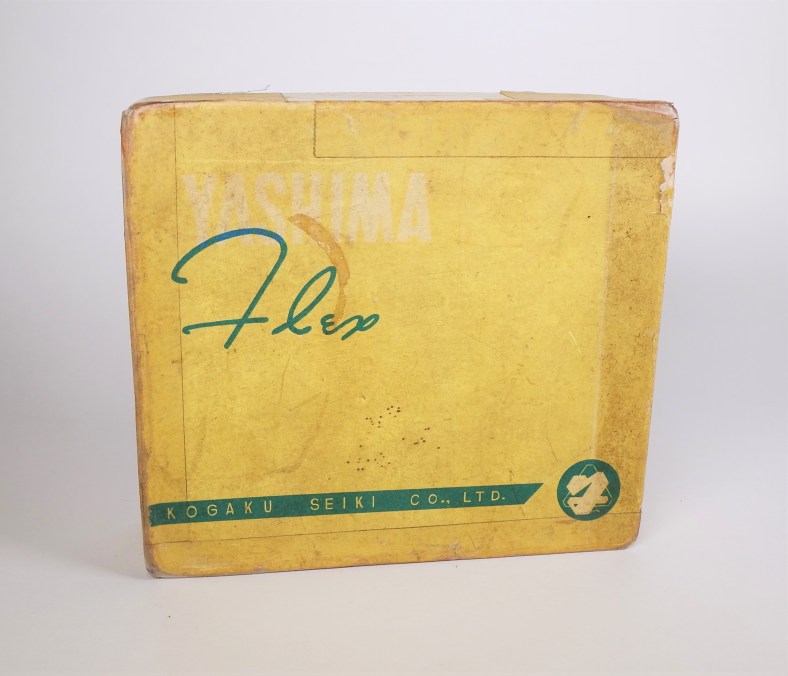
“Fresh” from Japan – my 65-year-old Yashima Flex TLR presentation box complete with six decades of dirt, soot, DNA and grime. Although someone taped the box together years ago (I’m not a fan of doing that) it at least kept the box in one piece.

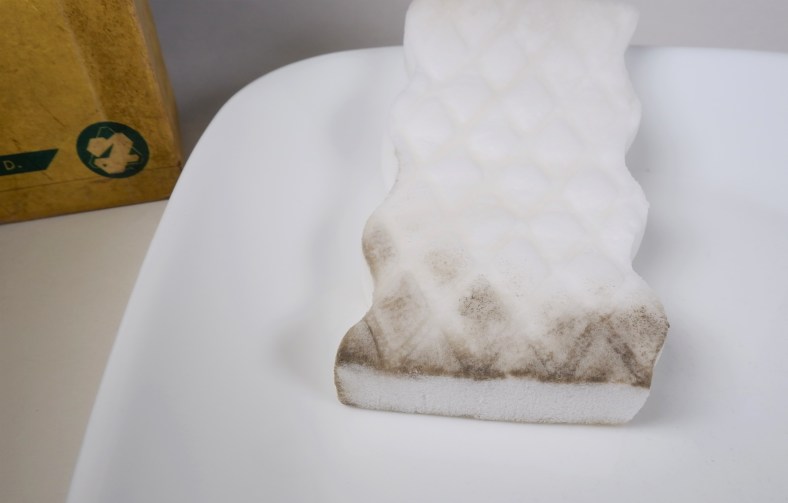
Step one (for me) is to clean the surfaces of all that grime. Often with these paperboard boxes, mold will grow in the layers of dirt and the mold spores will eventually break down the paper. In many cases, the mold (and mildew) will permanently stain and discolor the paper (not good). This box does have permanent staining but at least it should stop spreading.

***Please Note: I’ve cleaned about a dozen or so boxes like this one over the years, mostly boxes from the 1950s and mostly boxes made for Yashima-Yashica cameras. Your box may differ in its construction and the paper may respond to cleaning in a less than desirable way. One of the first things you should do is test this cleaning method on an inconspicuous part of the box.

DSCF6591

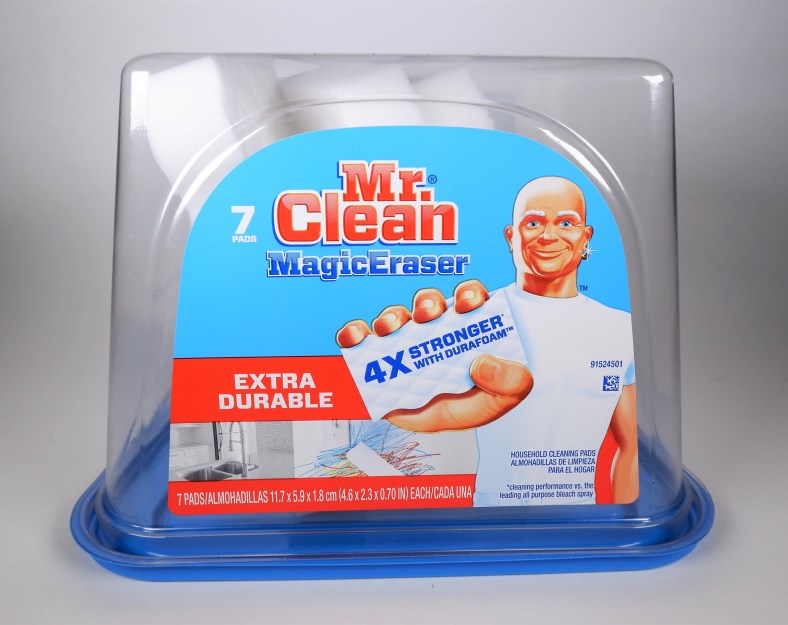
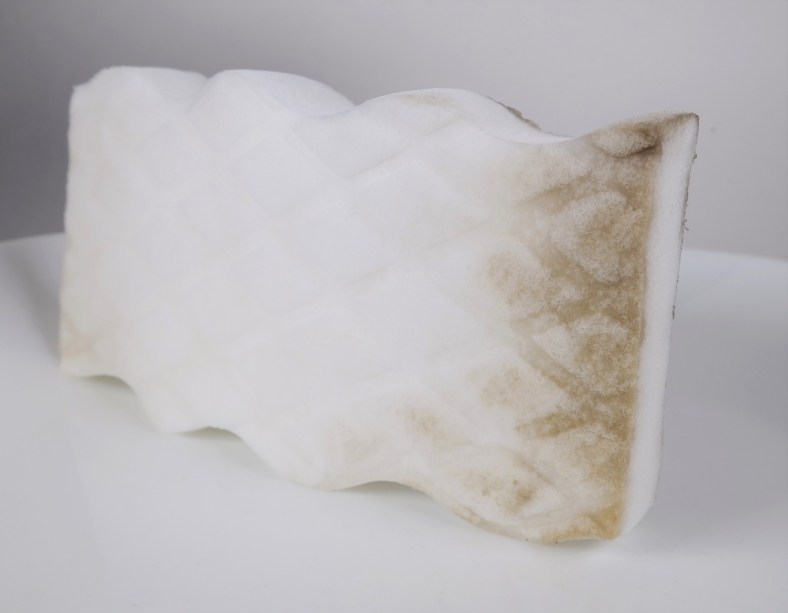
Mr. Clean is all you need (and a steady hand). The secret to cleaning the box with a Magic Eraser is to use a very lightly moistened pad (rinsed regularly) and to apply steady gentle pressure.  No scrubbing! It will take several passes with the pad to remove all of the grime. Do not let the paper get too wet and always give the surface a chance to dry before recleaning.

DSCF6586

Before cleaning. Pretty dirty – pretty nasty.

DSCF6587

After only a few gentle passes with the Magic Eraser (top part), things are looking much better. It’s not going to clean everything off the paper on your first attempt and you’ll likely need to repeat the process. Slow and steady wins the race – you’re only trying to remove the soil and not damage the delicate paper.

DSCF6588

Sixty-five years of grime – removed.

DSCF6589

Steps two, three and more I’ll cover in another post. For now, I’ll need to finish cleaning the remainder of the box. My future plans call for stabilizing the structure of the box (a bead of clear glue along the inner seams) and a go at removing the exterior tape.

Thanks for stopping by! – Chris

Please respect that all content, including photos and text, are the property of this blog and its owner, Yashica Pentamatic Fanatic, Yashica Sailor Boy, Yashica Chris.

Copyright © 2015-2019 Yashica Pentamatic Fanatic, Chris Whelan
All rights reserved.