Happy SUNday! – Yashica movie camera 1961

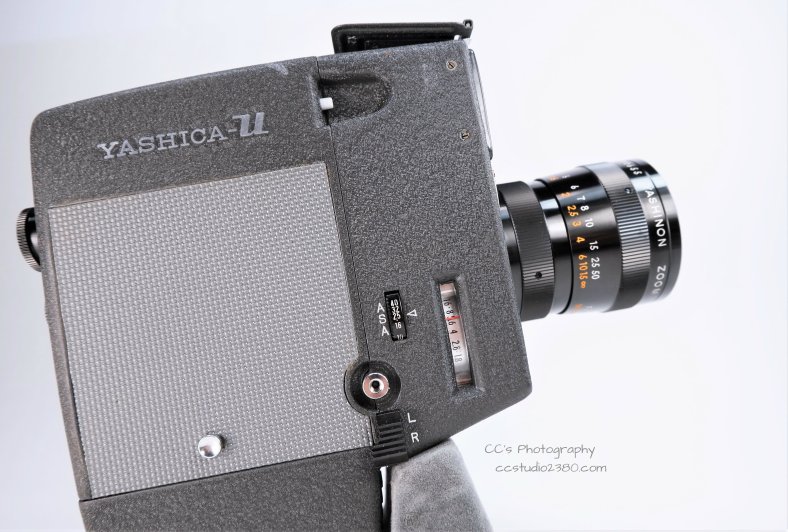
Making home movies in the 1960s.

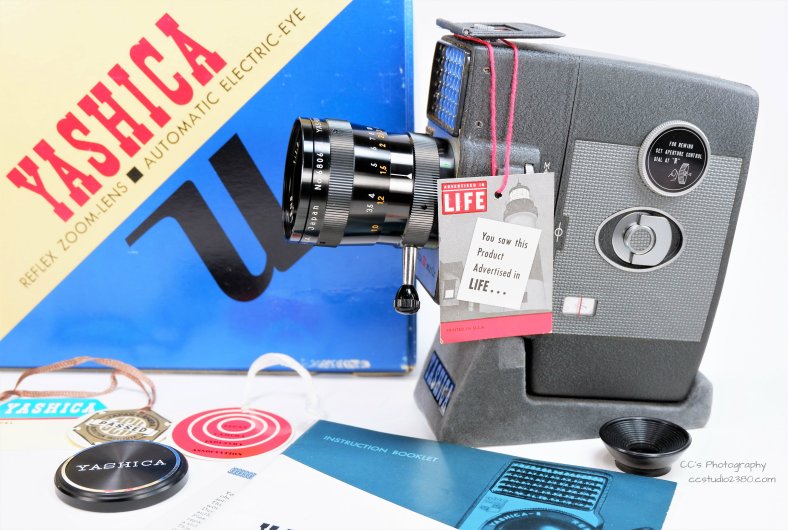
Yashica 8mm Movie Set

Complete kit. BTW, the little hang tag from LIFE depicts a cover from 1947.

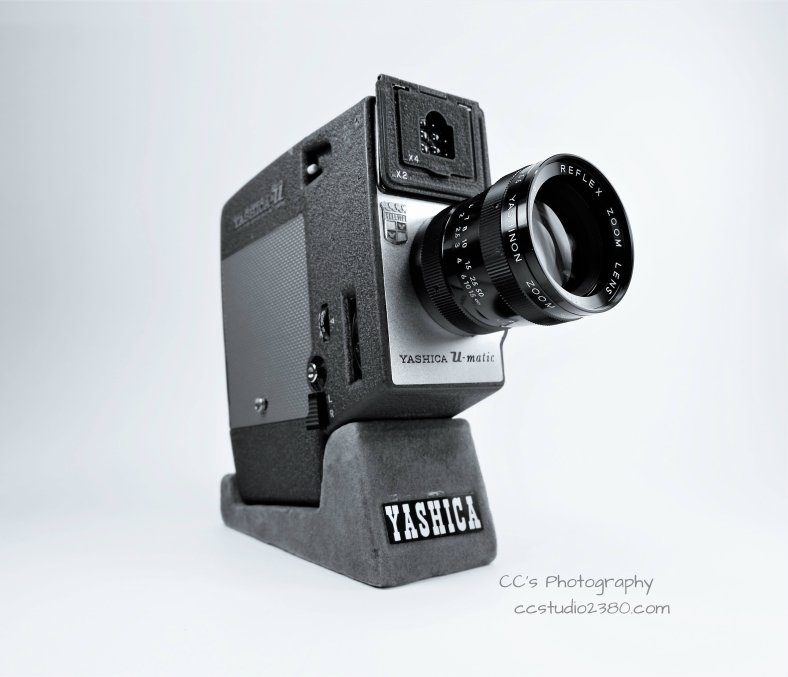
Yashica 8 U-matic 1961

Super-fast Yashinon f/1.8 zoom lens.

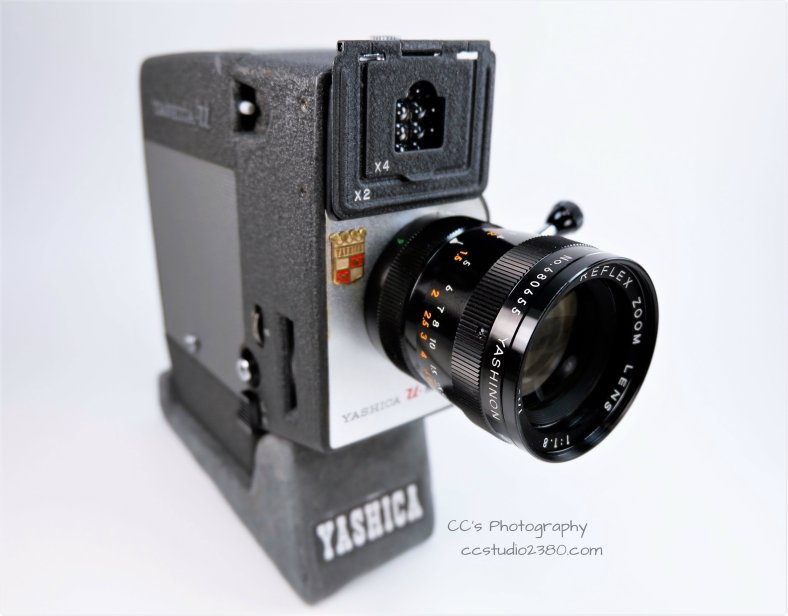
Yashica 8mm Close

Yashinon 9-28mm zoom lens.

DSCF7348 logo 1212

Thanks for stopping by and have a beautiful day! – Chris

Please respect that all content, including photos and text, are the property of this blog and its owner, Yashica Pentamatic Fanatic, Yashica Sailor Boy, Yashica Chris.

Copyright © 2015-2020 Yashica Pentamatic Fanatic, Chris Whelan
All rights reserved.


Yashica Super Yashinon-R f/3.5 13.5cm Lens – Likely made for Yashica by Kyoei Optical

It’s come to my attention recently through correspondence with a reader of this blog that my Yashica lens may have been made for Yashica by a small lens maker, Kyoei Optical Company, Ltd.

I had assumed that most of Yashica’s early lenses were made by Tomioka Optical of Tokyo with only a few exceptions. Zunow made some cine lenses for Yashica in the late 1950s and it looks as though Zunow may have made the odd 5.8cm f/1.7 lens that was used on the Yashica Pentamatic II (August 1960 to January 1961) and the lens on the earliest Yashica Lynx 1000.

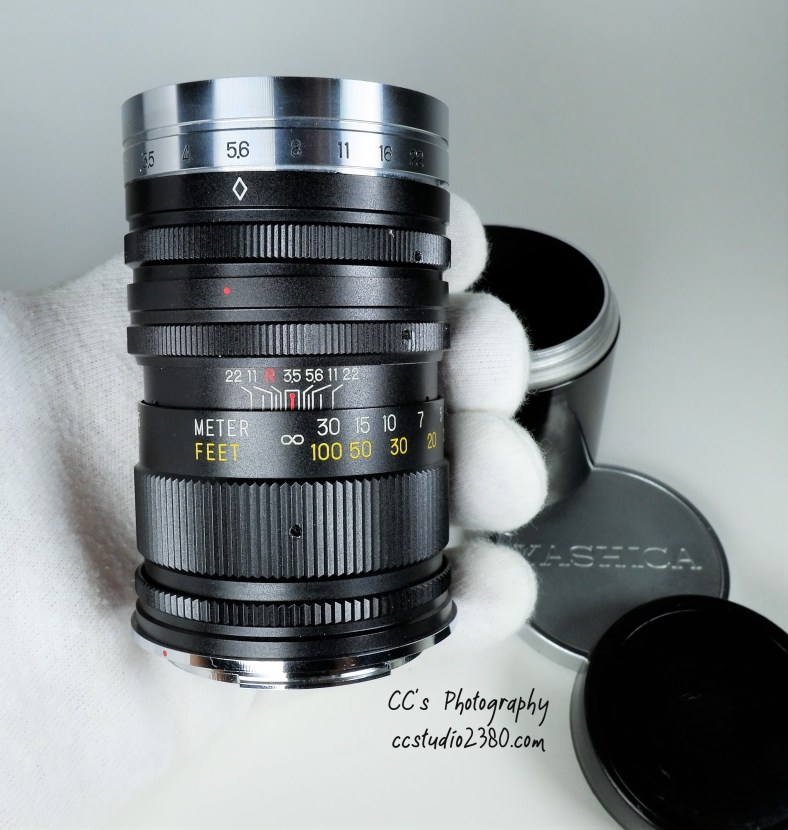
Pictured below is the subject of this post – my Yashica Super Yashinon-R f/3.5 13.5cm short telephoto lens with a Pentamatic bayonet mount. The lens is further marked with a “K.C. in red on the front lens ring. It’s a compact but heavy pre-set lens with click stops at f/3.5 to f/22.
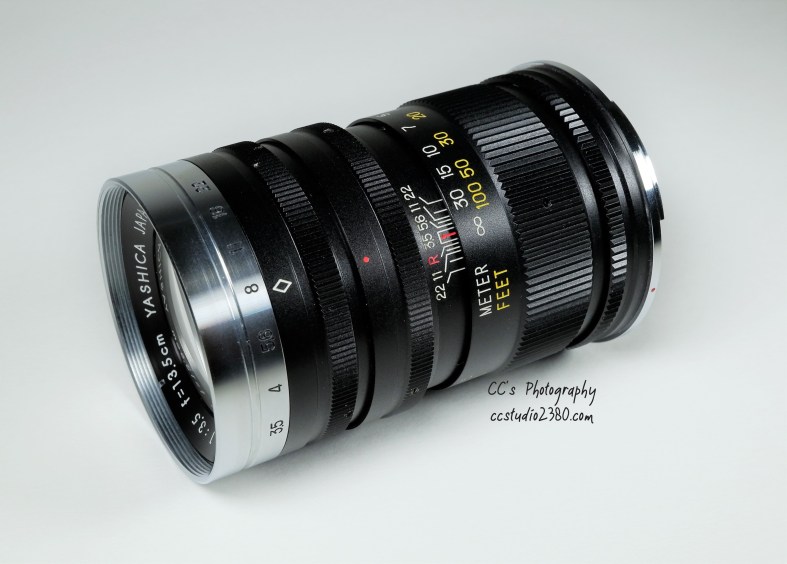
yashica 13.5 lens with logo

My Yashica branded lens from 1960

Below is a similar-looking lens that I found while surfing on Flickr.
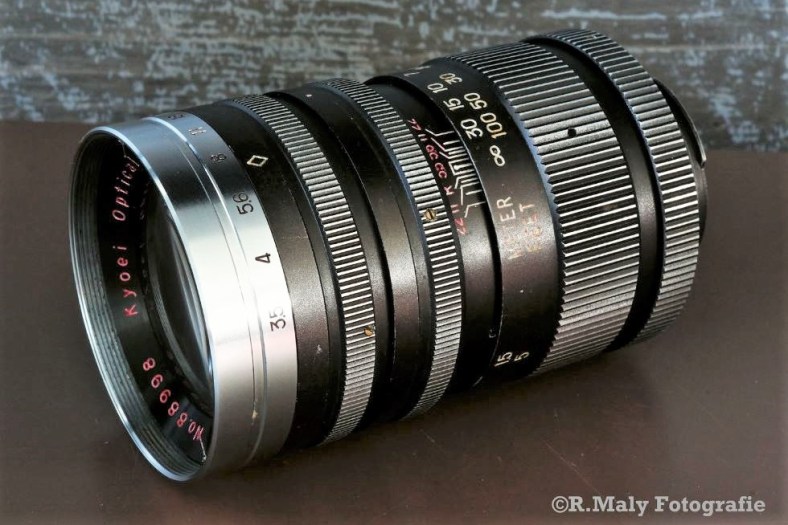
flickr kyoei 135mm

This image is used with kind permission by Mr. René Maly. You can visit his Flickr site by clicking here.

His lens is marked Kyoei Optical Acall f/3.5 135mm and is pictured with an Exakta mount while mine is for the Pentamatic bayonet mount (unique to the Yashica Pentamatic). The Yashica lens weighs 390 grams (13.7 oz.) without the lens caps and the Acall lens weighs 360 grams.

Pictured below is the complete set as I received it some years ago. The metal Yashica branded lens cap is 52mm and is felt-lined and fits the lens perfectly. The hood is unmarked and it simply screws into the filter threads on the front of the lens. I also have an unbranded Pentamatic mount plastic rear lens cap which is the only one in my collection. The Pentamatic family of 35mm SLRs were only sold with standard lenses attached. I’ve never seen just a body for sale in its original Yashica factory packaging.
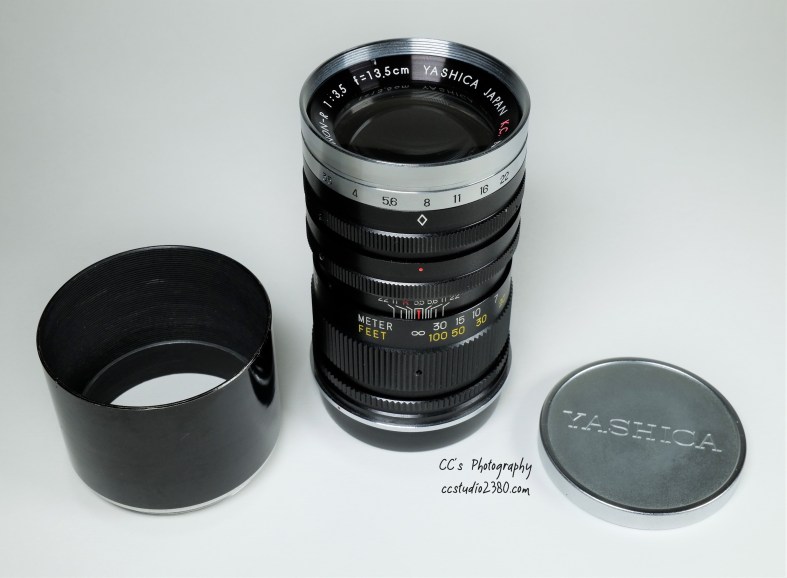
yashica 135mm logo

The lens has 12 aperture blades which appear to be common to the Kyoei Acall lens in this focal length.
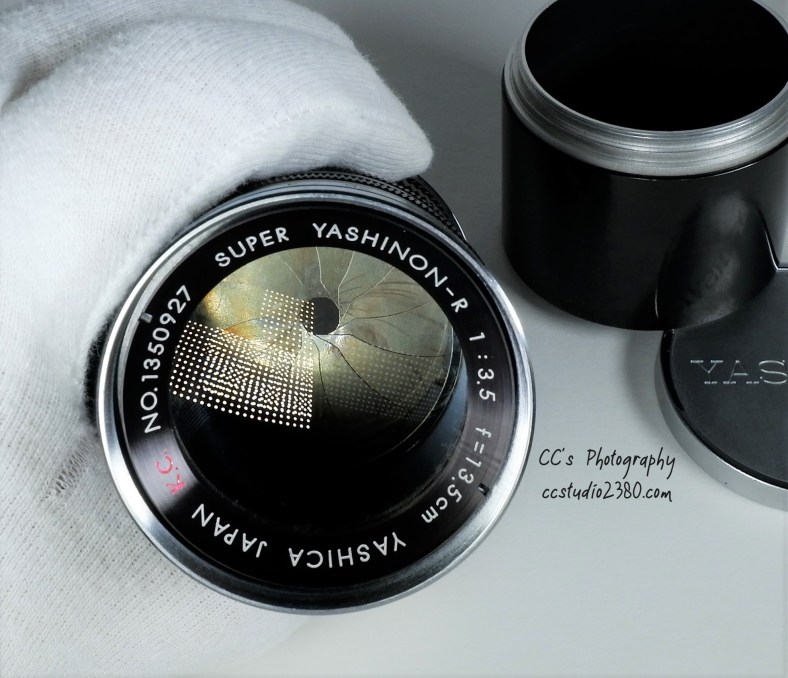
yashica 13.5 les kc logo

The serial number is NO. 1350927 which indicates that it’s a 135mm lens and it was number 927 made since the start of production. It’s unknown when the lens first went into production but some of the very first may have been made as early as December 1959 but more likely January and February 1960.

What’s interesting is that this lens has a red “K.C.” engraved on the lens ring while the Kyoei Acall lens does not. A big guess on my part, and at this point, it’s only a guess, is that it refers to the hard coating used on the glass surfaces. Typically the letter “C” is used to identify that a lens is coated (Canon uses “S.S.C.” for “Super Spectra Coated” as an example). The “K” in “K.C.” may identify that the coating is from Kyoei.

Here’s another image of the Kyoei Acall lens.
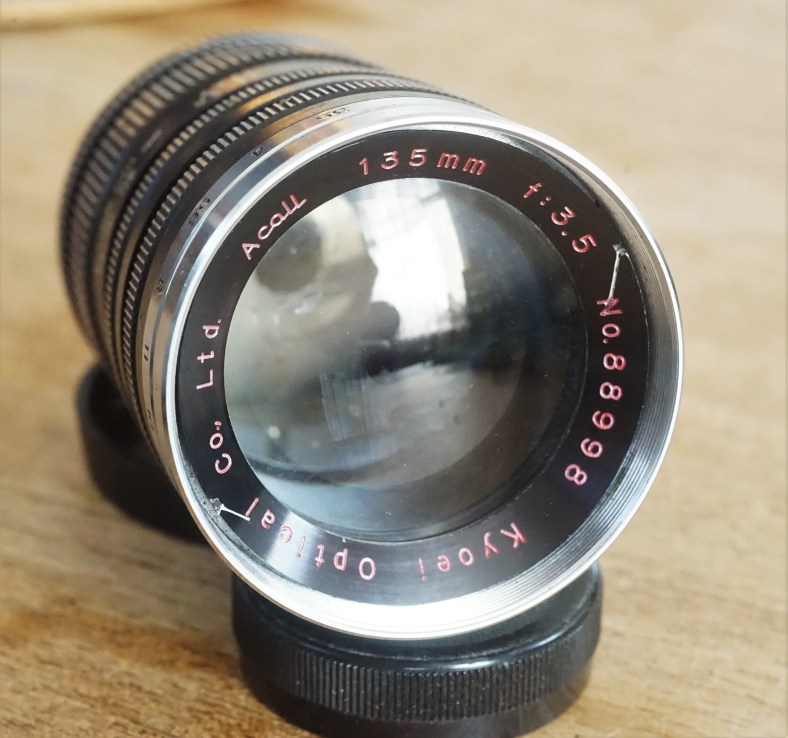
Kyoei Optical Acall 135

Kyoei Optical Acall 135mm f/3.5 lens. Image courtesy of René Maly.

So there you have it. Based solely on observation on my part between the two lenses I’ve made the connection to Kyoei Optical. I haven’t seen written information or anything in a Yashica sales brochure that links the two companies together. If you have additional info about Kyoei Super-Acall lenses made for Yashica please share it with me. Kyoei Optical also appears to have made SLR lenses for Petri and they made a bunch of lenses using their own name for use on L39 (LTM) rangefinder bodies.
yashica 13.5 lenslogo

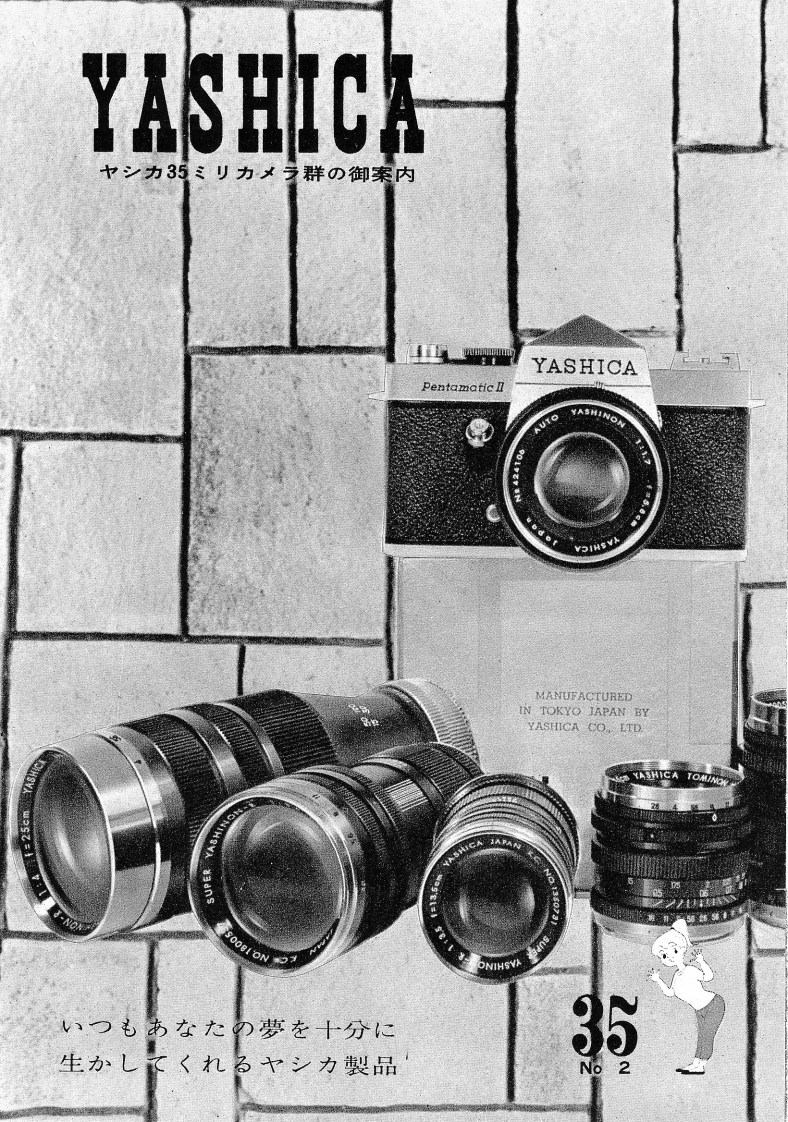
IMG_20200212_0001

Yashica sales brochure from around September 1960 – shortly after the Pentamatic II was released in Japan. My lens is the third from the left. The other two lenses to the left are also likely made for Yashica by Kyoei Optical.

Thanks for stopping by! – Chris

Please respect that all content, including photos and text, are the property of this blog and its owner, Yashica Pentamatic Fanatic, Yashica Sailor Boy, Yashica Chris.

Copyright © 2015-2020 Yashica Pentamatic Fanatic, Chris Whelan
All rights reserved.
Yashima Pigeonflex – 1953

Before Yashica was Yashica it was Yashima. Yashima’s first camera was the oddly named Pigeonflex twin-lens reflex film camera (TLR). This was the first leather camera case for that camera.

DSCF7758

Actually the second version of the first case.

DSCF7767

Over the years I’ve taken several guesses as to what that little pocket is for. It’s not big enough to hold a lens cap but it would be a handy place for some lens cleaning tissue or to put a film box top as a reminder as to which film is loaded in the camera.

DSCF7760

This case is in remarkable condition given the fact that’s it’s 67 years old.

My case is available for your collection in my online shop at http://www.ccstudio2380.com. For further in-depth reading about Yashima’s Pigeonflex please stop by my good friend Paul Sokk’s site here.

Thanks for stopping by! – Chris

Please respect that all content, including photos and text, are the property of this blog and its owner, Yashica Pentamatic Fanatic, Yashica Sailor Boy, Yashica Chris.

Copyright © 2015-2020 Yashica Pentamatic Fanatic, Chris Whelan
All rights reserved.
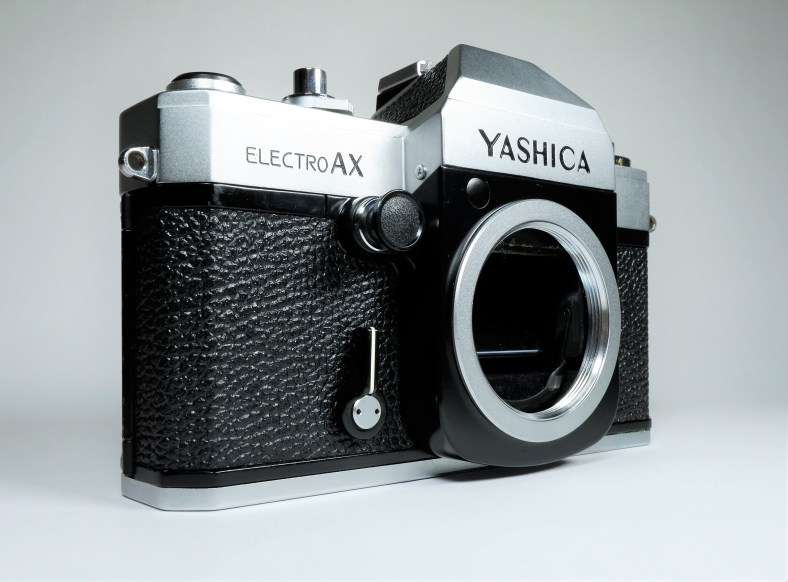
Yashica Electro AX – Yashica’s goofy automatic exposure SLR

Yashica was known to design many quirky cameras during its run of existence. Here’s what the New York Times had to say about the Electro AX on November 4, 1973.

“A NEW fully automatic 35mm single‐lens‐reflex camera with an electronically controlled shutter has recently been introduced by Yashica, Inc. in the United States. Called the Yashica Electro AX, the camera has actually been available for some time in Japan and Europe, but it is only now reaching the American market.

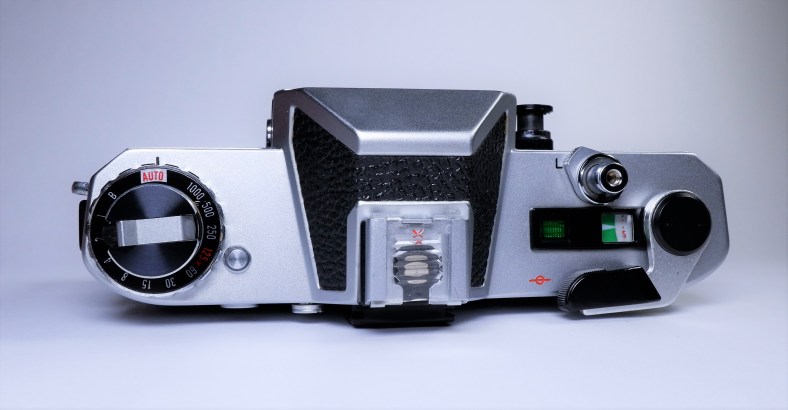
Unlike most of the fully automatic cameras currently being marketed, the Electro AX is designed so that the photographer selects the aperture he wants. An electronic exposure control circuit then automatically sets the shutter speed at any one of an infinite number of different settings from 1/1,000 of a second to a full 8 seconds. When set for manual operation (at the photographer’s choice) the user can manually select speeds in the usual gradations of from one second to 1/1,000 of a second, as well as a “B” setting for time exposures.

Because of the electronic focal plane metal shutter, the entire exposure system is solid-state without any delicate moving mechanical parts.

When focusing, the diaphragm is closed down to the aperture selected, but for dim light situations, the photographer can press a button on the front which opens the diaphragm while focusing, without affecting the actual exposure setting. One unusual feature of the Electro AX is a green signal light on top that glows when the shutter is open — a useful aid when the built‐in self-timer is used, or with long exposure shots.

The camera has a CdS solid-state sensor located behind the viewing mirror, in front of the shutter. The split image viewfinder has a microprism focusing spot in the center, and there are red and yellow exposure indicator arrows that light up in the viewfinder to warn of overexposure or very slow shutter speed (when on automatic).

Other features include a built‐in light shield operated by a lever on front to prevent light leaks through the viewfinder when the eyepiece is uncovered, an ASA range from 25 to 1600, a battery check lamp which also illuminates the exposure counter, and a double lock for the back cover which prevents accidental opening. The Electro AX is priced at under $600 with an f/1.2 lens, about $500 with an f/1.4 lens, or under $460 with f/1.7 lens.”

By serial number decoding, it looks like the first models were manufactured in March-April 1973 so as the article points out, there was quite a lag in releasing it in the US markets.

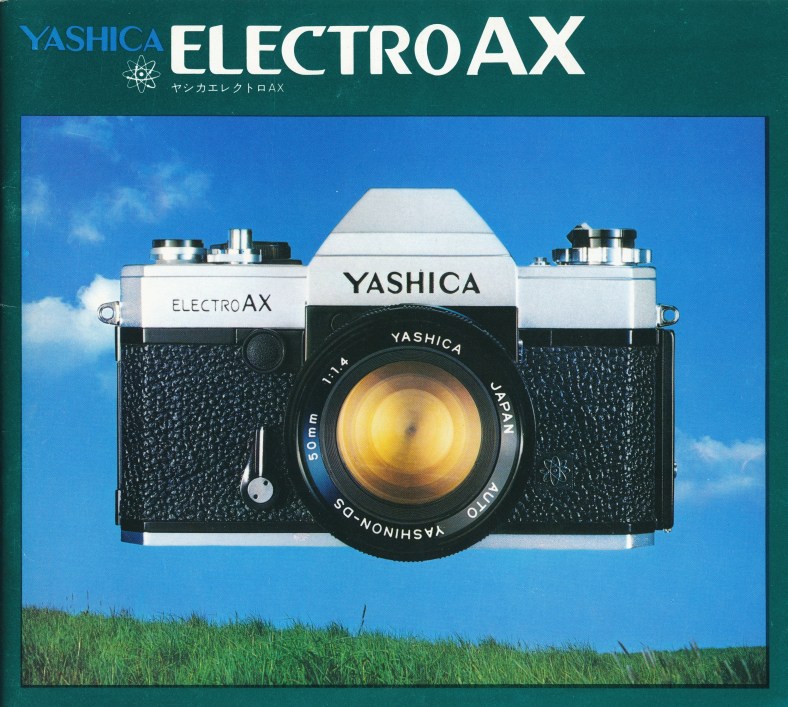
IMG_20191229_0002

A Japanese sales brochure dated early 1974 and I have another (not pictured) dated March 1973.

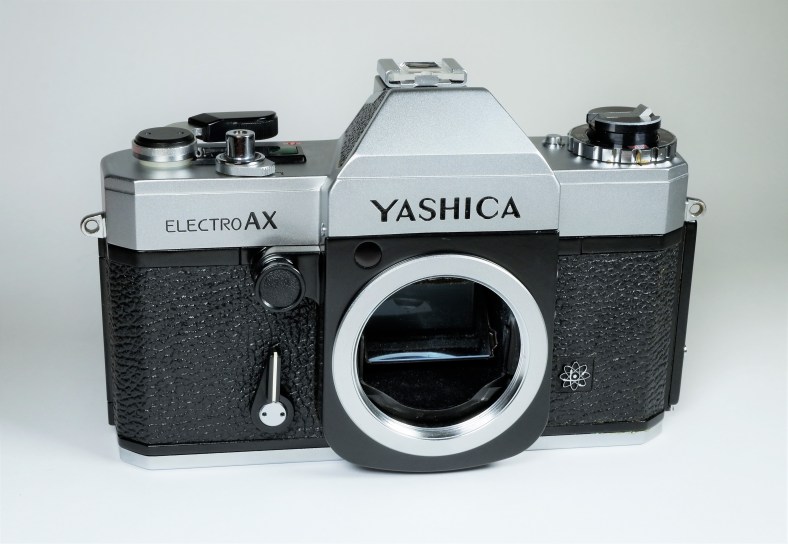
DSCF7696

The Electro AX was the second to the last M42 screw mount lens body cameras made by Yashica. It appears that the last model is the super hard to find Yashica FFT. BTW, I have no idea what if anything the FFT stands for.

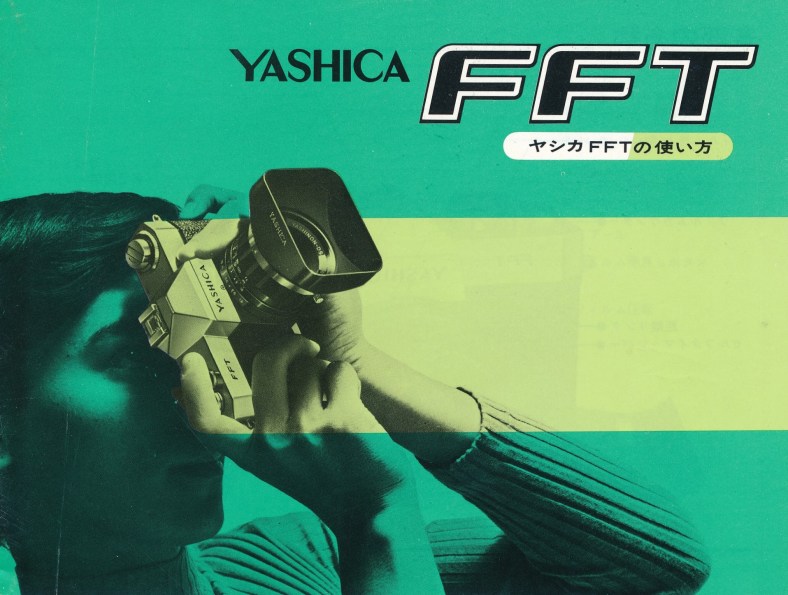
IMG_20191225_0003

This Yashica FFT instruction booklet is dated June 1973. It would appear that this final M42 body came out just a few months after the Electro AX and they were in production at the same time and ended about the same time in early 1974.

An FFT in good condition is a very hard camera to find here in the US and I’m convinced it didn’t enjoy a long run in US camera stores. I would love to find some brochures in English and of course a good looking FFT.

Back to the Electro AX.

DSCF7698

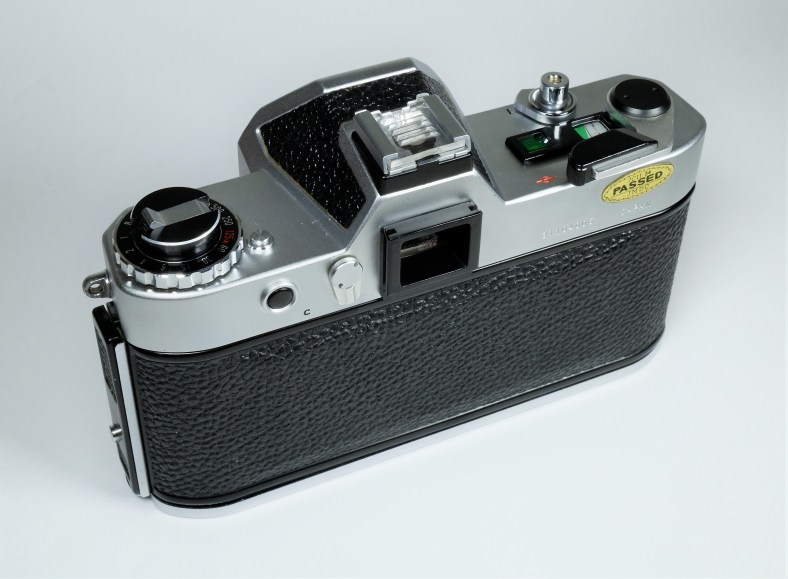
The AX was one of the first Yashica SLRs to have the ability to shut a small curtain in the viewfinder to block light from entering during long exposures and “selfies”. It’s the little lever next to the eyepiece. It’s also the first Yashica SLR to have leatherette covering part of the pentaprism. An early prototype of the first Yashica Pentamatic had the same look before Yashica changed to an all-metal pentaprism.

DSCF7701

The big black button just above the self-timer lever is an Aperture Activator Button. Pressing it allowed the photographer to focus and compose at full aperture. The aperture would automatically close down to the selected setting once the Film Advance Lever was operated.

DSCF7704

On full auto, the camera would select the proper shutter speed given the aperture selected on the lens. A series of over and underexposure arrows would appear (when the shutter release button is pressed halfway down) in the viewfinder display indicating which f-stop to select.

The goofy comes in when switching to full manual. You would set the proper shutter speed and correct f-stop (aperture) on the lens based on readings from an external exposure (light) meter. In the manual mode, the AX can not meter thru the lens. Kinda dumb for an electronic camera with a computer brain.

Due to the design of the semi-transparent mirror, the following lenses can not be used on the Electro AX – Yashinon-DX 21mm f/3.3, the Auto Yashinon-DX 28mm f/2.8, and the Auto Yashinon-DX 50mm f/2, f/1.7, f/1.4.

The Electro AX was initially released with Auto Yashinon-DS lenses.

Thanks for stopping by. When I get the correct battery for it I hope to shoot a test roll and post the results. – Chris

Please respect that all content, including photos and text, are the property of this blog and its owner, Yashica Pentamatic Fanatic, Yashica Sailor Boy, Yashica Chris.

Copyright © 2015-2020 Yashica Pentamatic Fanatic, Chris Whelan
All rights reserved.
Yashicaflex model A-II (1955)

A gem of a camera in our collection this one was made by Yashima Kogaku Seiki Company (Yashica) in 1955. It is in “factory fresh” condition inside and out.

yashicaflex aii

A beauty from Yashima

Thanks for stopping by – I’ll have much more about this outstanding camera in the next few days. Chris

Please respect that all content, including photos and text, are the property of this blog and its owner, Yashica Pentamatic Fanatic, Yashica Sailor Boy, Yashica Chris.

Copyright © 2015-2020 Yashica Pentamatic Fanatic, Chris Whelan
All rights reserved.
Yashicaflex A-II made by Yashima

A bit of a confusing title so let me explain. Yashica started off as Yashima and although they called their first twin-lens reflex (TLR) camera the Yashimaflex they quickly changed to Yashicaflex with their subsequent models. Yashima became Yashica in 1958 when the company name matched the camera’s name.

Here’s a rather rare presentation box for the A-II. This box was for the export version of the camera – the domestic market box was slightly different.

DSCF7569

This box is original to the camera and it’s from 1955.

I’ll have more about this interesting early camera from Yashima soon. Thanks for stopping by! – Chris

Please respect that all content, including photos and text, are the property of this blog and its owner, Yashica Pentamatic Fanatic, Yashica Sailor Boy, Yashica Chris.

Copyright © 2015-2020 Yashica Pentamatic Fanatic, Chris Whelan
All rights reserved.
 

Interesting Portrait – 1974

Unknown models and photographer. Scanned from a Yashica sales brochure.

IMG_20191229_0007

Scanned from a Yashica Electro AX sales brochure dated 1974. The translated caption is “Auto Yashinon-DS super wide-angle 20mm aperture f 11 automatic exposure”. The lens has a maximum aperture of f/ 3.5
The photographer and models are not credited. A quality image in an excellent brochure.

IMG_20191229_0002

The Yashica Electro AX. The last M42 screw mount lens camera made by Yashica (starting in 1973 and ending in early 1974).

Thanks for stopping by! – Chris

Please respect that all content, including photos and text, are the property of this blog and its owner, Yashica Pentamatic Fanatic, Yashica Sailor Boy, Yashica Chris.

Copyright © 2015-2020 Yashica Pentamatic Fanatic, Chris Whelan
All rights reserved.

Happy SUNday!

Yashica’s last M42 mount camera. The FFT is seldom seen on online auction sites as it’s a fairly rare camera due to low production. The camera marked the end of a long line of 35mm SLRs made by Yashica that accepted the universal screw mount lenses.

IMG_20191225_0003

FFT instruction booklet dated June 1973

The camera was offered with the Auto Yashinon-DS 50mm f1.9 lens.

By the way, I have no idea what the FFT stands for if anything. If you do (or have a wild guess) let me know. The second to the last M42 camera made was the Electro AX. Both died in the spring of 1974.

If you’ve got a nice (working) example of this camera we are interested buyers. You can contact me at ccphotographyai@gmail.com

Thanks for stopping by! – Chris

Please respect that all content, including photos and text, are the property of this blog and its owner, Yashica Pentamatic Fanatic, Yashica Sailor Boy, Yashica Chris.

Copyright © 2015-2019 Yashica Pentamatic Fanatic, Chris Whelan
All rights reserved.

Yashica TL Electro X ITS – Integrated Technology System

Have you ever wondered what the ‘ITS’ stood for? For most people, probably not – but if you’re a Yashica Fanatic probably yes.

Yas TLITS LOGO

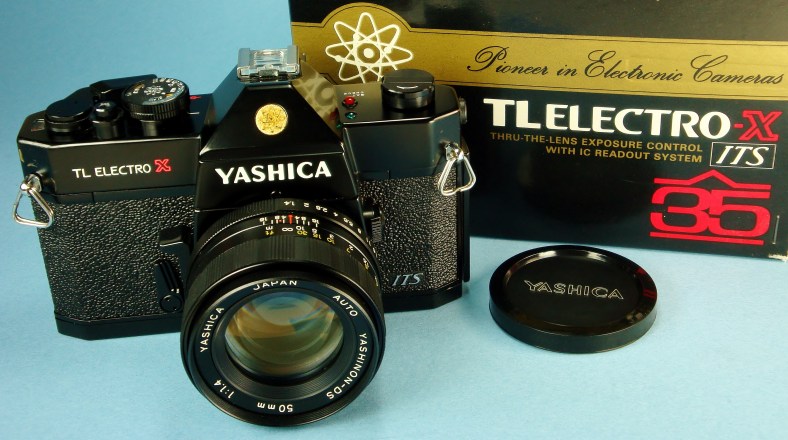
Yashica TL Electro X ITS from 1973

IMG_20191226_0003

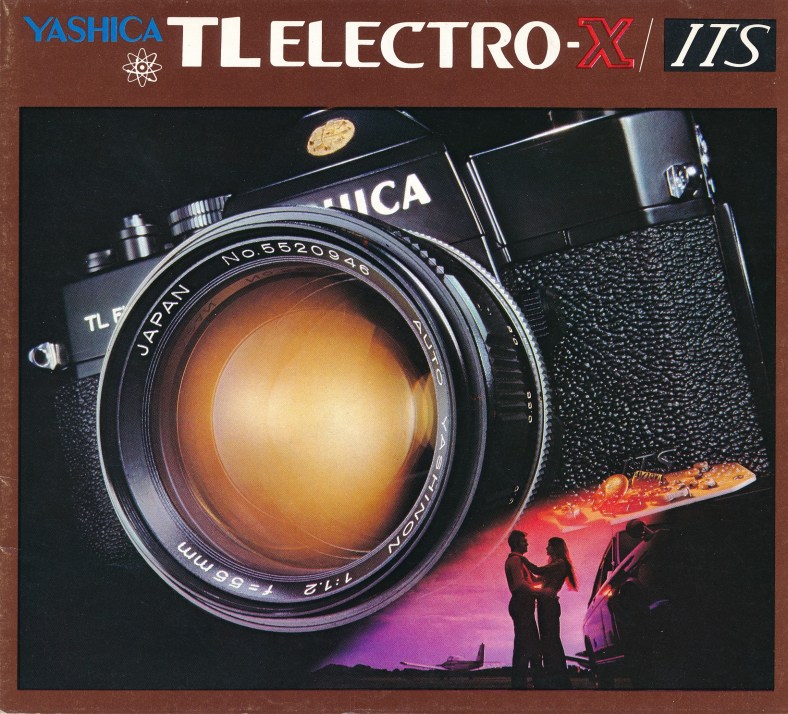
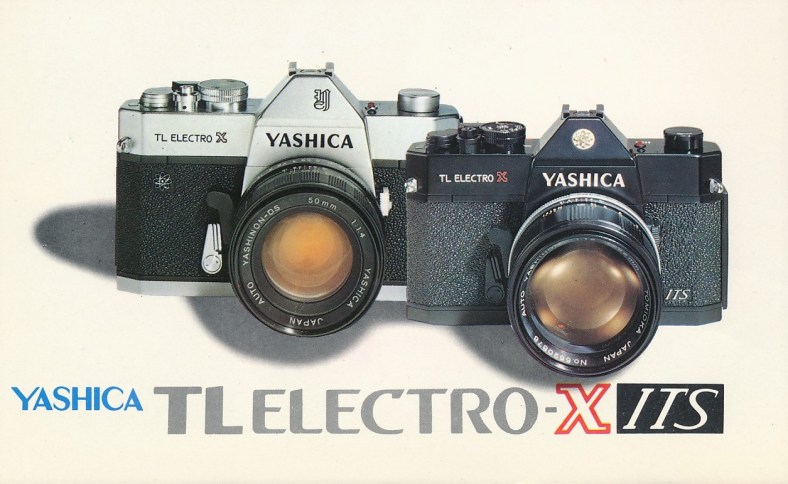
Undated sales brochure for the TL Electro X ITS. By the way, the marketing people had the name ‘Tomioka’ removed from this cover image of the lens – it’s the big empty space on the left side of the lens ring.

After years (yes, years) of searching almost everything Yashica published I’ve come to the conclusion that the intent of the marketing behind this camera was to promote Yashica’s first real system 35mm SLR. No, it doesn’t have an interchangeable back or viewfinder like the Canon F-1 and the Nikon F, but it did have a host of quality lenses and accessories. Oh, and no motor drive.

So ‘ITS’ most likely means ‘Integrated Technology System’ since the TL Electro X was advertised as having a brain – a built-in IC brain with an electronically controlled focal-plane shutter and electronic LED exposure control.

15218536719_13b8308208_o

Mint set from September 1973 with the later Yashica (Tomioka) Auto Yashinon-DS 50mm f1.4 lens. Take note of the writing on the box about electronic photography.

IMG_20170228_0003

In later years when Yashica teamed up with Contax and Zeiss to develop the Contax RTS – ‘Real Time System’.

Thanks for stopping by! – Chris

Please respect that all content, including photos and text, are the property of this blog and its owner, Yashica Pentamatic Fanatic, Yashica Sailor Boy, Yashica Chris.

Copyright © 2015-2019 Yashica Pentamatic Fanatic, Chris Whelan
All rights reserved.


Fast Glass from Canon & Yashica

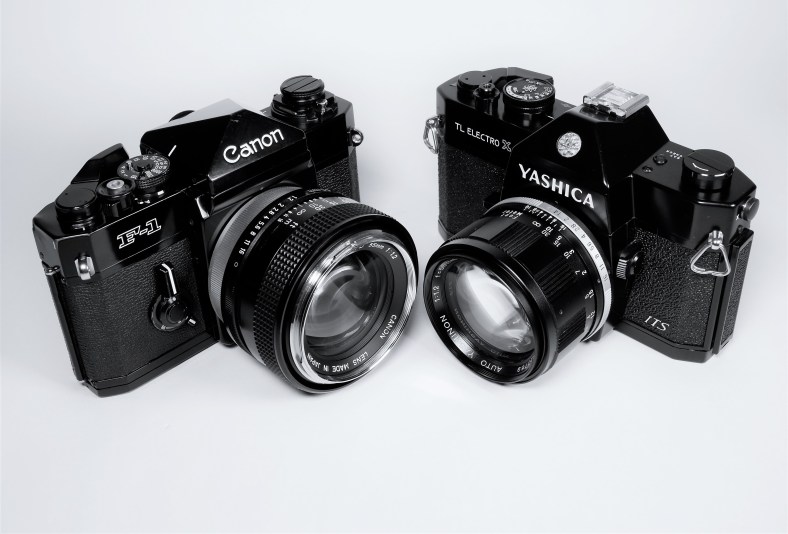
A couple of true heavyweights from Canon and Yashica-Tomioka.

DSCF7434

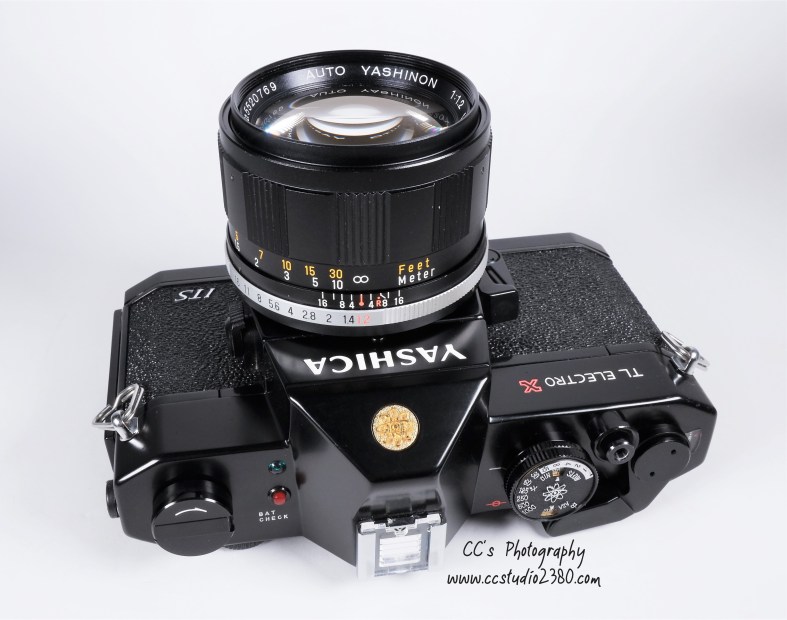
Canon F-1 from 1978 and the Yashica TL Electro X ITS from 1973

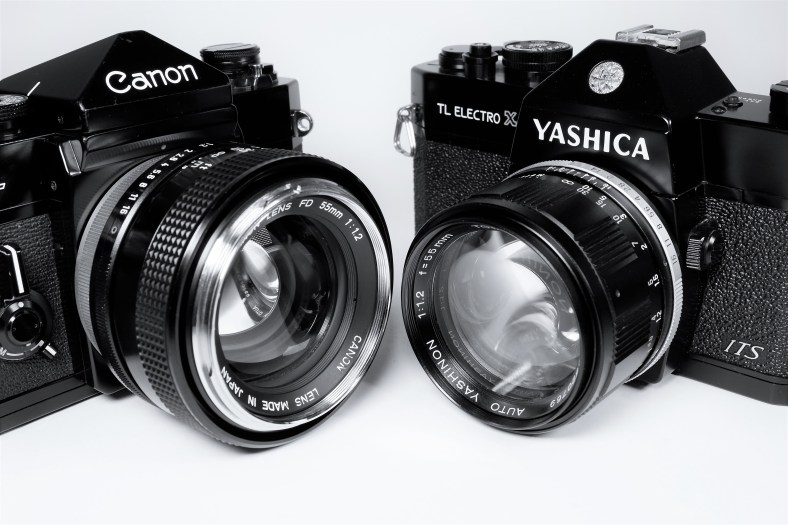
The Canon FD 55mm f 1.2 lens is from 1972 which makes it a rather early FD lens. It lacks the S.C. or S.S.C. markings indicating that it’s not coated or at least the marketing people decided not to promote that feature. The Tomioka Optical made lens is an Auto Yashinon 55mm f 1.2 model from very early in the production run. Its serial number puts it about 1968 and it was the 769th made.

DSCF7435

The Canon lens weighs 551 grams vs the Yashica’s 332 grams.

There’s a big difference in weight between the two lenses yet they are both equals in maximum aperture. The Canon takes a 58mm filter and the Yashica uses a 55mm filter.

I hope to be able to do a side by side test of these two lenses using Fotodiox adapters on my Fujifilm X-Series mirrorless digital camera. Stay tuned and thanks for stopping by! – Chris

Studio Camera: Fujifilm X-A10

Please respect that all content, including photos and text, are the property of this blog and its owner, Yashica Pentamatic Fanatic, Yashica Sailor Boy, Yashica Chris.

Copyright © 2015-2019 Yashica Pentamatic Fanatic, Chris Whelan
All rights reserved.