From my personal collection of all things Canon, these are in my camera shop, CC Design Studios, at http://www.ccstudio2380.com—and they’re on sale at 20% off, too!
From Think Tank, Turnstyle 10 V2.0 Sling Bag with Canon Professional Services logo.New Canon Professional Services padded camera strap by OP/TECH.Canon EOS Shoulder Bag.New Canon EOS Digital camera strap.Canon super sharp EF zoom lens.Just add your own camera and you’ll have an instant classic.
Thanks for stopping by, Chris
Follow me on Instagram at @ccphotographyai
Comments are always welcomed, as I’ve learned quite a bit from reader feedback. As always, thanks for stopping by, and while you’re at it, feel free to visit my camera shop at http://www.ccstudio2380.com (CC Design Studios hosted by Etsy). – Chris Whelan
The Contax 50th Anniversary Edition 137 MD Quartz 35mm SLR film camera.
The ’50 Years’ model had a unique leatherette and a gold Contax ‘button’ on the flash sync terminal.I don’t usually chase anniversary models, but this one struck me as pure in the early 1980s.
Contax celebrated fifty years, 1932-1982.
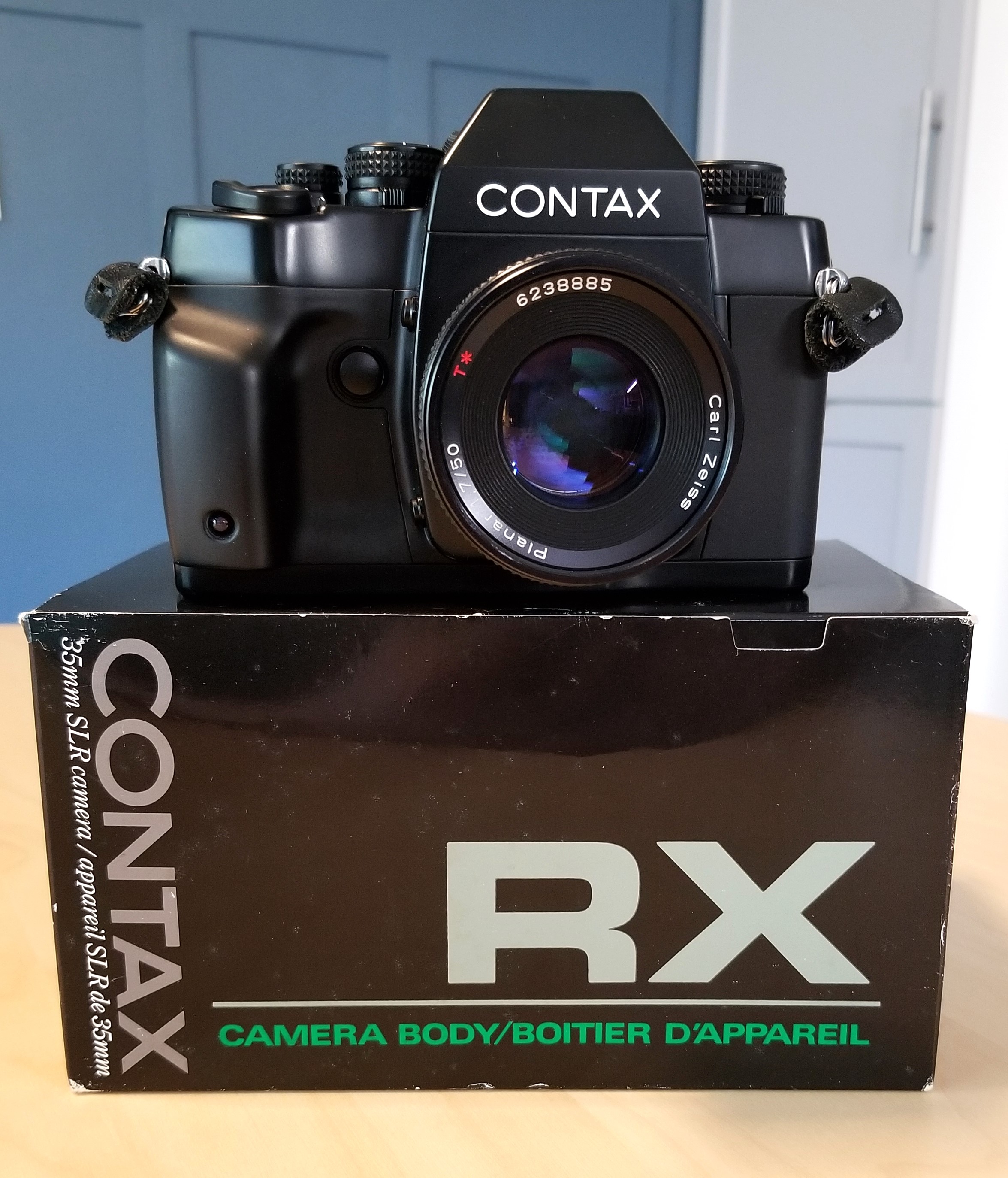
One of two standard lenses is shown here.Contax numbered their cameras, consequently. As far as I am aware, no date code is hidden in the serial numbers.It’s a simple manual focus aperture priority camera first released in 1980. Notice the location of the tripod socket. The entire baseplate is removable to be able to install the four AA batteries needed to power the meter and motor drive.Advertisement from early 1980.I believe the red sticker indicates that the color of the body is ‘fin’ or ‘wine.’ The Google Translate app isn’t apparent.There aren’t many of these models still available, but they are well worth being chased.
This particular camera was sold in Japan, and unfortunately, I don’t have the original paperwork or Japanese instruction booklet. I’d love to find the correct strap, too. The proper case is a bit of a mystery, but I believe it should have been C-004, according to my friend Graham in the UK. By the way, the period correct flash units made for the 137 MD is the Contax TLA20 and TLA30 Auto Flash units for true TTL flash metering. There is also a 137 Data Back and a 137 Grip Adapter. Thanks for stopping by and be sure to visit my camera shop (hosted by Etsy) at http://www.ccstudio2380.com – Chris
Follow me on Instagram at @ccphotographyai
Comments are always welcomed, as I’ve learned quite a bit from reader feedback. As always, thanks for stopping by, and while you’re at it, feel free to visit my camera shop at http://www.ccstudio2380.com (CC Design Studios hosted by Etsy). – Chris Whelan
Dated October 1986.The brochure features some of the more hard-to-find (now) cases.Lens Hoods – they’re always a difficult item to match with their proper lens.Wouldn’t it be nice to own these now?
I have many Nikon brochures in my camera shop at http://www.ccstudio2380.com (hosted by Etsy). I ship nearly Worldwide. Thanks for stopping by, Chris
Follow me on Instagram at @ccphotographyai
Comments are always welcomed, as I’ve learned quite a bit from reader feedback. As always, thanks for stopping by, and while you’re at it, feel free to visit my camera shop at http://www.ccstudio2380.com (CC Design Studios hosted by Etsy). – Chris Whelan
I’ve enjoyed acquiring camera and photography brochures over the years and now have quite an extensive collection of them (go figure). I’ll be listing some of them in my camera shop over the next few months so if you’re on the hunt for something specific, just let me know and or visit my shop at http://www.ccstudio2380.com.
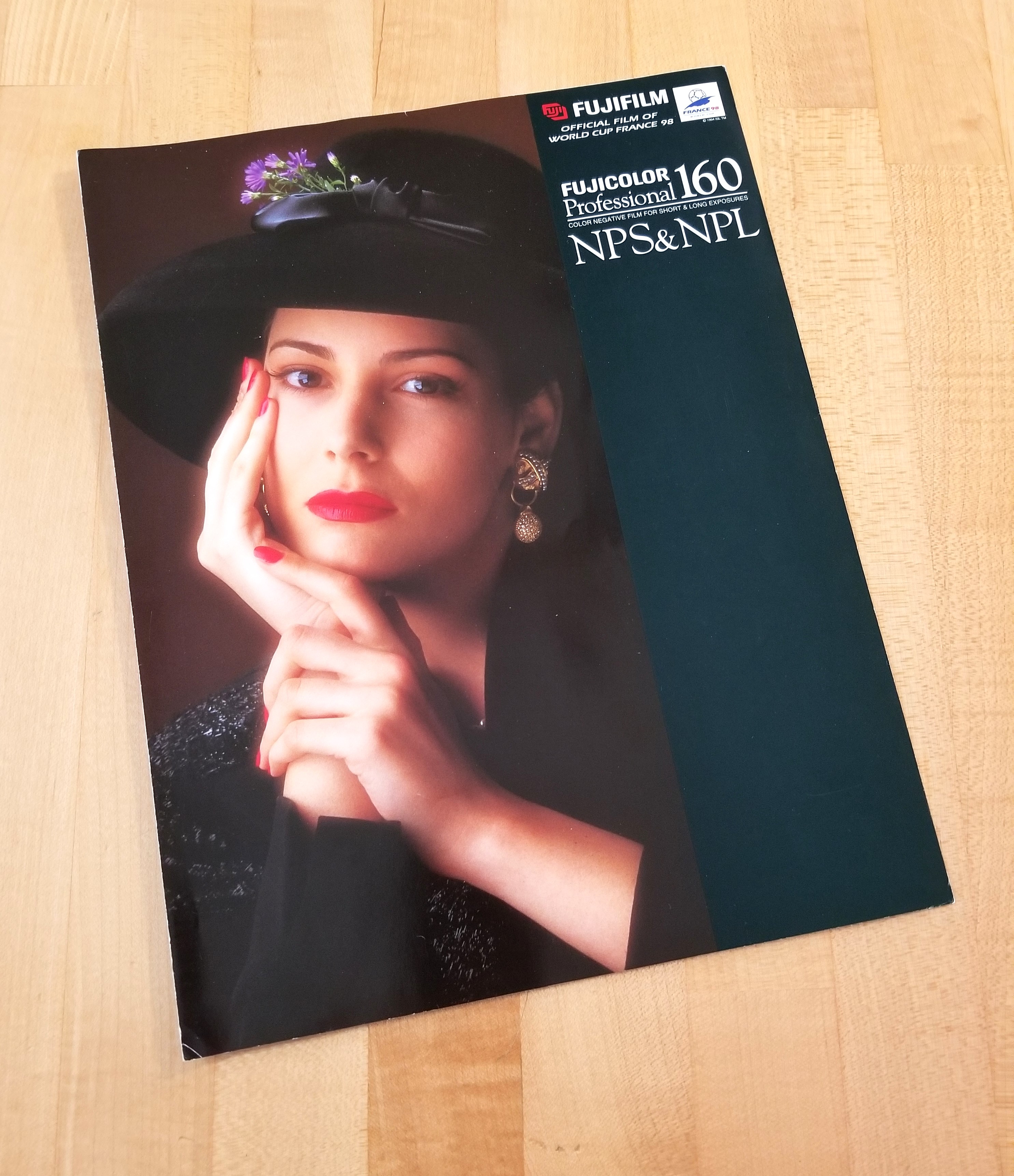
This is a large-format Fujifilm film brochure from 1998. Fujicolor Professional 160 film was a popular color negative film in the 1990s.Here is a relatively hard-to-find brochure on the not-often-seen Yashica Electro 35 Professional camera from 1970. It’s a Japanese camera shop brochure.A large (9 x 21 inch) Plexiglas camera dealer’s display sign is also available in my shop.I no longer own the camera but have the original boxes for it. It would add a nice touch to your collection.The Canon black and olive green camera bag is still new and unused and is available.A like-new Minolta 35mm SLR set with its original box and papers.
These are just a few of the neat items I have in my shop, all at a 10% savings! Thanks for stopping by, Chris.
Follow me on Instagram at @ccphotographyai
Comments are always welcomed, as I’ve learned quite a bit from reader feedback. As always, thanks for stopping by, and while you’re at it, feel free to visit my camera shop at http://www.ccstudio2380.com (CC Design Studios hosted by Etsy). – Chris Whelan
I have the boxes, but I don’t own the camera anymore. If you want to make your AE-1 look complete, pop over to my camera shop at http://www.ccstudio2380.com.
Jean-Claude Killy from the 1968 Winter Olympics.Peggy Fleming’s picture from the 1968 Olympics is on this side.
Thanks for stopping by, Chris
Follow me on Instagram at @ccphotographyai
Comments are always welcomed, as I’ve learned quite a bit from reader feedback. As always, thanks for stopping by, and while you’re at it, feel free to visit my camera shop at http://www.ccstudio2380.com (CC Design Studios hosted by Etsy). – Chris Whelan
This lovely model was likely photographed while in the Japanese Alps in Nagano Prefecture. Yashima’s first factory was opened in the Lake Suwa region in 1953. The Winter Olympics were held in Nagano in 1998. Pictured is the Yashica Flex C. ‘Beautiful Seasonal Colors at Yashica.’ ‘Fuji Color Used’ in the bottom right.
Thanks for stopping by, Chris
Follow me on Instagram at @ccphotographyai
Comments are always welcomed, as I’ve learned quite a bit from reader feedback. As always, thanks for stopping by, and while you’re at it, feel free to visit my camera shop at http://www.ccstudio2380.com (CC Design Studios hosted by Etsy). – Chris Whelan
In the Contax RTS instruction booklet, the baseplate pictured either has a “real” serial number or one “made up” by the marketing department. RTS models out in the wild don’t have a serial number that is easy to decode (date manufactured), but this one does, at least if you know how to read Yashica serial numbers. I interpret this SN as February 1975 (502), and its number is 166.
The original instruction booklet (dated 06/76) has an 8-digit SN.My RTS baseplate has serial number 087024, which looks nothing like the serial number in the instructions.Here is a baseplate from an RTS-Fundus Scientific / Medical camera. I see 091238. I don’t see a date code in there – do you?
Anyway, this is just a quick post to gather my thoughts. Do you own a Contax RTS first model? I’d like to see more serial numbers as a pattern may appear. Thanks for stopping by, Chris
Follow me on Instagram at @ccphotographyai
Comments are always welcomed, as I’ve learned quite a bit from reader feedback. As always, thanks for stopping by, and while you’re at it, feel free to visit my camera shop at http://www.ccstudio2380.com (CC Design Studios hosted by Etsy). – Chris Whelan
Please respect that all content, including photos and text, is this blog’s property and its owner, Yashica Pentamatic Fanatic, Yashica Sailor Boy, Yashica Chris, Chasing Classic Cameras with Chris.
Brothers from different mothers – the classic Contax-Yashica RTS (original model) and the Fujifilm X-T2. I find the weight and feel to be the same, and many of the manual controls I use are right on top of the T2. That could be why I was attracted to the Fuji in the first place. In the world of modern mirrorless digital cameras, the T2 just feels and acts like an old-school SLR.
The Fuji features a sharp Fujinon zoom lens, and the RTS has a fast and sharp f1.7 Yashica lens. I enjoy the aesthetics of both cameras, and I often shoot with the half-cases attached.Fujifilm got it right when they designed their T2 (and similar models), drawing on the successful designs and functionality from the past.A better view of the lenses. I chose the Yashica lens over the much more costly Planer lens because, let’s face it, Yashica made both (maybe from a Tomioka design in collaboration with Zeiss). The famous T* coatings may be missing on the Yashica, but I doubt it. The T* mainly was a marketing exercise. Full disclosure – I’d take the Zeiss Planer in a heartbeat if money were no object.
I enjoy using my Fuji; it is my go-to camera whenever I shoot with my classic lens collection or when I need to test a lens before listing it in my Etsy shop or on eBay. It’s fast and easy, and the APS-C sensor has a 1.5 crop factor that “boosts” the focal length of every lens I use. See yesterday’s gorgeous 450mm shot below from my 300mm Nikkor-H lens.
Boeing 777 (likely) at over 30,000 feet over northeast Florida (not cropped).
Thanks for stopping by, Chris. Which is your favorite mirrorless camera? Are you a Canon or Nikon photographer? Has anyone tried the new Nikon Z cameras?
Follow me on Instagram at @ccphotographyai
Comments are always welcomed, as I’ve learned quite a bit from reader feedback. As always, thanks for stopping by, and while you’re at it, feel free to visit my camera shop at http://www.ccstudio2380.com (CC Design Studios hosted by Etsy). – Chris Whelan
Please respect that all content, including photos and text, is this blog’s property and its owner, Yashica Pentamatic Fanatic, Yashica Sailor Boy, Yashica Chris, Chasing Classic Cameras with Chris.
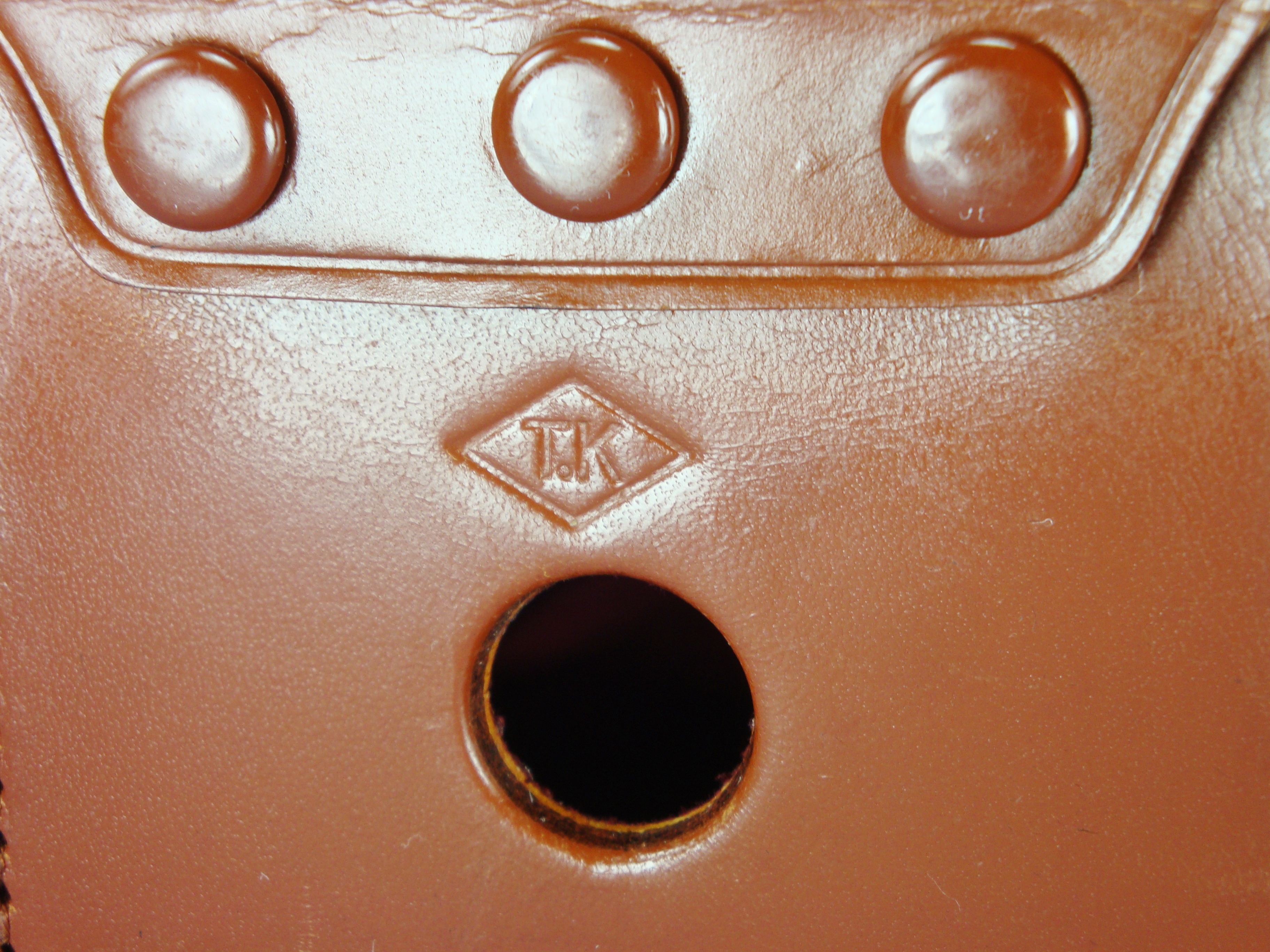
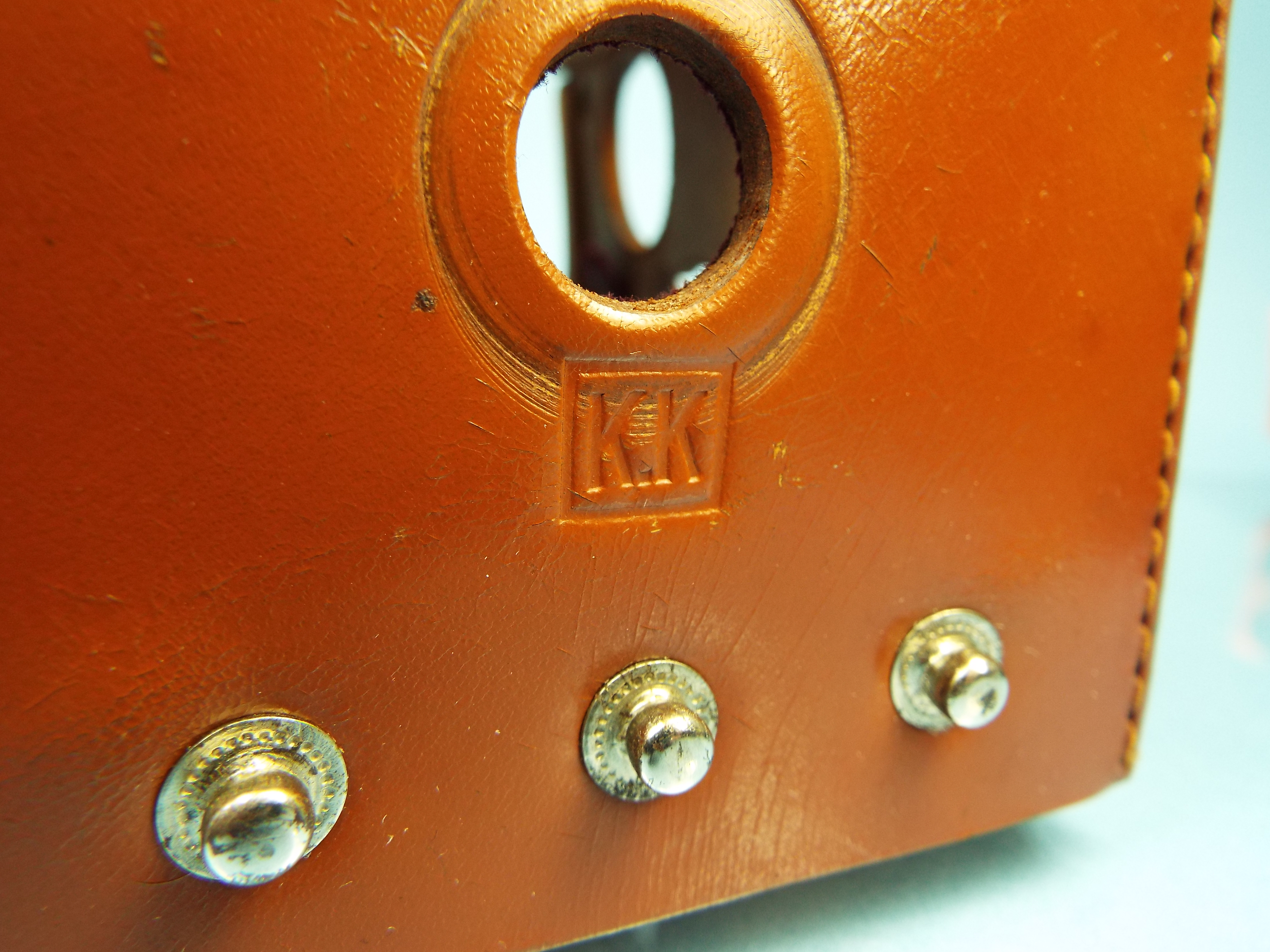
1953 After 6 decades of use, this leather case for the Yashima Flex TLR camera stands strong. It is relatively rare to see a Yashima-branded item outside of Japan; this represents the first time Yashima used its name on a case. I don’t believe Yashima-Yashica made their own leather cases. As a start-up company back in the early 1950s, Yashima and other camera manufacturers likely contracted outside companies to make their leather cases and branded goods so that they could focus on their core activities. Many of these early cases have distinct markings on the bottom, indicating the hallmark of the company that produced it.
From 1953, a beautiful example of a Yashima leather case.An early example of a hallmark on the bottom of the case.Another hallmark.
I have a few additional examples in my collection – time to dig them out and photograph them. Have you seen a Japanese leather case with what appears to be a hallmark? Please, share if you do. Thanks for stopping by, Chris
Follow me on Instagram at @ccphotographyai
Comments are always welcomed as I’ve learned quite a bit from reader feedback. As always, thanks for stopping by, and while you’re at it, feel free to visit my camera shop at http://www.ccstudio2380.com (CC Design Studios hosted by Etsy). – Chris Whelan
Please respect that all content, including photos and text, is this blog’s property and its owner, Yashica Pentamatic Fanatic, Yashica Sailor Boy, Yashica Chris, Chasing Classic Cameras with Chris.
There is still plenty of conjecture about the exact meaning of the two letters that appear in a diamond design on Japanese-made photo gear made in the 1950s and 1960s and gradually disappearing in the mid to late 1970s. Some suggest that it meant “Exchange Purchase” since the mark often appeared on cameras sold in military exchanges throughout Japan during that period. The catch is that not all of the cameras sold in the exchange stores had that mark – probably only 30% or less, depending on the decade and store. Stereo equipment was also marked as was binoculars. Expensive jewelry and watches didn’t have the mark. So what gives, and exactly who ordered the symbols to be placed on, at times, random items within these few categories.
Here is a never-before-seen (by me) mark on the presentation box of a <E.P> marked Nikon S2 35mm rangefinder camera from the 1950s. The camera bears the mark, and so does the box. It’s too bad the box doesn’t have an affixed price sticker. It would have been interesting to see which exchange it sold in and for how much.
Look closely at the image of this Nikon box pictured below. In the upper right-hand corner is a price sticker. The sticker has quite a bit of good information, but it also leaves out some vital info. The “Japan Tax Exempt” and dollar amount printed on the sticker are such a tease. The camera was from the early 1970s, so it could have had the <E.P> mark, but not necessarily. From memory of my time living in Japan and shopping at the Navy Exchanges in Yokosuka and Yokohama, I don’t ever recall seeing a price sticker with “Tax Exempt” printed on it since everything sold in the exchange was tax-free and therefore tax exempt. If it wasn’t sold at the exchange and in fact sold at a duty-free or tax-free shop in Japan, why would it be priced in USD and not yen?
Intriguing find.My 1955 Nicca 3-S with a <E.P> mark on the rewind knob (typical placement of the mark).
No record exists that explains precisely what the “E & P” stood for or why the program existed and, for that matter, who instituted and administrated the process. I believe the mark was primarily intended to deter the black market reselling of photo gear to Japanese civilians by military personnel since the cameras were tax-free in the military stores and were more than likely also priced lower than the same camera “out in town” in a Japanese camera shop. It’s likely “EP” stood for “Exempt Purchase” or “Exempt Product” and not “Exchange Purchase” for the reasons I stated in this post. Do you have additional information about the program? Do you fondly remember purchasing a great camera at the exchange, please share it.
Thanks for stopping by, Chris
Follow me on Instagram at @ccphotographyai
Comments are always welcomed as I’ve learned quite a bit from reader feedback. As always, thanks for stopping by, and while you’re at it, feel free to visit my camera shop at http://www.ccstudio2380.com (CC Design Studios hosted by Etsy). – Chris Whelan
Please respect that all content, including photos and text, is this blog’s property and its owner, Yashica Pentamatic Fanatic, Yashica Sailor Boy, Yashica Chris, Chasing Classic Cameras with Chris.