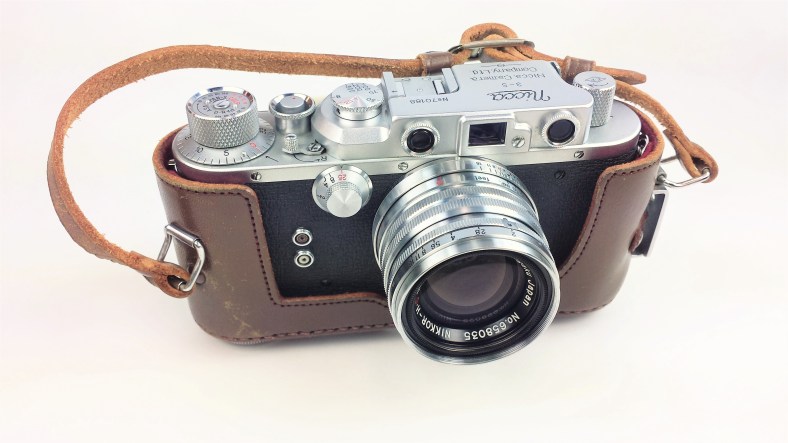
OK, well maybe not. Vintage leather half case on the Nicca 3-S.
Studio Camera: Samsung Galaxy S4
Chris
OK, well maybe not. Vintage leather half case on the Nicca 3-S.
Studio Camera: Samsung Galaxy S4
Chris
We’ve always assumed that the Nicca cameras were pretty much the same size from one model to another. The early 1950s models look for the most part, the same as the 1958 models. Now that we have two Niccas in our collection it’s time to do some comparisons.
Nicca 3-F on the left and the Nicca 3-S on the right.
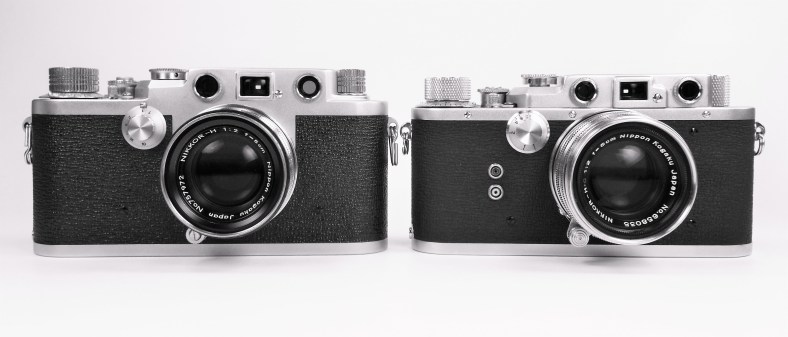
First off, without the lenses attached, there is a slight difference in weight between the two with the 3-F weighing in at 445 grams and the 3-S weighing 432 grams.
There is however a difference in size which surprised us. The later model 3-F (left) is taller than the 3-S (right) by about 4mm.
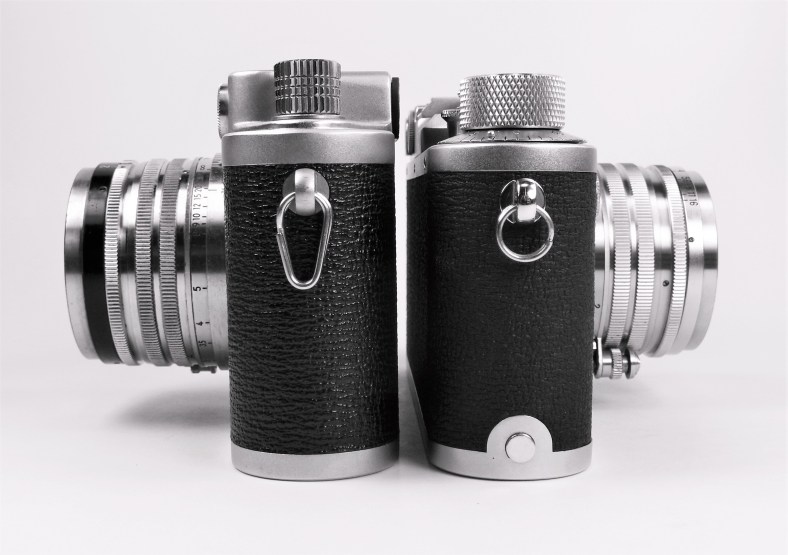
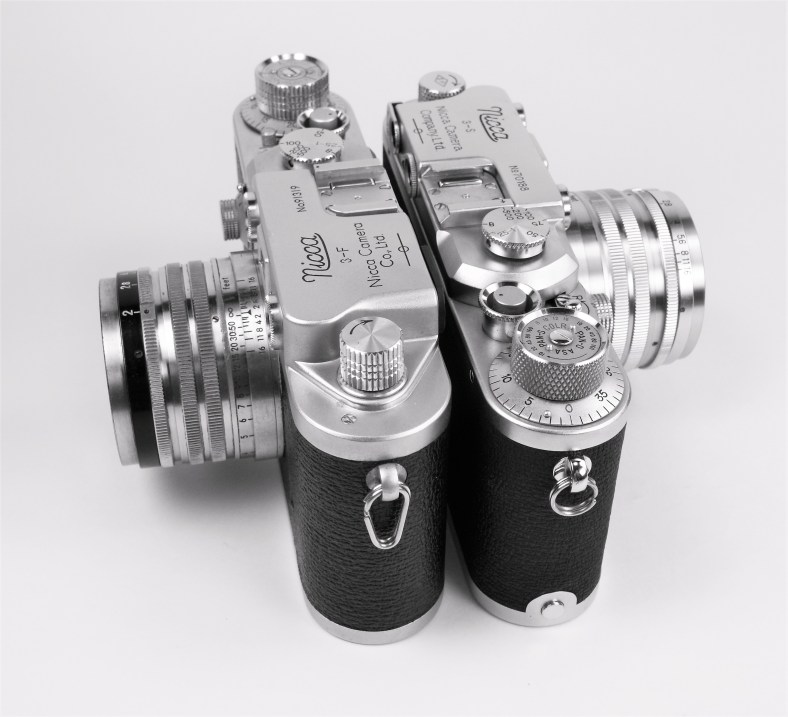
The 3-F is also longer than the 3-S by about 7mm.
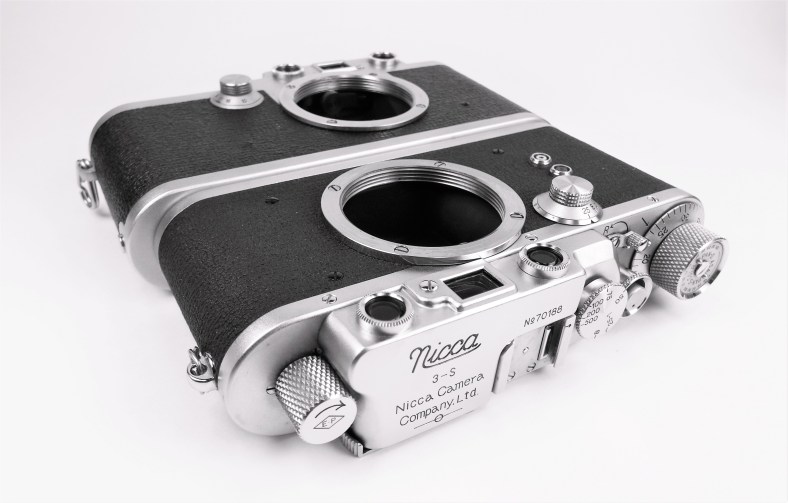
The 3-F is about 7mm longer and 1mm wider than the 3-S.
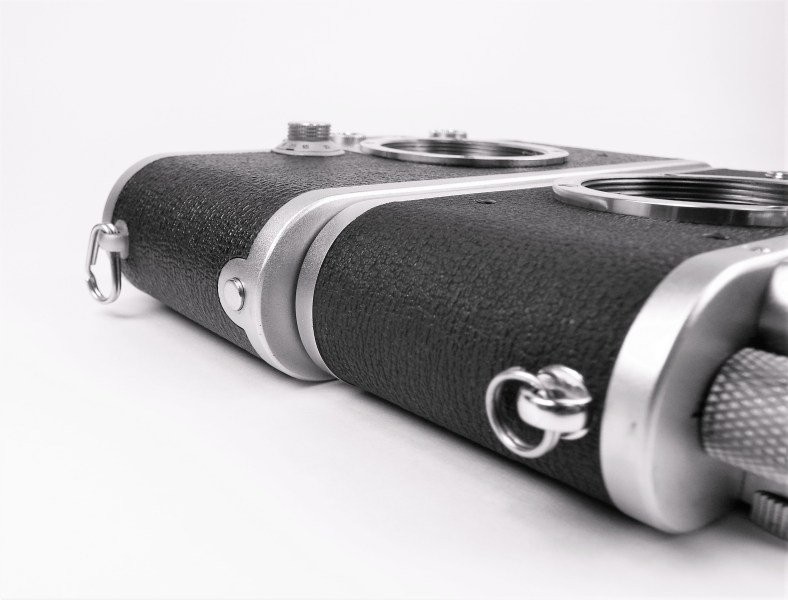
The 3-F is the top body with the 3-S on the bottom.
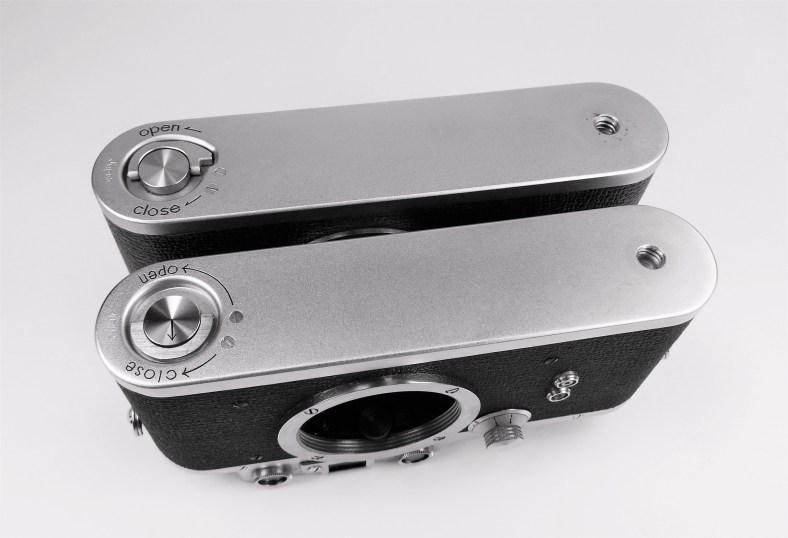
Since these Niccas share the same specs it’s surprising that Nicca expanded the body of the 3-F.
Our best guess is that the later model (3-F) uses its extra length to improve the film path. Measuring the distance between the spindles with the baseplates off, the 3-F is 5mm longer than the 3-S (108mm vice 103mm).
So nothing earth shaking – just some subtle differences. As we have stated before, these are high quality cameras with exceptional fit and finish. Adding a Nicca will enhance any collection of 1950s Japanese made rangefinder cameras.
Studio Camera: Fujifilm FinePix S9900W
Chris
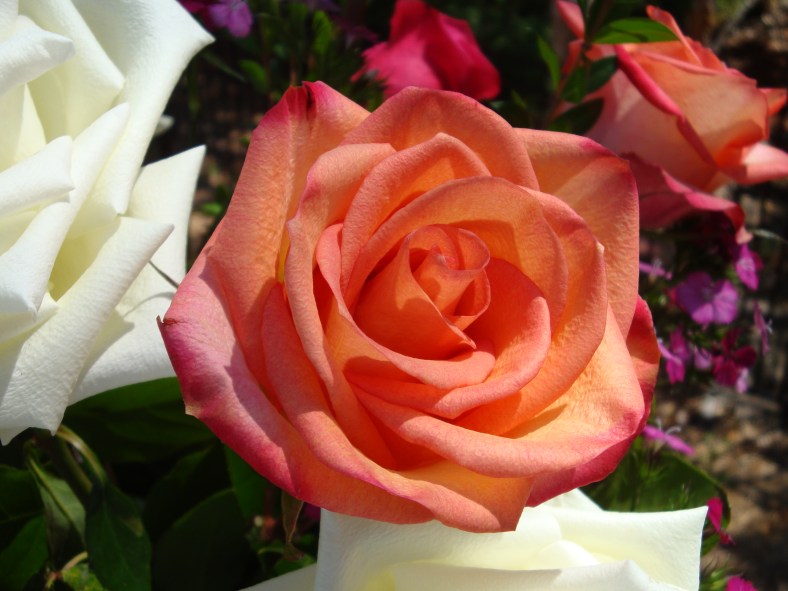
Glorious sunshine – beautiful rose.
Camera: Sony Cyber-shot DSC-W170
Chris
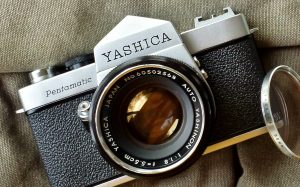
The Pentamatic was Yashica’s first single-lens reflex (SLR) and was released in 1960 (May-June) timeframe. The Pentamatic S was released about mid to late 1961. Not much changed between the two – the S model added a built-in self-timer and most notably, a provision for mounting an exposure meter to the top right of the camera that coupled with the shutter speed dial. Other small changes were to add lugs for holding the neck strap (moving them from the extreme right and left sides of the body on the Pentamatic to a more typical front mounting on the S). Unseen from the exterior is a change to the focusing screen inside the pentaprism. The original fresnel screen in the Pentamatic was replaced with a split image screen in the model S. For me, that change makes the Pentamatic S much easier to focus and improves the brightness inside the viewfinder.
A look at both models shows these changes and the tiny bit of extra weight that the S carries over the original Pentamatic.
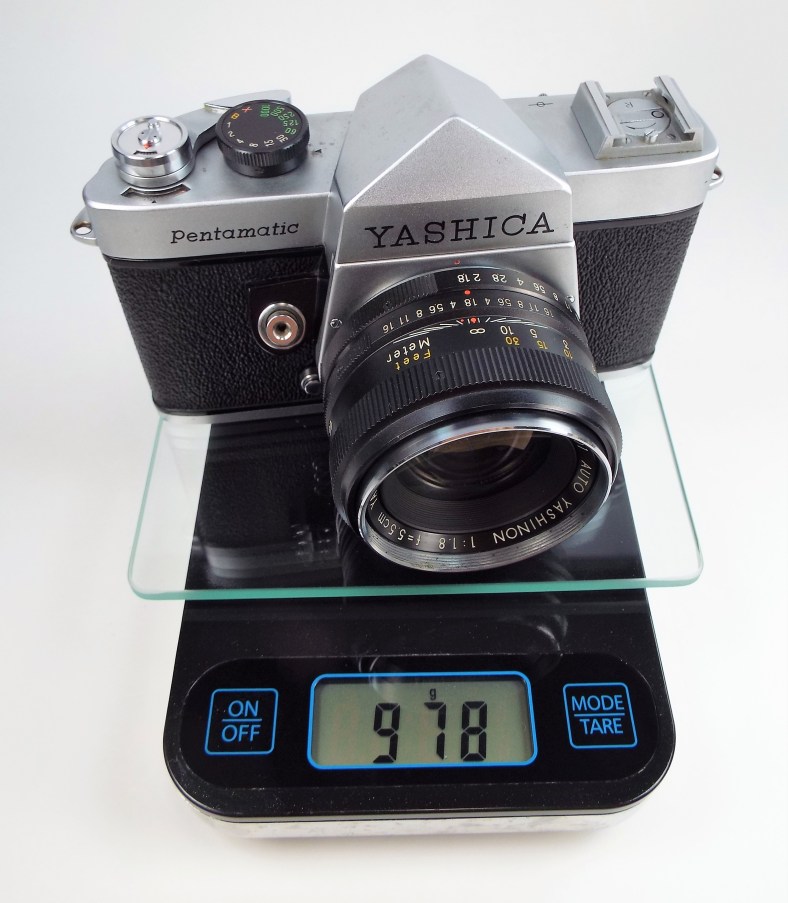
At 978 grams, the original Pentamatic is anything but a lightweight. (2.16 lbs)
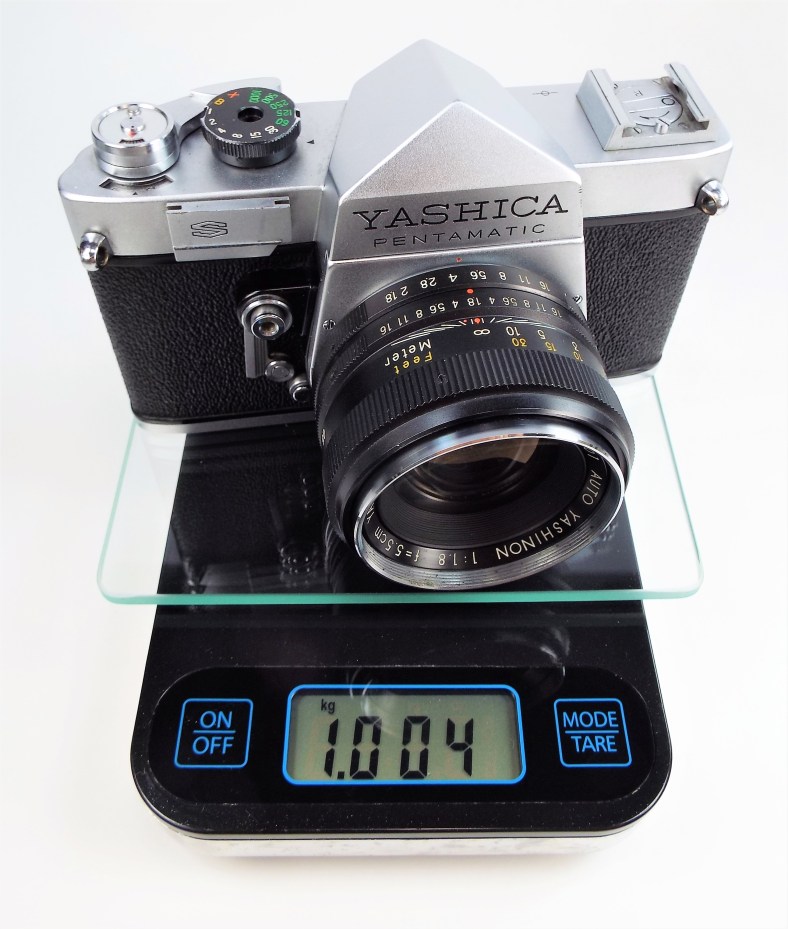
At 1,004 grams, the S shows the slight weight increase from the changes made between the two models. (2.21 lbs)
Both cameras are photographed with the same lens attached – Auto Yashinon 5.5cm f1.8 lens which was the standard lens that came with both models. Only the Pentamatic II (released in September 1960) came with a different lens. (5.8cm f1.7)
Compared to other SLRs from the same time period, the Pentamatic was a bit of a beast to tote around. The buying public never embraced these wonderful cameras and they ended their production run in less than 2 years.
Finding good looking (and still working) Pentamatics is a challenge for any collector with the Pentamatic II being especially difficult to find in any condition.
Of note, if you have an Asahi Pentax, Nikon F or Canoflex camera with the standard lenses from the late 1950s or early 1960s, we would love for you to let us know what their combined weight is. We could be way off in our assumption that the Pentamatic was significantly heavier than the other cameras of that era. Thanks!
Studio Camera: Fujifilm FinePix S9900W
Chris
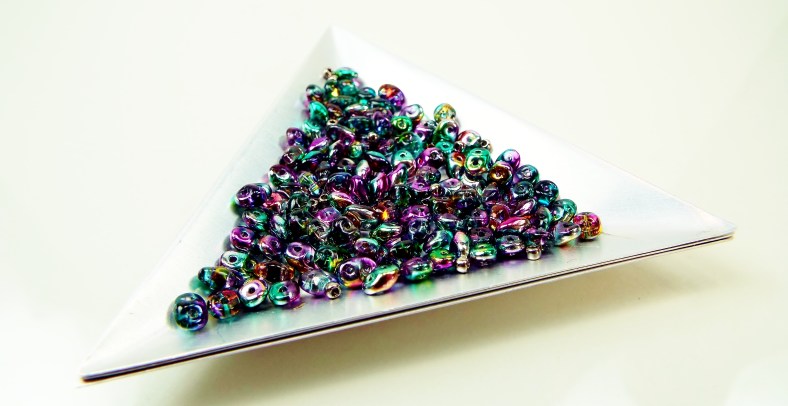
Great beads of fire!
Studio Camera: Fujifilm FinePix S9900W
Chris
Trapped and wrapped!
Studio Camera: Fujifilm FinePix S9900W
Chris

Have a beautiful Thursday!
Camera: Sony Cyber-shot DSC-W170
Chris
Camera: Fujifilm FinePix S9900W
Carol ^.^
Released in November 1986, the Fuji DL-150 entered into a hyper crowded marketplace filled with everything from cutting edge 35mm SLRs with capable autofocus and autoexposure modes to some of the most basic point and shoot cameras ever made.
We think this Fuji probably existed somewhere in the middle of the pack of simple AF compact cameras. We don’t have a handle on the price point of the DL-150 – the excellent build quality would suggest a steep list price.

Since Fuji makes film, this set came supplied with a free roll of Fujicolor. It was a great way for Fuji to kick the yellow box and introduce their new customers to the quality of Fuji film.
Focusing on the DL-150 is automatic (infrared, active type) with autofocus memory. The shutter is a programmed electronic type with speeds of 1/30 to 1/500. ISO (DX Coding)is from 100-1600.

We like the styling of the DL-150… typical 1980s design but in our eyes it still looks fresh. It feels like Fuji used a higher quality plastic and the fit and finish is excellent. This model appears to have been built in Japan.

Fujinon f3.5 35mm lens – 3 components with 3 elements. Closest focus is 0.85 m

First time we’ve seen a JCII inspection sticker on one of our simple Fujis.
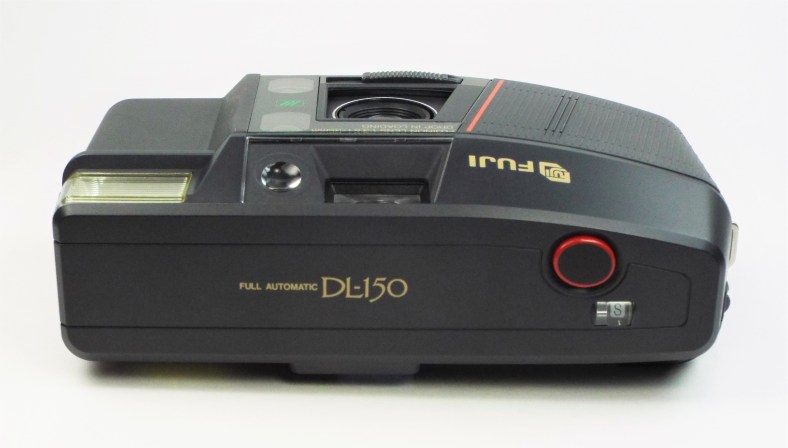
Drop dead simple top plate!

The shutter release button is sweet – a soft touch oval that feels great under your fingertip.
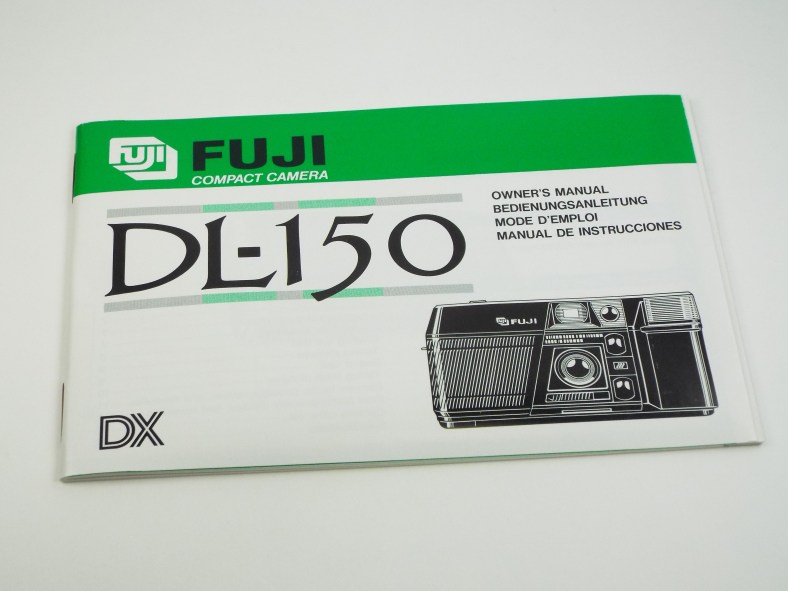
A real owner’s manual vice folded pamphlet.
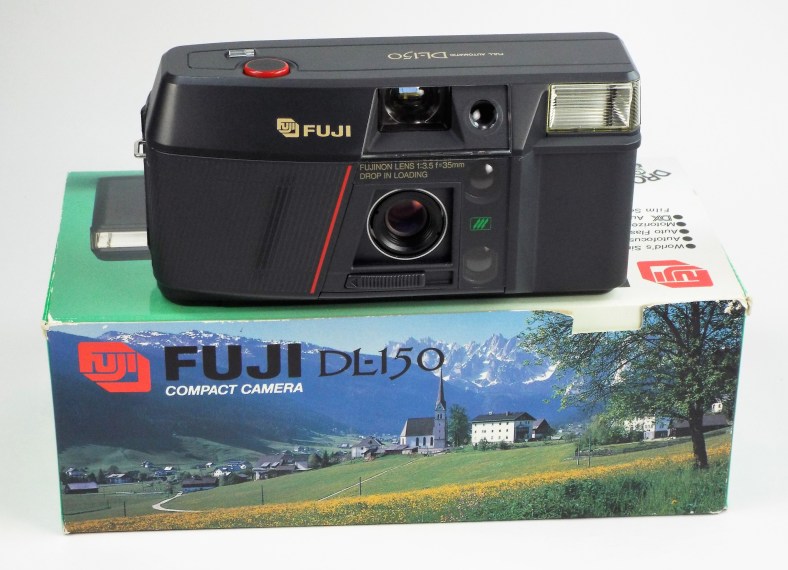
Colorful retail box. The Fuji DL-7 has a similar design.
Billed as the “world’s simplest loading system”! Features autofocus, auto flash firing, motorized film advance and end of roll rewind and DX auto film setting. No way to turn on the flash and the flash fires to “assist” you in dim lighting indoors.
Takes 2 AA batteries and weighs in at only 255 grams (without film, batteries or strap).
We haven’t field tested it yet but it’s on that ever growing list!
Thanks for your visit – if you find a nice clean DL-150 for a good price we recommend giving it a try.
Studio Camera: Fujifilm FinePix S9900W
Chris
The Fujifilm Smart Shot Deluxe is one of the most basic modern cameras we have in our collection. It’s interesting to note that Fuji returned to using Fujifilm in its name with this camera vice using simply Fuji.
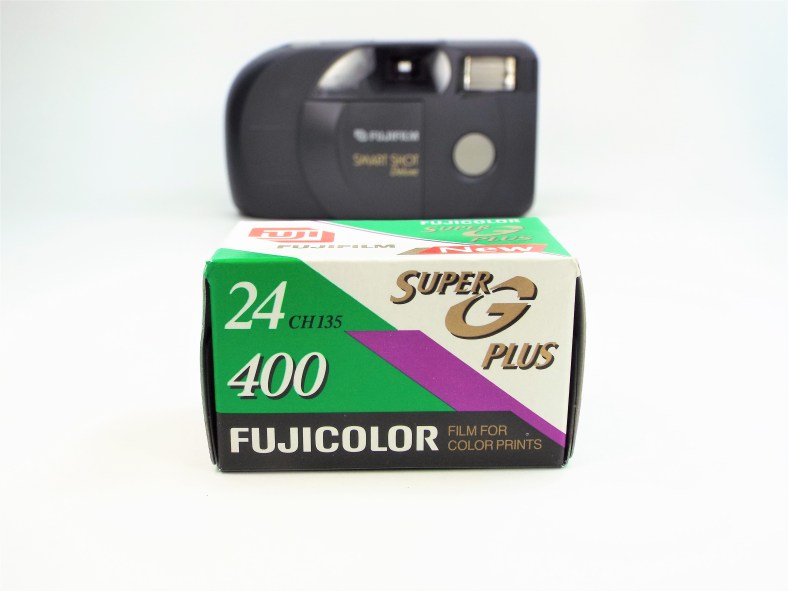
It was released in September 1994. It’s super small (compact) and lightweight (175g) but still featured drop-in loading and motor drive. It came packaged with Fujicolor Super G Plus 400 film and the box was designed with a hang tag for sale next to their films. The shutter is fixed at 1/100th of a second and the aperture is fixed at f8. Fixed focus is from 1.3 meters to infinity.
*** Please note: If you know what the U.S. (or MSRP in Japan) selling price was in 1994 that would be great! We have ¥12,000 which seems a tad high. Thanks ^.^
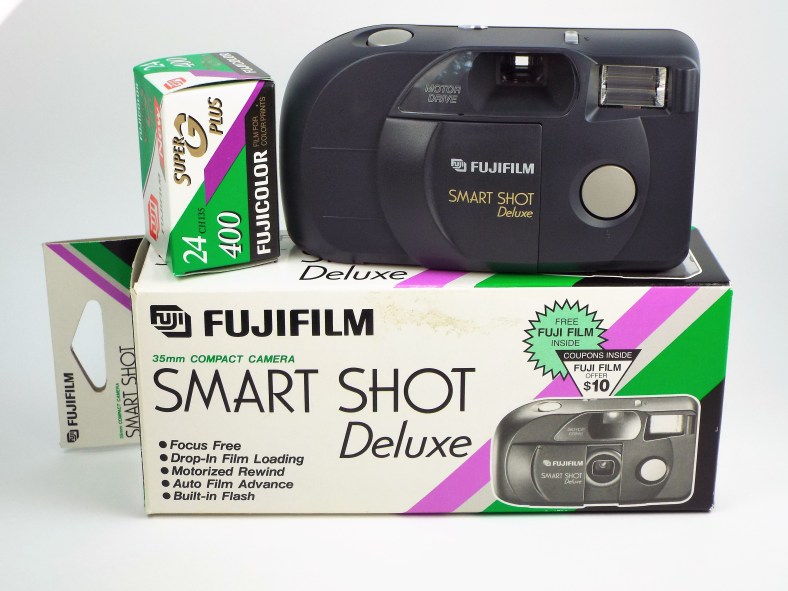
One of the advertising tag lines for the Fujifilm Smart Shot series was – “a smart shot, a good price, a firm picture, a camera that looks good if you go for fun”! That may not be the best translation in the world but I think you get the idea.
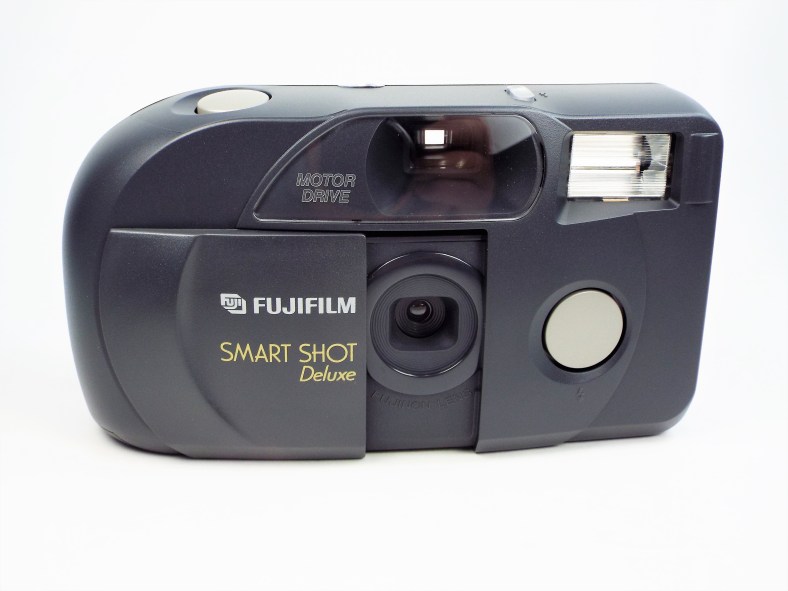
Fujinon f8 33mm plastic lens.
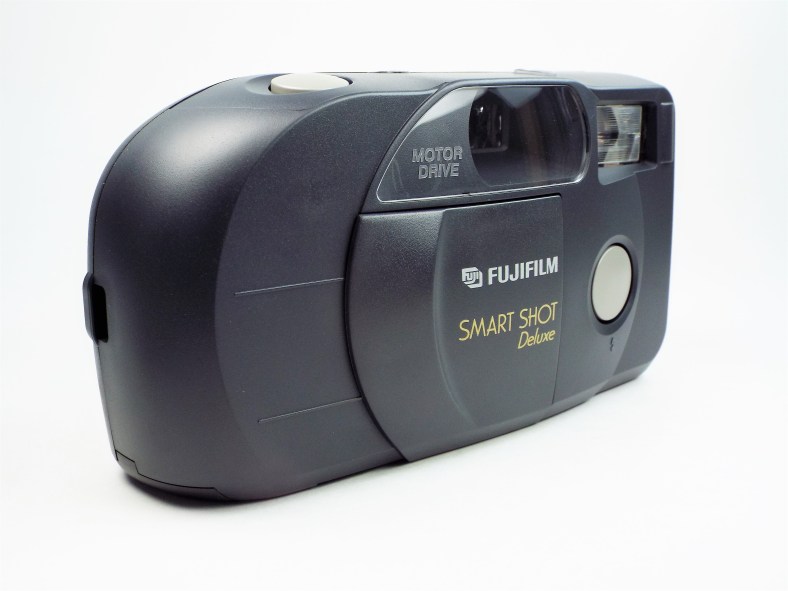
Built-in motor drive and motorized film rewind. Sliding lens cover and crazy big flash button.
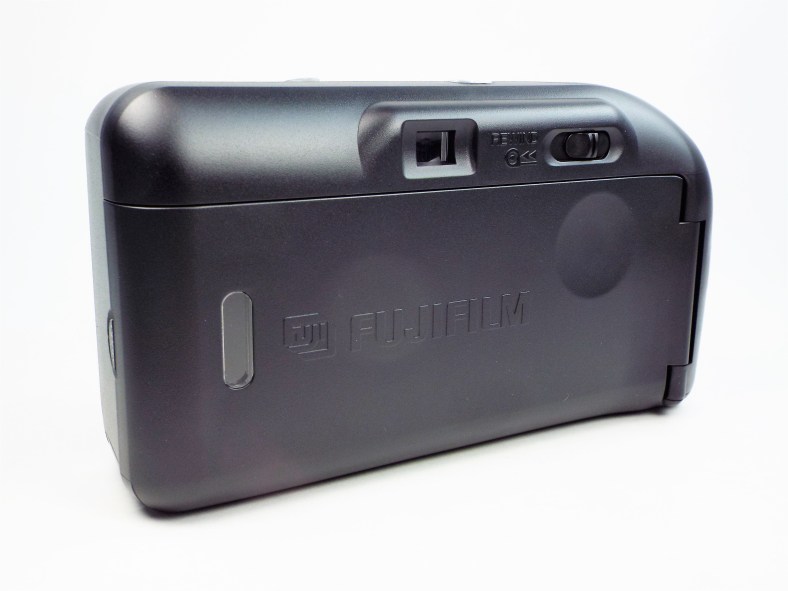
Film view window and a cool Fujifilm logo on the back.
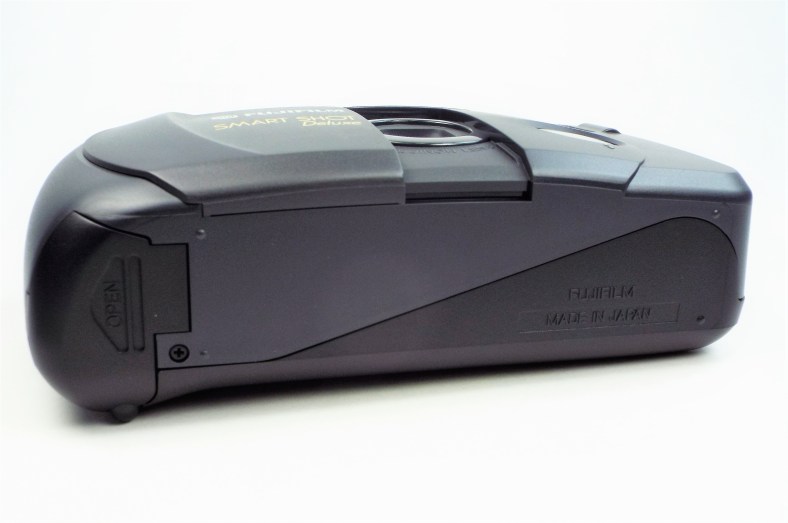
Still made in Japan at this point in time which is surprising as most of the simple Fuji cameras were made elsewhere.
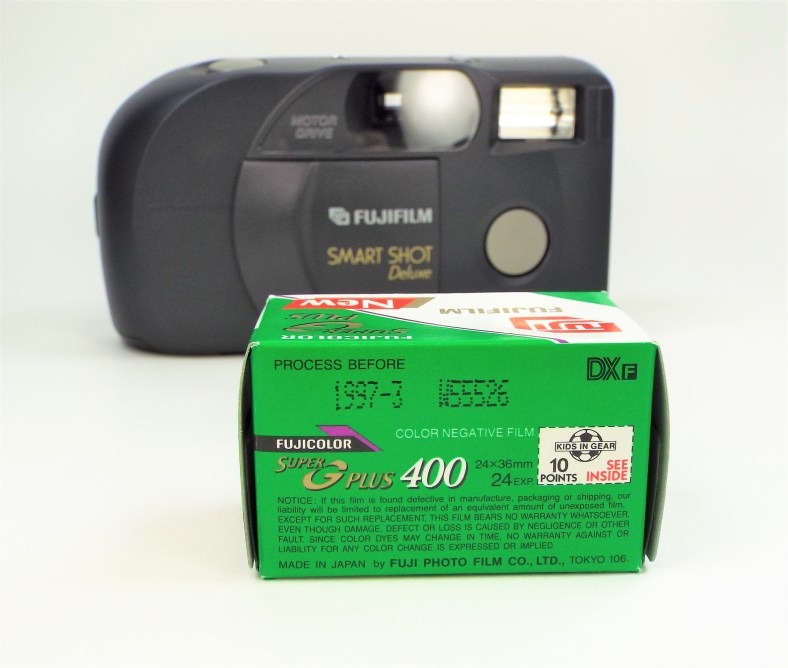
Back in 1994 when this camera set was released, it came with a fresh roll of Fujicolor 400 film and 2 AA batteries. The film is a touch out of date.
The owner’s manual is more of a fold out pamphlet and shares info with the Clear Shot Plus. The oversized button on the front left of the lens is the flash button. You press it and hold it until the flash ready comes on then you push the shutter release button on the top right. It’s odd that the flash “on” button is so big – designed to make it look maybe more sophisticated or cute.
I’m sure Fuji sold a bunch as they were nearly a disposable camera with a free roll of film and came with rebates for additional savings on film purchases.
I would say it’s a bit better than average for a mid 1990s camera and free film never hurts sales!
Thanks for your visit!
Studio Camera: Fujifilm FinePix S9900W
Chris
 Chasing Classic Cameras with Chris