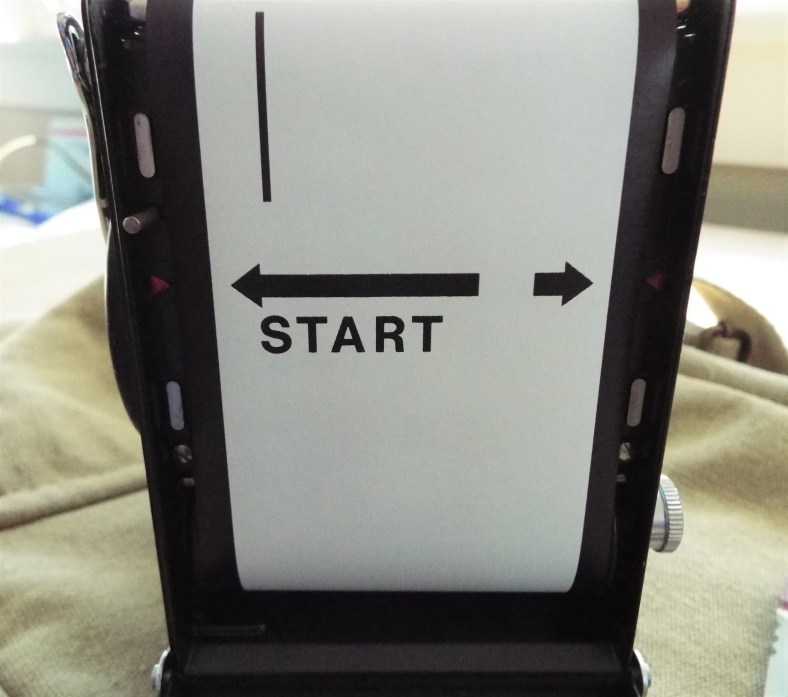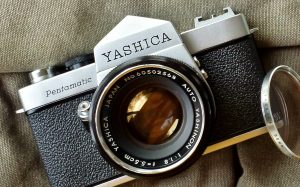
Yashima-Yashica Leather

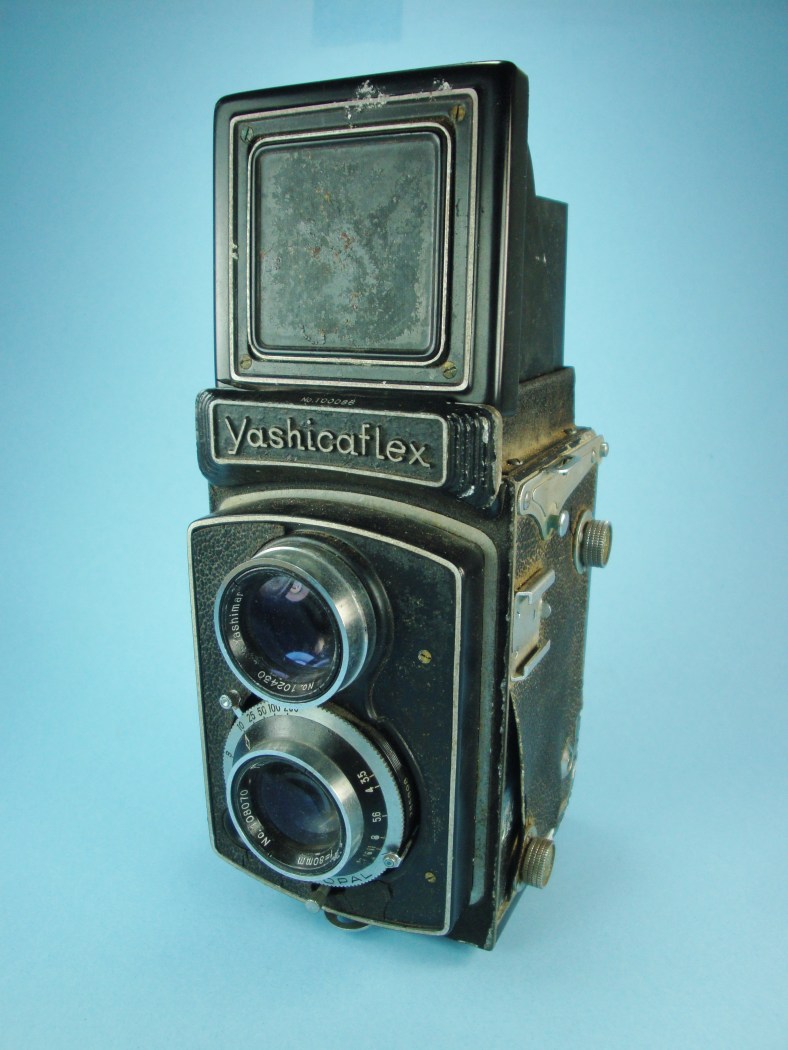
A misleading title? We’re not sure. It’s doubtful that in Yashima’s early days of camera manufacturing, that they made their own leather case goods. They had plenty on their plate already – lens production (mostly testing), machining parts, pouring cast aluminum bodies, stamping out metal pieces and of course, putting it all together in a box and shipping it off to various Trading Companies and camera dealers around Japan and the world. Oh did we mention, inventing new camera designs too.

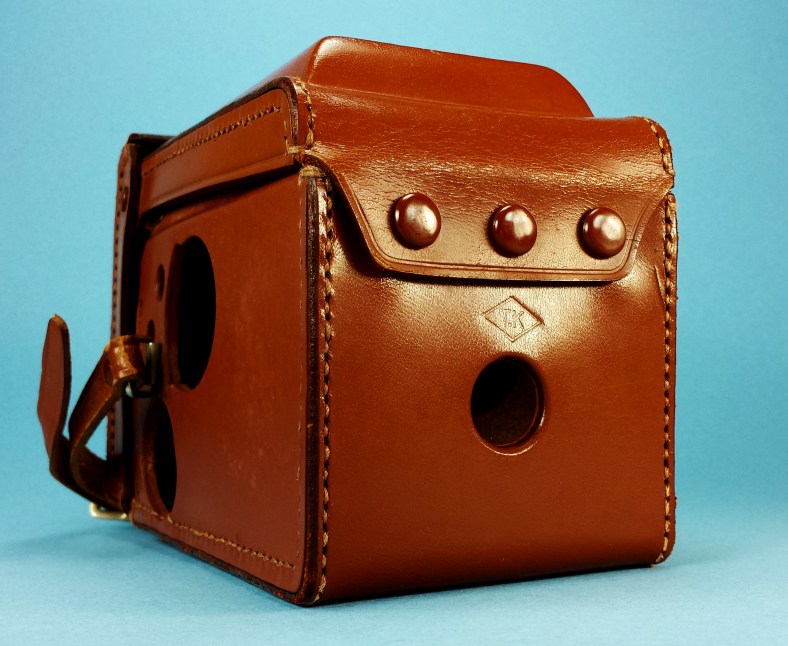
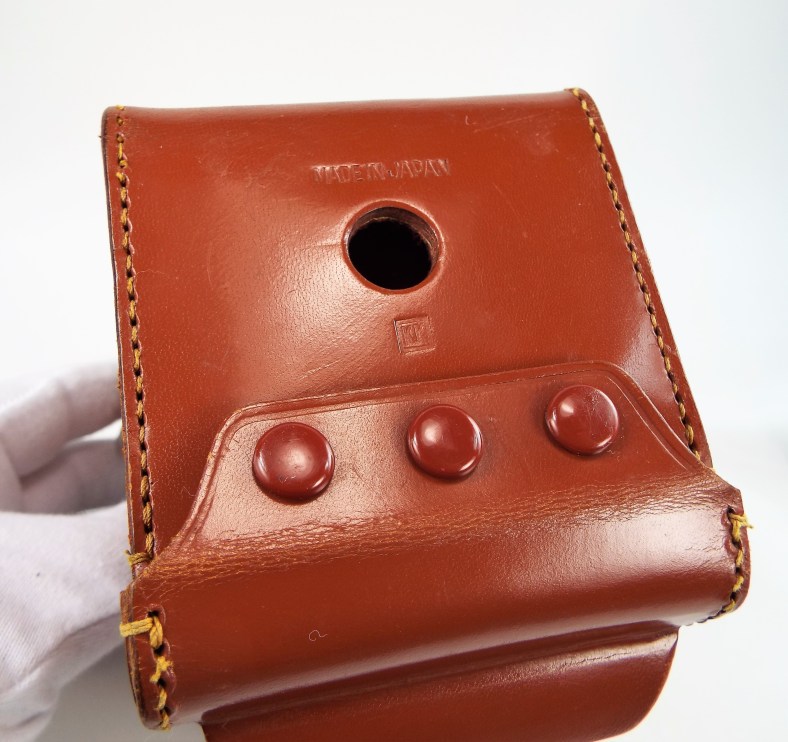
We believe that Yashima-Yashica had their leather case goods made by at least 4 different suppliers – each with their own maker’s marks stamped on the bottom of the case.
dscf3573

14946607129_6c99cdd8f3_o

16194486489_f9eb368a5a_o

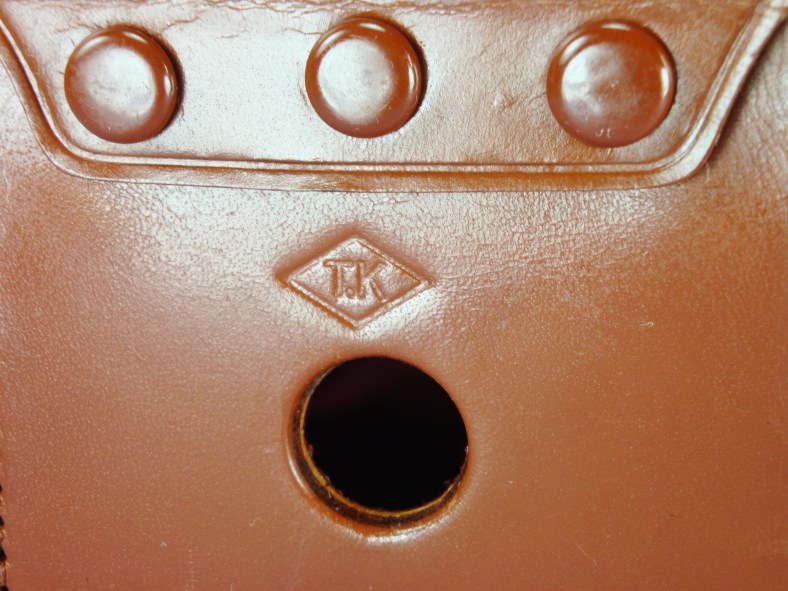
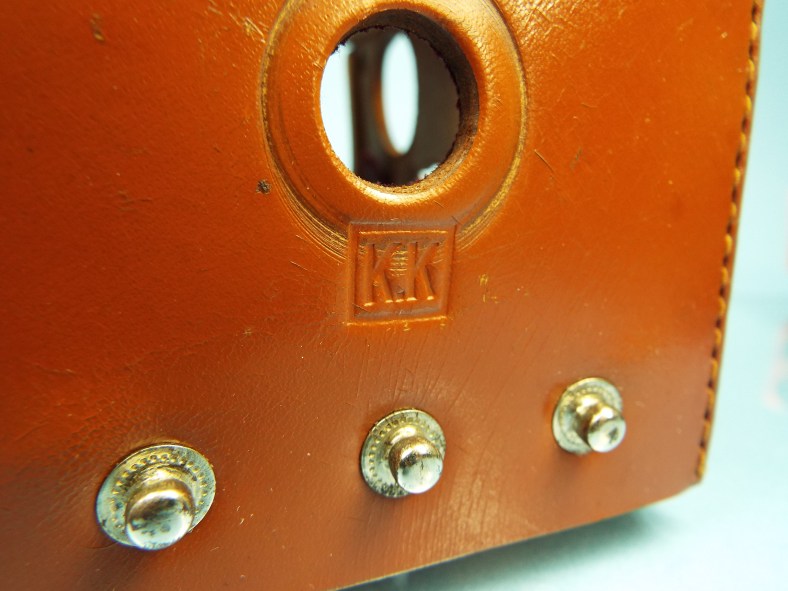
Could the trademark be ‘Tomioka Kogaku’? In the early days of Yashima/Yashica, did they use leather cases made by outside companies? More than likely since they would not have had the facilities or skills to produce quality leather products in large quantities IMO.
26525674923_ebcb6d771f_o

This image is of the bottom of our Yashicaflex Rookie’s leather camera case. Some of the 1950s era Yashima-Yashica cases have similar marks. With an occasional exception, most 1960s era cases do not carry these marks.

The mystery… we believe that these are ‘maker’s marks’ or trademarks of the company that manufactured the case for Yashima-Yashica. The marks are similar to marks found on Japanese tin toys from the same period. Our theory is that Yashica did not have the facilities or skills to make leather cases on their own in the early days of production and that outside leather crafters added their individual trademarks to the cases.

Other marks that we’ve seen… T.K , NT , GSS and another K.K but in a diamond shaped box.

If you know of the origins of these type of marks on Japanese leather goods please add your comments. We would love to know for sure.

Thanks… C&C ^.^
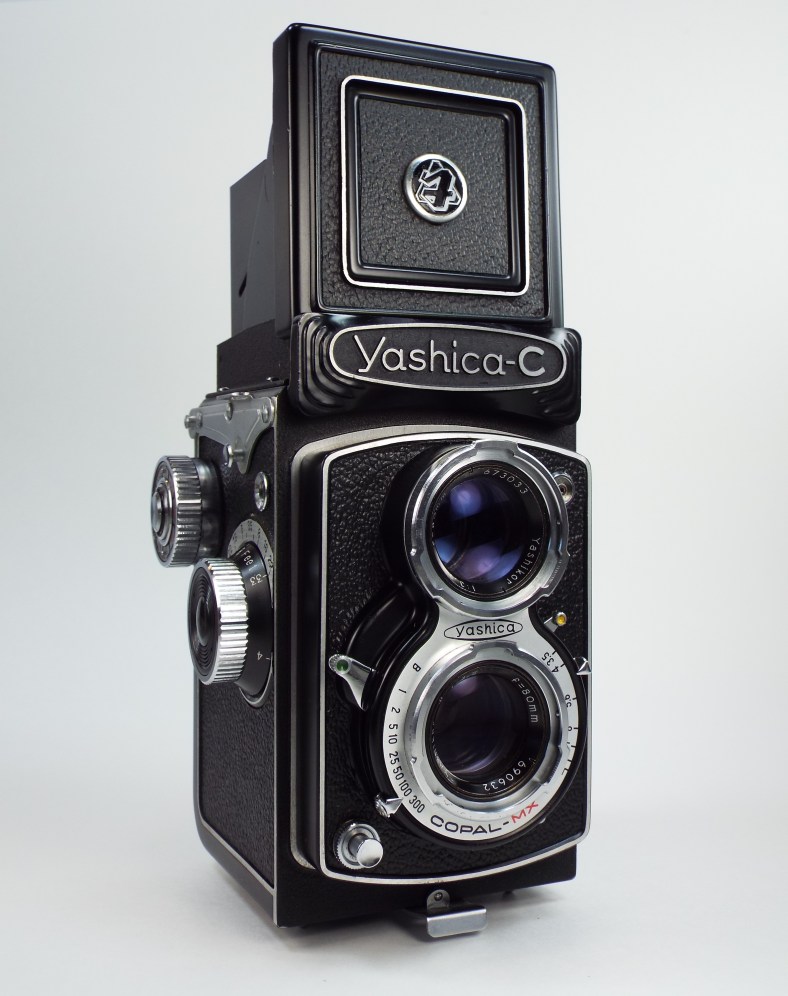


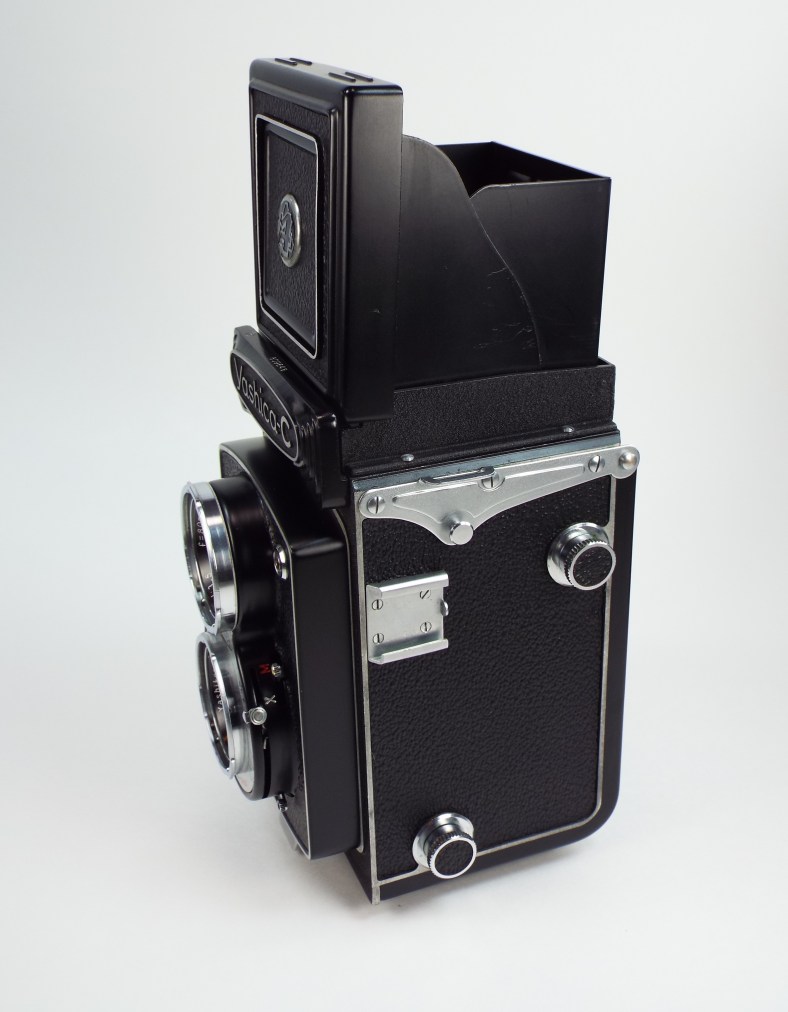
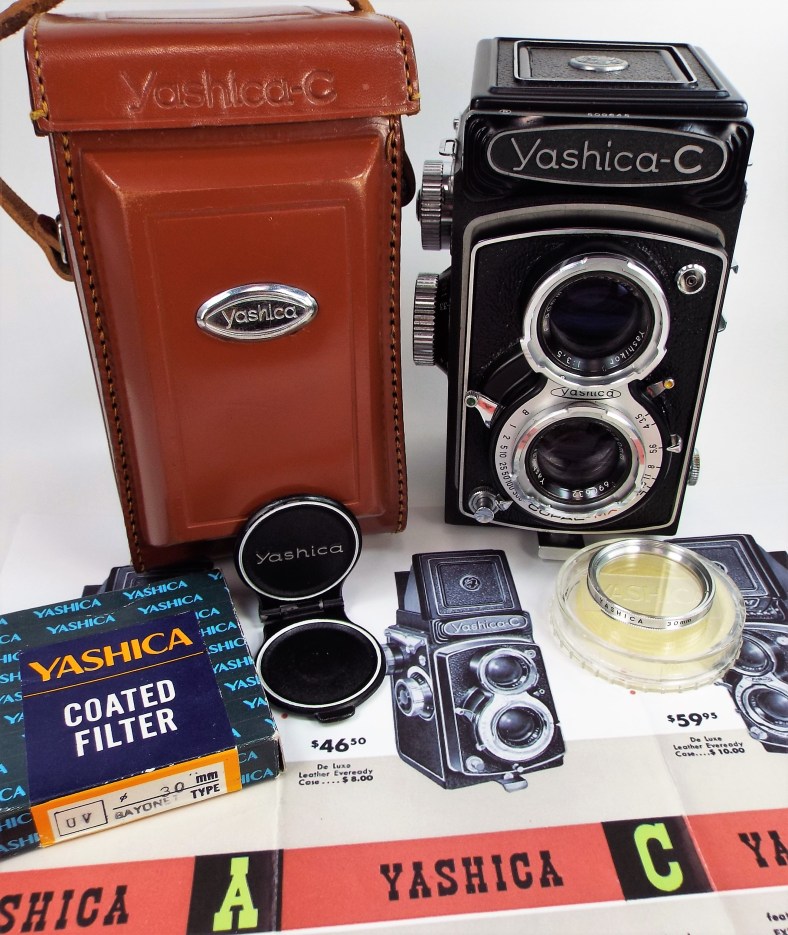
1957 Yashica-C

The Yashica-C made by Yashima, was part of the new wave of Yashicas that were released in late 1956 for sale in the world markets (focus scale is only in feet). It was listed at $46.50 plus $8.00 for the “De Luxe Leather Eveready Case”. The other models released at the same time were the Yashica-A ($29.95) and the Yashica LM ($59.95) which featured a built-in exposure meter!

dscf3511

dscf3512

dscf3513

dscf3514

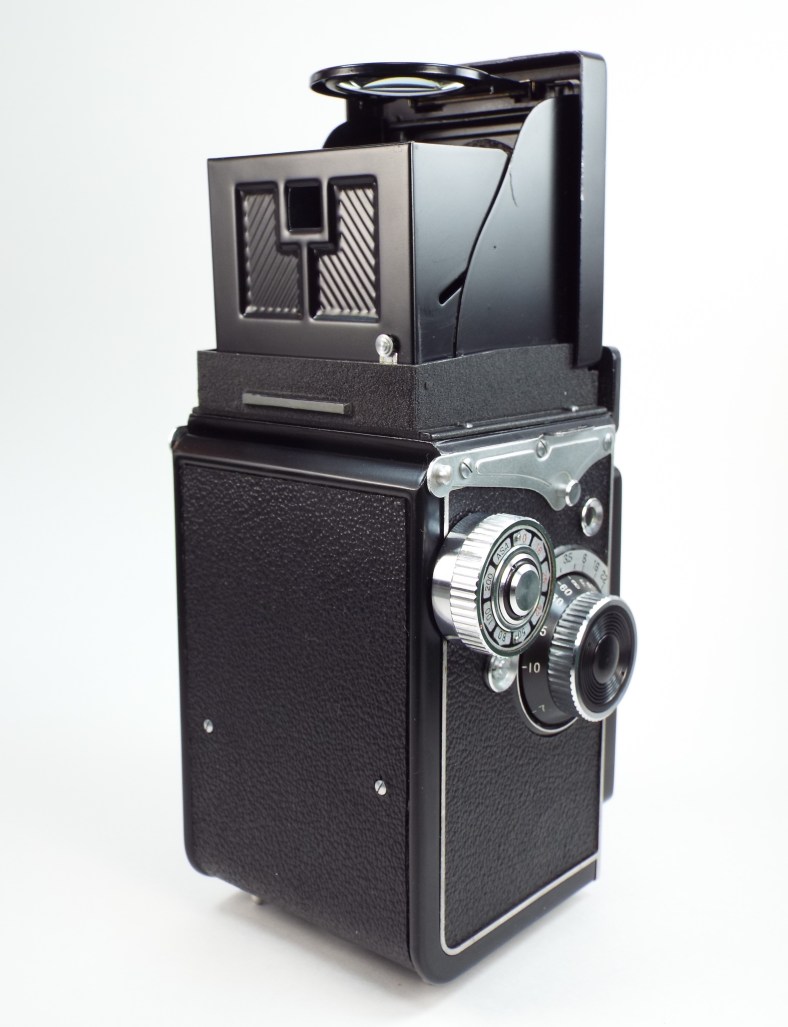
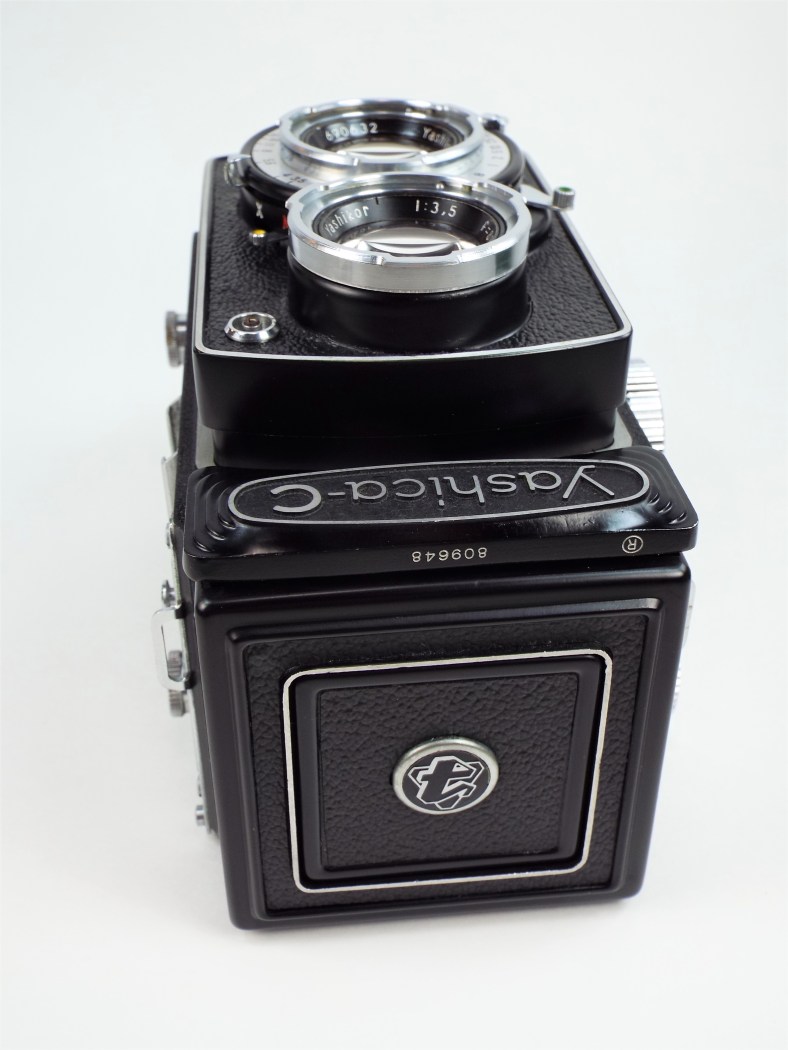
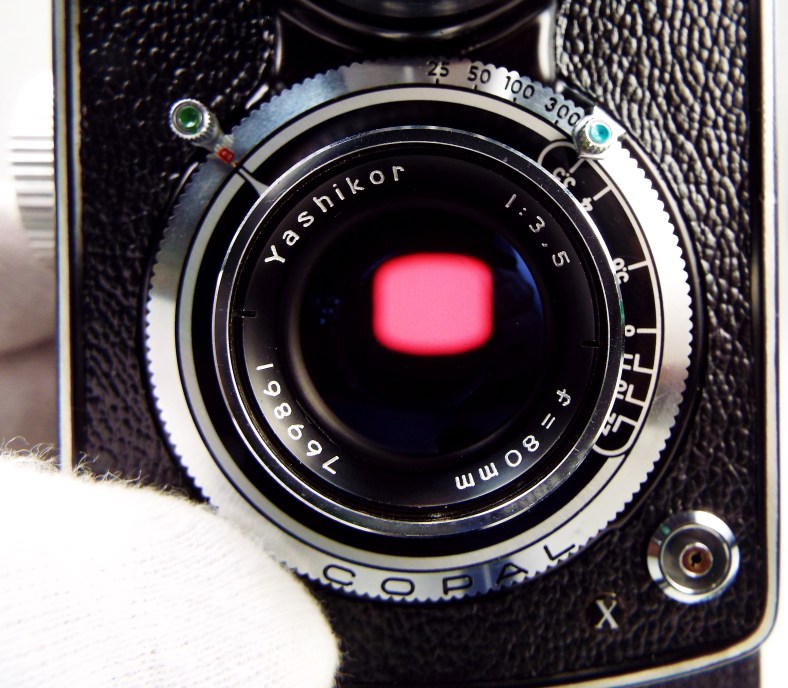
This handsome camera came to us recently with all features fully working – even after six decades of use, no issues. Our guess would be this camera saw maybe 1 or 2 rolls of film in its life. It is in factory new condition.

Features: Semi-automatic film wind, 80mm Yashikor f: 3.5 taking and viewing lenses (hard coated and color corrected), Copal shutter with speeds at 1, 1/2, 1/5, 1/10, 1/25, 1/50, 1/100, 1/300 second and Bulb, self-timer, flash sync (M-x) built-in, bayonet lens mount and flash gun shoe with standard PC flash terminal.

If you’re looking to try medium format photography, the Yashica-C is a great camera and a great value. It can often be had for significantly less money then a Yashica-D.

A word of caution about 6 decade old TLRs. Corrosion of the black metal parts is common as is fungus and mold in and on the lenses. If the camera you’re interested in shows some exterior rust (and other forms of corrosion), then ask the seller a bunch of questions. Cameras like these that come from humid environments are often left in their organic leather cases (and in the dark) – fertile grounds for growing mold and fungus. Fungus filaments can completely destroy a lens or at the very least, etch parts of the coating for good.

dscf3516

All the goodies!

On a more happy note – this beauty has no mold or fungus and was purchased from a seller in Michigan. Probably a one owner camera – it came with a roll of Kodak Tri-X film loaded inside (at least from the mid 1960s).

Studio Camera: Fujifilm FinePix S9900W

Thanks for your visit and comments are always welcome. C&C ^.^

1955 Camera Case Mystery

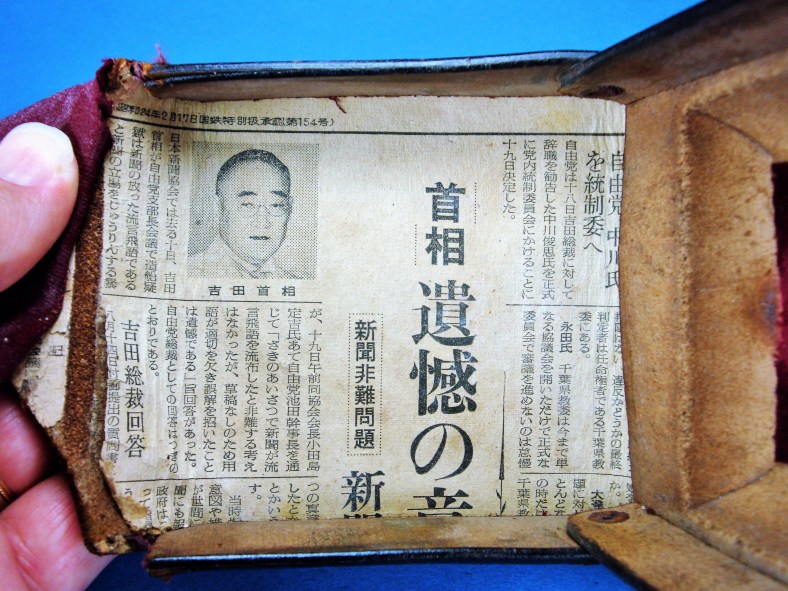
During a recent restoration of our 1955 Yashicaflex A-II twin-lens reflex camera, we discovered that the leather case held an interesting surprise!

15070722327_0d4b9e785b_o

The thread below is taken from our Flickr page (Yashica Sailor Boy).

Chris “As part of a restoration of my c1955 Yashima (Yashica) twin lens camera’s leather case, I discovered that the red felt material inside the case used backing made from Japanese newspapers! Leave it to the Japanese during the mid 1950’s to make good use of something that would normally have had one use and then thrown away here in the West. What really surprised me was how easy the felt pulled away from the newsprint without destroying the paper. I hope to get the writing translated… maybe some interesting clues as to where the case was made and when.”

Chris “The leather case was made for a Yashica Flex model A-II from 1955. The camera was purchased from a seller from Hiroshima, Japan. The camera was made in Tokyo and I am not sure if Yashima (Yashica) made their own leather cases or if they were made by a supplier. Maybe the newspaper will yield some clues as to where.”

Chris “I now know that it is a picture of Prime Minister Yoshida. This was a special edition newspaper made for (?) the Japanese National Railways (JNR). It appears that the paper is dated 17 February 1949. ‘Special Treated Approval Number 154 Issue’.”

Ken “The caption at the top actually records the newspaper’s national railways special handling permit #154, and does not identify the actual date of the issue in question. The article has to do with a controversy the prime minister created when he criticized a newspaper for allegedly spreading rumors about a political scandal concerning the shipbuilding industry. The scandal erupted in January 1954 and became one of the main causes of the fall of Yoshida’s government. It is not clear which newspaper this article comes from, but from the anti-government tone of the writing it is possibly the Asahi.”

Chris “Thank you so very much KenjiB_48. It helps to know this as it makes more sense for the Japanese company that made the leather case would have used a current (1955) newspaper for a camera made in 1955.”

15070781568_4fc3b2577b_o

The inside front of the leather case held a similar surprise. It would appear that in the mid 1950s, some Japanese manufacturers found ways of recycling almost everything produced. Used newspapers, I would think, could be had for free. Why not use them for backing the felt to the leather. Pretty smart!

Thanks for your visit!

Chris ^.^

Yashima Yashicaflex A-II

Our Yashicaflex A-II is headed for the finish line – soon! These images were from day one and day 100 (just kidding about the 100). There have been so many issues to deal with restoring this 63 year old camera that it’s been a slow go. While this restoration has been an ongoing process for us, we’ve used some of our time to address some of the other cameras in our collection that needed only small repairs and a good cleaning.

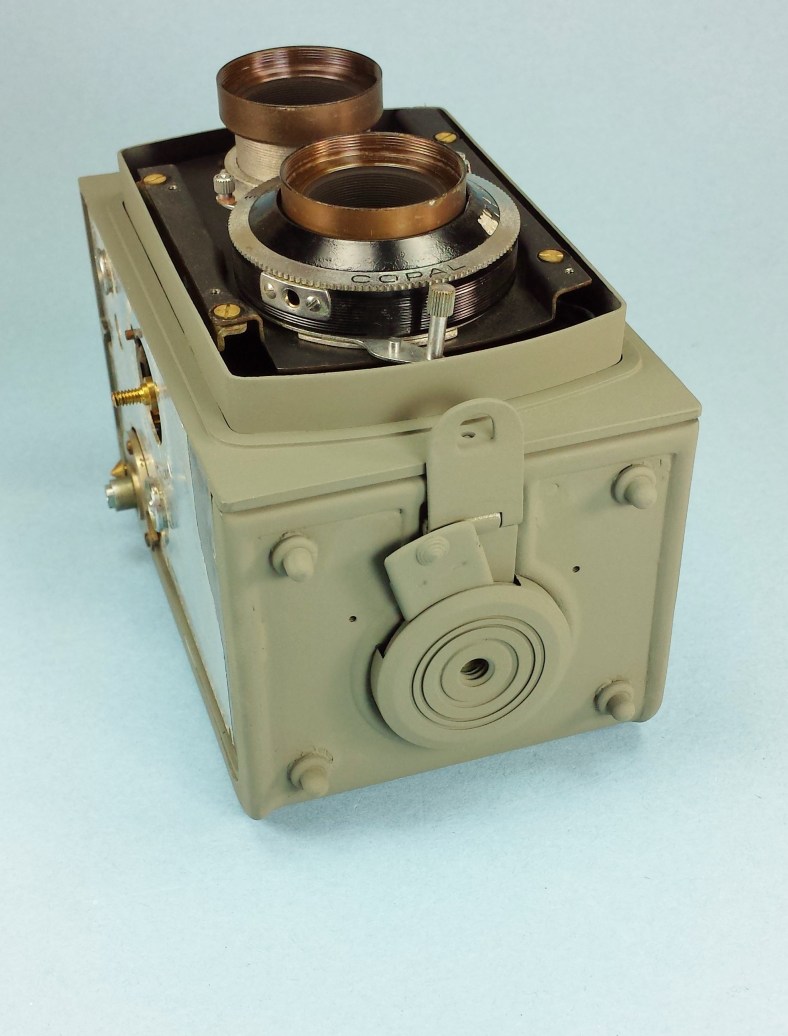
Day one is pictured below. After prying the camera from its leather case (literally), the rust and corrosion were widespread and had eaten deep into the metal. Dirt everywhere! But the camera functioned! Glass was mold and fungus free but dirty and the shutter was accurate.

22024859392_8ffe58f0a3_o

The die cast aluminum body and back door were corroded big time. The thin metal parts were rusty and pitted. The leatherette was dry and brittle with many missing pieces.

Below the same area after 3 coats of etching primer and filler putty to “replace” the missing aluminum due to the depth of the corrosion.

22555908617_27904de611_o

By this point some of the final finish coats of primer and filler could be applied. Lots of sanding between coats. At least the corrosion was gone and something of a finish could be imagined.

The camera will be re-imagined and restored. Since it’s not a rare Yashica model, Carol and I feel free to express some creativity in the re-build. Stay with us as I believe we’ll be able to have the finished product ready to show by early spring. The Yashima Yashicaflex A-II ‘Sakura’.

Thanks for your visit!

Chris and Carol

Hit the Road 2016! Hello 2017!

Thank goodness 2016 is almost history! I’ve heard from friends in Australia that 2017 is going well (so far). Let’s not muck it up!

On a positive note – here on our blog, we’ve seen a significant increase in activity over last year (2015). Visitors to the site and views are through the roof! We (Carol and I) are thrilled that what started out as a repository of bits and tidbits of Yashima-Yashica information would gain the traction that it’s had. We thank you!

We enjoy the feedback we get and I can say that I’ve learned more than a few things from it. We’ve met some super talented people – photographers and bloggers that are out of this world amazing! We hope our readers got a little something special in return too. That was the goal of the ‘Yashica Pentamatic Fanatic’ -a sharing of knowledge about a silly camera that Yashica invented in 1959 that most people have never heard of.

29926651073_d141fae764_o

This year’s favorite.

In looking through the hundreds of film and digital images that we shot in 2016, this one turns out to be our favorite. We believe that every vintage camera is worth preserving (in some way or another) – we think of cameras as holding the heartbeats of all who may have gazed through its lenses, pressed its buttons and then anxiously awaited the results. We can imagine the thousands of faces and smiles that were captured and the thousands of important events in people’s lives that were saved for the future. Classic cameras do that for us.

Don’t get us wrong… we love the  world of digital photography but we also embrace the beautiful, often awkward analog machines of our past. We hope that photographers in the future will remember (every now and then) to pick up a classic camera, load some film into it and then set out to capture images with a camera older than yourself. Enjoy!

Happy New Year… we wish only the best for all!

Chris and Carol ^.^


Yashima Yashicaflex A-II… 1955 – A restoration like no other!

21849128528_7702ca2714_o

Restoration challenge! Six decades of dirt, grime, soot and corrosion have taken their toll on this once beautiful Yashicaflex. There isn’t a part that escaped the corrosion – except the workings. The glass is just fine, shutter works, aperture blades are problem free – film advance works as does the focus. 

I’m finally on the home stretch of this year plus project. My desire to re-imagine this camera into the modern age has been the biggest holdup. Actually I’m calling it an “interpretative restoration” – that allows the artist and designer in me to reconcile with the fussy photographer that I am.

Watch the blog over the next two weeks or so as I bring it all together for the final reveal.

Thanks – Chris

Shooting in squares…

It’s tough to think square again! I’m spoiled (aren’t we all) by the ease of digital photography – nice proportions – wide screen – big images – bold colors – lots of megapixels. Exposures? Shutter speeds? Composition? No worries – the technological gems we hang from our necks will think for us. I’m as guilty as anyone – I love what digital can do and what it can’t.

Now try to think of the world in little squares – 6 x 6 centimeter squares to be exact. It’s hard to do – modern formats are always elongated squares. Who loads square images on their blog? The square format went out with the Instamatic! But if you’re lucky enough to own (or have access to) a medium format (6×6) camera then you too can shoot in squares.

I recently took one of my Yashica TLRs out on a date – threw in some fresh Fujifilm and off I went. I must confess – I love color! Sure I like an occasional fling with some black and white (Neopan 100 Acros) but color gets me going. Not “computer generated color” – the subtle color you see only on film. It’s there (just like in real life) but it doesn’t tackle you to the ground like some overly saturated digital image. Just nice and easy color.

These following images were taken with my Yashica-Mat EM twin-lens reflex (TLR) camera. Exposures were determined (suggested actually) by the EM’s on board exposure meter. Yashica claims that it’s built-in but it’s really just attached to the left side of the body by three screws and a wire. No TTL or coupled metering here… just a bunch of tiny numbers on top of more tiny numbers with an almost invisible pointer pointing at those tiny numbers. I chose Fujifilm’s Fujicolor PRO 400H color negative film because I enjoy shooting with Fujifilm and usually like the results. I will point out that no post production was done on these images. No cropping, no color adjustments – they’re just as they were when developed and scanned by the lab (which was The Darkroom).

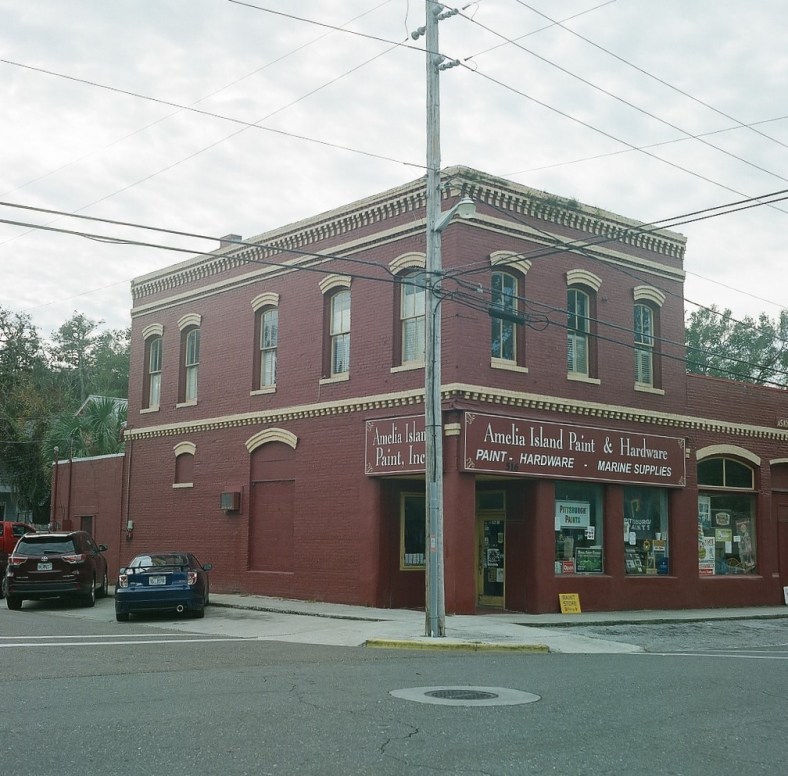
53580001

This is actually image 12 on the roll. Taken on day 2 of my travels. Perfect small town America shot. I lost my bright sun from the day before but the Fujicolor 400 made up for the dull sky. Is it properly exposed? Probably not. Off by about 1 stop or so.

53580006

Day 1 – image 7 on the roll. The Fujicolor handled the strong contrast between the sky and building. The Yashica’s meter did a fantastic job. About 1/500 at f/ 16-22.

53580008

Faded Florida – along U.S. Highway 17 in North Florida. High contrast with strong shadows. f/ 16 at 1/500.

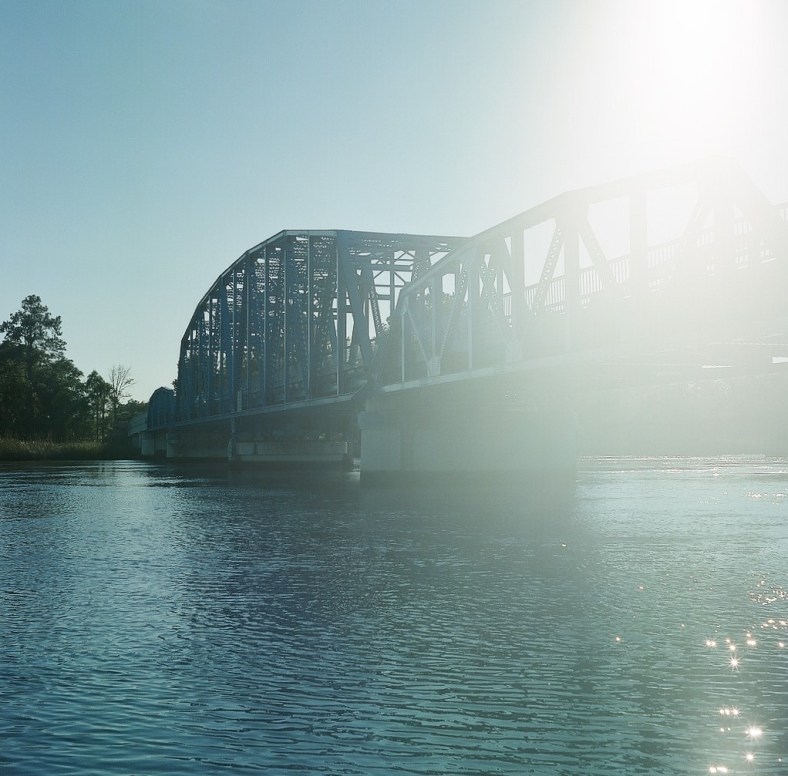
53580012

A nice test for the Tomioka 80mm lens. No flare and some nice highlights on the water. 1/250 at around f/ 11-16. I metered to the left of the bridge. Looking south into Florida from Georgia. Highway 17 bridge over the St. Marys River.

53580009

Looking north towards Georgia. The Yashica’s meter did a wonderful job suggesting the proper shutter speed and aperture setting. 1/250 at f/ 16.

Shooting in squares can be fun and challenging. Do I think some of the images would be better in a 6 x 4.5 or 6 x 7 format? Yes – definitely. Can I learn to enjoy squares again? Yes – definitely.

Comments are always appreciated and welcomed. Thanks for your visit!

Chris


More ‘Found Film’

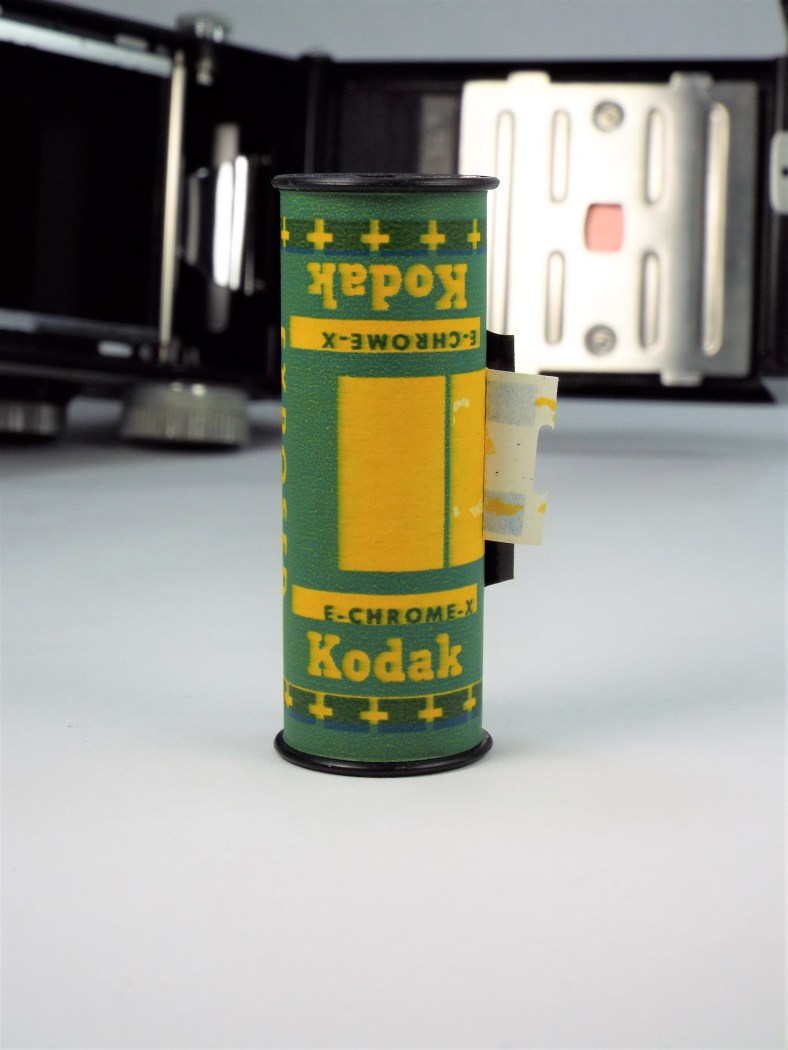
We recently posted a short article about the good and bad sides of ‘found film’. It’s always exciting whenever we acquire a new camera and find film from the previous owner. We enjoy trying to figure out what year the film may be from. In this case, the 120 roll is Kodak Ektachrome-X – color slide film or reversal film if you prefer. It was found in a Yashica-A twin-lens reflex (TLR) medium format camera.

dscf3133

Yashica-A TLR and some ‘found film’. In this case some Kodak Ektachrome-X color slide film.

The camera (Yashica-A) is from October 1959. Its general appearance would indicate that it saw limited use as the camera is in near mint condition with only a few small detracting marks. It works perfectly and the optics are sharp and clear. The shutter is accurate and it’s ready to shoot with again. It always amazes me how many cameras we find with half used rolls of film.

dscf3135

Nice little addition to our vintage film collection.

We’re not going to get this roll developed. Our experience with the most recent roll was basically a waste of money – and a bit scary as you never know if the previous photographer shot something bad. We’ll let this one alone.

If anyone can give us an idea as to when this style of film was in use we would love to know.

Many thanks for your visit!

Chris

You can visit us on flickr at https://www.flickr.com/photos/127540935@N08/


A beautiful sight…

Nothing like a fresh roll of film in your camera. The possibilities are endless – the results, well I’ll have to wait a week for those. Could be the reason digital became so popular so quickly. Could be why people still load cameras with instant film.

dscf3067

Some Fujicolor Pro 400H color negative film.

It’s a beautiful sight…

Thanks for your visit! Now load up some film!

dscf3068

Yashica 44… a ladies camera?

Any doubts that Yashima-Yashica was marketing to women for their new smaller 4×4 cm twin-lens reflex camera are erased once you see the cover to the sales flyer.

img_20161129_0026

In a male dominated society, Yashima-Yashica needed to leave no doubts as to who these new smaller and lighter cameras were for.

Normally sales flyers and brochures in the late 1950s were geared to and appealed to the male buyer. In all fairness, it was likely that’s who took most of the photographs during that period. Yashima-Yashica’s direct pitch to Japanese women was an attempt to tap the vast market of female buyers.

img_20161129_0027

As we understand it, the 44 model came in at least 7 or 8 colors!

Even though the front of the flyer was simple and left no doubt as to who the buyer would be – the reverse of the flyer was still detailed and quite technical. It’s possible that the camera was designed for the wife to use for taking pictures of the children (while the husband was off at work all day) but still detailed enough for the husband to feel comfortable purchasing. Just our take on things.

Thanks again for your visit – as always we appreciate any and all comments. In the interest of fair play, we ask that you do not copy the images and include them in your blog or post without asking for permission – thanks! ^.^