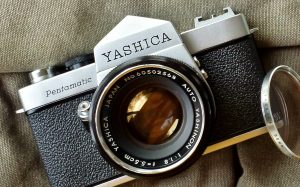
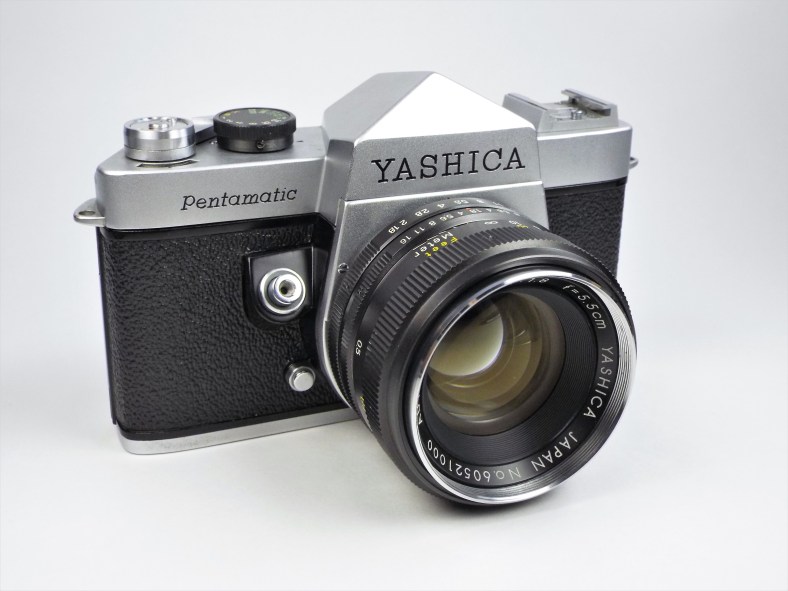
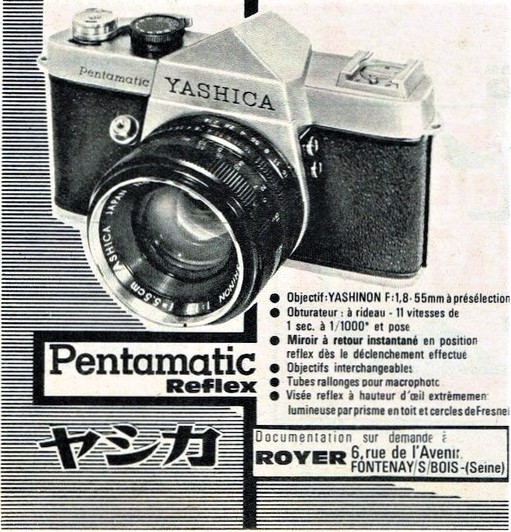
Newest Pentamatic – another fine Yashica joins the family.

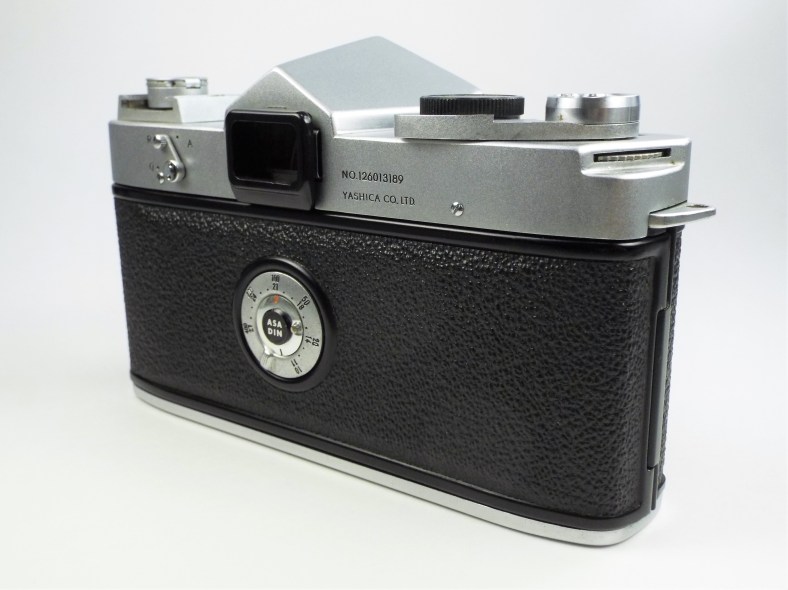
A recently acquired Yashica Pentamatic for our collection. This one came to us from a fellow collector here in the southeast US.

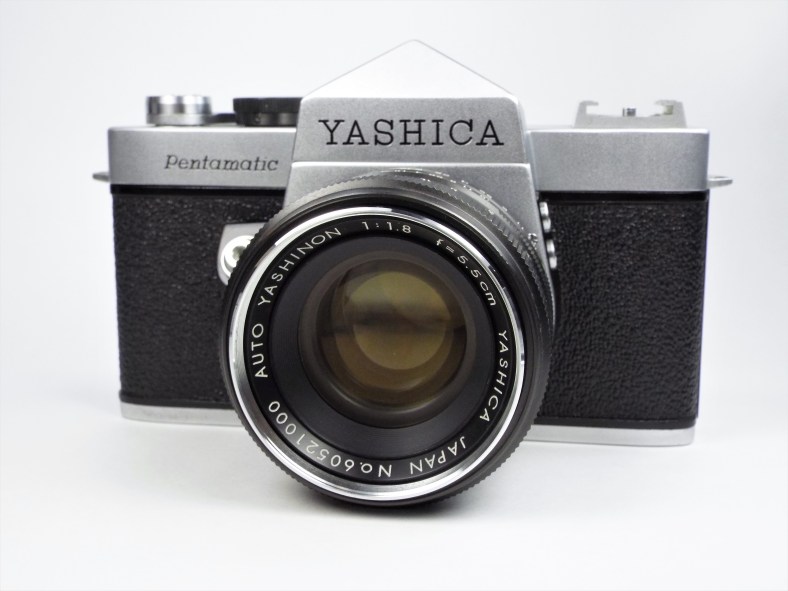
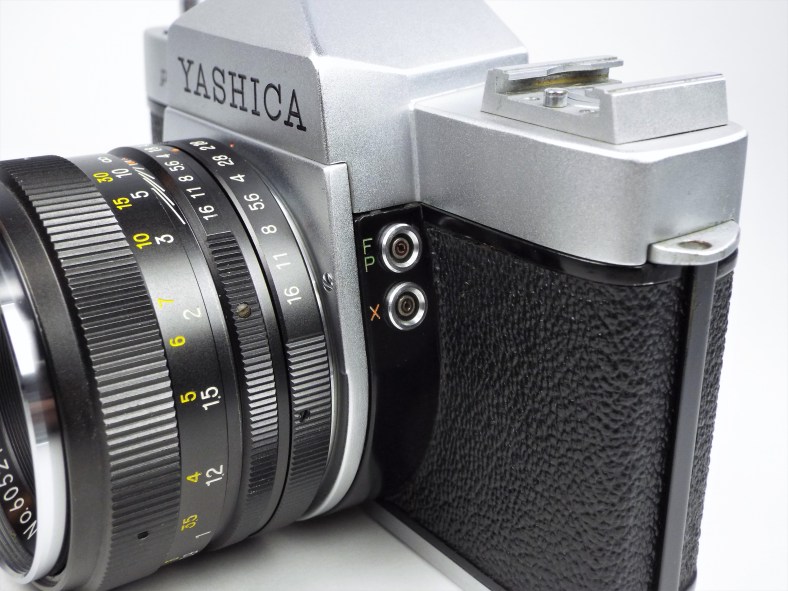
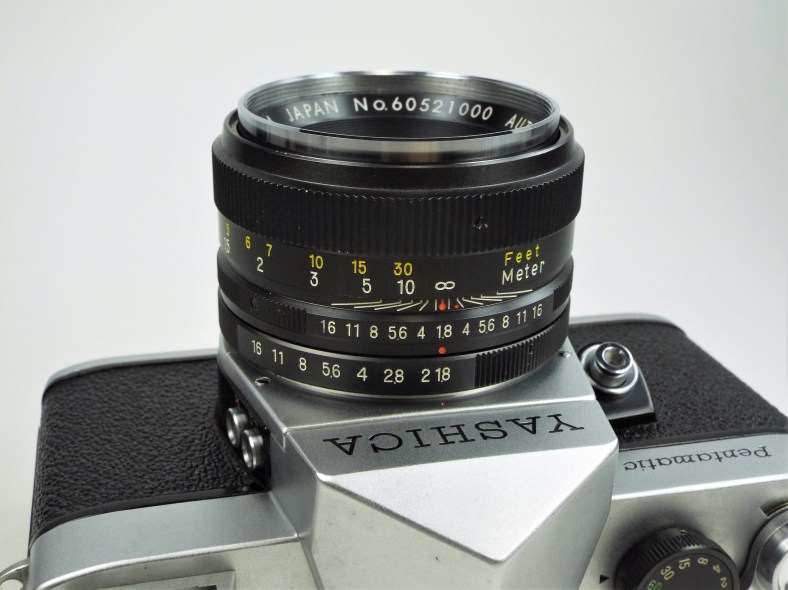
This one includes the Auto Yashinon 5.5c f/1.8 lens that puts the lens as a very late production model (maybe mid 1961). Here’s a chance to check out our Pentamatic from many angles.

DSCF6233

DSCF6235

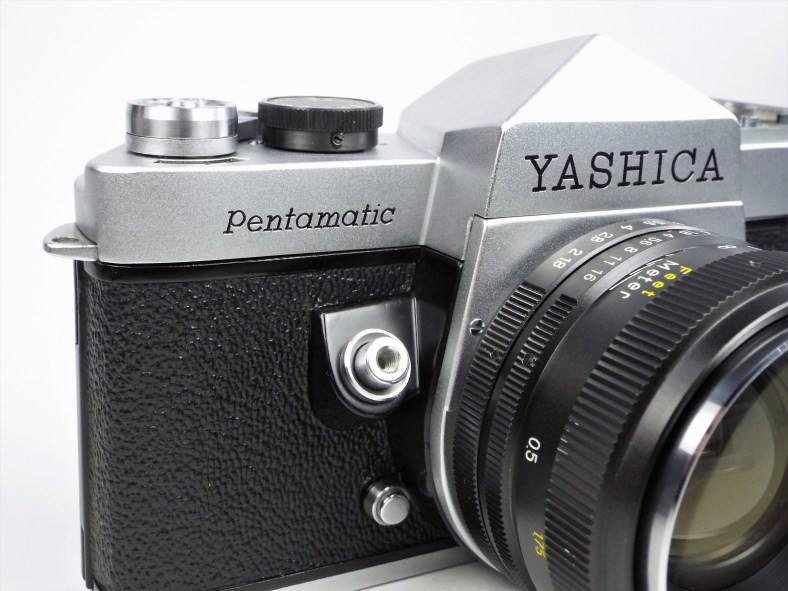
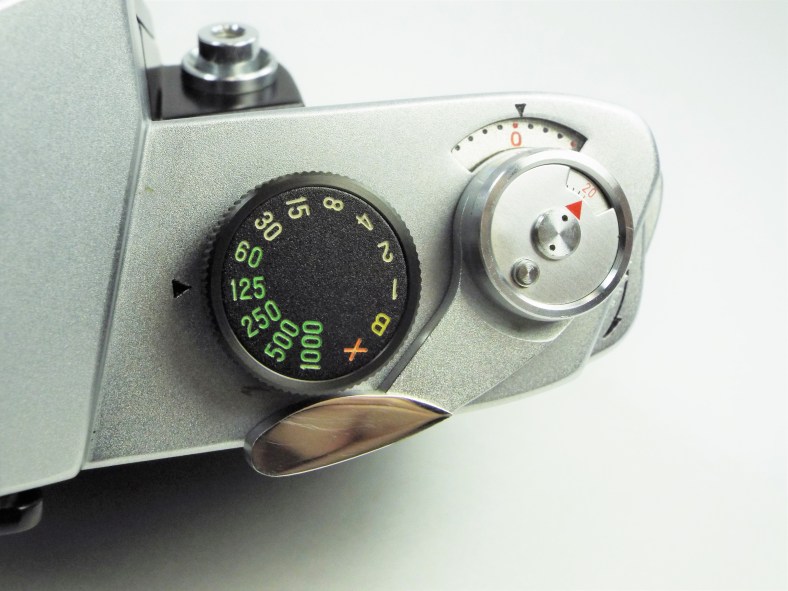
The angled shutter release button is in a perfect position for maintaining a solid grip on this heavy body while releasing the shutter.

DSCF6236

The lens serial number, No. 60521000 is unique in the fact that it’s a whole number (21000).

DSCF6237

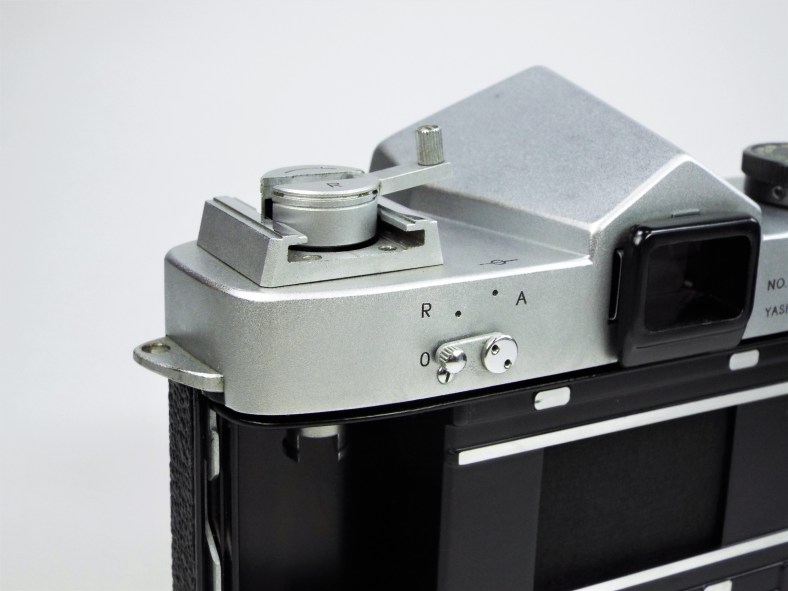
The cold shoe is mounted on the camera’s left side top plate. Actually a very good spot for it.

DSCF6238

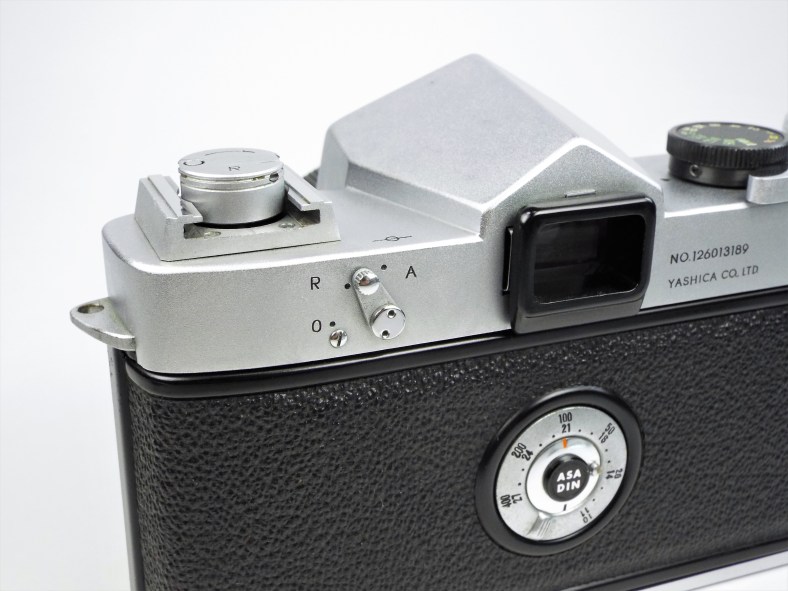
This unique lever controls the rewind knob which pops up from under the cold shoe (it moves from the “A” position).

DSCF6239

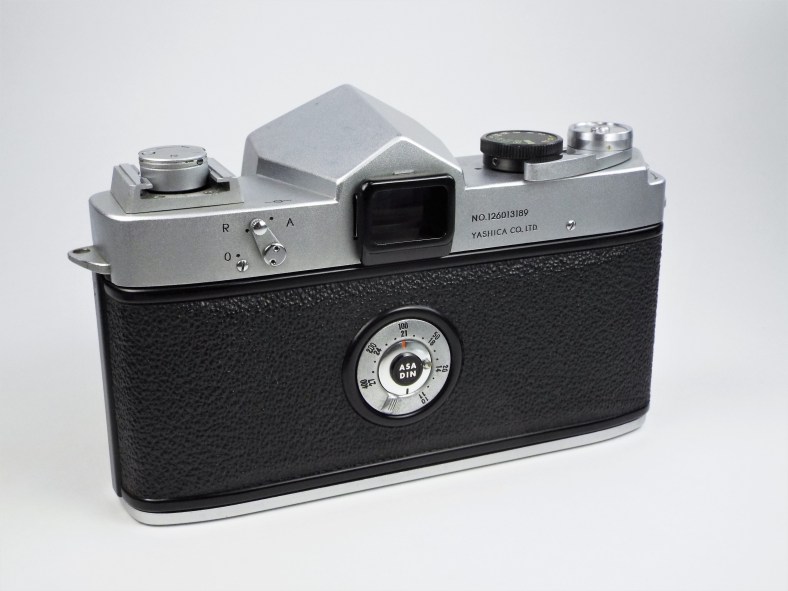
The body serial number, NO. 126013189 decodes to: 12 = December, 60 = 1960, 13189 = 13,189th made since December of 1959.

DSCF6240

DSCF6241

DSCF6243

DSCF6244

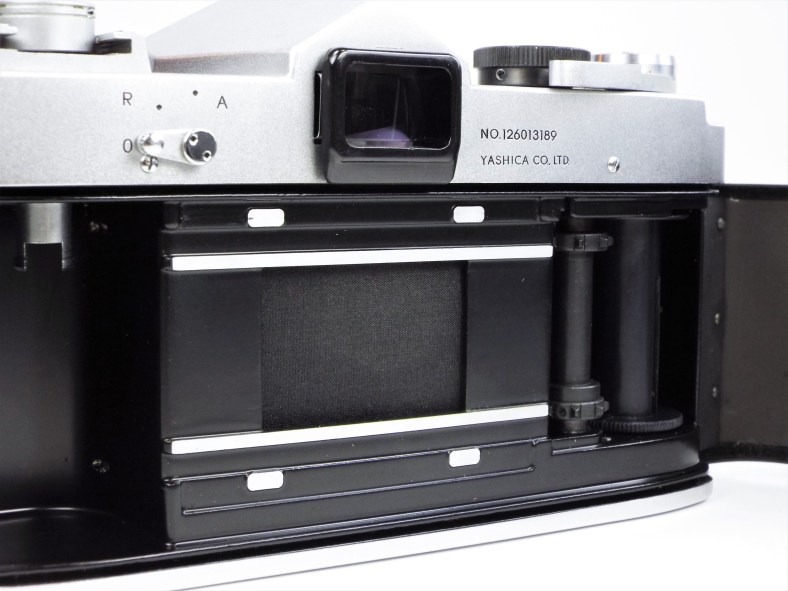
The lever is now in the “O” position which allows the back to be unlocked.

DSCF6245

Pulling up the rewind knob completes the opening.

Our love affair with this fine camera continues. We just can’t get over the clean lines and excellent design.

If you want to acquire a nice Pentamatic for your own collection, they come up occasionally on US online auction sites and infrequently on auction sites in Japan. Nice examples can be had for under $50. Super nice examples will go closer to $100 with some guarantee of functionality from the seller.

How to date a pretty little Yashica… *

More exactly, how to decode the serial numbers on the Yashica YE 35mm rangefinder camera.

*Not an official Yashica dating site.

DSCF6188

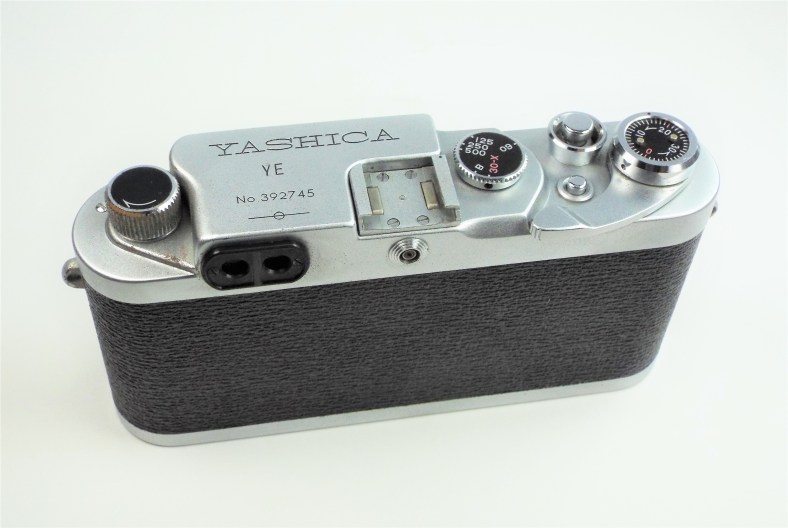
We touched on this briefly the other day, but the Yashica YE serial number might have a date code embedded in it. We say might have because we are working off only a 25 camera database – possibly not enough to make a definitive call.

In the example above, the serial number (No. 392745) appears to decode to: 3 = March, 9 = 1959 and 2745 = 2,745th made.

The earliest camera in our database is: (No. 128049) which would be 12 = December, 8 = 1958 and 049 = the 49th made.

The latest in the database is: (No. 699821) which is 6 = June, 9 = 1959 and 9821 = 9,821st made.

Reports on some sites on the Internet claim that only 4,000 cameras were made. The serial numbers, if consecutive and continuous would seem to contradict that. For the moment, let’s keep an open mind about the serial number decoding. More info is needed to fill in the December 1958 and post June 1959 production numbers from Yashica.

If you have some additional info or serial numbers to share, please feel free to share that with us.

Thanks!

Be sure to check out some of our fine art prints available at https://society6.com/ccstudio2380

Chris and Carol

Finally! A Pentamatic II will be joining our Yashica family!

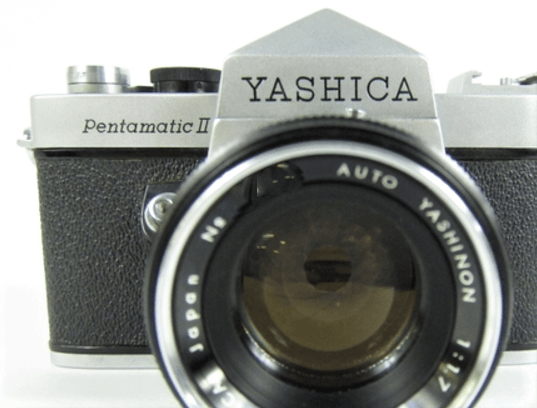
Success! After literally years of searching and countless missed bids, we’ve acquired a Yashica Pentamatic II. One of Yashica’s lowest production cameras – ever. Estimated at less than 5 thousand – and since it failed in the marketplace and wasn’t distributed outside of Japan, it wasn’t considered a collector’s camera and many were simply dumped whenever they broke. It’s hard to estimate how many exist today, but a wild guess would be around 1 to 2 thousand (and that may be high). Production started in August 1960 and for the most part ended in very early 1961 (late January) when the Pentamatic S came out worldwide.

yashica p2 japan

Yashica Pentamatic II – the hardest Pokemon of all to catch!

Our camera has the original short lived Auto Yashinon f1.7 5.8cm lens. It also has the correct leather strap and strap hangers and comes with the original Yashica metal lens cap and lower leather case.

This has been a long chase – but fun! The camera was sold as “junk” – Yahoo Japan Auction speak for a camera that is not functioning properly or has not been fully tested. Sometimes junk cameras are little gems and sometimes they are as the word junk implies.

We’ll have more about our exciting find in the next few weeks as our little Yashica sails or flies across the Pacific to our studio (at many thousands of yen).

Thanks for your visit and stay tuned!

Chris ^.^

Yashica FR II by Camera Go Camera!

I have been exchanging emails with the owner of a great website about Yashicas. As I live in Japan I sometimes see hard to find models and have sent him a few. He wanted to do something in return, so I suggested he send me a camera in return. He did, and this is the […]

via Yashica FR II — Camera Go Camera

A must visit blog with great camera reviews and excellent photography! Check out her wonderful posts! Chris ^.^

Yashica Penta J and the J-P

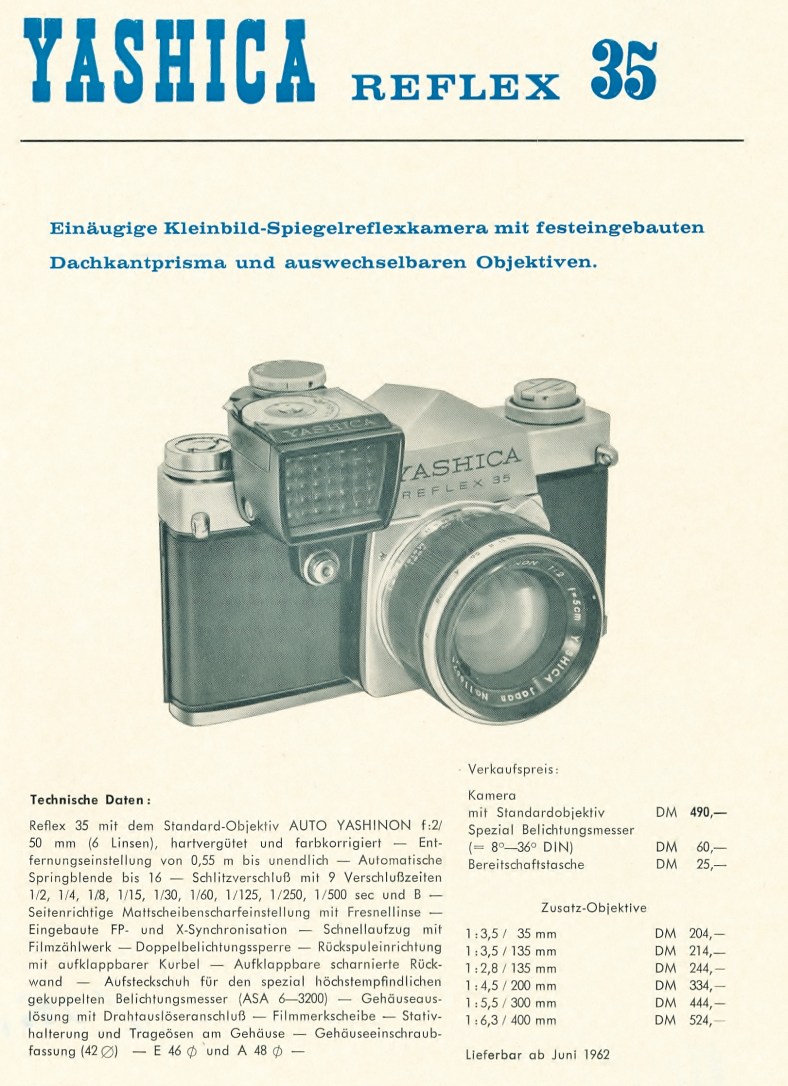
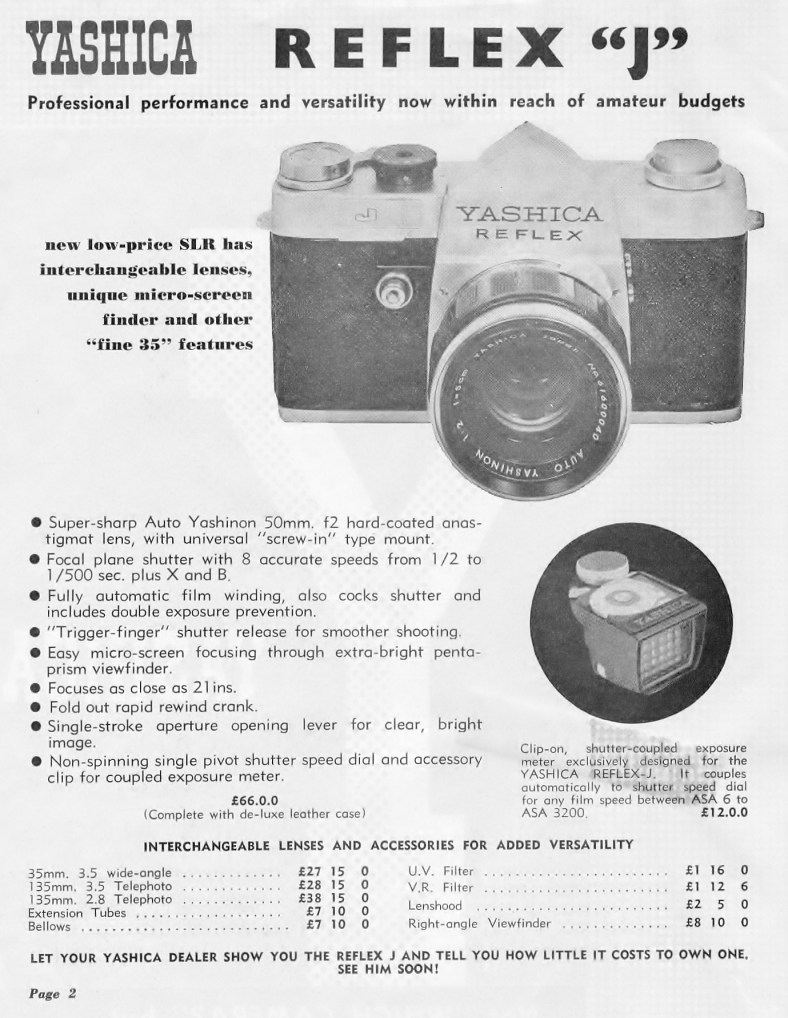
Yashica’s first 35mm single-lens reflex camera with the Praktica-thread (M42) mount lenses was the Yashica Penta J… at least here in the United States and in Japan. Elsewhere (most of the world) the camera was known as either the Yashica Reflex 35 or Reflex J (Australia and possibly the U.K.). As best we can tell, they were all the same cameras with different top plates to accommodate the different names (logos).

Part of the demise (lack of sales success) of the well-built Pentamatic series of cameras that preceded the Penta J, was that Yashica decided to go with a Pentamatic exclusive bayonet mount lens system. Sturdy and well designed to be sure, but being unique limited the available lenses that could be swapped between cameras. The Praktica design M42 screw thread mounting system was in widespread use at the time and Yashica’s bayonet design just went against the flow.

IMG_20160102_0007

IMG_20150926_0026

IMG_20160102_0005

IMG_20160102_0004

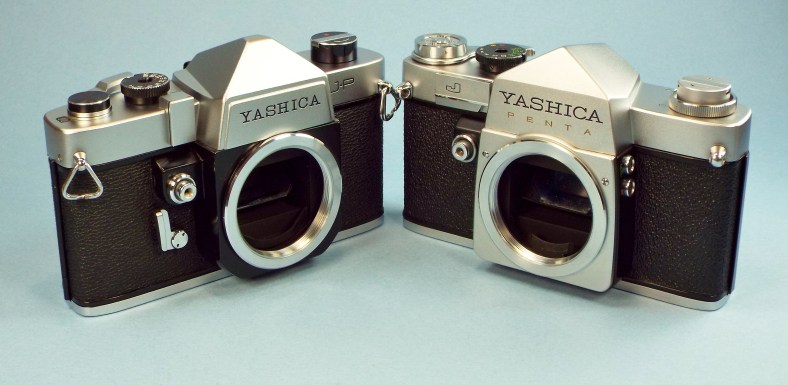
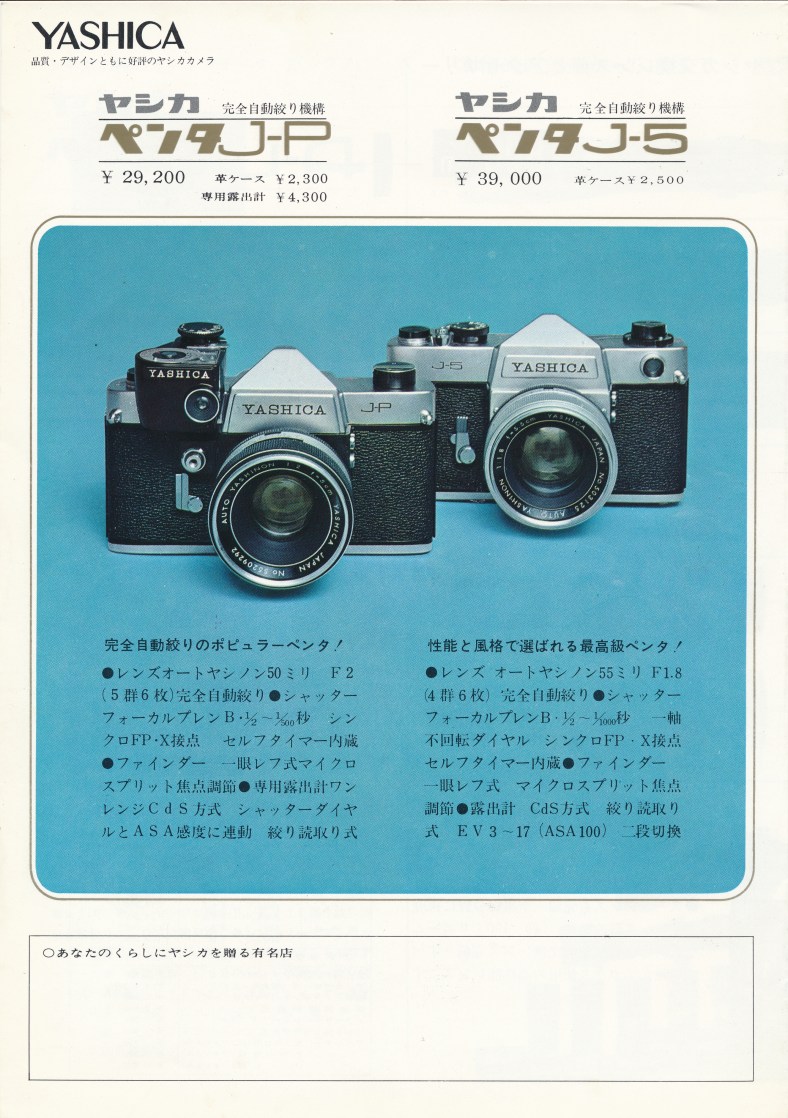
Now fast forward to 1965 ish… Yashica introduces the new J-5 AND the J-P! In between those years Yashica had introduced the J-3 and J-4. Why would Yashica go back in time and bring out another 35mm SLR in 1965 that was the cousin to the 1961 Penta J? Notice we say cousins… not brothers. They shared the same platform with one another but as you can see in the image below the top plates were of a different design.

DSCF1268

DSCF1277

IMG_20150903_0027

IMG_20150903_0025

Yashica J-P 6-27-15 Papers

Stay tuned… more to come on these Yashica classics.

Many thanks, Chris and Carol

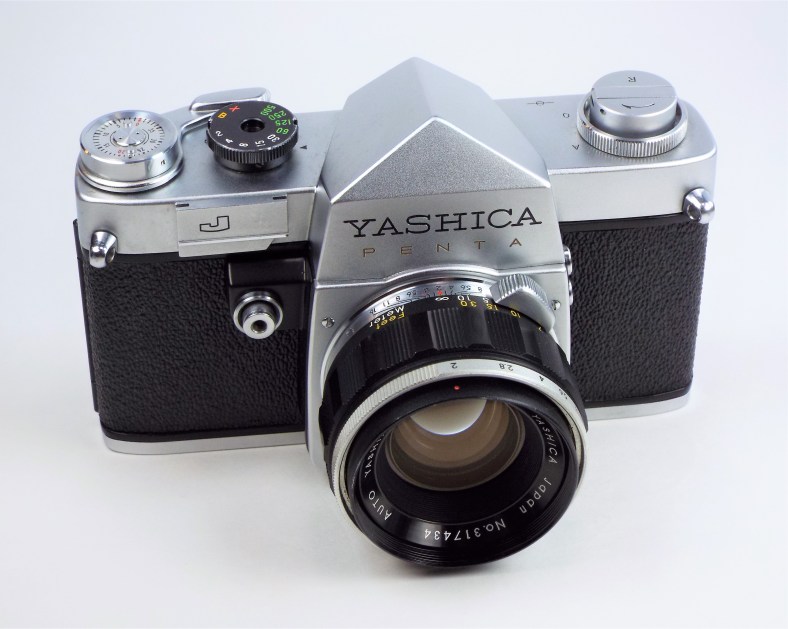
Yashica Penta J – the Pentamatic that wasn’t!

DSCF5876

Clean design and simple controls. A stunning camera.

Released in 1962, the Penta J (Reflex 35 J in other markets) was Yashica’s first 35mm SLR designed to accept the popular M42 screw mount lenses vice Yashica’s exclusive Pentamatic bayonet mount that preceded it. The Penta J shared more body parts and took its design cues from the Pentamatic S (1961-62). Interestingly the Penta J lost the self-timer lever that the Pentamatic S fought so hard to get.

DSCF5873

The Penta J was designed to accept a clip-on exposure meter that coupled to the shutter speed dial. No TTL metering – that was a long way off!

DSCF5874

The ASA/DIN dial was not coupled to anything. It was a reminder to the photographer as to what the speed was of the film that was loaded in the camera.

DSCF5875

The standard lens for the Penta J was the semi-automatic Yashinon 5cm f2 lens.

The Yashica Pentamatic S (below)… the Penta J’s cousin.

DSCF5868

The Pentamatic S pictured with the standard lens for the Pentamatic II.

DSCF5867

So there you have it. The Yashica Penta J and the Pentamatic S. Cousins in the Yashica family.

Comments? Please feel free to share what you know and what we may have missed. Thanks

Studio Camera: Fujifilm FinePix S9900W

Chris

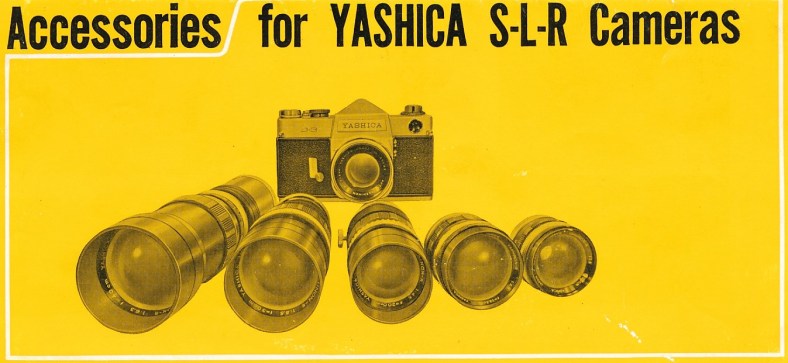
Yashinon Lenses – 1962*

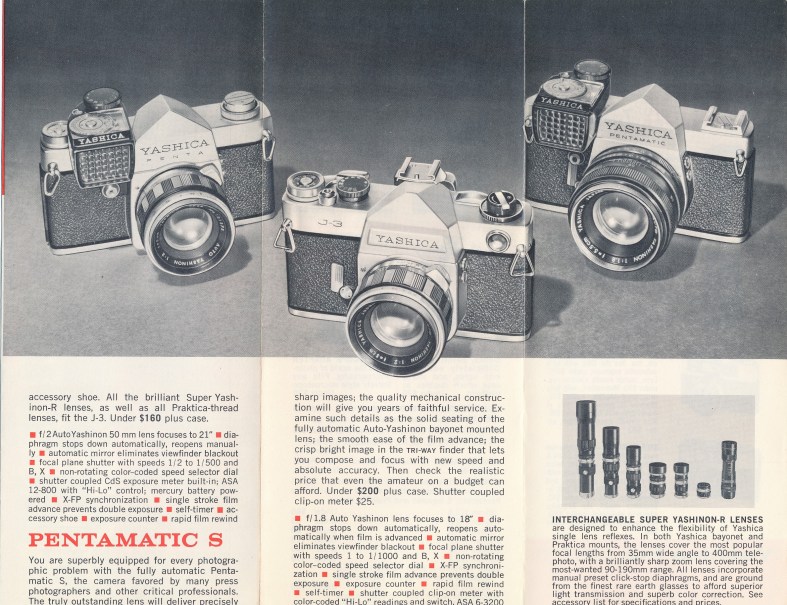
That date* might be a bit misleading as the sales brochure this was scanned from is undated (as is most Yashica marketing stuff). Our only clue as to the date is that it (the brochure) features the newly released J-3 and doesn’t include any other Yashica SLR. No Penta J or Reflex 35 (same camera different markets) and no J-5.

We like it because it features the Yashinon lenses available at that time. If you look closely at the mounts of the lenses, you’ll see the M42 screw-in mount. Yashica does state in the brochure that all of these lenses are available in both the Yashica Pentamatic bayonet mount and the M42 mount. My friend Paul, see An Interview with Paul Sokk – Site Author of the popular YashicaTLR.com , has proposed that Yashica may have distributed these lenses to dealers (market dependent) with both mounts – meaning that they were shipped with the “new to Yashica” M42 mounts but could be converted easily at the dealer level to bayonet mounts for the Pentamatic. Sounds very possible. At this time, Yashica also sold adapter rings for mounting their M42 lenses to Exakta mount bodies and for mounting Praktica mount (M42) lenses to their Pentamatics. Confusing? Yes. Yashica guessed incorrectly when they choose to design their own bayonet mount for the Pentamatic back in 1959. Was it Yashica or was it Tomioka’s designers? How about the ex Nicca and Zunow designers? We may never know but it doomed the Pentamatic right out of the gate.

IMG_20170726_0004

Excellent snapshot of the lenses that were available at the time. The dual mounts (bayonet and M42) reflects Yashica’s indecision as to which mount to embrace.

IMG_20170726_0007

Cover of the sales brochure that was included with our Yashica J-3 when new.

It is generally believed that all of these lenses were made by Tomioka Optical of Tokyo.

While some early Pentamatic bayonet mount lenses bear the Tomioka and sometimes Tominon names, most only carry Yashica and Yashinon. The same applies to the M42 mount lenses. Some can be found with Tominon but most simply have Yashinon. We don’t have positive proof that some lenses (both types) may have been made by another lens manufacturer. But whom? Taiho Optical (which was the former Nicca Camera hidden away in Suwa) but was really Yashica, or or or. We just don’t know. Pure speculation to think that another company did, but then again, no proof that there wasn’t another maker.

Thanks so much for your visit! If you made it this far you just may be a “Yashicaphile” or just Yashica junkies like us. Do you have something to contribute??? We’d love to hear from you and would love to include your info in our blog. Thanks! ^.^

Chris & Carol

E.P Marked Photo Gear. Is it really worth more?

Photo gear made in Japan will sometimes carry a strange marking  <E.P>
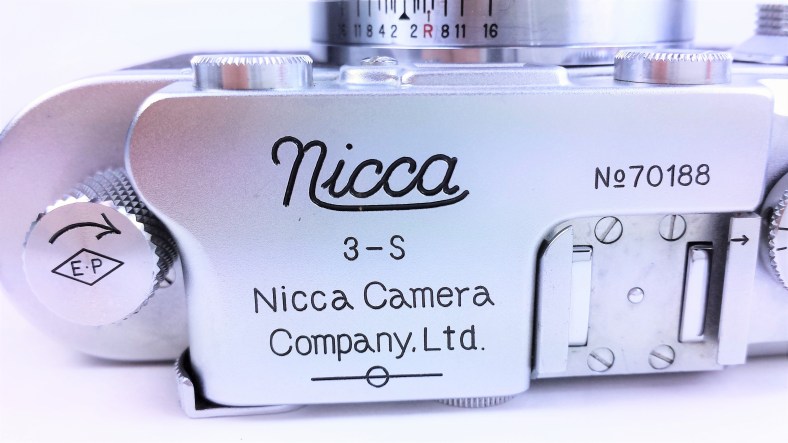
20170603_191236

In the above example, the <E.P> mark is engraved on the rewind knob of this Nicca camera. This camera is from the 1955 to 1957 period.
s-l1600 (23)

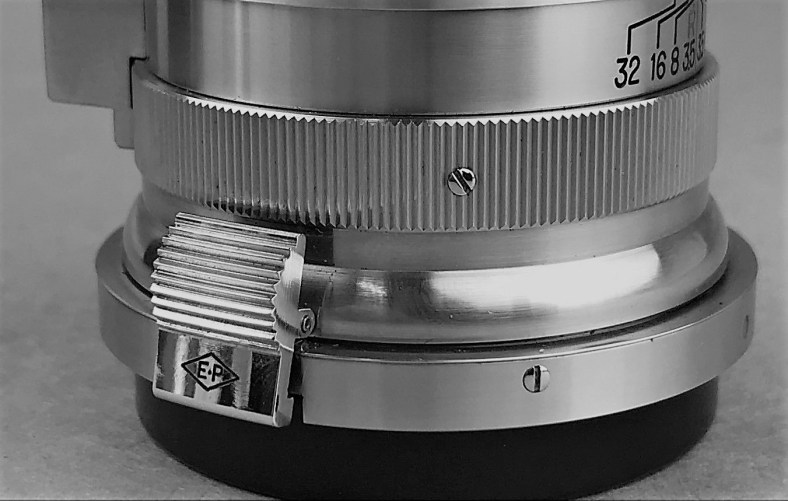
In the example above, this Nikkor 13.5cm lens has the <E.P> mark engraved on a small lever near the base of the lens. On the lens case below, the <E.P> mark is stamped into the leather just below the JAPAN stamp. The case belongs with the lens pictured above.
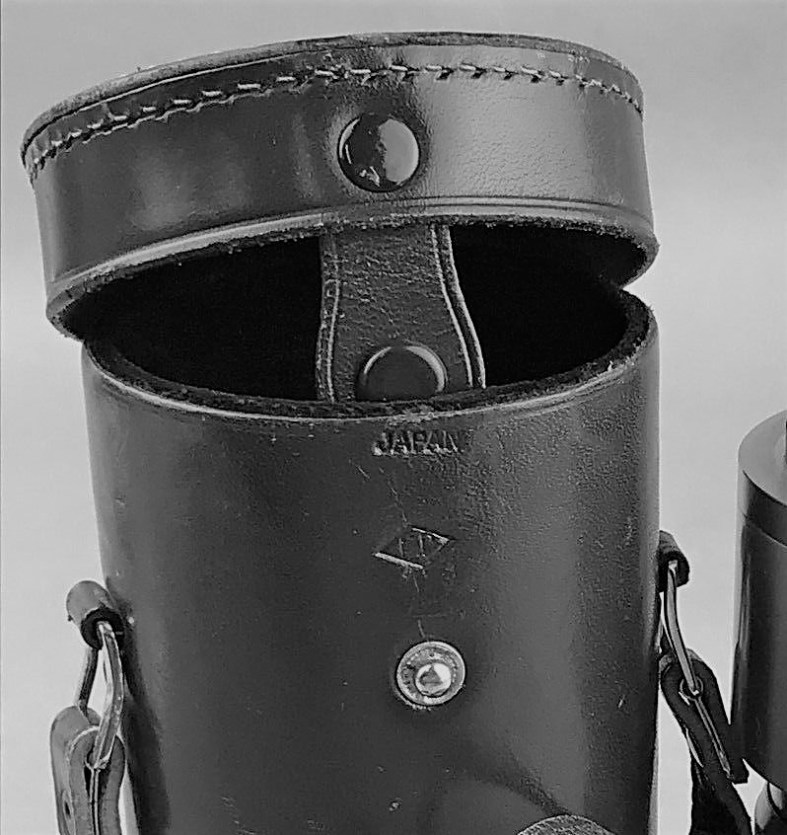
s-l1600 (22)

First time we’ve seen the mark on a lens case. To us that implies that the case was mated with that lens from the factory (or wherever the mark was applied).

So what’s up with the <E.P> mark anyway?

As we understand it, the Japanese government needed a way to identify which pieces of photo gear were sold through military facilities and duty free shops in Japan. We feel that the mark means “Exempt Product” – cameras or electronic gear purchased without paying taxes to the government of Japan and purchased by authorized personnel (military members and their families, tourists and by diplomatic members and their families). We’ve seen alternate meanings as “Post Exchange” (military base stores) but U.S. Navy stores are called “Navy Exchange – NEX” and U.S. Army/Air Force stores are “BX/PX or Base Exchange/Post Exchange”. It’s hard to make “NEX or BX” into “EP”.  Other explanations of <E.P> include: Export Permitted (or Export Permit), Exchange Program and Export Production.

The “Black Market”.

The majority of the photo gear we have in our collection that bears the <E.P> mark, was in fact purchased through military facilities and not at duty free shops. Another cause for concern after the War, and we know this first hand from having lived in Japan in the late 1970s, was the so called black market that may have existed (it did) in Japan. The difference between what a service member could buy a camera for at the Navy Exchange (reduced cost and no taxes) and what that same item sold for at a Japanese camera store was just too great not to tempt some selling on the black market. The military stores kept tabs on the amount of tobacco and liquor that a family could purchase and big ticket items (cameras and stereo equipment) included a statement on the receipt that the service member would check and then sign that the item was for their personal use. A direct reminder that you were not to resell the item to unauthorized individuals. Our guess would be that if a Japanese citizen had a camera in their possession with the <E.P> mark it would be easy to question where it was purchased. However, the <E.P> marks were normally on parts of the camera that could be removed and replaced with non marked parts. No system is perfect so if there’s a will they’ll be a way.
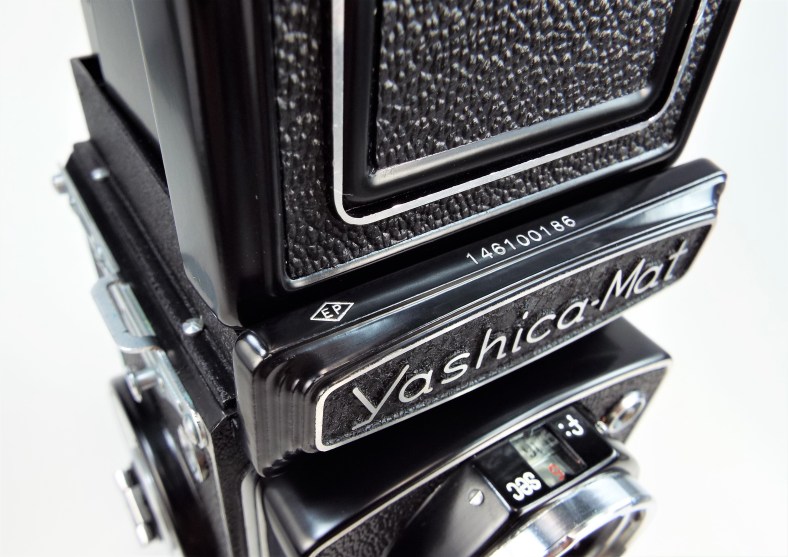
DSCF3795

The <EP> mark on a Yashica-Mat from 1960.

So, does the mark make my photo gear more valuable? Yes. Collectible? Yes. Desirable? Yes. But to whom?

Like anything that’s collected, if someone wants it just because of the mark (in this case), then the <E.P> mark makes your item more desirable. In the real world, the gear is no different except for the mark. But – and it’s a big but – there are fewer of them out there. In the case of the nice Yashica-Mat pictured above, let’s say that Yashica sold 1,000 of them in 1960 throughout Japan. Maybe 5% were marked <E.P> (and that may be way high). So if you want to collect a mint condition Yashica-Mat made in 1960, there may be, let’s say only 10 available worldwide at any one time, and if one of those has the mark, well that adds a nice bonus of rarity to the mix. Another way to look at the mark is that the gear was less likely purchased by a professional photographer and therefore may have been better taken care of by its owner. Lots of exceptions to that line of thinking but it does have some merits.

So there you have it. Something of an explanation. If you have photo gear from the 1950s, 1960s and sometimes from as late as the early 1970s and you have the mark, well now you know a bit more about it. If you’d like us to appraise it for you we will be more than happy to. Just contact us here on the blog and we can get something going for you.

Studio Camera: Fujifilm FinePix S9900W

Chris