Hello and Welcome! Update 2.2.2017

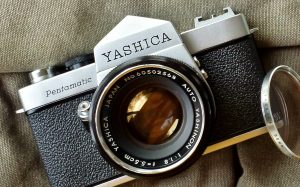
Welcome to our blog about a very simple camera made by a company in Japan. We (Carol and Chris) are “Yashica Fanatics”, so it was a natural for us to start this blog dedicated to one of Yashica’s least known cameras. Most film camera aficionados might have some basic knowledge of the Pentamatic. They may have seen it in passing… usually fuzzy images on the web with often misleading info to boot. It’s a rather odd looking SLR with just enough quirks to make it interesting (to us at least). It was never a big time seller for Yashica but its true value was as a platform for innovation and invention for the designers at Yashica.
20150107_084533

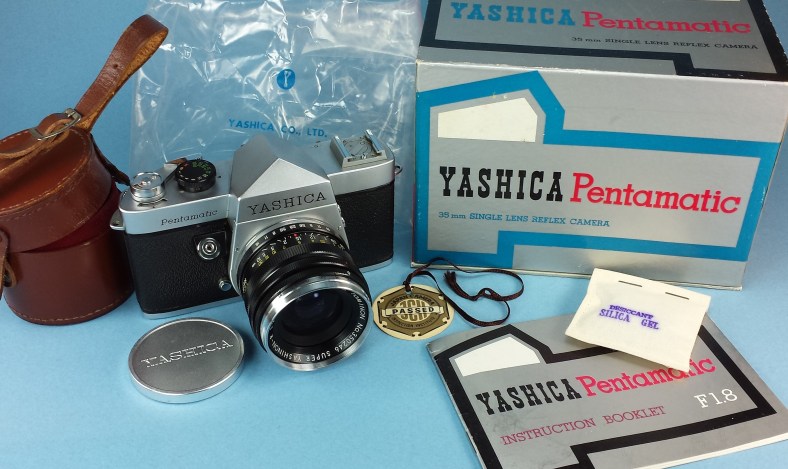
We fell in love with the Pentamatic’s clean lines and “modern” design. The presentation box was as unique as the camera itself.

Our “goal” here at the ‘Yashica Pentamatic Fanatic’ is to expose as many people as we can to the Pentamatic and to the company that conceived it. Please feel free to add to our knowledge base… if something is incorrect please let us know. If you know something about it or any of the topics we blog about… once again, please share it! We would love to here from you!

Another goal is to share our passion for photography. It’s been a part of our daily lives since we were born. I can’t remember the first picture that I ever shot – it probably was a mess – but I can remember one of the most special pictures I ever took – a picture of my parents.
29294510190_444dcd1602_o

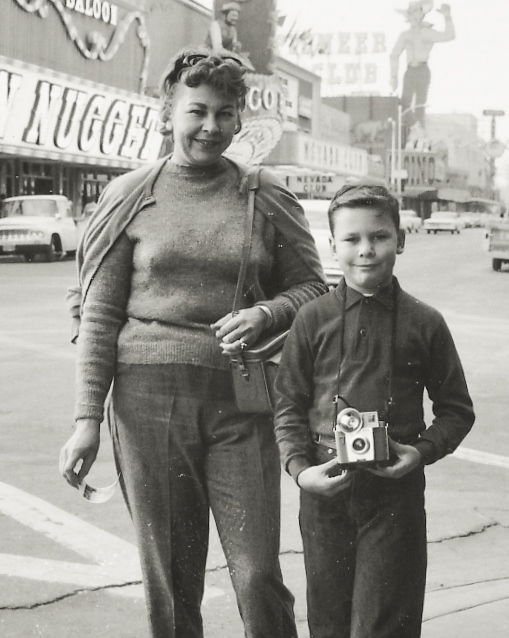
My mom Mary and me in of all places, Vegas. We were on a big family vacation from New York to California – Christmas 1960. My dad Paul took this picture. Yep, my first camera – a Kodak for Christmas (notice that I was holding it up to show it off). My mom was holding a freshly taken Polaroid from my dad’s Pathfinder 110 Polaroid. Pictures – cameras – family.

Many many thanks for your visit… Chris and Carol ^.^
Yashima-Yashica Rookie

014

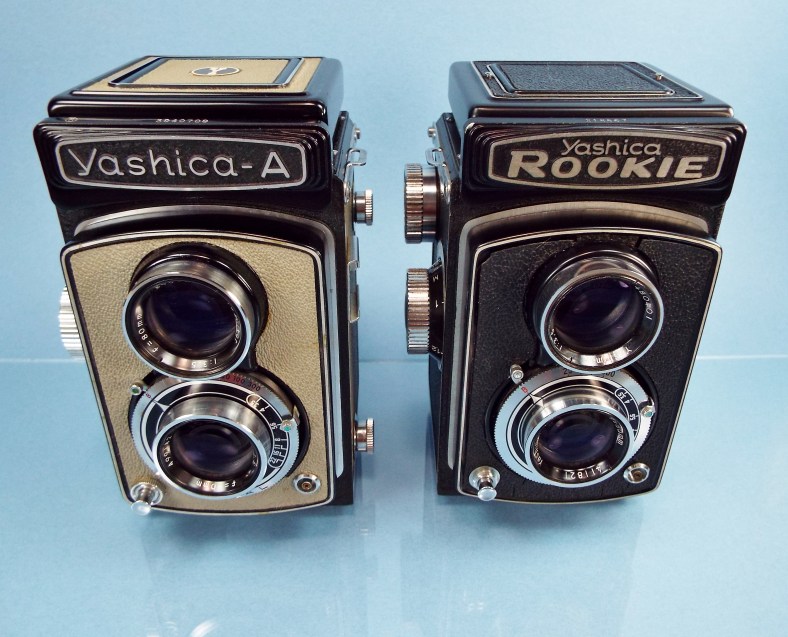
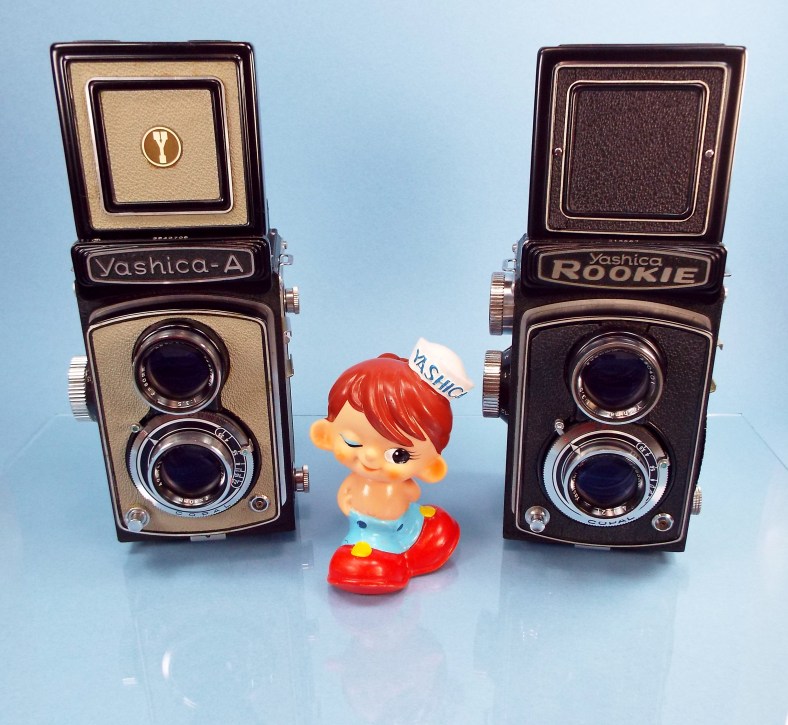
Yashica-A in gray leatherette on left from 1959. The Yashica Rookie (on right) was a Japanese domestic market only model introduced in early 1956. In Japanese brochures and on the outer shipping box, the Rookie is also known as the Yashicaflex Rookie or simply the Yashicaflex Model R.

022

The Yashica A and the Rookie share many of the same features and specs. The Copal shutters were the same and the Tomioka Optical made lenses were also the same in the beginning. Later models of the A (including this one) upgraded to a slightly different lens configuration.

005

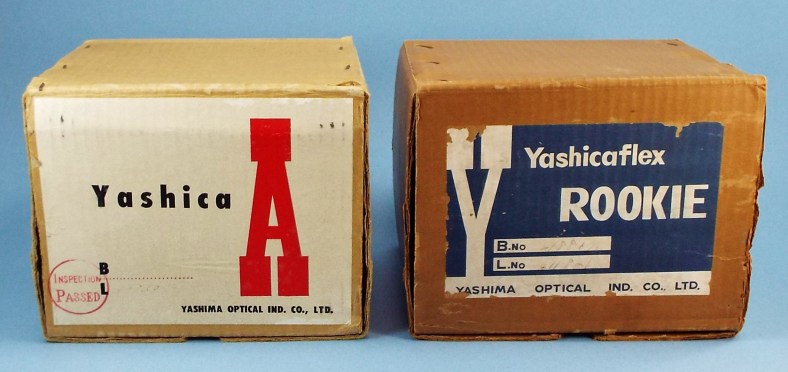
These outer shipping boxes are roughly from the same period. The Rookie is from mid 1956 while the A box is from early 1957 (or so). There are slight differences in the two boxes… the Rookie box is bigger but weighs less than the A box.

A Couple of ‘New’ Yashicas

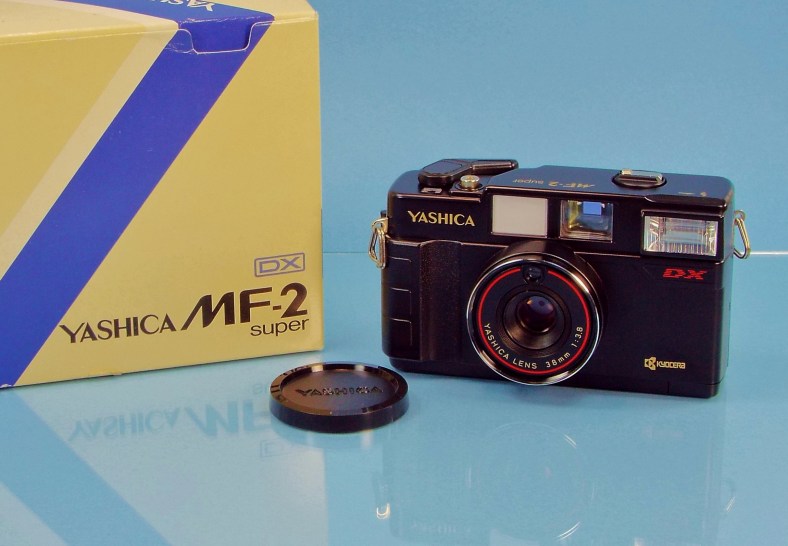
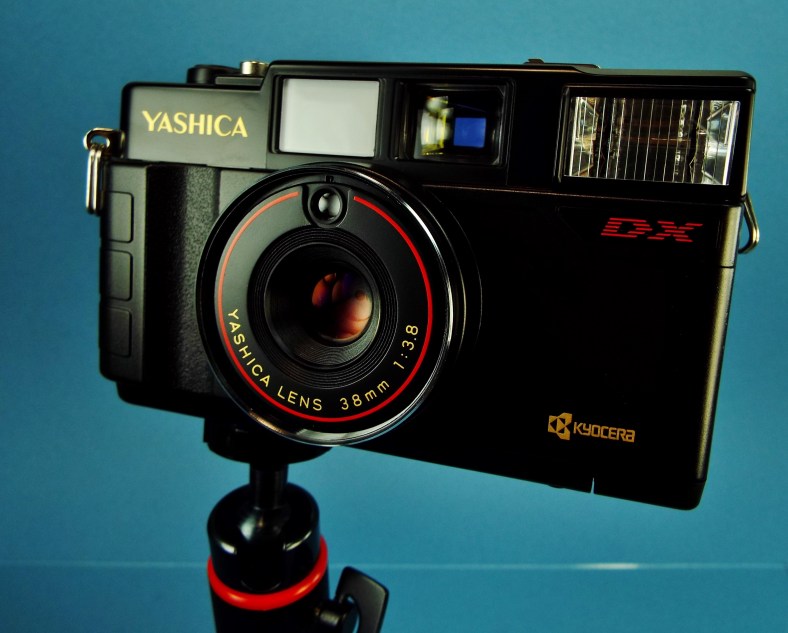
ヤシカ… A couple of new Yashicas have caught our fancy. From 1986 and during Yashica’s ‘dark period’ when they were taken over by Kyocera, this super nice (and truly new) Yashica MF-2 Super DX. To be sure it’s a very plastic camera but it’s filled with some nice high tech features… DX coding of the film speed, automatic exposure and built in flash. No focus needed as the lens can focus from about 3 feet to infinity (and beyond!!!).

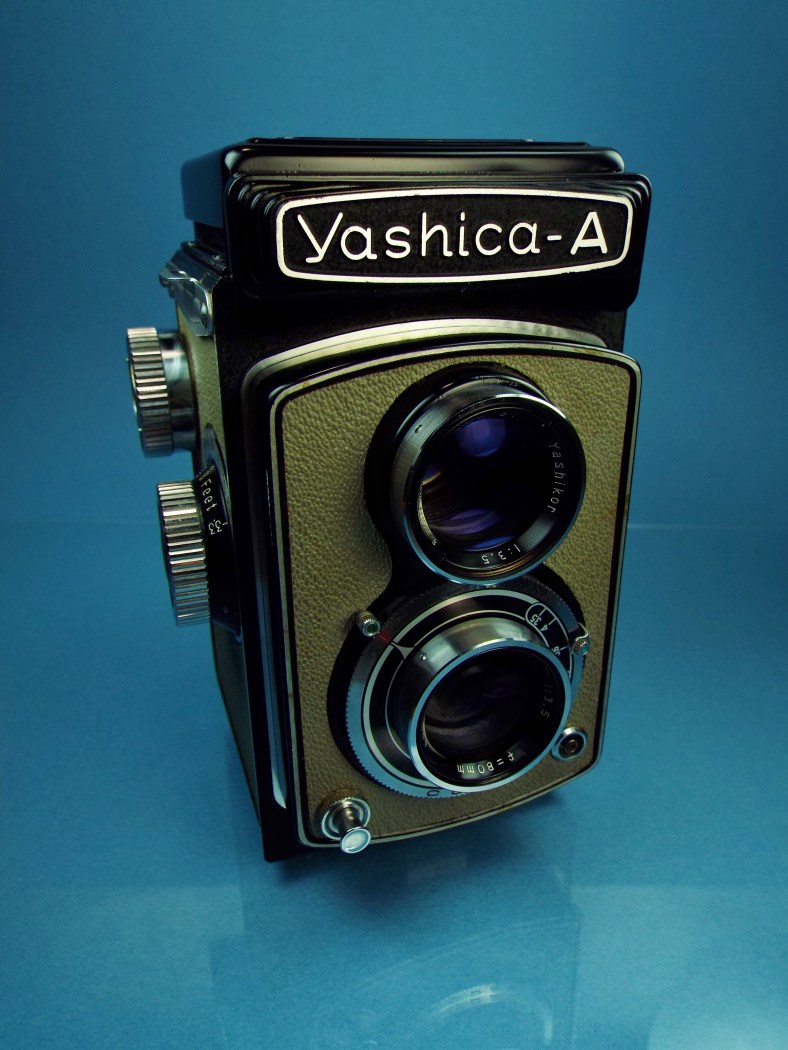
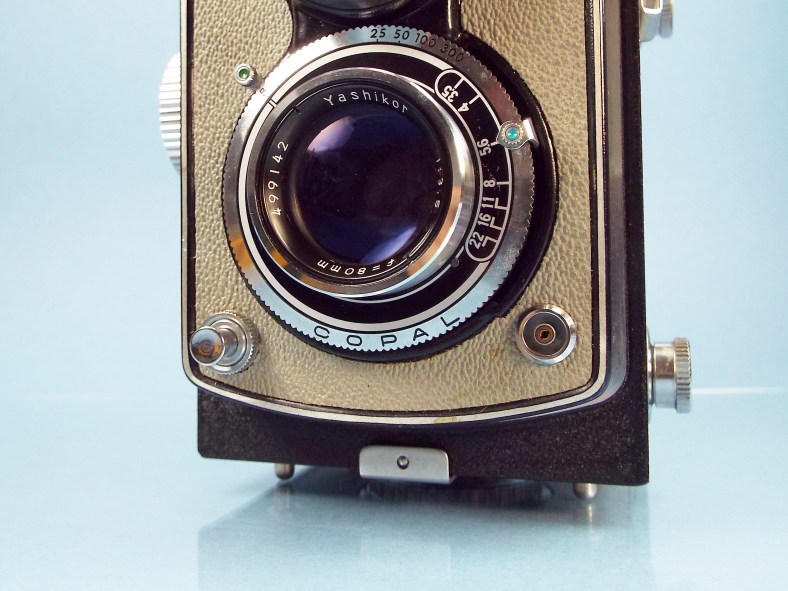
The other member of the Yashica family is this nice almost 100% mint Yashica-A with gray leather and silky black metalwork. It’s from 1959 and works perfectly… shutter speeds are spot on and the aperture blades are snappy. No self timer on these basic models from Yashica, but they hit a great price point with buyers and had a long production run.

020

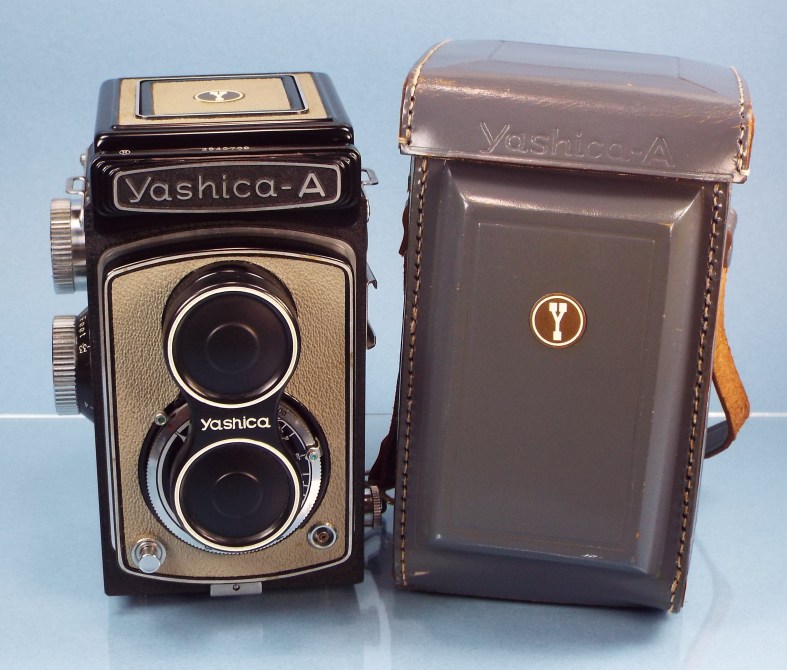
Yashica-A in gray with the original gray leather case. From 1959.

009

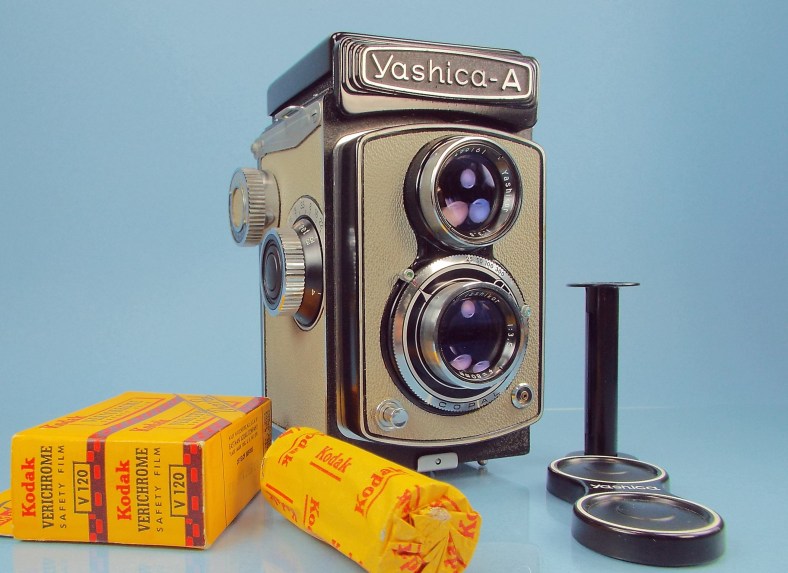
Yashica-A in gray leather and black metal. The Kodak film is close to the correct era (late 1950s).

011

Low key effect photograph. It gives the camera a bit of an edgy look.

017

Interesting lens serial numbers on this camera. The taking lens SN (pictured) is only 19 numbers less than the viewing lens. Almost spot on (haven’t seen that yet). Of course these lenses were made by Tomioka Optical of Tokyo for Yashica.

020

Brand new and never used (isn’t that the same?) Yashica MF-2 Super DX 35mm rangefinder camera from 1986. Parts made in Japan and assembled in Hong Kong.

023

Low key photograph gives this pretty but humble camera a nice look.

As always we appreciate your visit to our blog… feel free to comment. Many thanks and big smiles… C&C

Yashica ヤシカ J-3 in Pro-Black

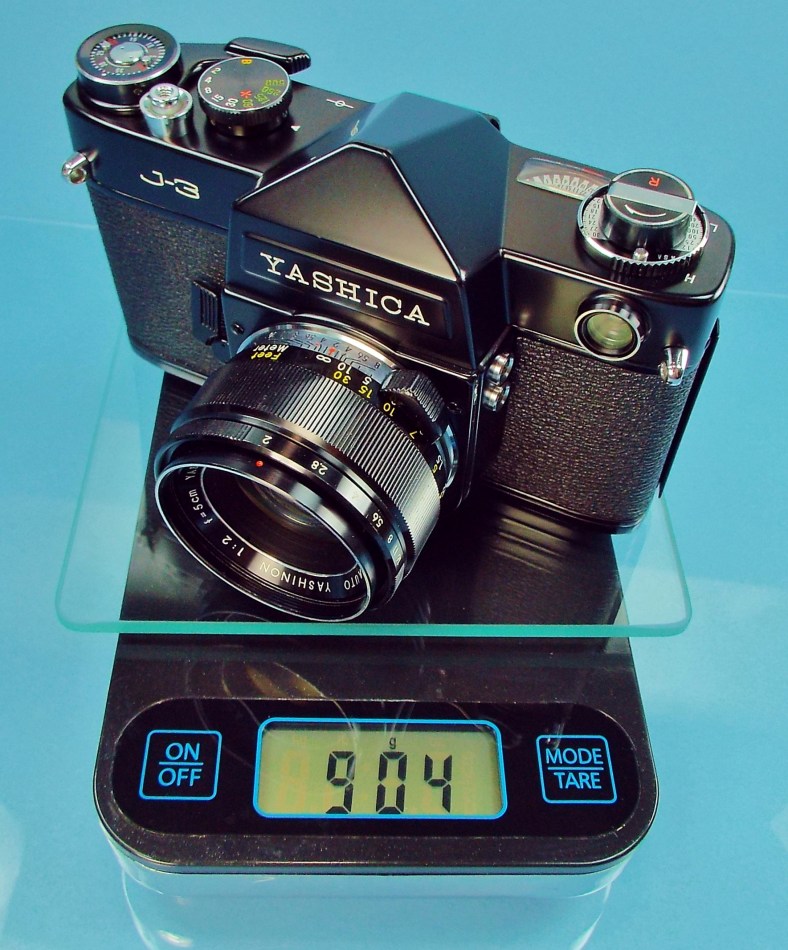
Another of our favorites in the Yashica family. This limited edition J-3 is rather rare to find in nearly new condition these days. We haven’t found evidence from Yashica of the when and why they chose this model to be their first SLR in black (with matching lens). In all the brochures and pamphlets we’ve been able to read, nothing has ever been written about it and no pictures from Yashica either. We’ve checked Japanese home market sales brochures and of course those available in English. Not one word! The serial numbers (both the bodies and lenses) run within a small time period of mid 1962 (we believe).

***Please if a reader has more information about this elusive J let us know!

007

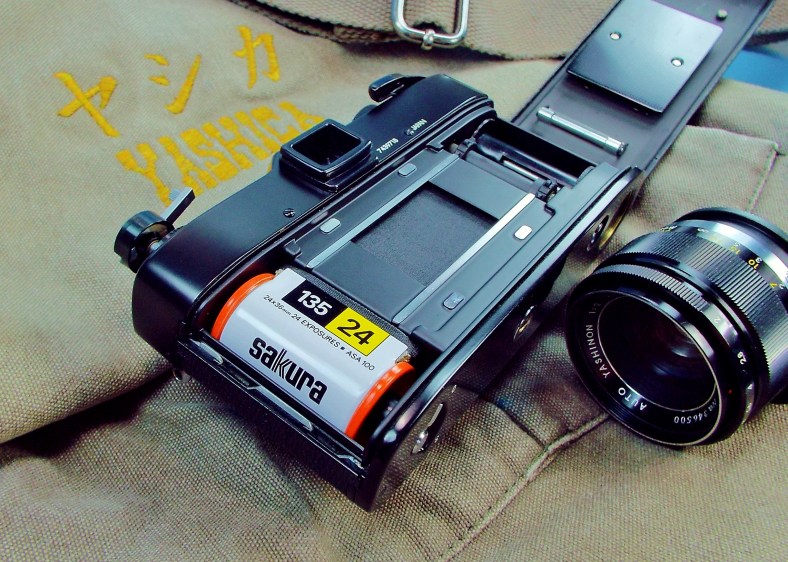
J-3 finished a roll of Sakura film.

003

Not quite the heavyweight the Pentamatic is but still a beast at just over 900 grams!

022

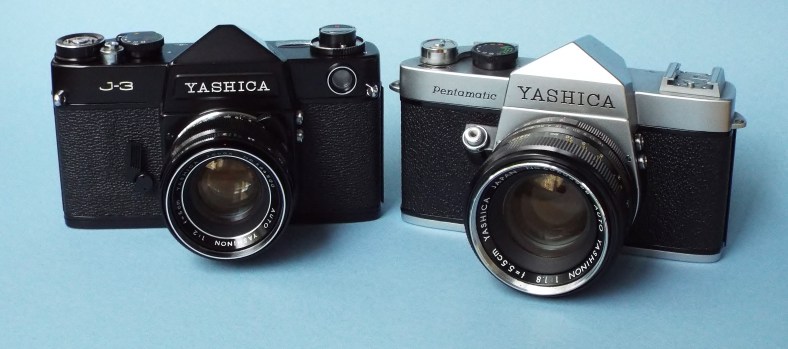
Same family but very distant cousins! Yashica made countless changes in its SLR line-up in just under three years.

As always… thanks for the visit!

Chris & Carol

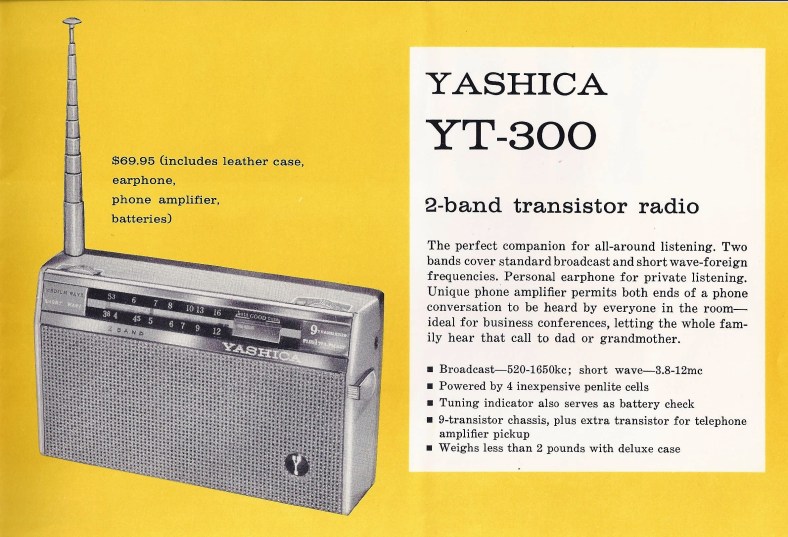
Yashica’s YT-300… a neat little radio from 1959

Yashica produced more than just cameras during its boom years. As a leader in the field of electronic photography in the middle to late 1960s, Yashica’s early electronic devices ranged from such diverse items as transistor radios, record players, movie projectors, editing equipment and tape recorders to name but a few.

Most of the earliest electronic devices are rather rare now (as one would expect after 50 years) and only occasionally does something come up in auctions both on the web and in estate sales. I suspect that the more common electrical items such as projectors and editing equipment are still flooding eBay and other on-line auction sites.

Finding an early radio such as the YT-300 and YT-100 is a bit harder. Here we share some of what we’ve been able to collect over the years.

20150716_203028_Richtone(HDR)

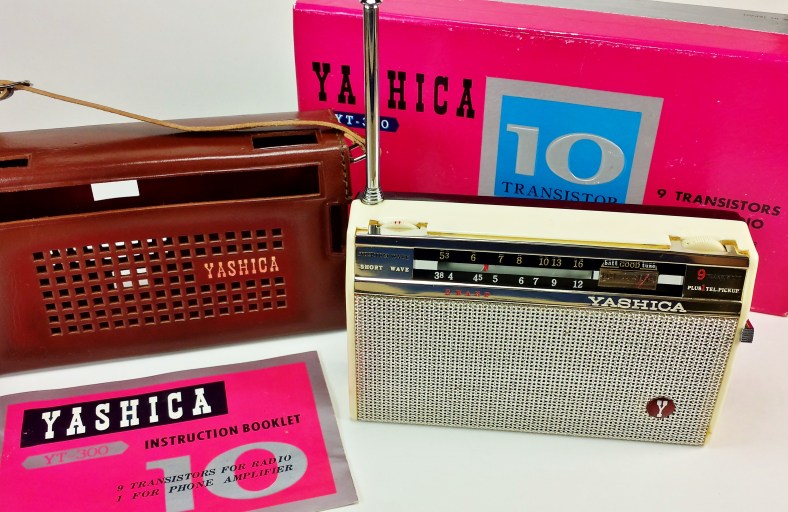
Nice complete set from around 1960.

Yashica YT-300 Radio Brochure

Not a bad price for such a sophisticated radio.

20150726_120249_Richtone(HDR)

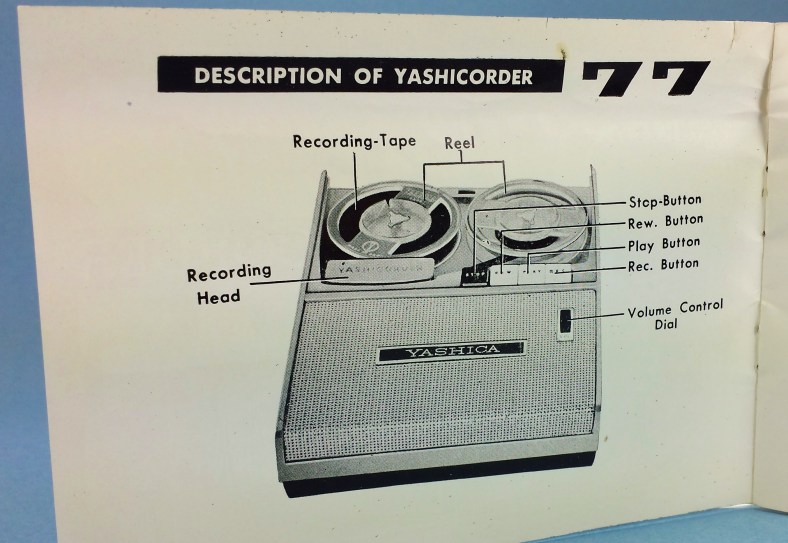
Really really rare to find a working Yashica tape recorder!

20150726_115718_Richtone(HDR)

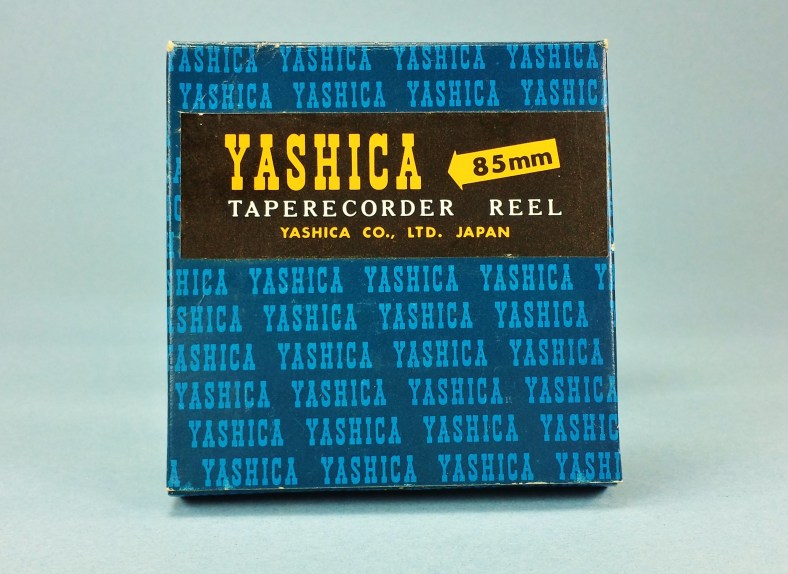
Yes Yashica even branded their own magnetic tape for their recorders.

20160113_213553

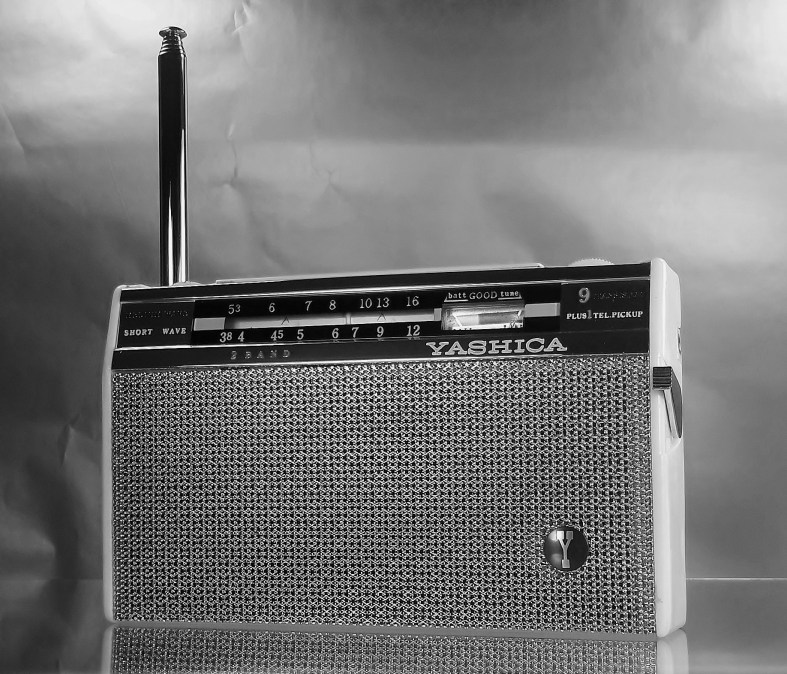
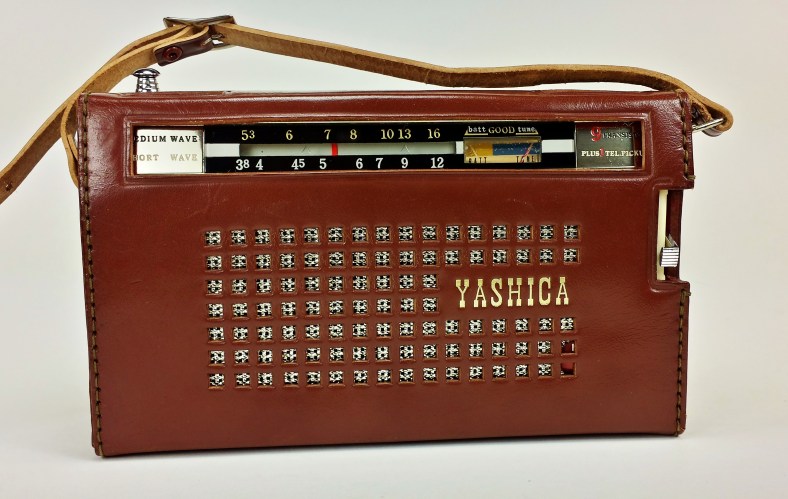
Yashica YT-300 portable transistor radio. Designed in late 1959 it was very popular in the early 1960s and was one of the many electronic devices that helped Yashica develop their hyper successful electronic cameras that followed.

20150717_152009_Richtone(HDR)

Yashica YT-300 in its very elegant leather case. The case itself is a work of art and craftsmanship.

Thanks for your visit! If you come across a working Yashica radio or tape recorder snag it! They’re really rare and a fun little reminder of the first transistor radios and how cool they were.

Chris

Yashica Quick-Lite Electronic Flash

We’ve recently added this wonderful electronic flash unit to our collection. Many of the lesser known accessories from Yashica often go unnoticed and become a bit mysterious.

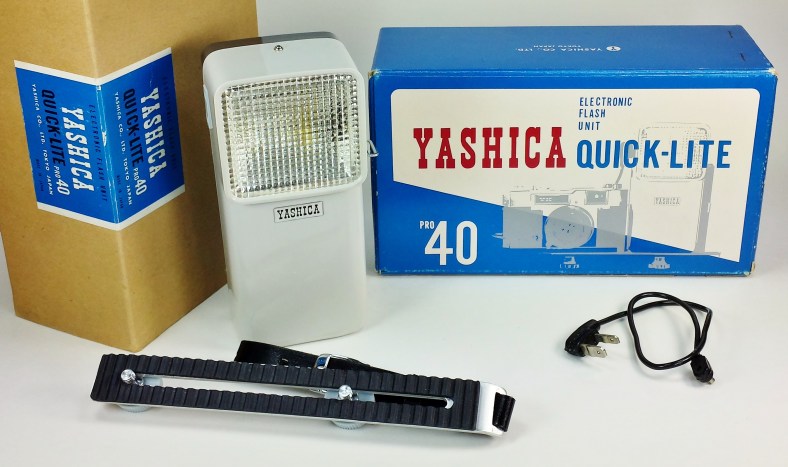
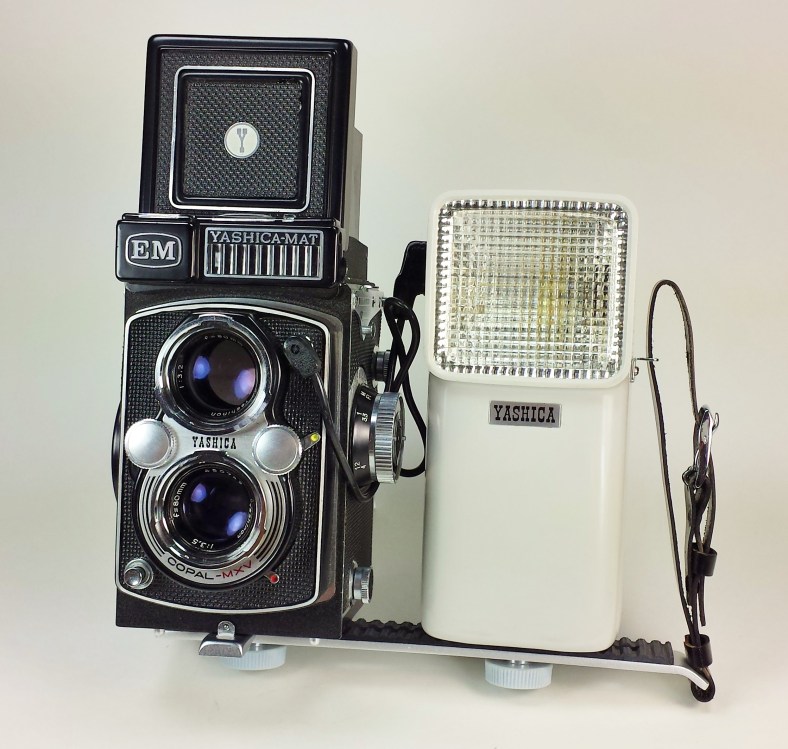
We were lucky to find an almost complete set from around 1962 or so (could be earlier). I believe we’re only missing the instruction booklet and a few minor (but desirable) plastic bags. The box and styrofoam inserts are in excellent condition. The flash works perfectly and more than likely is unused (as is often the case). Image number 3 is from a Japanese Yashica-Mat EM instruction booklet. There are some differences between ours and the one pictured. One has a coiled cord vice a straight cord and the attachment bar and knobs are black vice silver with gray knobs on ours.

20151218_112804_Richtone(HDR)

Complete set from around 1962 (or a bit earlier). Takes 8 AA batteries to fire this thing up!

20151218_114542

PRO 40 Quick-Lite attached to our 1964 EM.

IMG_20151218_0016

From a Japanese instruction booklet for the Yashica-Mat EM.

20151218_113137_Richtone(HDR)

Front view of the flash. The flash diffuser is still bright and clear.

20151218_113641

Rear cover for the PRO 40 flash. It is made from metal while most of the remainder of the unit is plastic.

Pentamatic II Brochure

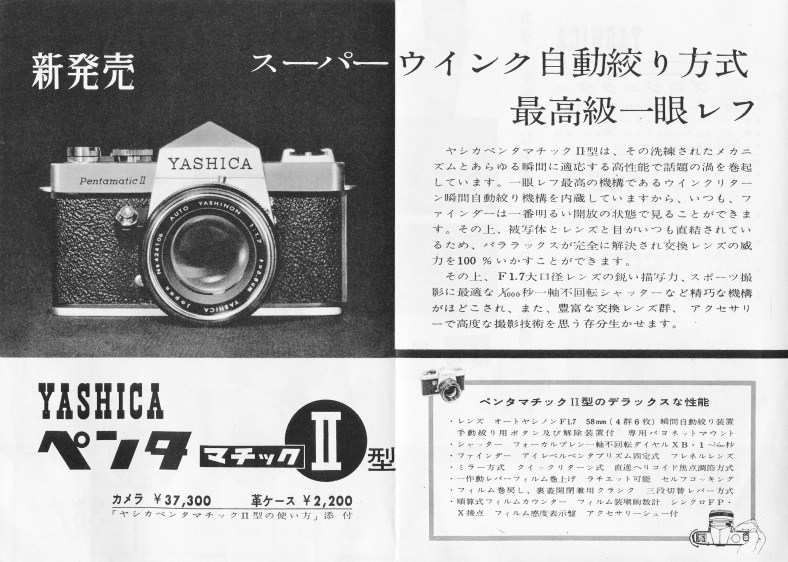
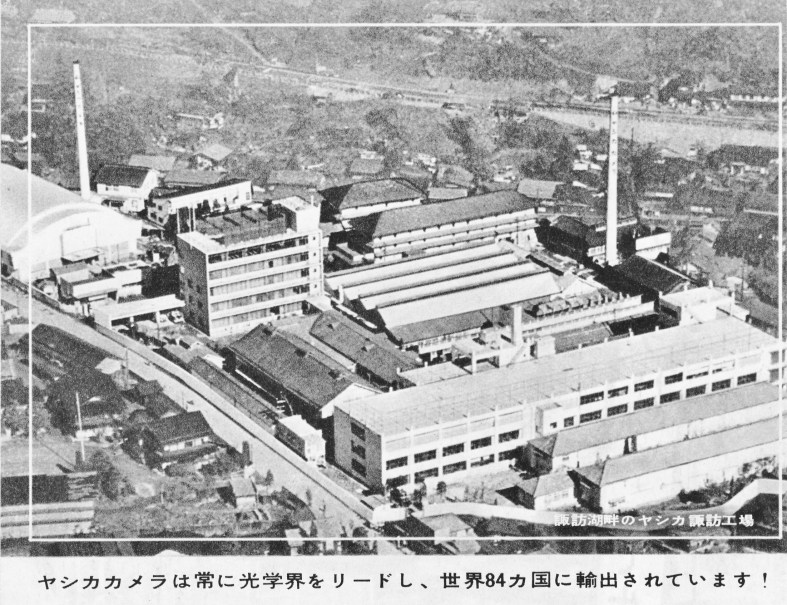
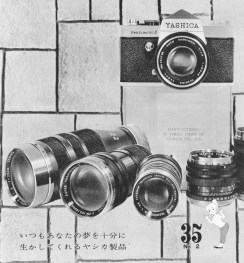
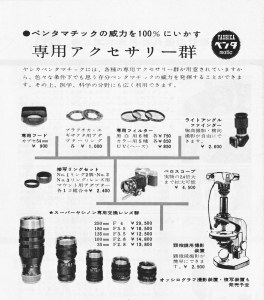
We finally have our proof that the original Pentamatic ’35’ and the Pentamatic II were advertised and sold in the Japanese domestic market. This brochure is dated February 1961 which validates the general release date of the model II. We have proof (via advertisements and brochures) that the Pentamatic S was also available for sale in Japan towards late 1961 (September?). By the way, included is this photo stream is a nice aerial view of Yashica’s factory complex in Suwa, Nagano Prefecture.

IMG_20151218_0001 IMG_20151218_0002 (2)IMG_20151218_0002IMG_20151218_0008 (2)IMG_20151218_0004IMG_20151218_0003

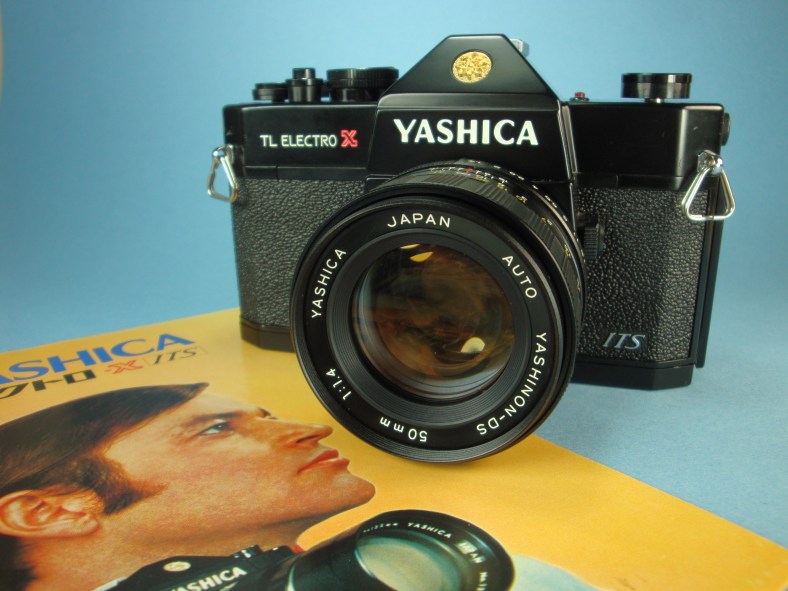
Yashica TL Electro-X ‘ITS’

After nearly five years of research and thousands of “searches” on auction sites, I finally have my answer! ‘ITS‘ as it relates to the famous and groundbreaking Yashica TL Electro-X stands for… are you ready? Nothing!

That’s right… nothing. I’ve just finished reading what appears to be the most comprehensive guidebook on the TL Electro-X (from Yashica no less) and not one word as to why the marketing guys and gals at the office in Shibuya picked ‘ITS‘ to appear on the lower left front of the camera. Not one hint… no clues… nothing!

Okay so more than likely it was meant to mean exactly that… nothing. I can live with that. Marketing people don’t have to explain anything they do. ‘ITS‘ simply looks good. So fast forward from 1968 to the present day. Hear I am stressed out about what may have been a whim… an afterthought… or maybe something one of the designers casually mentioned in a meeting while you know, designing the thing. ‘ITS’… sounds good.

I’ve imagined what it may mean hundreds of times (sad to admit that) and nothing really fits for the time period except that maybe the ‘I‘ stands for “integrated”. Like integrated circuit or I.C. as I’ve sometimes seen it mentioned in other Yashica sales brochures. That’s got to be it. After all, the NASA people were always using that term during the height of the space race. Okay so maybe we now know that the ‘I‘ stands for “integrated”. Simple. The ‘T‘ has always stood for “technology” to me. What else would the ‘T‘ stand for? Timed? As in timed shutter. Oh that’s a good guess. I like it. Maybe the ‘TS’ part is for “timed shutter”? That’s another good one. Integrated… Timed… Shutter!!! Or how about “Interval” timed shutter? That’s ‘ITS‘ isn’t it?

Solved! Finished! No more worries right? No… that isn’t it. It’s got to mean something else. Something catchy, something better than that. Well the book (sales brochure) I just finished reading never mentioned what the ‘ITS‘ stood for. Just like the hundred other brochures and ads I’ve read. But wait! Hold on! There on the cover is a clue! There it is right in front of me! “SYSTEM”. Yashica called everything connected with the TL Electro-X ITS (lenses, filters, bellows, angle finders, accessories, etc.) SYSTEM.

So there it is! That was simple. Right? Well we’ll see. I’m going to keep on looking for that definitive statement from Yashica. Somewhere in black and white they’ll say it. For now though I’m sticking with… “Integrated Technology System” or “ITS” for brevity.

ITS = Integrated Technology System

DSC07504DSC07497Yashica 6-9-15 TL Electro-X Brochure back cover close

20151202_203809

A 45 page book from Yashica that explains everything about this fantastic camera.

No denying it – it’s a sharp looking camera and the ‘ITS’ just makes it that much cooler. It’s one of our favorite Yashicas in our collection. This one came to us via Okinawa, Japan. Purchased in late 1973 – that makes it one of our newest Yashica SLRs too. We’ve kept all of the original paperwork and of course the box. If you come across a nice looking one for sale (or better still get it as a gift) it should be on your list of must haves. The battery is an easy find and most will have working meters since they were only electronic (no moving match needle affair).

Happy hunting!

Chris and Carol ^.^
Standard Lens for the Pentamatic II

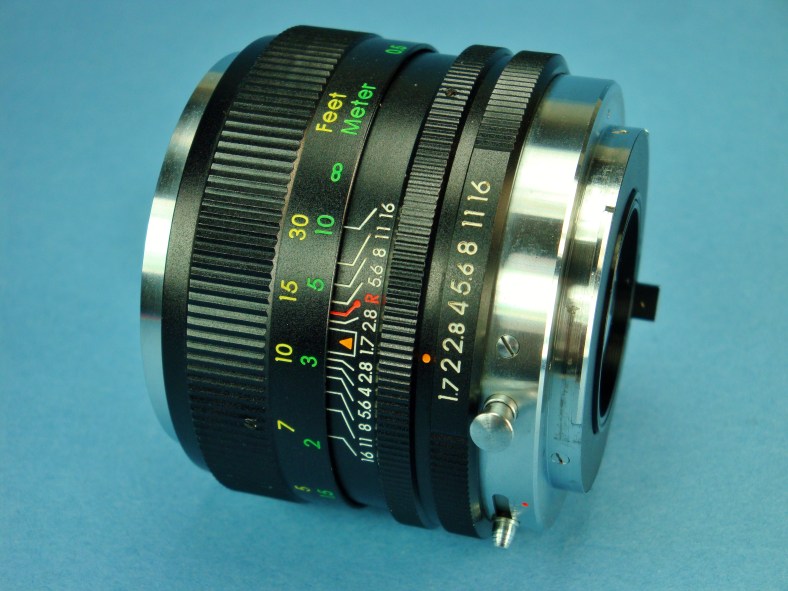
The only difference we can tell between the original Yashica Pentamatic ’35’ and the Pentamatic II (which came out in August 1960), is the standard lens that came with the camera body.

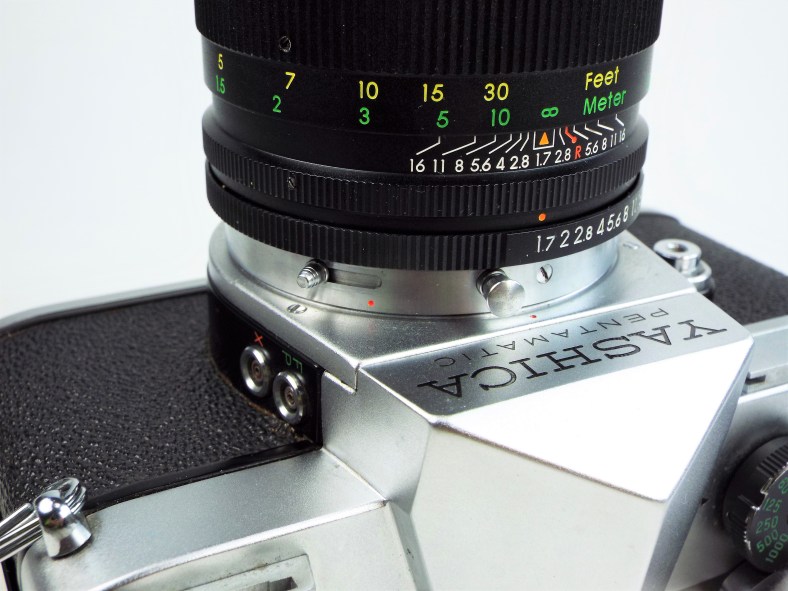
The original Pentamatic came with the Auto-Yashinon, f/1.8, 5.5cm semi (fully?) automatic 6 element lens. Of course it has the unique Pentamatic bayonet mount and not the M42 screw mount. The Pentamatic II came with the Auto-Yashinon, f/1.7, 5.8cm lens (pictured below). The f/1.8 lens was made for Yashica by Tomioka Optical of Tokyo. New evidence uncovered by us (Oct 2017) indicates that the f/1.7 lens was made by Zunow Optical. It’s a beautiful lens and weighs a ton and is rather rare today at under 6,000 lenses made. It has 10 aperture blades.

DSC07467

Update July 2017 – The Pentamatic II was only for sale in the Japanese home market and for only a short time (Aug 1960 to Jan 1961). Less than 6,000 cameras were made and of course about the same amount of these lenses. No English language sales brochures have been found that mention or feature the Pentamatic II. No advertisements either in English language newspapers or magazines.

DSCF5862

The Auto Yashinon f/ 1.7, 5.8cm lens mounted on a later model Pentamatic S.

If you find a sales brochure or advertisement in English that features the Yashica Pentamatic II, please bring it to our attention. Thanks!

Chris & Carol

Yashica Pentamatic Timeline… update 3 (Oct 2017)

Our best timeline for the development of the Yashica Pentamatic 35mm single-lens reflex (SLR) film camera… Pentamatic ’35’

Please note that this is a “dynamic timeline” and it will be updated as we discover new dates and developments…

  • Summer 1959… Yashica develops / invents its first 35mm SLR
  • September 1959… Yashica files to trademark the name ‘Pentamatic’ in Japan
  • October 1959… Tomioka starts production of a new lens for the Pentamatic. f/1.8 5.5cm
  • December 1959… First Pentamatics assembled at the Suwa factory
  • February 1960… Yashica files to trademark the name ‘Pentamatic’ in the U.S.
  • March 1960… Production reaches 1,500 units
  • March 1960… First showing of the Pentamatic occurs at a trade show in St. Louis… first images of the camera are provided by Yashica
  • April 1960… First published look at the Pentamatic in the May 1960 issue of Modern Photography magazine
  • May 1960… First full page advertisements for the Pentamatic ’35’ appear in the June 1960 issues of Modern Photography, Popular Photography and U.S. Camera magazines and the Pentamatic is available at Yashica dealers by early May
  • June 1960… Production reaches 5,000 units
  • June 1960… First review of the camera appears in the July issue of Modern Photography magazine
  • August 1960… Production reaches 9,300 units
  • August 1960… The Pentamatic II goes into production. Sold only in Japan
  • August 1960… Zunow produces a new lens for the Pentamatic II. f/1.7 5.8cm
  • Winter 1960-1961… The Pentamatic I and II are are both sold in Japan
  • December 1960… Camera dealers in New York advertise new Pentamatics at under $110 (USD)
  • January 1961… Production reaches 15,700 units
  • January 1961… The Pentamatic S goes into production
  • January 1961… The Pentamatic II ends production at under 6,000 units
  • February 1962… February issue of Modern Photography has only two advertisements for the Pentamatic and NO mention of the Pentamatic II or Pentamatic S
  • Late 1961… The Pentamatic models are replaced by the Penta J
  • End of Production… About 30,000 Pentamatic cameras (all models) are made over 3 years
  • August 1963… ‘Pentamatic’ receives trademark registration in the U.S.
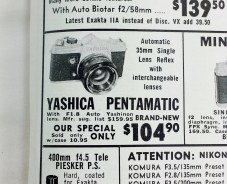
  • Pentamatic Advertisement

    By January 1961, some pretty strong discounts on the original Pentamatic I. No Pentamatic S advertised.

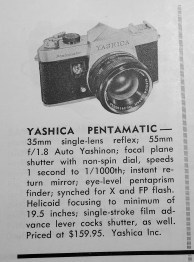
    First Look?

    First look at the new camera in the May 1960 issue of Modern Photography.