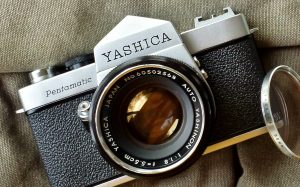
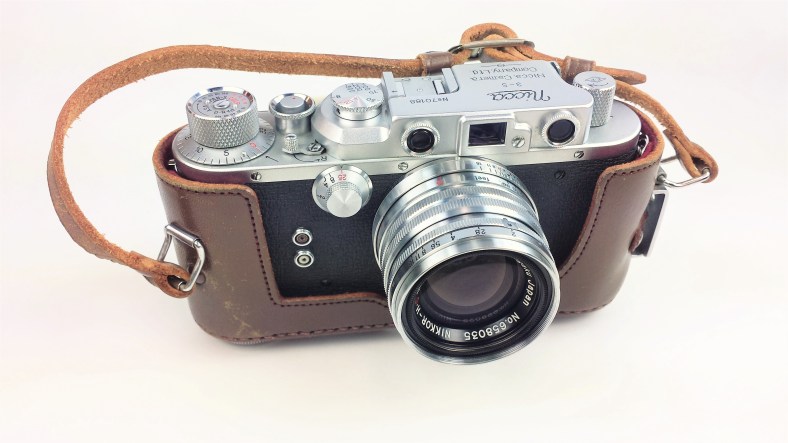
OK, well maybe not. Vintage leather half case on the Nicca 3-S.
Studio Camera: Samsung Galaxy S4
Chris
OK, well maybe not. Vintage leather half case on the Nicca 3-S.
Studio Camera: Samsung Galaxy S4
Chris
Raindrops on leaves – most magical green – saturated colors that excite.

Crepe myrtle leaves dripping with rain.

Flowering dogwood with bursts of green and red.
A rather rare occurrence here in Northeast Florida in early June – a long steady rain. After an extremely dry late winter and spring, rain has returned in a big way. Afternoon thunderstorms fill once dry ponds and bogs and gardens brim with life and color.

Bald cypress branches hang low with wetness – maidenhair ferns pop with color and a chubby garden bird delights.

Even the old boy himself can tolerate the rain…
…for a little bit at least.

Pirate “enjoying” the rain. ^.^
And a blast of the most unnatural pink you’ll ever see!
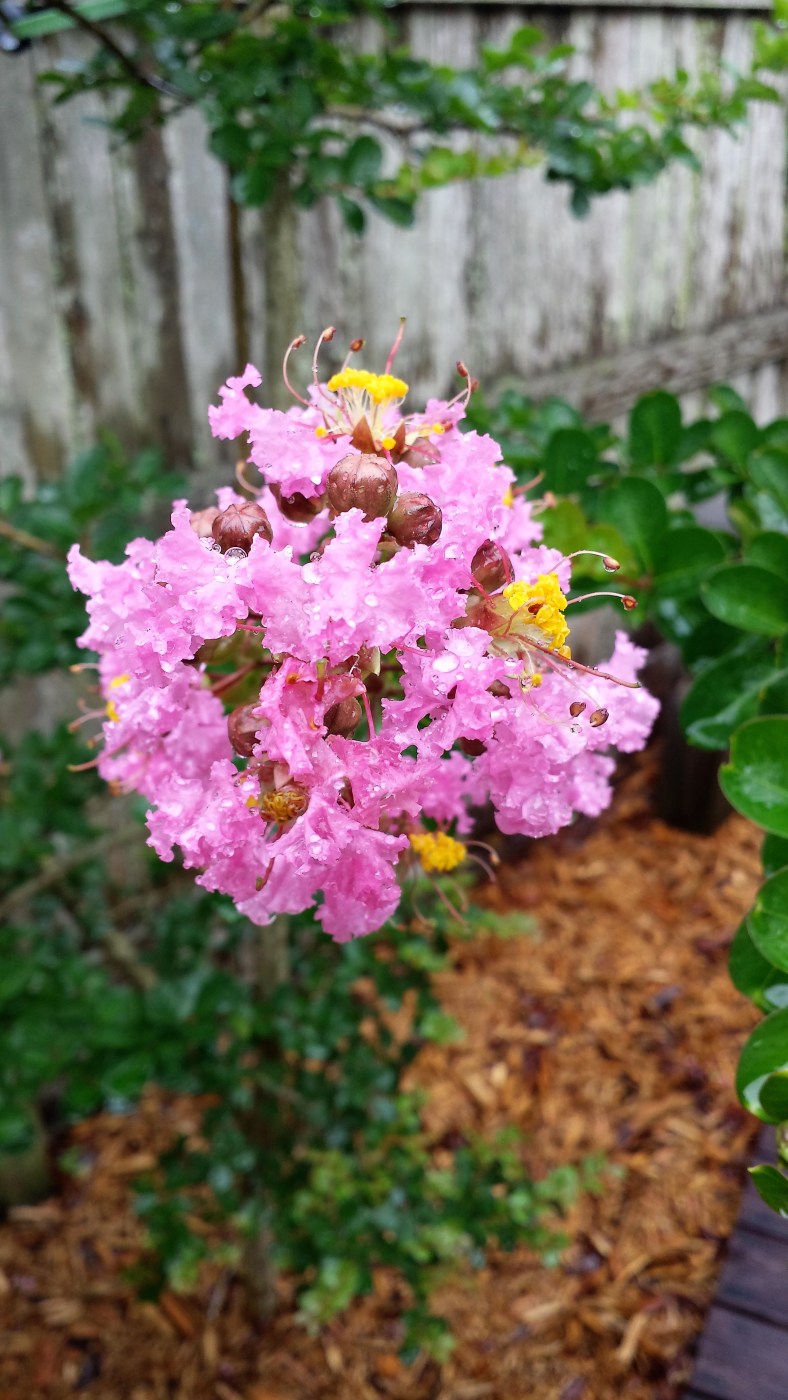
My daughter calls it “Barbie Pink”.
Thanks for visiting our garden on this rainy day!
Camera: Samsung Galaxy S4
Chris
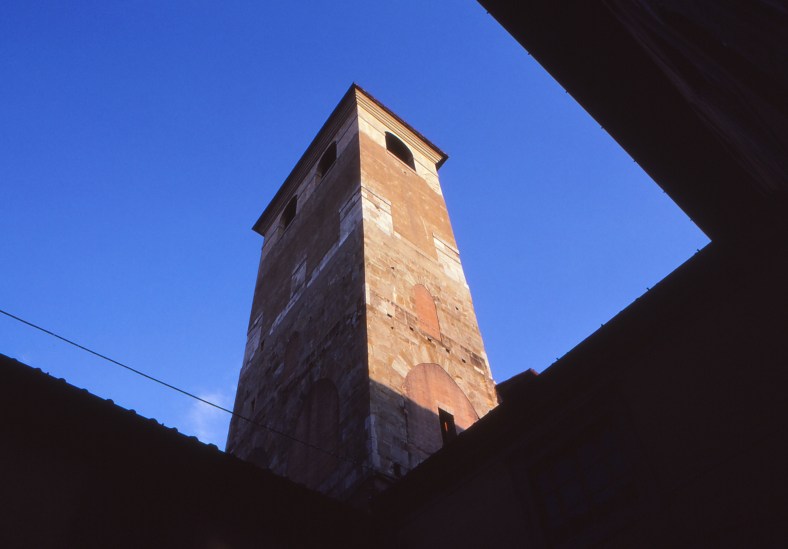
I’m thinking Florence.
1986
Canon F-1
Chris
We’ve always assumed that the Nicca cameras were pretty much the same size from one model to another. The early 1950s models look for the most part, the same as the 1958 models. Now that we have two Niccas in our collection it’s time to do some comparisons.
Nicca 3-F on the left and the Nicca 3-S on the right.
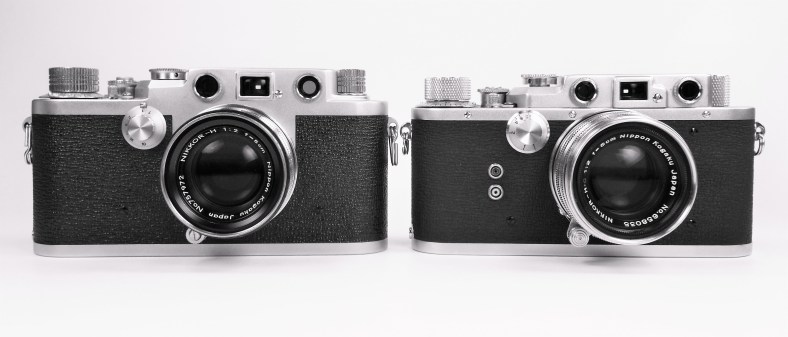
First off, without the lenses attached, there is a slight difference in weight between the two with the 3-F weighing in at 445 grams and the 3-S weighing 432 grams.
There is however a difference in size which surprised us. The later model 3-F (left) is taller than the 3-S (right) by about 4mm.
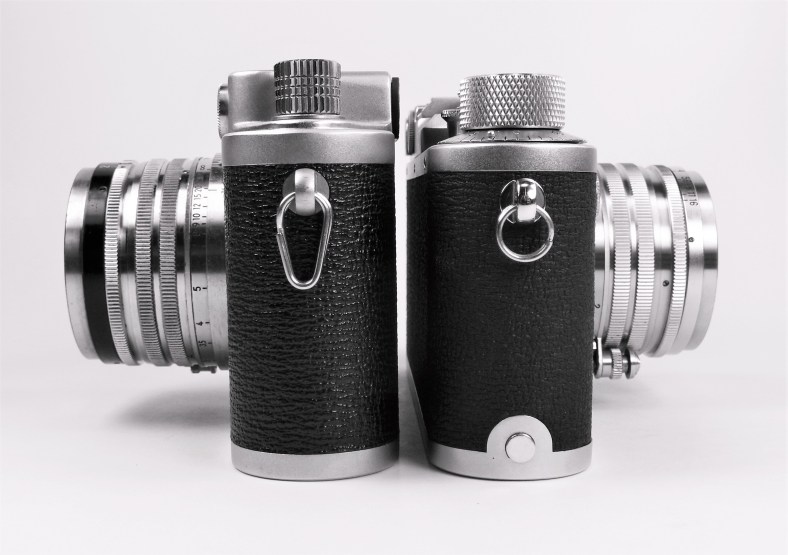
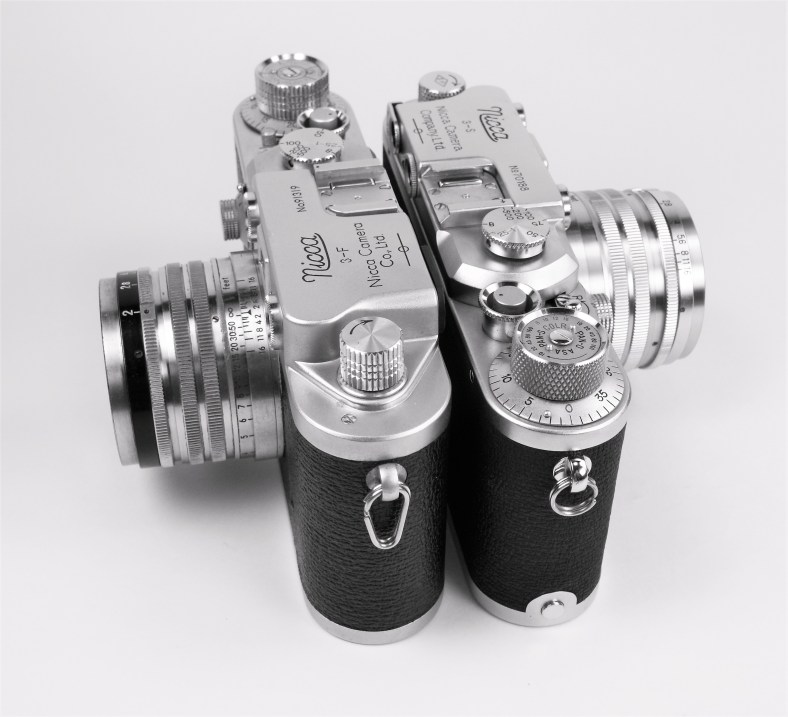
The 3-F is also longer than the 3-S by about 7mm.
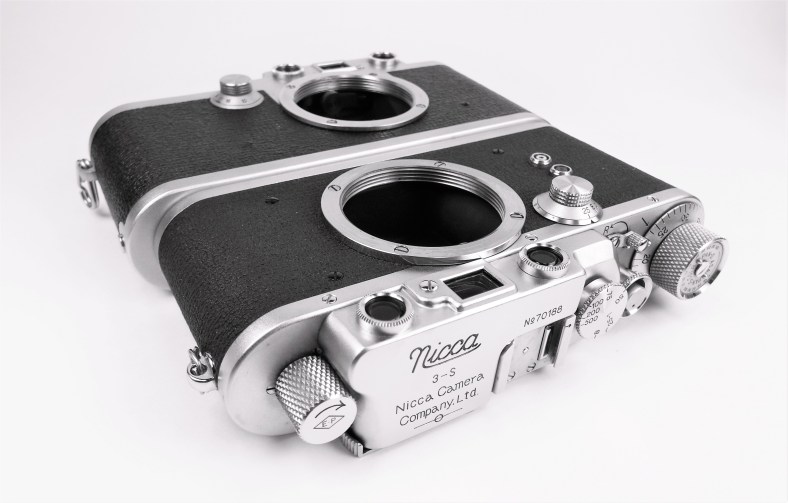
The 3-F is about 7mm longer and 1mm wider than the 3-S.
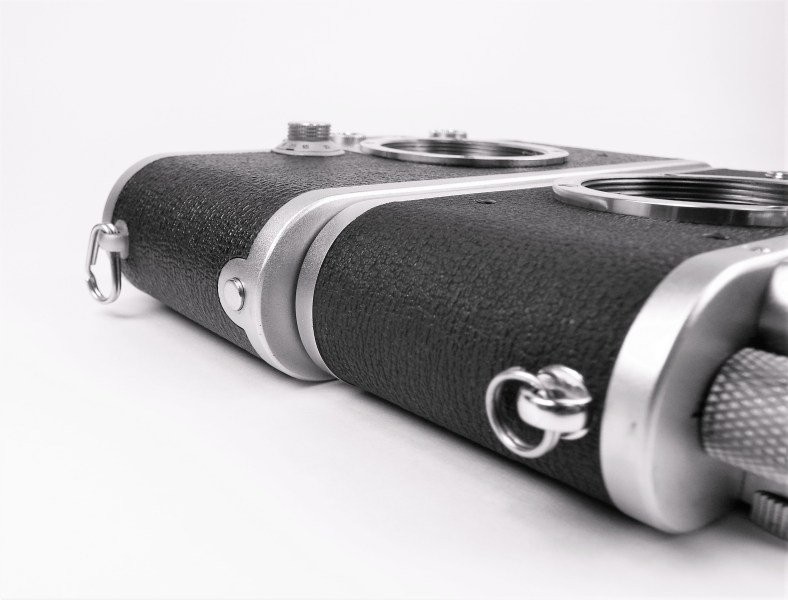
The 3-F is the top body with the 3-S on the bottom.
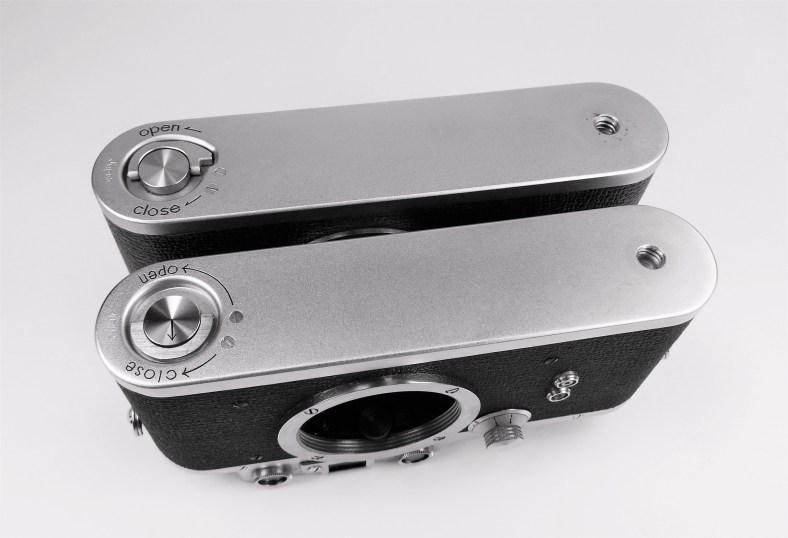
Since these Niccas share the same specs it’s surprising that Nicca expanded the body of the 3-F.
Our best guess is that the later model (3-F) uses its extra length to improve the film path. Measuring the distance between the spindles with the baseplates off, the 3-F is 5mm longer than the 3-S (108mm vice 103mm).
So nothing earth shaking – just some subtle differences. As we have stated before, these are high quality cameras with exceptional fit and finish. Adding a Nicca will enhance any collection of 1950s Japanese made rangefinder cameras.
Studio Camera: Fujifilm FinePix S9900W
Chris
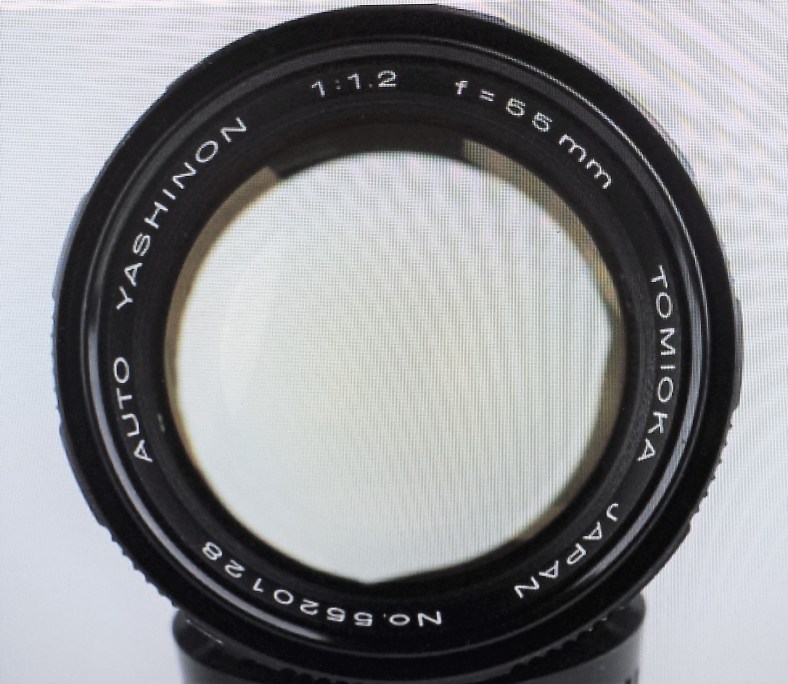
Made by Tomioka Optical of Tokyo, Japan for Yashica. Yashica “allowed” a few of their Auto Yashinon 55mm, f/ 1.2 lenses to also carry Tomioka’s name. This is a M42 mount lens.
The serial number (lowest found so far) decodes to – No. 5520128 which is ‘552’ is the lens model number (55mm f/ 1.2) and the ‘0128’ is the production sequence number. 128 being the 128th lens made.
These super lenses in excellent condition bring around $800 to $1200 depending on the goodies that might be included (front and rear caps, case) and what not.
Chris
A beautiful example of a mid 1950s 35mm rangefinder camera – made by Nicca Camera Company, Ltd.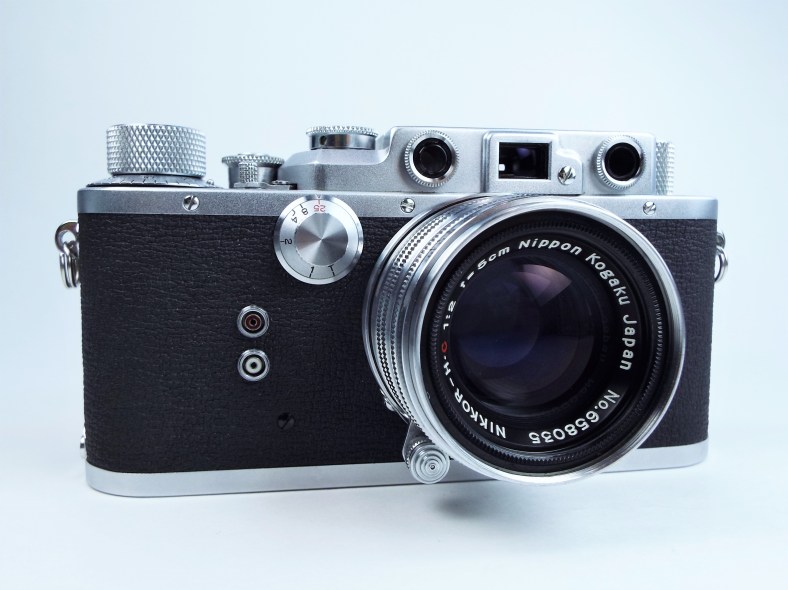
Mated with a sharp Nippon Kogaku Nikkor f/ 2, 5cm lens.
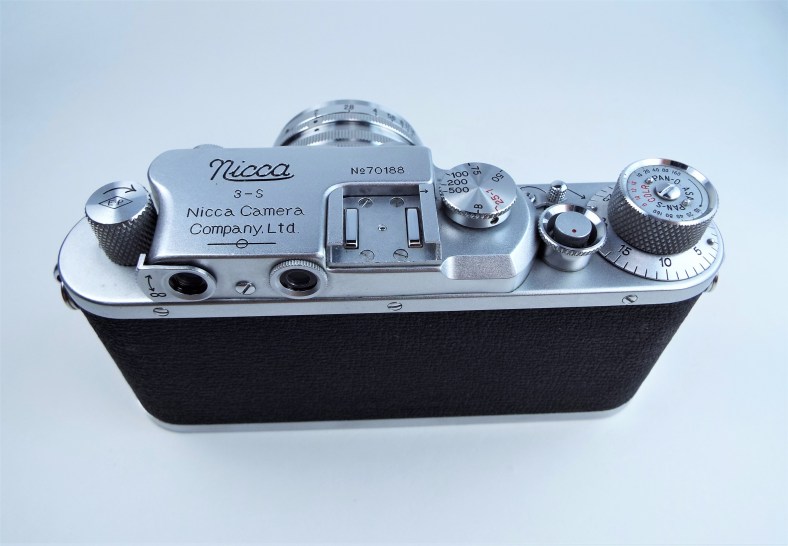
Main shutter speeds of 1/25 to 1/500th of a second.
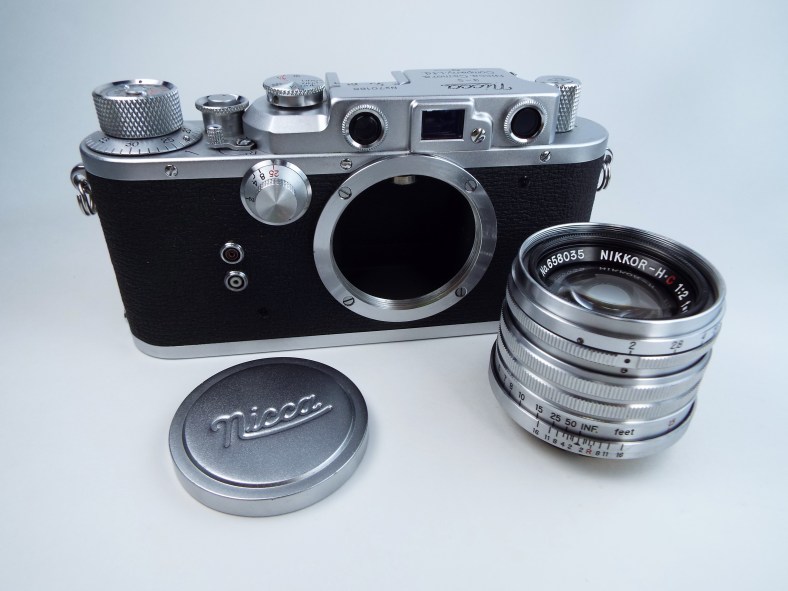
Added bonus on this Nicca – marked <E.P> for exempt purchase. Normally marked for purchases made at military facilities and duty free shops.
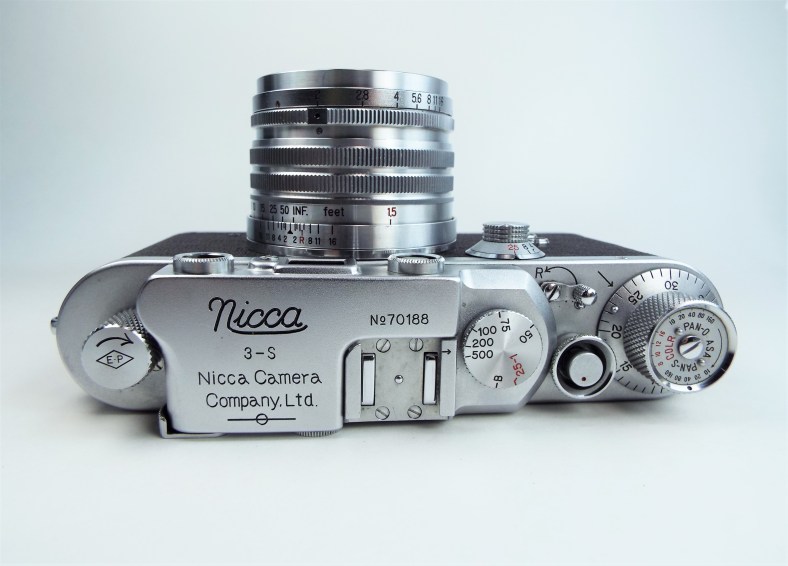
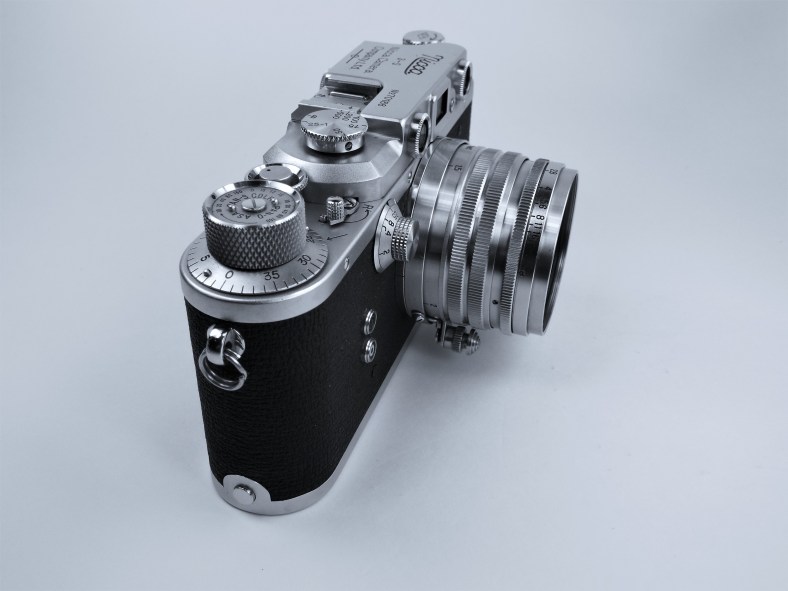
Nicca cameras were considered to be well made cameras during the 1950s. This example is at least 62 years old and the fit and finish is almost flawless. Nicca was acquired by Yashica in 1958 and the merger of the two companies helped Yashica to design and release their first 35mm single lens reflex camera in 1960 – the Yashica Pentamatic.
Studio Camera: Fujifilm FinePix S9900W
Chris
We acquired this beast early this year and fell in love with its capabilities. The only problem with it is that you only get 8 6x9cm images on a roll of 120 film. Talk about planning your shot!
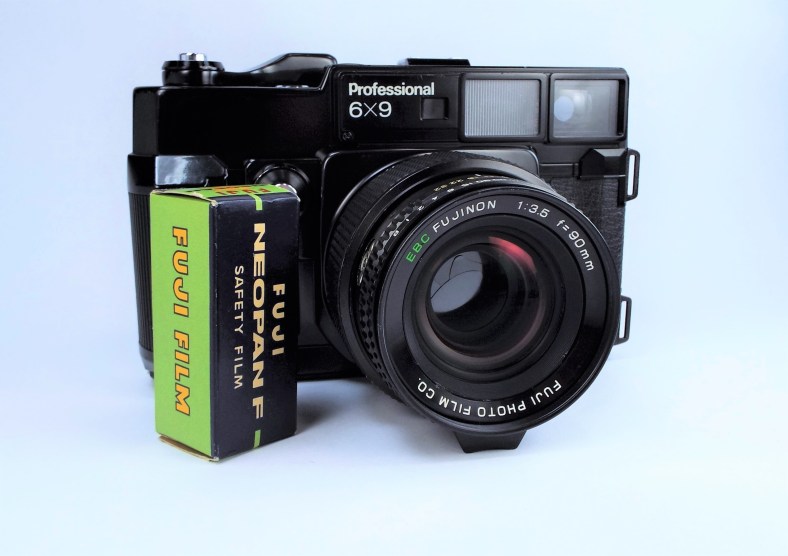
Last camera to carry the Fujica name.
One of our favorite images from the first roll – far from perfect – the focus is a tad off but we love the shallow depth of field and the amazing tonal range of the Neopan Acros.
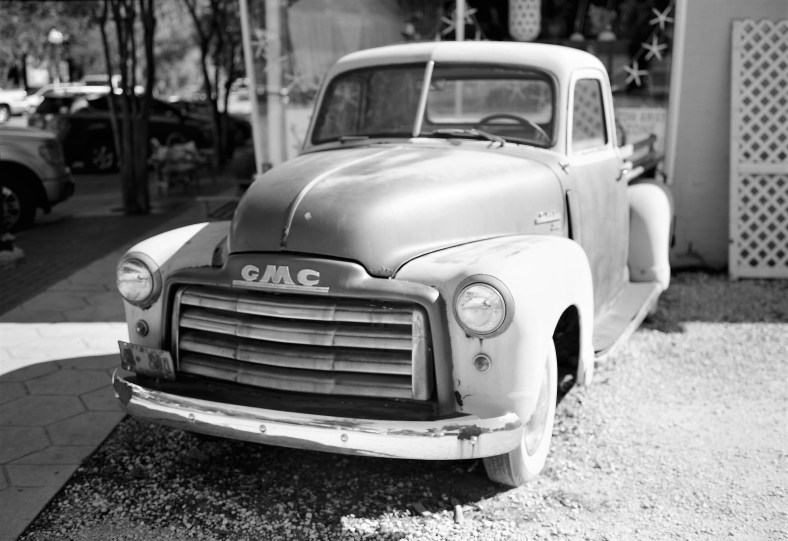
The 6x9cm format is, in our opinion, nearly perfect for big time enlargements. This image by the way, is not cropped and hasn’t received post production.
If you want to go big in medium format, the Fujica GW690 and the Fuji GW690II and III are worth a look.
Chris
The day I choose to visit the lighthouse was terrible – Florida wise. Mid September, crazy hot, oppressively humid and not a hint of a seabreeze. Oh and the sun was obscured by clouds all day. So with that said, it wasn’t a great photo opportunity for shooting with film. The few usable images came via my cameraphone and Sony Cyber-shot.
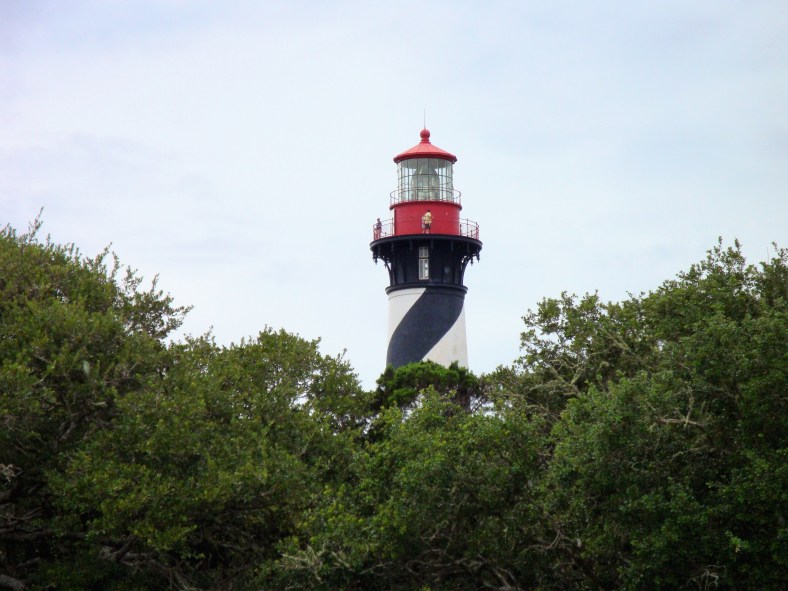
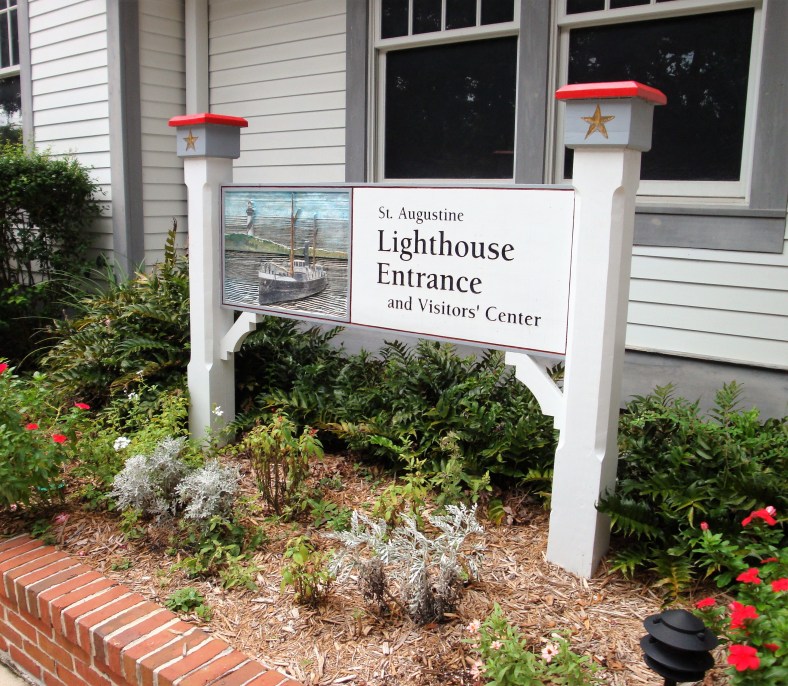
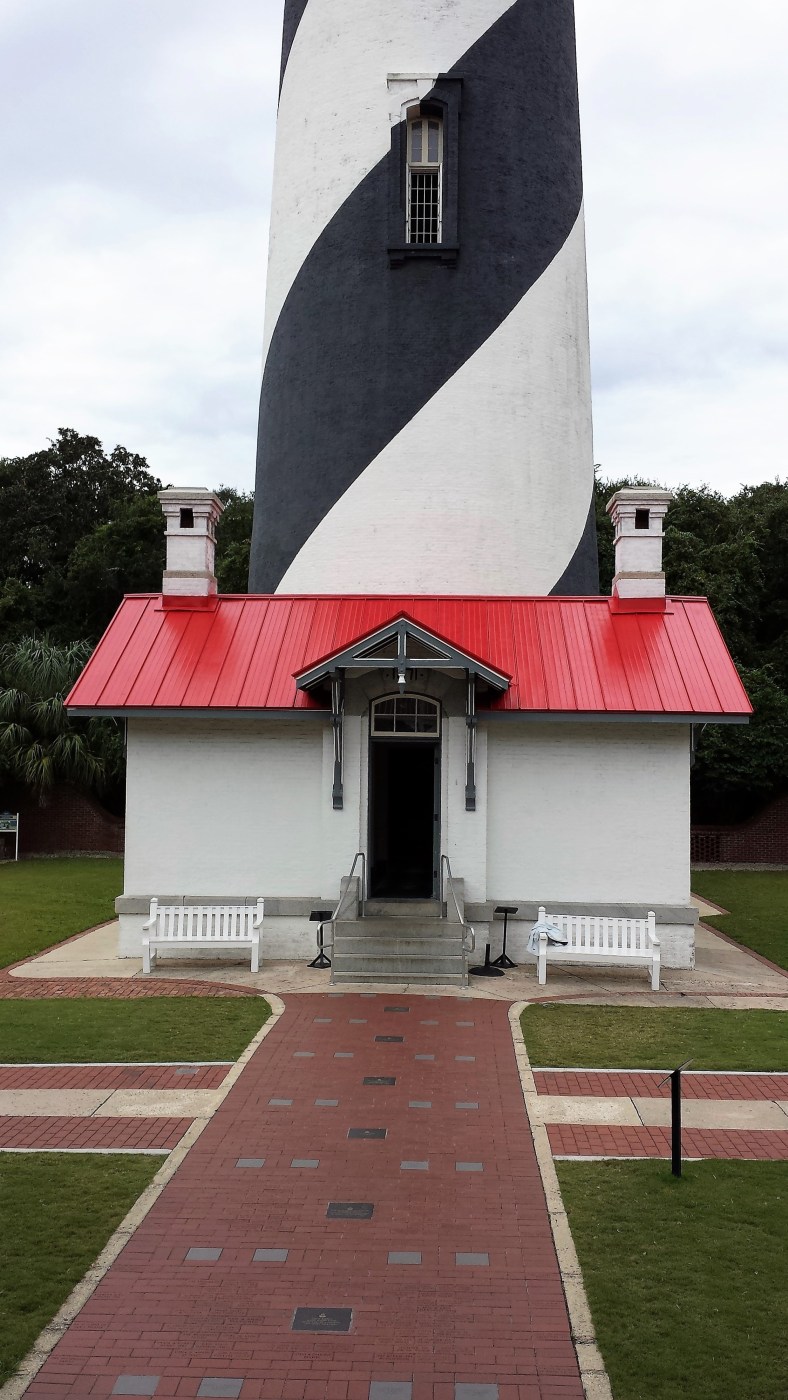
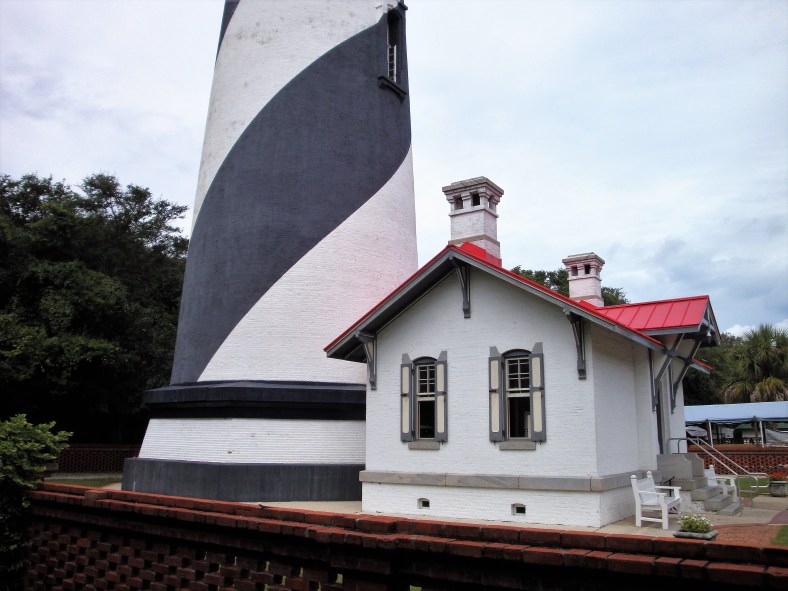
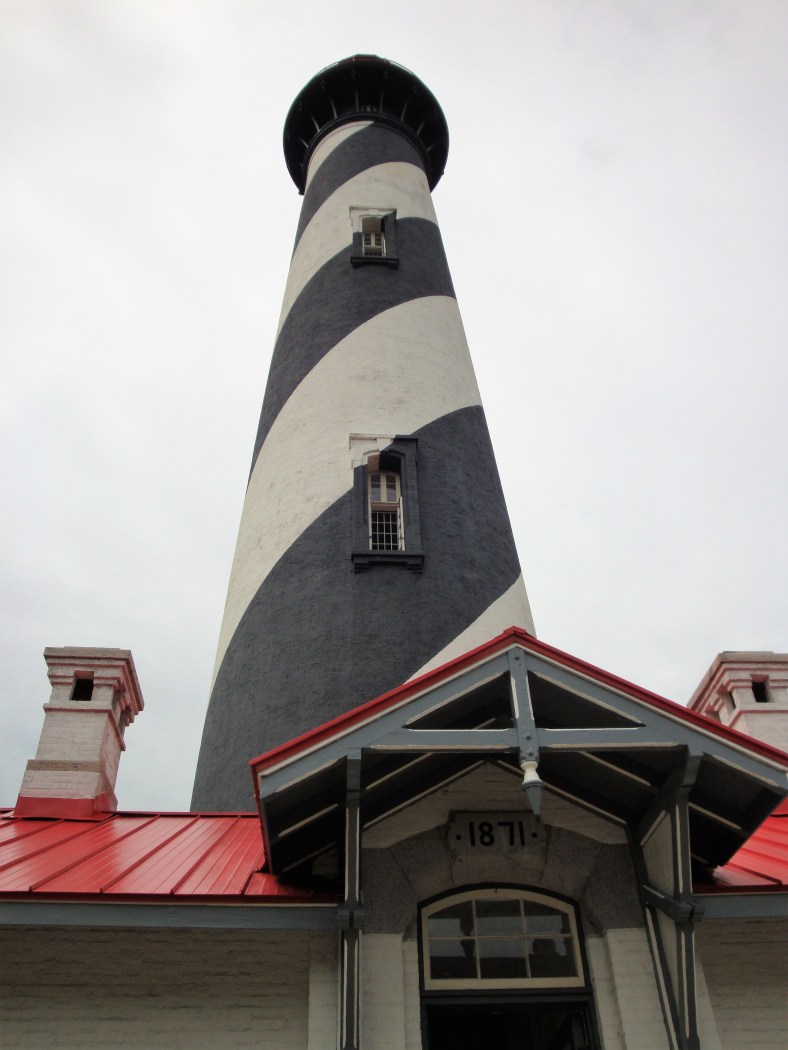


Looking east towards the Atlantic Ocean.
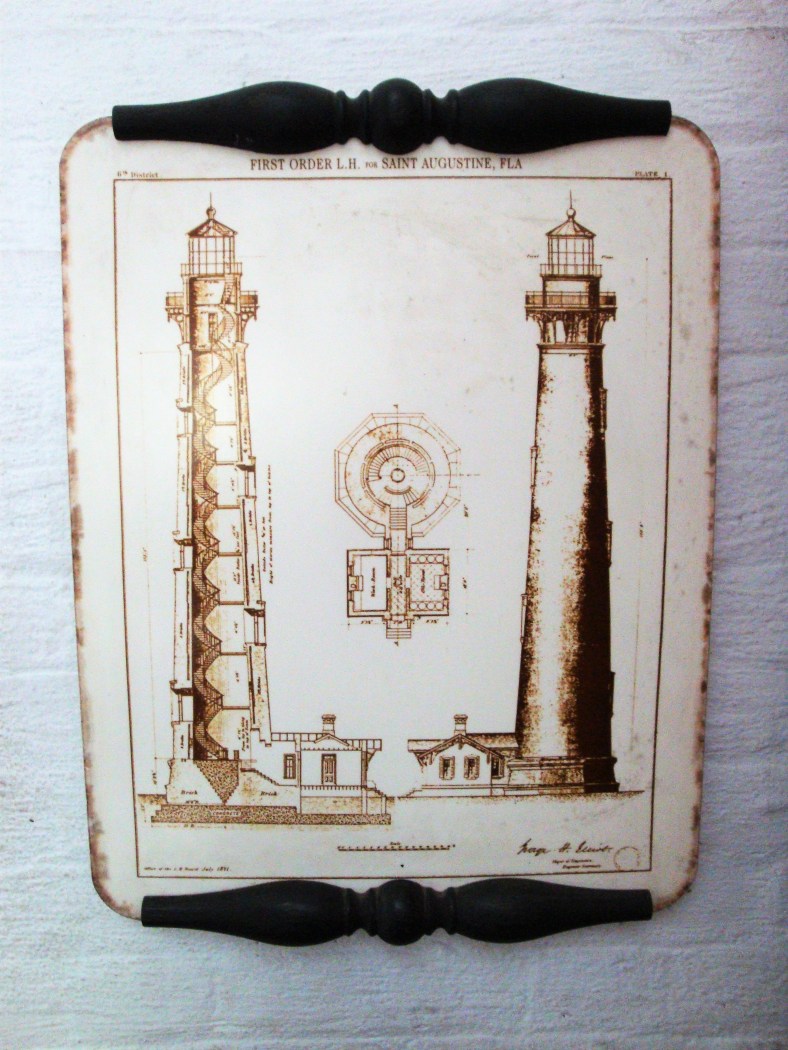
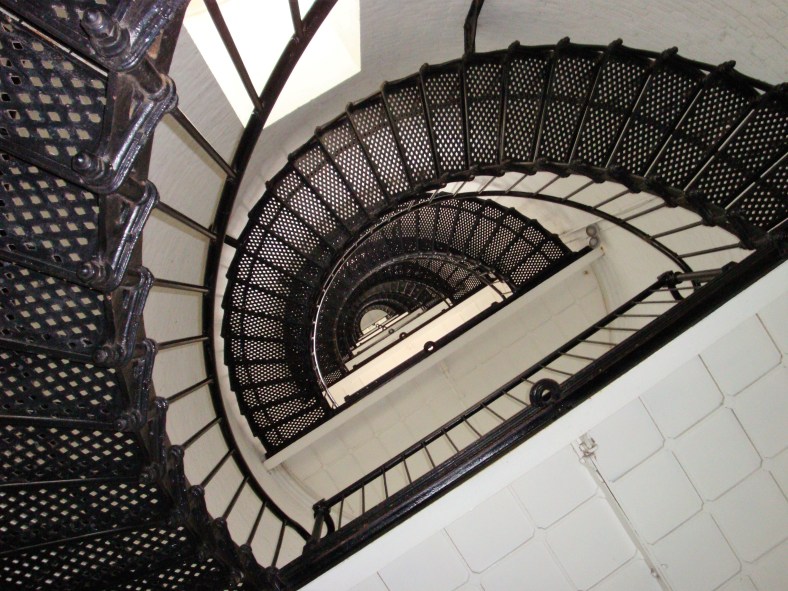
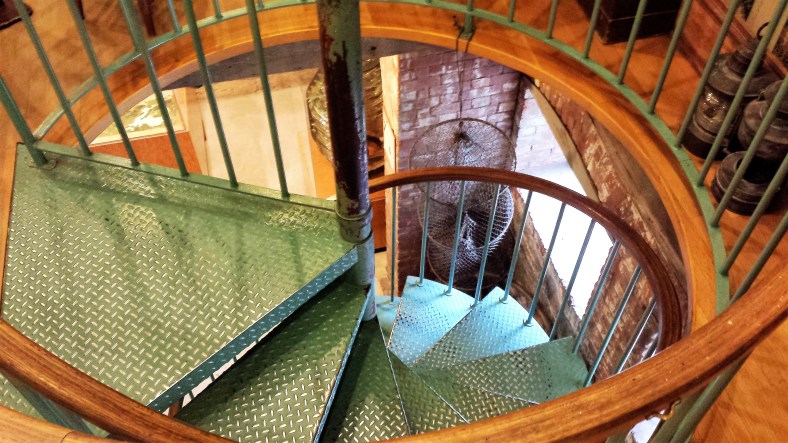
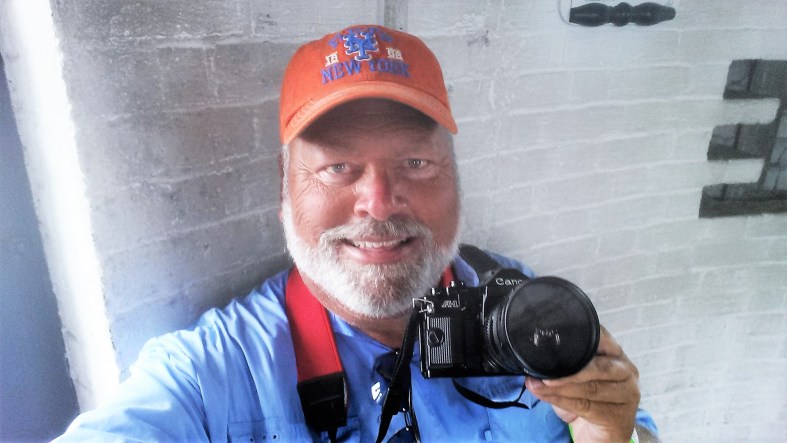
Optimistic that I would be able to get some good shots with my Canon A-1.
Overall the lighthouse is worth your time to visit, just pick a perfect weather day to go. The lighthouse has been fully restored and is kept very well maintained and the view from the top is exceptional – a bit toe curling if you and heights have an uneasy relationship – that red railing looks pretty thin at the top!
Thanks for your visit!
Cameras: Sony Cyber-shot W-170, Canon A-1 with FD 17mm lens, Samsung Galaxy S4
Chris
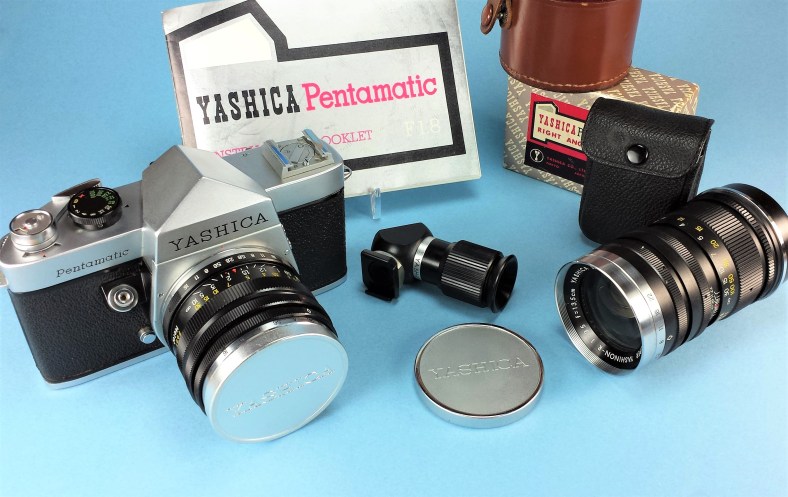
Some of the original accessories that were available for the new Pentamatic…
When Yashica’s first single lens reflex (SLR) 35mm camera hit the world markets in the May-June 1960 time period, they were ready with a host of well designed accessories. From simple screw-in filters to extension tubes and the new bayonet mount lenses, Yashica had a nice selection to choose from. Here are just a few examples…
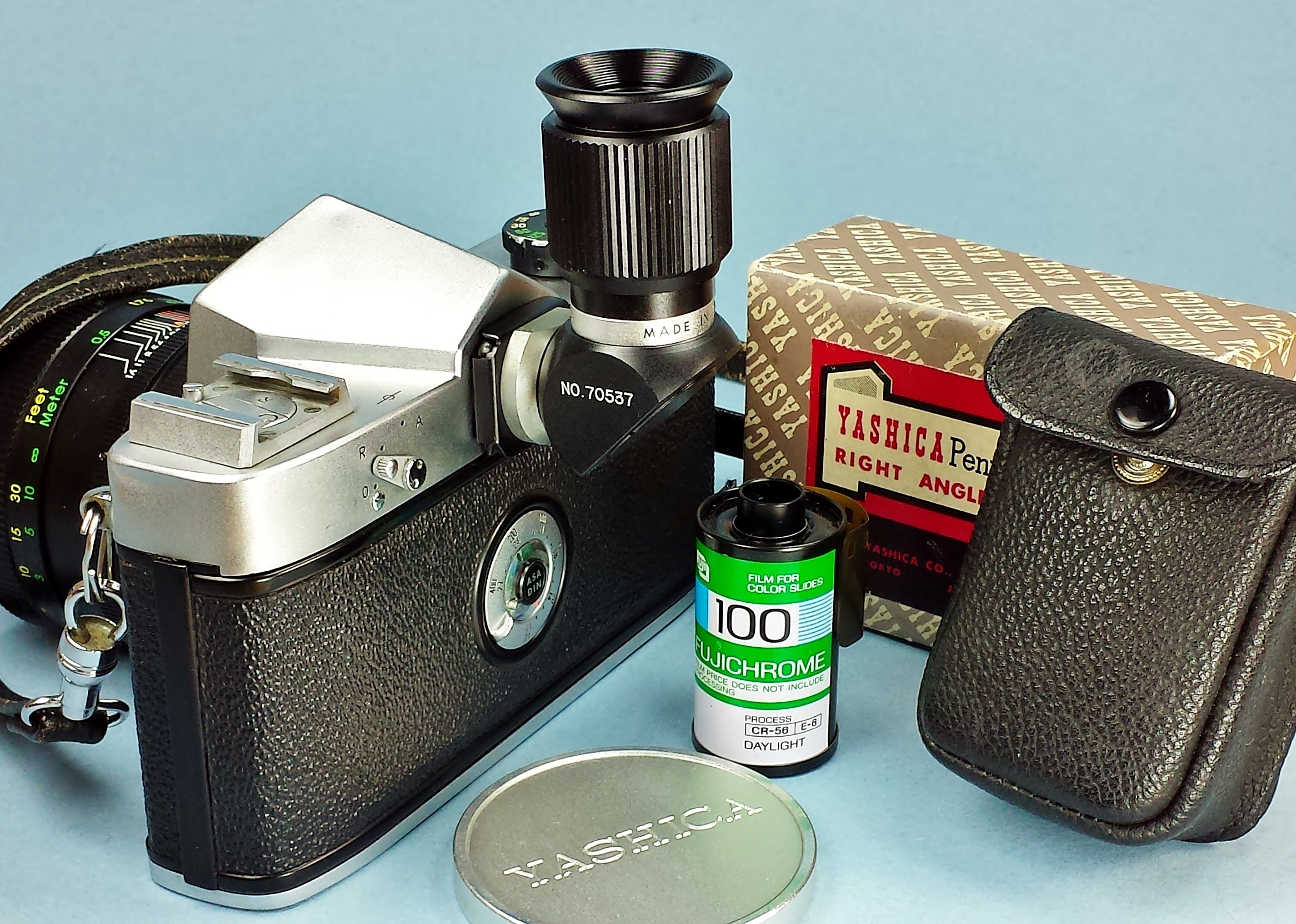
Pentamatic ‘Right Angle Finder’ for low angle and close-up photography. This simple finder mounted securely to the camera’s eyepiece and had adjustments for focus and could be rotated 90 degrees to the left for vertical copy work. The image is reversed so it does require some getting used to. Here it’s mounted to our Pentamatic-S.
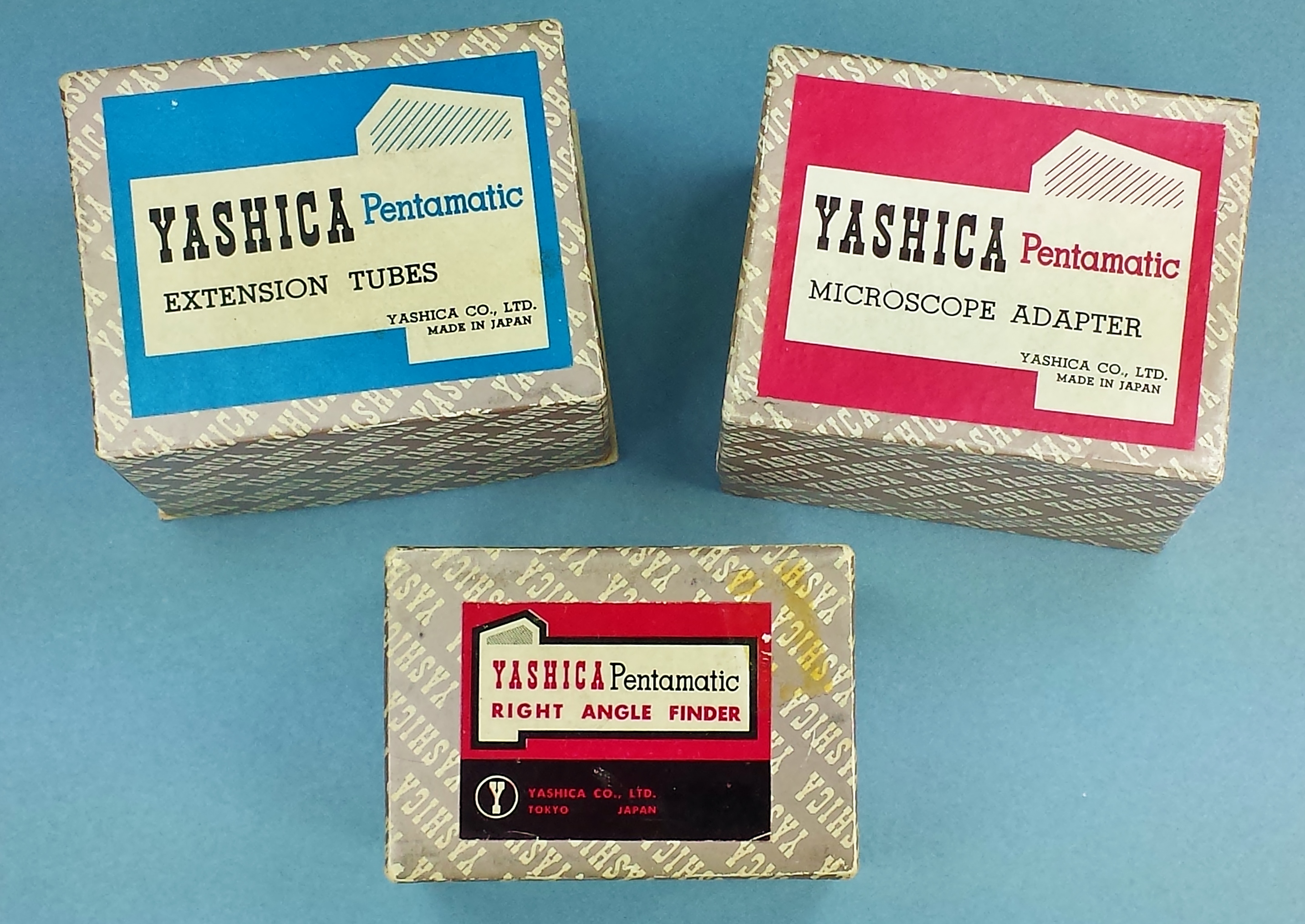
A small collection of boxes gives some idea as to the diversity of the early accessories. Note the general theme of the design… each shows off the pentaprism design of the camera. The right angle finder box appears to be from a slightly later design as it has a different look from the other two.
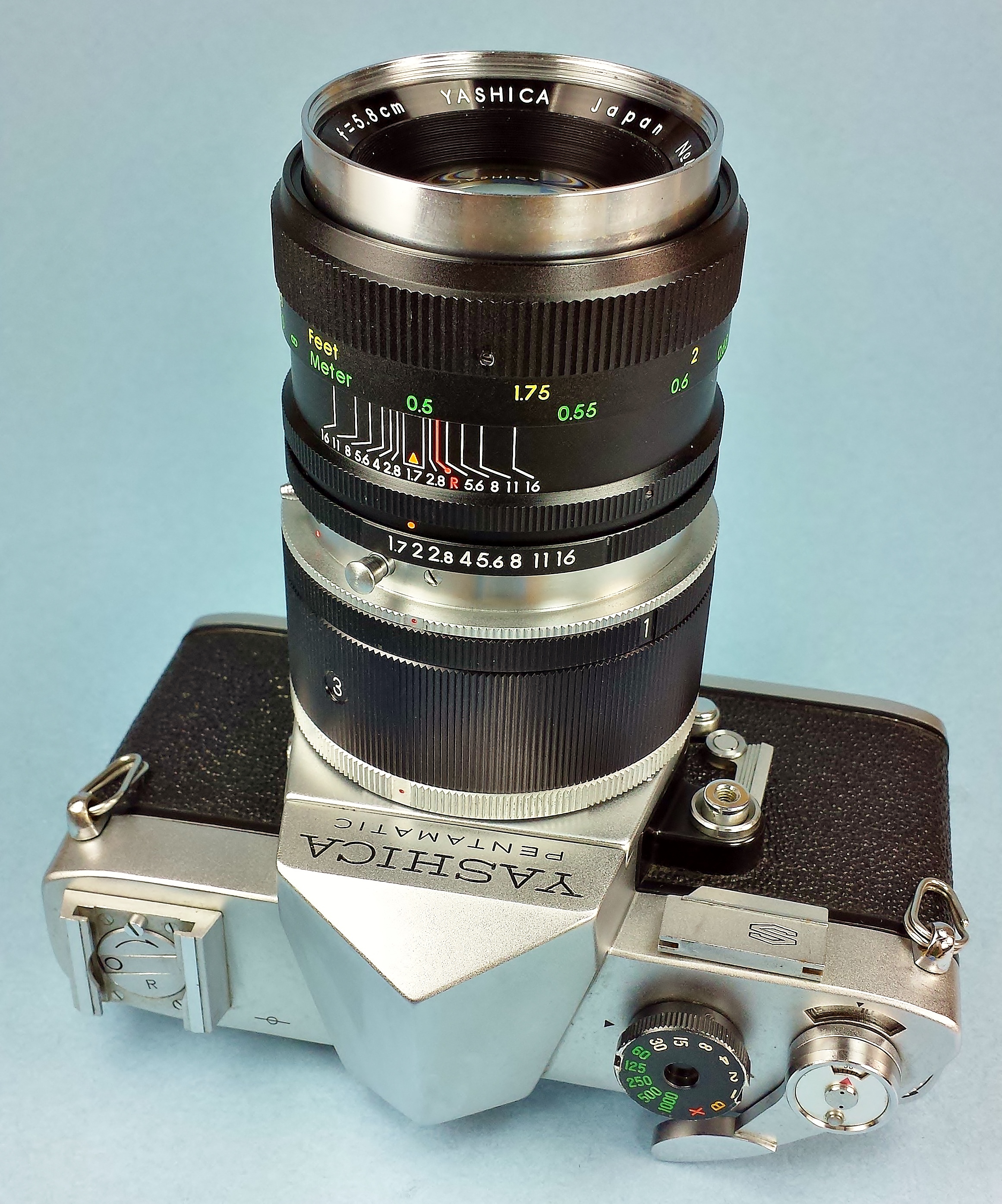
Pentamatic ‘Extension Tubes’ mounted on our Model-S Pentamatic camera body and Auto-Yashinon 5.8 cm (58 mm) f/1.7 standard lens. The lens is super bright and is super heavy! Camera and lens weigh-in at 2 lbs 5 oz (1056 g)!
Thanks for stopping by!
Chris
Very early if not the earliest printed in the US sales brochure for the new Pentamatic.
We’re thinking the summer of 1960…
We haven’t found an earlier brochure that features the Pentamatic then this one – “Printed in the U.S.A.” on the back cover using the 234 Fifth Avenue, New York 1, N.Y. address. The cover is amazing in that other than Yashica’s name and an image of the camera, there’s no other writing. No “Pentamatic” – just an image of the camera. That was a first for Yashica as best as we can tell.
The first magazine advertisement was June 1960 in the US so we don’t believe this brochure was out before that. The only problem with our thinking is that most of the other cameras featured inside this brochure are 1959 model cameras and in some cases late 1958. There could even be a few that came out in early 1960. The two pages we’ve scanned (see below) contain an interesting wealth of info on the features and accessories for the Pentamatic. Of note, the lens serial number (No. 59100036) puts that lens to be one of the first lenses Tomioka made for Yashica with the new Pentamatic exclusive bayonet mount – 59 = 1959, 10 = October, 0036 = the 36th made in the production run.
We know from our research that the October 1959 date for the lens is 2 full months early from the first Pentamatic bodies (December 1960). Our best guess is that Tomioka Optical (the maker of the lens) needed to start production of the standard lens early in order to meet the demand for the camera body itself. No proof exists yet but it’s the best decoding of the lens serial number we can come up.
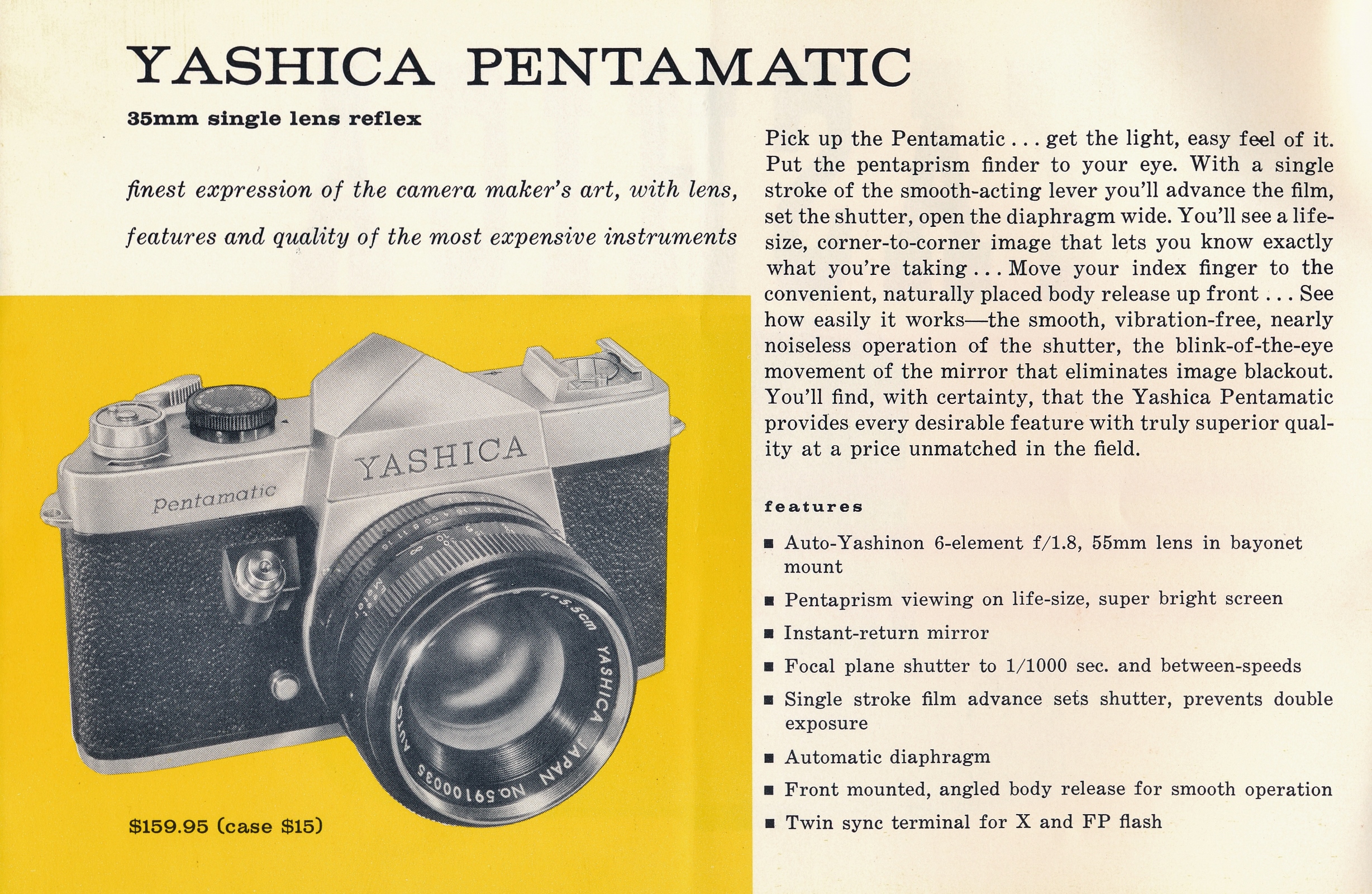
Page 1 provides a wealth of info for Yashica’s first 35mm SLR.
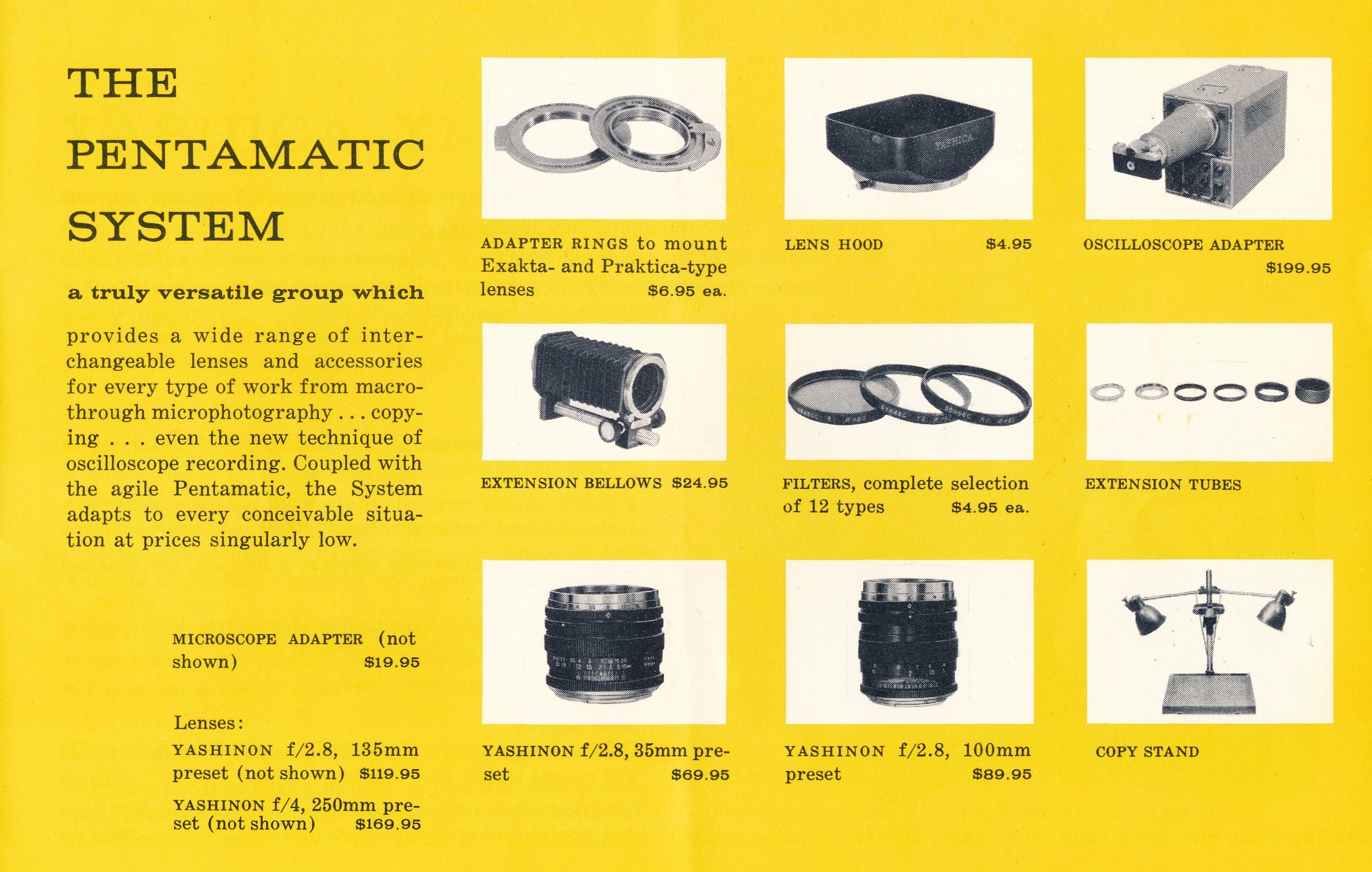
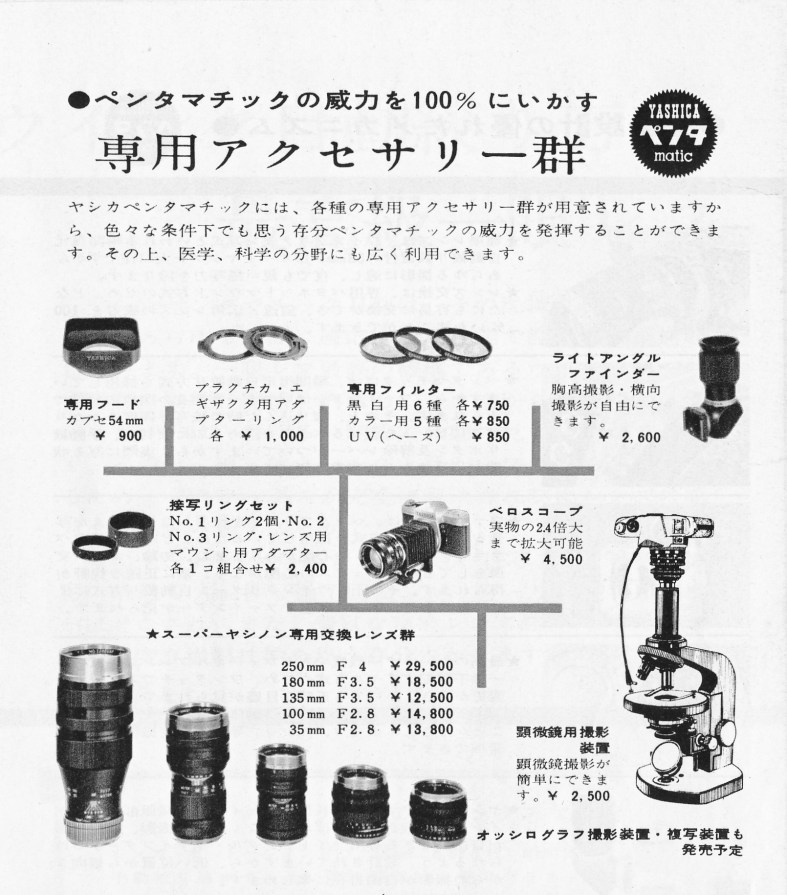
Page 2 shows (with prices) a nice selection of accessories for the Pentamatic. It appears that at the time of this brochure that there were 5 lenses available in the Pentamatic bayonet mount.
 Chasing Classic Cameras with Chris