Yashica Pentamatic ’35’ vs. Pentamatic II

Why did Yashica bring out the Pentamatic II less than a year after releasing the original model?

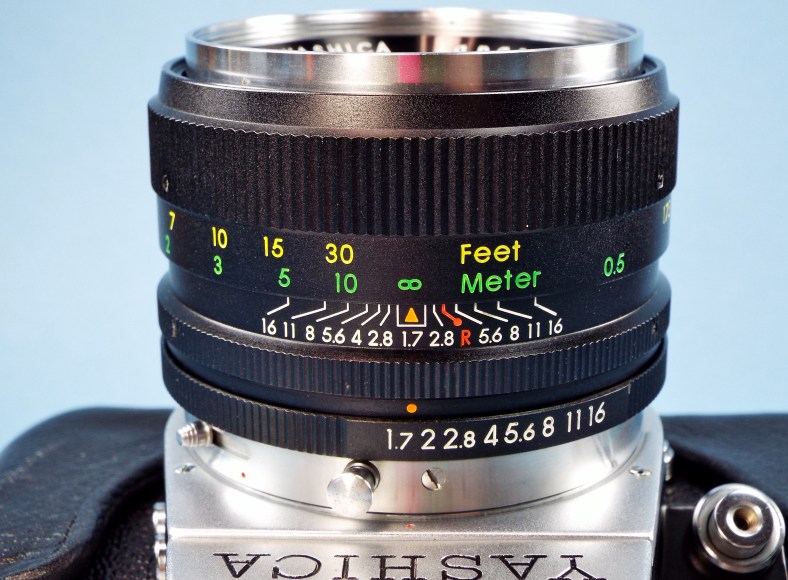
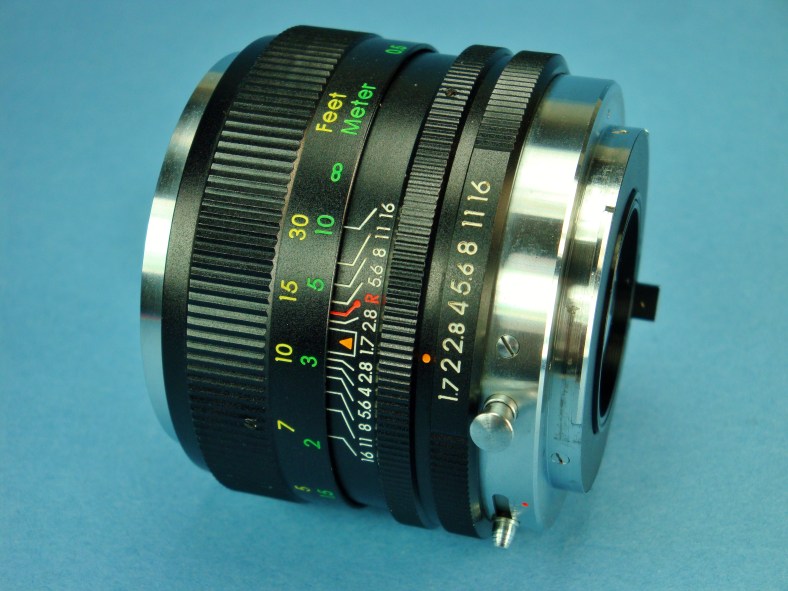
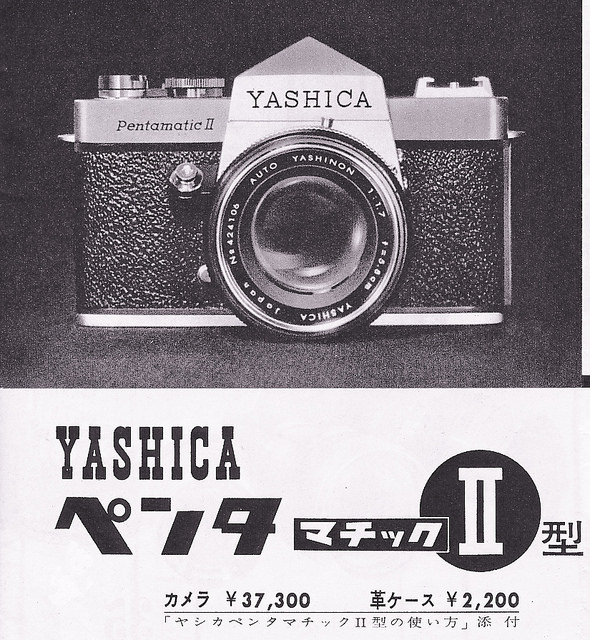
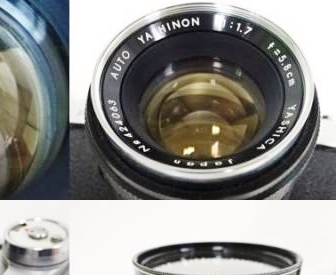
The only difference we can tell between the original Yashica Pentamatic ’35’ and the Pentamatic II (which came out around September 1960), is the standard lens that was mated with the camera body. The original Pentamatic came with the Auto-Yashinon, f/ 1.8, 5.5cm fully automatic 6 element lens. Of course it has the unique Pentamatic bayonet mount and not the M42 screw mount. The Pentamatic II came with the Auto-Yashinon, f/ 1.7, 5.8cm lens (pictured below). Both lenses were made for Yashica by Tomioka Optical of Tokyo. We imagine the 58mm, f/ 1.7 lens was a bit faster than the f/ 1.8… but we don’t see why Yashica changed from the model I to the model II and why they changed the lens… we may never discover the reason either.
DSC07467

The standard lens for the Pentamatic II – 5.8cm, f/ 1.7
27356135700_b0c5ef23fe_z

017

Gorgeous lens for the Pentamatic II.
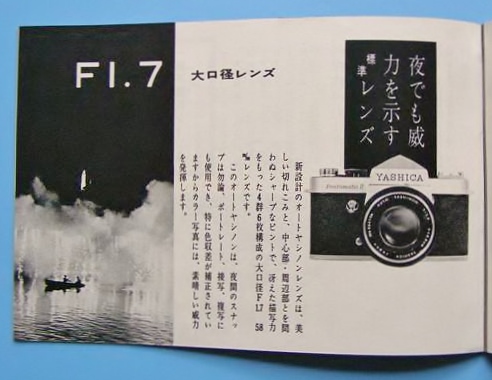
Brochure c1961

The first sighting of the Pentamatic II in a sales brochure for the Japanese home market.

We’ve yet to find an advertisement for the Pentamatic II in English and along those same lines, have yet to find the Pentamatic II in a sales brochure in English. The Pentamatic S replaced the model II less than a year after its release. The model S went back to using the original 5.5cm, f/ 1.8 lens that was on the original Pentamatic.

That makes the Auto-Yashinon 5.8cm, f/ 1.7 lenses one of the rarest of the early Pentamatic bayonet mount lenses.
06-12-2016 pentamatic II 2 (2)

Happy hunting!

Chris

Pentamatic vs. Pentamatic S – Yashica’s Heavyweights

The Pentamatic was Yashica’s first single-lens reflex (SLR) and was released in 1960 (May-June) timeframe. The Pentamatic S was released about mid to late 1961. Not much changed between the two – the S model added a built-in self-timer and most notably, a provision for mounting an exposure meter to the top right of the camera that coupled with the shutter speed dial. Other small changes were to add lugs for holding the neck strap (moving them from the extreme right and left sides of the body on the Pentamatic to a more typical front mounting on the S). Unseen from the exterior is a change to the focusing screen inside the pentaprism. The original fresnel screen in the Pentamatic was replaced with a split image screen in the model S. For me, that change makes the Pentamatic S much easier to focus and improves the brightness inside the viewfinder.

A look at both models shows these changes and the tiny bit of extra weight that the S carries over the original Pentamatic.

DSCF5402

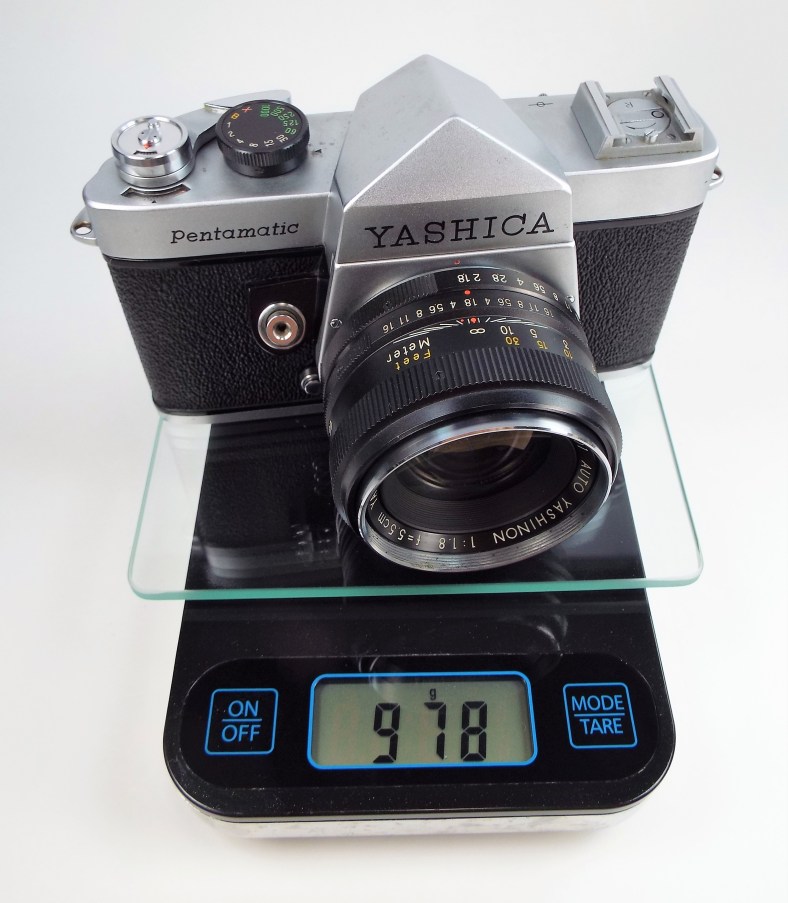
At 978 grams, the original Pentamatic is anything but a lightweight. (2.16 lbs)

DSCF5403

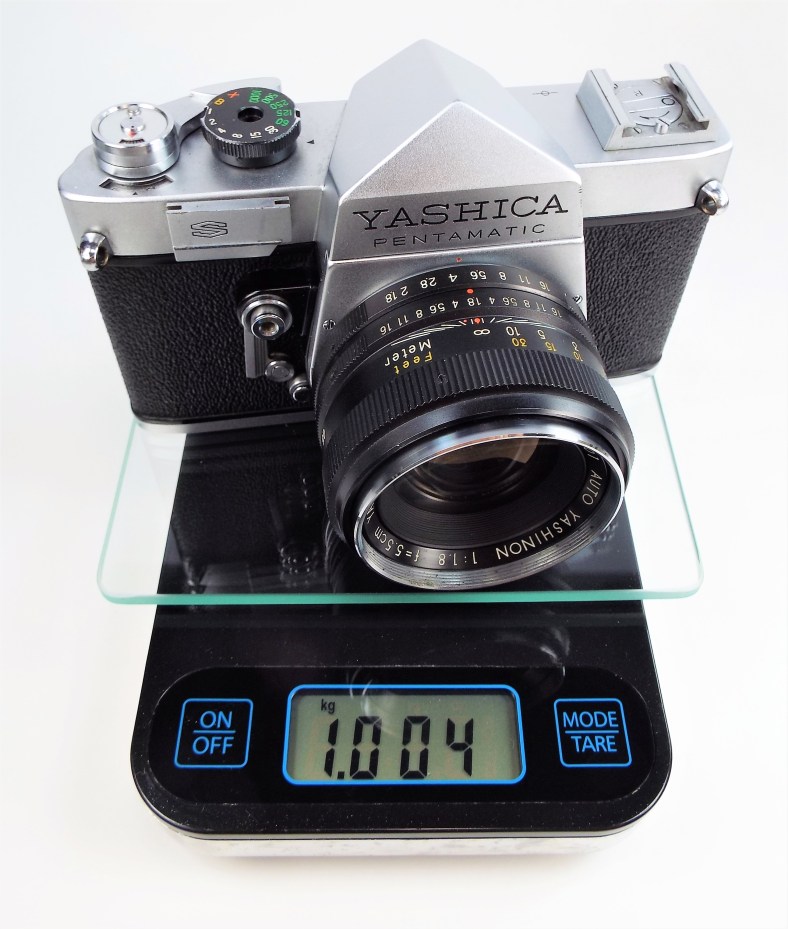
At 1,004 grams, the S shows the slight weight increase from the changes made between the two models. (2.21 lbs)

Both cameras are photographed with the same lens attached – Auto Yashinon 5.5cm f1.8 lens which was the standard lens that came with both models. Only the Pentamatic II (released in September 1960) came with a different lens. (5.8cm f1.7)

Compared to other SLRs from the same time period, the Pentamatic was a bit of a beast to tote around. The buying public never embraced these wonderful cameras and they ended their production run in less than 2 years.

Finding good looking (and still working) Pentamatics is a challenge for any collector with the Pentamatic II being especially difficult to find in any condition.

Of note, if you have an Asahi Pentax, Nikon F or Canoflex camera with the standard lenses from the late 1950s or early 1960s, we would love for you to let us know what their combined weight is. We could be way off in our assumption that the Pentamatic was significantly heavier than the other cameras of that era. Thanks!

Studio Camera: Fujifilm FinePix S9900W

Chris
Shop Dog

20464405042_dc5087757e_o (1)

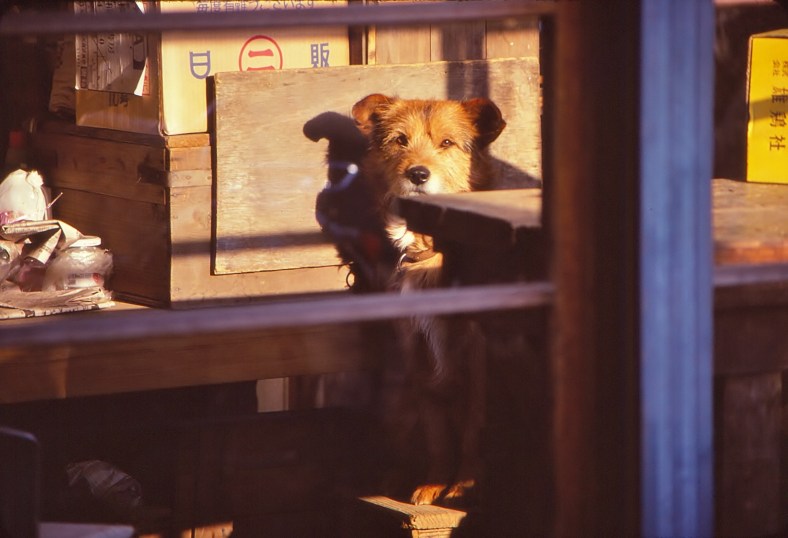
Shop dog keeping a watchful eye on me as I pass through his territory. 

Honmoku, Naka-ku, Yokohama late 1970s. One of my favorite images from that time period as the various shop dogs and cats were not easy to get pictures of. The late day sun helped to add depth to the composition.

Camera: Canon F-1 (1978 Version) with FD 80-200mm zoom lens on Kodachrome.

Chris
Fun with Fuji’s K-28 “Construction Camera”

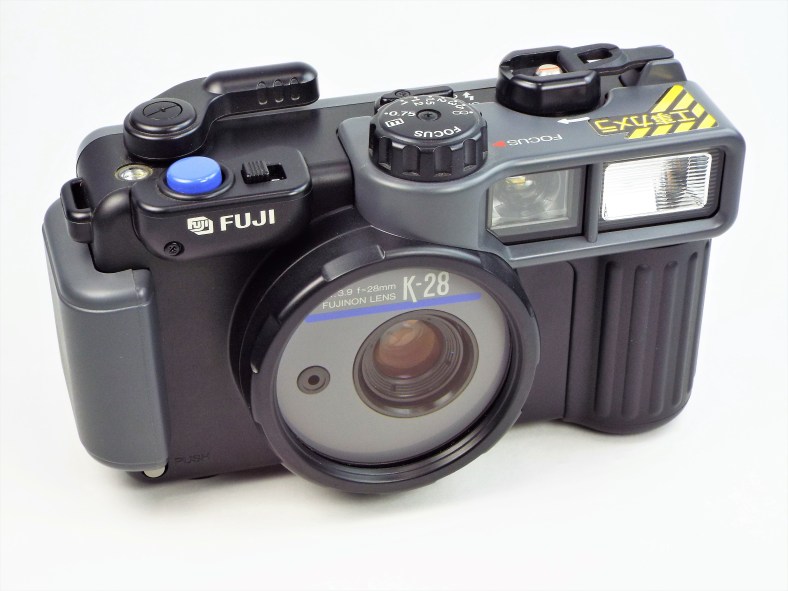
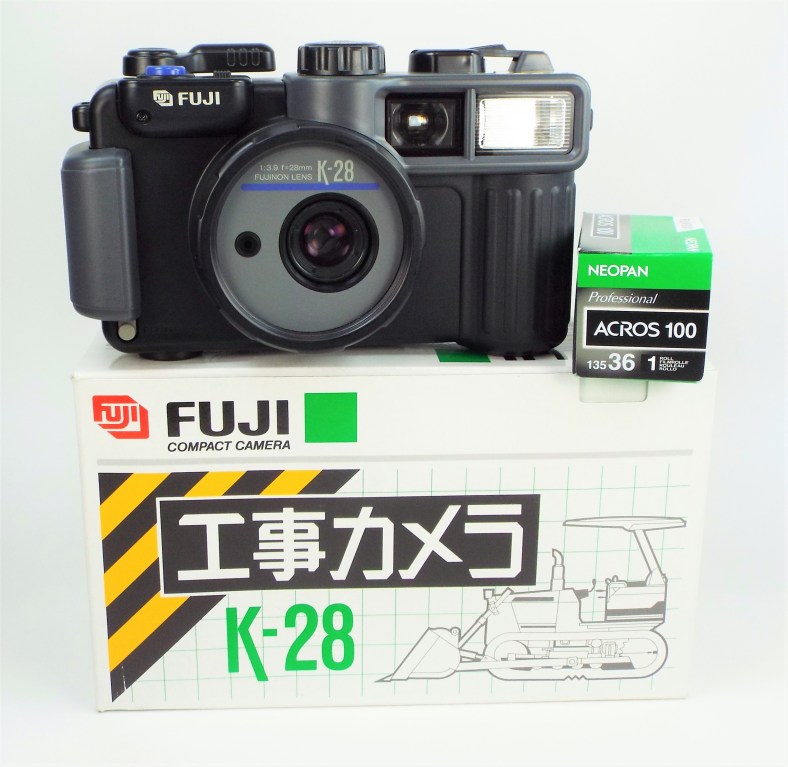
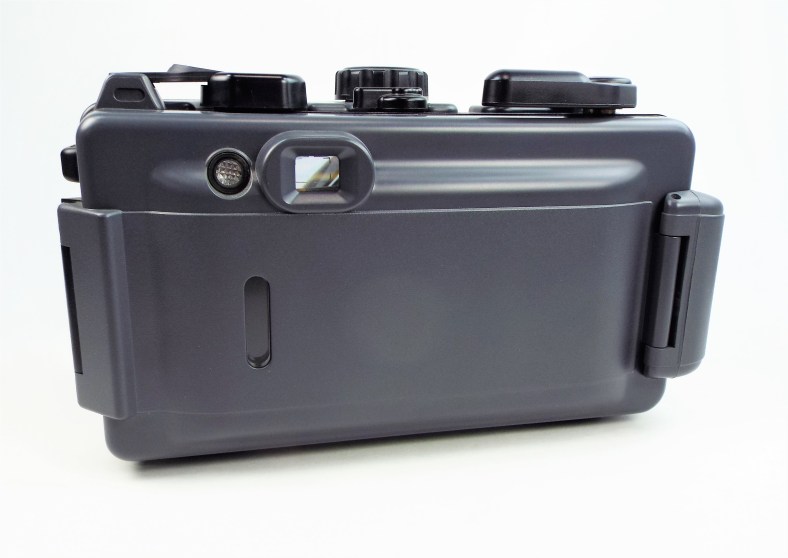
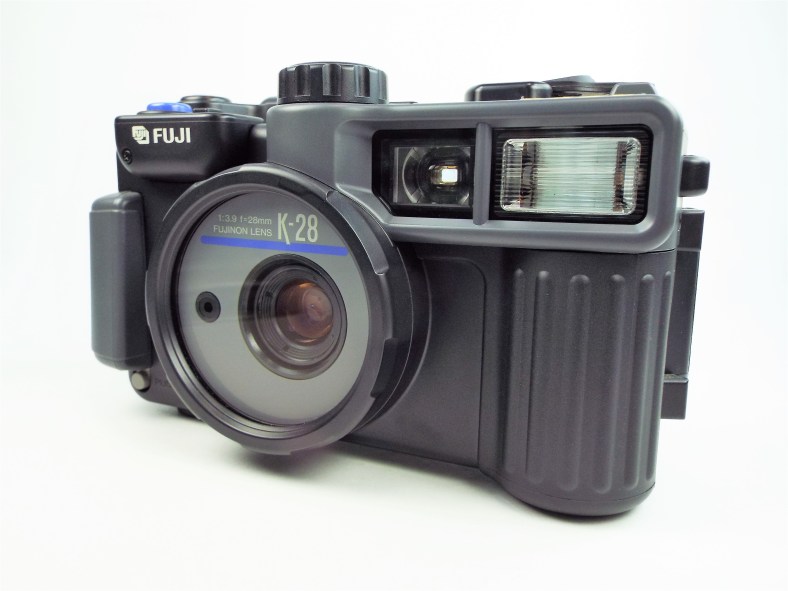
Here’s a camera you don’t see often – maybe never – Fuji Photo Film Japan’s Fuji K-28. A waterproof and dust/dirtproof 35mm compact camera. Designed for rugged use like on a jobsite or in the rain. All of the controls are sealed against the elements via tight fitting rubber gaskets and secure latching systems.

The camera gets its power from 2 AA LR6 alkaline manganese batteries. Here’s an interesting note from Fujifilm Japan: 

Apologies and Requests
Fujifilm “Construction Camera” For Customers

By the way, when the capacity of the batteries is not complete (for example, when new alkaline batteries are used with used alkaline batteries) in part of “construction camera” we sell at this time. It is extremely rare that hydrogen gas is sometimes released from the battery, the gas mixes with the air inside the camera, and it turned out that there was a possibility that the back cover of the camera could come off with a sound when using the strobe . December 8, 2000 – We would like to thank our customers for their continued patronage and appreciate their continued patronage.

Fuji Photo Film Co., Ltd

DSCF5375

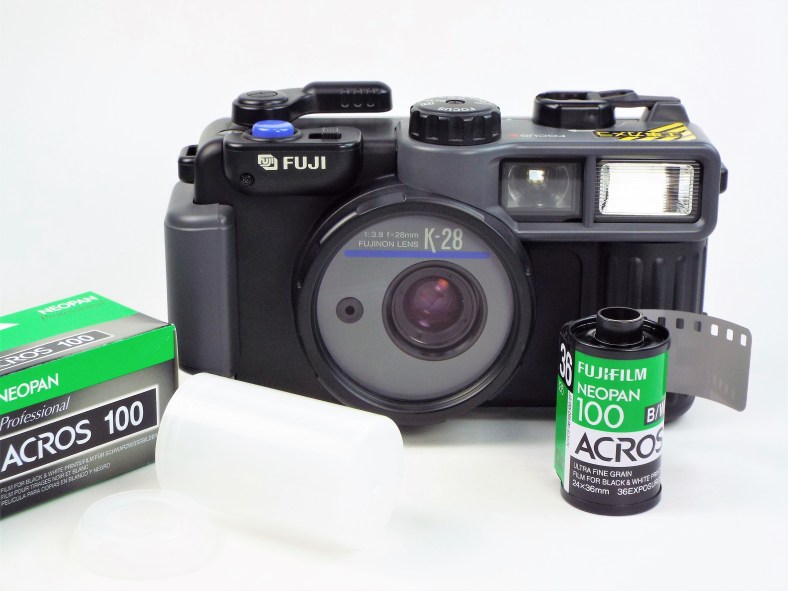
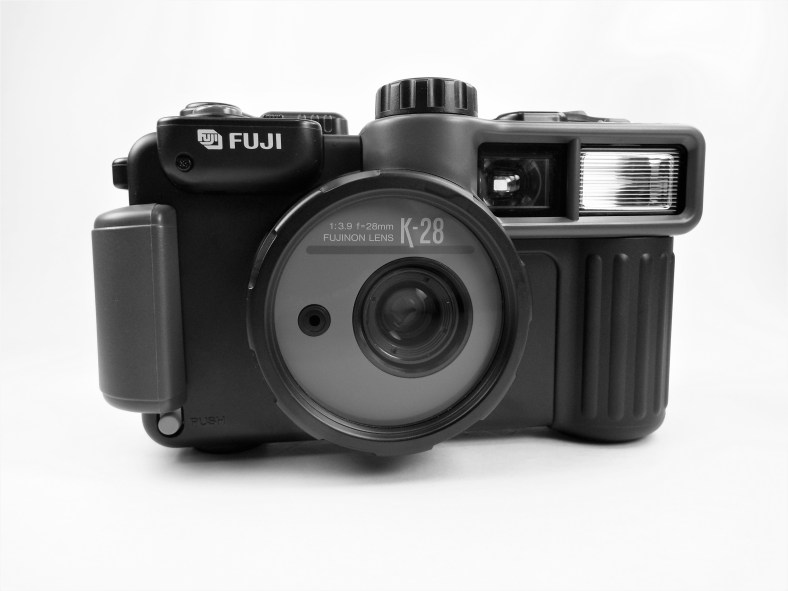
Besides being a way cool looking camera, this Fuji is more than capable where it counts. A sealed Fujinon f3.9 28mm lens with adjustable focusing and auto exposure with a set 1/100th of a second shutter. ISO auto set for film rated from ISO 100-400.

DSCF5371

DSCF5373

The Fujinon lens has 5 elements in 5 groups – closest focusing is 0.75m and the front glass is 4mm thick. The camera weighs in at 423g  and 467g with batteries.

DSCF5376

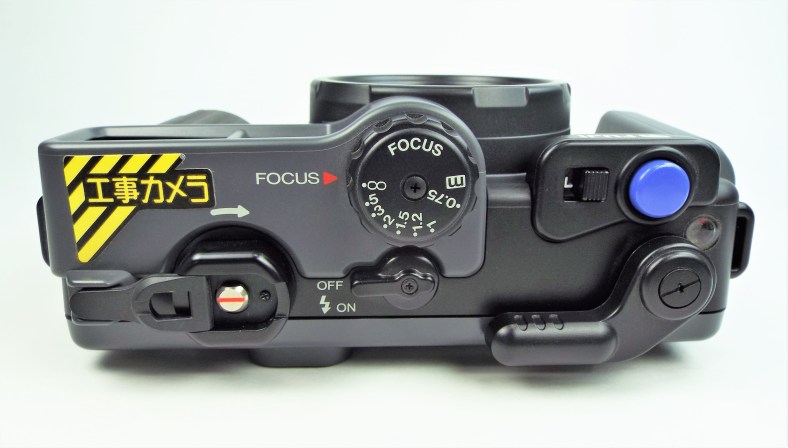
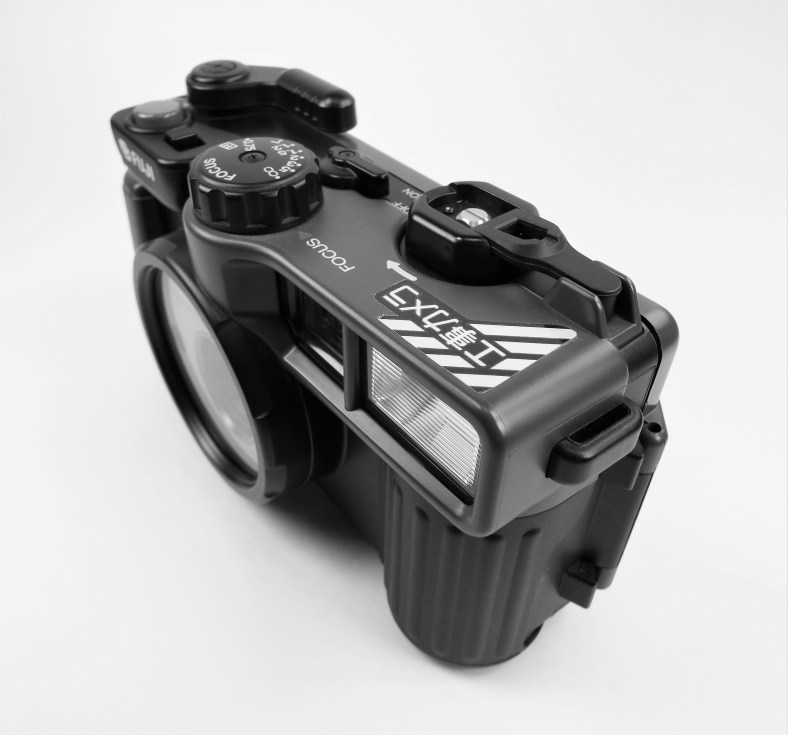
The focus scale is only in meters. The flash must be turned on via the well marked lever (center), film advance is manual by the lever on the camera’s right side and the shutter can be locked to prevent accidental exposures. The film rewind lever (left) gets tucked away to prevent damage and to help seal the top of the camera.

DSCF5377

DSCF5379

DSCF5391

Looks great in B&W!

DSCF5389

Nice lines.

DSCF5385

DSCF5386

DSCF5388

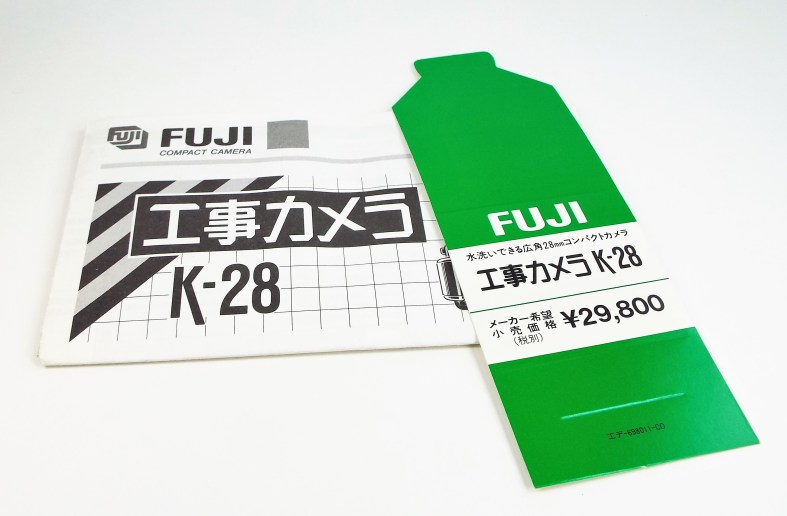
When the K-28 was released in June of 1991, the yen to dollar exchange rate was 138 JPY to the USD. So it listed for around $215 but was not for sale outside of Japan.

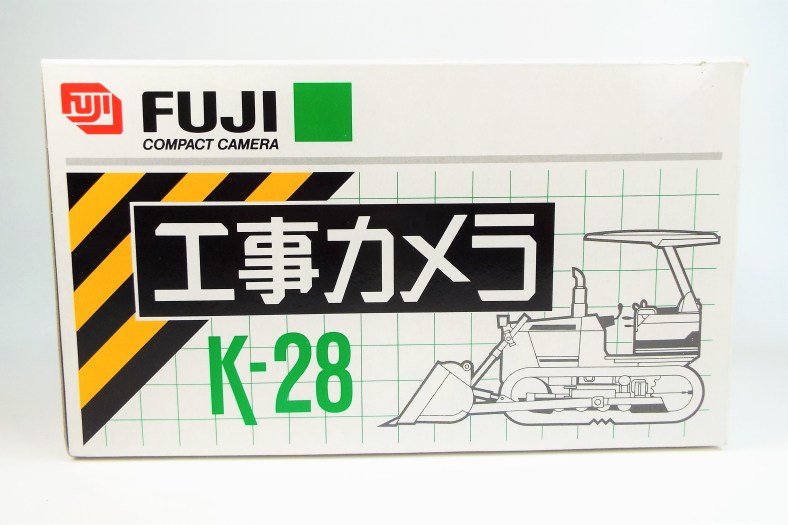
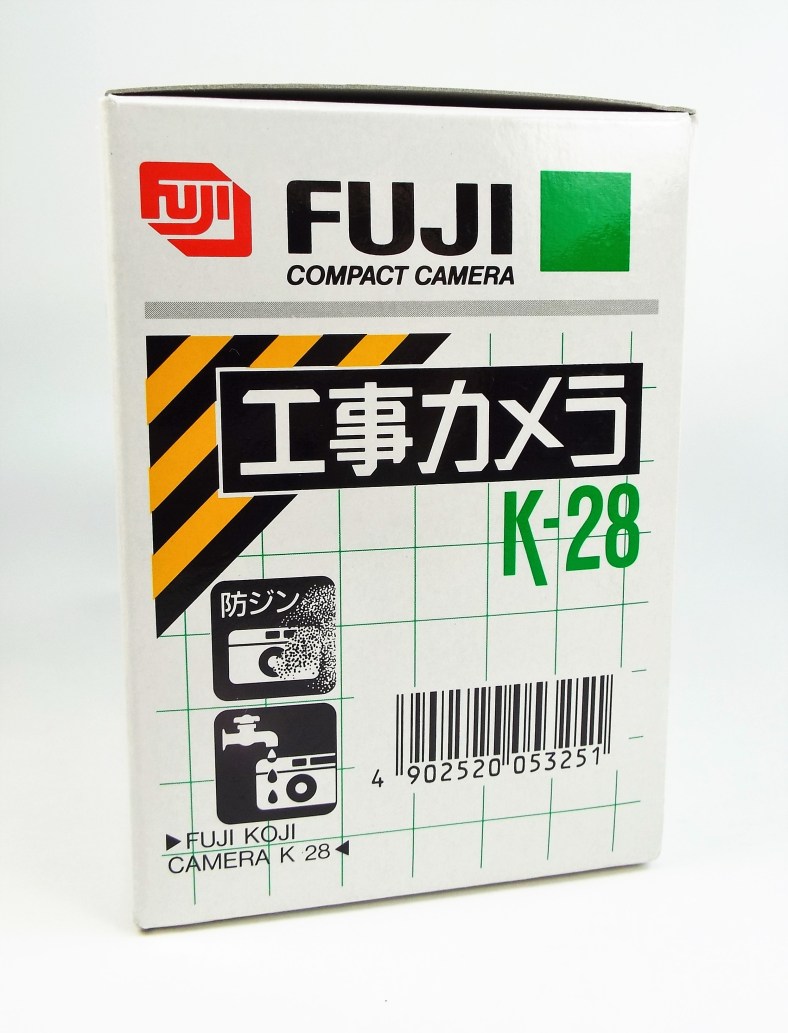
The K-28 certainly will hold a spot in our Fuji collection as it is basically brand new and in mint condition. The box, although a silly thing, is important to our collection as we like to collect camera sets as complete as possible. Besides, who wouldn’t want a bulldozer on their camera box!

If you find something incorrect in our post, please feel free to let us know what it is and we’ll gladly correct it.

Thanks for stopping by!

Studio Camera: Fujifilm FinePix S9900W

Chris
 

Fuji DL-150 35mm Compact Camera – 1986

Released in November 1986, the Fuji DL-150 entered into a hyper crowded marketplace filled with everything from cutting edge 35mm SLRs with capable autofocus and autoexposure modes to some of the most basic point and shoot cameras ever made.

We think this Fuji probably existed somewhere in the middle of the pack of simple AF compact cameras. We don’t have a handle on the price point of the DL-150 – the excellent build quality would suggest a steep list price.

DSCF5341

Since Fuji makes film, this set came supplied with a free roll of Fujicolor. It was a great way for Fuji to kick the yellow box and introduce their new customers to the quality of Fuji film.

Focusing on the DL-150 is automatic (infrared, active type) with autofocus memory. The shutter is a programmed electronic type with speeds of 1/30 to 1/500. ISO (DX Coding)is from 100-1600.

DSCF5343

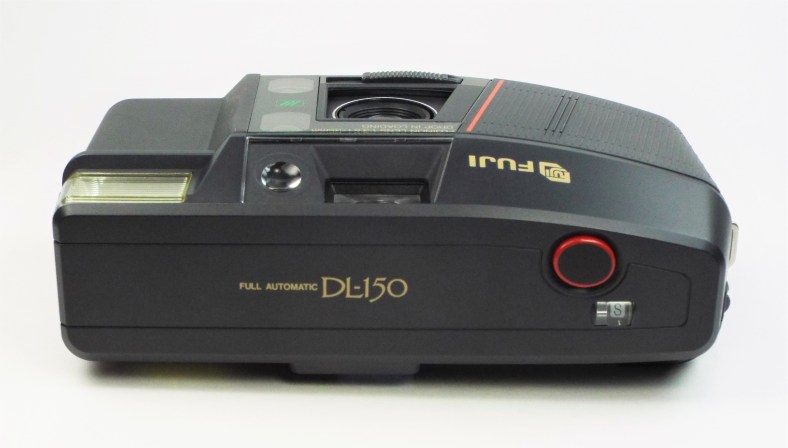
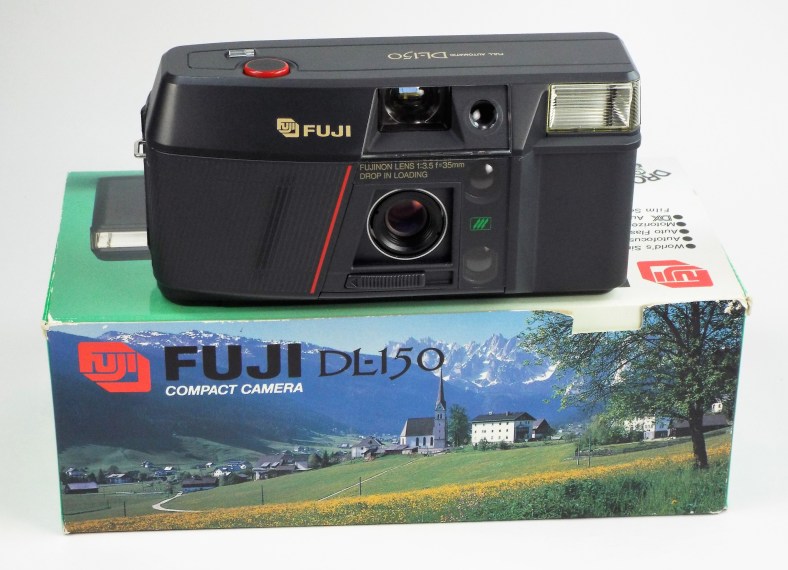
We like the styling of the DL-150… typical 1980s design but in our eyes it still looks fresh. It feels like Fuji used a higher quality plastic and the fit and finish is excellent. This model appears to have been built in Japan.

DSCF5344

Fujinon f3.5 35mm lens – 3 components with 3 elements. Closest focus is 0.85 m

DSCF5345

First time we’ve seen a JCII inspection sticker on one of our simple Fujis.

DSCF5346

Drop dead simple top plate!

DSCF5347

The shutter release button is sweet – a soft touch oval that feels great under your fingertip.

DSCF5349

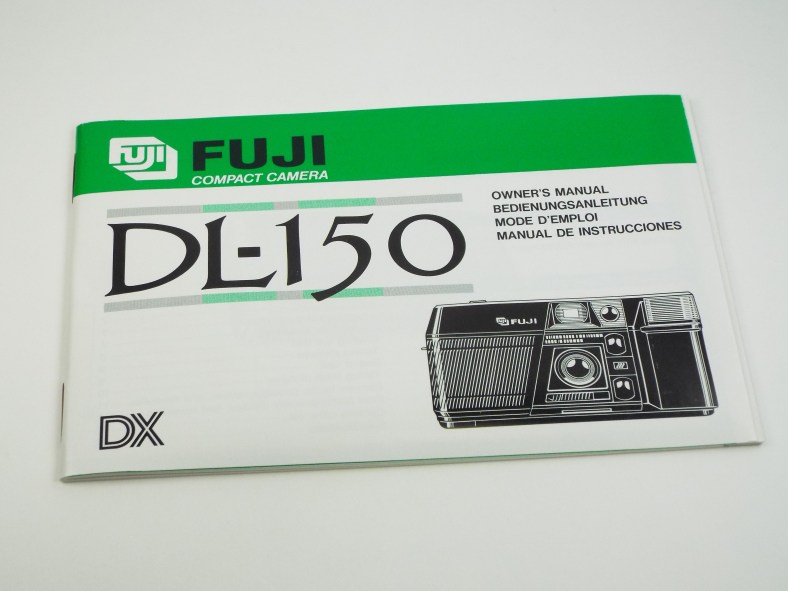
A real owner’s manual vice folded pamphlet.

DSCF5352

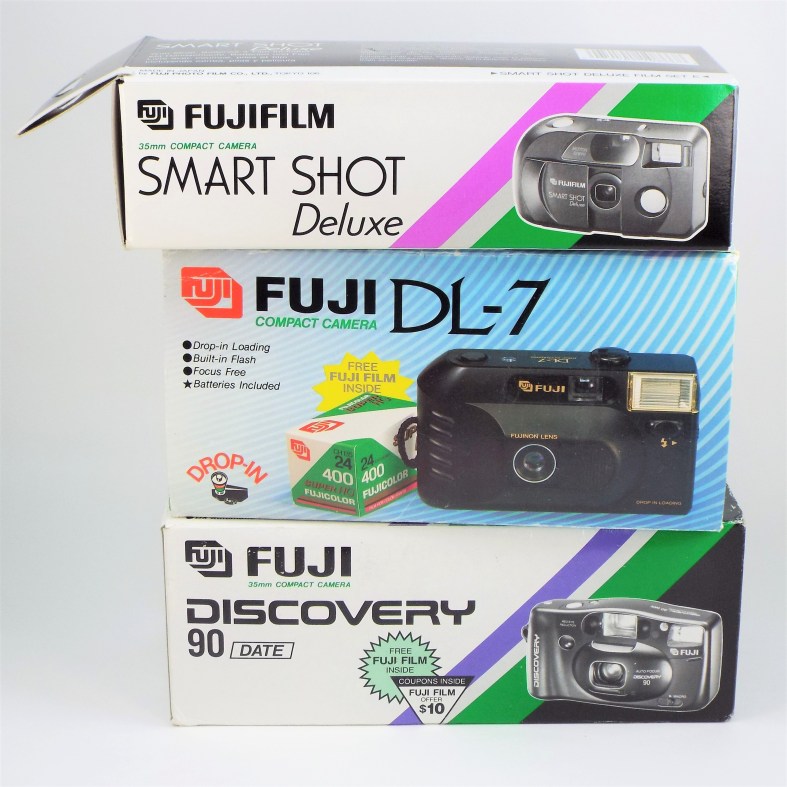
Colorful retail box. The Fuji DL-7 has a similar design.

Billed as the “world’s simplest loading system”! Features autofocus, auto flash firing, motorized film advance and end of roll rewind and DX auto film setting. No way to turn on the flash and the flash fires to “assist” you in dim lighting indoors.

Takes 2 AA batteries and weighs in at only 255 grams (without film, batteries or strap).

We haven’t field tested it yet but it’s on that ever growing list!

Thanks for your visit – if you find a nice clean DL-150 for a good price we recommend giving it a try.

Studio Camera: Fujifilm FinePix S9900W

Chris
Fujifilm Smart Shot Deluxe – 1994

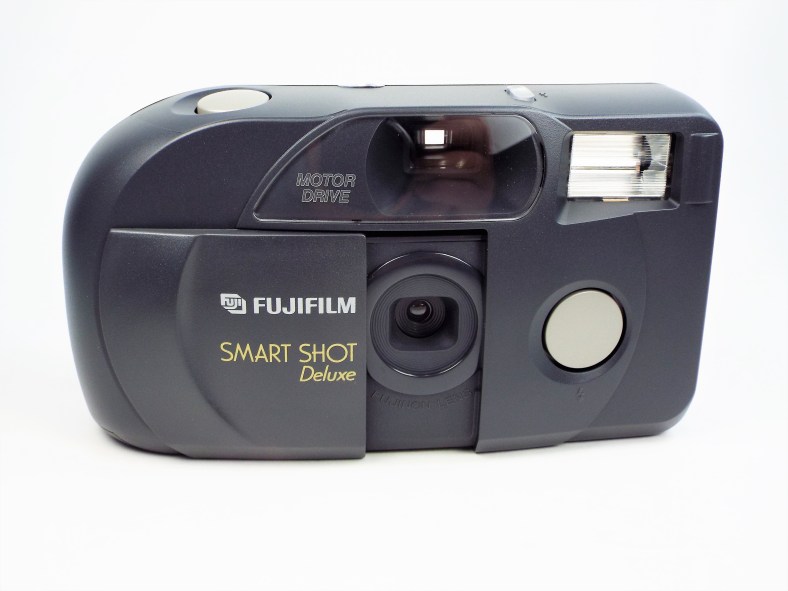
The Fujifilm Smart Shot Deluxe is one of the most basic modern cameras we have in our collection. It’s interesting to note that Fuji returned to using Fujifilm in its name with this camera vice using simply Fuji.
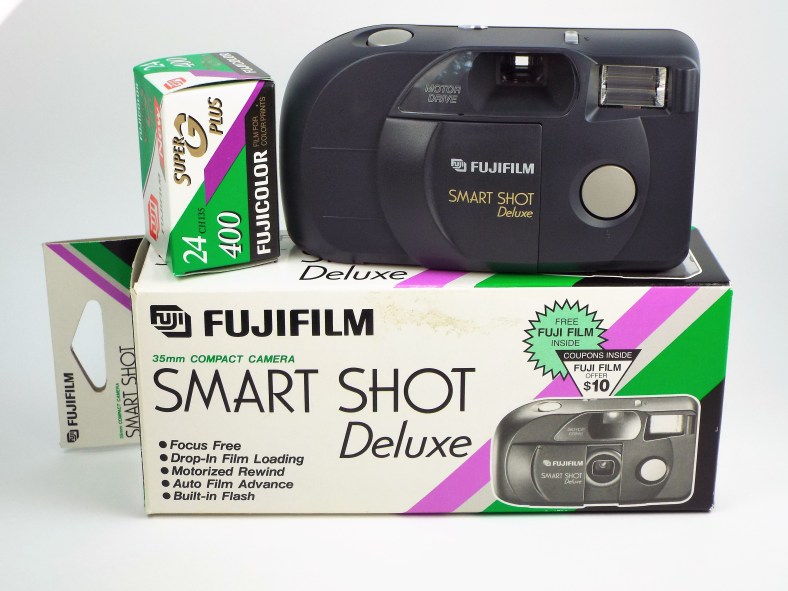
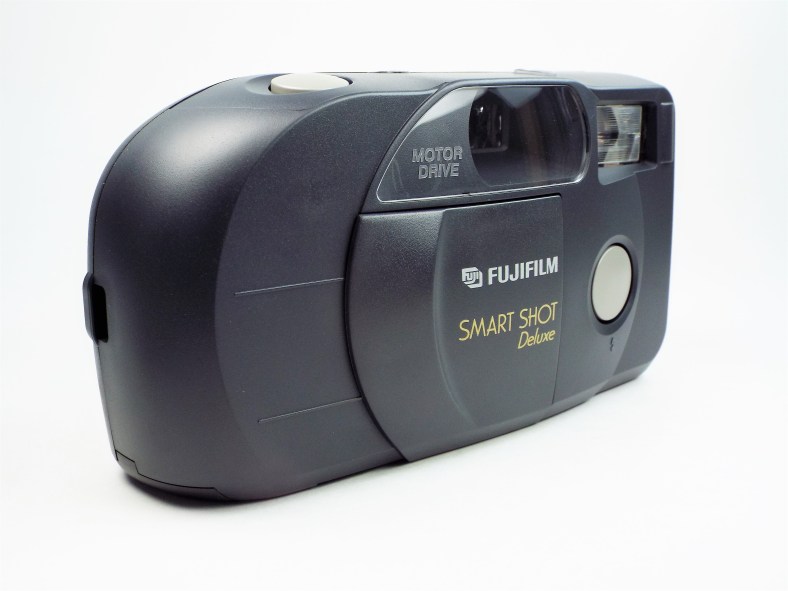
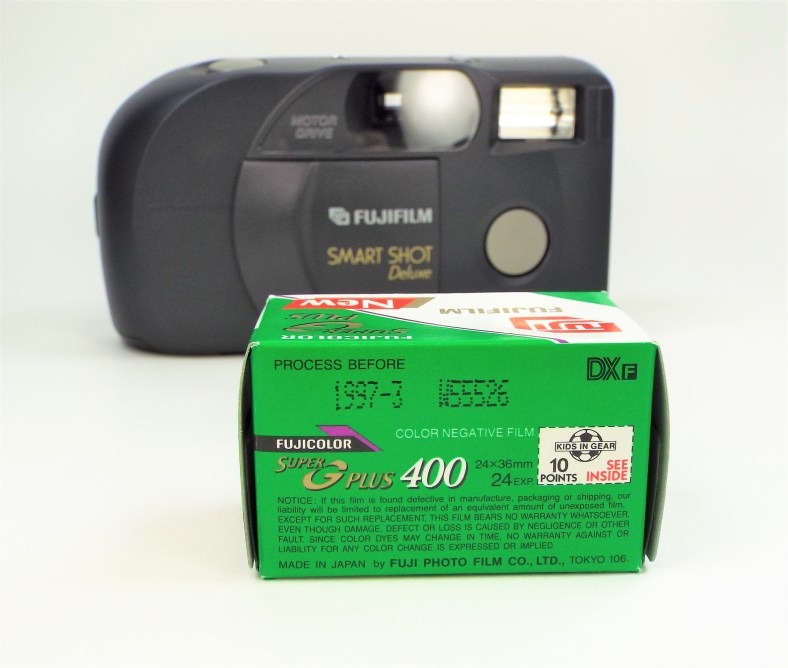
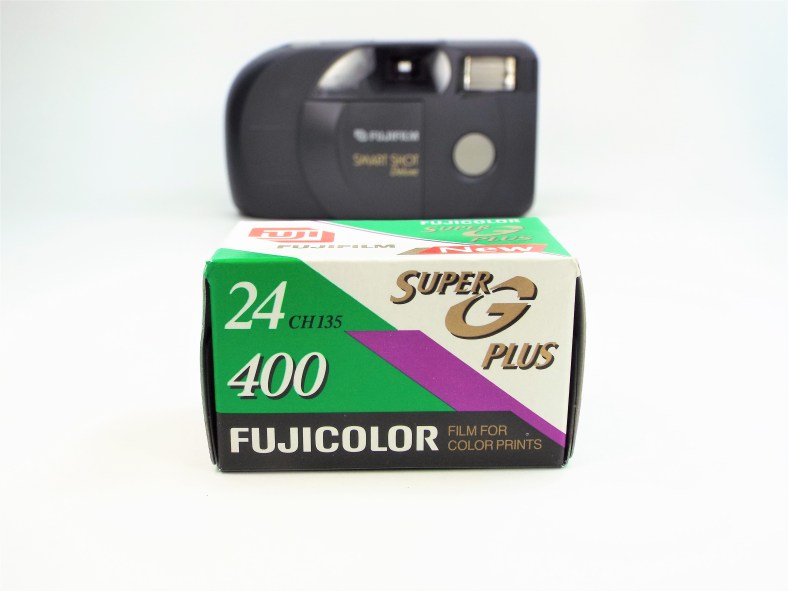
It was released in September 1994. It’s super small (compact) and lightweight (175g) but still featured drop-in loading and motor drive. It came packaged with Fujicolor Super G Plus 400 film and the box was designed with a hang tag for sale next to their films. The shutter is fixed at 1/100th of a second and the aperture is fixed at f8. Fixed focus is from 1.3 meters to infinity.

*** Please note: If you know what the U.S. (or MSRP in Japan) selling price was in 1994 that would be great! We have ¥12,000 which seems a tad high. Thanks ^.^

DSCF5307

One of the advertising tag lines for the Fujifilm Smart Shot series was – “a smart shot, a good price, a firm picture, a camera that looks good if you go for fun”! That may not be the best translation in the world but I think you get the idea.

DSCF5308

Fujinon f8 33mm plastic lens.

DSCF5313

Built-in motor drive and motorized film rewind. Sliding lens cover and crazy big flash button.

DSCF5311

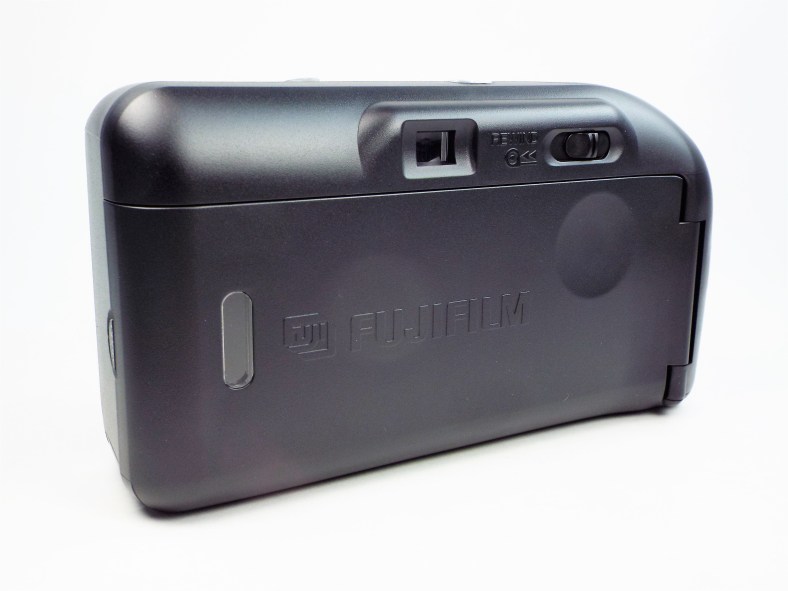
Film view window and a cool Fujifilm logo on the back.

DSCF5312

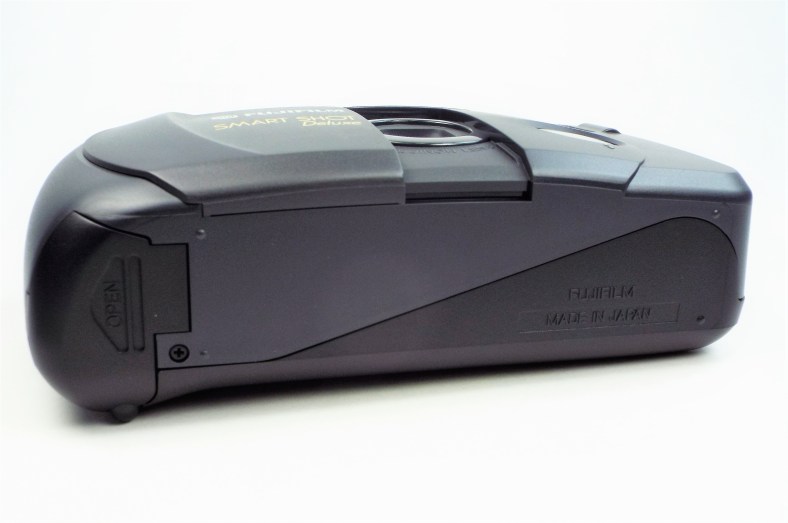
Still made in Japan at this point in time which is surprising as most of the simple Fuji cameras were made elsewhere.

DSCF5314

Back in 1994 when this camera set was released, it came with a fresh roll of Fujicolor 400 film and 2 AA batteries. The film is a touch out of date.

DSCF5315

The owner’s manual is more of a fold out pamphlet and shares info with the Clear Shot Plus. The oversized button on the front left of the lens is the flash button. You press it and hold it until the flash ready comes on then you push the shutter release button on the top right. It’s odd that the flash “on” button is so big – designed to make it look maybe more sophisticated or cute.

I’m sure Fuji sold a bunch as they were nearly a disposable camera with a free roll of film and came with rebates for additional savings on film purchases.

I would say it’s a bit better than average for a mid 1990s camera and free film never hurts sales!

Thanks for your visit!

Studio Camera: Fujifilm FinePix S9900W

Chris

Fuji’s Pet 35 – 1959

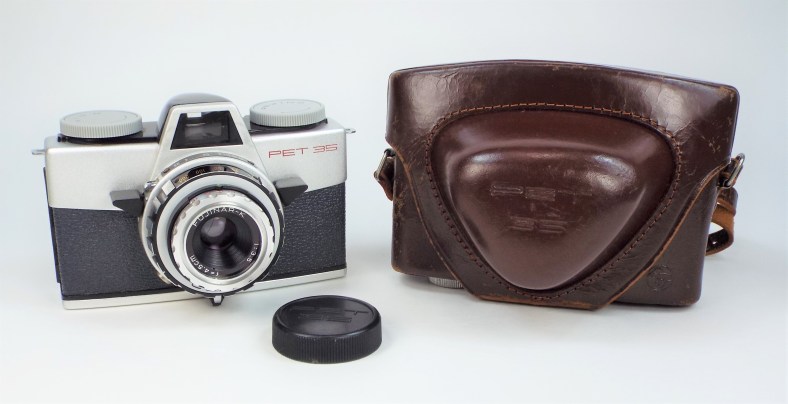
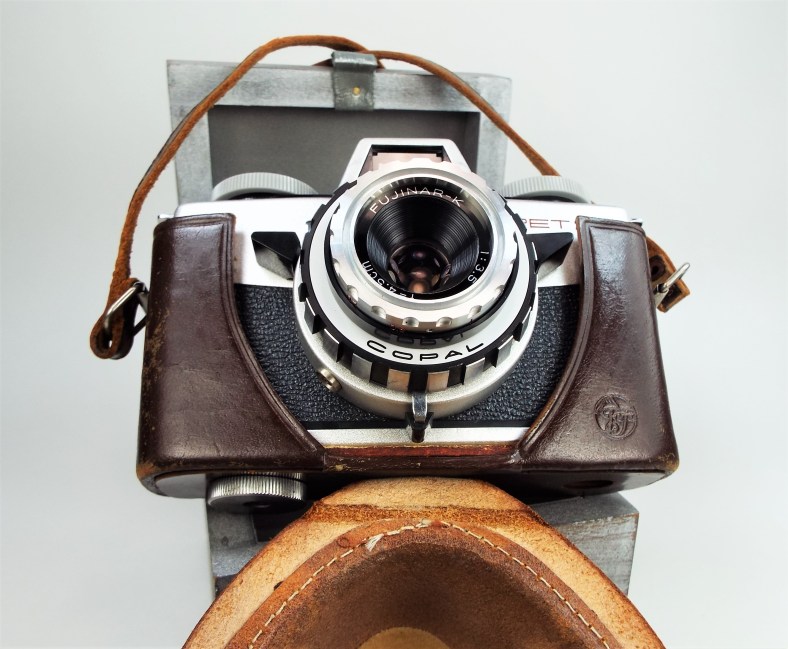
Fuji Photo Film Company’s Pet 35 was introduced in 1959. As best as we can tell, the Pet was only available in the home market. Few nice examples exist today and even fewer with their original leather case.

Here’s an example of a very popular camera for Fuji during the late 1950s and early 1960s.

DSCF5295

DSCF5296

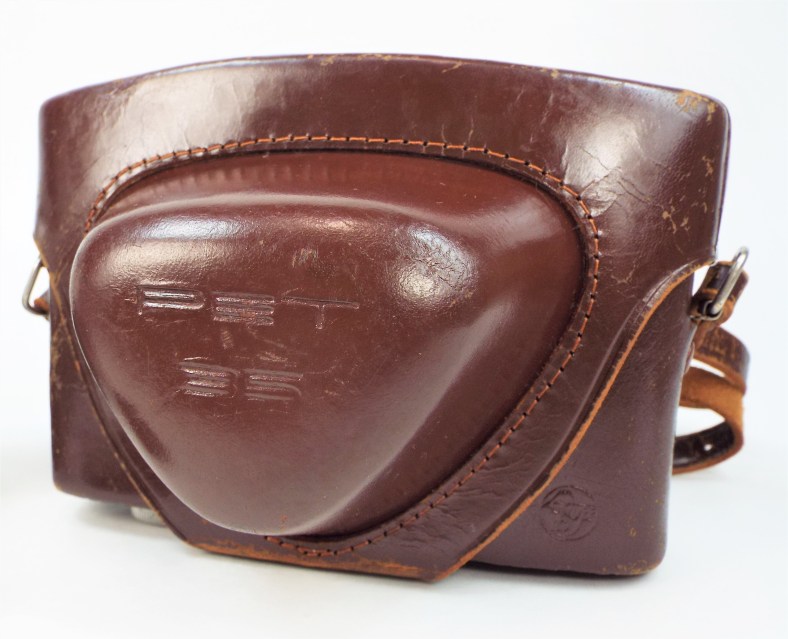
A Pet 35 leather case in all of its 1950s glory!

DSCF5306

The Pet 35 fits snugly into its leather case – the front does not detach so it always flops around (and weakens the crease).

DSCF5298

One of the coolest logos around.

If you run across a nice Fuji Pet 35 don’t pass it by. They are very much a real 35mm camera with excellent qualities – a glass lens with selectable apertures and adjustable focus. We haven’t run a roll of film through it yet but it’s on our list.

Camera: Fujifilm FinePix S9900W

Chris

Yashica “J” Series of 35mm SLRs – 1960s

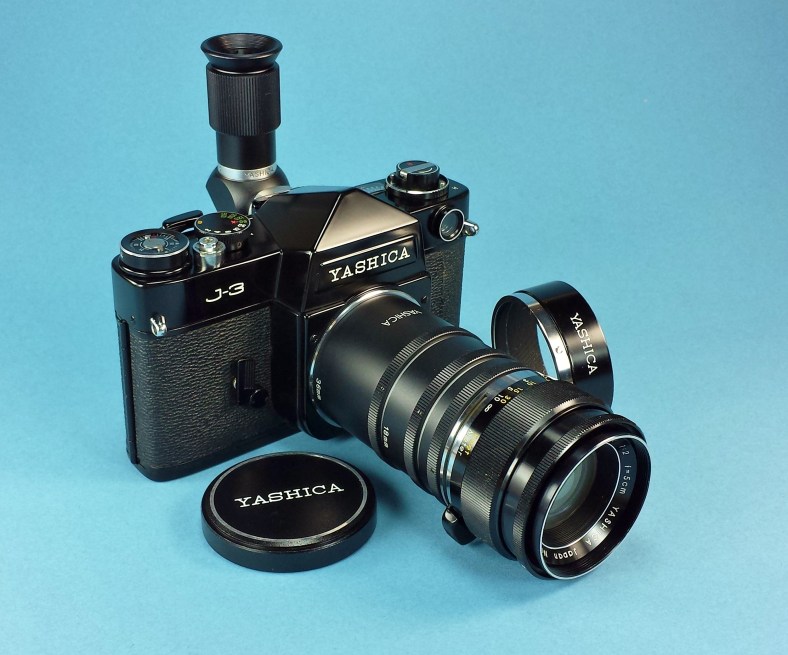
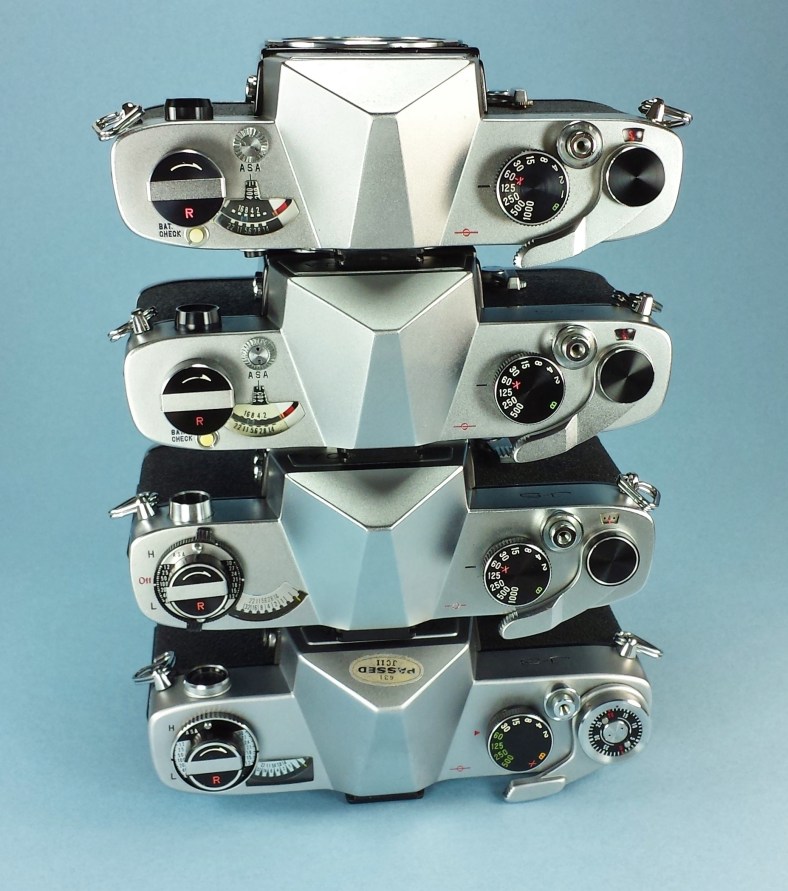
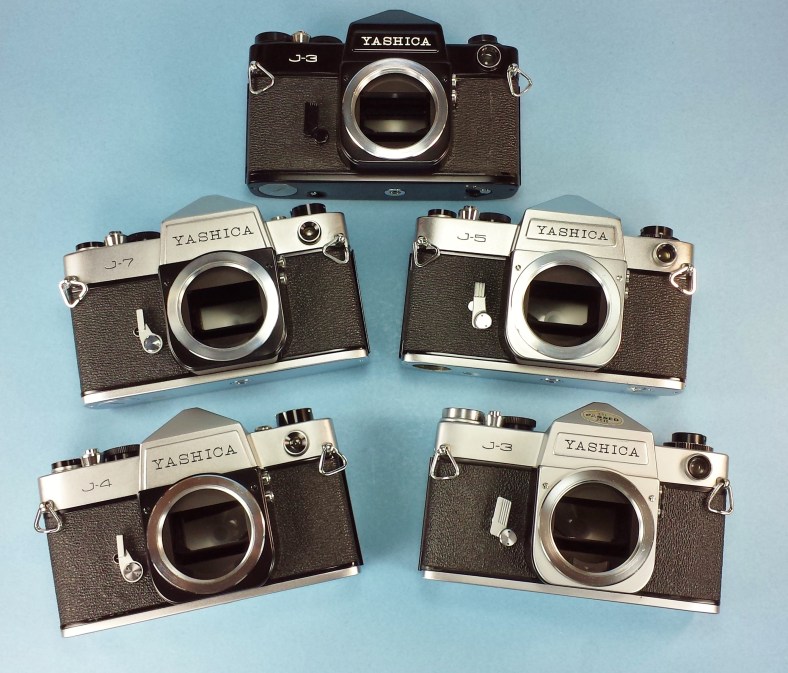
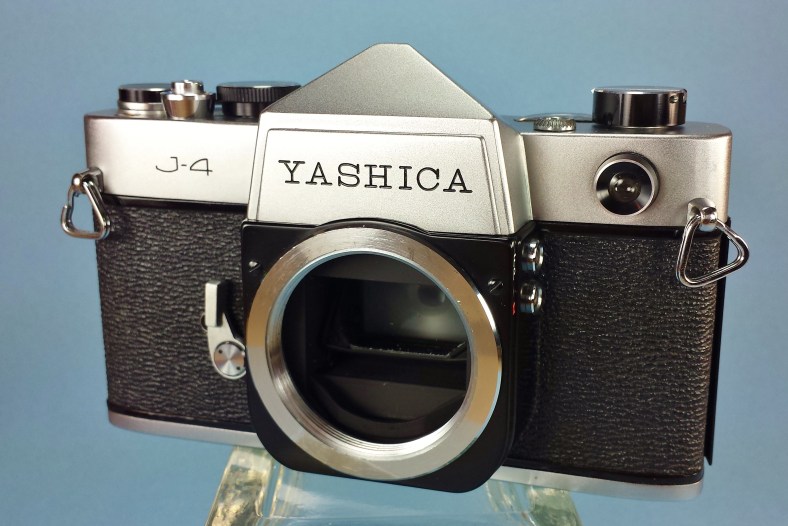
The Yashica ‘J’ series of 35mm SLR film cameras. Top body is the J-7, next is the J-4, then the J-5 and finally the first one in the series the J-3. These were heavyweight cameras in their day…the best (for the most part) that Yashica produced from their factory in Nagano Prefecture (Shimosuwa).

18148859756_47887c898d_o

Produced in 1962 to around 1967 to early 1968. The black body J-3 was Yashica’s first 35mm SLR ‘Pro Black’ camera. They were released in the following order… J-3, J-5, J-4 and J-7. These cameras feature lots of brass and glass. They also represent Yashica’s first SLRs with built-in exposure meters. TTL exposure metering was just around the corner for Yashica after the release of the J-7 in the form of the TL Super.

18171648782_0bb09fdce8_o

16358708177_7df772c4d4_o

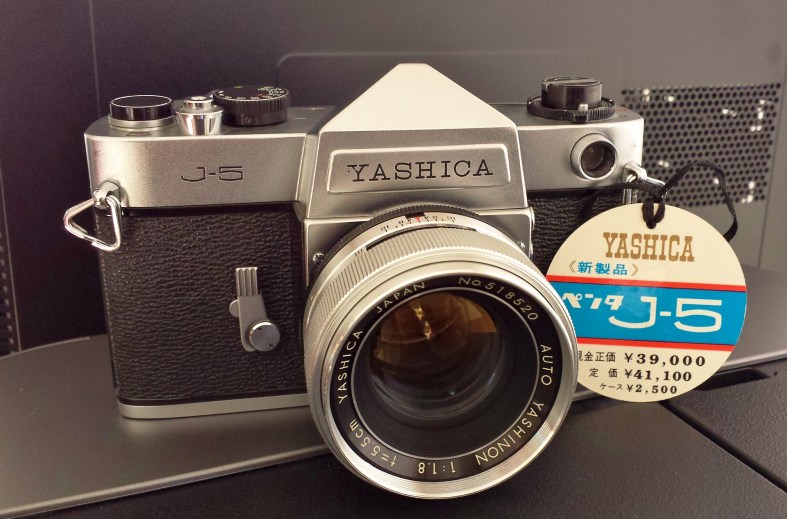
The J-5 was super popular in the mid 1960s.

15954848841_c16d47ab60_o

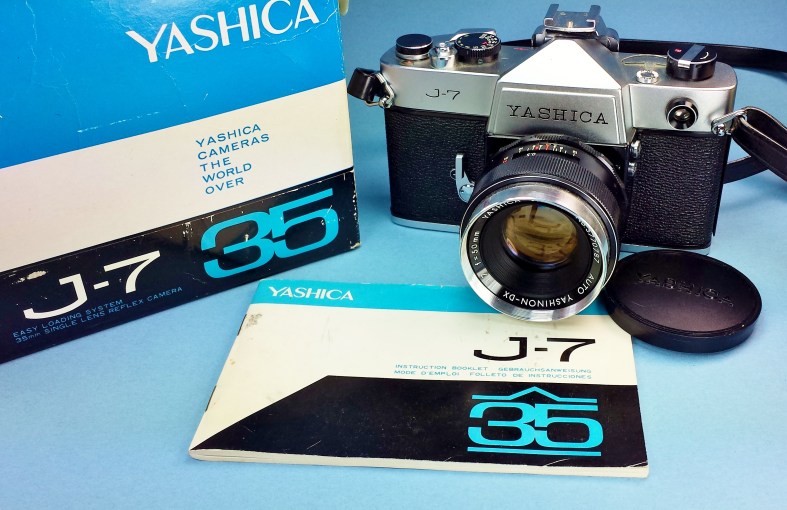
Another tough one in the series to find complete and in mint condition.

17389471134_d7a33a381e_o

One of the harder ones in the series to find in mint condition.

16148830641_bdc0bbed4c_o

A J-3 all set for just about anything.

Thanks for your visit.

Chris