Fuji Photo Film – Fuji Pet 35

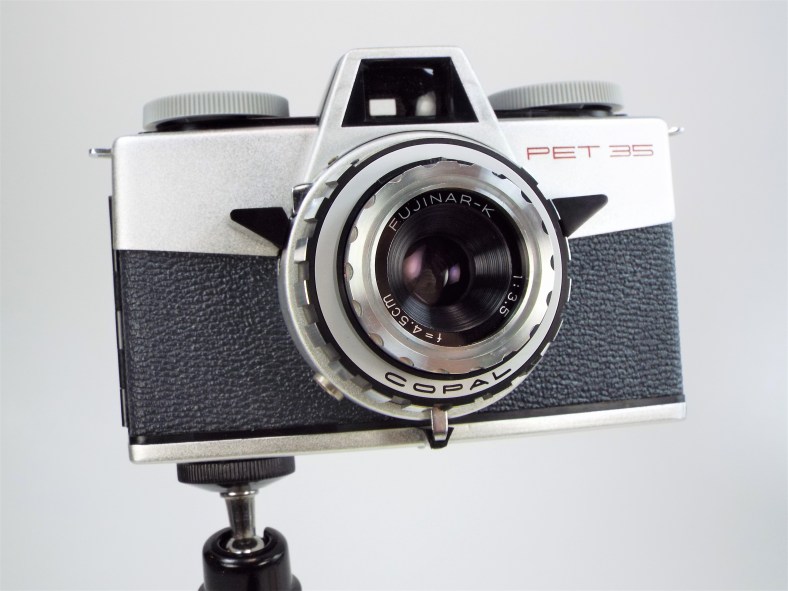
From 1959, Fuji Photo Film Co., Ltd. follow-up to their widely popular Fujipet 120 film camera. The Pet 35 took advantage of the growing popularity of 35mm photography – plus it’s a great way to sell more film!

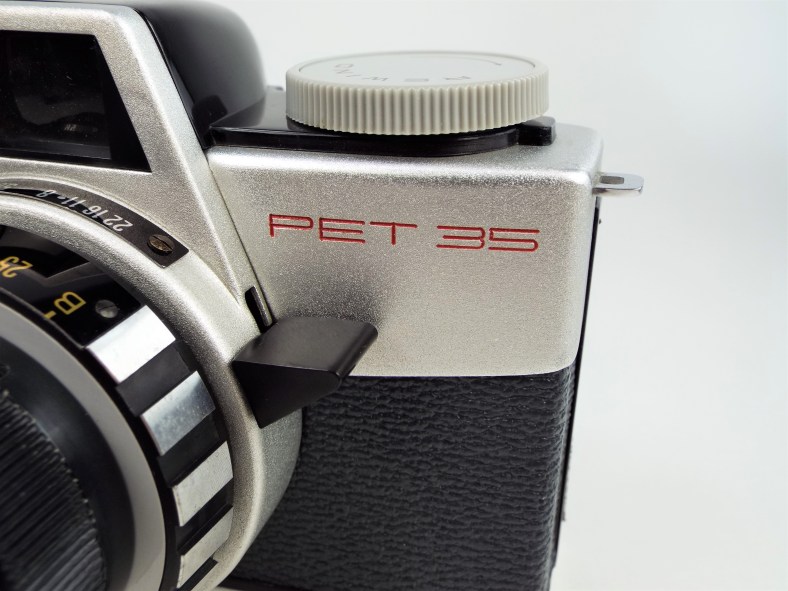
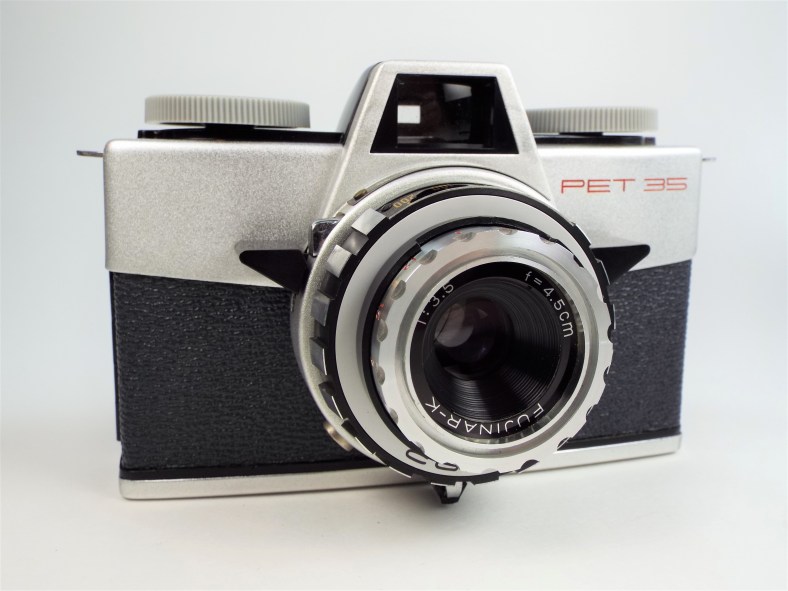
The Pet 35 was way more sophisticated than the Fujipet – but retained the funky charm and quirkiness of the original. Since the Pet 35 is not a common camera, we’ve presented a visual tour of our almost mint condition Pet 35.
DSCF5186

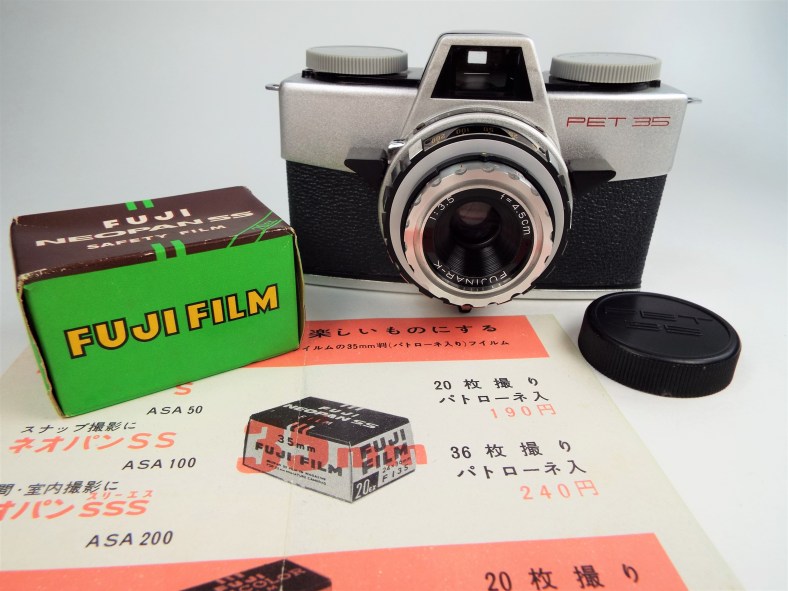
Original set as found. We have the leather case too.
DSCF5188

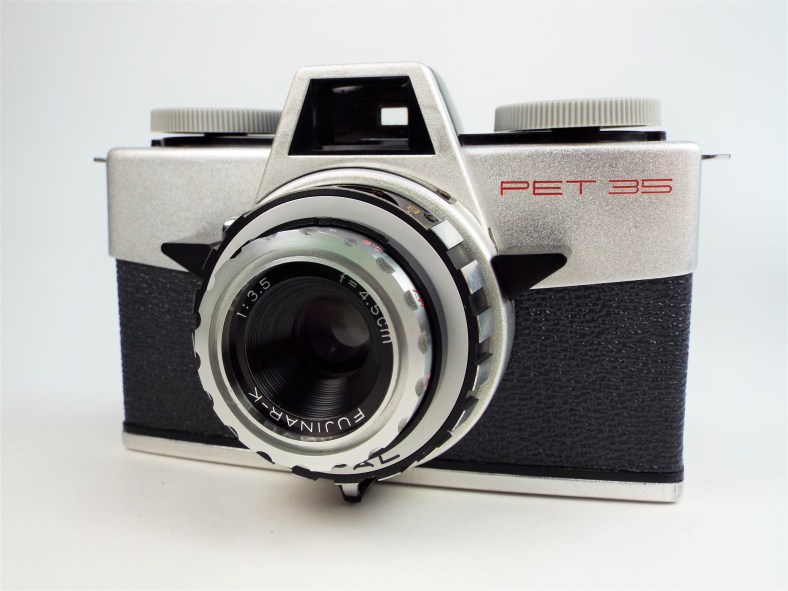
The lens is a Fujinar-K 3 element glass lens – 45mm with a maximum aperture of f/3.5 with closest focussing to 0.5 meters.
DSCF5189

The lever to the right of the lens cocks the shutter and the left lever trips the Copal B leaf shutter.
DSCF5190

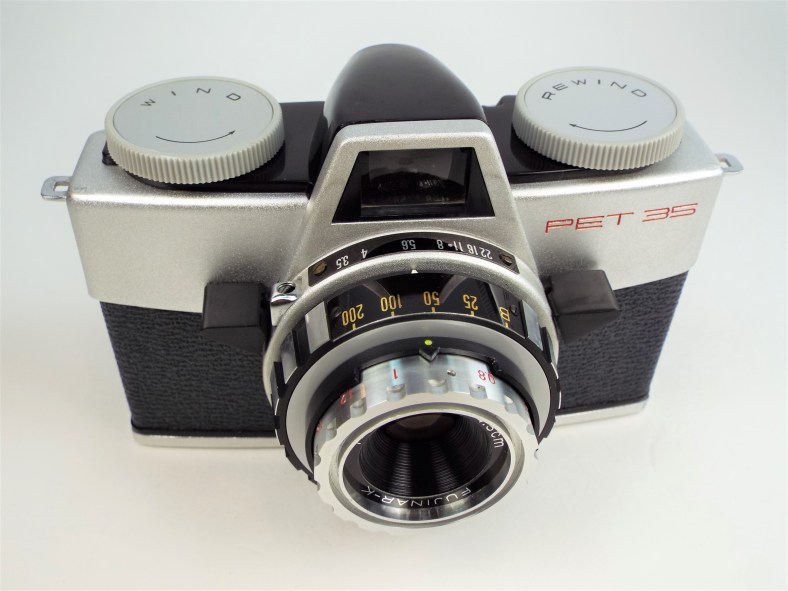
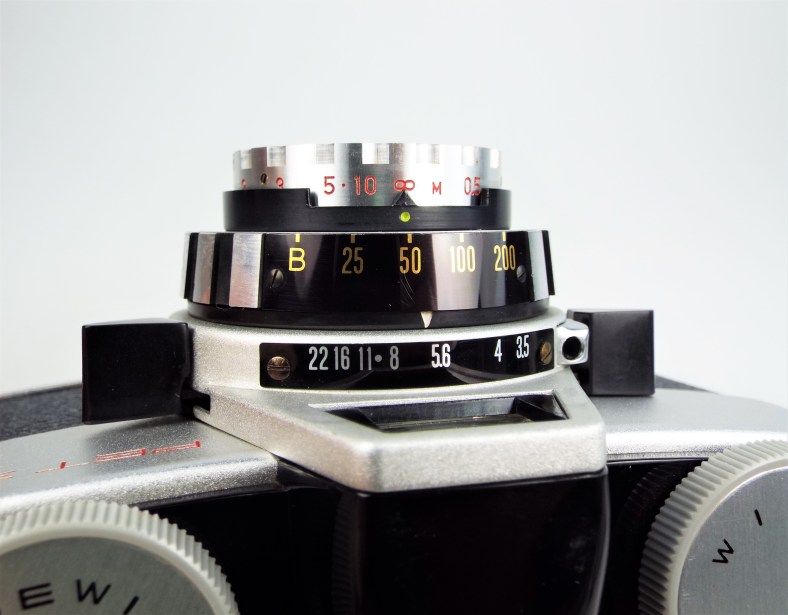
The Copal shutter features speeds of B, 1/25, 1/50, 1/100 and 1/200 of a second.
DSCF5191

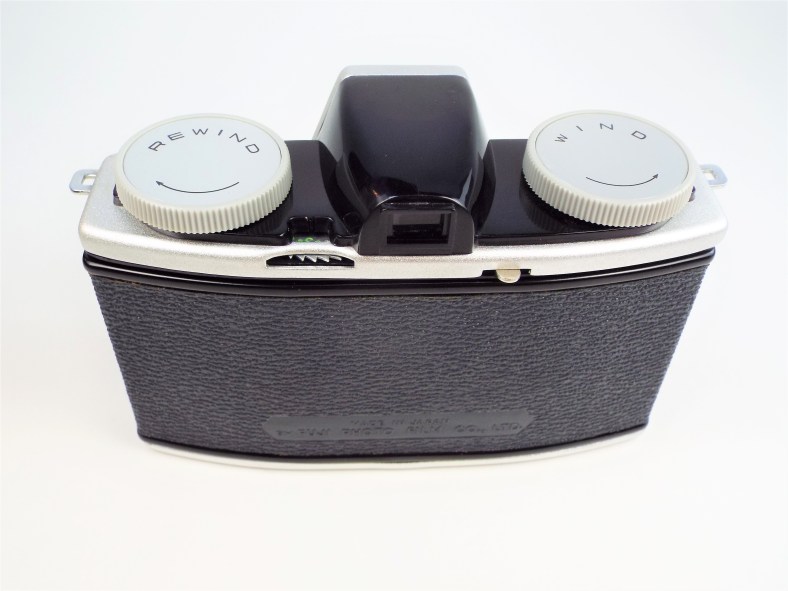
In keeping with the funky design – two oversized knobs that left no doubt on how to operate them.
DSCF5192

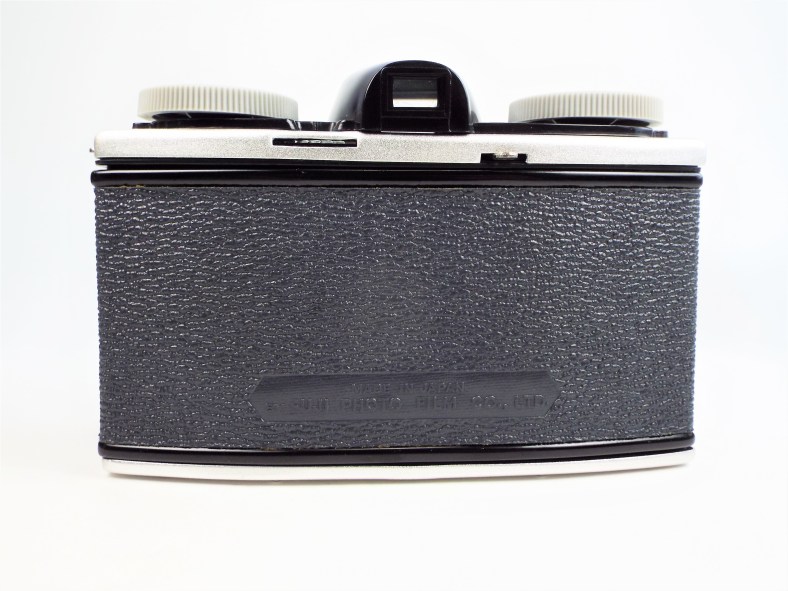
The body is dark gray on this Pet 35.
DSCF5193

Outer ring is the focus adjustment, next is the shutter speed selector and finally the aperture settings.
DSCF5195

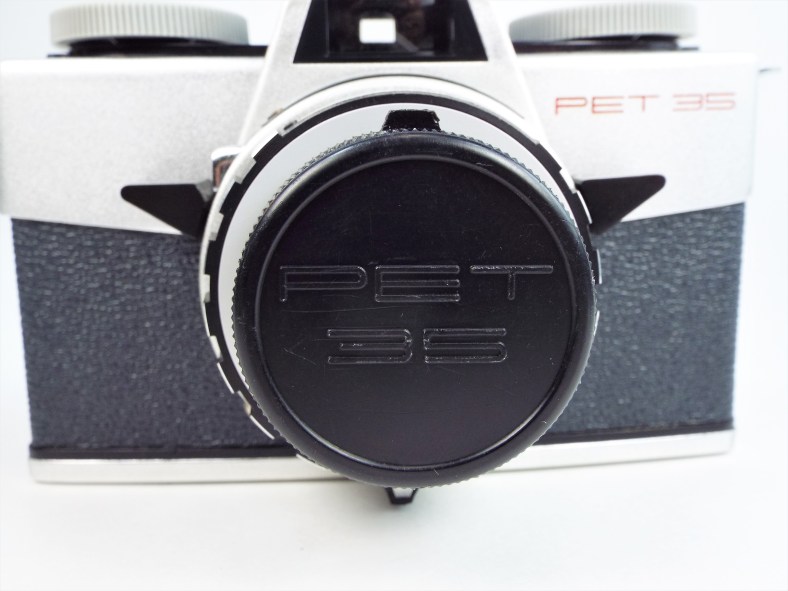
The original Pet 35 lens cap.

DSCF5196

Nicely detailed and finished.

DSCF5197

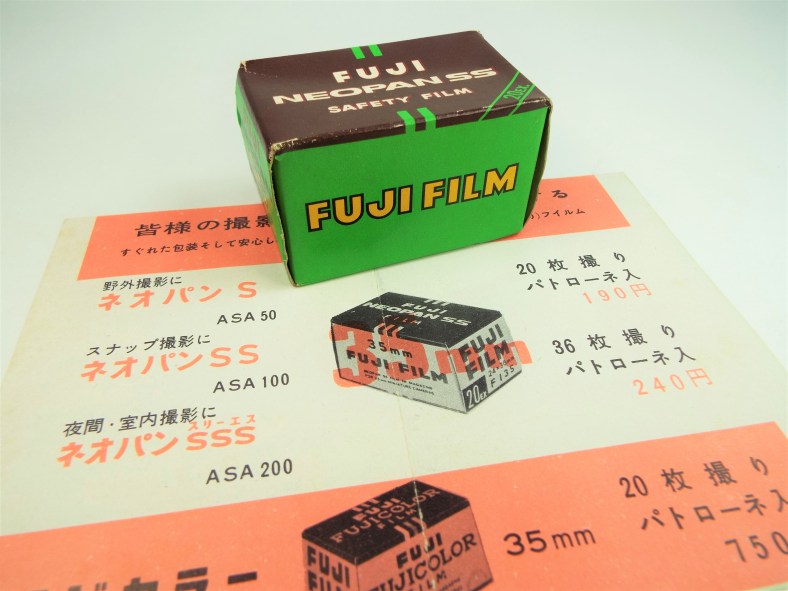
Early 1960s Fuji Film Neopan SS – ASA 100. How about film for only ¥190!
DSCF5202

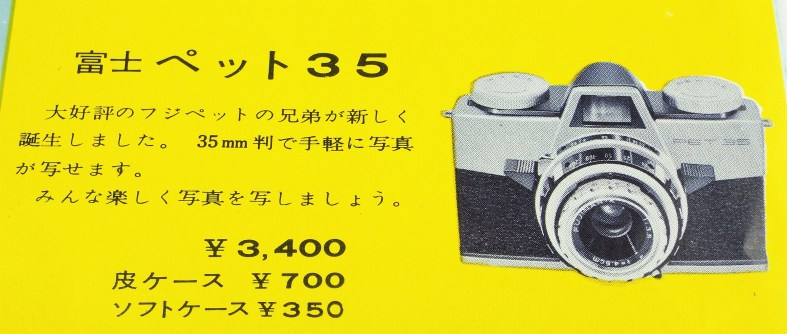
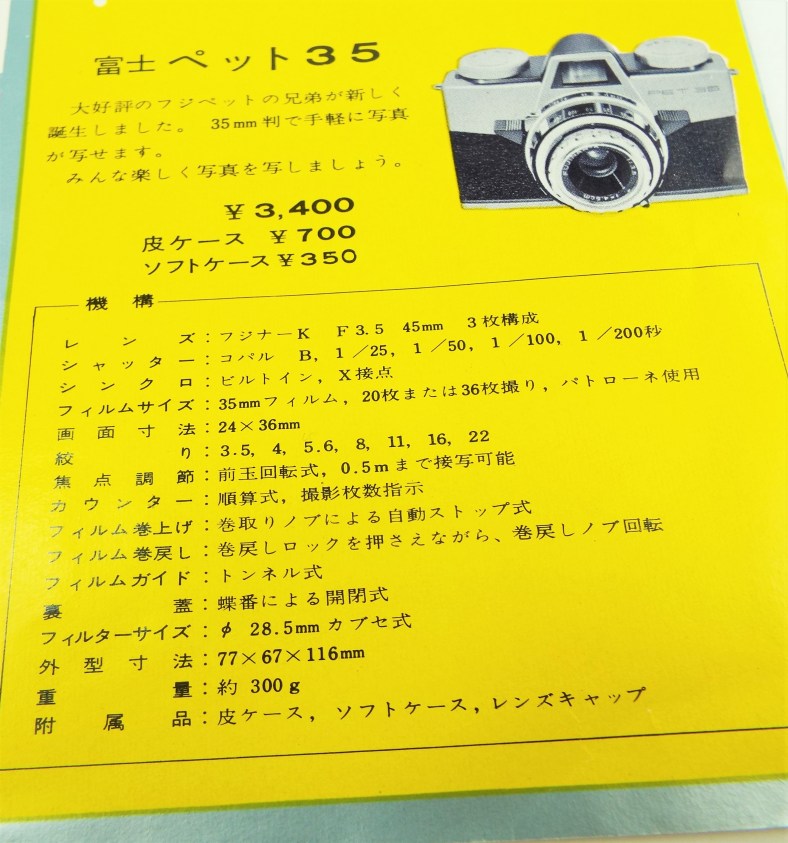
Original selling price was ¥3,400 – the leather case sold for ¥700 and a soft case was available for ¥350
DSCF5200

Original sales brochure specs.

DSCF5208

The viewfinder is bright and clear – and big for such a small camera.
DSCF5207

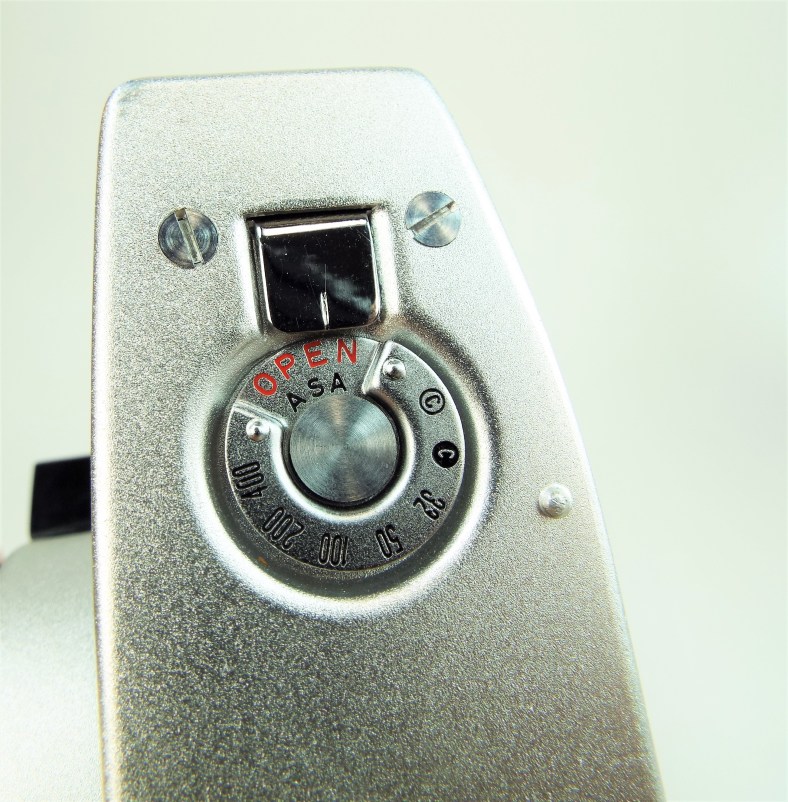
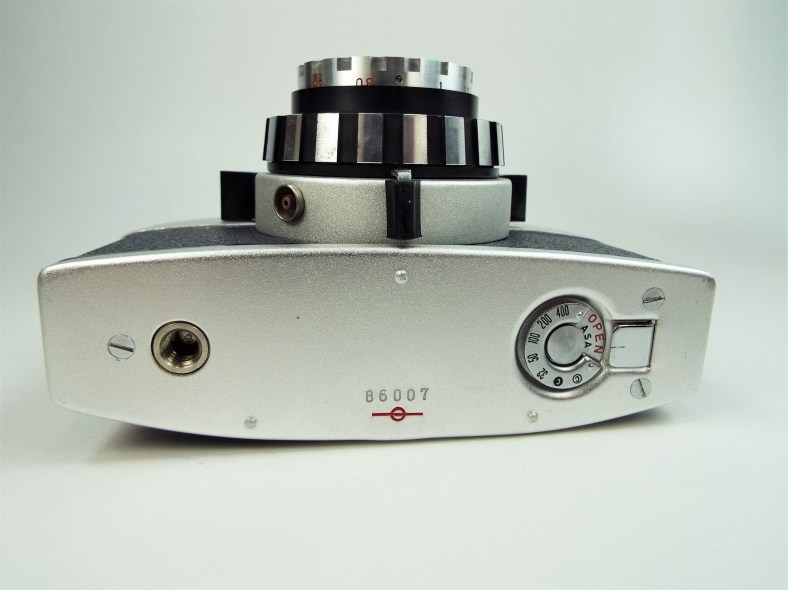
ASA reminder scale and film back release.
DSCF5206

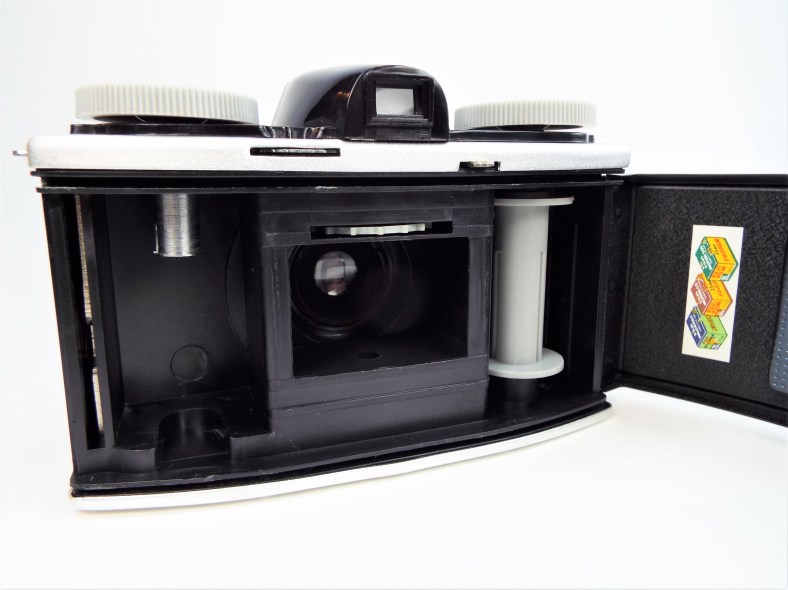
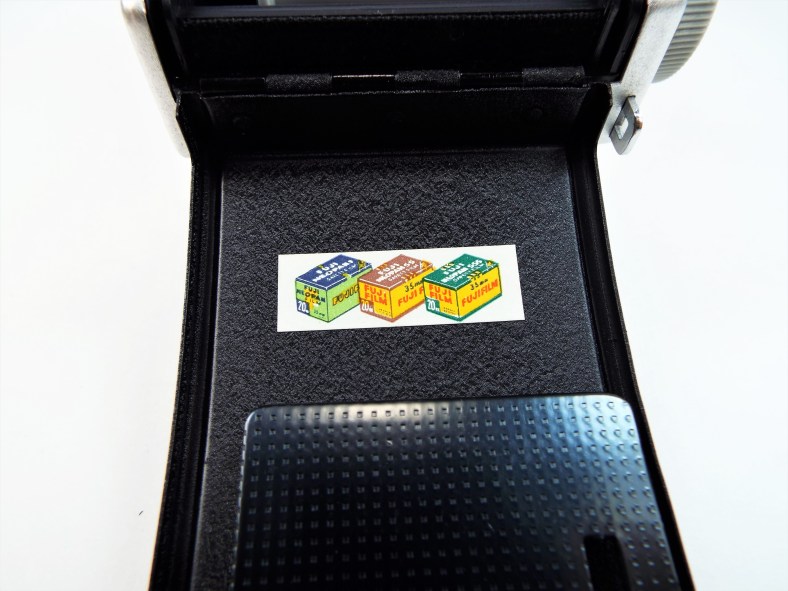
The Pet 35 is far from being a ‘toy camera’ as its build quality is quite high. No foam or yarn light seals to fail – the metal film door fit tightly into the body to seal out light.
DSCF5209

Gotta love the Fuji Film stickers inside!
DSCF5203

Thanks so much for your visit – we hope that you enjoyed our tour of this fantastic Fuji!

Studio Camera: Fujifilm FinePix S9900W

Chris & Carol ^.^

I See Red – Fujica DL-20

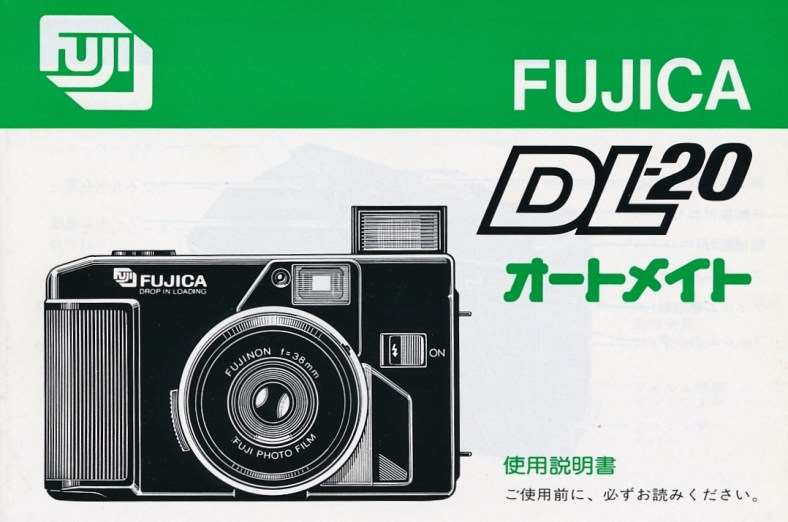
Pretty little Fujica DL-20 from 1983.

The world’s first 35mm drop-in loading camera! Simply load your Fujifilm cartridge into the opening on the bottom, close the back – and your Fujica will do the rest!

DSCF5164

Features a Fujinon 38mm f/4 lens with built-in lens and viewfinder cover.

Released in March 1983 in Japan, it was also known as the ‘Auto Mate’. 

29233274400_8e1ebeb4bb_o

DSCF5167

Original list price in Japan was 30,000 JPY.

DSCF5168

Shutter fires from 1/100 to 1/300 of a second.

●チラシ

Also released at the same time the more feature packed DL-100 (Auto Ace).

DSCF5169

Solid little thing! Thick plastic everywhere and a bright red finish too!

DSCF5170

Manually set ISO settings (100 & 400). 3 zone focusing. Auto exposure (EE).

DSCF5171

Built-in electronic flash.

DSCF5172

DSCF5173

DSCF5174

Push the film cartridge into the opening on the camera’s left side with about 5 cm of film extended – close the back and it auto loads the film.

DSCF5177

28900694283_ae40fb6faf_o

Cute centerfold art… love the image on the far right!

Weighs in at 300 g. Fits nicely in your hand (although a bit small for me) and fits in a coat pocket with ease. A simple, compact 35mm point and shoot camera from Fuji Photo Film.

We don’t know if we’re going to shoot the Acros first or load up some bright Fujicolor. Soon we hope!

Camera: Fujifilm FinePix S9900W

Thanks for stopping by!

Chris


Yashica TL Electro-X & the Danish Ads

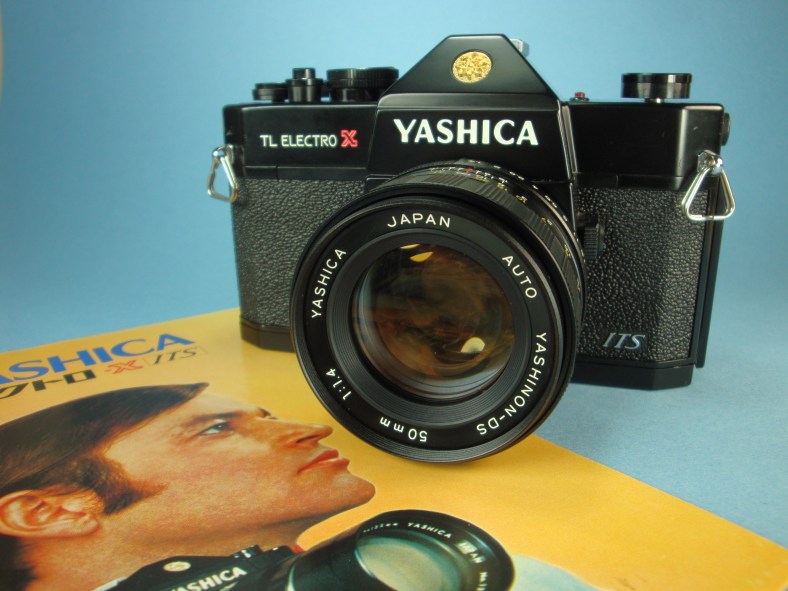
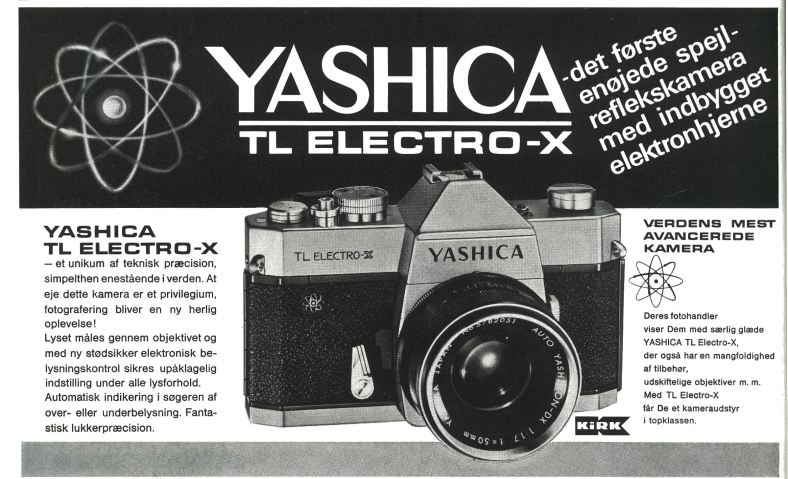
One of our favorite cameras from Yashica (and my first) is the famous and highly popular Yashica TL Electro-X. Yashica had a major hit on their hands when it was introduced to much fanfare in the late 1960s. A fully electronic camera that featured a “IC Brain” that controlled exposure settings and shutter speeds could be timed from 2 seconds to 1/1000 second with infinite in between settings. The TL Electro-X was sold around the world for many years – actually up through the mid 1970s.

DSC07497

The TL Electro-X seen here as the ITS model.

24104907192_2909081390_o

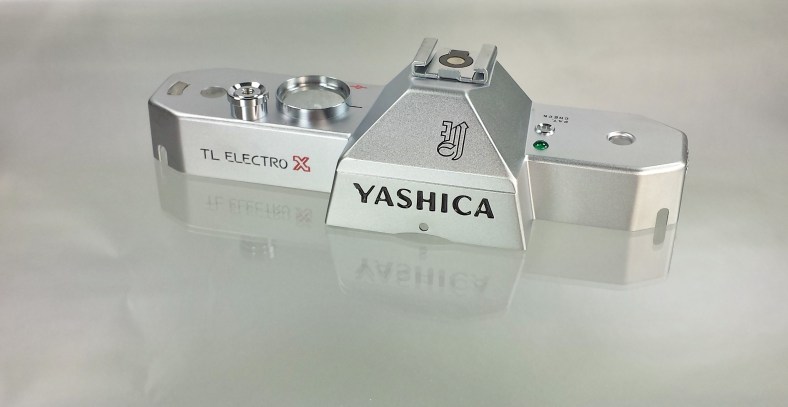
Top plate spare part. The gothic ‘Y’ on the pentaprism was/is synonymous with the TL Electro-X body whether it was in pro black or traditional silver.

Yashica TL electro x 1972 8

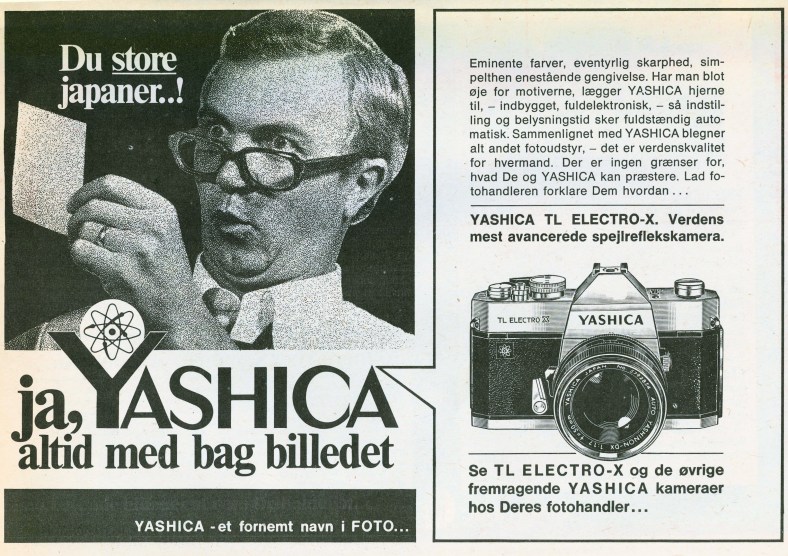
Recently discovered Danish ad for the TL Electro-X. As the ads says, the “world’s most advanced SLR”.

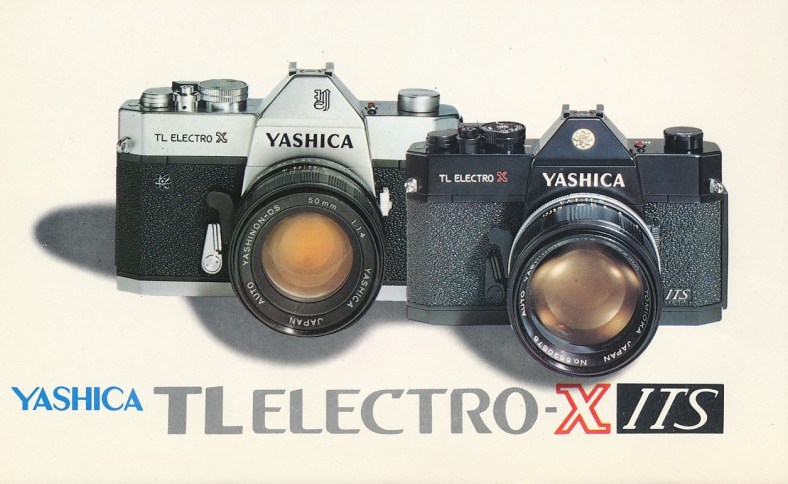
The ad above was recently sent to me by my good friend Paul Sokk from Australia – http://www.yashicatlr.com – The ad is from June 1972 and what’s interesting to us is the missing gothic ‘Y’ on the pentaprism. Up until now we weren’t aware of any models without the ‘Y’. No big deal – it’s just a curious variation. We’ve also discovered that Yashica (for whatever reason) also had models that the traditional red ‘X’ was changed to black. See below.

img_20170228_0003

Camera on the left with what appears to be a black ‘X’ vice traditional red ‘X’.

Our best guess as to why the Danish ad has a TL Electro-X without the ‘Y’ would be that the local trading company or distributor wanted Yashica to supply cameras that were different than what was for sale in let’s say France or Germany. It’s not unheard of that Yashica supplied different distributors with slightly different body and lens sets. The Yashica J-P and its odd little 5cm f2.8 preset lens from 1964 comes to mind.

1969 April, Yashica TL Electro-X

April 1969 ad from a Danish photography magazine.

As always we endeavor to bring you the most accurate information about Yashica and its cameras. We welcome comments and of course, if something we’ve said is incorrect please let us know – or simply share additional info if you have some. Thanks

Chris & Carol

Yashica Moves to a New Factory 1972

We’ll be the first to admit – not an exciting title or topic for a blog. It may even be a stretch for a blog named the ‘Yashica Pentamatic Fanatic’. But we feel compelled to share information about the Yashica Company, however slight and trivial, with our dear readers.

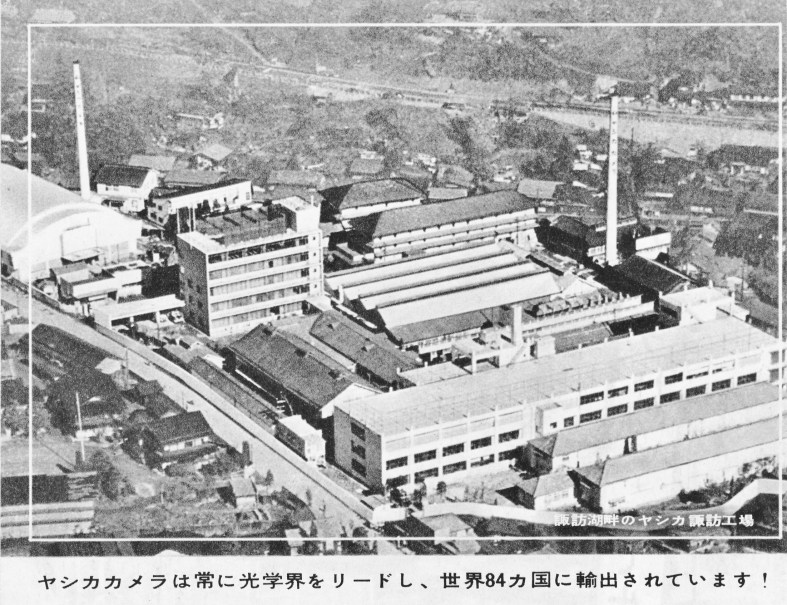
Yashica’s first factory was along the shores of beautiful Lake Suwa in the small town of Suwa. The next location (from Yashica brochures) was in Shimosuwa-machi, Suwa-gun, Nagano Prefecture. This was the industrial campus of Yashica and it grew over the years to occupy almost every square meter of the property.

Yashica's Shimosuwa Factory

Opened in 1956 along the shores of Lake Suwa in Nagano.

IMG_20151218_0008 (2)

A different view of the same campus. Yashica was running out of room by the mid-1960s.

IMG_20170404_0004

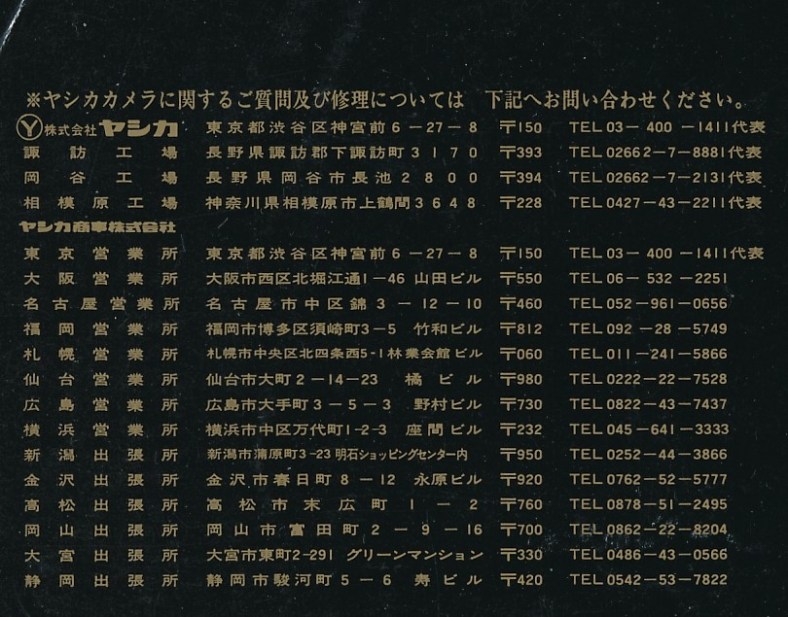
Back cover of the Yashica TL Electro-X ITS instruction booklet. The booklet was printed in Japan in June 1972.

At the time of the printing of the above book, Yashica was operating 3 factories. The top line that begins with the Yashica ‘Y’ on the far left is the address of the main headquarters of Yashica which was in Shibuya-ku, Tokyo. The next line is the location of the Suwa plant – Shimosuwa. The third line is the new plant in Okaya which was still in Nagano Prefecture. The 4th line was an unknown (to us until recently) factory in Sagamihara-shi, Kanagawa Prefecture (southwest of Tokyo and just west of Yokohama). As you can see, Yashica operated at least 14 other sales offices and service centers across Japan in mid-1972.

IMG_20170404_0005

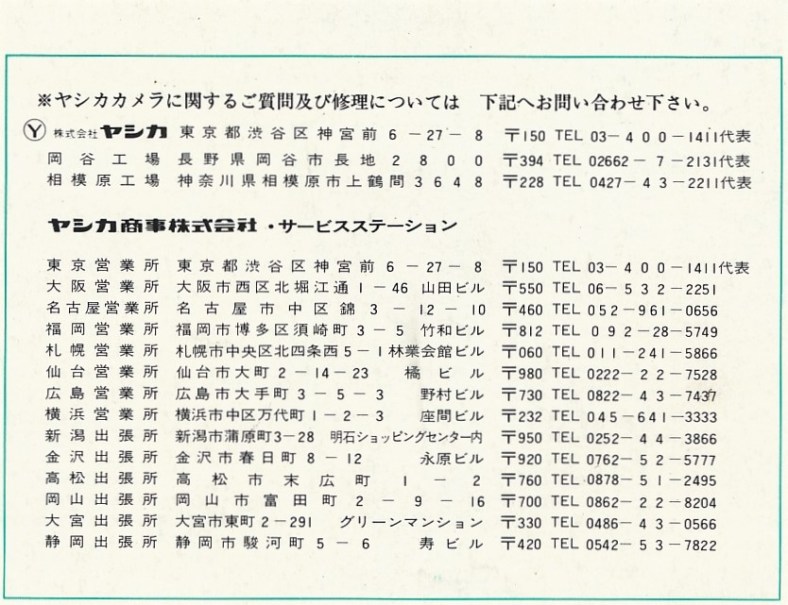
Back cover of the Yashinon Lenses & Accessories booklet printed in Japan in January 1973.

Between June 1972 (the first book above) and January 1973 (the second book above), Yashica closed its campus and factory in Shimosuwa. The only factories listed are the new Okaya factory and the Sagamihara factory. That was a big move for Yashica and as we understand it, they had purchased the old silk mill in Okaya as far back as 1959. As of this book, Yashica did not close any of its other sales offices listed from the previous book.

DSCF9431

The factory was officially dedicated in December 1972. According to Yashica documents, the factory didn’t achieve full production until late 1974 or early 1975.

IMG_20190517_0001 (1)

The Yashica Okaya factory complex in the summer of 1974.

Why is any of this important? It isn’t unless you’re a Yashica Fanatic like us. Oh, it did have a strong ripple effect on the company though. Japan was in a bit of an economic slowdown in the early 1970s and it came to a head in late 1974 for Yashica. Mismanagement and embezzlement (and the costly move) caused Yashica to lay off workers – unheard of in Japan at the time. They closed the Sagamihara factory which put 900 Yashica employees out of work. That had an effect on the factory at Okaya and Yashica was soon in deep financial trouble. Their cameras were still top notch but the first warning shots about their future were fired.

IMG_20190517_0003 (1)

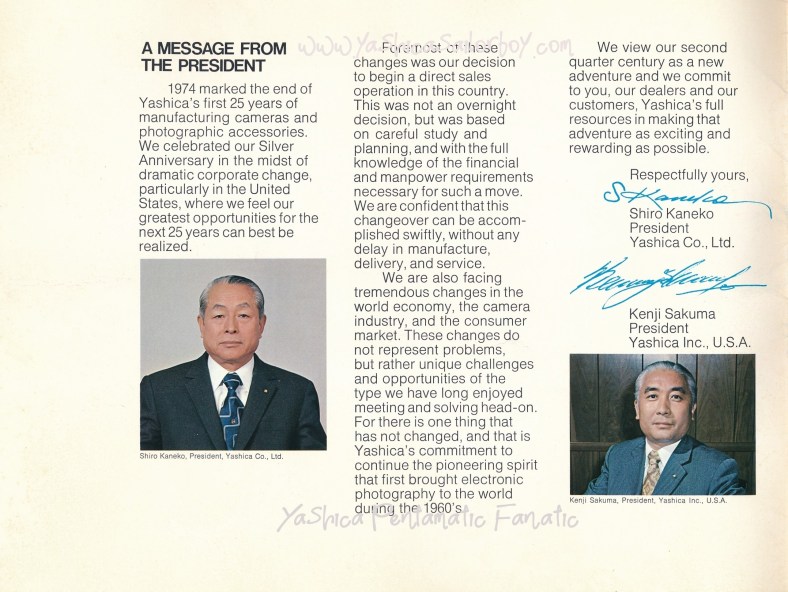
It is my understanding that Mr. Shiro Kaneko was installed as the new president of Yashica by the Nissho-Iwai Company (Yashica’s distributor) and by the Taiyo Kobe Bank which by 1974 had put its full financial resources behind Yashica’s new marketing efforts.

Thanks for your visit! Hope you got a little something out of it. – Chris


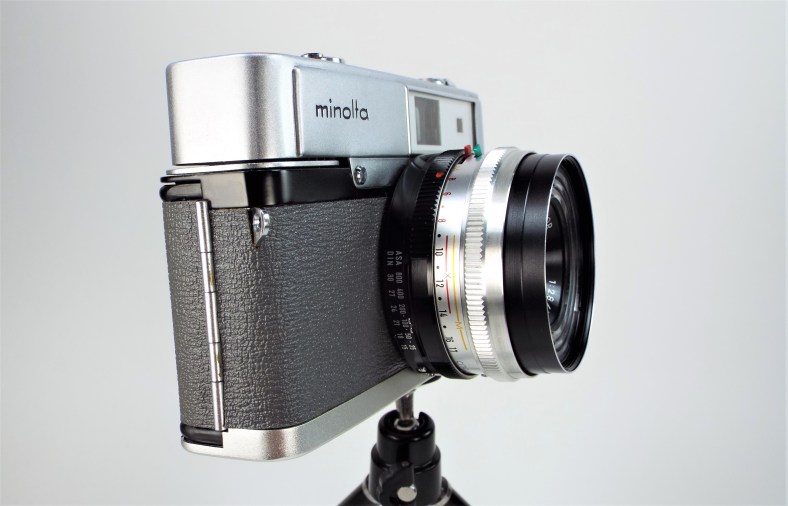
Minolta Uniomat III

35mm rangefinder camera from Minolta. This one is from about 1963. Neat little camera – a bit small for my hands so it’s hard to reach the lens to focus comfortably. The rangefinder focuses well but doesn’t snap out at you although the view is bright. No film test for this one. The shutter fires and the speeds appear to be on time – the rear lens element is “ate up” (Southern term) with fungus and when I got rid of the fungus I was left with an etched lens. Maybe some polishing might bring it back. The light meter appears to be accurate too.

It’s a pretty little thing. I like the gray leatherette body and it certainly looks nice under my studio lights. We like to collect complete sets when we can and this one has its original box, leather case (black), silica-gel pack and the owners manual. It would have been extra nice had Minolta made the case gray like the camera.

dscf3772

dscf3782

dscf3783

dscf3781

dscf3780

dscf3778

dscf3779

dscf3764

dscf3765

Although the box has some damage from handling it over the years, it’s still quite solid. It was covered with soot, dirt, dust, grime and I’m sure some DNA – it was so dirty that the Minolta logo was not visible! I used a new bar of ‘Mr. Clean Magic Eraser’ lightly made wet to gently ‘erase’ the dirt. It’s amazing how well it did without damaging the delicate 50+ year old paper. A new way to restore some of our older boxes in our collection.

img_20170207_0003_new

Nice image from inside the owners booklet.

We wish we had a chance to run a roll through it to test the f2.8 45mm Rokkor lens… but as is typical with these vintage rangefinders, the rear lens element is trashed with fungus.

Thanks for your visit. We hope you know a bit more about this unique camera.

Chris and Carol Photography ^.^

Yashica TL Electro-X

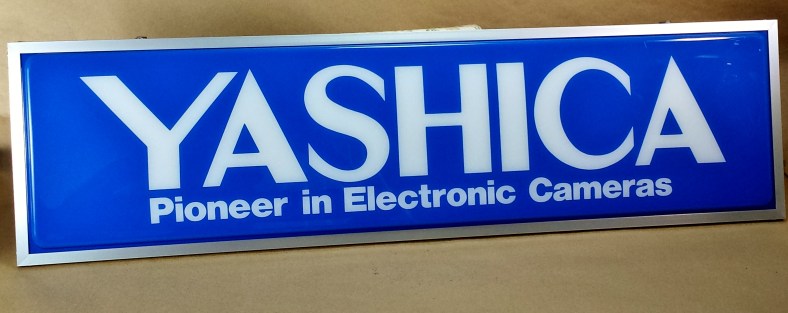
One of the most successful SLRs from Yashica – the ‘Pioneer in Electronic Cameras’… the Yashica TL Electro-X. The world’s first electronic single-lens reflex camera.

A random collection of clips from Yashica sales brochures and our eclectic collection of all things Yashica –

18641997101_dbb1db2784_o

img_20170228_0003

‘ITS’ = Integrated Technology System… maybe.

img_20170228_0007

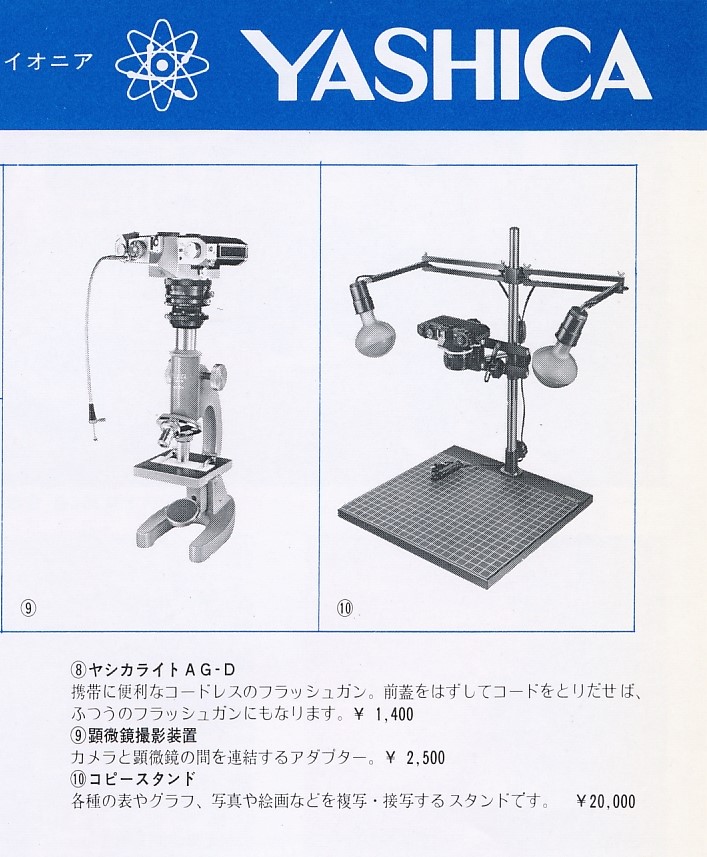
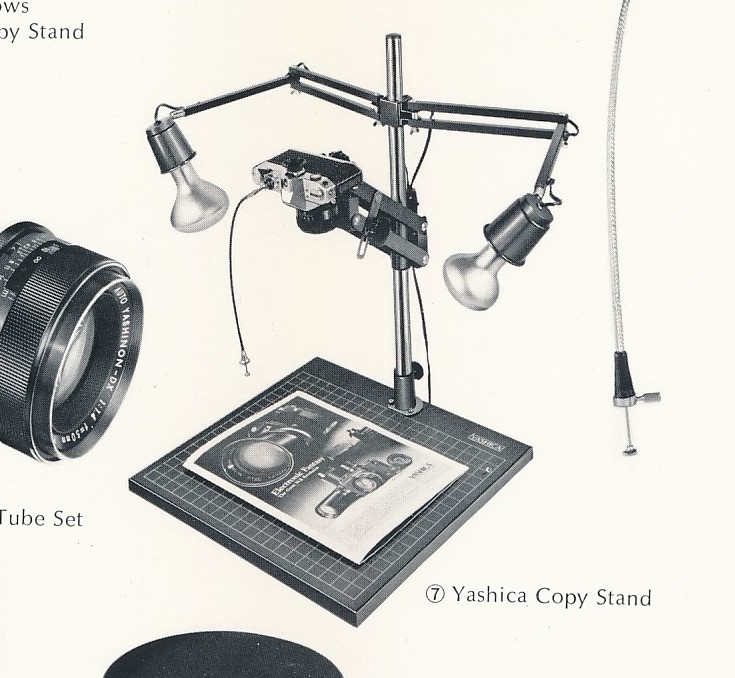
We’ve recently added this hard to find accessory from Yashica. It was still new in its original box! It will be used in our studio for some copy work.

20170301_092007

Original box. Lucky find!

img_20170228_0002

The Copy Stand listed for 20,000 JPY in 1971. About $55 USD


15218536719_13b8308208_o

17151773615_977cae3853_o

Large dealer’s sign. Two sided but non lighted. Ca. 1968

24520965712_eae778e081_o

Yashica ‘Sailor Boy’ with another version of the slogan and electron logo. The ‘Sailor Boy’ first made his appearance in 1962.

24104907192_2909081390_o

Elegance on ice.

Do you have something to add to our database about this interesting camera? Please feel free to comment. 

Thanks,

Chris & Carol Photography ^.^
Yashica AIII – Rare Gray on Gray 1959

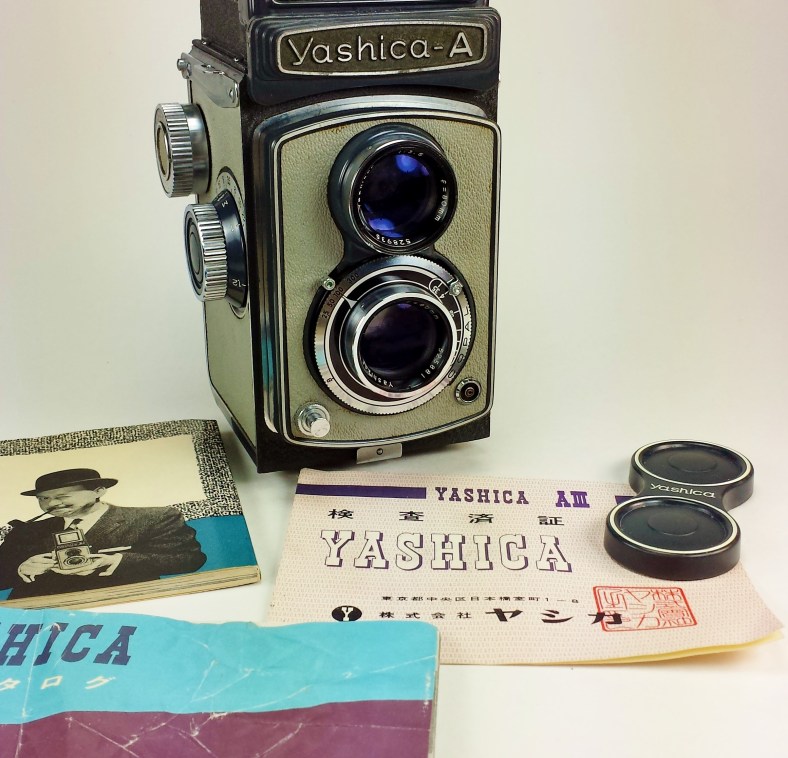
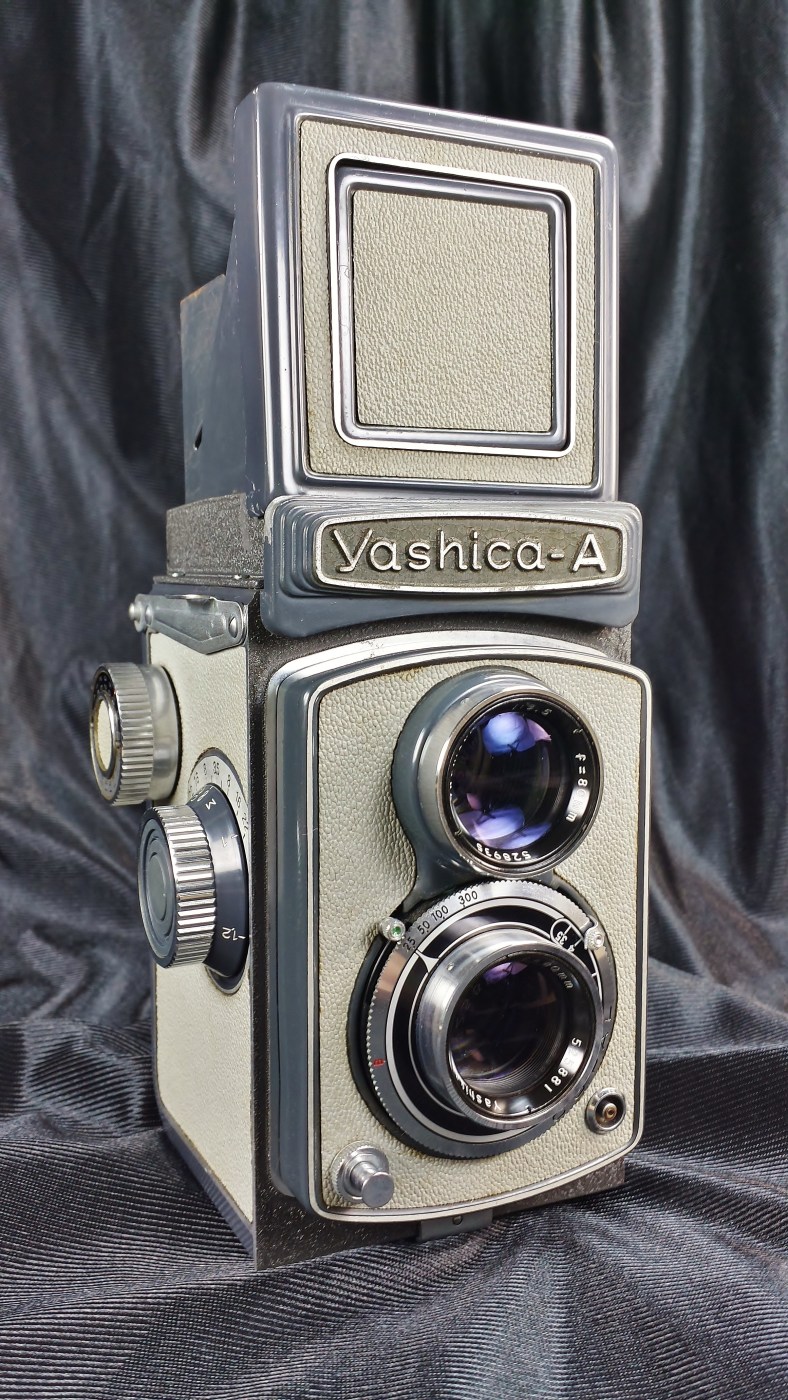
Very uncommon Yashica twin-lens reflex (TLR) camera – made in October 1959. This one is in beautiful dove gray leatherette and machinery gray metal. Designed for and sold in the Japanese domestic market and for export to Europe. Focusing scale is in meters only on this version. Others have dual scales.

20103422916_ee6ff441ed_o

The serial numbers on the camera match the guarantee card. 

⇑ Complete set as it would have appeared for sale in Japan. This amazing 57 year old beauty still functions perfectly! The shutter speeds are spot on, the focus is sharp and the Tomioka lenses are crystal clear. It does have a few spots of corrosion and discoloration on the aluminum and steel body parts – Japan has a warm and moist climate that wasn’t always friendly to old cameras.

19409538654_428f4eb6a0_o

Rare no hood logo.

⇑ The dove gray leatherette is tight and complete (a few minor stains) and the darker gray metalwork retains its factory sheen. The camera inside is clean as well with only minor dust seen when looking through the viewing hood.

The gray (and other colored cameras) from Yashica are always super collectible. We were very lucky to acquire this complete set. We have the original box but it has seen much better days. Perhaps a small restoration is in order.

Thanks for stopping by! Comments are always welcome.

Chris and Carol


Neat Little Find

This camera cleaning cloth with an advertisement on it was with a Minolta camera we just acquired from a seller in Mie Prefecture, Japan.

A machine translation tells us that it is for a camera shop in Tokyo – Sakaecho – Tama 多摩ニュータウン.

Neat find from about 1963 or so… especially with the Contax camera depicted.  It’s 15 x 15cm square. We love the 4 digit telephone number! Just before the 1964 Tokyo Olympics.

img_20170207_0002

Thanks for your visit!

C&C