Mystery Models – v2.0

19362539791_09787a3105_o

1959 Yashica Model A twin-lens reflex camera instruction booklet cover.  

This dapper dude appears on at least two different Yashica brochures in the late 1950s and early 1960s. This cover shot is from a Yashica A III instruction book from 1959. He always appears with a “modern” pipe, fancy derby and is winking at the camera. My thought is that he is an actor who may have lived in or was super popular in Japan during that period. Any thoughts? Please see the back cover image below.

19171018190_a36a308a45_o

Here he is in a German language Yashica brochure from early 1960 (below).

19171477280_fcbf5949c1_o

Any help would be appreciated. As researchers of silly Yashica stuff, knowing who he is helps with some other silly stuff we’re interested in (Yashica-wise).

Thanks!

C&C


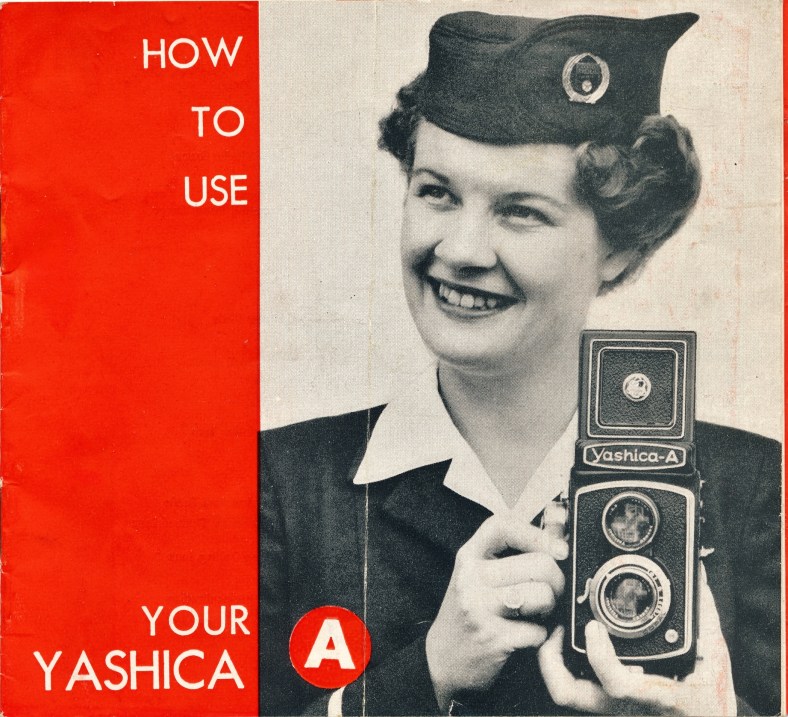
Help solve another mystery… who is she?

Help! She’s been driving us crazy for years trying to identify what type of uniform she’s wearing.

23601284334_fd34bc8f57_o

Is she a stewardess, cruise ship officer, tour bus guide, train hostess? The uniform is certainly not a military uniform (but could be). This instruction booklet is from the late 1950s. Her cap is keeping with the style of the airlines at the time but definitely not JAL. Take note, she has a gold stripe on her right sleeve which wasn’t consistent with airlines unless you were in the cockpit. There is a hint of what looks like a pin (wings ?) on the left side of her jacket and of course there’s the emblem (logo) on her cap.

We’ve tried to place her by her looks. She doesn’t appear to be Asian… we think she looks northern European or from the UK… just don’t know.

We’re open to any and all ideas… just for fun since this is the only time Yashica used an image with a model wearing a uniform on the cover of their booklets. It was replaced rather quickly with a plain cover on later booklets.

Many thanks! We’ll take any and all guesses too.

Chris and Carol


Pentamatic – Finally Found ‘in the wild’. Nerds heaven!

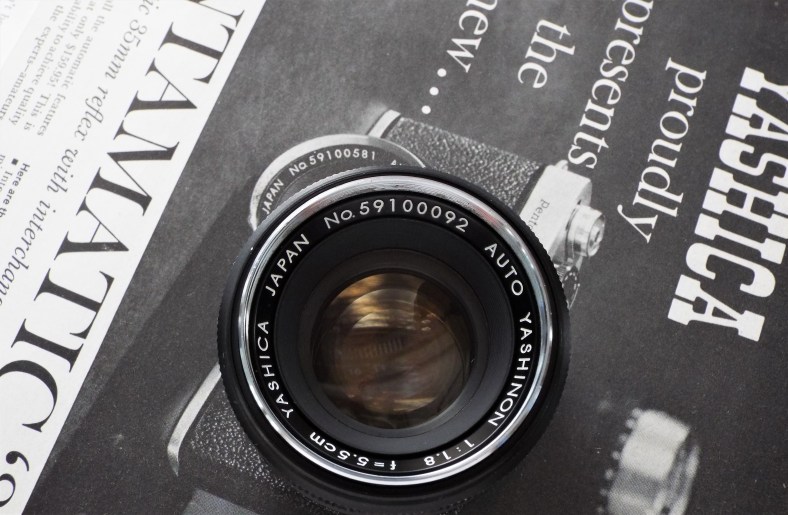
After many years of searching for proof that Yashica had in fact released its first production run (from December 1959) of the 5.5cm f1.8 Auto-Yashinon lenses for the Pentamatic ’35’ – we finally found one in the wild! Now it’s ours.

We stumbled upon this lens the other day on an online auction site. After some negotiations with the seller, we reached an accord. The camera this lens was mounted on was a pure dog… “Junk Treatment” as ‘Google Translates’ the kanji for crap (one would think) items. We took a chance that the lens was going to be OK. We’ve seen enough of these over the years to get a good feel – this one we just had to have even if it matched the condition of the camera body it was on. Man was it dirty – sooty and a tad yellow (the markings yellow over time). But it was a hidden gem. No mold – no fungus – no cleaning marks or haze – and, the best part, it focuses crisply and although the aperture blades are a bit worn, they move nicely (snappy as ‘they’ say).

The Pentamatic went into production at Yashica’s modern factory campus in Suwa, Nagano Prefecture in December 1959. At the same time, or just slightly before (maybe in October), Tomioka Optical started making the lenses for the first Pentamatics. We don’t know for certain if Tomioka delivered completed lenses to Yashica or only manufactured the optics for them and Yashica did the rest – we just don’t have that information yet.
dscf3477

Here’s the lens we just acquired – Auto Yashinon 55mm (5.5cm) f1.8 which was the normal lens supplied with Yashica’s first Pentamatics. The background ad is from a ‘Popular Photography’ magazine – June 1960 issue. The ad lens serial number is – No. 59100581 – our lens serial number is – No. 59100092. Not often do you find a lens in the wild with a lower serial number than an ad. By the way, the advertisement was the first ever for the Pentamatic.
20170203_092654

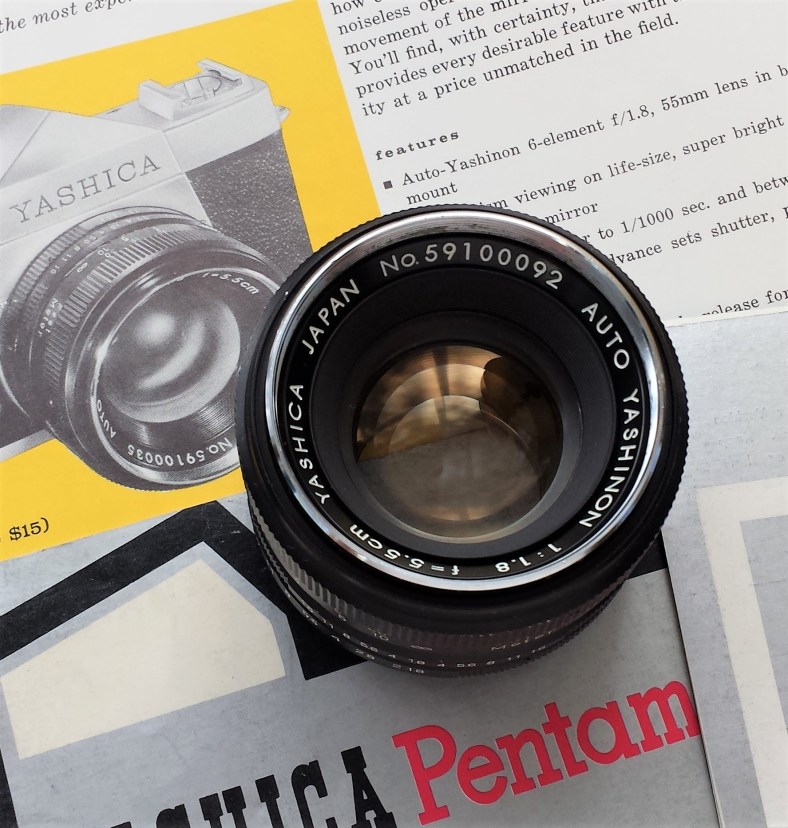
The lens that is featured in one of the first sales brochures for the Pentamatic, is serial numbered – No. 59100036. Our lens was made just slightly after the lens in the brochure (same day?). We don’t know when the sales brochure came out. Our guess is March 1960. The photographs were probably taken by the marketing people in Yashica’s Shibuya headquarters sometime in late 1959 or early 1960.

We know – this is all super boring nerd stuff that only Yashica fanatics would find interesting – wait, that’s a great name for a blog… ‘Yashica Pentamatic Fanatic’. ^.^

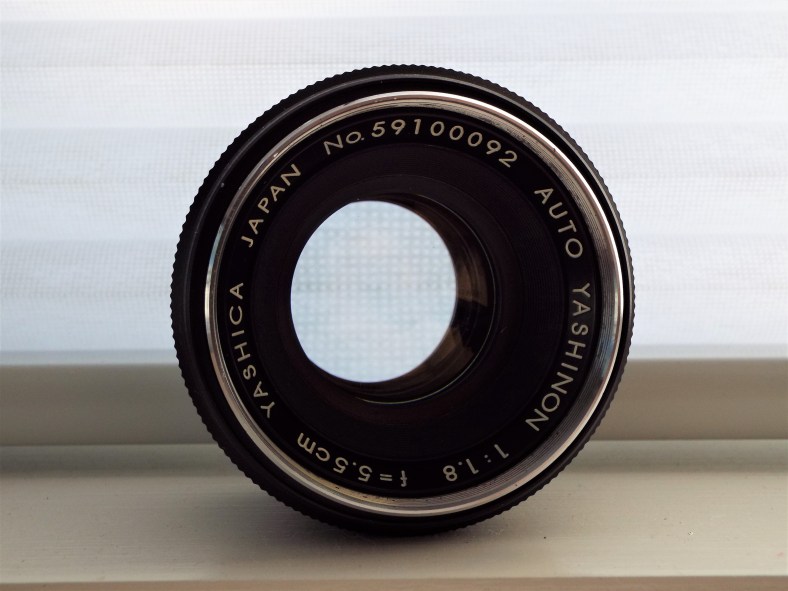
So what does the serial numbers tell us? The SN No. 59100092 (our lens) translates to – made in 1959, the ’10’ is for October, and the 0092 is the sequential production number of the lens assembly. This means that Tomioka Optical started production of the new lenses for the Pentamatic as early as October 1959! Lenses made in 1960 are labeled No. 605xxxxx. The ‘5’ being a placekeeper or model number. The highest serial number we have in our collection is No. 60515157. That lens came with a Pentamatic body that was made in January 1961 and the lens was the 15,157th made up until that point.

The highest serial number seen in the wild is No. 60521460 which was mounted on a Pentamatic-S body.
dscf3483

Thanks for your visit and if you made it to this point in the post, pat yourself on the back! You may be a bit of a camera nerd – just like us!

Chris & Carol ^.^
Yashica MF-2 Super… 1986

We don’t often collect modern Yashica cameras – especially during Yashica’s last days after Kyocera (Kill-a-Yashica) took over.

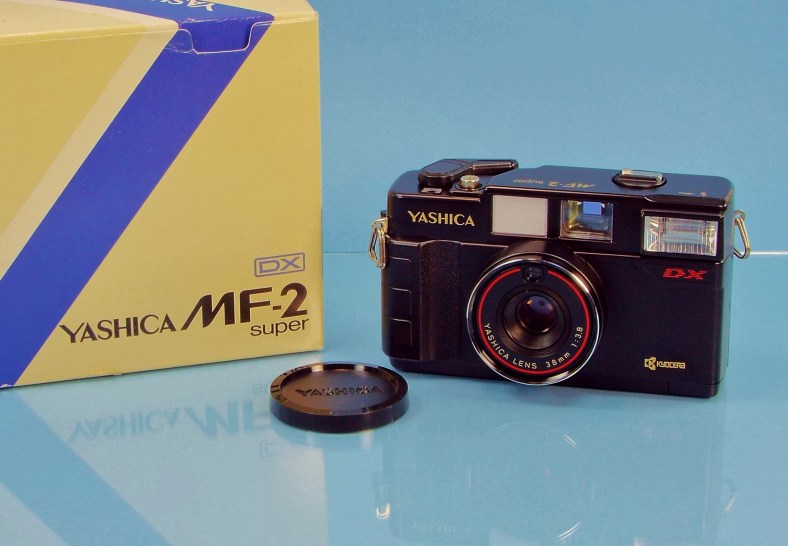
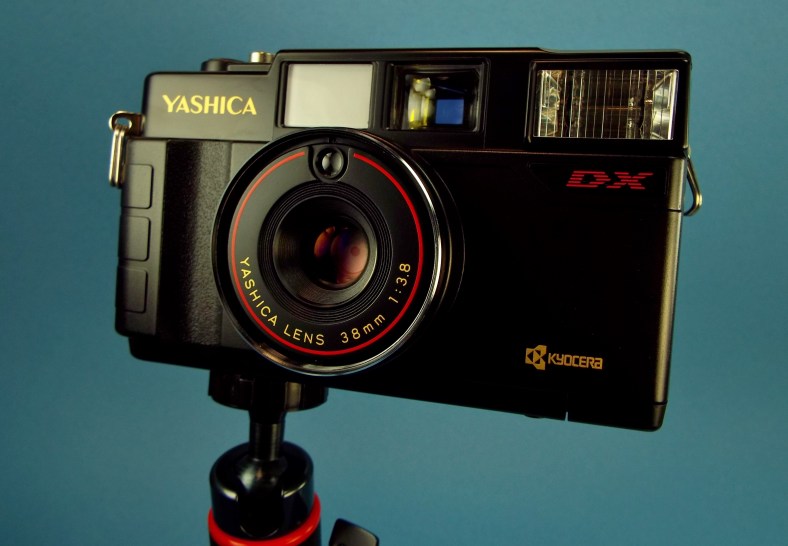
This one was sent to us by a Flickr friend and as you can see, it’s new in the original box. The MF-2 Super is a DX camera which sensed the DX code on the 35mm film canister and set the appropriate ASA / ISO / DIN.

25965272473_a80d24519c_o

Yashica MF-2 Super 35mm film camera set from 1986.

26295606350_65700d54b4_o

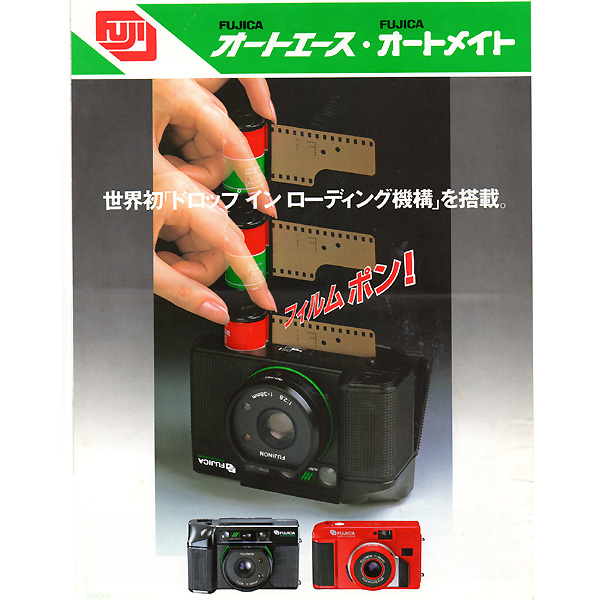
We haven’t found the time to load a roll of film and check out this little beauty… soon we hope. We like the black, red and gold details on the body and lens and the auto everything (almost) features. As a comparison, we also have the Fujica DL-20 as pictured below in the sales brochure.

%e2%97%8f%e3%83%81%e3%83%a9%e3%82%b7

DL-20 in black and red.

The DL-20 is a mid-1990s camera from Fujica. We have the red body model and it would be fun to take the two (Yashica MF-2 Super and the Fujica) out for a side by side photo shoot. Sounds like we’re going to be busy in 2018 shooting a bit more film.

Thanks for your visit!

Chris & Carol

Yashica 44… a ladies camera?

Any doubts that Yashima-Yashica was marketing to women for their new smaller 4×4 cm twin-lens reflex camera are erased once you see the cover to the sales flyer.

img_20161129_0026

In a male dominated society, Yashima-Yashica needed to leave no doubts as to who these new smaller and lighter cameras were for.

Normally sales flyers and brochures in the late 1950s were geared to and appealed to the male buyer. In all fairness, it was likely that’s who took most of the photographs during that period. Yashima-Yashica’s direct pitch to Japanese women was an attempt to tap the vast market of female buyers.

img_20161129_0027

As we understand it, the 44 model came in at least 7 or 8 colors!

Even though the front of the flyer was simple and left no doubt as to who the buyer would be – the reverse of the flyer was still detailed and quite technical. It’s possible that the camera was designed for the wife to use for taking pictures of the children (while the husband was off at work all day) but still detailed enough for the husband to feel comfortable purchasing. Just our take on things.

Thanks again for your visit – as always we appreciate any and all comments. In the interest of fair play, we ask that you do not copy the images and include them in your blog or post without asking for permission – thanks! ^.^

Yashima Sales Brochure… 1956

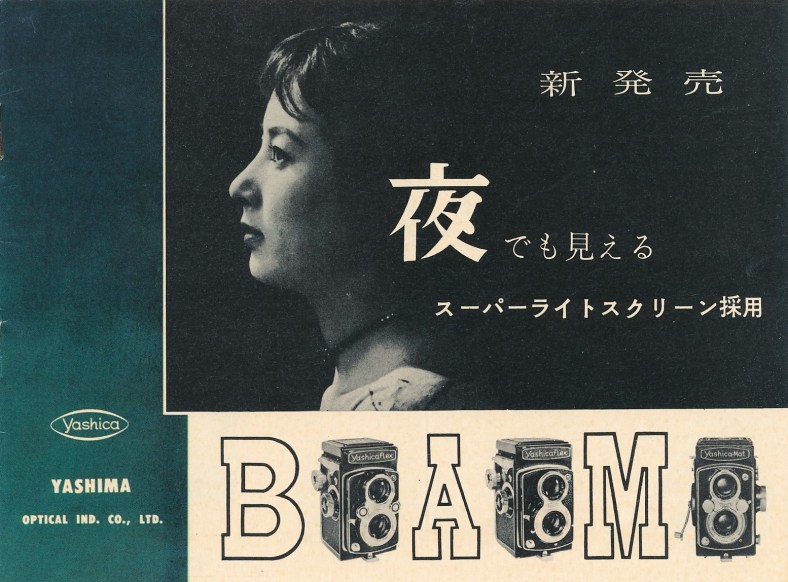
In just 3 short years, Yashima beat the odds and became a Japanese camera company that lasted long enough to produce multiple models. In the case of this sales brochure from 1956 – the Yashica Flex B, A and Yashica-Mat twin-lens reflex cameras.

img_20161129_0015

Well designed sales brochure from the little company that became Yashica.

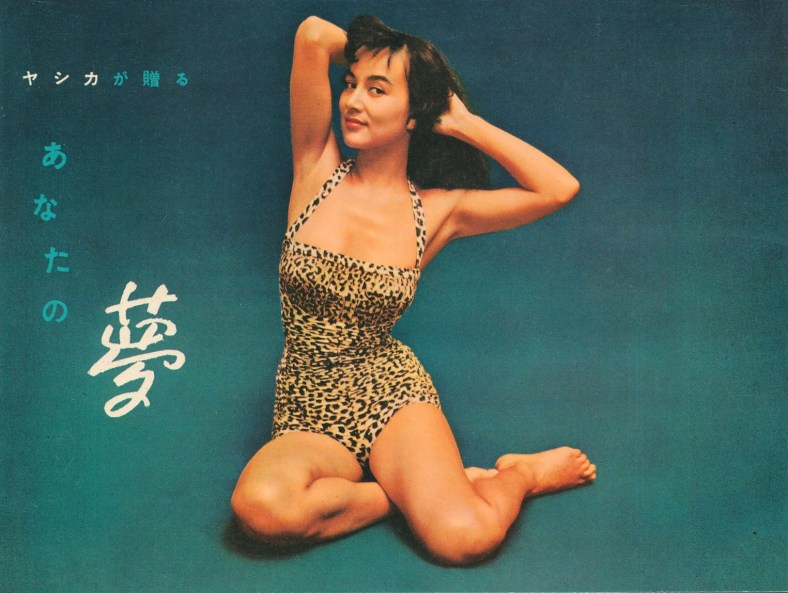
Not that we’ve seen a ton of sales brochures from other Japanese camera manufacturers from this era, but we think this was rather provocative for the mid 1950s (at least in the US we would think). This brochure was intended for the home market and the culture of Japan is a tad less uptight about things like this.

img_20161129_0016

Lovely model on the back cover of the brochure.

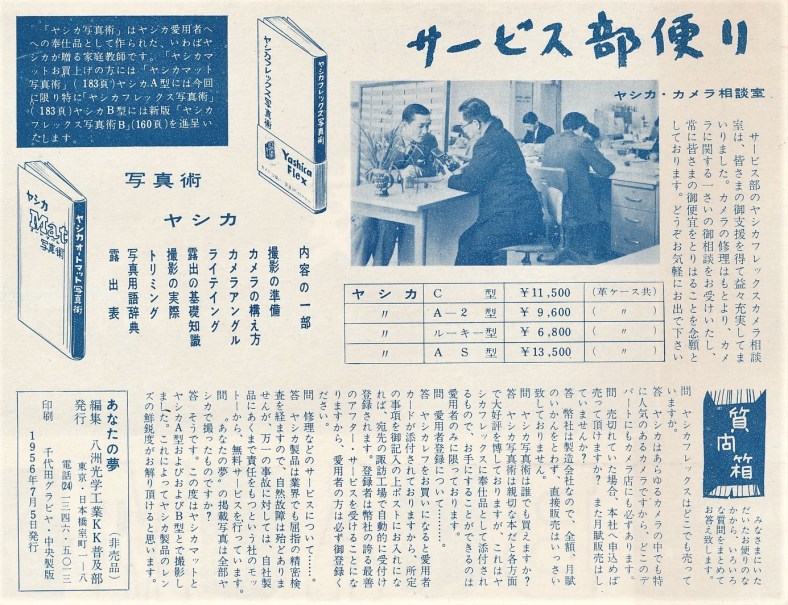
The first page inside the brochure in packed with information not typically found in a brochure. Yashima was, in our opinion, marketing itself beyond what such a young company would normally look like. These series of Yashica Flex Photography books were excellent creations that went far beyond a simple owner’s guide.

img_20161129_0011

You’ve got the year (1956), two examples of the Yashica Flex Photography books and some prices of the cameras.

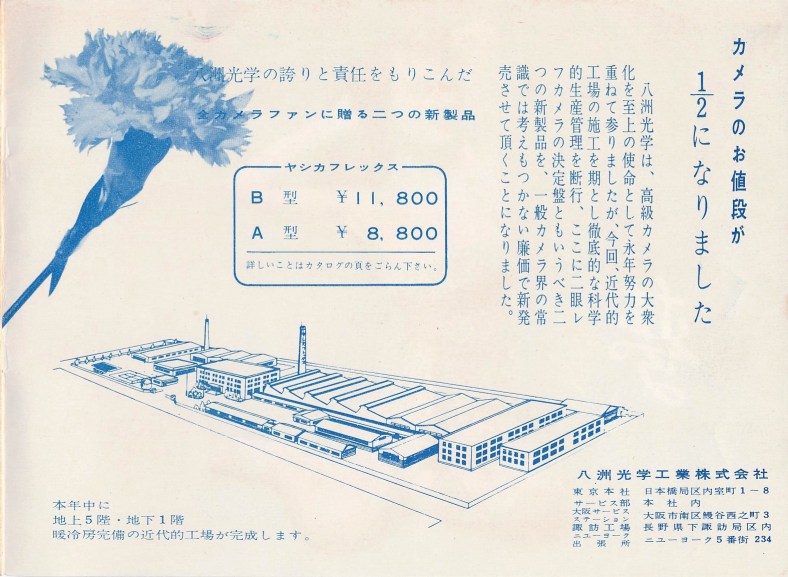
img_20161129_0025

Last inside page of the brochure depicting Yashima’s new modern factory in Suwa, Nagano Prefecture, Japan.

Yashima was a very proud company and they were eager to show how much they grew since 1953.

Thanks so much for your visit. The goal of our blog is to stimulate discussion and further the knowledge of all things Yashima-Yashica. Please share your comments with us… we’d be happy to read them. One final thought, we share our brochures with others and ask that you do not copy or post our images into your blog or post without permission. Thanks!

Chris & Carol

1954… Yashica Flex Model S

When Yashima started making twin-lens reflex cameras in a small factory along the shores of Lake Suwa in Nagano Prefecture, they were but one of hundreds of “start-ups” entering the already crowded Japanese camera manufacturing business. Many would fail – and fail quickly they did. But little Yashima, with two brothers from Nagano at the helm, managed to take a big step – to make a second and then third camera.

The first was the Pigeonflex (great name but how do you grow with a name like that), then came the Yashima Flex and Yashica Flex B. In 1954 (late) they built the now famous Yashica Flex Model S. The first TLR in the world with an attached exposure meter! Yep, in the world! None of the already established players had produced one like that. The meter was supplied by Sekonic and screwed to the side of the body and hidden light sensors under the name flap sent electricity to the meter. Bingo. Meter and camera merged! 1954

img_20161129_0004

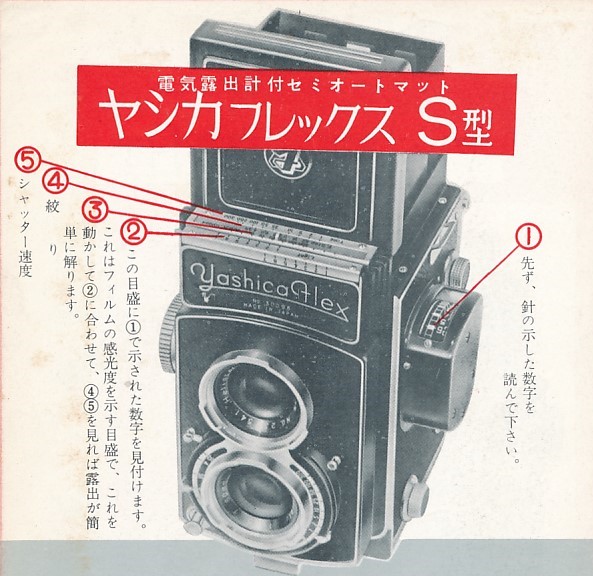
Cropped scan from a rather rare (in the US) Yashima sales flyer for the Yashica Flex Model S. It’s one of the earliest pamphlets around for this camera.

The light sensing cells were built-in under the flap that was the nameplate. You would open the flap and the maximum amount of light would strike the cells and send an electrical signal to the meter  (#1 above). You then used # 2, 3, 4, and 5 to “compute” your exposure settings. Simple except that you needed the eyesight of an eagle to actually see the numbers on the scale. It it was real sunny out, you didn’t need to lift the flap to get an accurate reading – there were 12 holes in the flap that would let in enough light to set the exposure.

In a testament to the designers, many of these early exposure meters still function even after 6 decades of use. But, many have fail too mostly caused by a failure of the wire to meter connection. The cells are fine (no batteries, sun powered).

As always we appreciate your visit. We’re glad to share some of our collection of early sales material and of course to chat up our Yashima-Yashicas. In the spirit of fair play, we ask that you do not copy or post our images in your blog or post without our permission. Thanks.

Chris & Carol

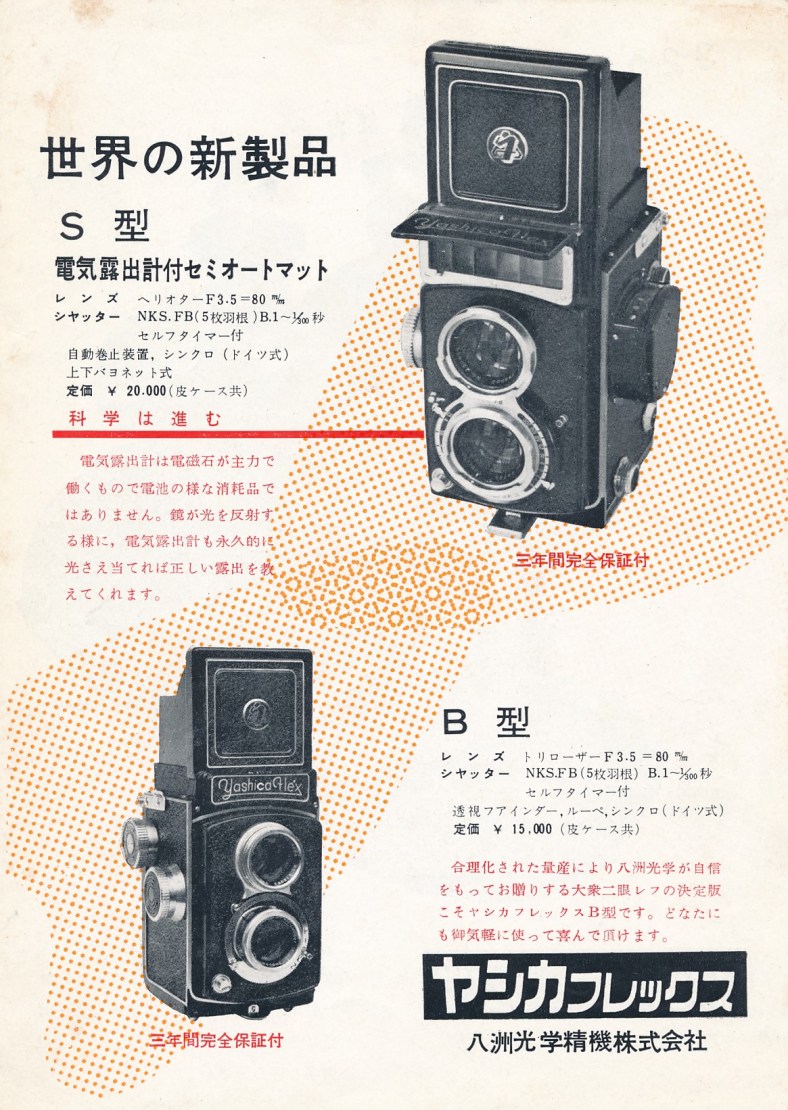
Super Rare Yashica Flex S Brochure… 1954

We’ve recently acquired a super rare (here in the US) Yashima sales flyer (pamphlet) that covers one of Yashima’s most advanced cameras at the time. The Yashica Flex S was the first TLR with an attached exposure meter in the world! The meter was made and supplied by Sekonic. And if you had great eyesight and were good with sliding scales, you could actually set the proper aperture and shutter speed for your film. Cool! Yashima-Yashica was the first to do it! One of our Yashica Flex S models has a working exposure meter even after six decades! Double cool!

img_20161129_0014

From 1954.

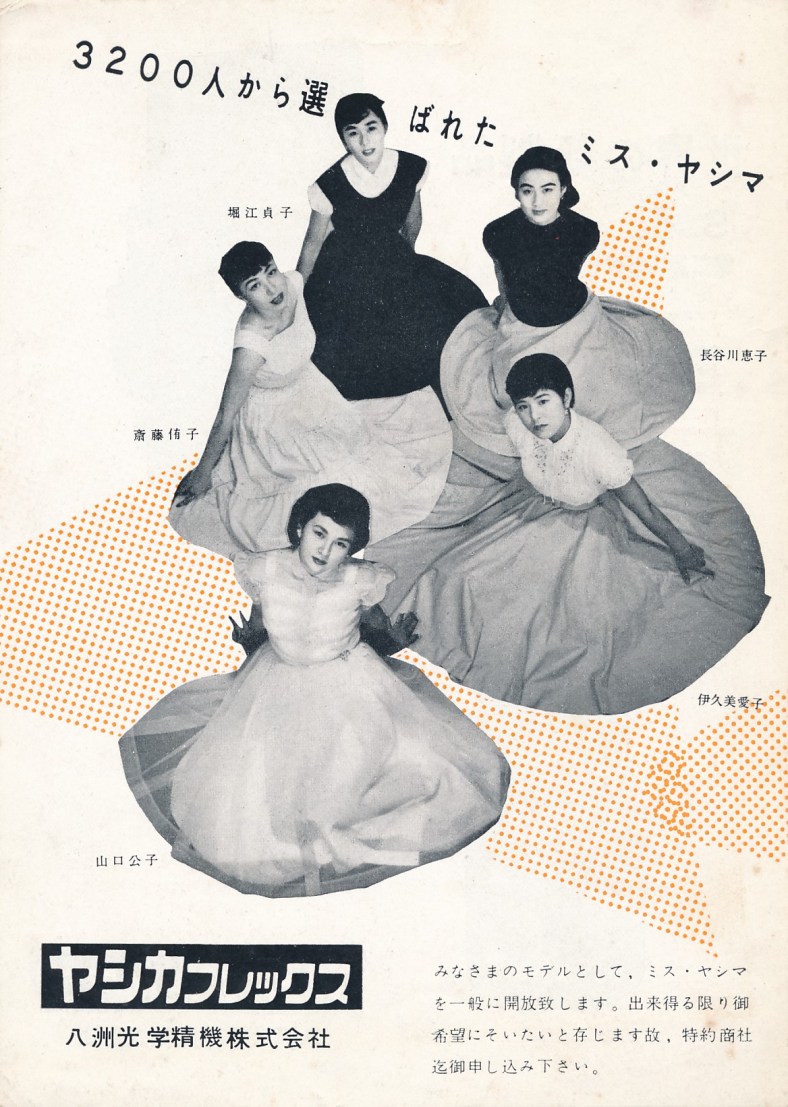
The next scan is the reverse side of the flyer and featured a contest!

img_20161129_0012

Out of 3,200 entrants these ladies were chosen to vie for the title of “Miss Yashima”. All you had to do was vote at your favorite trading company (camera store). We chose Miss Kimiko Yamaguchi (front left) as our Miss Yashima.

We hope you enjoyed these glimpses into Yashima-Yashica’s past. We like that we can share them. In the spirit of all things fair, we ask that you do not copy them or use them in another blog or post without asking for permission first.

Many thanks for your visit! Chris & Carol

Yashica’s Penta J and the J-P

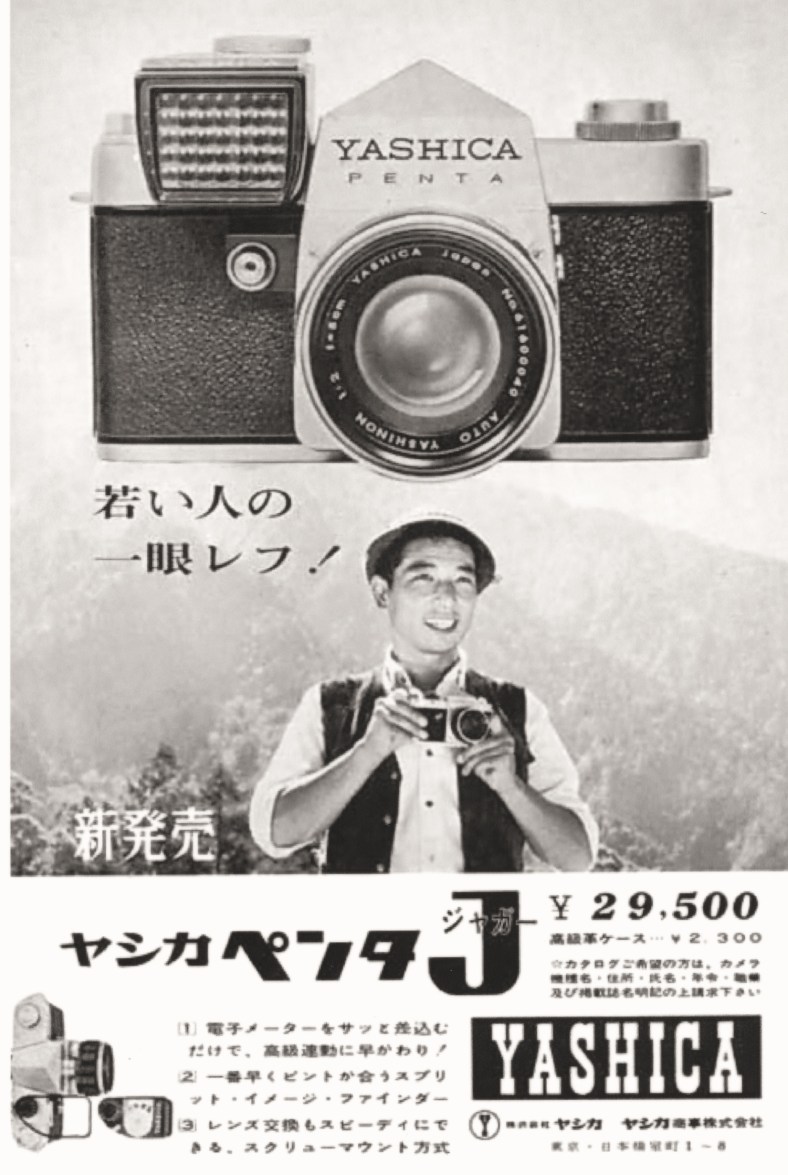
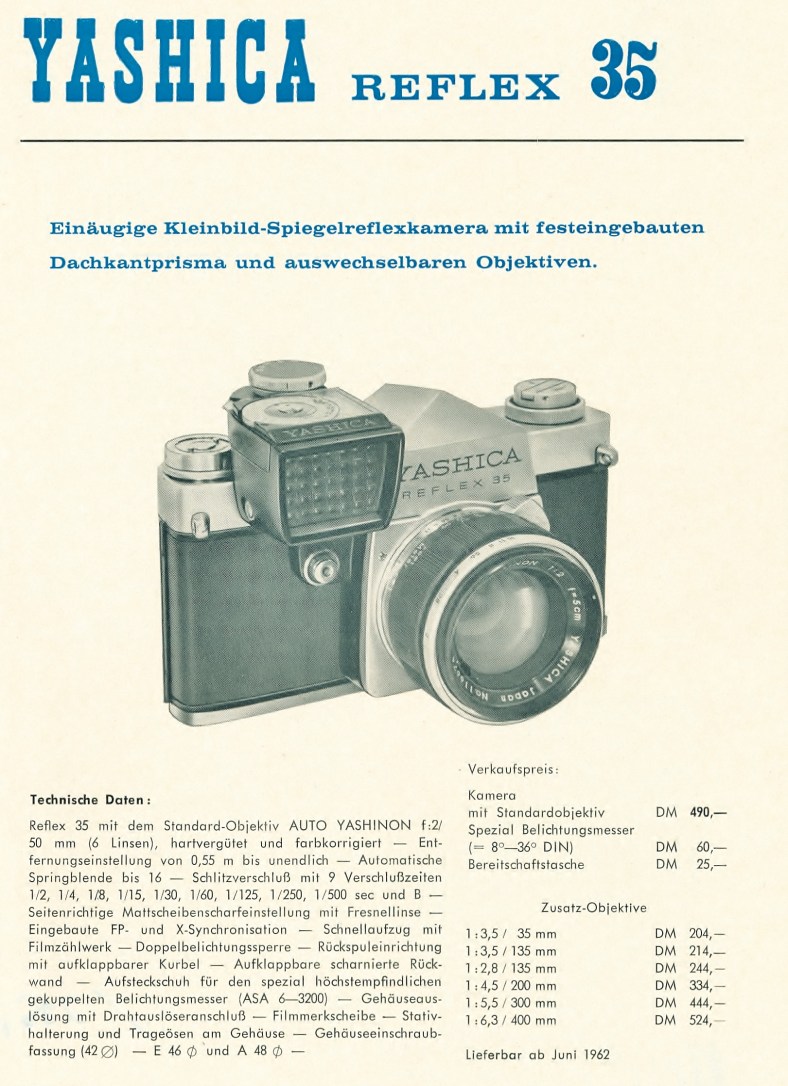
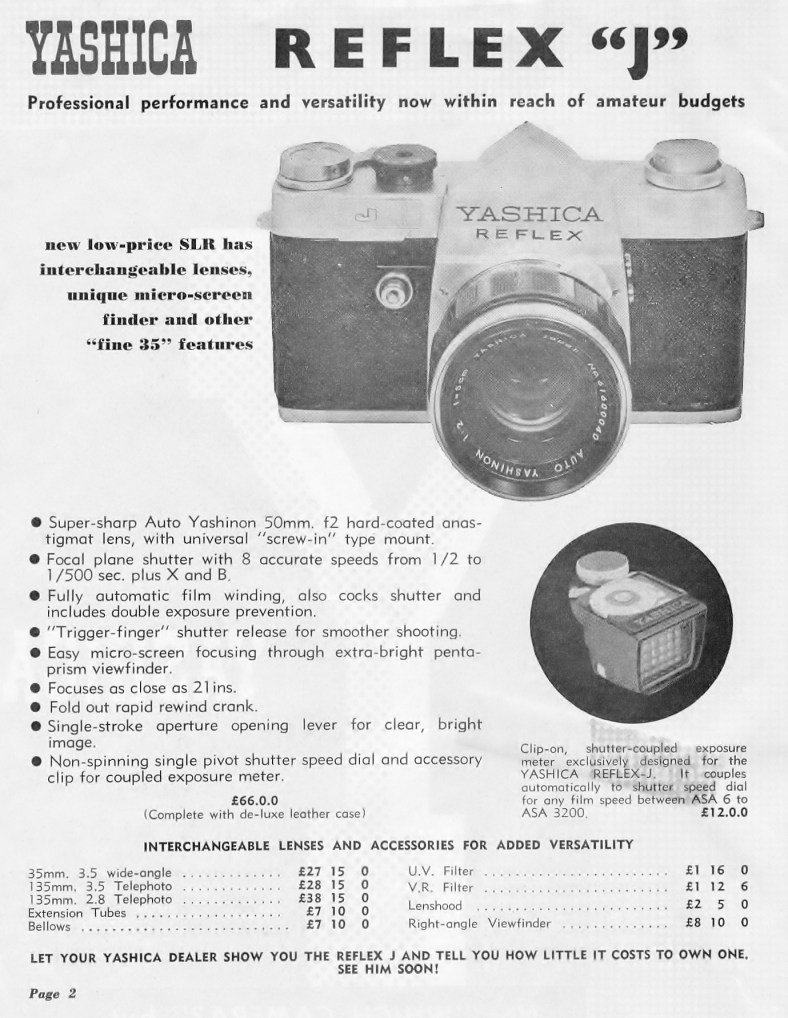
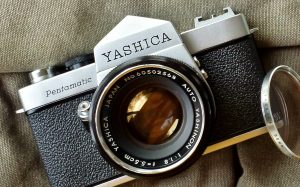
Yashica’s first 35mm single-lens reflex camera with the Praktica-thread (M42) mount lenses was the Yashica Penta J… at least here in the United States and in Japan. Elsewhere (most of the world) the camera was known as either the Yashica Reflex 35 or Reflex J (Australia and possibly the U.K.). As best we can tell, they were all the same cameras with different top plates to accommodate the different names (logos).

Part of the demise (lack of sales success) of the well-built Pentamatic series of cameras that preceded the Penta J, was that Yashica decided to go with a Pentamatic exclusive bayonet mount lens system. Sturdy and well designed to be sure, but being unique limited the available lenses that could be swapped between cameras. The Praktica design M42 screw thread mounting system was in widespread use at the time and Yashica’s bayonet design just went against the flow.

IMG_20160102_0007

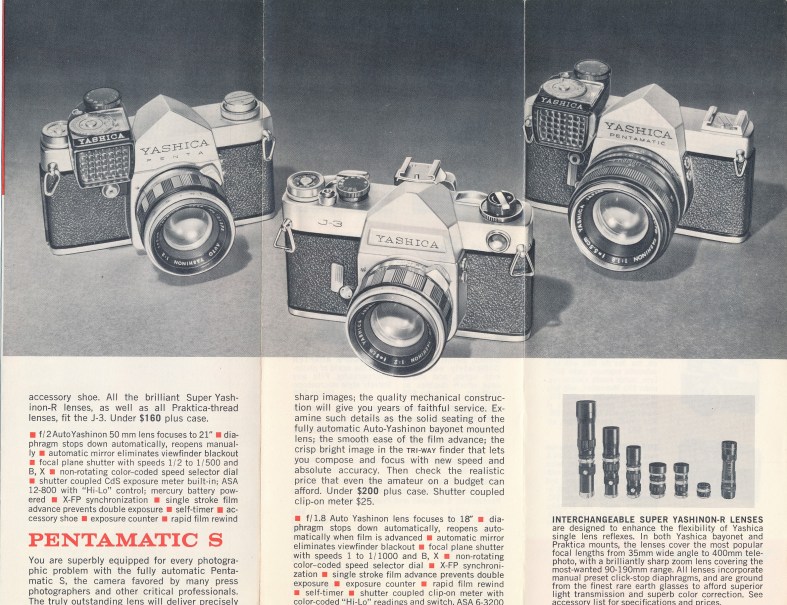
No date on this sales brochure but our guess would be early 1962. The J-3 is the newest camera featured  as it had all the goodies one would want in a modern SLR. The Penta J (upper left) had just come out in 1961 and it was Yashica’s first 35mm SLR with screw thread mounted lenses. The Pentamatic S arrived in early 1961 but used bayonet mounting for its exclusive design. Notice that the pentaprisms on the Penta J and Pentamatic S share the same design while the J-3 breaks with the previous cameras and ushers in the style that would carry through the remainder of Yashica’s SLR run of M42 cameras.

IMG_20150926_0026

Yashica Penta J.

IMG_20160102_0005

Yashica Reflex 35 in Germany.

IMG_20160102_0004

Australian Reflex J sales brochure.

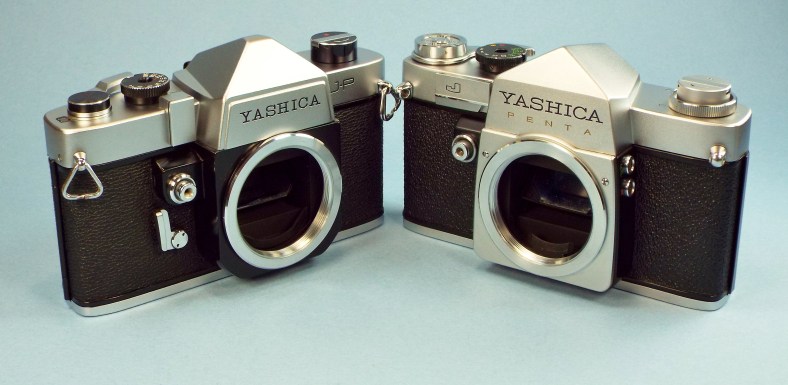
Now fast forward to 1965 ish… Yashica introduces the new J-5 AND the J-P! In between those years Yashica had introduced the J-3 and J-4. Why would Yashica go back in time and bring out another 35mm SLR in 1965 that was the cousin to the 1961 Penta J? Notice we say cousins… not brothers. They shared the same platform with one another but as you can see in the image below the top plates were of a different design.

DSCF1268

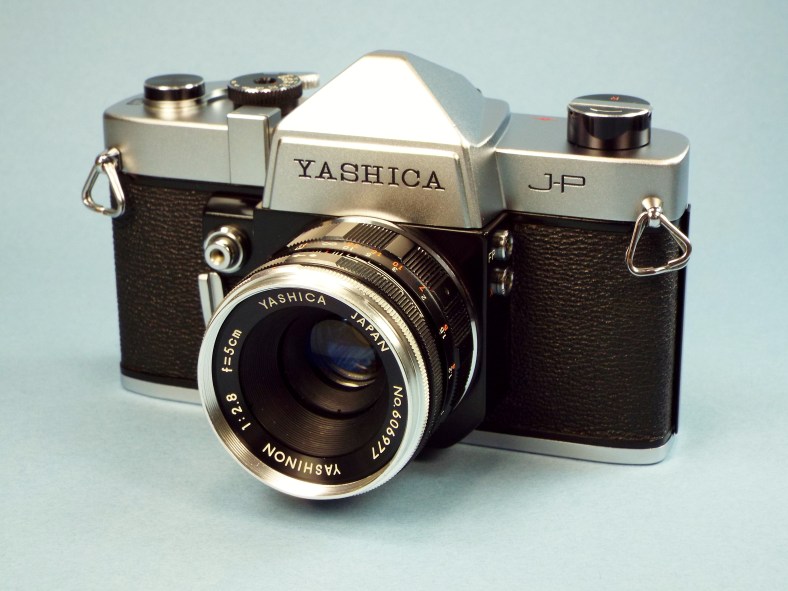
1965 J-P on the left and the 1961 Penta J on the right. Cousins but not brothers. The shutter release button is on the right front on both cameras… Yashica added a self timer on the J-P and of course the top plates are different (most noticeably the design of the pentaprism). Some small changes to the design of the mirror box. Unseen from this view is that the J-P does not have a ASA/DIN dial like the Penta J had on the camera’s bottom left. Small note about weight… Penta J weighs in at 656 grams and the J-P weighs only 619 grams. No built-in exposure meters but accessory exposure meters were available at additional cost.

DSCF1277

The J-P with a rather unique 5cm f/ 2.8 lens. The lens has to be the smallest of the M42 mount lenses and certainly it’s one of the lightest at only 136 grams!

IMG_20150903_0027

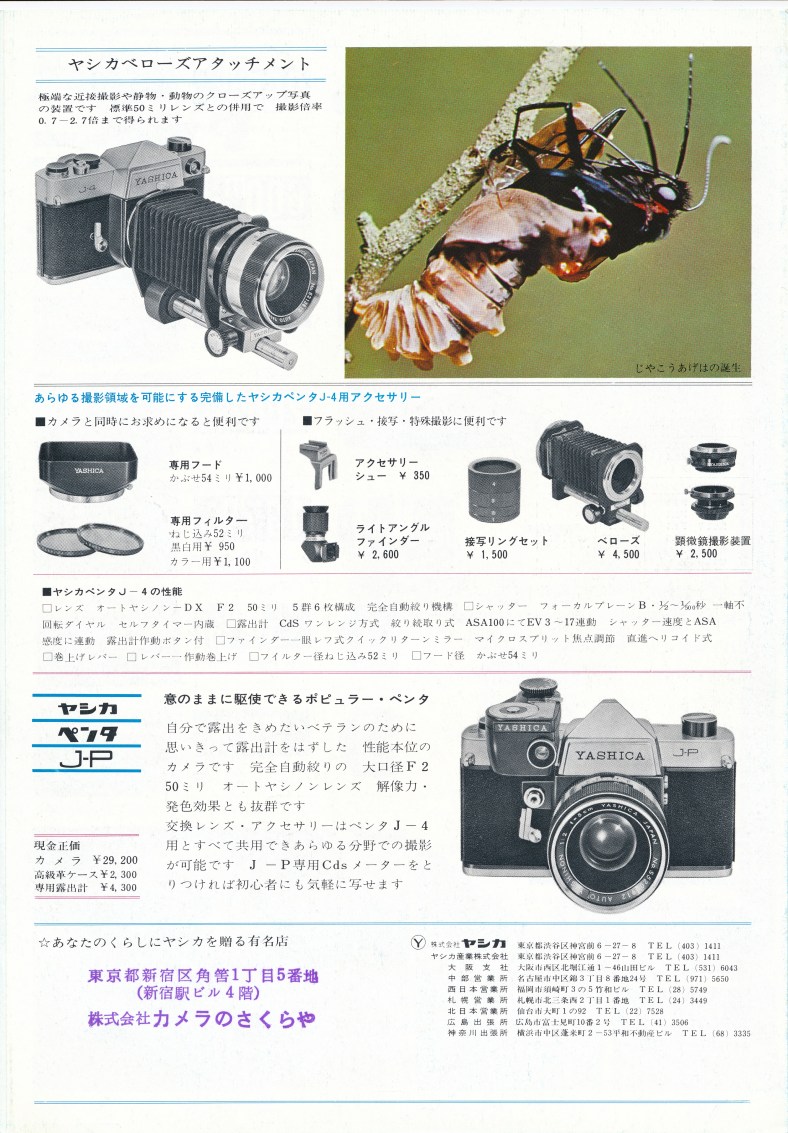
The J-P advertised together with the J-4.

IMG_20150903_0025

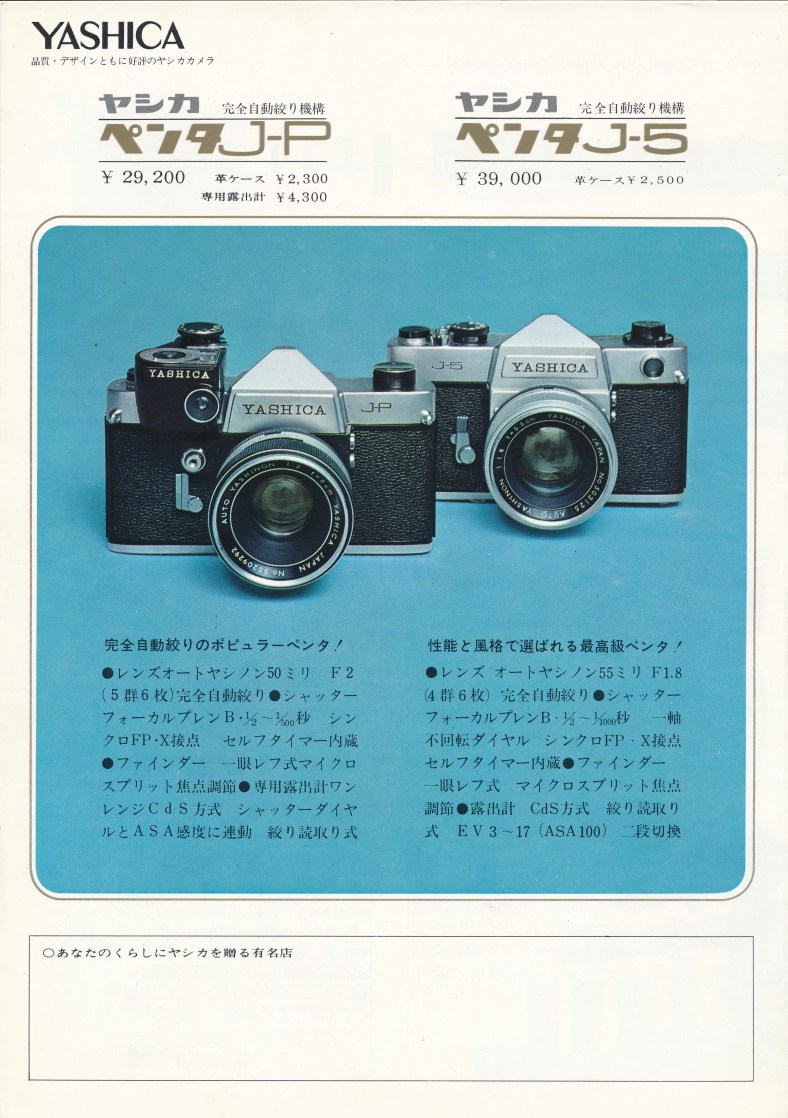
The J-P advertised with the new J-5.

Yashica J-P 6-27-15 Papers

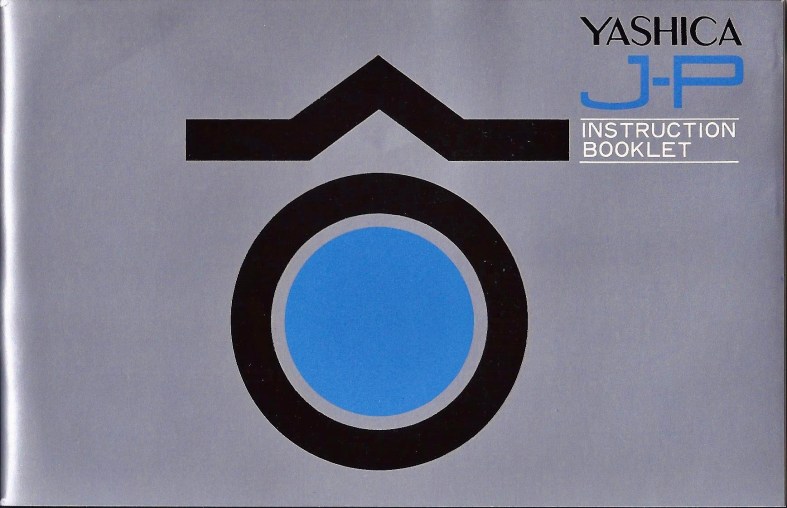
J-P instruction booklet from 1965 (in mint condition too).

Stay tuned… more to come on these Yashica classics.

Many thanks, Chris and Carol


Yashima-Yashica Rookie – 1956

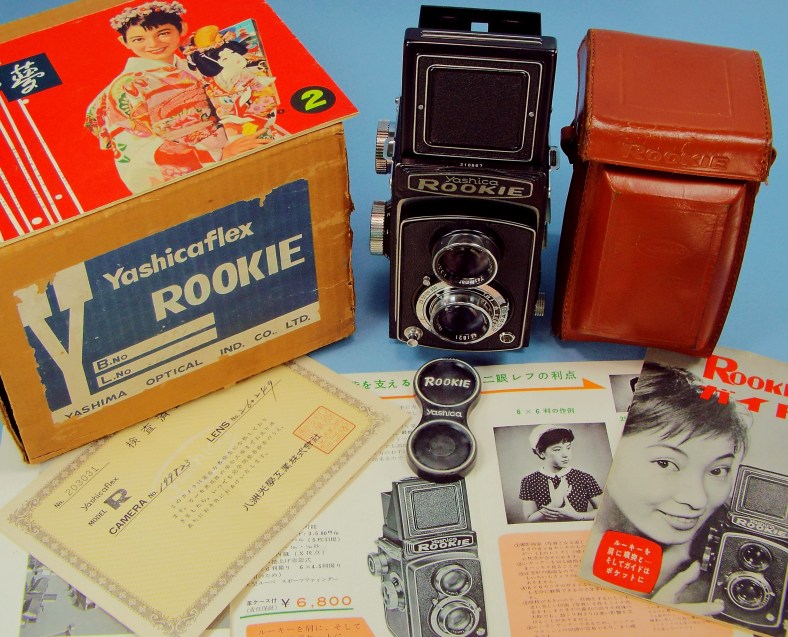
We were finally able to assemble our Yashicaflex Rookie ‘stuff’ for some studio shots. We’re still missing some items to make the set complete but so far the collection is looking good.

014

The outer box (or shipping box) for the camera and its leather case is on the left. Of course the camera is in the center with the Rookie leather case to its right. The Rookie instruction booklet is in the lower right of this image and a colorful Rookie sales brochure is just below the lens cap. A warranty (service certificate) card identifying that this camera is a Yashicaflex Model R is just below the box and finally another sales brochure that features the Rookie is on top of the box.

018

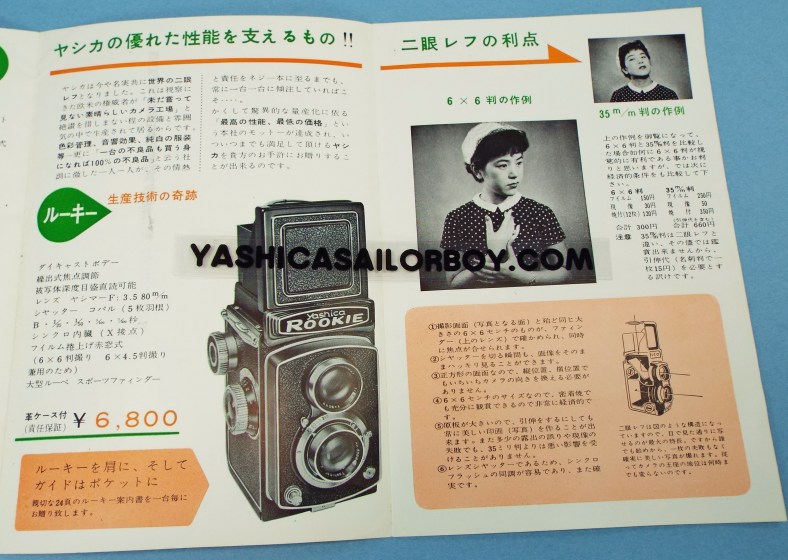
Original 1956 sales brochure.

015

Sales brochure from 1956.

017

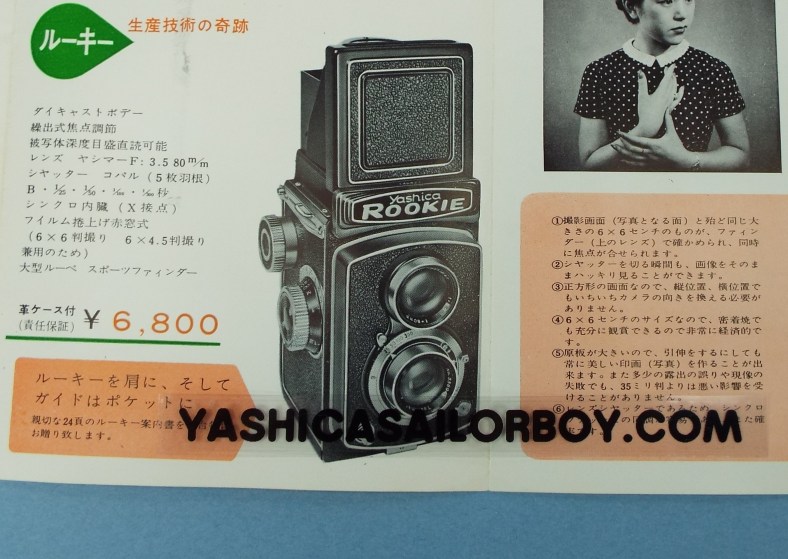
Certainly an entry level twin-lens reflex camera with some nice features.

016

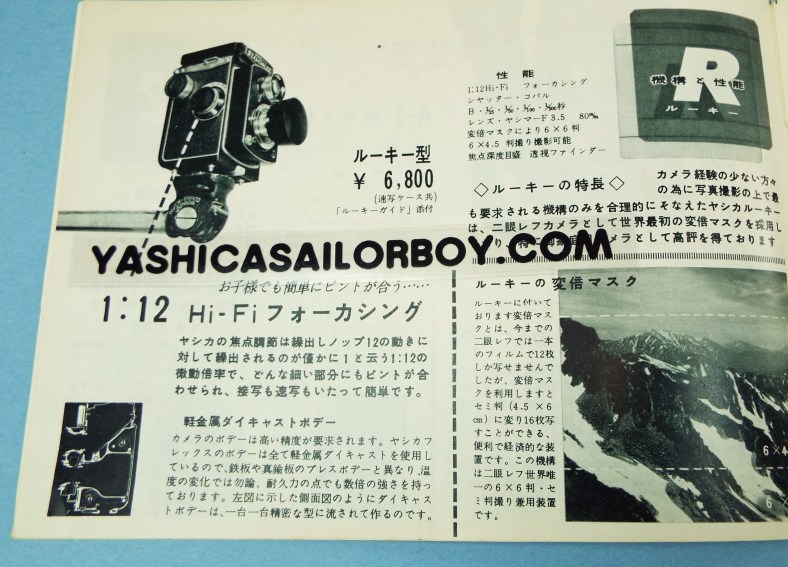
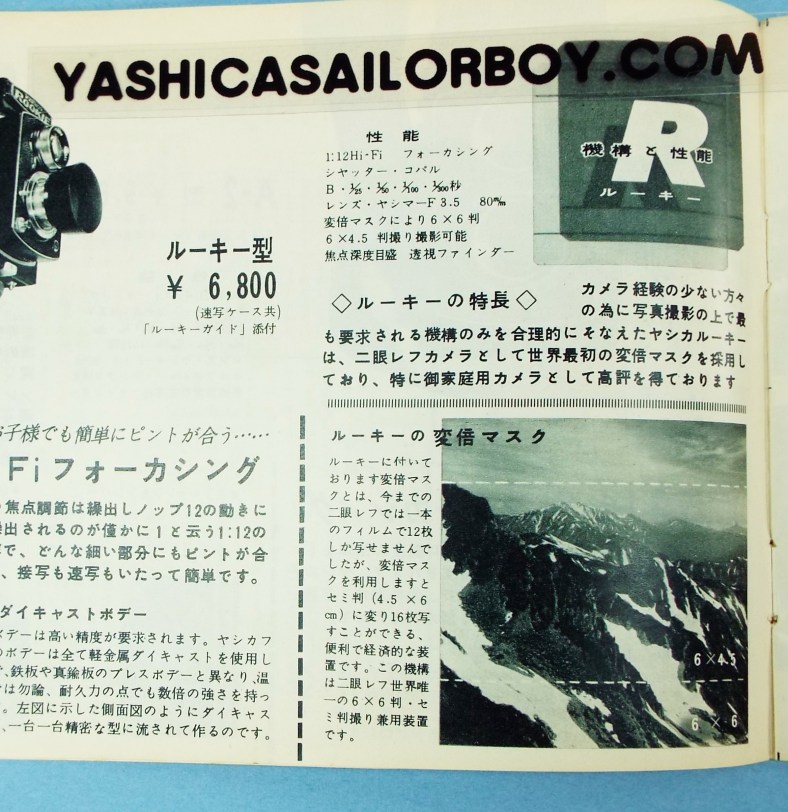
The Rookie could take standard 6×6 cm images or with a accessory kit take 3 more images on standard 120 film and produce 6×4.5 cm negatives.

The Rookie wasn’t popular in Japan and Yashima-Yashica gave it a very limited run. I suspect that some popularity exists today just because it’s seldom seen here in the U.S. and it’s rather hard to acquire a really nice example. We like the camera, the name is goofy and didn’t play well in the marketplace.

As always… we appreciate your visit! Thanks, C&C