More Fuji Photo ‘Fujipet’…

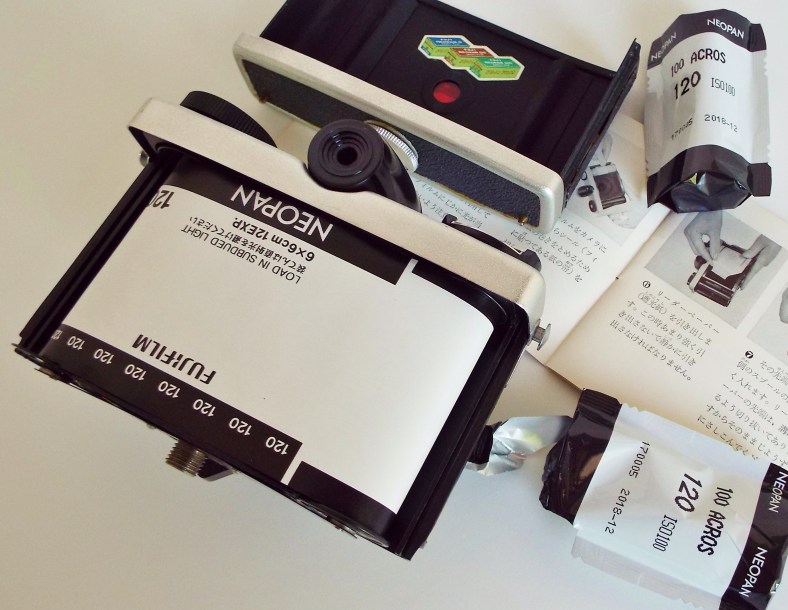
We’re about ready to give our little Pet a work out with some fresh Fujifilm Neopan film. Probably the first time this little beauty had film in it since the 1960s!

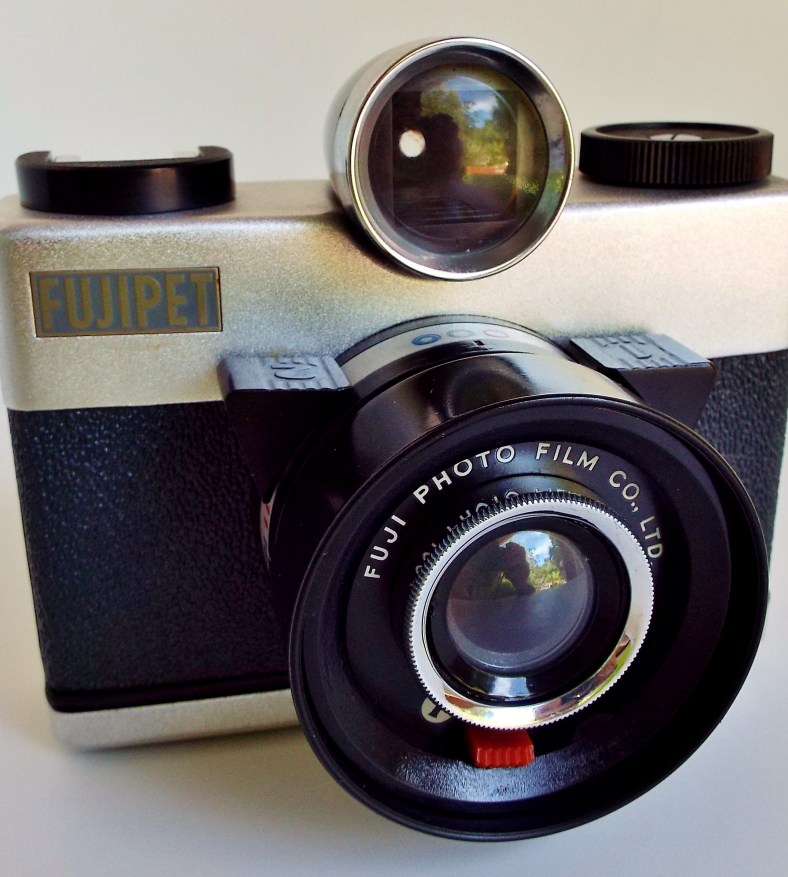
It has a fixed focus plastic lens with a focal length of 70 mm and three aperture settings… f11, 16 and 22. Shutter speeds are bulb and 1/50 of a second. She weighs in at an impressive 288 grams with film!

We’ll be sure to post the images here!

DSCF1708

The Fujipet getting its first roll of film in decades! A fresh roll of Neopan (SS) Acros 100 black and white negative film. Can’t wait to see what the Pet will do!

DSCF1711

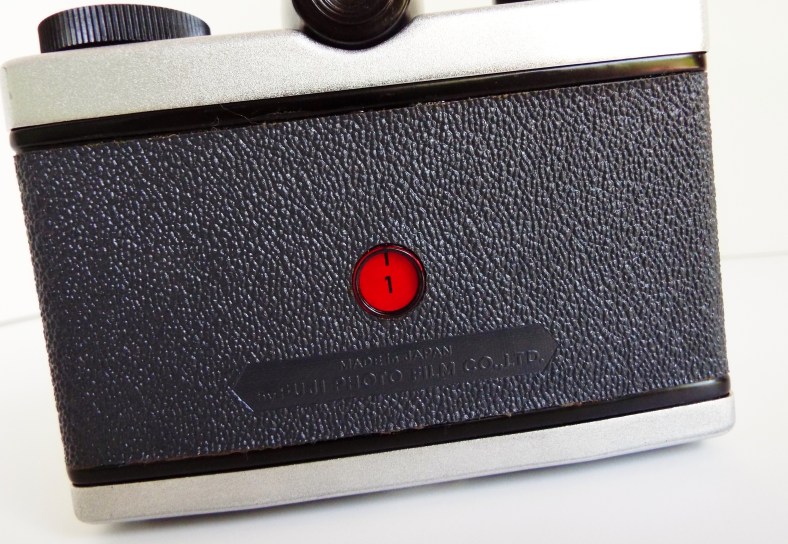
Exposure number one ready to go!

DSCF1713

Ready for some picture taking!

Many thanks for your visit! Please let us know what you think and if you want to share something with us please feel free to do so!

Chris and Carol


Pentamatic Instruction Booklets

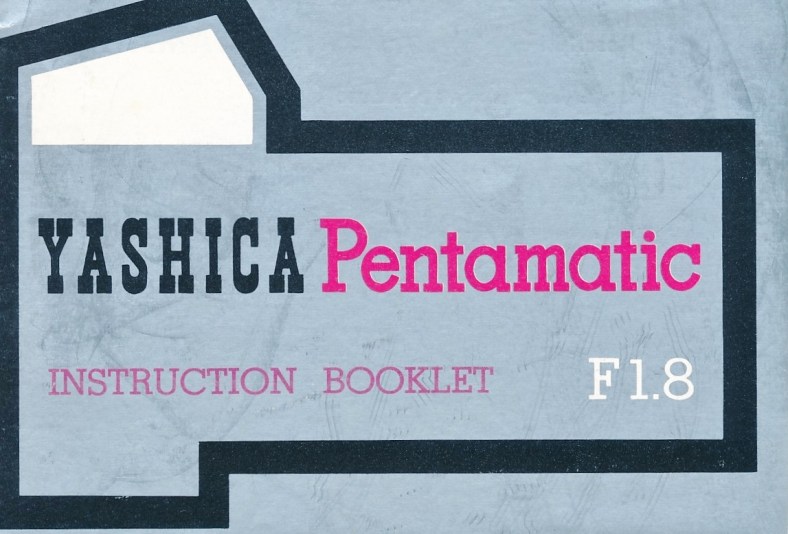
Yashica has always called their user manuals ‘instruction booklets’. Here is a sample of the front and back covers of the Pentamatic ’35’ and the Pentamatic S booklets. These are seldom seen in their proper colors and with this amount of detail. The first booklet’s design draws its inspiration from the box that the camera comes in, which is often referred to as the presentation box. Same colors and same pentaprism design.

IMG_20160812_0016

Original Pentamatic ’35’ front cover.

IMG_20160812_0017

Pentamatic ’35’ back cover.

IMG_20160812_0012

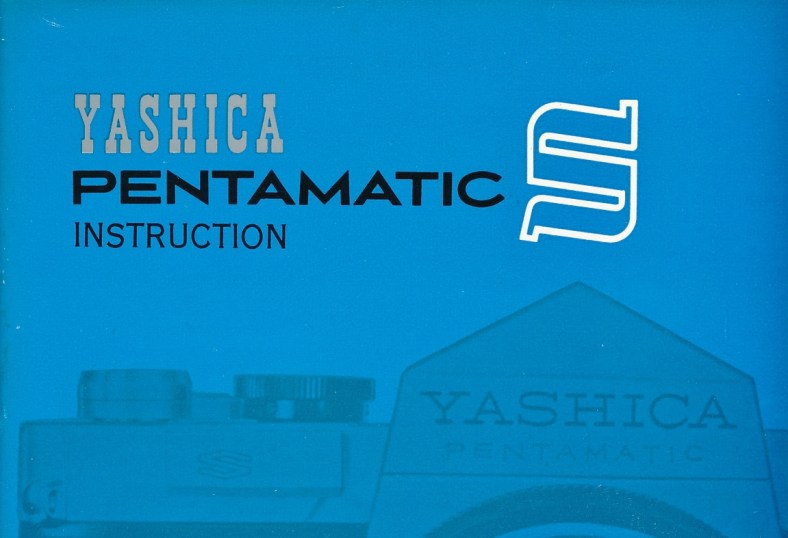
Pentamatic S front cover. Of course this booklet is simply referred to as ‘instructions’. It is one of the few that does not use the word ‘booklet’.

IMG_20160812_0014

Pentamatic S back cover.

We do not have the Pentamatic II instruction booklet and would love to acquire one. If someone has a clear copy of one we would love to see it.

Thanks for the visit! As always, please share with us your likes and possibly dislikes about our blog. We are always looking to expand our knowledge of this often unseen camera from Yashica.

Chris & Carol

Pentamatic S

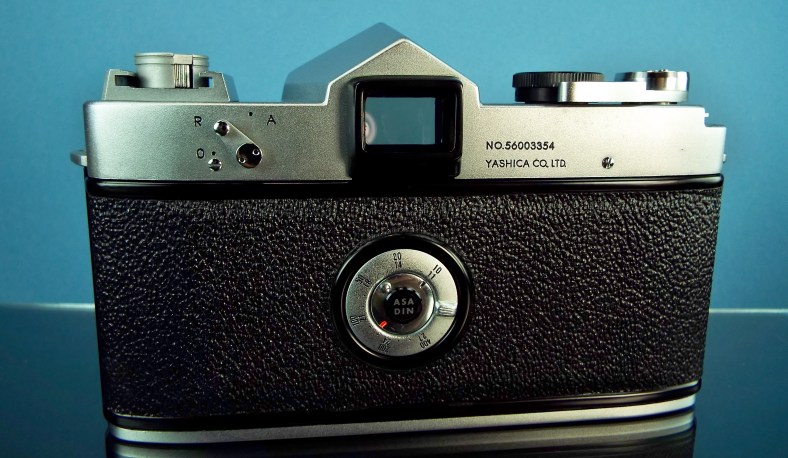
The Pentamatic ’35’ went into production starting in December 1959. Our best guess as to how many were built is just that… a guess based on body serial numbers. The original Pentamatic has a rather easy to decode serial number as it uses the year, month and sequential production number in the overall serial number. An example would be… 56003354. That serial number decodes to ‘5’ = May, ’60’ = 1960, and ‘03354’ = number 3,354 th made since December 1959. Later serial numbers for October, November and December would be 116015100 which would be ’11’ = November, ’60’ = 1960, and ‘15100’ = the 15,100 th made since December 1959.
009

Pentamatic ’35’ made in May 1960 and it is the 3,354 th made.

Staying on our best guess path, it appears that about 16,000 Pentamatic ’35’ bodies were built during the approximately 15 month production run. So that brings us to the Pentamatic S which was the last version of the Pentamatic series of cameras. The serial number date coding theory hasn’t been fully been decoded as there is way too few in our database.
006

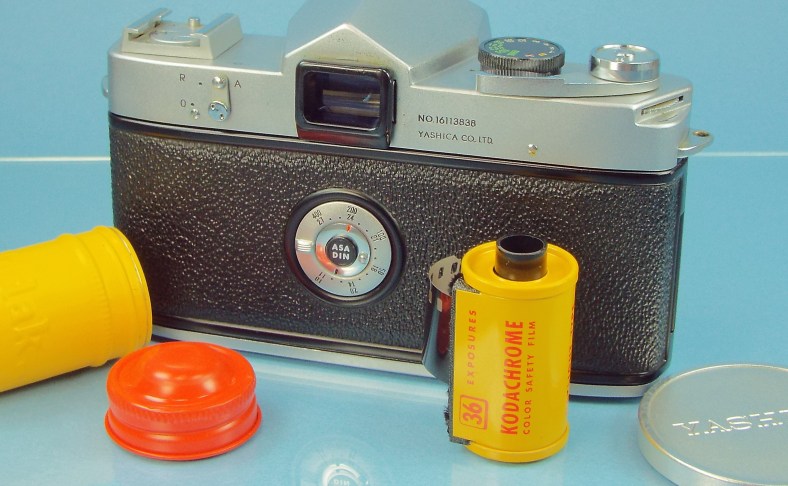
Here’s a Pentamatic ’35’ that was built in January 1961 and was the 13,838 th made since production began.
20150110_142809

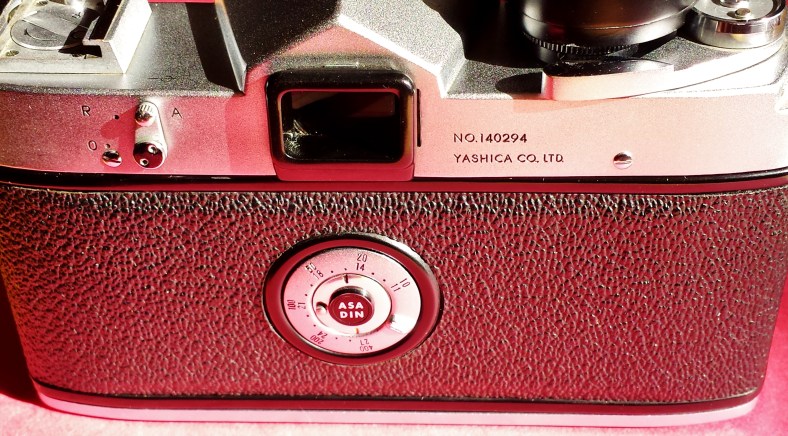
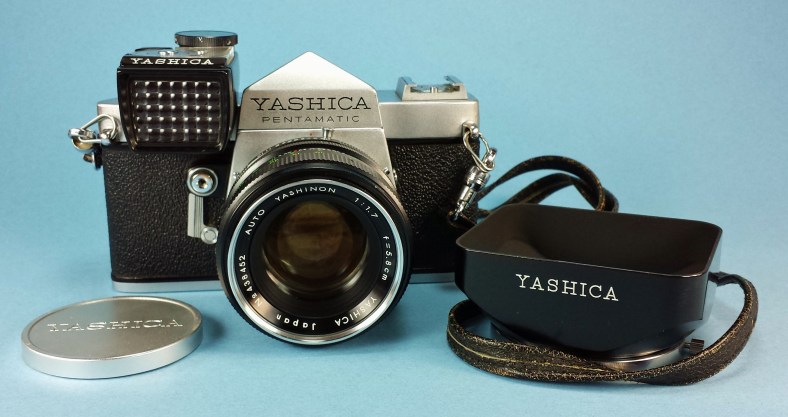
The Pentamatic S back view. Our guess, and it’s a big guess, is that the model S body serial “might” be ‘1’ = 1961, ‘4’ = April, and ‘0294’ = 294 th made.
20150110_132214

Pentamatic S front view all decked out. The lens pictured is the standard lens for the Pentamatic model II.

Thank you for your visit and as always, please share your views with us and please, if we’ve made a mistake correct us! Our goal is to provide the most accurate data on the Pentamatic series.

Chris and Carol
Yashica This and That… 8.10.2016

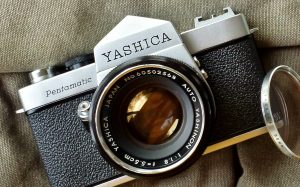
It would appear to the casual follower of this blog that we may have strayed off the Yashima-Yashica path a bit with our recent posts about the Fuji Photo Fujipet and the Shinano Pigeon 35 Model IIB. Yes we have and we’re even further away from current posts about the Yashica Pentamatic series of cameras. Guilty on all counts!

One of the things that attracted us to the Pentamatic 35 mm SLR in the first place was the general lack of accurate information on the web about the “mysterious” and seldom seen Pentamatic. Our goal was to enlighten the web with some new and hopefully correct info about Yashica’s first single-lens reflex camera which was released in the first half of 1960.

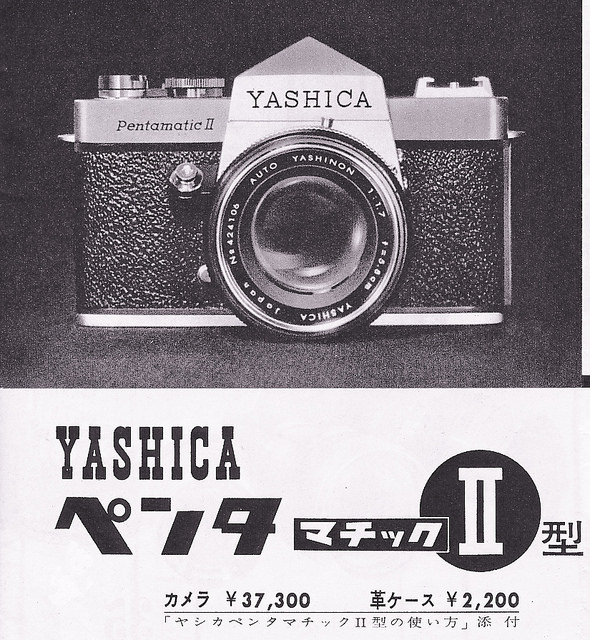
Our attempts to locate a good (and affordable) Pentamatic Model II for our collection have hit financial deed ends… that is to say that occasionally a Model II does come to auction but are going for near record prices in the ¥30,000 range and better! That is an indicator to us on just how rare that model is and why it shouldn’t be passed up by the collector. There is only a slight difference between the two models but in the terms of units sold new, the original Pentamatic 35 outsold the Model II at a 3 to 1 ratio or more. The Pentamatic S which was the last in the series, isn’t even advertised in the mainstream photography magazines of the early 1960s. In fact, magazine ads from as late as June 1962 were still running ads for the Pentamatic 35 and nothing for the Model II or S. Yashica pulled the plug quickly on the series and adopted the M42 mount for all future 35 mm SLRs.

27356135700_b0c5ef23fe_z

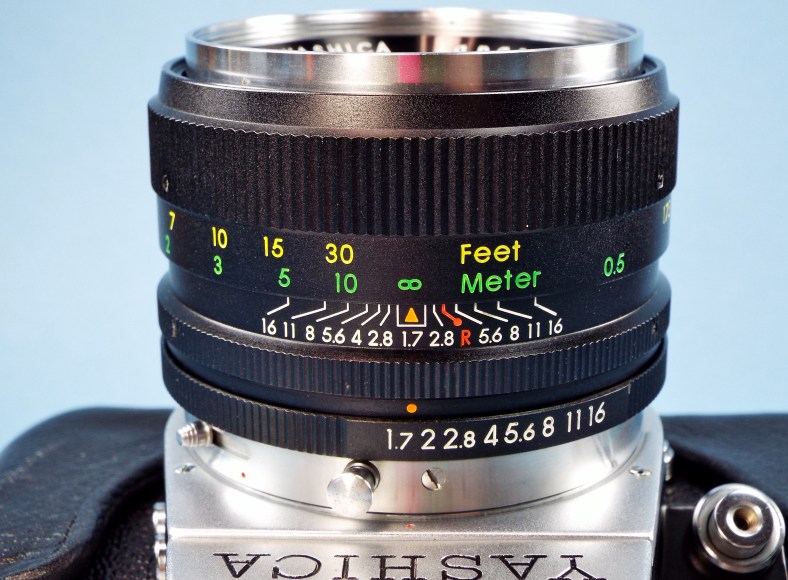
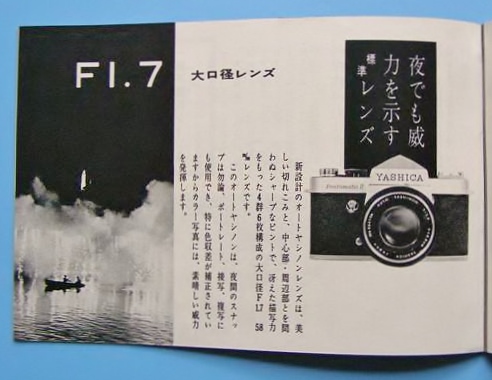
The biggest change from the original Pentamatic 35 was the change over to a new lens (made by Tomioka Optical). The first Pentamatic came with the 5.5cm f/ 1.8 lens with exclusive Pentamatic bayonet mount. The Model II was fitted with the rather odd 5.8cm lens and a slightly faster f/ 1.7 aperture. It still held on to the bayonet mount.

017

The “new” Pentamatic Model II lens.

Brochure c1961

Could it be true? The first sighting of the Pentamatic II in a sales brochure for the Japanese home market.

Thanks for stopping by !

Chris and Carol


More for the Fujipet- ting Zoo…

We were able to scan some images from the Fujipet’s instruction booklet and a scan of the ‘warranty card’ / registration card. If you’ve read one of our previous blog posts about the Fuji Photo Film Company’s Fujipet, then you have been introduced to a rather unique camera from Japan in the late 1950s.

IMG_20160809_0003

A scan of the front cover of the Fujipet Camera instruction booklet. c1958

IMG_20160809_0004

Back cover of the Fujipet instructions. Nice graphic showing which Fuji films to use given the sun conditions of the day.

IMG_20160809_0011

Near the back of the user’s book is this lovely model showing us how to use a flash gun not mounted to the camera’s accessory shoe. The only problem… no direct wire connection.

Here is a scan of the front and back of the warranty / service / registration card that came with the Fujipet.

IMG_20160809_0009

A scan of the front cover of the Fujipet Camera instruction booklet. c1958

IMG_20160809_0008

The reverse of the card where you can tell Fuji Photo the who, what, when and where of your purchase.


Tomioka Beauty…

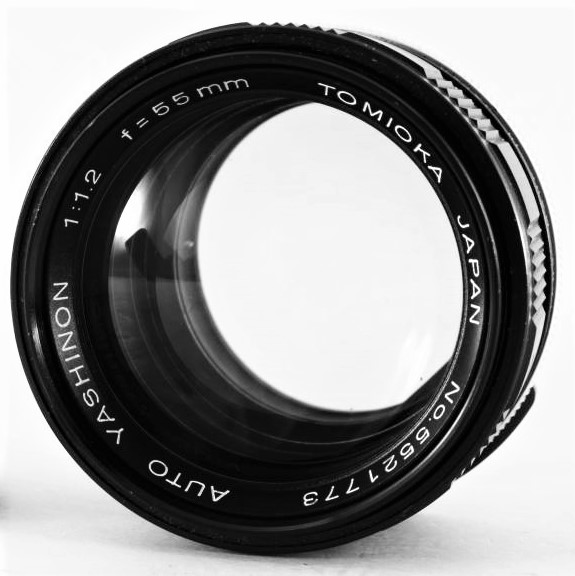
tomioka 1.2 japan 7-25-2016

Tomioka Beauty… rather rare lens in this apparently near mint condition. If we understand the serial numbering system… the ‘552’ is the model number if you will (for lack of a better term). The 55 = 55 mm and the ‘2’ is the maximum aperture of 1.2. The next numbers are the production sequence numbers… 1,773 rd made.

So there you have it! One of the best of the original super fast 55 mm lenses for the M42 mount.

Have a great Yashica Day!

Notes for 6.28.2016

Wow! Hard to believe that June is almost over! The summer is going to be long (always) and hot (yep)… no forecasting needed there.

We’ve been reviewing some of our early 1960s photography magazines… always looking for any mention of the Yashica Pentamatic ’35’ that we may have missed in the first glance. The May 1960 issue of ‘Modern Photography’ magazine… on page 48 the new Pentamatic makes its appearance in an article titled ‘Behind the Scenes’. It is incorrectly listed as having a f/1.9 55mm automatic lens (the image clearly shows the f/1.8 5.5cm lens). But at least it’s recognition!

IMG_20160627_0003

May 1960 ‘Modern Photography’ magazine article that states that the Pentamatic will be available “soon”.

Another note we would like to share with you is that we recently discovered a new Japan Shopping Service… Zen Market. Their site is super easy to navigate and offers a wide variety of different outlets to shop from. You can find them at http://www.zenmarket.jp/

The translations are very good and the searches are easy. Give them a look!

Stay well and thanks for checking us out! C&C

Quick Pentamatic News… 6.26.2016

We’ve recently discovered a neat magazine advertisement for what appears to be Yashica’s full line of film cameras from sometime in 1962.

I personally haven’t seen an ad from this period in an English language magazine… I feel that ads like this help to date and understand Yashica’s thinking when it came to production and marketing.

LifeMag1962

The 35mm single-lens reflex cameras in this ad from 1962 are… top left is the Pentamatic S, the next camera down is the Penta J and the last SLR is the original Pentamatic ’35’.

IMG_20160630_0005

The Yashica family from ‘Life’ magazine advertisement 1962. By the way, the dad is holding the Pentamatic S.

An interesting mix of cameras… 35mm SLRs, 6x6cm TLRs, 4x4cm TLRs, 8mm movie cameras and some lenses, flashes and of course 35mm rangefinder cameras.

We are looking into acquiring the ad so we can present a higher quality image.

Thanks for looking!

Chris and Carol


Super Rare Tomioka Tominon Lens

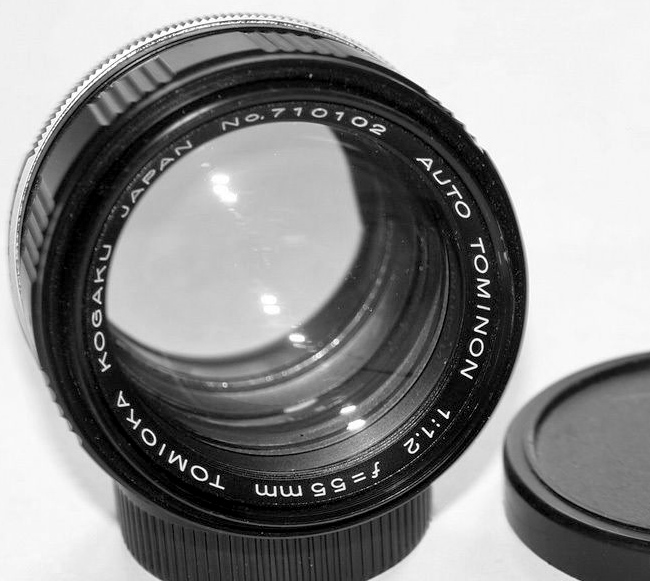
We found this lens recently while surfing various sites. It’s the first time I’ve seen the famous f/ 1.2 M42 mount lens with the original maker’s marks and serial number. Just a really nice find!

tomioka tominon f 1.2

Super rare Tomioka Kogaku (optical) Auto Tominon f 1.2 55mm lens. Looks to be in excellent condition overall. Knowing just a bit (actually very little) about Tomioka, the serial number is in sequential production number which would make this lens the 102nd lens off the production line! Wow!

Nope… it’s not our lens (wish it was) and we can’t afford it but at the time of this blog post it was for sale on one of the well known auction sites ($1,450.00)…

Go for it!!!

Thanks for looking… Chris and Carol
Yashica TL-Super!

Another big step in Yashica’s growth was the groundbreaking introduction of the TL-Super in 1966. Yashica started making 35mm single-lens reflex (SLR) cameras in 1959 with the Pentamatic ’35’. The Pentamatic was a solid first offering by Yashica but it was a timid first step. On one hand, the Pentamatic was a beast but lacked some serious upgrades… no self timer and no built-in exposure meter. The self timer was not much of an issue as Yashica made an accessory timer that could be used on many of their camera platforms and was simple to use. There was an option to buy a separate exposure meter (more money) and slide it on the accessory shoe so that at least you didn’t have to hold a meter in your hand to take a meter reading. Awkward. What was groundbreaking for the TL-Super is the fact that two CdS resistors were mounted inside the finder and would accurately measure the amount of light actually reaching the film. The ‘TL’ part was for through-the-lens metering (TTL) and it became the standard practice from that point forward.

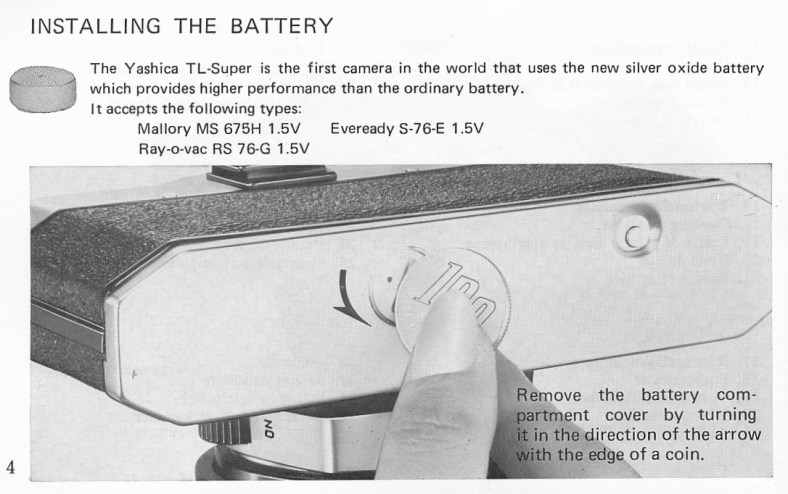
Two other firsts for the TL-Super… first camera in the world to use silver-oxide 1.5v batteries and the Super marked the first time Yashica permanently mounted an accessory shoe (hot shoe) to the top of the pentaprism. Small stuff but big for Yashica.

Over the course of production for the TL-Super, two versions (3 actually) were made. V1 still used a baseplate locking system similar to the previous ‘J’ series of SLRs. The film advance lever was a rather plain but elegant lever much like some very early Yashicas used. The lenses were chrome nosed Auto Yashinons and came in two different apertures… f/ 1.7 and f/ 1.4 50mm. V2 changed the baseplate to a new cleaner style that no longer had the locking lever to open the film back. Instead the back was opened by lifting the rewind lever upwards and that would release the door. The film advance lever changed to a part metal and part plastic design which looked more like the more modern cameras at the time (1967-1970). The lenses became the black nosed Auto Yashinon-DX 50mm in both f/ 1.7 and f/ 1.4. The third unofficial version? Mine. Caught between part upgrades my Super has the old style film advance lever but has the later baseplate and uses the rewind knob to pop open the film back. My Super also came with a black nosed f/ 1.4 lens and a much later edition of the instruction booklet. So I’ll call it V1 (a).

DSCF1218

TL-Super version V1 (a).

DSCF1210

Beautiful Auto Yashinon-DX 50mm f/ 1.4. Made by Tomioka Optical of Tokyo. The serial number starts with a ’54’. 5 = 50mm and the 4 = f/ 1.4. The rest is a production sequence number.

DSCF1212

Rather nice logo.

IMG_20160607_0001 (3)

Version 1 (1966) Instruction Booklet.

IMG_20160607_0003 (3)

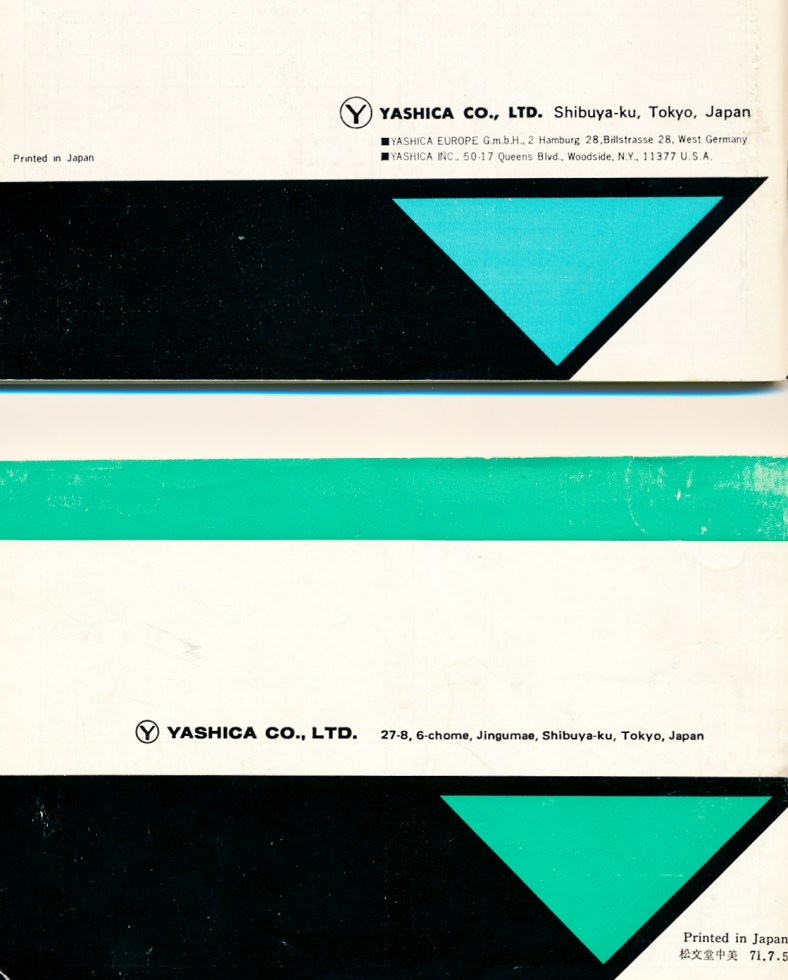
Version 1 (top) back cover of the Instruction Booklet. Note the blue color. Version 2 (bottom) is the back cover to the Instruction Booklet. Note the green color. This one is also dated… 1971 July 5.

IMG_20160607_0004 (3)

Version 1 baseplate. Note that it uses the old style (previous ‘J’ series SLRs) of open and close locking lever for the film back.

IMG_20160607_0014 (3)

Version 2 baseplate. Locking lever has been removed. The film back now opens via the rewind knob.

IMG_20160607_0005 (3)

Version 1 differences from the newer V2 design. Locking lever and smooth metal film advance lever.

IMG_20160607_0006 (3)

V2 baseplate and film advance lever changes from V1.

TL_SuperAd

Typical of Yashica… no date on this ad but it does look like a V1 camera.

Thanks again for your visit! Chris and Carol

Please feel free to comment or add items that we may have overlooked.