Pentamatic II Update… 6.12.2016

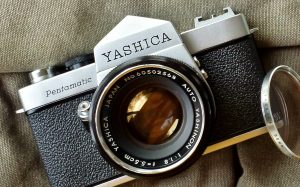
A little info about a Yashica Pentamatic II that was spotted the other day. Well today actually! It sold for around $112 with the f/ 1.7 lens and the original leather case. As best as we can tell it was far from ‘nice’. That price gives you some idea on how infrequently the Model II shows up for sale.

The body serial number is No. 86000631… that would put it in line with the serial numbering system established for the Pentamatic I. Not very many of the Model IIs were sold as the production run was extremely short as best we can tell. The Pentamatic S “replaced” the Model II by late 1961. We haven’t found concrete evidence as to why Yashica brought out the Pentamatic Model II to begin with (with so few changes). Was the Model I that much of a failure?

This serial number would decode to: ‘860’ = August 1960 and the ‘00631’ = the 631st in the production sequence.

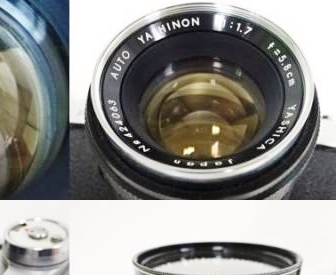
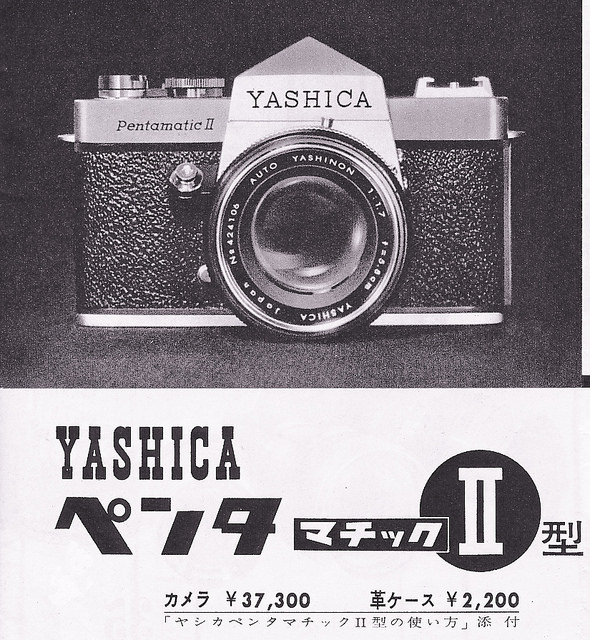
The lens appears to be a “newly designed” lens that Yashica asked Tomioka Optical to build… a unique 5.8cm f/ 1.7 Auto Yashinon (rather odd size for a normal lens on a 35mm SLR). The lens was an early replacement (?) for the recently made Auto Yashinon 5.5cm f/ 1.8 lens which was the normal lens for the Model I. We haven’t cracked Yashica’s serial number code yet on these lenses as there are not many to look at. At first glance it would appear that the ’42’ is a model number of the lens with the ‘4065’ being the 465th lens made. A Japanese sales brochure for the Model II (dated 02/1961) has a clear serial number on the lens: 424106. Remember that the brochure had to have at least a month or two lead time so the image of that lens and body were more than likely taken in the August-September period of 1960.

06-12-2016 pentamatic II 2

Pentamatic II with serial number NO.86000631. That puts a date of August 1960 and it was the 631st made in the production sequence. Of note, the Pentamatic I was still in production when the Model II came out.
06-12-2016 pentamatic II 2 (2)

The Pentamatic II with the standard lens of a new design and strange focal length. The serial number is: No. 424065.
27356135700_b0c5ef23fe_z

From a sales brochure dated 02/1960, this Pentamatic II was fitted with the new 5.8cm f/ 1.7 lens with a serial number of 424106.

As always… we appreciate any and all comments you may have and would love for you to share them with us. Especially if you have new information about the Pentamatic series of cameras.

Thanks… Chris & Carol


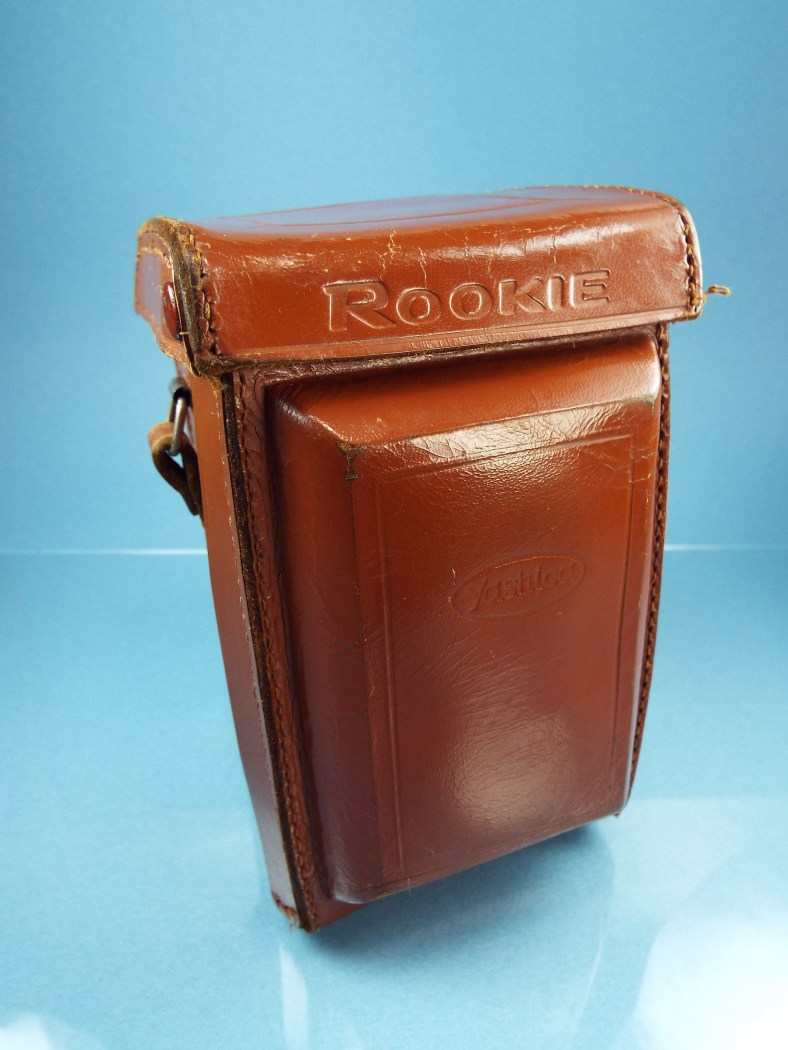
Yashicaflex Rookie Leather Case

The Yashicaflex Rookie or more simply the Rookie, was released in early 1956 and was destined for the domestic market only. There is some evidence that it may have been initially designed as a super inexpensive camera that would be sold worldwide (mostly because of the name and the fact that the presentation box has ‘for Jr.’ on it which would have little or no meaning inside Japan). The camera was in fact only available in Japan and all of the literature is in Japanese with no English ads found.

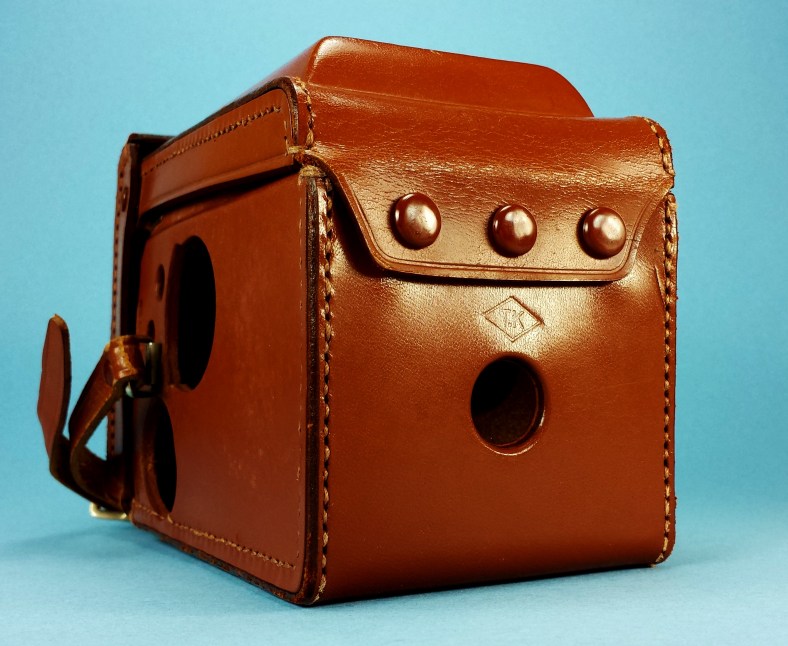
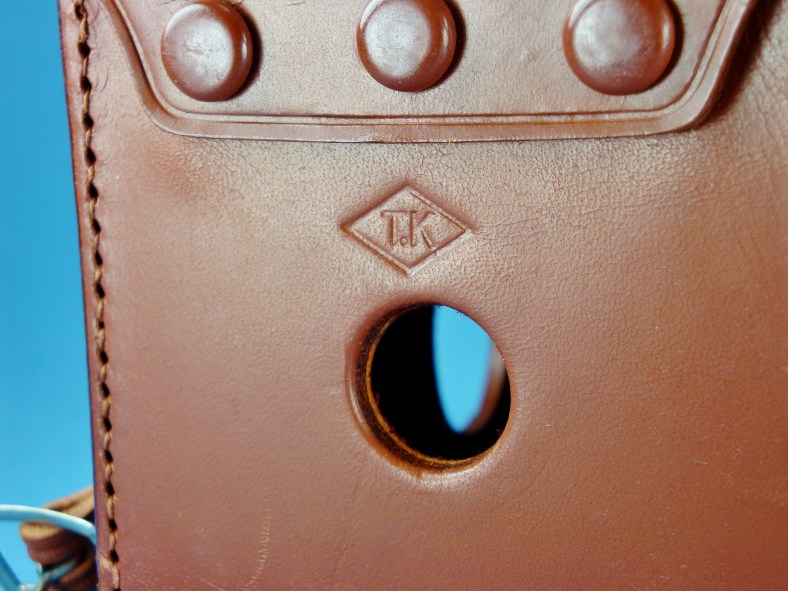
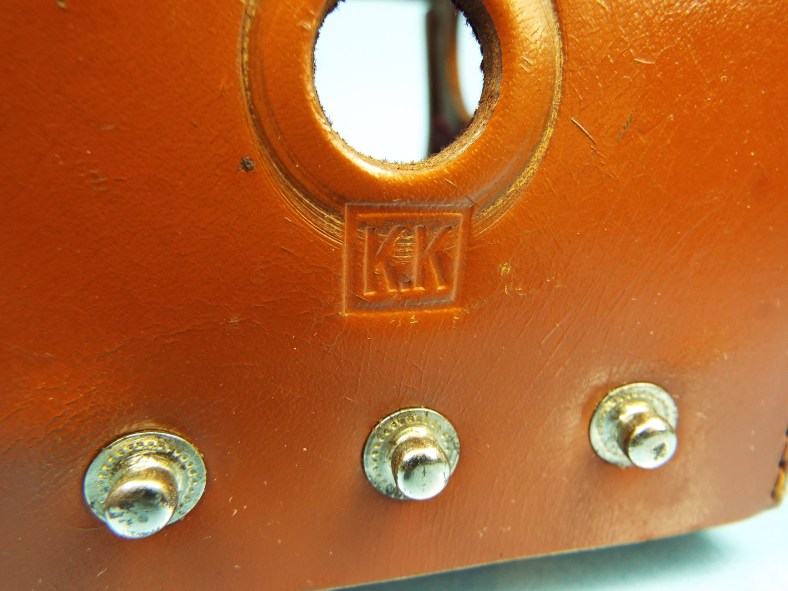
Back to the case or as they are often referred to as an ever ready case. The marks on the bottom of the leather case have a very distinct K.K in a box design (image 1 below). We believe that in the early days of Yashima-Yashica that they did not have they capability to produce their own leather goods. Nothing we have proves that theory but it’s just a hunch on our part. We believe that this mark and other marks similar to it are the trademarks or makers marks of the leather goods company that provided them to Yashica. During this same time period Japanese tin toy makers had similar marks on them and the coincidence is not all that coincidental.

As Yashica grew it is possible that they did in fact take over the manufacturing of leather goods in their factory in Suwa as the cases of the early 1960s rarely if ever had these trademarks.

015

Distinct trademark on the bottom of the 1956 Yashicaflex Rookie.

017

Leather ever ready case for the Rookie.

20150127_090712

Leather case for the Yashica Flex model S from the mid 1950s.

DSC07334 (2)

Another view of the ‘T.K’ trademark.

As we find others we’ll be sure to share them here.

Comments? Please feel free to add them as you see fit.

Many thanks… C&C


Yashica-Tomioka Macro Lens

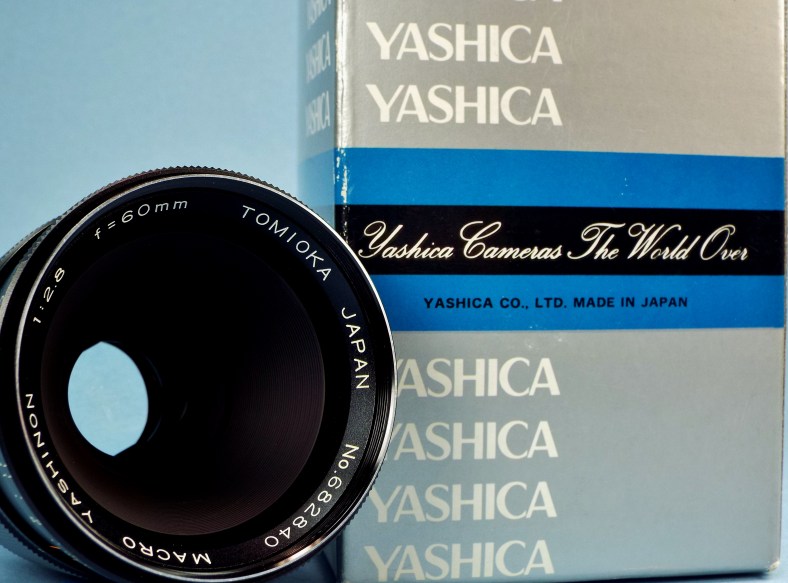
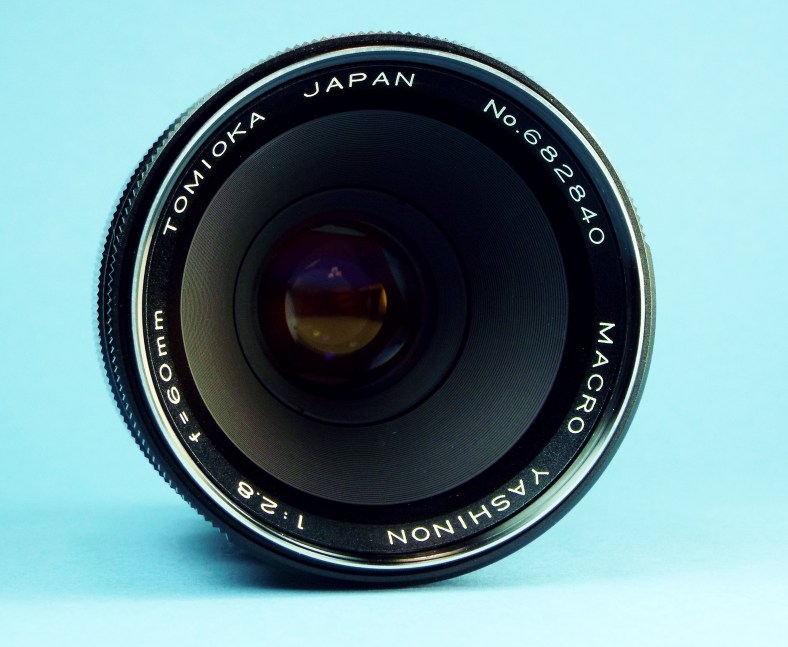
One of our favorite lenses in the Yashica family. A rather fast f/ 2.8 60mm macro lens made by Tomioka Optical Co., Ltd. of Tokyo for Yashica. 5 elements in 4 groups… it’s capable of life-size (1:1) macro photography. As Yashica describes this lens… “By far the most effective lens for close-ups, copying and macrophotography, as well as general photographic work. Features a new optical glass element, and is fully compensated for all aberrations. Designed to ensure maximum brightness and extremely sharp results. Particularly effective for close-ups of moving subjects (??) and macrophotography without using bellows.” Not sure about the moving subjects part as the depth of field is very shallow.

Weighs in at around 400 grams and can focus down to 0.235 meters. Filter size is 58mm and of course it has the versatile M42 screw-in mount (Praktica).

003

Macro Yashinon 60mm f/ 2.8 lens built by Tomioka Optical for Yashica.

011

Just a beautifully designed lens. Here the ’68’ represents the ‘model number’ of the lens and the ‘2840’ is the production sequence number… 2,840th made.

013

I believe an early 1970s designed box. Could be the late 1960s but it doesn’t line up well with other boxes from that same period. Yashica acquired Tomioka in around 1968. Always surprising that Yashica still had the Tomioka brand on their lenses (but Tomioka had a great reputation) so one could see why.

More Yashicaflex Rookie

The Yashicaflex Rookie holds a rather unique position among the Yashima-Yashica line-up of twin-lens reflex (TLR) cameras during the decade of the 1950s. As discussed elsewhere here in our blog, Yashima-Yashica sold more TLRs during the 1950s than any other manufacturer in the world, Japan and Germany included.

The Yashica Rookie as it is more commonly known, was designed (we think) for purchase only within the domestic market of Japan. The focusing scale is in meters… not feet and meters as most export models were. There is plenty of advertising associated with it in 1956 and 1957 but everything we’ve seen is in Japanese including the instruction booklet. The price was an attractive ¥6,800… with leather case and lens cap included!

Rookies are not commonly found outside of Japan but are rather common on Japanese auction sites (1-3 per month). Due to the often harsh climate across Japan (hot, humid summers and brutally cold winters) and lack of modern climate controlled living spaces, many Rookies suffer from corrosion, mold, lens fungus and leatherette peeling to be blunt. Finding one that works and does not have these issues is a challenge.

011

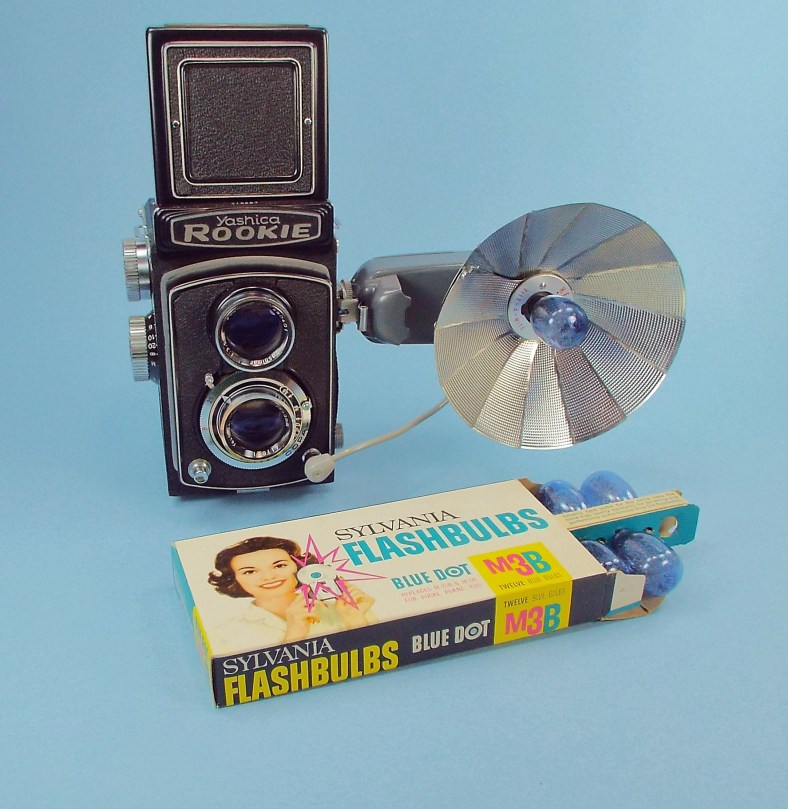
This Rookie is from late 1956 as best as we can tell based on the serial number on the body. Here it’s presented with a Heiland ‘Tilt-A-Mite’ flash unit (from 1959) and age appropriate flashbulbs. If you look closely at the camera’s left side you can see a slight ‘bulge’ in the leatherette covering. Many Rookies lose their ‘face’ leatherette as the painted smooth surface underneath is not the best for holding glue for 60 years or so.

015

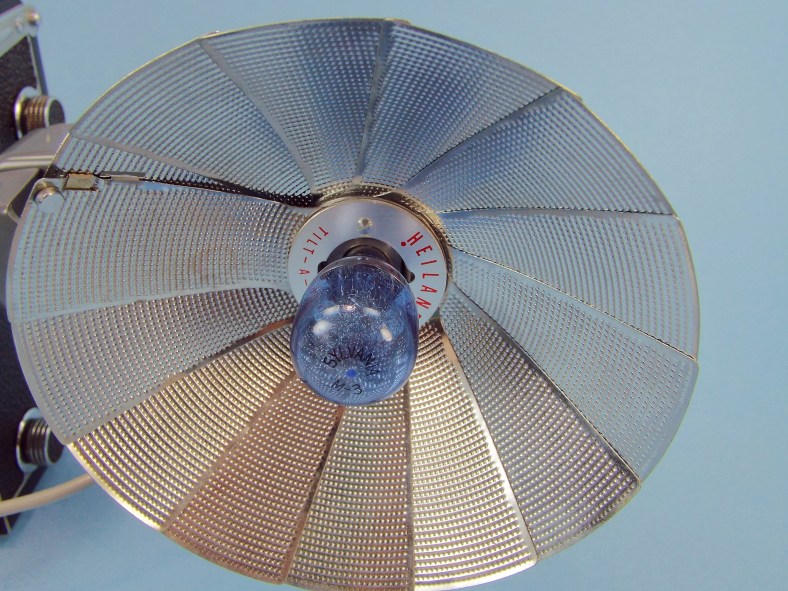
A close-up view of the Heiland flash as mounted on the Rookie.

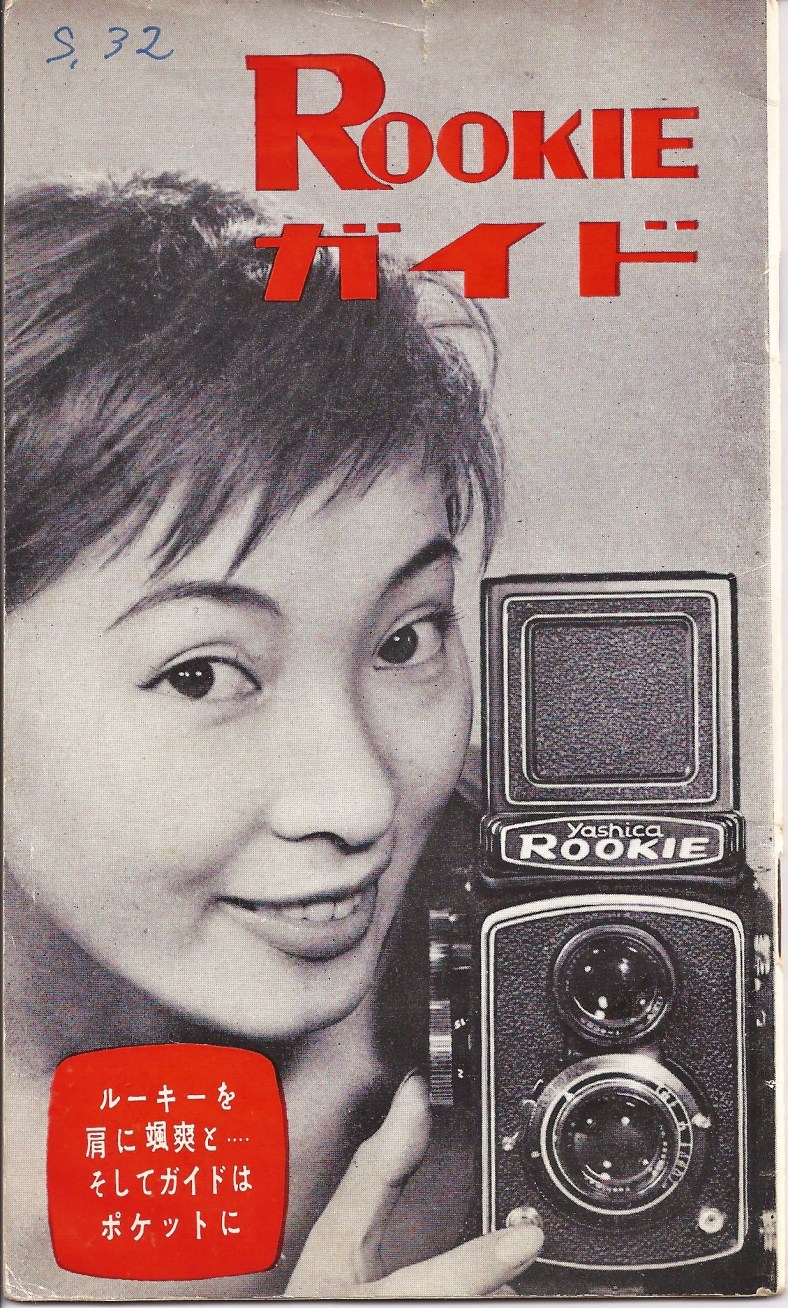
yashica rookie manual

Scan of the Rookie instruction booklet cover (1956).

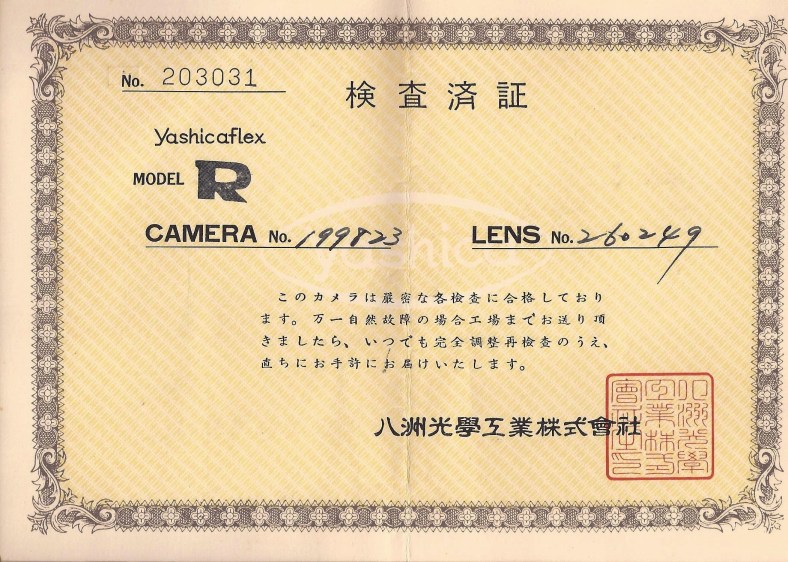
yashica rookie warranty

Yashicaflex Model R (Rookie) service (warranty) certificate from Yashima Optical Industry Co., Ltd.

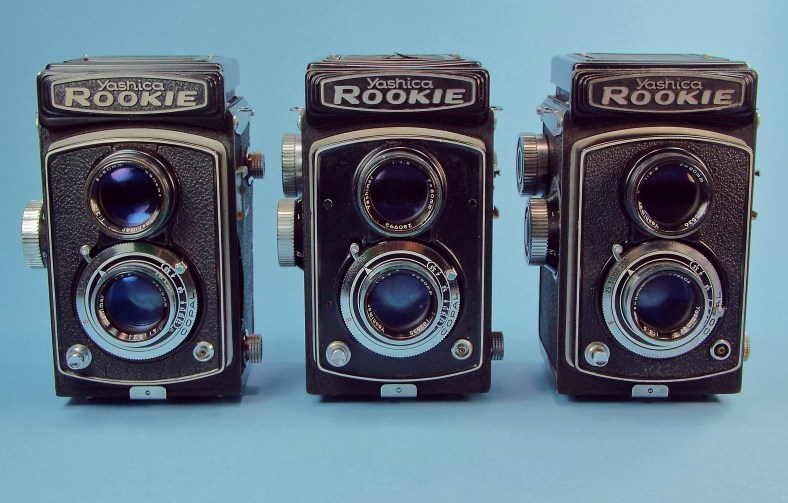
017

Three Rookies from 1956.

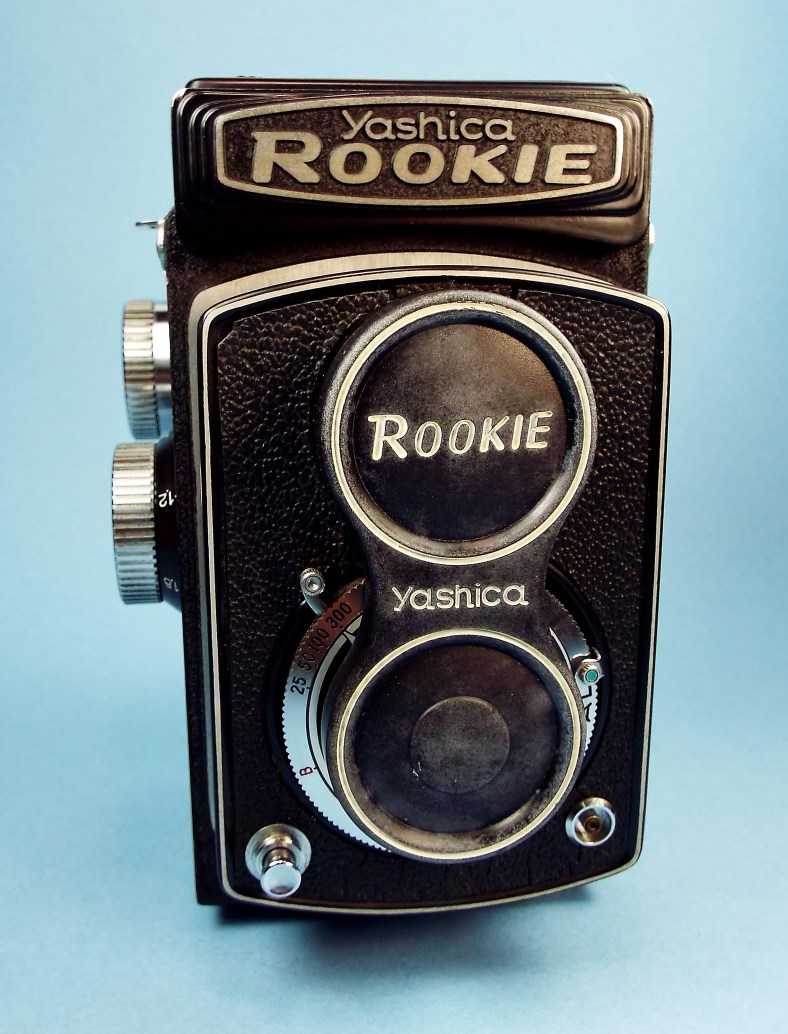
001

Rather hard to find Rookie lens cap. 

Lots of stuff about this unique Yashica. Many thanks for your visit and feel free to ask questions or correct us if we are incorrect. Chris & Carol

Neat Little Find 5.3.16

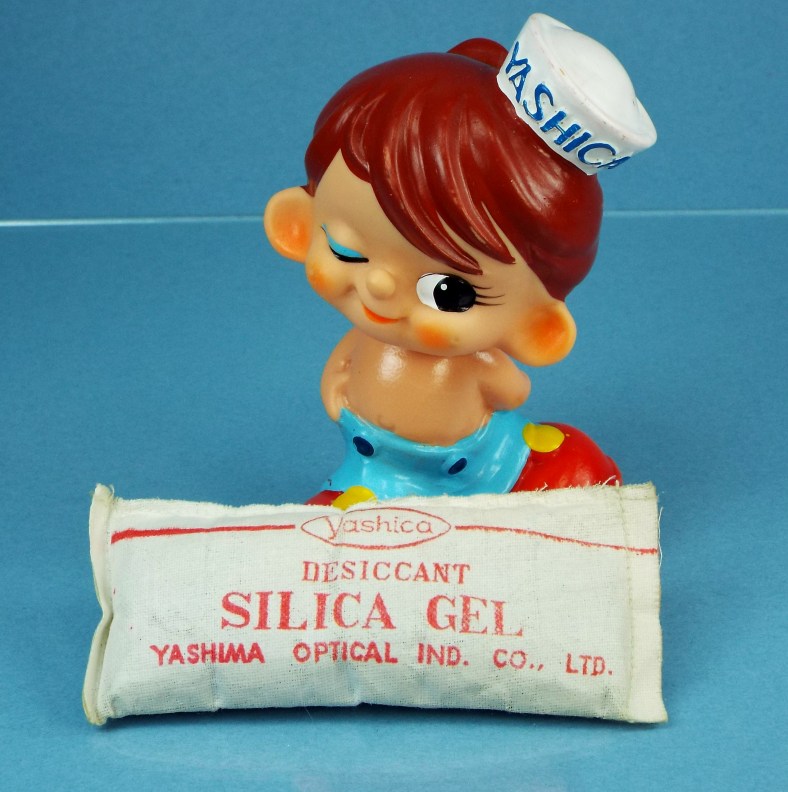
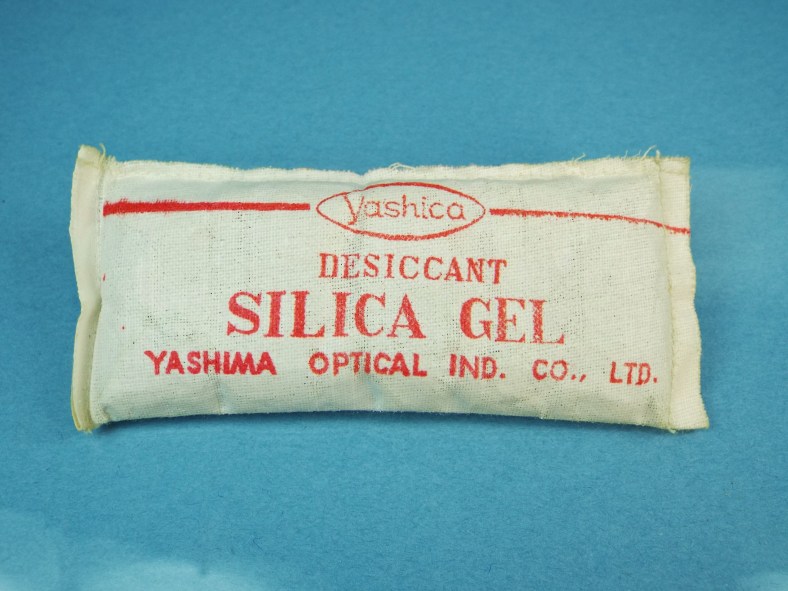
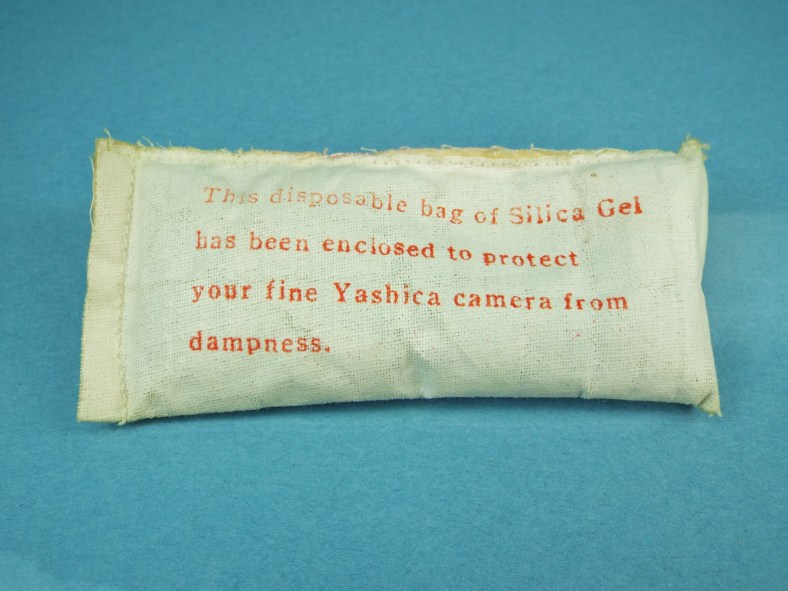
Another of what we call the ‘littles’ that make collecting fun for us. Yashica-Yashima dual named item from around 1958. Shortly after this one was made most of the new silica gel packs used the new Yashica Co., Ltd. name on everything.

004

‘Sailor Boy’ displays the Yashica-Yashima silica gel pack from 1958. For reference the doll is about 4 inches tall.  

001

Front view.

002

Back view.

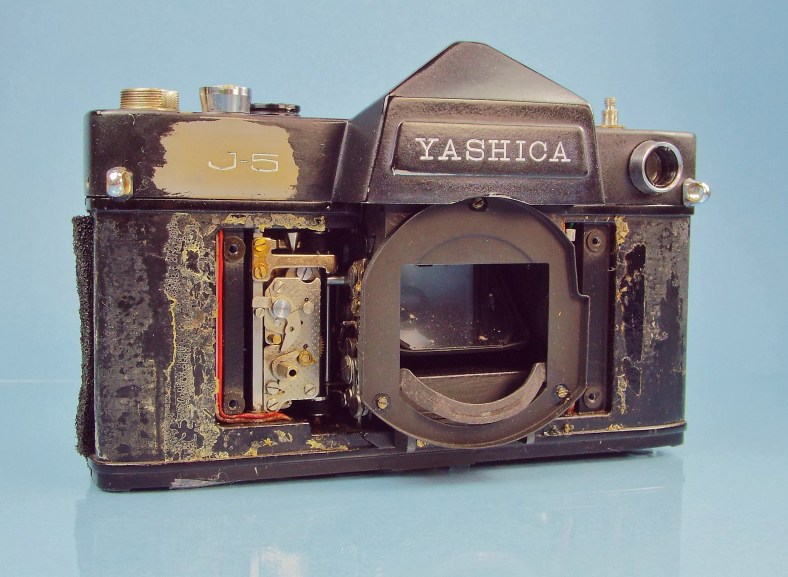
‘Faked’ Yashica J-5 in Pro-Black Body

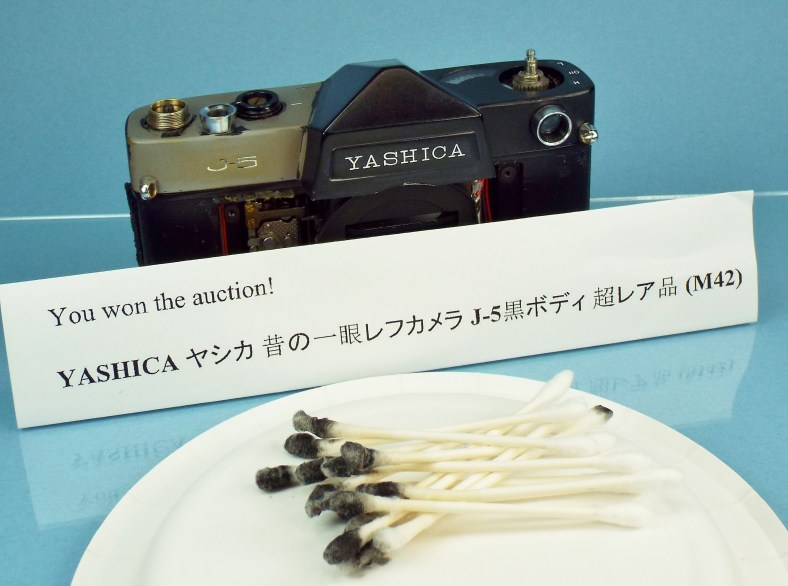
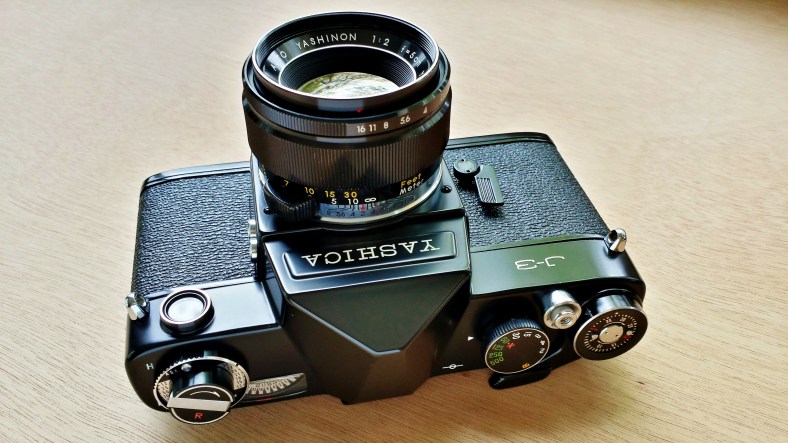
Some time ago we purchased (through auction) what was listed as a rare black body Yashica J-5. The camera was sold by a well known camera dealer with a long ‘track record’ of prior excellent sales. We know from our research and hands-on experience that Yashica’s first ‘Pro-Black’ 35mm SLR was the J-3 as we own two of them and have sold others that were in our collection.

I (Chris) knew that there was about a 99% chance that this J-5 was faked and I don’t have a problem with buying modified or restored cameras as long as it is disclosed as such. But I took a chance on this one even though there were numerous red flags about its originality. The bidding was through an online auction site in another country and my desire to own this ‘rare’ camera got the best of me. My purchase bid went for much more than a typical J-5 should go for and I actually paid more for it (not including the over-the-top shipping fees) than one would pay for a genuine Pro-Black body (from the Yashica factory) J-3.

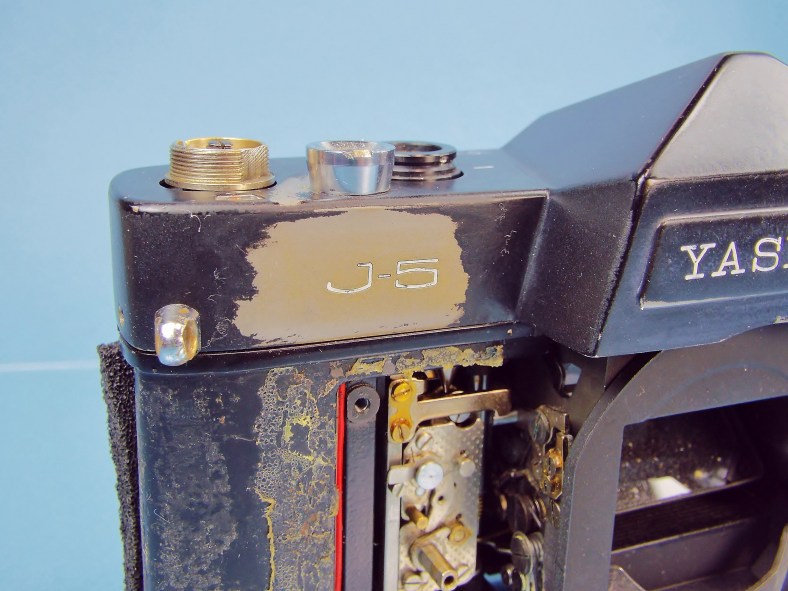
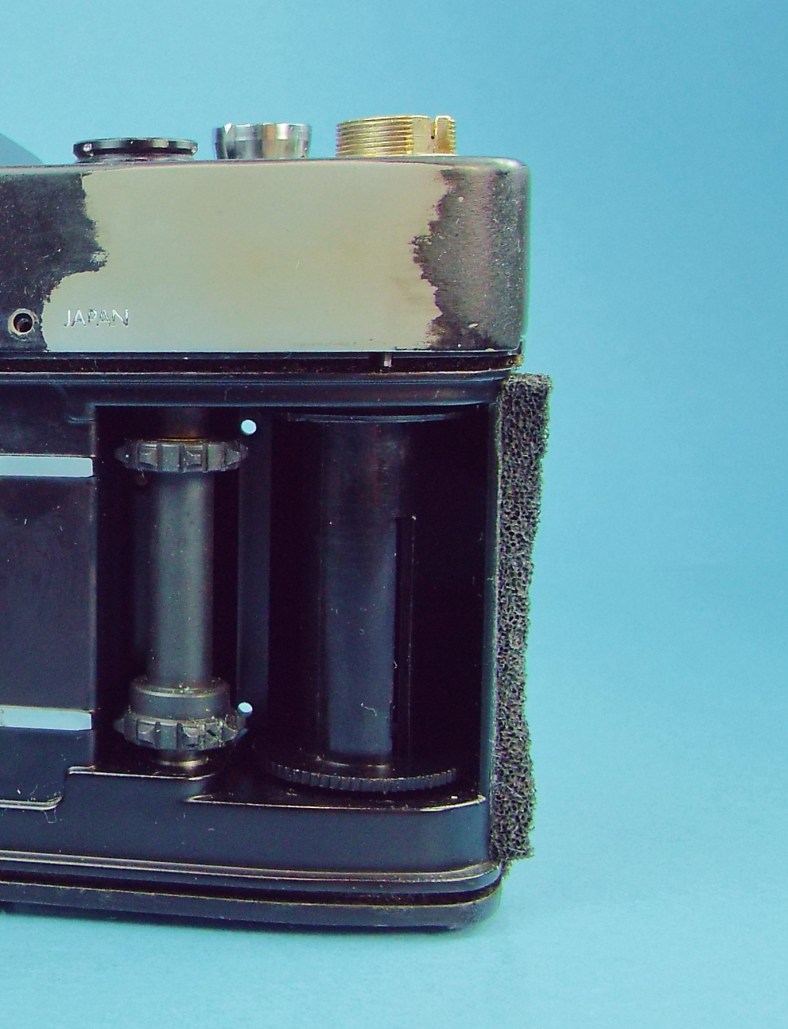
After looking at my new fake for some two years now, I’ve decided to remove the still fresh black enamel paint and reveal the satin chrome body underneath its black mask.

At this point the camera will get what I call an ‘interpretive restoration’ and will be reassembled in a way fitting a mid 1960s Yashica classic.

010

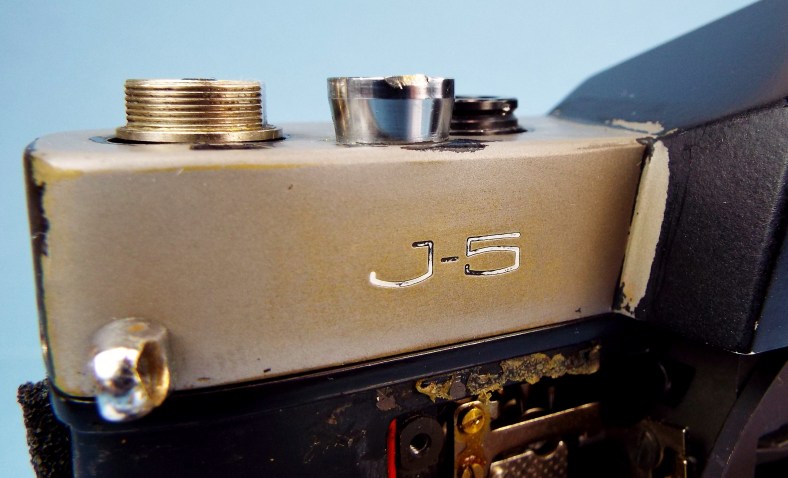
As you can now plainly see, the original satin chrome (silver) body is now exposed and in this image the ‘orange peel’ black enamel paint is obvious especially around the ‘YASHICA’. The leatherette has been removed and the residual adhesive remains visible at this point.

011

Upon closer inspection (now that the black is gone) it appears that the original satin chrome (silver) factory finish was heavily sanded almost to the point of the brass showing through. The enamel black comes off super easy with 91% isopropyl alcohol and a cotton swab. For some strange reason the factory etching of the J-5 logo was filled-in with white paint before it was buried under the black. Silver body Yashicas were filled-in with black.

012

Another view (right rear of the body) of the original factory finish underneath the faked black top coat.

010

It will take a bunch of cotton swabs and plenty of isopropyl alcohol to rid this J-5 of its black top-coat.

009

So lesson learned for me… only trust in what you know exists… if it’s not documented elsewhere as existing then it’s been faked. But, and it’s a big but (pardon the pun), Yashica has never mentioned that they made a black body J-3 in 1963. I know they exist from the factory as I’ve studied it extensively and know they are real.

Watch as we reimagine this camera and give it a new life!

Many thanks, Chris and Carol

Heavyweight Champion… the Pentamatic!

Having only fond memories of the 1960s era SLRs can be quickly erased by putting a neck strap onto a Pentamatic and walking around with it. My first SLR was a Yashica TL Electro-X purchased in the PX at Patrick AFB near Cocoa Beach, Florida in 1972. I remember that with the normal lens (50mm f/ 1.7) attached it felt like a lead weight swinging from your neck and thumping against your chest with every step taken. But I can at least take comfort in the fact that I didn’t have to lug the Pentamatic!

007

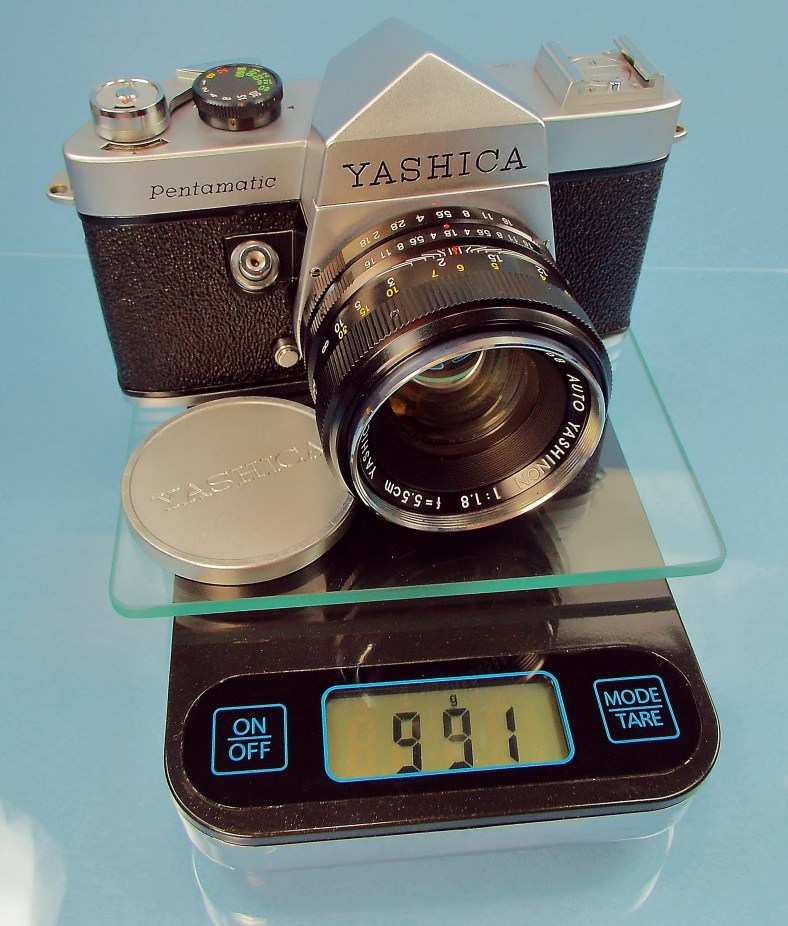
Lots of brass and glass… nearly a kilogram of stuff here and that’s without film! Two pounds of camera can leave someone with a very stiff neck.

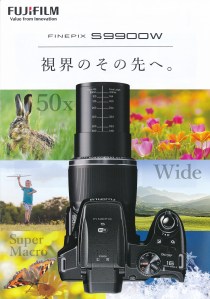
Conversely our new Fujifilm FinePix S9900W comes in at only 674 grams! But if you’ve never composed a picture with a beast like the Pentamatic then you missed out on some of the nuts and bolts of photography. But we’re happy to embrace the new technology… can’t wait to see what’s next on the horizon.

IMG_20160317_0003

Our Fujifilm. Beautiful and very capable camera.

Many thanks for the visit! Chris & Carol

Yashica ヤシカ This & That

You know when you get a new toy… the photographic kind, you’ve gotta play with it just to see its capabilities and possibilities. Our new Fujifilm FinePix has some great features and some that fall a bit short. The macro settings appear to be a nice plus.

003

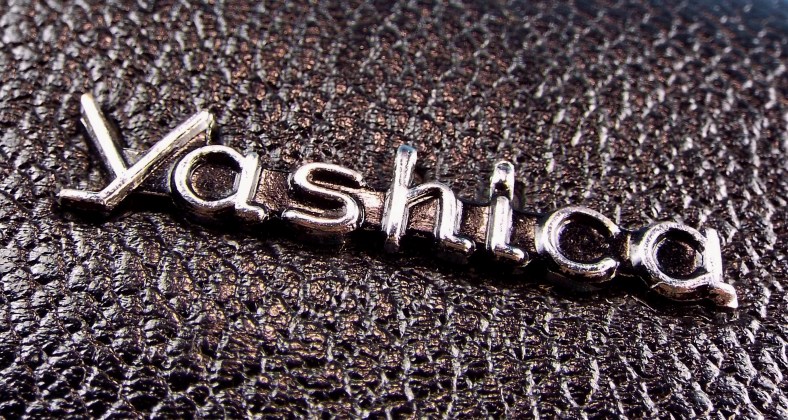
Extreme close-up of the Yashica logo on the front of the leather case for the Pentamatic ’35’. We quite like this font… they used it some here and there in the late 1950s but went to the ‘western’ font for much of the 1960s.

20160326_164312_Richtone(HDR)

Photoshoot c1960’s style.

007

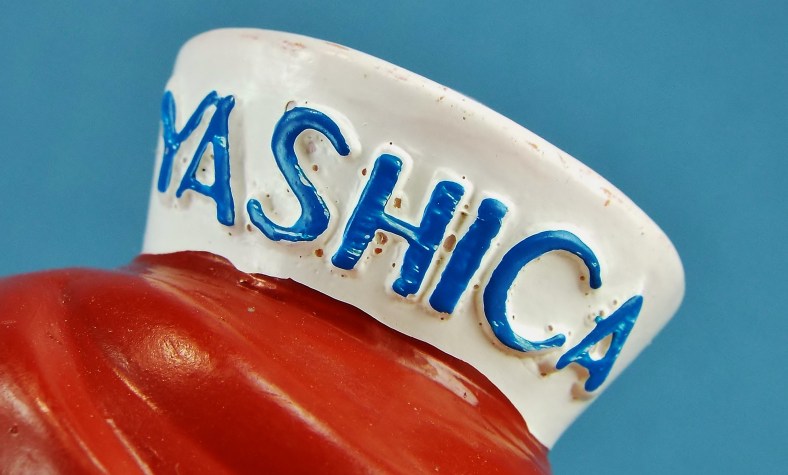
Close-up of Sailor Boy’s hat. This hat is on the standard 4 inch promotional doll made by Modern Plastics of Japan for Yashica in 1962.

20160326_152550_Richtone(HDR)

We were lucky to find another Yashica J-3 in Pro-Black trim for our collection. This image was not taken with the Fuji… back to the trusty Samsung Galaxy S4 with natural lighting.

So there you have it… a few new images to share with you.

Thanks for the visit… Chris & Carol
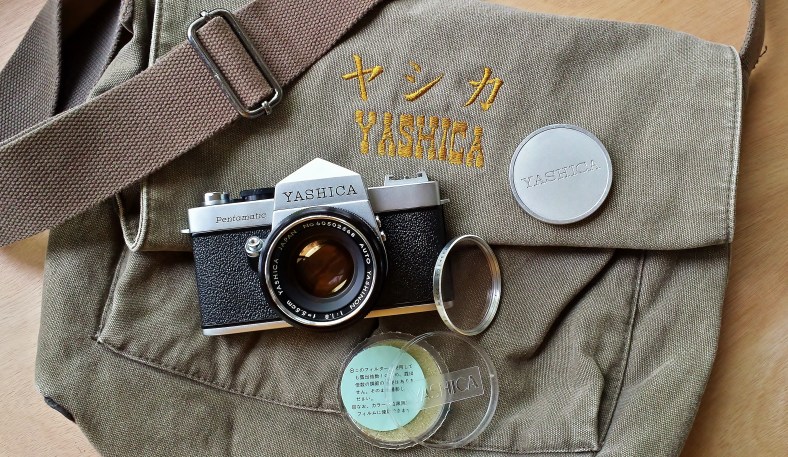
ヤシカ Pentamatic ’35’… May 1960

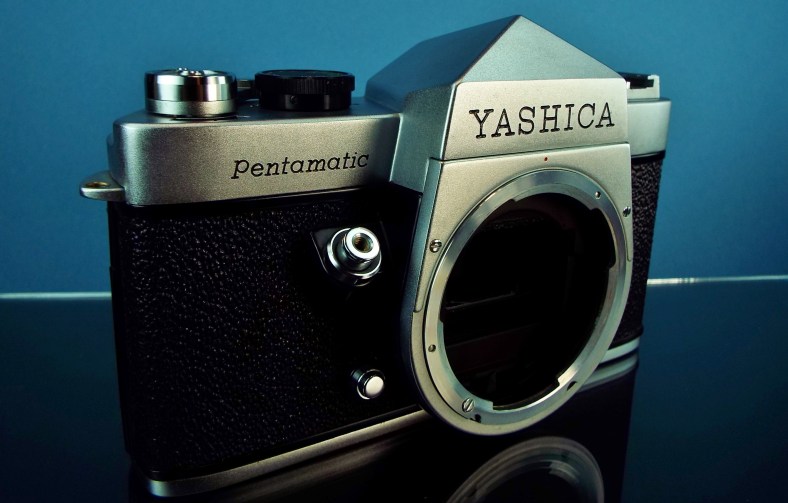
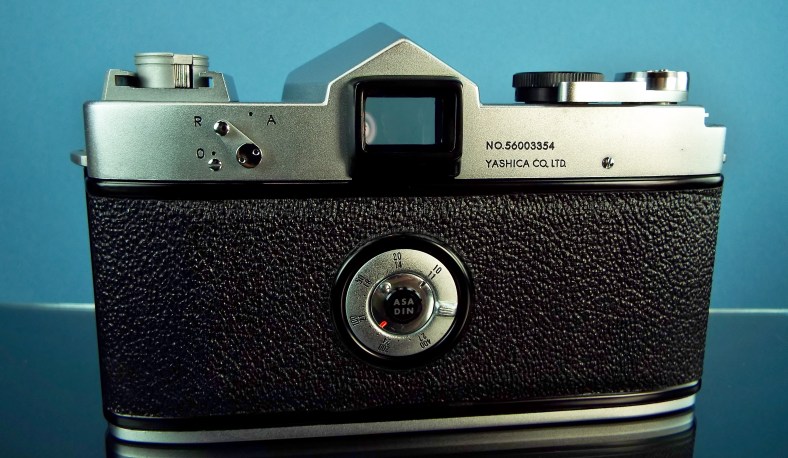
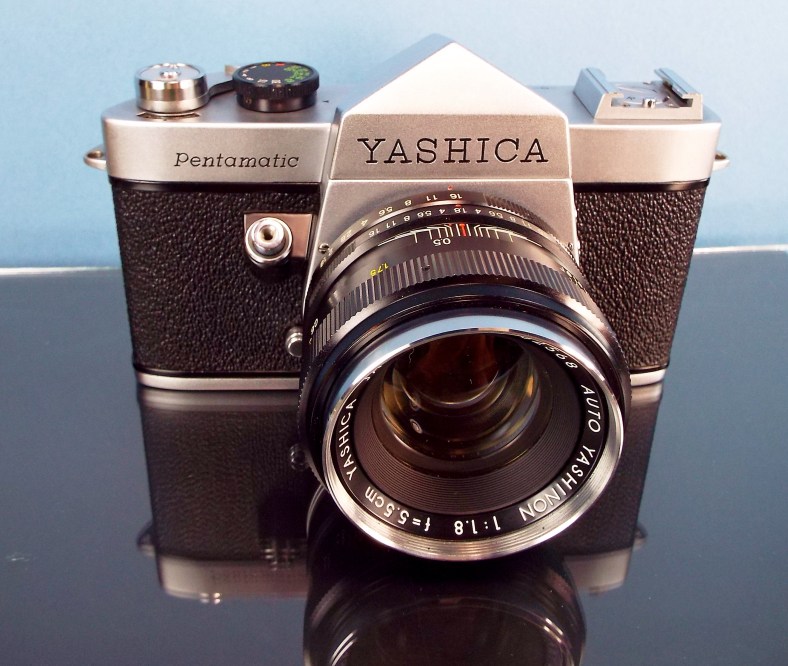
Here’s another nice Pentamatic for our collection. This beauty is in mint factory fresh condition! Only a few traces of past use. This camera was assembled in May 1960… about 6 months after the first one rolled off the assembly line in Yashica’s ultra modern factory in Nagano Prefecture (central Japan). The first half year of production showed a slow run up as approximately 500 units or so were made per month. This one has a serial number of 3,354. By August of 1960, Yashica was building about 1,500 units per month.

011

A beauty from May 1960.

009.JPG

NO. 3,354 since production began in December of 1959.

015

The lens was also made in May of 1960 at Tomioka’s factory in Tokyo.

021

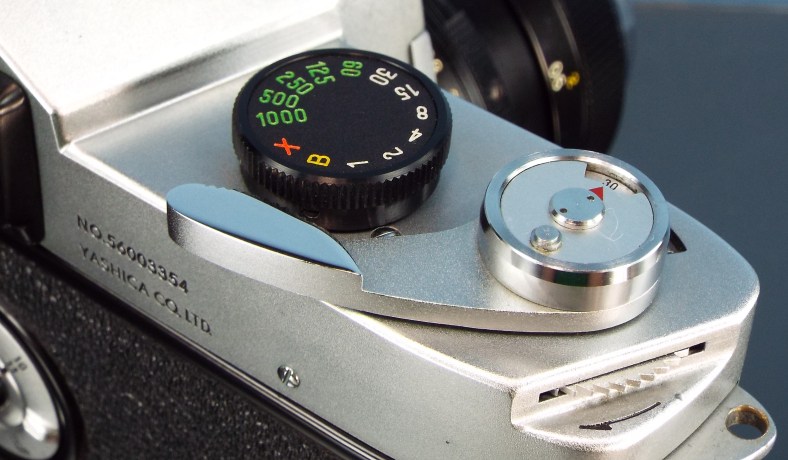
As simple of a design as you can get. Love the shutter speed dial… still bright and colorful after 56 years.

022

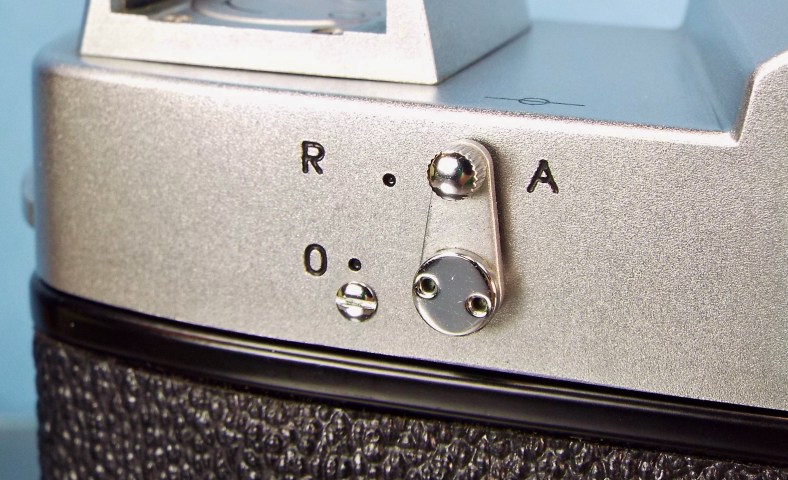
The Pentamatic’s rather unique way to open the back and to pop up the rewind lever.

This Pentamatic is a fully working example of a beautifully designed camera. We can’t wait to run a roll of film through it and give the camera a good work out!

Thanks for the visit! Peace, Chris and Carol
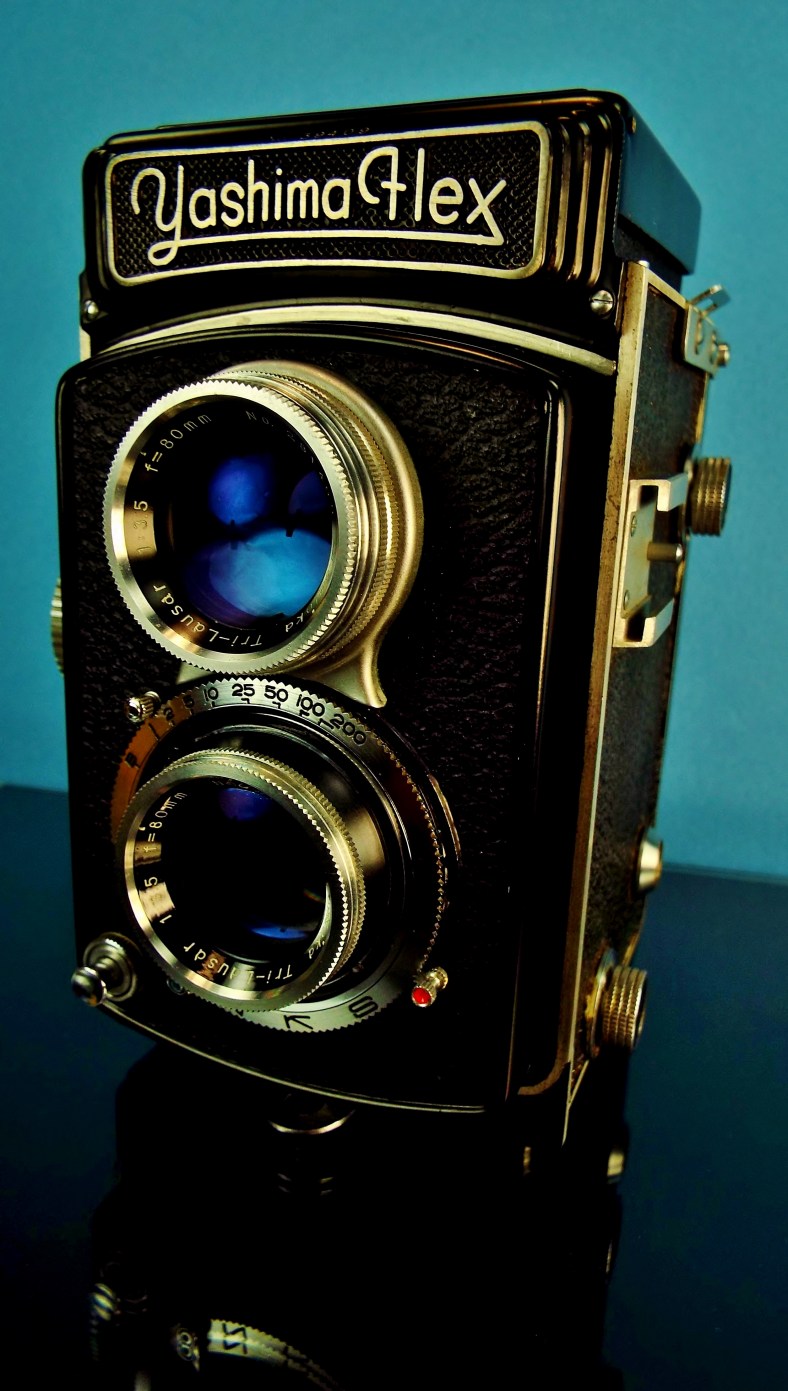
New View of the Yashima Flex

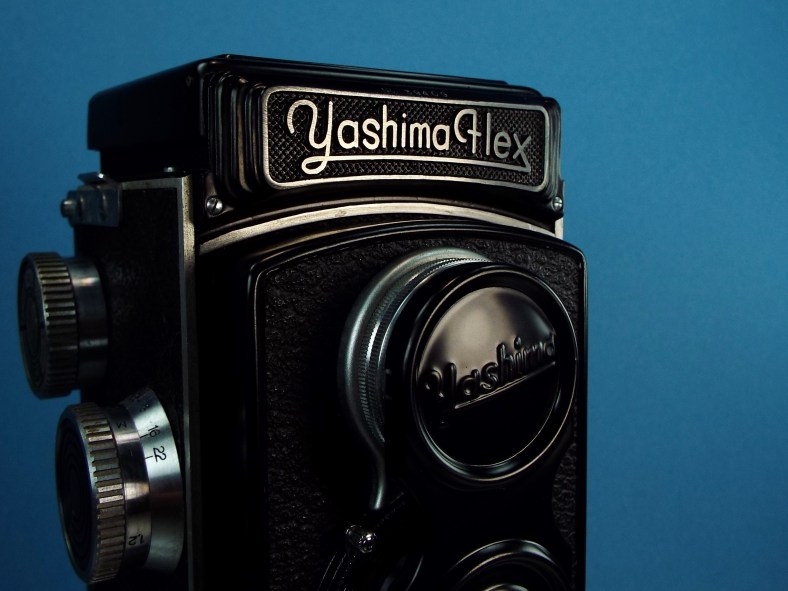
Some recent images from our new Fujifilm FinePix camera. A beautifully simple camera with some nice “in camera” settings. The model is the S9900W and the setting selected is ‘Low-Key’.

054

1954 Yashima Flex

063

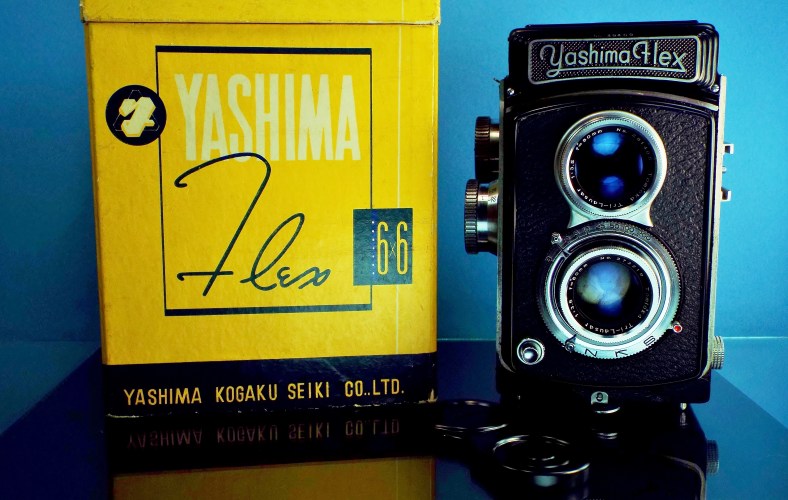
Tomioka Optical Tri-Lausar lenses.

060

Original Yashima Flex box from 1954.

Well there you have it. I enjoy the strong contrast and the muted highlights of the ‘Low-Key’ effect.