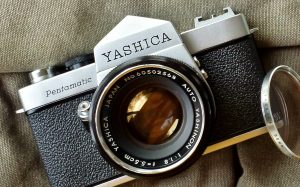
Remembering summer sunshine along the coast…

Have a beautiful and Peaceful Day.
Chris and Carol ^.^
Remembering summer sunshine along the coast…
Have a beautiful and Peaceful Day.
Chris and Carol ^.^
We’re always trying to determine exactly when Yashica did something – whether it’s exactly when Yashica released a camera or when Yashica printed a sales brochure – we always want to know when.
Sales brochures can be a great source of information for uncovering some of the “whens” associated with Yashica – unfortunately Yashica’s marketing folks weren’t big fans of dating their pamphlets, booklets or brochures (almost never).
Another way to date a brochure is to look at the cameras featured in them. Below is a good example. The cameras featured (front bottom to back right) are: Yashica Minister f/2.8, Nicca-Yashica YF, Yashica YK and the Yashica 35. The “newest” of the four cameras pictured here is the Minister. It was released in February-March 1960. The camera pictured (still on the Minister) was made in January 1960 (going by its serial number). The other cameras were released from late 1958 to middle 1959.
So the earliest date that this brochure could be is the January to March 1960 time frame.

Early sales brochure from Japan. Take note of ‘Yashica Girl‘ on the bottom right of the brochure.
My translation of the title – ‘Yashica 35mm Camera Group Guide’. The bottom left translation – ‘Yashica Products That Always Make Full Use of Your Dreams’. The “newest” model featured (bottom front) is the Yashica Minister (Feb-Mar 1960)
So was this the first appearance of Miss Yashica? She does appear on what may be a few earlier brochures but we’re going to say she made her first public appearance in January 1960 (new year, new decade and Yashica had a ton of new products to introduce). Plus she looks like a girl of the 1960s!

Not one but three Miss Yashica’s! The one on the far right appears frequently in sales brochures during 1960 and early 1961 while the two on the left are variants that we’ve never seen before (clearly different). The ladies pictured here appear on the side of a vinyl shopping bag – Of the camera… ‘Camera Matsue Ota Weight Shop Izunokuni’? Not completely sure about the translation here.

Could be the very first flyer/ad released in Japan for the original Yashica Pentamatic.
It would appear that in this flyer/ad Miss Yashica was paired with the Pentamatic shortly after the release of the Pentamatic in Japan (early 1960). We don’t have the flip side of this flyer/ad so we don’t know if it was a one page presentation or two pages or part of a brochure. Since it has the address of Yashica’s headquarters in Tokyo on the bottom, one could assume that it’s the back page.
Thanks for stopping by! If you can provide a better translation or have more information please let us know!
Remember, Carol and I are always interested in buying interesting items for research and for our collection. If you have something to sell, please contact us at chriscarol@ccstudio2380.com
Please stop by our online store at https://www.ccstudio2380.com
Chris & Carol ^.^
Please respect that all content, including photos and text are property of this blog and its owner, Yashica Pentamatic Fanatic, Yashica Sailor Boy, Yashica Chris.
Copyright © 2015-2017 Yashica Pentamatic Fanatic, Chris Whelan
All rights reserved.

Yashica 44 LM 127 roll film medium format film camera – 1960
Studio Camera: Fujifilm X-A10 hybrid with Canon FD 24mm f/ 2.8 wide angle lens with Canon Close-Up Lens 240 (see below). The front of the lens was about 3 inches from the Yashica. No cropping or other post production. A poor man’s Fujifilm-X.
ISO 400 on Acros film simulation mode at f/ 16 at 1/30 sec.

Canon FD 24mm f/ 2.8 wide angle lens with Canon Close-Up Lens 240.

Great combination for getting close.
Last two images shot with Fujifilm FinePix S9900W.
Chris
Be sure to stop by our online store at https://www.ccstudio2380.com
Please respect that all content, including photos and text are property of this blog and its owner, Yashica Pentamatic Fanatic, Yashica Sailor Boy, Yashica Chris.
Copyright © 2015-2017 Yashica Pentamatic Fanatic, Chris Whelan
All rights reserved.
Misty sunset along the dunes.

Camera: Samsung Galaxy S4
Chris
Please respect that all content, including photos and text are property of this blog and its owner, Yashica Pentamatic Fanatic, Yashica Sailor Boy, Yashica Chris.
Copyright © 2015-2017 Yashica Pentamatic Fanatic, Chris Whelan
All rights reserved.

Studio Camera: Samsung Galaxy S8+
Be sure to visit our online store at https://www.ccstudio2380.com for some neat stuff.
Remember… we are active buyers of unique photo gear (especially Yashica and Fujica) and would gladly love to see what you have. You can contact us at chriscarol@ccstudio2380.com
Chris
Please respect that all content, including photos and text are property of this blog and its owner, Yashica Pentamatic Fanatic, Yashica Sailor Boy, Yashica Chris.
Copyright © 2015-2017 Yashica Pentamatic Fanatic, Chris Whelan
All rights reserved.
Christmas Cactus –


Studio Camera: Fujifilm FinePix S9900W with Fujichrome film simulation mode.
Chris
Please respect that all content, including photos and text are property of this blog and its owner, Yashica Pentamatic Fanatic, Yashica Sailor Boy, Yashica Chris.
Copyright © 2015-2017 Yashica Pentamatic Fanatic, Chris Whelan
All rights reserved.

Christmas cactus pre-bloom. Studio photography with no post production except a minor crop.
Studio Camera: Fujifilm FinePix S9900W in Fujichrome simulation mode.
Chris
Please respect that all content, including photos and text are property of this blog and its owner, Yashica Pentamatic Fanatic, Yashica Sailor Boy, Yashica Chris.
Copyright © 2015-2017 Yashica Pentamatic Fanatic, Chris Whelan
All rights reserved.


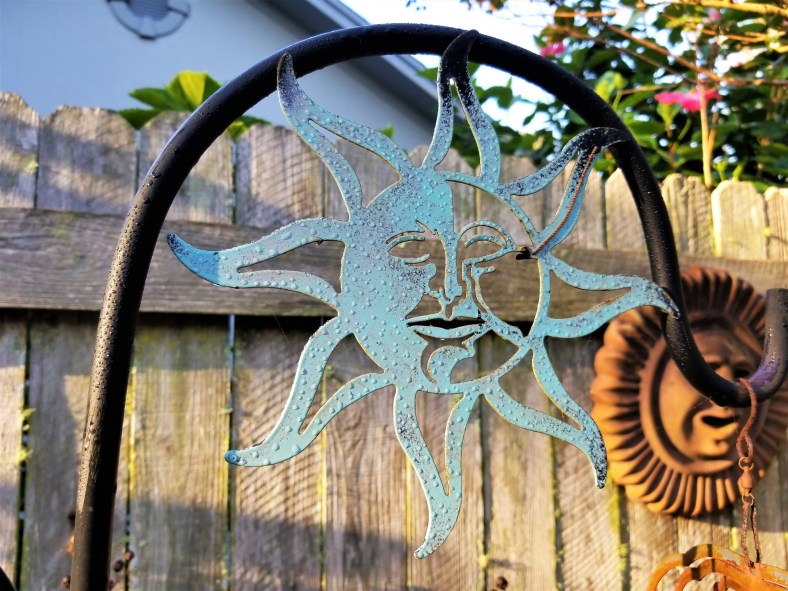
Hope y’all have a peaceful SaturYAY!
Camera: Samsung Galaxy S8+
Chris & Carol
Please respect that all content, including photos and text are property of this blog and its owner, Yashica Pentamatic Fanatic, Yashica Sailor Boy, Yashica Chris.
Copyright © 2015-2017 Yashica Pentamatic Fanatic, Chris Whelan
All rights reserved.
In response to this week’s challenge – shooting the ocean through the mist. https://dailypost.wordpress.com/photo-challenges/experimental/

Camera: Samsung Galaxy S4
Chris
Please respect that all content, including photos and text are property of this blog and its owner, Yashica Pentamatic Fanatic, Yashica Sailor Boy, Yashica Chris.
Copyright © 2015-2017 Yashica Pentamatic Fanatic, Chris Whelan
All rights reserved.
Spotted this sign at a local restaurant today – great graphics!

Camera: Samsung Galaxy S8+
Chris
Please respect that all content, including photos and text are property of this blog and its owner, Yashica Pentamatic Fanatic, Yashica Sailor Boy, Yashica Chris.
Copyright © 2015-2017 Yashica Pentamatic Fanatic, Chris Whelan
All rights reserved.

