Yashima Sales Brochure… 1956

In just 3 short years, Yashima beat the odds and became a Japanese camera company that lasted long enough to produce multiple models. In the case of this sales brochure from 1956 – the Yashica Flex B, A and Yashica-Mat twin-lens reflex cameras.
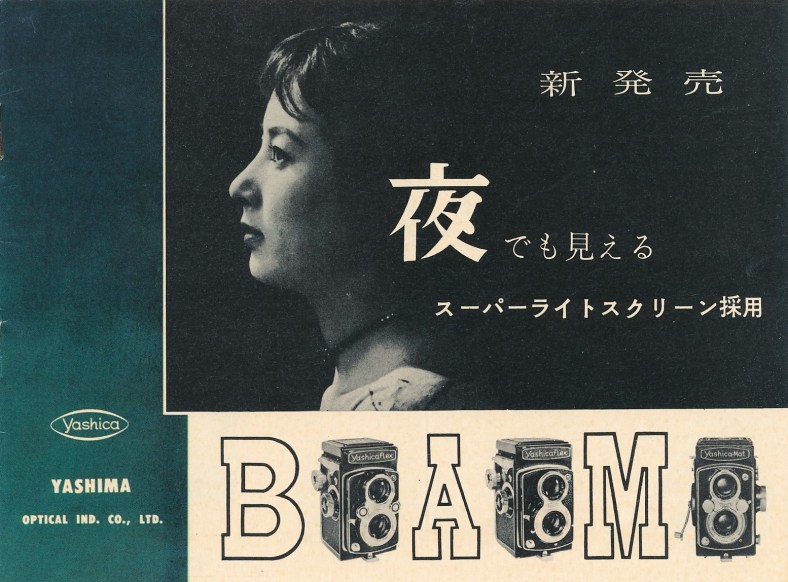
img_20161129_0015

Well designed sales brochure from the little company that became Yashica.

Not that we’ve seen a ton of sales brochures from other Japanese camera manufacturers from this era, but we think this was rather provocative for the mid 1950s (at least in the US we would think). This brochure was intended for the home market and the culture of Japan is a tad less uptight about things like this.
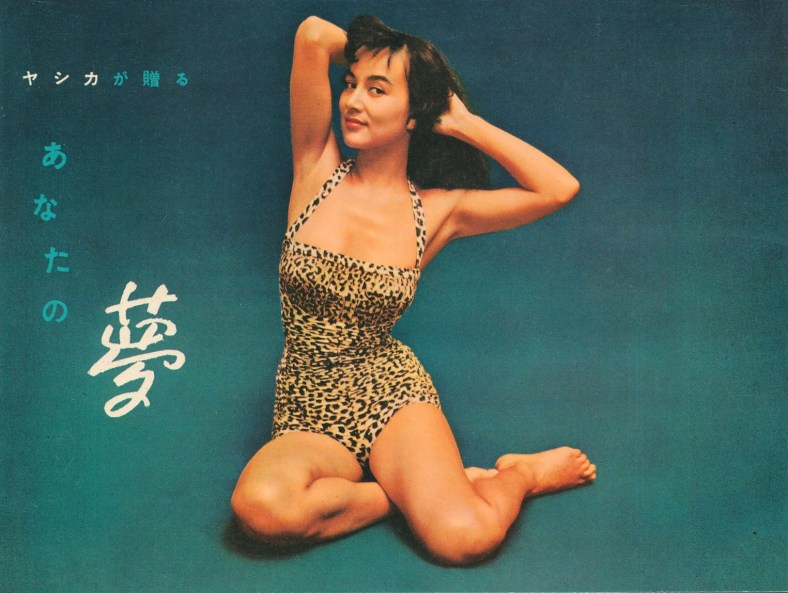
img_20161129_0016

Lovely model on the back cover of the brochure.

The first page inside the brochure in packed with information not typically found in a brochure. Yashima was, in our opinion, marketing itself beyond what such a young company would normally look like. These series of Yashica Flex Photography books were excellent creations that went far beyond a simple owner’s guide.
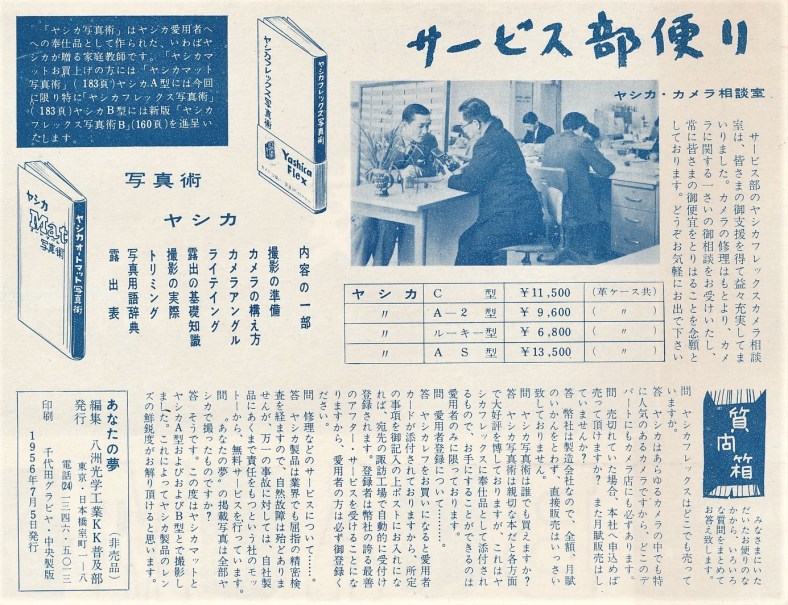
img_20161129_0011

You’ve got the year (1956), two examples of the Yashica Flex Photography books and some prices of the cameras.
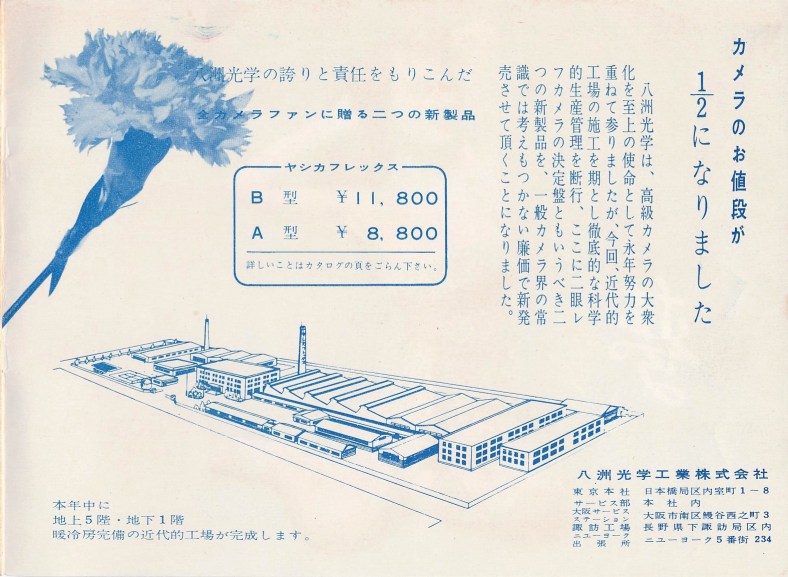
img_20161129_0025

Last inside page of the brochure depicting Yashima’s new modern factory in Suwa, Nagano Prefecture, Japan.

Yashima was a very proud company and they were eager to show how much they grew since 1953.

Thanks so much for your visit. The goal of our blog is to stimulate discussion and further the knowledge of all things Yashima-Yashica. Please share your comments with us… we’d be happy to read them. One final thought, we share our brochures with others and ask that you do not copy or post our images into your blog or post without permission. Thanks!

Chris & Carol
1954… Yashica Flex Model S

When Yashima started making twin-lens reflex cameras in a small factory along the shores of Lake Suwa in Nagano Prefecture, they were but one of hundreds of “start-ups” entering the already crowded Japanese camera manufacturing business. Many would fail – and fail quickly they did. But little Yashima, with two brothers from Nagano at the helm, managed to take a big step – to make a second and then third camera.

The first was the Pigeonflex (great name but how do you grow with a name like that), then came the Yashima Flex and Yashica Flex B. In 1954 (late) they built the now famous Yashica Flex Model S. The first TLR in the world with an attached exposure meter! Yep, in the world! None of the already established players had produced one like that. The meter was supplied by Sekonic and screwed to the side of the body and hidden light sensors under the name flap sent electricity to the meter. Bingo. Meter and camera merged! 1954

img_20161129_0004

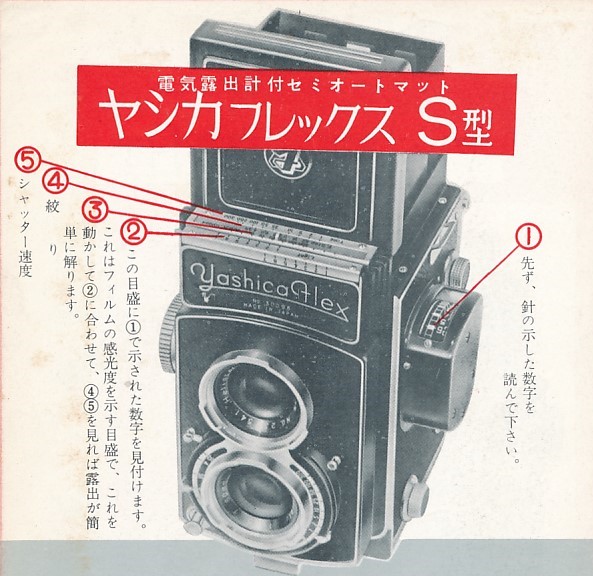
Cropped scan from a rather rare (in the US) Yashima sales flyer for the Yashica Flex Model S. It’s one of the earliest pamphlets around for this camera.

The light sensing cells were built-in under the flap that was the nameplate. You would open the flap and the maximum amount of light would strike the cells and send an electrical signal to the meter  (#1 above). You then used # 2, 3, 4, and 5 to “compute” your exposure settings. Simple except that you needed the eyesight of an eagle to actually see the numbers on the scale. It it was real sunny out, you didn’t need to lift the flap to get an accurate reading – there were 12 holes in the flap that would let in enough light to set the exposure.

In a testament to the designers, many of these early exposure meters still function even after 6 decades of use. But, many have fail too mostly caused by a failure of the wire to meter connection. The cells are fine (no batteries, sun powered).

As always we appreciate your visit. We’re glad to share some of our collection of early sales material and of course to chat up our Yashima-Yashicas. In the spirit of fair play, we ask that you do not copy or post our images in your blog or post without our permission. Thanks.

Chris & Carol
‘Found Film’… are there ghosts in my camera?

In all my years of collecting vintage (well they weren’t always considered vintage) cameras, I’ve come across my fair share of ‘found film’. I enjoy finding a roll of film left behind by the previous owner of the camera – from a collectors viewpoint it’s a great way to add some vintage film cartridges or 120 rolls to your collection of film. It’s fun to see if you can guess (from the brand and design) the what and when the roll was purchased and then the why didn’t they finish it… and of course, the who took the pictures? The who took the pictures really didn’t interest me. Sounds strange to write that being a photographer, but I’m more about the subject and not the picture taker.

I’ve never been tempted to have the film developed – why spend good money to look at things and people I don’t know? But there’s always been a slight twinge of curiosity inside me… very slight. Until recently. Money be damned! I’m lookin’!

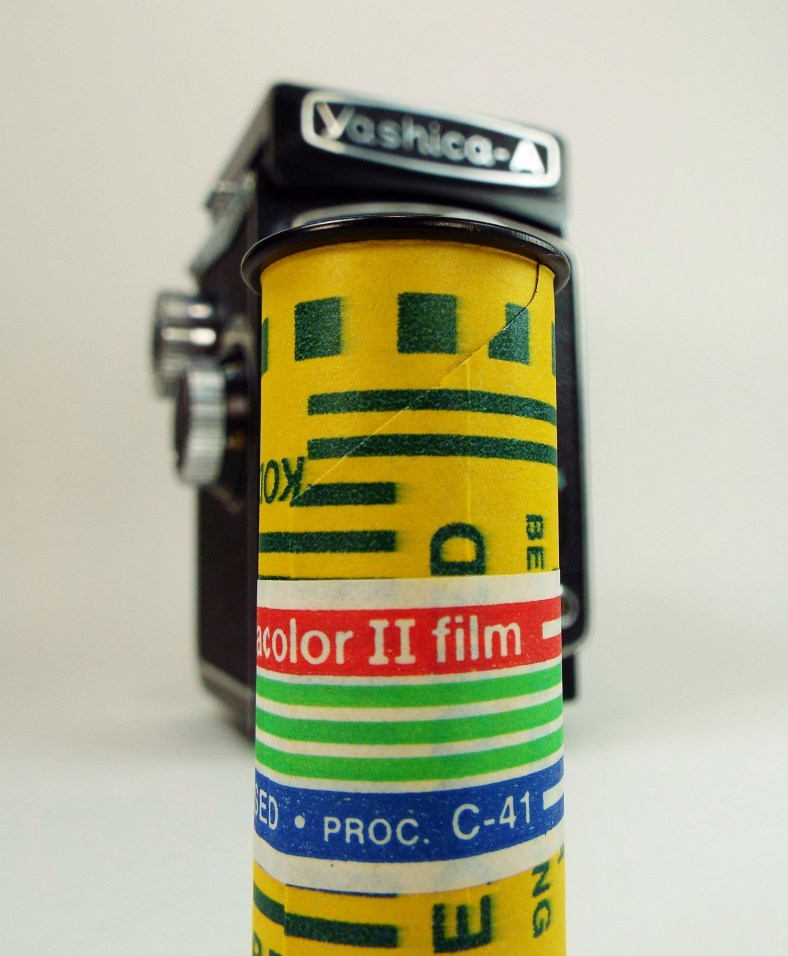
dscf2698

The ‘Found Film’ from the 1960s? Maybe late 1960s.

The camera is a Yashica model A twin-lens reflex (TLR) from 1961. The film could be from the late 1960s or early 1970s but the camera is in mint “new” condition and doesn’t look like it had any previous use. So in reality, it could be from 1962 or so. Just guesses here on my part. So I spent the nearly $20 to send the film off and waited to see what developed (sorry about that). But then Carol (my wife) and I discussed if it was right to look at other people’s pictures. You know, privacy and all that. I reminded her that the pictures could be nearly 50 years old – no privacy issues there. But what about… ghosts? You know if there’s pictures of people they may be dead now and you know, they’d be ghosts. Not everyone becomes a ghost I reasoned. Just looking at them doesn’t mean they’re even dead. If they’re young people they might still be around and they might even want to see the pictures. It would be hard to find them I thought. All we knew is where the camera was from… not a small place by the way. Maybe a landmark or two would help.

Panic! Wrong time to panic. What if there were, “bad” pictures in the camera? Oh crap! Wrong time to think of that after the film was sent off! I’d call them. Call the company that was about to develop the film and explain that it wasn’t really my film and if there was something “bad” on them not to accuse me! We didn’t call – we took a deep breath and decided to wait and see what happens. We promised not to send other people’s film off ever again.

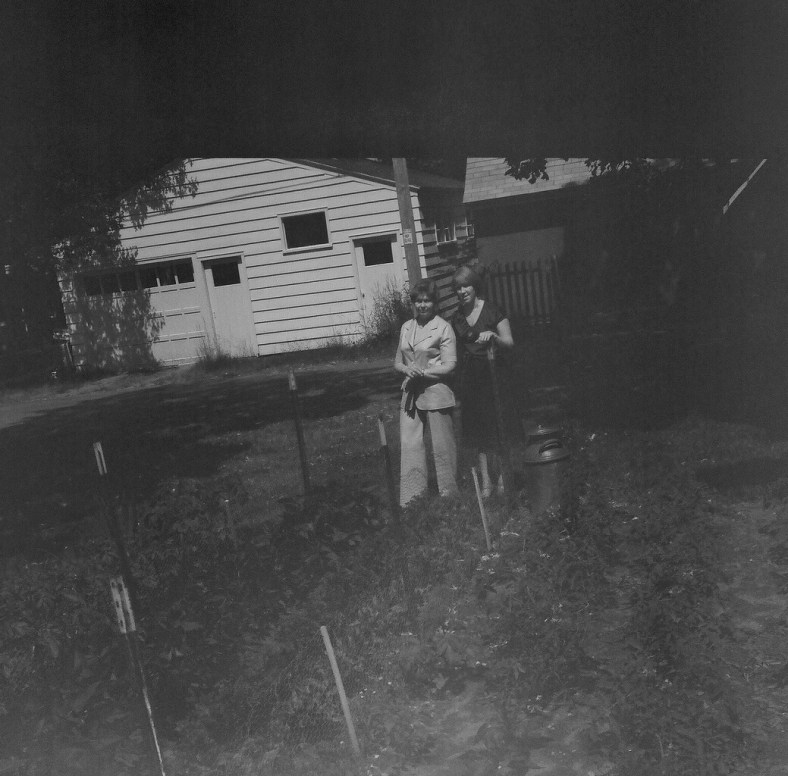
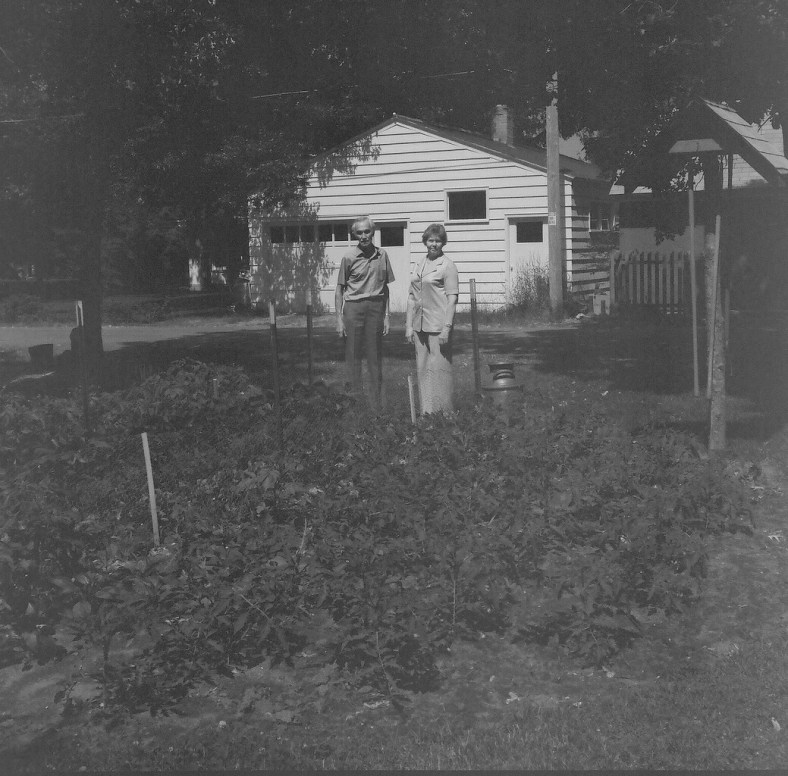
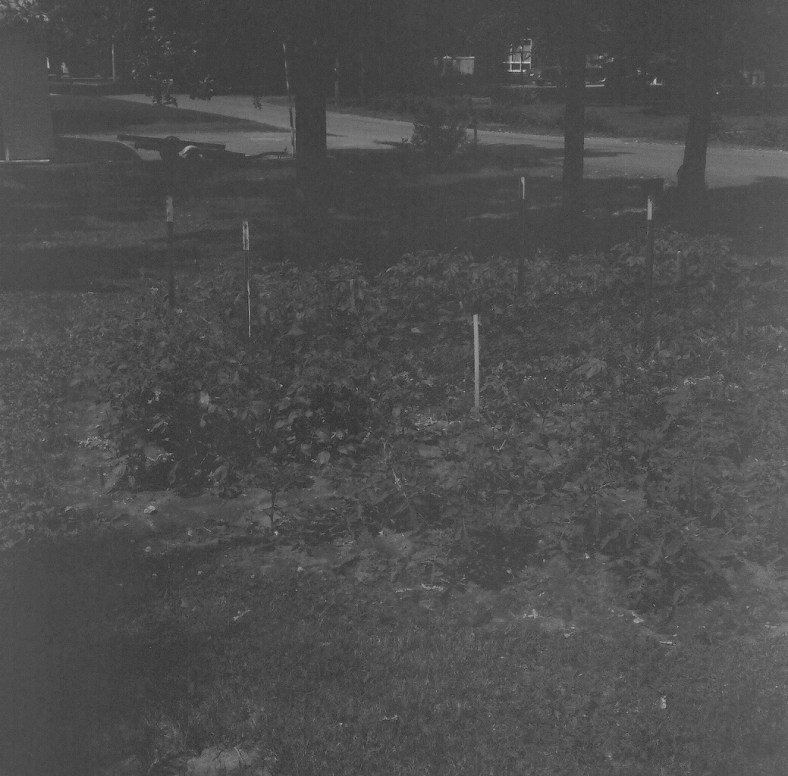
Since it was Kodacolor II negative film and was nearly 50 or 60 years old we didn’t expect much. The lab did the best they could. We did tell them ahead of time that the film was really old. Everything had a strong blueish tone so I’ve converted them to black and white using a red filter. Check it out!

83170001

Image 1… ghosts? I hope not! Mom and daughter?

83170002

Image 2… nice garden. Nice couple. Hmmm. Mom and husband?

83170003

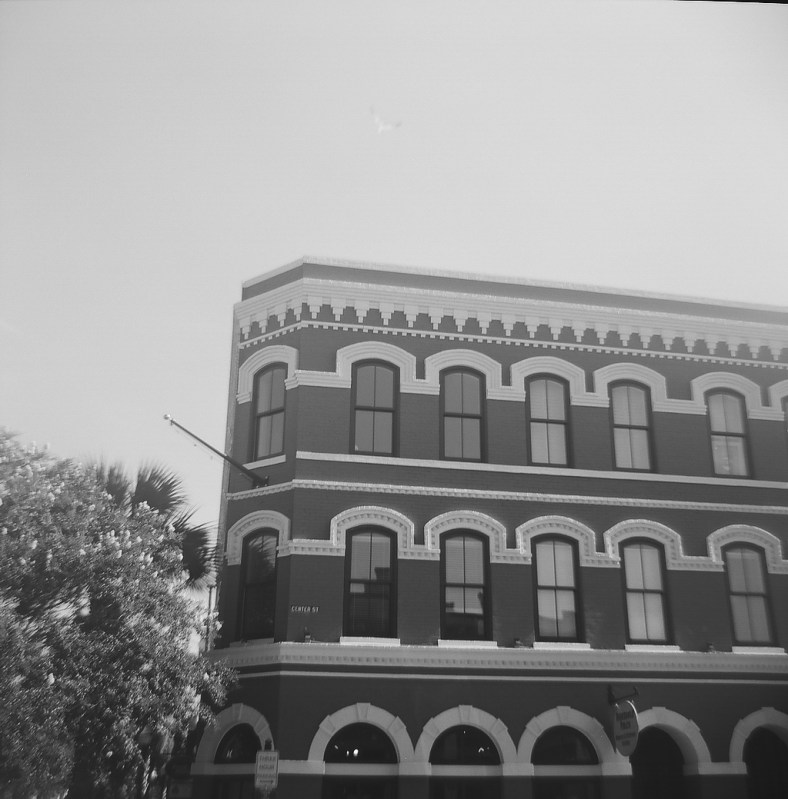
Image 3… a Wisconsin garden. Nice.

83170004

Image 4… ghost?   

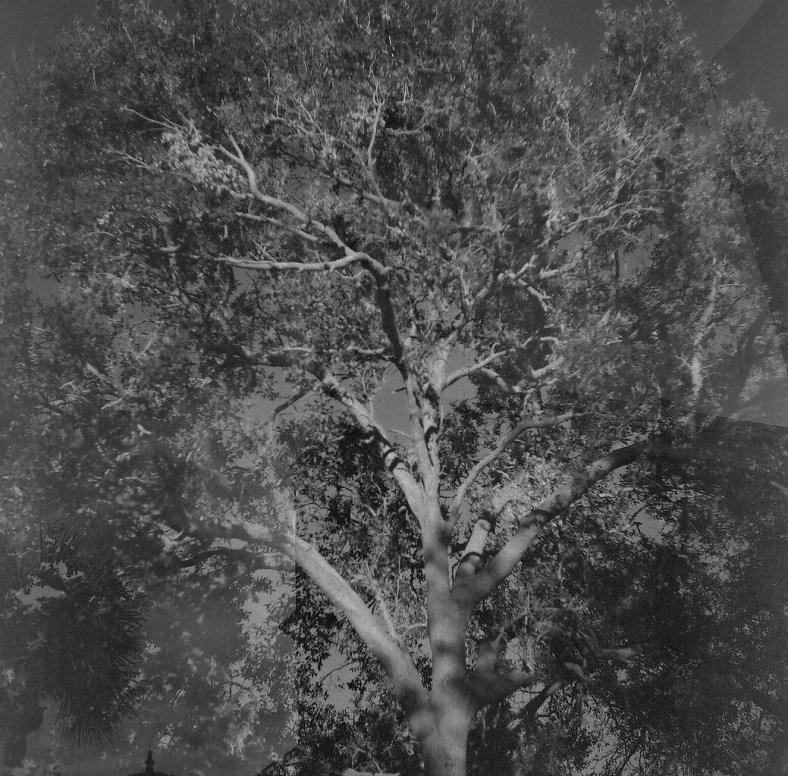
83170006

Image 5… awesome double exposure!

Well no known ghosts were found real or imagined. The remainder of the exposures didn’t come out. Was it worth the $20? No – but it was still fun!

Comments? Have you ever developed found film?

Thanks for your visit! Chris and Carol

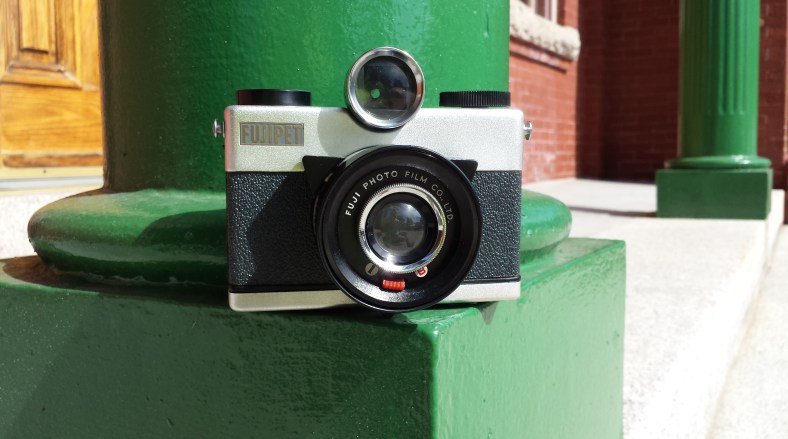
Fuji Petting with our Fujipet! New Pet Pics Posted…

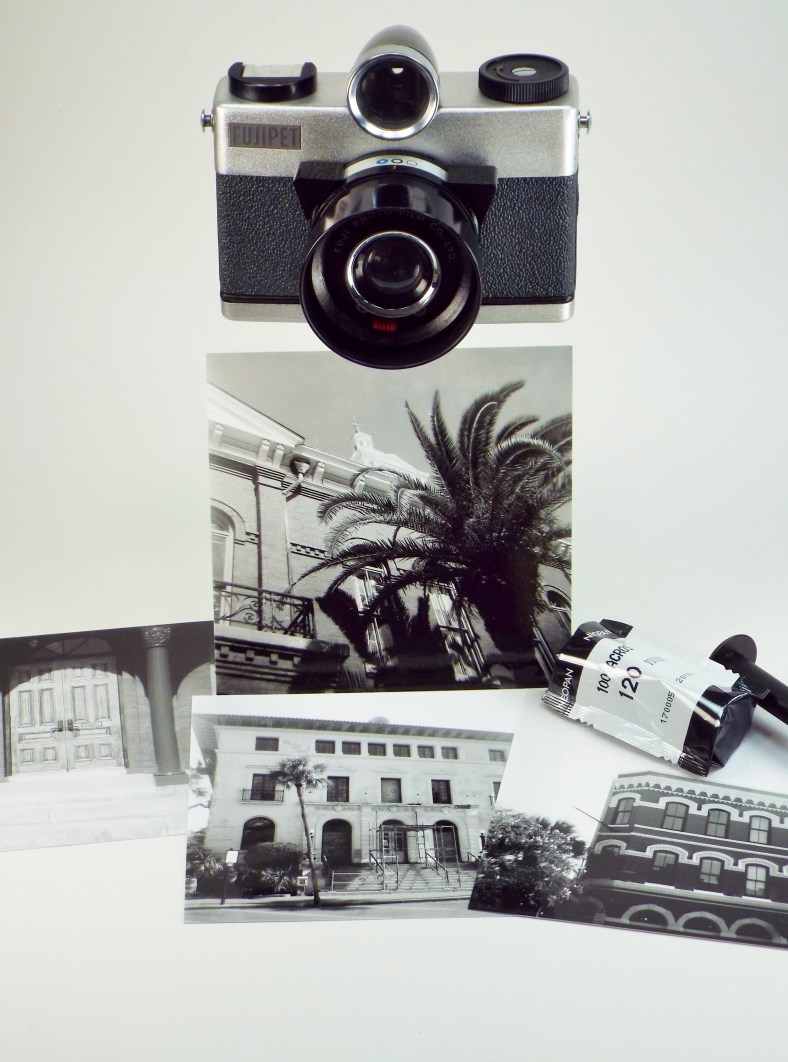
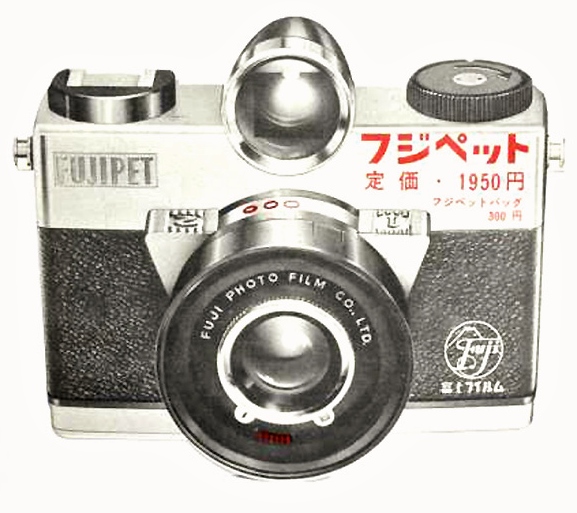
The goal is to take our 1958 medium format camera from Fuji Photo for a little picture taking. We’ve loaded some fresh Fujifilm Neopan 100 Acros (in days past it was Neopan SS) into the Fujipet and see how it does after 58 years of non use. We’re very curious about the “look” of the images. If you don’t know much about the Fujipet, please take a stroll through our archives for a little catch-up.

DSCF1741

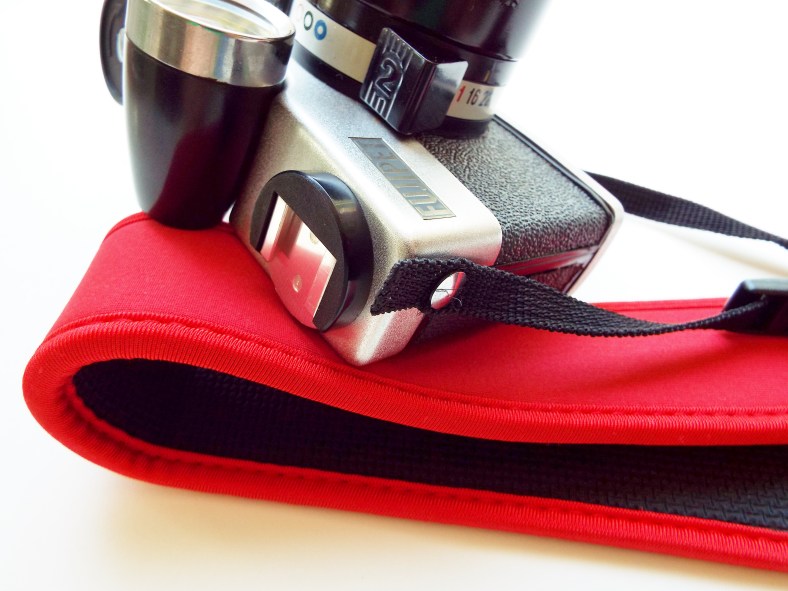
1958 Fuji Photo Fujipet with its new strap. A simple modification to the Canon strap made it perfect for this lightweight Fuji. We have the original vinyl (leather?) strap for the Fuji but it’s still sealed in its original package. No reason to ruin it by using it LOL.

20160815_100355

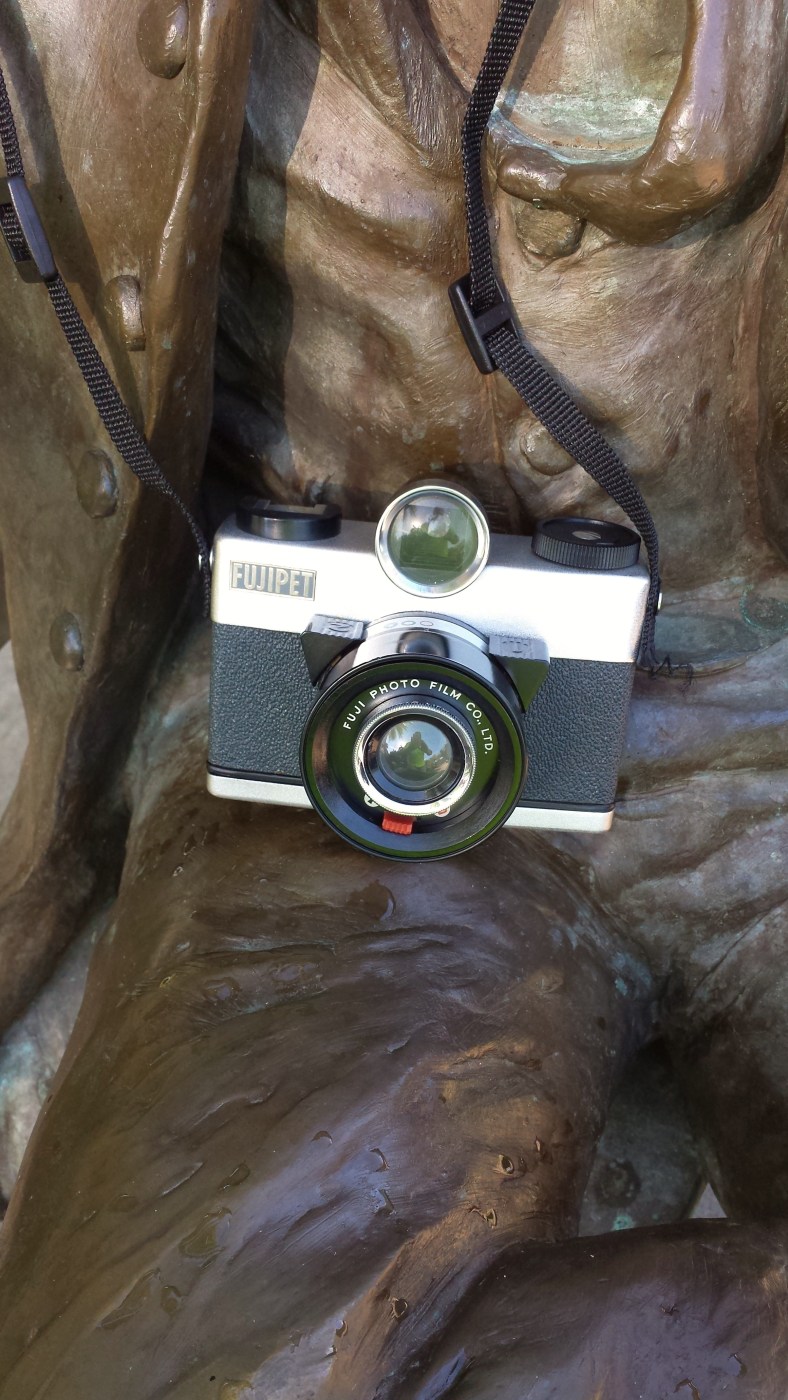
The Pet as seen on a local legend (Mr. David Yulee).

20160815_102312

Hoping the bright Florida sunshine was just right for our first test of the Pet.

And just how did the Pet perform?

DSCF1962

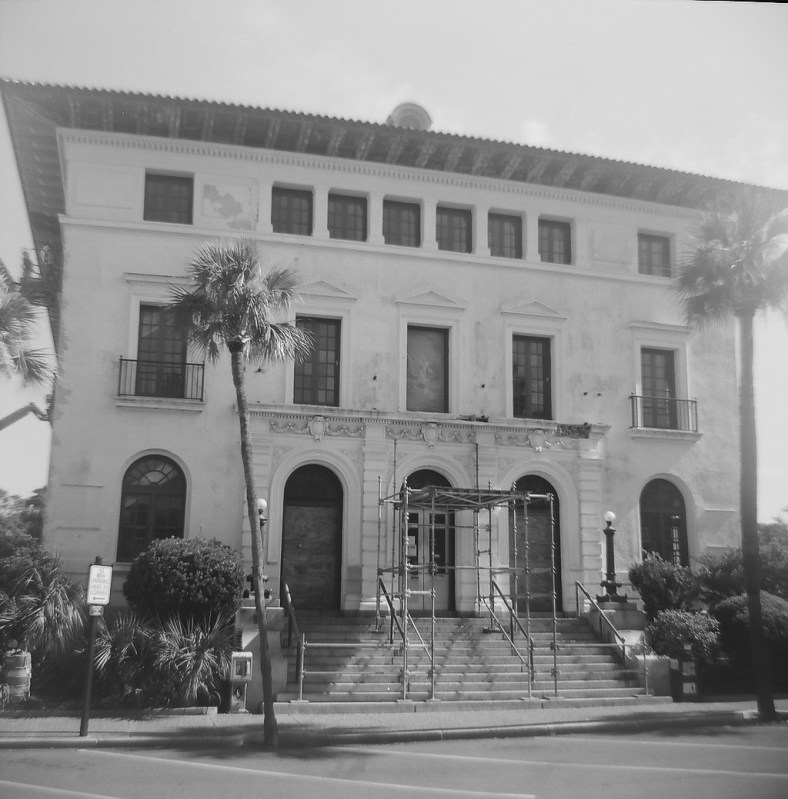
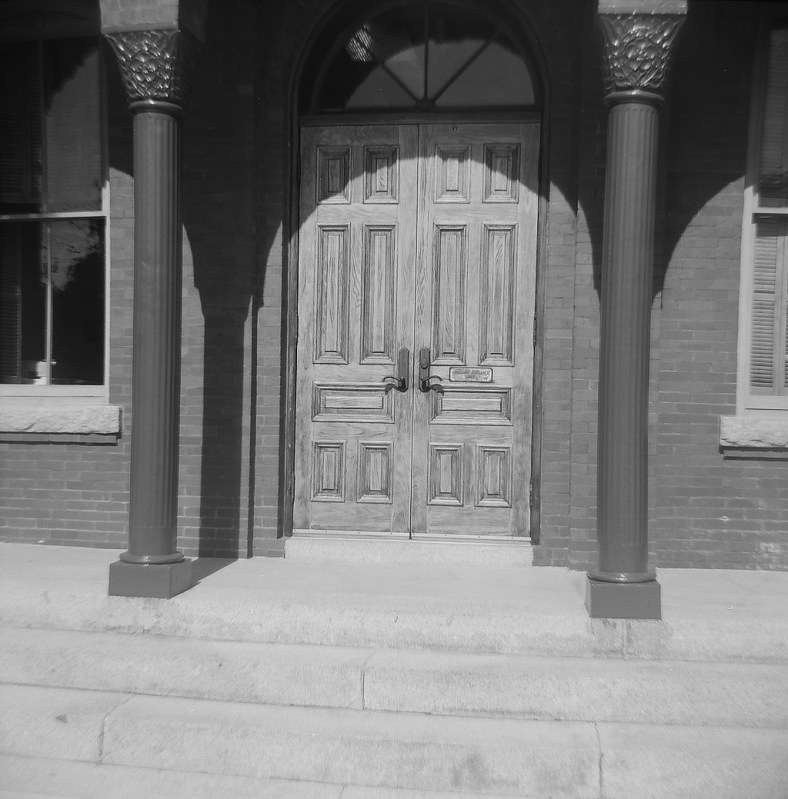
The entire roll of 12 exposures came out just great! Here’s a sample of some of them. The Pet gave a special look to the images. We had ‘The Darkroom’ print up these four images in their true square format (here they are 5 x 5 inches).

Well as you can see the pictures came back from the outing with the Fujipet. We couldn’t be more thrilled with how they came out! The lens was actually super sharp (all things considered) and the almost 60 year old plastic lens had some nice contrast to it too. We can’t say enough about Neopan 100 Acros – exceptional film!

28477728874_65f641d3ae_o

28495471114_8a530a1d53_o

28531727084_f98756bf81_o

29344870275_cb1d30bbfe_o

If you can get your hands on a Fujipet then do so. There’s almost always one or two listed on the Japanese online auction sites. Be careful though! Japan (like my Florida) is a very humid climate and that can wreck havoc on old metal cameras and plastic lenses. Ask questions of the sellers and look very closely at the images of it. By the way, in 1958 when the Pet’s were selling wildly in Japan, they went for 1950 yen or about just under $6. You’ll pay a little more than that today but a good one can still be found for under $100 and questionable ones for $10 to $20.

Thanks for your visit! Comments are always welcome.

C&C ^.^

A Couple of ‘New’ Yashicas

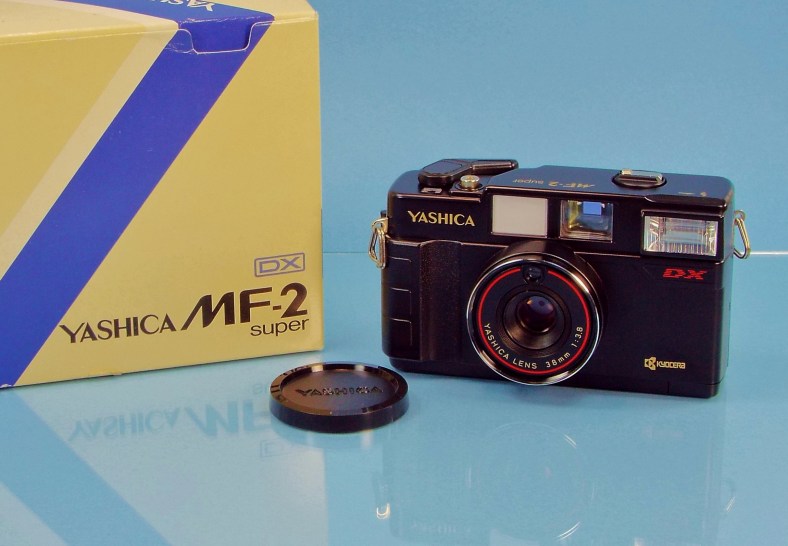
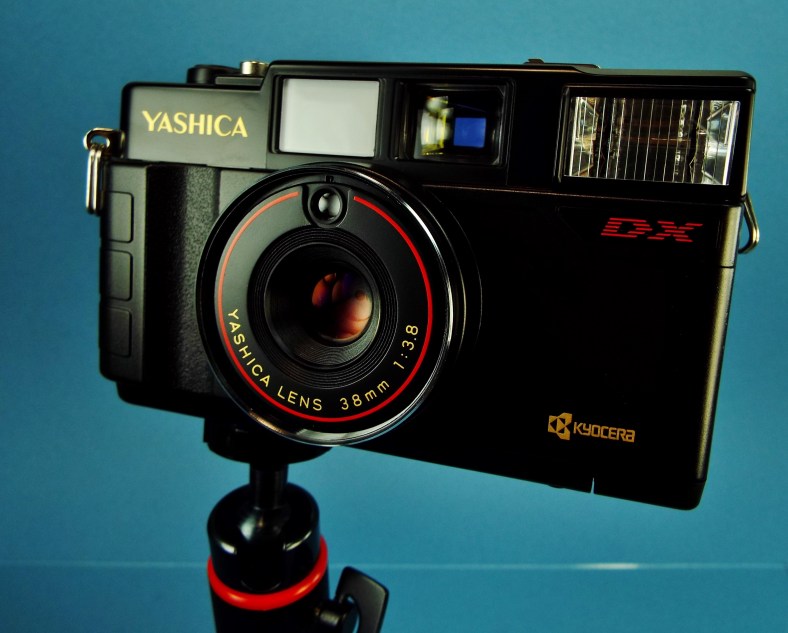
ヤシカ… A couple of new Yashicas have caught our fancy. From 1986 and during Yashica’s ‘dark period’ when they were taken over by Kyocera, this super nice (and truly new) Yashica MF-2 Super DX. To be sure it’s a very plastic camera but it’s filled with some nice high tech features… DX coding of the film speed, automatic exposure and built in flash. No focus needed as the lens can focus from about 3 feet to infinity (and beyond!!!).

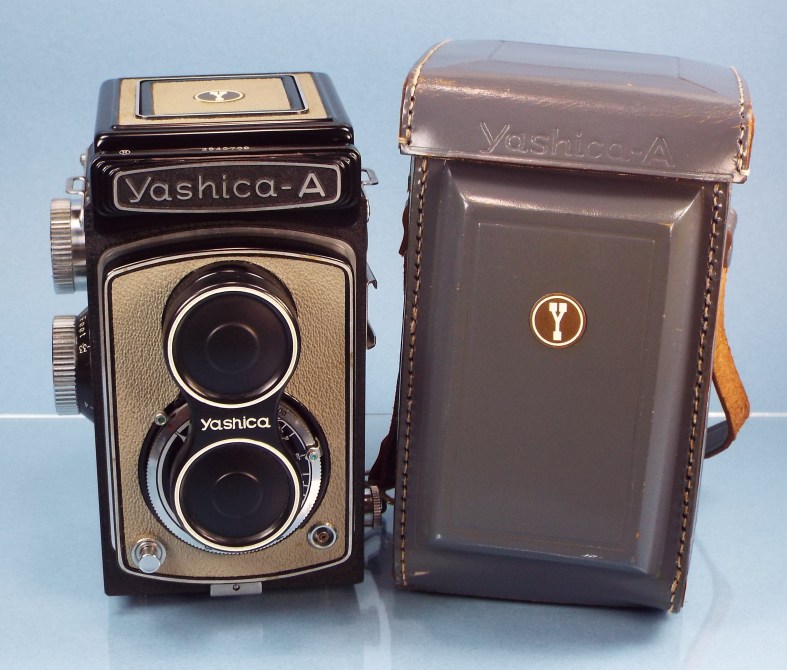
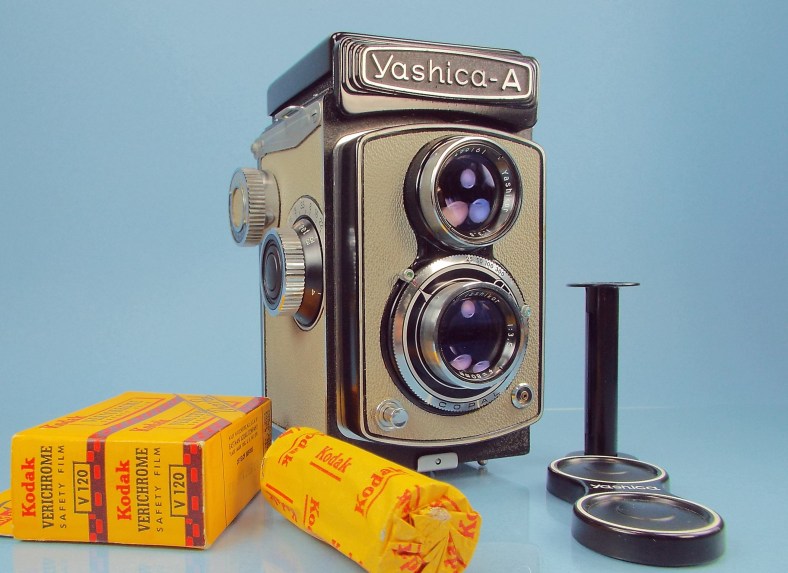
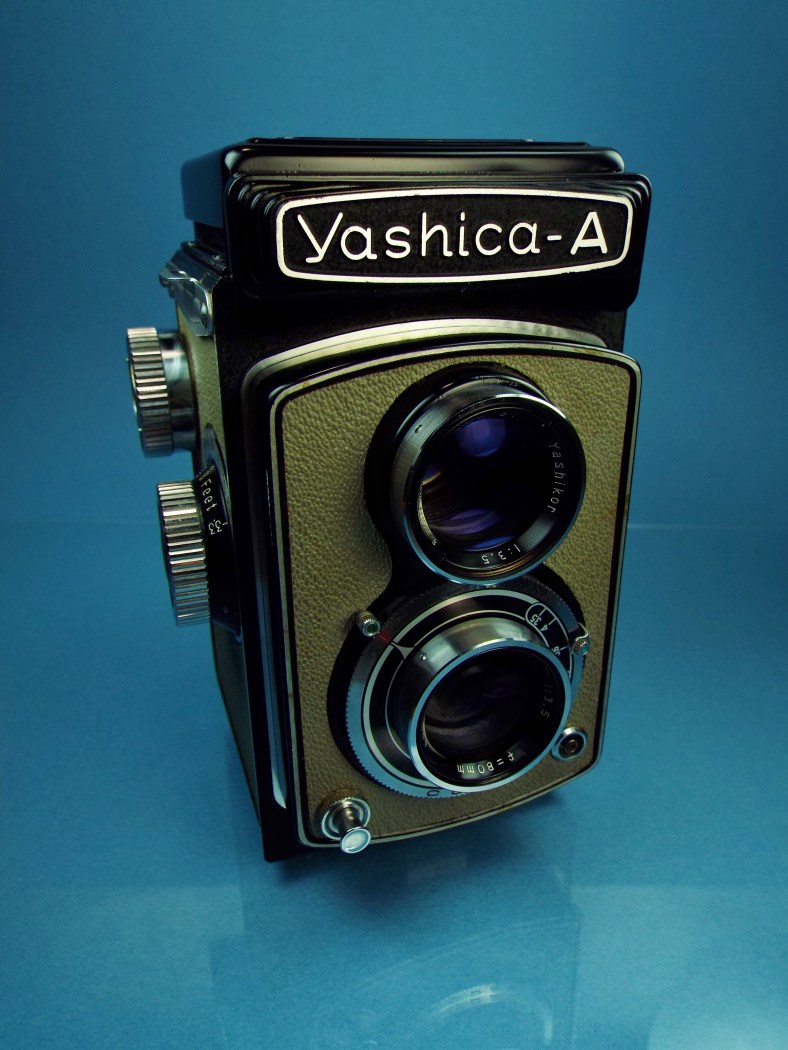
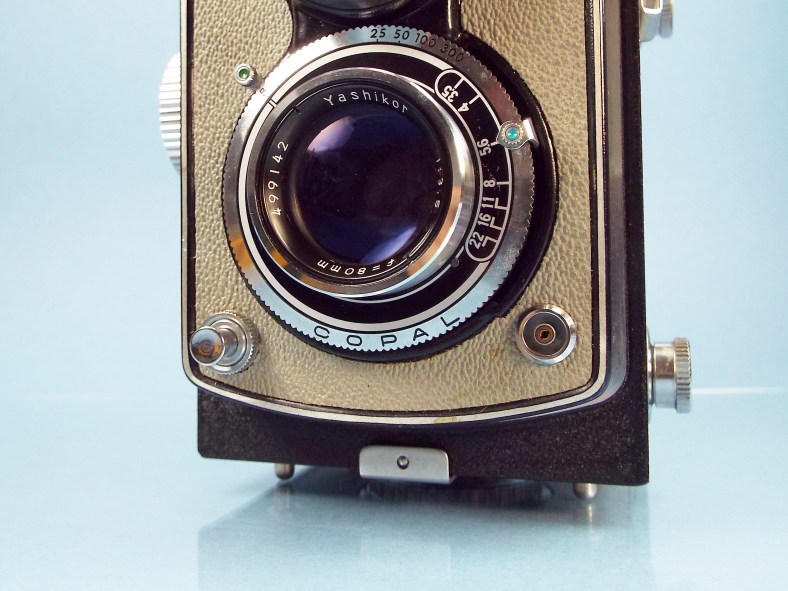
The other member of the Yashica family is this nice almost 100% mint Yashica-A with gray leather and silky black metalwork. It’s from 1959 and works perfectly… shutter speeds are spot on and the aperture blades are snappy. No self timer on these basic models from Yashica, but they hit a great price point with buyers and had a long production run.

020

Yashica-A in gray with the original gray leather case. From 1959.

009

Yashica-A in gray leather and black metal. The Kodak film is close to the correct era (late 1950s).

011

Low key effect photograph. It gives the camera a bit of an edgy look.

017

Interesting lens serial numbers on this camera. The taking lens SN (pictured) is only 19 numbers less than the viewing lens. Almost spot on (haven’t seen that yet). Of course these lenses were made by Tomioka Optical of Tokyo for Yashica.

020

Brand new and never used (isn’t that the same?) Yashica MF-2 Super DX 35mm rangefinder camera from 1986. Parts made in Japan and assembled in Hong Kong.

023

Low key photograph gives this pretty but humble camera a nice look.

As always we appreciate your visit to our blog… feel free to comment. Many thanks and big smiles… C&C

Yashica Flex Model S… 1954 to 1957

The Yashica Flex model S (aka Yashicaflex) is one of Yashima’s most important early cameras… well maybe the second most important behind the first. Obviously Yashima’s first camera, the oddly named Pigeonflex one could argue, was the most important. The model S though was the first twin-lens reflex (TLR) camera (in the world!!!) that had a “built-in” exposure meter.

004

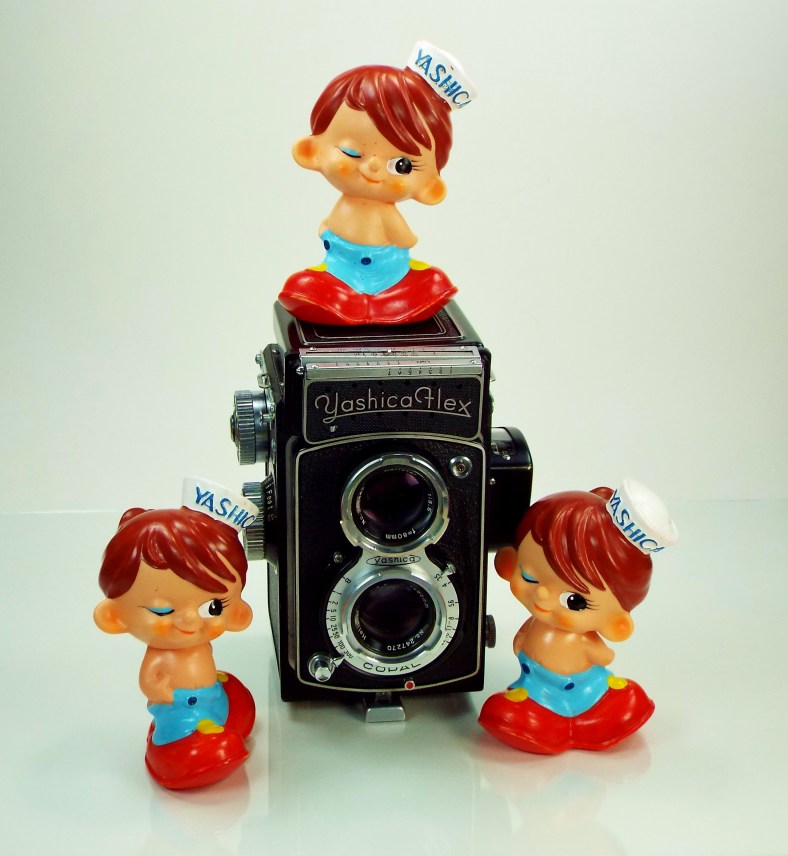
The Yashica ‘Sailor Boys’ gather around the Yashica Flex model S. The boys are from 1962 and this TLR is from late 1956.

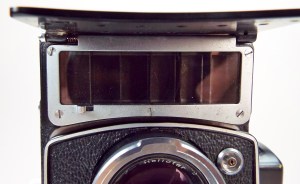
The Sekonic CB-1 exposure meter was attached to the camera’s left side and the light gathering cells were located under the nameplate flap. They were connected to one another but the meter was non-coupled to the camera settings. The user would lift the flap to expose the cells to light and then read the exposure index in the window on top of the meter. Then simply set the camera to the proper f-stop and shutter speed and snap away. No batteries required. But with the passage of time most of these meters failed in some way or another. If you find one with a working meter so much the better.

DSCF0044

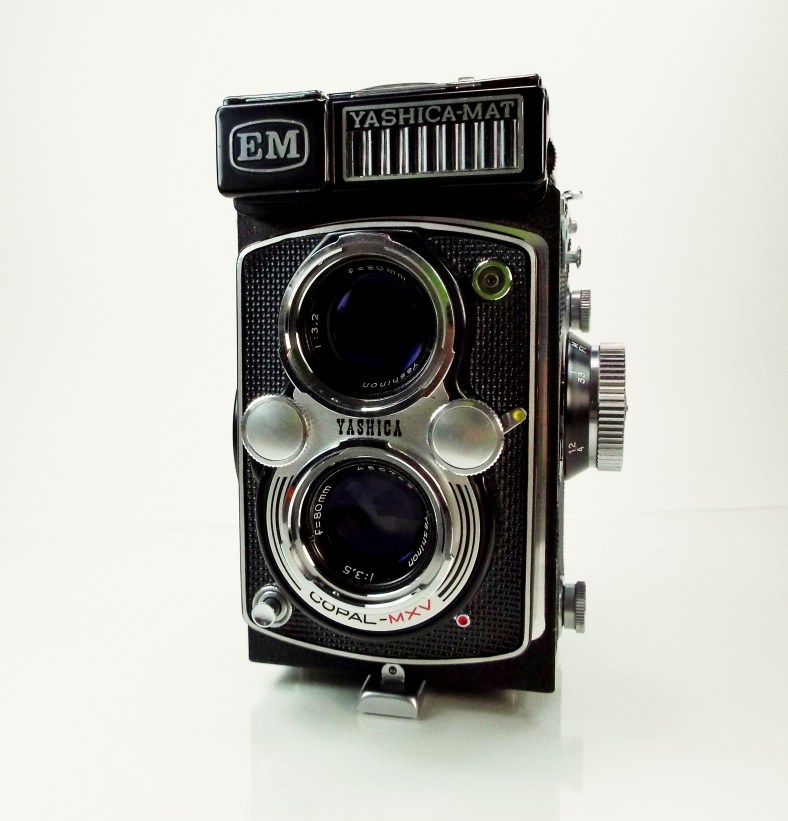
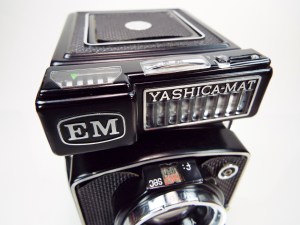
Yashica-Mat EM from 1964. The exposure meter and light gathering cells were moved to the front and top… no more flaps to raise and we were a bit closer to being coupled. This EM has a working exposure meter which is pretty amazing after 50 plus years!

010

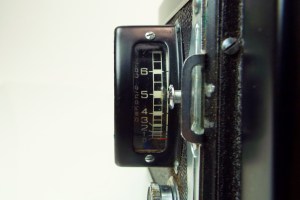
Close-up of the Sekonic CB-1 exposure meter on the Yashica Flex S.

011

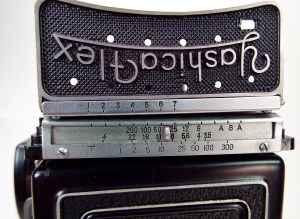
Exposure meter scale for setting the f-stop and shutter speed.


012

Exposure meter light gathering cells located under the Yashica Flex nameplate.

009

Exposure meter on the Yashica-Mat EM.


007

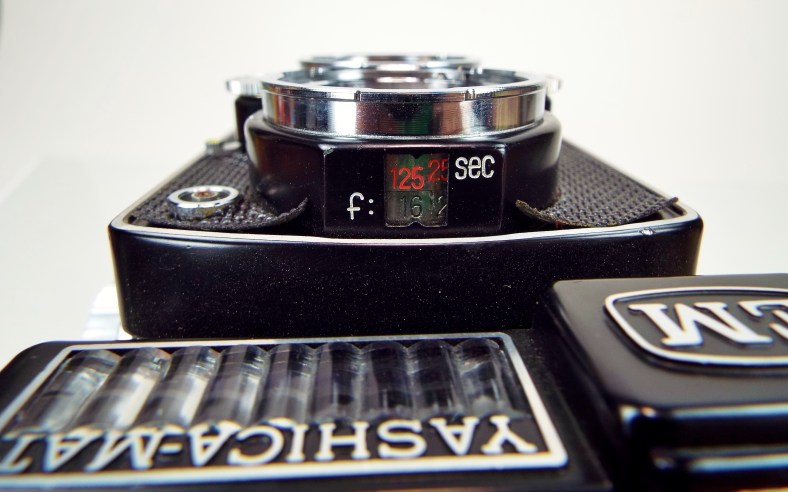
Close-up view of the aperture and shutter speed settings on the EM.

005

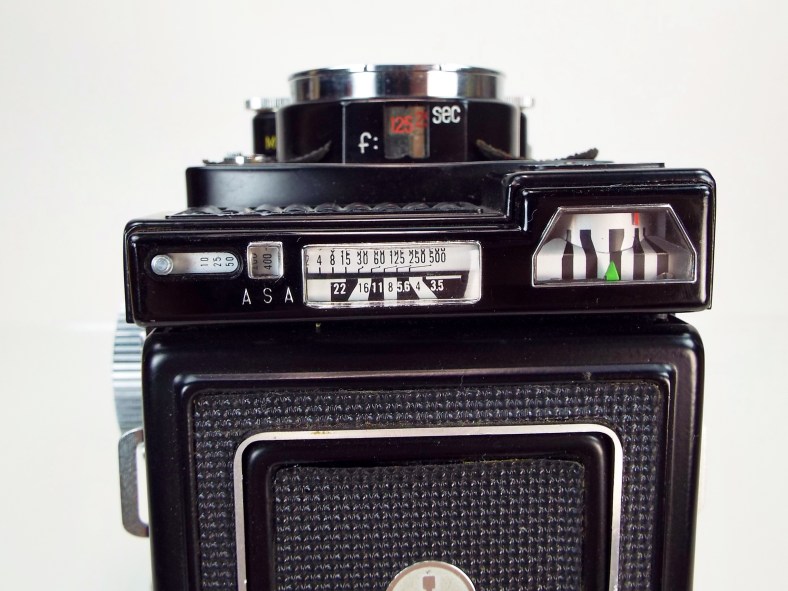
Yashica-Mat EM exposure meter and exposure scale. Film speed is set at ASA 400.

So there you have it… a short (very short) history of some groundbreaking cameras from Yashima/Yashica. For more on Yashica’s awesome array of TLRs visit my friend Paul’s site at http://www.yashicatlr.com

Paul’s site is a labor of love and if you want to know anything about Yashima/Yashica that’s the place. We hope to bring some more Pentamatic blogs your way soon. We are of course, The Yashica Pentamatic Fanatic!

Thanks, Chris & Carol
Restoring a Yashima Yashicaflex A-II from 1955

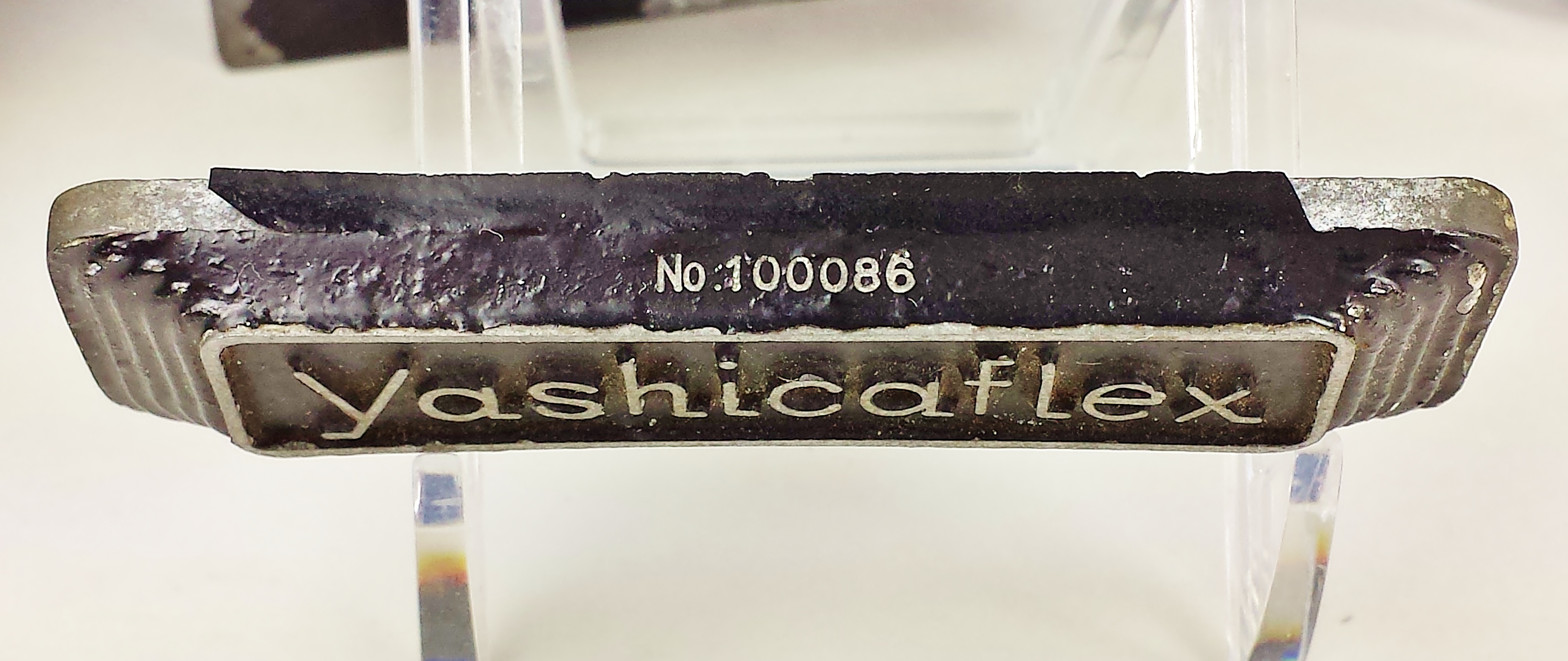
After some light sanding and cleaning with lacquer thinner a cast on serial number was under the painted on one.

After some light sanding and cleaning with lacquer thinner, an etched or cast-in serial number was under the painted one

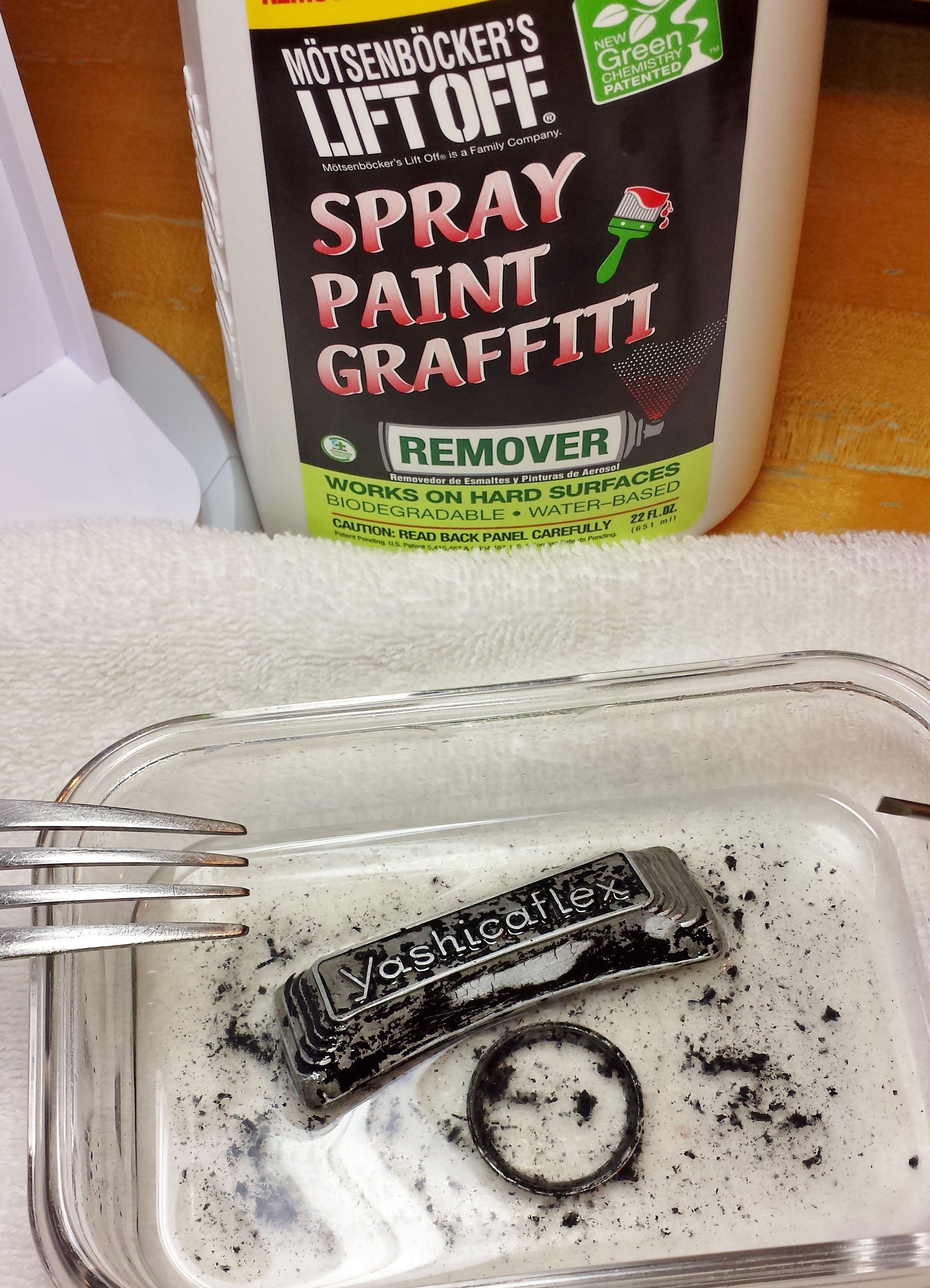
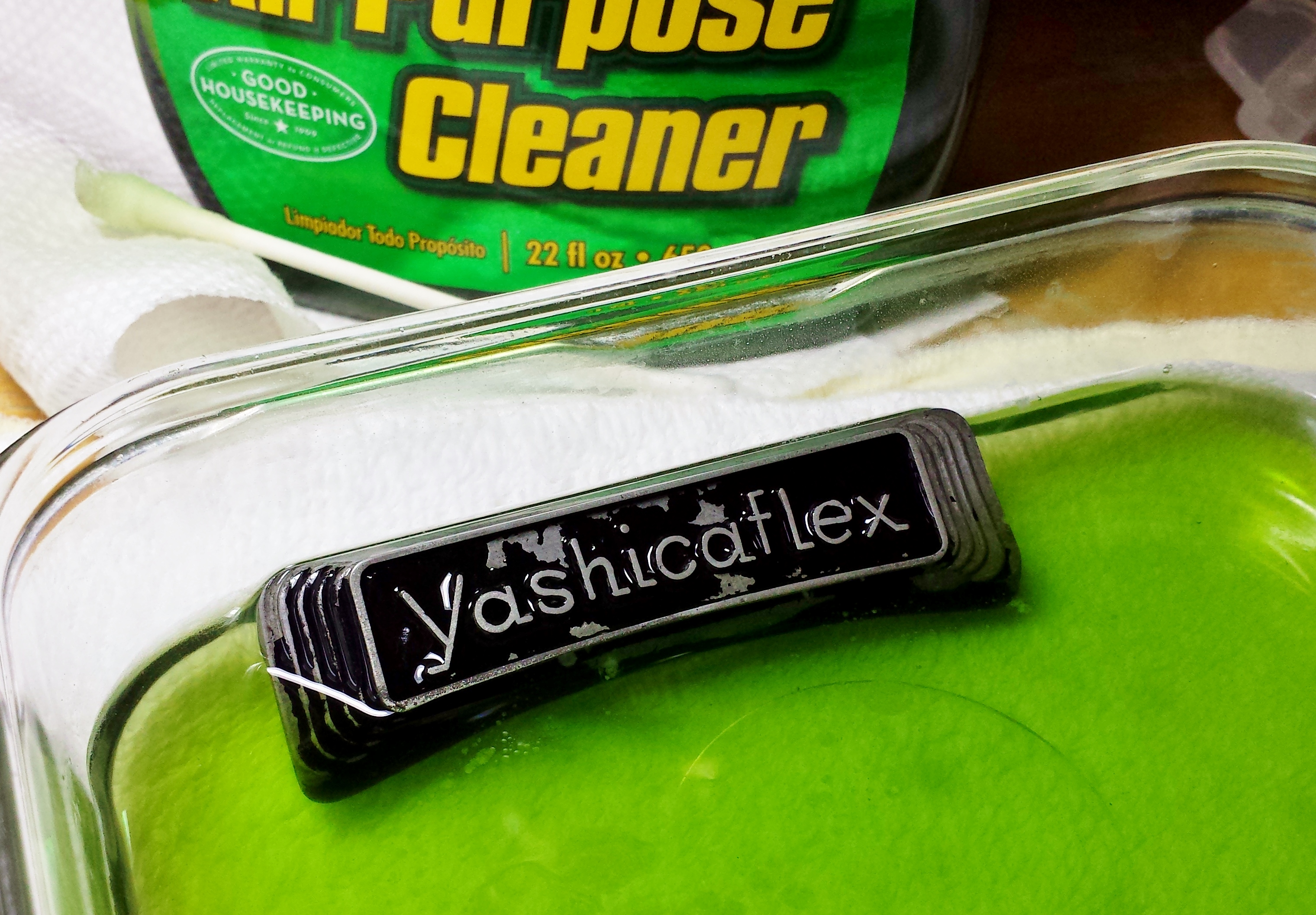
Finally found something that removes the 60 year old enamel from the nameplate.

Finally found something that removes the 60 year old enamel from the nameplate

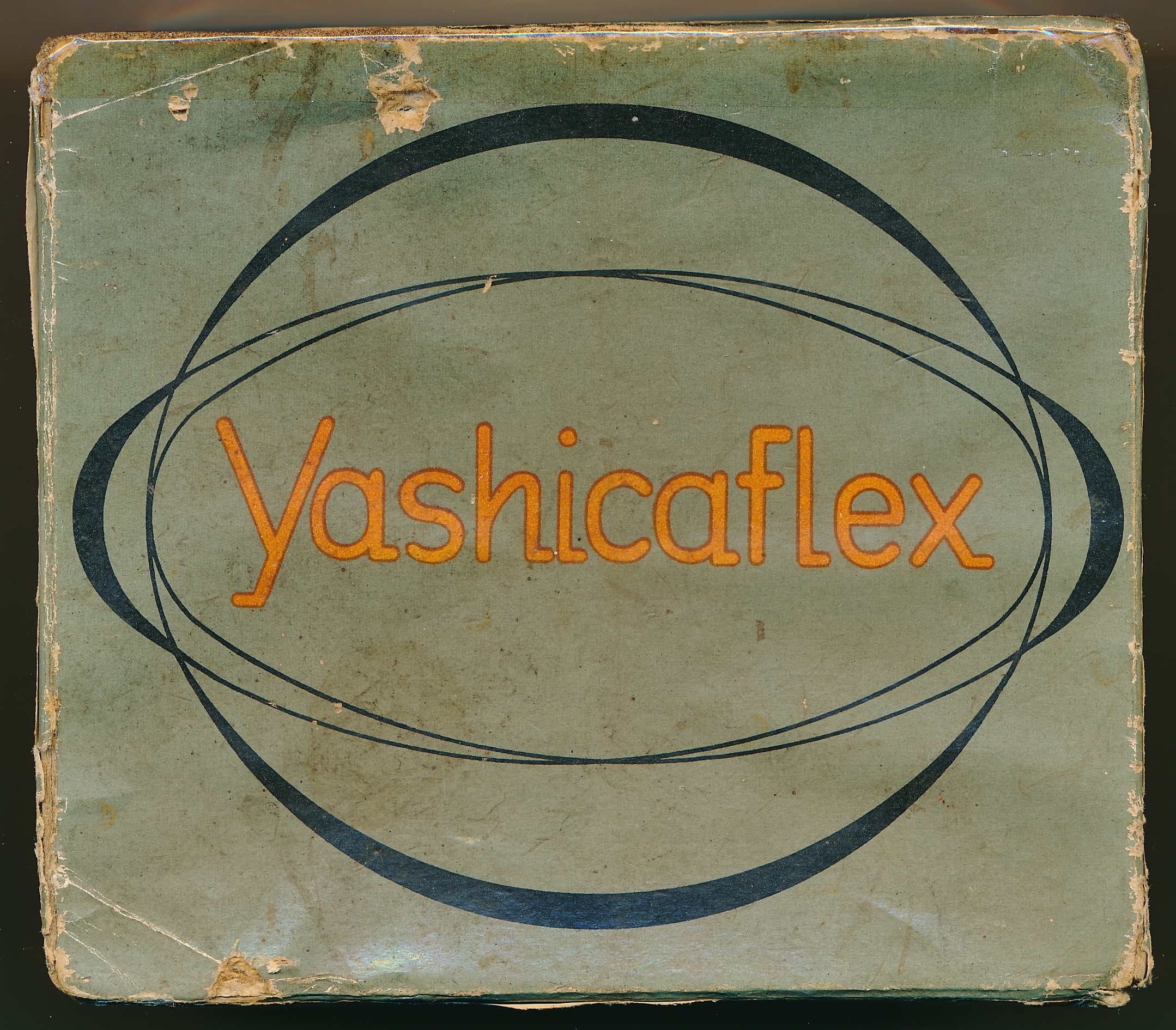
Yashicaflex A-II Box

Six decades of dirt and moisture = corrosion… Big Time!

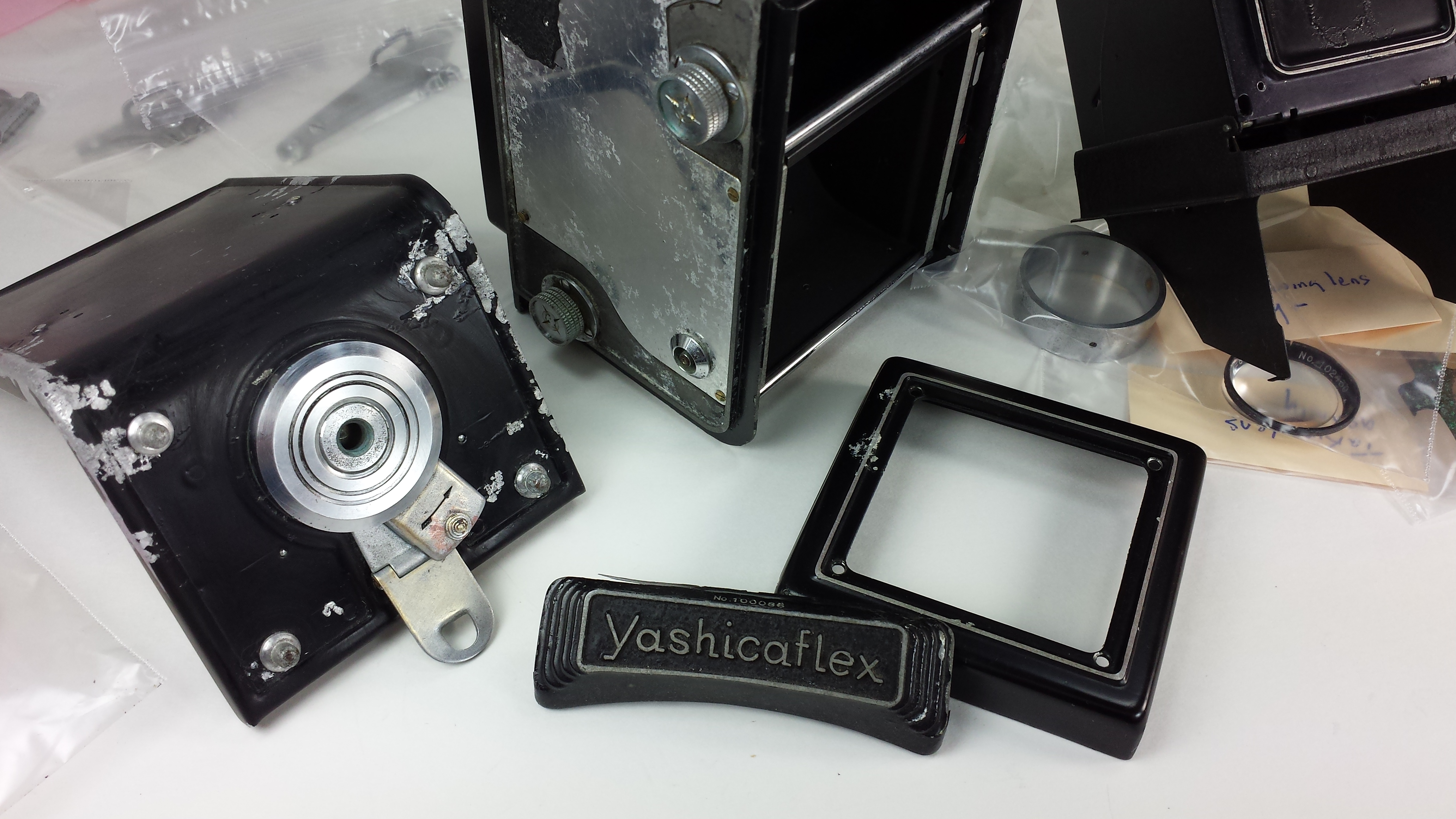
Over the next few months (turns out 14 months) I hope to be able to document my attempt to “restore” my 1955 Yashima Yashicaflex A-II. I have years of experience in cleaning and adjusting TLRs and SLRs, but I’ve never attempted a complete restoration on this scale. So why the Yashicaflex? Well it’s relatively common (especially in Japan), not necessarily a historic camera in terms of Yashima’s history, and it was in really bad physical condition overall. So why not? It was purchased from a seller located in Hiroshima, Japan, and if you know anything about Japan, Hiroshima is in the very hot and humid southern part of Honshu. When it arrived, I had to pry the camera away from the leather case as the two had become welded to one another. It must have been trapped in that case for years. The leather case with the felt liner did a good job of holding the moisture against the aluminum body of the camera hence the super bad pitting and overall corrosion. The leatherette covering on the camera was so brittle it just fell away in some areas but has stayed super stuck in others. I’ve had little success so far in removing it. So sit back and enjoy my “interpretive restoration” of this vintage Yashica. The good news… even with all the corrosion the lenses appear to be fungus and mold free! The lenses were made by Tomioka Optical for Yashima and somehow managed to avoid the ravages of moisture. The shutter works well, the aperture blades are clean and snappy and the focus is sharp. The reflex mirror was original and it looks terrible. I ordered a new one custom cut to fit. This camera will be a “user” so I will appreciate a clear view and sharp focus.

July 2014... my first look at what I would be up against!

July 2014… my first look at what I would be up against!

My first look at this disaster! Pretty nasty!

My first look at this disaster! Pretty nasty!

Yep... lots of dirt!

Yep… lots of dirt!

Nasty... nasty... nasty!

Nasty… nasty… nasty!

Slow progress being made. Some of the paint removers did nothing to the 60 year old paint!

'Simple Green' did nothing! A total of nearly 6 hours of soaking and a stiff scrubbing... not even a hint of paint removed.

‘Simple Green’ did nothing! A total of nearly 6 hours of soaking and a stiff scrubbing… not even a hint of paint removed.

More parts to clean.

More parts to clean. Keeping track of all the removed screws and what-nots will be critical.

The major assemblies removed from the body. Lower right (blue thingy) is the new custom cut mirror

The major assemblies removed from the body. Lower right (blue thingy) is the new custom cut mirror

Close-up view of the camera back showing the radical pitting of the aluminum body.

Serial number painted on and the original factory black enamel peeling off.

Serial number painted on and the original factory black enamel peeling off.