Pentamatic S and friends…

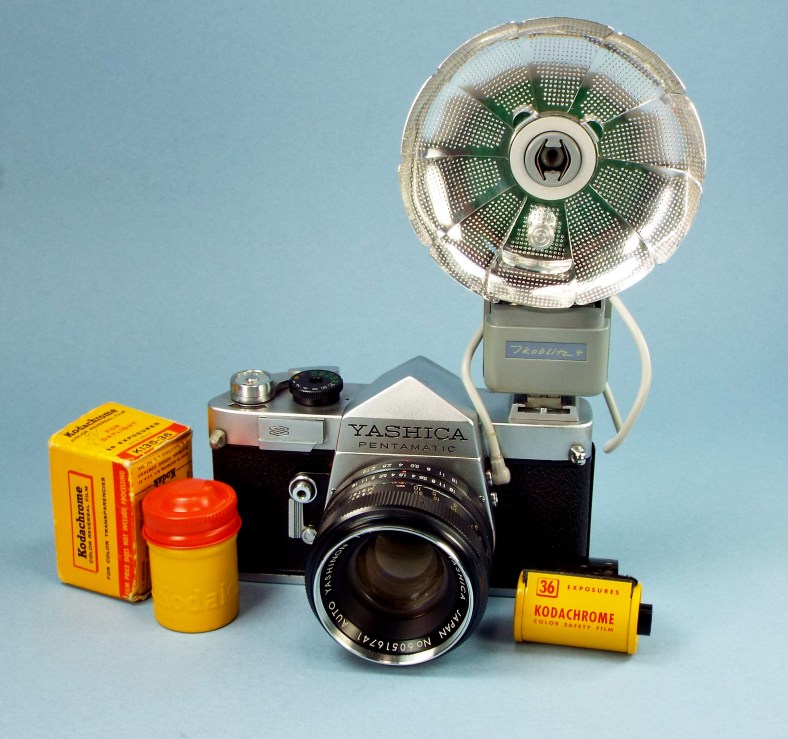
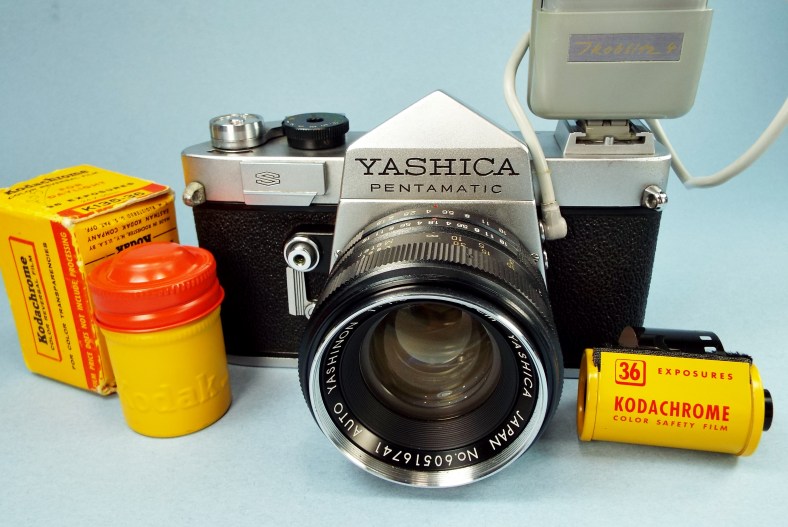
We’ve recently found a nice looking friend for our collection… well, friends. Like almost all collections, ours doesn’t need more friends – more space maybe, but no new friends. This flash came as an accessory to a recent purchase of a Yashica twin-lens reflex camera (from 1956). After a quick cleaning we attached it to our S to see how they would look together – smashing we think! The Kodak Kodachrome is from 1959 and adds a nice touch to the set up. We’ve always loved the bright yellow and red metal film cans from Kodak.

dscf2902

We put our Pentamatic S, from early 1961 or so, and the Zeiss Ikon Ikoblitz 4 (late 1950s?) together. Sadly the flash takes a now defunct battery and has a capacitor so not much we can do except enjoy the view.

dscf2908

They make for a handsome display. All are age appropriate too.

dscf2901

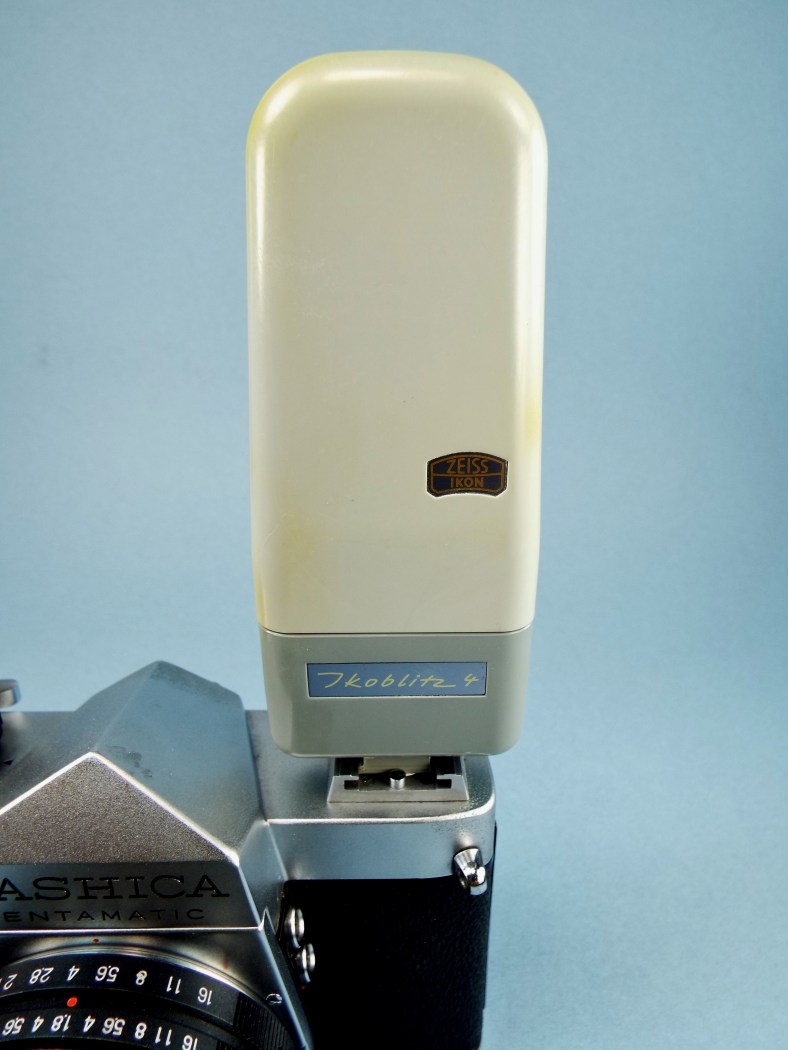
With the flash tucked away in its hard plastic shell it takes on an interesting look.

Hope you enjoyed your visit and if you care to, please leave a comment or suggestion for us. Of course if you know more about the Zeiss Ikon flash or want to contribute something about the Pentamatic, please do so!

Many thanks again… Chris and Carol

You can find us on flickr at https://www.flickr.com/photos/127540935@N08/

Nicca Pentamatic!?

We know… doesn’t make sense, does it? Doesn’t even sound right… “Nicca Pentamatic”.

Stay with us and we’ll try to make our case. Recently discovered information has filled-in some of the missing links in the development of our favorite obsession camera. The mysterious and seldom seen Pentamatic ’35’… Yashica’s first SLR.
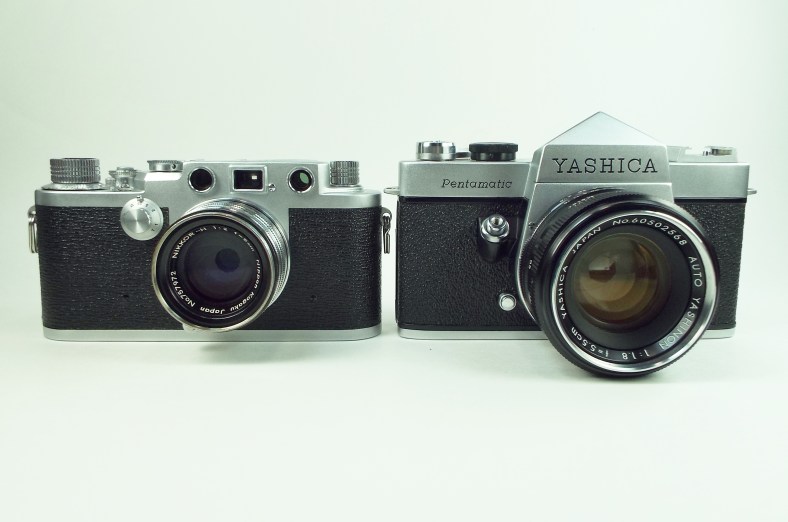
dscf2740

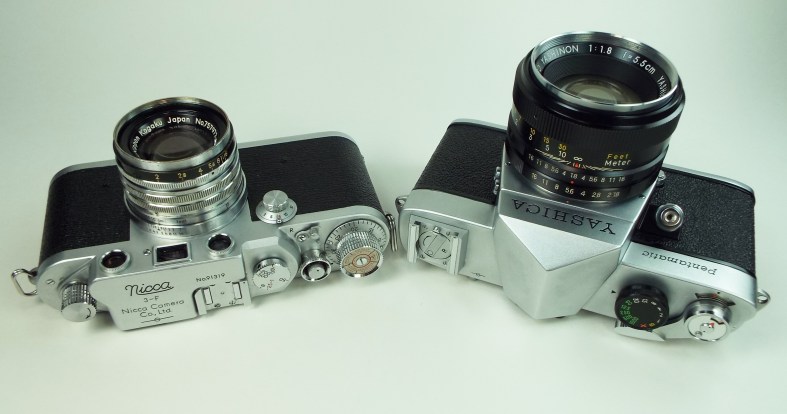
Nicca 3-F 35 mm rangefinder (left) and Yashica Pentamatic 35 mm single-lens reflex SLR (right).

A few interesting bits of info have come to our attention recently. We were alerted to an auction by our friend Paul Sokk (http://www.yashicatlr.com) that listed a 13.5 cm f/ 2.8 lens made by Taiho Optical Company –  Nicca Lens. Having never heard of the company, Taiho Optical, and knowing about Nicca’s history, we couldn’t figure out where and how there could be a Nicca connection.
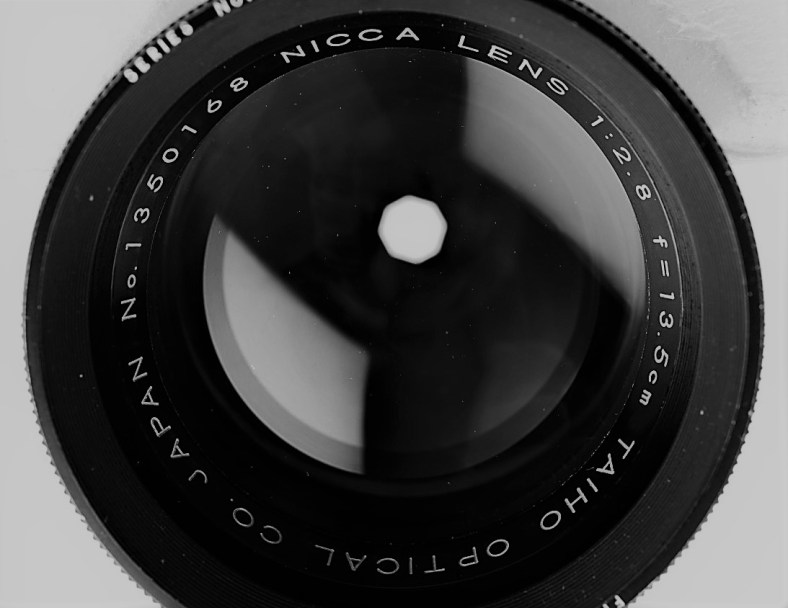
taiho_optical_co_nicca_135mm_f28_04


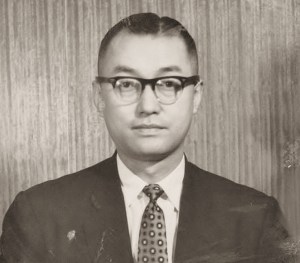
Let’s backtrack a bit with a quick history lesson. Yashima-Yashica was a very successful maker of high quality, low-cost twin-lens reflex cameras but hadn’t moved into the 35 mm market as of early 1957. It appears that the president and founder of Yashima-Yashica, Mr. Yoshimasa Ushiyama could see that although Yashica was successful building TLRs, the market for them would slowly diminish as new, smaller and easier to use 35 mm cameras would grab the marketplace. He wanted in but how? Yashica had no experience in 35 mm cameras, especially rangefinder cameras with cloth focal-plane shutters. There were dozens of Leica copy cameras in Japan (and the world for that matter) but possible patents protected specific manufacturer’s shutter designs. If he could buy into an established company then he could use their shutter design and incorporate it with early Yashima-Yashica designs. In May of 1958, an opportunity presented itself. Nicca Camera Company was apparently experiencing financial difficulties and may have been on the brink of bankruptcy. Nicca cameras were well known and well respected – they made high quality 35 mm rangefinder cameras with focal-plane shutters. They used Nikkor lenses with the L39 screw mount. Mr. Ushiyama was in a rush to purchase Nicca before they went belly up. Advisers cautioned to wait until Nicca went bankrupt arguing that they would be able to acquire it for a better price. Mr. Ushiyama knew that that outcome of a bankruptcy could take longer than he was willing to wait and there would certainly be more suitors to compete with. So the deal went through… sort of. As best as we can glean from our research, a “religionist” “admonished” Mr. Ushiyama for rushing into the deal and cautioned that Yashica itself would suffer a “decline” if all of the transfer were made immediately.
record-image_939x-h3sn-v1

Yashima-Yashica founder Mr. Yoshimasa Ushiyama.

OK, OK! We give!!! We share your feelings dear reader –  what’s the connection between Nicca and the Pentamatic? Taking the advice of the religionist, Mr. Ushiyama created a new company. Nicca would become Taiho Optical Company. Say what? Nicca wasn’t absorbed into Yashica in May of 1958, instead, they became another company that could continue to operate with Yashica but without becoming Yashica. Simple. Confused? Mr. Ushiyama listened to his adviser so nothing bad happened. It appears that the former Nicca employees were now free to develop new processes and designs with the financial and technical support of the much larger Yashica. What did Yashica get for its money? Plenty it would seem. Access to years of 35 mm rangefinder manufacturing experience and access to a proven focal-plane shutter. Important steps in building a 35 mm single-lens reflex camera. We don’t know (yet) which one of the two companies came up with the design of what would become the Pentamatic. Was it mostly a Yashica design that had been kicking around for a while lacking a focal-plane shutter, or was it mostly a Nicca design that lacked the financial means to bring it to market? We feel that it was more than likely a 60 – 40 split with Nicca as the 60%. Just a hunch, no facts at the moment.
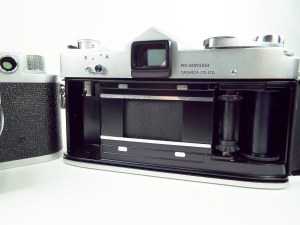
dscf2743

Pentamatic’s focal-plane shutter. Thanks to Nicca.

But what did the Taiho Optical Company make? Yashica didn’t make their own lenses, Tomioka Optical of Tokyo did. Was the former Nicca, now that it had become Taiho Optical, going to suddenly start making lenses? At the start of this blog, we mentioned that we were alerted to the existence of a 13.5 cm lens for sale with the Taiho Optical Company-Nicca Japan markings. Other than that, nothing.

So when did Mr. Ushiyama merge the two companies? He apparently listed to his adviser and waited eight long years before merging the two. From 1960 (when the Pentamatic was released) until 1968, when he not only made Yashica whole, but he also acquired long time lens supplier Tomioka Optical.

Now we know how the Pentamatic came to be and why it could be called the Nicca Pentamatic.
dscf2748

Thanks for sticking with us. Comments? Likes?

Chris and Carol
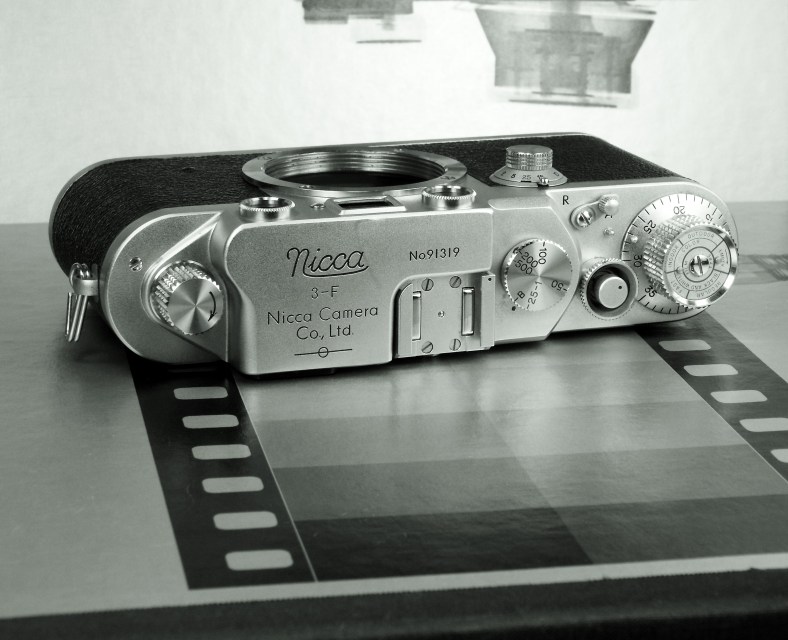
Nicca 3-F… Nicca Camera Co., Ltd. & Yashica

What connection could this attractive 35 mm rangefinder camera have with Yashica? And why on earth is it in a blog about the Yashica Pentamatic???

dscf2631

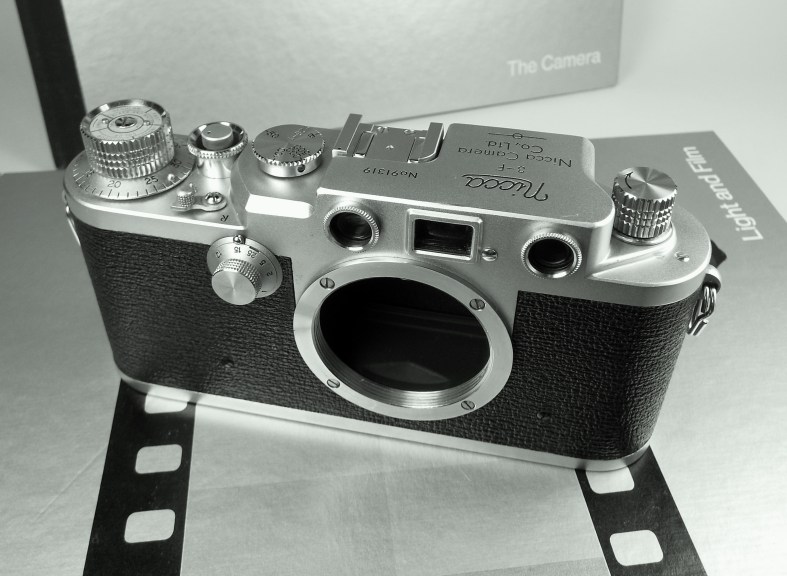
Nicca 3-F from early 1957 (maybe late 1956). Obviously, it is one of many Leica copy cameras that were built during the 1950s and beyond.

First a little bit about Nicca. Nicca was one of the literally hundreds of camera manufacturers in Japan during the late 1940s and through the 1950s. Production appears to have been, on average, anywhere from just a few hundred units per year to nearly 5,000 per year by 1958. Nicca made what many consider to be one of the better Leica copy cameras. The fit and finish of this particular 3-F are extraordinary. After six decades of use, the camera still functions perfectly and the finish is beautiful. Of note, the leatherette is some of the finest we’ve seen from this period. It is still tight and complete and is a joy to hold this camera.

To keep things in perspective, it is a rather simple camera… focal plane shutter, highest speed 1/500th of a second, no built-in exposure meter, no mirror, no self-timer and a straightforward film advance knob vice single stroke lever (later model did add the lever). Simple but executed well.

dscf2635

The business side of the 3-F. Traditional layout of the controls… this was Nicca’s last model with the knob film advance (they did produce this model with a film advance lever in late 1957).

Where’s the connection with Yashica? In May 1958, Yashima (pre-Yashica) purchased the Nicca Camera Company which by some accounts was struggling and near bankruptcy. We’ve yet to find proof of the bankruptcy part of this narrative but we will continue to pursue it. Yashima, soon to be Yashica, wanted access to Nicca’s technology, design and small camera manufacturing abilities as Yashima lacked experience in 35 mm camera production. We’re sure there was some desire to acquire Nicca’s focal plane shutter technology as Yashima for the most part only made TLRs (just released an 8 mm movie camera and the Yashica 35). Nicca produced two more models(?) under its own name before Yashica released the Nicca-Yashica YF in 1959. Yashica quickly stopped making rangefinder cameras with interchangeable lenses by 1960. We have always found it to be a bit odd but rangefinders with interchangeable lenses were quickly being pushed aside by 35 mm SLRs for all angles… including Yashica with its Pentamatic ’35’.

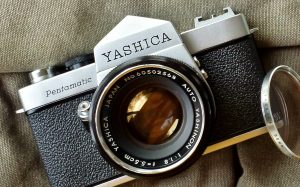
What’s the relationship with the Pentamatic? The Pentamatic was more than likely designed in the early part of 1959 and may have been originally a Nicca design (more of that later). Distribution of the Pentamatic occurred in the spring of 1960 with a widescale release and advertising by June 1960 (in the US). The Pentamatic was Yashica’s first 35 mm single-lens reflex (SLR) camera. If featured a focal plane shutter with a top speed of 1/1000th of a second. Nicca’s knowledge was directly used in the Pentamatic.

dscf2636

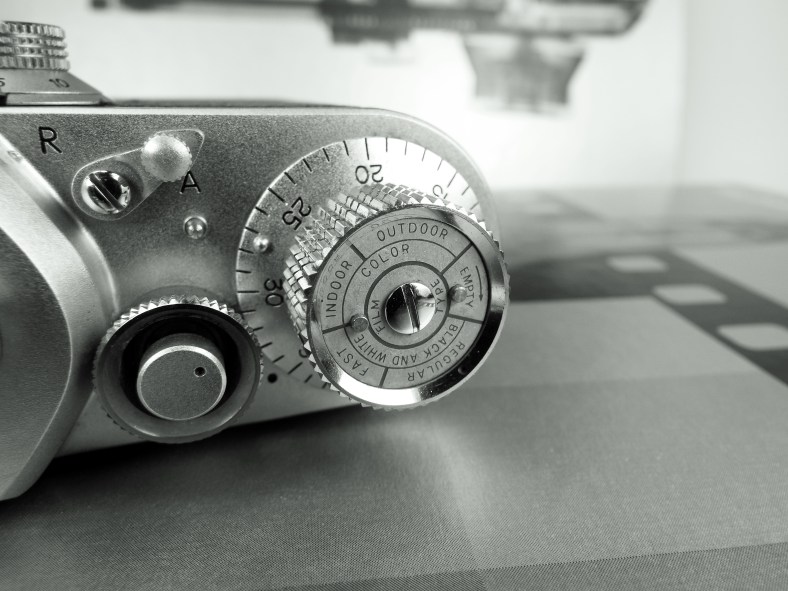
Exposure counter and film reminder dial.

dscf2632

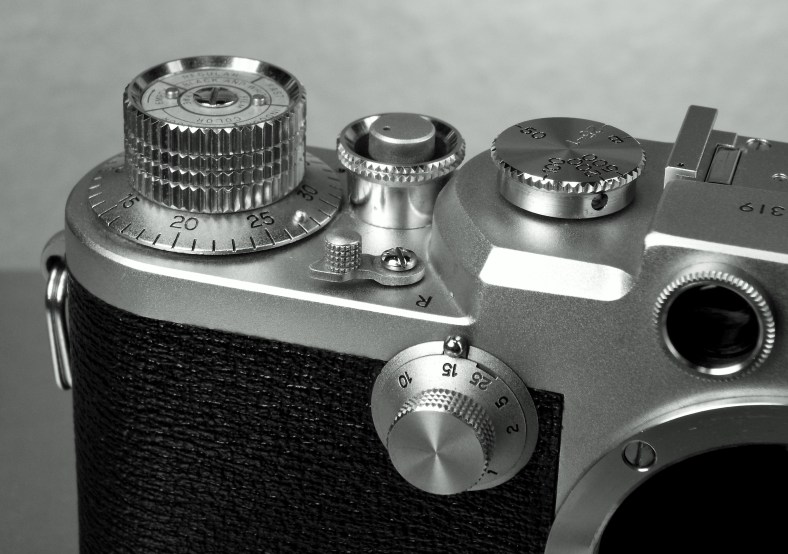
Close-up of the slow speed knob.

It appears that when Yashima purchased Nicca in 1958, there wasn’t an immediate transfer of the company’s assets to Yashima. Instead, Nicca Camera Company became Taiho Optics (or Optical) a subsidiary or new company of the Nicca-Yashica amalgamation. Mr. Ushiyama, founder, and president of Yashica received council that it was not in Yashica’s best interest to proceed with the merger (as the decision to acquire Nicca was made in haste). Instead, Taiho Optics would go on to produce some of its own lenses and lend support and design experience (and personnel) to Yashica. Why? Yashica wanted to build a 35 mm SLR and Nicca was an important stepping stone on that path.

Thanks for your visit… please feel free to leave comments.

Chris & Carol

Fuji Petting with our Fujipet! New Pet Pics Posted…

The goal is to take our 1958 medium format camera from Fuji Photo for a little picture taking. We’ve loaded some fresh Fujifilm Neopan 100 Acros (in days past it was Neopan SS) into the Fujipet and see how it does after 58 years of non use. We’re very curious about the “look” of the images. If you don’t know much about the Fujipet, please take a stroll through our archives for a little catch-up.

DSCF1741

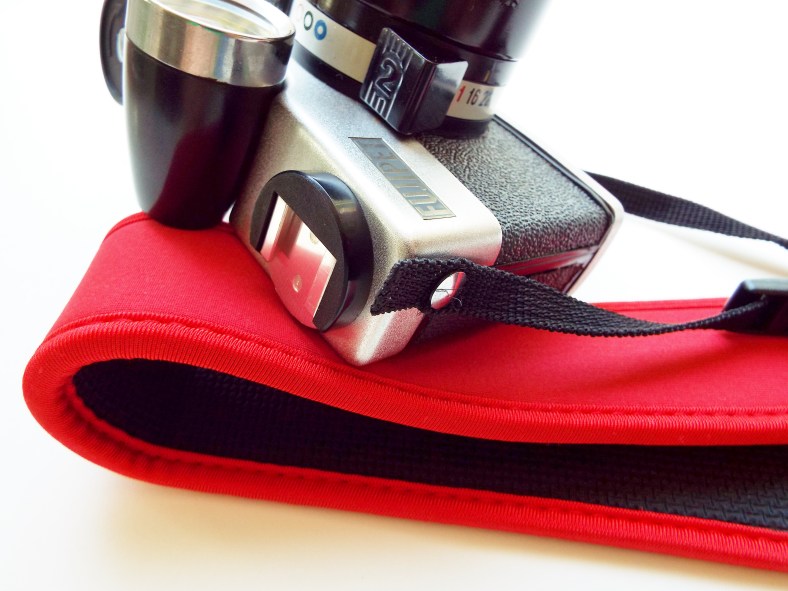
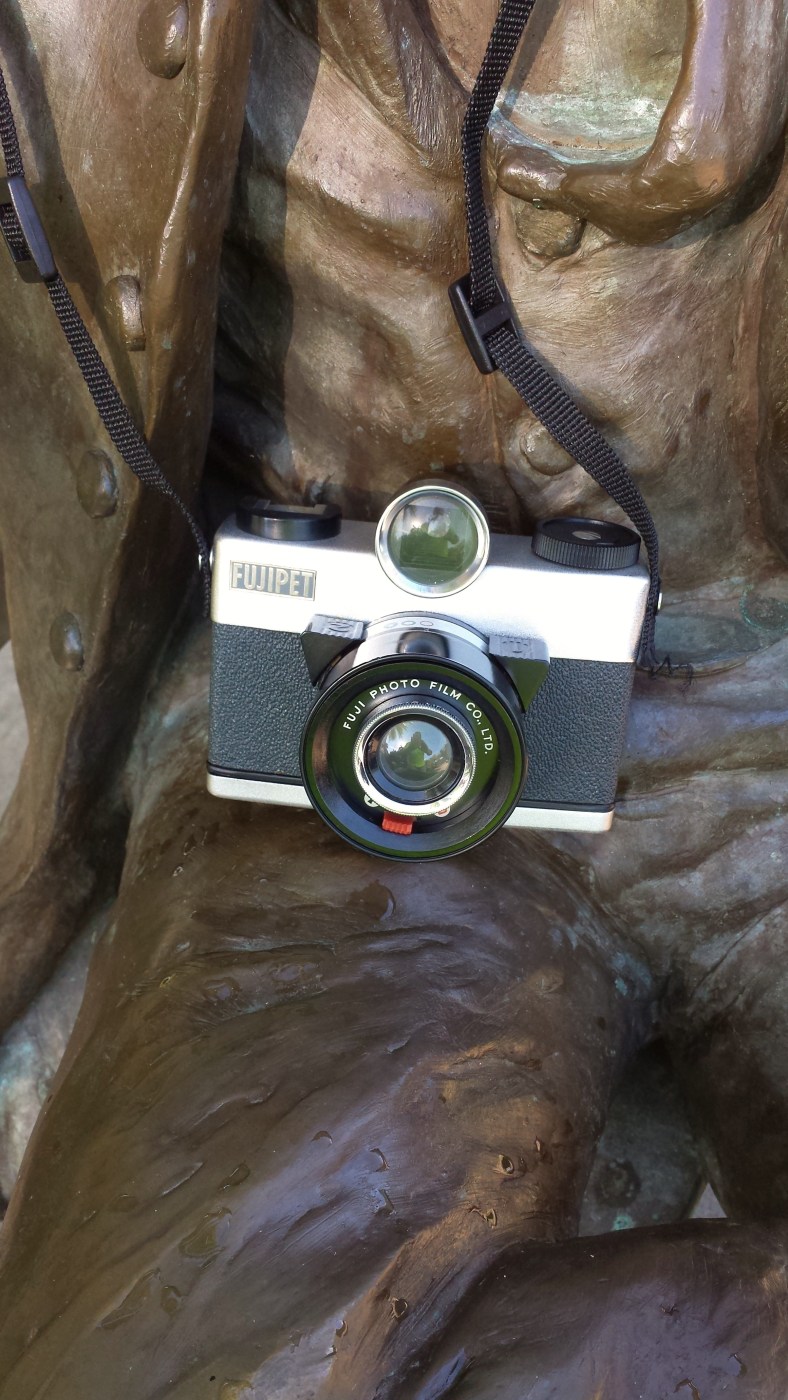
1958 Fuji Photo Fujipet with its new strap. A simple modification to the Canon strap made it perfect for this lightweight Fuji. We have the original vinyl (leather?) strap for the Fuji but it’s still sealed in its original package. No reason to ruin it by using it LOL.

20160815_100355

The Pet as seen on a local legend (Mr. David Yulee).

20160815_102312

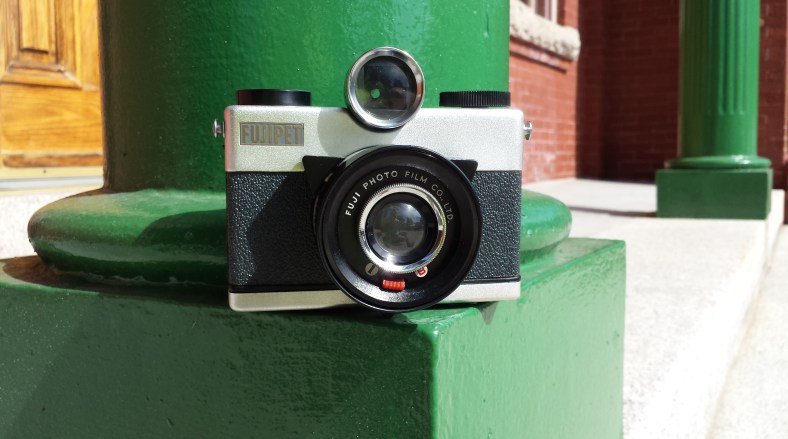
Hoping the bright Florida sunshine was just right for our first test of the Pet.

And just how did the Pet perform?

DSCF1962

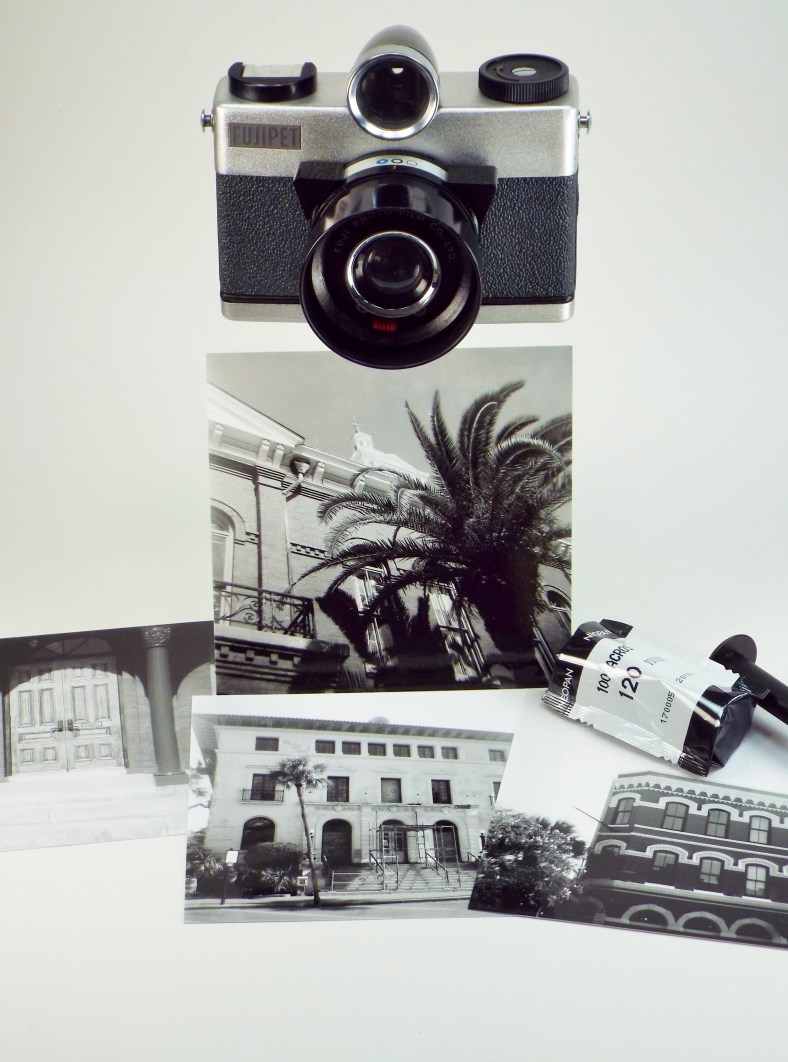
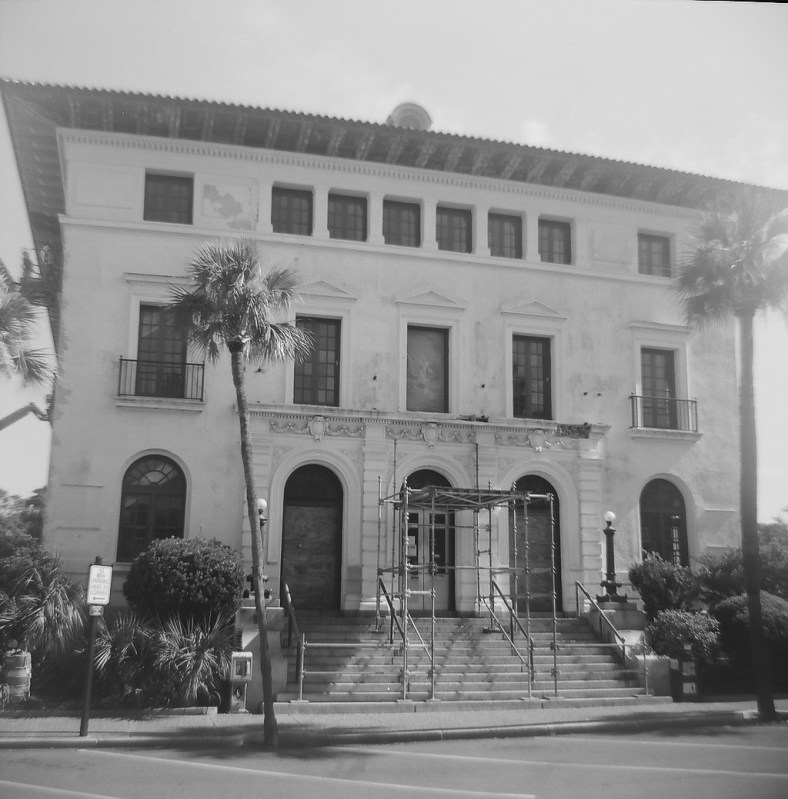
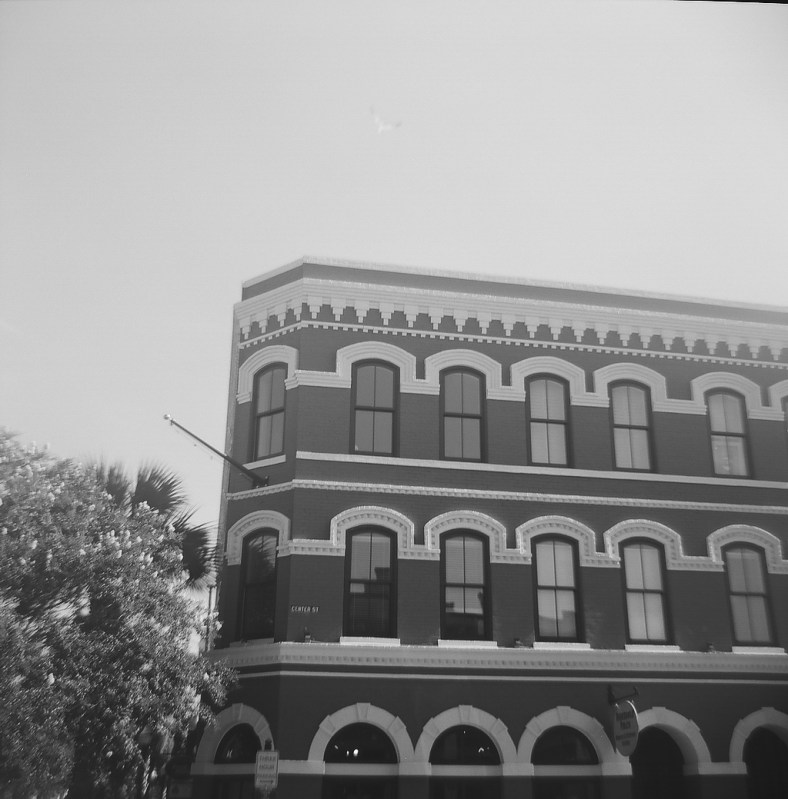
The entire roll of 12 exposures came out just great! Here’s a sample of some of them. The Pet gave a special look to the images. We had ‘The Darkroom’ print up these four images in their true square format (here they are 5 x 5 inches).

Well as you can see the pictures came back from the outing with the Fujipet. We couldn’t be more thrilled with how they came out! The lens was actually super sharp (all things considered) and the almost 60 year old plastic lens had some nice contrast to it too. We can’t say enough about Neopan 100 Acros – exceptional film!

28477728874_65f641d3ae_o

28495471114_8a530a1d53_o

28531727084_f98756bf81_o

29344870275_cb1d30bbfe_o

If you can get your hands on a Fujipet then do so. There’s almost always one or two listed on the Japanese online auction sites. Be careful though! Japan (like my Florida) is a very humid climate and that can wreck havoc on old metal cameras and plastic lenses. Ask questions of the sellers and look very closely at the images of it. By the way, in 1958 when the Pet’s were selling wildly in Japan, they went for 1950 yen or about just under $6. You’ll pay a little more than that today but a good one can still be found for under $100 and questionable ones for $10 to $20.

Thanks for your visit! Comments are always welcome.

C&C ^.^

Totally Off Track… フジペット

Occasionally we can get off track here on the ‘Fanatic’… well more often than not. Here’s a quick post about a rather rare camera on this side of the world.

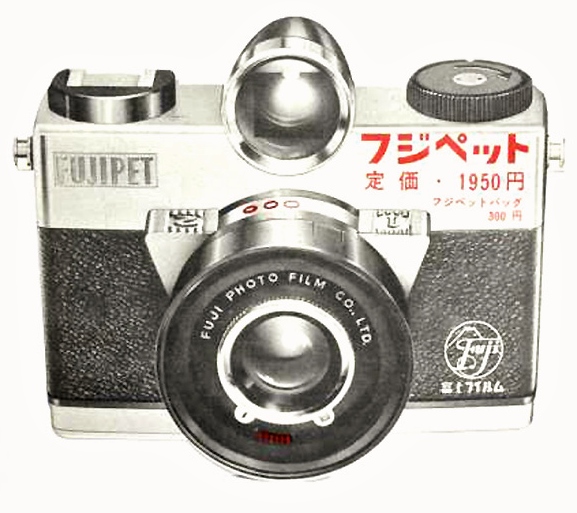
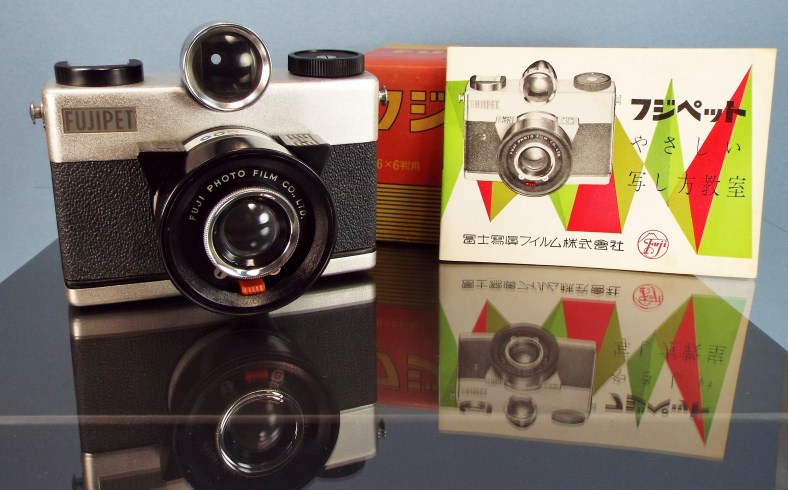
The Fujipet!!! フジペット By Fuji Photo Film Co., Ltd.

Some have classified it as a toy camera as it is made very simply with lightweight materials and a plastic lens. In Japan (we believe the only market where it was sold) it was designed for use by children, “adult” women and beginners. At only ¥1950 it was inexpensive even by today’s standards. In our opinion here on the ‘Fanatic’, the Fujipet was no more a toy camera then the extremely simple and very popular Kodak Instamatic series of cameras.

The Fujipet is a true 6 x 6 cm medium format camera using 120 roll film.

DSCF1477

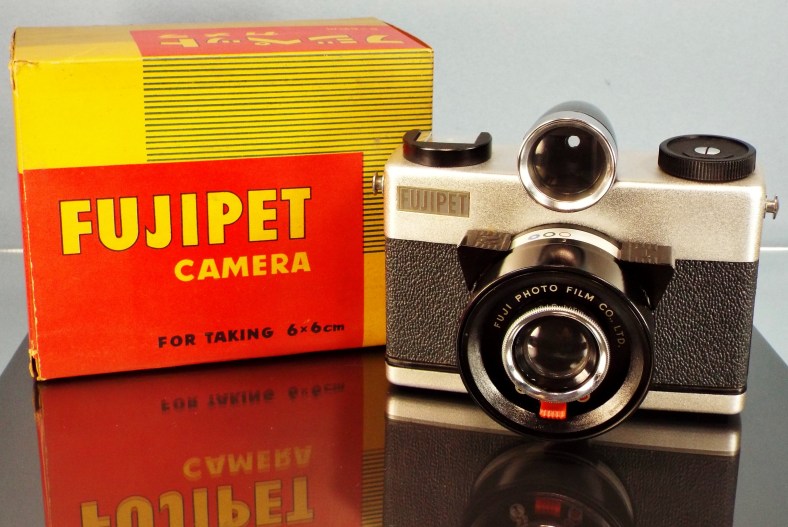
Rare Fujipet set from 1958.

28755215391_df2c833878_o

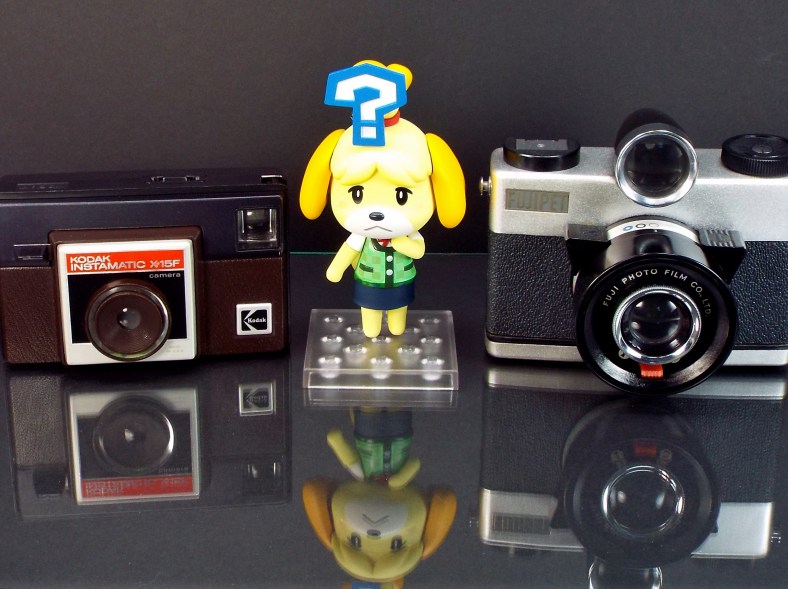
Shizue is confused! One of these cameras is considered by many to be a toy camera while the other was thought to be a serious camera. Each sold over a million plus units. Each has a plastic lens. The Kodak is mostly a plastic body with some internal metal parts and the Fujipet is plastic and aluminum and actually has a rather substantial feel to it. Of course the Kodak used 126 film in plastic cartridges and the Fuji? Professional 120 roll film producing 6 x 6 cm negatives. Toy?

DSCF1480

Original users manual. Cool Fuji logo.

DSCF1484

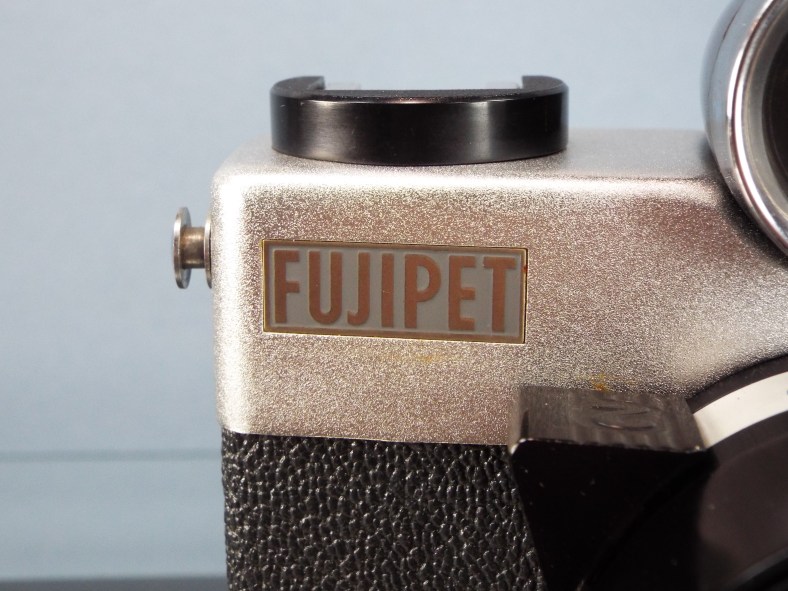
The coolest name around!

DSCF1485

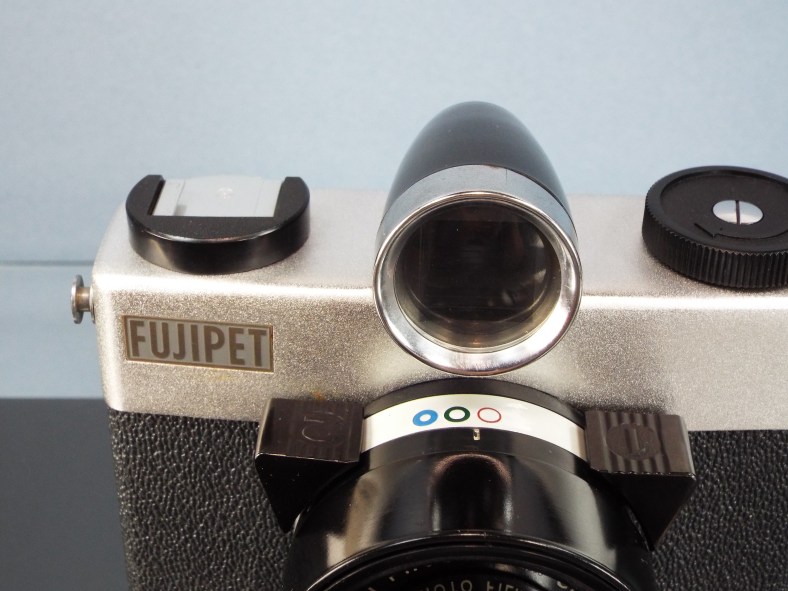
Space age viewfinder! Straight from the 1950s!

We will be running a roll of 120 film through soon… stay tuned!

Many thanks, Chris and Carol
Yashima-Yashica Rookie – 1956

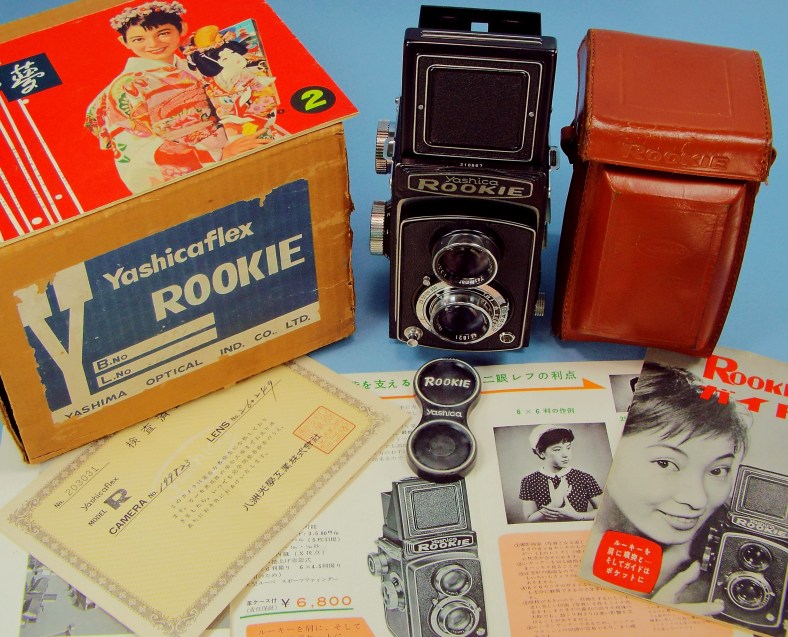
We were finally able to assemble our Yashicaflex Rookie ‘stuff’ for some studio shots. We’re still missing some items to make the set complete but so far the collection is looking good.
014

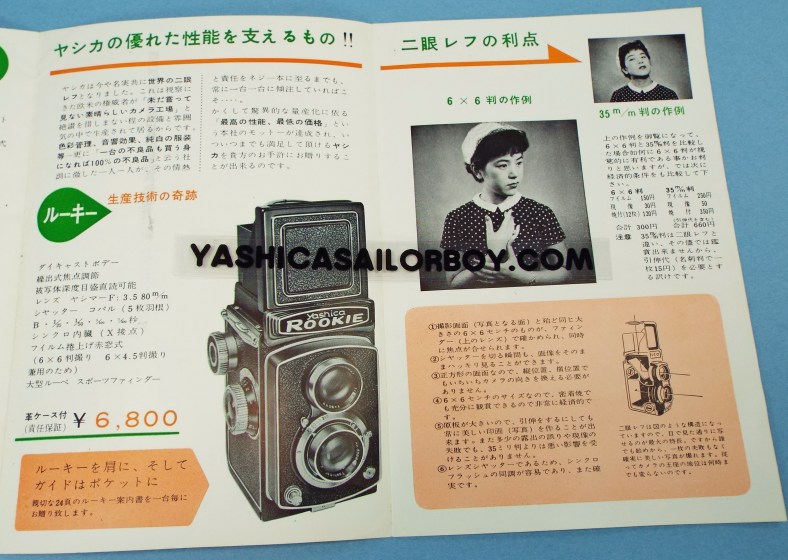
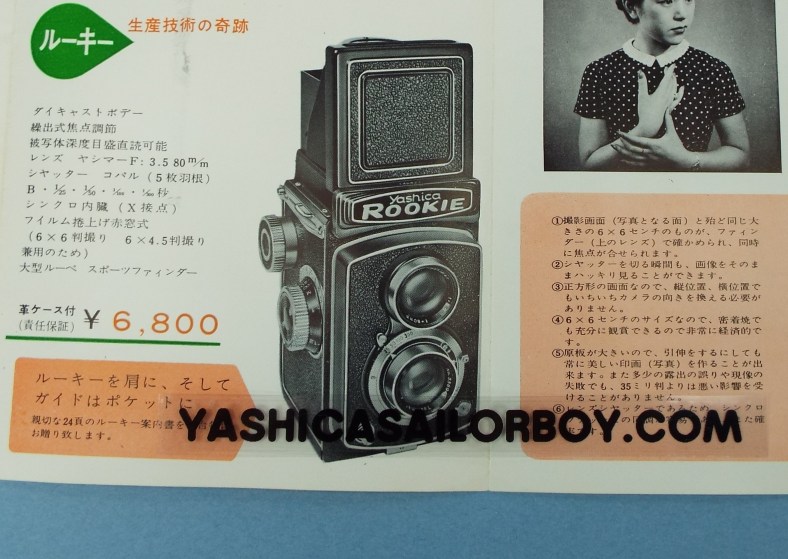
The outer box (or shipping box) for the camera and its leather case is on the left. Of course the camera is in the center with the Rookie leather case to its right. The Rookie instruction booklet is in the lower right of this image and a colorful Rookie sales brochure is just below the lens cap. A warranty (service certificate) card identifying that this camera is a Yashicaflex Model R is just below the box and finally another sales brochure that features the Rookie is on top of the box.

018

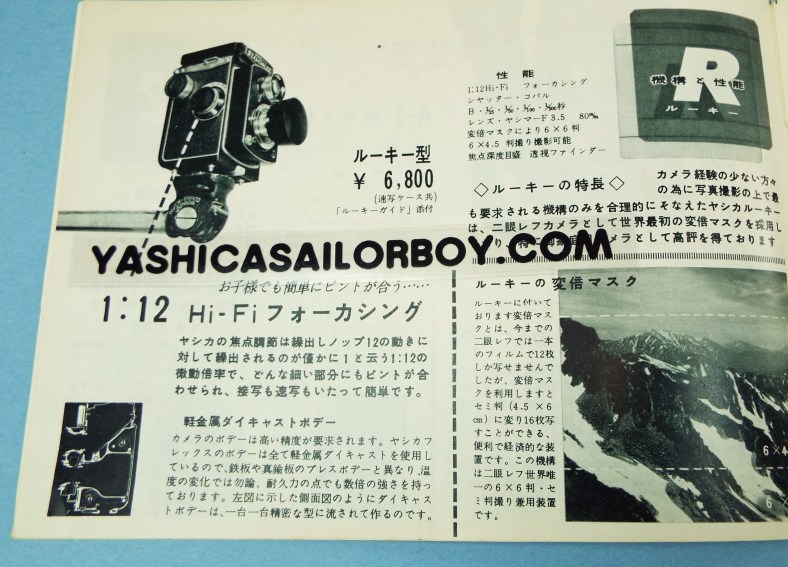
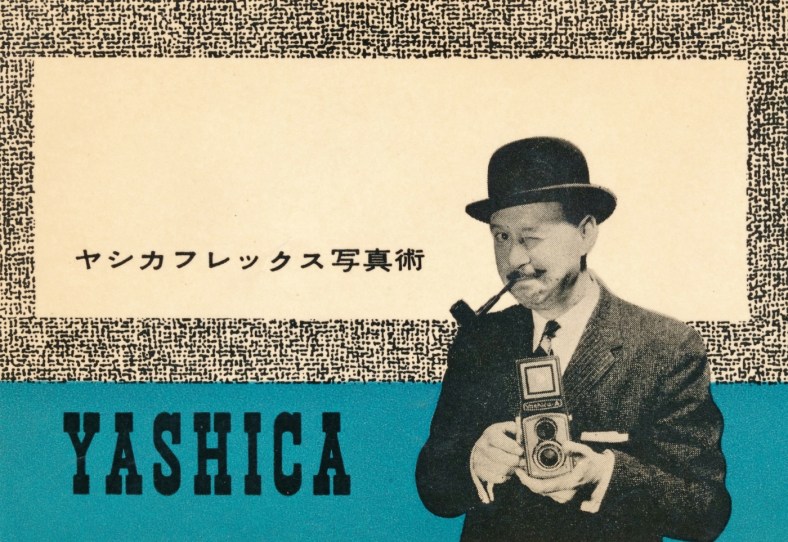
Original 1956 sales brochure.

015

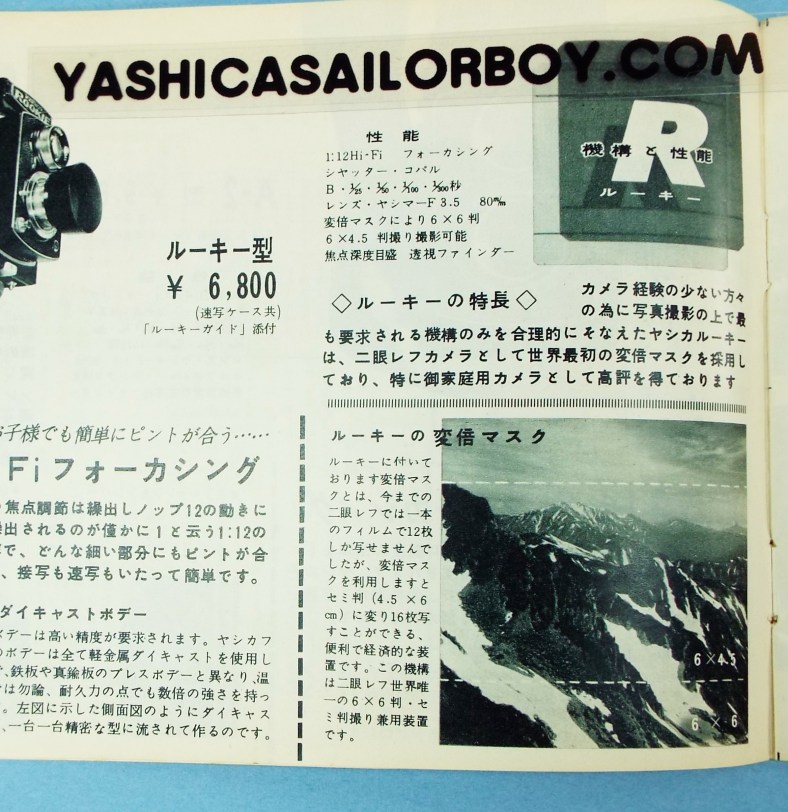
Sales brochure from 1956.

017

Certainly an entry level twin-lens reflex camera with some nice features.

016

The Rookie could take standard 6×6 cm images or with a accessory kit take 3 more images on standard 120 film and produce 6×4.5 cm negatives.

The Rookie wasn’t popular in Japan and Yashima-Yashica gave it a very limited run. I suspect that some popularity exists today just because it’s seldom seen here in the U.S. and it’s rather hard to acquire a really nice example. We like the camera, the name is goofy and didn’t play well in the marketplace.

As always… we appreciate your visit! Thanks, C&C


Yashima-Yashica Rookie

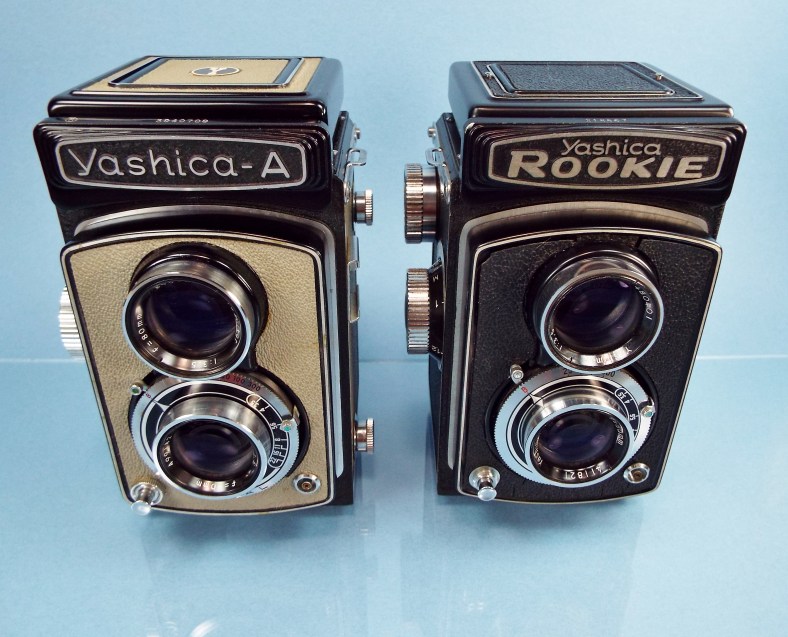
014

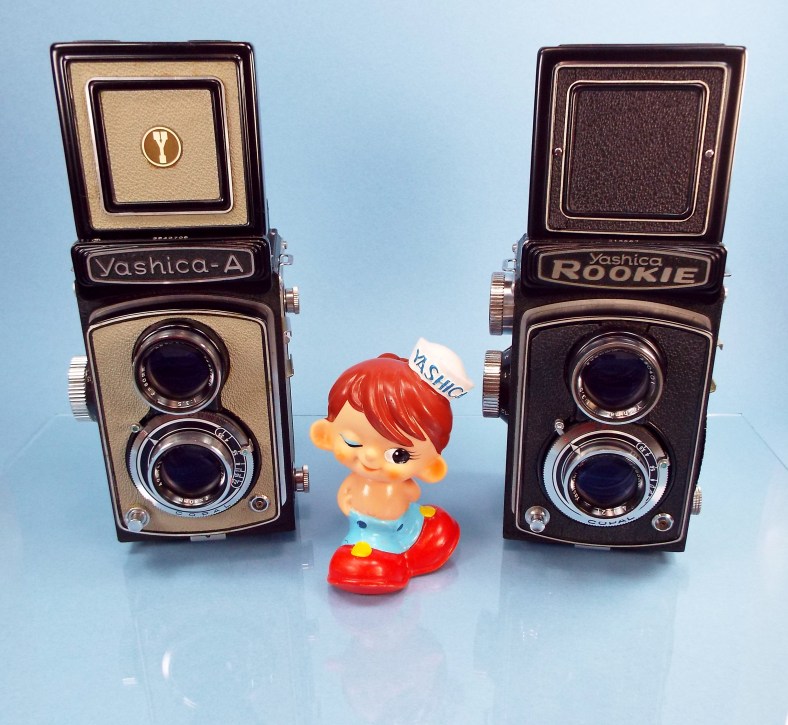
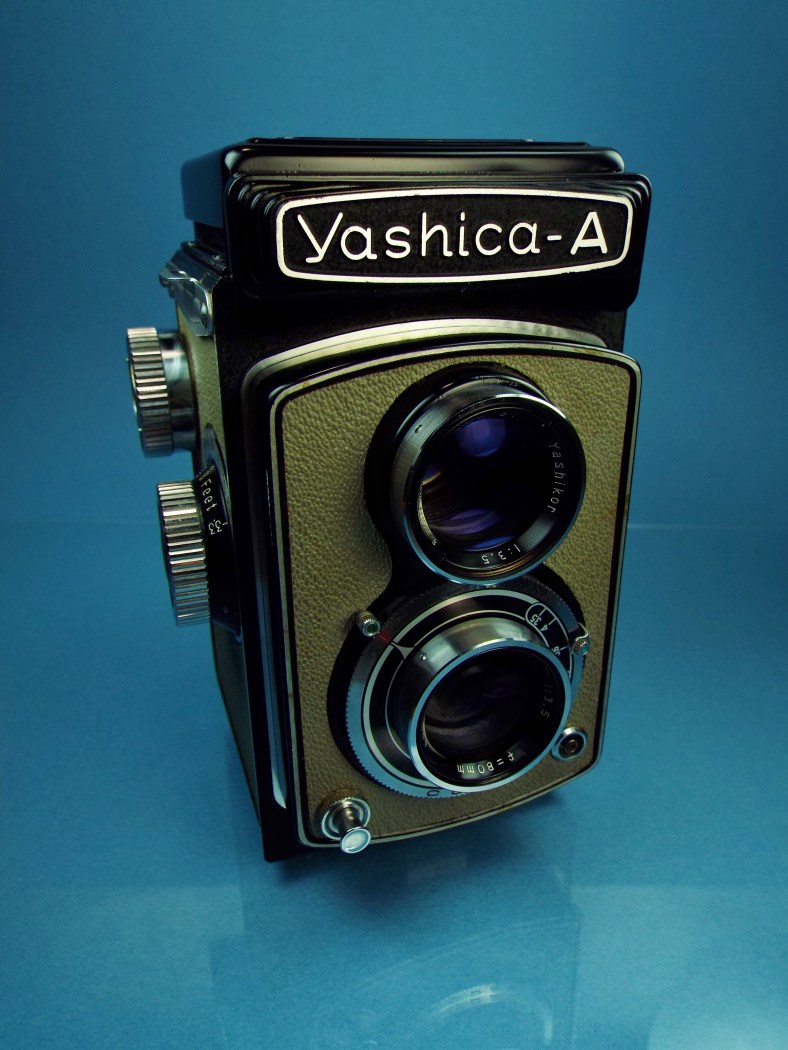
Yashica-A in gray leatherette on left from 1959. The Yashica Rookie (on right) was a Japanese domestic market only model introduced in early 1956. In Japanese brochures and on the outer shipping box, the Rookie is also known as the Yashicaflex Rookie or simply the Yashicaflex Model R.

022

The Yashica A and the Rookie share many of the same features and specs. The Copal shutters were the same and the Tomioka Optical made lenses were also the same in the beginning. Later models of the A (including this one) upgraded to a slightly different lens configuration.

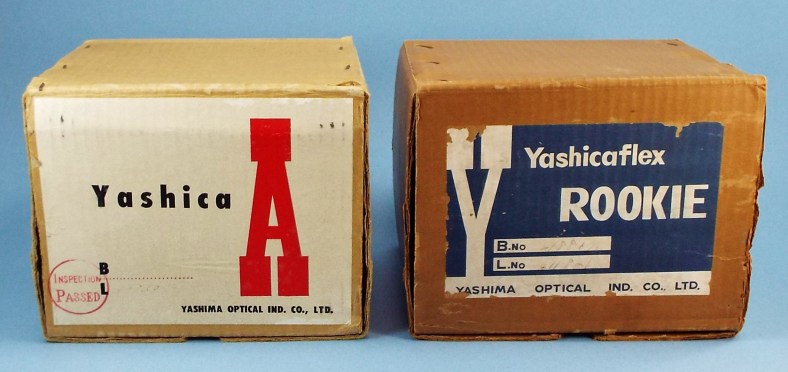
005

These outer shipping boxes are roughly from the same period. The Rookie is from mid 1956 while the A box is from early 1957 (or so). There are slight differences in the two boxes… the Rookie box is bigger but weighs less than the A box.

A Couple of ‘New’ Yashicas

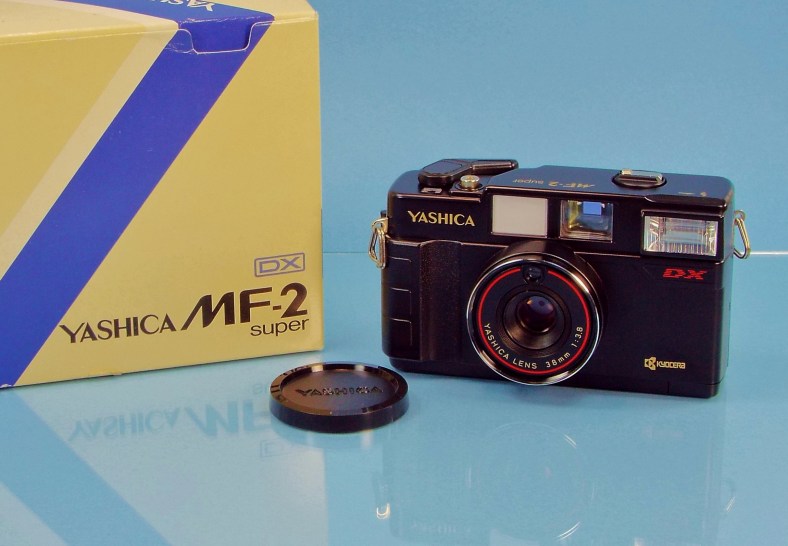
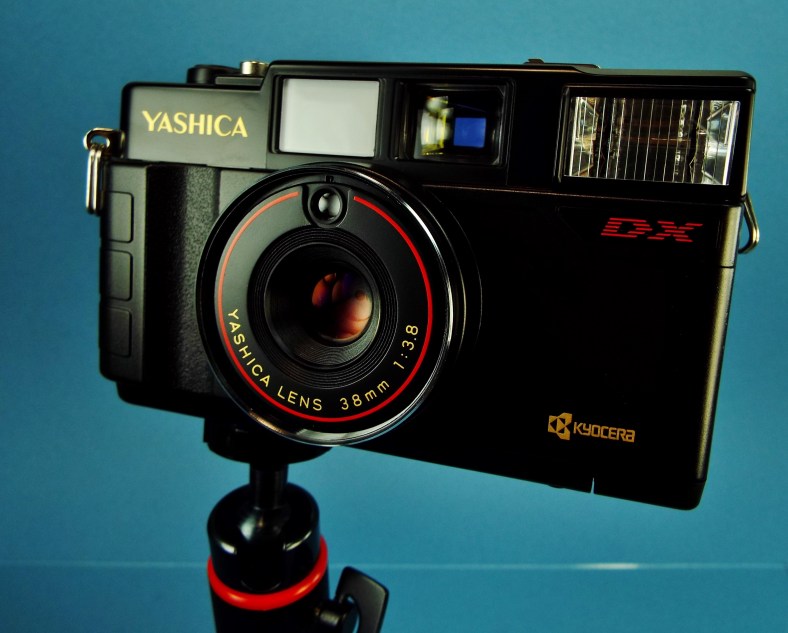
ヤシカ… A couple of new Yashicas have caught our fancy. From 1986 and during Yashica’s ‘dark period’ when they were taken over by Kyocera, this super nice (and truly new) Yashica MF-2 Super DX. To be sure it’s a very plastic camera but it’s filled with some nice high tech features… DX coding of the film speed, automatic exposure and built in flash. No focus needed as the lens can focus from about 3 feet to infinity (and beyond!!!).

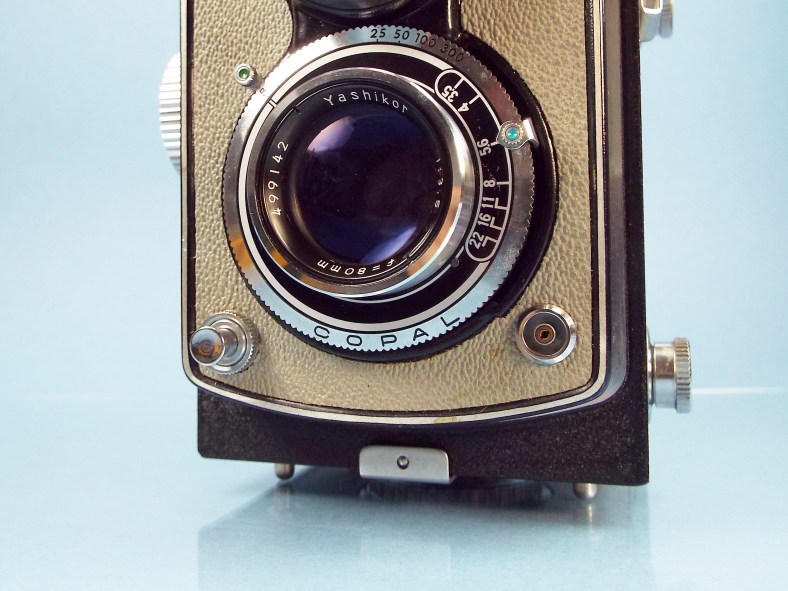
The other member of the Yashica family is this nice almost 100% mint Yashica-A with gray leather and silky black metalwork. It’s from 1959 and works perfectly… shutter speeds are spot on and the aperture blades are snappy. No self timer on these basic models from Yashica, but they hit a great price point with buyers and had a long production run.

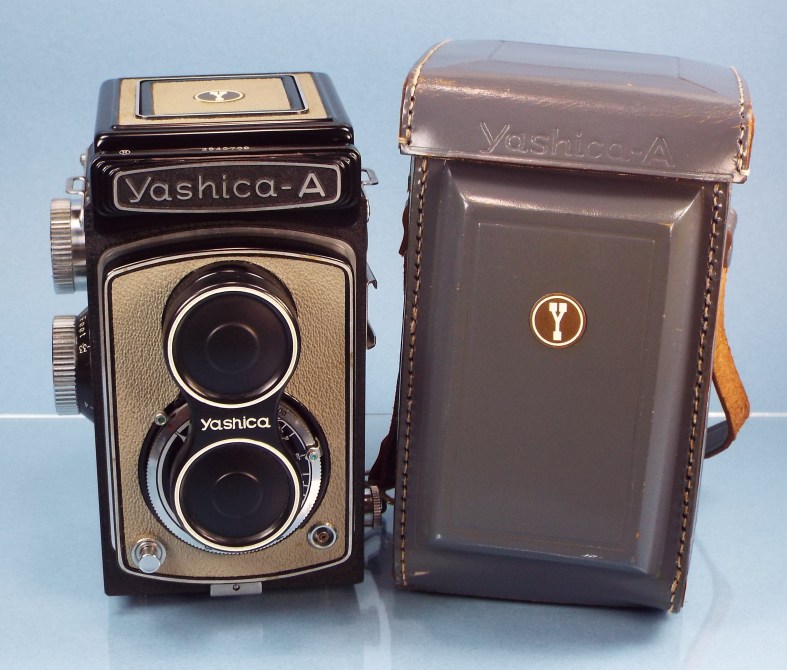
020

Yashica-A in gray with the original gray leather case. From 1959.

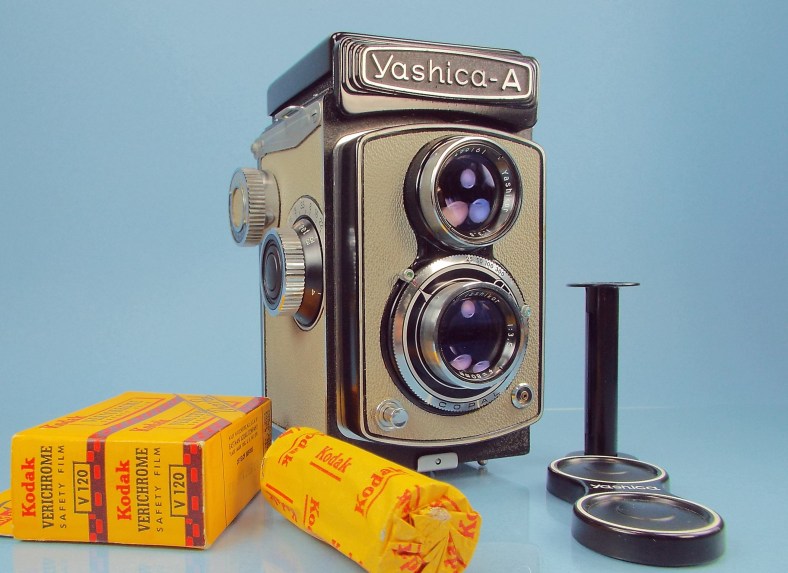
009

Yashica-A in gray leather and black metal. The Kodak film is close to the correct era (late 1950s).

011

Low key effect photograph. It gives the camera a bit of an edgy look.

017

Interesting lens serial numbers on this camera. The taking lens SN (pictured) is only 19 numbers less than the viewing lens. Almost spot on (haven’t seen that yet). Of course these lenses were made by Tomioka Optical of Tokyo for Yashica.

020

Brand new and never used (isn’t that the same?) Yashica MF-2 Super DX 35mm rangefinder camera from 1986. Parts made in Japan and assembled in Hong Kong.

023

Low key photograph gives this pretty but humble camera a nice look.

As always we appreciate your visit to our blog… feel free to comment. Many thanks and big smiles… C&C

Yashica Flex Model S… 1954 to 1957

The Yashica Flex model S (aka Yashicaflex) is one of Yashima’s most important early cameras… well maybe the second most important behind the first. Obviously Yashima’s first camera, the oddly named Pigeonflex one could argue, was the most important. The model S though was the first twin-lens reflex (TLR) camera (in the world!!!) that had a “built-in” exposure meter.

004

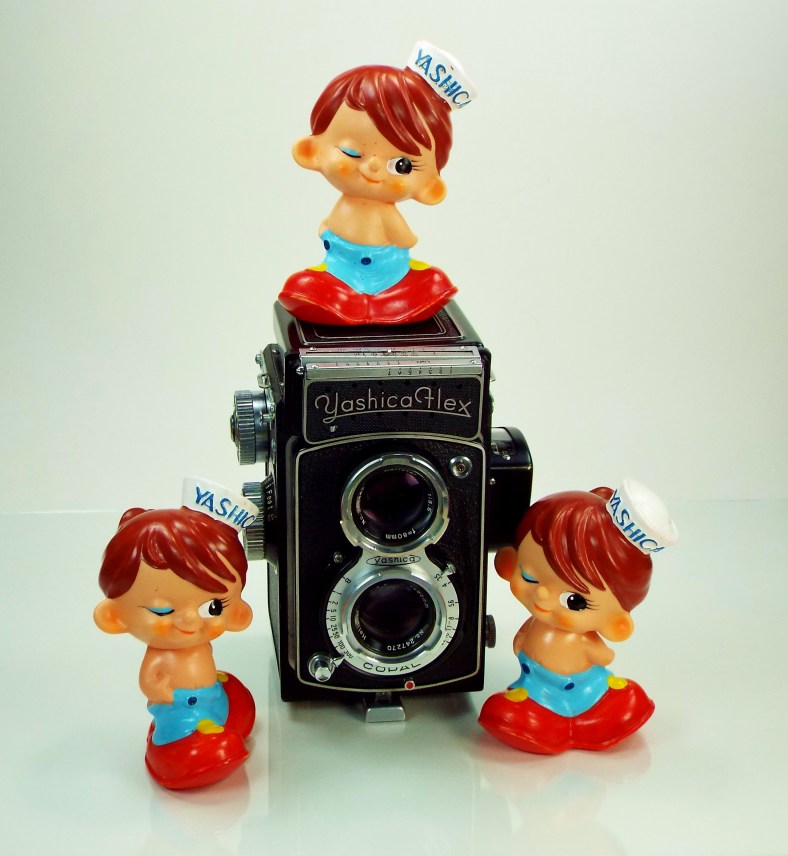
The Yashica ‘Sailor Boys’ gather around the Yashica Flex model S. The boys are from 1962 and this TLR is from late 1956.

The Sekonic CB-1 exposure meter was attached to the camera’s left side and the light gathering cells were located under the nameplate flap. They were connected to one another but the meter was non-coupled to the camera settings. The user would lift the flap to expose the cells to light and then read the exposure index in the window on top of the meter. Then simply set the camera to the proper f-stop and shutter speed and snap away. No batteries required. But with the passage of time most of these meters failed in some way or another. If you find one with a working meter so much the better.

DSCF0044

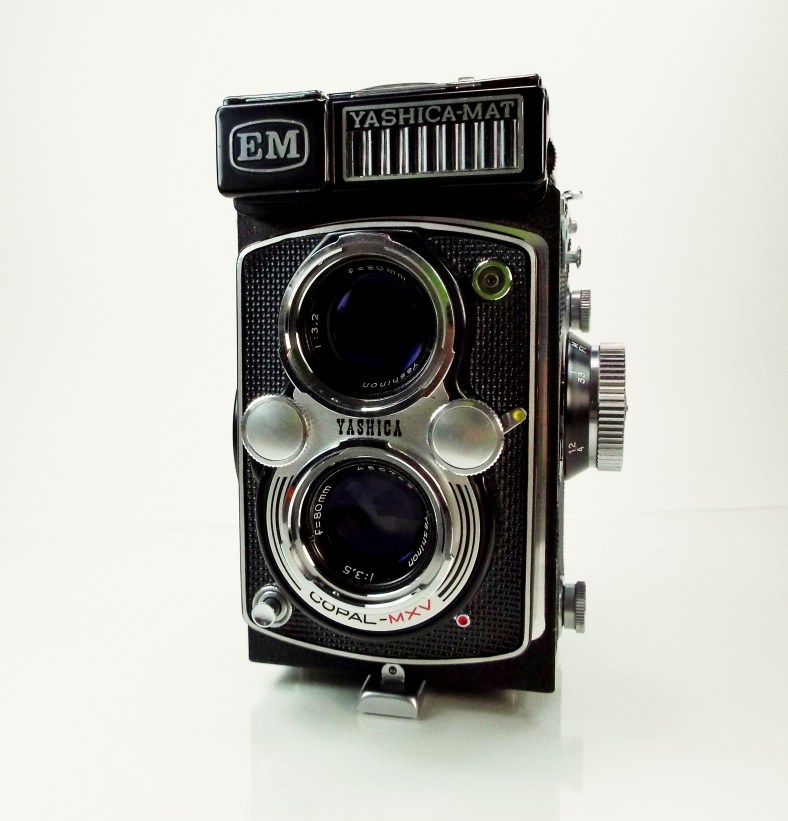
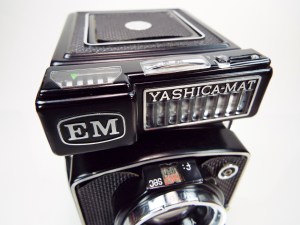
Yashica-Mat EM from 1964. The exposure meter and light gathering cells were moved to the front and top… no more flaps to raise and we were a bit closer to being coupled. This EM has a working exposure meter which is pretty amazing after 50 plus years!

010

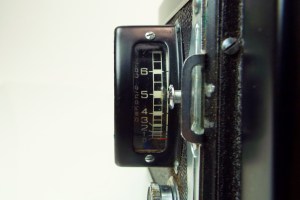
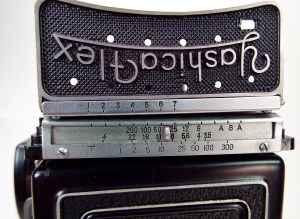
Close-up of the Sekonic CB-1 exposure meter on the Yashica Flex S.

011

Exposure meter scale for setting the f-stop and shutter speed.


012

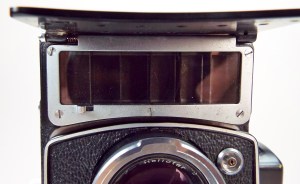
Exposure meter light gathering cells located under the Yashica Flex nameplate.

009

Exposure meter on the Yashica-Mat EM.


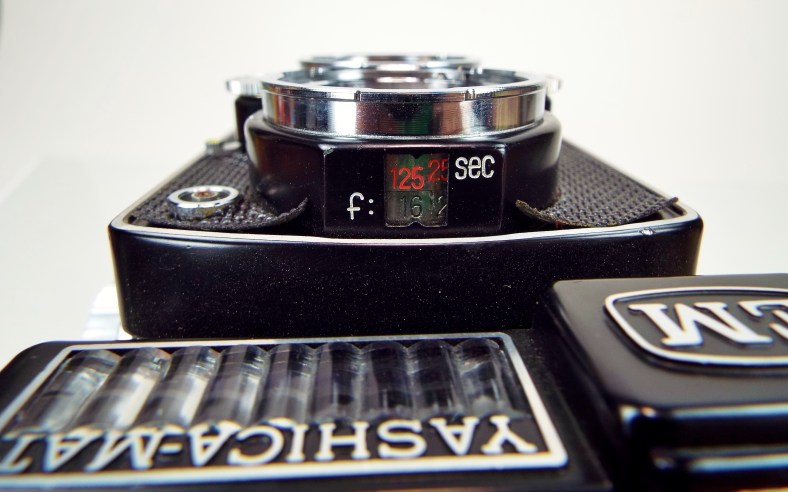
007

Close-up view of the aperture and shutter speed settings on the EM.

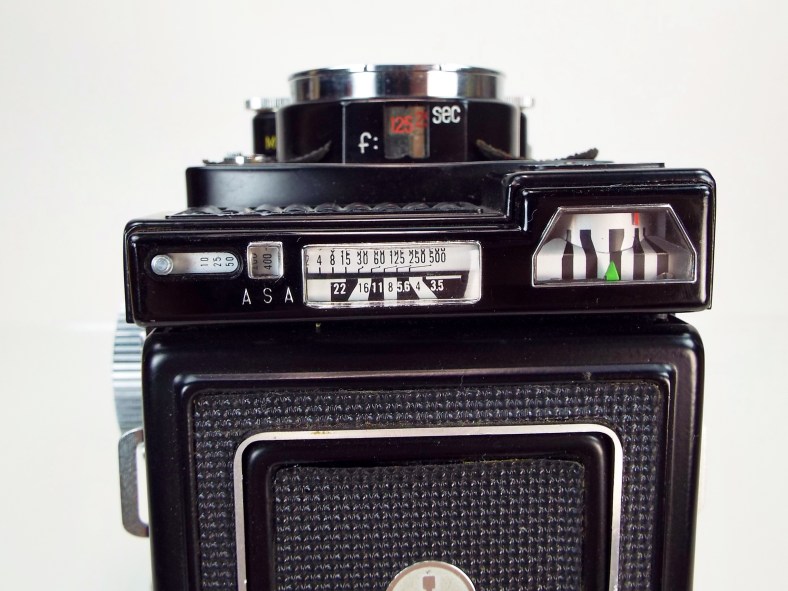
005

Yashica-Mat EM exposure meter and exposure scale. Film speed is set at ASA 400.

So there you have it… a short (very short) history of some groundbreaking cameras from Yashima/Yashica. For more on Yashica’s awesome array of TLRs visit my friend Paul’s site at http://www.yashicatlr.com

Paul’s site is a labor of love and if you want to know anything about Yashima/Yashica that’s the place. We hope to bring some more Pentamatic blogs your way soon. We are of course, The Yashica Pentamatic Fanatic!

Thanks, Chris & Carol