Canon Autoboy S II (Super) – SLR Slayer!

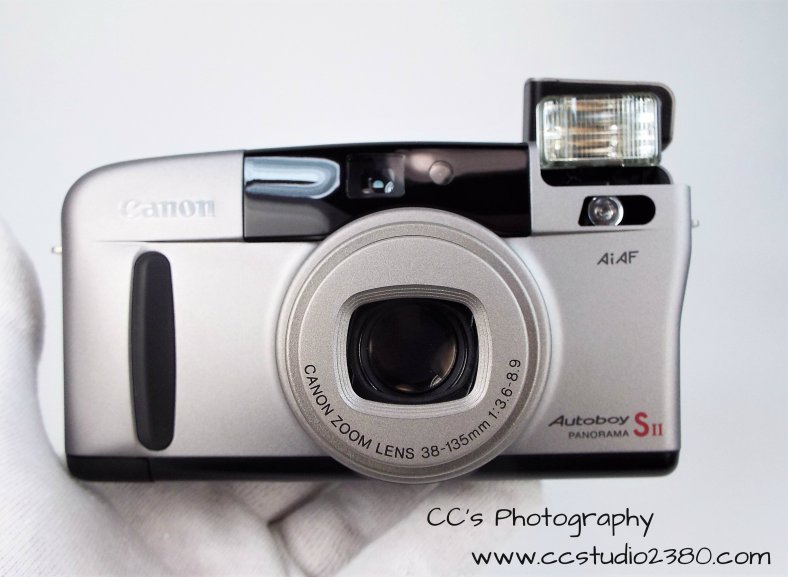
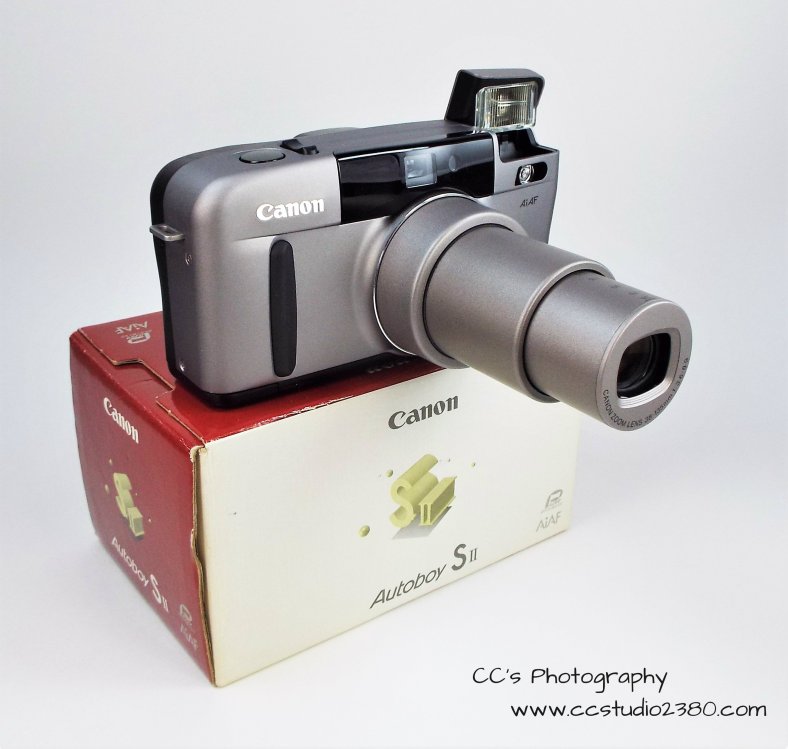
One of Canon’s best compact 35mm film cameras of the mid ’90s. Also known as the Sure Shot Z135 in the US and the Prima Super 135 in Europe. This beauty features high-quality Canon optics with a powerful 38-135mm 3.6x zoom lens (f3.6 to f8.9). When released in March of 1996, it listed for ¥62,000 or about $540 USD! We’ve used the Autoboy in the past and we can vouch for the quality of the images it produces. 7 shooting modes, date/time and caption imprinting, auto flash modes and what Canon calls “AiAF”! Whoa!


autoboy logo 2

Gorgeous surfaces – well finished and appointed.

These “Modern Classics” deserve another look in this digital age. They’re the perfect way to get into film photography without busting the bank!

autoboy logo
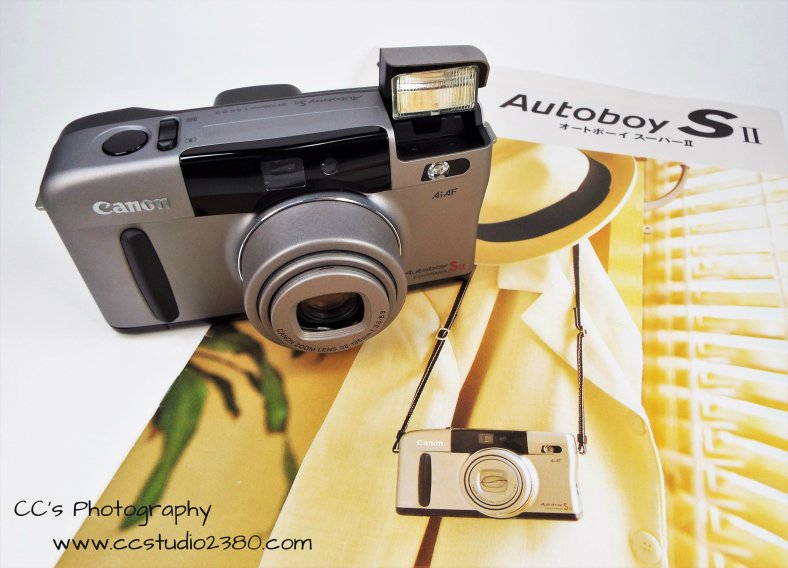
Includes the crazy hard to find original Canon sales brochure for the Autoboy! 

The sales brochure was shot in and around Miami’s South Beach – some pretty awesome images inside from the post “Miami Vice” era!autoboy logo 3

The Autoboy has some heft to it (375g) – yes there’s plastic but of a much higher quality. The switches, levers, and whatnots are solid and the motor drive for the film transport and power zoom are quick and reasonably quiet.autoboy back logo

It features a super bright viewfinder and clear zoom indicator reference lines, 7 shooting modes and can imprint date/time and up to 7 captions in multiple languages! It’s easy to use and has a quick, accurate autofocus.

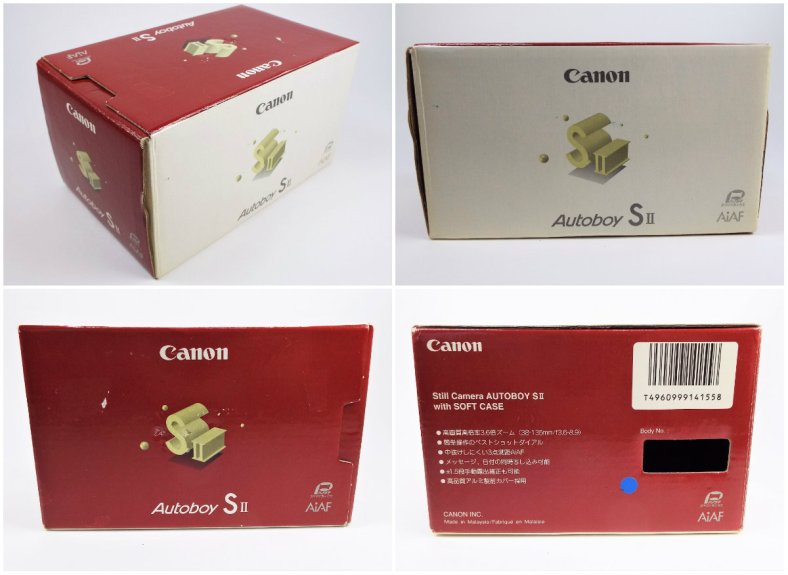
We think this Canon gives the much-touted Yashica-Kyocera T* cameras a good run for the money (I think it outperforms them albeit with a bit slower lens but with a crazy wide focal range!autoboy box collage

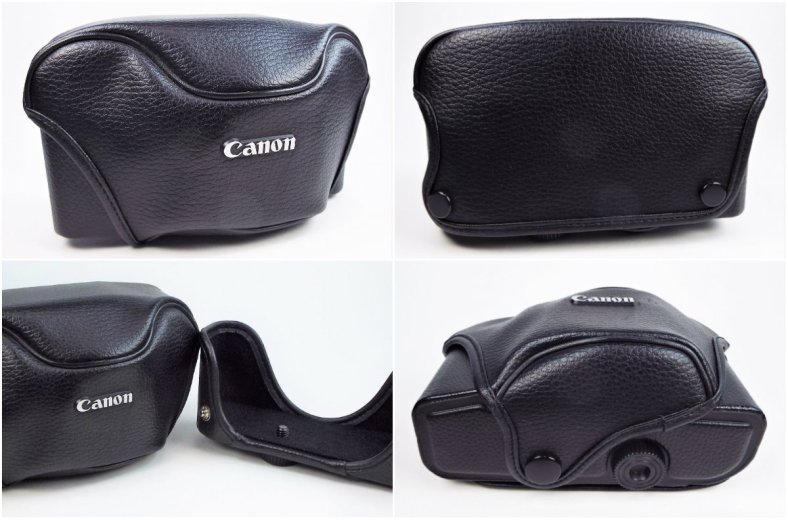
autoboy case collage

Of course, we’ve added this beauty to our online camera store at https://www.ccstudio2380.com

Thanks for stopping by and if you have any questions please feel free to contact us at chriscarol@ccstudio2380.com

C&C ^.^

Please respect that all content, including photos and text, are the property of this blog and its owner, Yashica Pentamatic Fanatic, Yashica Sailor Boy, Yashica Chris.

Copyright © 2015-2018 Yashica Pentamatic Fanatic, Chris Whelan
All rights reserved.

Fun Brochure! Konica Kanpa!

A fun little sales brochure from Japan. The Konica Kanpa! (Kanpai) is a party camera – it was designed to be used on a motorized tripod that would swivel the camera to the sound of someone yelling “Kanpai” (Cheers!) or other sounds and then the camera’s microphone would pick up that sound and the camera would focus in on that person or group and take a picture “hands-free”.

collage kanpai

Check out the cute little shoes for the tripod!

Stop by our store – https://www.ccstudio2380.com – lots of new and interesting things!

This just in!!! Our good friend Peggy from CameraGoCamera is sending us her Konica Kanpa! Cheers!

C&C ^.^

Please respect that all content, including photos and text, are the property of this blog and its owner, Yashica Pentamatic Fanatic, Yashica Sailor Boy, Yashica Chris.

Copyright © 2015-2018 Yashica Pentamatic Fanatic, Chris Whelan
All rights reserved.

Hi! Mickey Mouse by Fujifilm – 1996

New arrival at our store! Straight from a collector in Japan – this cool little compact P&S from Fujifilm.

mickeymousefuji

These are nearly impossible to find outside of Japan as they were only licensed by the Walt Disney Company to Fuji Photo Co., Ltd. with the Fujifilm brand on it. This one was sold at the Mitsukoshi department store in Tokyo.

mickeyfujilogo

More to come on this one soon – we have the original box and all papers and it’s never been used!

Thanks for your visit!

Be sure to stop by https://www.ccstudio2380.com

Chris ^.^

Please respect that all content, including photos and text, are the property of this blog and its owner, Yashica Pentamatic Fanatic, Yashica Sailor Boy, Yashica Chris.

Copyright © 2015-2018 Yashica Pentamatic Fanatic, Chris Whelan
All rights reserved.

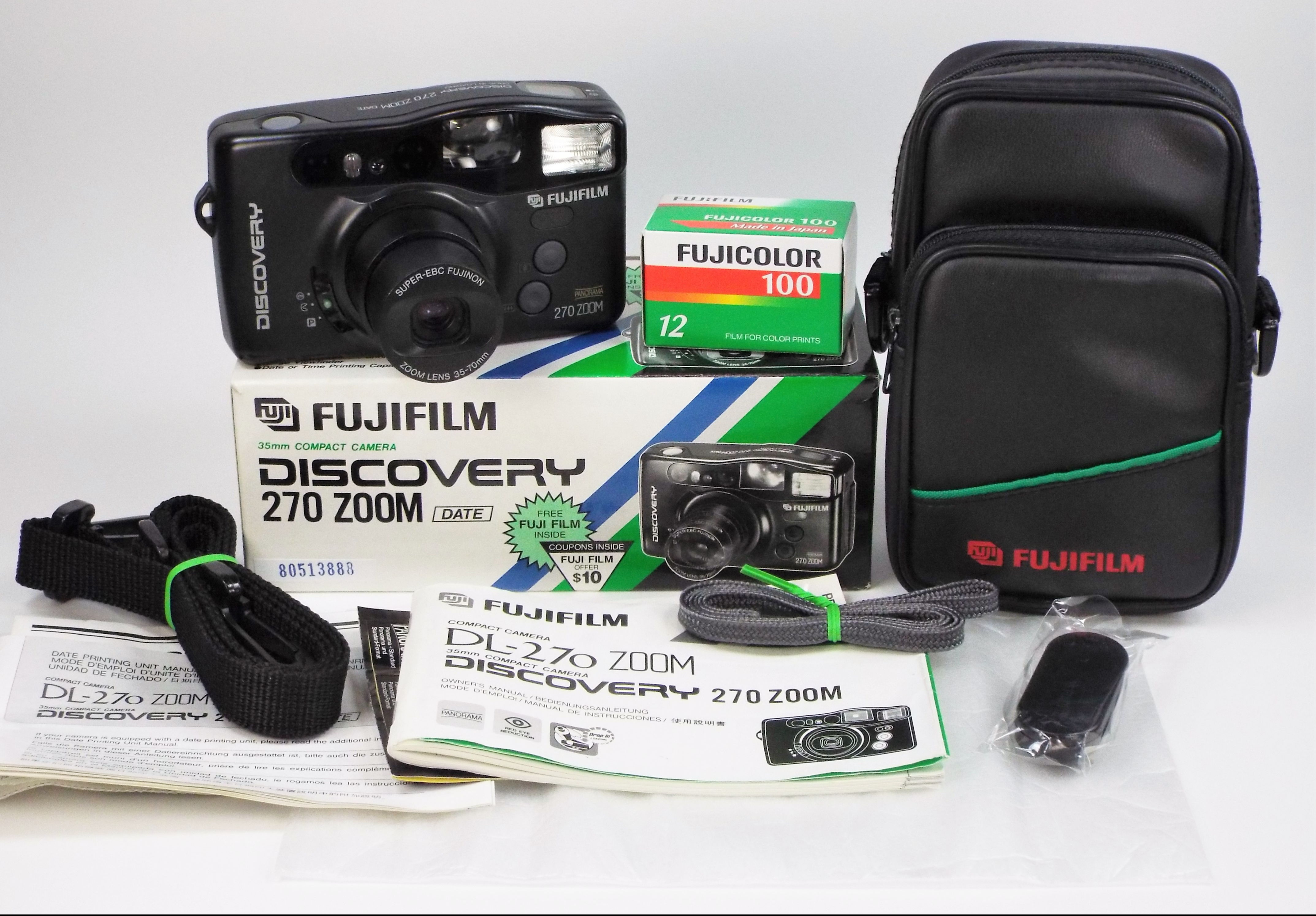
Nice Fujifilm Discovery 270 35mm Film Camera Set – Available for Purchase

Fujifilm Discovery 270 (DL-270) 35mm Film Camera Set

Gently used Fujifilm compact 35mm camera set - complete with all original boxes, new batteries, Fujicolor film, Fujifilm padded camera case, all books and papers and of course, a fully working and 100% tested Discovery 270 camera. See additional details at https://www.ccstudio2380.com

$47.50

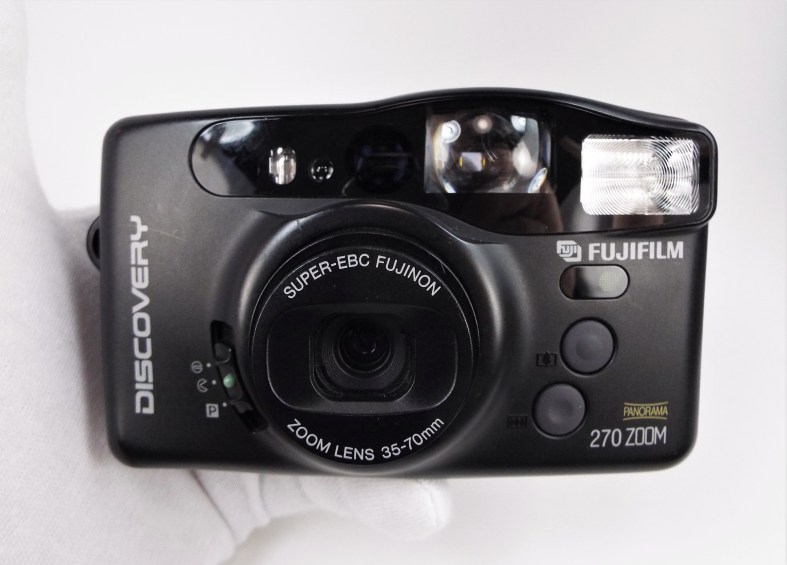
This is a super high-quality 35mm camera – 35-70mm Super-EBC Fujinon power zoom lens 

Panorama Mode in addition to standard 35mm 

Also known as the Fujifilm DL-270

First introduced in November 1994

Great way to get into film photography! Start shooting right out of the box! This is from our personal collection of fine Fujifilm cameras and is guaranteed to be fully working – right down to the date/time settings!

Give someone the gift of film photography!

DSCF6762

Please visit our online store at https://www.ccstudio2380.com

DSCF6760

Chris and Carol ^.^

Please respect that all content, including photos and text, are the property of this blog and its owner, Yashica Pentamatic Fanatic, Yashica Sailor Boy, Yashica Chris.

Copyright © 2015-2017 Yashica Pentamatic Fanatic, Chris Whelan
All rights reserved.


Konica Z-up 60 35mm Compact Camera (New in Box) – Available for Purchase –

Hey all! Carol and I continue to downsize our collection (menagerie?) of really cool “modern classics” film cameras (whew)! This one is from Konica Minolta and is a nicely featured 35mm automatic camera that’s as new as the day it was made. It’s still in its original box and includes all the goodies that came with it plus a nice bonus of some Fujicolor film. It features a Konica power zoom lens from 35-60mm.

Check it out…

DSCF6687

Please visit our online store at https://www.ccstudio2380.com for more details and to purchase this nice camera set.

DSCF6688

It’s in perfect, fully tested and working condition and ready for Christmas!

DSCF6690

No worries about dating your pictures – I believe the calendar goes up to 2049!

DSCF6686

We’ve included new batteries and an expired roll of Fujicolor color negative film for making prints. We’ve used this film before and it still produces nice colors and contrast! We’ve got the original box, all papers, an unopened strap and a really nice Konica leatherette case.

Thanks for stopping by! Remember, check out our online store at https://www.ccstudio2380.com

Chris and Carol ^.^

Please respect that all content, including photos and text, are the property of this blog and its owner, Yashica Pentamatic Fanatic, Yashica Sailor Boy, Yashica Chris.

Copyright © 2015-2017 Yashica Pentamatic Fanatic, Chris Whelan
All rights reserved.


“Is that a Zunow on your Lynx?” Connections: Yashica and Zunow – do you have one?

The web is a wonderful place as we all know – But like anything in life, it can also be crawling with nonsense and ripe with inaccuracies. Digging through mounds of data requires tons of luck to weed out what’s important and what’s not.

Every now and then something really neat happens!

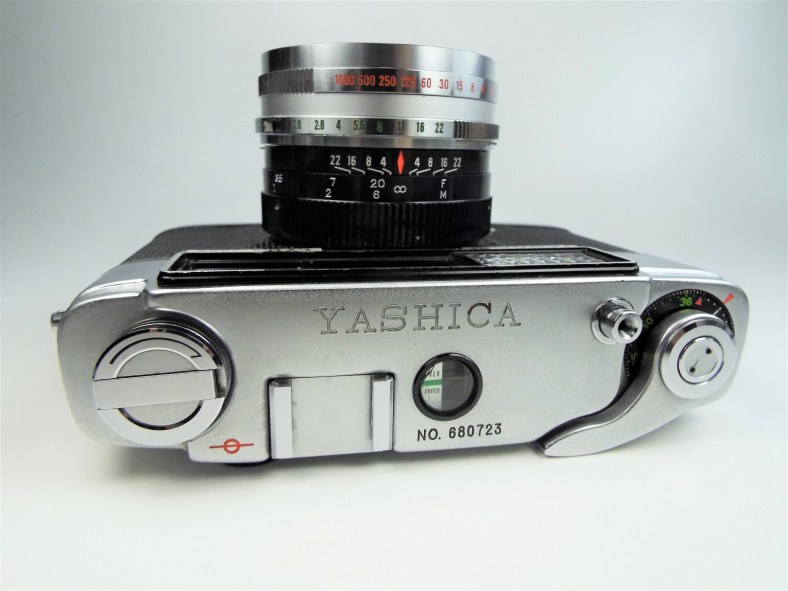
While surfing through some photography blogs from Japan, I stumbled upon a seemingly casual and offhand comment about the Yashica Lynx. I read that there are some bloggers (from Japan) who have speculated that Yashica’s super popular Lynx 35 (released around May 1960) may have had two lens suppliers during its first half-year or so of production and that there may be a way to tell if your Lynx has a lens supplied by Zunow Optical or a lens made by Tomioka Optical. These Japanese bloggers (roughly 4 or 5) plus one eBay seller from Japan, claim to have read something somewhere online that a Lynx with a body serial number that begins with “NO. xxxxxx” has one type of lens and that cameras whose body serial number begins with a Lxxxxxxx” have a different lens. They’re not talking about the lens serial numbers, just the body numbers. Naturally I was intrigued by this so I wrote my Japanese eBay colleague and asked if he could provide some hard evidence to support his claim and to give me some insight as to why they would think that. What I got were links to what appears to be multiple bloggers copying one another – No references and no additional links. Still I pressed on. I scanned hundreds of images of Zunow and Tomioka lenses and poured over the details of dozens of Yashica Lynx cameras for sale on various auction sites. I even looked at every picture of the Lynx that are posted on Flickr. My conclusion? There’s something to this!
DSCF6264

This Yashica Lynx was made in August of 1960 and it was the 723rd off the assembly line. This is our Lynx-1000 with the Zunow lens.

Why is any of this important? If it’s true that some of the Yashica Lynx cameras were delivered with a Zunow made f/1.8 4.5cm lens vice the more common Tomioka made f/1.8 4.5cm lens then that would make the Zunow-Yashica Lynx more valuable to collectors. Why? Rarity could be one factor. The biggest reason is because Zunow lenses (across the board) enjoy a cult-like following from collectors and those in the know. It doesn’t make sense because although Zunow made some groundbreaking lenses (f/1.1 fast!) and some very expensive lenses (LTM) they also made simple and inexpensive lenses for 8mm movie cameras and 35mm fixed lens rangefinder and viewfinder cameras too.

DSCF6265

Zunow lens on our Lynx-1000. Many unique features – Fully grooved focus ring without a focus lever. Simple “F / M” for feet and meters. Scale begins with 20 feet vice a typical 30 feet.

Could a Yashica Lynx with a Zunow lens outperform its Tomioka equipped cousin? Should it be worth more?

I can’t answer the first question as I’m not a techie when it comes to lens performance and the final image that a lens produces is subject to an individual’s taste and preferences. The second part I can offer something of an answer. It should be worth more as it appears that Zunow equipped Lynx cameras are few and far between compared to the much more common Tomioka versions.

 Making the Case For Zunow

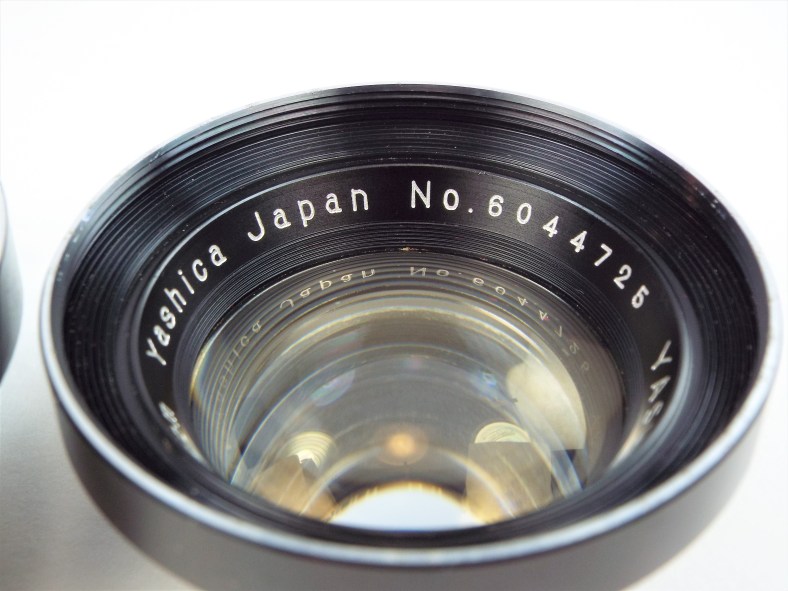
So how can you tell if you have a Zunow lens on your Lynx? Number one and the single most important thing is your Lynx must have a body serial number that begins with “NO. 6xxxx or x” AND have a lens serial number that begins with “No3xxxxx”. You must have both. The biggest clue to it being a Zunow made lens is the lens serial number. Zunow throughout its short history almost always used the “No” to begin its numbers. It didn’t matter who the lens was made for or if it was a Zunow branded lens – The “No” is the clue. If your lens has this type of serial number then you have a Zunow.

DSCF6273

A Zunow lens on the left and a Tomioka lens on the right. Note the simple differences in the two serial numbers.

DSCF6274

Close-up of the Zunow lens. The serial number will always begin with “No” and then 6 or 7 digits beginning with “3”. Also note the style of the “a”.
DSCF6275

Close-up of the Tomioka lens showing a typical Tomioka (and Yashica) style serial number. Note the style of the “a’.

Examples of other Zunow Lenses

Here’s an example of a Zunow lens (below) for the Miranda T. – Same Zunow style serial number.

zunow26 miranda t

This is a 1956 Miranda T. Notice the fancy “f” in “f=5cm”. That was typical for Zunow in the first half of the 1950s. Sharp eyed readers will notice a small wrinkle in my theory. Look at the way “Japan” is written on this Zunow Miranda T lens and then compare it to the way “Japan” is written on the Tomioka Lynx lens above. Pretty darn close… But, both “a’s” in “Japan” are slightly different. Whew!

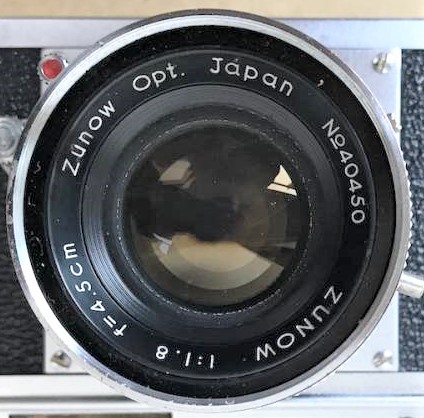
Here’s another example (below) of a Zunow lens on a Neoca-SV from around 1959 or so.
entrelanuit-img1200x900-15057119537pansp7862

This is essentially the same lens as the Lynx lens. Note the style of the “a”.

How to Tell Internally Between Zunow and Tomioka

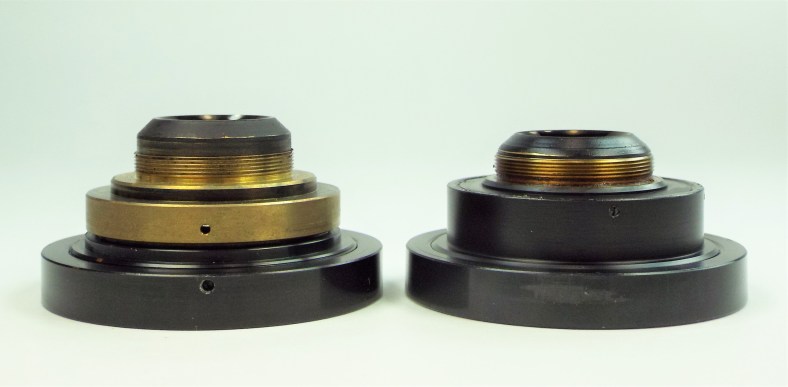
The lens of the left in the image below is the Zunow – on the right is the Tomioka. It’s fairly obvious that there’s significant differences between the two lens designs and some very similar design cues too. We admit that up to this point, these are the only two Lynx lenses that we’ve taken the front lens group out of the lens barrel. ***We don’t intend to keep purchasing additional Lynx cameras with the two different style lens rings to see if they’re all like this. We would encourage our readers to do so with their Lynx and to be so kind as to share their results with us.

DSCF6276

The Zunow lens (left below) is about 3mm taller than the Tomioka lens on the right.
DSCF6279

A close-up of the Zunow pictured below reveals a very distinct lens design. For lack of better terms, it is taller and more angular.

DSCF6281

Tomioka lens close-up (below). For lack of better terms it’s obvious that the lens is shorter and more rounded.

DSCF6282

A close-up of the Zunow front lens ring (below) shows a consistent height to the numbers. A typical Zunow feature and common to others as well.
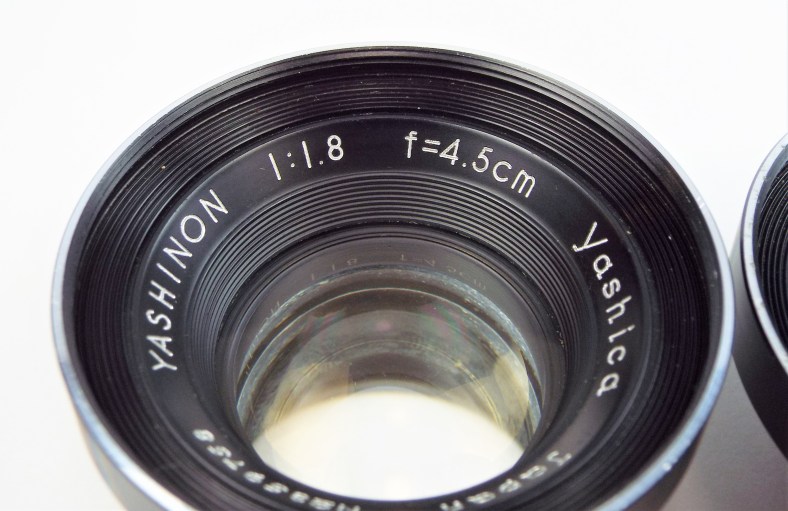
DSCF6284

A close-up of the Tomioka lens (below) shows a definite “high-low” style in the numbers. Small “8” and “5”. That same style is seen on some of Tomioka’s other lenses and it maintains this same style on this lens long after Zunow closed in early 1961.
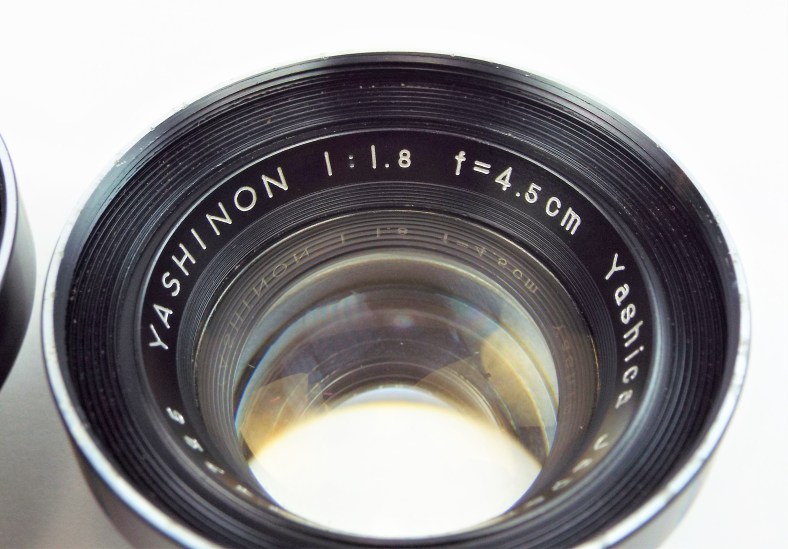
DSCF6285

Here’s our other Yashica Lynx (below). This one was made in July 1962 and it was the 1,184th made that month. Yashica reset the serial number sequence at the start of each month during this period. Many thanks to my friend Paul Sokk for that decode! 

DSCF6315

DSCF6309

L = Lynx and “2071184” decodes to: 2 = 1962, 07 = July, 1184 = 1,184th made that month.
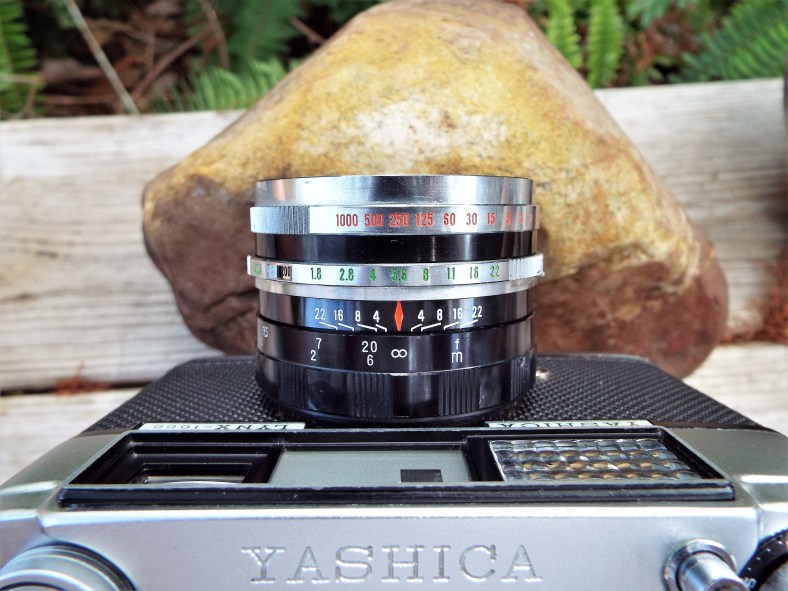
DSCF6312

So in Summary

The easiest way to know if your Yashica Lynx-1000 has a lens made by Zunow is to check the lens serial number found on the front lens ring. If the serial number looks like this one below then you have a lens made by Zunow Optical for Yashica.

DSCF6274

If the serial number looks like the lens ring below, then your lens was made by Tomioka Optical for Yashica. Tomioka was at this time Yashica’s number one supplier of lenses going back to Yashica’s earliest days.

DSCF6275

This is a bold statement on our part and a pretty exciting discovery too. We never want to mislead anyone and certainly we wouldn’t post this if we weren’t sure of our conclusions.

If you find that our post doesn’t hold water, let us know and share your input and support for your theory. We’re always looking to discover something new and exciting.

Many thanks!

Chris and Carol


More Lynx – 1961

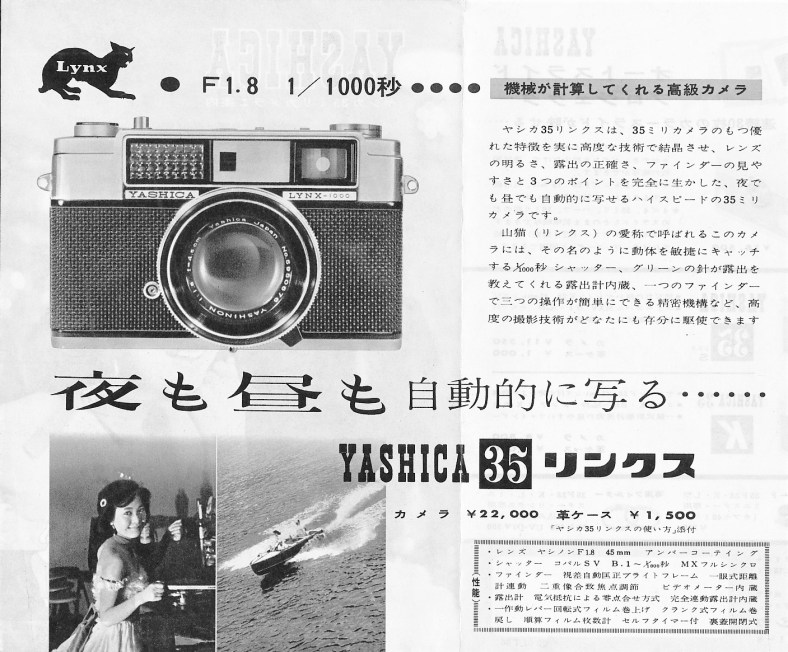
Sharing a bit of our original Yashica Lynx sales brochure which is dated February 1961.

IMG_20170930_0005

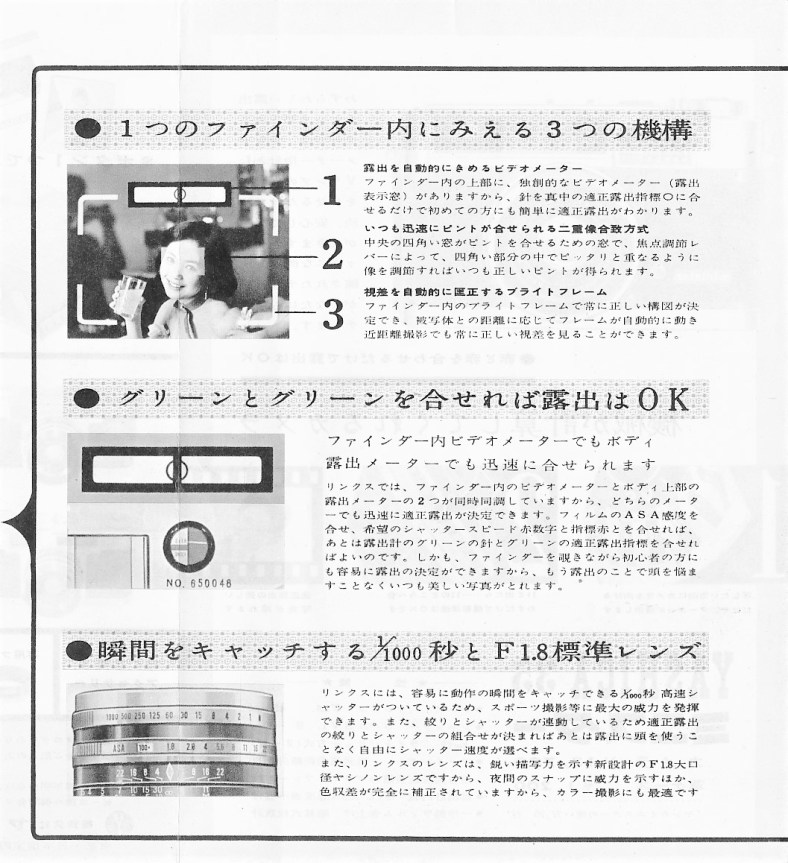
This is one of our first sales brochures related to the Lynx which made its debut in mid 1960. The lens featured is a late 1960 version of the f/1.8 4.5cm Tomioka-Yashinon. This lens also appears in what looks to be the second version of the Lynx instruction booklet.

IMG_20170930_0006

The second part of the brochure shows the body serial number (NO. 650048) which would indicate that this camera was made in May 1960. This camera appears in other brochures and flyers throughout the camera’s run.

We believe there were two versions of the Lynx instruction booklet. The first would have been included with the release of the Lynx around May 1960. In the second version of the Yashica instruction booklet, the body serial number is obscured but the lens serial number shows clearly and it’s the same serial number as the one in this brochure. The lens SN would put it as made between September and November 1960. Thanks Paul!

IMG_20170930_0007

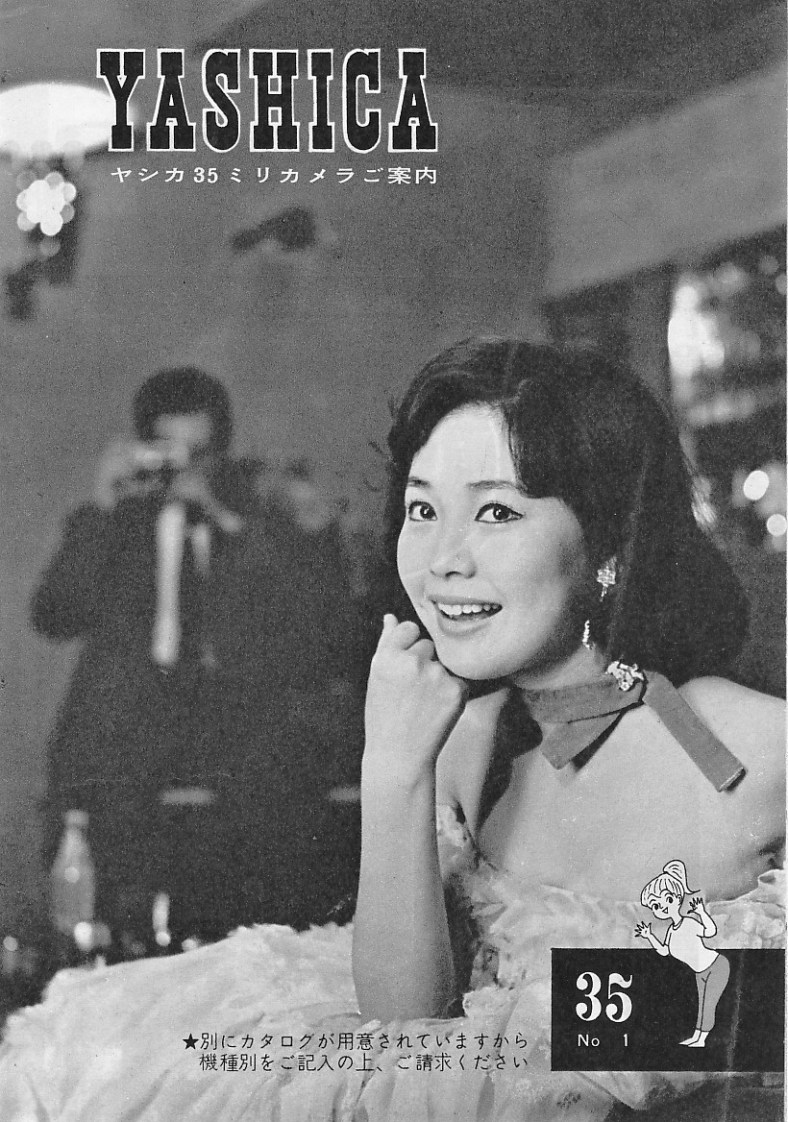
Front cover of the Yashica 35mm sales brochure dated February 1961. Note the use of the “Yashica Girl” in the lower right corner. She and two similar friends appear now and then on brochures during this period.

By the way, the listed selling price of the Lynx ( ¥22,000 ) equalled $62 USD in May of 1960.

Thanks for stopping by! Comments always welcome!

C & C

Nicca Type 33 and the Yashica YE… Mighty Morphing Classic Cameras!

Some background – Yashica acquired Nicca in May 1958. Nicca was well known for making high quality 35mm rangefinder cameras since the late 1940s.

Nicca cameras normally came with lenses branded as Nikkor. When the Nicca Type 33 was released in 1958, it came with a Nicca branded lens. We don’t know if Nicca was the actual lens maker or another company made the lens and Nicca had their name affixed. Either way, when Yashica took over the company the Nicca 33 was sold with the Nicca branded lens.

large nicca 33 ad

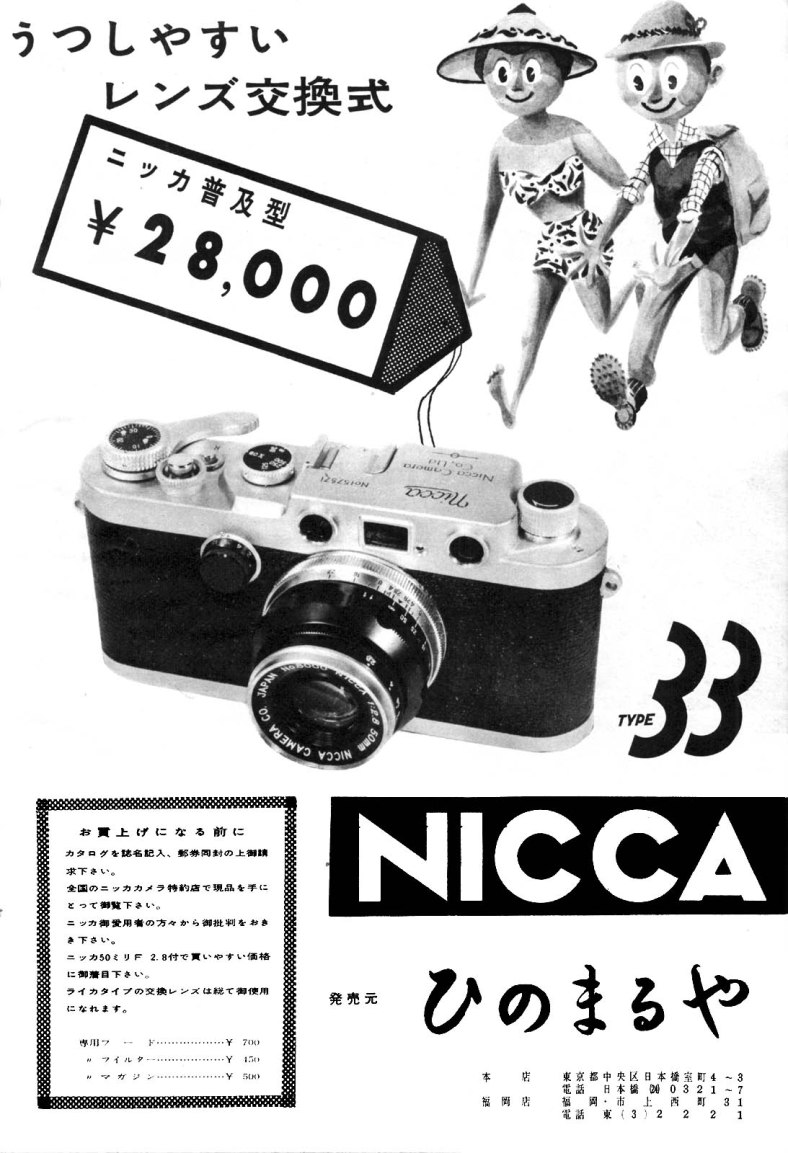
Cute original advertisement from July-August 1958 for the Nicca Type 33 35mm camera and lens.

If you look closely at the ad above, you can see that the lens is marked “Nicca Camera CO.” and is a 50mm f2.8 lens. The serial number isn’t completely clear but looks like a prototype number or some sort (maybe not)… maybe 8000 or something. The list price is interesting too at ¥28,000.

The serial number of the camera body is No. 157571 – which if it was recently made would put it about mid production. It’s claimed that only 1,000 units were made over a short period during 1958.

Nicca Lens

Beautiful condition Nicca branded lens that recently sold at auction in Japan. Note the 4 digit serial number.

nicca 33 owners book

Original Type 33 instruction booklet.

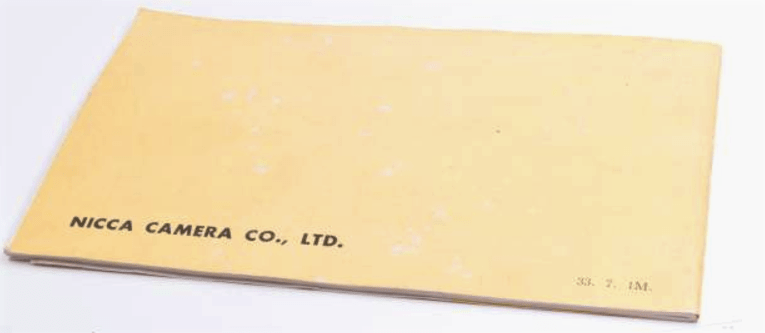
nicca book back date

The booklet is dated (33. 7. 1M.) which should be 1958 July.

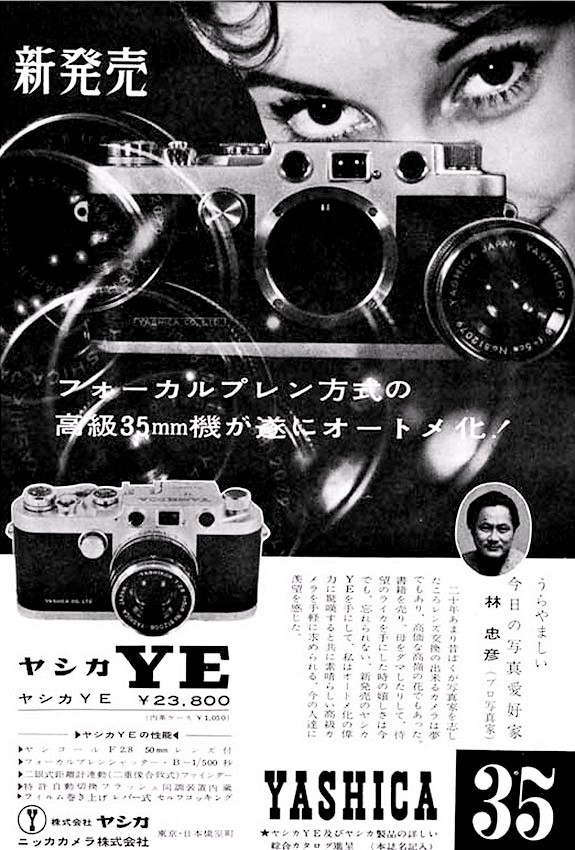
The Yashica YE – with some minor physical changes to the top plate, the Nicca 33 is now the Yashica YE!

Yashica-YE-Pub-1959-2-Jp-850

Note the significant price difference from the Type 33. This ad is from about March 1959.

There is some conflict over exactly when Yashica released (or started building) the YE. Our thought is Yashica would wait until all of the Nicca Type 33 bodies and Nicca lenses were used before building their version. Since the YE was Yashica’s first 35mm rangefinder camera, you would think Yashica would want to bring the YE to market as soon as possible. The YE has the “new” Yashikor 5cm f2.8 lens – we’re unsure if this is a redesign of the Nicca lens that’s on the 33 or another lens made for them by Tomioka Optical or, a new lens made by Nicca for Yashica. Confusing we know. It gets even more confusing since Yashica didn’t “officially” complete the transaction with Nicca until the late 1960s! In the meantime, Nicca became Taiho Optical… a name that Yashica bestowed upon its newly acquired company. Go figure.

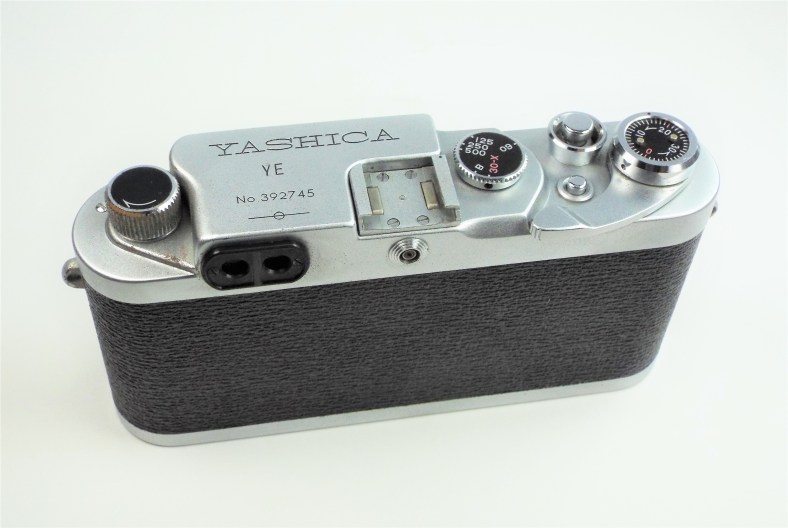
So when did the first Yashica YE models roll off the assembly line? Well we think we’ve decoded the serial numbers that Yashica etched into the YE. If our interpretation is correct, Yashica assigned a simple date code to them. Some sites claim that the YE came out in 1959 and still others claim 1958. Exact months were not given.

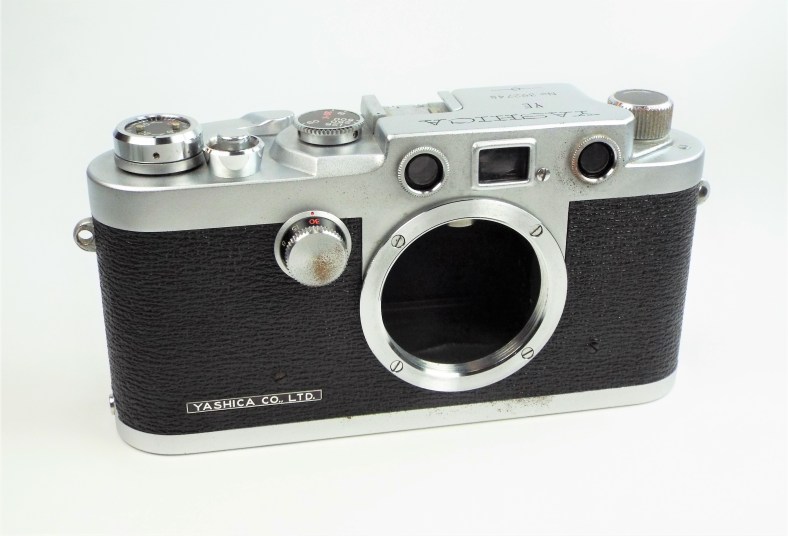
DSCF6186

Our recently acquired Yashica YE.  We’re not sure which lens we want to get for it yet. Of course it takes any lens with the L39 screw mount.

In our example below, the serial number (No. 392745) decodes to: 3 = March, 9 = 1959, and 2745 = 2,745th made since December 1958.

Why use December 1958 as the start date? We’ve seen a very nice Yashica YE with the following serial number (No. 128049) which decodes to: 12 = December, 8 = 1958, and 049 = the 49th made. We’re not in a position yet to conclusively claim that this is how to decode the serial numbers, but we feel very confident based on previous experience.

DSCF6188

Our YE has a bit of surface corrosion here and there but it’s clean inside and out and has (not yet fully tested) a working shutter that sounds great at all speeds. The rangefinder windows are a bit cloudy but still viewable.

A note about the selling prices between the two cameras. The Nicca Type 33 listed for ¥28,000 and the newer YE for ¥23,800. Was this a perfect example of Yashica being able to deliver the same camera at a better price due to their sheer size or was it Nicca listing the camera at its fair price?

It’s claimed that the YE was produced at around 4,000 units during a short production run from December to June). We’ve seen the serial numbers go from a low of 128049 to 699821. If the production number is correct, then the serial numbers did not run continuous… or did they? If they did, then nearly 10,000 were made.


Yashica Penta J – the Pentamatic that wasn’t!

DSCF5876

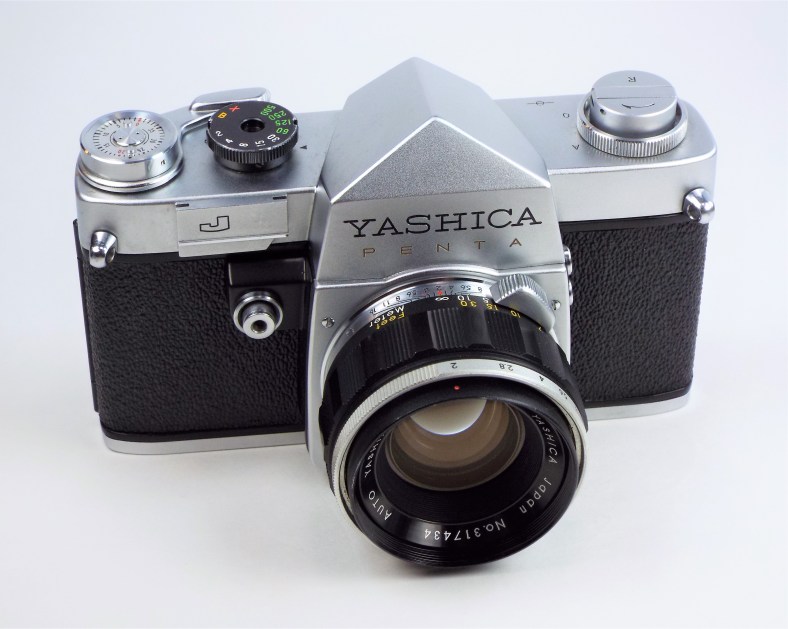
Clean design and simple controls. A stunning camera.

Released in 1962, the Penta J (Reflex 35 J in other markets) was Yashica’s first 35mm SLR designed to accept the popular M42 screw mount lenses vice Yashica’s exclusive Pentamatic bayonet mount that preceded it. The Penta J shared more body parts and took its design cues from the Pentamatic S (1961-62). Interestingly the Penta J lost the self-timer lever that the Pentamatic S fought so hard to get.

DSCF5873

The Penta J was designed to accept a clip-on exposure meter that coupled to the shutter speed dial. No TTL metering – that was a long way off!

DSCF5874

The ASA/DIN dial was not coupled to anything. It was a reminder to the photographer as to what the speed was of the film that was loaded in the camera.

DSCF5875

The standard lens for the Penta J was the semi-automatic Yashinon 5cm f2 lens.

The Yashica Pentamatic S (below)… the Penta J’s cousin.

DSCF5868

The Pentamatic S pictured with the standard lens for the Pentamatic II.

DSCF5867

So there you have it. The Yashica Penta J and the Pentamatic S. Cousins in the Yashica family.

Comments? Please feel free to share what you know and what we may have missed. Thanks

Studio Camera: Fujifilm FinePix S9900W

Chris

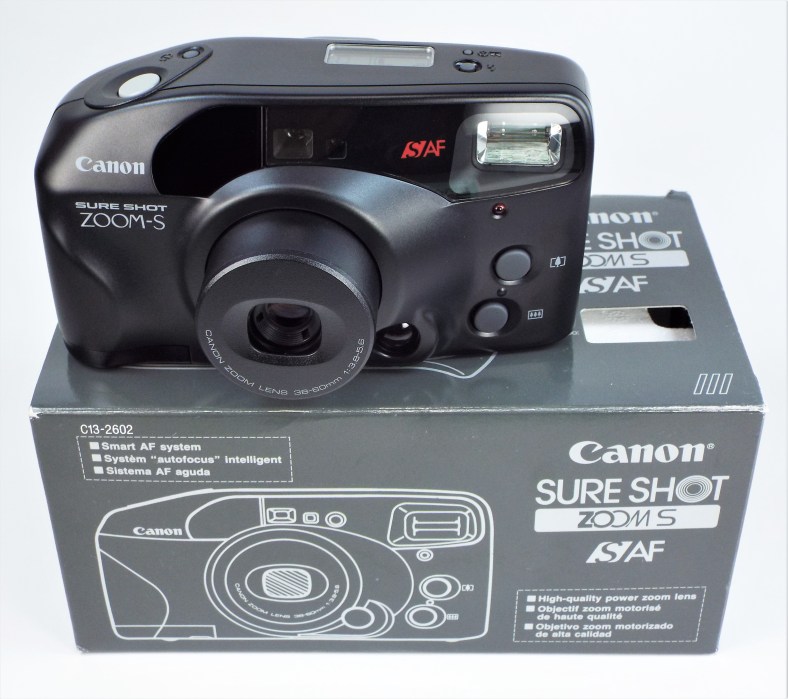
Canon Sure Shot Zoom S – S AF (1989)

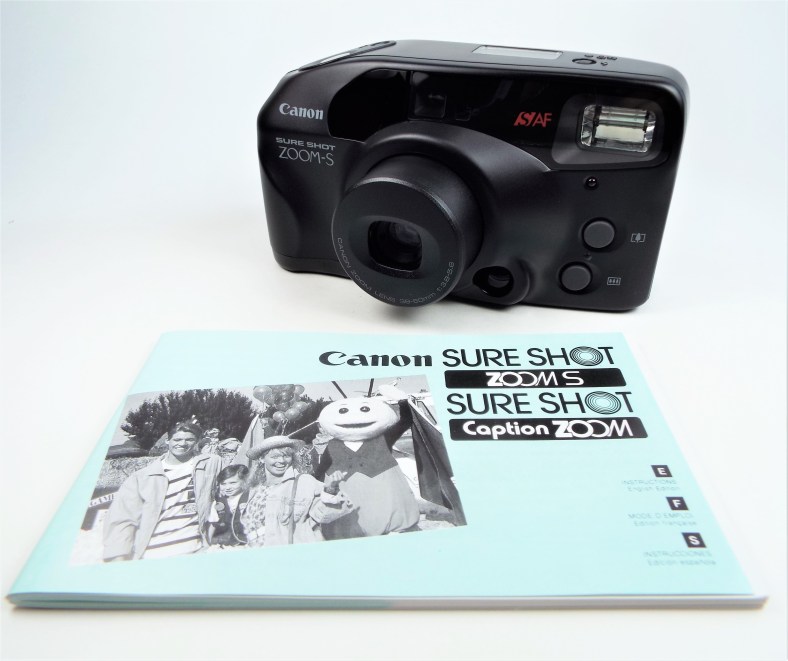
Part of the “Modern Classics” series of our collection. This one is from mid 1993. One of the more sophisticated AF point and shoot (click) plastic fantastic 35mm cameras of the 1990s. There were two versions of this camera – this one, the Sure Shot Zoom S and the Sure Shot Caption Zoom (with removable remote control).

DSCF5531

As released from the factory – still new in the box.

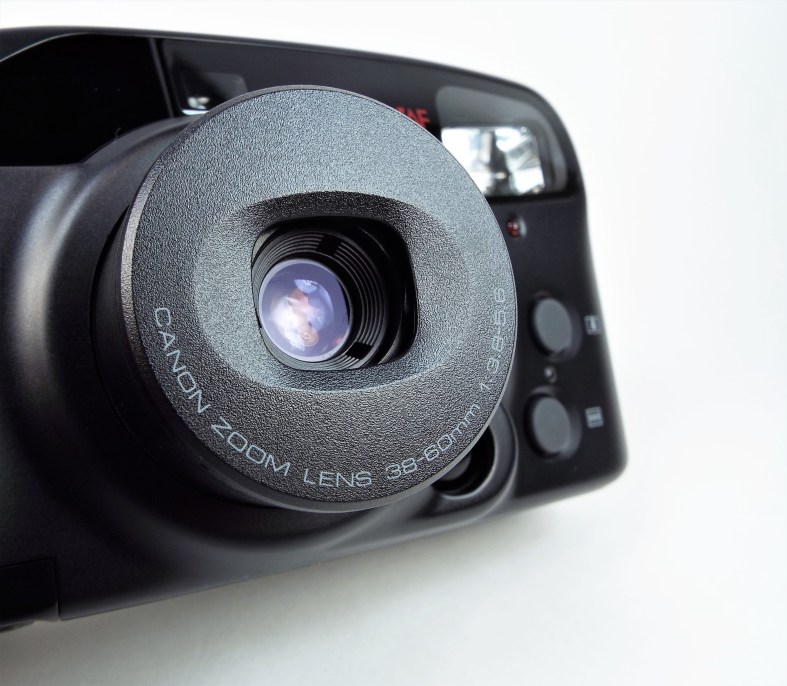
The zooming range covers 38-60mm. Other features include auto focus, auto film load, advance wind, auto flash and auto macro. Canon claims it has an improved autofocus control – ‘Evaluative Active System’  that looks at the entire frame and recognizes the main subject based on its distance to the camera (sounds pretty standard to me). Anyway they made a big deal about it in the owner’s manual.
DSCF5543

The Canon lens is Spectra-coated and is constructed with 6 elements in 6 groups. I assume it’s glass.

Canon recommends using DX-coded film. The camera automatically sets ISO 50-3200. Non DX-coded film will set to ISO 100.

DSCF5541

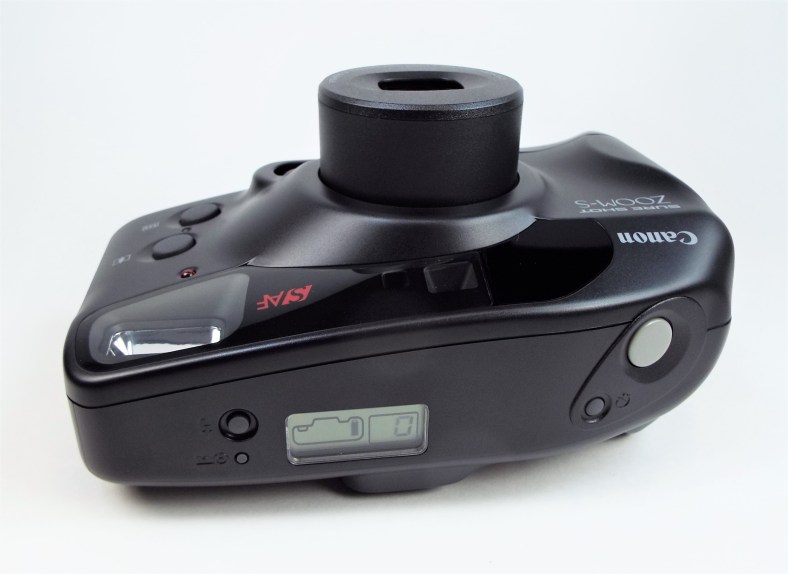
Well placed shutter release button and large LCD. The auto flash feature can be turned off. What I found surprising was that there was no “Red Eye” reduction system available. Probably too early for that.

The Canon Sure Shot Zoom S features a 3-zone metering, AE programmed system that focuses from about 60cm to infinity. It uses one 6V lithium battery (2CR5) which is still readily available (I just purchased one for $7 with free shipping).

DSCF5540

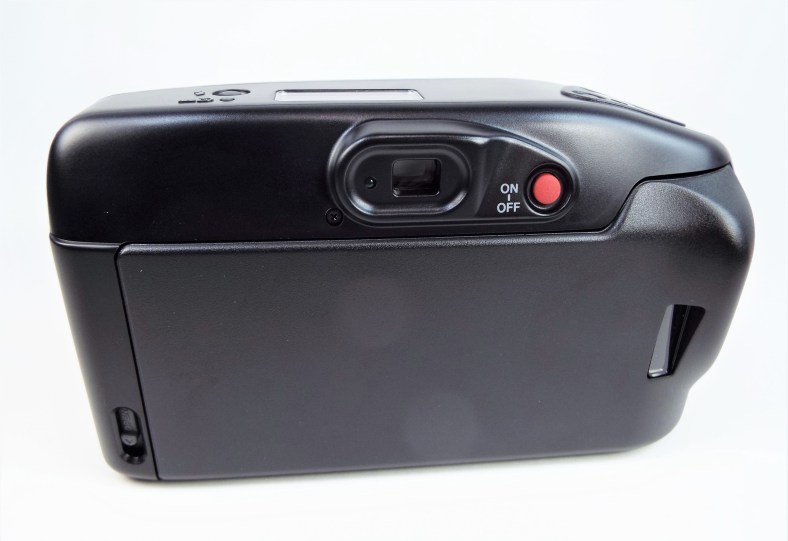
Nice centered viewfinder that is bright and well marked. Super simple back with easy to find and use on-off button.

DSCF5544

The TILT lever is pretty cool – it has two positions when you pull it out. When setting the camera down on a flat surface (like a table) for taking selfies, it tilts the camera slightly upward so as not to get the table or whatever in the pic.
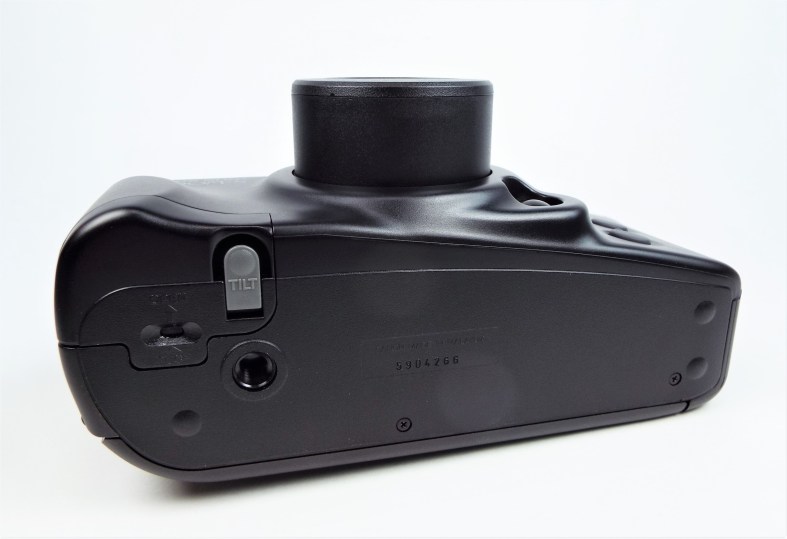
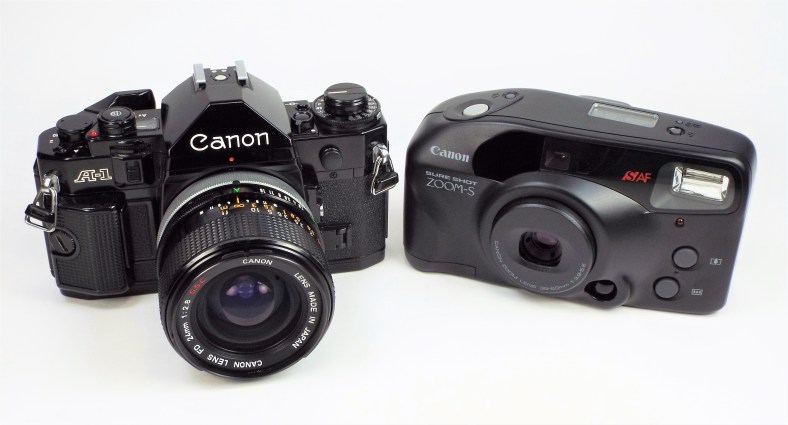
The camera is large for a point and shoot – weighs in at 384 grams with the battery and compared to the 1980 model Canon A-1 35mm SLR, almost as large!

DSCF5548

The Sure Shot is a large camera – it fits very nicely in my hands and feels solid. The buttons are all recessed so it does take a bit of finger olympics to push them all the way in. By the way, the A-1 with my FD 24mm lens weighs in at 934 grams!

DSCF5537

As you hear us say all the time, if you want to collect modern film cameras from the 1980s and 1990s, the best way is if you can find a complete original set, new in the box. Why not if they’re still out there and available. They don’t make them anymore and some of these cameras are quite capable of outstanding images – some would spend crazy money on the more well known cameras for almost unnoticeable differences in the final image (especially since most people don’t enlarge and print images anymore) and scanned to a PC they’ll look just fine on a high quality monitor.

Pick up one of these Sure Shots and I’m sure you’ll be impressed with it.

Studio Camera: Fujifilm FinePix S9900W

Chris