Historic Advertising Flyer – 1958

I’ll say 1958 because it looks like it was produced shortly after Yashima-Yashica acquired the Nicca Camera Co., Ltd. in May 1958. As best as I can tell this is the one and only time that a piece of advertising contained all three key players in the Nicca III-L. Nicca, Nikkor (Nikon), and Yashica. The address at the bottom of the page matches the address that Yashica used in 1958-1959.

Nicca-IIIL-Pub-1959-Jp-850 (1)

My translation app has the address as 1-8 Nihonbashi, Muromachi, Chuo-ku, Tokyo

The lenses for the Nicca cameras were almost exclusively supplied by Nikon and branded as Nikkor. Since this was a transition time (end of the line) for Nicca, this flyer clearly indicates that Yashica is the new player in the picture. Yashica would operate Nicca as Taiho Optical Company for a period of time with at least a few lenses getting produced with that brand name on the lens.

Yashica eventually (in well less than a year) started to supply lenses with the Yashinon name for these Nicca-Yashica crossover models. It’s not clear if these lenses were made for Yashica by an outside company such as Tomioka or that they may have been made by the newly acquired Nicca operating under their new name Taiho. There are at least a few Nicca branded lenses that I’ve seen so it’s not an impossible thought.

As always, thanks for your visit. Do you have something to add? I’d love to hear and see anything related to this dynamic period in Yashica’s history. – Chris

Please respect that all content, including photos and text, are the property of this blog and its owner, Yashica Pentamatic Fanatic, Yashica Sailor Boy, Yashica Chris.

Copyright © 2015-2018 Yashica Pentamatic Fanatic, Chris Whelan
All rights reserved.

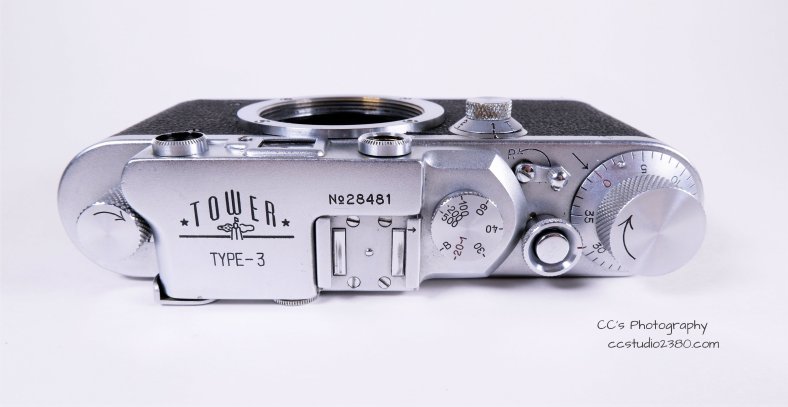
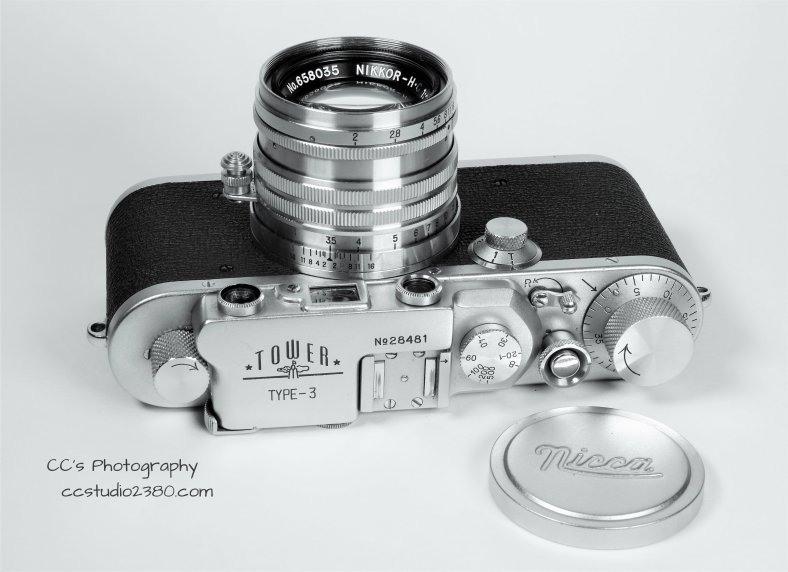
Tower Type-3 35mm Rangefinder – Made by Nicca for Sears

One of the better made Leica type of 35mm rangefinder cameras from the early 1950s. This one dates back to the period during the occupation of Japan following WWII. The occupation formally ended in April 1952.

I believe the Nicca-Towers are extremely attractive in their design and some (like this gem) have aged very well (1951 on this one).

DSCF8226 logo

The Tower brand was made by Nicca Camera Company for Sears, Roebuck and Company for sale in the United States through their stores and in their catalogs.

DSCF8230 logo

DSCF8231 logo

DSCF8244 logo

Nippon Kogaku Nikkor – H.C f2 5cm lens from my Nicca s-3

These cameras accept all L39 screw-in (Leica type) lenses made by a ton of manufacturers – Canon, Nikkor, Leitz and more than I care to think about. Oh yeah, Nicca even made one with their own name and Yashica made a few too. Happy hunting!

Chris

Please respect that all content, including photos and text, are the property of this blog and its owner, Yashica Pentamatic Fanatic, Yashica Sailor Boy, Yashica Chris.

Copyright © 2015-2018 Yashica Pentamatic Fanatic, Chris Whelan
All rights reserved.


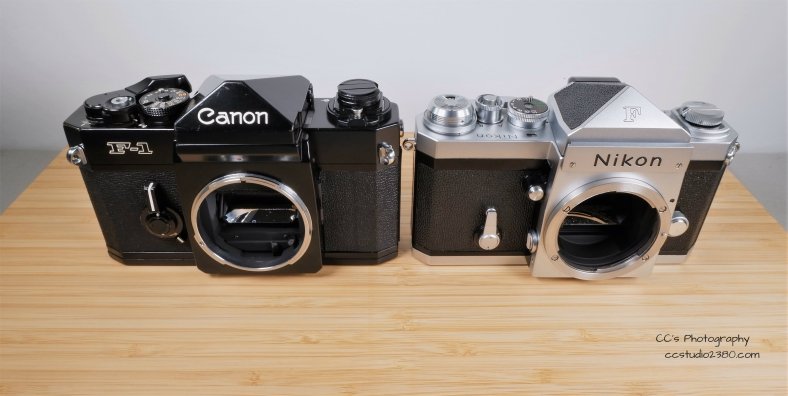
Canon F-1 vs. Nikon F

Two 1970s heavyweights battle it out (well sort of).

canon f1 vs nikon f

The Canon is from 1978 and the Nikon is from 1972. To me, the clear winner is the F-1. It’s a more robust camera body and the Canon FD lenses are as good as if not better than the Nikkors. Besides, you have to remove the entire baseplate and back (they are one unit) to be able to load film – not the easiest of things to do while bouncing around in a small boat or a safari vehicle. Just sayin’.

f1 v f

Which camp are you? Canon or Nikon? Or Olympus or Minolta?

Thanks for stopping by!

Chris


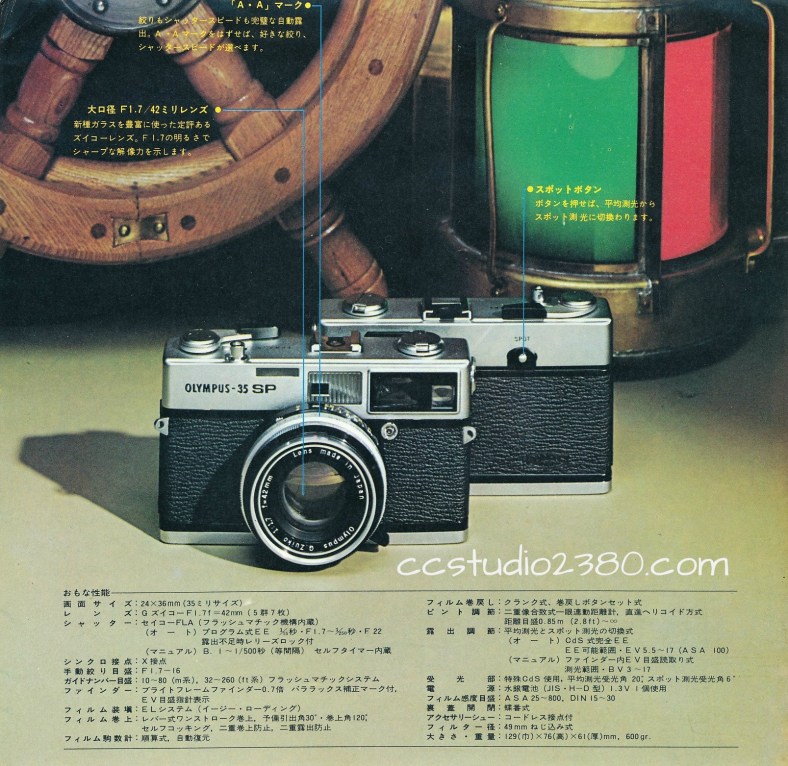
Olympus 35 SP Brochure

Here’s a nice sales brochure from Olympus – published May 1969

olympus 35sp brochure collage

Take note of the camera store’s stamp in the lower right corner. Our translation app isn’t doing a good job at translation at the moment so we’re not quite sure which camera shop this is from.

Carol and I love to collect vintage sales brochures for the cameras in our collection. This one came to us recently from a collector in Japan. The date of publication is 0569 which we assume is May 1969. The young man’s clothing certainly screams the 1960s!

olympus brochure logo

The Olympus 35 SP is considered by many to be a nearly “perfect” 35mm rangefinder camera – with a host of automatic exposure controls plus full manual shooting. The 42mm lens is considered to be the perfect focal length for 35mm photography as it closely matches the field of view of the human eye.

Thanks for stopping by!

For more “good stuff” please stop by our online store at http://www.ccstudio2380.com

Chris

Funny Flickr

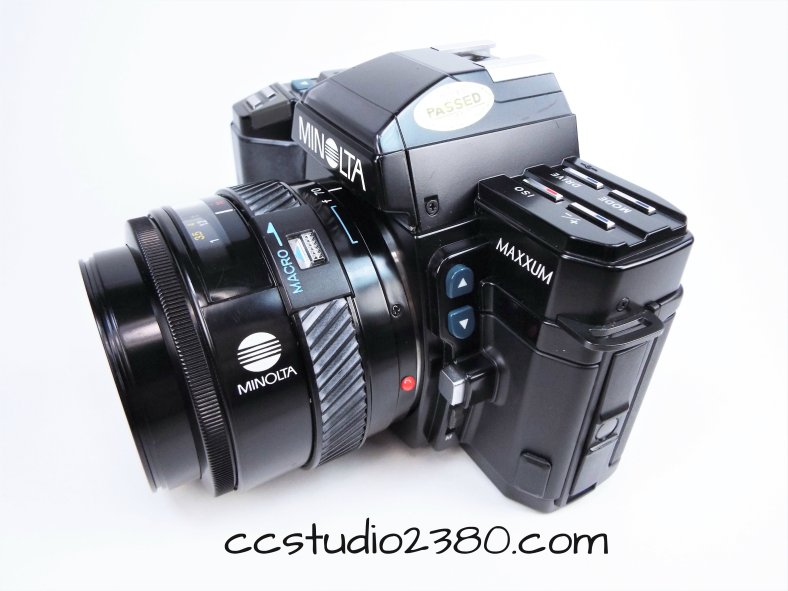
You just never know which images will “take off” on Flickr. Sometimes you think that you’ve nailed a shot only to see it fall flat. I was pleasantly surprised this morning to find out that one of my pictures (below) was invited to be in Flickr’s “in explore” group. Cool beans!

DSCF7697 logo

It’s far from my best ever studio shots of my camera collection but I bet that the popularity of this image has something to do with the popularity of the camera.

“This camera is actually quite famous – back in its day it was considered a groundbreaker in the 35mm SLR autofocus “world”. This one has led a very gentle life – I’ve fully tested it with film and the thing that impressed me the most was how quickly the autofocus locked on to my subjects. The lens is a Minolta AF Zoom 35-70mm f4 and is sharp as a tack!
The camera, lens, and 4 (AAA) batteries weigh in at 847 grams (1 lb 14 oz)!”

My caption that accompanied the picture on Flickr.

Have a great day – thanks for stopping by!

Chris

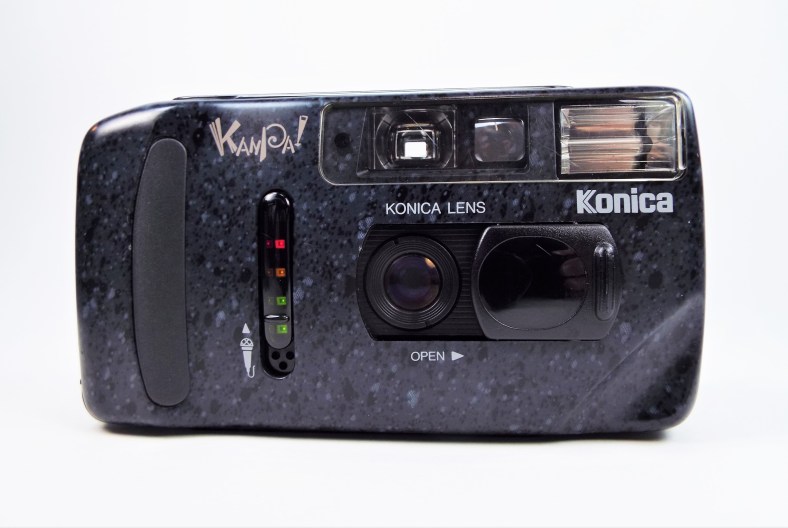
Konica Kanpa! – A fun ‘Party Camera’ that takes your picture when you yell, “Kanpai!”

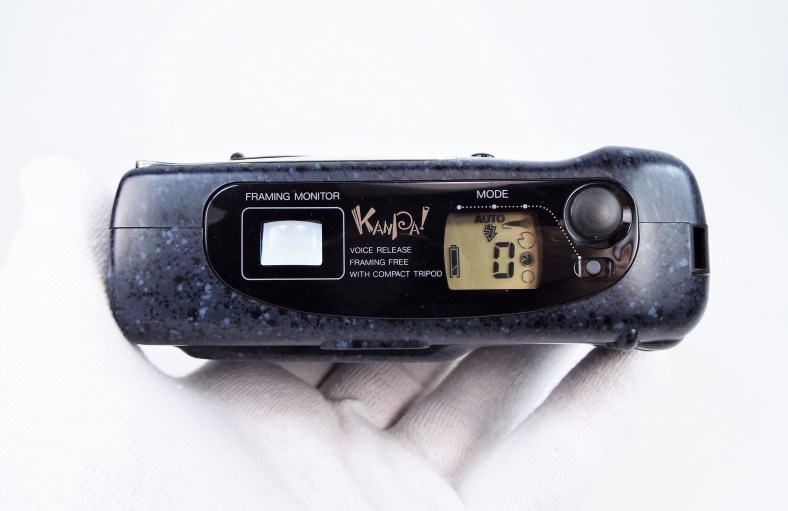
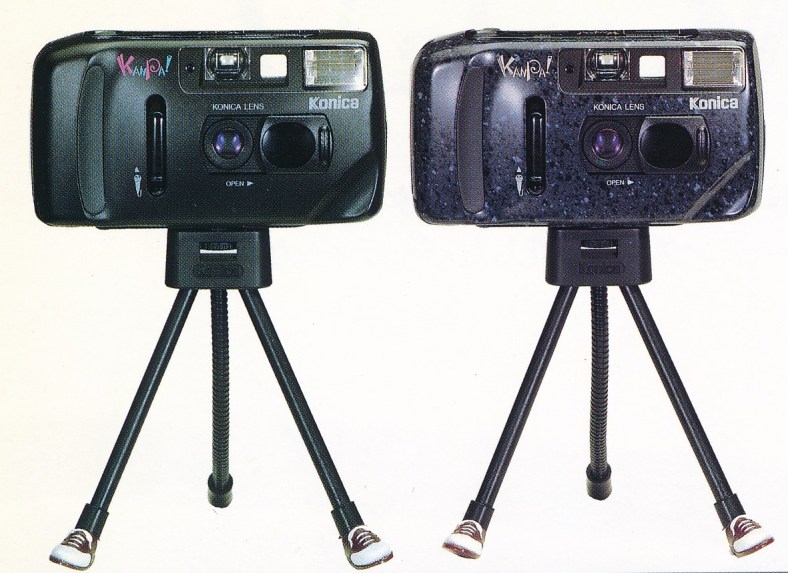
Confused??? Don’t be. Here’s a fun little 35mm film camera made by Konica in 1989. It’s called the Kanpai – essentially “cheers”. It’s a voice-activated camera that was designed to attach to a special mini tripod that allowed the camera to swivel (up to 100 degrees) and would take a picture whenever someone at a party yelled “cheers!” or whatever.

Part of our “Modern Classics” and “Plastic Fantastics” collection of film cameras.

IMG_20180204_0001

DSCF7144

The microphone on the front of the camera (the 3 little holes next to the microphone icon) adjusts to the ambient sounds of a party and would then “listen” for when someone yelled “cheers” or whatever – it would then operate a small motor in the base which would turn the camera (when attached to the dedicated tripod) towards that sound and snap a picture. The lights above the microphone indicate the level of ambient sound and some degree of sensitivity.

DSCF7145

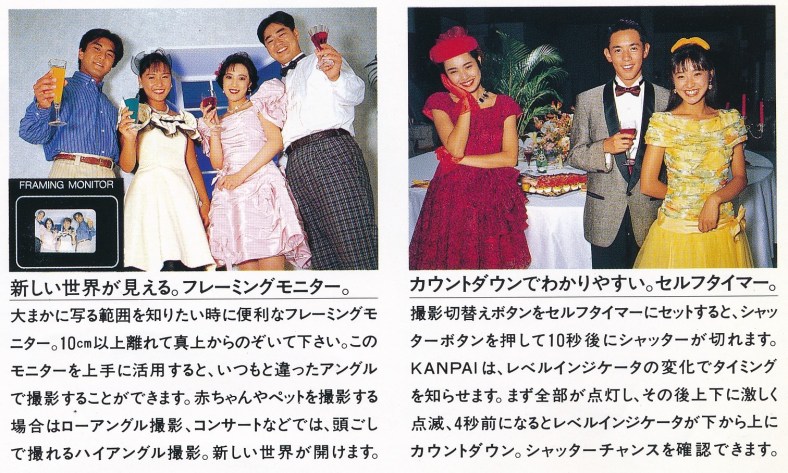
The “framing monitor” is simply an optical waist level finder. The LCD indicates the selectivity and sensitivity (little Pac-Man looking thingy) of the microphone and how far the camera rotates to capture an image when attached to the dedicated tripod.

DSCF7143

Not the original tripod – no cute shoes (yet).

konica kanpai 1

From a Konica press release: “One of three sound-level settings can be chosen. When used on low, the shutter is automatically released after 11 minutes and every three minutes thereafter even if no sound is detected, or when it detects a moderate noise level lasting at least 0.2 seconds. On medium and high sound-level settings, however, the camera fires only when responding to sounds with durations of 0.3 and 0.5 second or longer respectively (a single clap of the hands, for instance, won’t trip the shutter).

Although exposure interval times will vary with the camera’s sound-activated setting and noise levels, a 24-exposure roll of film typically will be fully exposed in 20 to 40 minutes. When mounted on its exclusive tabletop tripod, which couples to the camera’s film-wind motor, the Kanpai rotates left or right after each exposure (in a panning range of approximately 80 degrees) to capture action throughout the room. However, a tripod-mounted camera can also be fixed in one position. When not in its sound-activated release mode, the Konica Kanpai becomes a straightforward, fully automatic compact camera, featuring programmed auto-exposure, a fixed-focus 34mm lens, automatic film transport and ISO film-speed settings (100 & 400), and built-in flash. A clever framing monitor, located on the top of the camera, allows the photographer to take low or high-angle shots without having to look through the viewfinder.”

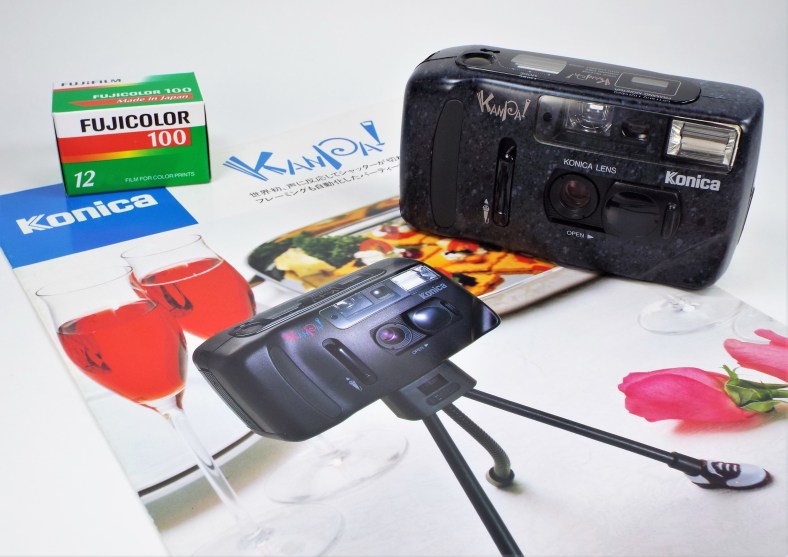
collage kanpai

The camera has a Konica 34mm f/ 5.6 fixed focus lens and an electronic programmed shutter capable of 1 to 1/200 sec. Designed to be used mostly indoors with the flash, I could see it being used as a street camera with its waist level finder.

Auto flash, self-timer, automatic exposure, and auto rewind. Date/time imprinting.

DSCF7142

Fresh batteries were inserted (by the way, the date/time defaulted to 1-1-87 and stops at 1-1-19). It takes (1) 2CR5 6V lithium battery and (1) CR2025 button battery.

konica kanpai 3

List price in 1989 was ¥30,000 (about $215 USD) in “stone” finish (we think this one is stone).

We’re still on the lookout for the original tripod and shoes! Many thanks go out to our friend Peggy at Camera Go Camera for passing along this super cool camera! By the way, her site has some neat “STUFF” that she’ll be happy to send your way – check it out!

konica kanpai 5

Available in red.

konica kanpai 6

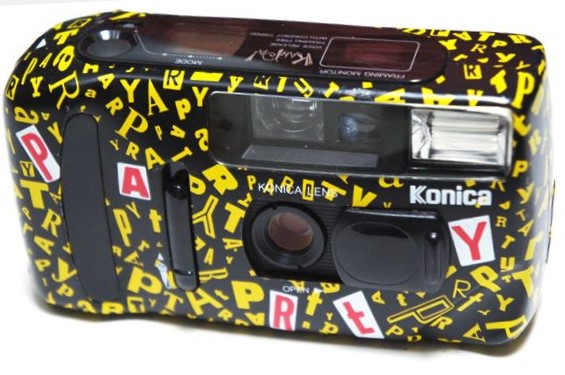
Party Animal!

DSCF7150

“Let’s get the party started!”, “Kanpai!”, “Cheers!” – also works if you yell “BANZAI!”

banzaidanielsan

BANZAI, Daniel-san!

Thanks for stopping by! Remember, if you have some neat film cameras for sale – we are buyers! Contact us at chriscarol@ccstudio2380.com

C&C ^.^

Please respect that all content, including photos and text, are the property of this blog and its owner, Yashica Pentamatic Fanatic, Yashica Sailor Boy, Yashica Chris.

Copyright © 2015-2018 Yashica Pentamatic Fanatic, Chris Whelan
All rights reserved.

Was this beautiful lens, which was made exclusively for the Pentamatic II designed by Zunow Optical?

Simple Answer – Yes

DSCF6330

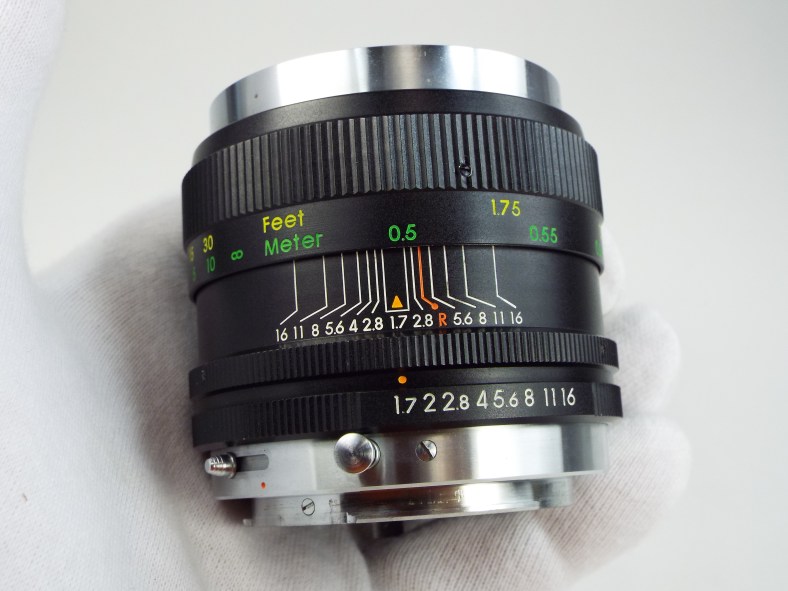
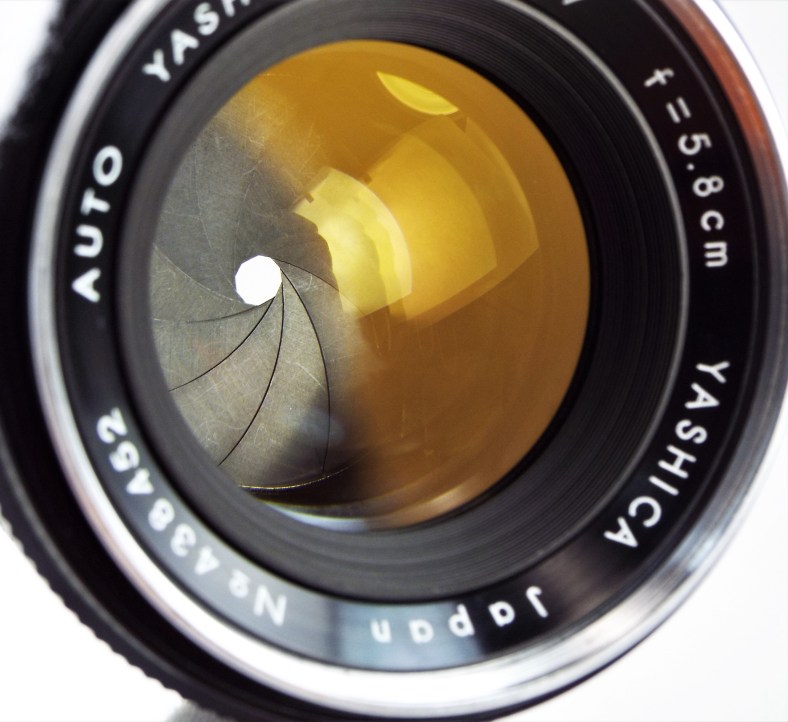
Yashica Auto Yashinon f/ 1.7 5.8cm lens designed exclusively for Yashica’s Pentamatic II. It appears for the first time in August 1960 and disappears from use by Yashica in January 1961. There’s no documentation about the lens and no hard evidence that Zunow made the lens. Hard evidence would be sales brochures or advertisements that specifically link Yashica and Zunow. Co-branding on the lens ring would have been nice but never happened. Unfortunately our claim that it was made by Zunow is, at this point in time, circumstantial and coincidental. Much more digging around needs to be done on our part.

The lens features the unique Pentamatic bayonet mount that couldn’t be used on any other SLR of the time without an adapter. That in and of itself could have been a major reason for the quick demise of the Pentamatic series of cameras.
DSCF6323

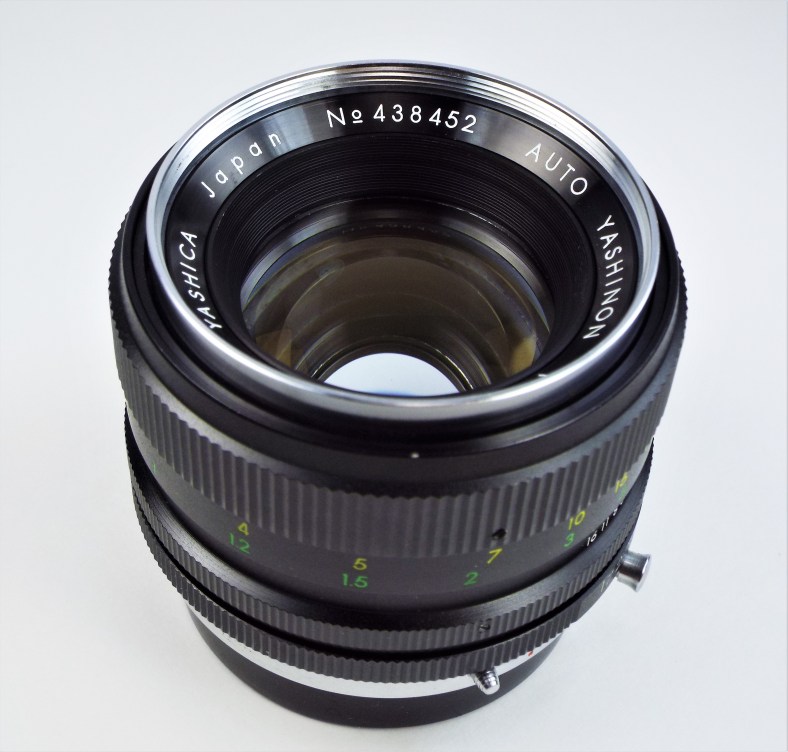
Two “clues” that link this lens to Zunow – the serial number style with its unique “No xxxxxx” vice the more typical serial number style that Tomioka used “No. xxxxxxxx” at the time (as did most lens makers). Another clue, the style of the lowercase “a” in Japan. Most Zunow lenses used a fat “a” vice the keyboard style lowercase “a”. We know, these are hardly the type of clues needed to link the two but they’re good ones for now.

zunow font

Close-up of a Zunow made f/ 1.8 4.5cm lens for the Yashica Lynx-1000 (1960). Note the fat “a” and distinctive serial number style.

Could the f/ 1.7 5.8cm lens have been made by Tomioka Optical? Of course, Tomioka was the almost exclusive lens supplier to Yashica since the beginnings of Yashica in 1953. We feel that Tomioka had their hands full making nearly 1,500 lenses per month for Yashica’s first Pentamatic model (which was still very much in production at the time), and then taking on this lens at about 1,000 lenses per month for the Pentamatic II may have been a bit much for Tomioka.

This lens is so radically different in design and function of other Tomioka made SLR lenses of the time (Tomioka only started making lenses for an SLR in September 1959 with no known examples found before that).

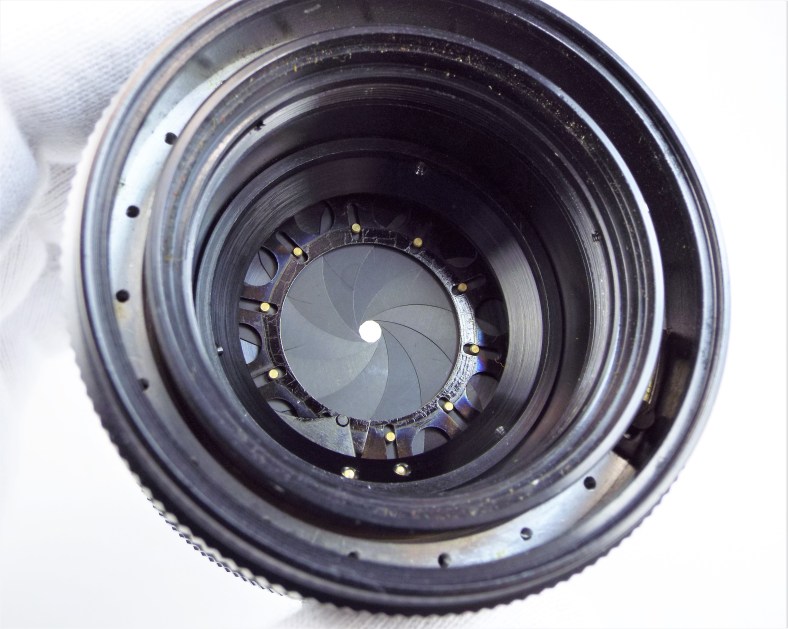
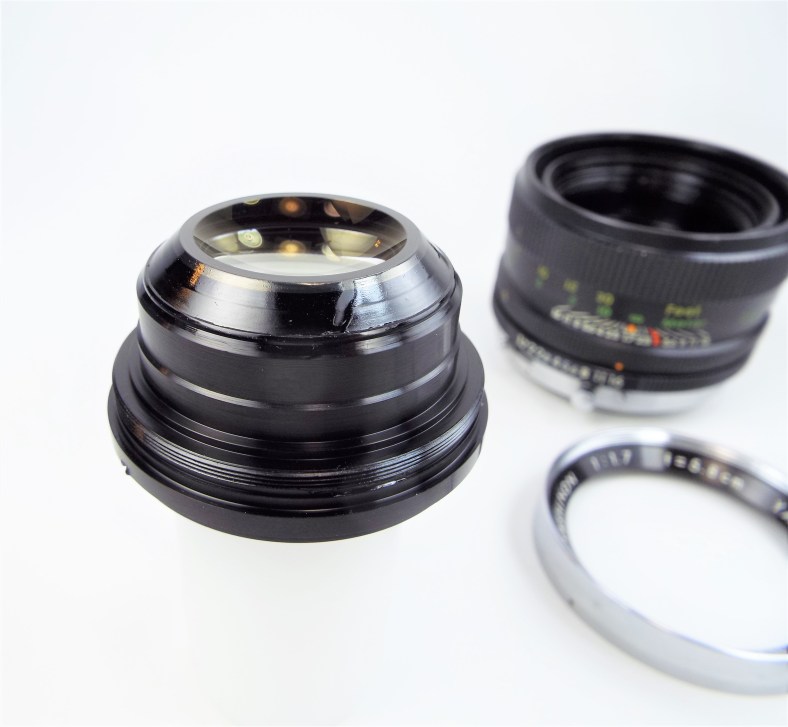
Here’s a peek inside of this lens –
DSCF6345

It features quality construction throughout and what we feel is another Zunow cue, 10 aperture blades. The Tomioka f/ 1.8 5.5cm lens for the original Pentamatic has only 6 blades. We’ve yet to take one apart (soon).
DSCF6328

Pictured above is the f/ 1.7 5.8 Pentamatic II lens with its 10 aperture blades. Below, the front lens group removed from the lens barrel.
DSCF6349

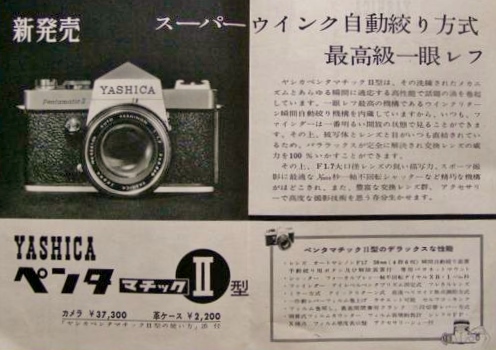
Original sales brochure (below) dated February 1961 featuring the Pentamatic II and its very unique lens.
600x450-2015111900010

Is All of This Enough to Prove a Connection to Zunow?

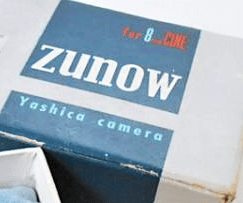
No of course not. Our claim is a merely a starting point for further discussions and discoveries. We hope to disassemble the Tomioka f/ 1.8 5.5cm lens that was made for the first Pentamatic and compare it to this f/ 1.7 5.8cm lens for the Pentamatic II. By the way, the Pentamatic II was only available for sale in the domestic markets in Japan. There’s no evidence that it was ever exported. We do know that Zunow Optical and Yashica did have a working relationship by the mid 1950s with Zunow supplying high quality D mount cine lenses for Yashica’s 8mm movie cameras (see below).
yashica zunow cine lens (2)

Thanks for your visit! Comments are always welcome and your input is important to us. This post is designed to stimulate discussion as to the validity of our assertions. Heck, we may have missed significant clues along the way that would either prove or disprove our claim.

By the way. A special shout out to my good friend and fellow Yashicaphile, Paul Sokk! Our frequent correspondence on this subject first planted the seed that this lens could have been made by Zunow. Paul rightly reminded me that the bankruptcy of Zunow in January 1961 coincided with Yashica stopping production of the Pentamatic II. Yashica is thought to have acquired Zunow after that and one would assume all of Zunow’s assets and debts.

Chris

Be sure to stop by our online store CC’s Studio Twenty-3 Eighty at https://www.ccstudio2380.com for some neat items of photographic interest! Thanks, C&C
Yashica Lynx – the ‘Wildcat’ in Yashica’s den!

We haven’t paid much attention to rangefinder cameras here on the “Fanatic” – it’s not that we don’t find them interesting – quite the opposite, many rangefinder cameras associated with Yashica are groundbreaking and historically significant and are worthy of further research.

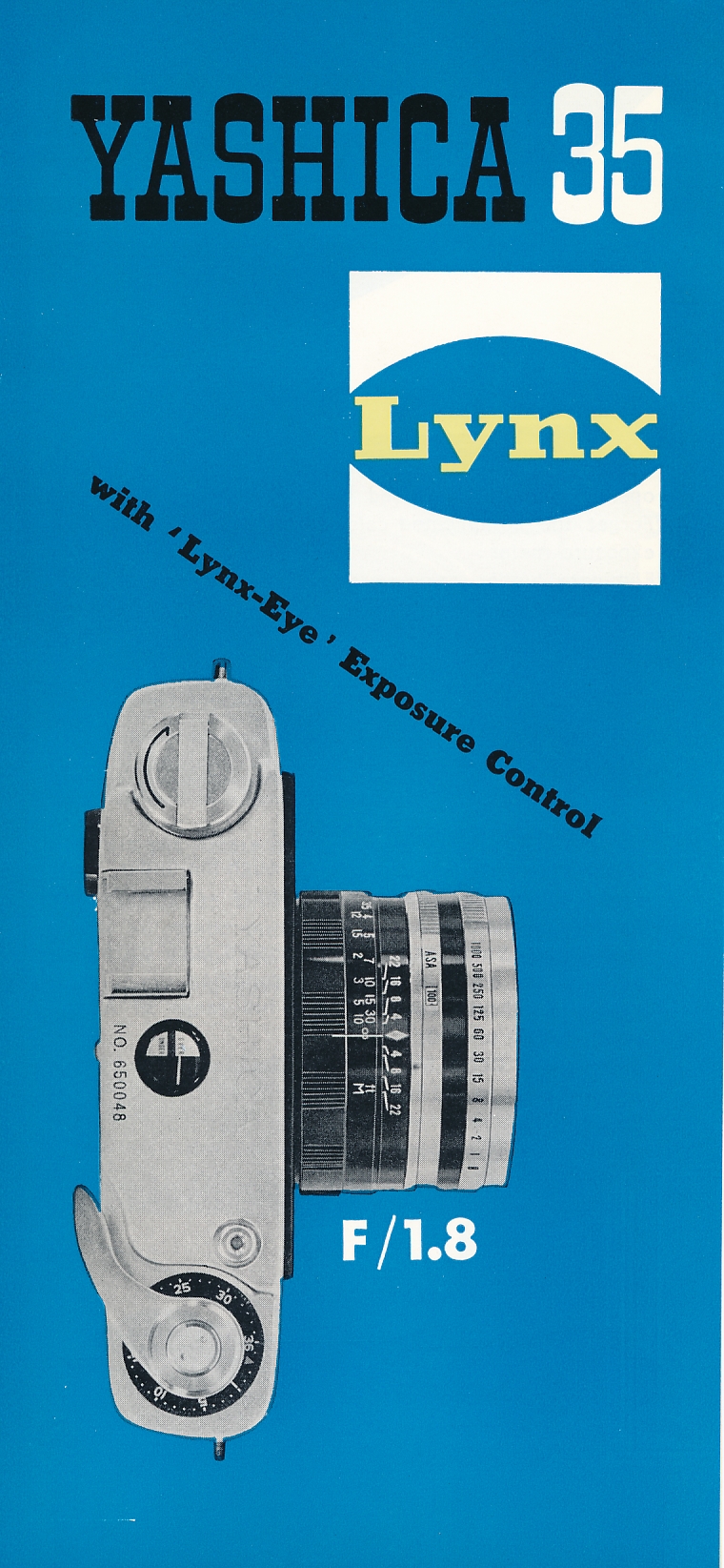
The Yashica Lynx – aka the Lynx-1000. It was the first in a long line of successful fixed-lens rangefinder cameras from Yashica in the early 1960s. The first Lynx was made in May 1960 based on the serial number of the camera in an early sales brochure (in English below).

IMG_20170930_0001

We find early sales brochures extremely helpful when attempting to place a date of production of a camera. In this case, the serial number NO. 650048 would indicate that the Lynx was first produced in May 1960 (6 = 1960, 5 = May, 0048 = number 48th made).

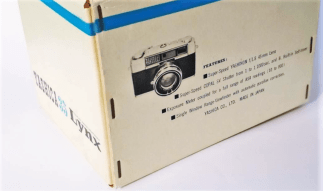
This early box (below) confirms that Yashica referred to the camera as just the Lynx vice Lynx-1000 when it was first released. The success of the Lynx paved the way for the subsequent versions of the camera.

Yashica Lynx Box

Yashica Lynx Box 1


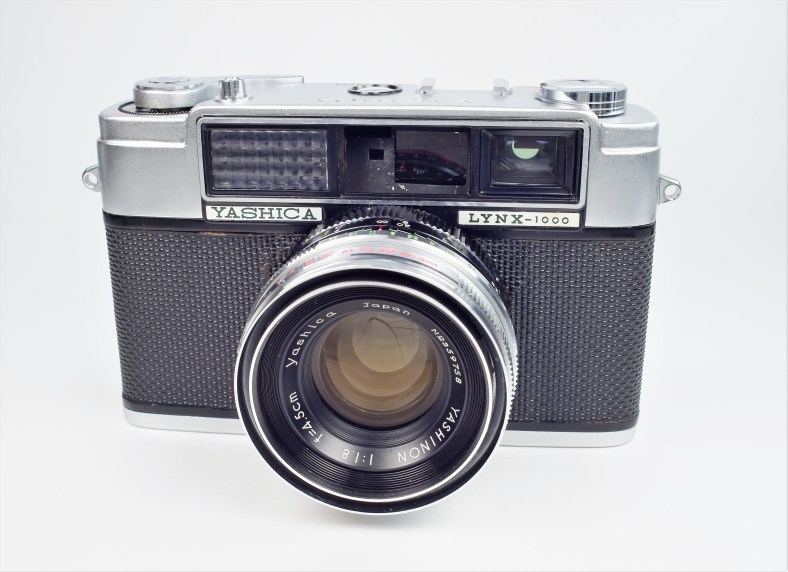
We decided to get a Lynx mainly because of the reputation of its fast Yashinon f/1.8 4.5cm lens. The Lynx we received (below) has a working shutter and super clean glass. The camera’s exposure meter does not work which is typical for these nearly 60-year-old cameras.

DSCF0267

An overall clean example but missing an important piece – the rangefinder window is obviously missing with some damage visible to the internal pieces of the finder (top center above the lens).

DSCF0268

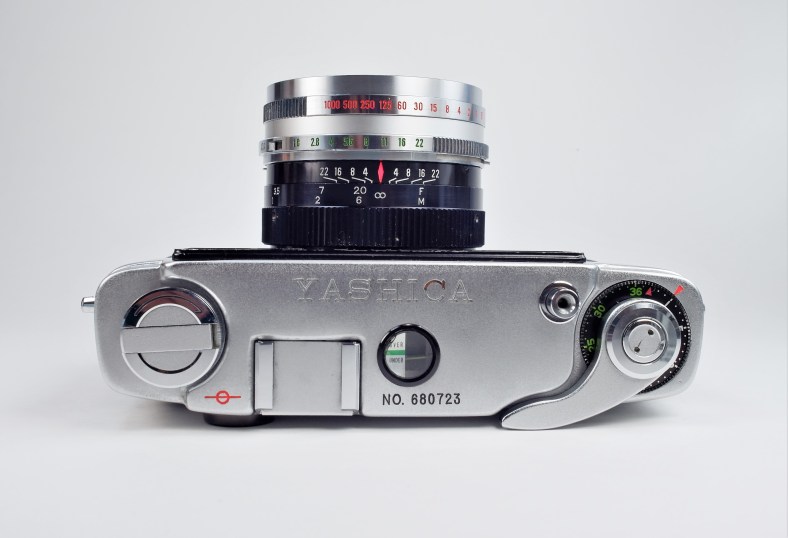
Our camera was produced in August 1960 and was the 723rd made.

DSCF6268

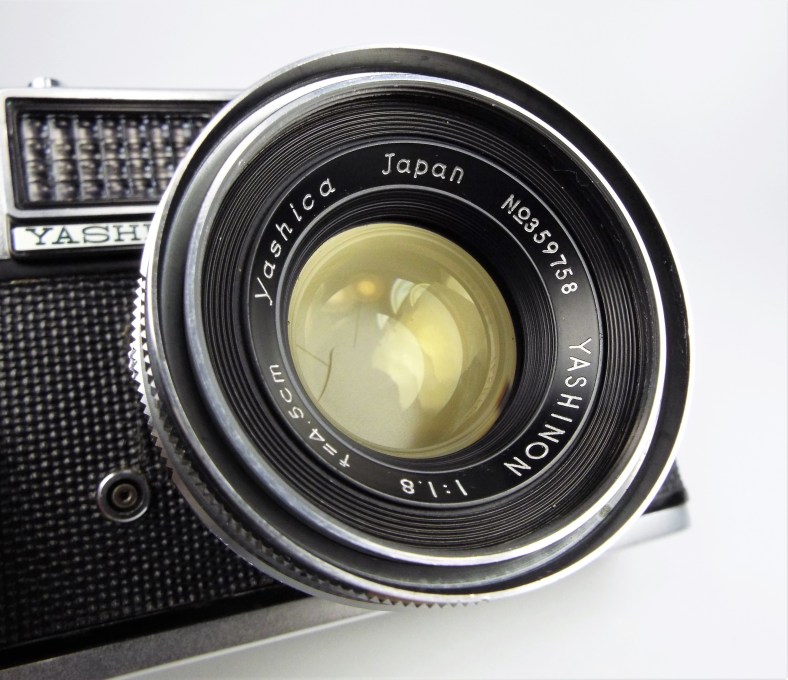
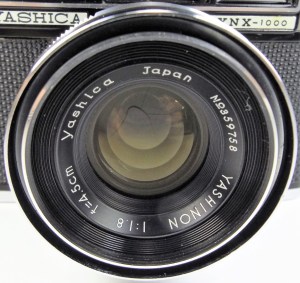
This lens (our camera) features a unique serial number (only 6 digits long) and is in a font that’s not consistent with earlier versions or versions that came later. We feel that this type of lens was made by Zunow Optical vice Tomioka Optical.

The lens on the Yashica Lynx has earned high praise and its reputation amongst photographers is top-notch. For the time period having a fast f/1.8 aperture combined with a leaf shutter (Copal-SV) with a top speed of 1/1000 second was a nice feature in a low-cost rangefinder.

***There is some chatter on more than a few Japanese blogs that some of the earliest lenses for the Lynx were made by the Zunow Optical Company. The majority of the lenses were made by Yashica’s normal lens maker, Tomioka Optical of Tokyo. No verifiable references or links are given in these Japanese blogs as to the source(s) of this claim – it would appear that at this time it may be a case of one blogger makes the claim and others simply followed suite. We’re not disputing these claims, in fact, we’re intrigued by them and have set out to either prove or disprove them. Zunow has an interesting place in the Japanese camera industry of the 1950s. In early 1958, Zunow made one of Japan’s first modern 35mm SLR cameras with a semi-automatic lens and instant return mirror. Interestingly the Zunow 35 and the Yashica Pentamatic 35 (Yashica’s first 35mm SLR –  1959) share a related look and design style that goes beyond coincidence. More on this in another post.

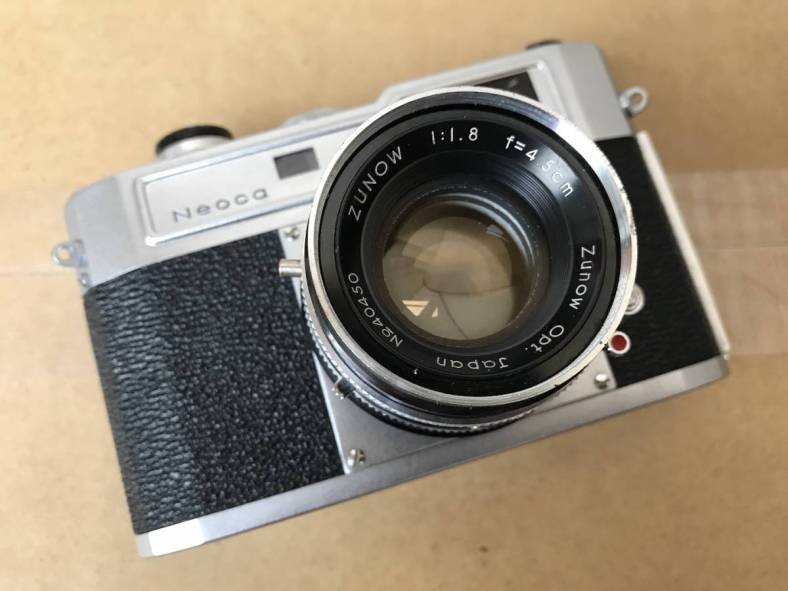
Back to Zunow Optical and the possible connection to the Lynx. Below is an example of a very similar looking f/1.8 4.5cm lens from Zunow made in about 1959 and was fixed to the Neoca-SV.

entrelanuit-img1200x900-15057119536ljzb37862

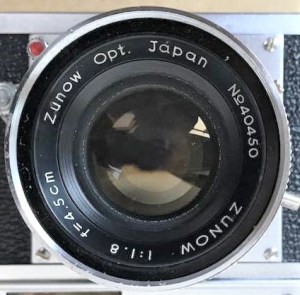
Zunow f/1.8 4.5cm lens on the Neoca-SV. Compare the lens ring font with the font on the Yashinon lens pictured earlier in this post. To us, these were made by the same manufacturer.

One of the biggest clues for us that some of the Japanese bloggers claim that Zunow and Tomioka made the lenses for the Lynx are the similarities of the serial number fonts. The lens with the serial number No 40450 (Zunow pictured above) is in the same style as the serial number on our Yashinon lens (No359708). We have another Lynx headed our way with what we feel is a Tomioka version of the lens. We’ll take both lenses apart to see if there are differences in the design.

Thanks for stopping by! If you have additional information about anything we’ve blogged about please feel free to contact us. We’re never too old to learn something new!

Chris and Carol ^.^

entrelanuit-img1200x900-15057119537pansp7862

Zunow lens on the Neoca-SV

DSCF6263

Zunow? lens of the Yashica Lynx.


Finally! A Pentamatic II will be joining our Yashica family!

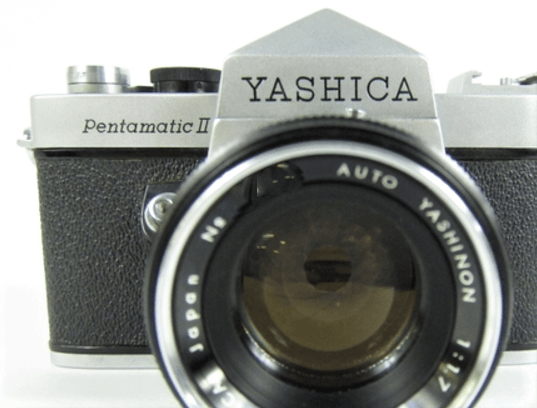
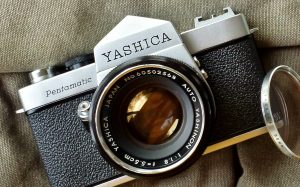
Success! After literally years of searching and countless missed bids, we’ve acquired a Yashica Pentamatic II. One of Yashica’s lowest production cameras – ever. Estimated at less than 5 thousand – and since it failed in the marketplace and wasn’t distributed outside of Japan, it wasn’t considered a collector’s camera and many were simply dumped whenever they broke. It’s hard to estimate how many exist today, but a wild guess would be around 1 to 2 thousand (and that may be high). Production started in August 1960 and for the most part ended in very early 1961 (late January) when the Pentamatic S came out worldwide.

yashica p2 japan

Yashica Pentamatic II – the hardest Pokemon of all to catch!

Our camera has the original short lived Auto Yashinon f1.7 5.8cm lens. It also has the correct leather strap and strap hangers and comes with the original Yashica metal lens cap and lower leather case.

This has been a long chase – but fun! The camera was sold as “junk” – Yahoo Japan Auction speak for a camera that is not functioning properly or has not been fully tested. Sometimes junk cameras are little gems and sometimes they are as the word junk implies.

We’ll have more about our exciting find in the next few weeks as our little Yashica sails or flies across the Pacific to our studio (at many thousands of yen).

Thanks for your visit and stay tuned!

Chris ^.^