No Love Fuji? The Discovery 90 Date

The plastic fantastic wonders of the 1980s and 1990s generally receive no love – especially looking back on them with our digitized eyeballs in 2017. These overlooked (even when new for the most part) cameras were the bridge cameras for many photographers that were moving away from their bulky SLRs from the 1970s and looking for something easy, carefree and light to take with them on short outings and family get togethers. The 35mm format was the clear winner in the format wars, now manufacturers wanted think-free 35s that were as easy to use as falling outta bed (?).

DSCF5081

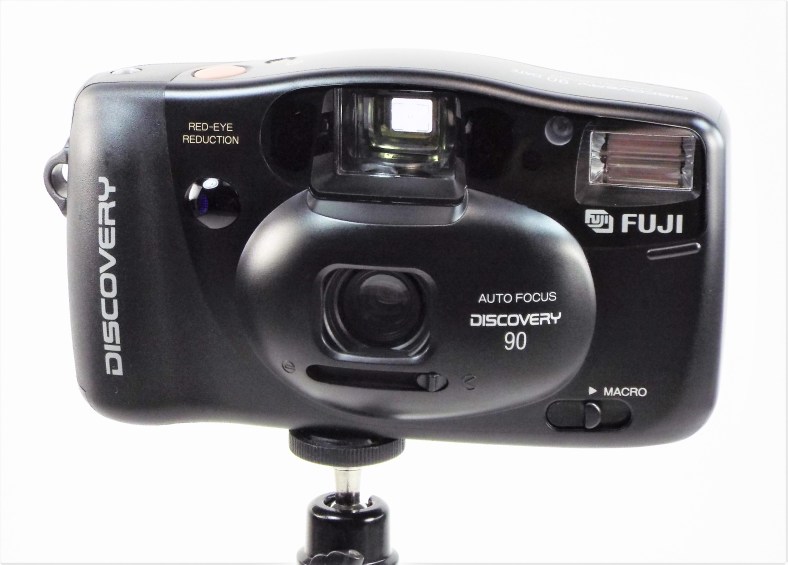
This Fuji Discovery 90 Date was introduced in May 1993 to an already crowded plastic 35mm marketplace. So how to stand out? Drop-in loading, auto focus, auto exposure auto rewind and auto wind was a good start. A big bright viewfinder centered over the lens – and macro capability (23 1/2 inches / 60cm). Auto flash. How about a good price too? And free film? Free batteries… sure. $10 in coupons too!!! Fuji did everything it could to sell these things, and they did alright too. It helps that you make film.

We like our recently acquired Fuji… it feels balanced in my hand and I like the big centered viewfinder. The lens is a Fujinon f8 34mm lens – we can’t wait to run a roll through it to test it out. By the way, the Fujicolor expired in May 1997.

DSCF5092

DSCF5083

DSCF5085

DSCF5086

DSCF5090


DSCF5082

Thanks for your visit… check back when we run a roll through it. Do you have a favorite plastic fantastic camera? Let us know.

Camera: Fujifilm FinePix S9900W

Chris

Yashica Flex AS-II by Yashima Optical

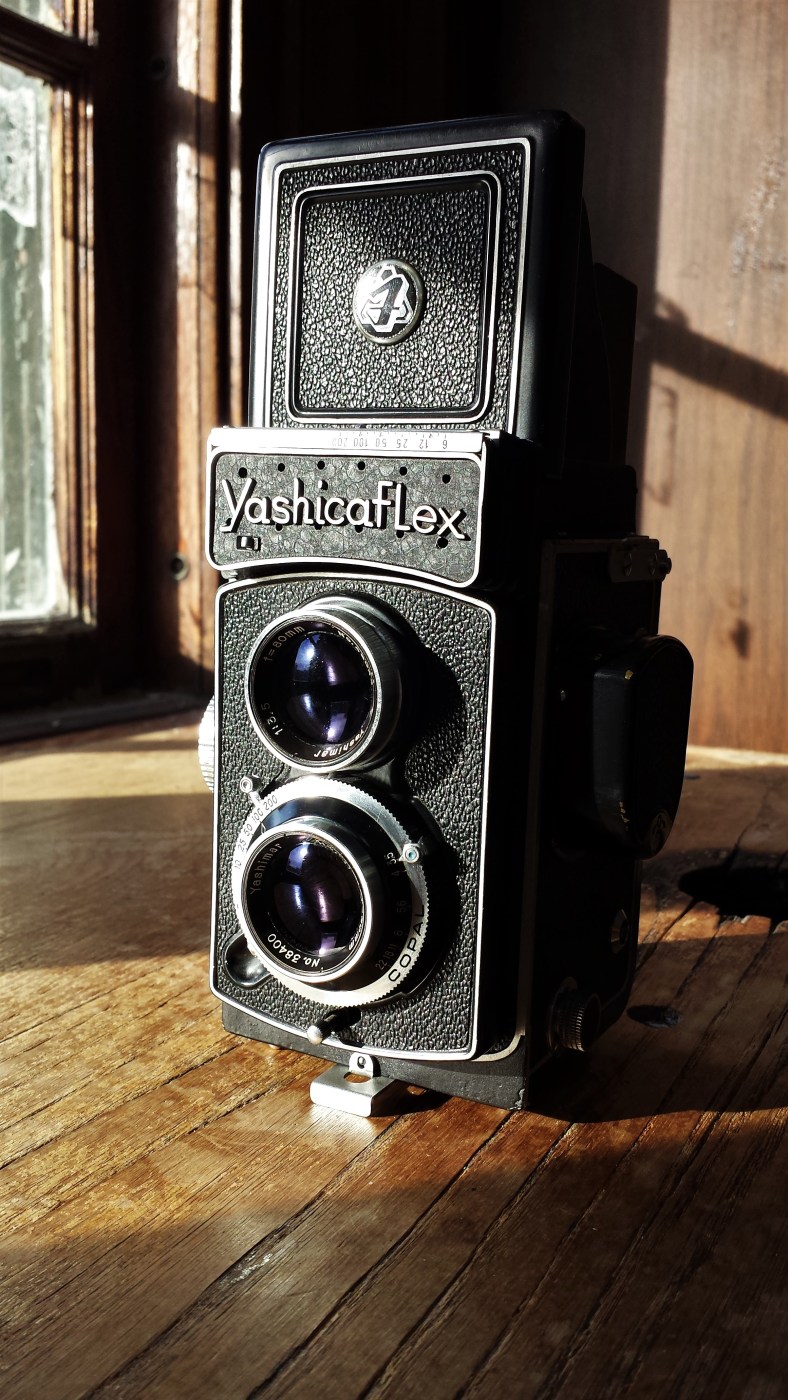
One of the original group of 6 cameras that Yashica (Yashima Optical Industries Company, Ltd.) made in the early to mid 1950s. This AS-II was introduced in 1954 and featured a built-in (well, attached) light meter. They’re solid cameras these early Yashica TLRs, and in our opinion, had some underrated features as well as great lenses. The light meter was made by Sekonic by the way.

20150105_155611

Yashica Flex AS-II with built-in light meter (just visible on the camera’s left side). The light meter’s cells were located under the nameplate and were exposed by lifting up the nameplate flap.

20150105_155832

The AS-II featured Yashimar lenses that were made by Tomioka Optical for Yashica. A Copal shutter with a blazing fast 1/200 top speed!

If you’re in the market for a vintage Yashica TLR then the AS-II should be on your list. Be advised that most will not have a working light meter – if you get one with one it’s a bonus. They are a bit hard to find – 63 year old cameras don’t often look this good or work perfectly. We were lucky as we were able to purchase this one from a collector in the US for a reasonable price.

Taken on the US Post Office steps in downtown Fernandina Beach, Florida. The post office dates to 1911.

Camera: Samsung Galaxy S4

Chris

Our Cat – ‘Avon’ 1977

One of the last good images I was able to take of our cat Avon enjoying some warm sunshine by our front door. He was a found kitten, starving but friendly (aren’t all hungry kitties friendly?). He was found along Carol’s Avon cosmetics route in Pensacola, Florida back in 1975. A Tom Cat with a silly name but it fit him. He ran off from our new house in Yokohama, Japan and he either lost his way or was taken in. I don’t think of the other possibilities.

Original image taken with my Yashica TL Electro-X on Kodak Ektachrome 64 color slide film and the matte finish print of the transparency was dry mounted. The scan is of the print (flaws and all) with my Canon CanoScan 9000F Mark II scanner.

Say hello to Avon.

IMG_20170417_0002

Full uncropped image taken with my Fujifilm FinePix S9900 under studio lighting vice a scan. The marks are on the print. I like his tone and tint better here (below).

DSCF5068

Thanks for the visit!

Chris and Carol

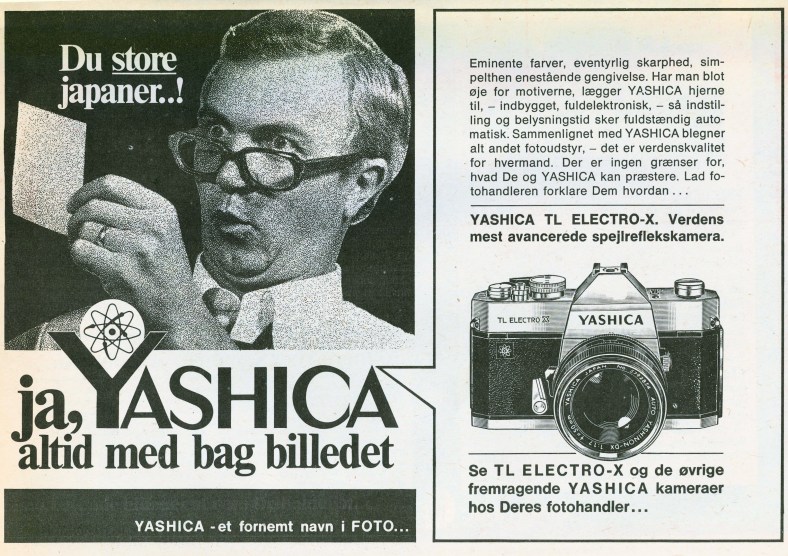
Yashica TL Electro-X & the Danish Ads

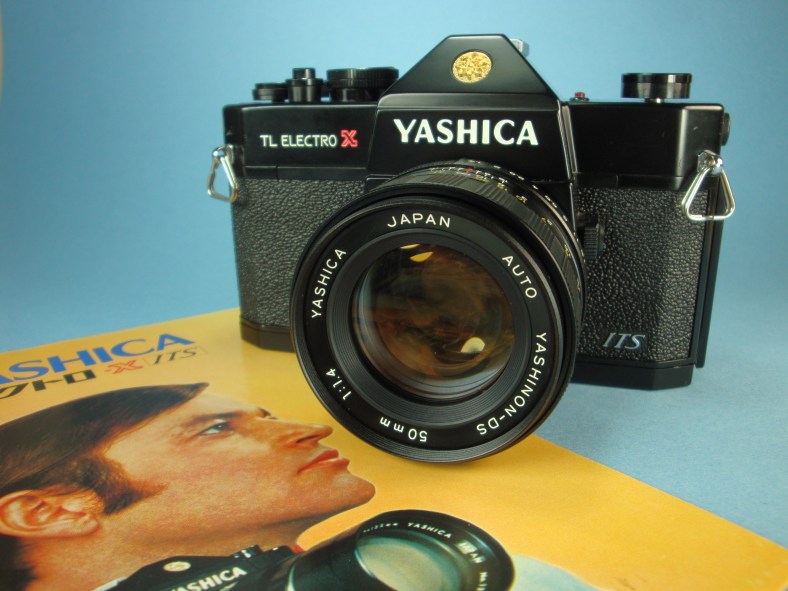
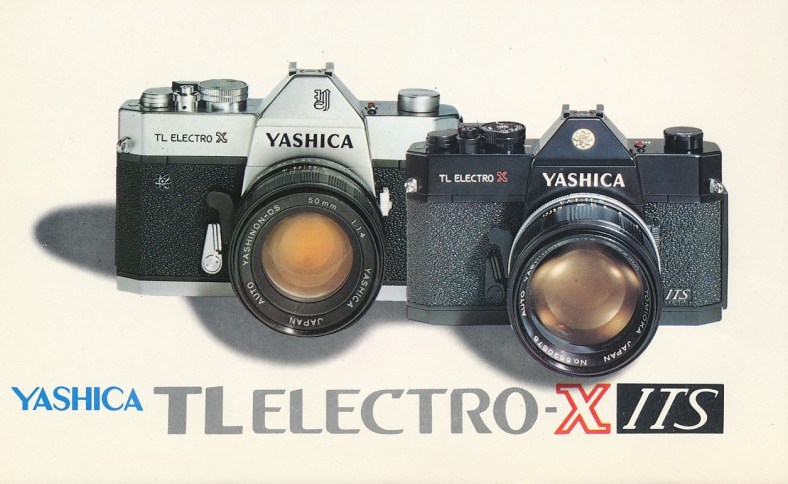
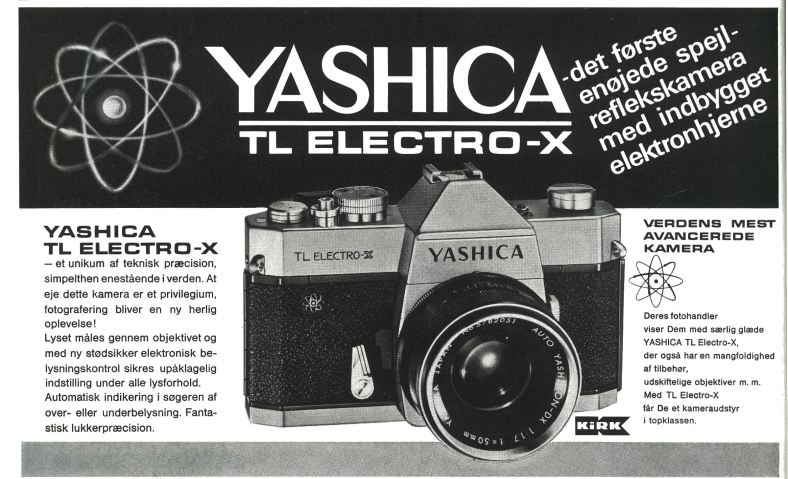
One of our favorite cameras from Yashica (and my first) is the famous and highly popular Yashica TL Electro-X. Yashica had a major hit on their hands when it was introduced to much fanfare in the late 1960s. A fully electronic camera that featured a “IC Brain” that controlled exposure settings and shutter speeds could be timed from 2 seconds to 1/1000 second with infinite in between settings. The TL Electro-X was sold around the world for many years – actually up through the mid 1970s.

DSC07497

The TL Electro-X seen here as the ITS model.

24104907192_2909081390_o

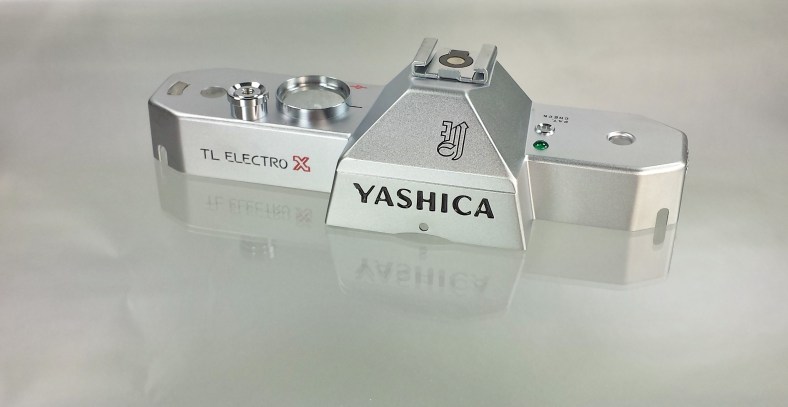
Top plate spare part. The gothic ‘Y’ on the pentaprism was/is synonymous with the TL Electro-X body whether it was in pro black or traditional silver.

Yashica TL electro x 1972 8

Recently discovered Danish ad for the TL Electro-X. As the ads says, the “world’s most advanced SLR”.

The ad above was recently sent to me by my good friend Paul Sokk from Australia – http://www.yashicatlr.com – The ad is from June 1972 and what’s interesting to us is the missing gothic ‘Y’ on the pentaprism. Up until now we weren’t aware of any models without the ‘Y’. No big deal – it’s just a curious variation. We’ve also discovered that Yashica (for whatever reason) also had models that the traditional red ‘X’ was changed to black. See below.

img_20170228_0003

Camera on the left with what appears to be a black ‘X’ vice traditional red ‘X’.

Our best guess as to why the Danish ad has a TL Electro-X without the ‘Y’ would be that the local trading company or distributor wanted Yashica to supply cameras that were different than what was for sale in let’s say France or Germany. It’s not unheard of that Yashica supplied different distributors with slightly different body and lens sets. The Yashica J-P and its odd little 5cm f2.8 preset lens from 1964 comes to mind.

1969 April, Yashica TL Electro-X

April 1969 ad from a Danish photography magazine.

As always we endeavor to bring you the most accurate information about Yashica and its cameras. We welcome comments and of course, if something we’ve said is incorrect please let us know – or simply share additional info if you have some. Thanks

Chris & Carol

Yashica Moves to a New Factory 1972

We’ll be the first to admit – not an exciting title or topic for a blog. It may even be a stretch for a blog named the ‘Yashica Pentamatic Fanatic’. But we feel compelled to share information about the Yashica Company, however slight and trivial, with our dear readers.

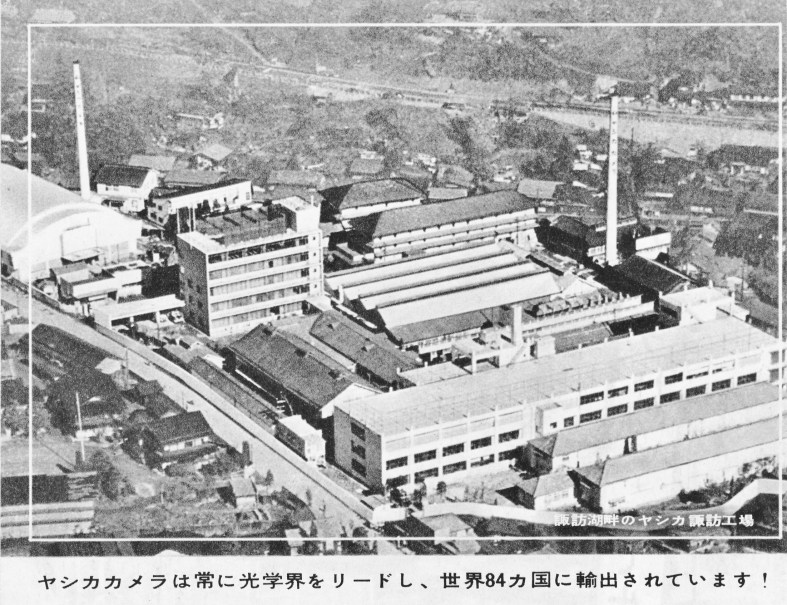
Yashica’s first factory was along the shores of beautiful Lake Suwa in the small town of Suwa. The next location (from Yashica brochures) was in Shimosuwa-machi, Suwa-gun, Nagano Prefecture. This was the industrial campus of Yashica and it grew over the years to occupy almost every square meter of the property.

Yashica's Shimosuwa Factory

Opened in 1956 along the shores of Lake Suwa in Nagano.
IMG_20151218_0008 (2)

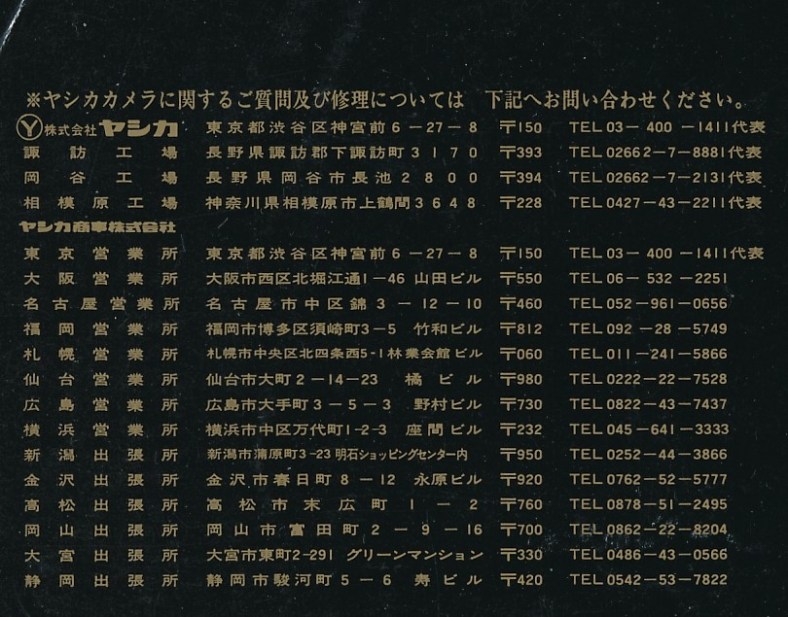
A different view of the same campus. Yashica was running out of room by the mid-1960s.
IMG_20170404_0004

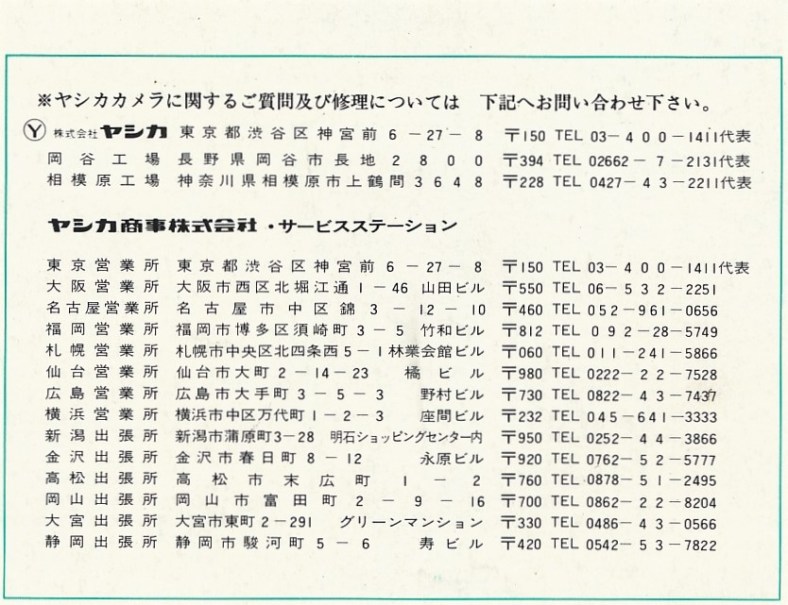
Back cover of the Yashica TL Electro-X ITS instruction booklet. The booklet was printed in Japan in June 1972.

At the time of the printing of the above book, Yashica was operating 3 factories. The top line that begins with the Yashica ‘Y’ on the far left is the address of the main headquarters of Yashica which was in Shibuya-ku, Tokyo. The next line is the location of the Suwa plant – Shimosuwa. The third line is the new plant in Okaya which was still in Nagano Prefecture. The 4th line was an unknown (to us until recently) factory in Sagamihara-shi, Kanagawa Prefecture (southwest of Tokyo and just west of Yokohama). As you can see, Yashica operated at least 14 other sales offices and service centers across Japan in mid-1972.
IMG_20170404_0005

Back cover of the Yashinon Lenses & Accessories booklet printed in Japan in January 1973.

Between June 1972 (the first book above) and January 1973 (the second book above), Yashica closed its campus and factory in Shimosuwa. The only factories listed are the new Okaya factory and the Sagamihara factory. That was a big move for Yashica and as we understand it, they had purchased the old silk mill in Okaya as far back as 1959. As of this book, Yashica did not close any of its other sales offices listed from the previous book.

DSCF9431

The factory was officially dedicated in December 1972. According to Yashica documents, the factory didn’t achieve full production until late 1974 or early 1975.

IMG_20190517_0001 (1)

The Yashica Okaya factory complex in the summer of 1974.

Why is any of this important? It isn’t unless you’re a Yashica Fanatic like us. Oh, it did have a strong ripple effect on the company though. Japan was in a bit of an economic slowdown in the early 1970s and it came to a head in late 1974 for Yashica. Mismanagement and embezzlement (and the costly move) caused Yashica to lay off workers – unheard of in Japan at the time. They closed the Sagamihara factory which put 900 Yashica employees out of work. That had an effect on the factory at Okaya and Yashica was soon in deep financial trouble. Their cameras were still top notch but the first warning shots about their future were fired.
IMG_20190517_0003 (1)

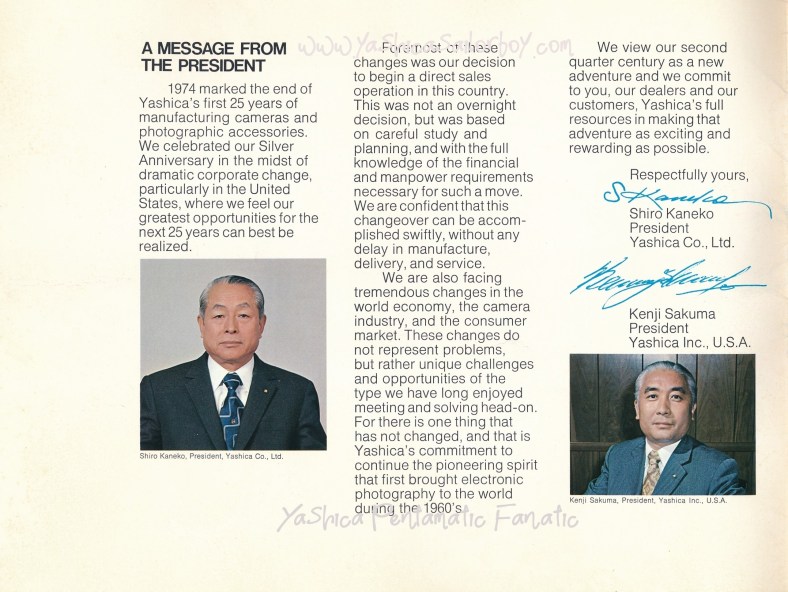
It is my understanding that Mr. Shiro Kaneko was installed as the new president of Yashica by the Nissho-Iwai Company (Yashica’s distributor) and by the Taiyo Kobe Bank which by 1974 had put its full financial resources behind Yashica’s new marketing efforts.

Thanks for your visit! Hope you got a little something out of it. – Chris
 

Springtime in Naka-ku, Yokohama

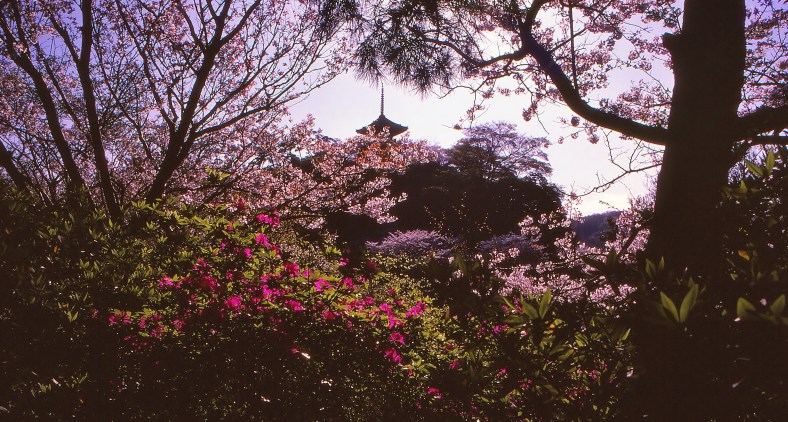
Remembering back to our time living in Japan in the late 1970s. We lived in a small area of southern Yokohama near Sankei-en (gardens). The Naka Ward was home to a large US Navy family housing area and the ever popular Navy Exchange and Commissary. Avenue D, pictured below, was the main highway from Yokohama to the Navy base at Yokosuka. In our part of the housing area, these Sakura (below) had been planted as a joint project with the military families and the local community. After the long and dreary winter we looked forward to the blossoms and warmth that signaled Spring.

20354188489_fd0e7856e0_o (1)

Sakura along Avenue D in the Naka Ward. Base housing to the left.

21087177073_aedba71f8f_o (1)

Sankei-en in Spring. A short bicycle ride from our home so we visited often.

20256520930_b6efccc36a_o

Carol spending her 100 yen wisely on a visit to Sankei-en.

22343030079_18e6e717a1_o (1)

More views in Sankei-en.

21723680721_8a4b3d184e_o

Photography blossoms in the Spring.

25573678404_994fa123bd_o

We were lucky to live in such a nice area of Yokohama – everything was a short bike ride away. Spring was way too short and the Summers on the Kanto Plain were way too long!

Thanks for your visit! Enjoy your Spring!

Camera: Canon F-1

Film: Kodak Kodachrome 25

Chris

Yashica Pentamatic Refreshed –

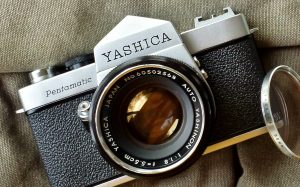
20160326_164016_richtonehdrThe beautiful, simple and clean lines of Yashica’s first SLR.
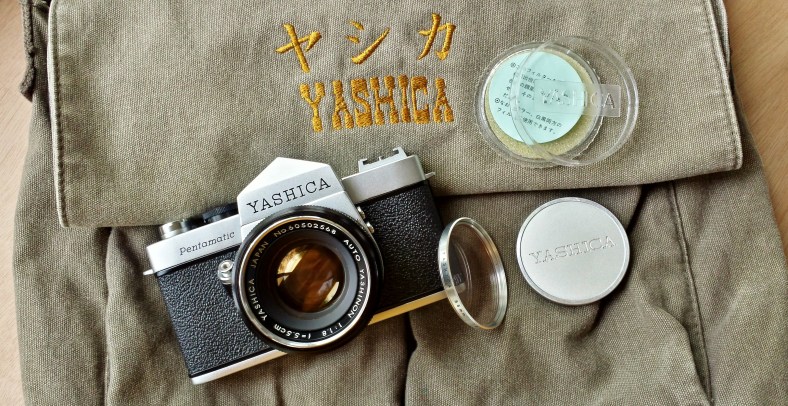
If you’re new to the Yashica Pentamatic then you’re in luck as this is the best place to be for the most accurate information about the mysterious Pentamatic. First envisioned when Yashica acquired the Nicca Camera Company in the summer of 1958. Yashica needed the technology and manufacturing know-how that Nicca had – focal plane shutters and the ability to build small complicated 35mm SLRs.

The timeline as best as we can tell looks like this – Yashica “invents” the Pentamatic in the summer of 1959. Yashica files for the trademark ‘Pentamatic’ in Japan September 18, 1959. The first Pentamatic bayonet mount lenses are made by Tomioka Optical for Yashica in October 1959. The first Pentamatic bodies roll off Yashica’s line by December 1959.

Yashica files for a patent/trademark in the US on February 12, 1960. The Pentamatic ’35’ is revealed at the ’36th Master Photo Dealers & Finishers Association Trade Show’ (St. Louis) in late March 1960. The lens shown on that Pentamatic is an Auto Yashinon 5.5cm f1.8 lens (SN 59100035). By April-May 1960, the first pictures appear in photography magazines in the US from the St. Louis show. The first Yashica Pentamatic ’35’ advertisements appear in both ‘Popular Photography’ and ‘Modern Photography’ magazines in their June 1960 issues. Ads within those publications have dealers in New York selling Pentamatics for $159.95.

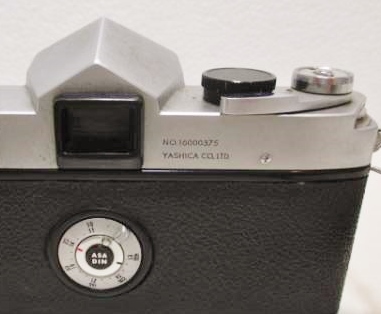
JN Pentamatic SN 16000375Decoding serial numbers… Yashica has never been upfront with the dating of their cameras, lenses or printed materials. Instruction booklets and sales brochures are only occasionally dated and those were mostly in the 1950s and then again in the 1970s. Camera bodies and lenses (and accessories) remained a mystery until now. We believe we’ve finally decoded the serial numbers of Yashica’s first 35mm SLR, the Pentamatic. Look closely at this camera’s serial number… 16000375… knowing a little bit about when this camera was “invented” helped us decode the number. The trademark “Pentamatic” was filed by Yashica in September 1959 in Japan. The first lenses were built in October 1959 with the first bodies produced by December 1959. This camera (above) dates… 1 = January / 60 = 1960 / 00375 = 375th unit made since December 1959. The latest camera in our database has a serial number of 16115756. This decodes to… January 1961 and was the 15,756th unit produced since December of 1959.
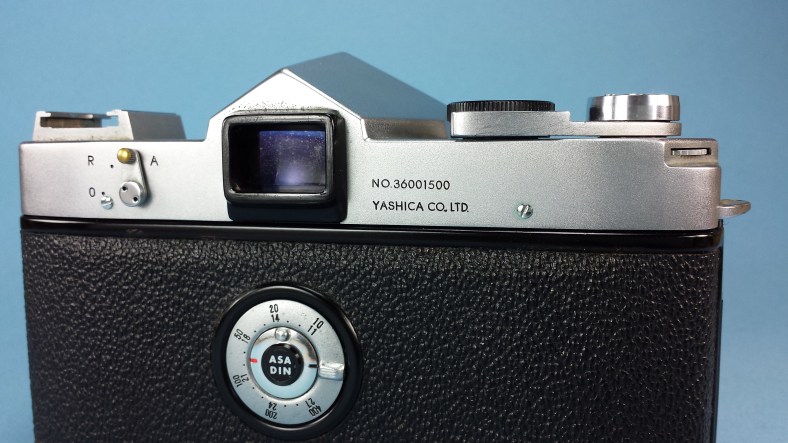
16233739912_d43f6fb30f_oThis Pentamatic body (above) decodes to… 3 = March / 60 = 1960 / 01500 = 1,500th made up to that point.
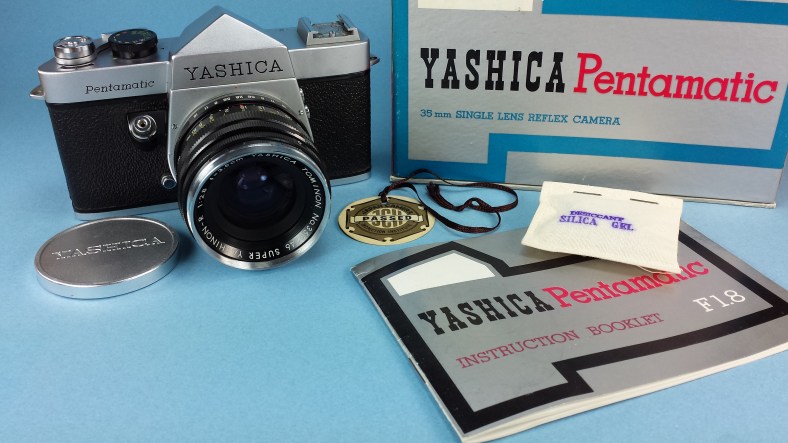
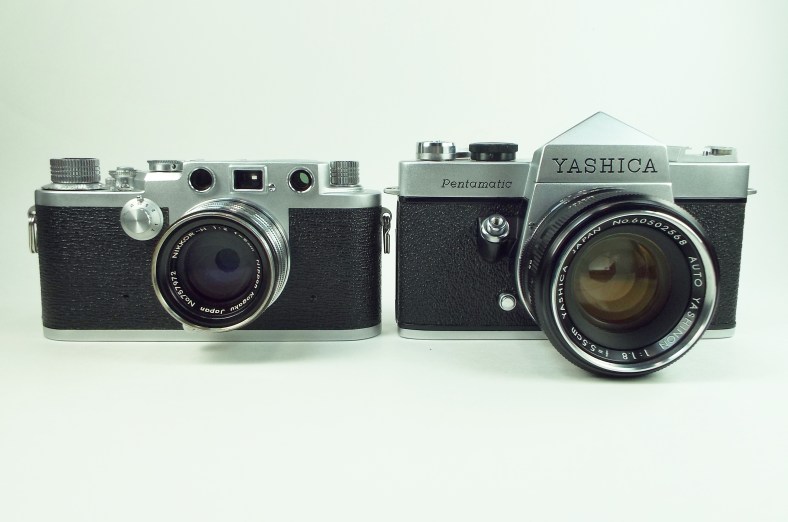
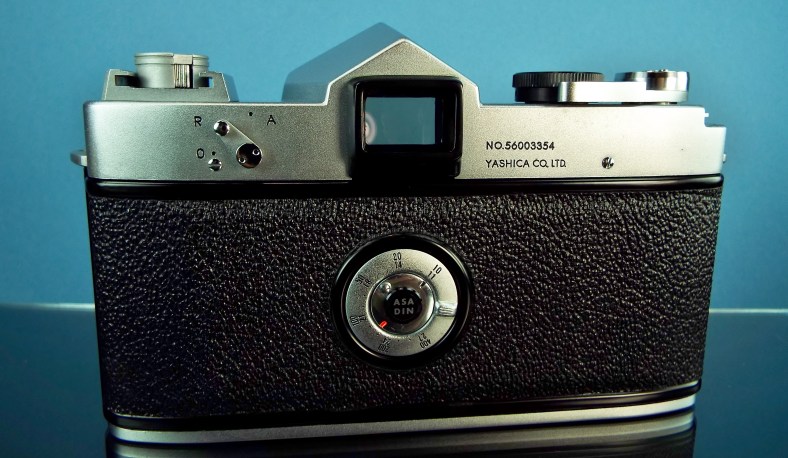
Bold bright colors...

Clean simple lines. Show the customers that this camera was a SLR! Not your dad’s TLR.

30602743445_1099c73935_o

Inspiration and the technical know-how came from the Nicca Camera Company. Pictured on the left is an early Nicca 3-F.

25991482796_f4202464c2_o

By May 1960, number 3,354 had been made.

31843606654_3798679907_o

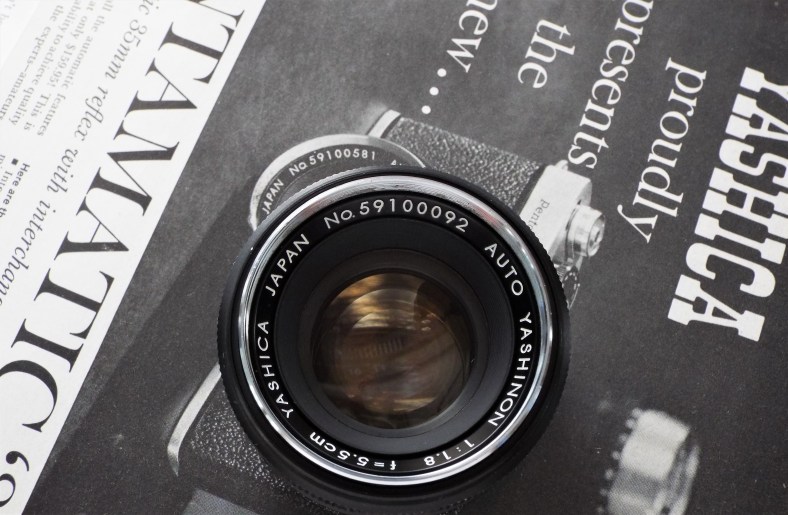
Earliest lens serial number (in our collection) decodes to – October 1959, the 92nd made. The ad behind it is a much higher serial number and appeared in a June 1960 ‘Popular Photography’ magazine ad.

The original Pentamatic ’35’ is a fun and challenging camera to collect. Knowing a little something about the serial numbers may add to your enjoyment of the chase. There was a short lived Pentamatic II (well less than 10K made) and another short run of the Pentamatic S which was the last model before Yashica ditched the Pentamatic bayonet mount in favor of the universal M42 mount.

Happy hunting! Questions? We’ve got answers.

Chris & Carol


Earliest Pentamatic Lenses Found… Yeah!

Nerd heaven! After years of speculation and almost constant searching, we’ve been able to confirm that Tomioka Optical began making lenses for Yashica’s new Pentamatic 35mm SLR camera in the latter part of 1959. The two lenses pictured below confirm (via serial numbers) of an October 1959 start of production. Yashica had filed for a trademark of the name ‘Pentamatic’ in September 1959 (in Japan). Since their new camera used an exclusive mount for its lenses, Yashica designers had to have shared their design with Tomioka as early as the summer (August ?) of 1959.

Using the rule of twos, these lenses are the earliest in our collection.

DSCF3824

By serial number the left lens was built in October 1959 and it was the 92nd lens made. The right lens was built in December 1959 and by then Tomioka had built 1,630 lenses for Yashica.

No.  59 = 1959   10 = October  0092 = 92nd made

DSCF3826

No.  59 = 1959  12 = December  1630 = 1,630th made  

DSCF3827

dscf3477

Here’s our lens matched up to an advertisement in ‘Popular Photography’ magazine from the June 1960 issue. The lens in the ad is No. 59100581 which decodes to – October 1959, lens number 581 in the sequential production run. So in October, Tomioka had made nearly 600 lenses and by December they were up to 1,630 made. Certainly possible that they were averaging nearly 600 lenses per month in late 1959.

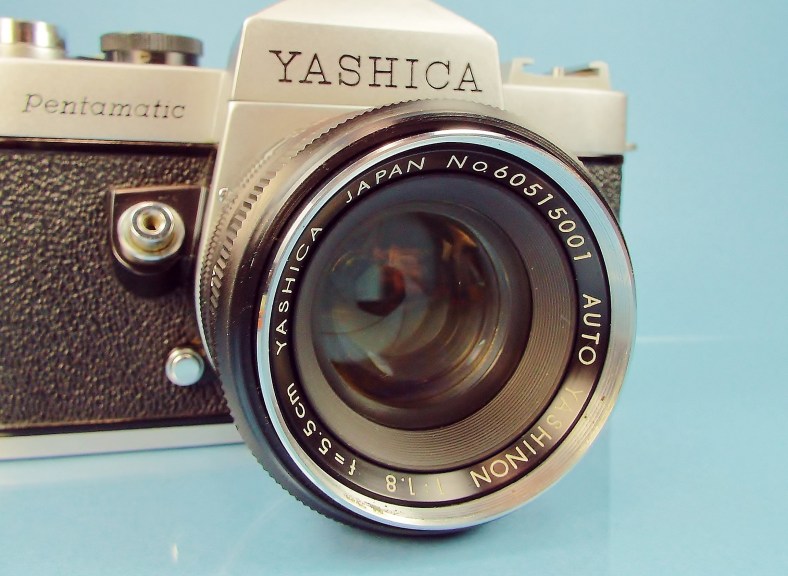
It’s a good find for us as the early serial numbers were just a guess on our part as to how they decoded. Having two lenses made before 1960 helped firm up our speculation. Lenses made in 1960 drop the month code in favor of a model number or code. A typical 1960 lens would have a serial number of:  No. 605xxxxx which would be 60 = 1960  5 = model code  xxxxx = production sequence number.

008

Serial number No. 60515001 decodes to 60 = 1960  5 = model code  15001 = 15,001 made since production began in October 1959.

If you’re a collector of Pentamatics or are just interested in Yashica cameras in general, this is important info. We know, total nerd stuff!

Thanks for your visit.

Chris

Serious Photography!

15133132085_d1fc422098_z

If you’re a regular reader (or curious visitor) you’ve hopefully picked up that we (Chris & Carol) enjoy sharing images of cameras that have crossed our paths over these many years. You may have also noticed that while we post countless images of cameras, lenses and what not, we’re not overly technical when it comes to photo gear. We’re not going to “beat you over the head” with needless specs of the gear we share – just (hopefully) good imagery of the wide-world of  photography.

With that said, we’d like to share an image of a camera that never fails to make us smile –

25599964075_bb91c0ac63_o

Our son Timothy’s first (and only) camera – a Pikachu 35mm with genuine Pokemons inside! Tim just loved this camera and it’s an important part of our collection still.

23902504384_60e724c9f5_o

As always, many thanks for your visit. We hope it made you smile – after all, that’s what photography is all about…

Chris & Carol and Pikachu and Ash too!