
Tag Japan
I See Red – Fujica DL-20
Pretty little Fujica DL-20 from 1983.
The world’s first 35mm drop-in loading camera! Simply load your Fujifilm cartridge into the opening on the bottom, close the back – and your Fujica will do the rest!

Features a Fujinon 38mm f/4 lens with built-in lens and viewfinder cover.
Released in March 1983 in Japan, it was also known as the ‘Auto Mate’.
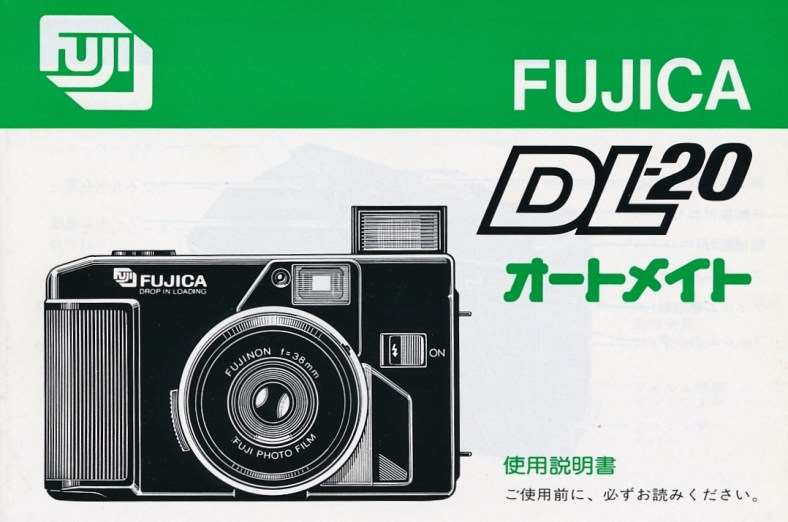

Original list price in Japan was 30,000 JPY.

Shutter fires from 1/100 to 1/300 of a second.

Also released at the same time the more feature packed DL-100 (Auto Ace).

Solid little thing! Thick plastic everywhere and a bright red finish too!

Manually set ISO settings (100 & 400). 3 zone focusing. Auto exposure (EE).

Built-in electronic flash.


Push the film cartridge into the opening on the camera’s left side with about 5 cm of film extended – close the back and it auto loads the film.


Cute centerfold art… love the image on the far right!
Weighs in at 300 g. Fits nicely in your hand (although a bit small for me) and fits in a coat pocket with ease. A simple, compact 35mm point and shoot camera from Fuji Photo Film.
We don’t know if we’re going to shoot the Acros first or load up some bright Fujicolor. Soon we hope!
Camera: Fujifilm FinePix S9900W
Thanks for stopping by!
Chris
Fuji Discovery 900 Zoom Plus – 1991
From the Fuji Photo Film Company, Limited, Tokyo.
Actually quite a sophisticated 35mm compact autofocus camera from the early 1990s – during the compact camera war period where each manufacturer was trying to cram as many features into as small a package as they could. In the case of this Fuji, it came pretty close to having everything except the compact part.
Which in the case of this camera, is a very good thing in our opinion. It has a wonderful feel to it – it has some heft (362 g without battery and film) and fits nicely into your grip. It’s plastic but with a host of motors and what not the weight goes up which helps to hold it steady when taking a picture.

It was packaged in a descriptive and colorful box that included a roll of Fujicolor film, a lithium battery (which was still working after 24 years!), a padded strap and a series of 3 HG Creative Exposure cards for exposure compensation. The film expired in May 1994.

We think it’s one of the better designed compact 35s of that era – beautiful lines and a quality fit and finishes. It was made in Japan – and it appears that it was also assembled there as well. The June issue of Popular Photography has it listed as $299.95 as the manufacturer’s suggested retail price! I believe that gives some clue as to the design that Fuji put into this nice update to their Discovery 900.
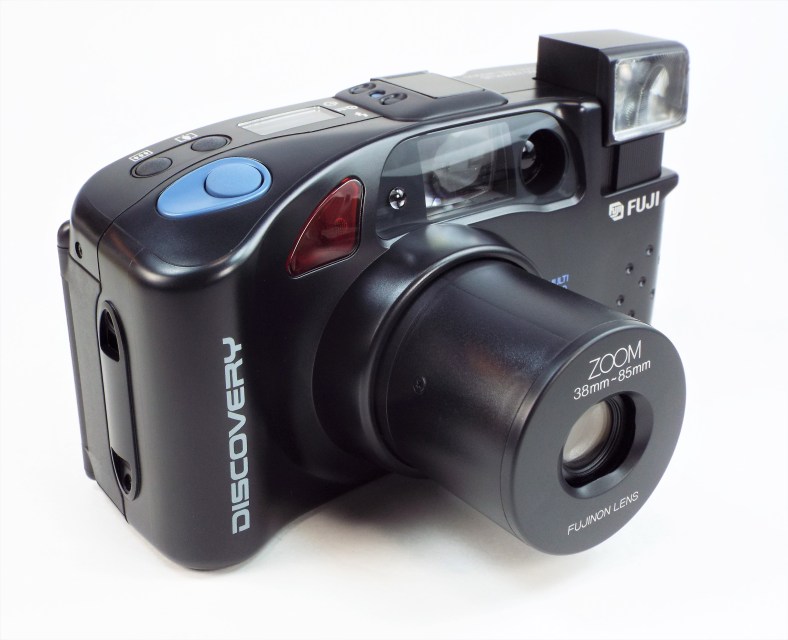
The Discovery comes with a Fujinon 38-85mm power zoom lens (f/3.8 – 8.2) and uses a 3 zone multi-beam autofocus system. Focuses close-up to 29.5 inches and the AF focuses from .75 meter to infinity.
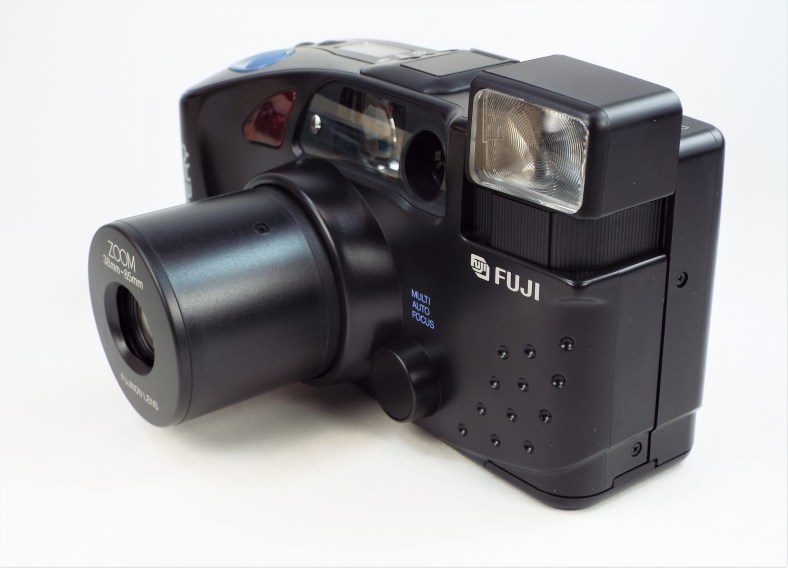
The Fujinon lens consists of 7 components, 7 elements. The programmed electronic shutter operates from 1/8 to 1/250 second.

The top view is simple and uncluttered. The HG card slot is in the center (where a hot shoe would be). It has a sequential self-timer and the power zoom buttons are on the far right. It also features drop-in film loading and uses DX coding with ISO 50, 100, 200, 400, 800, and 1600 DX-coded films.

This camera was a presentation camera to the employees (?) of the plant – or maybe the plant only got one. It is in mint never used condition so I’m guessing it never took pictures of their cement pipes at the plant. Our first thought was to remove the plaque, but it is well designed and affixed properly so it’s best to leave it be. Besides, it helps to date the camera and that’s okay with us.
The little Pac Man looking symbol and slide lever opens and closes the lens cover and activates the camera. The landscape button on the left helps the AF system to fix a distant focus at infinity or at least takes an average focus from the scene. We love the centered viewfinder – it provides a nice bright view of the composition.

The Fuji Discovery 900 Zoom Plus 35mm camera.

The Fuji Discovery 90 Date – a smaller and less feature-packed cousin to the 900.
We think Fuji did well with this sophisticated camera and can’t wait for a field test! Soon!
Thanks for your visit.
Camera: Fujifilm FinePix S9900W
Chris
Please respect that all content, including photos and text, are the property of this blog and its owner, Yashica Pentamatic Fanatic, Yashica Sailor Boy, Yashica Chris.
Copyright © 2015-2019 Yashica Pentamatic Fanatic, Chris Whelan
All rights reserved.
Happy Earth Day 2017!
Every day is Earth Day at our house… have you shown the Earth some love lately?



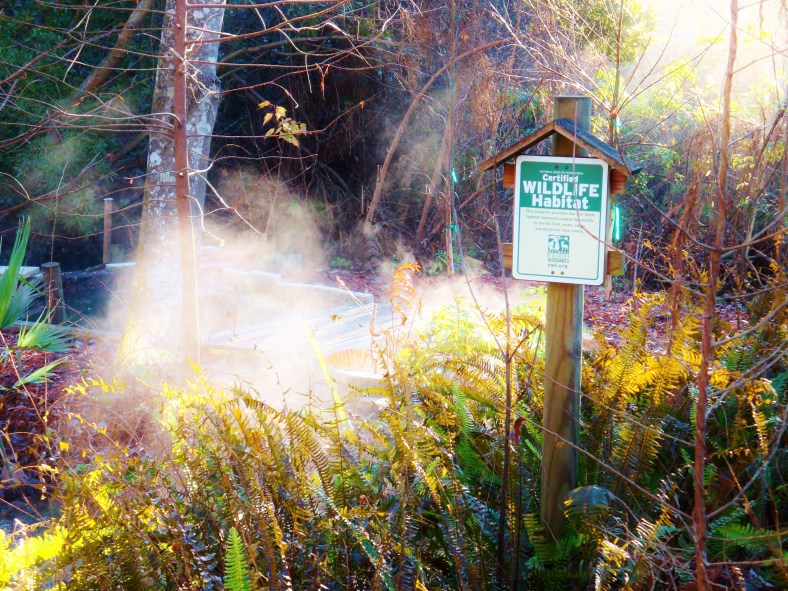

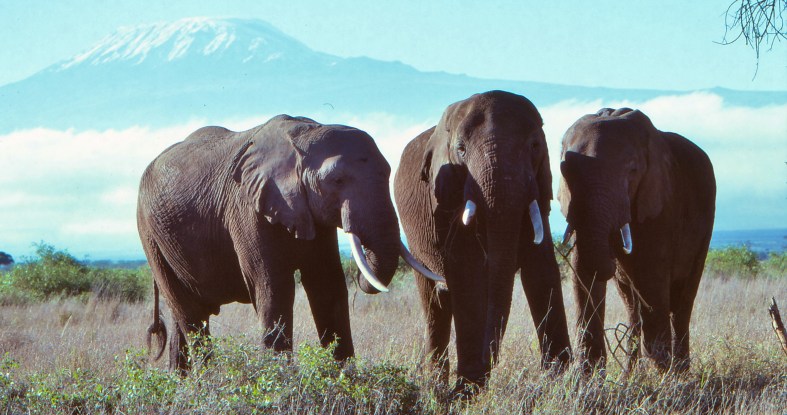


It’s time to go hug my family and a few trees too!
Happy Earth Day! Chris & Carol
Random Yokohama – 1978
A small collection of recently “found” images from our time spent living in Yokohama.
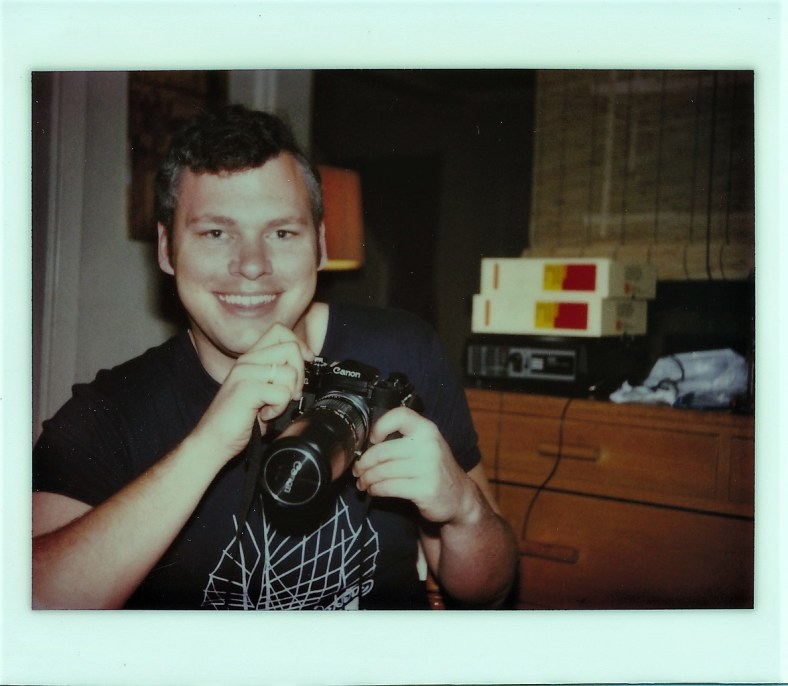
Happy me with my new Canon F-1 and Canon FD 80-200mm zoom lens.
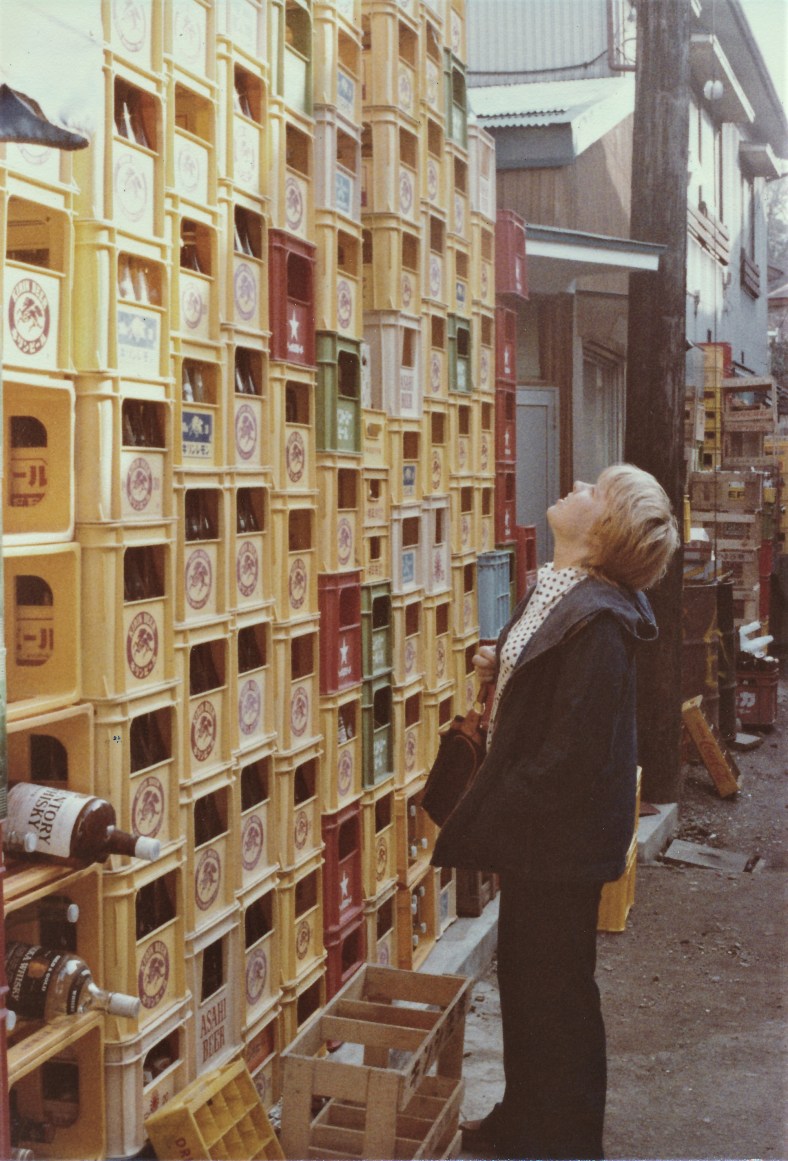
Carol checking out the wall of crates outside a local liquor store.

Gift Box shopping.
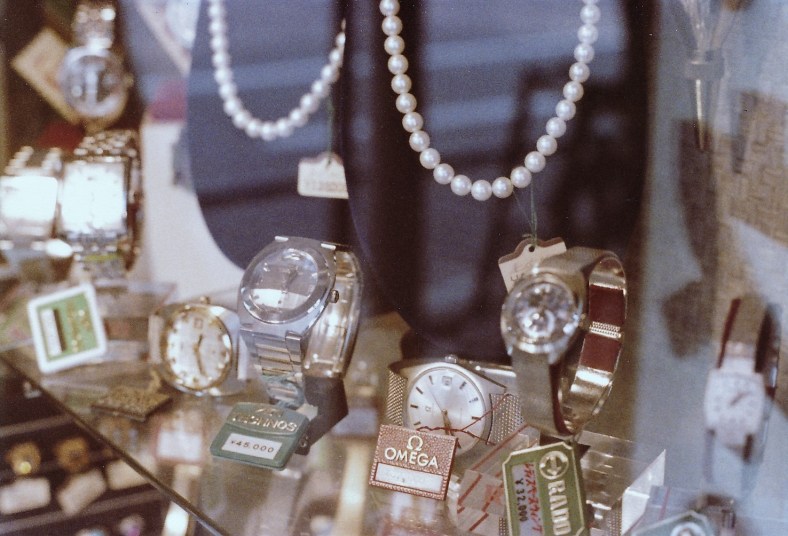
Nice watches for a great price.
¥ 360 to the $
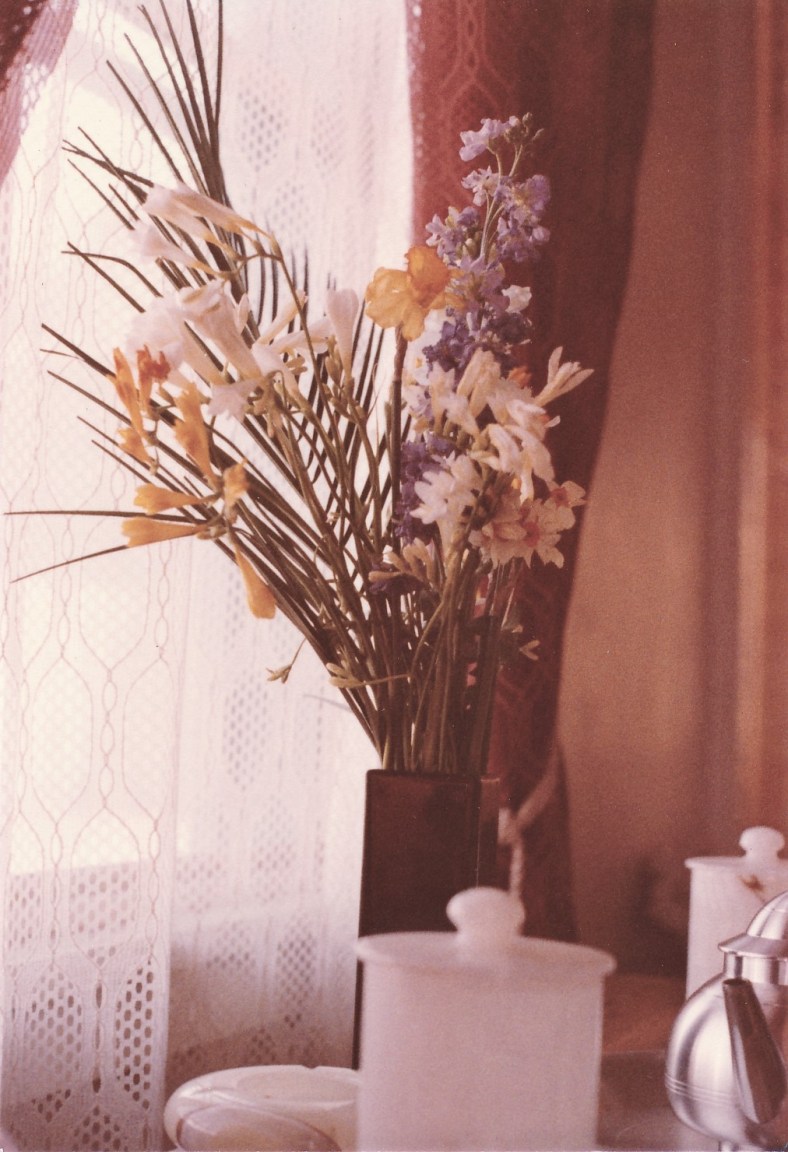
Carol always had pretty flowers at our house.
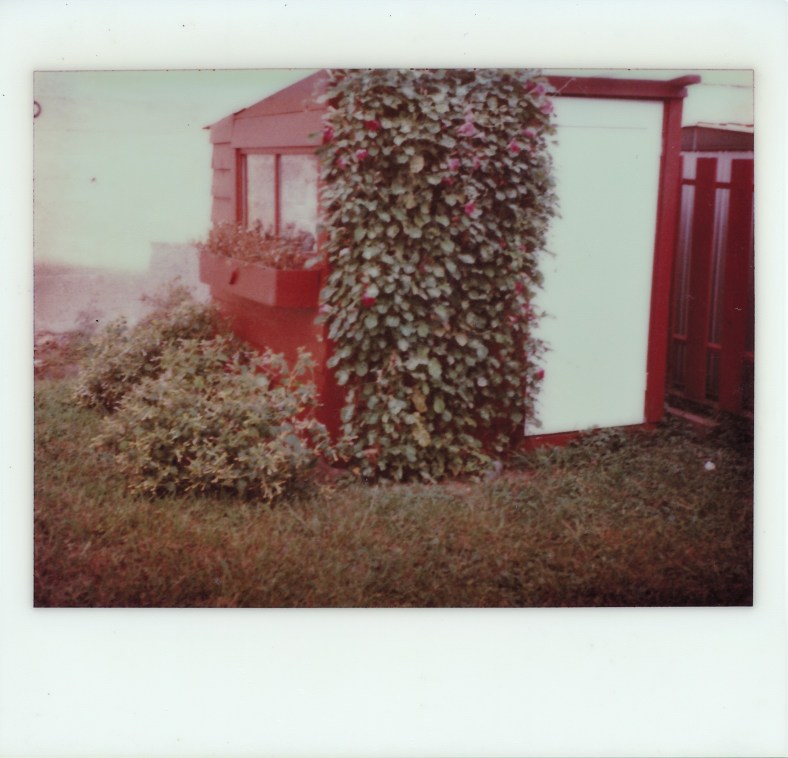
Carol’s potting shed that I built for her.

Carol busy at her desk.
We completely enjoyed our time in Japan. A once in a lifetime experience that we still treasure to this day. We lived at 283-D, Area 2, Honmoku, Naka-ku Yokohama from May 1977 to February 1980.
All smiles… Chris and Carol ^.^
No Love Fuji? The Discovery 90 Date
The plastic fantastic wonders of the 1980s and 1990s generally receive no love – especially looking back on them with our digitized eyeballs in 2017. These overlooked (even when new for the most part) cameras were the bridge cameras for many photographers that were moving away from their bulky SLRs from the 1970s and looking for something easy, carefree and light to take with them on short outings and family get togethers. The 35mm format was the clear winner in the format wars, now manufacturers wanted think-free 35s that were as easy to use as falling outta bed (?).

This Fuji Discovery 90 Date was introduced in May 1993 to an already crowded plastic 35mm marketplace. So how to stand out? Drop-in loading, auto focus, auto exposure auto rewind and auto wind was a good start. A big bright viewfinder centered over the lens – and macro capability (23 1/2 inches / 60cm). Auto flash. How about a good price too? And free film? Free batteries… sure. $10 in coupons too!!! Fuji did everything it could to sell these things, and they did alright too. It helps that you make film.
We like our recently acquired Fuji… it feels balanced in my hand and I like the big centered viewfinder. The lens is a Fujinon f8 34mm lens – we can’t wait to run a roll through it to test it out. By the way, the Fujicolor expired in May 1997.

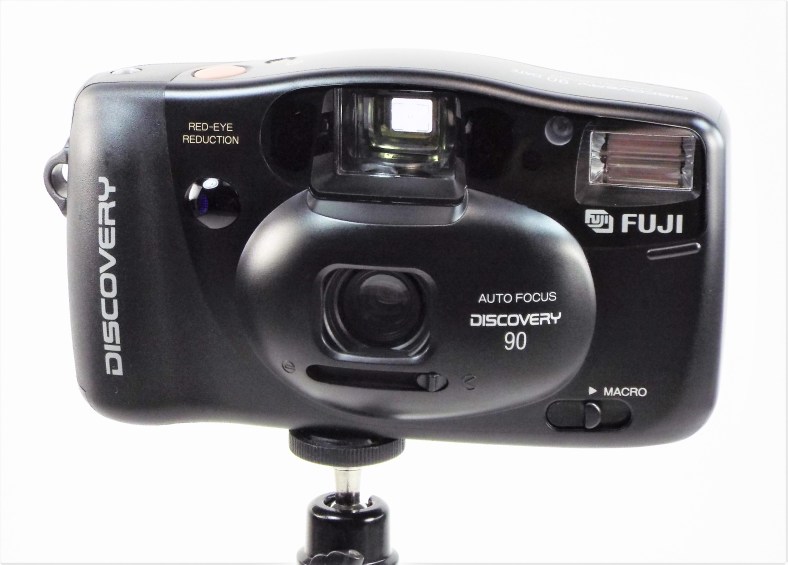


Thanks for your visit… check back when we run a roll through it. Do you have a favorite plastic fantastic camera? Let us know.
Camera: Fujifilm FinePix S9900W
Chris
Yashica Flex AS-II by Yashima Optical
One of the original group of 6 cameras that Yashica (Yashima Optical Industries Company, Ltd.) made in the early to mid 1950s. This AS-II was introduced in 1954 and featured a built-in (well, attached) light meter. They’re solid cameras these early Yashica TLRs, and in our opinion, had some underrated features as well as great lenses. The light meter was made by Sekonic by the way.
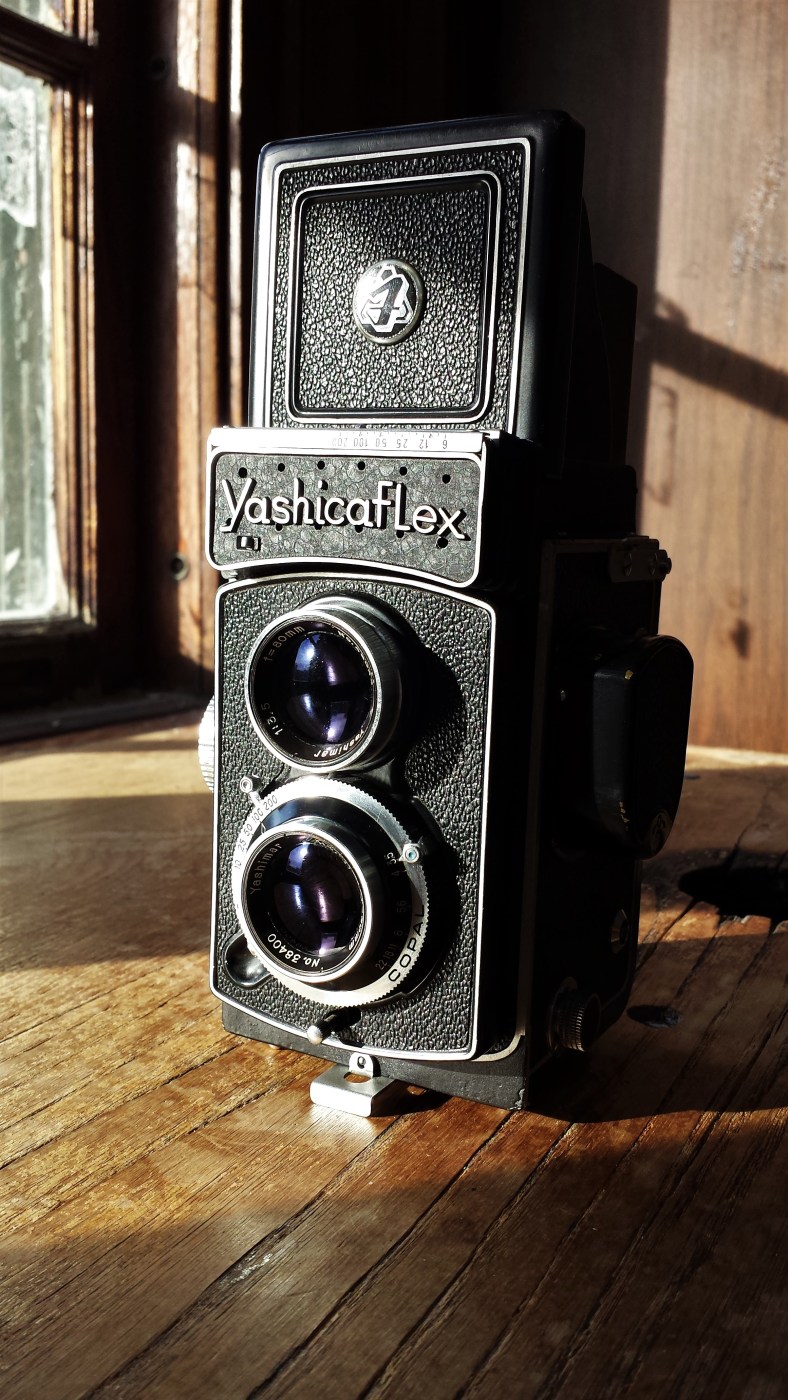
Yashica Flex AS-II with built-in light meter (just visible on the camera’s left side). The light meter’s cells were located under the nameplate and were exposed by lifting up the nameplate flap.

The AS-II featured Yashimar lenses that were made by Tomioka Optical for Yashica. A Copal shutter with a blazing fast 1/200 top speed!
If you’re in the market for a vintage Yashica TLR then the AS-II should be on your list. Be advised that most will not have a working light meter – if you get one with one it’s a bonus. They are a bit hard to find – 63 year old cameras don’t often look this good or work perfectly. We were lucky as we were able to purchase this one from a collector in the US for a reasonable price.
Taken on the US Post Office steps in downtown Fernandina Beach, Florida. The post office dates to 1911.
Camera: Samsung Galaxy S4
Chris
“Ghost” Carol – 1978
Playing with my Canon F-1 (1978 Version) in our backyard in Yokohama, Japan 1978.

The marks are on the dry mounted original print. Copied under studio lighting with my Fujifilm FinePix S9900. No cropping from the original.
By the way, all pretty “ghosts” smile. ^.^
Chris
Our Cat – ‘Avon’ 1977
One of the last good images I was able to take of our cat Avon enjoying some warm sunshine by our front door. He was a found kitten, starving but friendly (aren’t all hungry kitties friendly?). He was found along Carol’s Avon cosmetics route in Pensacola, Florida back in 1975. A Tom Cat with a silly name but it fit him. He ran off from our new house in Yokohama, Japan and he either lost his way or was taken in. I don’t think of the other possibilities.
Original image taken with my Yashica TL Electro-X on Kodak Ektachrome 64 color slide film and the matte finish print of the transparency was dry mounted. The scan is of the print (flaws and all) with my Canon CanoScan 9000F Mark II scanner.
Say hello to Avon.

Full uncropped image taken with my Fujifilm FinePix S9900 under studio lighting vice a scan. The marks are on the print. I like his tone and tint better here (below).

Thanks for the visit!
Chris and Carol
Yashica TL Electro-X & the Danish Ads
One of our favorite cameras from Yashica (and my first) is the famous and highly popular Yashica TL Electro-X. Yashica had a major hit on their hands when it was introduced to much fanfare in the late 1960s. A fully electronic camera that featured a “IC Brain” that controlled exposure settings and shutter speeds could be timed from 2 seconds to 1/1000 second with infinite in between settings. The TL Electro-X was sold around the world for many years – actually up through the mid 1970s.
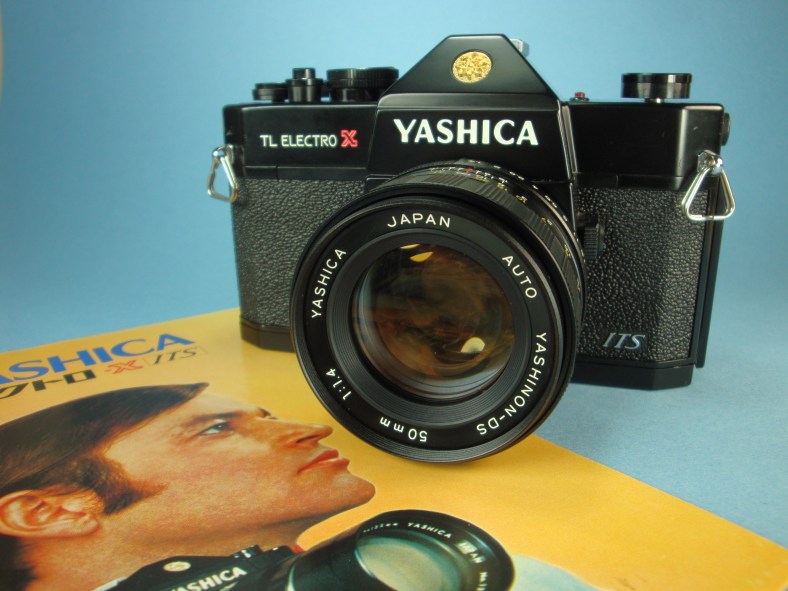
The TL Electro-X seen here as the ITS model.
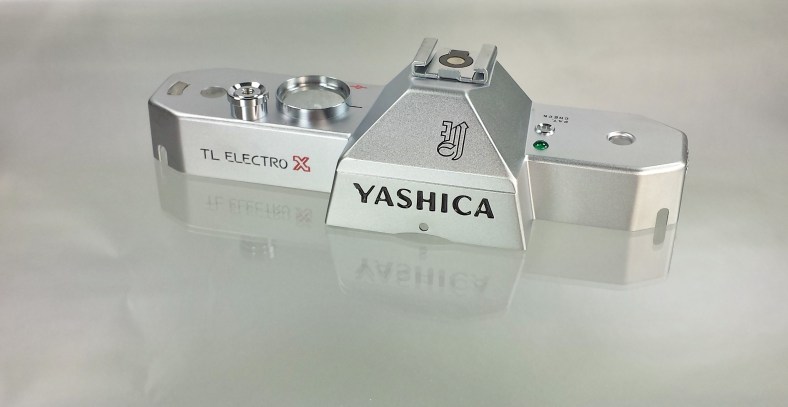
Top plate spare part. The gothic ‘Y’ on the pentaprism was/is synonymous with the TL Electro-X body whether it was in pro black or traditional silver.
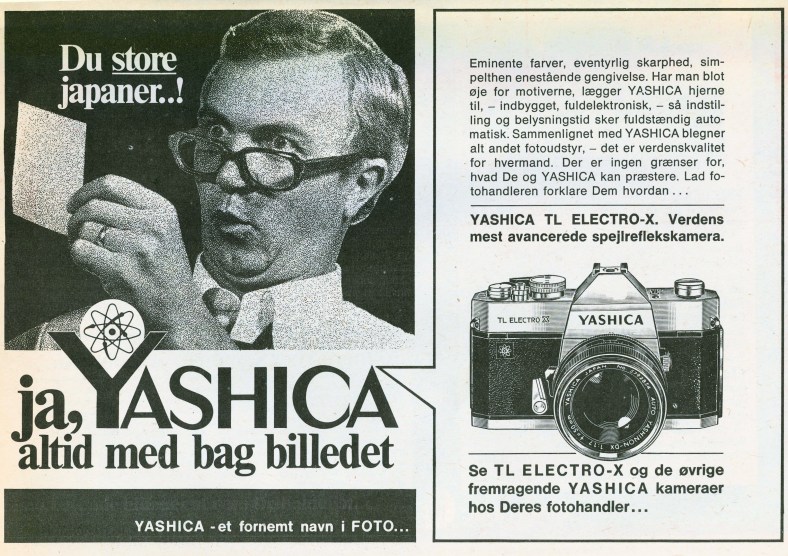
Recently discovered Danish ad for the TL Electro-X. As the ads says, the “world’s most advanced SLR”.
The ad above was recently sent to me by my good friend Paul Sokk from Australia – http://www.yashicatlr.com – The ad is from June 1972 and what’s interesting to us is the missing gothic ‘Y’ on the pentaprism. Up until now we weren’t aware of any models without the ‘Y’. No big deal – it’s just a curious variation. We’ve also discovered that Yashica (for whatever reason) also had models that the traditional red ‘X’ was changed to black. See below.
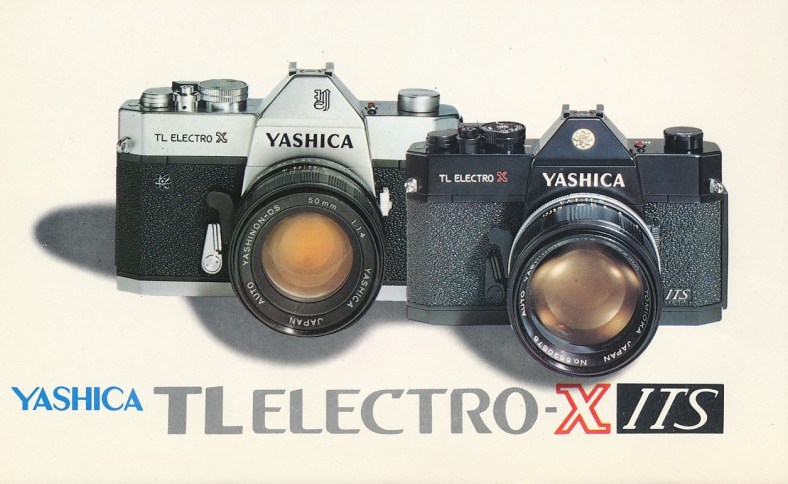
Camera on the left with what appears to be a black ‘X’ vice traditional red ‘X’.
Our best guess as to why the Danish ad has a TL Electro-X without the ‘Y’ would be that the local trading company or distributor wanted Yashica to supply cameras that were different than what was for sale in let’s say France or Germany. It’s not unheard of that Yashica supplied different distributors with slightly different body and lens sets. The Yashica J-P and its odd little 5cm f2.8 preset lens from 1964 comes to mind.
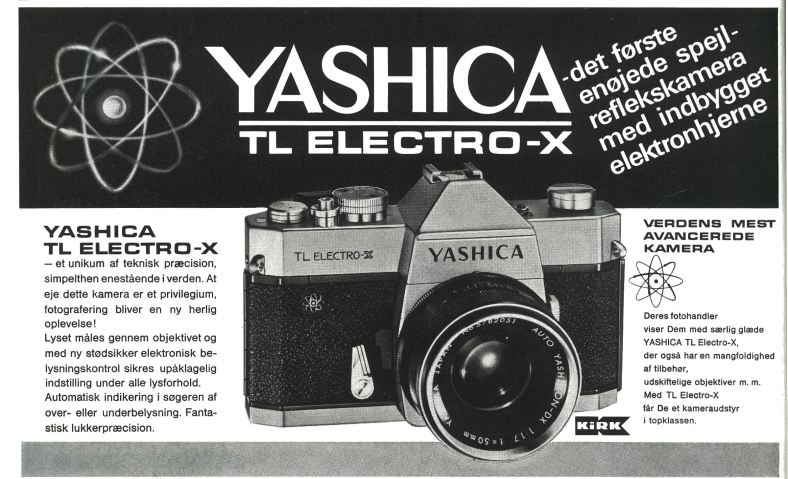
April 1969 ad from a Danish photography magazine.
As always we endeavor to bring you the most accurate information about Yashica and its cameras. We welcome comments and of course, if something we’ve said is incorrect please let us know – or simply share additional info if you have some. Thanks
Chris & Carol

