“This is a Toy” – Goofy Stuff from Yashica

20180928_162022

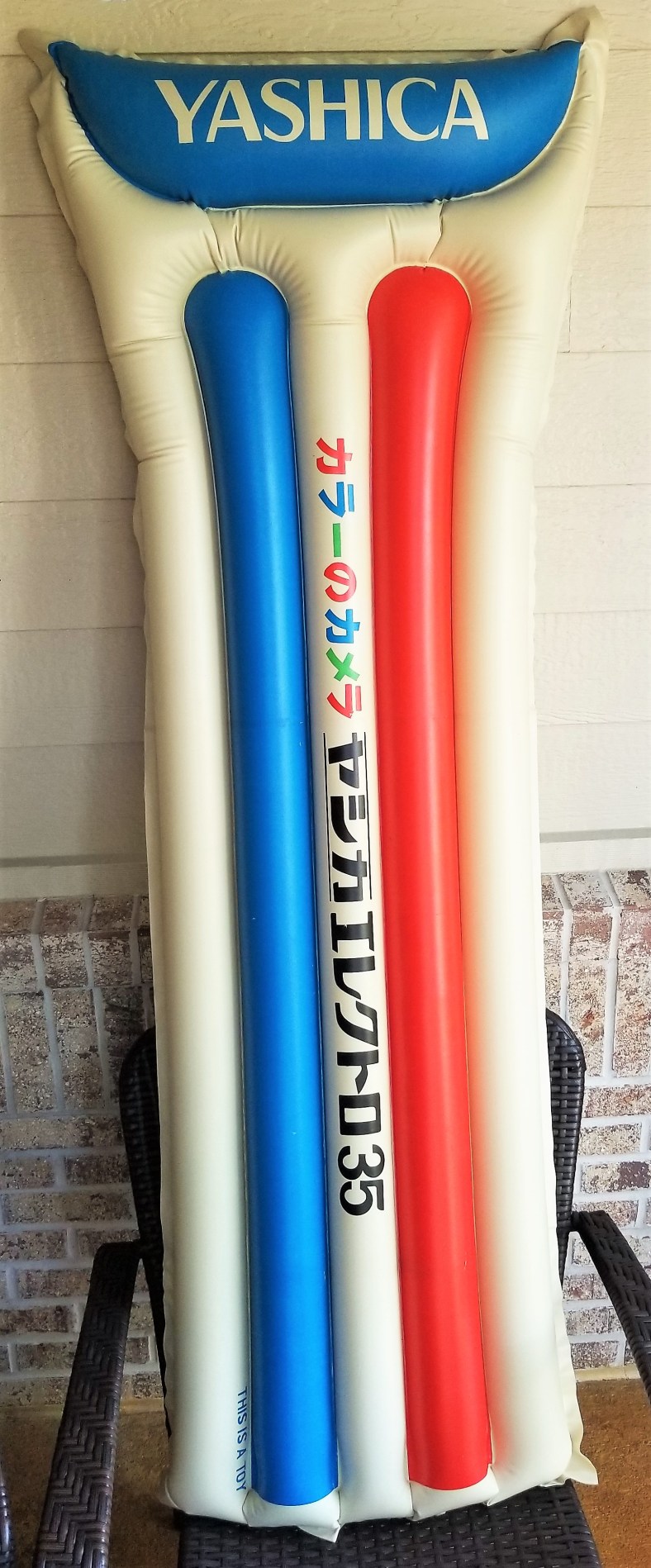
Normally you’d expect to see “this is not a toy” on something not designed to be played with. Here we have a rather odd promotional item from Yashica.

20180928_162012

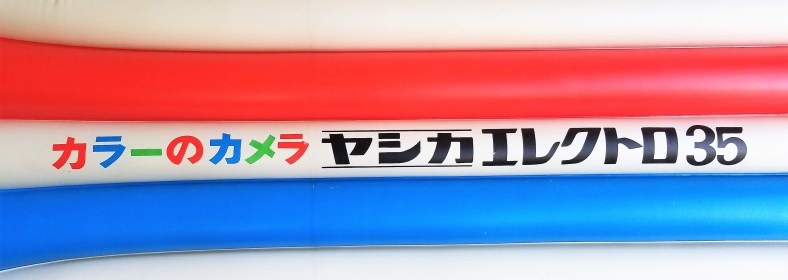
My best translation – Color Camera Yashica Electro 35

20180928_161953

Still looks good and holds air after 50 years!

20180928_161942

A Yashica float. It’s about 6 feet in length and I’m guessing Yashica didn’t want you to use this at the beach or pool as anything but a toy.

Admittedly a pretty goofy item that we’ve added to our Yashica collection recently. I saw it on a Japanese auction site and well, I couldn’t resist. It was listed by a seller in Shiga Prefecture (which is just east of Kyoto). I paid a silly amount to ship it after paying less than $10 to purchase it. Collecting – jeez. On the bright side, I may have the only matching set of Yashica beach gear in the world!

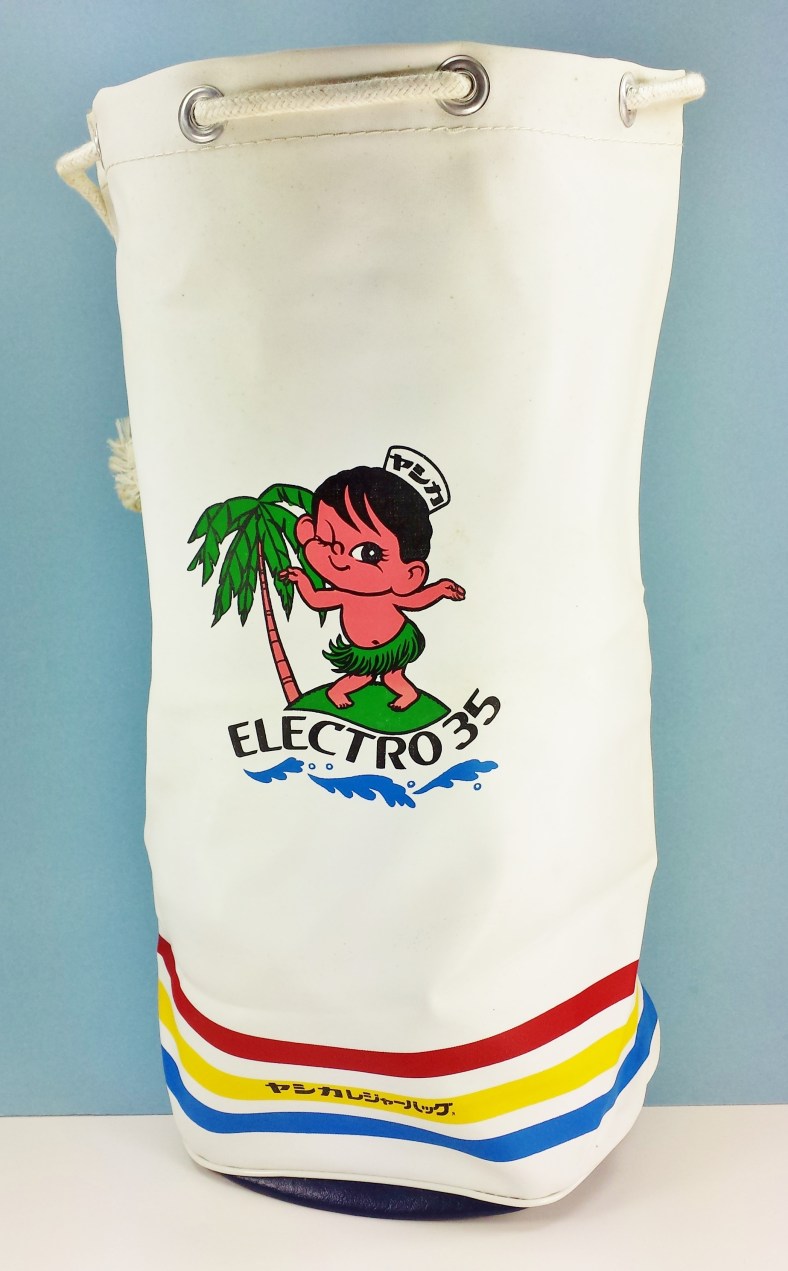
yashica beach bag

We now have a matching set of beach gear from Yashica. The Sailor Boy logo was popular with Yashica in the early 1960s – here he makes another appearance to promote the Electro 35 camera.

DSCF7676 logo

Thanks for stopping by! – Chris

Yashica’s ‘Sailor Boy’ with his Electro 35 camera

We’re super lucky to have run across a rather hard to find Sailor Boy – this one came to our attention from a visitor to our blog – then through eBay by way of South Africa to Florida! Welcome, little guy!

DSCF7585

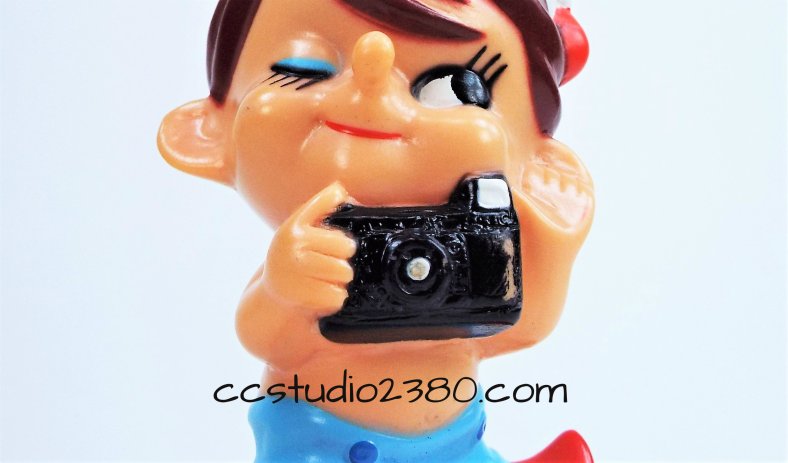
This unique version of Sailor Boy – complete with his Yashica Electro 35 camera. He was introduced in 1966 to promote the new camera release. He’s based on the Scottish nursery rhyme ‘Wee Willie Winkie’.

DSCF7584

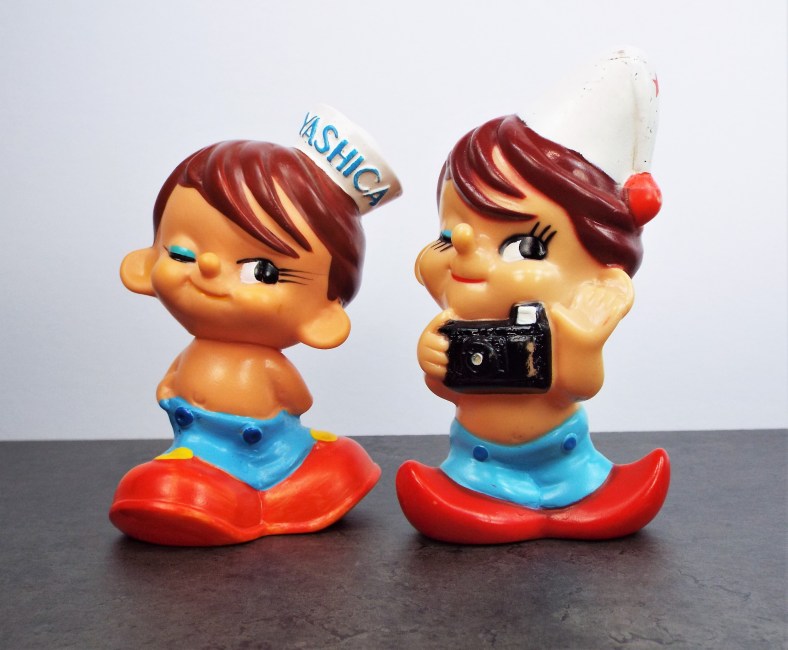
Cousins, not brothers. The only thing missing on our little guy is his green decal which should be on the front of his hat.

DSCF7583

Sailor Boy convention. The new guy cleaned up nicely. A little bit of warm soapy water and a soft brush and he’s good as new!

DSCF7589

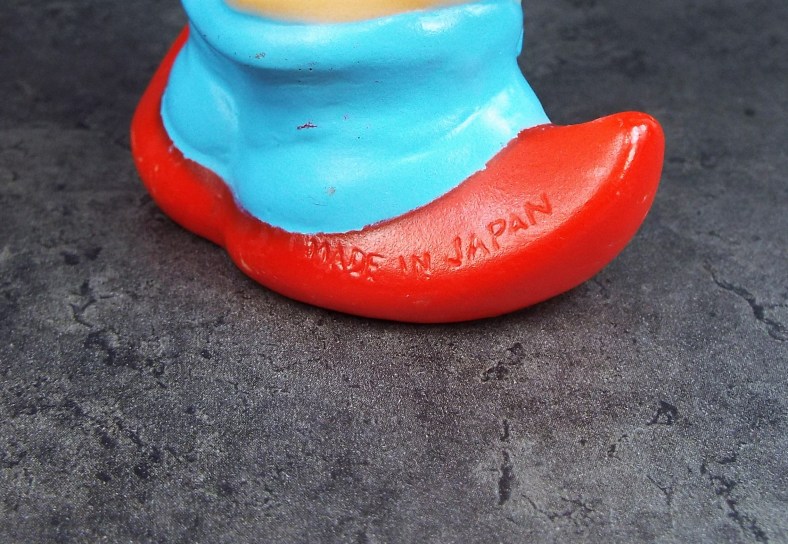
Made in Japan is about all we know at this point. We’re not even sure about when he was made.

DSCF7590

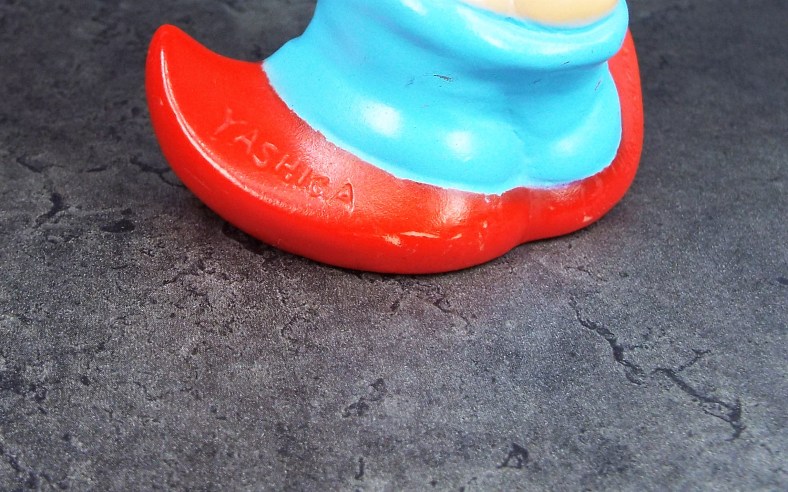
Cool shoes – but are they really Wee Willie Winkie’s shoes? Yep as best as I can tell. Yashica didn’t leave a paper trail for history to discover his true identity.

More about the history and variations of Yashica’s advertising figurine soon. As always, feel free to share your Sailor Boys with us – we’re looking to add to our collection with new versions of this cute guy.

Thanks

Chris and Carol

Rare Yashica ‘Happi Coat’ from the 1960s

Carol and I have decided to start cutting back on our extensive collection of mostly Yashica “stuff”. Some of the items we’ll be listing rarely come up for purchase and are in some cases, the only known examples in existence.

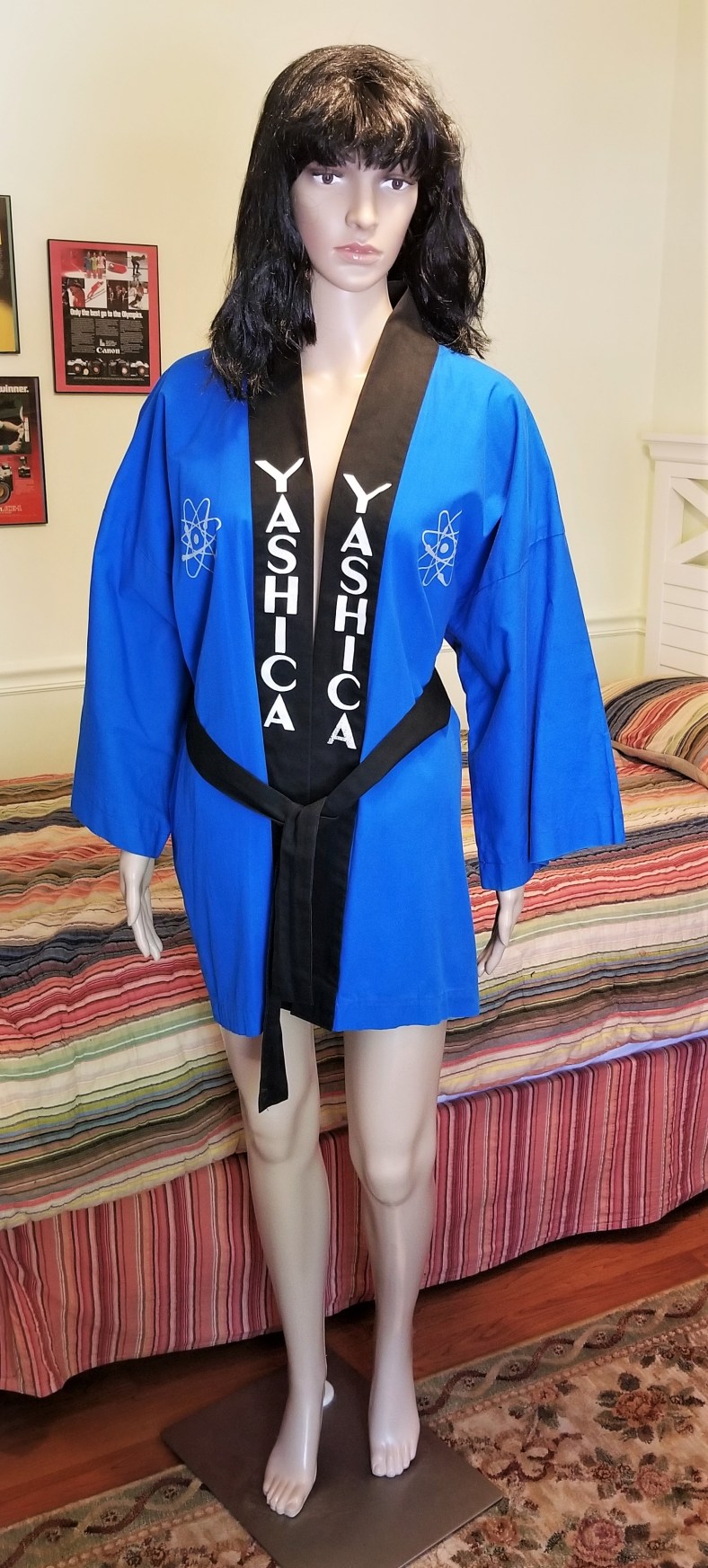
This item, the Yashica ‘Happi Coat’ was made in Japan around the mid-1960s to coincide with Yashica’s new line of electronic cameras. The advertising phrase, “Pioneer in Electronic Photography” became more widely known as Yashica included it in almost every advertisement and brochure. As we understand the origins of this coat, Yashica provided it to salespeople to wear while demonstrating Yashica cameras in US camera stores. I know of only one size – something of a large-medium-large that was designed to fit a majority of wearers. If you were larger than that the happi coat could be left open and worn without the belt. It’s made from a heavyweight high-quality cotton and is very vibrant. The silk screening is sharp and colorful too. Only a slight hint of some discolorations are noted on the fabric. More detailed pictures can be found in our Etsy Shops. By the way, our “model” is about 5′ 9″ tall as a point of reference.

20180504_143226

It kinda looks like something Doc would have dressed Marty up in for the Back to the Future movies.

20180504_143304

20180504_143643

20180504_143938

This wonderful coat can be seen in more detail in our Etsy Shops.

It’s also available at https://www.ccstudio2380.com

Stay in touch as we endeavor to list most of our collection by the end of the summer (well by the end of fall at least).

Thanks for stopping by!

Chris and Carol ^.^

Please respect that all content, including photos and text, are the property of this blog and its owner, Yashica Pentamatic Fanatic, Yashica Sailor Boy, Yashica Chris.

Copyright © 2015-2018 Yashica Pentamatic Fanatic, Chris Whelan
All rights reserved.

The Yashica Pentamatic – Our 8 Year Search – Some Conclusions & Wild Speculations

We’ve been hot on the elusive trail of the Pentamatic family of cameras from Yashica now for well over 8 years. We’ve looked under every rock (auction sites), nook (web searches) and crannies (well, just crannies) for anything related to the Pentamatic. Our search has led us to some interesting conclusions – and wild speculations!

20171125_133916 (2)

Some Conclusions

The first Pentamatic was “born” in December 1959 but wasn’t available for sale in the U.S. until April 1960. The Pentamatic was Yashica’s first 35mm single-lens reflex camera and was designed with the help of technology obtained from Yashica’s acquisition of Nicca Camera in 1958 and with some involvement with designers from Zunow Optical in 1959. Of course, Yashica designers were involved too as well as collaboration with Tomioka Optical for the first lenses.

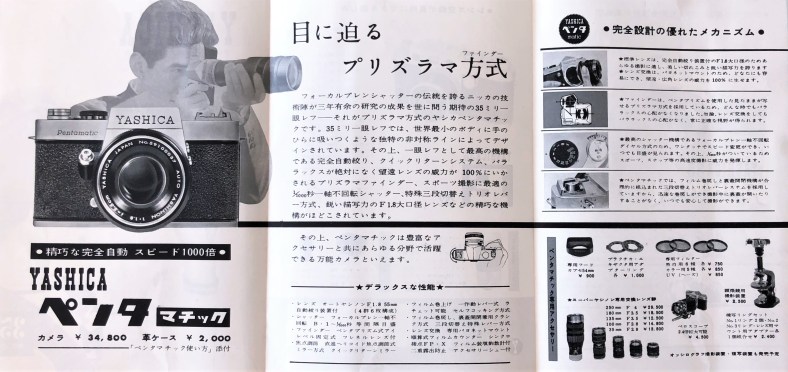
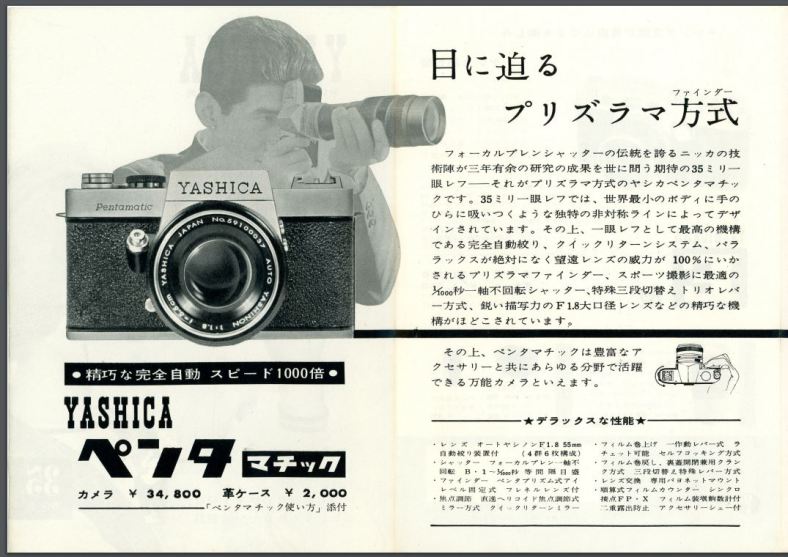
Below is a scan of what appears to be the first sales brochure for the Pentamatic found in Japanese. A machine translation of it proves that Yashica and Nicca designers worked together to jointly develop the camera over a 3-year period. The exact date of this brochure has not been established but it appears to be at least issued in the Spring of 1960. Many thanks to my good friend Paul Sokk for his efforts in researching the Pentamatic with me over the years. His fabulous site can be found at www.yashicatlr.com

Yas inside P1 bro

Scan courtesy of Paul Sokk at http://www.yashicatlr.com

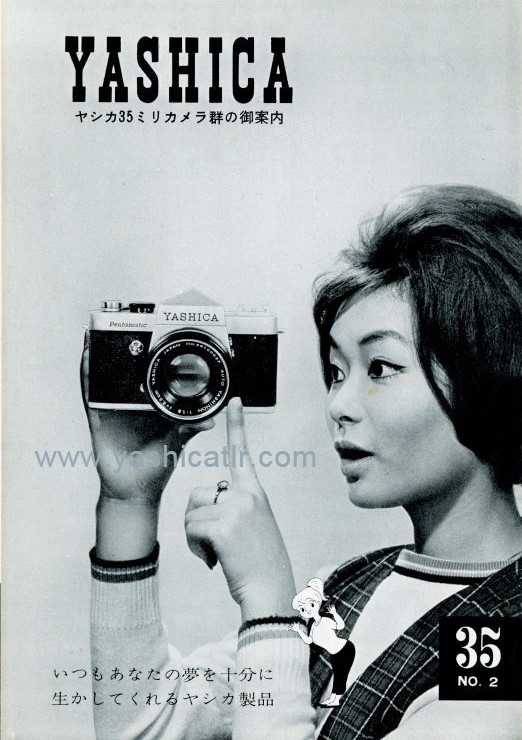
Below is a scan of the cover of that first sales brochure that features the new Pentamatic.

Yas Cover P1 bro (1)

Scan courtesy of Paul Sokk at http://www.yashicatlr.com

The original Pentamatic was a failure. A beautiful, sleek and modern camera at a great price, but still a failure. A replacement for it (Pentamatic II) was released by September 1960 – just a few short months after the original Pentamatic debuted.

The Pentamatic and the Pentamatic II were both out of production by January 1961. The Pentamatic S didn’t appear until around April 1961. Little was significantly changed over the course of these 3 models during this short timeframe. The Pentamatic II and its one-off lens improved on its semi-automatic capabilities. The body stayed the same with the exception of adding the engraved “II” after the name. No logic to this as Yashica could have simply made the new lens available as an option to the original Pentamatic. There had to be another reason to call it the model II and it appears that there were some internal changes made to accommodate the new lens.

The standard lens that was available for the Pentamatic II was designed and built (quickly?) by Zunow vice Tomioka. Our best guess at this point.

The Pentamatic II was only available for sale in Japan.

The Pentamatic S essentially was the replacement for the original Pentamatic – not the Pentamatic II. The model S added a lug for attaching an accessory exposure meter that coupled to the shutter speed dial. The S also added a self-timer and the body got a redesign (the strap lugs were moved to the front and the shutter release button was no longer at a 45-degree angle).

The Instruction Booklets

The booklets have been an additional source of fun separate from the camera searches. The booklet for the original Pentamatic was relatively easy to find. The first Pentamatic saw about 16,000 units made so the booklet is much more available. The Pentamatic II booklet was the hardest to locate since only around 5,000 cameras were made. The Pentamatic S booklet is even rarer – only around 3,000 cameras produced.

DSCF6534

The 3 Pentamatic instruction booklets. Notice that the Pentamatic and Pentamatic II booklets have the same design while the model S differs dramatically. More “clues”.
DSCF6540

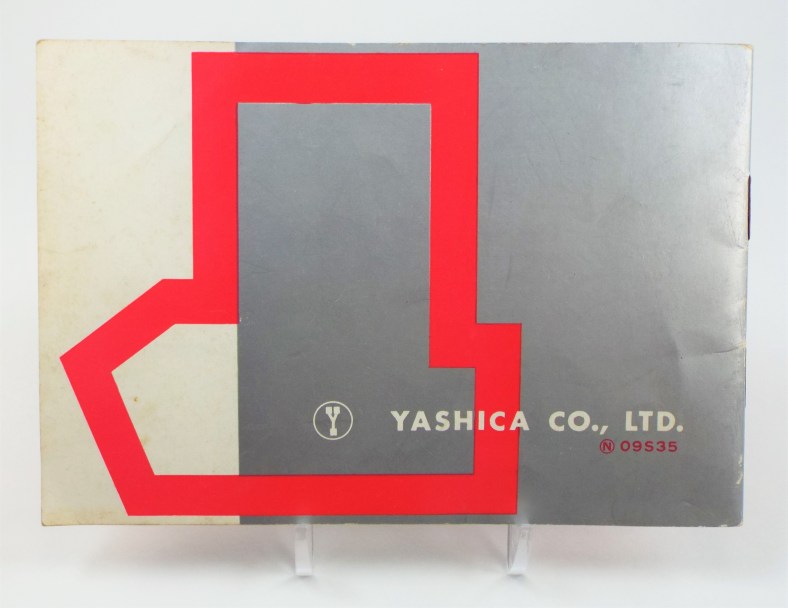
The back cover of the Pentamatic II booklet – the only one to carry a date (lower right corner). This one is dated September 1960. Showa date is 35.

Inside the booklets…

DSCF6543

The original Pentamatic.

DSCF6545

The Pentamatic II.

DSCF6544

The Pentamatic S.

Wild Speculations

Wild Spec 1 – The first Pentamatic was not initially released in Japan. Yashica had a slow go with its early production so only a limited number were available for the April to June debut in the U.S. There were only about 4,000 cameras made by then and that just didn’t support a wide release of it in their home market. However, with the discovery of the as yet undated sales brochure found by my friend Paul Sokk it does appear that some of the first Pentamatics were in fact distributed in Japan. We do feel that Yashica had a suspicion that the original model would not go over well at home. Why do we feel this way? During our quest of all things Pentamatic, we’ve yet to find an instruction booklet for the original Pentamatic in Japanese (or any other language besides English). We’ve seen no early 1960s advertisements either. Although we’ve yet to find these items that does not mean they don’t exist.

Wild Spec 2 – The Pentamatic II was only available in Japan and was never intended for widespread availability in the world marketplace. We further feel that the Pentamatic II was the camera Yashica intended to release in Japan vice the original Pentamatic. Why? Same thing… in over 8 years of searching we’ve never seen a Pentamatic II instruction booklet in English and the only sales brochures we have are in Japanese. No English ads or brochures anywhere (yet). Update: As of April 2019 still no English ads or books.

Wild Spec 3The Pentamatic S wasn’t available in Japan. Crazy right? The same thing applies here – no Japanese advertising or brochures and no instruction booklets in anything but English. Again, not finding them does not translate to not being produced but the likelihood looks slim.

Wild Spec 4 – As we stated in the conclusions section above, the standard lens for the Pentamatic II (5.8cm f/1.7) was made for Yashica by Zunow Optical vice Tomioka. This flies in the face of what’s known and we don’t have solid written proof (yet, if ever). Both the original Pentamatic and the Pentamatic II ended production in January 1961. By coincidence, that’s the reported date of Yashica’s acquisition of Zunow (or their bankruptcy). Once Zunow went bust they no longer make lenses for the Pentamatic II.

Wild Spec 5 – Once the Pentamatic II stopped production, Yashica started selling the original Pentamatic in Japan (or at least increased its availability in Japan). We would still like to find a Pentamatic instruction booklet in Japanese to validate this thought.

Wild Spec 6 – Since the Pentamatic S wasn’t sold in Japan, there was a rather large gap in Yashica’s SLR availability. The next camera to be sold widely in Japan (and the U.S.) was the Penta J but that didn’t come out until the Summer of 1961.

These marketing and production missteps led to a less than stellar debut for Yashica in the world of 35mm SLRs. The competition during this same period was “inventing” much more sophisticated (and mostly more expensive) cameras which had a wider range of interchangeable lenses and accessories. It took Yashica a long time to establish a “foot in the door” with their Penta J and their first internally coupled exposure metered SLR, the Yashica J-3 (Jaguar).

Things we would like to find…
600x450-2015111900010

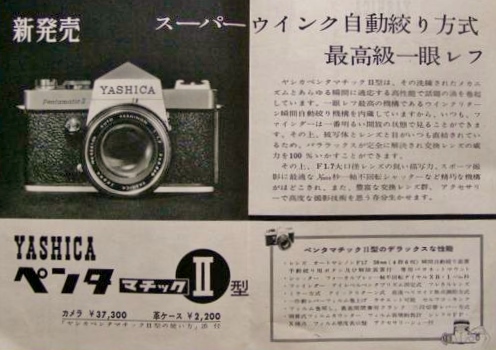
Original sales brochure for the Pentamatic II.

The first thing we would like to discover would be an ad, sales brochure or instruction booklet in English for the Pentamatic II. We don’t think we will as we feel that they don’t exist.

We would like to find a Pentamatic instruction booklet in Japanese. They must exist but we’ve yet to find one.

A Pentamatic S instruction booklet and a sales brochure in Japanese. Don’t think they exist but time will tell.

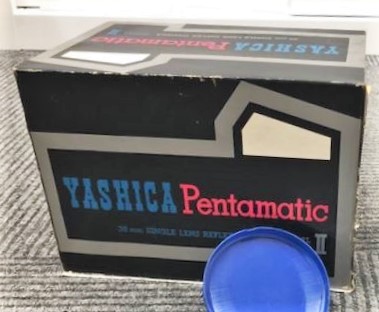
A Pentamatic II box!!! They must exist – someone’s got to have one in their collection! Update: Finally found one but we missed acquiring it for our collection so we “borrowed” this image –
yashica P2 Box

Very similar to the original Pentamatic box but black vice silver.

A Pentamatic (any model) in its original boxes in factory fresh condition. WooHoo!

***Solid proof that the standard lens for the Pentamatic II was made by Zunow Optical.***

Other than these things, I think we’re good! ^.^

Thanks for your visit! If you’ve made it this far in the post give yourself a big pat on the back! You just may be on your way to becoming a ‘Yashica Pentamatic Fanatic’!

Please stop by our online shop at https://www.ccstudio2380.com and check out some of our classic cameras available for sale.

We are active buyers of quality cameras and equipment – especially anything Yashica, Nicca, Fujica or whatever! Contact us at chriscarol@ccstudio2380.com

Please respect that all content, including photos and text, are the property of this blog and its owner, Yashica Pentamatic Fanatic, Yashica Sailor Boy, Yashica Chris.

Copyright © 2015-2019 Yashica Pentamatic Fanatic, Chris Whelan
All rights reserved.
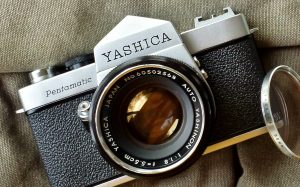
Yashica Pentamatic ’35’ vs. Pentamatic II

Why did Yashica bring out the Pentamatic II less than a year after releasing the original model?

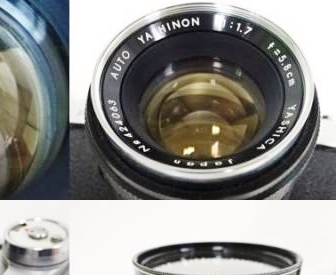
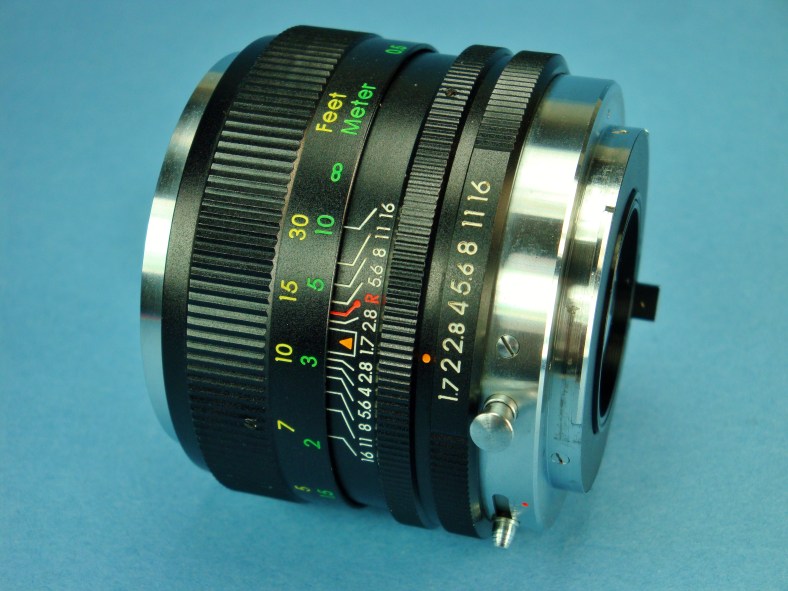
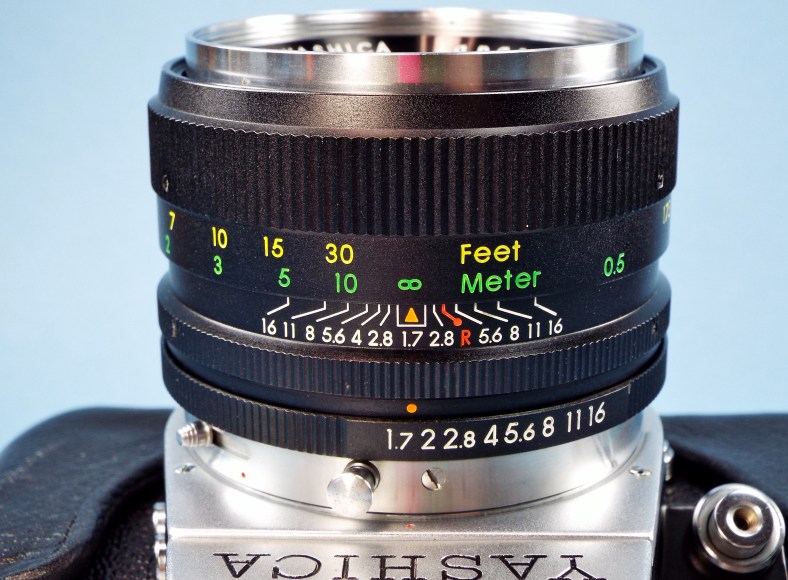
The only difference we can tell between the original Yashica Pentamatic ’35’ and the Pentamatic II (which came out around September 1960), is the standard lens that was mated with the camera body. The original Pentamatic came with the Auto-Yashinon, f/ 1.8, 5.5cm fully automatic 6 element lens. Of course it has the unique Pentamatic bayonet mount and not the M42 screw mount. The Pentamatic II came with the Auto-Yashinon, f/ 1.7, 5.8cm lens (pictured below). Both lenses were made for Yashica by Tomioka Optical of Tokyo. We imagine the 58mm, f/ 1.7 lens was a bit faster than the f/ 1.8… but we don’t see why Yashica changed from the model I to the model II and why they changed the lens… we may never discover the reason either.

DSC07467

The standard lens for the Pentamatic II – 5.8cm, f/ 1.7

27356135700_b0c5ef23fe_z

017

Gorgeous lens for the Pentamatic II.

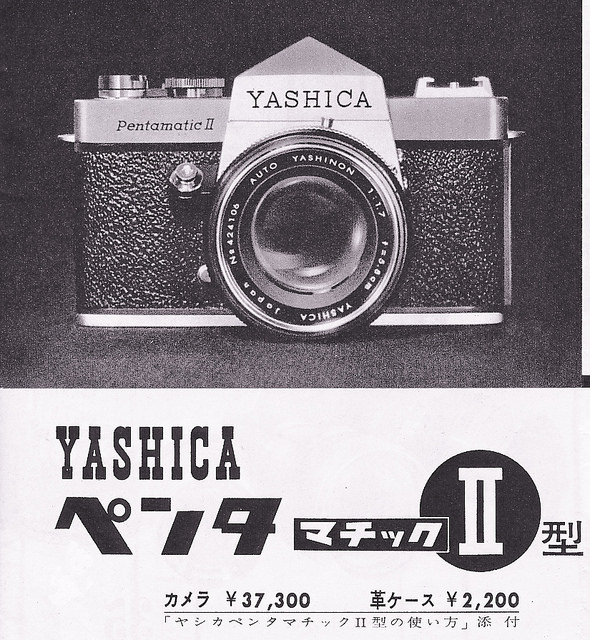
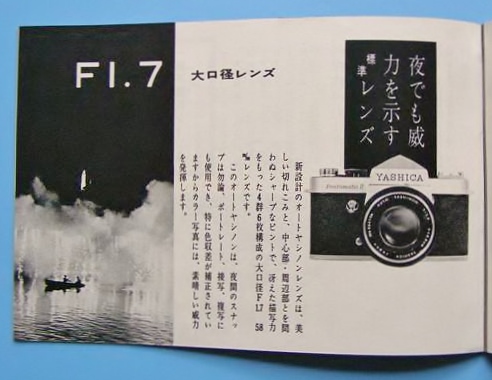
Brochure c1961

The first sighting of the Pentamatic II in a sales brochure for the Japanese home market.

We’ve yet to find an advertisement for the Pentamatic II in English and along those same lines, have yet to find the Pentamatic II in a sales brochure in English. The Pentamatic S replaced the model II less than a year after its release. The model S went back to using the original 5.5cm, f/ 1.8 lens that was on the original Pentamatic.

That makes the Auto-Yashinon 5.8cm, f/ 1.7 lenses one of the rarest of the early Pentamatic bayonet mount lenses.

06-12-2016 pentamatic II 2 (2)

Happy hunting!

Chris

Yashica Moves to a New Factory 1972

We’ll be the first to admit – not an exciting title or topic for a blog. It may even be a stretch for a blog named the ‘Yashica Pentamatic Fanatic’. But we feel compelled to share information about the Yashica Company, however slight and trivial, with our dear readers.

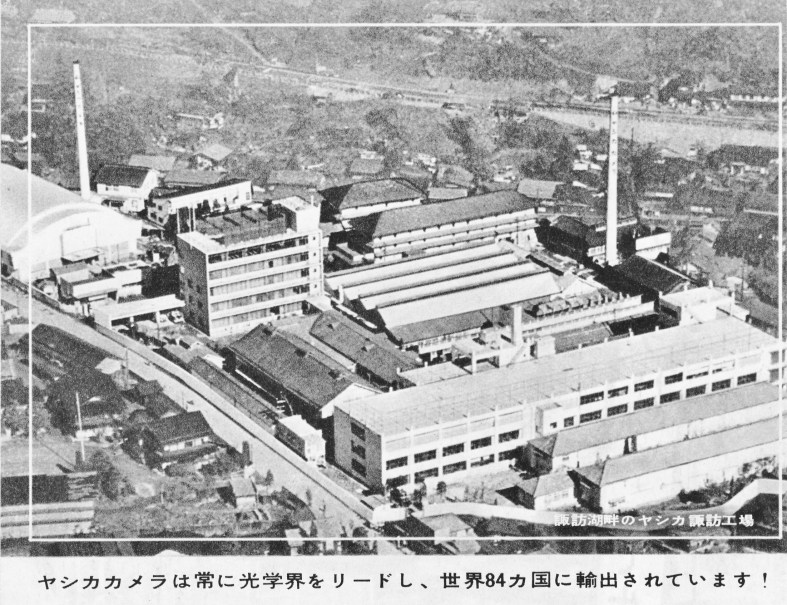
Yashica’s first factory was along the shores of beautiful Lake Suwa in the small town of Suwa. The next location (from Yashica brochures) was in Shimosuwa-machi, Suwa-gun, Nagano Prefecture. This was the industrial campus of Yashica and it grew over the years to occupy almost every square meter of the property.

Yashica's Shimosuwa Factory

Opened in 1956 along the shores of Lake Suwa in Nagano.

IMG_20151218_0008 (2)

A different view of the same campus. Yashica was running out of room by the mid-1960s.

IMG_20170404_0004

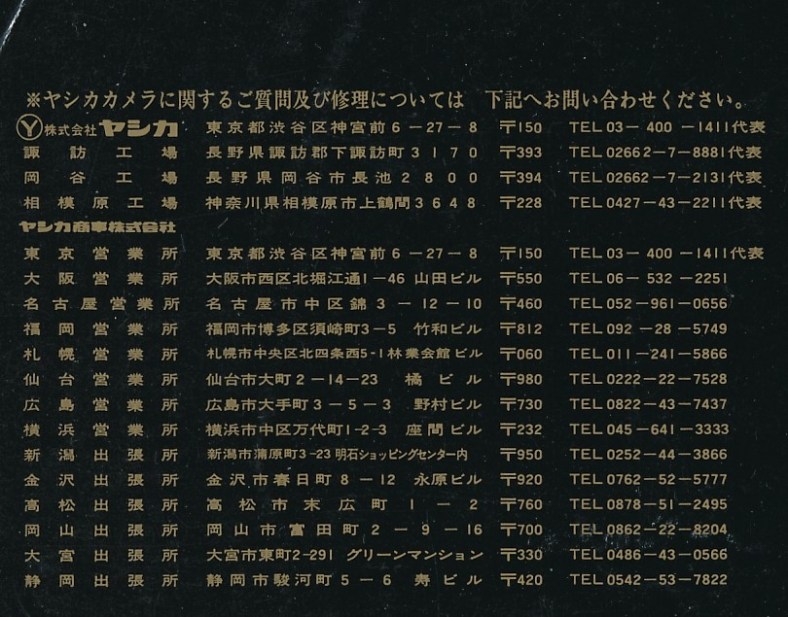
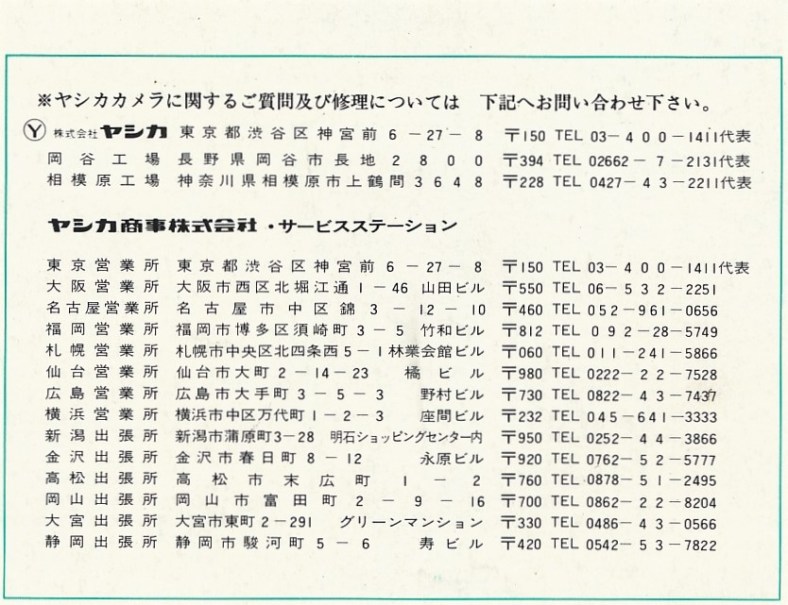
Back cover of the Yashica TL Electro-X ITS instruction booklet. The booklet was printed in Japan in June 1972.

At the time of the printing of the above book, Yashica was operating 3 factories. The top line that begins with the Yashica ‘Y’ on the far left is the address of the main headquarters of Yashica which was in Shibuya-ku, Tokyo. The next line is the location of the Suwa plant – Shimosuwa. The third line is the new plant in Okaya which was still in Nagano Prefecture. The 4th line was an unknown (to us until recently) factory in Sagamihara-shi, Kanagawa Prefecture (southwest of Tokyo and just west of Yokohama). As you can see, Yashica operated at least 14 other sales offices and service centers across Japan in mid-1972.

IMG_20170404_0005

Back cover of the Yashinon Lenses & Accessories booklet printed in Japan in January 1973.

Between June 1972 (the first book above) and January 1973 (the second book above), Yashica closed its campus and factory in Shimosuwa. The only factories listed are the new Okaya factory and the Sagamihara factory. That was a big move for Yashica and as we understand it, they had purchased the old silk mill in Okaya as far back as 1959. As of this book, Yashica did not close any of its other sales offices listed from the previous book.

DSCF9431

The factory was officially dedicated in December 1972. According to Yashica documents, the factory didn’t achieve full production until late 1974 or early 1975.

IMG_20190517_0001 (1)

The Yashica Okaya factory complex in the summer of 1974.

Why is any of this important? It isn’t unless you’re a Yashica Fanatic like us. Oh, it did have a strong ripple effect on the company though. Japan was in a bit of an economic slowdown in the early 1970s and it came to a head in late 1974 for Yashica. Mismanagement and embezzlement (and the costly move) caused Yashica to lay off workers – unheard of in Japan at the time. They closed the Sagamihara factory which put 900 Yashica employees out of work. That had an effect on the factory at Okaya and Yashica was soon in deep financial trouble. Their cameras were still top notch but the first warning shots about their future were fired.

IMG_20190517_0003 (1)

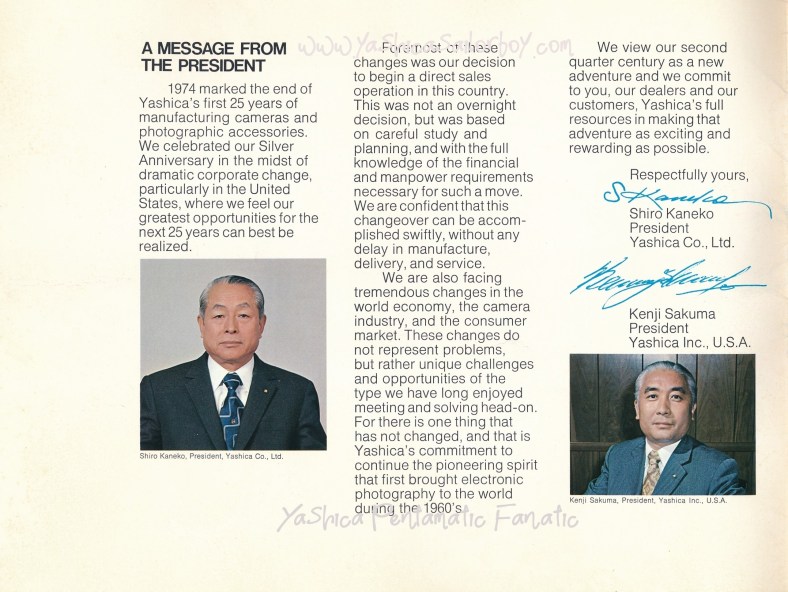
It is my understanding that Mr. Shiro Kaneko was installed as the new president of Yashica by the Nissho-Iwai Company (Yashica’s distributor) and by the Taiyo Kobe Bank which by 1974 had put its full financial resources behind Yashica’s new marketing efforts.

Thanks for your visit! Hope you got a little something out of it. – Chris


Yashica TL Electro-X

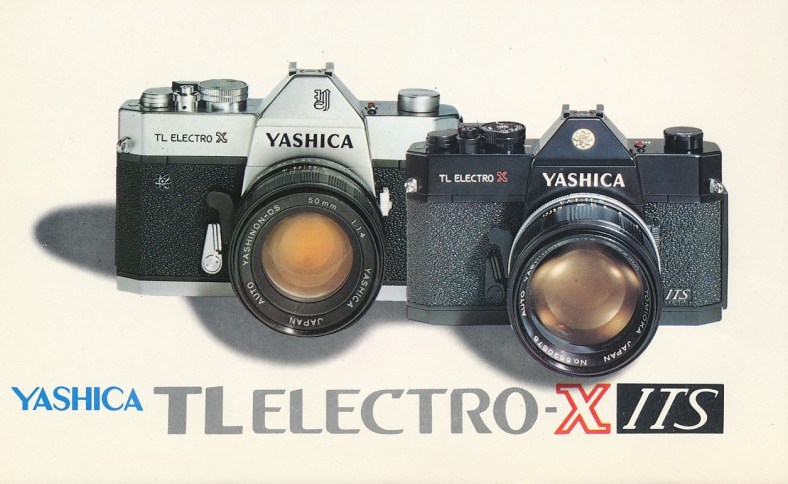
One of the most successful SLRs from Yashica – the ‘Pioneer in Electronic Cameras’… the Yashica TL Electro-X. The world’s first electronic single-lens reflex camera.

A random collection of clips from Yashica sales brochures and our eclectic collection of all things Yashica –

18641997101_dbb1db2784_o

img_20170228_0003

‘ITS’ = Integrated Technology System… maybe.

img_20170228_0007

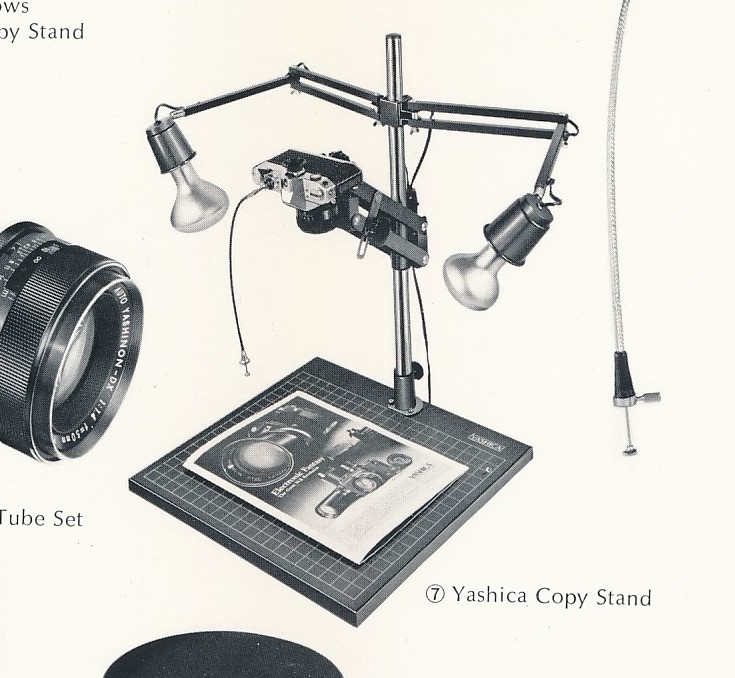
We’ve recently added this hard to find accessory from Yashica. It was still new in its original box! It will be used in our studio for some copy work.

20170301_092007

Original box. Lucky find!

img_20170228_0002

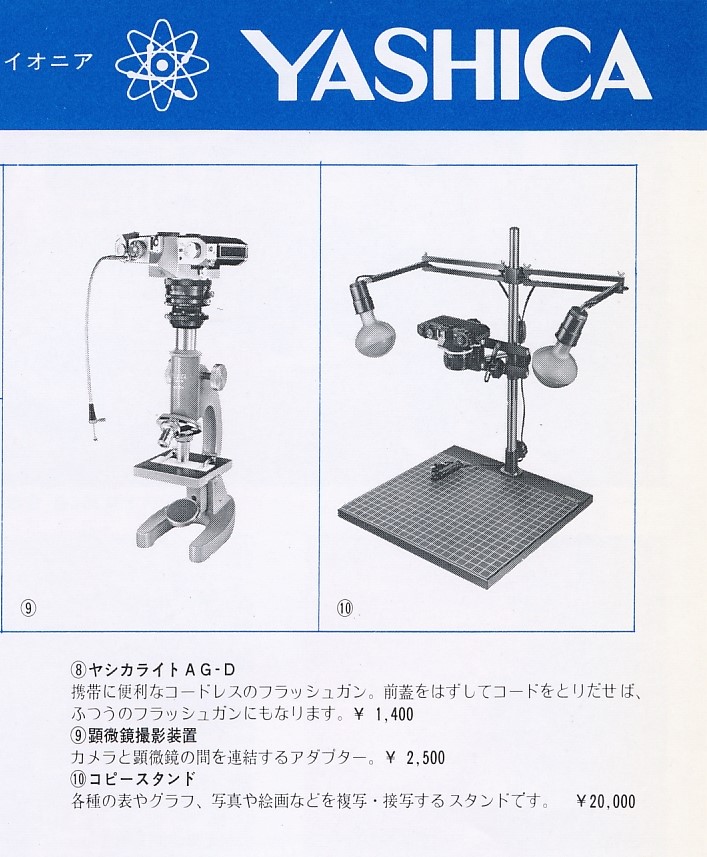
The Copy Stand listed for 20,000 JPY in 1971. About $55 USD


15218536719_13b8308208_o

17151773615_977cae3853_o

Large dealer’s sign. Two sided but non lighted. Ca. 1968

24520965712_eae778e081_o

Yashica ‘Sailor Boy’ with another version of the slogan and electron logo. The ‘Sailor Boy’ first made his appearance in 1962.

24104907192_2909081390_o

Elegance on ice.

Do you have something to add to our database about this interesting camera? Please feel free to comment. 

Thanks,

Chris & Carol Photography ^.^

Colorful Yashica Brochures… 1980s

A small collection of some 1980s Yashica and the Yashica-Kyocera sales brochures. We enjoy collecting brochures as they usually capture a slice of life for that period (at least in the marketing folks view of things). Enjoy!

Cute brochure from around 1980 featuring the Yashica Auto Focus. Yashica’s home office was still in Shibuya-ku Tokyo at this time. Kyocera was in Yashica’s near future and it would signal the beginning of the end!

25896400900_c2437ce7ec_o

Another nice sales brochure from October 1981. The cameras featured in this brochure are the Diary, Flasher, Snap and the Auto Focus Motor.

25898856450_44fee70d1d_o

Yashica Auto Focus, Auto Focus Motor and Motor-D. These were technological breakthrough cameras for Yashica in the early 1980s. Of course at this same time, Canon had the A-1, AE-1, AE-1 Program and of course the Canon F-1. These cameras from Canon were all SLRs so not a fair comparison but Canon made similar compact rangefinder cameras. It was a tough go for Yashica at this time and a takeover was on the horizon.

25899033730_558e532eaf_o

What a cutie! Full color sales brochure from Yashica dated 1 March 1980. Features the Flasher, Auto Focus, Snap and the Diary.

26079349032_07ccb458cd_o

Neat sales brochure from September 1980. In the early 1980s Yashica promoted its auto focus and auto exposure cameras extensively. This brochure featured the Yashica Snap, Diary, Flasher and the Auto Focus which listed for ¥41,000.

26169339505_b055f64250_o

The dark days of Yashica begin with this very cute sales brochure from February 1984. Yashica by this time was taken over by the Kyocera Corporation which was headquartered in Kyoto. Yashica was now a just a division of Kyocera…Yashica was still in its long time office in Shibuya-ku. This move (Kyocera ownership) was the beginning of the end for the Yashica we knew.

When Kyocera killed Yashica (about 1991) they kept the optical portion of the company which was originally the Tomioka Optical Co., Ltd. of Tokyo. That division is still part of Kyocera and is now called Kyocera Optec Co., Ltd. and is still headquartered in Tokyo.

26103094971_52ab0e9630_o

There you have it. A nice collection of some of the best of the 1980s Yashica sales brochures. As we mentioned, the Kyocera ownership was just on the horizon and the final days of the once great Yashica were coming to an end. We do own a few cameras from the Kyocera (Kill-a-Yashica) period and some were received as excellent point and shoot compact wonders.

dscf3456

A lovely Yashica-Kyocera L AF Date from 1986. Very nice lines and we’ll be running a roll through it very soon!

This good looking camera (above) was sent to us from a blogger friend and photographer living in Japan. She was very kind to donate it to us for sharing it on our blog. You can see excellent reviews of all sorts of cameras and awesome photographs too at https://cameragocamera.wordpress.com/

Another donated camera comes to us from a friend in Virginia and a fellow Flickr poster.

26295606350_65700d54b4_o

25965272473_a80d24519c_o

We haven’t run film through this beauty yet – it’s on our “catch up” list of things to do. Thanks to Ken for sharing his lovely camera with us so that we could share it with y’all here on the blog.

By the way, if you’ve got a nice Yashica, Kyocera or Fujifilm camera from this period (1980s to mid 1990s) and would like to see it featured here, just contact us through WordPress and we’d be glad to do it.

Many thanks for your visit – comments are always welcomed.

Chris & Carol ^.^


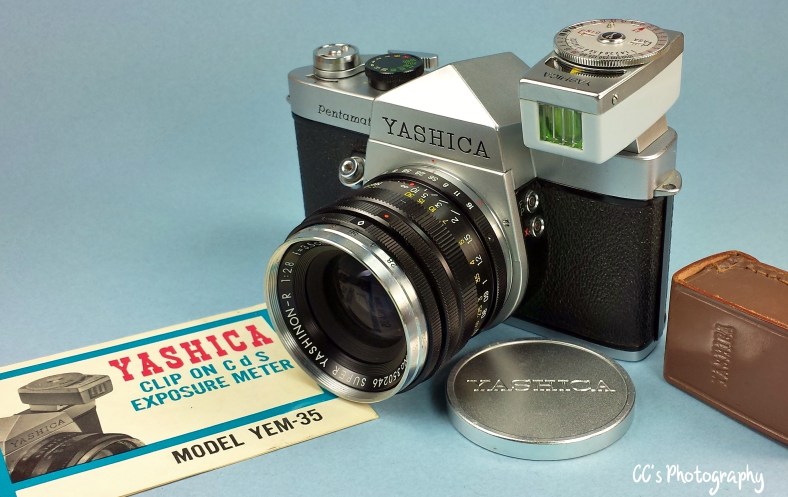
Yashica Super Yashinon-R f/3.5 13.5cm Telephoto Lens

Nice little addition to our Pentamatic family of lenses. Purchased in Japan and was with an early model Pentamatic’35’ set in “well used” but stable working condition. It came with the original Yashica brown leather case, unbranded plastic rear lens cap, Yashica front metal 52mm push-on lens cap, unbranded lens hood, and a very nice looking Walz chrome metal and glass Skylight C. (cloudy) 52mm filter.

dscf2868

Pentamatic bayonet mount 13.5cm short telephoto lens… f/3.5 with rather low serial number. Early Yashica lenses were often given a serial number that starts with the focal length of the lens. In this example, ‘135 0722’ shows it to be a 135mm lens with a sequential production number of 722. Best guess is that this lens was made in early to mid-1960. We have another Super Yashinon-R 13.5cm lens with a serial number of ‘135 0927’.

The above image shows the lens partially disassembled for cleaning and inspection. No fungus or mold, but I’ve found some funky streaks on the face of the first removable lens element (large lens element to the right).

dscf2872

The chrome nose removed.
dscf2873

The main lens group removed. If you look closely, you may see the funky streaks across the face of the lens.
dscf2876-2

Aperture blades set at f/ 22. No oil and no problems (looking into the lens barrel from the front of the lens). Note the 12 aperture blades.

super yashinon p mount 25cm

Here is a similar lens with the 12 blades that was for sale recently. The seller identified the lens as having been made by Kyoei Optical Co., Ltd.  using the brand name “Acall” Kyoei was also abbreviated as “KOC” which may be the reason for the red “K.C.”
New info as of Feb 5, 2020 – At first, I guessed that my lens was made by Tomioka Optical as they were responsible for most of Yashica’s lenses. A reader has pointed out the similarities between my lens and the design of the Acall lenses with both  Pentamatic and M42 mounts. I must say that I agree with them upon further review. Thank you for your input!
dscf2877

Partially assembled body. Nice clear markings and solid-looking bayonet mount.

These first Pentamatic lenses were pre-set and not automatic and were the kings of the heavyweight division. Lots of metal and glass here! When properly stored they were not prone to fungus… but almost all classic lenses will have some sort of mold, dust or fungal issues when left in the dark and in their leather cases.

Thanks for the visit!

Chris and Carol

You’re invited to visit our online store at https://www.ccstudio2380.com for some great vintage and collectible cameras, lenses, and accessories.