Yashinon Lenses – 1962*

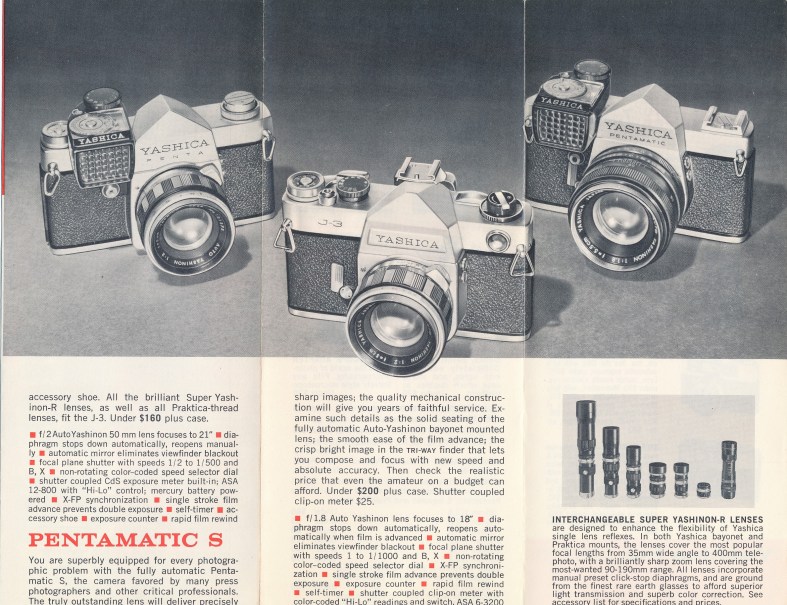
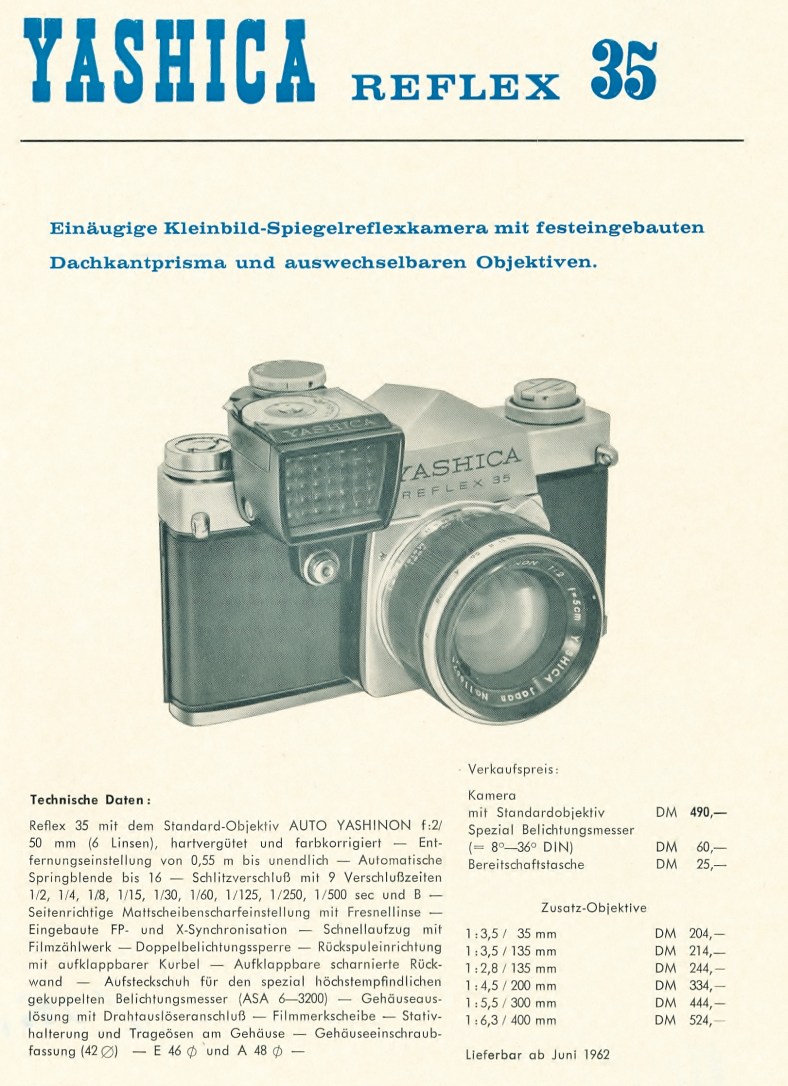
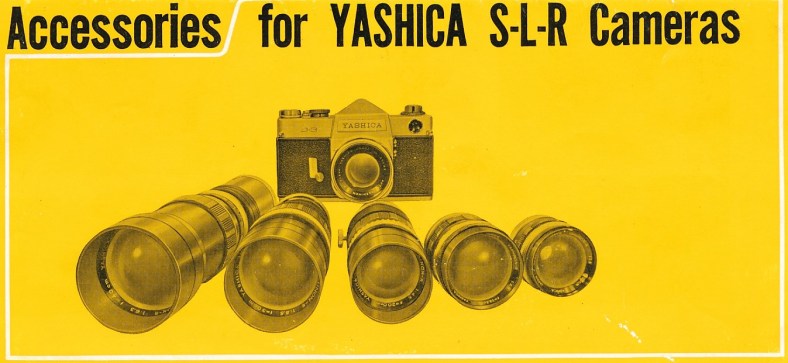
That date* might be a bit misleading as the sales brochure this was scanned from is undated (as is most Yashica marketing stuff). Our only clue as to the date is that it (the brochure) features the newly released J-3 and doesn’t include any other Yashica SLR. No Penta J or Reflex 35 (same camera different markets) and no J-5.

We like it because it features the Yashinon lenses available at that time. If you look closely at the mounts of the lenses, you’ll see the M42 screw-in mount. Yashica does state in the brochure that all of these lenses are available in both the Yashica Pentamatic bayonet mount and the M42 mount. My friend Paul, see An Interview with Paul Sokk – Site Author of the popular YashicaTLR.com , has proposed that Yashica may have distributed these lenses to dealers (market dependent) with both mounts – meaning that they were shipped with the “new to Yashica” M42 mounts but could be converted easily at the dealer level to bayonet mounts for the Pentamatic. Sounds very possible. At this time, Yashica also sold adapter rings for mounting their M42 lenses to Exakta mount bodies and for mounting Praktica mount (M42) lenses to their Pentamatics. Confusing? Yes. Yashica guessed incorrectly when they choose to design their own bayonet mount for the Pentamatic back in 1959. Was it Yashica or was it Tomioka’s designers? How about the ex Nicca and Zunow designers? We may never know but it doomed the Pentamatic right out of the gate.

IMG_20170726_0004

Excellent snapshot of the lenses that were available at the time. The dual mounts (bayonet and M42) reflects Yashica’s indecision as to which mount to embrace.

IMG_20170726_0007

Cover of the sales brochure that was included with our Yashica J-3 when new.

It is generally believed that all of these lenses were made by Tomioka Optical of Tokyo.

While some early Pentamatic bayonet mount lenses bear the Tomioka and sometimes Tominon names, most only carry Yashica and Yashinon. The same applies to the M42 mount lenses. Some can be found with Tominon but most simply have Yashinon. We don’t have positive proof that some lenses (both types) may have been made by another lens manufacturer. But whom? Taiho Optical (which was the former Nicca Camera hidden away in Suwa) but was really Yashica, or or or. We just don’t know. Pure speculation to think that another company did, but then again, no proof that there wasn’t another maker.

Thanks so much for your visit! If you made it this far you just may be a “Yashicaphile” or just Yashica junkies like us. Do you have something to contribute??? We’d love to hear from you and would love to include your info in our blog. Thanks! ^.^

Chris & Carol

Cute or uncomfortable by today’s standards?

Is this image from a mid 1960s Yashica camera instruction booklet simply cute or does it make you feel a tad uncomfortable?

Is it a fun reminder of how the world was in 1965 – a bit “western obsessed”? Was it a little out of line even then? If this image were to be posted to a social media site today, what would the reaction be?

IMG_20170709_0021

The original full context image from the booklet.

Weigh in if you’d like. We’d like to know your feelings.

Thanks, Chris and Carol


Yashica Pentamatic ’35’ vs. Pentamatic II

Why did Yashica bring out the Pentamatic II less than a year after releasing the original model?

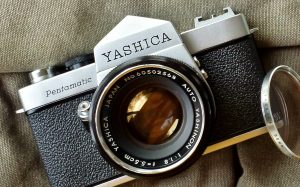
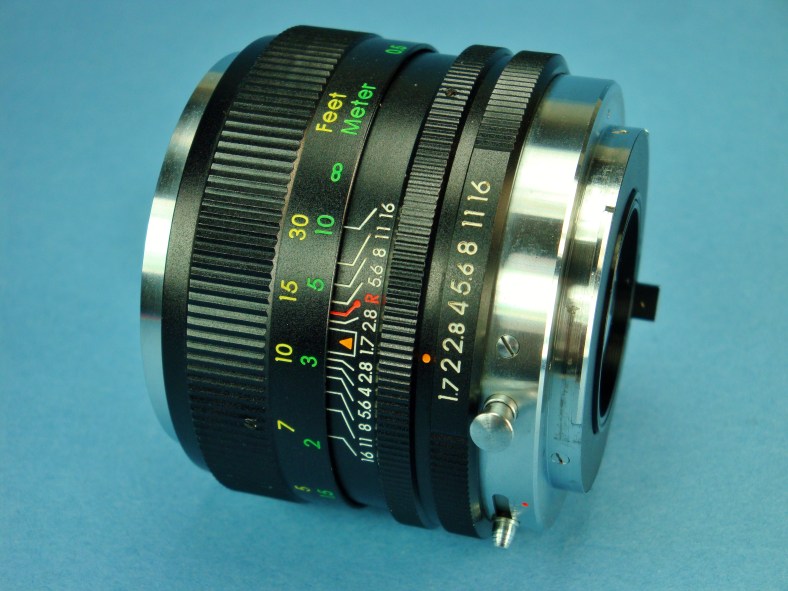
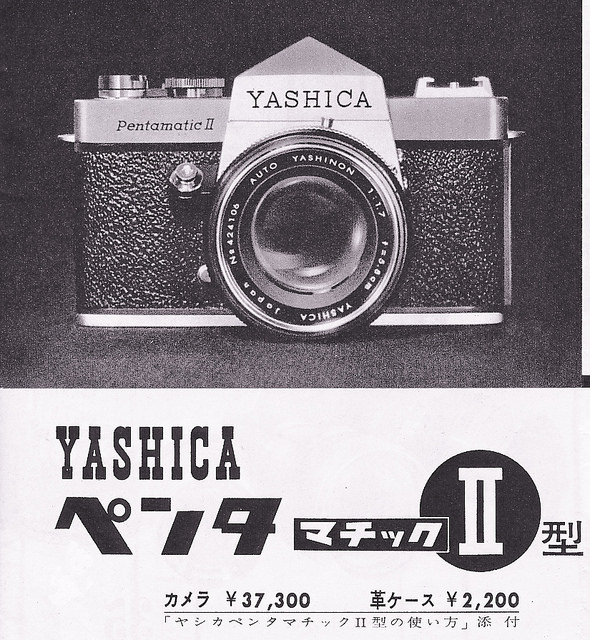
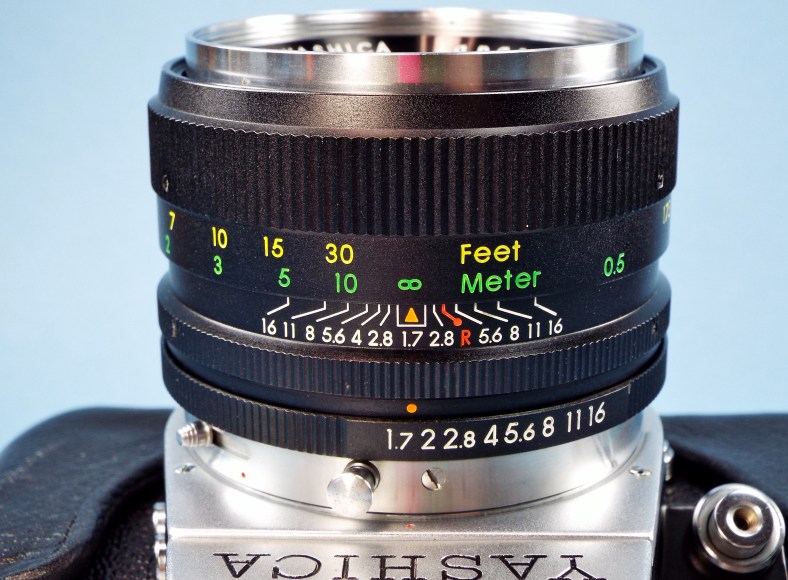
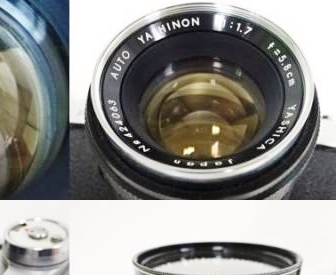
The only difference we can tell between the original Yashica Pentamatic ’35’ and the Pentamatic II (which came out around September 1960), is the standard lens that was mated with the camera body. The original Pentamatic came with the Auto-Yashinon, f/ 1.8, 5.5cm fully automatic 6 element lens. Of course it has the unique Pentamatic bayonet mount and not the M42 screw mount. The Pentamatic II came with the Auto-Yashinon, f/ 1.7, 5.8cm lens (pictured below). Both lenses were made for Yashica by Tomioka Optical of Tokyo. We imagine the 58mm, f/ 1.7 lens was a bit faster than the f/ 1.8… but we don’t see why Yashica changed from the model I to the model II and why they changed the lens… we may never discover the reason either.

DSC07467

The standard lens for the Pentamatic II – 5.8cm, f/ 1.7

27356135700_b0c5ef23fe_z

017

Gorgeous lens for the Pentamatic II.

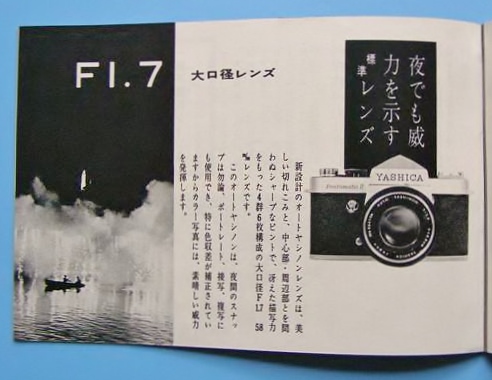
Brochure c1961

The first sighting of the Pentamatic II in a sales brochure for the Japanese home market.

We’ve yet to find an advertisement for the Pentamatic II in English and along those same lines, have yet to find the Pentamatic II in a sales brochure in English. The Pentamatic S replaced the model II less than a year after its release. The model S went back to using the original 5.5cm, f/ 1.8 lens that was on the original Pentamatic.

That makes the Auto-Yashinon 5.8cm, f/ 1.7 lenses one of the rarest of the early Pentamatic bayonet mount lenses.

06-12-2016 pentamatic II 2 (2)

Happy hunting!

Chris

Yashica TL Electro-X

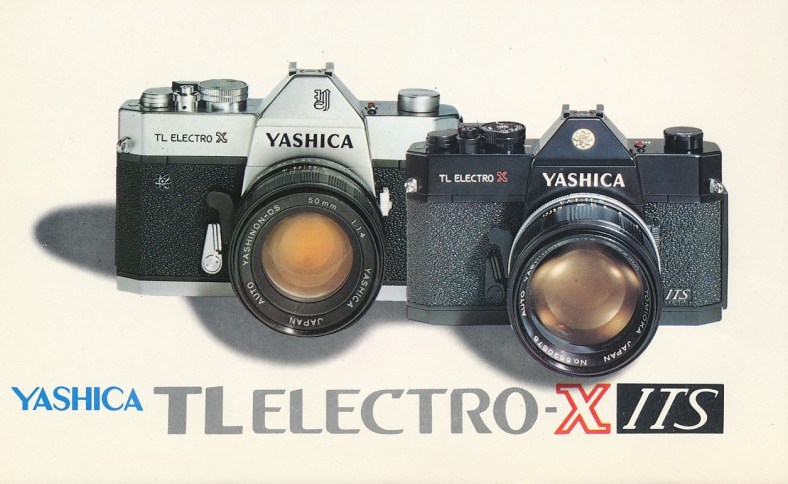
One of the most successful SLRs from Yashica – the ‘Pioneer in Electronic Cameras’… the Yashica TL Electro-X. The world’s first electronic single-lens reflex camera.

A random collection of clips from Yashica sales brochures and our eclectic collection of all things Yashica –

18641997101_dbb1db2784_o

img_20170228_0003

‘ITS’ = Integrated Technology System… maybe.

img_20170228_0007

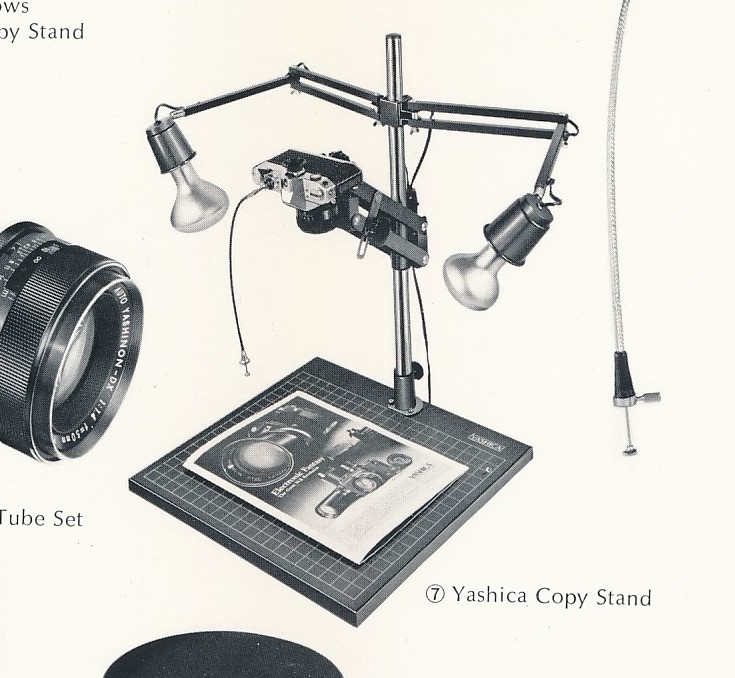
We’ve recently added this hard to find accessory from Yashica. It was still new in its original box! It will be used in our studio for some copy work.

20170301_092007

Original box. Lucky find!

img_20170228_0002

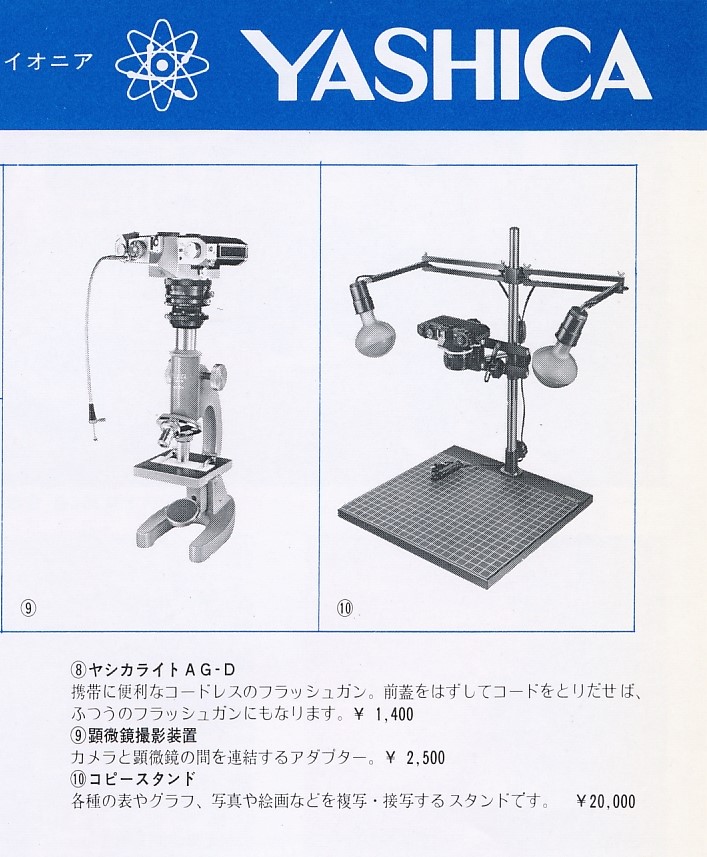
The Copy Stand listed for 20,000 JPY in 1971. About $55 USD


15218536719_13b8308208_o

17151773615_977cae3853_o

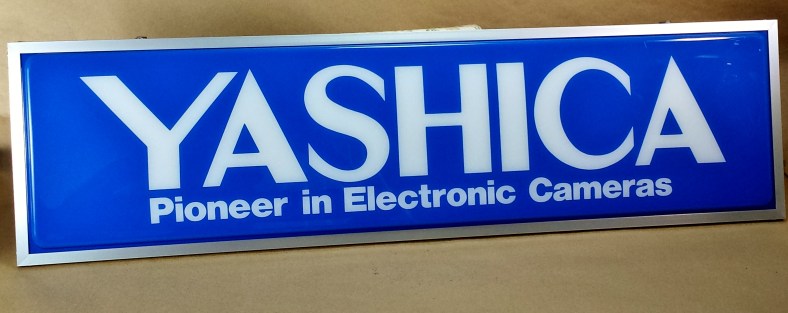
Large dealer’s sign. Two sided but non lighted. Ca. 1968

24520965712_eae778e081_o

Yashica ‘Sailor Boy’ with another version of the slogan and electron logo. The ‘Sailor Boy’ first made his appearance in 1962.

24104907192_2909081390_o

Elegance on ice.

Do you have something to add to our database about this interesting camera? Please feel free to comment. 

Thanks,

Chris & Carol Photography ^.^

Mystery Models – v2.0

19362539791_09787a3105_o

1959 Yashica Model A twin-lens reflex camera instruction booklet cover.  

This dapper dude appears on at least two different Yashica brochures in the late 1950s and early 1960s. This cover shot is from a Yashica A III instruction book from 1959. He always appears with a “modern” pipe, fancy derby and is winking at the camera. My thought is that he is an actor who may have lived in or was super popular in Japan during that period. Any thoughts? Please see the back cover image below.

19171018190_a36a308a45_o

Here he is in a German language Yashica brochure from early 1960 (below).

19171477280_fcbf5949c1_o

Any help would be appreciated. As researchers of silly Yashica stuff, knowing who he is helps with some other silly stuff we’re interested in (Yashica-wise).

Thanks!

C&C


Colorful Yashica Brochures… 1980s

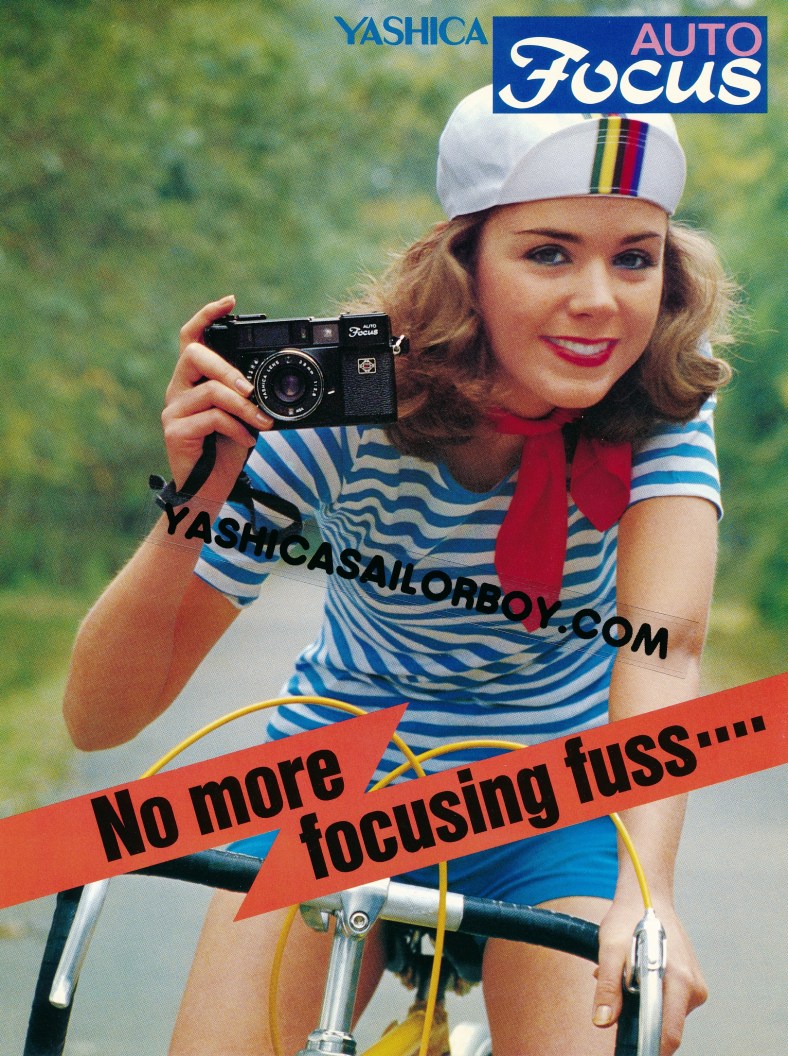
A small collection of some 1980s Yashica and the Yashica-Kyocera sales brochures. We enjoy collecting brochures as they usually capture a slice of life for that period (at least in the marketing folks view of things). Enjoy!

Cute brochure from around 1980 featuring the Yashica Auto Focus. Yashica’s home office was still in Shibuya-ku Tokyo at this time. Kyocera was in Yashica’s near future and it would signal the beginning of the end!
25896400900_c2437ce7ec_o

Another nice sales brochure from October 1981. The cameras featured in this brochure are the Diary, Flasher, Snap and the Auto Focus Motor.
25898856450_44fee70d1d_o

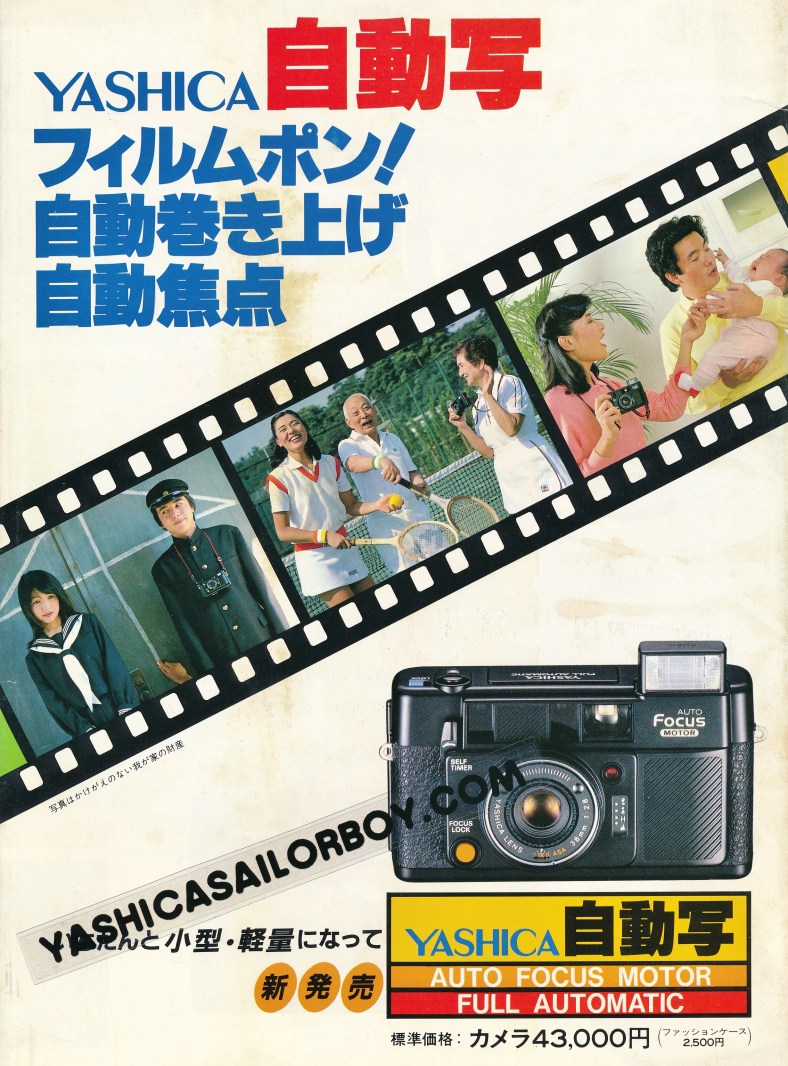
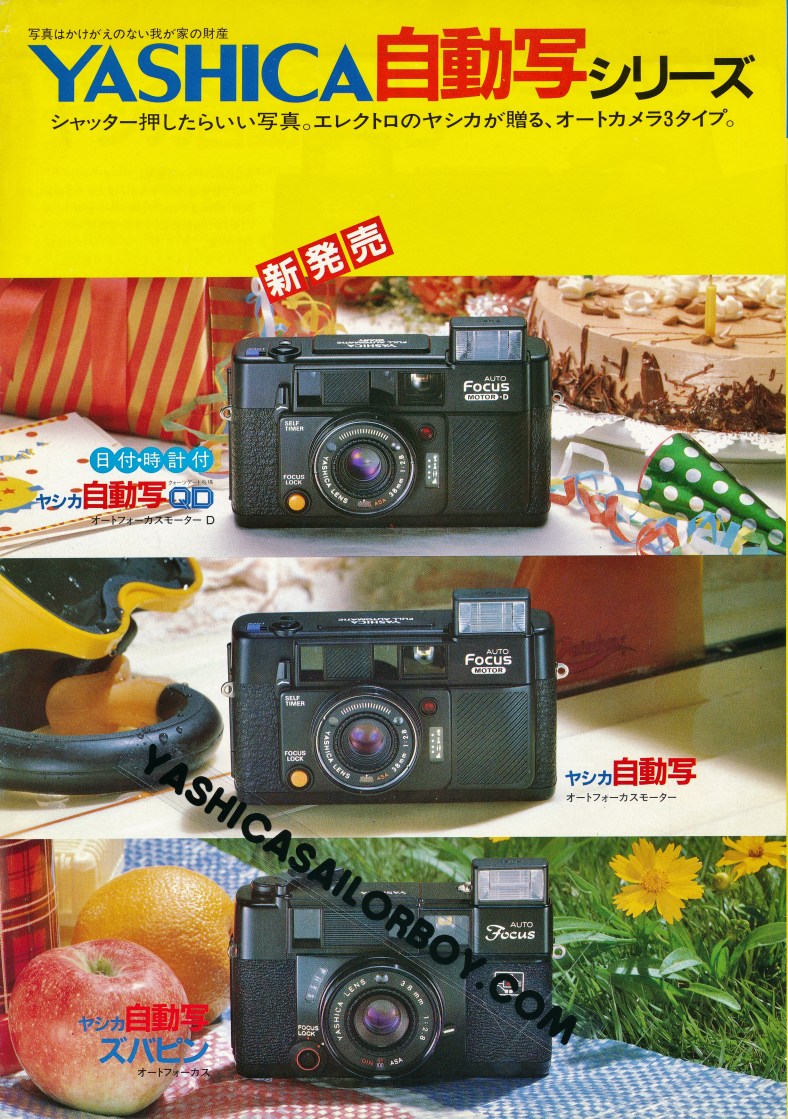
Yashica Auto Focus, Auto Focus Motor and Motor-D. These were technological breakthrough cameras for Yashica in the early 1980s. Of course at this same time, Canon had the A-1, AE-1, AE-1 Program and of course the Canon F-1. These cameras from Canon were all SLRs so not a fair comparison but Canon made similar compact rangefinder cameras. It was a tough go for Yashica at this time and a takeover was on the horizon.
25899033730_558e532eaf_o

What a cutie! Full color sales brochure from Yashica dated 1 March 1980. Features the Flasher, Auto Focus, Snap and the Diary.
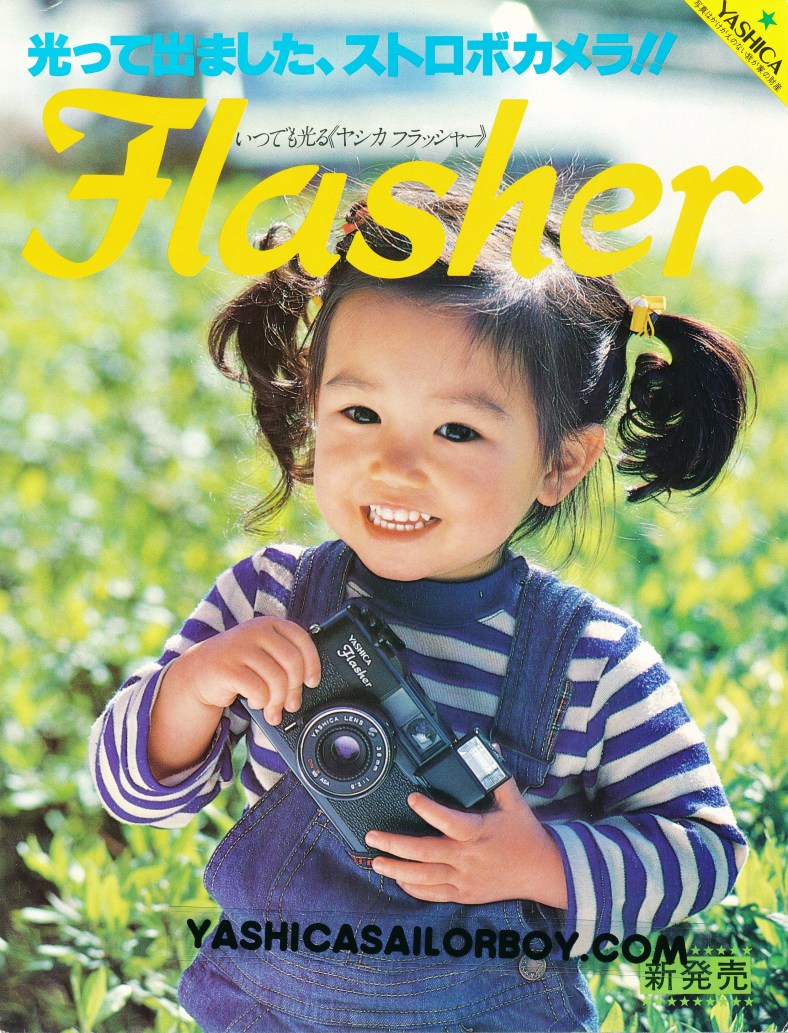
26079349032_07ccb458cd_o

Neat sales brochure from September 1980. In the early 1980s Yashica promoted its auto focus and auto exposure cameras extensively. This brochure featured the Yashica Snap, Diary, Flasher and the Auto Focus which listed for ¥41,000.
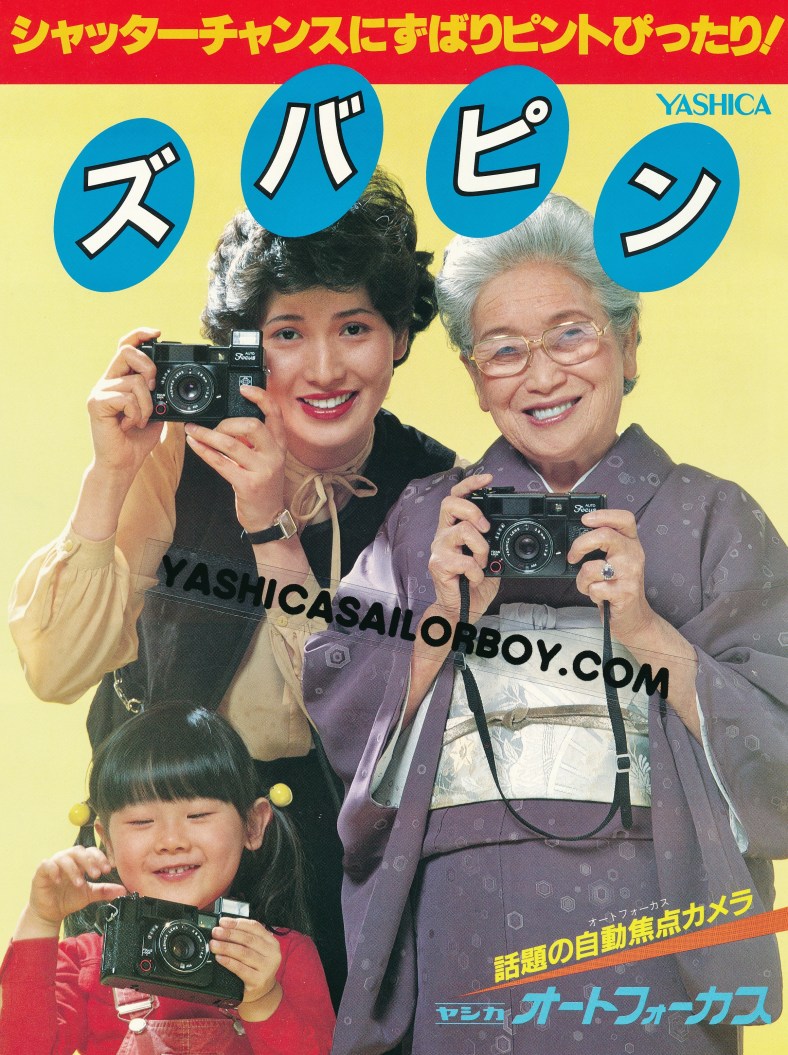
26169339505_b055f64250_o

The dark days of Yashica begin with this very cute sales brochure from February 1984. Yashica by this time was taken over by the Kyocera Corporation which was headquartered in Kyoto. Yashica was now a just a division of Kyocera…Yashica was still in its long time office in Shibuya-ku. This move (Kyocera ownership) was the beginning of the end for the Yashica we knew.

When Kyocera killed Yashica (about 1991) they kept the optical portion of the company which was originally the Tomioka Optical Co., Ltd. of Tokyo. That division is still part of Kyocera and is now called Kyocera Optec Co., Ltd. and is still headquartered in Tokyo.
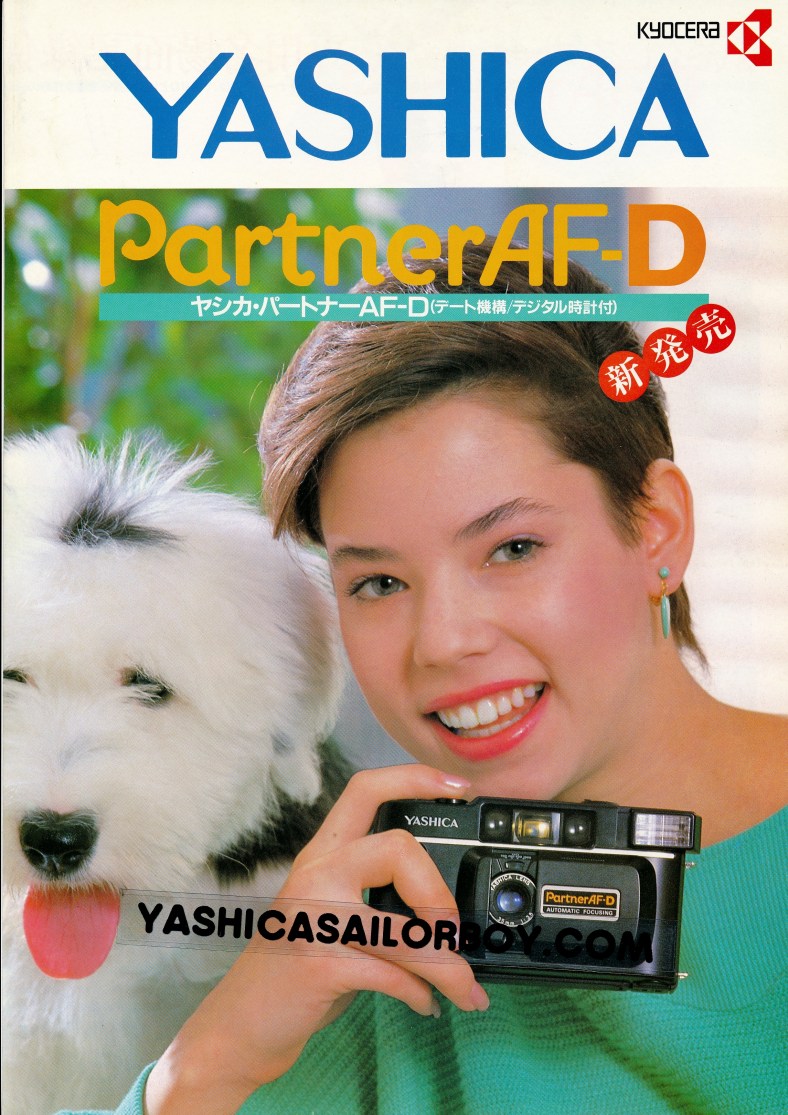
26103094971_52ab0e9630_o

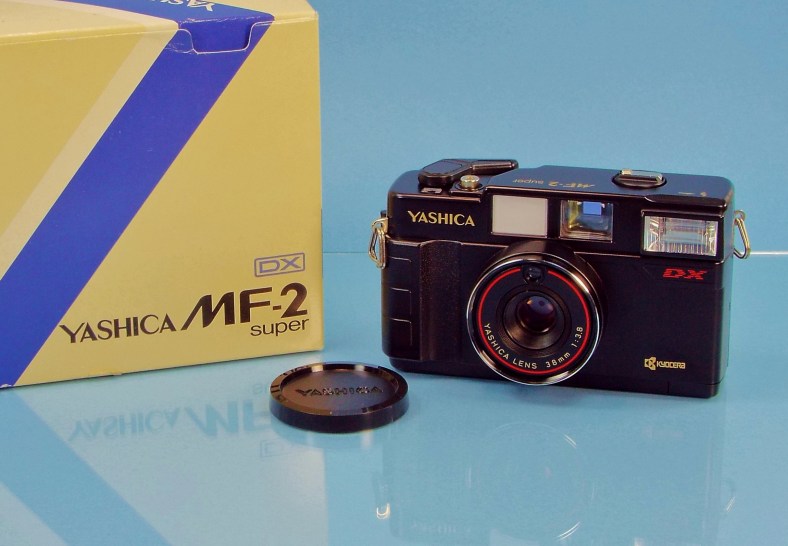
There you have it. A nice collection of some of the best of the 1980s Yashica sales brochures. As we mentioned, the Kyocera ownership was just on the horizon and the final days of the once great Yashica were coming to an end. We do own a few cameras from the Kyocera (Kill-a-Yashica) period and some were received as excellent point and shoot compact wonders.
dscf3456

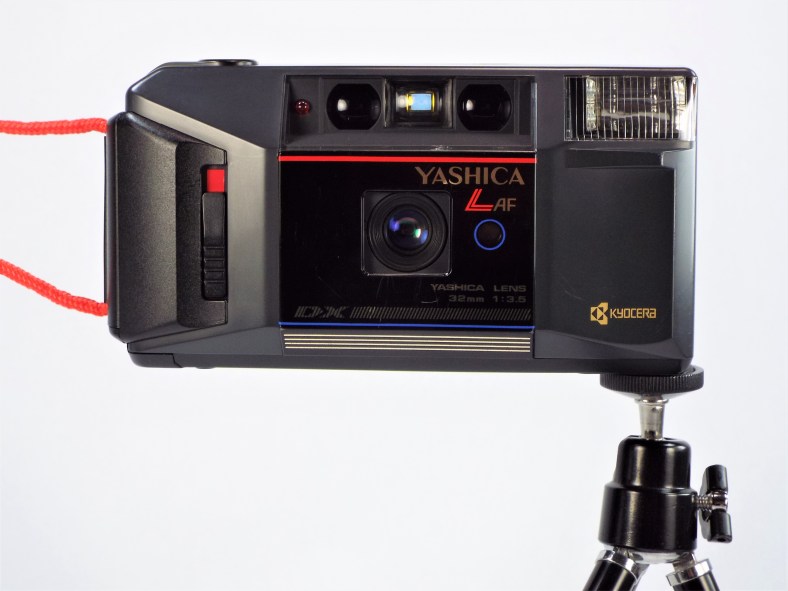
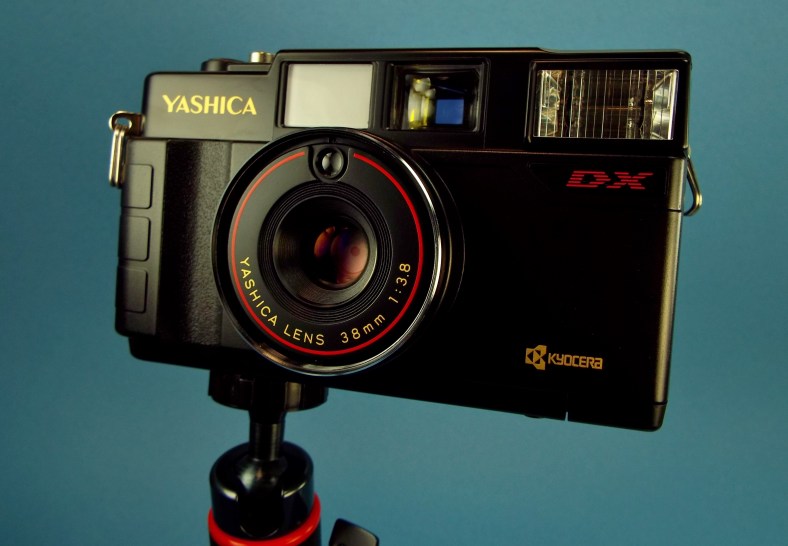
A lovely Yashica-Kyocera L AF Date from 1986. Very nice lines and we’ll be running a roll through it very soon!

This good looking camera (above) was sent to us from a blogger friend and photographer living in Japan. She was very kind to donate it to us for sharing it on our blog. You can see excellent reviews of all sorts of cameras and awesome photographs too at https://cameragocamera.wordpress.com/

Another donated camera comes to us from a friend in Virginia and a fellow Flickr poster.
26295606350_65700d54b4_o

25965272473_a80d24519c_o

We haven’t run film through this beauty yet – it’s on our “catch up” list of things to do. Thanks to Ken for sharing his lovely camera with us so that we could share it with y’all here on the blog.

By the way, if you’ve got a nice Yashica, Kyocera or Fujifilm camera from this period (1980s to mid 1990s) and would like to see it featured here, just contact us through WordPress and we’d be glad to do it.

Many thanks for your visit – comments are always welcomed.

Chris & Carol ^.^