The Yashica Flex model S (aka Yashicaflex) is one of Yashima’s most important early cameras… well maybe the second most important behind the first. Obviously Yashima’s first camer…
Month February 2017
Our ヤシカ Pentamatic Family…
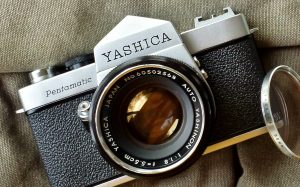
We were finally able to get the Pentamatics together for a photoshoot. These cameras range from a March 1960 build date to January of 1961. The lenses are made by Tomioka Optical of Tokyo for Yashi…
Source: Our ヤシカ Pentamatic Family…
Yashica L AF – Field Test v2.0 – Can this Yashica hold its own against the T* Series?
A fun little point and shoot camera from Yashica-Kyocera (1986). This lovely camera was kindly donated to us from a blogger friend and photographer who lives in Japan. She tests cameras that strike her fancy and often processes her film at home. We think her test shots are extremely interesting – and always well composed too. You can find her at https://cameragocamera.wordpress.com/
Field test v1.0 was done in Japan.
She typically hunts around in second hand shops and picks up cameras for well under $10 (I think this one was only $3).
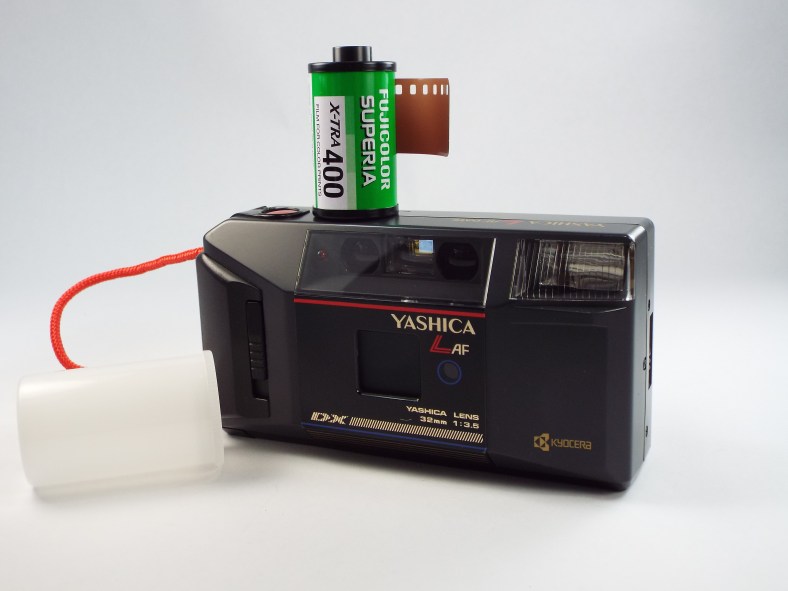
The Yashica gets a fresh roll of Fujicolor Superia X-TRA 400 and a new finger strap (in almost matching red).
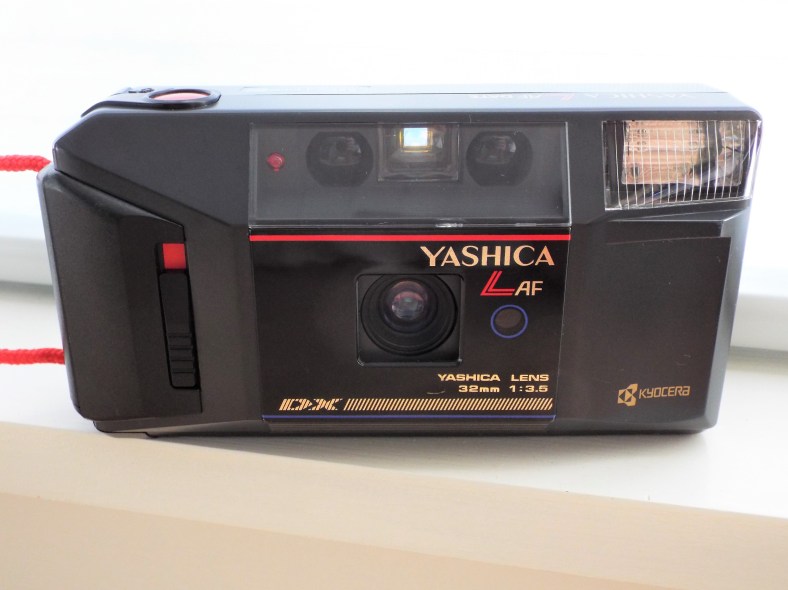
This Yashica uses a 32mm f3.5 lens. The camera features a simple drop and go (well almost) film loading. It is a DX coded camera so it sets the ASA (sorry, old school). It produced 26 exposures from a 24 exposure roll.
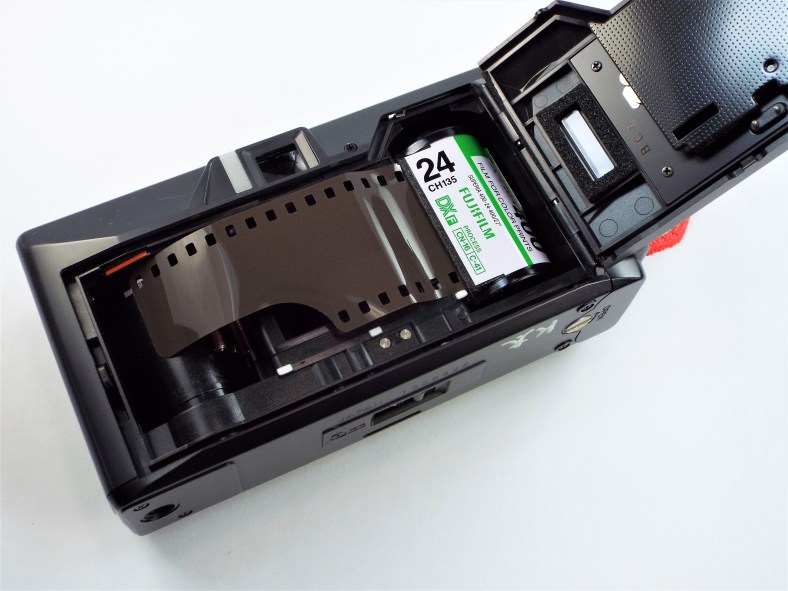
Pull the film leader to mid point on the orange line and between the white marks.
The real test – can this inexpensive Yashica L AF deliver the same image quality as its highly regarded cousins – the Yashica T3 Super with Zeiss T* 35mm f2.8 lens or the more closely related Yashica T AF?
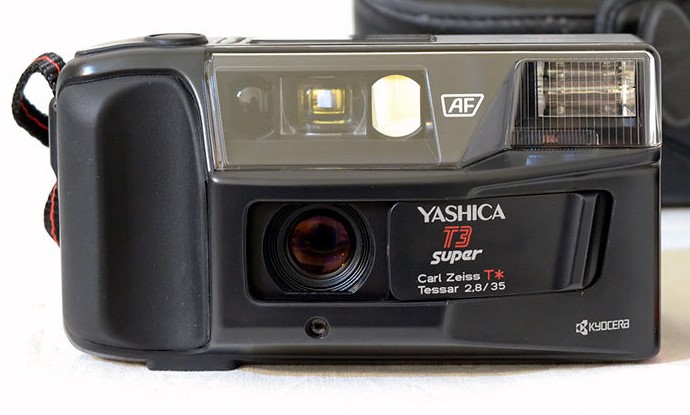
The T3 – often sells for over $200 on eBay. The L AF – well under $20!

Yashica T AF. Yashica’s first in the T* Series of cameras (1985). Probably the most closely related to the L AF.
I won’t post all 26 images here. I will pick a broad representation of the photographic challenges that I threw at the Yashica L AF.
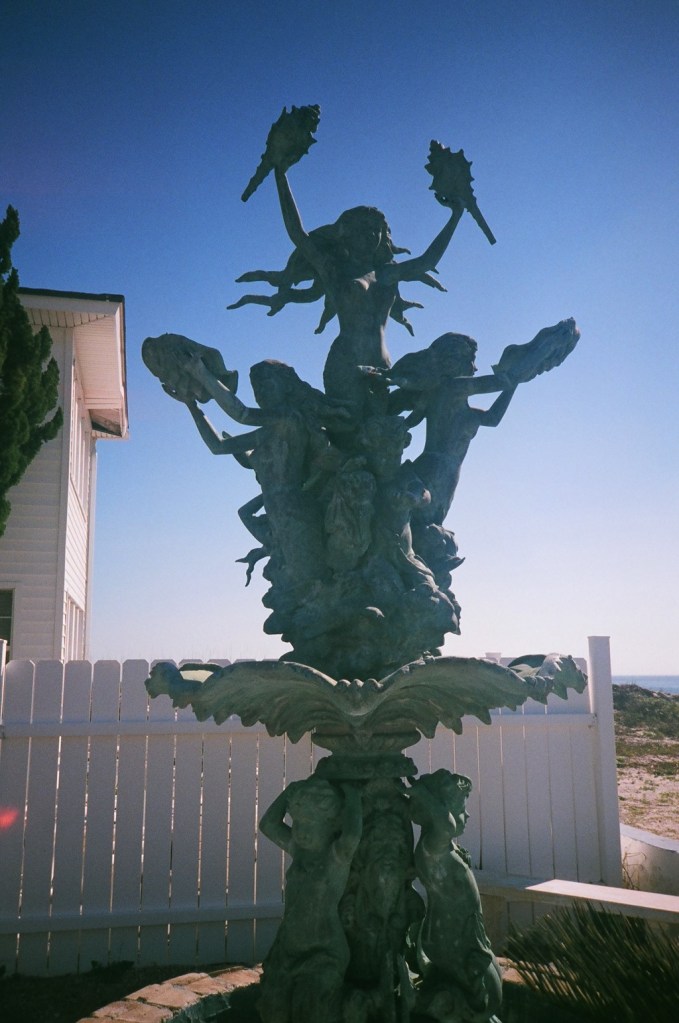
First image overall – strong back lighting. A challenge for any simple AE camera. First sign of a red spot (far left).
These next two images were focused at infinity. Strong mid day lighting so deep shadows. The Fujicolor rocks some nice vivid colors and contrast!
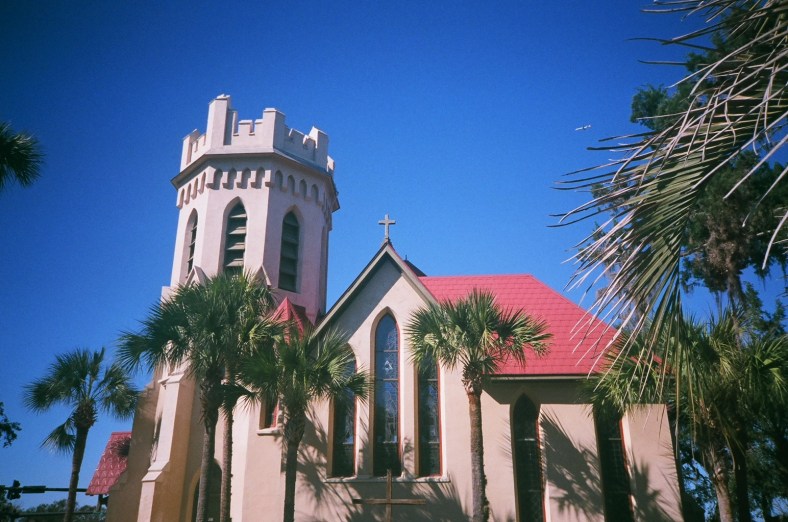
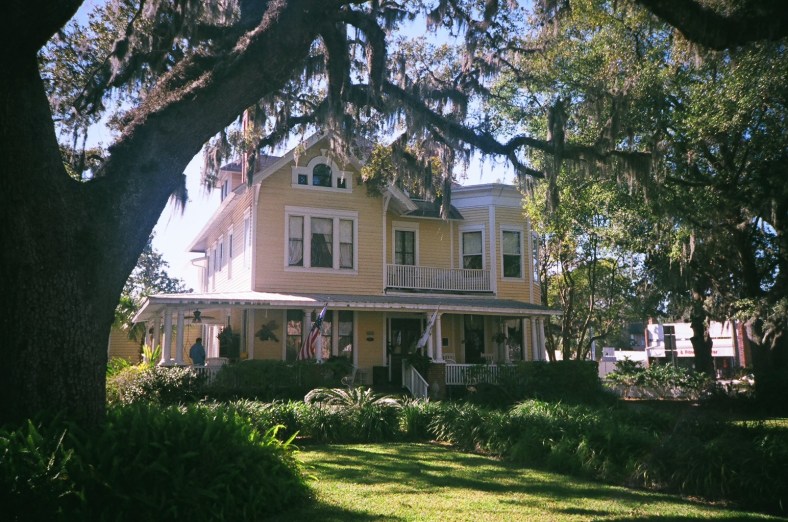
First real test of the auto-focus and AE in dim lighting below. It did well considering the strong sunlight in the background.
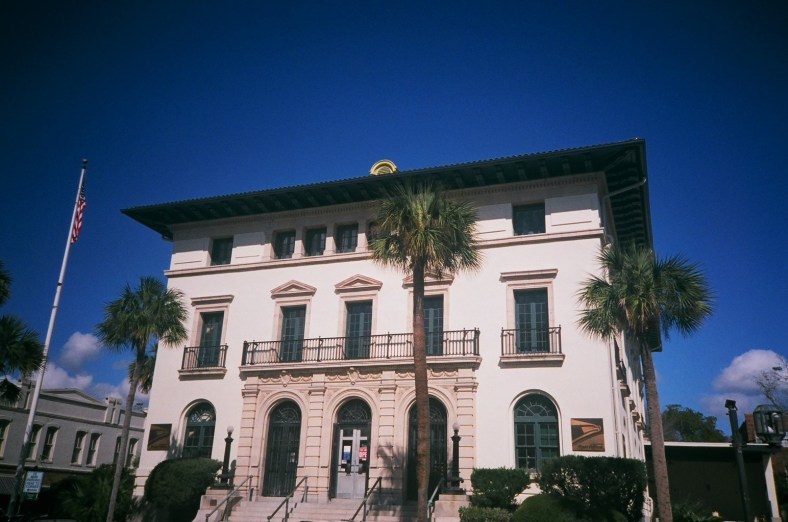
I know right – crazy dark blue sky! No filters, just Superia X-TRA 400 and a contrasty lens.
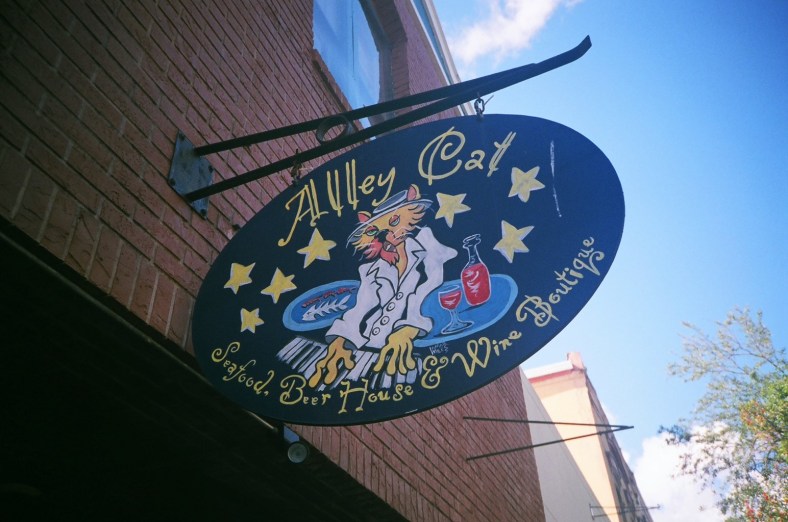
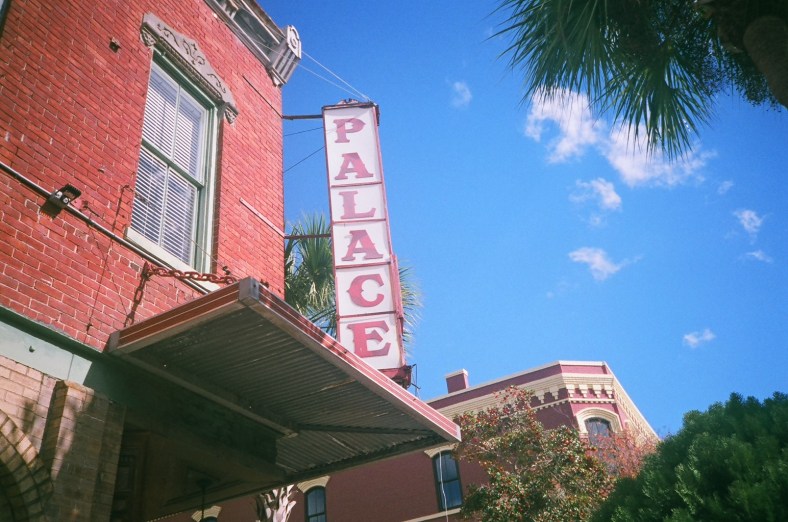
Nice detail. Sharp focus too on this sign below. The Yashica employs center weighted metering. Most AE cameras would be thrown off by the bright sky.
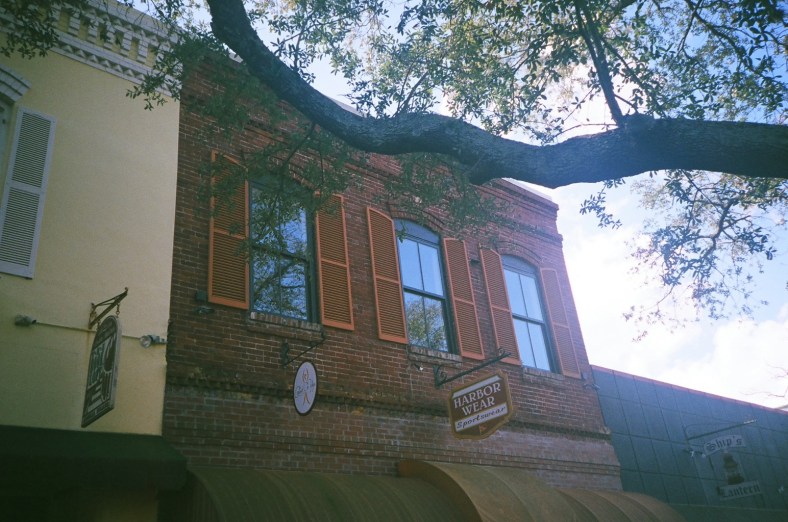
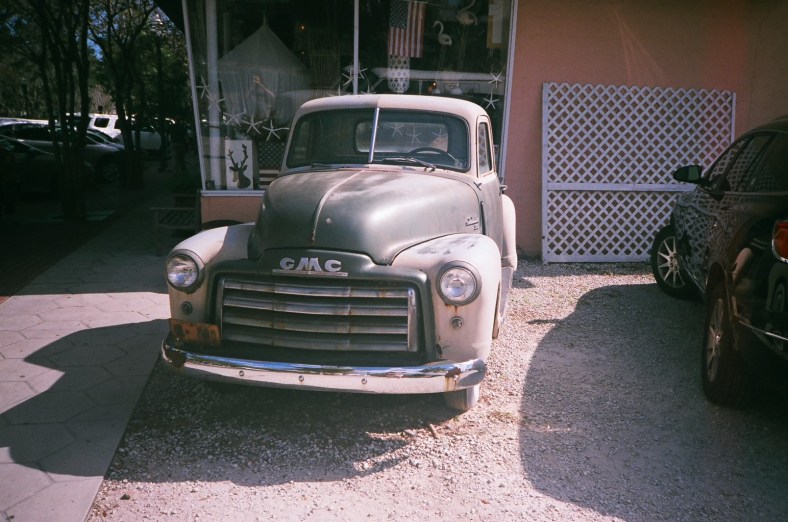
Tough AE situation for a simple point and shoot (deep shade below). Post production would help but I like it as it is.
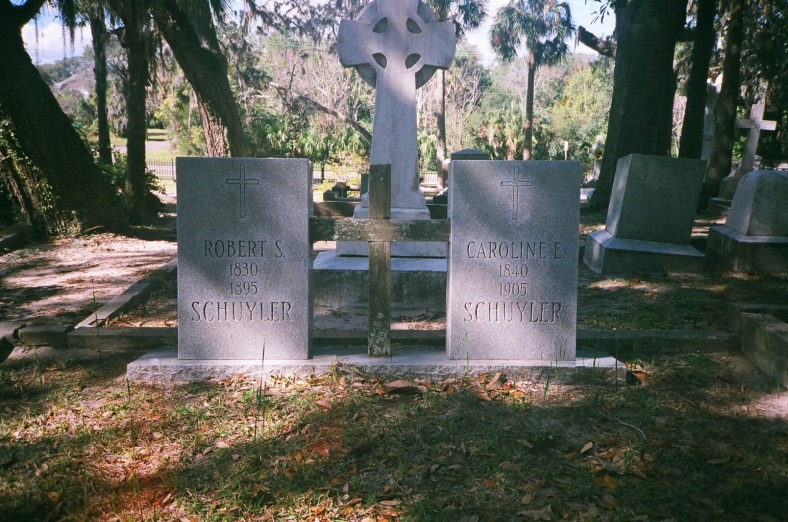
Back in the bright Florida sun!
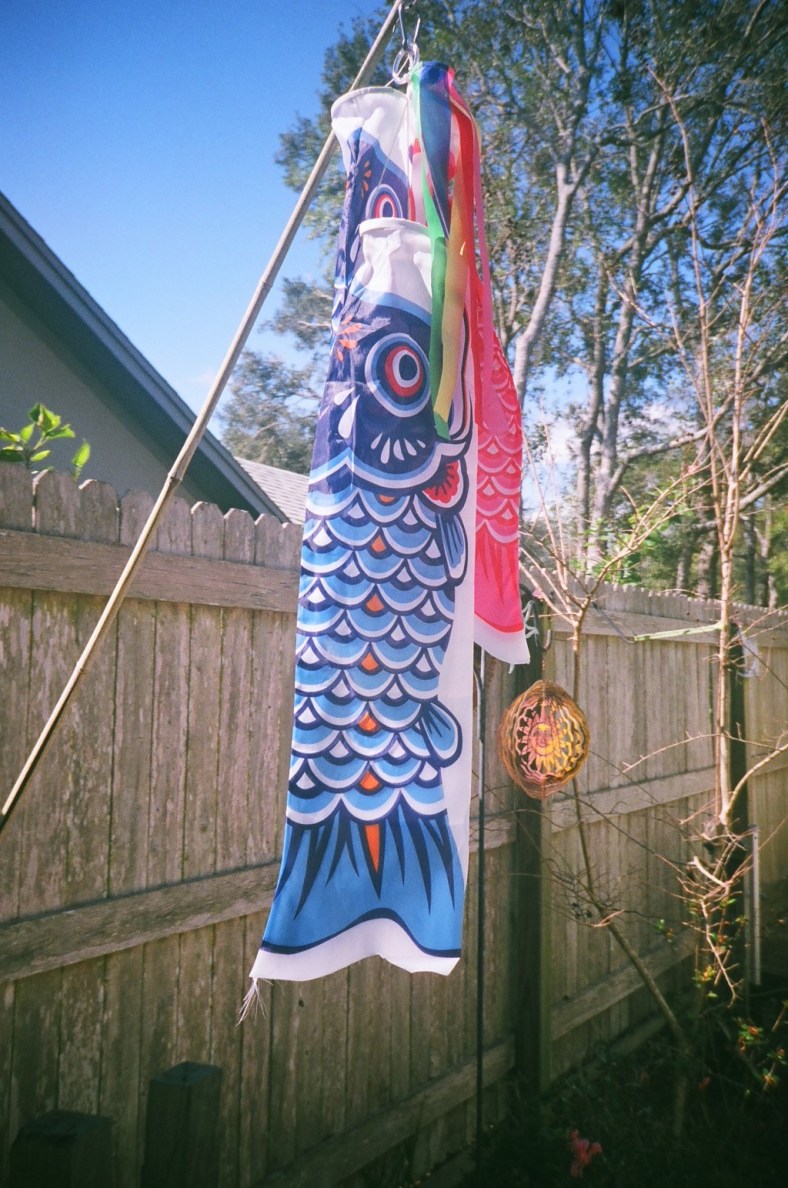
Day 2 below at home. I was about 3 feet from the carp. Looks good.
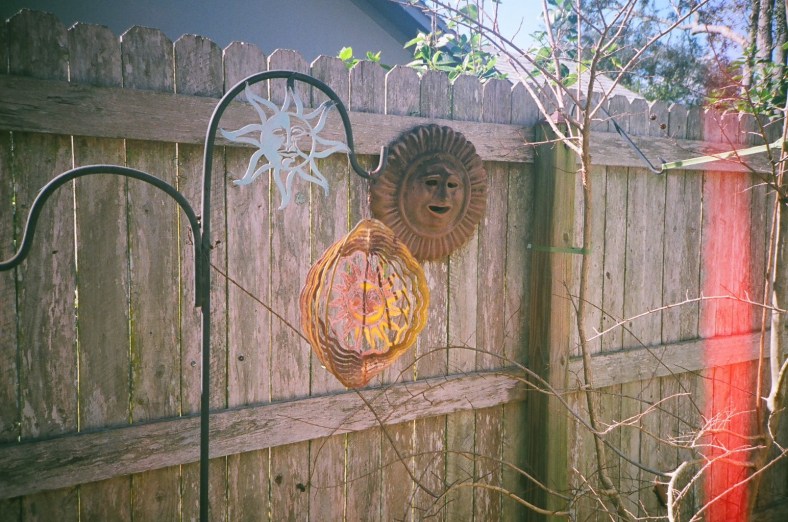
The attack of the red bar! Not sure the why of it.
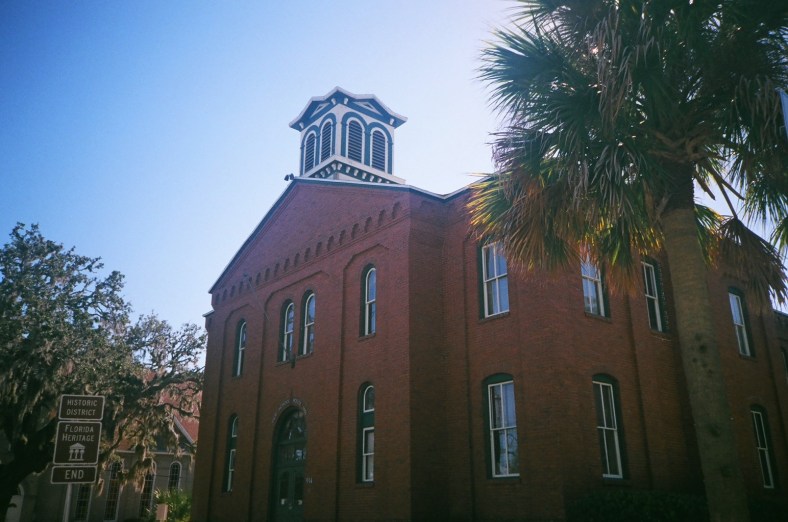
The AE handled this situation well – I blocked out the sun with the palm tree which allowed the Yashica to get a good reading on the building.
As I said at the top. All 26 images were excellent with about 4 experiencing the mystery red spots and bars. I’m thinking that the red marks are from a processing error – it’s way too random to be a light leak. No post production on any of these images. They’re presented just as they were scanned by the processing lab. Maybe the CD will be even sharper.
We’re impressed! The camera has a solid feel – it has some weight and is actually as big as our Fujifilm FinePix S9900W.
So does this inexpensive Yashica L AF beat the Yashica T* Series? Don’t know yet – now all we need is someone to donate a T3 or T4 to test it!!! ^.^
For the money, if you can find a decent Yashica L AF and want a great point and shoot 35mm camera that produces better than expected images – the L AF more than delivers and at a price that won’t break the bank!
Camera(s): Yashica L AF Date, Fujifilm FinePix S9900W and Samsung Galaxy S4
Final shout out goes to the City of Fernandina Beach, Florida! Thanks for never messing with the Historic District – it looks the same (for the most part) as it did 120 years ago!
Many thanks for your visit! Comments – please do. Donating a T3 or T4? – email us ASAP!
Chris & Carol
1957 Yashica-C
The Yashica-C made by Yashima, was part of the new wave of Yashicas that were released in late 1956 for sale in the world markets (focus scale is only in feet). It was listed at $46.50 plus $8.00 for the “De Luxe Leather Eveready Case”. The other models released at the same time were the Yashica-A ($29.95) and the Yashica LM ($59.95) which featured a built-in exposure meter!
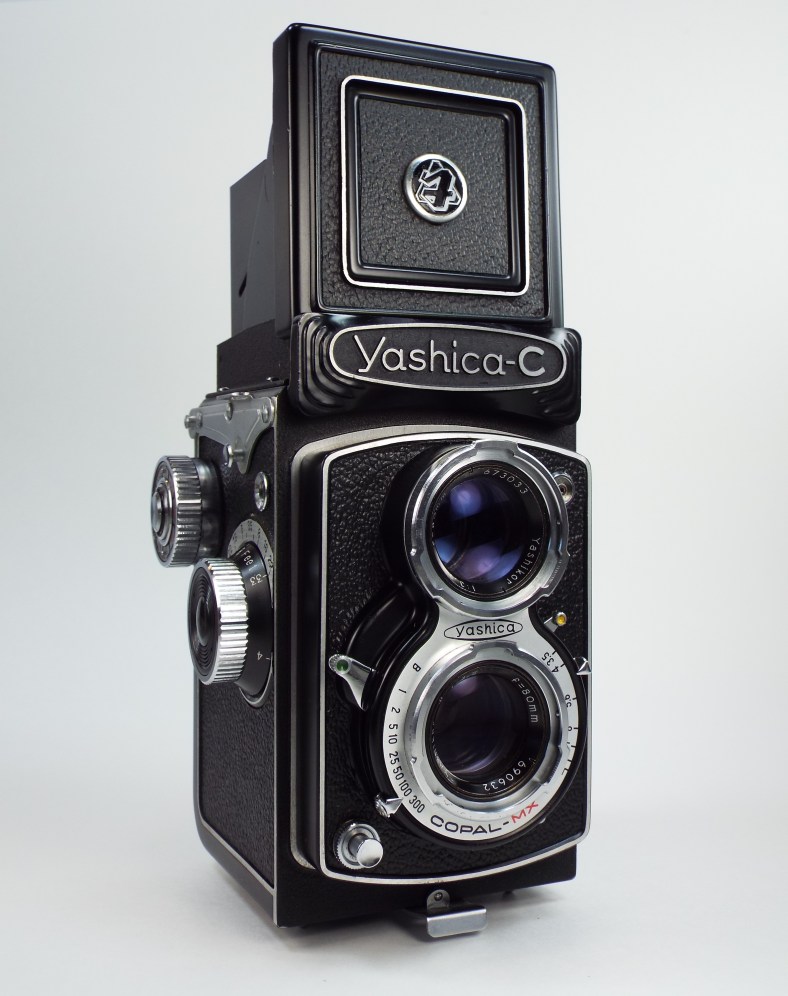
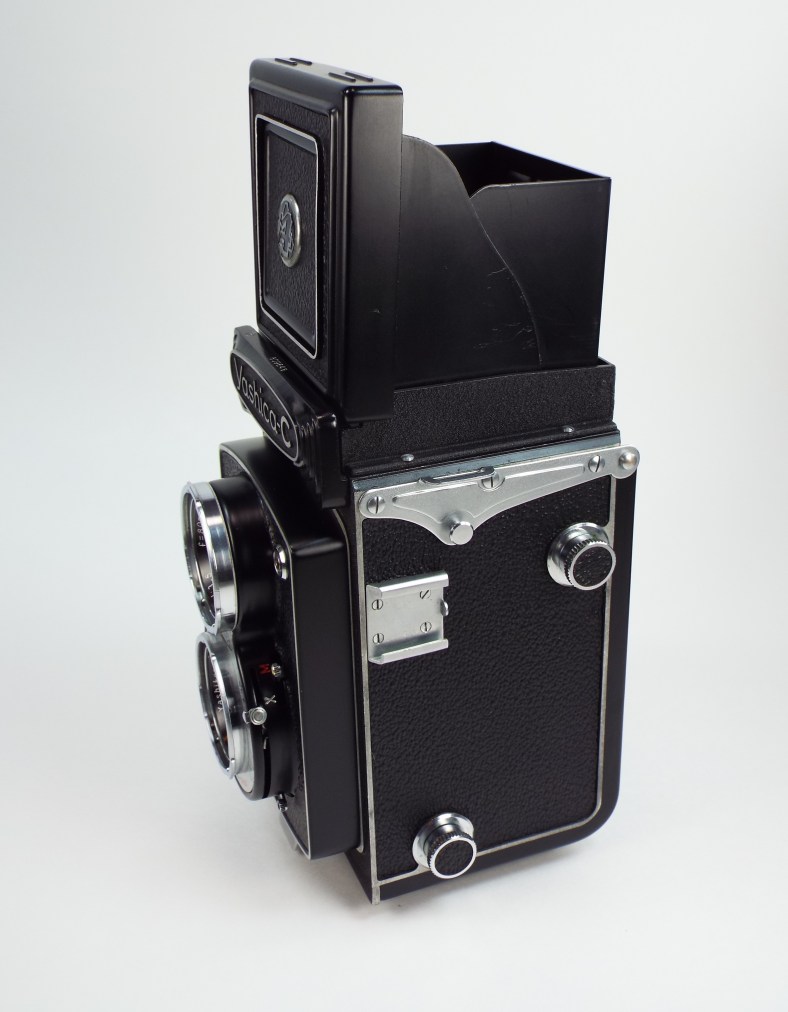
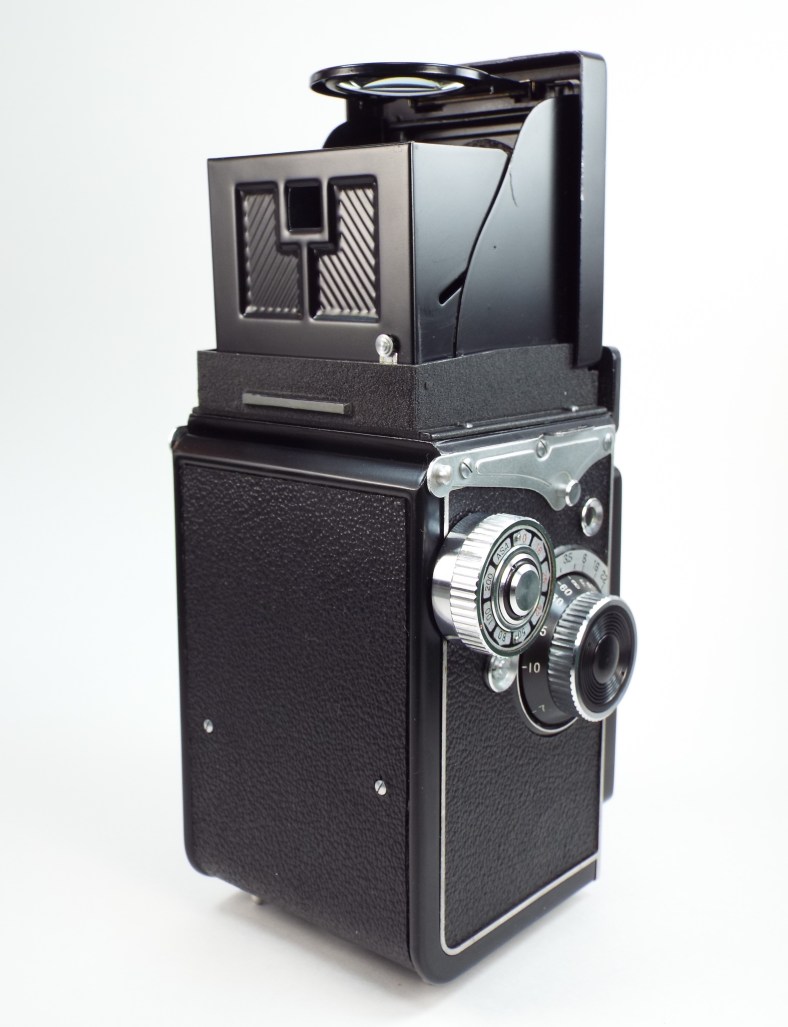
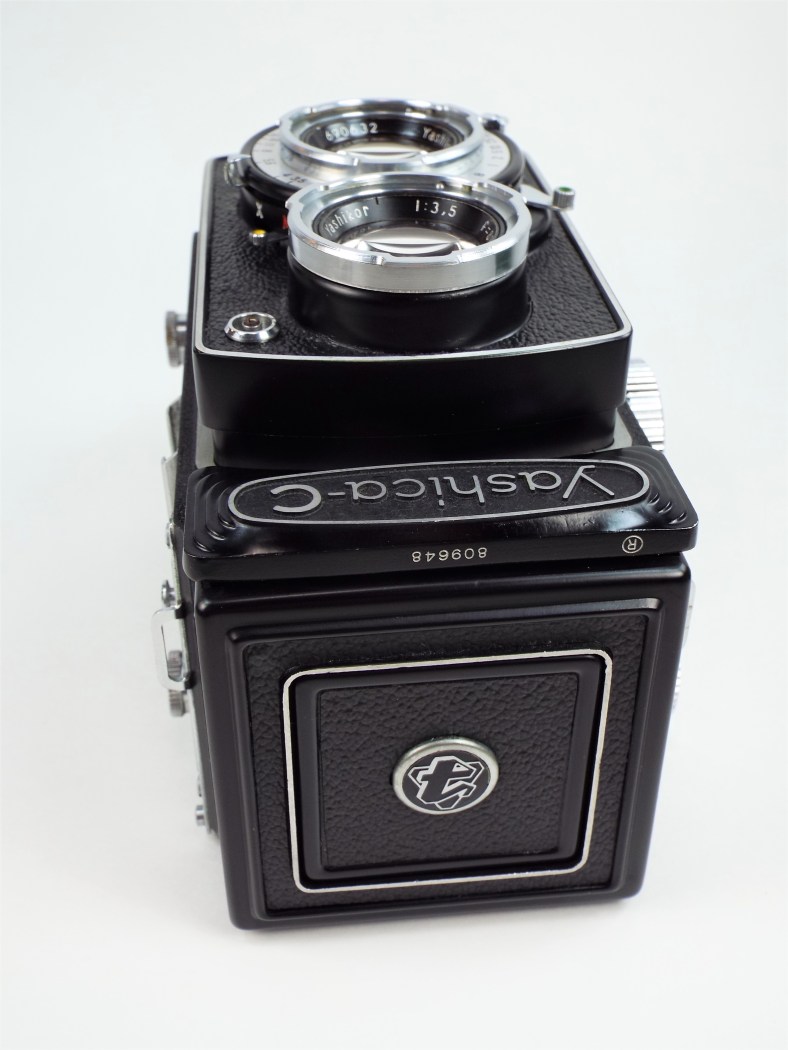
This handsome camera came to us recently with all features fully working – even after six decades of use, no issues. Our guess would be this camera saw maybe 1 or 2 rolls of film in its life. It is in factory new condition.
Features: Semi-automatic film wind, 80mm Yashikor f: 3.5 taking and viewing lenses (hard coated and color corrected), Copal shutter with speeds at 1, 1/2, 1/5, 1/10, 1/25, 1/50, 1/100, 1/300 second and Bulb, self-timer, flash sync (M-x) built-in, bayonet lens mount and flash gun shoe with standard PC flash terminal.
If you’re looking to try medium format photography, the Yashica-C is a great camera and a great value. It can often be had for significantly less money then a Yashica-D.
A word of caution about 6 decade old TLRs. Corrosion of the black metal parts is common as is fungus and mold in and on the lenses. If the camera you’re interested in shows some exterior rust (and other forms of corrosion), then ask the seller a bunch of questions. Cameras like these that come from humid environments are often left in their organic leather cases (and in the dark) – fertile grounds for growing mold and fungus. Fungus filaments can completely destroy a lens or at the very least, etch parts of the coating for good.
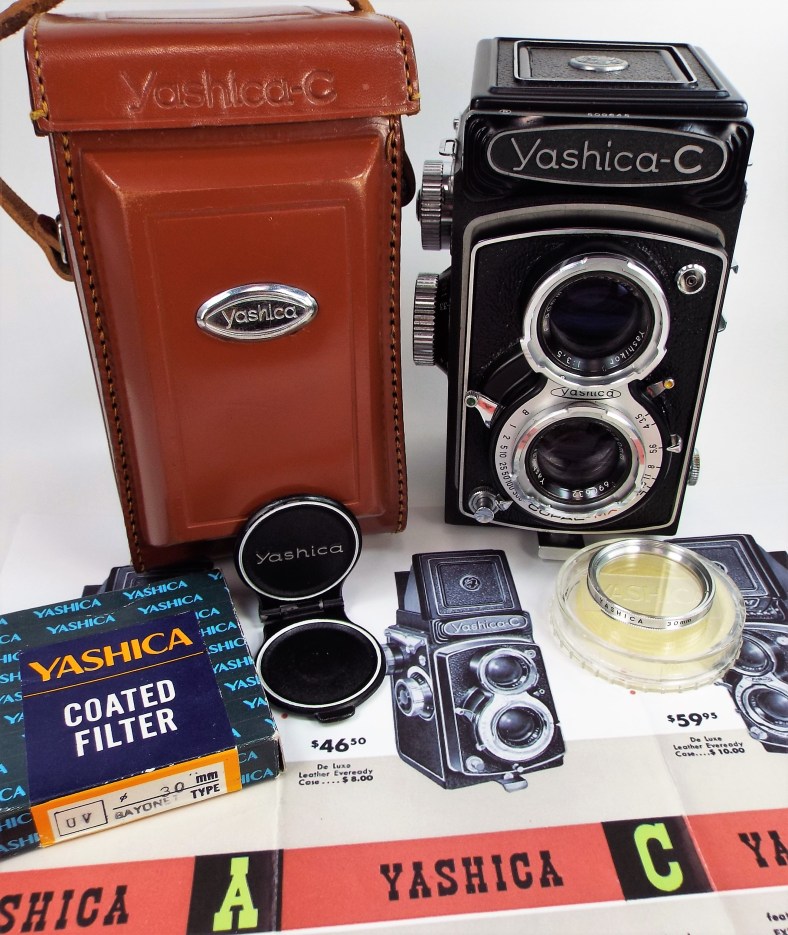
All the goodies!
On a more happy note – this beauty has no mold or fungus and was purchased from a seller in Michigan. Probably a one owner camera – it came with a roll of Kodak Tri-X film loaded inside (at least from the mid 1960s).
Studio Camera: Fujifilm FinePix S9900W
Thanks for your visit and comments are always welcome. C&C ^.^
New Arrival – Fuji Photo Film Fujipet!
Another new (to us) Fujipet has arrived! This one is in gray and came with its original gray leather Pet case. It’s hard to tell exactly when this one was made – guessing it’s a 1959 or 1960 version.


We just love all the quirky knobs and numbered levers – sweeping curves and that crazy viewfinder.

A true medium format 6x6cm film camera – as simple to use as falling out of bed. Takes 12 exposures on 120 roll film.
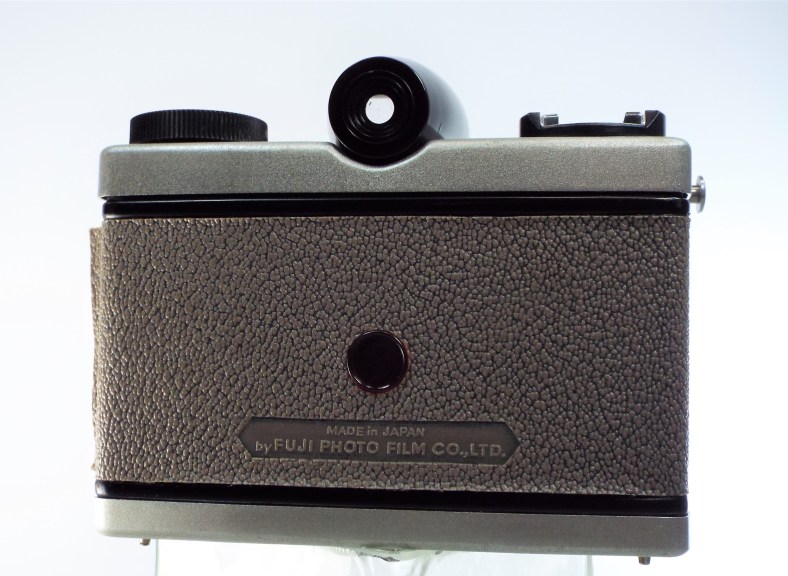
Simple and then simple some more.
The Fabulous Fuji Foto Photo Film Fujipet!
Thanks for your visit!
C&C ^.^
Polaroid Pathfinder 110 – 1953
A beautiful Polaroid – my dad’s favorite camera! I will never let it go.


It’s a massive camera! In 1953 these sold for around $250! That was big time money in the early 1950s to be sure.
Camera: Samsung Galaxy S4
Thanks for stopping by! Chris ^.^
Petri 35 Super 28 – 1956 – A little gem with a serious flaw.
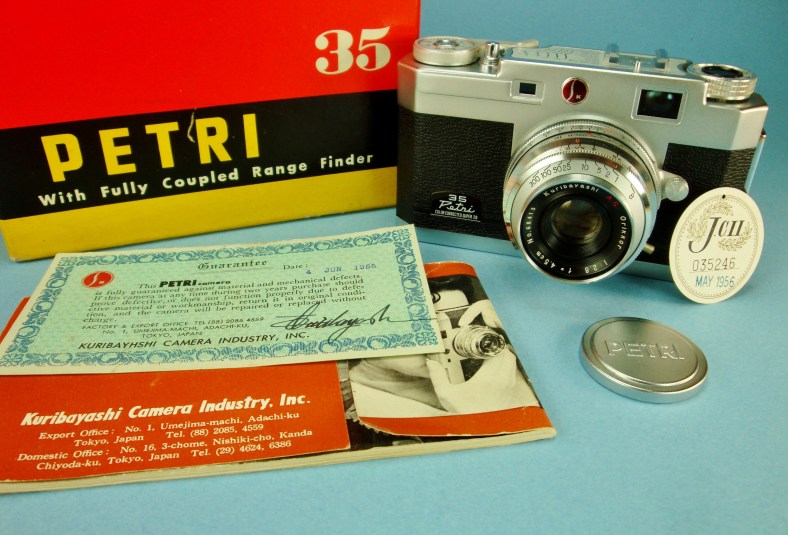
This Petri 35mm rangefinder was purchased in June 1956 at a U.S. military facility in Japan. It came with excellent documentation – sales receipt (not shown), instruction booklet, guarantee card (dated 4 June 1956), a JCII hang tag (May 1956), original metal lens cap, the leather case (not pictured) and the original box. It was nice to see that all of these items stayed with the camera after all these years.
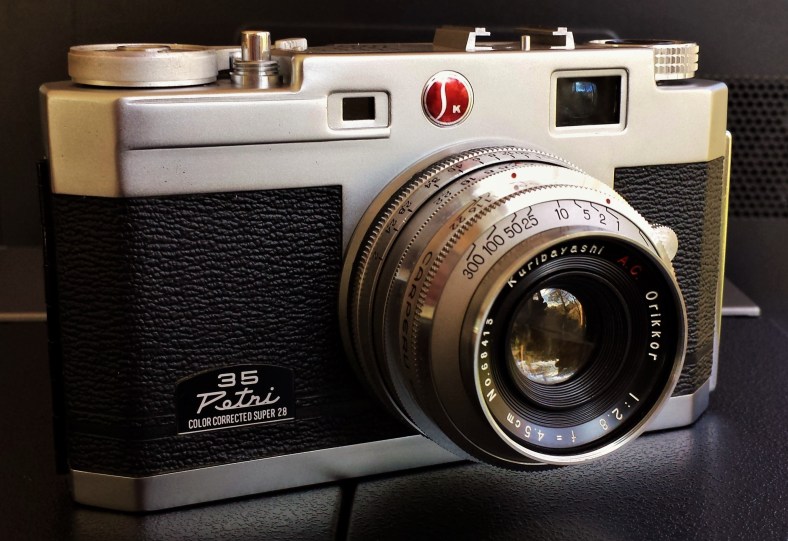
We don’t normally collect rangefinder cameras – this one was included with a Yashica TLR from the same year (and purchased by the original owner at the same time). After some initial cleaning and inspection it was discovered that the lens (last element inside) was ripe with fungus. I had a feeling it would (most of this era do) as it still had a roll of film inside with a light white haze on it. Not a good sign. Everything worked on the camera but there was no point in testing it with a fresh roll of film – way too much fungus. I don’t try to clean the lenses on these types of cameras. My one and only attempt resulted in a completely clouded lens.
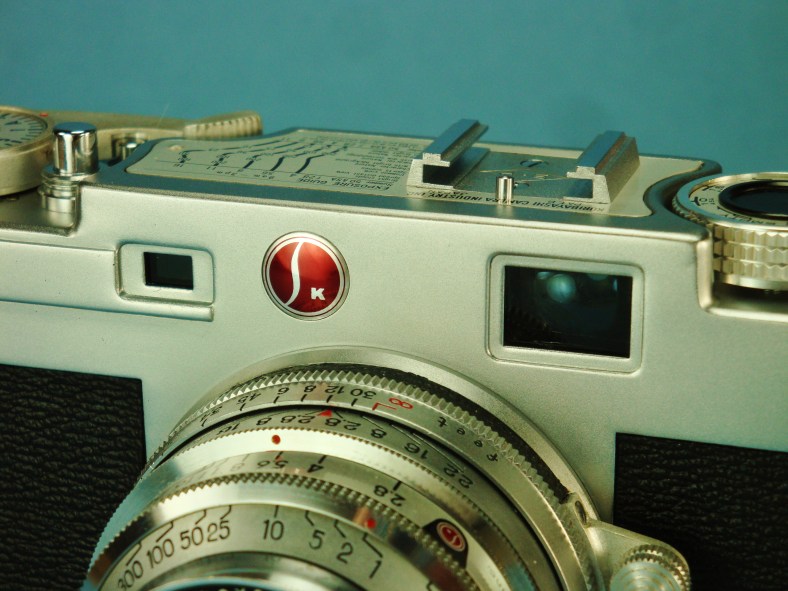
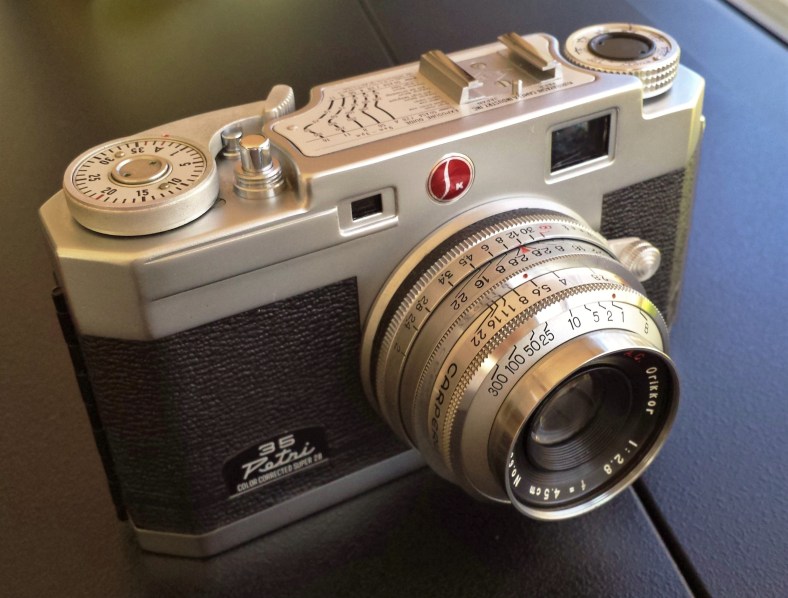
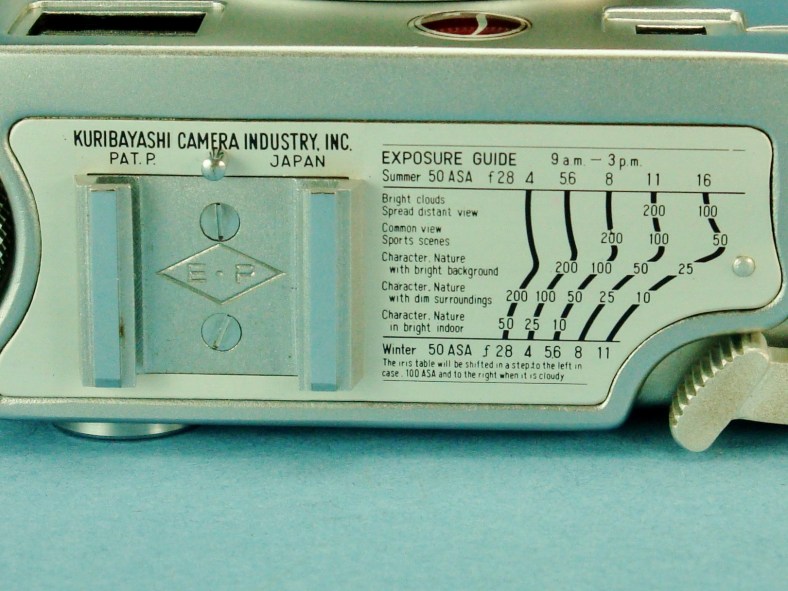
In our opinion, this mark identifies mostly cameras and camera equipment and sometimes electronics like stereos, that were sold in Japan for export. The <E.P> stands for ‘Exempt Product or Exempt Purchase’ to let customs officials know that fees (taxes and the like) were not paid. This allowed foreigners living in Japan to buy high quality products and not pay taxes as long as it was purchased for personal use. Mostly available at U.S. military facilities (Navy Exchange and the like). May have also been available for diplomats and their families and tourists that shopped in the duty free shops. Notice that the symbol is on the camera’s cold shoe (accessory shoe). The camera maker could easily change the shoe for a camera made for sale in the domestic market.
This lovely set is now proudly owned by a collector in Italy. He purchased it with full disclosure on our part that the lens had fungus. Some of our more collectible Yashima-Yashica twin-lens reflex (TLR) cameras have some fungus and mold spots. They have all been exposed to strong sunlight and are stored properly to prevent further fungus and mold growth.
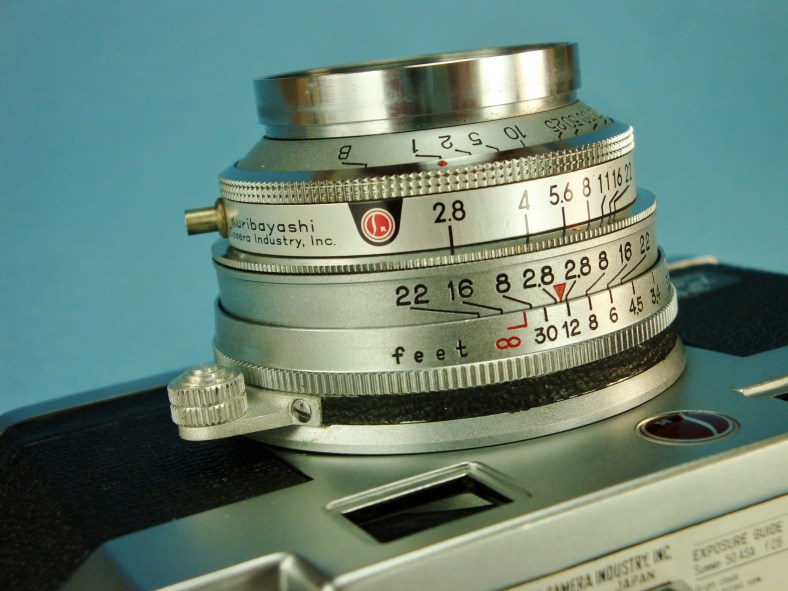
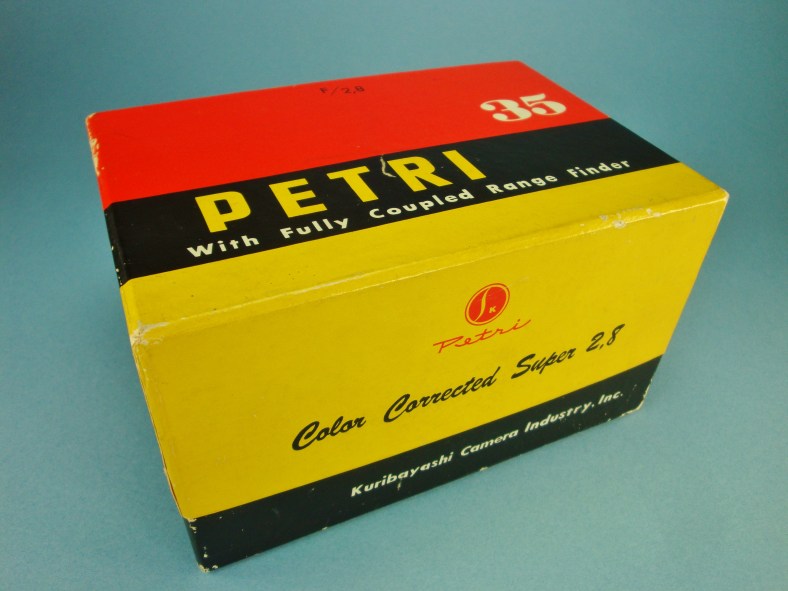
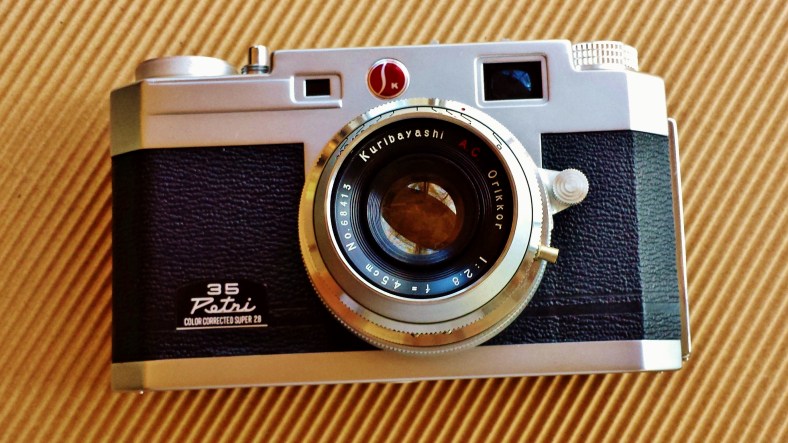
So there you have it – a short photo essay on a very attractive camera and set from Petri. We wish that it could have stayed in our collection since it was so complete – but our true focus is Yashica 35mm SLRs and Yashica TLRs with an occasional rangefinder thrown in for fun!
Camera(s): Sony DSC-W170 and Samsung Galaxy S4
Many thanks for your visit – comments are always welcome. Chris & Carol ^.^
Neat Little Find
This camera cleaning cloth with an advertisement on it was with a Minolta camera we just acquired from a seller in Mie Prefecture, Japan.
A machine translation tells us that it is for a camera shop in Tokyo – Sakaecho – Tama 多摩ニュータウン.
Neat find from about 1963 or so… especially with the Contax camera depicted. It’s 15 x 15cm square. We love the 4 digit telephone number! Just before the 1964 Tokyo Olympics.

Thanks for your visit!
C&C
Mystery Models – v2.0

1959 Yashica Model A twin-lens reflex camera instruction booklet cover.
This dapper dude appears on at least two different Yashica brochures in the late 1950s and early 1960s. This cover shot is from a Yashica A III instruction book from 1959. He always appears with a “modern” pipe, fancy derby and is winking at the camera. My thought is that he is an actor who may have lived in or was super popular in Japan during that period. Any thoughts? Please see the back cover image below.

Here he is in a German language Yashica brochure from early 1960 (below).

Any help would be appreciated. As researchers of silly Yashica stuff, knowing who he is helps with some other silly stuff we’re interested in (Yashica-wise).
Thanks!
C&C
Help solve another mystery… who is she?
Help! She’s been driving us crazy for years trying to identify what type of uniform she’s wearing.
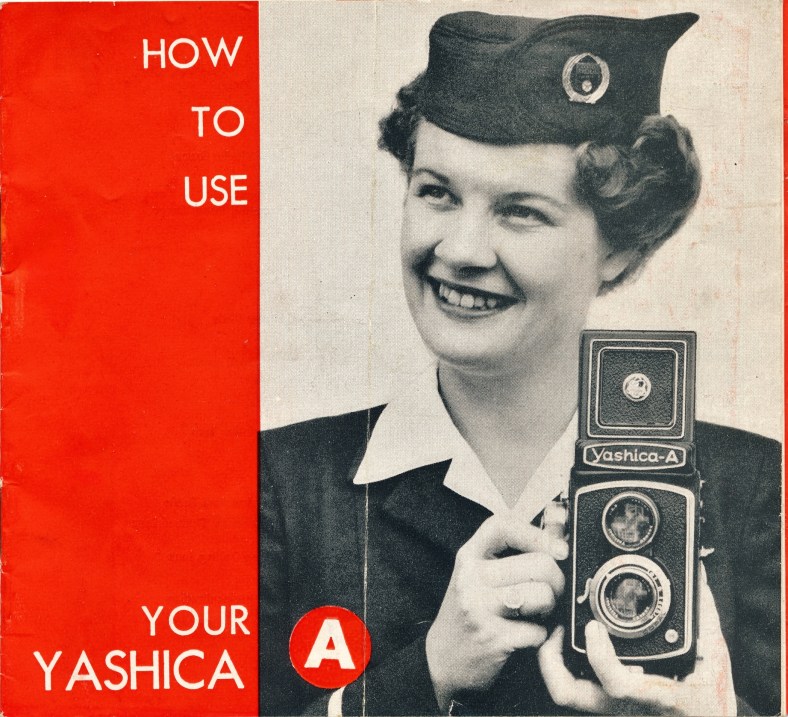
Is she a stewardess, cruise ship officer, tour bus guide, train hostess? The uniform is certainly not a military uniform (but could be). This instruction booklet is from the late 1950s. Her cap is keeping with the style of the airlines at the time but definitely not JAL. Take note, she has a gold stripe on her right sleeve which wasn’t consistent with airlines unless you were in the cockpit. There is a hint of what looks like a pin (wings ?) on the left side of her jacket and of course there’s the emblem (logo) on her cap.
We’ve tried to place her by her looks. She doesn’t appear to be Asian… we think she looks northern European or from the UK… just don’t know.
We’re open to any and all ideas… just for fun since this is the only time Yashica used an image with a model wearing a uniform on the cover of their booklets. It was replaced rather quickly with a plain cover on later booklets.
Many thanks! We’ll take any and all guesses too.
Chris and Carol
 Chasing Classic Cameras with Chris