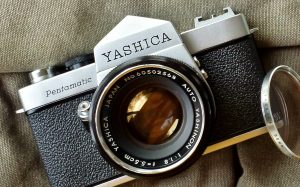
The tank that is the Pentamatic ’35’. The Pentamatic pictured above shows some signs of frequent past usage. Some bright marks on the silver finish, a few dings and dents here and there…
Source: Pentamatic ’35’… 11.3.2016
The tank that is the Pentamatic ’35’. The Pentamatic pictured above shows some signs of frequent past usage. Some bright marks on the silver finish, a few dings and dents here and there…
Source: Pentamatic ’35’… 11.3.2016
The tank that is the Pentamatic ’35’.

A nice example of an everyday shooter. This one was made in May of 1960 and looks like it saw some regular use. The Auto Yashinon lens is spotless inside and shows a nice patina on the barrel.
The Pentamatic pictured above shows some signs of frequent past usage. Some bright marks on the silver finish, a few dings and dents here and there… some bits of surface corrosion but nothing broken or inop. Per the serial number on the body and on the lens, this camera and lens set were made in May of 1960. The body was the 4,410 th to roll out of the factory since production began in December 1959.
The Pentamatic and its standard lens – the Auto Yashinon f1.8 5.5cm is a beast! Lots of brass and glass went into making these beauties. We love the chrome nose on the lens… a quick swab with some 91% isopropyl alcohol and it shines like new.

As is typical with these 56 year old cameras, the mirror tends to show some grime and “soot”. A very very gentle swab with water and some dish soap does a good job with the dirt and some of the soot but the mirrors never really come fully back to their original shine.
The metal lens cap (52mm) is quite solid and is backed with black felt like material. Occasionally you’ll find some pretty dented up caps but since they were so well built you’ll more than likely find a good example out there.

The Nicca Camera Company (Taiho Optical Company) inspired cloth focal-plane shutter. Simple and pretty rugged. This one has some white spots on it as most do… we tend to leave them be rather than trying to clean the them off.
This one (above) has a nice clean film path and film chambers. They’re easy to keep clean with a cotton swab and some canned air. Don’t blow directly on the shutter curtain with the high pressure air!
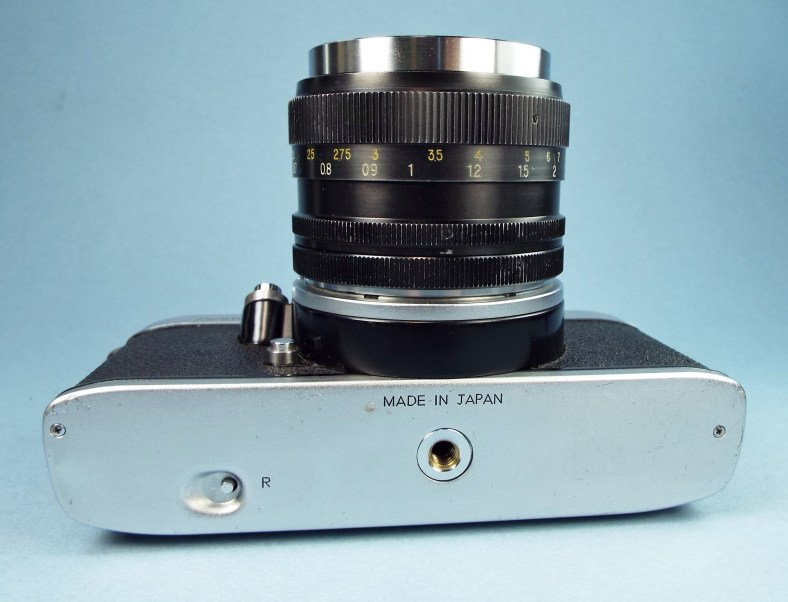
Since the Pentamatic with lens weighs nearly 2.5 pounds, the base plates usually take a beating. This one is rather good and has held up well!
If you’re interested in adding a nice Pentamatic’35’ to your vintage camera collection, hopefully we’ve shown what a super clean but well used camera looks like. Be careful when you’re shopping around – the mirrors often get stuck in the up position. A few little adjustments (and some lube) usually get them working again but they’ll remain “tricky”. Obviously look for evidence of severe damage – a major dent that prevents something from operating properly would be one to definitely stay away from. The lenses often freeze up do to lack of use… a short time with a hair dryer can often get them moving again.
Best of luck on your search! Any questions please feel free to contact us.
Many thanks, C&C
We know… doesn’t make sense, does it? Doesn’t even sound right… “Nicca Pentamatic”.
Stay with us and we’ll try to make our case. Recently discovered information has filled-in some of the missing links in the development of our favorite obsession camera. The mysterious and seldom seen Pentamatic ’35’… Yashica’s first SLR.
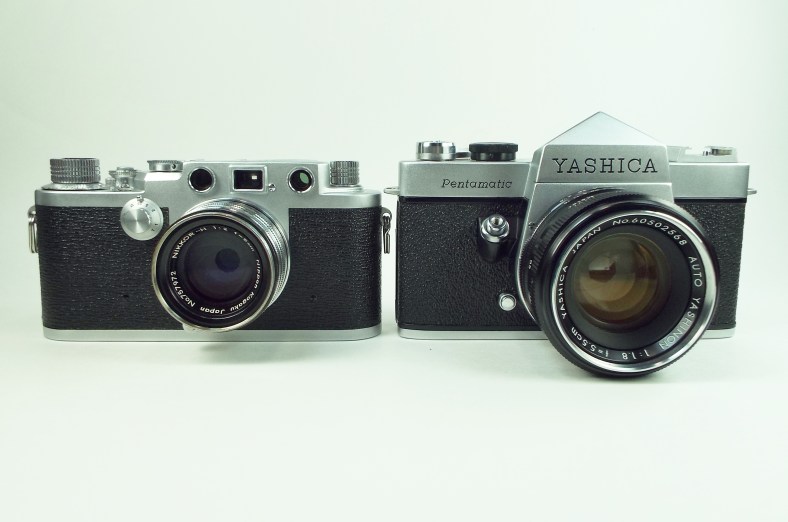
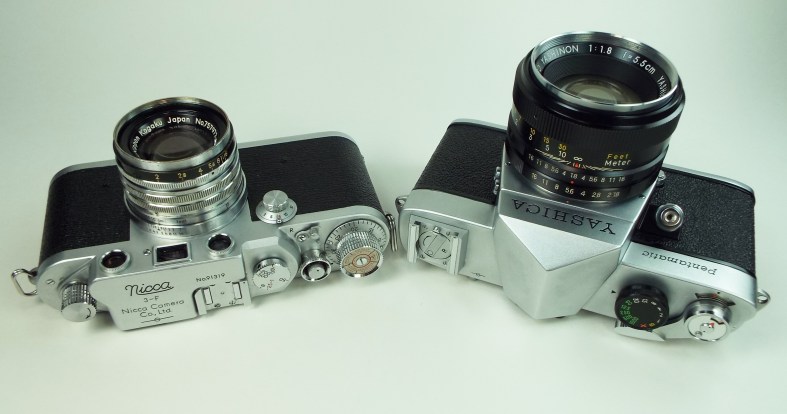
Nicca 3-F 35 mm rangefinder (left) and Yashica Pentamatic 35 mm single-lens reflex SLR (right).
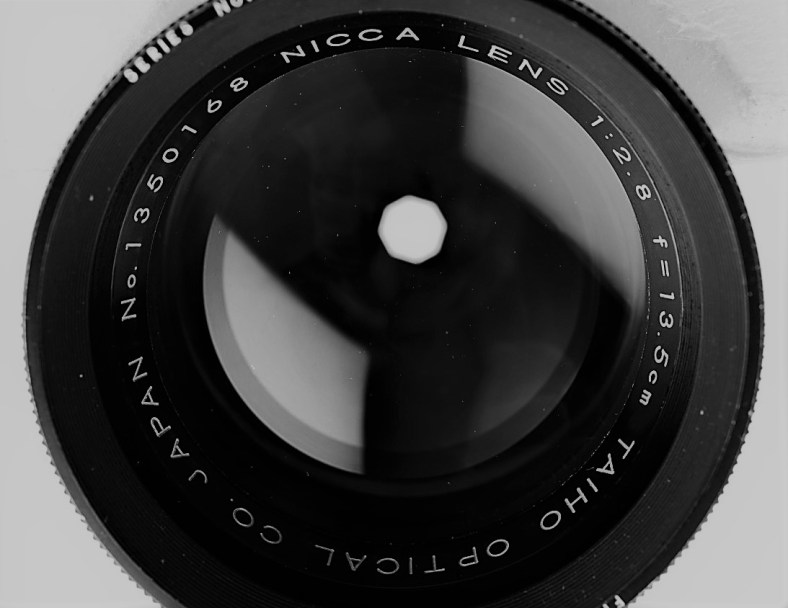
A few interesting bits of info have come to our attention recently. We were alerted to an auction by our friend Paul Sokk (http://www.yashicatlr.com) that listed a 13.5 cm f/ 2.8 lens made by Taiho Optical Company – Nicca Lens. Having never heard of the company, Taiho Optical, and knowing about Nicca’s history, we couldn’t figure out where and how there could be a Nicca connection.
Let’s backtrack a bit with a quick history lesson. Yashima-Yashica was a very successful maker of high quality, low-cost twin-lens reflex cameras but hadn’t moved into the 35 mm market as of early 1957. It appears that the president and founder of Yashima-Yashica, Mr. Yoshimasa Ushiyama could see that although Yashica was successful building TLRs, the market for them would slowly diminish as new, smaller and easier to use 35 mm cameras would grab the marketplace. He wanted in but how? Yashica had no experience in 35 mm cameras, especially rangefinder cameras with cloth focal-plane shutters. There were dozens of Leica copy cameras in Japan (and the world for that matter) but possible patents protected specific manufacturer’s shutter designs. If he could buy into an established company then he could use their shutter design and incorporate it with early Yashima-Yashica designs. In May of 1958, an opportunity presented itself. Nicca Camera Company was apparently experiencing financial difficulties and may have been on the brink of bankruptcy. Nicca cameras were well known and well respected – they made high quality 35 mm rangefinder cameras with focal-plane shutters. They used Nikkor lenses with the L39 screw mount. Mr. Ushiyama was in a rush to purchase Nicca before they went belly up. Advisers cautioned to wait until Nicca went bankrupt arguing that they would be able to acquire it for a better price. Mr. Ushiyama knew that that outcome of a bankruptcy could take longer than he was willing to wait and there would certainly be more suitors to compete with. So the deal went through… sort of. As best as we can glean from our research, a “religionist” “admonished” Mr. Ushiyama for rushing into the deal and cautioned that Yashica itself would suffer a “decline” if all of the transfer were made immediately.
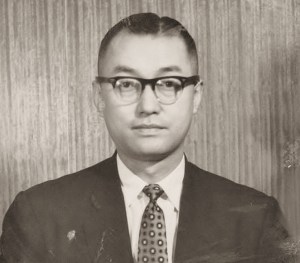
Yashima-Yashica founder Mr. Yoshimasa Ushiyama.
OK, OK! We give!!! We share your feelings dear reader – what’s the connection between Nicca and the Pentamatic? Taking the advice of the religionist, Mr. Ushiyama created a new company. Nicca would become Taiho Optical Company. Say what? Nicca wasn’t absorbed into Yashica in May of 1958, instead, they became another company that could continue to operate with Yashica but without becoming Yashica. Simple. Confused? Mr. Ushiyama listened to his adviser so nothing bad happened. It appears that the former Nicca employees were now free to develop new processes and designs with the financial and technical support of the much larger Yashica. What did Yashica get for its money? Plenty it would seem. Access to years of 35 mm rangefinder manufacturing experience and access to a proven focal-plane shutter. Important steps in building a 35 mm single-lens reflex camera. We don’t know (yet) which one of the two companies came up with the design of what would become the Pentamatic. Was it mostly a Yashica design that had been kicking around for a while lacking a focal-plane shutter, or was it mostly a Nicca design that lacked the financial means to bring it to market? We feel that it was more than likely a 60 – 40 split with Nicca as the 60%. Just a hunch, no facts at the moment.
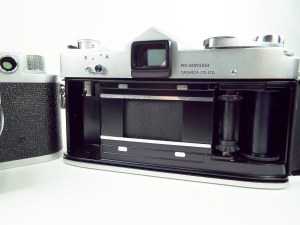
Pentamatic’s focal-plane shutter. Thanks to Nicca.
But what did the Taiho Optical Company make? Yashica didn’t make their own lenses, Tomioka Optical of Tokyo did. Was the former Nicca, now that it had become Taiho Optical, going to suddenly start making lenses? At the start of this blog, we mentioned that we were alerted to the existence of a 13.5 cm lens for sale with the Taiho Optical Company-Nicca Japan markings. Other than that, nothing.
So when did Mr. Ushiyama merge the two companies? He apparently listed to his adviser and waited eight long years before merging the two. From 1960 (when the Pentamatic was released) until 1968, when he not only made Yashica whole, but he also acquired long time lens supplier Tomioka Optical.
Now we know how the Pentamatic came to be and why it could be called the Nicca Pentamatic.
Thanks for sticking with us. Comments? Likes?
Chris and Carol
Just a collection of recent observations and discoveries. Some stuff about Nicca, a little Yashica and some random thoughts.

Yashica-Nicca III-L advertisement 1959. Yashima-Yashica purchased Nicca Camera Co., Ltd. in May of 1958 and ran two factories that produced interchangeable lens rangefinder cameras until early 1960.
Close-up of the bottom of a Yashica leather camera case showing distinctive trademark of the maker. We don’t know who ‘K.K’ in a square is but we’re working on it.

Leather makers mark. Trademark?

Another leather case and another trademark. This time ‘T.K’.
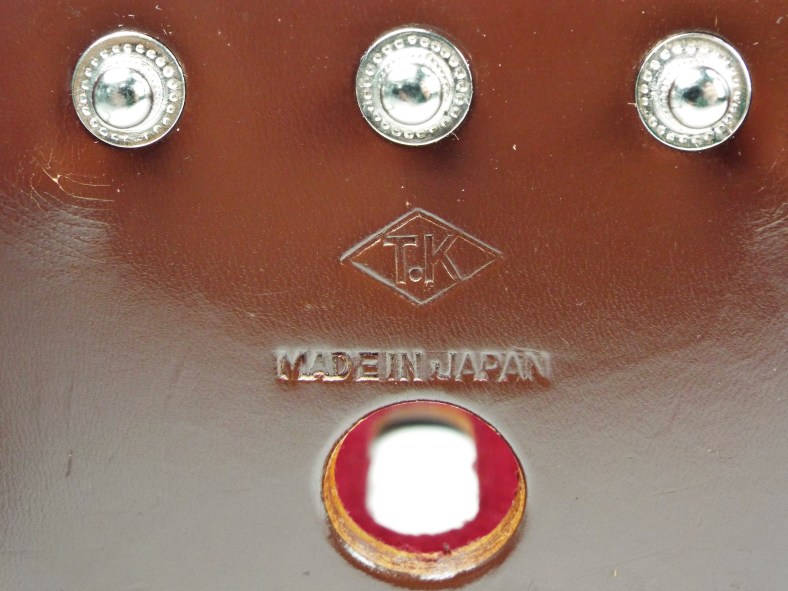
Leather camera case (Yashica-A twin lens reflex) with maker’s mark. Same ‘T.K’ as before but now the ‘Made in Japan’ mark was added. Camera and case are from November 1961.
There are other marks on Yashica cases and we’ll dig them up for you soon!
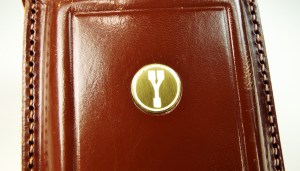
Yashica-A logo on 1961 leather case.
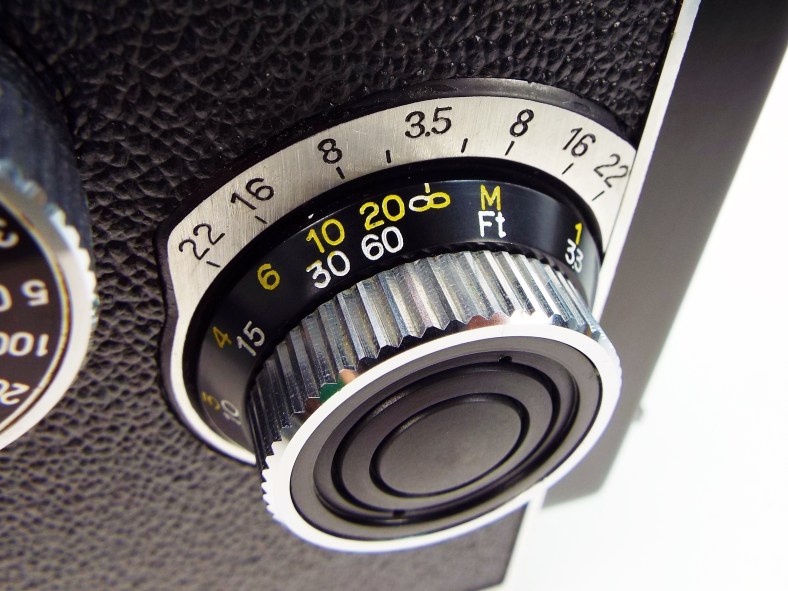
Close-up of the focus knob on the 1961 Yashica-A. Last Yashica TLR with yellow meter scale.

1957 Nicca 3-F 35 mm rangefinder with original box.
Thanks for sticking with us and we hope you enjoyed the post. Feel free to share your comments with us.
Chris & Carol

Asahi Pentax H2 and Yashica Pentamatic ’35’. Both cameras were on dealer’s shelves during the spring of 1960. The H2 was introduced in the autumn of 1959. Production began on the Pentamatic in December 1959 and was available for purchase in the US by June 1960.
The Asahi Pentax H2 and the Yashica Pentamatic ’35’ were direct competitors during the early 1960s. Yashica was well know for their high quality but low cost twin-lens reflex (TLR) cameras and were making a name for themselves with quality 8mm movie cameras and 35mm rangefinder and viewfinder cameras. The Pentax H2 was the next step for the Asahi Optical Company to take after the successes of the earlier Asahiflex, the first Pentax (1957) and then the Pentax K (1958). For Yashica, this was their first 35mm single-lens reflex (SLR) camera.
Approximately 41,000 Pentax models were sold before the H2 came to market by late 1959. We don’t know how many of the H2 models were made between October 1959 and June 1960 when the Pentamatic was first available for sale. A ‘guesstimate’ would be around 5,000 to 7,000 but no hard evidence exists to say how accurate that guess is. We do know that by May of 1960, Yashica had produced around 4,000 units. Our May dated Pentamatic has a production serial number of 3,354. One would think that Asahi had a tremendous advantage over Yashica just by the sheer number of SLRs produced before Yashica even got started.
Which camera was better? If we use longevity as the primary test, the Pentax H2 (S2) and the entire run of this Pentax series blows the Pentamatic away! The original Pentamatic ’35’, the Pentamatic II and the Pentamatic S models were basically gone by 1962 and by our estimate, only 25,000 units were built (the original Pentamatic ’35’ accounts for about 20,000 of that total alone). By some estimates, the Pentax H2/S2 sold 130,000 units between 1959 to 1963. If you take a look at eBay and Yahoo Japan auctions you’ll likely find at least a dozen or so H2/S2 cameras available for bids at any given time. Pentamatics seldom appear the model II and the model S are virtually non existent.
What’s different? A lot! First how about weight…
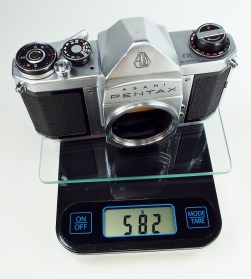
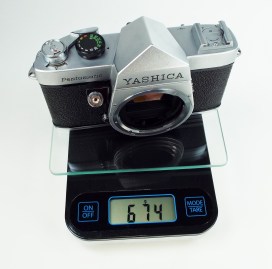
But weight doesn’t equal quality… or does it? It is of our opinion that Yashica wanted to appeal to two types of customers with the Pentamatic. The first would be the serious amateur photographer and the other would be budding professionals. At around $159 in the US, it was within a comfortable price range for both types of customers. The Yashica designers went “over the top” with the build… bigger and heavier had to be better and professionals would seriously consider the Pentamatic as it would stand up to the demands of rugged and repeated use. We agree with the designers. The Pentamatic’s weight does give the impression of quality… the fit and finish are pleasing too. That’s not to say that the Pentax feels or looks cheap or that it’s not designed well. We love the look of the Pentax and so did countless others.
Why all the extra weight and bulk for the Pentamatic? To handle the weight of the unique bayonet mounting for the Auto Yashinon lens was more than likely the reason. The M42 screw mounting for the Pentax meant that the body could be made smaller and lighter. Why Yashica decided to go with its own mount will never be known. At the time of the Pentamatic’s release, hundreds of lenses with the universal M42 mount were available. Compare that to the maybe three Pentamatic bayonet lenses available. This single reason, in our opinion, had to have turned away thousands of potential buyers. Yashica’s bayonet mount is actually very well designed and the mounting of the lenses was quick and secure with less than a one quarter turn. M42 screw mount lenses take about 3-5 revolutions to secure the lens.
The lens mounting flange on the Pentamatic body is 57mm… on the H2 it’s only 49mm. The overall dimensions of the two bodies are rather telling… the base plates are almost the same… 139mm for the H2 and 141mm for the Yashica. The height of the body (base plate to top plate) is 72mm for the Pentamatic and 67mm for the Pentax. Overall height from the base plate to the highest point of the pentaprism is interestingly 90mm for both cameras.
Other differences and features…

Notice that the rewind knob (camera’s left side) on the H2 is easily accessible and has a more “standard” design then the Yashica’s which is recessed below the cold shoe. An advantage on the Pentamatic is that it came with a built-in shoe for a flash or light meter where the H2 required a shoe to be mounted to the eyepiece and rested on the pentaprism (which almost always left a dent). The film speed setting dial on the Pentax is located on the left side under the rewind knob. The Pentamatic’s was on the back center of the film door.
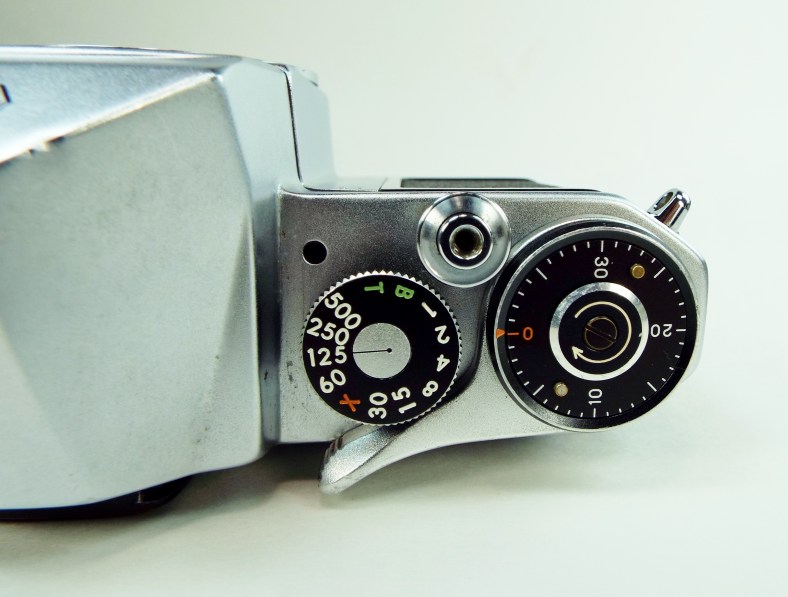
The right side of the H2 top plate. The exposure counter did not reset itself when the camera back was opened. Top shutter speed is 1/500th of a second. Shutter button is top mounted (traditional location).
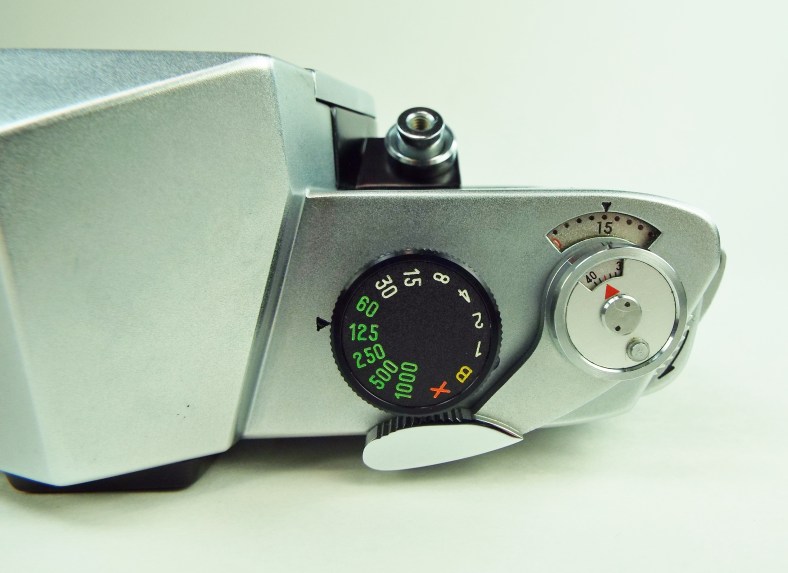
The right side of the Pentamatic top plate. The smaller dial (with the red pointer) was set to show the amount of exposures on the film. The other small indicator (pointing to 15) was an automatic exposure counter. It does not reset itself when the film door is opened. The shutter speed dial indicates that the maximum speed of the shutter could be 1/1000th of a second. Shutter button was front mounted at a 45 degree angle… not a traditional location but one that feels correct to us.
Asahi Optical Company logo and name.

Angular design of the Pentamatic pentaprism.
Occasionally here at the ‘Fanatic’ we allow ourselves to get diverted from our love affair with Yashima-Yashica. We do enjoy blogging about other 35mm cameras that we find appealing. Today we have a nearly perfect example of one of the early 1970’s workhorses for the Fuji Photo Film Company, Limited, located in Minato-ku, Tokyo, Japan…. the Fujica ST701.
Billed as “the most compact and light weight (780g with f/1.8 lens) full-size 35mm camera with built-in exposure meter in the world” with a complete line of professional caliber interchangeable lenses. The viewfinder is 50% brighter than previous models while its FET-coupled silicon light meter responds to light tens of times faster and with greater accuracy than the conventional CdS meter. These are quotes from Fuji’s sales brochure from 1971.

Fujica ST701 with standard Fujinon lens set from 1971.
The ST701 does handle very nicely and it does “feel” compact compared to let’s say a Yashica TL Electro-X of the same era. We’ll have to do a weight comparison and take some “together” shots.
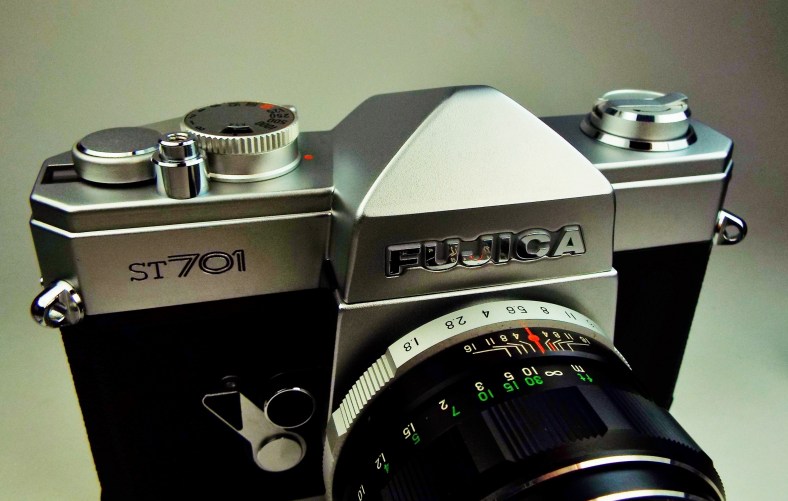
A very good looking SLR with a nice modern look and feel. One of the more unique logos we’ve found on a 35mm camera. It (the logo) actually picks up reflections from the lens. We can’t think of another camera with such a cool logo.
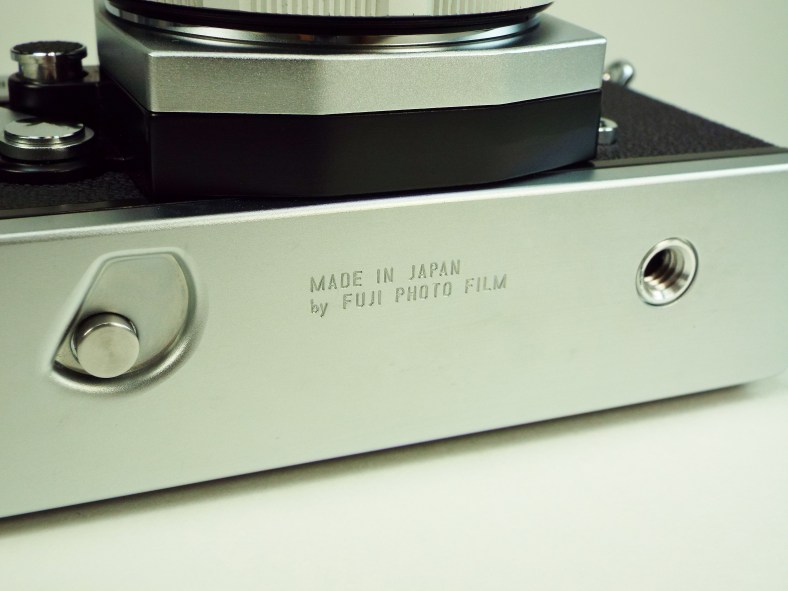
Curious note about this: earlier models have this info on the back left side of the body. Case in point, the cameras depicted in the sales brochure (dated January 1971) has this info on the back of the camera body vice the base plate.
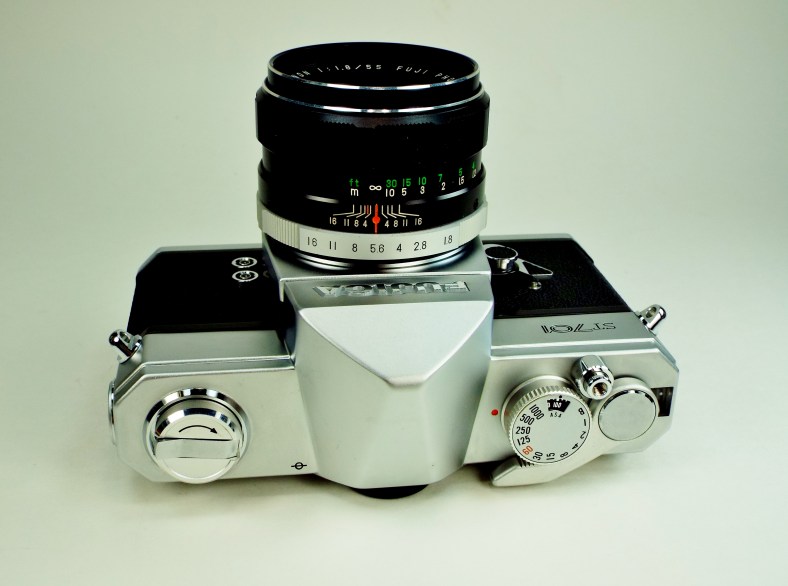
Nice clean layout of the controls and with no fixed hot/cold shoe adds a vintage look to the camera.

Sales brochure dated early 1971.

Sales brochure 1971. What are you never supposed to do when loading or unloading your camera? Never in bright sunlight!
Stop back again as we plan to add some additional images and info on this neat Fuji in the near future. As always, please feel free to comment and add additional information that we may not know.
Many thanks… C&C
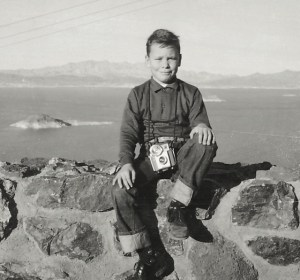
December 1961… at Lake Mead and Hoover Dam. Using a Kodak Brownie Starmite (1960 model) with 127 film. This image taken by my dad with his Polaroid.
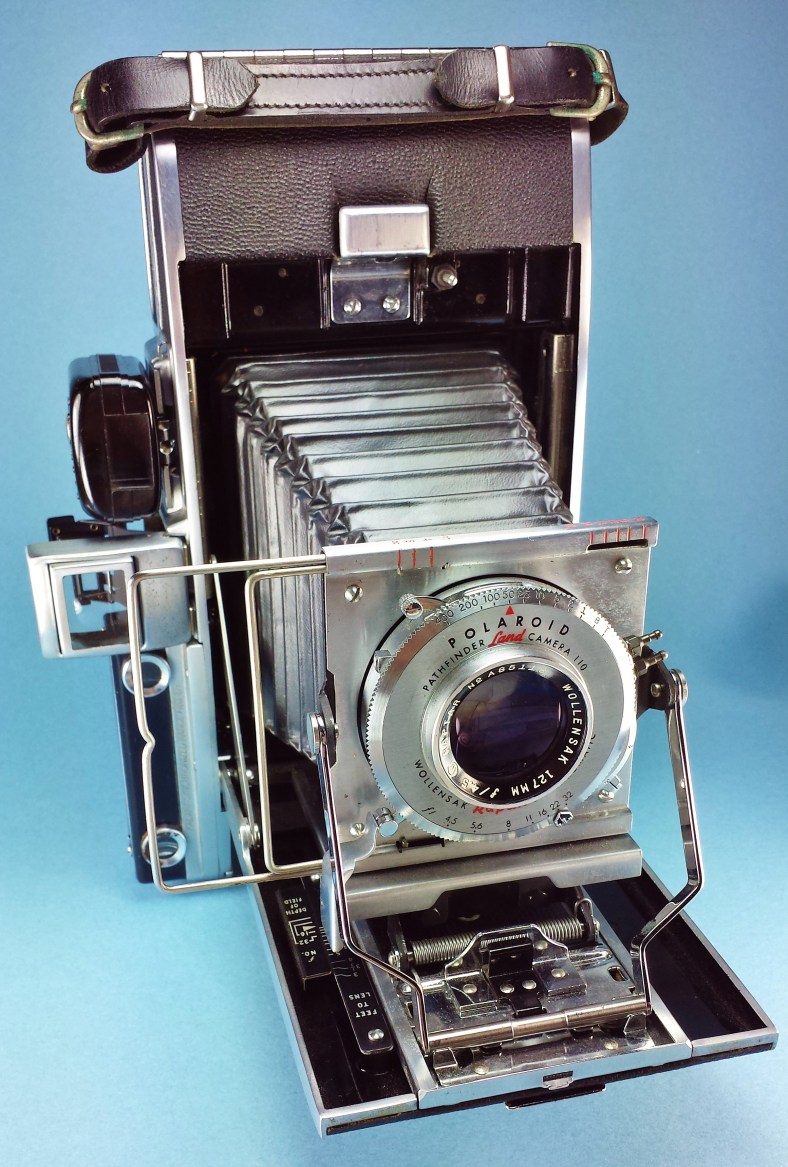
This image of the Pathfinder 110 is as massive as the actual camera!
Over the years I’ve used many different cameras with many diverse formats. My first 35 mm camera was a Nikonos II that I purchased new in 1971. Next came a Yashica TL Electro-X 35 mm SLR followed closely by my first Canon, a F-1 in 1977. Then another Canon… this one a AE-1 (actually Carol’s camera), brief flirtations with a Kodak E4 instant camera and then a Polaroid Spectra and finally my last film camera (for a while)… a Canon Rebel.
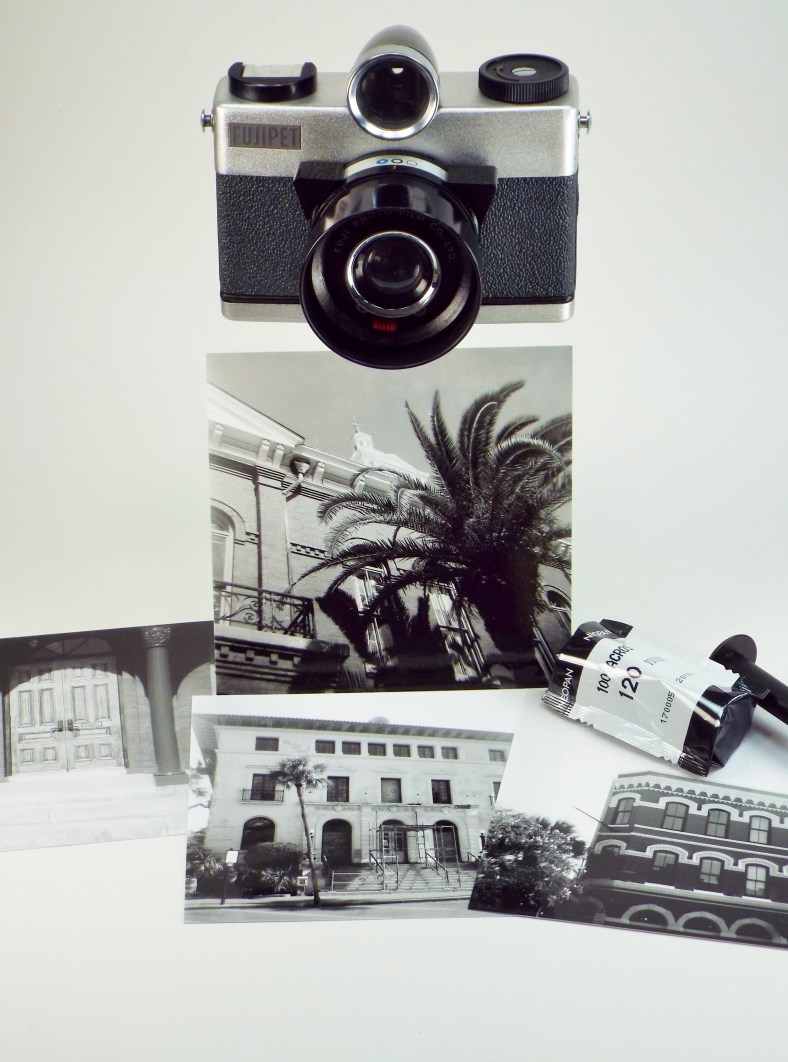
Fantastic Fujipet! Great images with a nice “feel” to them.
Now the challenge! 1958 vs. 1964 technology!
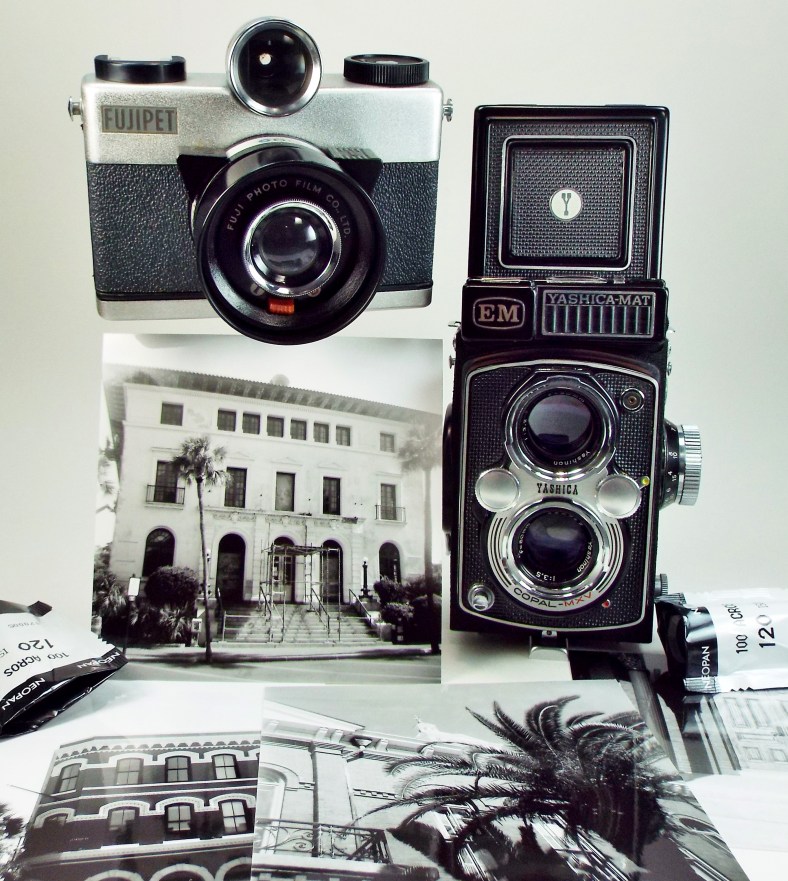
The Fujipet and a small sample of its images. The Yashica EM ready to take on the Pet.
I am very pleasantly surprised with the quality of the images with the Fuji. 120 roll film 6×6 cm negatives make for fine 5 x 5 inch prints (seen above). Which brings me to the point of this article… I’m about to “compare” my Fujipet against my 1964 Yashica EM. Yes I know ahead of time that the images will be night and day better with the optics of the Yashica but I want to also judge the “feel” of the images. How will they “speak” to me. So I’ll be loading the EM with the same Neopan 100 Acros black and white film and shooting the same scenes around the historic town I live in.
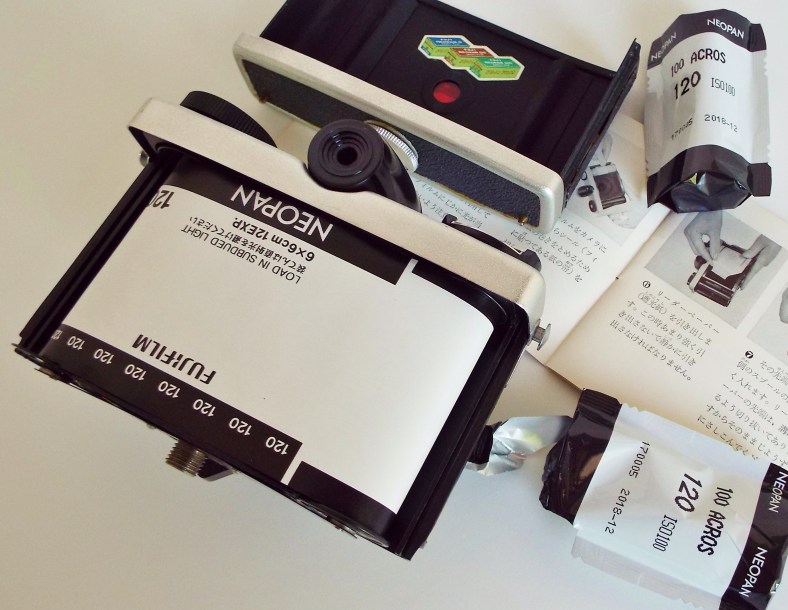
Fujipet loaded with fresh Neopan 100 Acros B&W film.
Another beautiful Tomioka made f/1.2 lens has been spotted. These gorgeous lenses are things of beauty. This one appears to be in outstanding condition inside and out. They are M42 screw mount lenses so they fit a wide variety on SLRs.
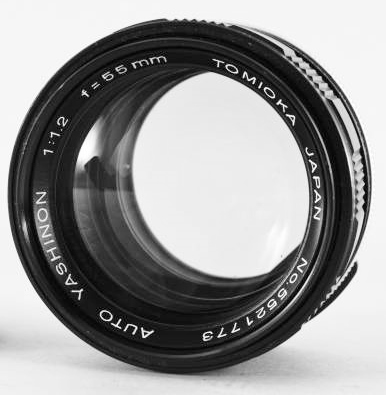
Our feeling on these Auto Yashinon 55 mm f/1.2 lenses are that they are worth the price! Most go in the high $800’s to $1100 or more. The serial number is rather low on this one… the 552 is the model number and the 1773 is the production sequence number.
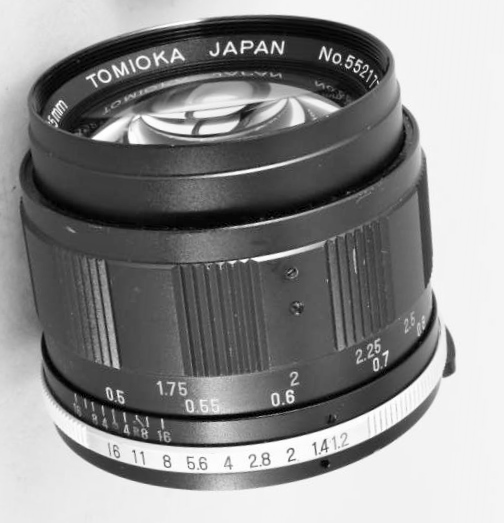
There’s that desirable f/1.2 on the aperture ring.
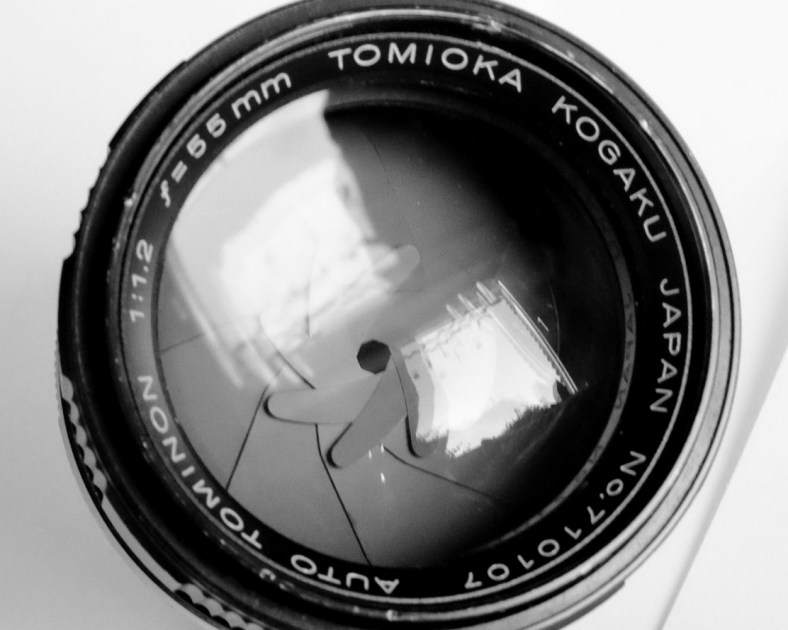
This one looks to be in a bit rougher condition overall with some visible dings. But it’s a Auto Tominon 55 mm f/1.2 lens with Tomioka Kogaku Japan on the lens ring! Double secret nice as it carries the Tomioka name. Still a M42 screw mount lens. Not sure of the serial number… the Auto Yashinon Tomioka lenses start with the model number ‘552’. This one starts with 71 and then what would appear to be a sequence number of 0107. I don’t believe Tomioka built many with their own name on them so it’s likely that this could be number 107.
In our June 20, 2016 post we have a close cousin to the above lens… its serial number is 71 0102 which puts it 5 lenses before the lens pictured above! Not many out there!
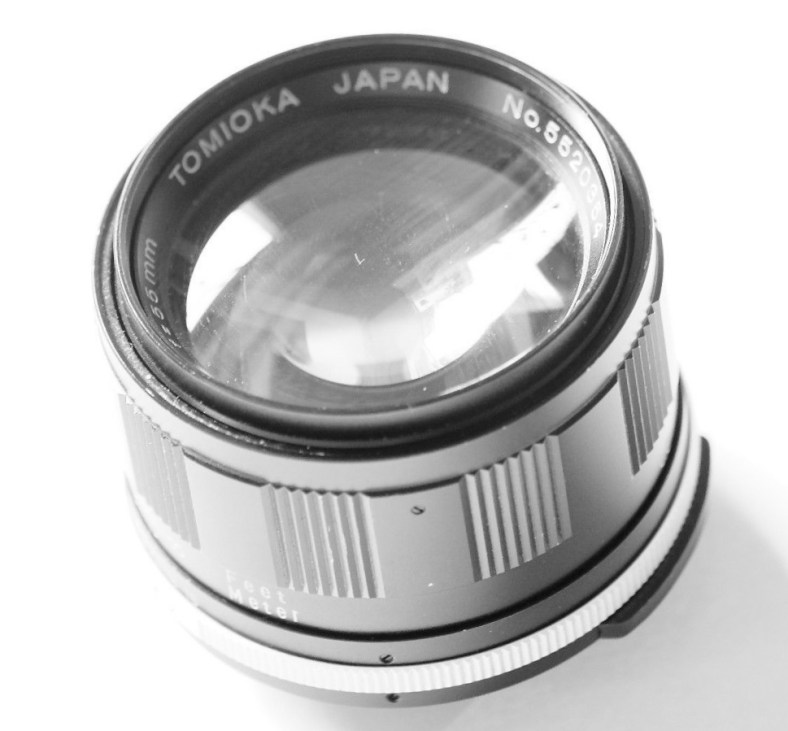
And another Auto Yashinon Tomioka made f/1.2 lens… this one has the model number ‘552’ and a sequence number of 0354.
By the way, the yashica model number of ‘552’ indicates that the lens is a 55 mm and has a max aperture of f/1.2… ‘552’.
If you’re a collector of really nice M42 mount lenses, don’t pass up the chance to add one of these to your gear bag.
Thanks for the visit!
Chris & Carol
I know…
I know… we’ve gone a bit overboard with all this “Fujipet Thing”. One post after another… posts in flickr and posts on our blog (which is supposed to be about the Pentamatic)! We just can’t get enough of our little pet.
I imagine some of this has to do with the Fujipet being considered as a toy camera by many citing the plastic lens and simple operation as the basis for their statements. As best we can tell, the original idea behind the Fujipet was to design an attractive and quirky camera that would allow novice photographers to experience the joys of photography… medium format photography with large 6 x 6 cm negatives that enlarge nicely to let’s say 5 x 5 inches. The original brochures and the instruction book clearly point out that the Fujipet was designed for women and children to experience “picture taking” without lugging around pounds of equipment and learning how to read an exposure meter or focus. Point and shoot as they say.
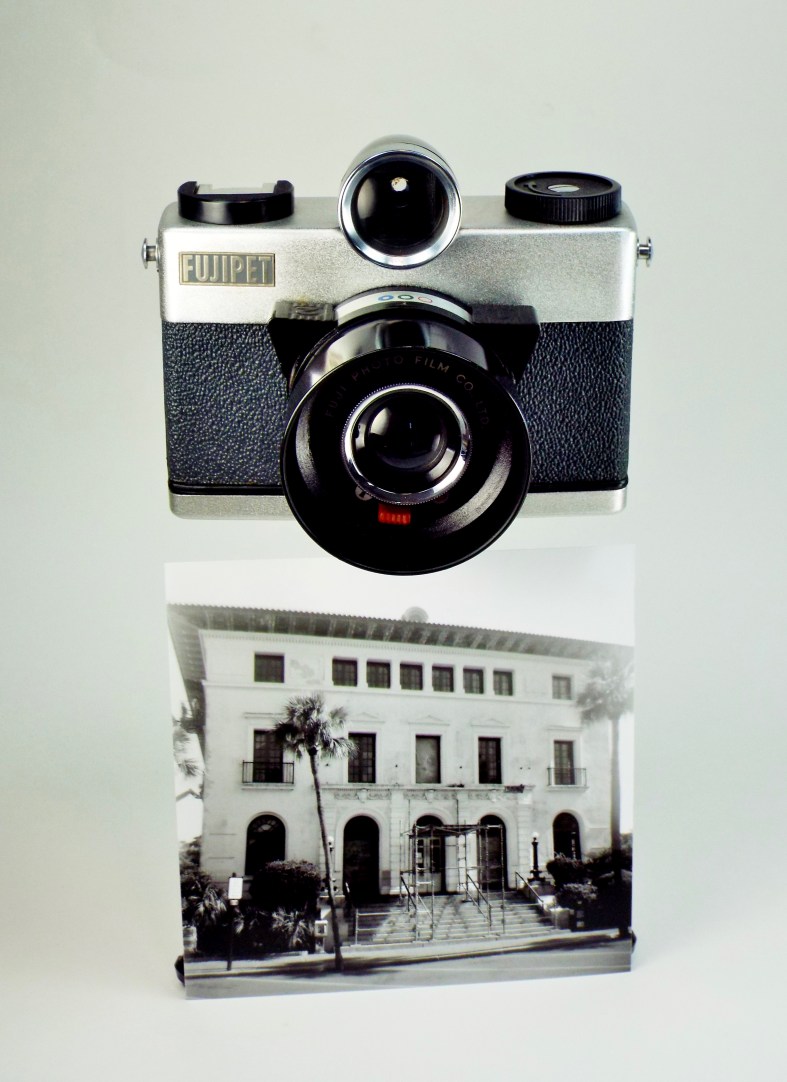
The prints may not be on par with more expensive medium format cameras but they’re not horrible either. The softened edges of the image help to direct the eye towards the center of the picture and gives a somewhat vintage feel to the shot.
For basic 6 x 6 cm photography we completely recommend the Fujipet as a vintage camera that’s worth taking a look at. By the way, we used Fujifilm Neopan 100 Acros 120 film and had the film developed and printed with http://www.thedarkroom.com
Having used the Fujipet in the field I can say that it will become a part of our picture taking gear… its ability to capture quality images without a lot of fuss makes it an attractive alternative to more expensive equipment.
Thanks for your visit… as always, we encourage comments and likes!
C&C
These fun guys are part of the Fuji Photo Film’s instruction booklet for the Fujipet.
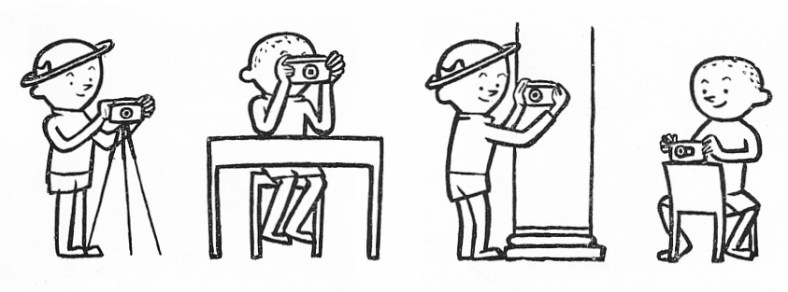
From 1958 or so. Great ways to steady your camera!
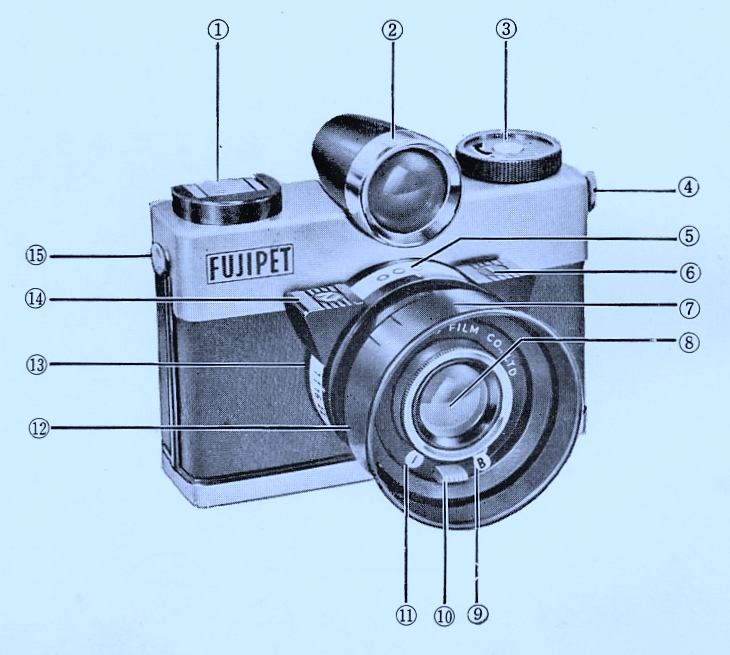
Parts of the Fujipet.
Still waiting on our prints to be developed… stay tuned! And here’s one of the first images from our new Pet!
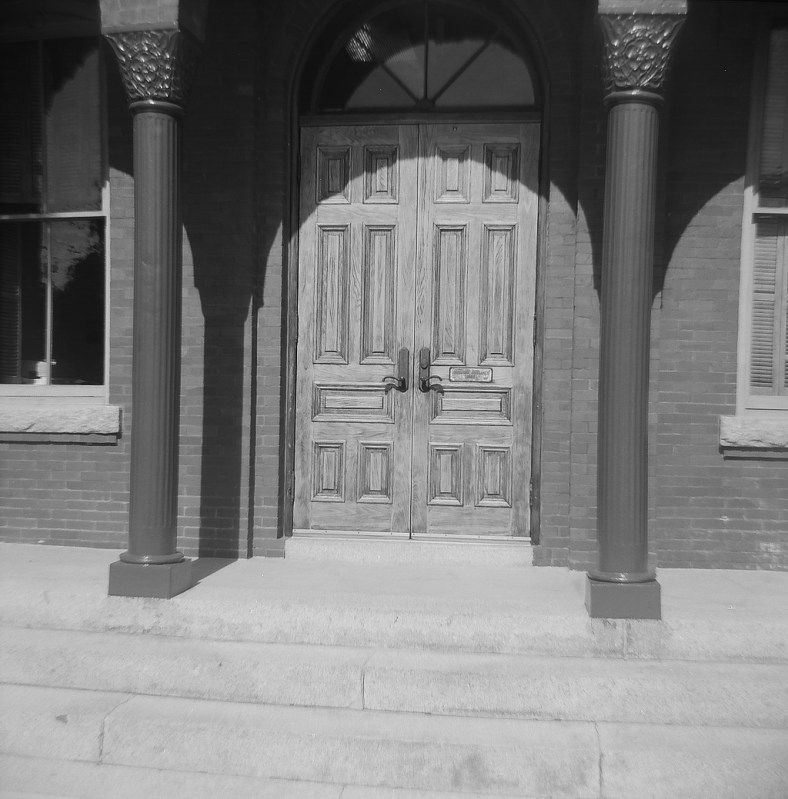
Strong late morning Florida sun in August. Lots of strong shadows and high contrast. The Fujipet handled it very well! The film used was FujiFilm Neopan Acros 100 black and white negative film. The columns are a very deep green and the door is a medium brown. I love the detail in the doors and the slight edge distortion of the frame. This is the actual scan of the 6x6cm negative with no post production.
We sent the film to be processed at https://thedarkroom.com
More to come on another blog.
Thanks, C&C
 Chasing Classic Cameras with Chris