‘Cheeky’ – Weekly Photo Challenge

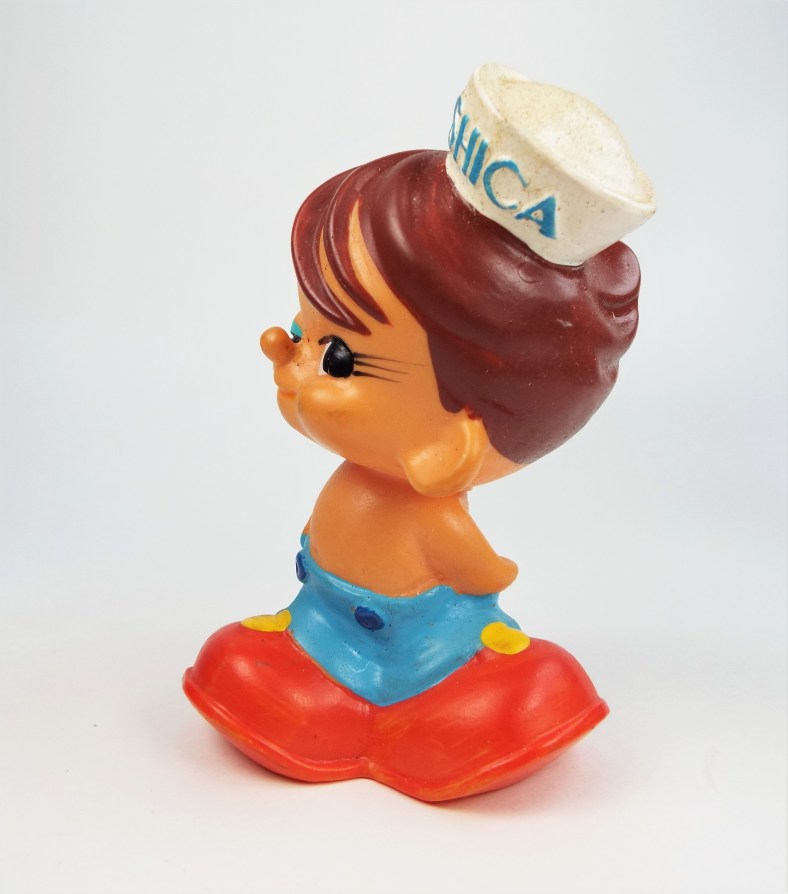
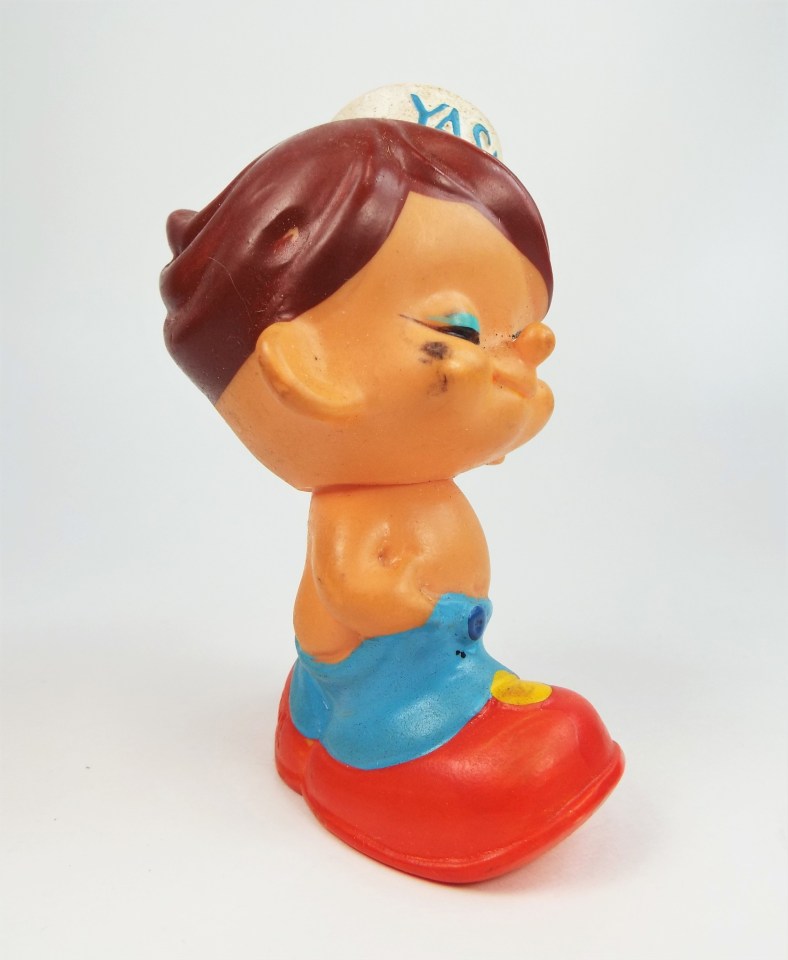
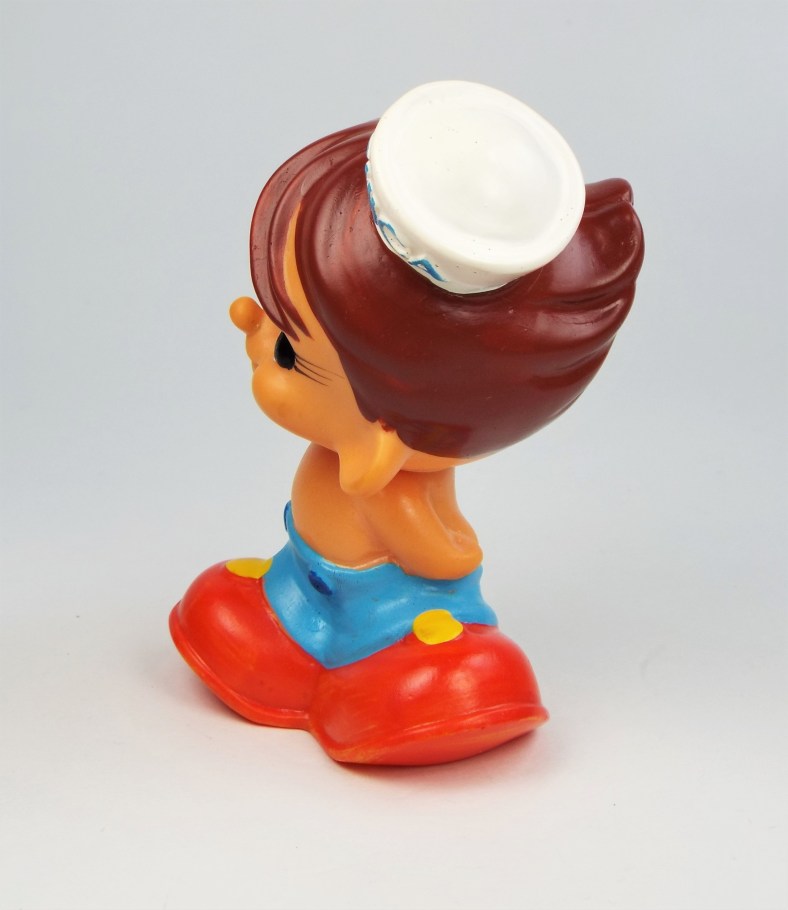
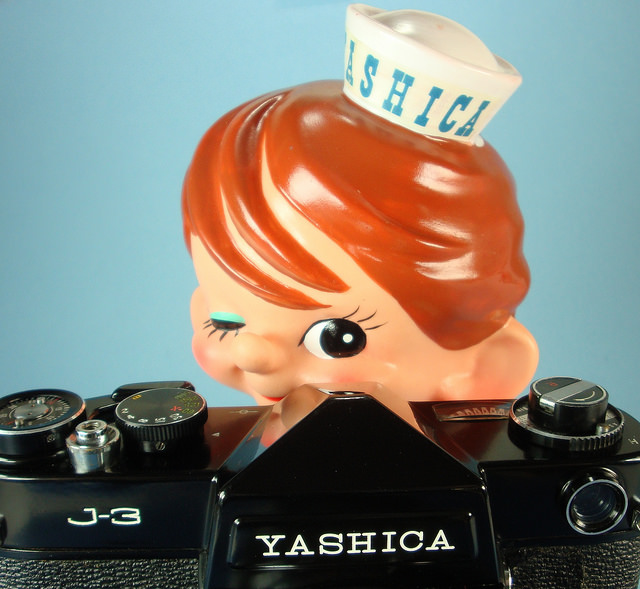
Not a term I would normally use, but maybe this Yashica ‘Sailor Boy’ fits the bill as cheeky.

DSC07069

Yashica’s advertising figurine from 1962.

Chris

Please respect that all content, including photos and text, are the property of this blog and its owner, Yashica Pentamatic Fanatic, Yashica Sailor Boy, Yashica Chris.

Copyright © 2015-2017 Yashica Pentamatic Fanatic, Chris Whelan
All rights reserved.

The Yashica Pentamatic – Our 8 Year Search – Some Conclusions & Wild Speculations

We’ve been hot on the elusive trail of the Pentamatic family of cameras from Yashica now for well over 8 years. We’ve looked under every rock (auction sites), nook (web searches) and crannies (well, just crannies) for anything related to the Pentamatic. Our search has led us to some interesting conclusions – and wild speculations!

20171125_133916 (2)

Some Conclusions

The first Pentamatic was “born” in December 1959 but wasn’t available for sale in the U.S. until April 1960. The Pentamatic was Yashica’s first 35mm single-lens reflex camera and was designed with the help of technology obtained from Yashica’s acquisition of Nicca Camera in 1958 and with some involvement with designers from Zunow Optical in 1959. Of course, Yashica designers were involved too as well as collaboration with Tomioka Optical for the first lenses.

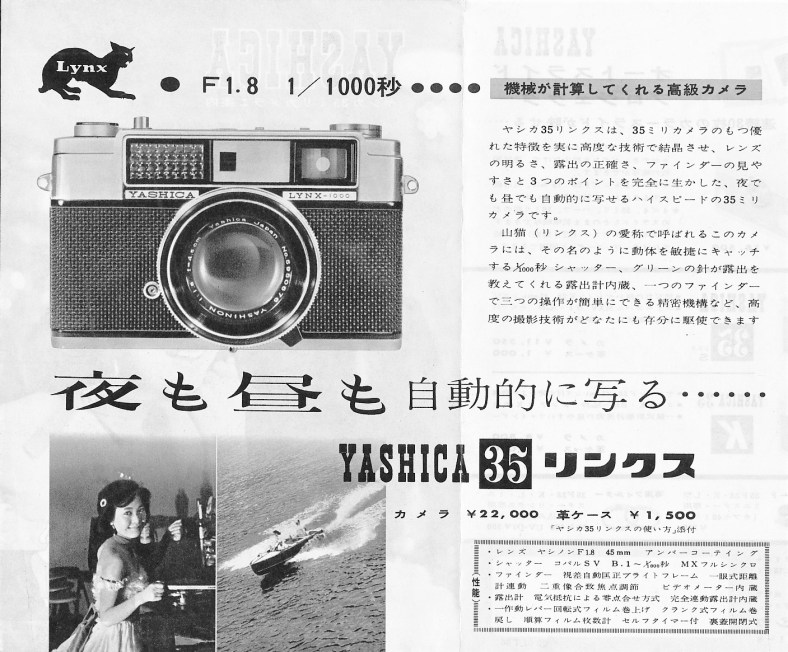
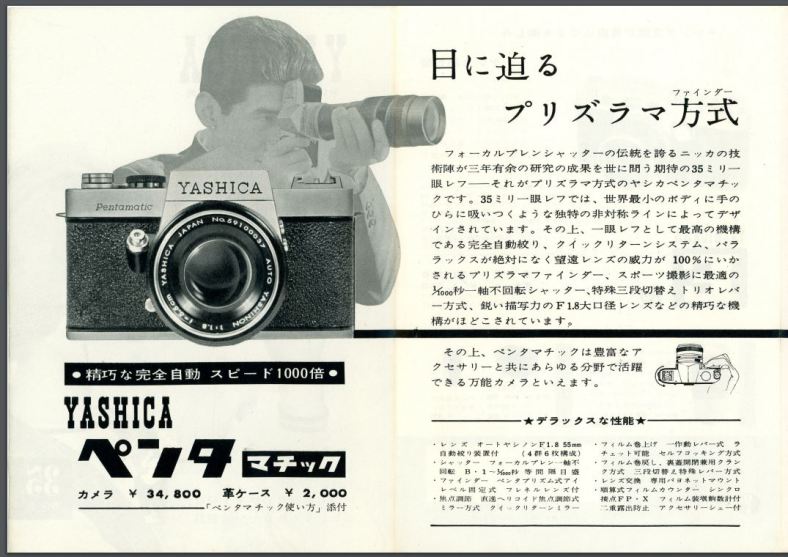
Below is a scan of what appears to be the first sales brochure for the Pentamatic found in Japanese. A machine translation of it proves that Yashica and Nicca designers worked together to jointly develop the camera over a 3-year period. The exact date of this brochure has not been established but it appears to be at least issued in the Spring of 1960. Many thanks to my good friend Paul Sokk for his efforts in researching the Pentamatic with me over the years. His fabulous site can be found at www.yashicatlr.com

Yas inside P1 bro

Scan courtesy of Paul Sokk at http://www.yashicatlr.com

Below is a scan of the cover of that first sales brochure that features the new Pentamatic.

Yas Cover P1 bro (1)

Scan courtesy of Paul Sokk at http://www.yashicatlr.com

The original Pentamatic was a failure. A beautiful, sleek and modern camera at a great price, but still a failure. A replacement for it (Pentamatic II) was released by September 1960 – just a few short months after the original Pentamatic debuted.

The Pentamatic and the Pentamatic II were both out of production by January 1961. The Pentamatic S didn’t appear until around April 1961. Little was significantly changed over the course of these 3 models during this short timeframe. The Pentamatic II and its one-off lens improved on its semi-automatic capabilities. The body stayed the same with the exception of adding the engraved “II” after the name. No logic to this as Yashica could have simply made the new lens available as an option to the original Pentamatic. There had to be another reason to call it the model II and it appears that there were some internal changes made to accommodate the new lens.

The standard lens that was available for the Pentamatic II was designed and built (quickly?) by Zunow vice Tomioka. Our best guess at this point.

The Pentamatic II was only available for sale in Japan.

The Pentamatic S essentially was the replacement for the original Pentamatic – not the Pentamatic II. The model S added a lug for attaching an accessory exposure meter that coupled to the shutter speed dial. The S also added a self-timer and the body got a redesign (the strap lugs were moved to the front and the shutter release button was no longer at a 45-degree angle).

The Instruction Booklets

The booklets have been an additional source of fun separate from the camera searches. The booklet for the original Pentamatic was relatively easy to find. The first Pentamatic saw about 16,000 units made so the booklet is much more available. The Pentamatic II booklet was the hardest to locate since only around 5,000 cameras were made. The Pentamatic S booklet is even rarer – only around 3,000 cameras produced.

DSCF6534

The 3 Pentamatic instruction booklets. Notice that the Pentamatic and Pentamatic II booklets have the same design while the model S differs dramatically. More “clues”.
DSCF6540

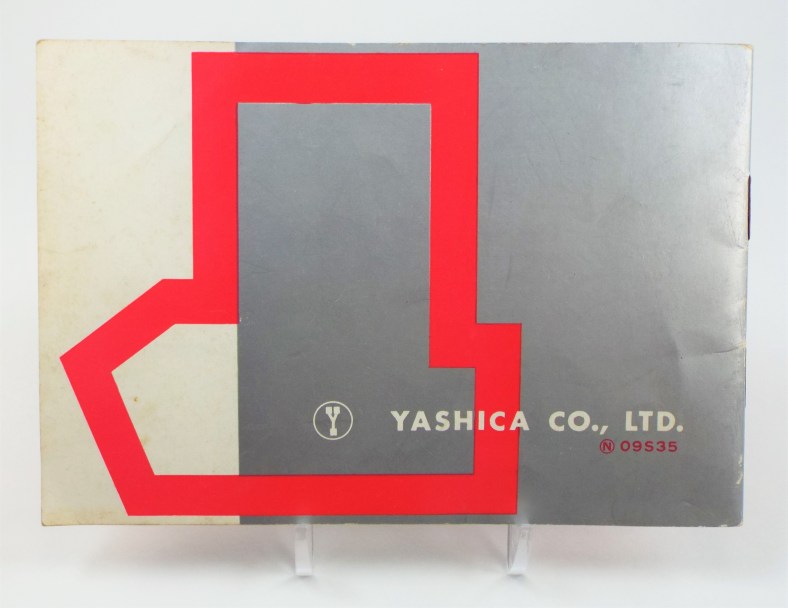
The back cover of the Pentamatic II booklet – the only one to carry a date (lower right corner). This one is dated September 1960. Showa date is 35.

Inside the booklets…

DSCF6543

The original Pentamatic.

DSCF6545

The Pentamatic II.

DSCF6544

The Pentamatic S.

Wild Speculations

Wild Spec 1 – The first Pentamatic was not initially released in Japan. Yashica had a slow go with its early production so only a limited number were available for the April to June debut in the U.S. There were only about 4,000 cameras made by then and that just didn’t support a wide release of it in their home market. However, with the discovery of the as yet undated sales brochure found by my friend Paul Sokk it does appear that some of the first Pentamatics were in fact distributed in Japan. We do feel that Yashica had a suspicion that the original model would not go over well at home. Why do we feel this way? During our quest of all things Pentamatic, we’ve yet to find an instruction booklet for the original Pentamatic in Japanese (or any other language besides English). We’ve seen no early 1960s advertisements either. Although we’ve yet to find these items that does not mean they don’t exist.

Wild Spec 2 – The Pentamatic II was only available in Japan and was never intended for widespread availability in the world marketplace. We further feel that the Pentamatic II was the camera Yashica intended to release in Japan vice the original Pentamatic. Why? Same thing… in over 8 years of searching we’ve never seen a Pentamatic II instruction booklet in English and the only sales brochures we have are in Japanese. No English ads or brochures anywhere (yet). Update: As of April 2019 still no English ads or books.

Wild Spec 3The Pentamatic S wasn’t available in Japan. Crazy right? The same thing applies here – no Japanese advertising or brochures and no instruction booklets in anything but English. Again, not finding them does not translate to not being produced but the likelihood looks slim.

Wild Spec 4 – As we stated in the conclusions section above, the standard lens for the Pentamatic II (5.8cm f/1.7) was made for Yashica by Zunow Optical vice Tomioka. This flies in the face of what’s known and we don’t have solid written proof (yet, if ever). Both the original Pentamatic and the Pentamatic II ended production in January 1961. By coincidence, that’s the reported date of Yashica’s acquisition of Zunow (or their bankruptcy). Once Zunow went bust they no longer make lenses for the Pentamatic II.

Wild Spec 5 – Once the Pentamatic II stopped production, Yashica started selling the original Pentamatic in Japan (or at least increased its availability in Japan). We would still like to find a Pentamatic instruction booklet in Japanese to validate this thought.

Wild Spec 6 – Since the Pentamatic S wasn’t sold in Japan, there was a rather large gap in Yashica’s SLR availability. The next camera to be sold widely in Japan (and the U.S.) was the Penta J but that didn’t come out until the Summer of 1961.

These marketing and production missteps led to a less than stellar debut for Yashica in the world of 35mm SLRs. The competition during this same period was “inventing” much more sophisticated (and mostly more expensive) cameras which had a wider range of interchangeable lenses and accessories. It took Yashica a long time to establish a “foot in the door” with their Penta J and their first internally coupled exposure metered SLR, the Yashica J-3 (Jaguar).

Things we would like to find…
600x450-2015111900010

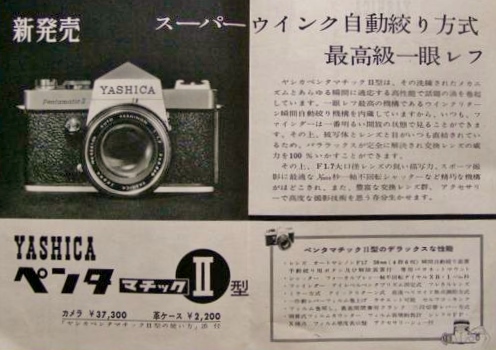
Original sales brochure for the Pentamatic II.

The first thing we would like to discover would be an ad, sales brochure or instruction booklet in English for the Pentamatic II. We don’t think we will as we feel that they don’t exist.

We would like to find a Pentamatic instruction booklet in Japanese. They must exist but we’ve yet to find one.

A Pentamatic S instruction booklet and a sales brochure in Japanese. Don’t think they exist but time will tell.

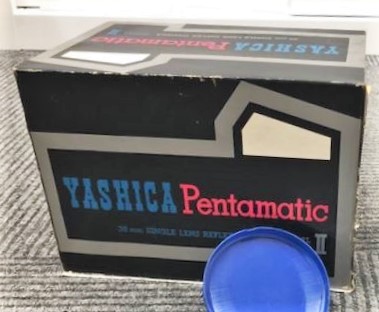
A Pentamatic II box!!! They must exist – someone’s got to have one in their collection! Update: Finally found one but we missed acquiring it for our collection so we “borrowed” this image –
yashica P2 Box

Very similar to the original Pentamatic box but black vice silver.

A Pentamatic (any model) in its original boxes in factory fresh condition. WooHoo!

***Solid proof that the standard lens for the Pentamatic II was made by Zunow Optical.***

Other than these things, I think we’re good! ^.^

Thanks for your visit! If you’ve made it this far in the post give yourself a big pat on the back! You just may be on your way to becoming a ‘Yashica Pentamatic Fanatic’!

Please stop by our online shop at https://www.ccstudio2380.com and check out some of our classic cameras available for sale.

We are active buyers of quality cameras and equipment – especially anything Yashica, Nicca, Fujica or whatever! Contact us at chriscarol@ccstudio2380.com

Please respect that all content, including photos and text, are the property of this blog and its owner, Yashica Pentamatic Fanatic, Yashica Sailor Boy, Yashica Chris.

Copyright © 2015-2019 Yashica Pentamatic Fanatic, Chris Whelan
All rights reserved.
Early Yashica Sales Brochure & the Debut of Miss Yashica – all 3!

We’re always trying to determine exactly when Yashica did something – whether it’s exactly when Yashica released a camera or when Yashica printed a sales brochure – we always want to know when.

Sales brochures can be a great source of information for uncovering some of the “whens” associated with Yashica – unfortunately Yashica’s marketing folks weren’t big fans of dating their pamphlets, booklets or brochures (almost never).

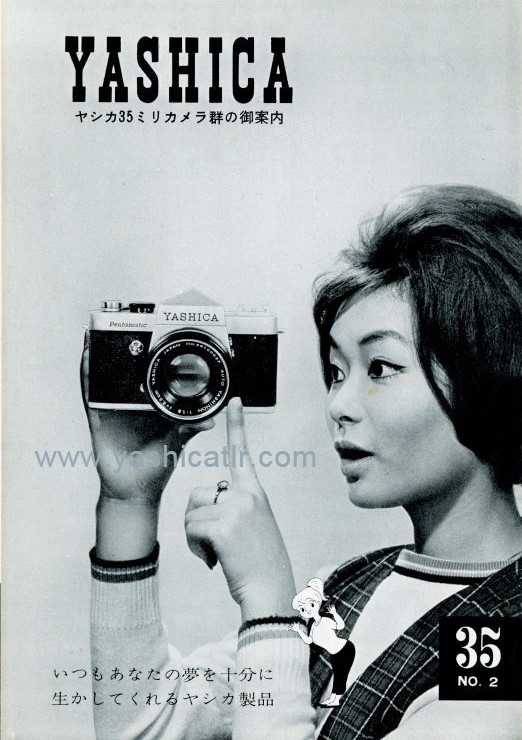
Another way to date a brochure is to look at the cameras featured in them. Below is a good example. The cameras featured (front bottom to back right) are: Yashica Minister f/2.8, Nicca-Yashica YF, Yashica YK and the Yashica 35. The “newest” of the four cameras pictured here is the Minister. It was released in February-March 1960. The camera pictured (still on the Minister) was made in January 1960 (going by its serial number). The other cameras were released from late 1958 to middle 1959.

So the earliest date that this brochure could be is the January to March 1960 time frame.

16519399715_3df7950b02_o

Early sales brochure from Japan. Take note of ‘Yashica Girl‘ on the bottom right of the brochure. 
My translation of the title – ‘Yashica 35mm Camera Group Guide’. The bottom left translation – ‘Yashica Products That Always Make Full Use of Your Dreams’. The “newest” model featured (bottom front) is the Yashica Minister (Feb-Mar 1960)

So was this the first appearance of Miss Yashica? She does appear on what may be a few earlier brochures but we’re going to say she made her first public appearance in January 1960 (new year, new decade and Yashica had a ton of new products to introduce). Plus she looks like a girl of the 1960s!

DSCF6490

Not one but three Miss Yashica’s! The one on the far right appears frequently in sales brochures during 1960 and early 1961 while the two on the left are variants that we’ve never seen before (clearly different). The ladies pictured here appear on the side of a vinyl shopping bag – Of the camera… ‘Camera Matsue Ota Weight Shop Izunokuni’? Not completely sure about the translation here.

19606s

Could be the very first flyer/ad released in Japan for the original Yashica Pentamatic.

It would appear that in this flyer/ad Miss Yashica was paired with the Pentamatic shortly after the release of the Pentamatic in Japan (early 1960). We don’t have the flip side of this flyer/ad so we don’t know if it was a one page presentation or two pages or part of a brochure. Since it has the address of Yashica’s headquarters in Tokyo on the bottom, one could assume that it’s the back page.

Thanks for stopping by! If you can provide a better translation or have more information please let us know!

Remember, Carol and I are always interested in buying interesting items for research and for our collection. If you have something to sell, please contact us at chriscarol@ccstudio2380.com

Please stop by our online store at https://www.ccstudio2380.com

Chris & Carol ^.^

Please respect that all content, including photos and text are property of this blog and its owner, Yashica Pentamatic Fanatic, Yashica Sailor Boy, Yashica Chris.

Copyright © 2015-2017 Yashica Pentamatic Fanatic, Chris Whelan
All rights reserved.

Cool Sign

Spotted this sign at a local restaurant today – great graphics!

20171116_152640

Camera: Samsung Galaxy S8+

Chris

Please respect that all content, including photos and text are property of this blog and its owner, Yashica Pentamatic Fanatic, Yashica Sailor Boy, Yashica Chris.

Copyright © 2015-2017 Yashica Pentamatic Fanatic, Chris Whelan
All rights reserved.
More Lynx – 1961

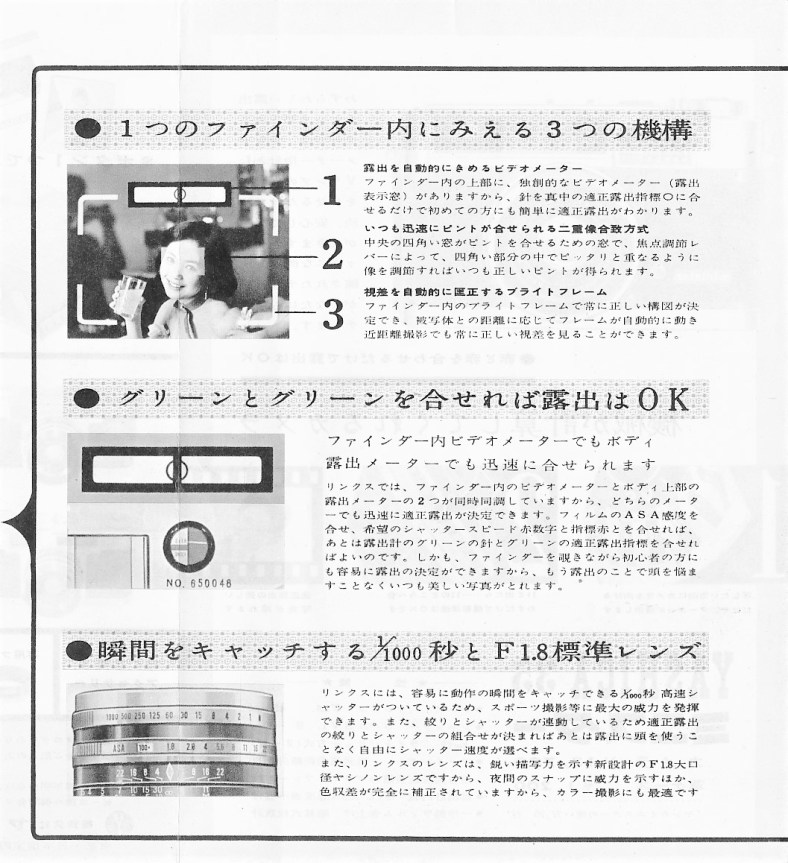
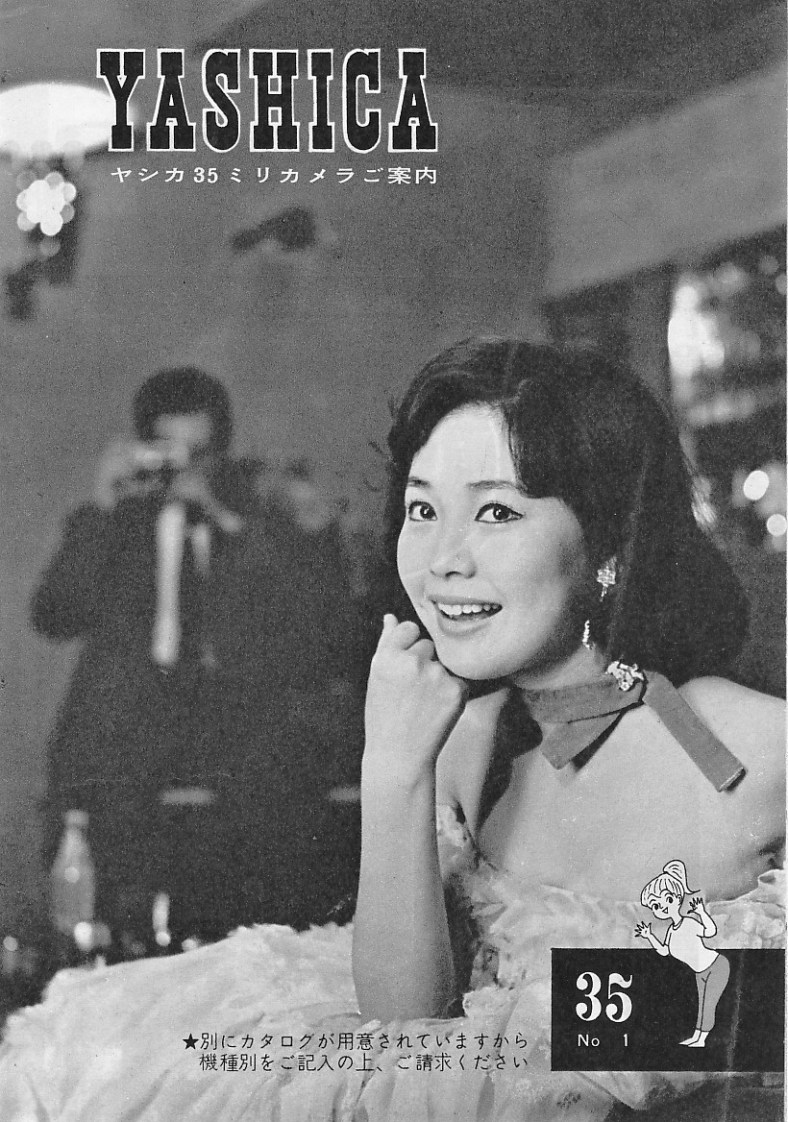
Sharing a bit of our original Yashica Lynx sales brochure which is dated February 1961.

IMG_20170930_0005

This is one of our first sales brochures related to the Lynx which made its debut in mid 1960. The lens featured is a late 1960 version of the f/1.8 4.5cm Tomioka-Yashinon. This lens also appears in what looks to be the second version of the Lynx instruction booklet.

IMG_20170930_0006

The second part of the brochure shows the body serial number (NO. 650048) which would indicate that this camera was made in May 1960. This camera appears in other brochures and flyers throughout the camera’s run.

We believe there were two versions of the Lynx instruction booklet. The first would have been included with the release of the Lynx around May 1960. In the second version of the Yashica instruction booklet, the body serial number is obscured but the lens serial number shows clearly and it’s the same serial number as the one in this brochure. The lens SN would put it as made between September and November 1960. Thanks Paul!

IMG_20170930_0007

Front cover of the Yashica 35mm sales brochure dated February 1961. Note the use of the “Yashica Girl” in the lower right corner. She and two similar friends appear now and then on brochures during this period.

By the way, the listed selling price of the Lynx ( ¥22,000 ) equalled $62 USD in May of 1960.

Thanks for stopping by! Comments always welcome!

C & C

Yashica Pentamatic ’35’ vs. Pentamatic II

Why did Yashica bring out the Pentamatic II less than a year after releasing the original model?

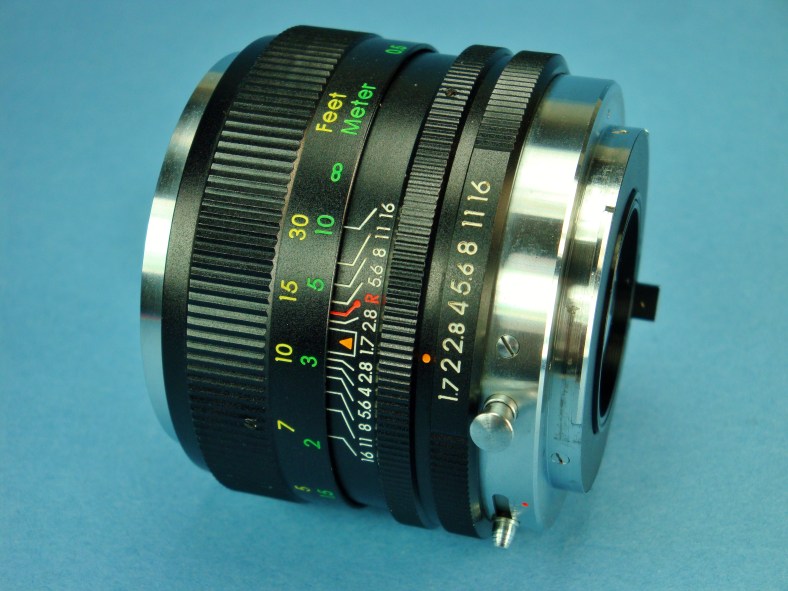
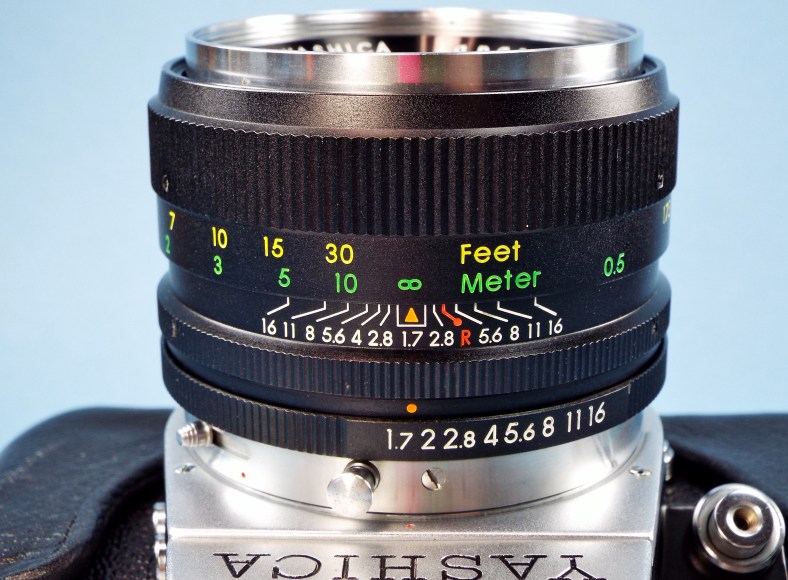
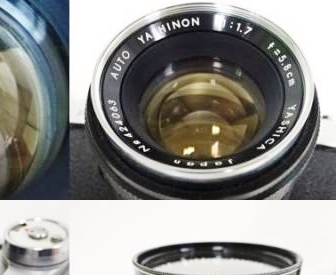
The only difference we can tell between the original Yashica Pentamatic ’35’ and the Pentamatic II (which came out around September 1960), is the standard lens that was mated with the camera body. The original Pentamatic came with the Auto-Yashinon, f/ 1.8, 5.5cm fully automatic 6 element lens. Of course it has the unique Pentamatic bayonet mount and not the M42 screw mount. The Pentamatic II came with the Auto-Yashinon, f/ 1.7, 5.8cm lens (pictured below). Both lenses were made for Yashica by Tomioka Optical of Tokyo. We imagine the 58mm, f/ 1.7 lens was a bit faster than the f/ 1.8… but we don’t see why Yashica changed from the model I to the model II and why they changed the lens… we may never discover the reason either.

DSC07467

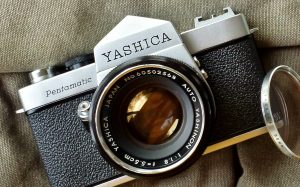
The standard lens for the Pentamatic II – 5.8cm, f/ 1.7

27356135700_b0c5ef23fe_z

017

Gorgeous lens for the Pentamatic II.

Brochure c1961

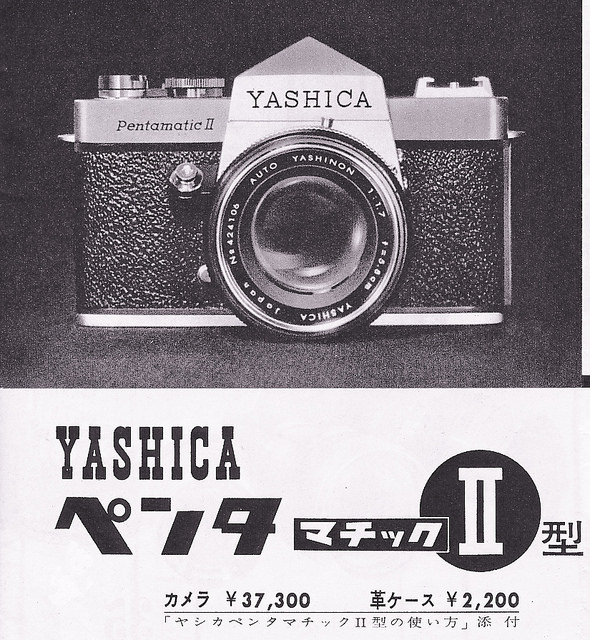
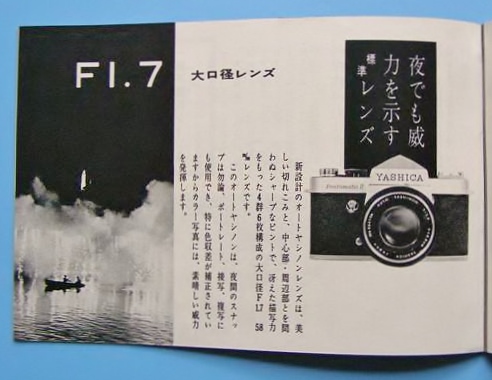
The first sighting of the Pentamatic II in a sales brochure for the Japanese home market.

We’ve yet to find an advertisement for the Pentamatic II in English and along those same lines, have yet to find the Pentamatic II in a sales brochure in English. The Pentamatic S replaced the model II less than a year after its release. The model S went back to using the original 5.5cm, f/ 1.8 lens that was on the original Pentamatic.

That makes the Auto-Yashinon 5.8cm, f/ 1.7 lenses one of the rarest of the early Pentamatic bayonet mount lenses.

06-12-2016 pentamatic II 2 (2)

Happy hunting!

Chris

Yashica’s ‘Sailor Boy’ – 1962

Yashica’s advertising figurine the ‘Sailor Boy’ first appeared in 1962 – closely associated with the launch of Yashica’s J-3 35mm single-lens reflex camera. It was made for Yashica by Modern Plastics of Japan and was produced in a variety of sizes – from a 20cm shop and dealer display model down to this little 10cm guy.

This one ⇓ came to our collection from Germany and man was he a dirty guy!

DSCF5218

Covered with a coat of nicotine and grime, he looked like he was in a bar room fight! But he has a good casting and the paint looks good. Notice how grungy his hat is.

DSCF5219

Since he was covered with a thin film of nicotine he was sticky!

DSCF5220

Looks like he has a black eye!

After some restoration work in the studio, he’s looking ⇓ much better and brighter.

DSCF5221

Nice and shiny! Still a hint of a black smudge near his right eye.

DSCF5222

His hat is white again. If you look to collect one, be sure to look closely at the hat. Often the casting will be a bit porous there and show some pitting. This one is nice and smooth.

DSCF5228

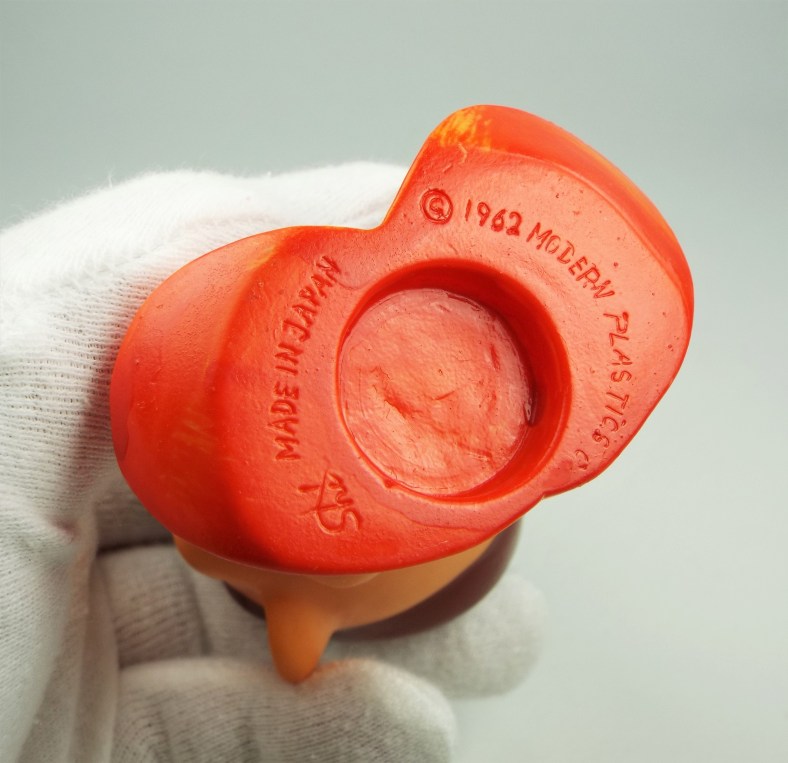
The manufacturer’s marks on the bottom. The round spot was meant to insert a small magnet so as to keep him in his place.

Made in Japan by Modern Plastics for Yashica. He’s never been given an official name from Yashica so we’ve always called him ‘Sailor Boy’ for obvious reasons. Some of the figurines will have ‘Yashica’ in katakana characters on the hat. We don’t have one like that – yet.

15133132085_d1fc422098_z

The 20cm shop model with the J-3. The eyelashes are different on the larger models otherwise they’re the same.

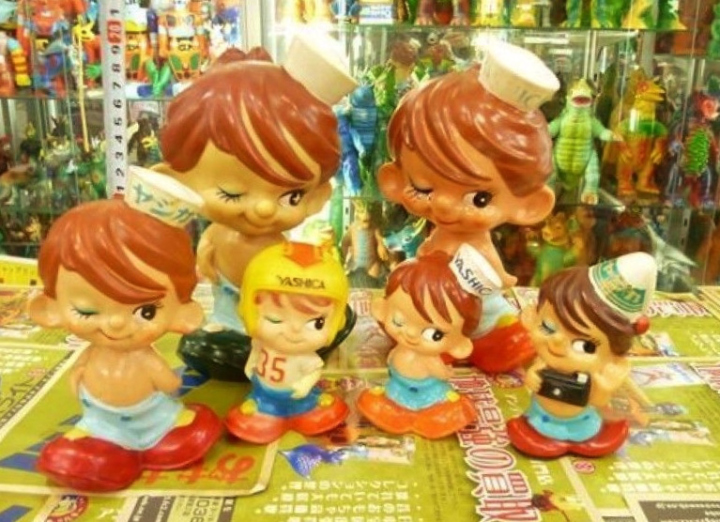
yashicasailorboys-japan-store

Not our collection! Wish it was! There is one missing – a 10 cm ‘Sailor Boy’ with green shoes otherwise this collection is complete. Notice the large doll on the back left does not have Yashica on his hat but does have green shoes. The one with the camera was released for the launch of the Yashica Electro 35 and as best as I can tell he’s modeled after Wee Willie Winkie from the Scottish nursery rhyme. These are on display at a Tokyo store that specializes in collectible figurines and dolls.

Thanks for your visit! And yes, we take donations of unwanted ‘Sailor Boys’!!! JK

Camera: Fujifilm FinePix S9900W

Chris

I See Red – Fujica DL-20

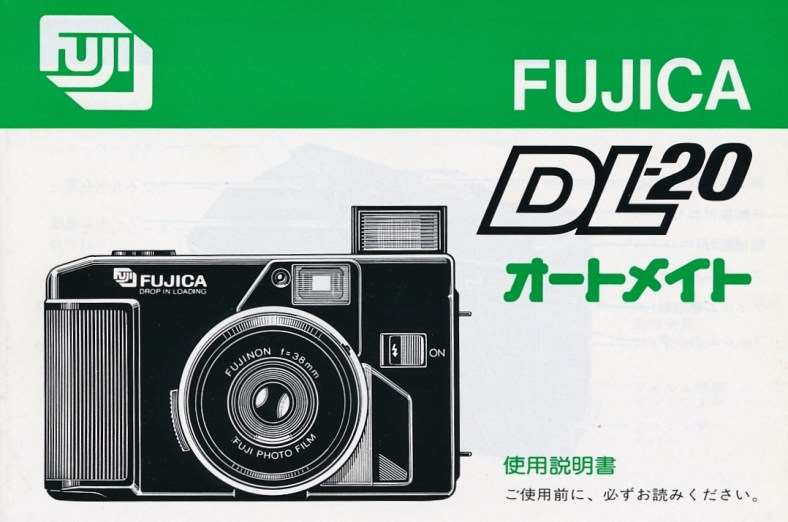
Pretty little Fujica DL-20 from 1983.

The world’s first 35mm drop-in loading camera! Simply load your Fujifilm cartridge into the opening on the bottom, close the back – and your Fujica will do the rest!

DSCF5164

Features a Fujinon 38mm f/4 lens with built-in lens and viewfinder cover.

Released in March 1983 in Japan, it was also known as the ‘Auto Mate’. 

29233274400_8e1ebeb4bb_o

DSCF5167

Original list price in Japan was 30,000 JPY.

DSCF5168

Shutter fires from 1/100 to 1/300 of a second.

●チラシ

Also released at the same time the more feature packed DL-100 (Auto Ace).

DSCF5169

Solid little thing! Thick plastic everywhere and a bright red finish too!

DSCF5170

Manually set ISO settings (100 & 400). 3 zone focusing. Auto exposure (EE).

DSCF5171

Built-in electronic flash.

DSCF5172

DSCF5173

DSCF5174

Push the film cartridge into the opening on the camera’s left side with about 5 cm of film extended – close the back and it auto loads the film.

DSCF5177

28900694283_ae40fb6faf_o

Cute centerfold art… love the image on the far right!

Weighs in at 300 g. Fits nicely in your hand (although a bit small for me) and fits in a coat pocket with ease. A simple, compact 35mm point and shoot camera from Fuji Photo Film.

We don’t know if we’re going to shoot the Acros first or load up some bright Fujicolor. Soon we hope!

Camera: Fujifilm FinePix S9900W

Thanks for stopping by!

Chris


Cool Signs

20170413_134535

As seen on an abandoned souvenir shop along a Florida highway. At first glance I thought that they sold film and what not as they were the first stop in extreme Northeast Florida for southbound tourists. Cold drinks, smokes, candy, stuffed gators and Florida junk like that. But I got to thinking that it might have meant films as in movie films. This building was left to rot many decades ago and right next door is a closed motel on the same property. Some locals say that the souvenier shop showed movies from time to time for the guests at the motel and some of the bored to death locals. Makes sense as it was in the middle of nowhere and back in the 1960s or earlier that would be a draw.

DSCF5048

Anyway, cool old faded signage regardless of what went on. ^.^

Camera: Fujifilm FinePix S9900W, Samsung Galaxy S4

Chris