Yashica Pentamatic ’35’ vs. Pentamatic II

Why did Yashica bring out the Pentamatic II less than a year after releasing the original model?

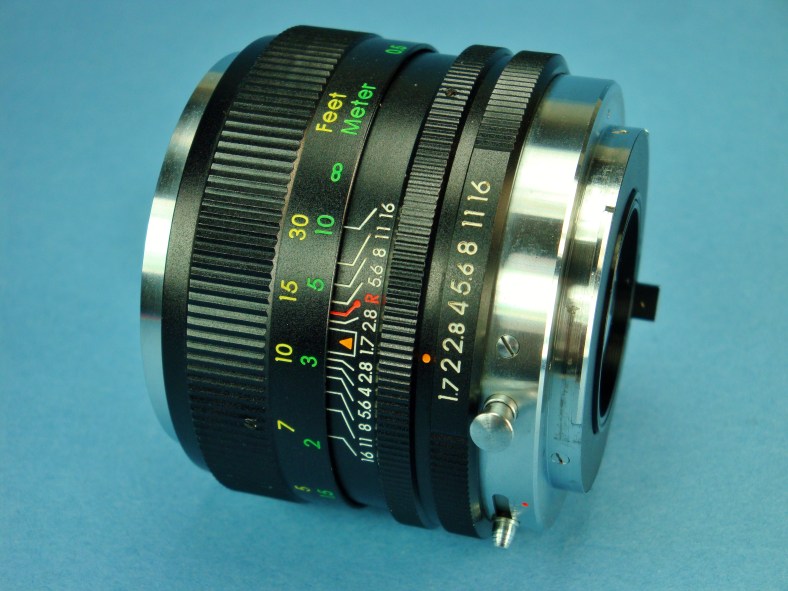
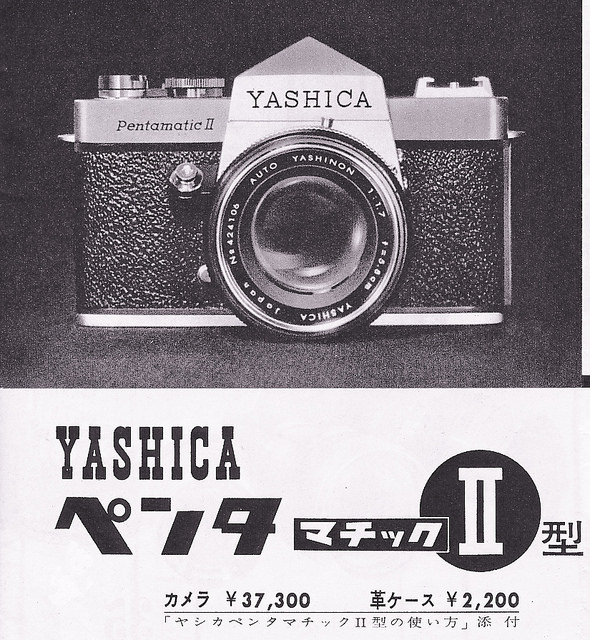
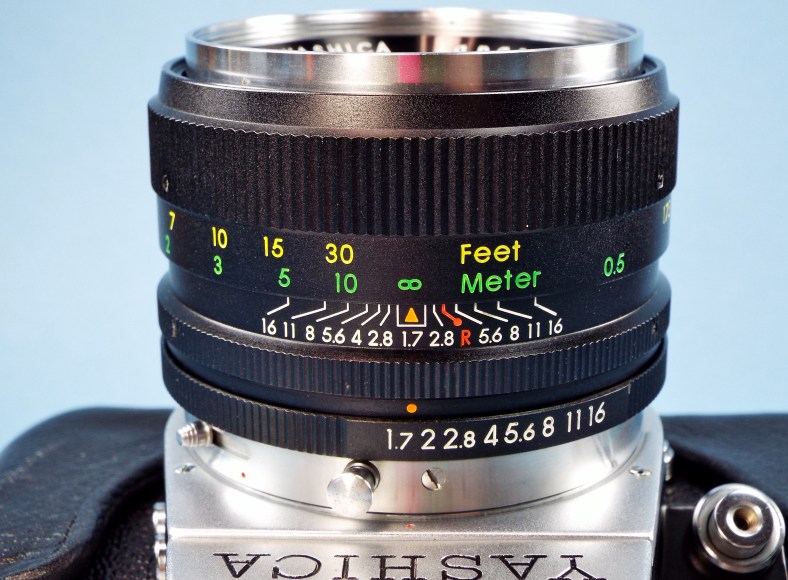
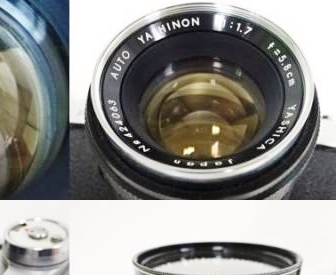
The only difference we can tell between the original Yashica Pentamatic ’35’ and the Pentamatic II (which came out around September 1960), is the standard lens that was mated with the camera body. The original Pentamatic came with the Auto-Yashinon, f/ 1.8, 5.5cm fully automatic 6 element lens. Of course it has the unique Pentamatic bayonet mount and not the M42 screw mount. The Pentamatic II came with the Auto-Yashinon, f/ 1.7, 5.8cm lens (pictured below). Both lenses were made for Yashica by Tomioka Optical of Tokyo. We imagine the 58mm, f/ 1.7 lens was a bit faster than the f/ 1.8… but we don’t see why Yashica changed from the model I to the model II and why they changed the lens… we may never discover the reason either.

DSC07467

The standard lens for the Pentamatic II – 5.8cm, f/ 1.7

27356135700_b0c5ef23fe_z

017

Gorgeous lens for the Pentamatic II.

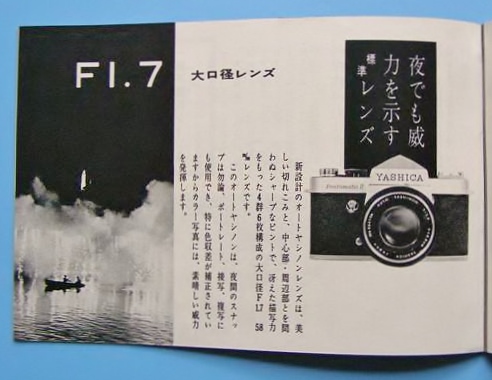
Brochure c1961

The first sighting of the Pentamatic II in a sales brochure for the Japanese home market.

We’ve yet to find an advertisement for the Pentamatic II in English and along those same lines, have yet to find the Pentamatic II in a sales brochure in English. The Pentamatic S replaced the model II less than a year after its release. The model S went back to using the original 5.5cm, f/ 1.8 lens that was on the original Pentamatic.

That makes the Auto-Yashinon 5.8cm, f/ 1.7 lenses one of the rarest of the early Pentamatic bayonet mount lenses.

06-12-2016 pentamatic II 2 (2)

Happy hunting!

Chris

Yashica’s ‘Sailor Boy’ – 1962

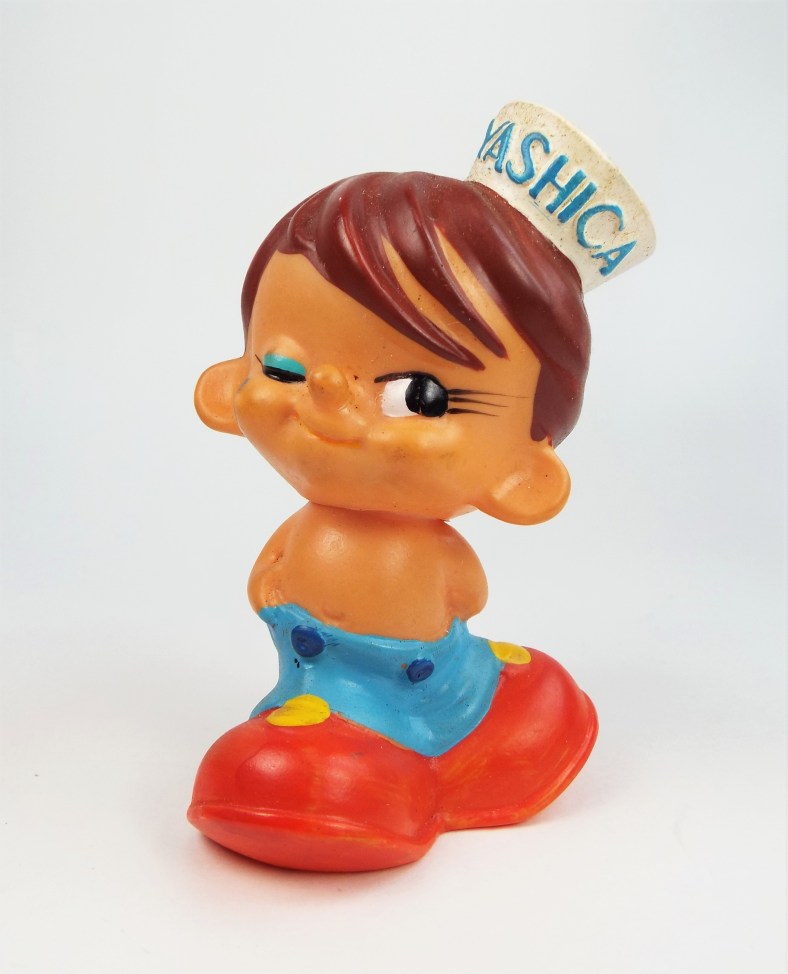
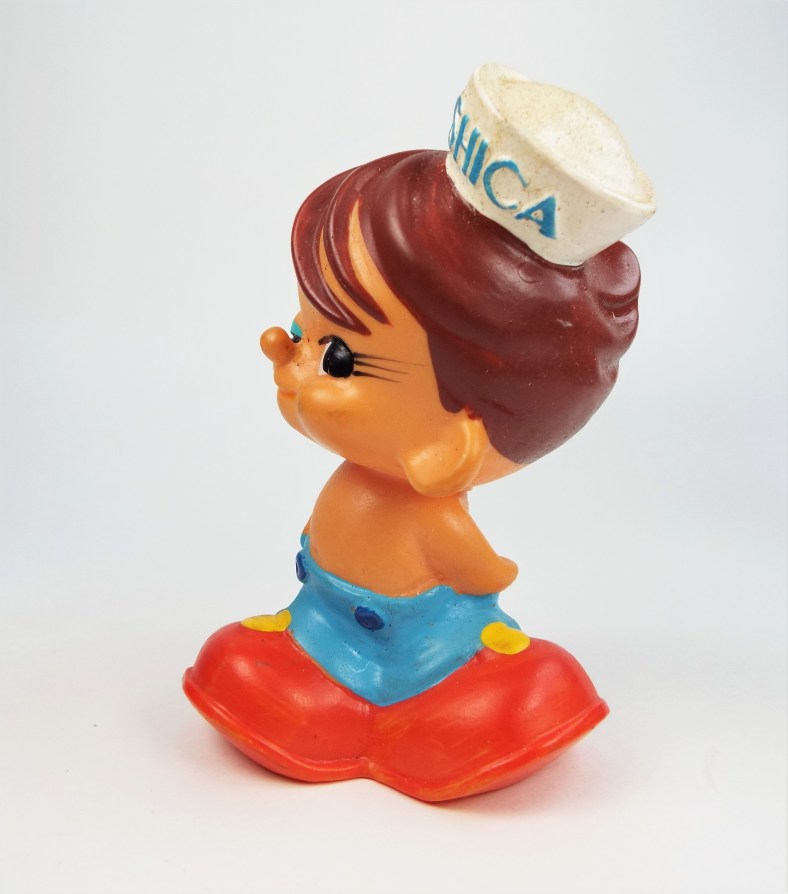
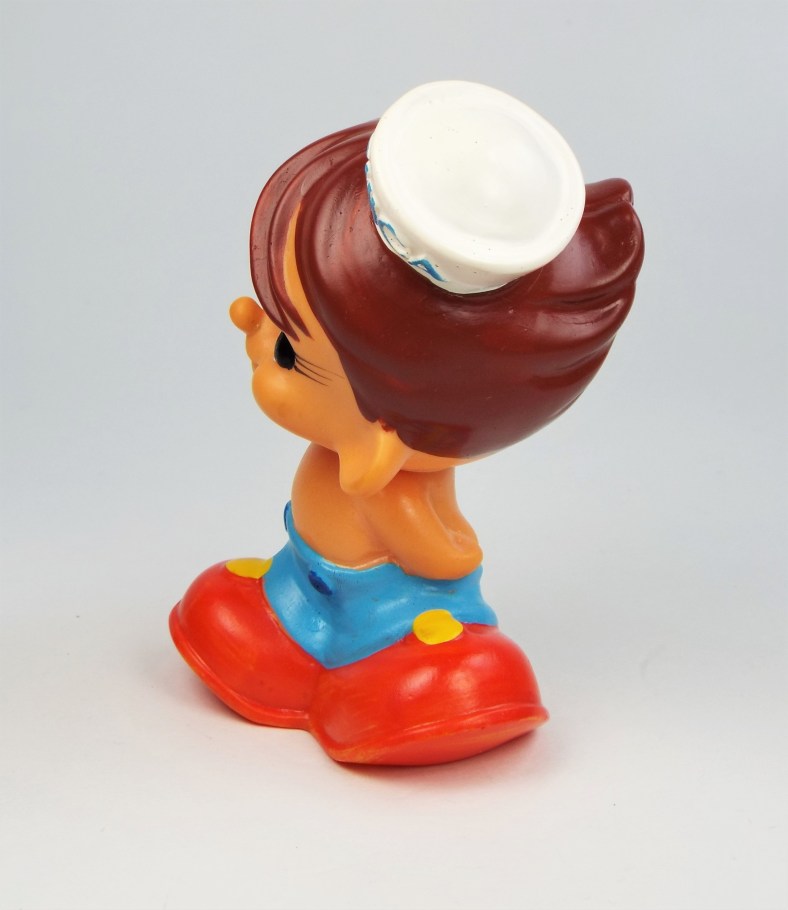
Yashica’s advertising figurine the ‘Sailor Boy’ first appeared in 1962 – closely associated with the launch of Yashica’s J-3 35mm single-lens reflex camera. It was made for Yashica by Modern Plastics of Japan and was produced in a variety of sizes – from a 20cm shop and dealer display model down to this little 10cm guy.

This one ⇓ came to our collection from Germany and man was he a dirty guy!

DSCF5218

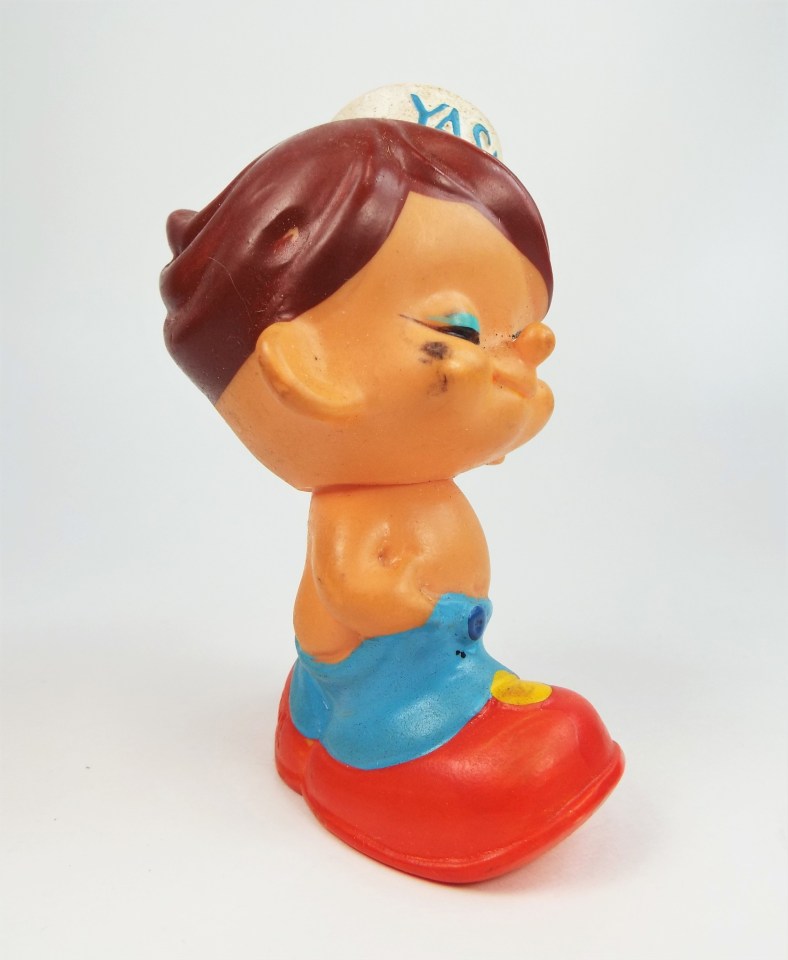
Covered with a coat of nicotine and grime, he looked like he was in a bar room fight! But he has a good casting and the paint looks good. Notice how grungy his hat is.

DSCF5219

Since he was covered with a thin film of nicotine he was sticky!

DSCF5220

Looks like he has a black eye!

After some restoration work in the studio, he’s looking ⇓ much better and brighter.

DSCF5221

Nice and shiny! Still a hint of a black smudge near his right eye.

DSCF5222

His hat is white again. If you look to collect one, be sure to look closely at the hat. Often the casting will be a bit porous there and show some pitting. This one is nice and smooth.

DSCF5228

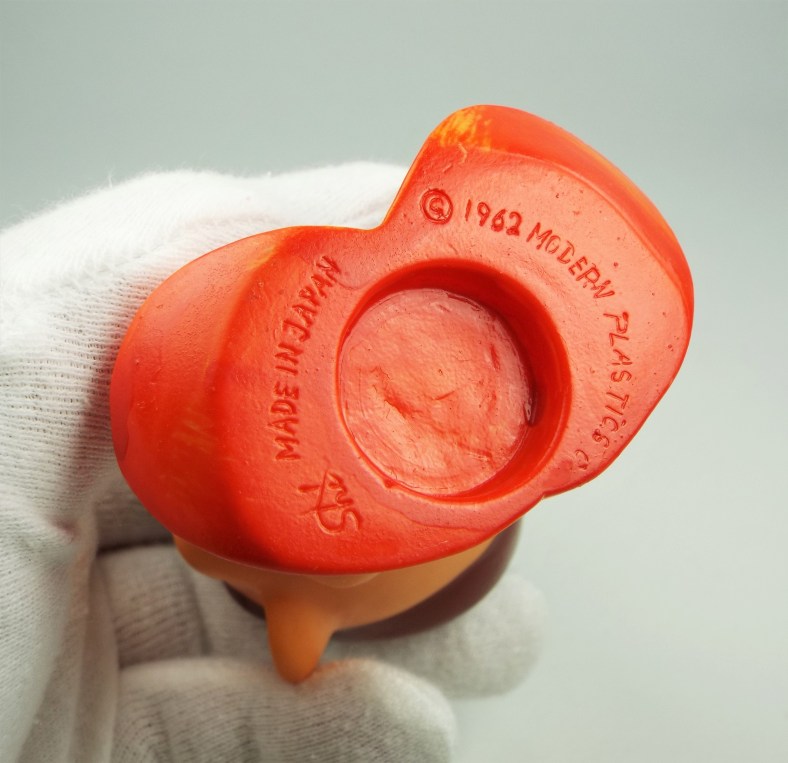
The manufacturer’s marks on the bottom. The round spot was meant to insert a small magnet so as to keep him in his place.

Made in Japan by Modern Plastics for Yashica. He’s never been given an official name from Yashica so we’ve always called him ‘Sailor Boy’ for obvious reasons. Some of the figurines will have ‘Yashica’ in katakana characters on the hat. We don’t have one like that – yet.

15133132085_d1fc422098_z

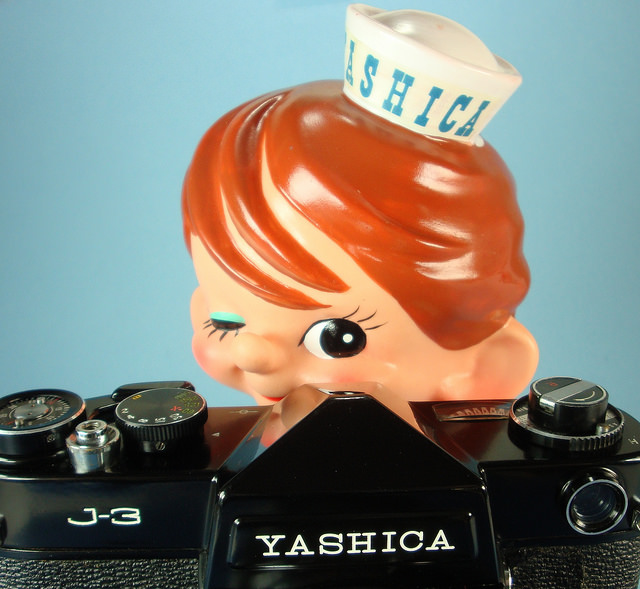
The 20cm shop model with the J-3. The eyelashes are different on the larger models otherwise they’re the same.

yashicasailorboys-japan-store

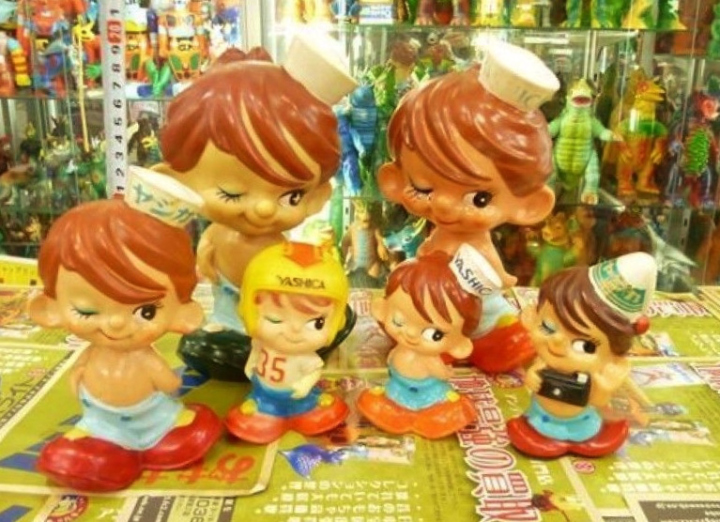
Not our collection! Wish it was! There is one missing – a 10 cm ‘Sailor Boy’ with green shoes otherwise this collection is complete. Notice the large doll on the back left does not have Yashica on his hat but does have green shoes. The one with the camera was released for the launch of the Yashica Electro 35 and as best as I can tell he’s modeled after Wee Willie Winkie from the Scottish nursery rhyme. These are on display at a Tokyo store that specializes in collectible figurines and dolls.

Thanks for your visit! And yes, we take donations of unwanted ‘Sailor Boys’!!! JK

Camera: Fujifilm FinePix S9900W

Chris

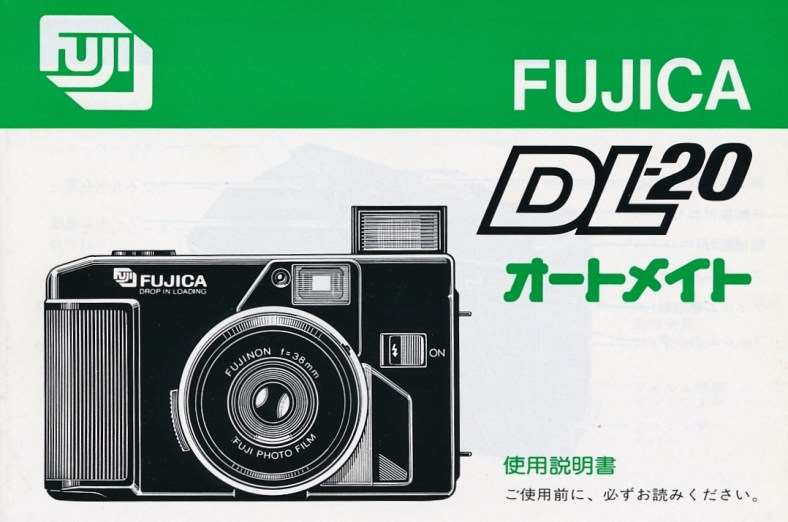
I See Red – Fujica DL-20

Pretty little Fujica DL-20 from 1983.

The world’s first 35mm drop-in loading camera! Simply load your Fujifilm cartridge into the opening on the bottom, close the back – and your Fujica will do the rest!

DSCF5164

Features a Fujinon 38mm f/4 lens with built-in lens and viewfinder cover.

Released in March 1983 in Japan, it was also known as the ‘Auto Mate’. 

29233274400_8e1ebeb4bb_o

DSCF5167

Original list price in Japan was 30,000 JPY.

DSCF5168

Shutter fires from 1/100 to 1/300 of a second.

●チラシ

Also released at the same time the more feature packed DL-100 (Auto Ace).

DSCF5169

Solid little thing! Thick plastic everywhere and a bright red finish too!

DSCF5170

Manually set ISO settings (100 & 400). 3 zone focusing. Auto exposure (EE).

DSCF5171

Built-in electronic flash.

DSCF5172

DSCF5173

DSCF5174

Push the film cartridge into the opening on the camera’s left side with about 5 cm of film extended – close the back and it auto loads the film.

DSCF5177

28900694283_ae40fb6faf_o

Cute centerfold art… love the image on the far right!

Weighs in at 300 g. Fits nicely in your hand (although a bit small for me) and fits in a coat pocket with ease. A simple, compact 35mm point and shoot camera from Fuji Photo Film.

We don’t know if we’re going to shoot the Acros first or load up some bright Fujicolor. Soon we hope!

Camera: Fujifilm FinePix S9900W

Thanks for stopping by!

Chris


Cool Signs

20170413_134535

As seen on an abandoned souvenir shop along a Florida highway. At first glance I thought that they sold film and what not as they were the first stop in extreme Northeast Florida for southbound tourists. Cold drinks, smokes, candy, stuffed gators and Florida junk like that. But I got to thinking that it might have meant films as in movie films. This building was left to rot many decades ago and right next door is a closed motel on the same property. Some locals say that the souvenier shop showed movies from time to time for the guests at the motel and some of the bored to death locals. Makes sense as it was in the middle of nowhere and back in the 1960s or earlier that would be a draw.

DSCF5048

Anyway, cool old faded signage regardless of what went on. ^.^

Camera: Fujifilm FinePix S9900W, Samsung Galaxy S4

Chris

Yashica Moves to a New Factory 1972

We’ll be the first to admit – not an exciting title or topic for a blog. It may even be a stretch for a blog named the ‘Yashica Pentamatic Fanatic’. But we feel compelled to share information about the Yashica Company, however slight and trivial, with our dear readers.

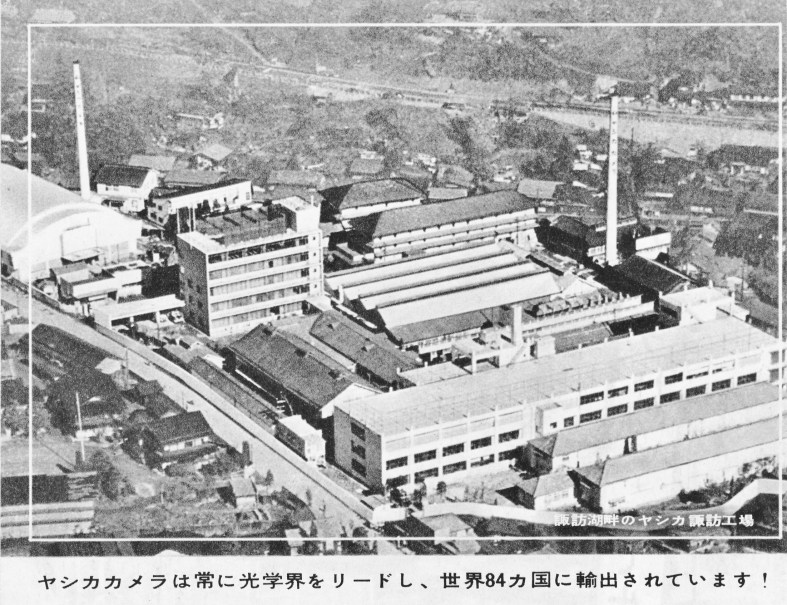
Yashica’s first factory was along the shores of beautiful Lake Suwa in the small town of Suwa. The next location (from Yashica brochures) was in Shimosuwa-machi, Suwa-gun, Nagano Prefecture. This was the industrial campus of Yashica and it grew over the years to occupy almost every square meter of the property.

Yashica's Shimosuwa Factory

Opened in 1956 along the shores of Lake Suwa in Nagano.

IMG_20151218_0008 (2)

A different view of the same campus. Yashica was running out of room by the mid-1960s.

IMG_20170404_0004

Back cover of the Yashica TL Electro-X ITS instruction booklet. The booklet was printed in Japan in June 1972.

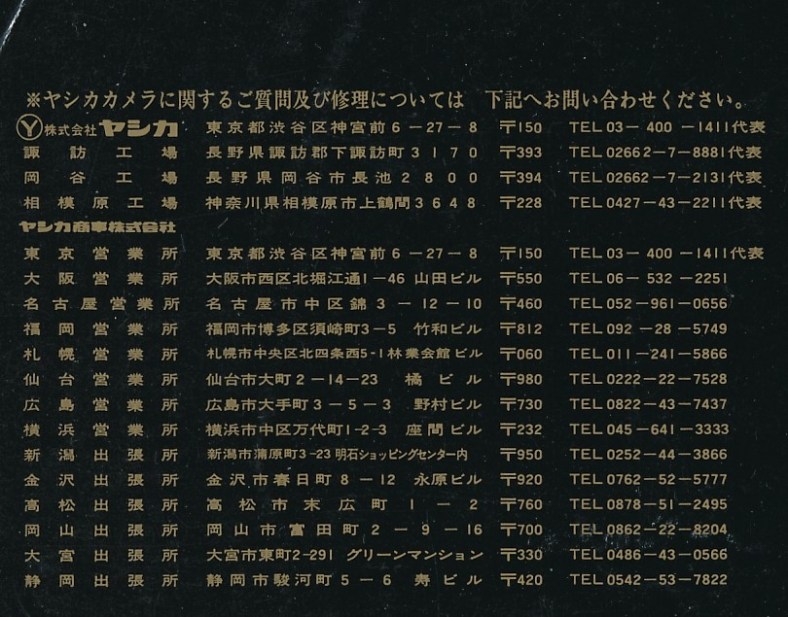
At the time of the printing of the above book, Yashica was operating 3 factories. The top line that begins with the Yashica ‘Y’ on the far left is the address of the main headquarters of Yashica which was in Shibuya-ku, Tokyo. The next line is the location of the Suwa plant – Shimosuwa. The third line is the new plant in Okaya which was still in Nagano Prefecture. The 4th line was an unknown (to us until recently) factory in Sagamihara-shi, Kanagawa Prefecture (southwest of Tokyo and just west of Yokohama). As you can see, Yashica operated at least 14 other sales offices and service centers across Japan in mid-1972.

IMG_20170404_0005

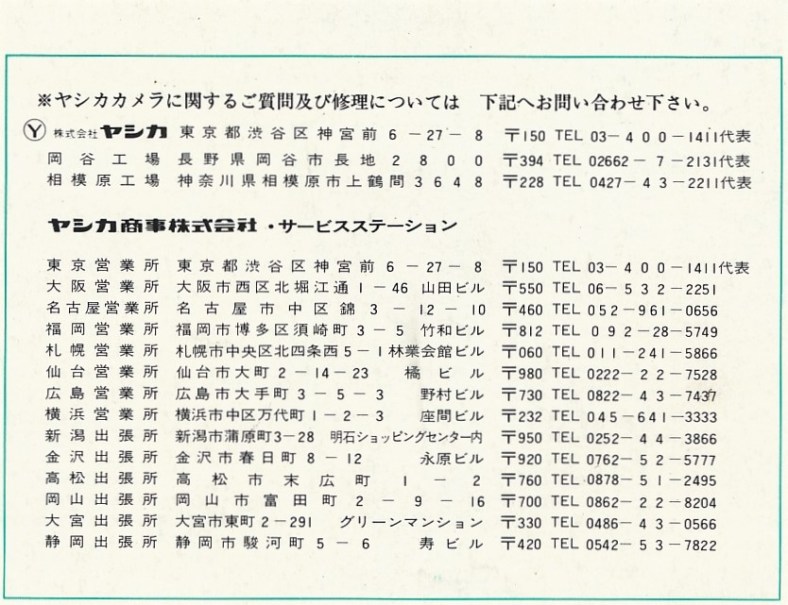
Back cover of the Yashinon Lenses & Accessories booklet printed in Japan in January 1973.

Between June 1972 (the first book above) and January 1973 (the second book above), Yashica closed its campus and factory in Shimosuwa. The only factories listed are the new Okaya factory and the Sagamihara factory. That was a big move for Yashica and as we understand it, they had purchased the old silk mill in Okaya as far back as 1959. As of this book, Yashica did not close any of its other sales offices listed from the previous book.

DSCF9431

The factory was officially dedicated in December 1972. According to Yashica documents, the factory didn’t achieve full production until late 1974 or early 1975.

IMG_20190517_0001 (1)

The Yashica Okaya factory complex in the summer of 1974.

Why is any of this important? It isn’t unless you’re a Yashica Fanatic like us. Oh, it did have a strong ripple effect on the company though. Japan was in a bit of an economic slowdown in the early 1970s and it came to a head in late 1974 for Yashica. Mismanagement and embezzlement (and the costly move) caused Yashica to lay off workers – unheard of in Japan at the time. They closed the Sagamihara factory which put 900 Yashica employees out of work. That had an effect on the factory at Okaya and Yashica was soon in deep financial trouble. Their cameras were still top notch but the first warning shots about their future were fired.

IMG_20190517_0003 (1)

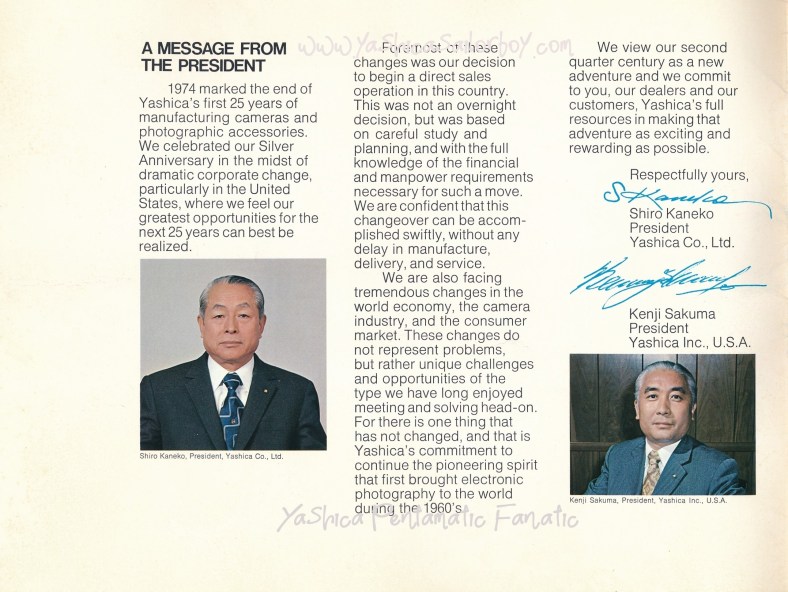
It is my understanding that Mr. Shiro Kaneko was installed as the new president of Yashica by the Nissho-Iwai Company (Yashica’s distributor) and by the Taiyo Kobe Bank which by 1974 had put its full financial resources behind Yashica’s new marketing efforts.

Thanks for your visit! Hope you got a little something out of it. – Chris


Yashica TL Electro-X

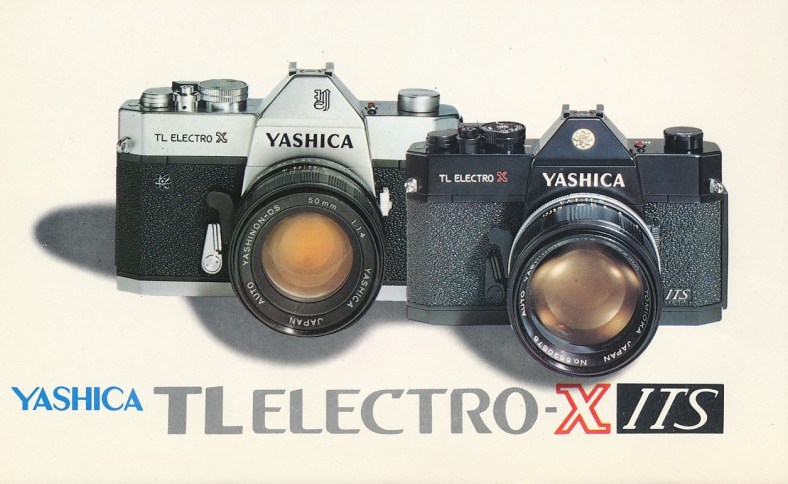
One of the most successful SLRs from Yashica – the ‘Pioneer in Electronic Cameras’… the Yashica TL Electro-X. The world’s first electronic single-lens reflex camera.

A random collection of clips from Yashica sales brochures and our eclectic collection of all things Yashica –

18641997101_dbb1db2784_o

img_20170228_0003

‘ITS’ = Integrated Technology System… maybe.

img_20170228_0007

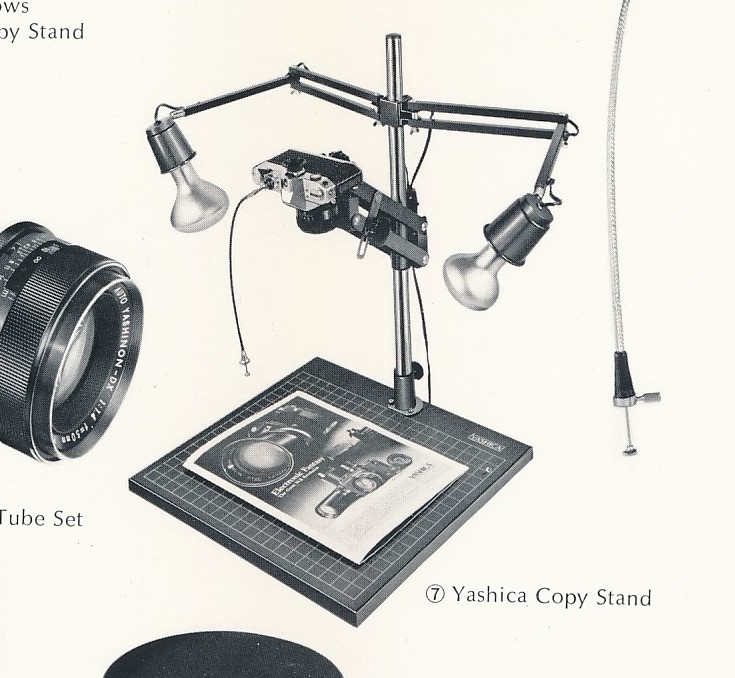
We’ve recently added this hard to find accessory from Yashica. It was still new in its original box! It will be used in our studio for some copy work.

20170301_092007

Original box. Lucky find!

img_20170228_0002

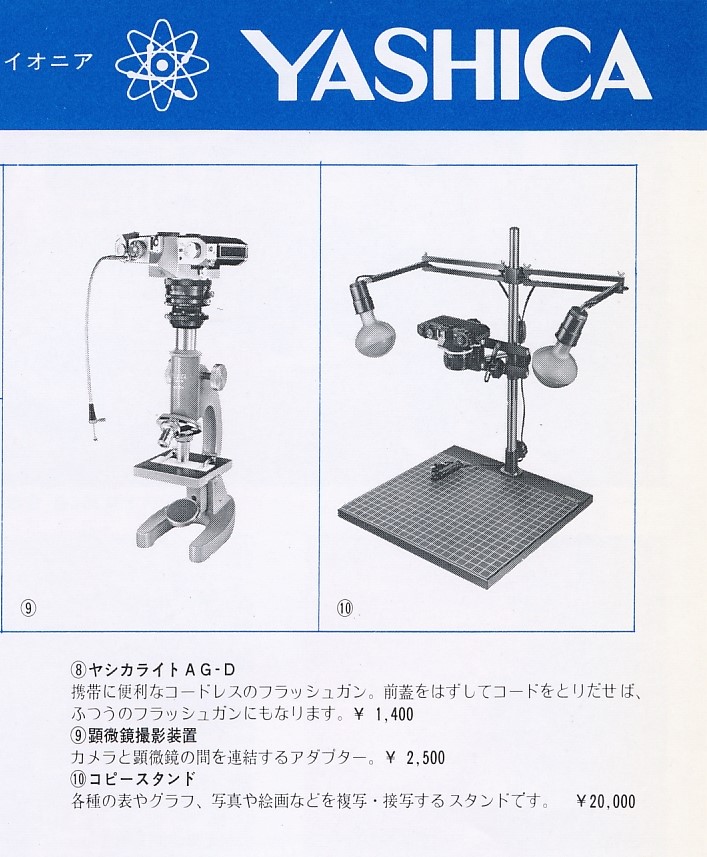
The Copy Stand listed for 20,000 JPY in 1971. About $55 USD


15218536719_13b8308208_o

17151773615_977cae3853_o

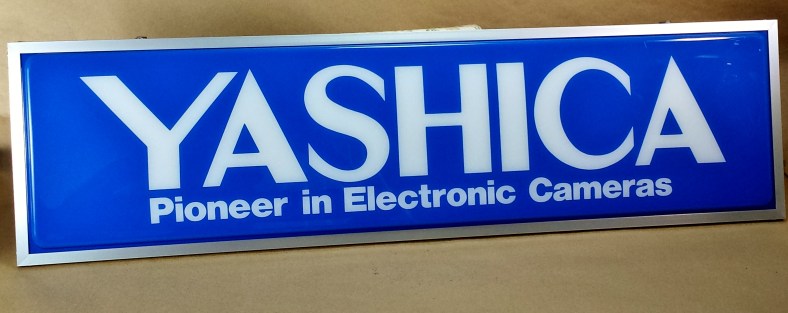
Large dealer’s sign. Two sided but non lighted. Ca. 1968

24520965712_eae778e081_o

Yashica ‘Sailor Boy’ with another version of the slogan and electron logo. The ‘Sailor Boy’ first made his appearance in 1962.

24104907192_2909081390_o

Elegance on ice.

Do you have something to add to our database about this interesting camera? Please feel free to comment. 

Thanks,

Chris & Carol Photography ^.^

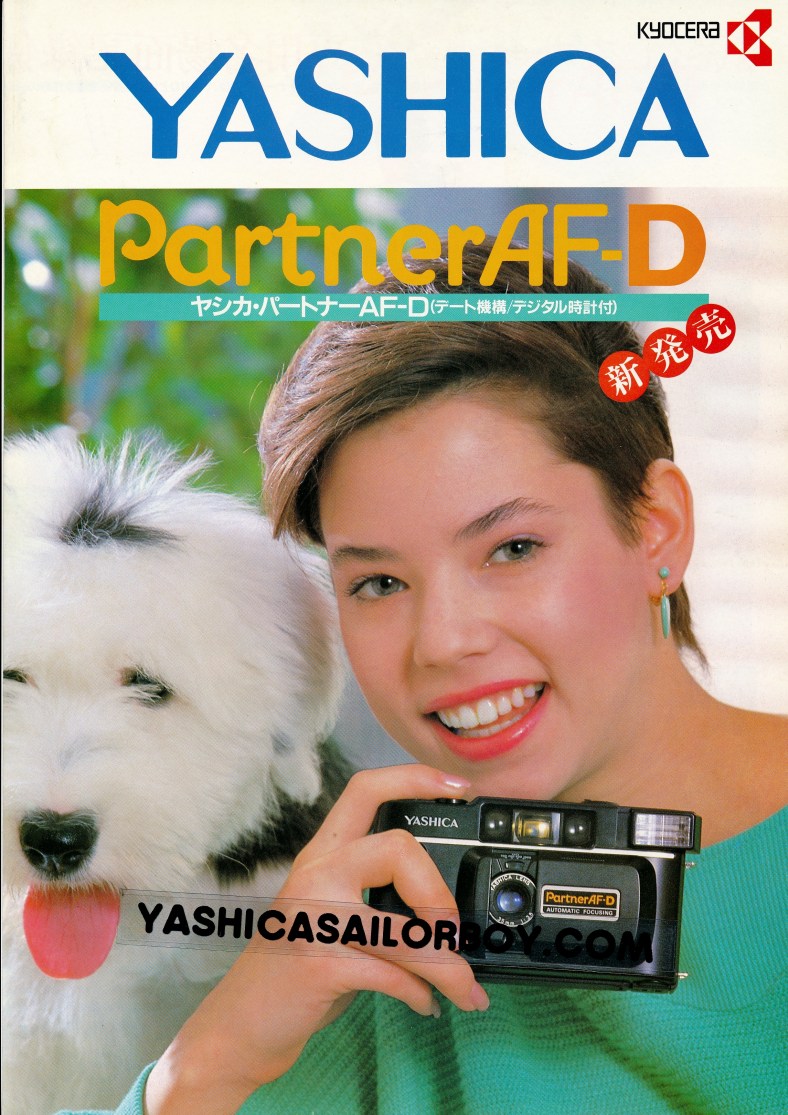
Colorful Yashica Brochures… 1980s

A small collection of some 1980s Yashica and the Yashica-Kyocera sales brochures. We enjoy collecting brochures as they usually capture a slice of life for that period (at least in the marketing folks view of things). Enjoy!

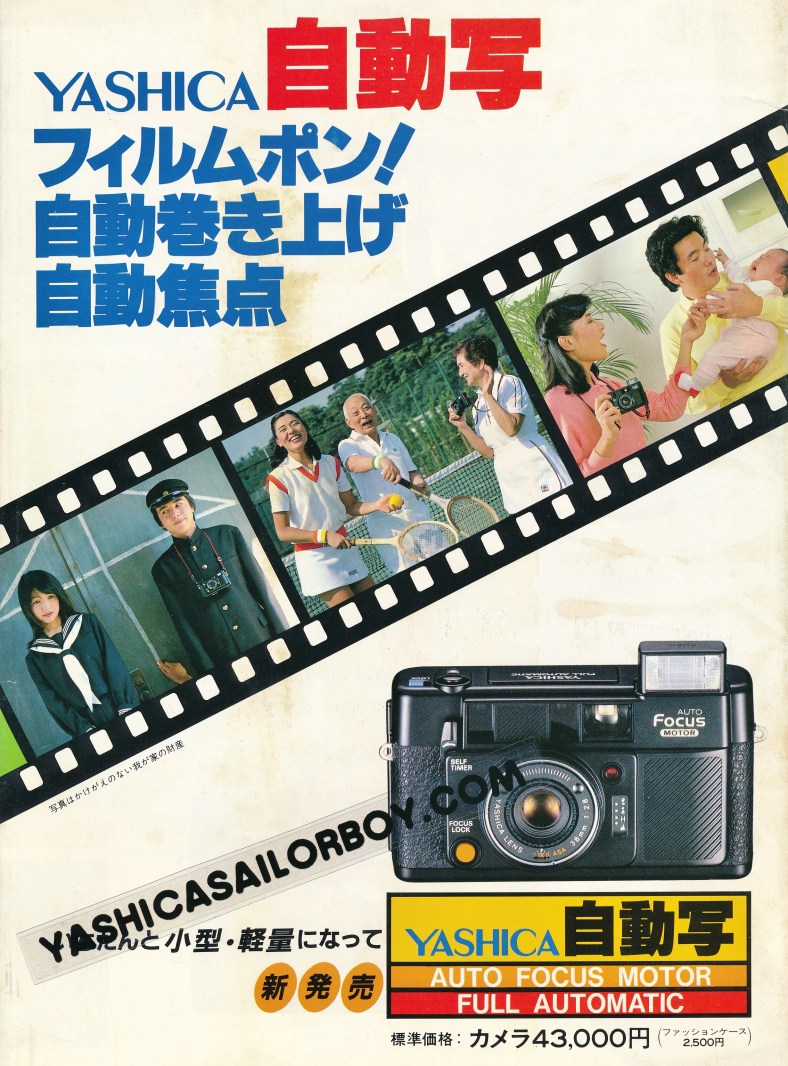
Cute brochure from around 1980 featuring the Yashica Auto Focus. Yashica’s home office was still in Shibuya-ku Tokyo at this time. Kyocera was in Yashica’s near future and it would signal the beginning of the end!

25896400900_c2437ce7ec_o

Another nice sales brochure from October 1981. The cameras featured in this brochure are the Diary, Flasher, Snap and the Auto Focus Motor.
25898856450_44fee70d1d_o

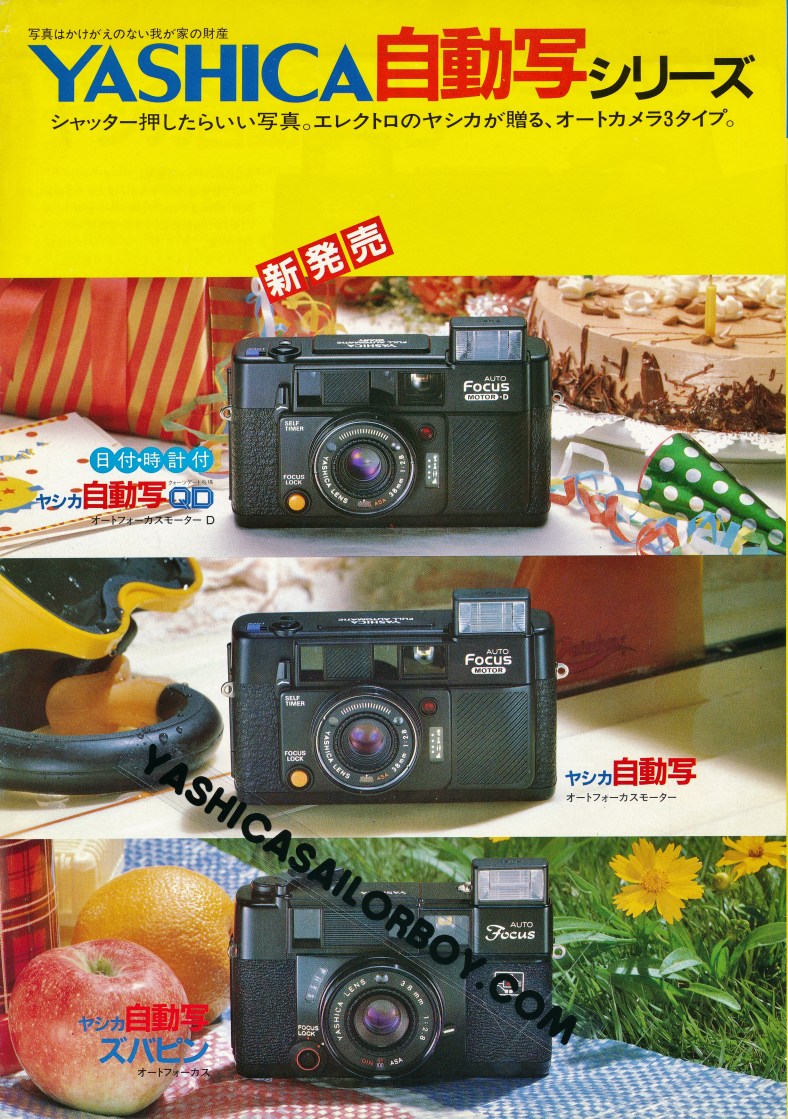
Yashica Auto Focus, Auto Focus Motor and Motor-D. These were technological breakthrough cameras for Yashica in the early 1980s. Of course at this same time, Canon had the A-1, AE-1, AE-1 Program and of course the Canon F-1. These cameras from Canon were all SLRs so not a fair comparison but Canon made similar compact rangefinder cameras. It was a tough go for Yashica at this time and a takeover was on the horizon.
25899033730_558e532eaf_o

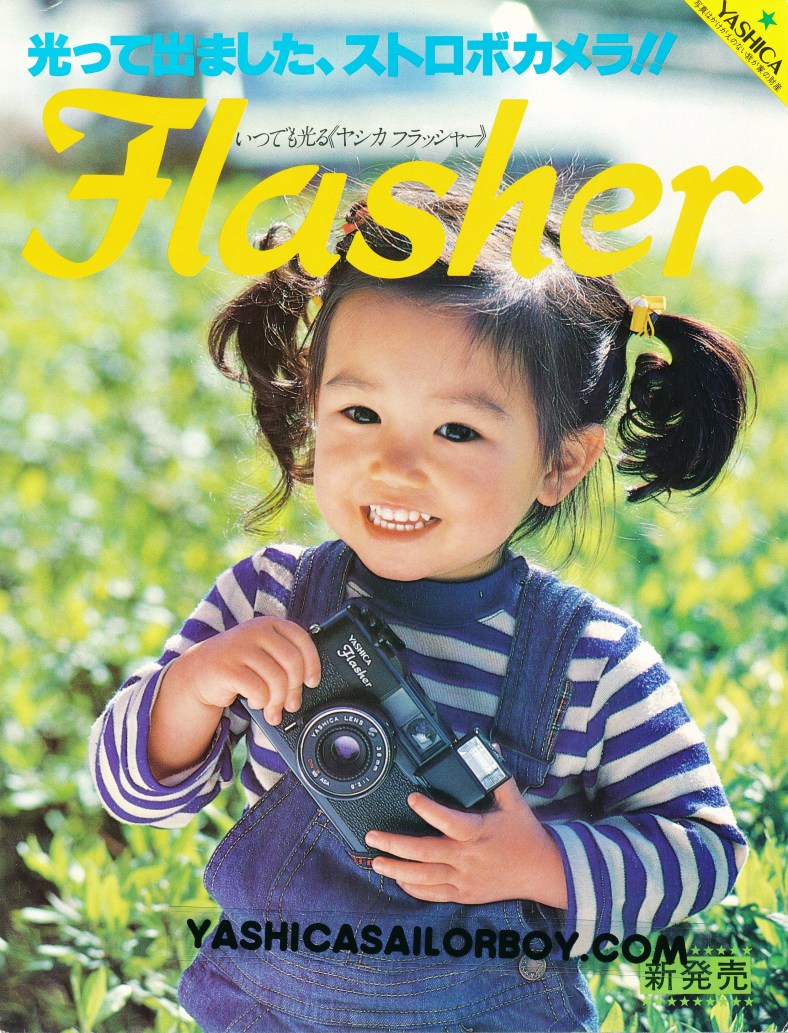
What a cutie! Full color sales brochure from Yashica dated 1 March 1980. Features the Flasher, Auto Focus, Snap and the Diary.
26079349032_07ccb458cd_o

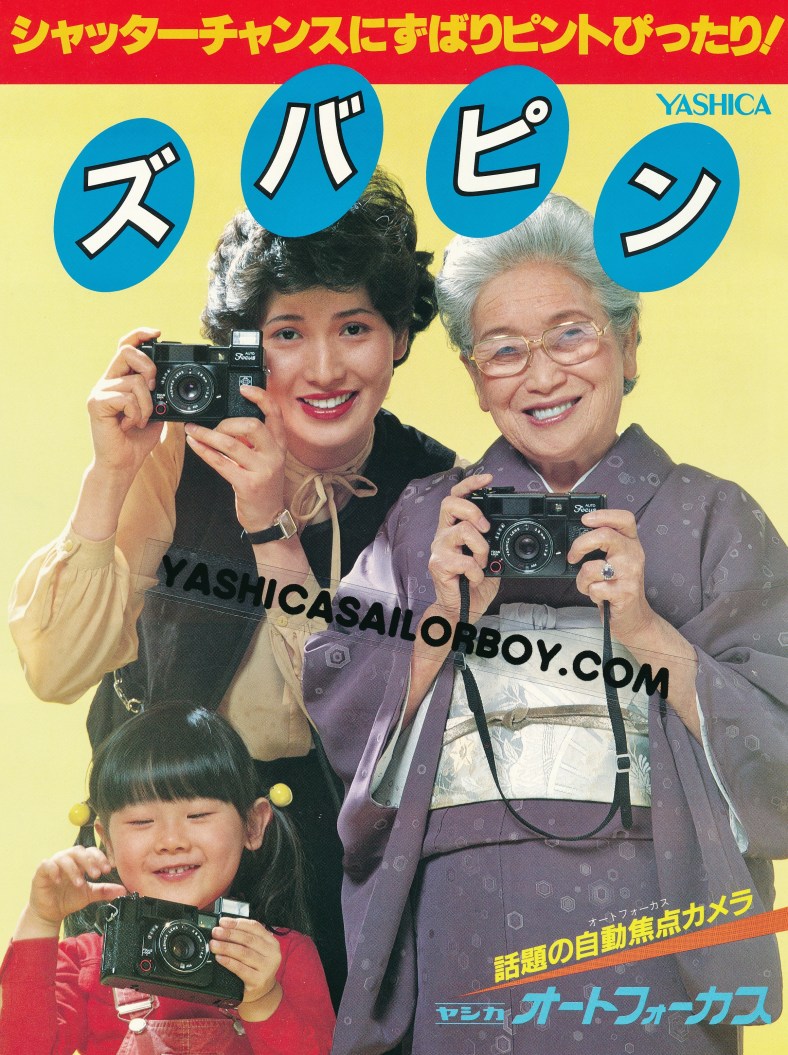
Neat sales brochure from September 1980. In the early 1980s Yashica promoted its auto focus and auto exposure cameras extensively. This brochure featured the Yashica Snap, Diary, Flasher and the Auto Focus which listed for ¥41,000.
26169339505_b055f64250_o

The dark days of Yashica begin with this very cute sales brochure from February 1984. Yashica by this time was taken over by the Kyocera Corporation which was headquartered in Kyoto. Yashica was now a just a division of Kyocera…Yashica was still in its long time office in Shibuya-ku. This move (Kyocera ownership) was the beginning of the end for the Yashica we knew.

When Kyocera killed Yashica (about 1991) they kept the optical portion of the company which was originally the Tomioka Optical Co., Ltd. of Tokyo. That division is still part of Kyocera and is now called Kyocera Optec Co., Ltd. and is still headquartered in Tokyo.
26103094971_52ab0e9630_o

There you have it. A nice collection of some of the best of the 1980s Yashica sales brochures. As we mentioned, the Kyocera ownership was just on the horizon and the final days of the once great Yashica were coming to an end. We do own a few cameras from the Kyocera (Kill-a-Yashica) period and some were received as excellent point and shoot compact wonders.
dscf3456

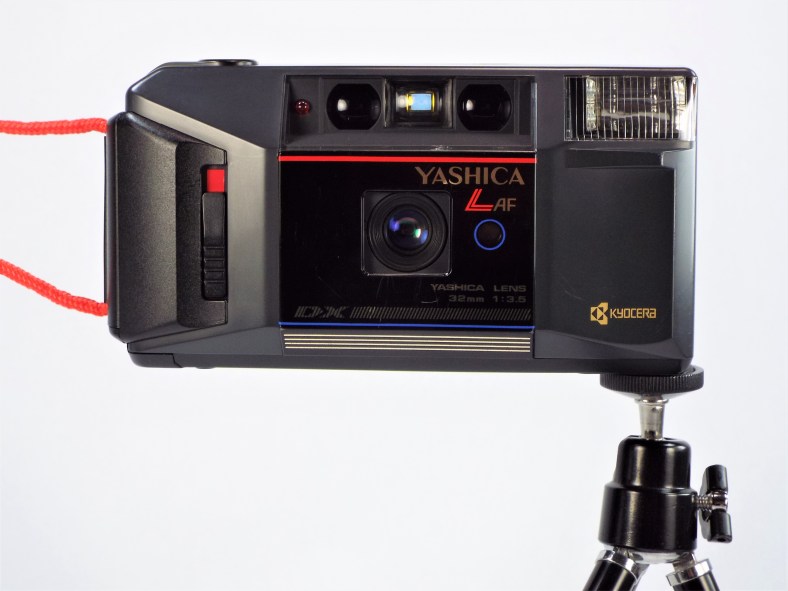
A lovely Yashica-Kyocera L AF Date from 1986. Very nice lines and we’ll be running a roll through it very soon!

This good looking camera (above) was sent to us from a blogger friend and photographer living in Japan. She was very kind to donate it to us for sharing it on our blog. You can see excellent reviews of all sorts of cameras and awesome photographs too at https://cameragocamera.wordpress.com/

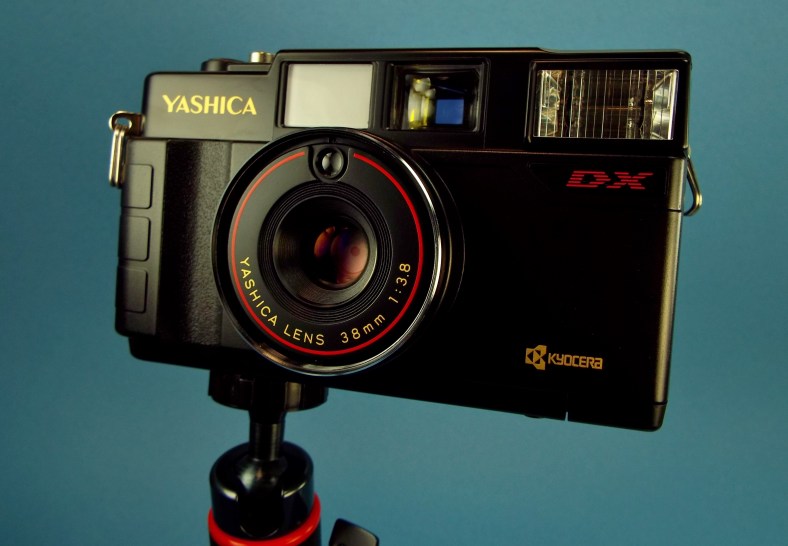
Another donated camera comes to us from a friend in Virginia and a fellow Flickr poster.
26295606350_65700d54b4_o

25965272473_a80d24519c_o

We haven’t run film through this beauty yet – it’s on our “catch up” list of things to do. Thanks to Ken for sharing his lovely camera with us so that we could share it with y’all here on the blog.

By the way, if you’ve got a nice Yashica, Kyocera or Fujifilm camera from this period (1980s to mid 1990s) and would like to see it featured here, just contact us through WordPress and we’d be glad to do it.

Many thanks for your visit – comments are always welcomed.

Chris & Carol ^.^
 

Yashica ‘Sailor Boy’ & Friends

20141117_222025

Yashica’s three finest cameras in black. The J-3 was the first truly modern 35mm SLR from Yashica and it was their first SLR to be made in pro-black with matching black lens. Only a small amount of the J-3s were black – most were the traditional silver top and black leatherette body. On the far right is the most successful SLR Yashica ever made. Fully loaded with electronic everything, all commanded by its ‘IC’ brain. The next step on the evolutionary ladder is the TL Electro X ‘ITS’ (center). A mostly marketing idea, the ITS was essentially the same camera as the TL Electro X with the added gold ‘Electron’ symbol on the front of the pentaprism and the stylized ITS emblazoned  on the camera’s left front (not seen here but can be seen below). The marketing folks at Yashica never said what the ‘ITS’ stood for (if anything). Our best guess is ‘Integrated Technology System’. Some say ‘Interval Timed Shutter’ as the shutter was electronically controlled and could fire at any speed. Later the Contax-Yashica ‘RTS’ was introduced and it was advertised as ‘Real Time System’ whatever the heck that meant.

We’ve used all three, and the TL Electro X with the white stylized ‘Y’ on the pentaprism is our favorite. It just feels perfect in your hand and the electronic over and under (exposure) arrows in red are easily visible in the viewfinder.

20141117_222139

By the way, the advertising icon (Yashica Sailor Boy) was never given a proper name by Yashica. He made his debut in 1962 and still could be found kicking around in sales brochures and ads into the late 1960s. This guy is the 20cm (10 inch) dealer display model and he was in his sealed bag and box from Modern Plastics of Japan when we acquired him. He comes in about 3 other sizes and different styles and colors.

Thanks for stopping by!

Chris ^.^
Pigeon 35 by Shinano Camera Co., Ltd.

Why show a 35mm viewfinder camera on a blog about the Yashica Pentamatic? Well, Shinano and Yashima-Yashica share a common history. The first camera that carried the Yashima name was the Pigeonflex… a twin-lens reflex (TLR) camera!

Anyway here’s a nice example of a gorgeous 35 mm viewfinder camera that we acquired recently. The lens is made by Tomioka… a sharp (we hope) Tri-Lausar f/ 3.5 4.5 cm lens. NKS shutter B – 1/200.

It’s a nice heavyweight camera that has a good feel to it. In our opinion, it’s far from being a cheaply built camera as some would say. In fact, it still functions as intended after 6 decades of use. Most leather cases would be a complete mess after this amount of time but the leather is nice and the stitching is intact.


20160801_183736

1952 Pigeon 35 by Shinano.

20160801_183800

Nice view of the Tomioka lens.

20160801_184255

Beautiful logo on this metal cap.

20160801_184349

Classic style. The top plate of the Pigeon 35.

DSCF1574

After 6 decades of use, the case has held up nicely.

DSCF1581

Interesting bottom plate

More to come! By the way, everything works just fine! Can’t wait to run a roll of film through it. Images of the leather case to follow too!

Thanks for stopping by! – Chris

My camera shop is always open at http://www.ccstudio2380.com


Yashica TL Electro-X ‘ITS’

After nearly five years of research and thousands of “searches” on auction sites, I finally have my answer! ‘ITS‘ as it relates to the famous and groundbreaking Yashica TL Electro-X stands for… are you ready? Nothing!

That’s right… nothing. I’ve just finished reading what appears to be the most comprehensive guidebook on the TL Electro-X (from Yashica no less) and not one word as to why the marketing guys and gals at the office in Shibuya picked ‘ITS‘ to appear on the lower left front of the camera. Not one hint… no clues… nothing!

Okay so more than likely it was meant to mean exactly that… nothing. I can live with that. Marketing people don’t have to explain anything they do. ‘ITS‘ simply looks good. So fast forward from 1968 to the present day. Hear I am stressed out about what may have been a whim… an afterthought… or maybe something one of the designers casually mentioned in a meeting while you know, designing the thing. ‘ITS’… sounds good.

I’ve imagined what it may mean hundreds of times (sad to admit that) and nothing really fits for the time period except that maybe the ‘I‘ stands for “integrated”. Like integrated circuit or I.C. as I’ve sometimes seen it mentioned in other Yashica sales brochures. That’s got to be it. After all, the NASA people were always using that term during the height of the space race. Okay so maybe we now know that the ‘I‘ stands for “integrated”. Simple. The ‘T‘ has always stood for “technology” to me. What else would the ‘T‘ stand for? Timed? As in timed shutter. Oh that’s a good guess. I like it. Maybe the ‘TS’ part is for “timed shutter”? That’s another good one. Integrated… Timed… Shutter!!! Or how about “Interval” timed shutter? That’s ‘ITS‘ isn’t it?

Solved! Finished! No more worries right? No… that isn’t it. It’s got to mean something else. Something catchy, something better than that. Well the book (sales brochure) I just finished reading never mentioned what the ‘ITS‘ stood for. Just like the hundred other brochures and ads I’ve read. But wait! Hold on! There on the cover is a clue! There it is right in front of me! “SYSTEM”. Yashica called everything connected with the TL Electro-X ITS (lenses, filters, bellows, angle finders, accessories, etc.) SYSTEM.

So there it is! That was simple. Right? Well we’ll see. I’m going to keep on looking for that definitive statement from Yashica. Somewhere in black and white they’ll say it. For now though I’m sticking with… “Integrated Technology System” or “ITS” for brevity.

ITS = Integrated Technology System

DSC07504DSC07497Yashica 6-9-15 TL Electro-X Brochure back cover close

20151202_203809

A 45 page book from Yashica that explains everything about this fantastic camera.

No denying it – it’s a sharp looking camera and the ‘ITS’ just makes it that much cooler. It’s one of our favorite Yashicas in our collection. This one came to us via Okinawa, Japan. Purchased in late 1973 – that makes it one of our newest Yashica SLRs too. We’ve kept all of the original paperwork and of course the box. If you come across a nice looking one for sale (or better still get it as a gift) it should be on your list of must haves. The battery is an easy find and most will have working meters since they were only electronic (no moving match needle affair).

Happy hunting!

Chris and Carol ^.^