Yashica 44… a ladies camera?

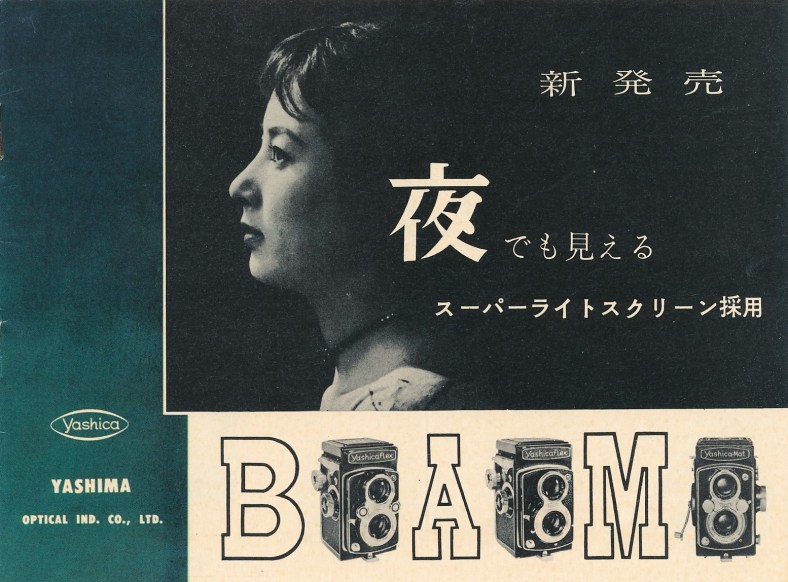
Any doubts that Yashima-Yashica was marketing to women for their new smaller 4×4 cm twin-lens reflex camera are erased once you see the cover to the sales flyer.

img_20161129_0026

In a male dominated society, Yashima-Yashica needed to leave no doubts as to who these new smaller and lighter cameras were for.

Normally sales flyers and brochures in the late 1950s were geared to and appealed to the male buyer. In all fairness, it was likely that’s who took most of the photographs during that period. Yashima-Yashica’s direct pitch to Japanese women was an attempt to tap the vast market of female buyers.

img_20161129_0027

As we understand it, the 44 model came in at least 7 or 8 colors!

Even though the front of the flyer was simple and left no doubt as to who the buyer would be – the reverse of the flyer was still detailed and quite technical. It’s possible that the camera was designed for the wife to use for taking pictures of the children (while the husband was off at work all day) but still detailed enough for the husband to feel comfortable purchasing. Just our take on things.

Thanks again for your visit – as always we appreciate any and all comments. In the interest of fair play, we ask that you do not copy the images and include them in your blog or post without asking for permission – thanks! ^.^

Yashima Sales Brochure… 1956

In just 3 short years, Yashima beat the odds and became a Japanese camera company that lasted long enough to produce multiple models. In the case of this sales brochure from 1956 – the Yashica Flex B, A and Yashica-Mat twin-lens reflex cameras.

img_20161129_0015

Well designed sales brochure from the little company that became Yashica.

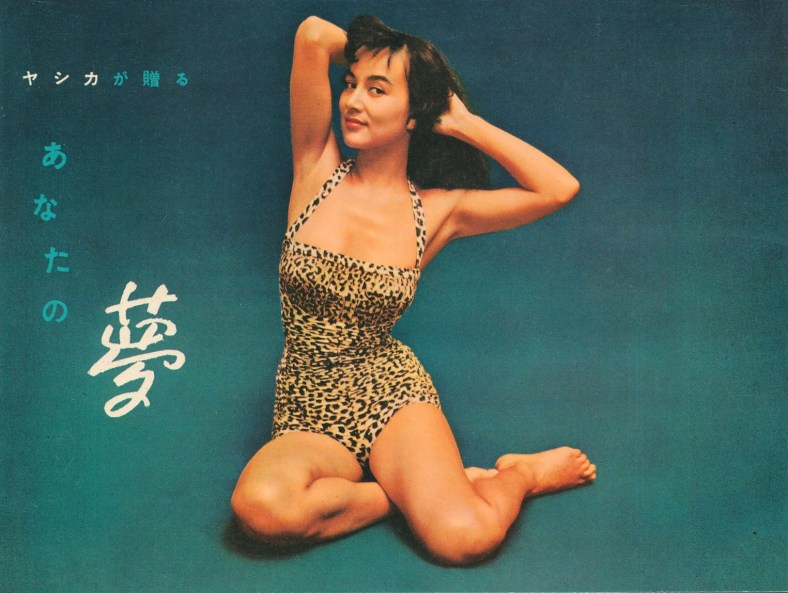
Not that we’ve seen a ton of sales brochures from other Japanese camera manufacturers from this era, but we think this was rather provocative for the mid 1950s (at least in the US we would think). This brochure was intended for the home market and the culture of Japan is a tad less uptight about things like this.

img_20161129_0016

Lovely model on the back cover of the brochure.

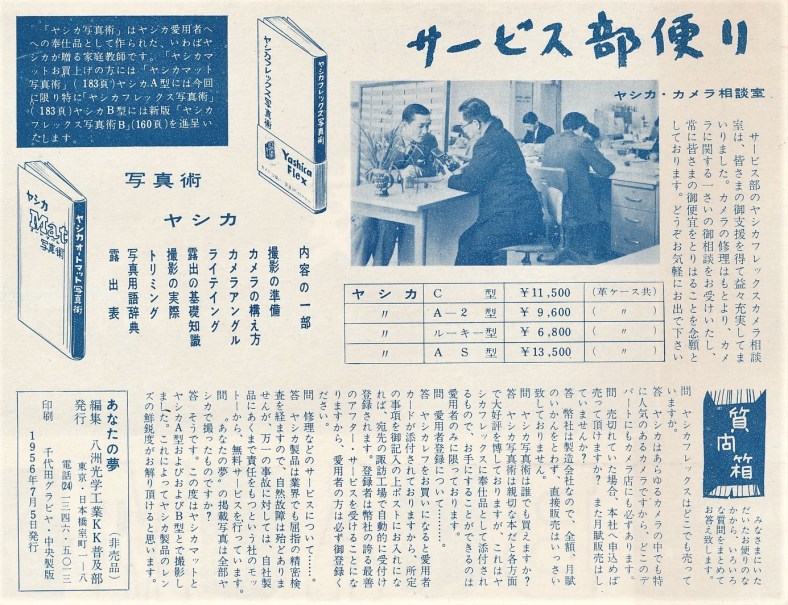
The first page inside the brochure in packed with information not typically found in a brochure. Yashima was, in our opinion, marketing itself beyond what such a young company would normally look like. These series of Yashica Flex Photography books were excellent creations that went far beyond a simple owner’s guide.

img_20161129_0011

You’ve got the year (1956), two examples of the Yashica Flex Photography books and some prices of the cameras.

img_20161129_0025

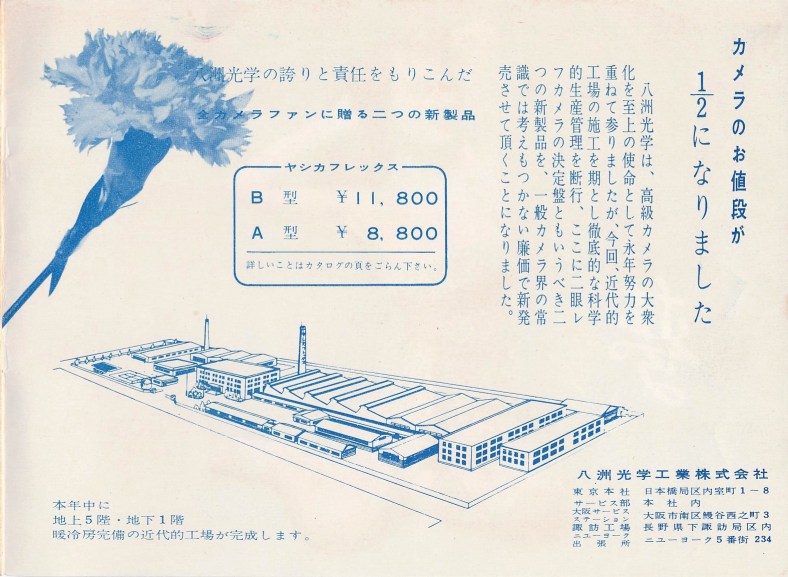
Last inside page of the brochure depicting Yashima’s new modern factory in Suwa, Nagano Prefecture, Japan.

Yashima was a very proud company and they were eager to show how much they grew since 1953.

Thanks so much for your visit. The goal of our blog is to stimulate discussion and further the knowledge of all things Yashima-Yashica. Please share your comments with us… we’d be happy to read them. One final thought, we share our brochures with others and ask that you do not copy or post our images into your blog or post without permission. Thanks!

Chris & Carol

1954… Yashica Flex Model S

When Yashima started making twin-lens reflex cameras in a small factory along the shores of Lake Suwa in Nagano Prefecture, they were but one of hundreds of “start-ups” entering the already crowded Japanese camera manufacturing business. Many would fail – and fail quickly they did. But little Yashima, with two brothers from Nagano at the helm, managed to take a big step – to make a second and then third camera.

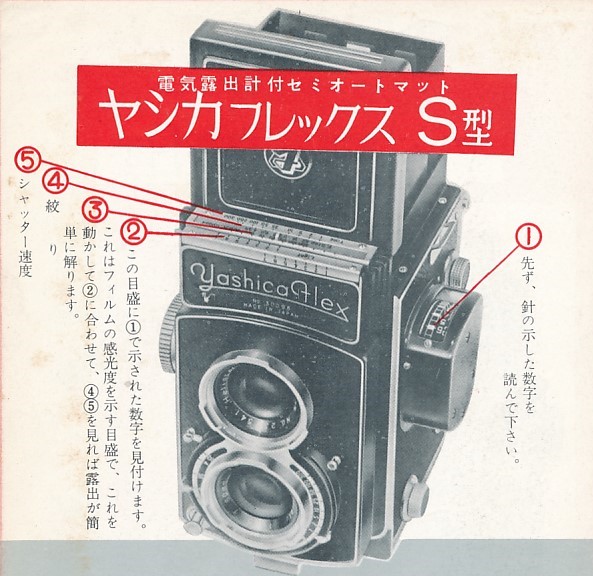
The first was the Pigeonflex (great name but how do you grow with a name like that), then came the Yashima Flex and Yashica Flex B. In 1954 (late) they built the now famous Yashica Flex Model S. The first TLR in the world with an attached exposure meter! Yep, in the world! None of the already established players had produced one like that. The meter was supplied by Sekonic and screwed to the side of the body and hidden light sensors under the name flap sent electricity to the meter. Bingo. Meter and camera merged! 1954

img_20161129_0004

Cropped scan from a rather rare (in the US) Yashima sales flyer for the Yashica Flex Model S. It’s one of the earliest pamphlets around for this camera.

The light sensing cells were built-in under the flap that was the nameplate. You would open the flap and the maximum amount of light would strike the cells and send an electrical signal to the meter  (#1 above). You then used # 2, 3, 4, and 5 to “compute” your exposure settings. Simple except that you needed the eyesight of an eagle to actually see the numbers on the scale. It it was real sunny out, you didn’t need to lift the flap to get an accurate reading – there were 12 holes in the flap that would let in enough light to set the exposure.

In a testament to the designers, many of these early exposure meters still function even after 6 decades of use. But, many have fail too mostly caused by a failure of the wire to meter connection. The cells are fine (no batteries, sun powered).

As always we appreciate your visit. We’re glad to share some of our collection of early sales material and of course to chat up our Yashima-Yashicas. In the spirit of fair play, we ask that you do not copy or post our images in your blog or post without our permission. Thanks.

Chris & Carol

Fujica ST701 Part 2… getting closer!

Definitely on our “to shoot with” list – and in the very near future we will! Now that the atmosphere in Florida has transitioned from nuclear hot to just a pleasant warmth, time to dust off the collection and put them to work.

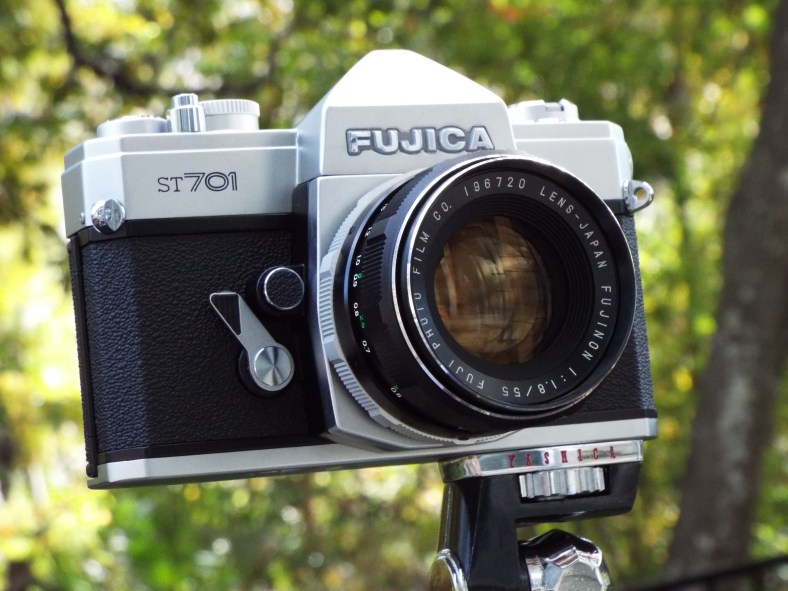
Here’s a nice ST701 from the Fuji Photo Film Company of Tokyo – no battery for the meter but on a nice sunny day who needs one! Seals are a bit of a mess so we’ll keep the bottom half of the case on for a little extra light tight security.

dscf3015

Our ST701 from 1971. About to get some field testing.

We’ve heard good things about the Fujinon 55mm – of course the fact that it’s a M42 mount helps too. Since we’re such big fans of everything Yashica, we naturally collect Fujifilm too because of the M42 connection. My very humble digital camera is a Fujifilm FinePix S9900W – it’s not going to blow the socks off the big boys but with 16 mp and a killer long-ass zoom it does pretty well.

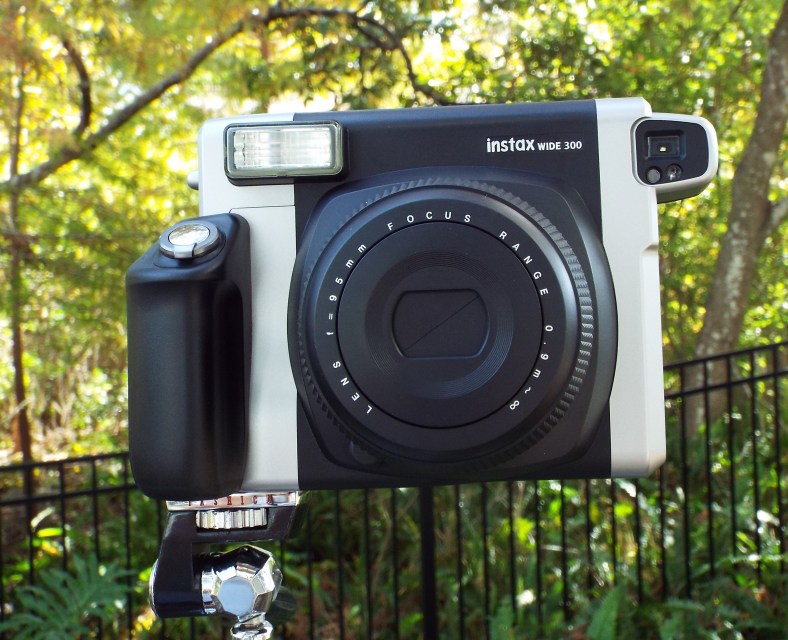
Another Fuji friend is our Instax Wide 300 instant camera. We occasionally enjoy a instant picture or two and we choose the Wide 300 for the extra image size over the credit card sized mini format. We’re waiting to see if Fujifilm will bring out some black and white Instax film for the Wide 300 especially since the B&W Instax mini format has been so well received.

dscf3019

Fujifilm Instax Wide 300. Lots of plastic but it gets the job done.

I’m (Chris) still spinning my wheels a bit with close-ups with the Wide 300 – so far the Fuji is 0 for 4 in that department. I’ll have to start using the close-up attachment and see what happens. The autofocus for close-ups needs full sun otherwise it defaults to what looks like infinity. I’ll get it.

Off to use some film…  ^.^

Thanks for your visit! C&C

A little Fujicolor to brighten our day!

I’ve always been a fan of Kodak film. Living in the United States it was hard to find anything else to buy at the corner stores – even in New York. Every now and again I’d pick up a roll of Fujifilm and was always impressed with the results.  I’ve always liked the little green boxes too… they catch my eye.

While our main collecting focus has been Yashima-Yashica cameras and gear, there’s always been a little offshoot into the world of Fuji. Partly because we lived in Japan – Yokohama to be exact, and Fujifilm was more available and there were labs nearby to process the film. Kodak processing was via handy but slow mail back to Palo Alto, California if I remember correctly.

So on this end of the week Friday, we thought a little Fujicolor was in order.

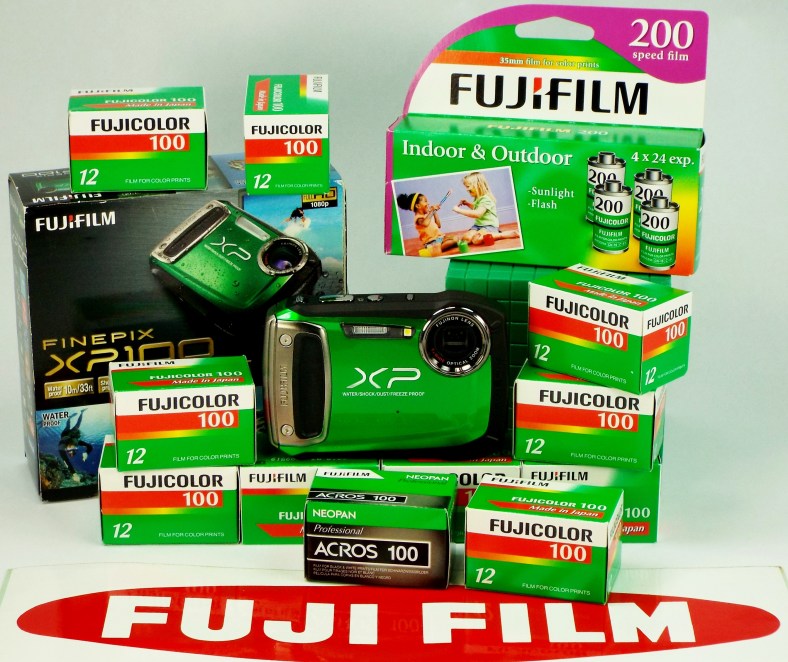
dscf2924

We’re thinking of a color. Can you guess?

The 12 exposure Fujicolor 100 rolls are all expired (2010) but they usually produce good results if you treat them like they’re ASA50. The Acros 100 is a fresh roll and you can’t beat it for good looking black and white prints. The little XP100 is our go to all weather camera. It has a bright screen (for the beach) and is great in the surf for some wave pics. 1080p video and stereo sound too.

We’ve added a nice Fujica ST701 and Fujipet to our collection but I think were done. Oh, I almost forgot – my primary digital camera is a Fujifilm FinePix S9900W so that’s another Fuji. Oh and I bought my daughter a Fujifilm XP too. Okay, but that’s it. No more Fuji Photo Film Company cameras for us die hard Yashica fans. Well except for a nice Fujicaflex TLR, and the Fuji Photo GS6x9 sure looks great. I’d better stop now!

Thanks for your visit! Comments and likes are always appreciated.

Chris & Carol

‘Found Film’… are there ghosts in my camera?

In all my years of collecting vintage (well they weren’t always considered vintage) cameras, I’ve come across my fair share of ‘found film’. I enjoy finding a roll of film left behind by the previous owner of the camera – from a collectors viewpoint it’s a great way to add some vintage film cartridges or 120 rolls to your collection of film. It’s fun to see if you can guess (from the brand and design) the what and when the roll was purchased and then the why didn’t they finish it… and of course, the who took the pictures? The who took the pictures really didn’t interest me. Sounds strange to write that being a photographer, but I’m more about the subject and not the picture taker.

I’ve never been tempted to have the film developed – why spend good money to look at things and people I don’t know? But there’s always been a slight twinge of curiosity inside me… very slight. Until recently. Money be damned! I’m lookin’!
dscf2698

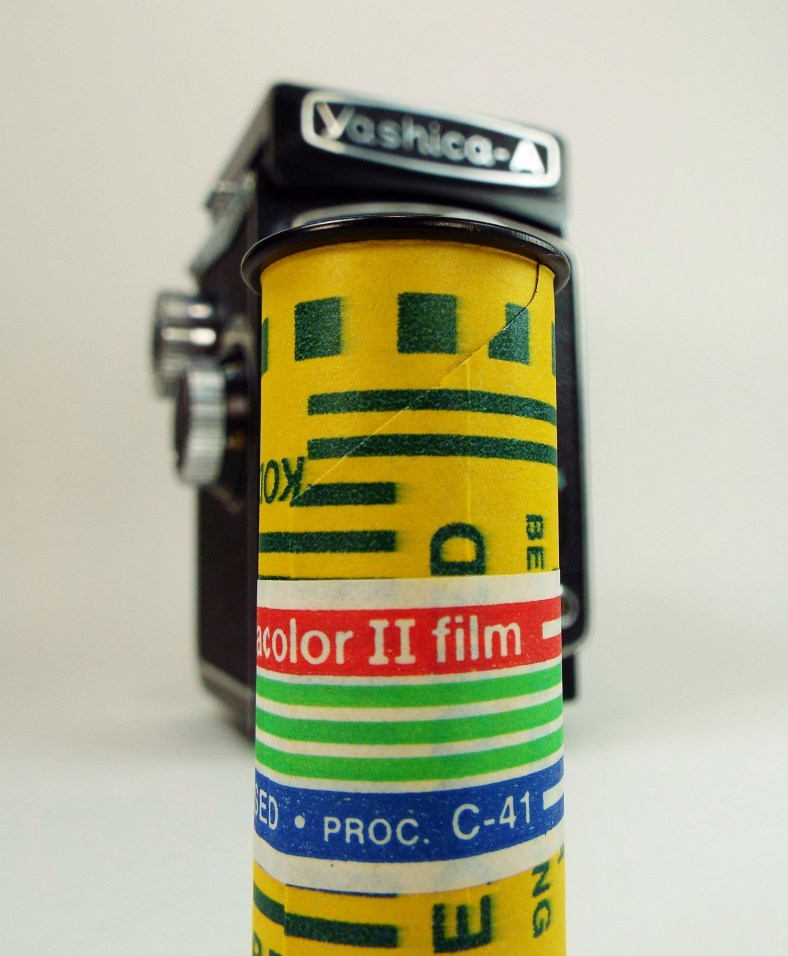
The ‘Found Film’ from the 1960s? Maybe late 1960s.

The camera is a Yashica model A twin-lens reflex (TLR) from 1961. The film could be from the late 1960s or early 1970s but the camera is in mint “new” condition and doesn’t look like it had any previous use. So in reality, it could be from 1962 or so. Just guesses here on my part. So I spent the nearly $20 to send the film off and waited to see what developed (sorry about that). But then Carol (my wife) and I discussed if it was right to look at other people’s pictures. You know, privacy and all that. I reminded her that the pictures could be nearly 50 years old – no privacy issues there. But what about… ghosts? You know if there’s pictures of people they may be dead now and you know, they’d be ghosts. Not everyone becomes a ghost I reasoned. Just looking at them doesn’t mean they’re even dead. If they’re young people they might still be around and they might even want to see the pictures. It would be hard to find them I thought. All we knew is where the camera was from… not a small place by the way. Maybe a landmark or two would help.

Panic! Wrong time to panic. What if there were, “bad” pictures in the camera? Oh crap! Wrong time to think of that after the film was sent off! I’d call them. Call the company that was about to develop the film and explain that it wasn’t really my film and if there was something “bad” on them not to accuse me! We didn’t call – we took a deep breath and decided to wait and see what happens. We promised not to send other people’s film off ever again.

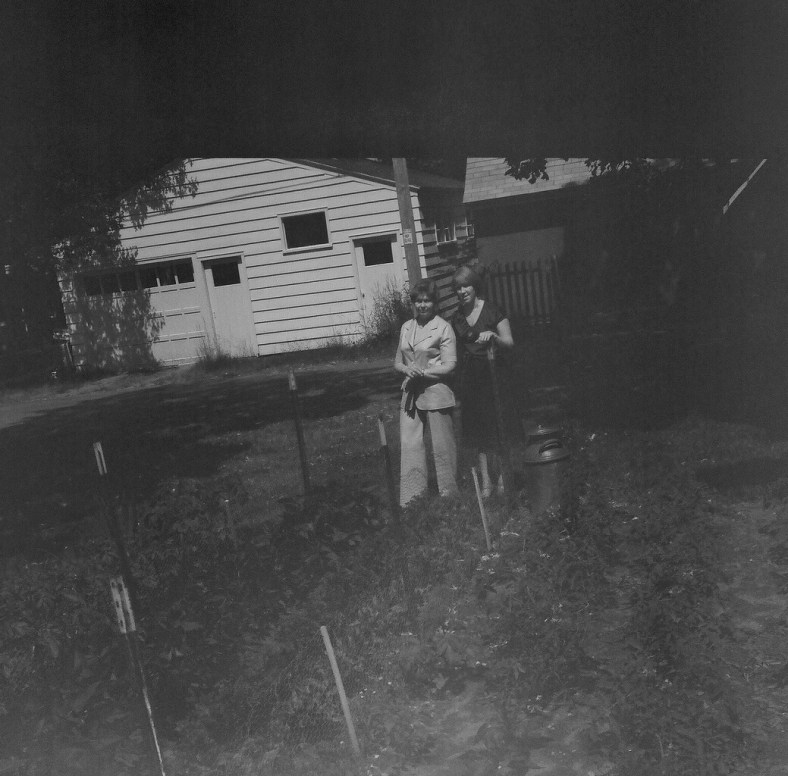
Since it was Kodacolor II negative film and was nearly 50 or 60 years old we didn’t expect much. The lab did the best they could. We did tell them ahead of time that the film was really old. Everything had a strong blueish tone so I’ve converted them to black and white using a red filter. Check it out!
83170001

Image 1… ghosts? I hope not! Mom and daughter?
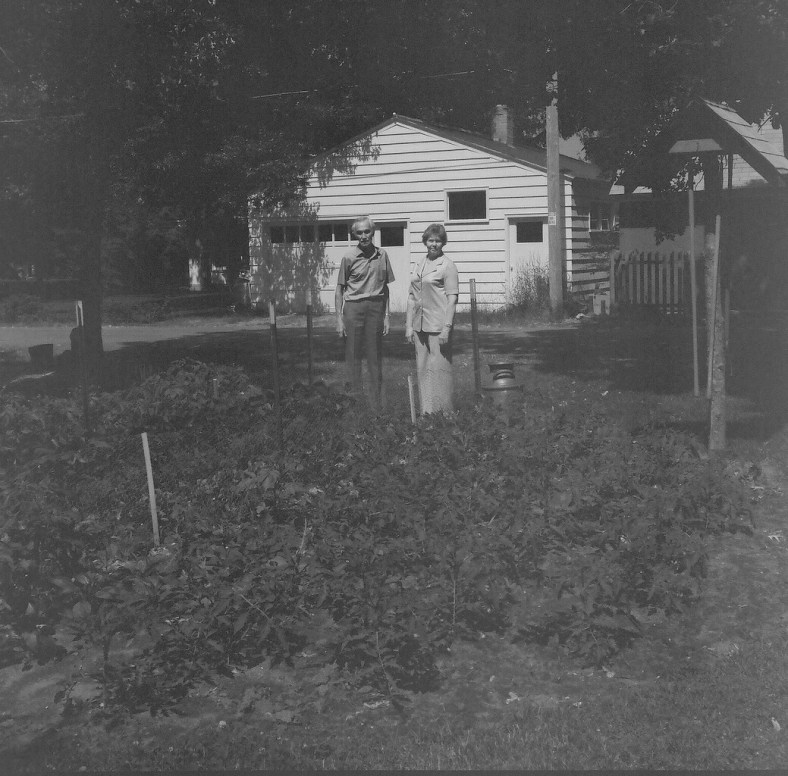
83170002

Image 2… nice garden. Nice couple. Hmmm. Mom and husband?
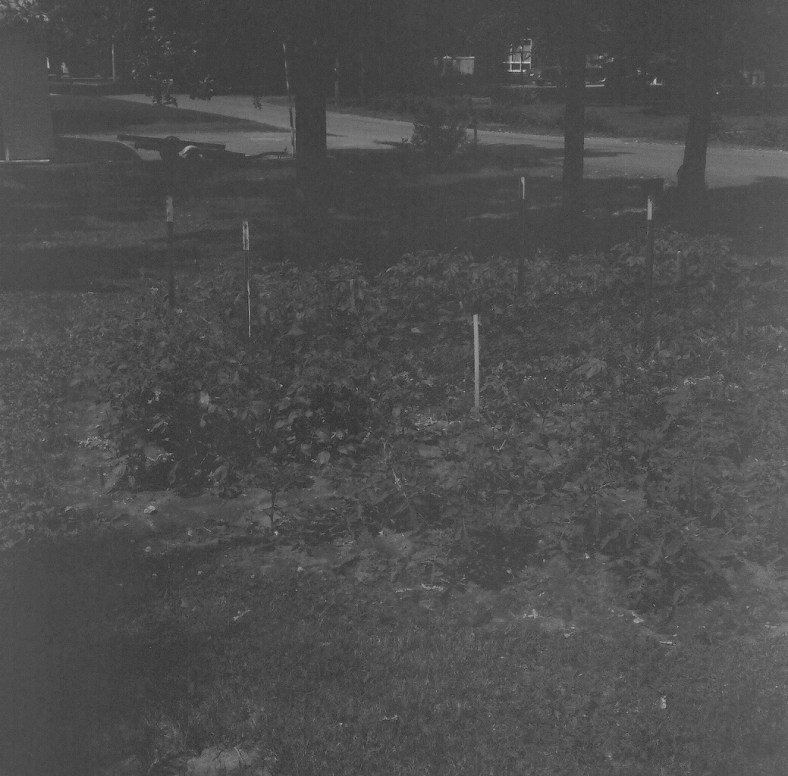
83170003

Image 3… a Wisconsin garden. Nice.

83170004

Image 4… ghost?   

83170006

Image 5… awesome double exposure!

Well no known ghosts were found real or imagined. The remainder of the exposures didn’t come out. Was it worth the $20? No – but it was still fun!

Comments? Have you ever developed found film?

Thanks for your visit! Chris and Carol
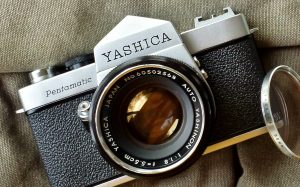
Pentamatic S and friends…

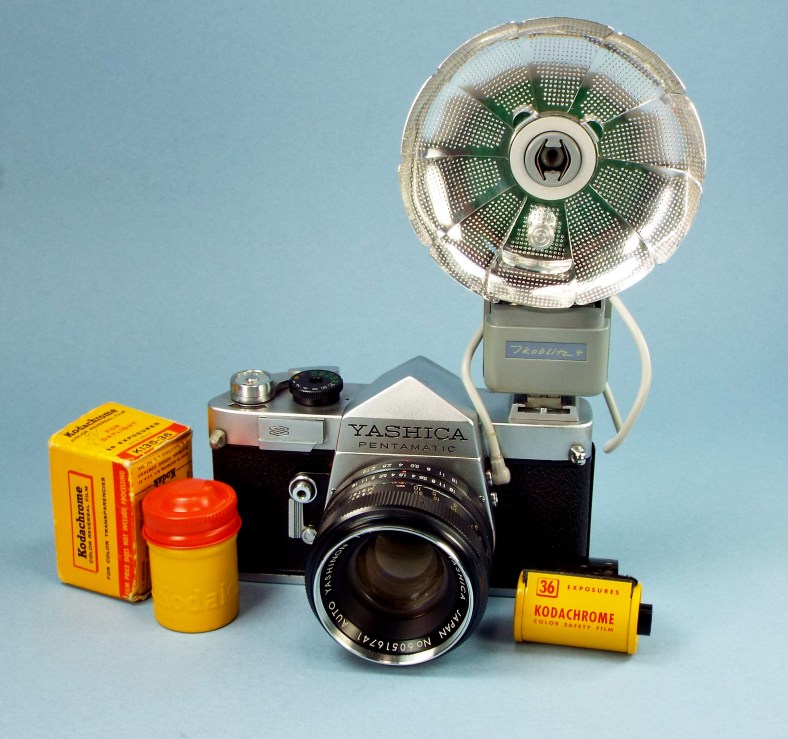
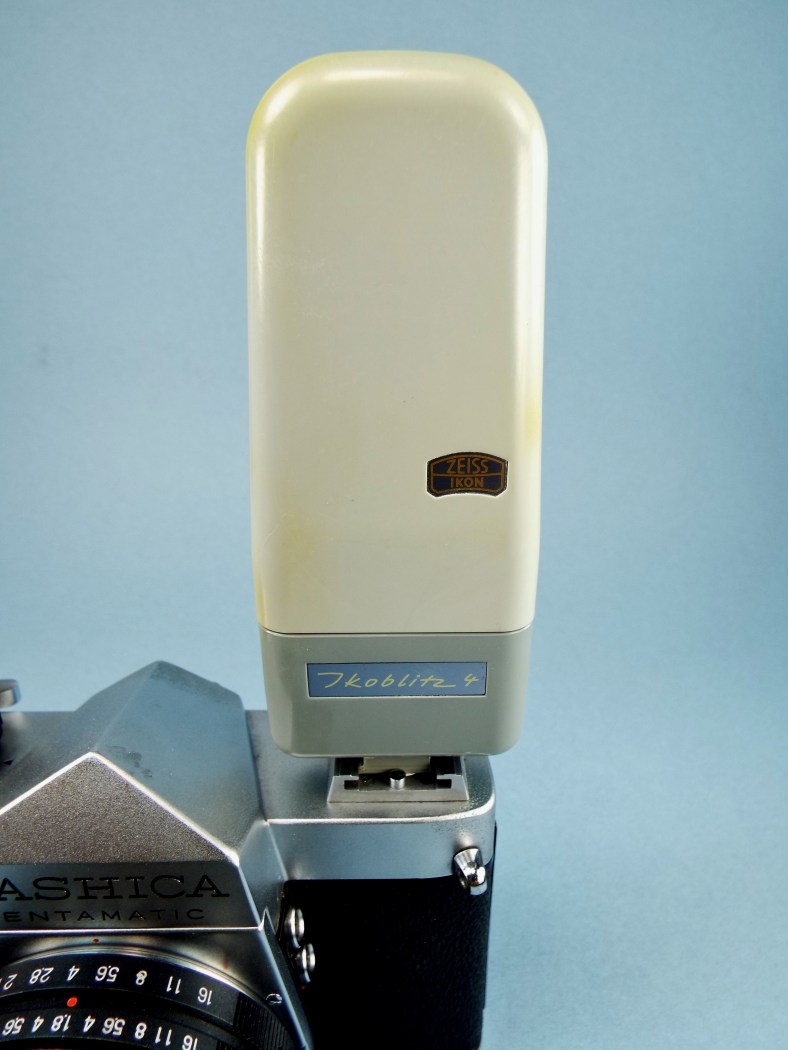
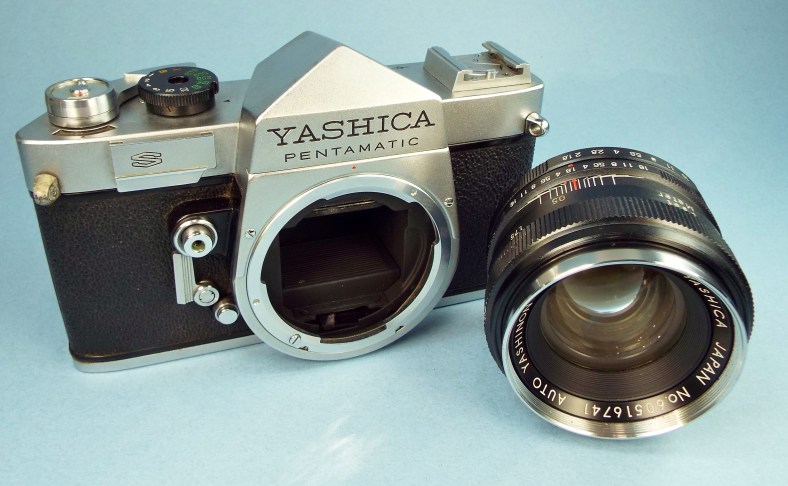
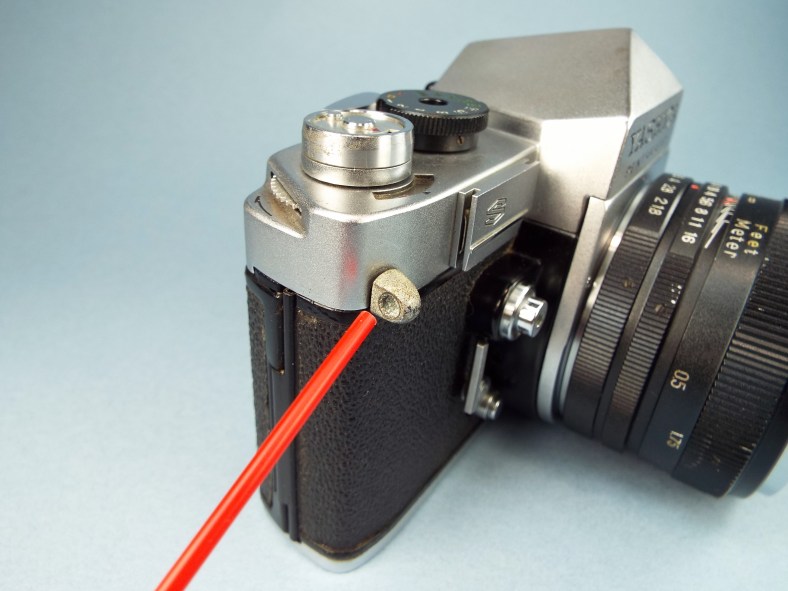
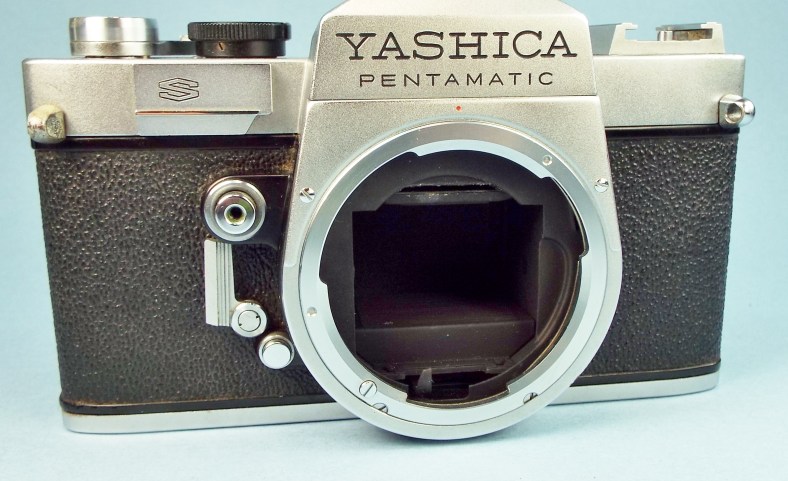
We’ve recently found a nice looking friend for our collection… well, friends. Like almost all collections, ours doesn’t need more friends – more space maybe, but no new friends. This flash came as an accessory to a recent purchase of a Yashica twin-lens reflex camera (from 1956). After a quick cleaning we attached it to our S to see how they would look together – smashing we think! The Kodak Kodachrome is from 1959 and adds a nice touch to the set up. We’ve always loved the bright yellow and red metal film cans from Kodak.

dscf2902

We put our Pentamatic S, from early 1961 or so, and the Zeiss Ikon Ikoblitz 4 (late 1950s?) together. Sadly the flash takes a now defunct battery and has a capacitor so not much we can do except enjoy the view.

dscf2908

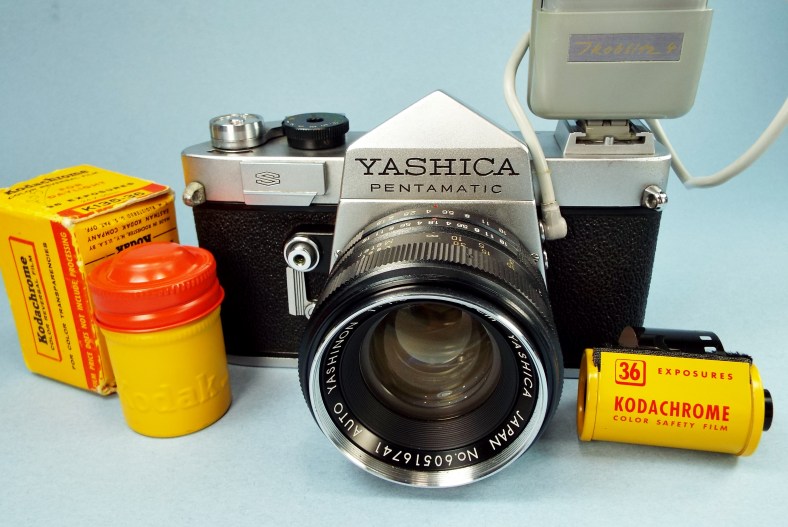
They make for a handsome display. All are age appropriate too.

dscf2901

With the flash tucked away in its hard plastic shell it takes on an interesting look.

Hope you enjoyed your visit and if you care to, please leave a comment or suggestion for us. Of course if you know more about the Zeiss Ikon flash or want to contribute something about the Pentamatic, please do so!

Many thanks again… Chris and Carol

You can find us on flickr at https://www.flickr.com/photos/127540935@N08/

Yashica’s Little Gems

006

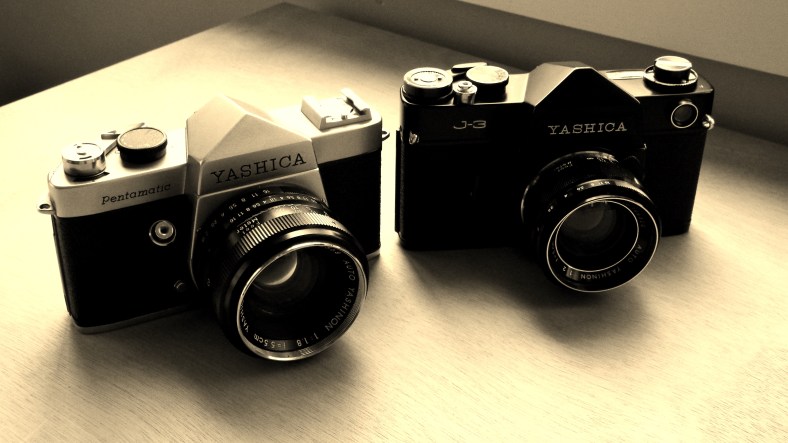
Pentamatic’35’ and J-3.

They couldn’t be more different – the Yashica Pentamatic was Yashica’s first 35mm single-lens reflex (SLR) camera and the J-3 was Yashica’s first SLR with a built-in exposure meter. In this example, the black J-3 was Yashica’s first SLR in what we call ‘Pro-Black’ finish – all black body with matching black lens.

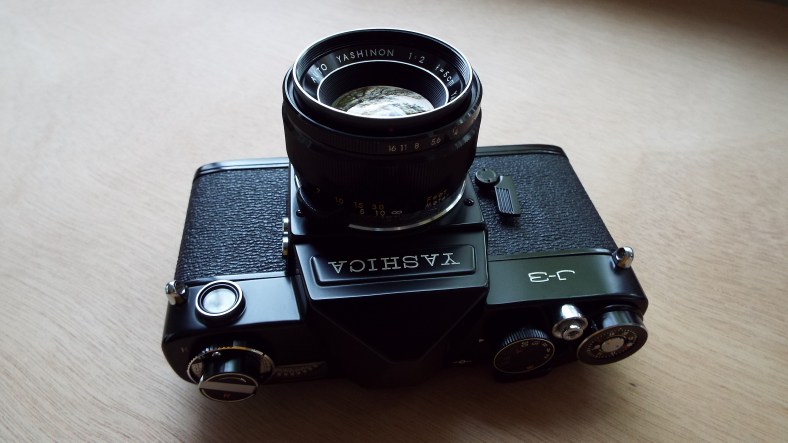
009

Lovely little gem from Yashica – the J-3 in Pro-Black. Made in limited quantities and came with the matching black Auto Yashinon lens.

20160326_164016_richtonehdr

The Pentamatic’s clean simple lines makes it one of the most attractive cameras of the early 1960s in our opinion.

As was the case during the early 1960s, both cameras would be quickly replaced with upgraded models with more advanced features and a wider array of available lenses. Not all of these changes were for the better… in the case of the Pentamatic, the model II and the model S, the changes did little to attract more buyers as their upgrades were too few and too late.

In the case of the J-3, it was the building block to Yashica’s success throught the mid 1960s and beyond. The ‘J’ series of SLRs, which included the J-5, J-4 and finally the J-7, were respected cameras with excellent optics at a great price which sold in the ten’s of thousands. Quantity meant that Yashica could afford to advance its technology and deliver some groundbreaking SLRs by 1968 and beyond.

As always, thanks for your visit and your comments are appreciated. To see more about Yashica, stop by our flickr page at https://www.flickr.com/photos/127540935@N08/


Chris and Carol Photography

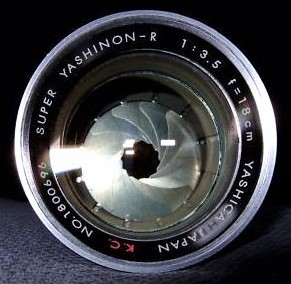
Yashica Super Yashinon-R f/3.5 13.5cm Telephoto Lens

Nice little addition to our Pentamatic family of lenses. Purchased in Japan and was with an early model Pentamatic’35’ set in “well used” but stable working condition. It came with the original Yashica brown leather case, unbranded plastic rear lens cap, Yashica front metal 52mm push-on lens cap, unbranded lens hood, and a very nice looking Walz chrome metal and glass Skylight C. (cloudy) 52mm filter.

dscf2868

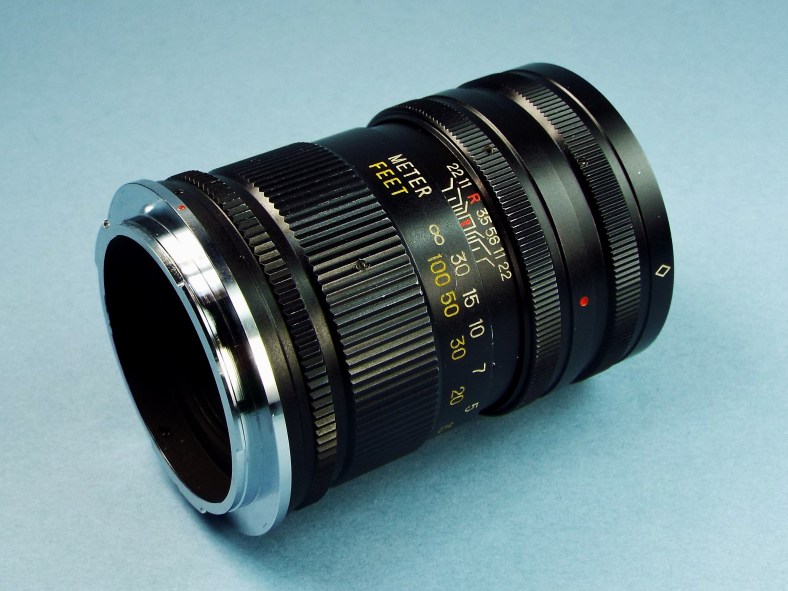
Pentamatic bayonet mount 13.5cm short telephoto lens… f/3.5 with rather low serial number. Early Yashica lenses were often given a serial number that starts with the focal length of the lens. In this example, ‘135 0722’ shows it to be a 135mm lens with a sequential production number of 722. Best guess is that this lens was made in early to mid-1960. We have another Super Yashinon-R 13.5cm lens with a serial number of ‘135 0927’.

The above image shows the lens partially disassembled for cleaning and inspection. No fungus or mold, but I’ve found some funky streaks on the face of the first removable lens element (large lens element to the right).

dscf2872

The chrome nose removed.

dscf2873

The main lens group removed. If you look closely, you may see the funky streaks across the face of the lens.

dscf2876-2

Aperture blades set at f/ 22. No oil and no problems (looking into the lens barrel from the front of the lens). Note the 12 aperture blades.

super yashinon p mount 25cm

Here is a similar lens with the 12 blades that was for sale recently. The seller identified the lens as having been made by Kyoei Optical Co., Ltd.  using the brand name “Acall” Kyoei was also abbreviated as “KOC” which may be the reason for the red “K.C.”

New info as of Feb 5, 2020 – At first, I guessed that my lens was made by Tomioka Optical as they were responsible for most of Yashica’s lenses. A reader has pointed out the similarities between my lens and the design of the Acall lenses with both  Pentamatic and M42 mounts. I must say that I agree with them upon further review. Thank you for your input!

dscf2877

Partially assembled body. Nice clear markings and solid-looking bayonet mount.

These first Pentamatic lenses were pre-set and not automatic and were the kings of the heavyweight division. Lots of metal and glass here! When properly stored they were not prone to fungus… but almost all classic lenses will have some sort of mold, dust or fungal issues when left in the dark and in their leather cases.

Thanks for the visit!

Chris and Carol

You’re invited to visit our online store at https://www.ccstudio2380.com for some great vintage and collectible cameras, lenses, and accessories.

Pentamatic S – 1961 to 1962

The Pentamatic S… the last true Pentamatic in the short lived series of SLRs from Yashica. The Pentamatic II is the hardest to find from a collector’s standpoint as they were only available for sale in Japan with the S close behind.

dscf2832

The Pentamatic S. The last camera in the short lived Pentamatic series.

dscf2837

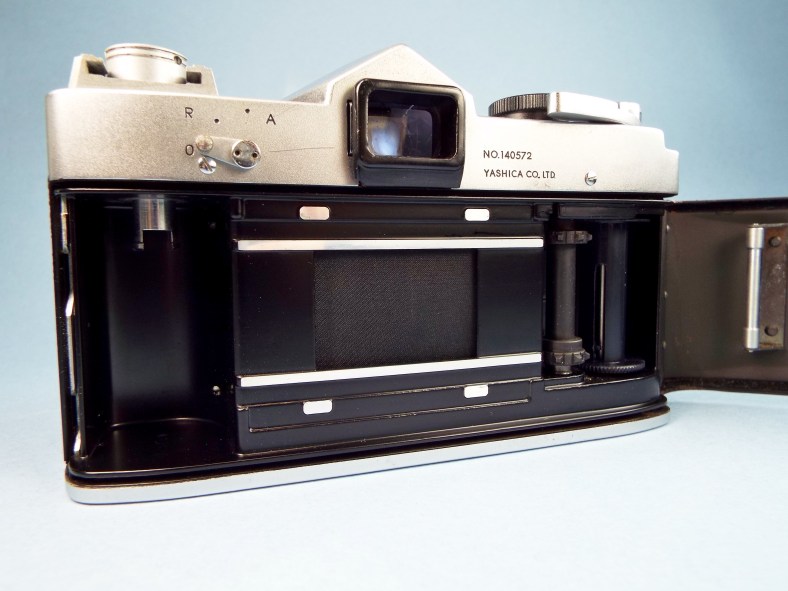
Pentamatic cameras tend to have very well designed film paths and film chambers. We rarely find corrosion and the chambers are large and easy to keep clean. The Nicca inspired cloth focal-plane shutter in this example is super clean and shows no white mold spots.

The Pentamatic S pictured above, the serial number is NO. 140572. Our other S is NO. 140294. These numbers decode to… 1=1961, 4=April, and the last four digits equal the sequential production numbers. The S models were not produced in great numbers so it is possible that both of these cameras were made during the same month as they are within 300 units of one another. Another serial number in our database is… NO. 141796 which suggests that it was the 1,796 th unit made in April of 1961. Interestingly the serial number of the model S in Yashica’s instruction booklet is NO. 140893. It is odd that the camera in the booklet has a higher production number than two cameras we own.

dscf2838

The only difference between the S and the original Pentamatic ’35’ is the notch in the shutter speed dial on the S. It is used to couple the clip-on exposure meter to the dial.

dscf2839

The biggest changes in the S from the original… the shutter release button is no longer at a 45 degree angle but its position on the body is the same. The S adds a self-timer and the light meter (exposure meter) lug on the face just below the shutter speed dial.

dscf2840

The lug for the neck strap has been relocated to the front from its previous position (on the side). It’s interesting to note that this lug is super corroded while the lug on the other side is not.

dscf2835

As we mentioned in the previous post on our blog, the Pentamatic series of cameras are prone to mirror lock-up. This S is currently in the locked-up position and has resisted my attempts at freeing it. It had been working at the higher shutter speeds (1/125 and higher) but now it sticks at all speeds. Ugh!

In summary… the Pentamatic S is a very worthy camera and is built like a tank. The S went back to using the Auto Yashinon f/1.8 5.5cm lens which was the standard lens on the original Pentamatic ’35’. The Tomioka Optical built lens is sharp and smooth. The S allows for the attachment of a separate exposure meter on the front lug (where the “S” is) and can couple with the shutter speed dial. Still a long way from TTL metering but at least headed that way.

Thanks for your visit!

Chris and Carol

Please visit our online store at https://www.ccstudio2380.com for a nice selection of classic film cameras and vintage photo accessories.