A beautiful “in the box” classic from Asahi Pentax
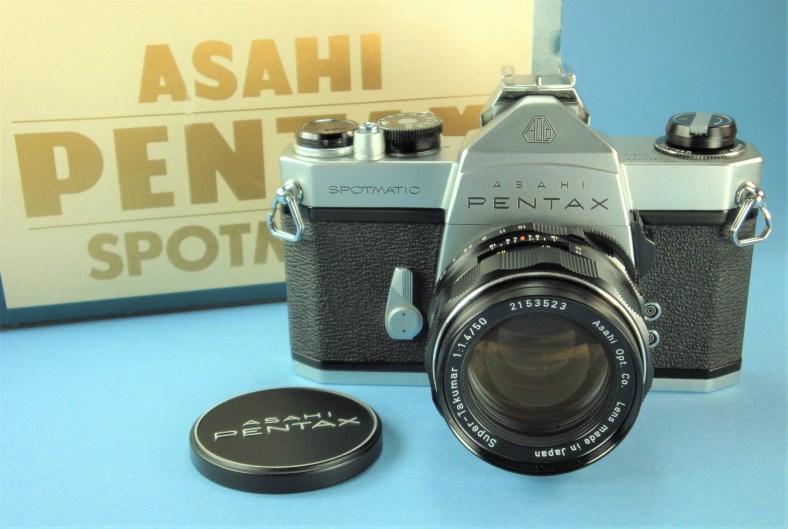
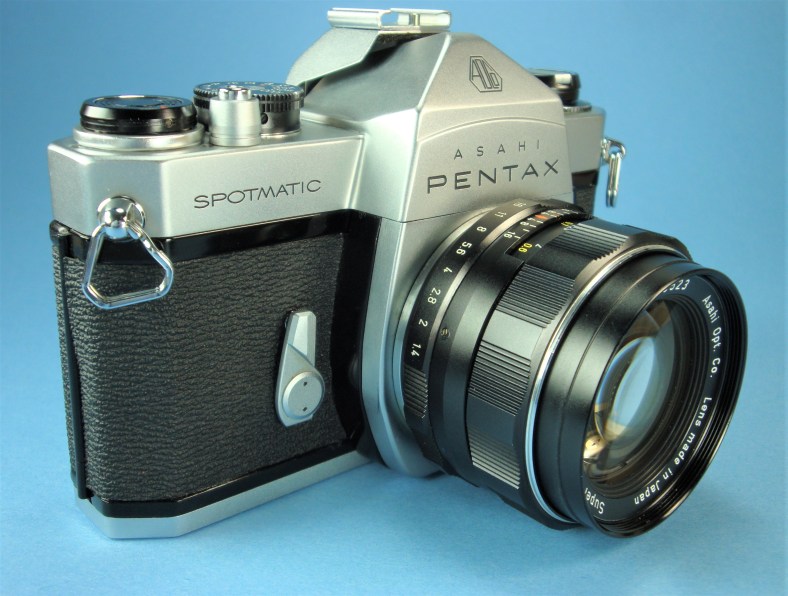
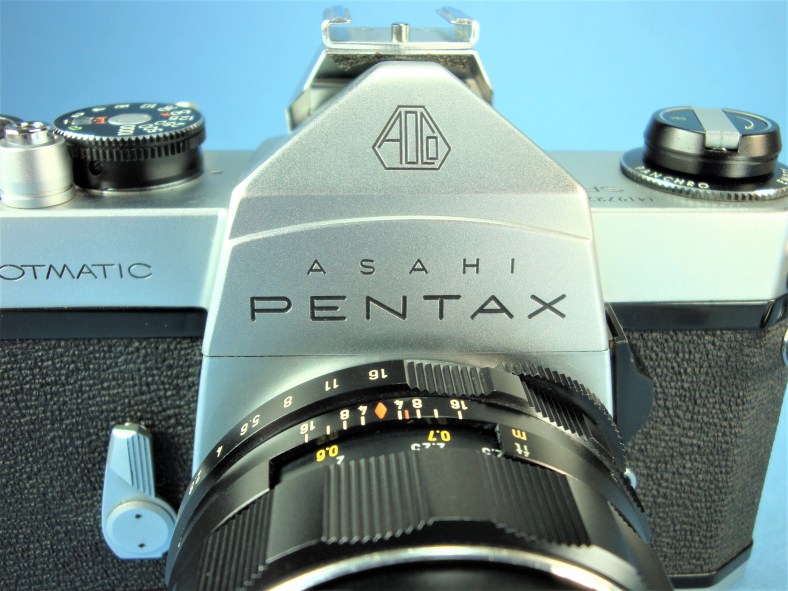
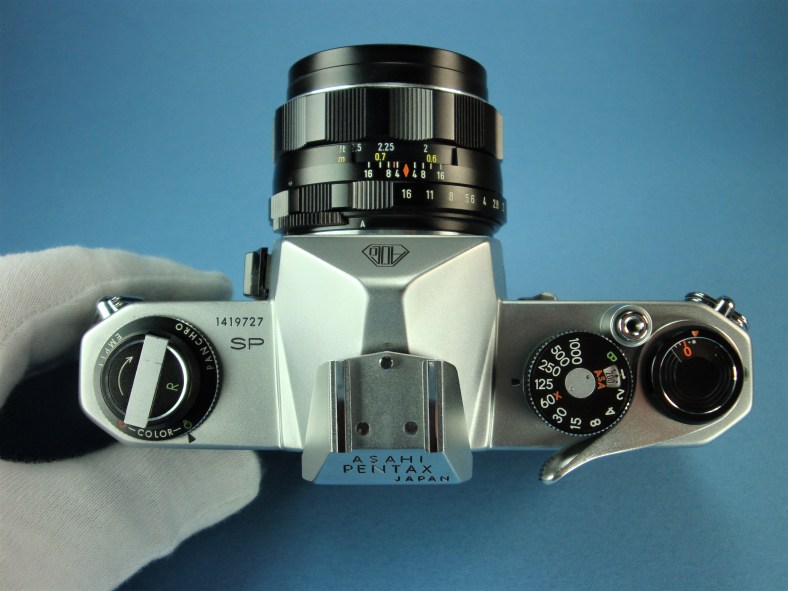
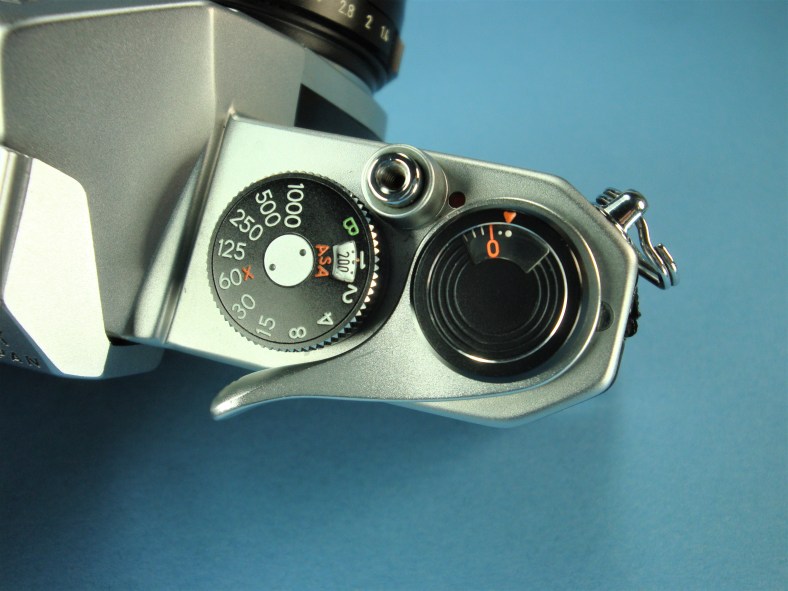
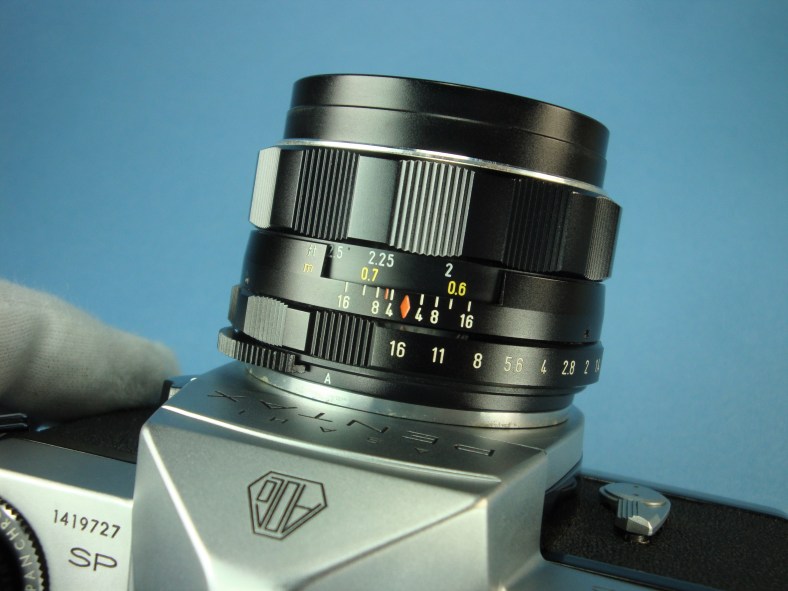
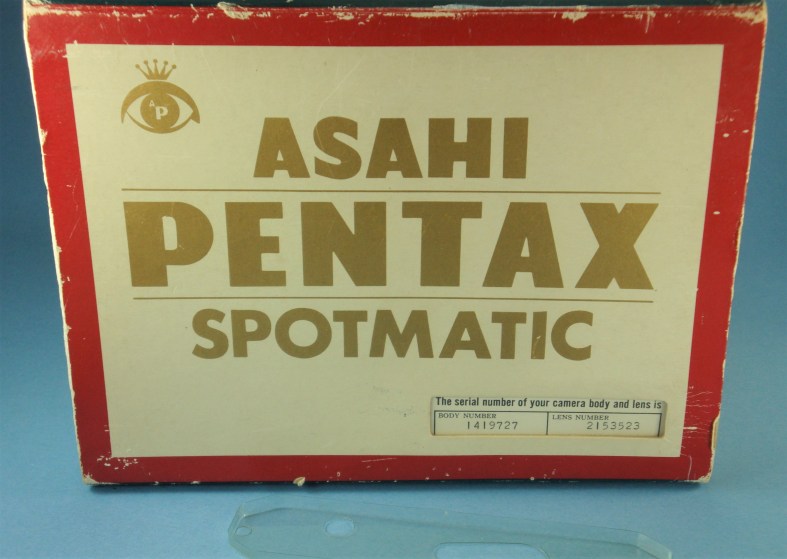
A classic 35mm SLR from Asahi Pentax. Nice clean lines and good balance.
Thanks for your visit!
Chris
A beautiful “in the box” classic from Asahi Pentax
A classic 35mm SLR from Asahi Pentax. Nice clean lines and good balance.
Thanks for your visit!
Chris
Yashica’s best in pro-black…
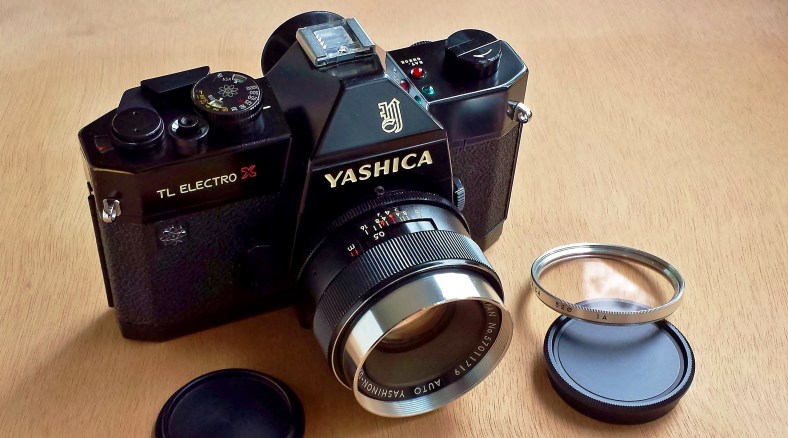
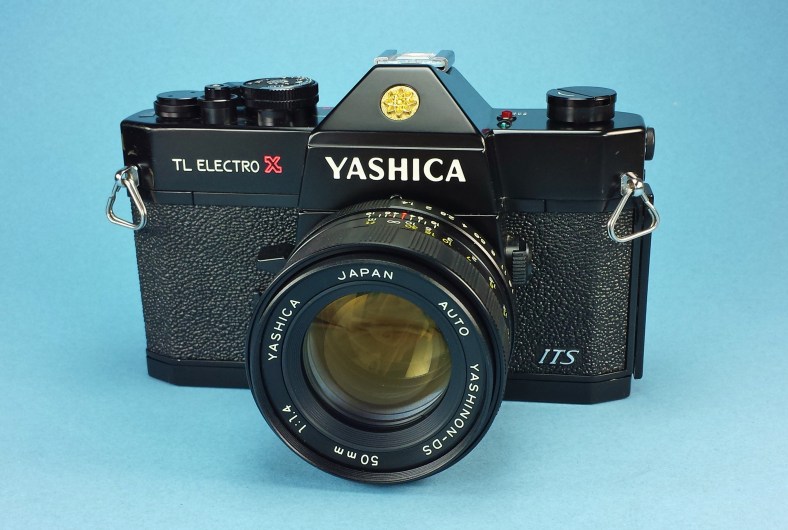
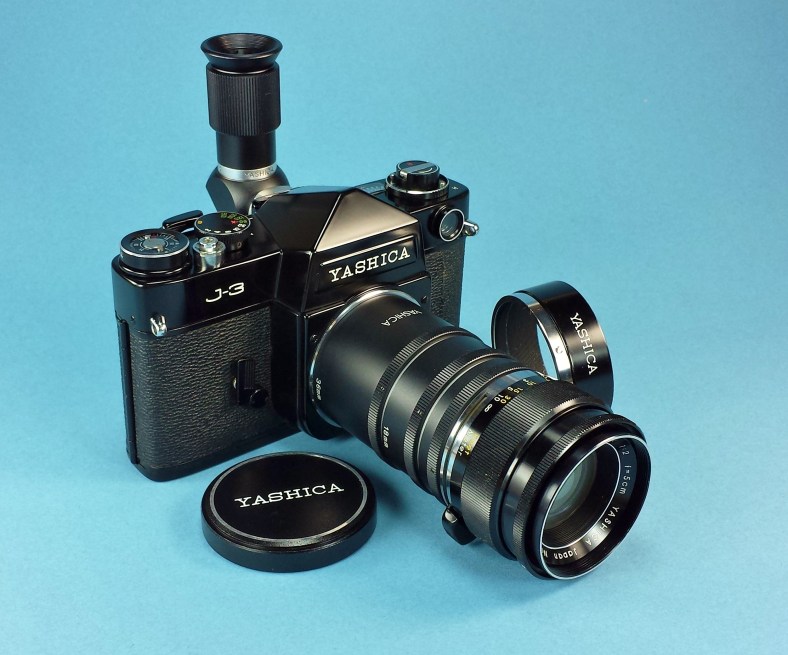
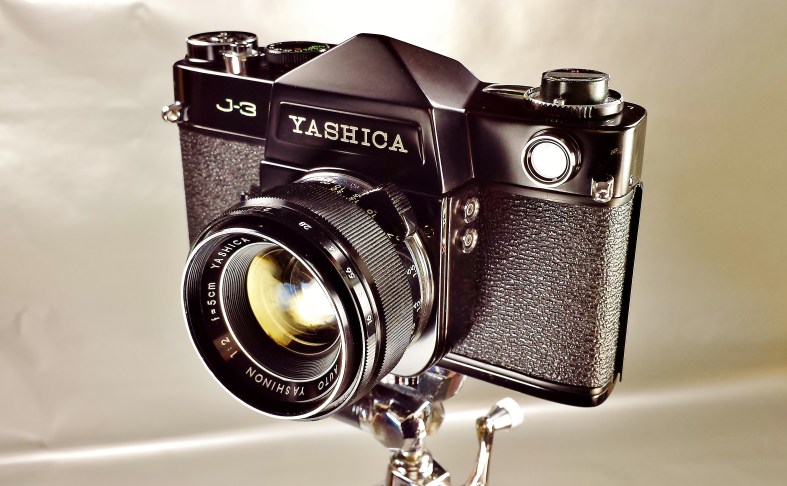
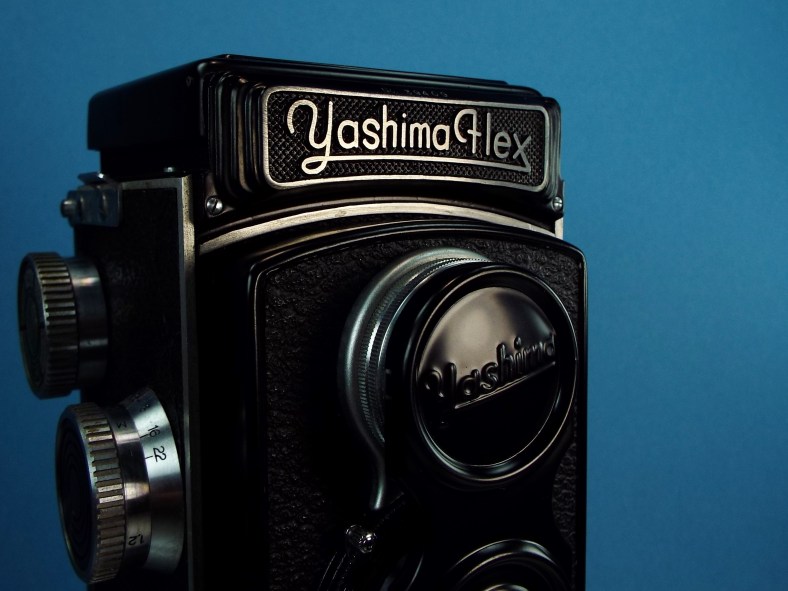
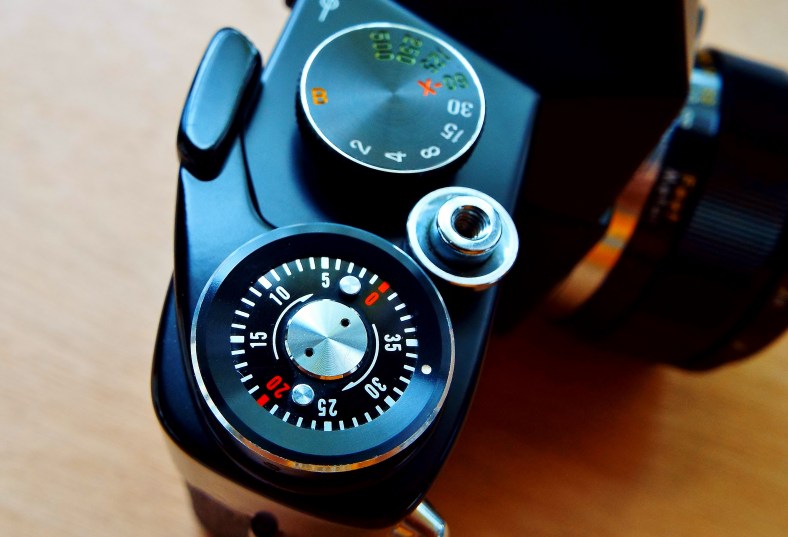
Featured… TL Electro-X (1971) TL Electro-X ITS (1973) J-3 (1962) Yashima Flex (1954)
Thanks for your visit. Comments always appreciated.
Chris
The last in Yashica’s “J” series of 35mm single-lens reflex cameras. These wonderful cameras carried Yashica through the dynamic changes in 35mm photography during that decade.
The J-7 is not a common camera. We don’t have a feel for the amount of sales for this model. The Yashica TL Electro-X was on the horizon – the J-7 was the last of the old technology bodies. Soon thru-the-lens (TTL) metering would turn things around for Yashica.
Here’s a photo essay of this classic and classy camera…
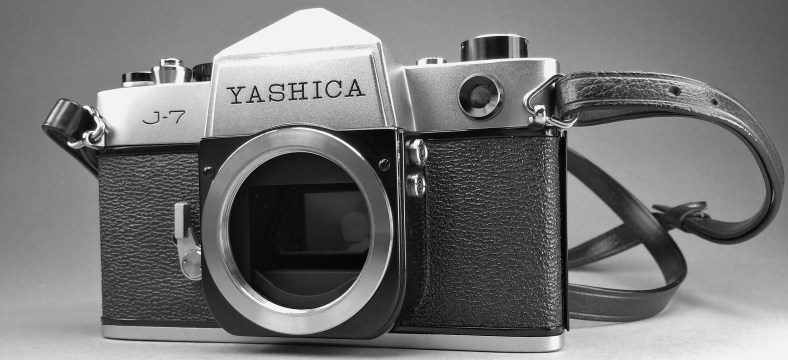
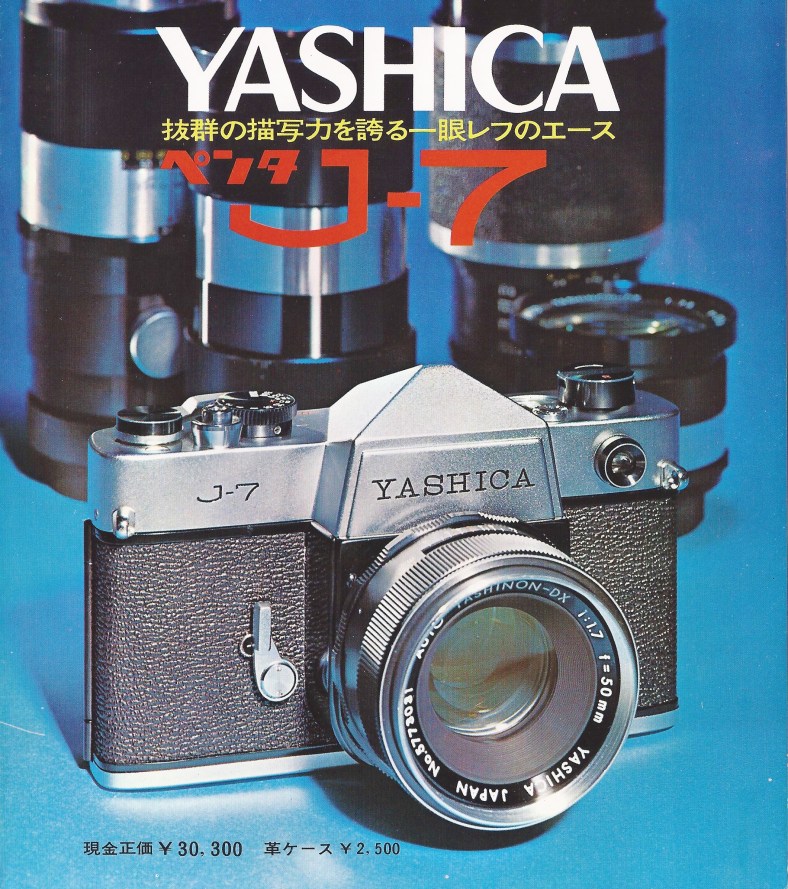
Yashica J-7 35mm SLR film camera. The last of the ‘Penta J’ series of cameras from Yashica. The J-3, J-4, J-5 and then the J-7. All were well-designed heavyweights… lots of brass and glass. No TTL metering.
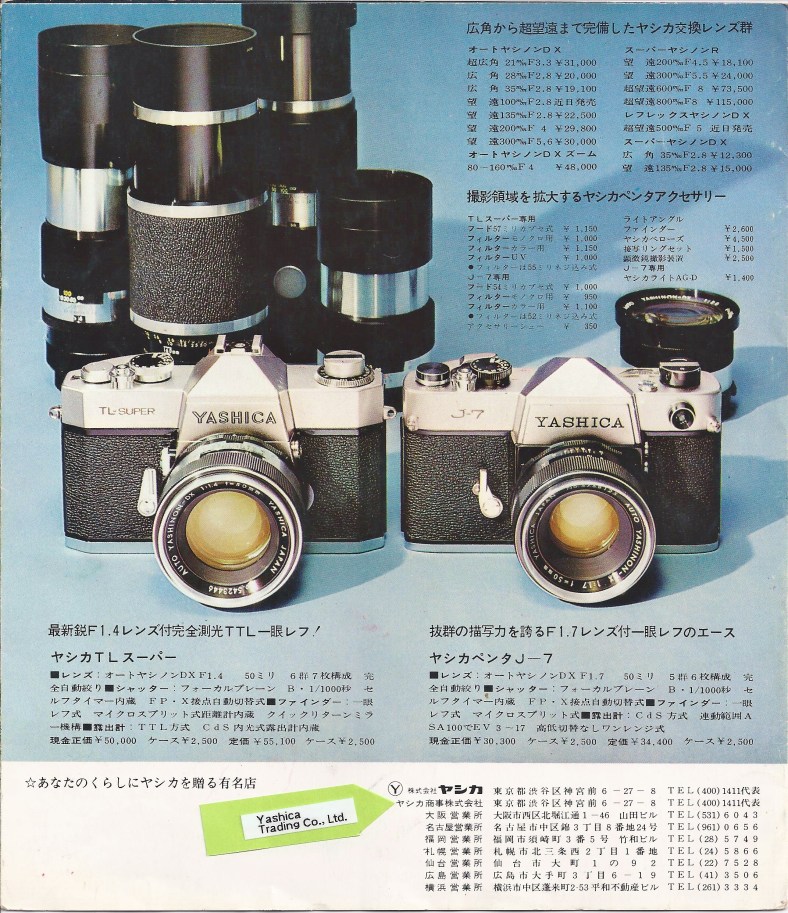
Also of note is that this is the first time that Yashica lists “Yashica Trading Co., Ltd.” at its Jingumae, Shibuya-ku headquarters. The J-7 was the last of the “J” series and the TL-Super was Yashica’s first TTL exposure metered 35mm SLR.
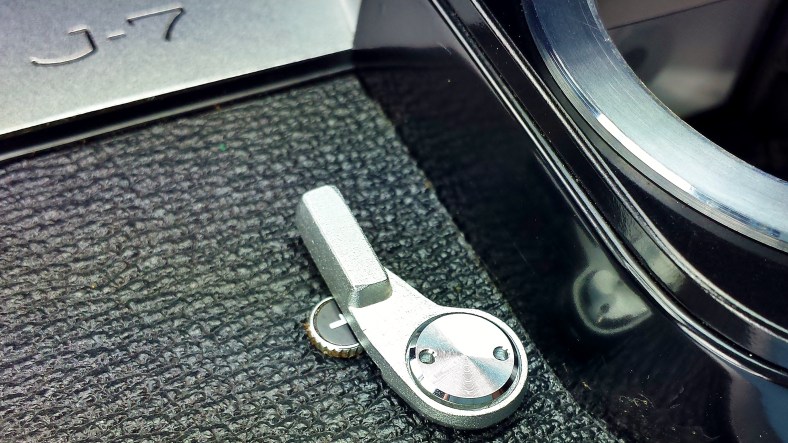
There are two slight variations on the TL-Super. Version 1 is shown here. Look closely at the film advance lever… it is all silver very similar to the J-3. On the Version 2 of the TL-Super the lever is very similar to the later TL-Electro X with part of the lever silver and the rest black plastic.
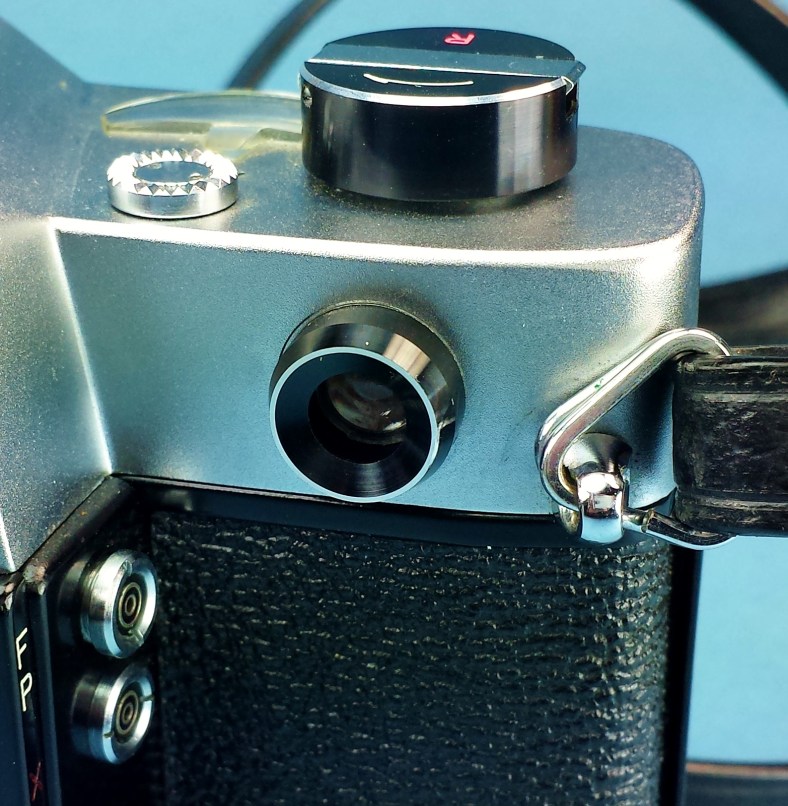
CdS light meter sensor “window”.
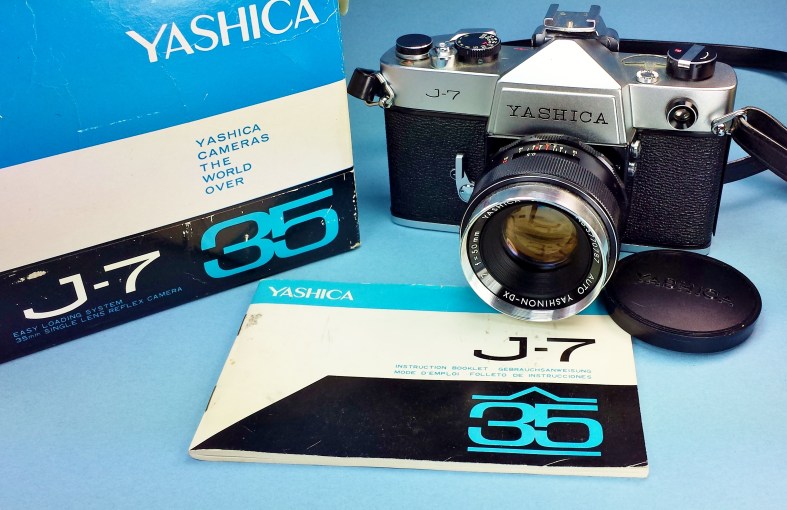
Rare complete set with the original box.
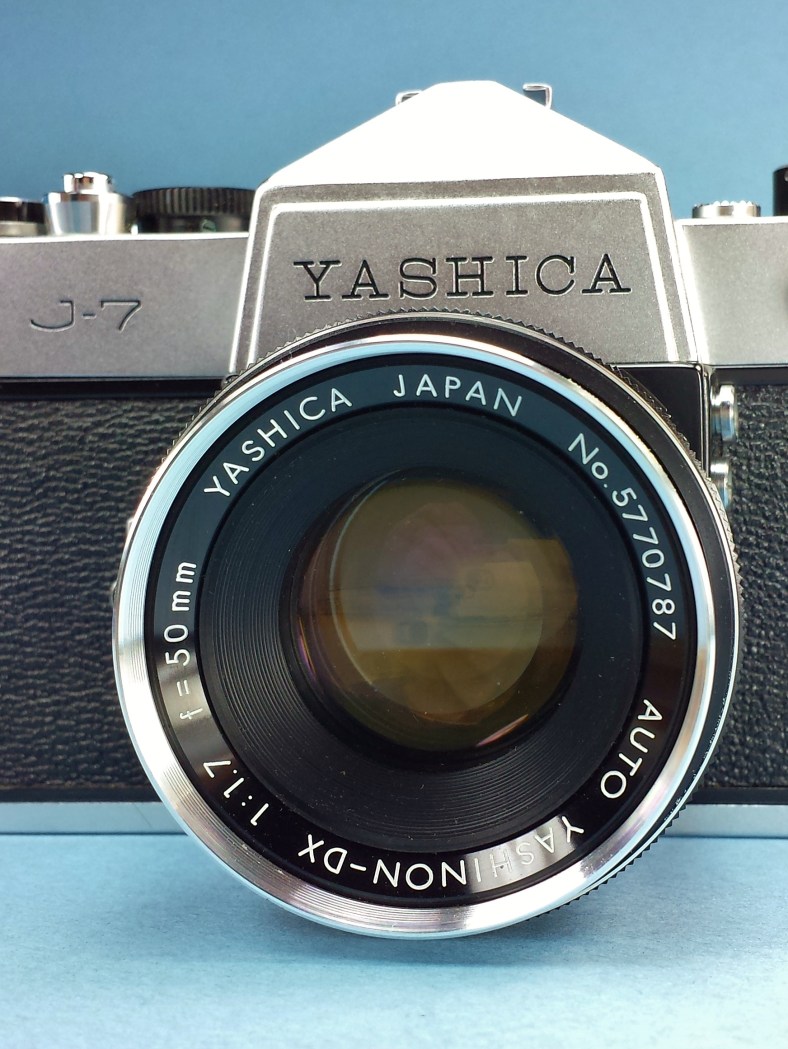
The J-7 is about as hard to find (in nice condition) as the J-4. The J-5 and J-3 being the most common. Each model makes a very fine camera to get into film photography with as most average (working) bodies going for well less than $50. Since the Yashica uses the universal M42 screw-in lens mount, there’s a whole world of outstanding lenses to choose from and not break the bank.
Good luck!
Chris and Carol ^.^
35mm rangefinder camera from Minolta. This one is from about 1963. Neat little camera – a bit small for my hands so it’s hard to reach the lens to focus comfortably. The rangefinder focuses well but doesn’t snap out at you although the view is bright. No film test for this one. The shutter fires and the speeds appear to be on time – the rear lens element is “ate up” (Southern term) with fungus and when I got rid of the fungus I was left with an etched lens. Maybe some polishing might bring it back. The light meter appears to be accurate too.
It’s a pretty little thing. I like the gray leatherette body and it certainly looks nice under my studio lights. We like to collect complete sets when we can and this one has its original box, leather case (black), silica-gel pack and the owners manual. It would have been extra nice had Minolta made the case gray like the camera.


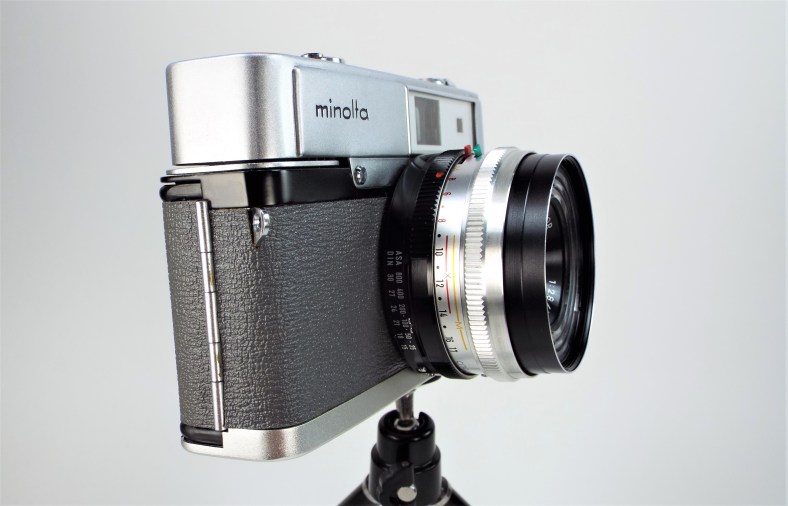


Although the box has some damage from handling it over the years, it’s still quite solid. It was covered with soot, dirt, dust, grime and I’m sure some DNA – it was so dirty that the Minolta logo was not visible! I used a new bar of ‘Mr. Clean Magic Eraser’ lightly made wet to gently ‘erase’ the dirt. It’s amazing how well it did without damaging the delicate 50+ year old paper. A new way to restore some of our older boxes in our collection.

Nice image from inside the owners booklet.
We wish we had a chance to run a roll through it to test the f2.8 45mm Rokkor lens… but as is typical with these vintage rangefinders, the rear lens element is trashed with fungus.
Thanks for your visit. We hope you know a bit more about this unique camera.
Chris and Carol Photography ^.^
Very uncommon Yashica twin-lens reflex (TLR) camera – made in October 1959. This one is in beautiful dove gray leatherette and machinery gray metal. Designed for and sold in the Japanese domestic market and for export to Europe. Focusing scale is in meters only on this version. Others have dual scales.
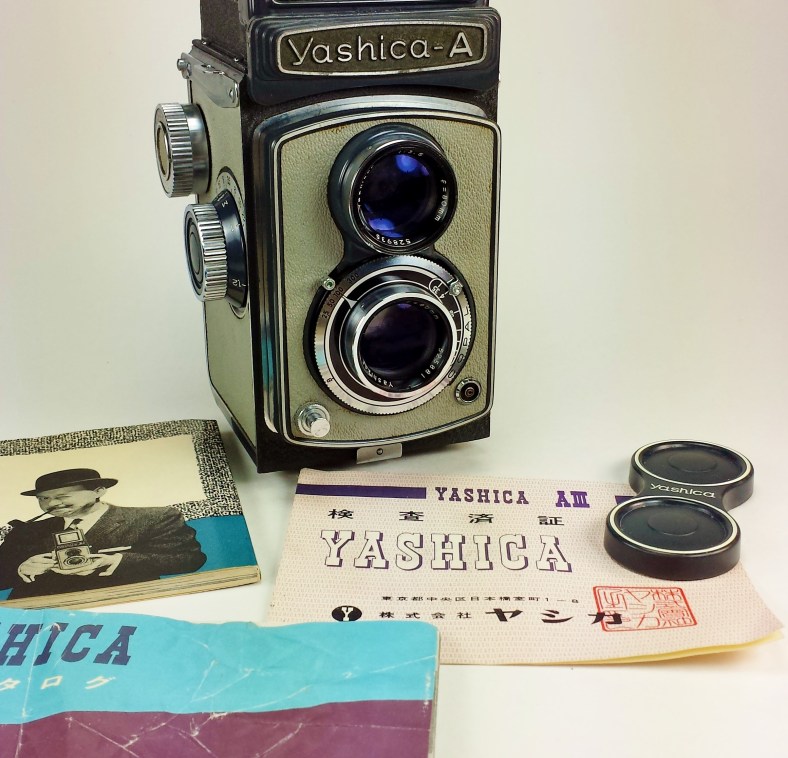
The serial numbers on the camera match the guarantee card.
⇑ Complete set as it would have appeared for sale in Japan. This amazing 57 year old beauty still functions perfectly! The shutter speeds are spot on, the focus is sharp and the Tomioka lenses are crystal clear. It does have a few spots of corrosion and discoloration on the aluminum and steel body parts – Japan has a warm and moist climate that wasn’t always friendly to old cameras.
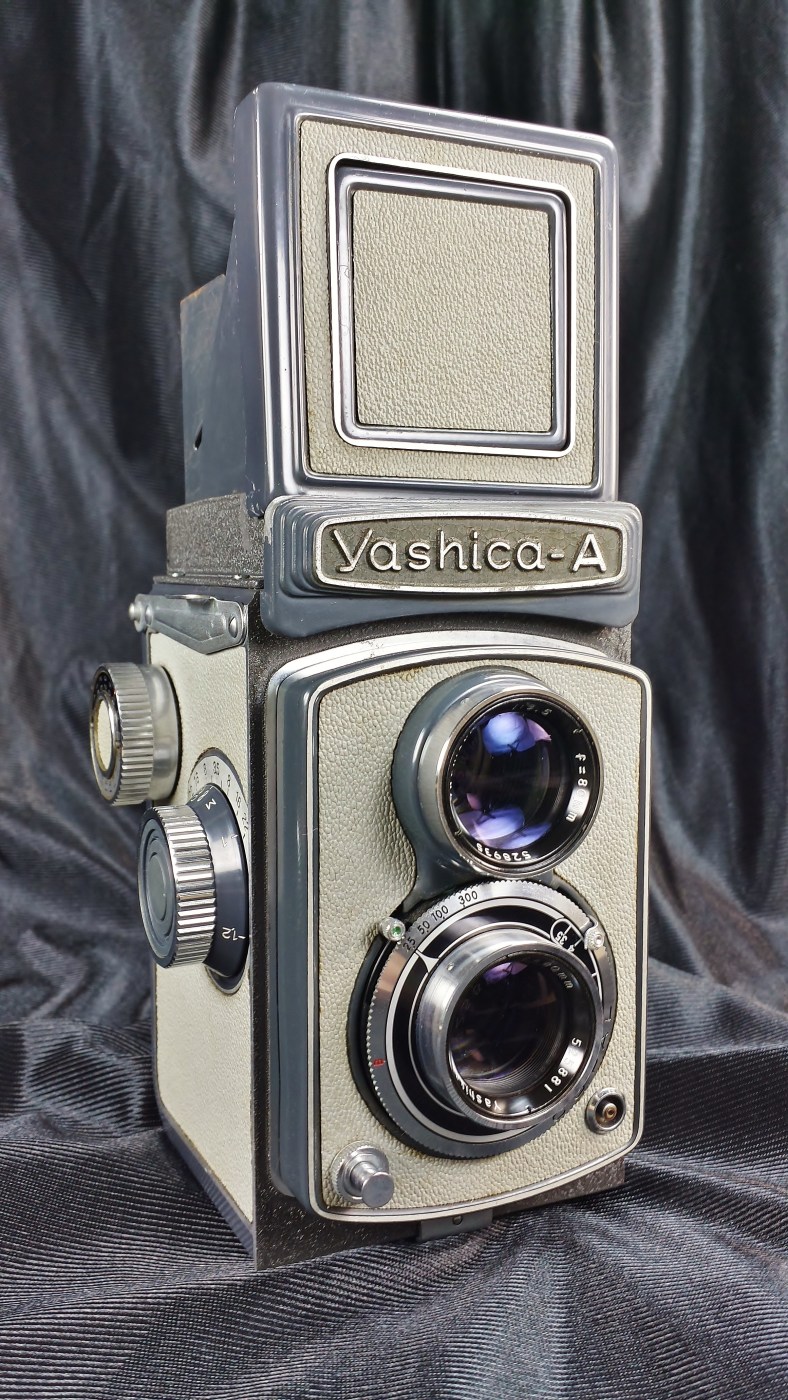
Rare no hood logo.
⇑ The dove gray leatherette is tight and complete (a few minor stains) and the darker gray metalwork retains its factory sheen. The camera inside is clean as well with only minor dust seen when looking through the viewing hood.
The gray (and other colored cameras) from Yashica are always super collectible. We were very lucky to acquire this complete set. We have the original box but it has seen much better days. Perhaps a small restoration is in order.
Thanks for stopping by! Comments are always welcome.
Chris and Carol
The Yashica Flex model S (aka Yashicaflex) is one of Yashima’s most important early cameras… well maybe the second most important behind the first. Obviously Yashima’s first camer…
The Yashica-C made by Yashima, was part of the new wave of Yashicas that were released in late 1956 for sale in the world markets (focus scale is only in feet). It was listed at $46.50 plus $8.00 for the “De Luxe Leather Eveready Case”. The other models released at the same time were the Yashica-A ($29.95) and the Yashica LM ($59.95) which featured a built-in exposure meter!
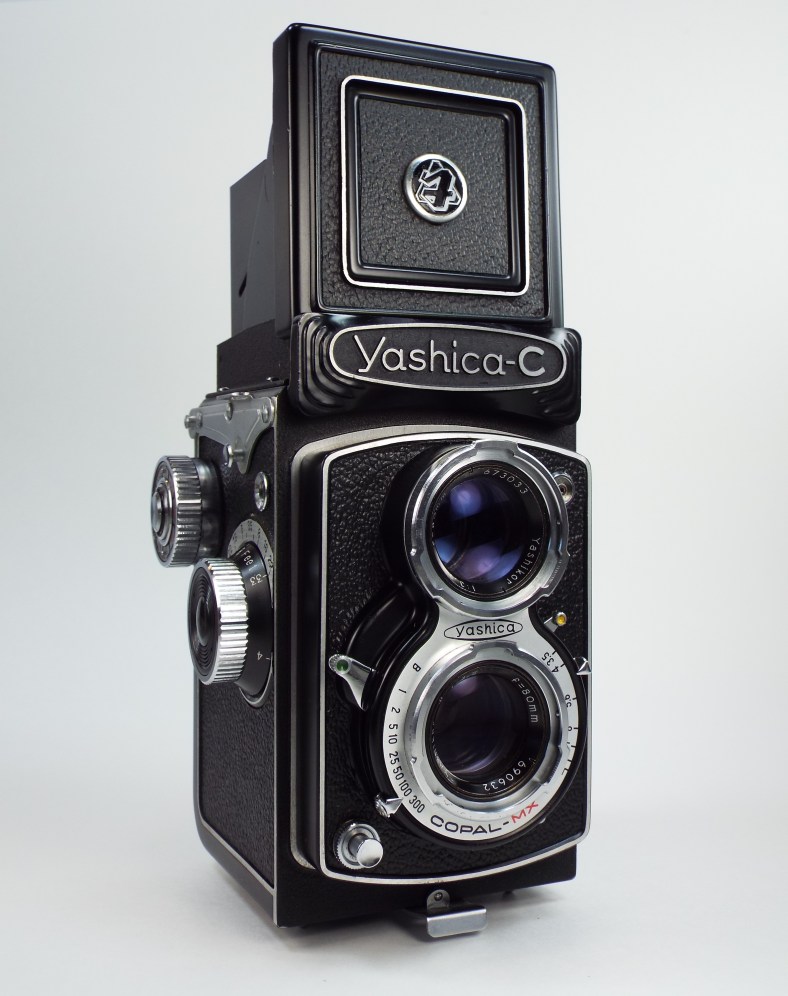
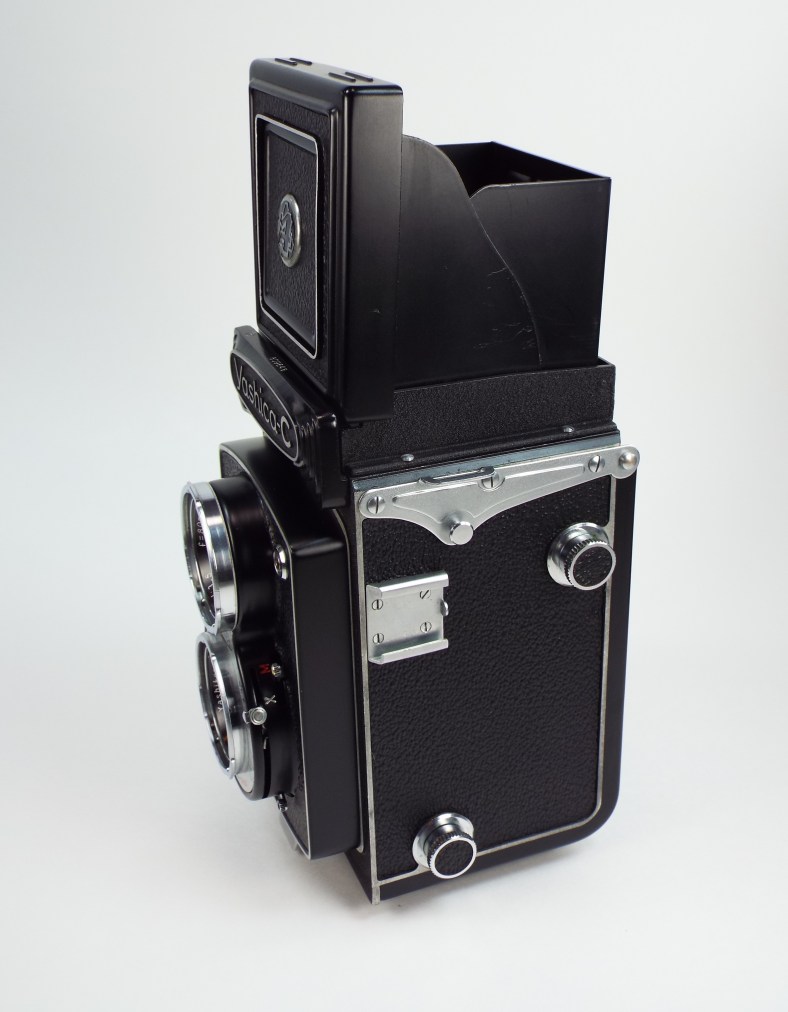
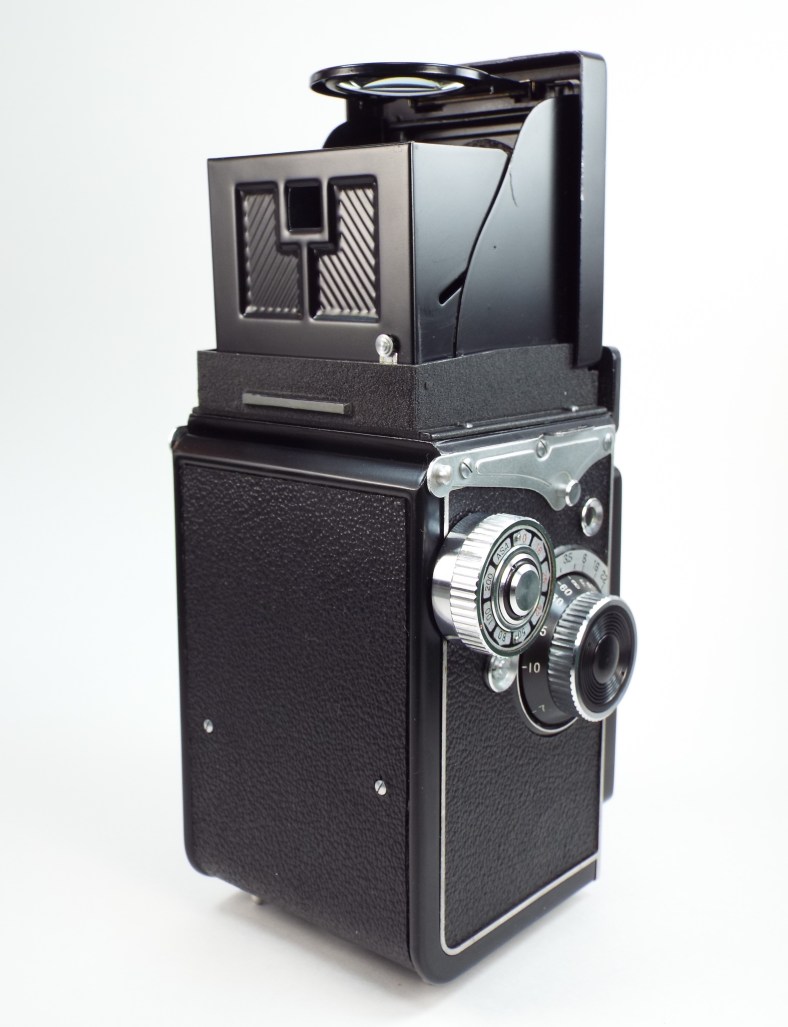
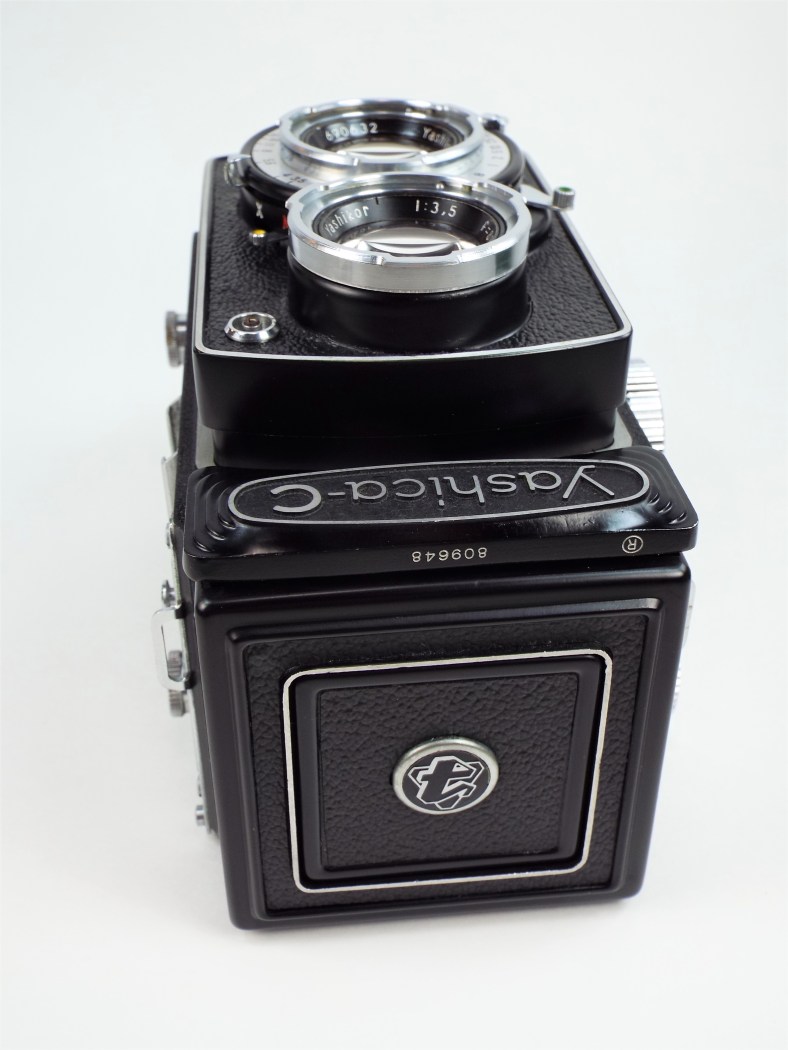
This handsome camera came to us recently with all features fully working – even after six decades of use, no issues. Our guess would be this camera saw maybe 1 or 2 rolls of film in its life. It is in factory new condition.
Features: Semi-automatic film wind, 80mm Yashikor f: 3.5 taking and viewing lenses (hard coated and color corrected), Copal shutter with speeds at 1, 1/2, 1/5, 1/10, 1/25, 1/50, 1/100, 1/300 second and Bulb, self-timer, flash sync (M-x) built-in, bayonet lens mount and flash gun shoe with standard PC flash terminal.
If you’re looking to try medium format photography, the Yashica-C is a great camera and a great value. It can often be had for significantly less money then a Yashica-D.
A word of caution about 6 decade old TLRs. Corrosion of the black metal parts is common as is fungus and mold in and on the lenses. If the camera you’re interested in shows some exterior rust (and other forms of corrosion), then ask the seller a bunch of questions. Cameras like these that come from humid environments are often left in their organic leather cases (and in the dark) – fertile grounds for growing mold and fungus. Fungus filaments can completely destroy a lens or at the very least, etch parts of the coating for good.
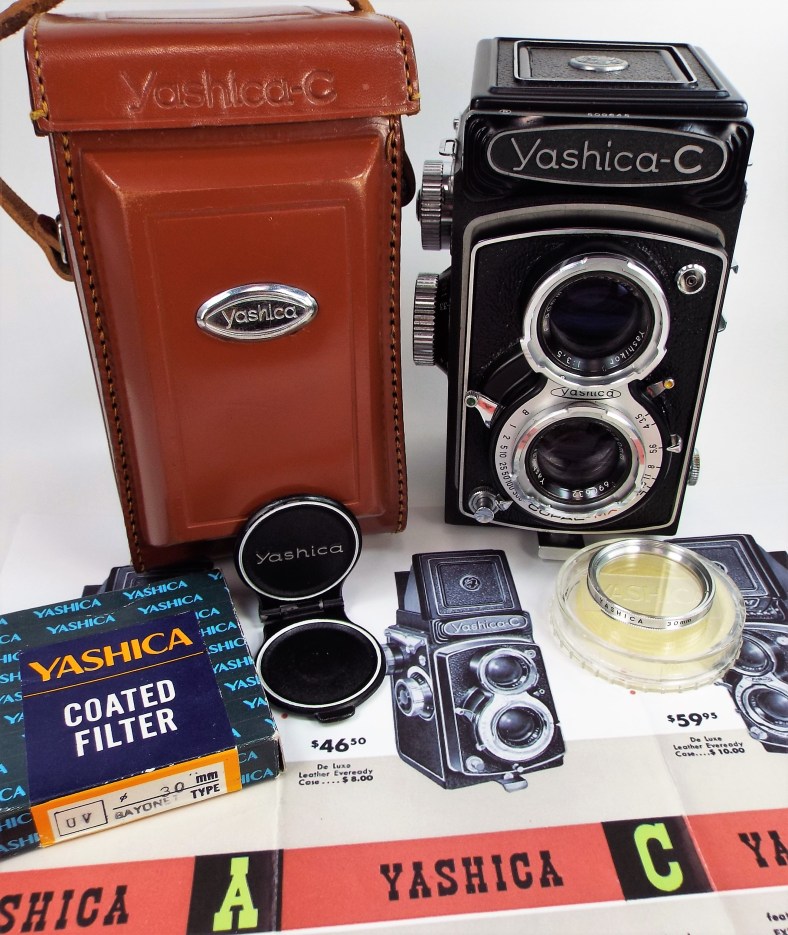
All the goodies!
On a more happy note – this beauty has no mold or fungus and was purchased from a seller in Michigan. Probably a one owner camera – it came with a roll of Kodak Tri-X film loaded inside (at least from the mid 1960s).
Studio Camera: Fujifilm FinePix S9900W
Thanks for your visit and comments are always welcome. C&C ^.^
Another new (to us) Fujipet has arrived! This one is in gray and came with its original gray leather Pet case. It’s hard to tell exactly when this one was made – guessing it’s a 1959 or 1960 version.


We just love all the quirky knobs and numbered levers – sweeping curves and that crazy viewfinder.

A true medium format 6x6cm film camera – as simple to use as falling out of bed. Takes 12 exposures on 120 roll film.
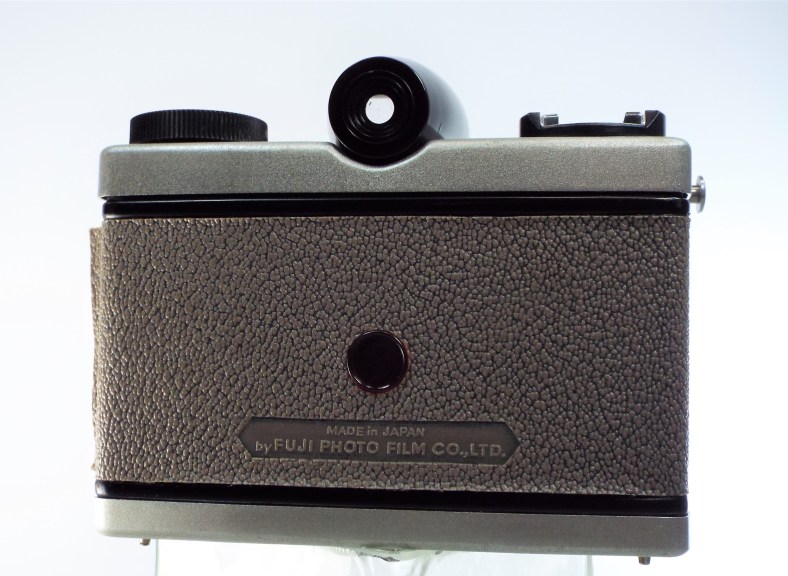
Simple and then simple some more.
The Fabulous Fuji Foto Photo Film Fujipet!
Thanks for your visit!
C&C ^.^
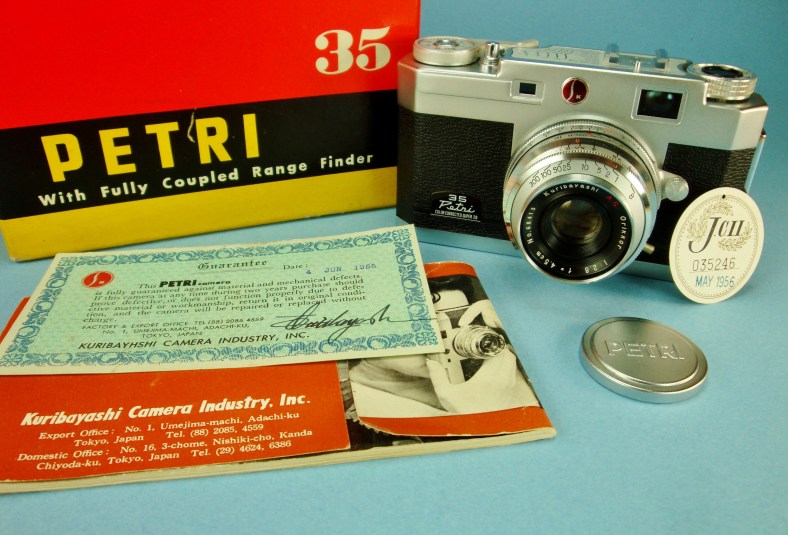
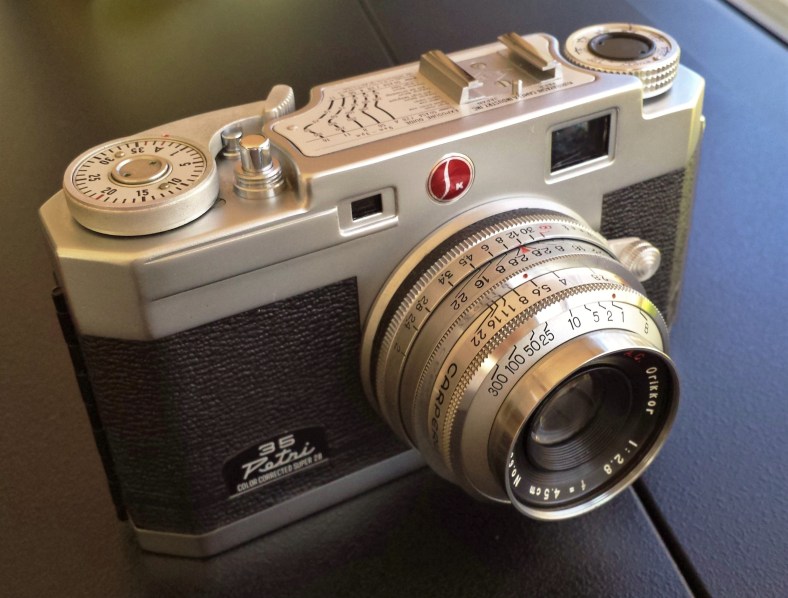
This Petri 35mm rangefinder was purchased in June 1956 at a U.S. military facility in Japan. It came with excellent documentation – sales receipt (not shown), instruction booklet, guarantee card (dated 4 June 1956), a JCII hang tag (May 1956), original metal lens cap, the leather case (not pictured) and the original box. It was nice to see that all of these items stayed with the camera after all these years.
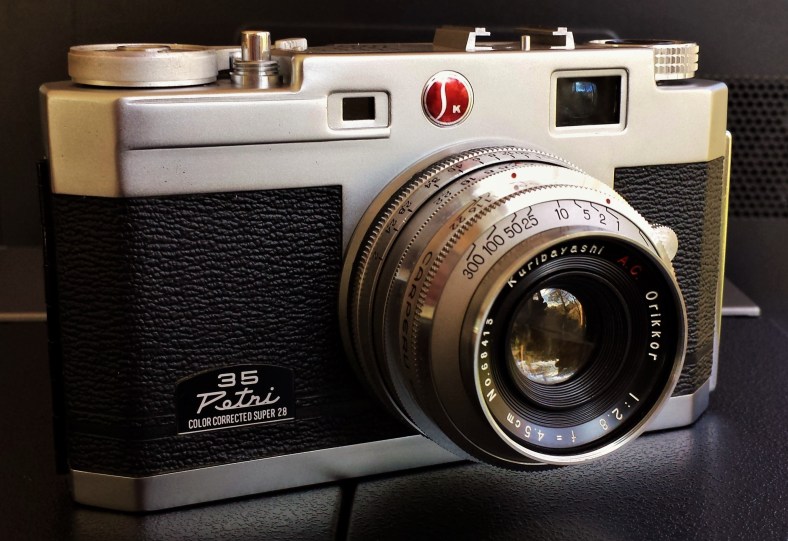
We don’t normally collect rangefinder cameras – this one was included with a Yashica TLR from the same year (and purchased by the original owner at the same time). After some initial cleaning and inspection it was discovered that the lens (last element inside) was ripe with fungus. I had a feeling it would (most of this era do) as it still had a roll of film inside with a light white haze on it. Not a good sign. Everything worked on the camera but there was no point in testing it with a fresh roll of film – way too much fungus. I don’t try to clean the lenses on these types of cameras. My one and only attempt resulted in a completely clouded lens.
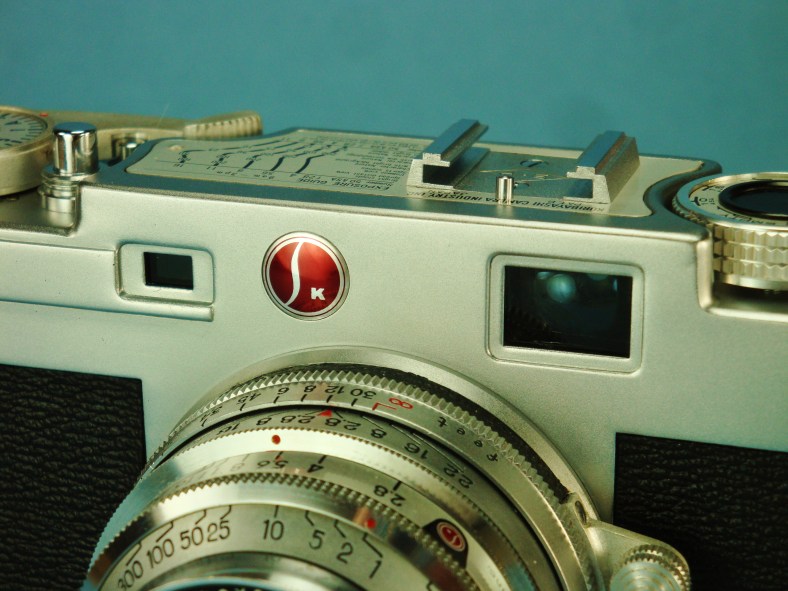
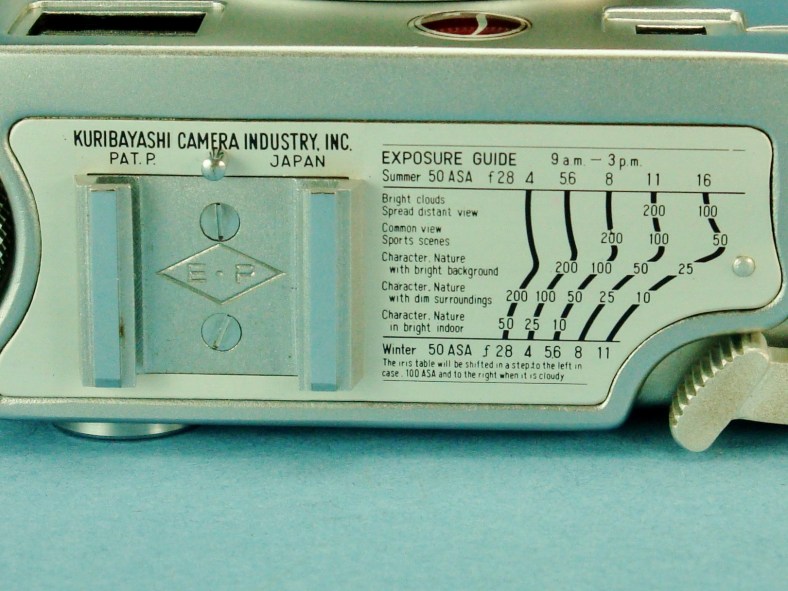
In our opinion, this mark identifies mostly cameras and camera equipment and sometimes electronics like stereos, that were sold in Japan for export. The <E.P> stands for ‘Exempt Product or Exempt Purchase’ to let customs officials know that fees (taxes and the like) were not paid. This allowed foreigners living in Japan to buy high quality products and not pay taxes as long as it was purchased for personal use. Mostly available at U.S. military facilities (Navy Exchange and the like). May have also been available for diplomats and their families and tourists that shopped in the duty free shops. Notice that the symbol is on the camera’s cold shoe (accessory shoe). The camera maker could easily change the shoe for a camera made for sale in the domestic market.
This lovely set is now proudly owned by a collector in Italy. He purchased it with full disclosure on our part that the lens had fungus. Some of our more collectible Yashima-Yashica twin-lens reflex (TLR) cameras have some fungus and mold spots. They have all been exposed to strong sunlight and are stored properly to prevent further fungus and mold growth.
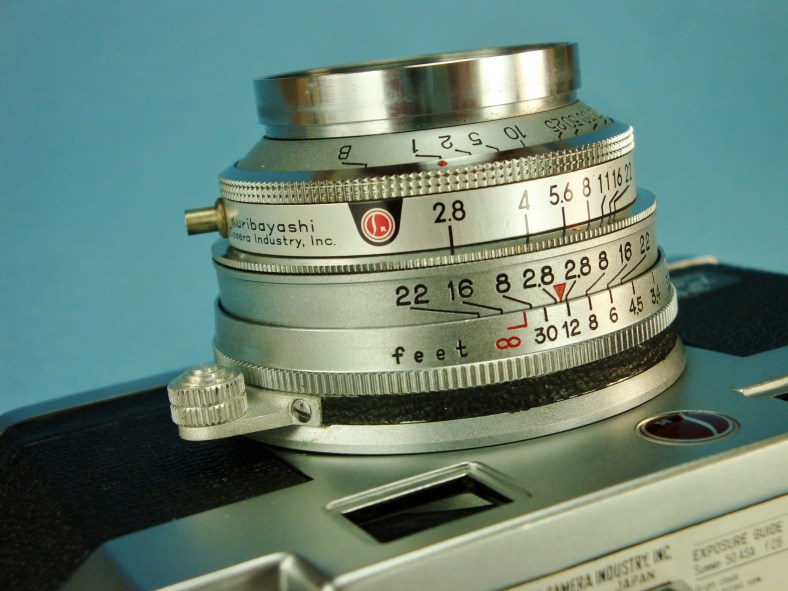
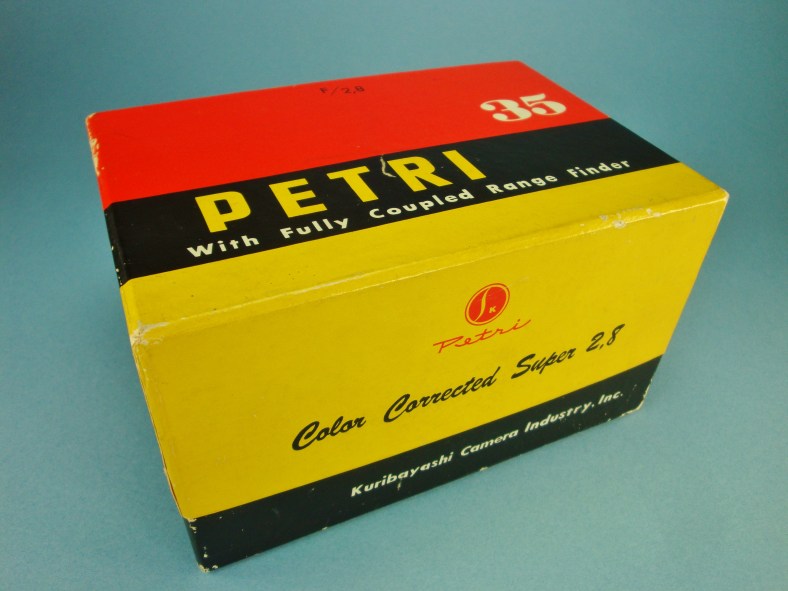
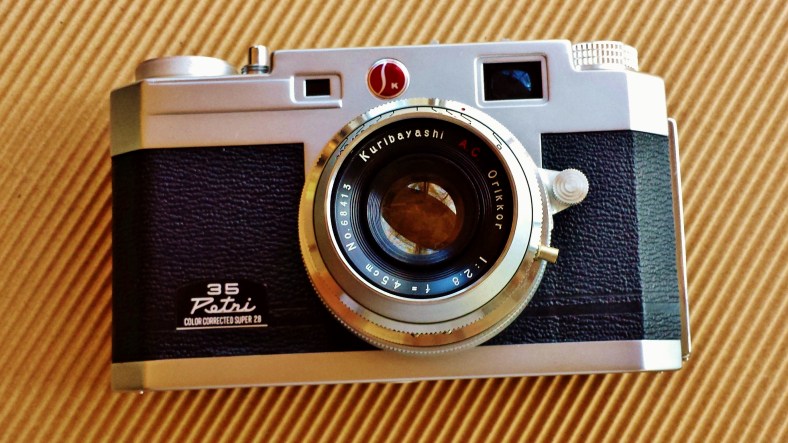
So there you have it – a short photo essay on a very attractive camera and set from Petri. We wish that it could have stayed in our collection since it was so complete – but our true focus is Yashica 35mm SLRs and Yashica TLRs with an occasional rangefinder thrown in for fun!
Camera(s): Sony DSC-W170 and Samsung Galaxy S4
Many thanks for your visit – comments are always welcome. Chris & Carol ^.^
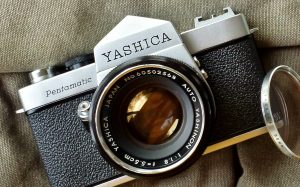
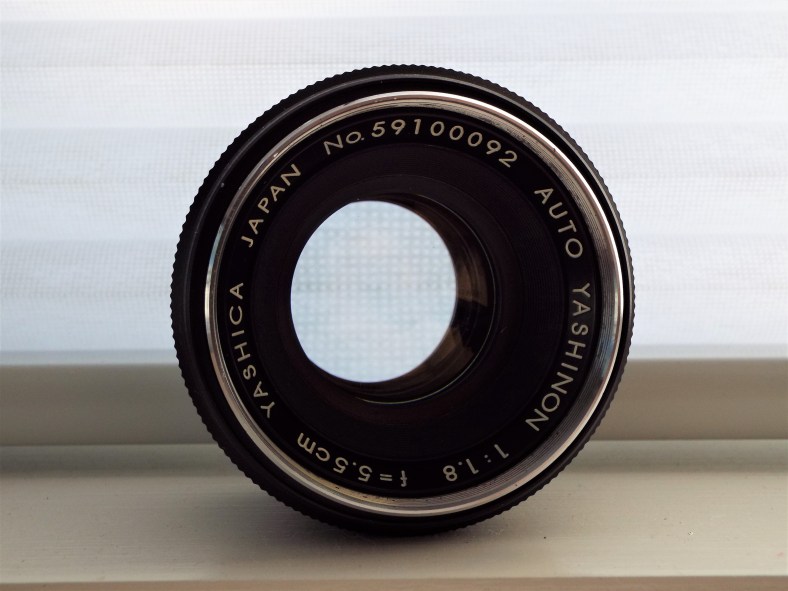
After many years of searching for proof that Yashica had in fact released its first production run (from December 1959) of the 5.5cm f1.8 Auto-Yashinon lenses for the Pentamatic ’35’ – we finally found one in the wild! Now it’s ours.
We stumbled upon this lens the other day on an online auction site. After some negotiations with the seller, we reached an accord. The camera this lens was mounted on was a pure dog… “Junk Treatment” as ‘Google Translates’ the kanji for crap (one would think) items. We took a chance that the lens was going to be OK. We’ve seen enough of these over the years to get a good feel – this one we just had to have even if it matched the condition of the camera body it was on. Man was it dirty – sooty and a tad yellow (the markings yellow over time). But it was a hidden gem. No mold – no fungus – no cleaning marks or haze – and, the best part, it focuses crisply and although the aperture blades are a bit worn, they move nicely (snappy as ‘they’ say).
The Pentamatic went into production at Yashica’s modern factory campus in Suwa, Nagano Prefecture in December 1959. At the same time, or just slightly before (maybe in October), Tomioka Optical started making the lenses for the first Pentamatics. We don’t know for certain if Tomioka delivered completed lenses to Yashica or only manufactured the optics for them and Yashica did the rest – we just don’t have that information yet.
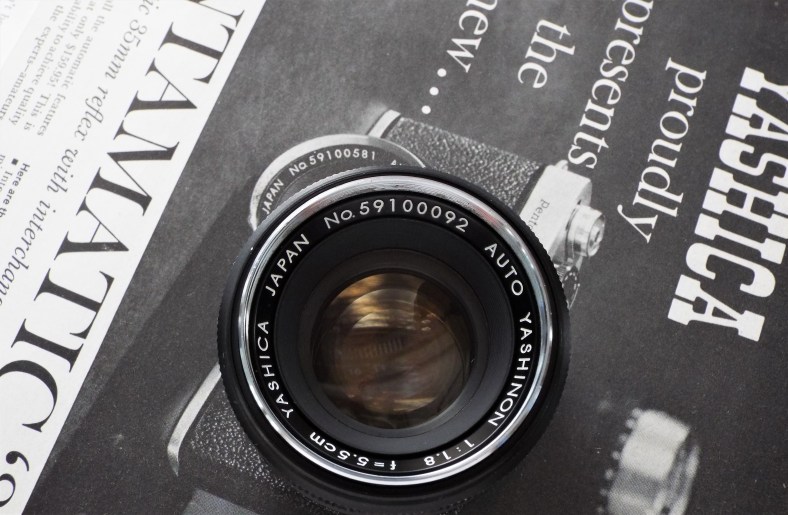
Here’s the lens we just acquired – Auto Yashinon 55mm (5.5cm) f1.8 which was the normal lens supplied with Yashica’s first Pentamatics. The background ad is from a ‘Popular Photography’ magazine – June 1960 issue. The ad lens serial number is – No. 59100581 – our lens serial number is – No. 59100092. Not often do you find a lens in the wild with a lower serial number than an ad. By the way, the advertisement was the first ever for the Pentamatic.
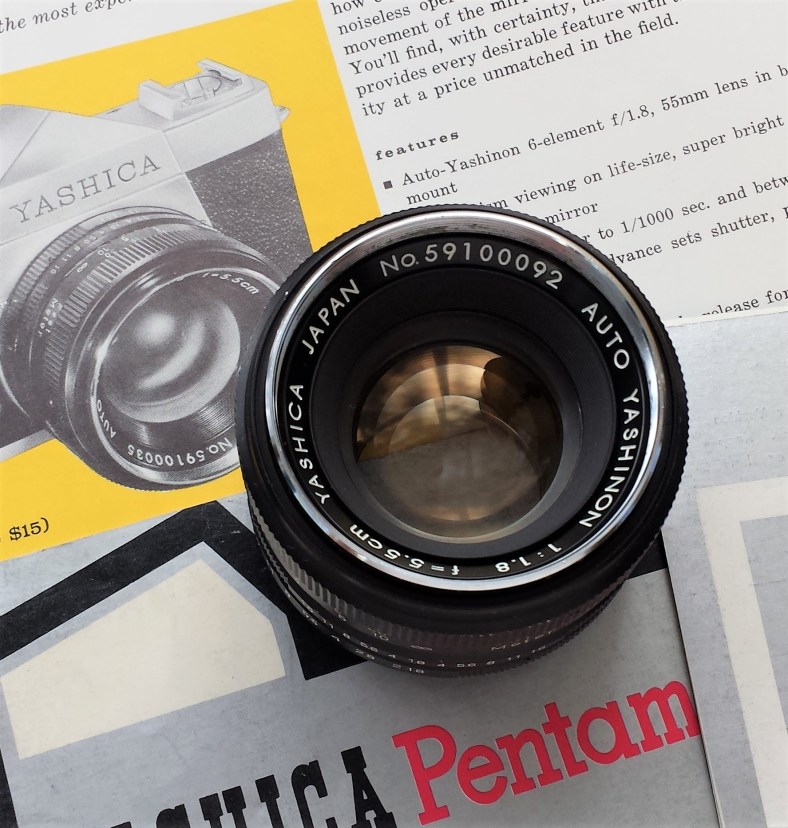
The lens that is featured in one of the first sales brochures for the Pentamatic, is serial numbered – No. 59100036. Our lens was made just slightly after the lens in the brochure (same day?). We don’t know when the sales brochure came out. Our guess is March 1960. The photographs were probably taken by the marketing people in Yashica’s Shibuya headquarters sometime in late 1959 or early 1960.
We know – this is all super boring nerd stuff that only Yashica fanatics would find interesting – wait, that’s a great name for a blog… ‘Yashica Pentamatic Fanatic’. ^.^
So what does the serial numbers tell us? The SN No. 59100092 (our lens) translates to – made in 1959, the ’10’ is for October, and the 0092 is the sequential production number of the lens assembly. This means that Tomioka Optical started production of the new lenses for the Pentamatic as early as October 1959! Lenses made in 1960 are labeled No. 605xxxxx. The ‘5’ being a placekeeper or model number. The highest serial number we have in our collection is No. 60515157. That lens came with a Pentamatic body that was made in January 1961 and the lens was the 15,157th made up until that point.
The highest serial number seen in the wild is No. 60521460 which was mounted on a Pentamatic-S body.
Thanks for your visit and if you made it to this point in the post, pat yourself on the back! You may be a bit of a camera nerd – just like us!
Chris & Carol ^.^
 Chasing Classic Cameras with Chris