
Have a beautiful day!
Have a beautiful day!
Is this image from a mid 1960s Yashica camera instruction booklet simply cute or does it make you feel a tad uncomfortable?
Is it a fun reminder of how the world was in 1965 – a bit “western obsessed”? Was it a little out of line even then? If this image were to be posted to a social media site today, what would the reaction be?

The original full context image from the booklet.
Weigh in if you’d like. We’d like to know your feelings.
Thanks, Chris and Carol
From an August 1963 sales brochure from Yashica (Printed in Japan). An excellent article we think. Of course Yashica produced twin-lens reflex (TLR) cameras well into the late 1980s so they would be considered experts (one would think).


Also known today (more so) as medium format. An inexpensive way to get into medium format film photography, Yashica made enough TLRs over the decades that there is an ample supply of well made Yashicas available online. Budding film photographers should be able to experiment with that format without breaking the bank.
The Yashica model A is a great first choice as it is one of the most widely available and simplest to “master”. Less stuff to break or need adjustment. Another good model is the Yashica Mat-EM (1964). It has a built-in light meter that doesn’t require a battery to operate. The meters can fail over time so be sure to ask the seller about it first and if you’re looking at one in person, then check it against a meter from a phone app.
The Yashica-Mat 124G is the last model. Usually still very expensive but has a meter and requires a battery. The good news is that they are still fixable if something fails (they all are but our point is that they’re the newest out there).
The Yashica-D… well, we’ve never had much luck but others do and they are good cameras. The Yashica-Mat is another common camera and has a crank winder.
Give it a try. Shooting in squares is a challenge but fun!
Thanks for your visit.
Chris
Part of the “Modern Classics” series of our collection. This one is from mid 1993. One of the more sophisticated AF point and shoot (click) plastic fantastic 35mm cameras of the 1990s. There were two versions of this camera – this one, the Sure Shot Zoom S and the Sure Shot Caption Zoom (with removable remote control).
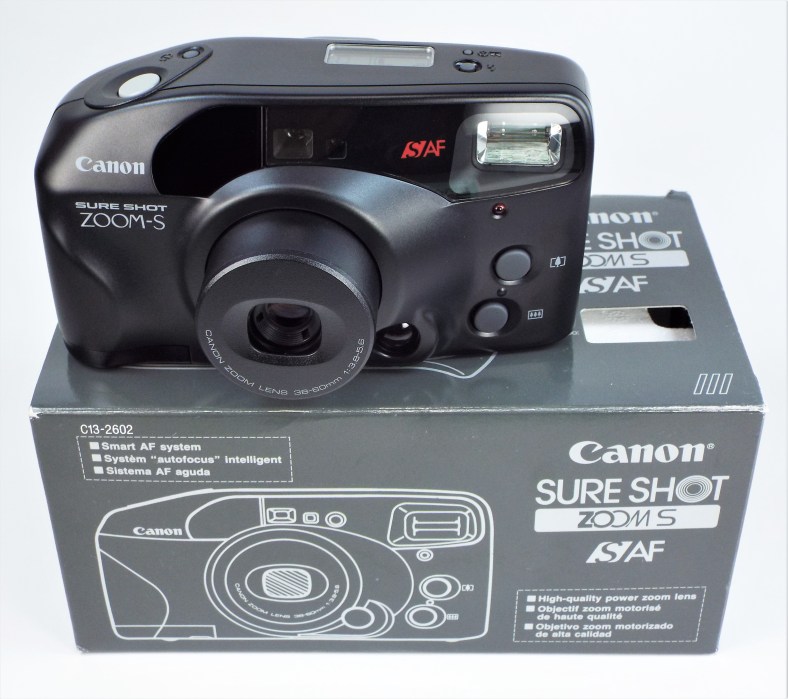
As released from the factory – still new in the box.
The zooming range covers 38-60mm. Other features include auto focus, auto film load, advance wind, auto flash and auto macro. Canon claims it has an improved autofocus control – ‘Evaluative Active System’ that looks at the entire frame and recognizes the main subject based on its distance to the camera (sounds pretty standard to me). Anyway they made a big deal about it in the owner’s manual.
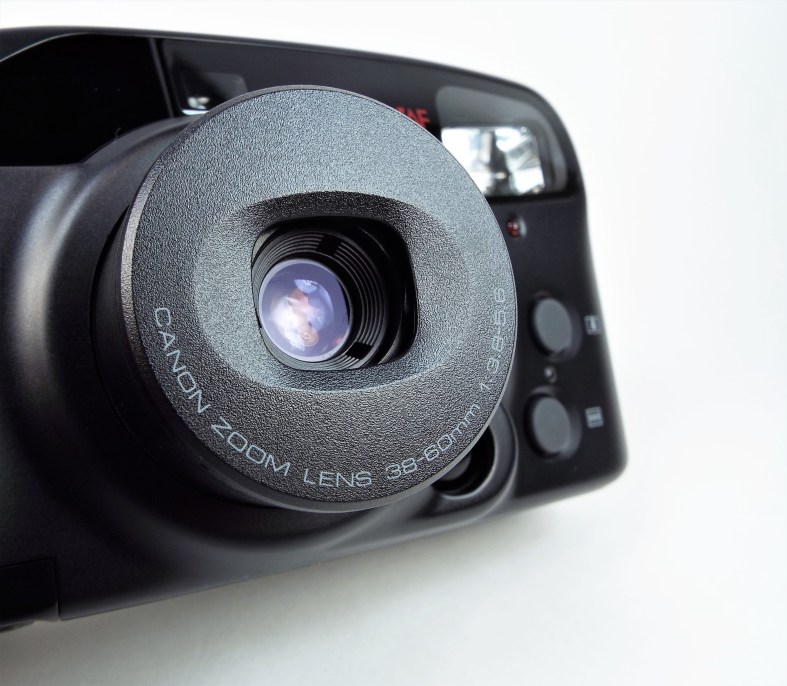
The Canon lens is Spectra-coated and is constructed with 6 elements in 6 groups. I assume it’s glass.
Canon recommends using DX-coded film. The camera automatically sets ISO 50-3200. Non DX-coded film will set to ISO 100.
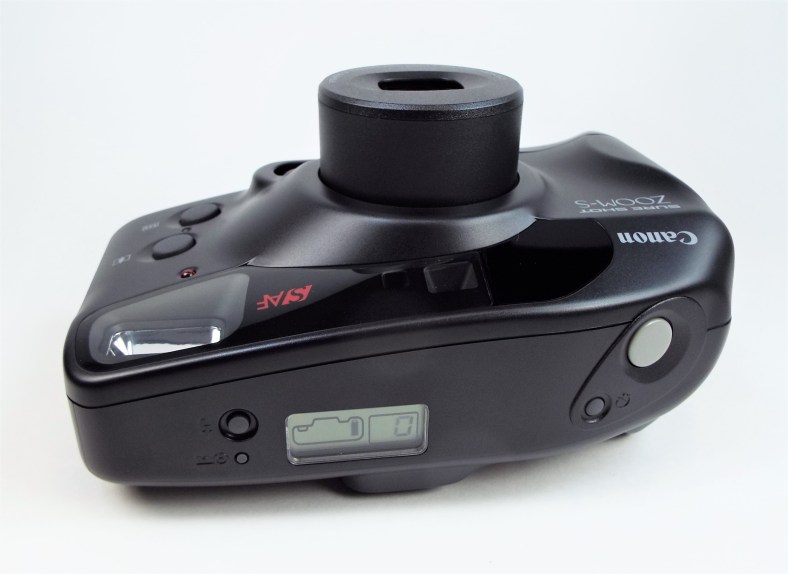
Well placed shutter release button and large LCD. The auto flash feature can be turned off. What I found surprising was that there was no “Red Eye” reduction system available. Probably too early for that.
The Canon Sure Shot Zoom S features a 3-zone metering, AE programmed system that focuses from about 60cm to infinity. It uses one 6V lithium battery (2CR5) which is still readily available (I just purchased one for $7 with free shipping).
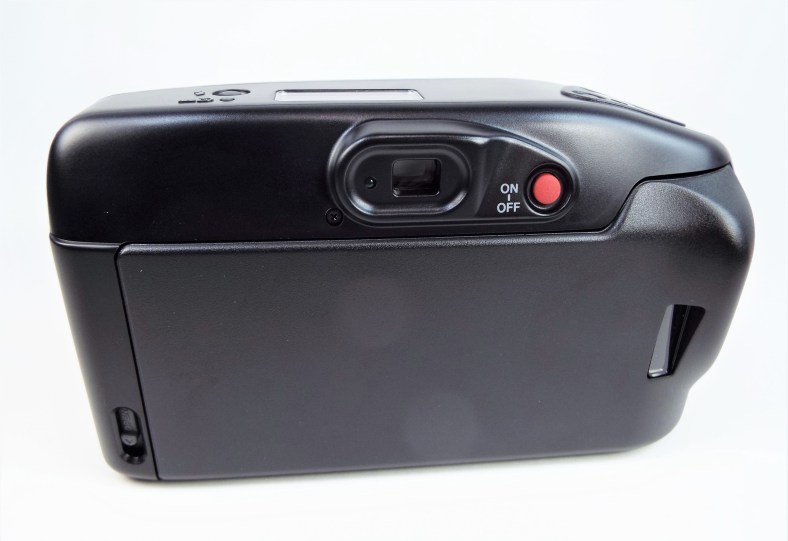
Nice centered viewfinder that is bright and well marked. Super simple back with easy to find and use on-off button.
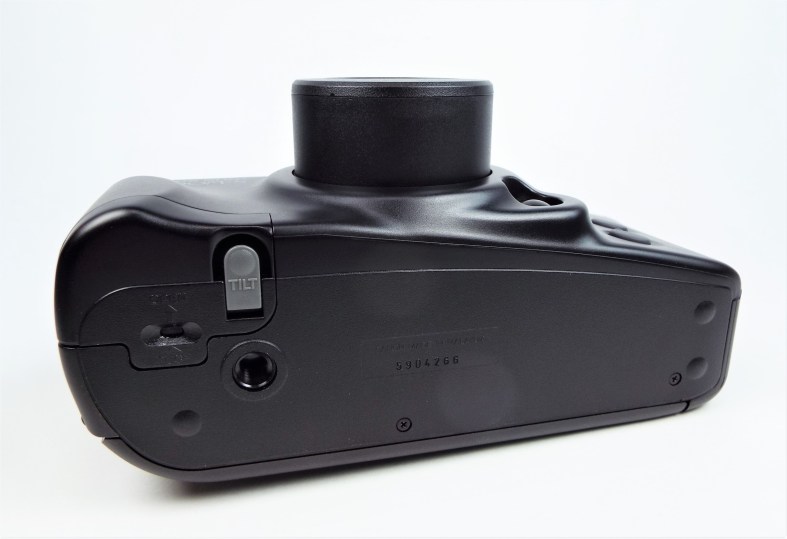
The TILT lever is pretty cool – it has two positions when you pull it out. When setting the camera down on a flat surface (like a table) for taking selfies, it tilts the camera slightly upward so as not to get the table or whatever in the pic.
The camera is large for a point and shoot – weighs in at 384 grams with the battery and compared to the 1980 model Canon A-1 35mm SLR, almost as large!
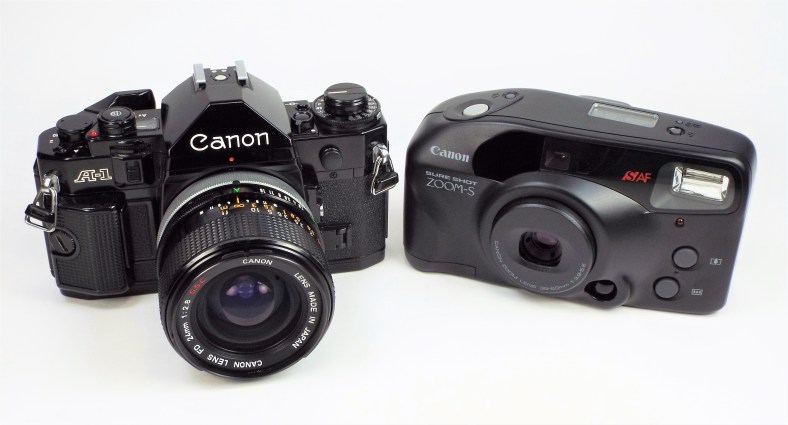
The Sure Shot is a large camera – it fits very nicely in my hands and feels solid. The buttons are all recessed so it does take a bit of finger olympics to push them all the way in. By the way, the A-1 with my FD 24mm lens weighs in at 934 grams!
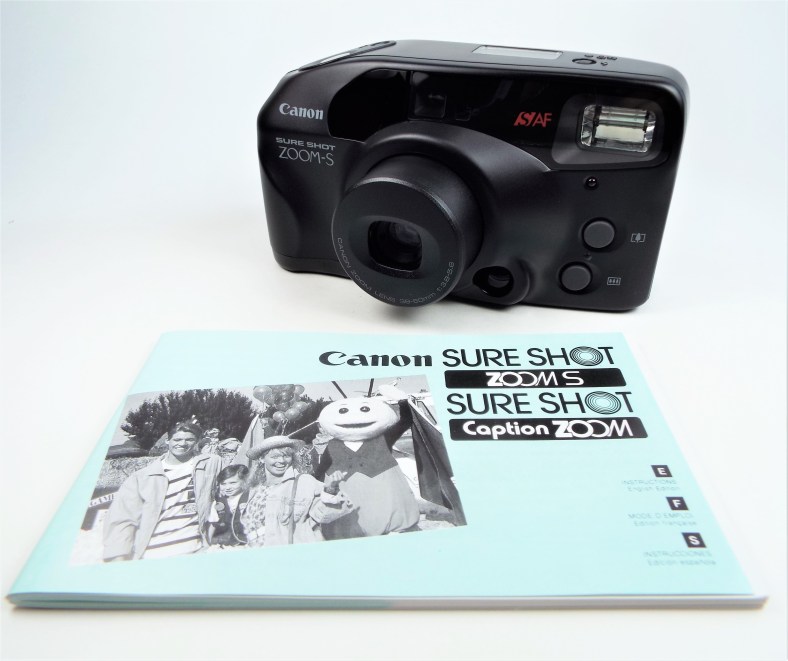
As you hear us say all the time, if you want to collect modern film cameras from the 1980s and 1990s, the best way is if you can find a complete original set, new in the box. Why not if they’re still out there and available. They don’t make them anymore and some of these cameras are quite capable of outstanding images – some would spend crazy money on the more well known cameras for almost unnoticeable differences in the final image (especially since most people don’t enlarge and print images anymore) and scanned to a PC they’ll look just fine on a high quality monitor.
Pick up one of these Sure Shots and I’m sure you’ll be impressed with it.
Studio Camera: Fujifilm FinePix S9900W
Chris
Released in November 1986, the Fuji DL-150 entered into a hyper crowded marketplace filled with everything from cutting edge 35mm SLRs with capable autofocus and autoexposure modes to some of the most basic point and shoot cameras ever made.
We think this Fuji probably existed somewhere in the middle of the pack of simple AF compact cameras. We don’t have a handle on the price point of the DL-150 – the excellent build quality would suggest a steep list price.

Since Fuji makes film, this set came supplied with a free roll of Fujicolor. It was a great way for Fuji to kick the yellow box and introduce their new customers to the quality of Fuji film.
Focusing on the DL-150 is automatic (infrared, active type) with autofocus memory. The shutter is a programmed electronic type with speeds of 1/30 to 1/500. ISO (DX Coding)is from 100-1600.

We like the styling of the DL-150… typical 1980s design but in our eyes it still looks fresh. It feels like Fuji used a higher quality plastic and the fit and finish is excellent. This model appears to have been built in Japan.

Fujinon f3.5 35mm lens – 3 components with 3 elements. Closest focus is 0.85 m

First time we’ve seen a JCII inspection sticker on one of our simple Fujis.
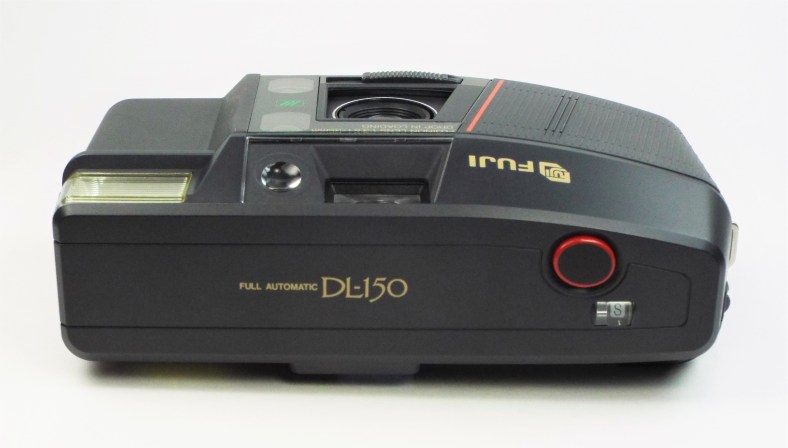
Drop dead simple top plate!

The shutter release button is sweet – a soft touch oval that feels great under your fingertip.
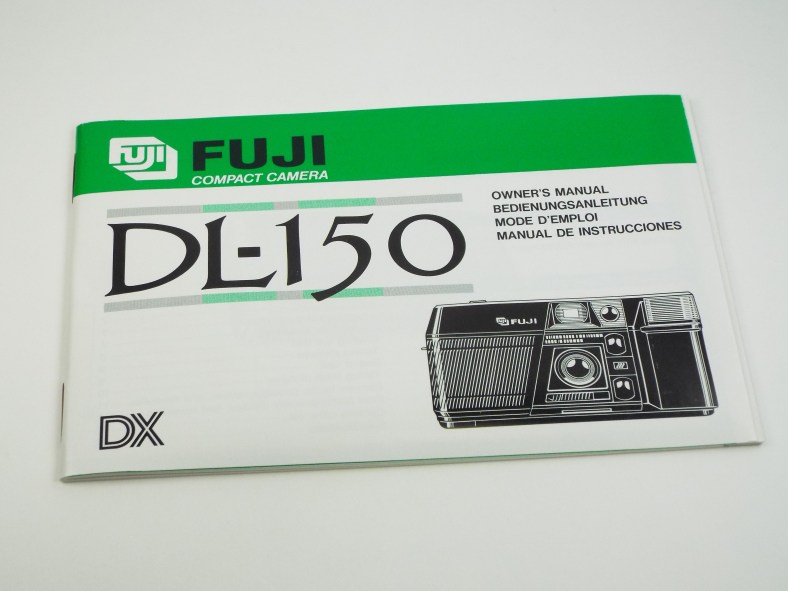
A real owner’s manual vice folded pamphlet.
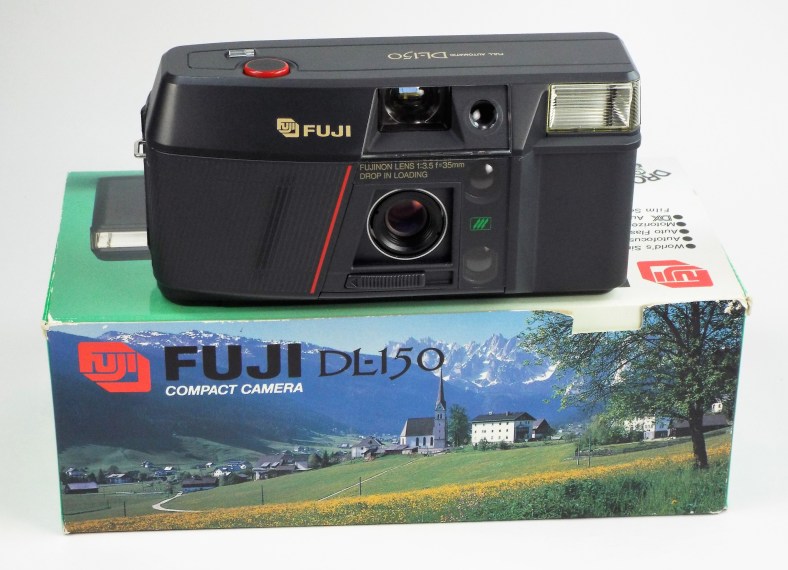
Colorful retail box. The Fuji DL-7 has a similar design.
Billed as the “world’s simplest loading system”! Features autofocus, auto flash firing, motorized film advance and end of roll rewind and DX auto film setting. No way to turn on the flash and the flash fires to “assist” you in dim lighting indoors.
Takes 2 AA batteries and weighs in at only 255 grams (without film, batteries or strap).
We haven’t field tested it yet but it’s on that ever growing list!
Thanks for your visit – if you find a nice clean DL-150 for a good price we recommend giving it a try.
Studio Camera: Fujifilm FinePix S9900W
Chris
My first real confrontation with someone who didn’t want his picture taken.
He was selling vegetables (illegally I think) along Route 110 on Long Island (a very busy road) when he spots some punk pointing a camera at him. That was back in the Summer of 1972. I discovered these images recently in a box of long forgotten slides taken with my Yashica TL Electro-X. So after 45 years Mr. Roadside Vendor, your picture gets posted.
I was out enjoying the summer day when I spotted this colorful roadside vendor and I thought that it might make for some good pictures. I jump out of my car and set up my Yashica for the telephoto shots when I realize that the man is walking across a four lane divided highway straight towards me – and he wasn’t a happy camper. After some “conversation” between us, I agreed not to send his picture to Newsday (Long Island newspaper) if he would just go away and leave me be.
The original images actually stink – a bit underexposed and out of focus, but after playing around with them a bit I kind of like the “Monet Effect” I got with these.
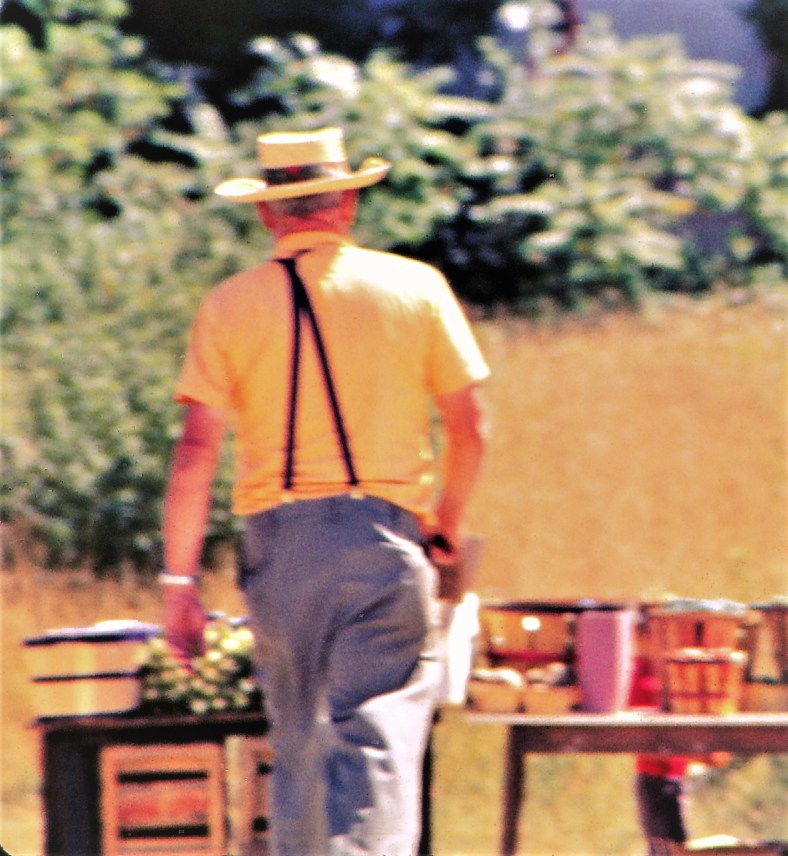
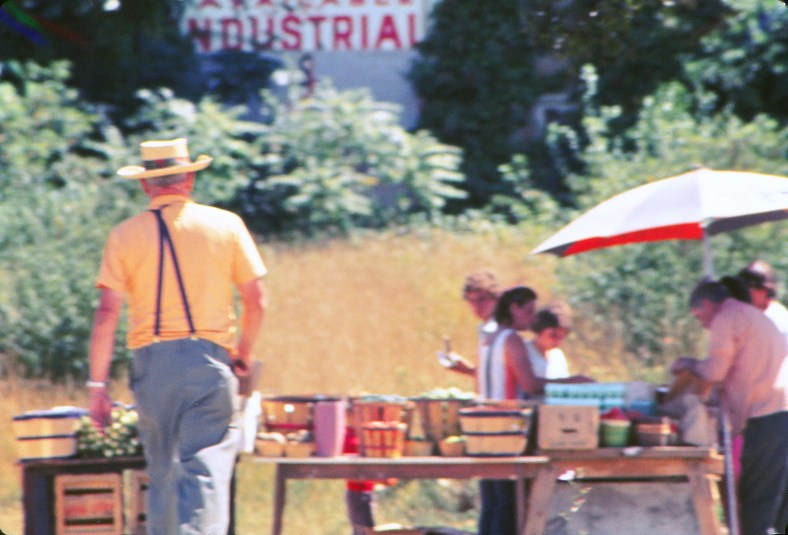
I like the soft colors – the blur adds a bit of vintage charm too. And yes, he had his hand in the right pocket of his trousers the whole time he was confronting me. I suspect he had an imaginary gun of some sorts. It was a fun experience for me and I’m sure he enjoyed the experience too.
I’m sure he was a nice old gent for the most part – maybe the Summer sun and my Yashica got him a little hot.
Camera: Yashica TL Electro-X
Film: Kodak Ektachrome 64
Thanks for your visit!
Chris
We haven’t had the opportunity to focus our attention on the Pentamatic lately. Carol is still working and I’m the retired one. I keep the home business rolling in our studios and lately most of my free time has been spent “rescuing vintage film cameras” – cameras that most people would probably throw away rather than restoring them. We just can’t bring ourselves to do that. Now let me be clear, restoring old cameras is as close to the most crazy thing one can do with their spare time. The amount of hours spent stripping old paint, chasing away rust and corrosion, cleaning lenses and restoring leather cases never equals a smart return on the hours and dollars spent. But we love re-imagining a 60 year old camera into a useful machine again and at the same time make it a work of art.
Anyway, we hope to be able to showcase one of our TLR restorations soon here in on blog. In the meantime, I ran across a few forgotten images of one of our Pentamatics today and I thought I would share them. They haven’t been posted elsewhere – when I first downloaded them I wasn’t sure that I liked them so they sat and sat. Today (after a few tweaks) here they are.


Both images were taken on the same day in our ca. 1911 post office building here in town. The one hundred year old windowsill provided a nice setting for the modern lines of the 1960 Yashica. Strong light flooded the space via the very dirty windows which in turn diffused the light nicely. I reflected some light back at the Yashica via a white shirt I was wearing. The bottom image is the same camera placed on the floor about 10 feet away from the windows. I liked the color and grain of the wood (fir or southern yellow pine) and again the 100 year old wood provided a nice contrast to the Pentamatic.
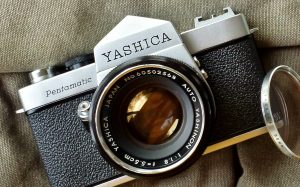
The Pentamatic remains one of the most invisible of Yashica’s SLRs. I’m drawn to it because of its rather unique styling – a clean pentaprism design, front mounted shutter release button and of course its crazy big lenses.
Thanks for your visit and please feel free to share your comments with us.
Chris & Carol ^.^
The goal is to take our 1958 medium format camera from Fuji Photo for a little picture taking. We’ve loaded some fresh Fujifilm Neopan 100 Acros (in days past it was Neopan SS) into the Fujipet and see how it does after 58 years of non use. We’re very curious about the “look” of the images. If you don’t know much about the Fujipet, please take a stroll through our archives for a little catch-up.
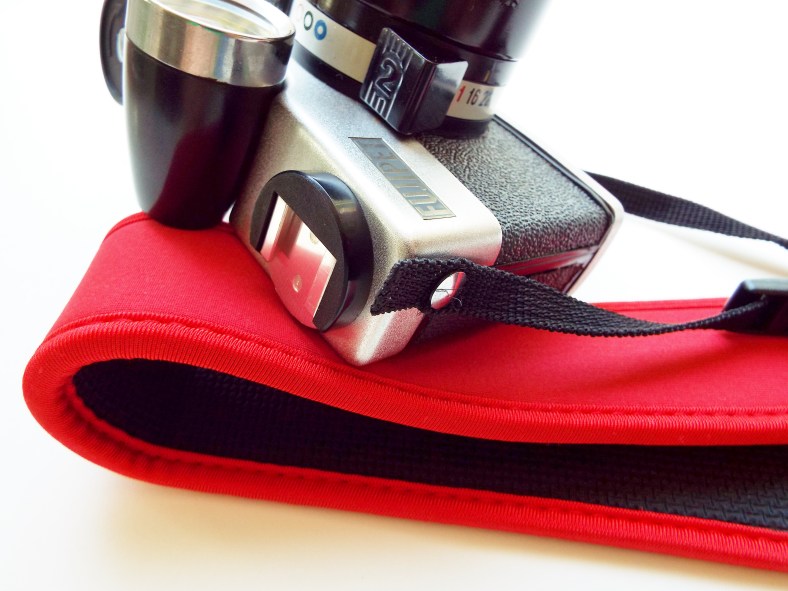
1958 Fuji Photo Fujipet with its new strap. A simple modification to the Canon strap made it perfect for this lightweight Fuji. We have the original vinyl (leather?) strap for the Fuji but it’s still sealed in its original package. No reason to ruin it by using it LOL.
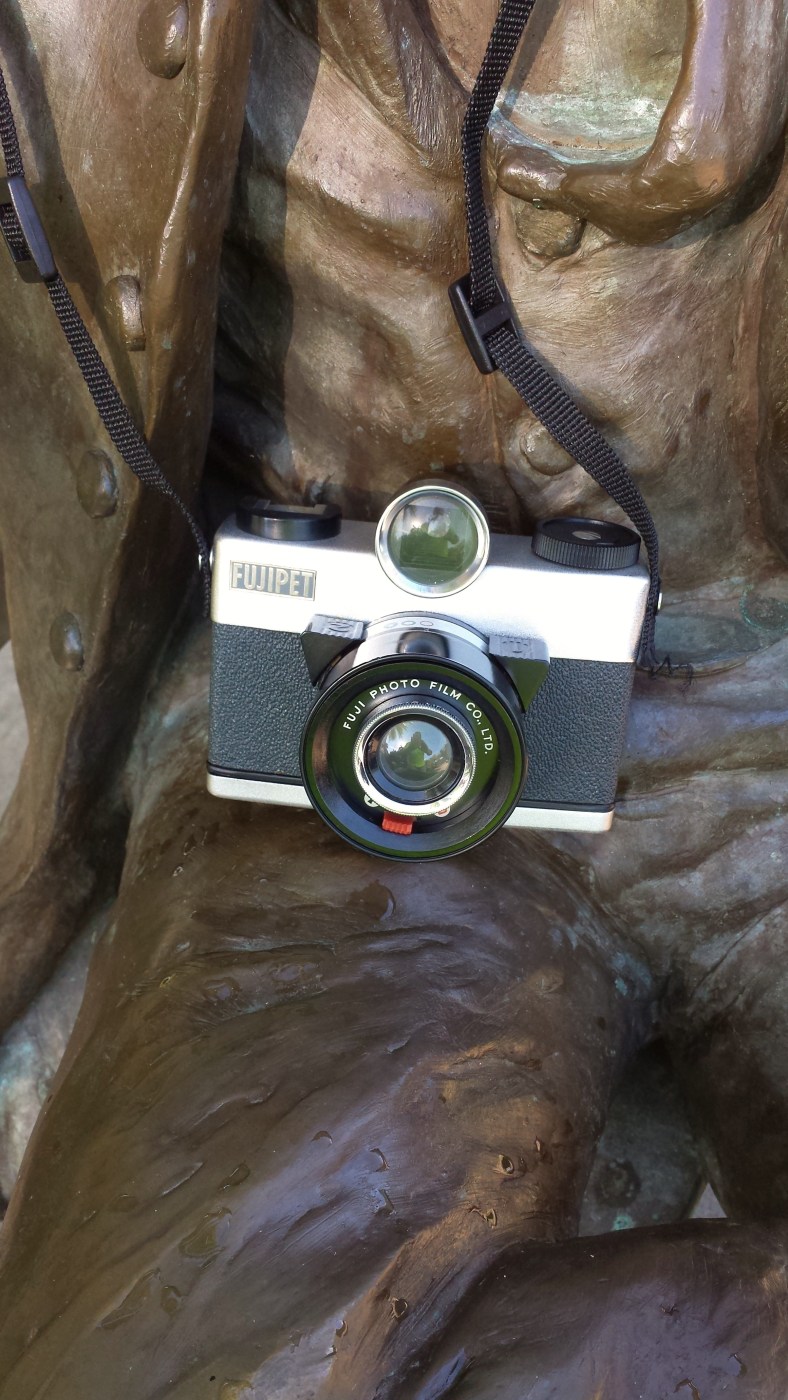
The Pet as seen on a local legend (Mr. David Yulee).
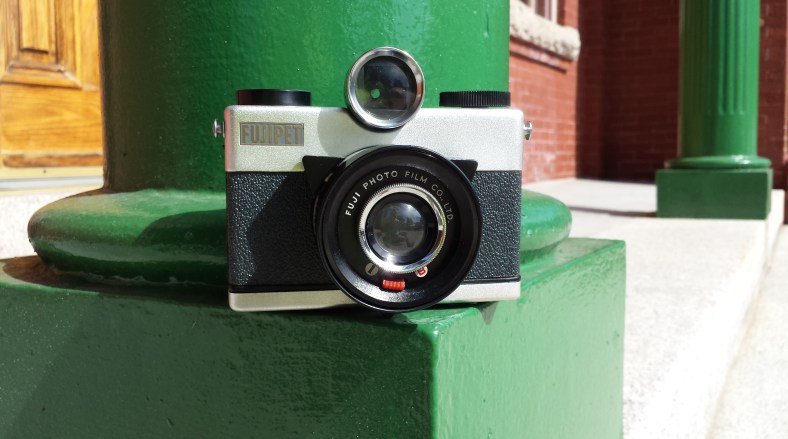
Hoping the bright Florida sunshine was just right for our first test of the Pet.
And just how did the Pet perform?
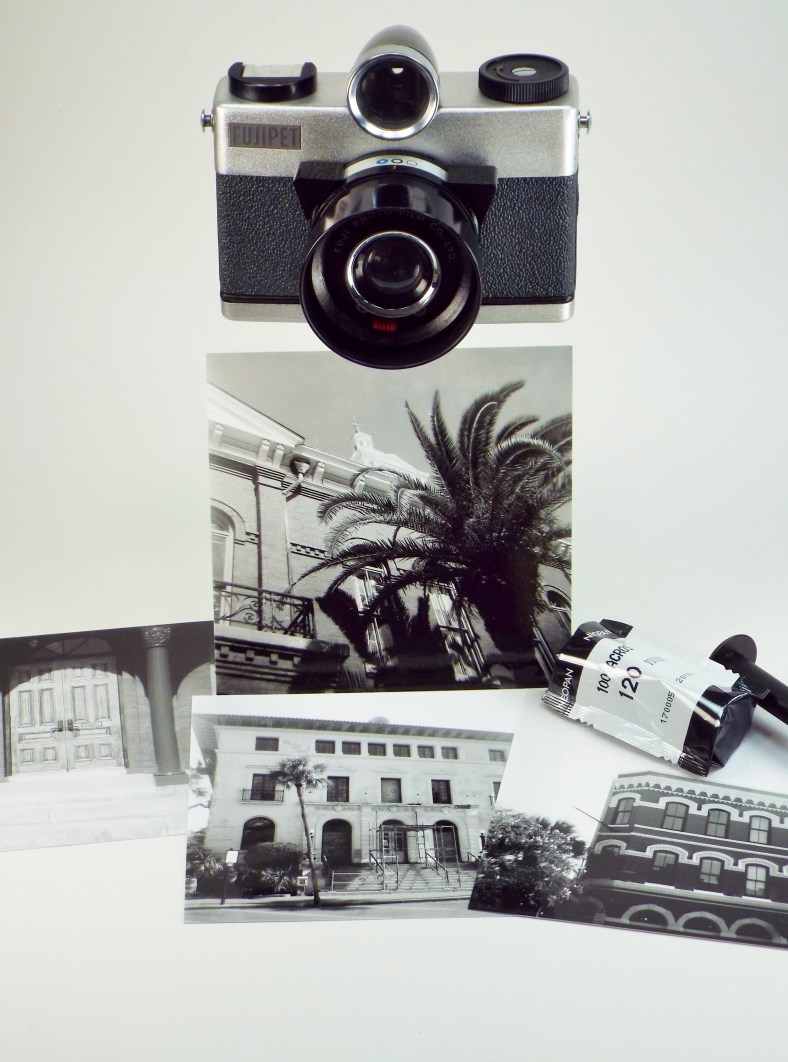
The entire roll of 12 exposures came out just great! Here’s a sample of some of them. The Pet gave a special look to the images. We had ‘The Darkroom’ print up these four images in their true square format (here they are 5 x 5 inches).
Well as you can see the pictures came back from the outing with the Fujipet. We couldn’t be more thrilled with how they came out! The lens was actually super sharp (all things considered) and the almost 60 year old plastic lens had some nice contrast to it too. We can’t say enough about Neopan 100 Acros – exceptional film!
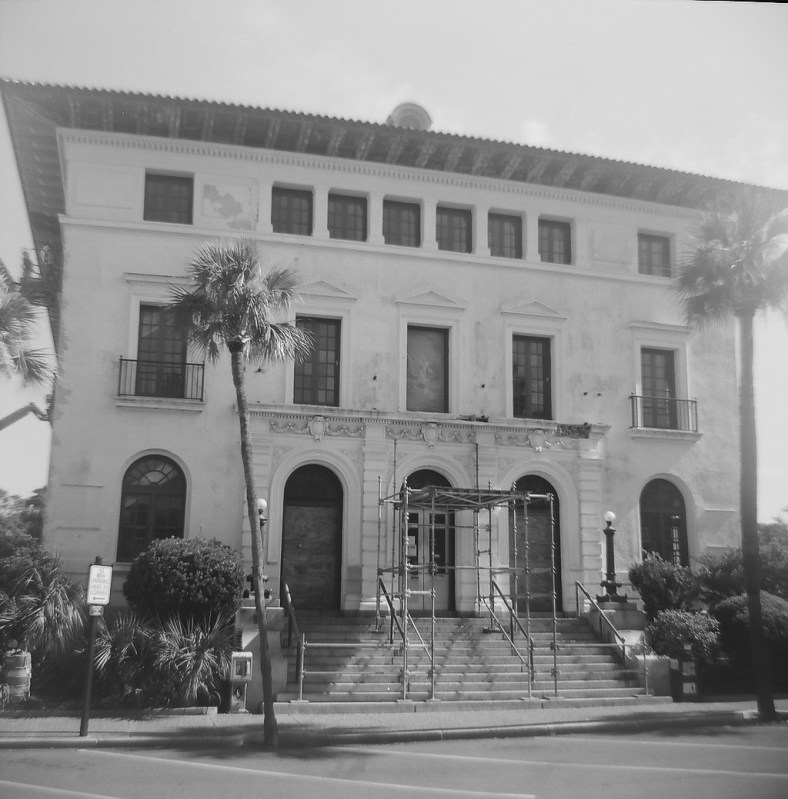
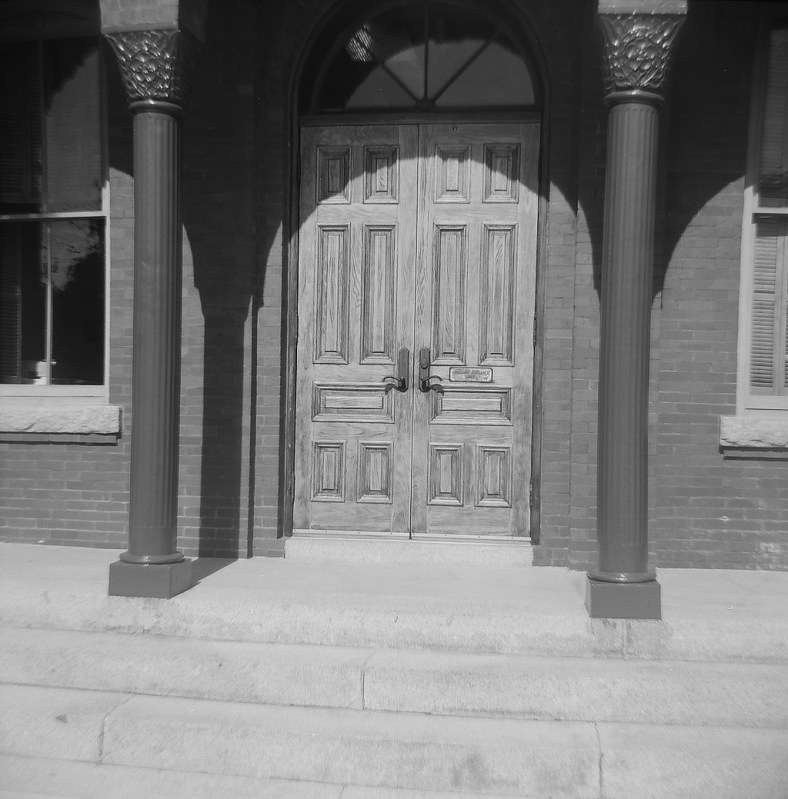
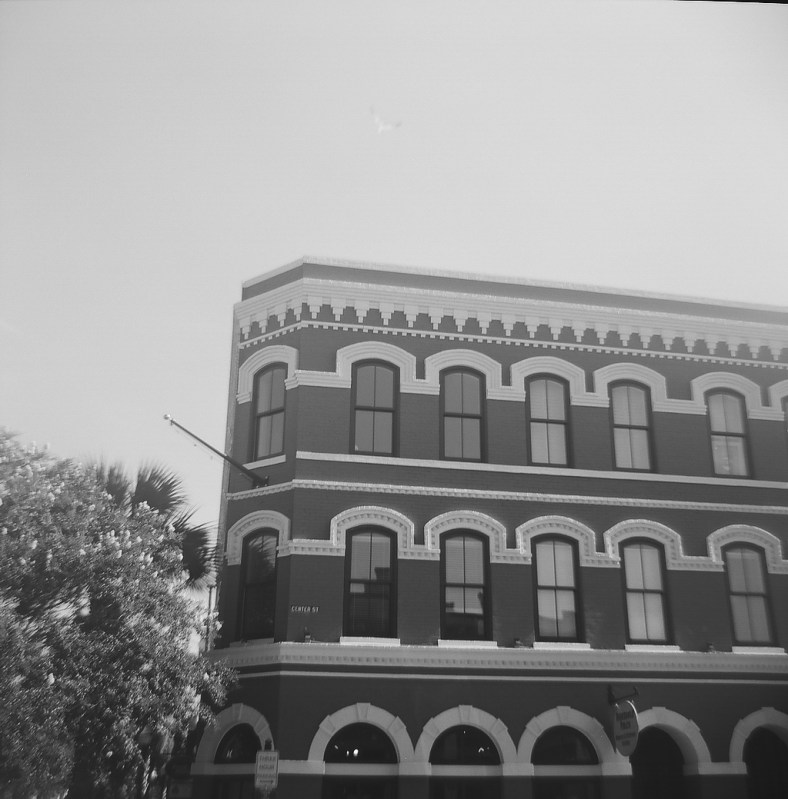
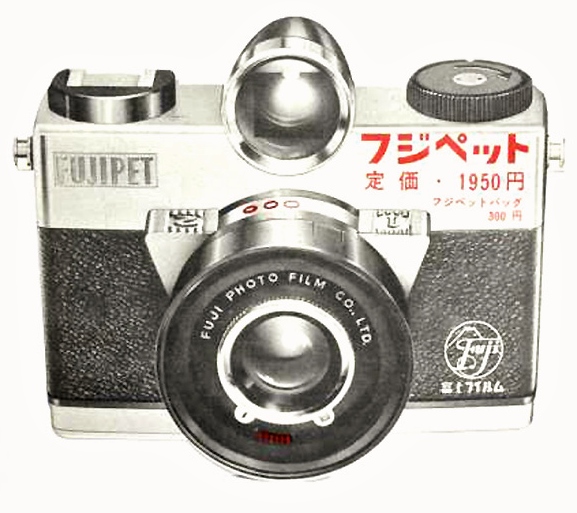
If you can get your hands on a Fujipet then do so. There’s almost always one or two listed on the Japanese online auction sites. Be careful though! Japan (like my Florida) is a very humid climate and that can wreck havoc on old metal cameras and plastic lenses. Ask questions of the sellers and look very closely at the images of it. By the way, in 1958 when the Pet’s were selling wildly in Japan, they went for 1950 yen or about just under $6. You’ll pay a little more than that today but a good one can still be found for under $100 and questionable ones for $10 to $20.
Thanks for your visit! Comments are always welcome.
C&C ^.^
We were finally able to assemble our Yashicaflex Rookie ‘stuff’ for some studio shots. We’re still missing some items to make the set complete but so far the collection is looking good.
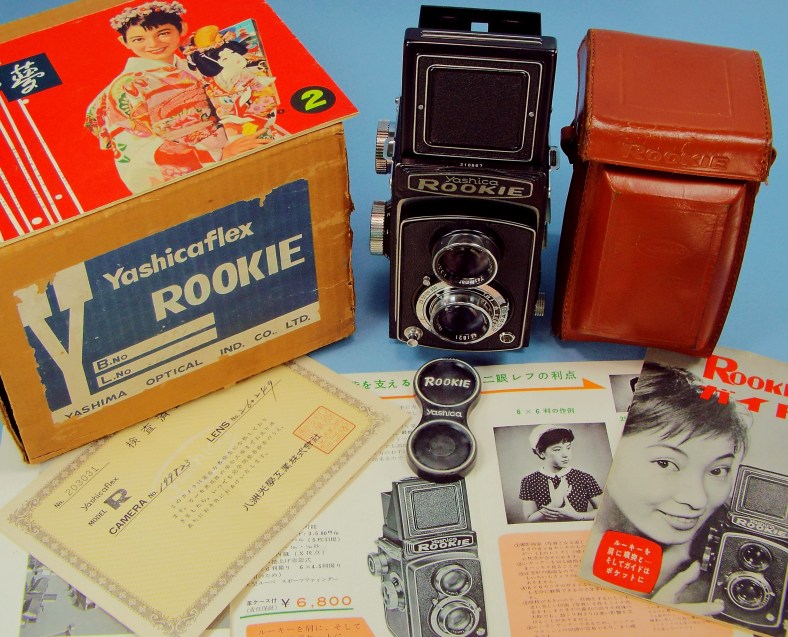
The outer box (or shipping box) for the camera and its leather case is on the left. Of course the camera is in the center with the Rookie leather case to its right. The Rookie instruction booklet is in the lower right of this image and a colorful Rookie sales brochure is just below the lens cap. A warranty (service certificate) card identifying that this camera is a Yashicaflex Model R is just below the box and finally another sales brochure that features the Rookie is on top of the box.
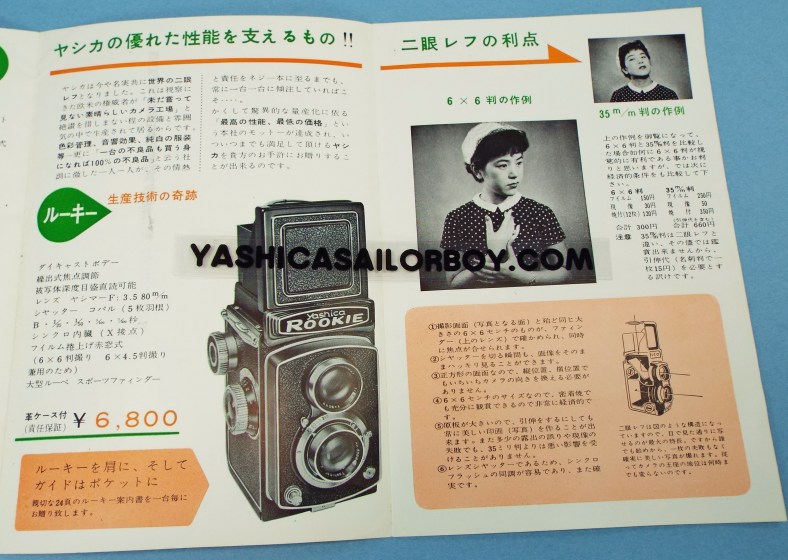
Original 1956 sales brochure.
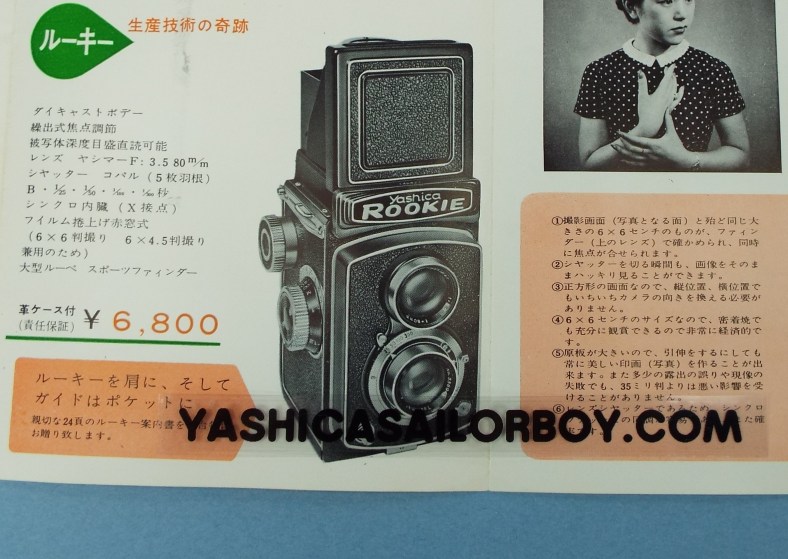
Sales brochure from 1956.
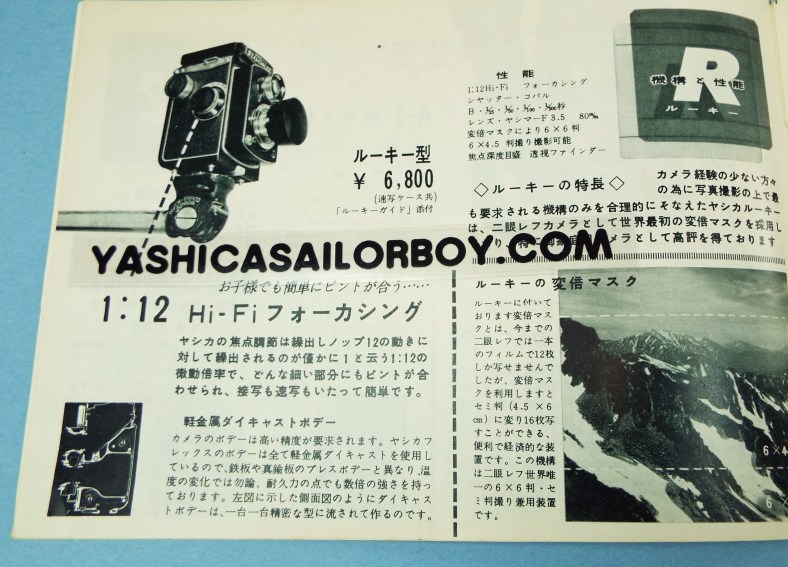
Certainly an entry level twin-lens reflex camera with some nice features.
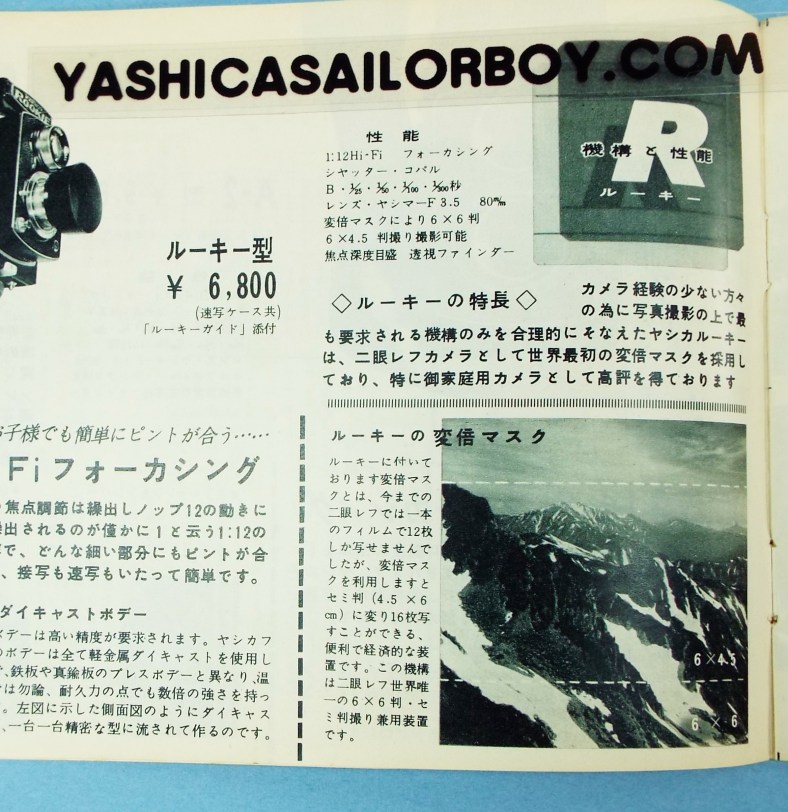
The Rookie could take standard 6×6 cm images or with a accessory kit take 3 more images on standard 120 film and produce 6×4.5 cm negatives.
The Rookie wasn’t popular in Japan and Yashima-Yashica gave it a very limited run. I suspect that some popularity exists today just because it’s seldom seen here in the U.S. and it’s rather hard to acquire a really nice example. We like the camera, the name is goofy and didn’t play well in the marketplace.
As always… we appreciate your visit! Thanks, C&C
We’ve recently added this wonderful electronic flash unit to our collection. Many of the lesser known accessories from Yashica often go unnoticed and become a bit mysterious.
We were lucky to find an almost complete set from around 1962 or so (could be earlier). I believe we’re only missing the instruction booklet and a few minor (but desirable) plastic bags. The box and styrofoam inserts are in excellent condition. The flash works perfectly and more than likely is unused (as is often the case). Image number 3 is from a Japanese Yashica-Mat EM instruction booklet. There are some differences between ours and the one pictured. One has a coiled cord vice a straight cord and the attachment bar and knobs are black vice silver with gray knobs on ours.
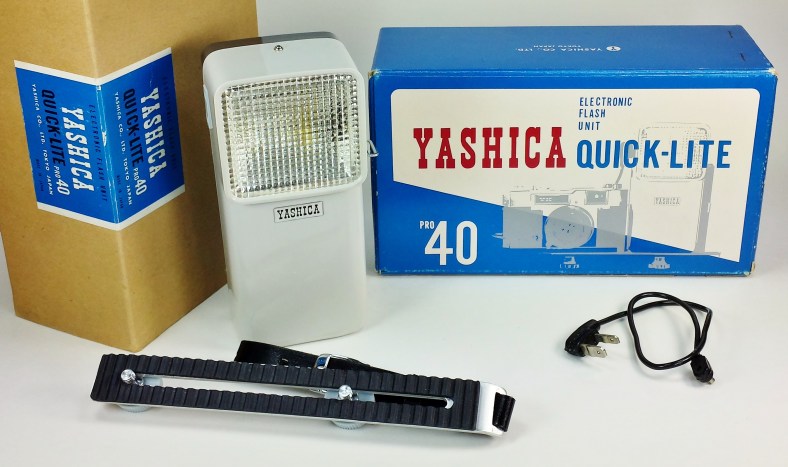
Complete set from around 1962 (or a bit earlier). Takes 8 AA batteries to fire this thing up!
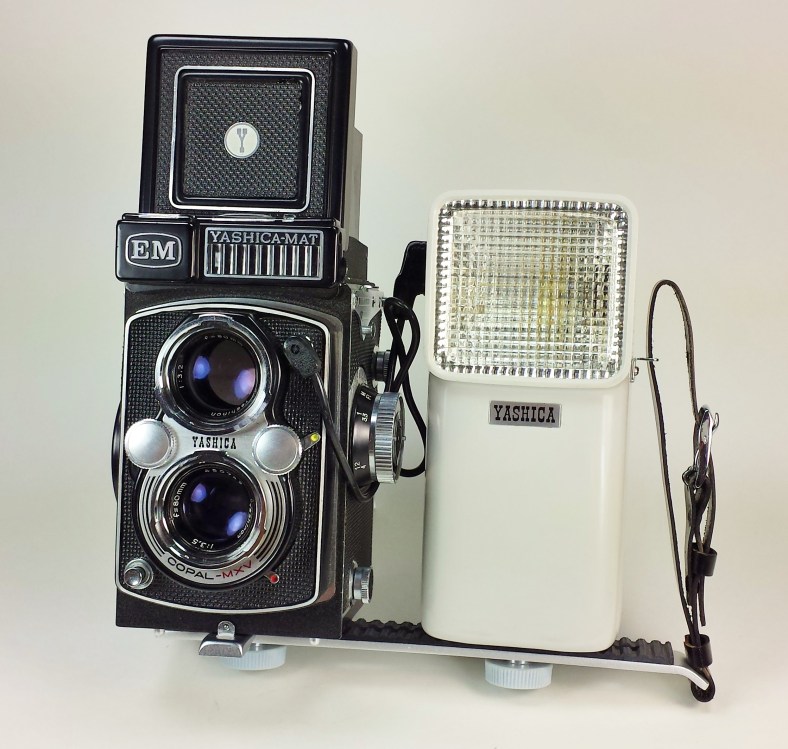
PRO 40 Quick-Lite attached to our 1964 EM.

From a Japanese instruction booklet for the Yashica-Mat EM.

Front view of the flash. The flash diffuser is still bright and clear.

Rear cover for the PRO 40 flash. It is made from metal while most of the remainder of the unit is plastic.
 Chasing Classic Cameras with Chris