Pentamatic in ‘Explore’

30889835606_871e994088_o

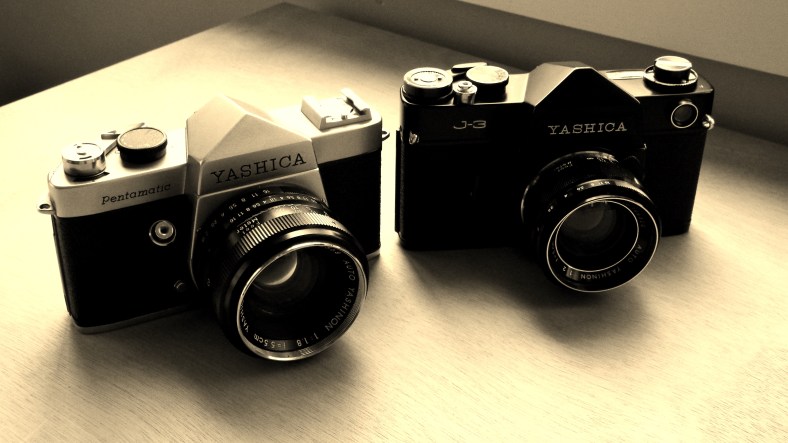
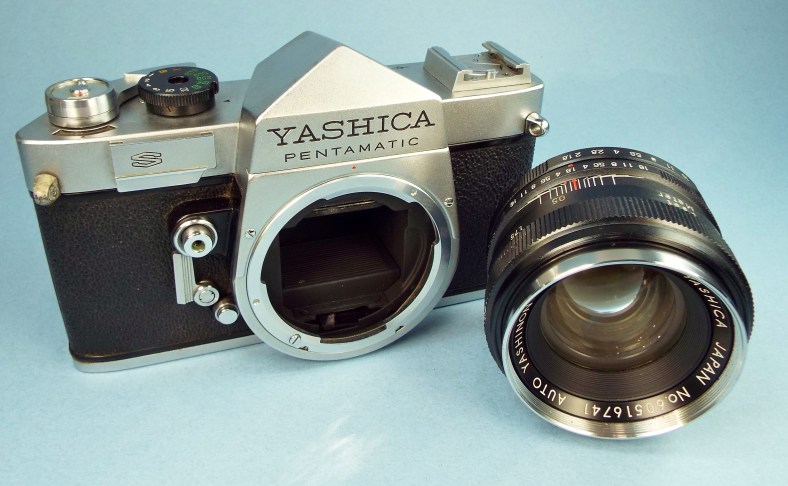
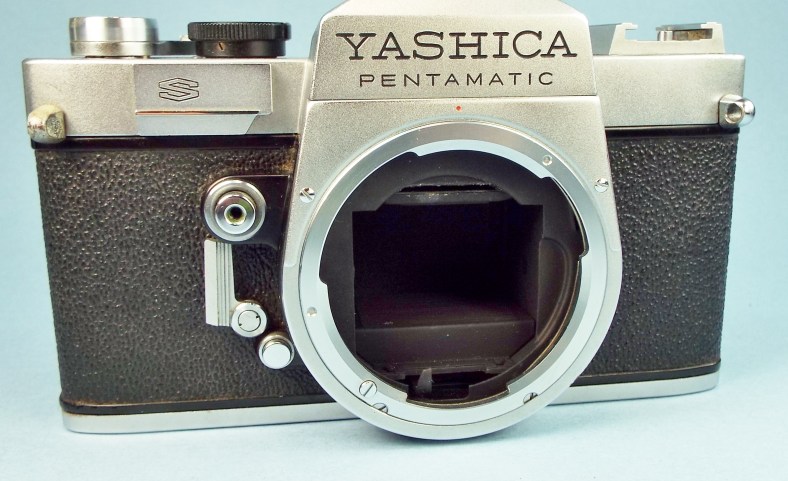
This simple studio shot made it to Flickr’s ‘Explore’ group recently. It may be the first and only Pentamatic in ‘Explore’.

Natural window light on an overcast Florida afternoon. Camera used? Samsung Galaxy 4S. No post production by me but the Galaxy may have been on HDR. Sometimes simple is better.

Yashica Pentamatic 35mm single-lens reflex from early 1960.

Chris

Hit the Road 2016! Hello 2017!

Thank goodness 2016 is almost history! I’ve heard from friends in Australia that 2017 is going well (so far). Let’s not muck it up!

On a positive note – here on our blog, we’ve seen a significant increase in activity over last year (2015). Visitors to the site and views are through the roof! We (Carol and I) are thrilled that what started out as a repository of bits and tidbits of Yashima-Yashica information would gain the traction that it’s had. We thank you!

We enjoy the feedback we get and I can say that I’ve learned more than a few things from it. We’ve met some super talented people – photographers and bloggers that are out of this world amazing! We hope our readers got a little something special in return too. That was the goal of the ‘Yashica Pentamatic Fanatic’ -a sharing of knowledge about a silly camera that Yashica invented in 1959 that most people have never heard of.

29926651073_d141fae764_o

This year’s favorite.

In looking through the hundreds of film and digital images that we shot in 2016, this one turns out to be our favorite. We believe that every vintage camera is worth preserving (in some way or another) – we think of cameras as holding the heartbeats of all who may have gazed through its lenses, pressed its buttons and then anxiously awaited the results. We can imagine the thousands of faces and smiles that were captured and the thousands of important events in people’s lives that were saved for the future. Classic cameras do that for us.

Don’t get us wrong… we love the  world of digital photography but we also embrace the beautiful, often awkward analog machines of our past. We hope that photographers in the future will remember (every now and then) to pick up a classic camera, load some film into it and then set out to capture images with a camera older than yourself. Enjoy!

Happy New Year… we wish only the best for all!

Chris and Carol ^.^


Pentamatic bling!

A little eye candy for all the Pentamaniacs* out there!

20150107_084533

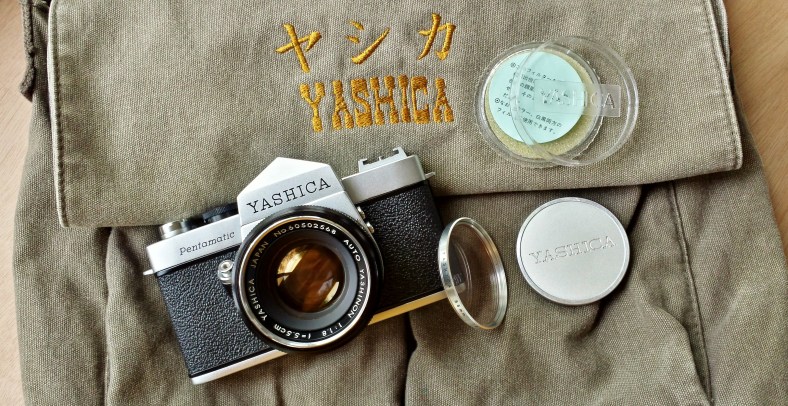
Some original Pentamatic packaging items. Yashica kept a theme of the pentaprism design on the presentation box and the instruction booklet.

20150107_090633

The red box on the right is the outer or shipping box. Once again Yashica kept the pentaprism design going.

20150108_150847

More Pentamatic toys.

If you’re looking to collect a really interesting camera (that’s also a joy to use), then give the humble Pentamatic a try. First available for sale by late Spring 1960… never sold in large quantities so it’s a bit of a challenge to find. The viewfinder is bright and appears very large (no needles or other stuff in the way), and the normal 5.5cm lens is big and bright – easy to focus too.

*Many thanks to a reader for the suggestion of ‘pentamaniacs’. ^.^

Thanks for your visit. Questions and comments are always appreciated.

Chris

Pentamatic S and friends…

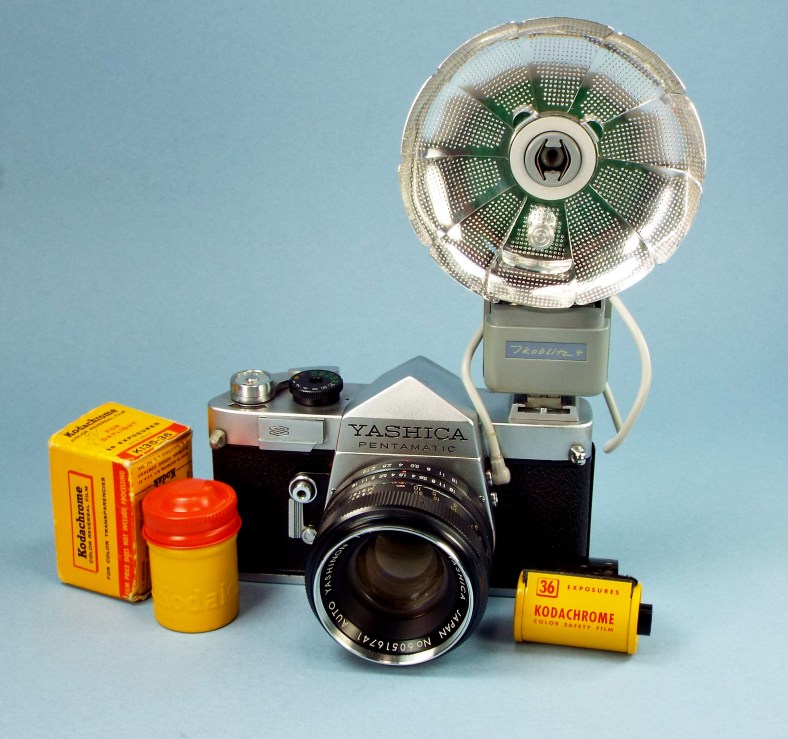
We’ve recently found a nice looking friend for our collection… well, friends. Like almost all collections, ours doesn’t need more friends – more space maybe, but no new friends. This flash came as an accessory to a recent purchase of a Yashica twin-lens reflex camera (from 1956). After a quick cleaning we attached it to our S to see how they would look together – smashing we think! The Kodak Kodachrome is from 1959 and adds a nice touch to the set up. We’ve always loved the bright yellow and red metal film cans from Kodak.

dscf2902

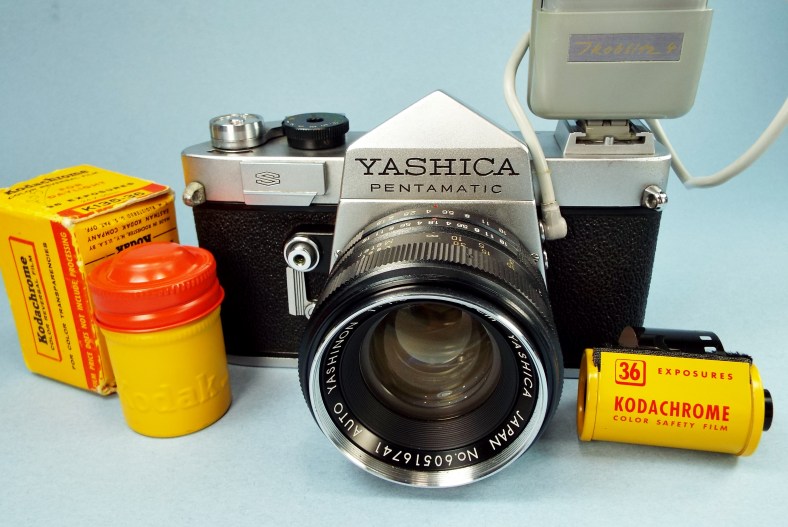
We put our Pentamatic S, from early 1961 or so, and the Zeiss Ikon Ikoblitz 4 (late 1950s?) together. Sadly the flash takes a now defunct battery and has a capacitor so not much we can do except enjoy the view.

dscf2908

They make for a handsome display. All are age appropriate too.

dscf2901

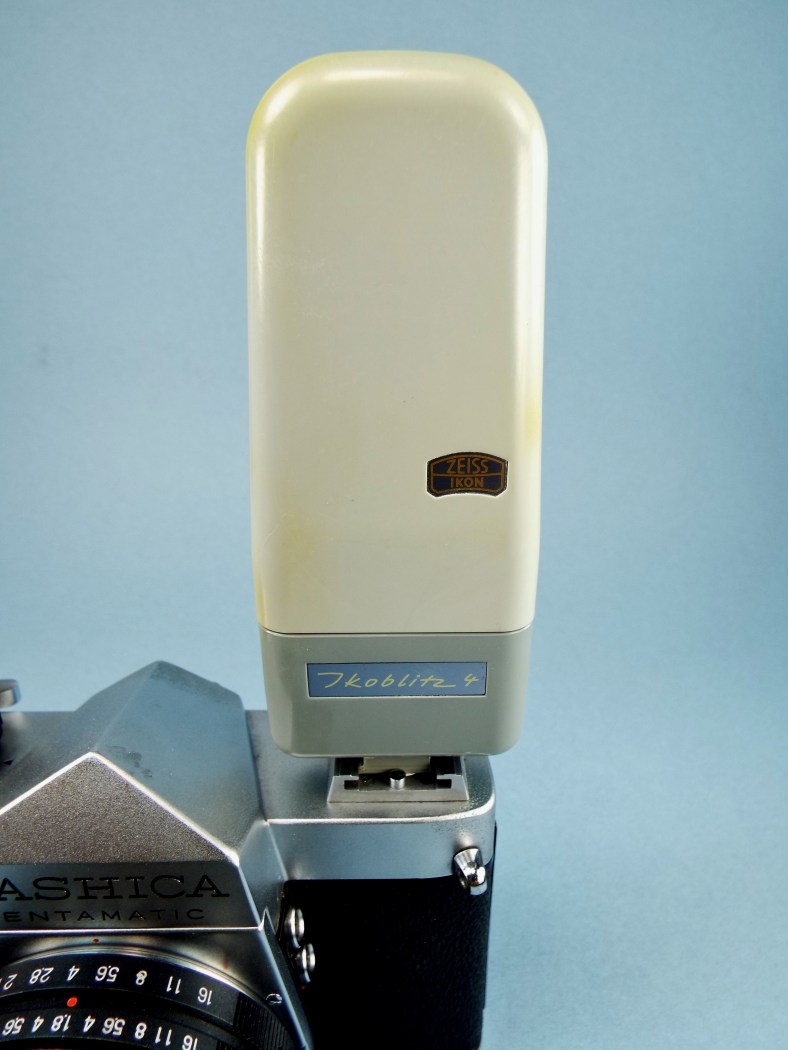
With the flash tucked away in its hard plastic shell it takes on an interesting look.

Hope you enjoyed your visit and if you care to, please leave a comment or suggestion for us. Of course if you know more about the Zeiss Ikon flash or want to contribute something about the Pentamatic, please do so!

Many thanks again… Chris and Carol

You can find us on flickr at https://www.flickr.com/photos/127540935@N08/

Yashica’s Little Gems

006

Pentamatic’35’ and J-3.

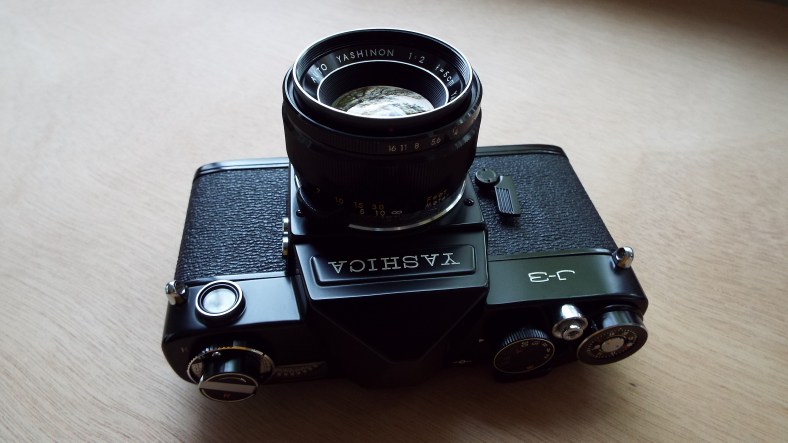
They couldn’t be more different – the Yashica Pentamatic was Yashica’s first 35mm single-lens reflex (SLR) camera and the J-3 was Yashica’s first SLR with a built-in exposure meter. In this example, the black J-3 was Yashica’s first SLR in what we call ‘Pro-Black’ finish – all black body with matching black lens.

009

Lovely little gem from Yashica – the J-3 in Pro-Black. Made in limited quantities and came with the matching black Auto Yashinon lens.

20160326_164016_richtonehdr

The Pentamatic’s clean simple lines makes it one of the most attractive cameras of the early 1960s in our opinion.

As was the case during the early 1960s, both cameras would be quickly replaced with upgraded models with more advanced features and a wider array of available lenses. Not all of these changes were for the better… in the case of the Pentamatic, the model II and the model S, the changes did little to attract more buyers as their upgrades were too few and too late.

In the case of the J-3, it was the building block to Yashica’s success throught the mid 1960s and beyond. The ‘J’ series of SLRs, which included the J-5, J-4 and finally the J-7, were respected cameras with excellent optics at a great price which sold in the ten’s of thousands. Quantity meant that Yashica could afford to advance its technology and deliver some groundbreaking SLRs by 1968 and beyond.

As always, thanks for your visit and your comments are appreciated. To see more about Yashica, stop by our flickr page at https://www.flickr.com/photos/127540935@N08/


Chris and Carol Photography

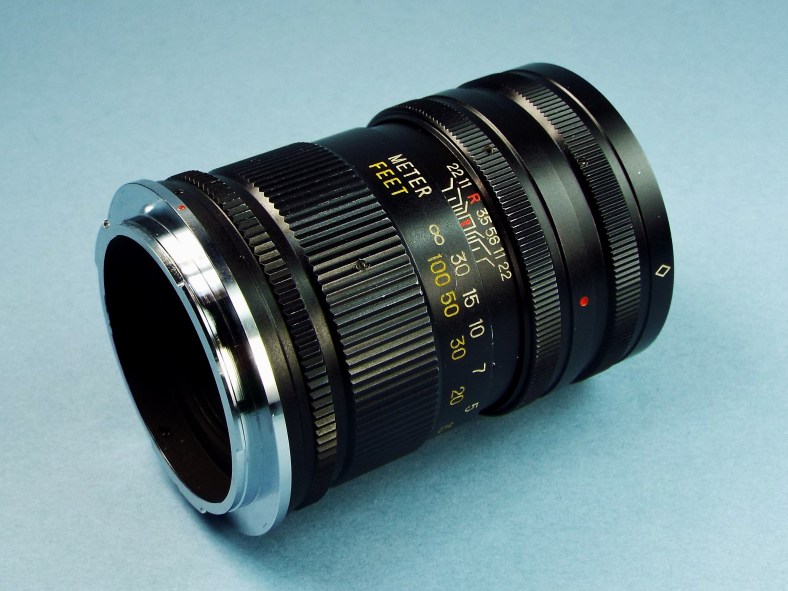
Yashica Super Yashinon-R f/3.5 13.5cm Telephoto Lens

Nice little addition to our Pentamatic family of lenses. Purchased in Japan and was with an early model Pentamatic’35’ set in “well used” but stable working condition. It came with the original Yashica brown leather case, unbranded plastic rear lens cap, Yashica front metal 52mm push-on lens cap, unbranded lens hood, and a very nice looking Walz chrome metal and glass Skylight C. (cloudy) 52mm filter.

dscf2868

Pentamatic bayonet mount 13.5cm short telephoto lens… f/3.5 with rather low serial number. Early Yashica lenses were often given a serial number that starts with the focal length of the lens. In this example, ‘135 0722’ shows it to be a 135mm lens with a sequential production number of 722. Best guess is that this lens was made in early to mid-1960. We have another Super Yashinon-R 13.5cm lens with a serial number of ‘135 0927’.

The above image shows the lens partially disassembled for cleaning and inspection. No fungus or mold, but I’ve found some funky streaks on the face of the first removable lens element (large lens element to the right).

dscf2872

The chrome nose removed.

dscf2873

The main lens group removed. If you look closely, you may see the funky streaks across the face of the lens.

dscf2876-2

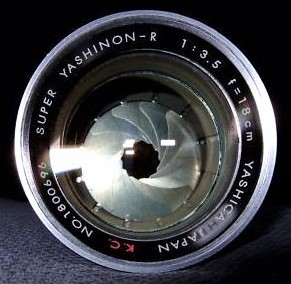
Aperture blades set at f/ 22. No oil and no problems (looking into the lens barrel from the front of the lens). Note the 12 aperture blades.

super yashinon p mount 25cm

Here is a similar lens with the 12 blades that was for sale recently. The seller identified the lens as having been made by Kyoei Optical Co., Ltd.  using the brand name “Acall” Kyoei was also abbreviated as “KOC” which may be the reason for the red “K.C.”

New info as of Feb 5, 2020 – At first, I guessed that my lens was made by Tomioka Optical as they were responsible for most of Yashica’s lenses. A reader has pointed out the similarities between my lens and the design of the Acall lenses with both  Pentamatic and M42 mounts. I must say that I agree with them upon further review. Thank you for your input!

dscf2877

Partially assembled body. Nice clear markings and solid-looking bayonet mount.

These first Pentamatic lenses were pre-set and not automatic and were the kings of the heavyweight division. Lots of metal and glass here! When properly stored they were not prone to fungus… but almost all classic lenses will have some sort of mold, dust or fungal issues when left in the dark and in their leather cases.

Thanks for the visit!

Chris and Carol

You’re invited to visit our online store at https://www.ccstudio2380.com for some great vintage and collectible cameras, lenses, and accessories.

Pentamatic S – 1961 to 1962

The Pentamatic S… the last true Pentamatic in the short lived series of SLRs from Yashica. The Pentamatic II is the hardest to find from a collector’s standpoint as they were only available for sale in Japan with the S close behind.

dscf2832

The Pentamatic S. The last camera in the short lived Pentamatic series.

dscf2837

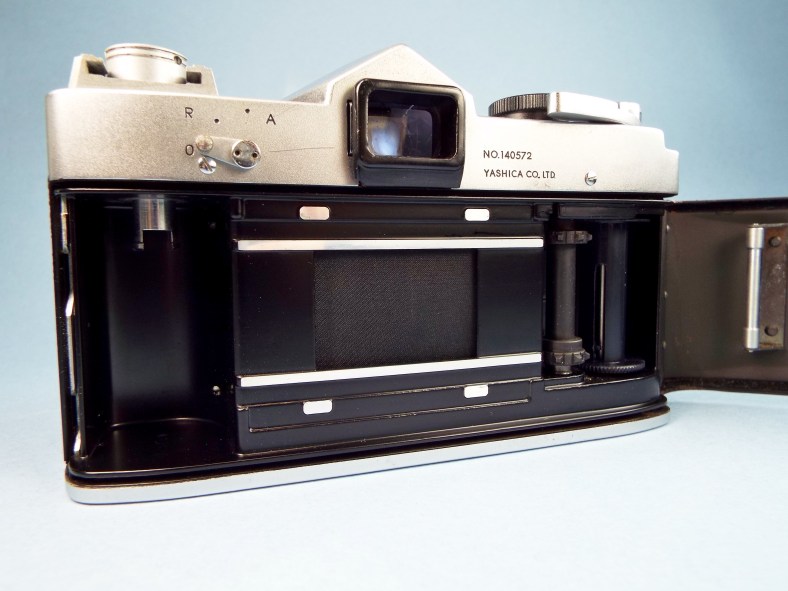
Pentamatic cameras tend to have very well designed film paths and film chambers. We rarely find corrosion and the chambers are large and easy to keep clean. The Nicca inspired cloth focal-plane shutter in this example is super clean and shows no white mold spots.

The Pentamatic S pictured above, the serial number is NO. 140572. Our other S is NO. 140294. These numbers decode to… 1=1961, 4=April, and the last four digits equal the sequential production numbers. The S models were not produced in great numbers so it is possible that both of these cameras were made during the same month as they are within 300 units of one another. Another serial number in our database is… NO. 141796 which suggests that it was the 1,796 th unit made in April of 1961. Interestingly the serial number of the model S in Yashica’s instruction booklet is NO. 140893. It is odd that the camera in the booklet has a higher production number than two cameras we own.

dscf2838

The only difference between the S and the original Pentamatic ’35’ is the notch in the shutter speed dial on the S. It is used to couple the clip-on exposure meter to the dial.

dscf2839

The biggest changes in the S from the original… the shutter release button is no longer at a 45 degree angle but its position on the body is the same. The S adds a self-timer and the light meter (exposure meter) lug on the face just below the shutter speed dial.

dscf2840

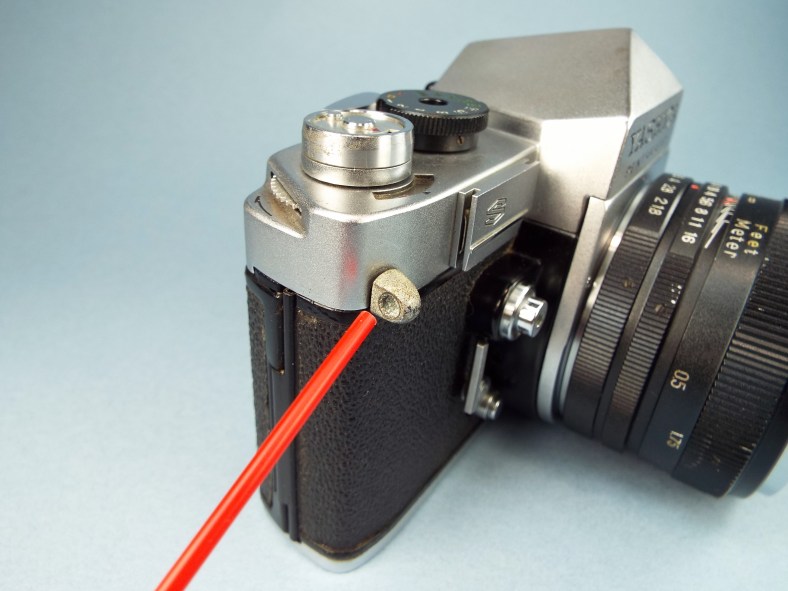
The lug for the neck strap has been relocated to the front from its previous position (on the side). It’s interesting to note that this lug is super corroded while the lug on the other side is not.

dscf2835

As we mentioned in the previous post on our blog, the Pentamatic series of cameras are prone to mirror lock-up. This S is currently in the locked-up position and has resisted my attempts at freeing it. It had been working at the higher shutter speeds (1/125 and higher) but now it sticks at all speeds. Ugh!

In summary… the Pentamatic S is a very worthy camera and is built like a tank. The S went back to using the Auto Yashinon f/1.8 5.5cm lens which was the standard lens on the original Pentamatic ’35’. The Tomioka Optical built lens is sharp and smooth. The S allows for the attachment of a separate exposure meter on the front lug (where the “S” is) and can couple with the shutter speed dial. Still a long way from TTL metering but at least headed that way.

Thanks for your visit!

Chris and Carol

Please visit our online store at https://www.ccstudio2380.com for a nice selection of classic film cameras and vintage photo accessories.

Pentamatic ’35’… 11.3.2016

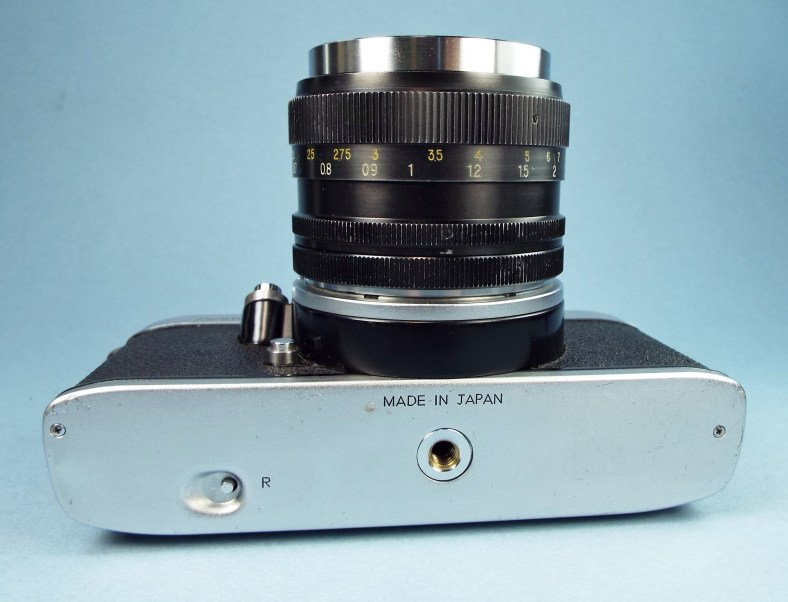
The tank that is the Pentamatic ’35’.

dscf2823

A nice example of an everyday shooter. This one was made in May of 1960 and looks like it saw some regular use. The Auto Yashinon lens is spotless inside and shows a nice patina on the barrel.

The Pentamatic pictured above shows some signs of frequent past usage. Some bright marks on the silver finish, a few dings and dents here and there… some bits of surface corrosion but nothing broken or inop. Per the serial number on the body and on the lens, this camera and lens set were made in May of 1960. The body was the 4,410 th to roll out of the factory since production began in December 1959.

The Pentamatic and its standard lens – the Auto Yashinon f1.8 5.5cm is a beast! Lots of brass and glass went into making these beauties. We love the chrome nose on the lens… a quick swab with some 91% isopropyl alcohol and it shines like new.

dscf2824

As is typical with these 56 year old cameras, the mirror tends to show some grime and “soot”. A very very gentle swab with water and some dish soap does a good job with the dirt and some of the soot but the mirrors never really come fully back to their original shine.

The metal lens cap (52mm) is quite solid and is backed with black felt like material. Occasionally you’ll find some pretty dented up caps but since they were so well built you’ll more than likely find a good example out there.

dscf2827

The Nicca Camera Company (Taiho Optical Company) inspired cloth focal-plane shutter. Simple and pretty rugged. This one has some white spots on it as most do… we tend to leave them be rather than trying to clean the them off.

This one (above) has a nice clean film path and film chambers. They’re easy to keep clean with a cotton swab and some canned air. Don’t blow directly on the shutter curtain with the high pressure air!

dscf2831

Since the Pentamatic with lens weighs nearly 2.5 pounds, the base plates usually take a beating. This one is rather good and has held up well!

If you’re interested in adding a nice Pentamatic’35’ to your vintage camera collection, hopefully we’ve shown what a super clean but well used camera looks like. Be careful when you’re shopping around – the mirrors often get stuck in the up position. A few little adjustments (and some lube) usually get them working again but they’ll remain “tricky”. Obviously look for evidence of severe damage – a major dent that prevents something from operating properly would be one to definitely stay away from. The lenses often freeze up do to lack of use… a short time with a hair dryer can often get them moving again.

Best of luck on your search! Any questions please feel free to contact us.

Many thanks, C&C

Nicca 3-F… Nicca Camera Co., Ltd. & Yashica

What connection could this attractive 35 mm rangefinder camera have with Yashica? And why on earth is it in a blog about the Yashica Pentamatic???
dscf2631

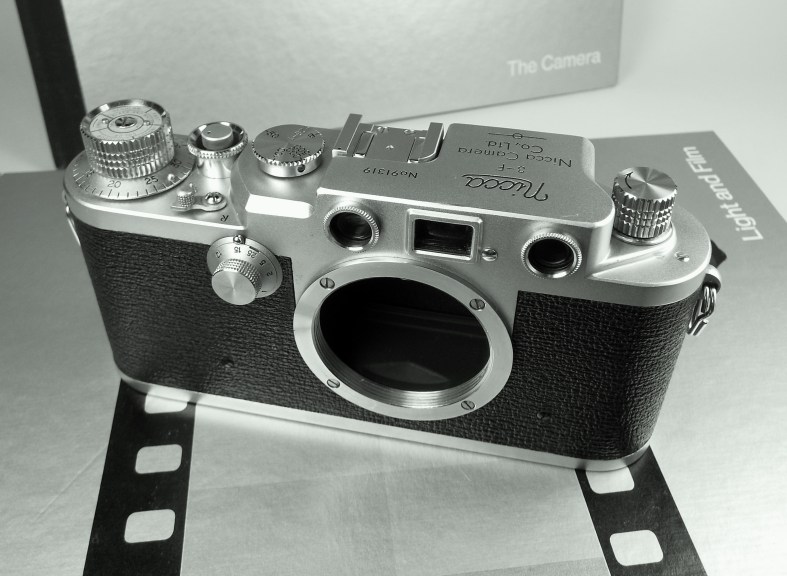
Nicca 3-F from early 1957 (maybe late 1956). Obviously, it is one of many Leica copy cameras that were built during the 1950s and beyond.

First a little bit about Nicca. Nicca was one of the literally hundreds of camera manufacturers in Japan during the late 1940s and through the 1950s. Production appears to have been, on average, anywhere from just a few hundred units per year to nearly 5,000 per year by 1958. Nicca made what many consider to be one of the better Leica copy cameras. The fit and finish of this particular 3-F are extraordinary. After six decades of use, the camera still functions perfectly and the finish is beautiful. Of note, the leatherette is some of the finest we’ve seen from this period. It is still tight and complete and is a joy to hold this camera.

To keep things in perspective, it is a rather simple camera… focal plane shutter, highest speed 1/500th of a second, no built-in exposure meter, no mirror, no self-timer and a straightforward film advance knob vice single stroke lever (later model did add the lever). Simple but executed well.
dscf2635

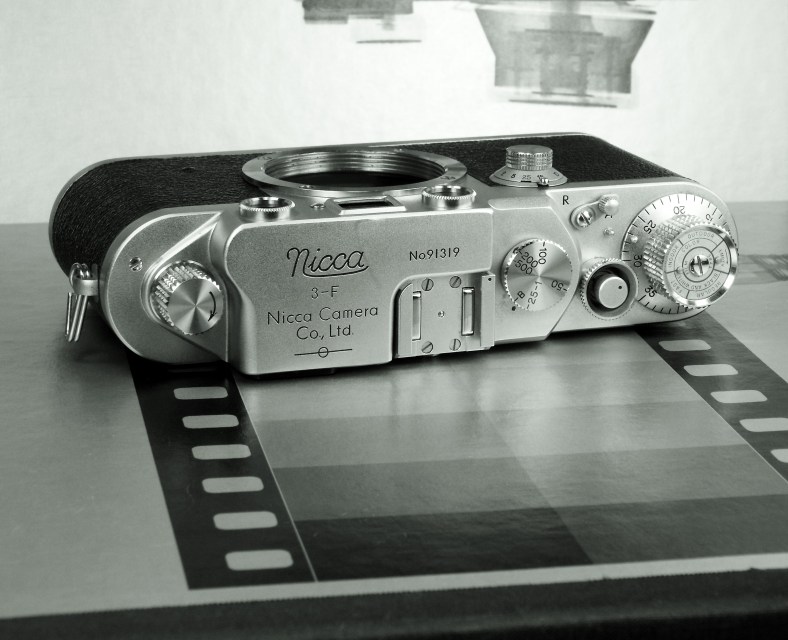
The business side of the 3-F. Traditional layout of the controls… this was Nicca’s last model with the knob film advance (they did produce this model with a film advance lever in late 1957).

Where’s the connection with Yashica? In May 1958, Yashima (pre-Yashica) purchased the Nicca Camera Company which by some accounts was struggling and near bankruptcy. We’ve yet to find proof of the bankruptcy part of this narrative but we will continue to pursue it. Yashima, soon to be Yashica, wanted access to Nicca’s technology, design and small camera manufacturing abilities as Yashima lacked experience in 35 mm camera production. We’re sure there was some desire to acquire Nicca’s focal plane shutter technology as Yashima for the most part only made TLRs (just released an 8 mm movie camera and the Yashica 35). Nicca produced two more models(?) under its own name before Yashica released the Nicca-Yashica YF in 1959. Yashica quickly stopped making rangefinder cameras with interchangeable lenses by 1960. We have always found it to be a bit odd but rangefinders with interchangeable lenses were quickly being pushed aside by 35 mm SLRs for all angles… including Yashica with its Pentamatic ’35’.

What’s the relationship with the Pentamatic? The Pentamatic was more than likely designed in the early part of 1959 and may have been originally a Nicca design (more of that later). Distribution of the Pentamatic occurred in the spring of 1960 with a widescale release and advertising by June 1960 (in the US). The Pentamatic was Yashica’s first 35 mm single-lens reflex (SLR) camera. If featured a focal plane shutter with a top speed of 1/1000th of a second. Nicca’s knowledge was directly used in the Pentamatic.
dscf2636

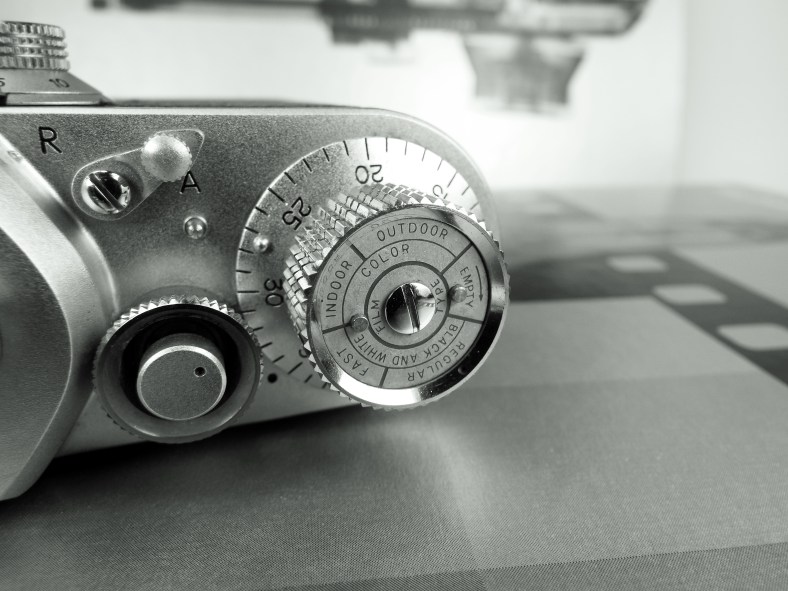
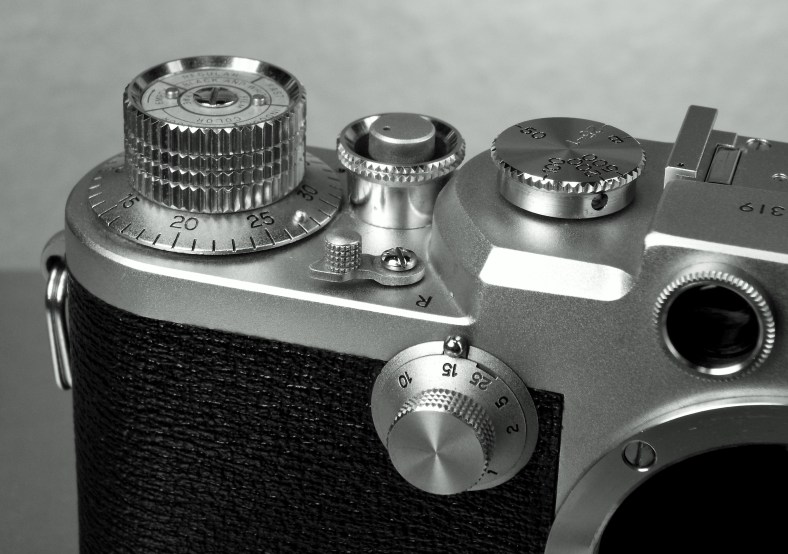
Exposure counter and film reminder dial.
dscf2632

Close-up of the slow speed knob.

It appears that when Yashima purchased Nicca in 1958, there wasn’t an immediate transfer of the company’s assets to Yashima. Instead, Nicca Camera Company became Taiho Optics (or Optical) a subsidiary or new company of the Nicca-Yashica amalgamation. Mr. Ushiyama, founder, and president of Yashica received council that it was not in Yashica’s best interest to proceed with the merger (as the decision to acquire Nicca was made in haste). Instead, Taiho Optics would go on to produce some of its own lenses and lend support and design experience (and personnel) to Yashica. Why? Yashica wanted to build a 35 mm SLR and Nicca was an important stepping stone on that path.

Thanks for your visit… please feel free to leave comments.

Chris & Carol
New Pentamatic Brochure

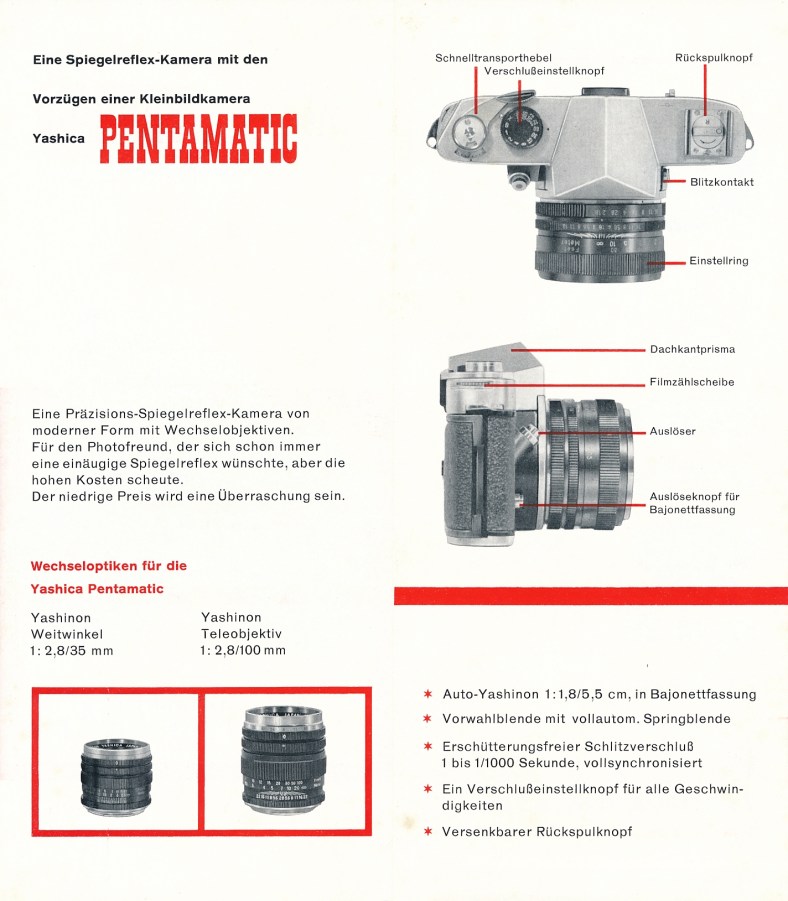
Recently we’ve come across a nice Yashica Pentamatic sales brochure from Germany. It looks to have been printed around early 1961 as another brochure that was with it (same style) is for the Yashica Rapide camera and it was introduced in 1961.

IMG_20160902_0005

Yashica sales brochure for the Pentamatic. Nothing new about the Pentamatic is noted… probably came out in early 1961.

What is surprising to me is that only two other lenses are shown in this brochure besides the standard 5.5 cm f/1.8 normal lens. Surprising because by early 1961 Yashica had at least three other lenses for the Pentamatic that we are aware of. The 35 mm f/2.8 and the 100 mm f/2.8 pictured are fantastic lenses designed and built for Yashica by Tomioka Optical of Tokyo. It is possible that in Germany the other lenses were not available in 1961. Just a guess.

IMG_20160902_0006

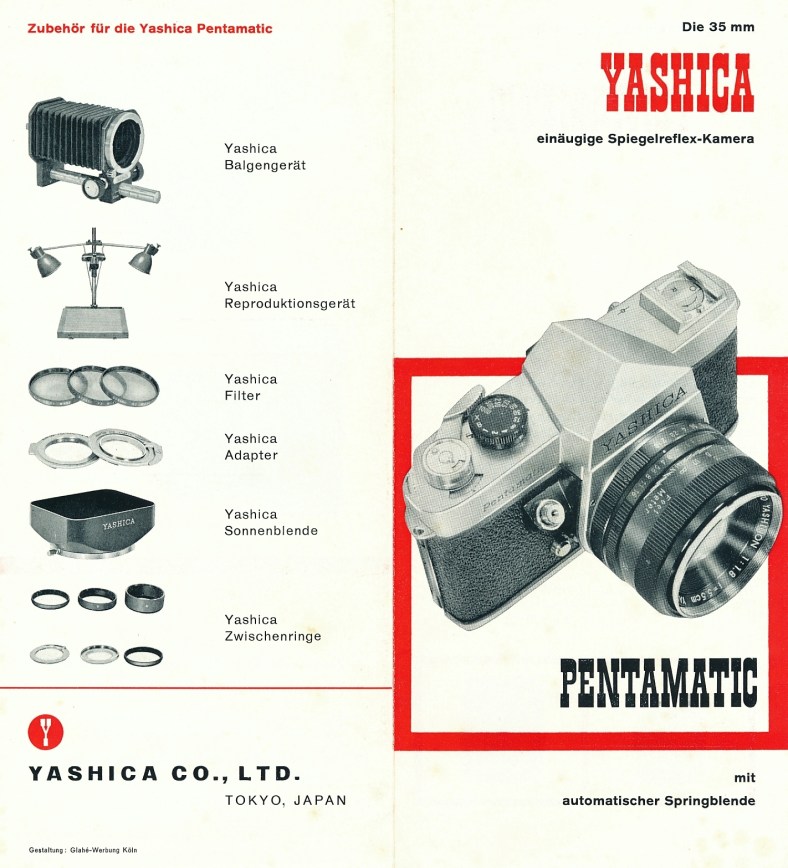
Full front and back cover scan of the brochure. The back cover shows various accessories available for the Pentamatic.

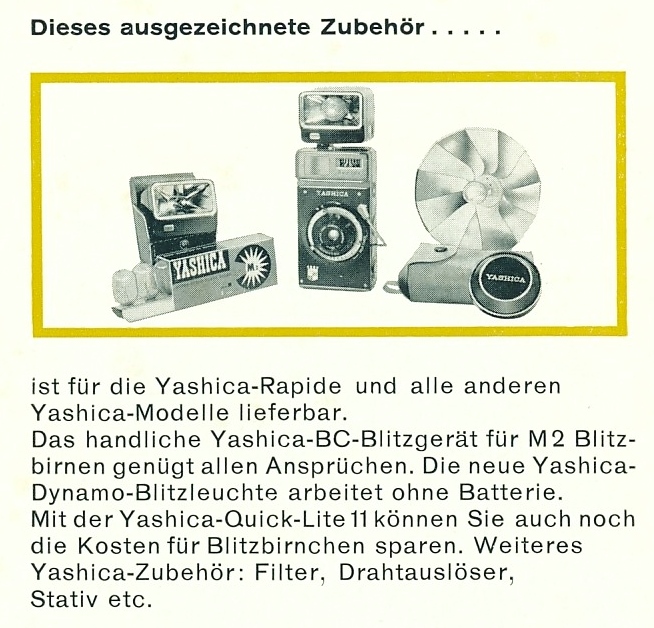
The Yashica Rapide brochure pictures two different flashes for the Rapide. The one on the right of the camera is identified as the Yashica Quick Lite 11 (or is it II)? Not sure on these as we’ve yet to find them in another brochure.

IMG_20160902_0009

Scan of the back cover of the Rapide brochure showing two flash units for the Yashica Rapide camera. One identified as the Yashica Quick Lite 11 (???).

Prior to seeing this brochure, we were not aware of Yashica branded flashbulbs. We would love to find those and add them to our collection. Hint hint!

Thanks for the visit!

C&C