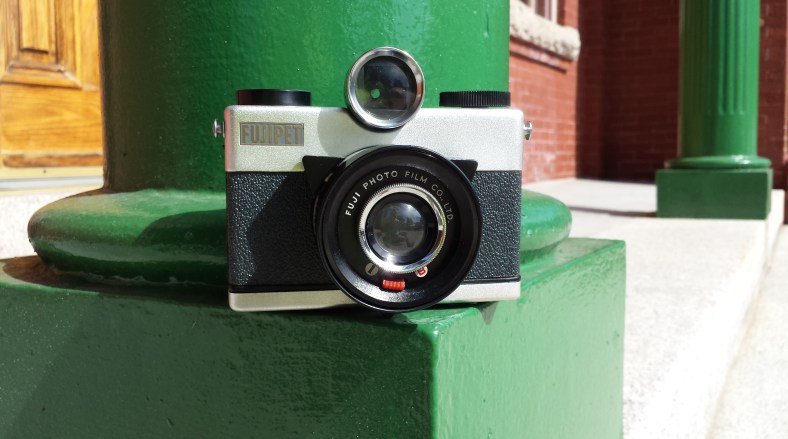
Fabulous Fujipet!

I know…

I know… we’ve gone a bit overboard with all this “Fujipet Thing”. One post after another… posts in flickr and posts on our blog (which is supposed to be about the Pentamatic)! We just can’t get enough of our little pet.

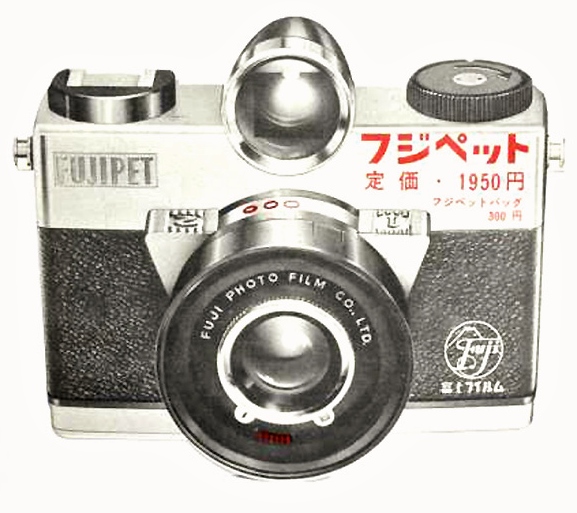
I imagine some of this has to do with the Fujipet being considered as a toy camera by many citing the plastic lens and simple operation as the basis for their statements. As best we can tell, the original idea behind the Fujipet was to design an attractive and quirky camera that would allow novice photographers to experience the joys of photography… medium format photography with large 6 x 6 cm negatives that enlarge nicely to let’s say 5 x 5 inches. The original brochures and the instruction book clearly point out that the Fujipet was designed for women and children to experience “picture taking” without lugging around pounds of equipment and learning how to read an exposure meter or focus. Point and shoot as they say.
DSCF1966

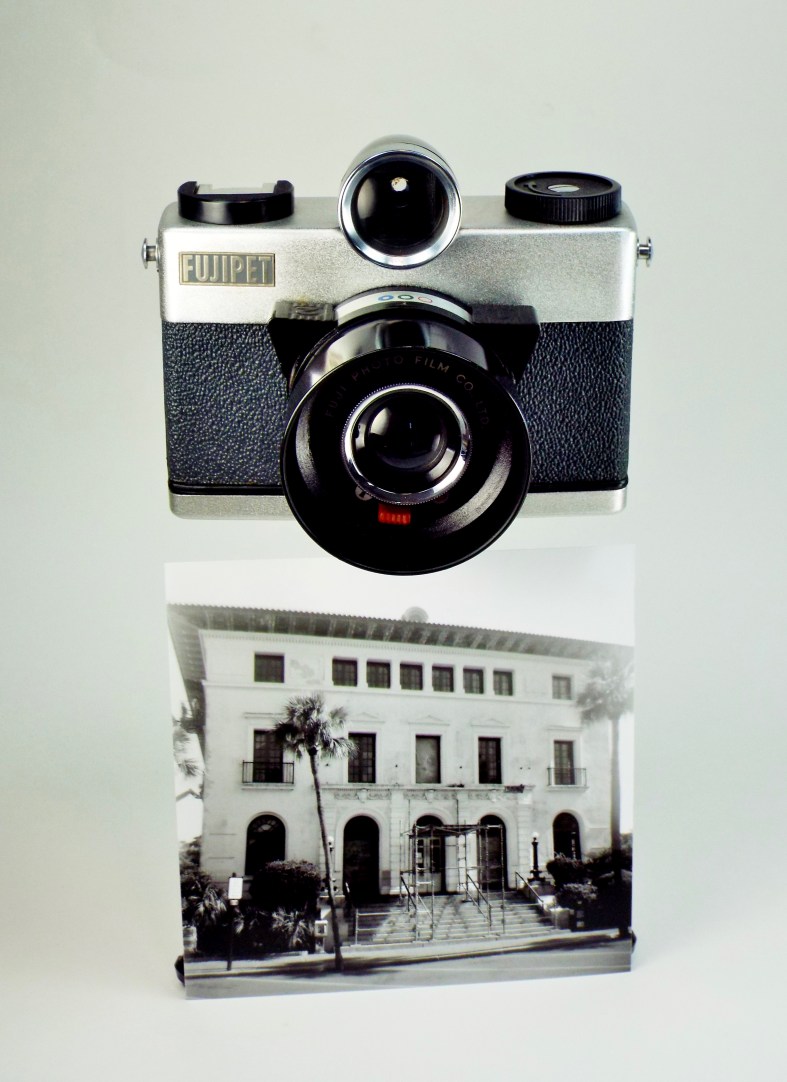
The prints may not be on par with more expensive medium format cameras but they’re not horrible either. The softened edges of the image help to direct the eye towards the center of the picture and gives a somewhat vintage feel to the shot.
DSCF1962

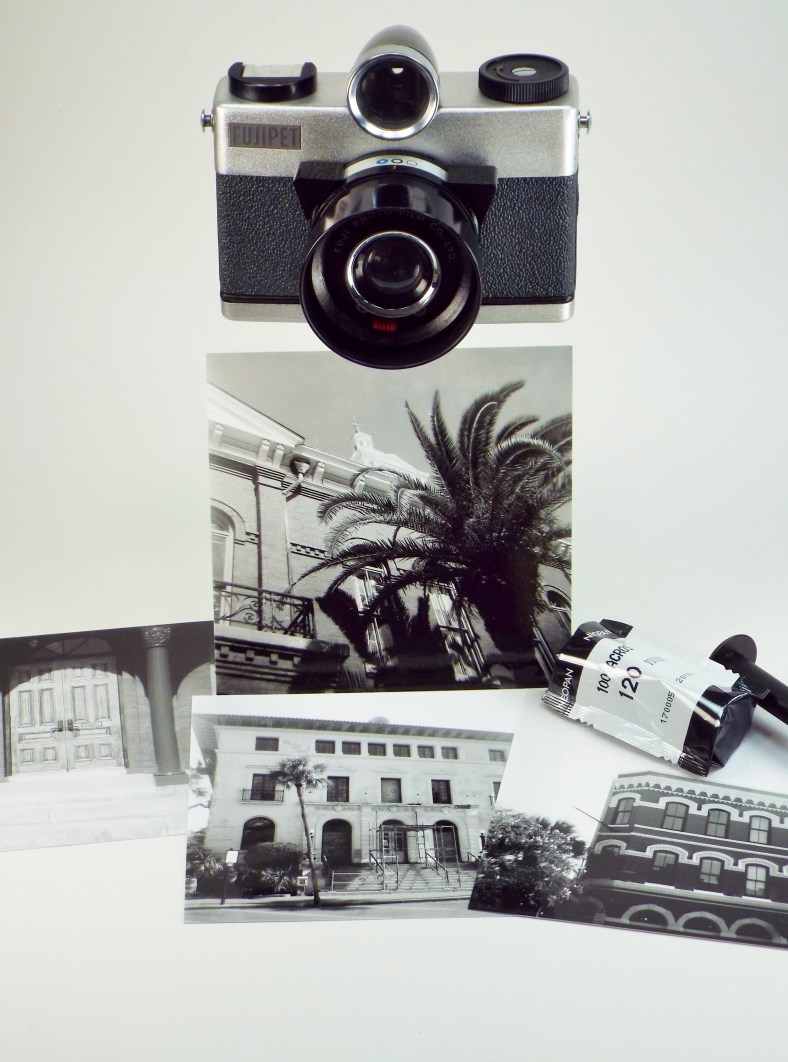
For basic 6 x 6 cm photography we completely recommend the Fujipet as a vintage camera that’s worth taking a look at. By the way, we used Fujifilm Neopan 100 Acros 120 film and had the film developed and printed with http://www.thedarkroom.com


Having used the Fujipet in the field I can say that it will become a part of our picture taking gear… its ability to capture quality images without a lot of fuss makes it an attractive alternative to more expensive equipment.

Thanks for your visit… as always, we encourage comments and likes!

C&C
Fujipet Fun!

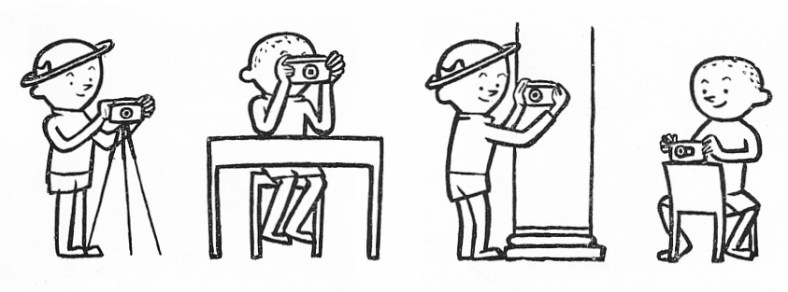
These fun guys are part of the Fuji Photo Film’s instruction booklet for the Fujipet.

IMG_20160812_0021

From 1958 or so. Great ways to steady your camera!

IMG_20160812_0025

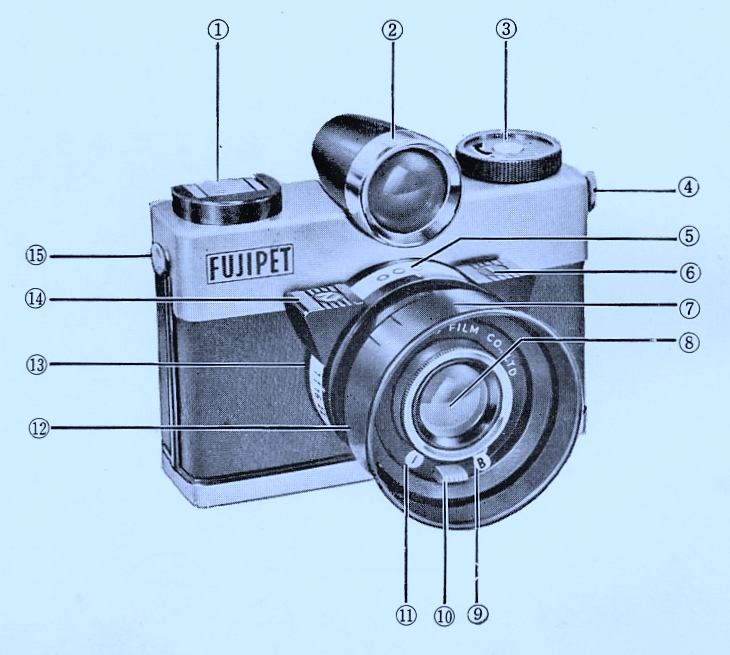
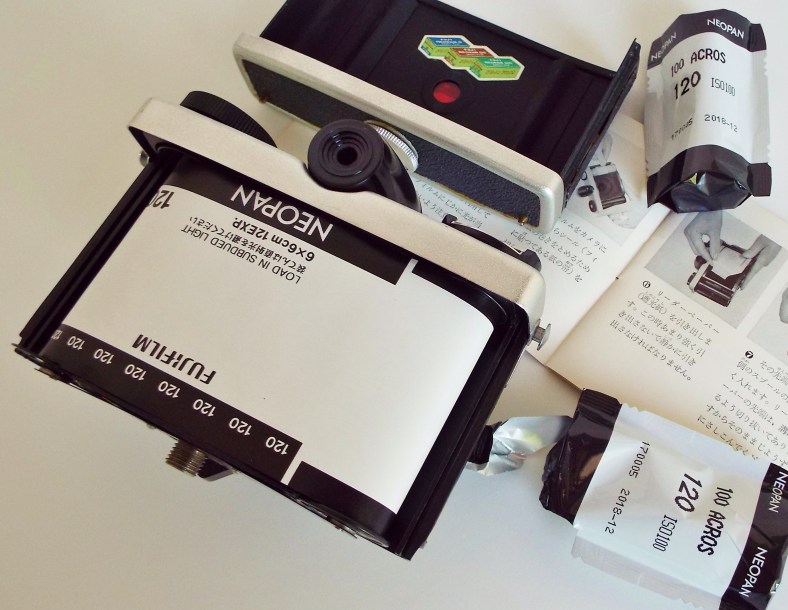
Parts of the Fujipet.

Still waiting on our prints to be developed… stay tuned! And here’s one of the first images from our new Pet!

20280011

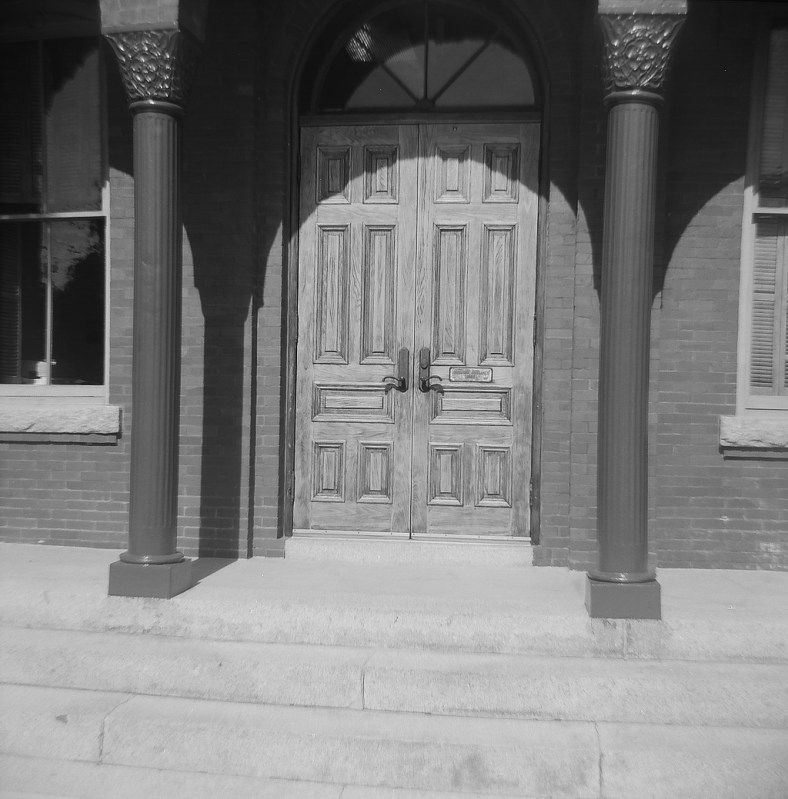
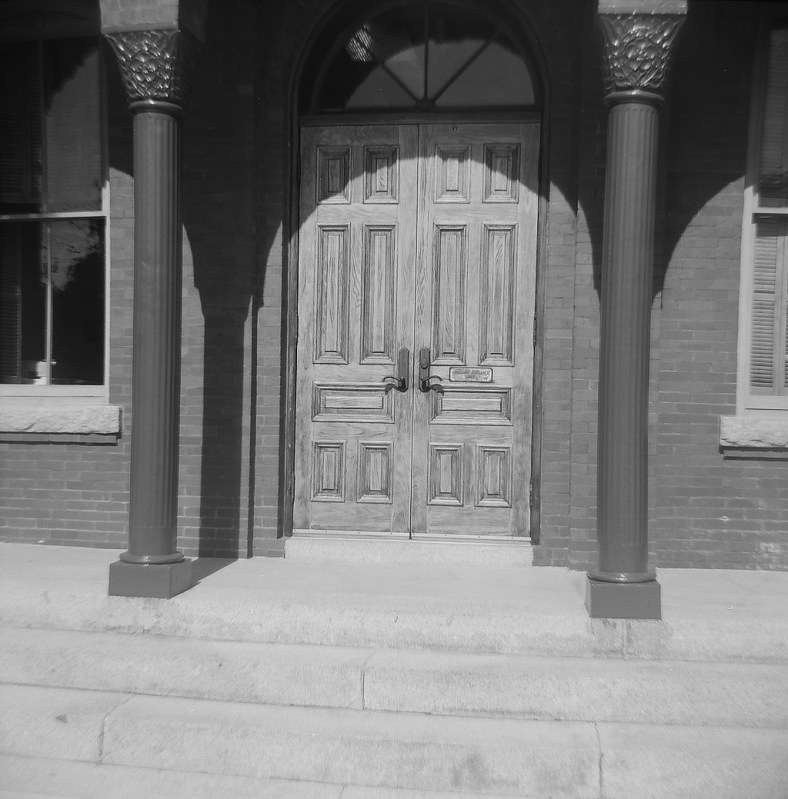
Strong late morning Florida sun in August. Lots of strong shadows and high contrast. The Fujipet handled it very well! The film used was FujiFilm Neopan Acros 100 black and white negative film. The columns are a very deep green and the door is a medium brown. I love the detail in the doors and the slight edge distortion of the frame. This is the actual scan of the 6x6cm negative with no post production.  

We sent the film to be processed at https://thedarkroom.com

More to come on another blog.

Thanks, C&C


Fuji Petting with our Fujipet! New Pet Pics Posted…

The goal is to take our 1958 medium format camera from Fuji Photo for a little picture taking. We’ve loaded some fresh Fujifilm Neopan 100 Acros (in days past it was Neopan SS) into the Fujipet and see how it does after 58 years of non use. We’re very curious about the “look” of the images. If you don’t know much about the Fujipet, please take a stroll through our archives for a little catch-up.

DSCF1741

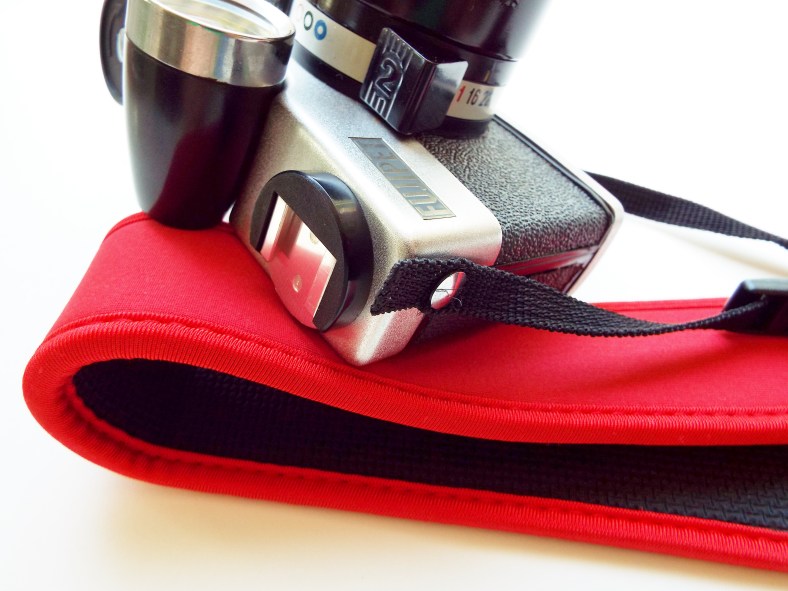
1958 Fuji Photo Fujipet with its new strap. A simple modification to the Canon strap made it perfect for this lightweight Fuji. We have the original vinyl (leather?) strap for the Fuji but it’s still sealed in its original package. No reason to ruin it by using it LOL.

20160815_100355

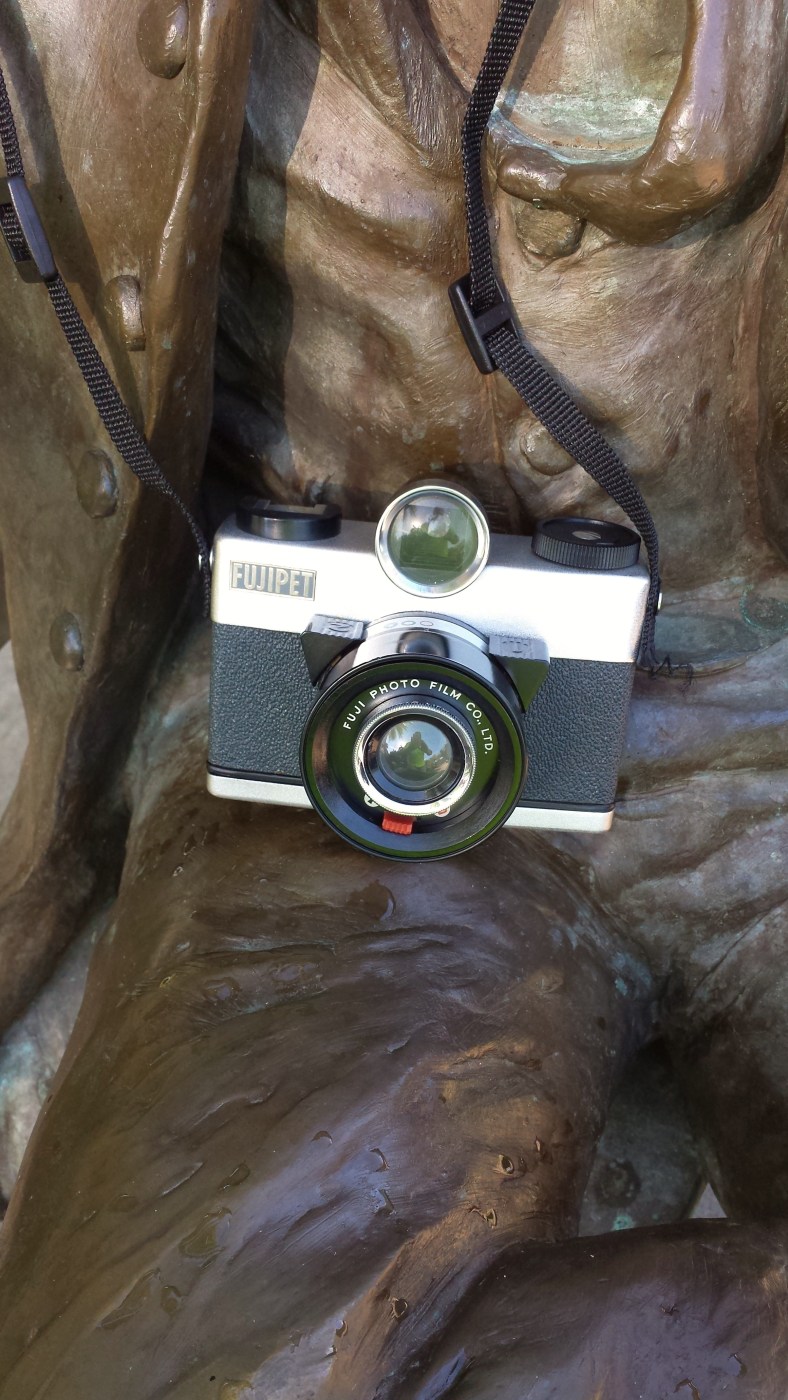
The Pet as seen on a local legend (Mr. David Yulee).

20160815_102312

Hoping the bright Florida sunshine was just right for our first test of the Pet.

And just how did the Pet perform?

DSCF1962

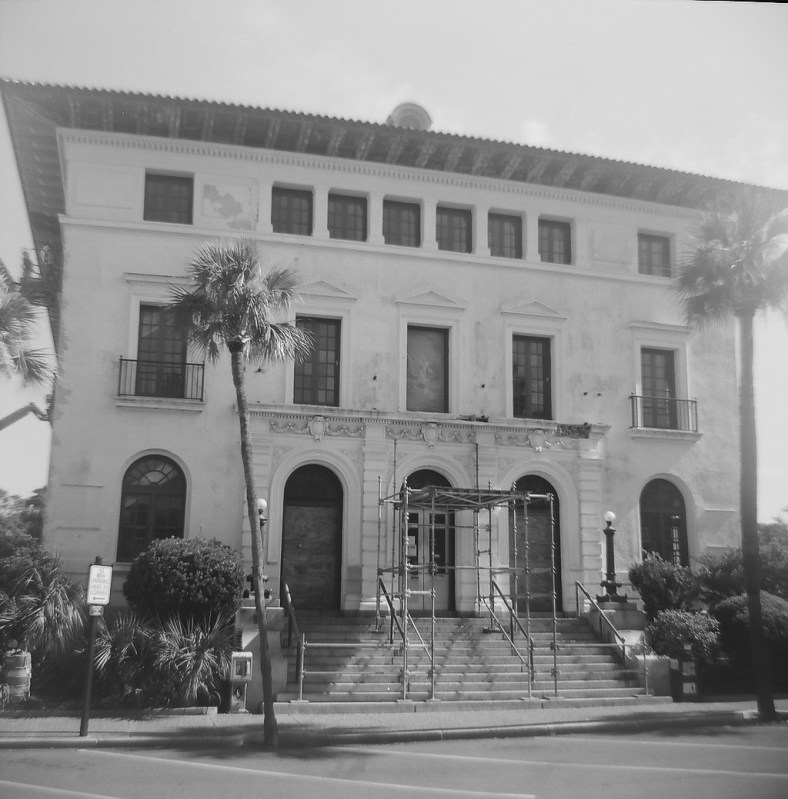
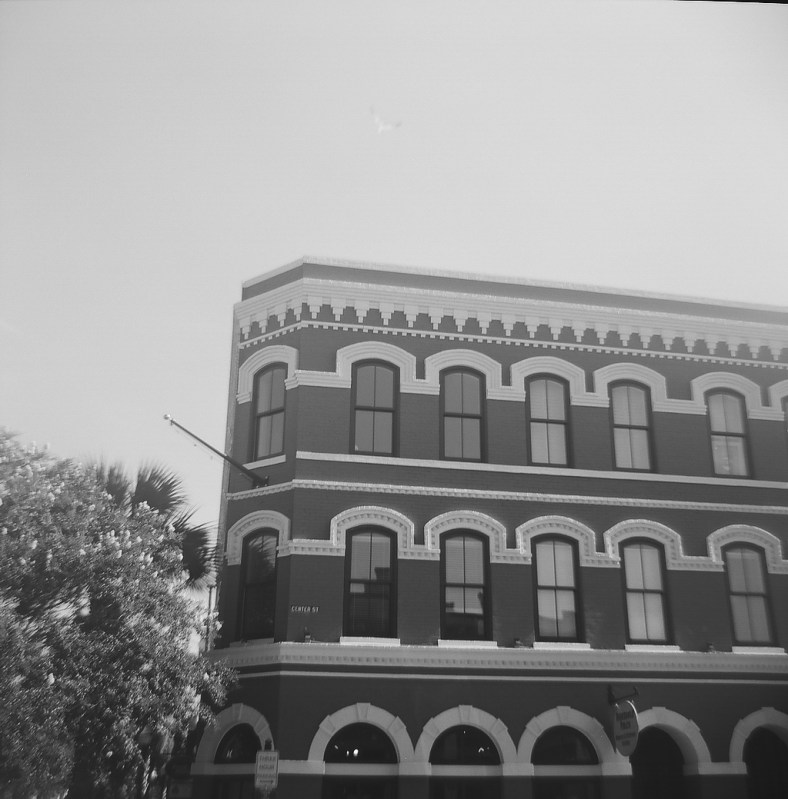
The entire roll of 12 exposures came out just great! Here’s a sample of some of them. The Pet gave a special look to the images. We had ‘The Darkroom’ print up these four images in their true square format (here they are 5 x 5 inches).

Well as you can see the pictures came back from the outing with the Fujipet. We couldn’t be more thrilled with how they came out! The lens was actually super sharp (all things considered) and the almost 60 year old plastic lens had some nice contrast to it too. We can’t say enough about Neopan 100 Acros – exceptional film!

28477728874_65f641d3ae_o

28495471114_8a530a1d53_o

28531727084_f98756bf81_o

29344870275_cb1d30bbfe_o

If you can get your hands on a Fujipet then do so. There’s almost always one or two listed on the Japanese online auction sites. Be careful though! Japan (like my Florida) is a very humid climate and that can wreck havoc on old metal cameras and plastic lenses. Ask questions of the sellers and look very closely at the images of it. By the way, in 1958 when the Pet’s were selling wildly in Japan, they went for 1950 yen or about just under $6. You’ll pay a little more than that today but a good one can still be found for under $100 and questionable ones for $10 to $20.

Thanks for your visit! Comments are always welcome.

C&C ^.^

More Fuji Photo ‘Fujipet’…

We’re about ready to give our little Pet a work out with some fresh Fujifilm Neopan film. Probably the first time this little beauty had film in it since the 1960s!

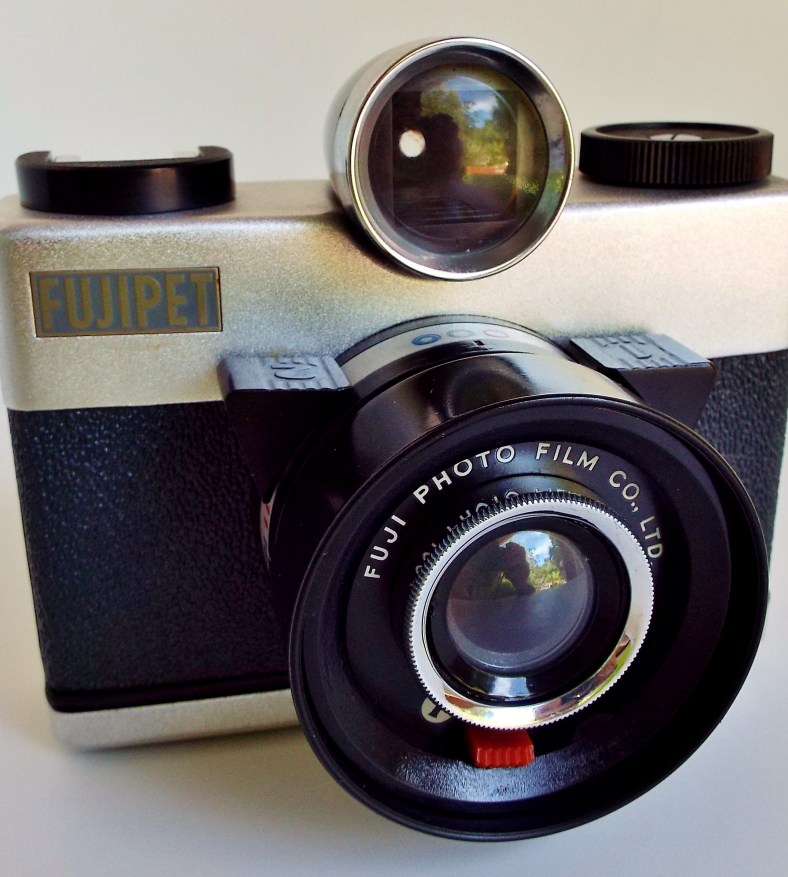
It has a fixed focus plastic lens with a focal length of 70 mm and three aperture settings… f11, 16 and 22. Shutter speeds are bulb and 1/50 of a second. She weighs in at an impressive 288 grams with film!

We’ll be sure to post the images here!

DSCF1708

The Fujipet getting its first roll of film in decades! A fresh roll of Neopan (SS) Acros 100 black and white negative film. Can’t wait to see what the Pet will do!

DSCF1711

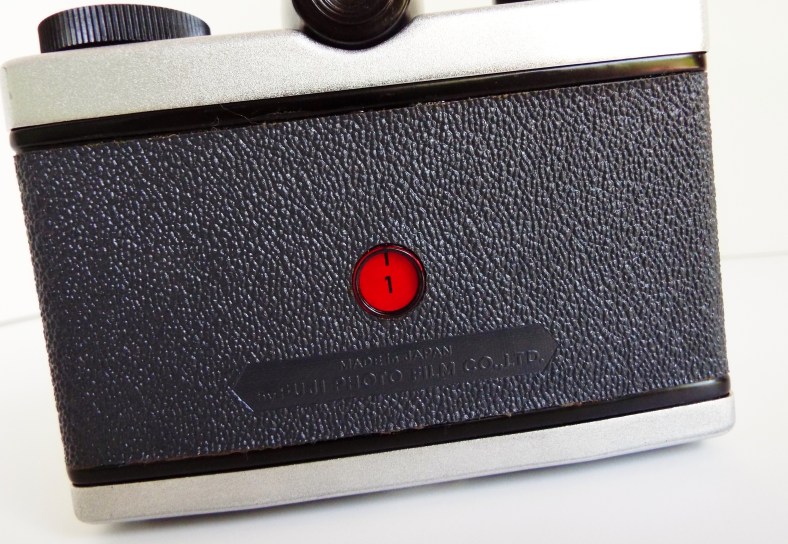
Exposure number one ready to go!

DSCF1713

Ready for some picture taking!

Many thanks for your visit! Please let us know what you think and if you want to share something with us please feel free to do so!

Chris and Carol


Pentamatic Instruction Booklets

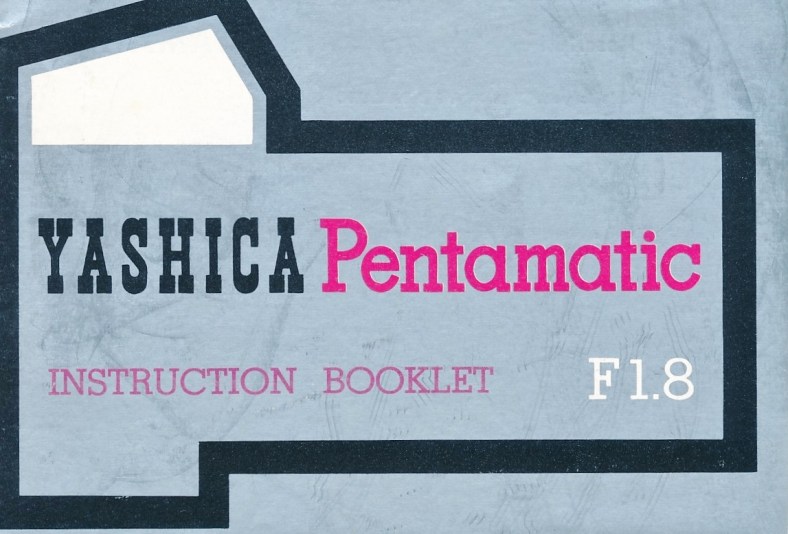
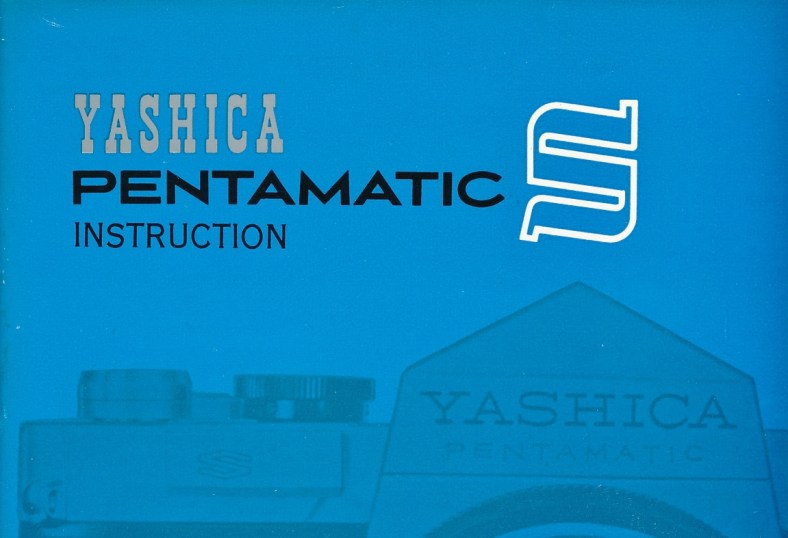
Yashica has always called their user manuals ‘instruction booklets’. Here is a sample of the front and back covers of the Pentamatic ’35’ and the Pentamatic S booklets. These are seldom seen in their proper colors and with this amount of detail. The first booklet’s design draws its inspiration from the box that the camera comes in, which is often referred to as the presentation box. Same colors and same pentaprism design.

IMG_20160812_0016

Original Pentamatic ’35’ front cover.

IMG_20160812_0017

Pentamatic ’35’ back cover.

IMG_20160812_0012

Pentamatic S front cover. Of course this booklet is simply referred to as ‘instructions’. It is one of the few that does not use the word ‘booklet’.

IMG_20160812_0014

Pentamatic S back cover.

We do not have the Pentamatic II instruction booklet and would love to acquire one. If someone has a clear copy of one we would love to see it.

Thanks for the visit! As always, please share with us your likes and possibly dislikes about our blog. We are always looking to expand our knowledge of this often unseen camera from Yashica.

Chris & Carol

Pentamatic S

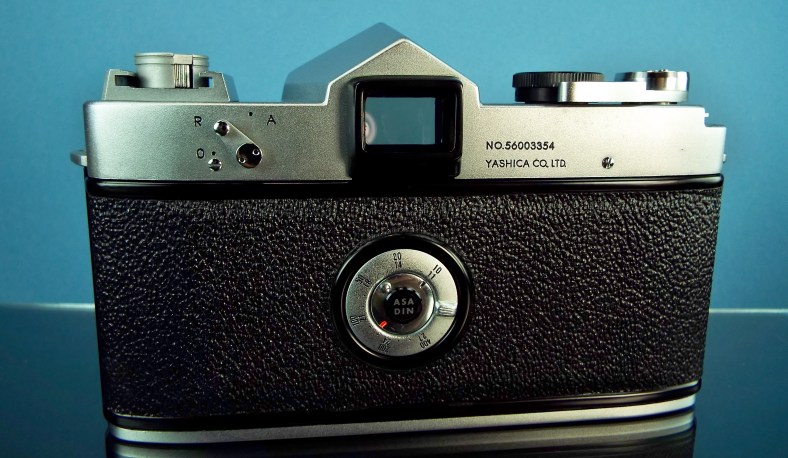
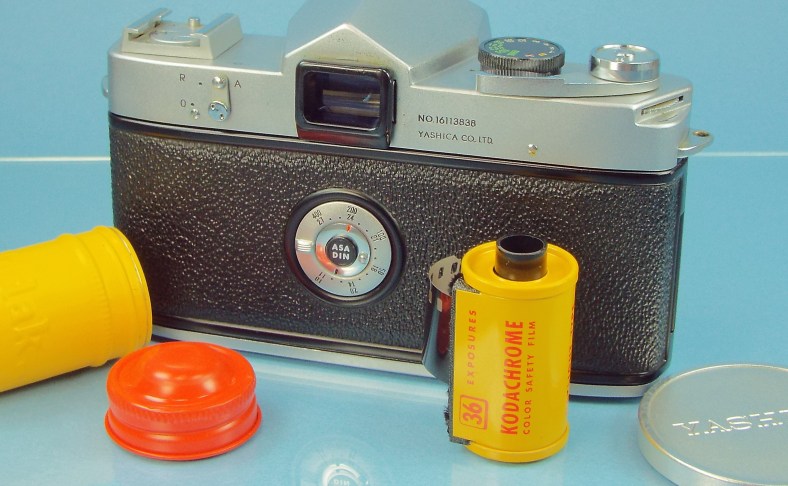
The Pentamatic ’35’ went into production starting in December 1959. Our best guess as to how many were built is just that… a guess based on body serial numbers. The original Pentamatic has a rather easy to decode serial number as it uses the year, month and sequential production number in the overall serial number. An example would be… 56003354. That serial number decodes to ‘5’ = May, ’60’ = 1960, and ‘03354’ = number 3,354 th made since December 1959. Later serial numbers for October, November and December would be 116015100 which would be ’11’ = November, ’60’ = 1960, and ‘15100’ = the 15,100 th made since December 1959.

009

Pentamatic ’35’ made in May 1960 and it is the 3,354 th made.

Staying on our best guess path, it appears that about 16,000 Pentamatic ’35’ bodies were built during the approximately 15 month production run. So that brings us to the Pentamatic S which was the last version of the Pentamatic series of cameras. The serial number date coding theory hasn’t been fully been decoded as there is way too few in our database.

006

Here’s a Pentamatic ’35’ that was built in January 1961 and was the 13,838 th made since production began.

20150110_142809

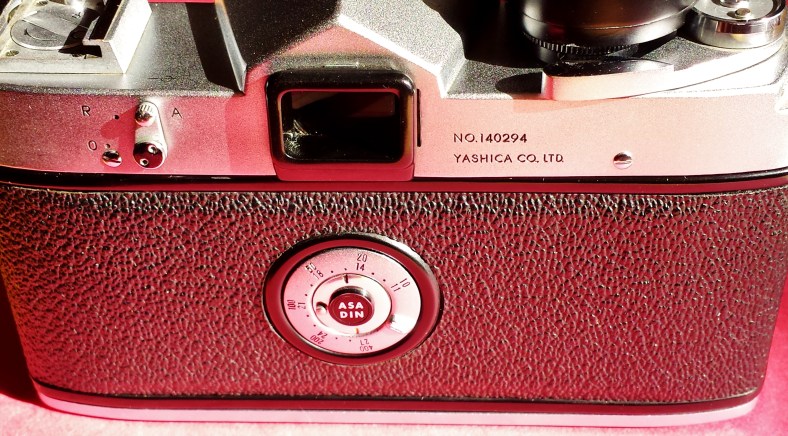
The Pentamatic S back view. Our guess, and it’s a big guess, is that the model S body serial “might” be ‘1’ = 1961, ‘4’ = April, and ‘0294’ = 294 th made.

20150110_132214

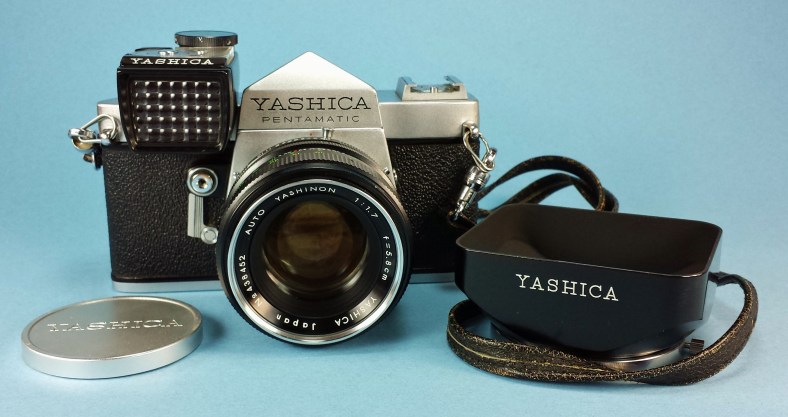
Pentamatic S front view all decked out. The lens pictured is the standard lens for the Pentamatic model II.

Thank you for your visit and as always, please share your views with us and please, if we’ve made a mistake correct us! Our goal is to provide the most accurate data on the Pentamatic series.

Chris and Carol

Hello and Welcome! Update 2.2.2017

Welcome to our blog about a very simple camera made by a company in Japan. We (Carol and Chris) are “Yashica Fanatics”, so it was a natural for us to start this blog dedicated to one of Yashica’s least known cameras. Most film camera aficionados might have some basic knowledge of the Pentamatic. They may have seen it in passing… usually fuzzy images on the web with often misleading info to boot. It’s a rather odd looking SLR with just enough quirks to make it interesting (to us at least). It was never a big time seller for Yashica but its true value was as a platform for innovation and invention for the designers at Yashica.

20150107_084533

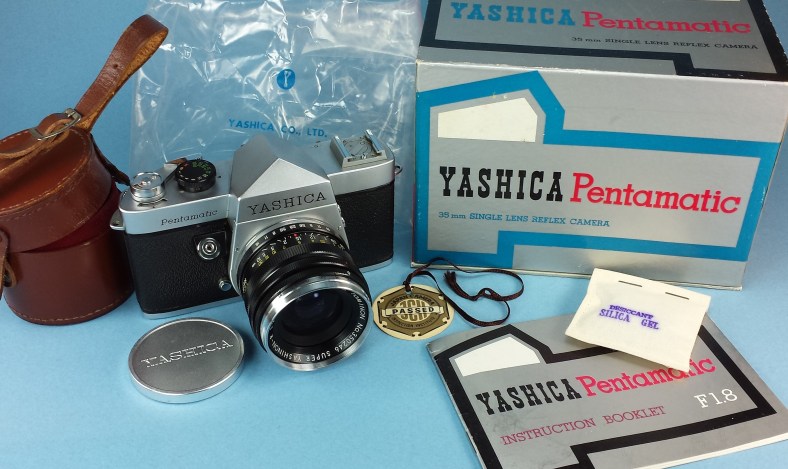
We fell in love with the Pentamatic’s clean lines and “modern” design. The presentation box was as unique as the camera itself.

Our “goal” here at the ‘Yashica Pentamatic Fanatic’ is to expose as many people as we can to the Pentamatic and to the company that conceived it. Please feel free to add to our knowledge base… if something is incorrect please let us know. If you know something about it or any of the topics we blog about… once again, please share it! We would love to here from you!

Another goal is to share our passion for photography. It’s been a part of our daily lives since we were born. I can’t remember the first picture that I ever shot – it probably was a mess – but I can remember one of the most special pictures I ever took – a picture of my parents.

29294510190_444dcd1602_o

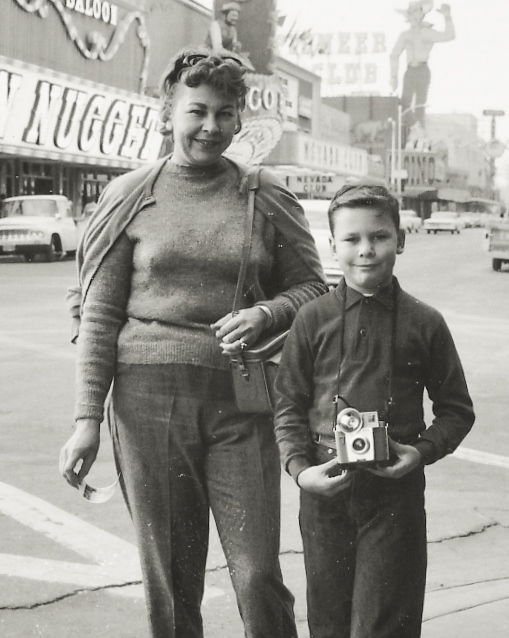
My mom Mary and me in of all places, Vegas. We were on a big family vacation from New York to California – Christmas 1960. My dad Paul took this picture. Yep, my first camera – a Kodak for Christmas (notice that I was holding it up to show it off). My mom was holding a freshly taken Polaroid from my dad’s Pathfinder 110 Polaroid. Pictures – cameras – family.

Many many thanks for your visit… Chris and Carol ^.^

Yashica This and That… 8.10.2016

It would appear to the casual follower of this blog that we may have strayed off the Yashima-Yashica path a bit with our recent posts about the Fuji Photo Fujipet and the Shinano Pigeon 35 Model IIB. Yes we have and we’re even further away from current posts about the Yashica Pentamatic series of cameras. Guilty on all counts!

One of the things that attracted us to the Pentamatic 35 mm SLR in the first place was the general lack of accurate information on the web about the “mysterious” and seldom seen Pentamatic. Our goal was to enlighten the web with some new and hopefully correct info about Yashica’s first single-lens reflex camera which was released in the first half of 1960.

Our attempts to locate a good (and affordable) Pentamatic Model II for our collection have hit financial deed ends… that is to say that occasionally a Model II does come to auction but are going for near record prices in the ¥30,000 range and better! That is an indicator to us on just how rare that model is and why it shouldn’t be passed up by the collector. There is only a slight difference between the two models but in the terms of units sold new, the original Pentamatic 35 outsold the Model II at a 3 to 1 ratio or more. The Pentamatic S which was the last in the series, isn’t even advertised in the mainstream photography magazines of the early 1960s. In fact, magazine ads from as late as June 1962 were still running ads for the Pentamatic 35 and nothing for the Model II or S. Yashica pulled the plug quickly on the series and adopted the M42 mount for all future 35 mm SLRs.

27356135700_b0c5ef23fe_z

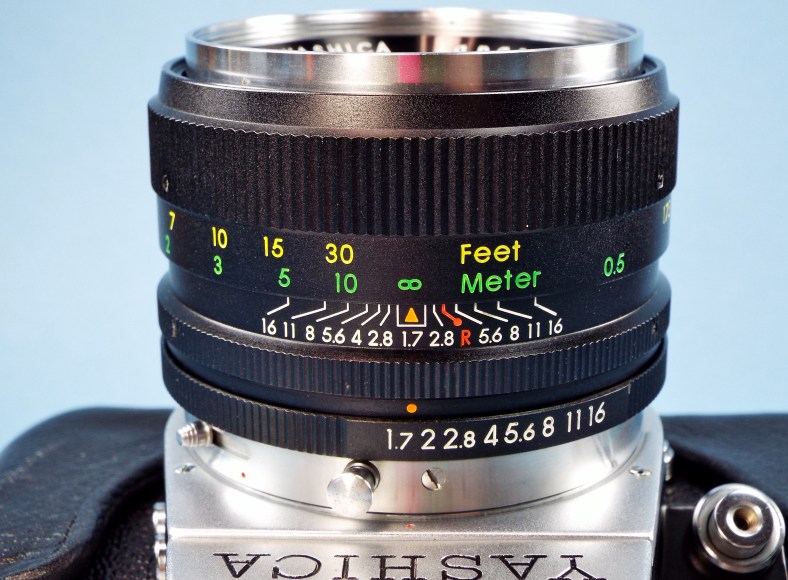
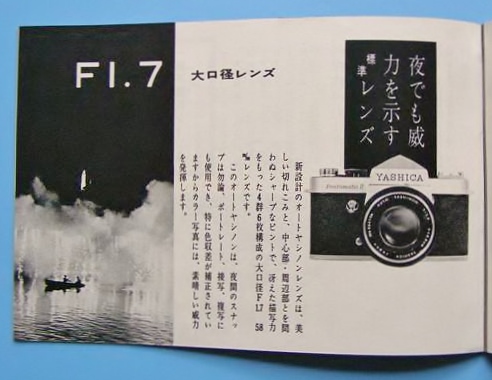
The biggest change from the original Pentamatic 35 was the change over to a new lens (made by Tomioka Optical). The first Pentamatic came with the 5.5cm f/ 1.8 lens with exclusive Pentamatic bayonet mount. The Model II was fitted with the rather odd 5.8cm lens and a slightly faster f/ 1.7 aperture. It still held on to the bayonet mount.

017

The “new” Pentamatic Model II lens.

Brochure c1961

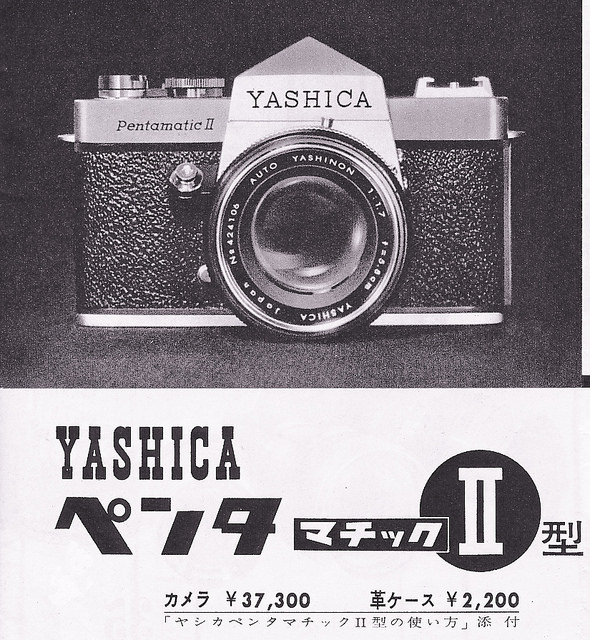
Could it be true? The first sighting of the Pentamatic II in a sales brochure for the Japanese home market.

Thanks for stopping by !

Chris and Carol


More for the Fujipet- ting Zoo…

We were able to scan some images from the Fujipet’s instruction booklet and a scan of the ‘warranty card’ / registration card. If you’ve read one of our previous blog posts about the Fuji Photo Film Company’s Fujipet, then you have been introduced to a rather unique camera from Japan in the late 1950s.

IMG_20160809_0003

A scan of the front cover of the Fujipet Camera instruction booklet. c1958

IMG_20160809_0004

Back cover of the Fujipet instructions. Nice graphic showing which Fuji films to use given the sun conditions of the day.

IMG_20160809_0011

Near the back of the user’s book is this lovely model showing us how to use a flash gun not mounted to the camera’s accessory shoe. The only problem… no direct wire connection.

Here is a scan of the front and back of the warranty / service / registration card that came with the Fujipet.

IMG_20160809_0009

A scan of the front cover of the Fujipet Camera instruction booklet. c1958

IMG_20160809_0008

The reverse of the card where you can tell Fuji Photo the who, what, when and where of your purchase.


A Little More Pigeon Poo…

DSCF1701

It would appear that this Pigeon may be a rather rare version. From late 1952 to early 1953… is this a Model IIA? It doesn’t match completely with the other known Pigeon models.

The Shinano Pigeon 35 was not a groundbreaking camera during its run… it was just a solidly built 35mm viewfinder camera that still works like a charm even after 6 decades of use. Shinano, which had its roots in Suwa, Nagano Prefecture in the early 1950s, would cross paths with another start-up manufacturer from Nagano… Yashima. Yashima would go on to make its first TLR and call it a ‘Pigeonflex’. Shinano faded and Yashima eventually changed its name to Yashica (1958) and the name Pigeon essentially dropped from sight and memory.

DSCF1695

Complete filter set and lens shade from Shinano for the Pigeon 35.

DSCF1699

Vintage view of the Pigeon 35 Model IIA.

More images soon… from the camera! If you would like to know more about the Shinano Pigeon and all things related to Yashima-Yashica twin-lens reflex cameras, please stop by my friend Paul’s amazing website http://www.yashicatlr.com/Pigeonflex.html#pigeon35

Thanks for the visit… Chris and Carol