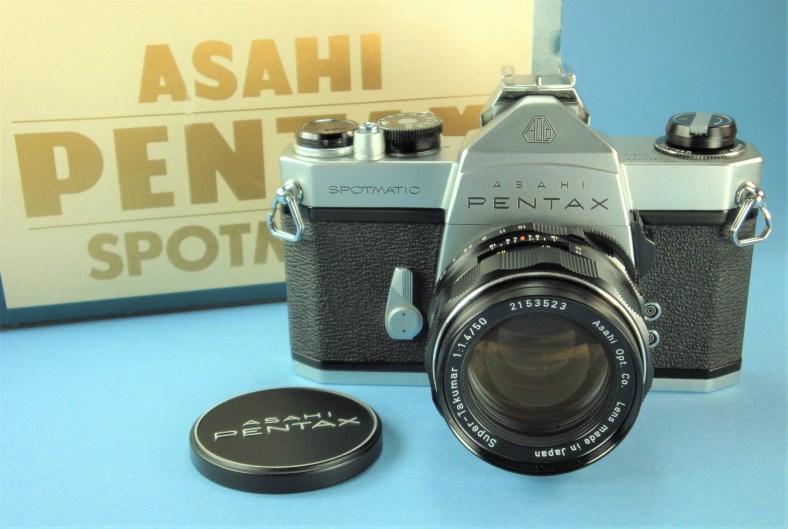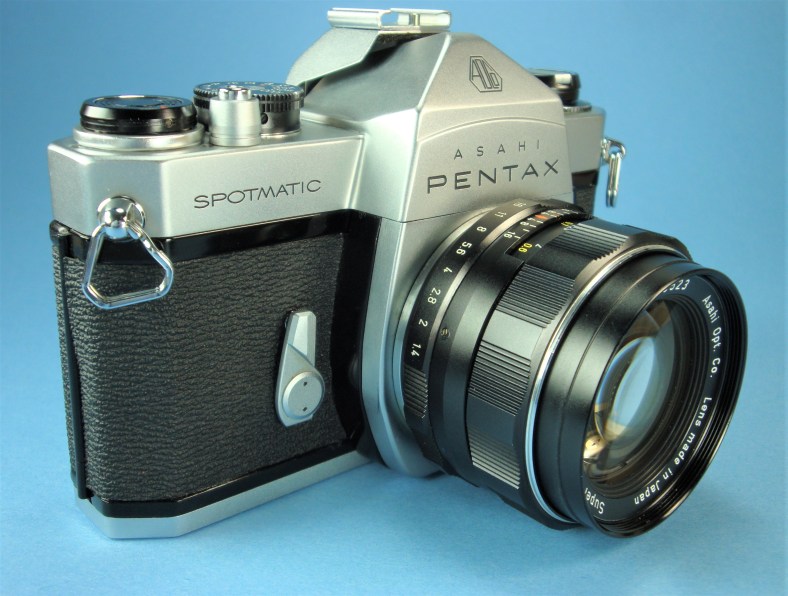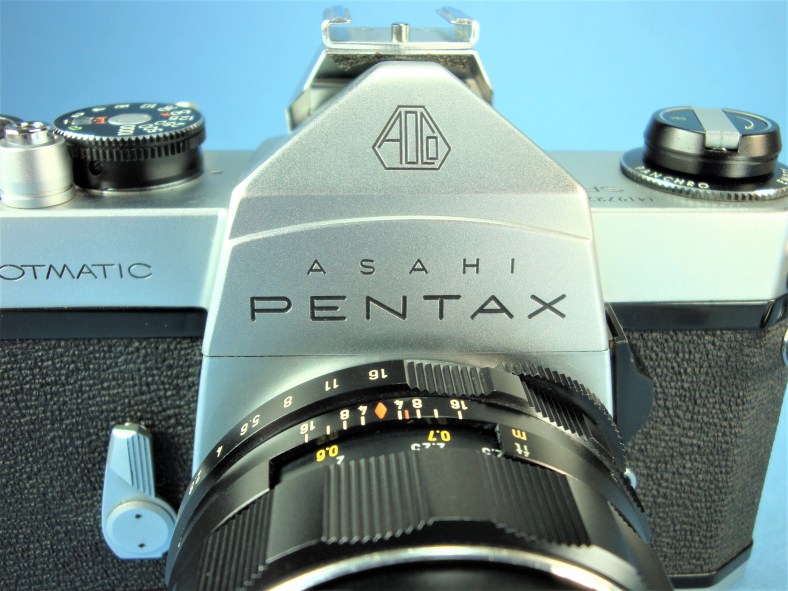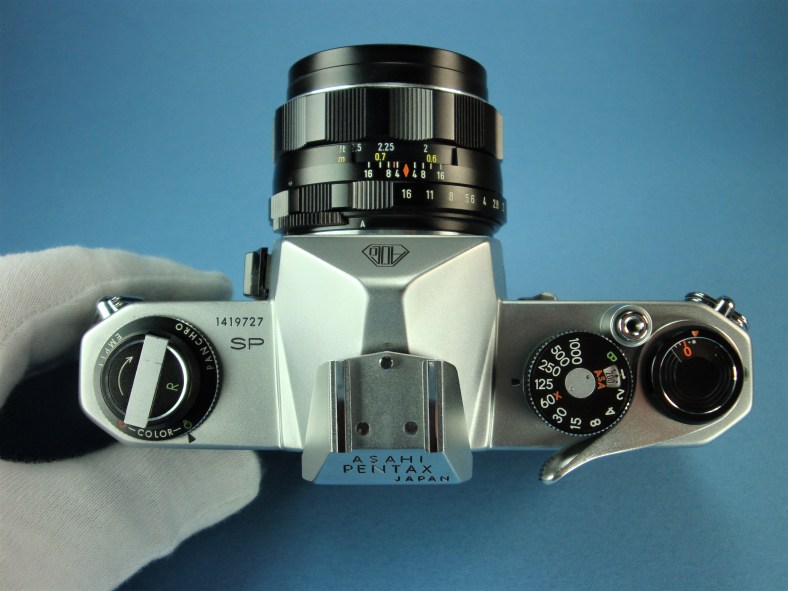
We finally have our proof that the original Pentamatic ’35’ and the Pentamatic II were advertised and sold in the Japanese domestic market. This brochure is dated February 1961 which va…
Source: Pentamatic II Brochure
We finally have our proof that the original Pentamatic ’35’ and the Pentamatic II were advertised and sold in the Japanese domestic market. This brochure is dated February 1961 which va…
Source: Pentamatic II Brochure
I’ve shot far more photographs with 50mm lenses than any other focal length. But switching 50s more often than underwear can become an exhausting and hollow experience. Here’s why my 50s philandering days are done, and how I’ve settled on my ideal. It took me a while to realise, but after something like seven or […]
via The Fall Of The 50s Philanderer (Or How I Found The Perfect 50mm Lens) — 35hunter
ヤシカ
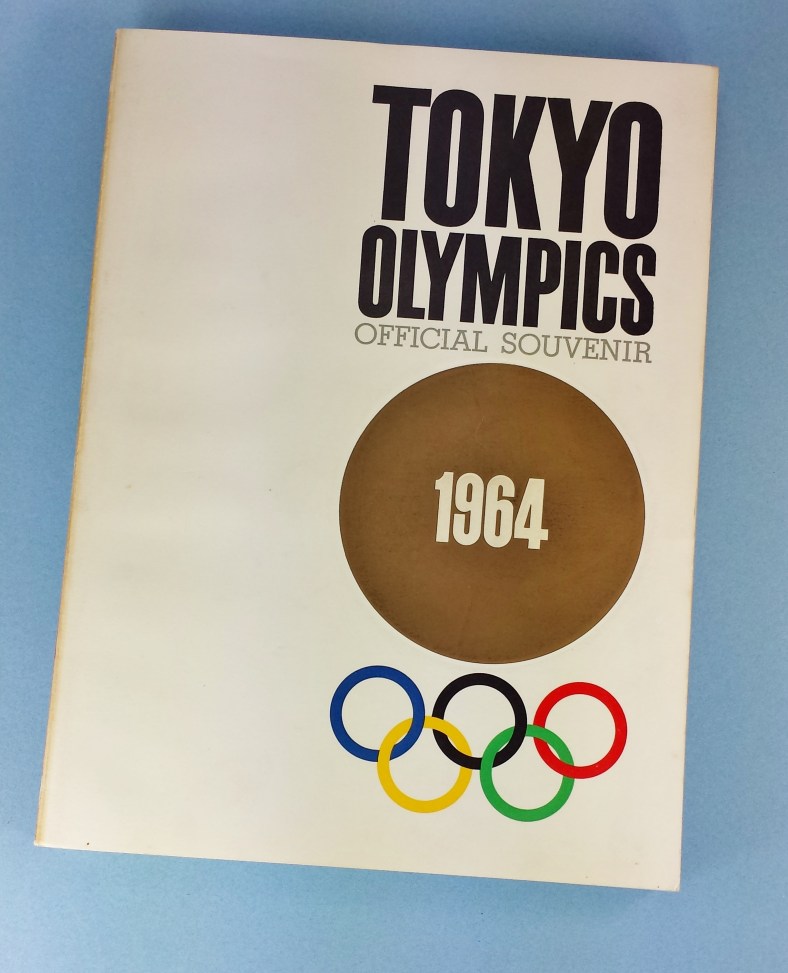
Japan and the summer Olympic Games held in Tokyo.
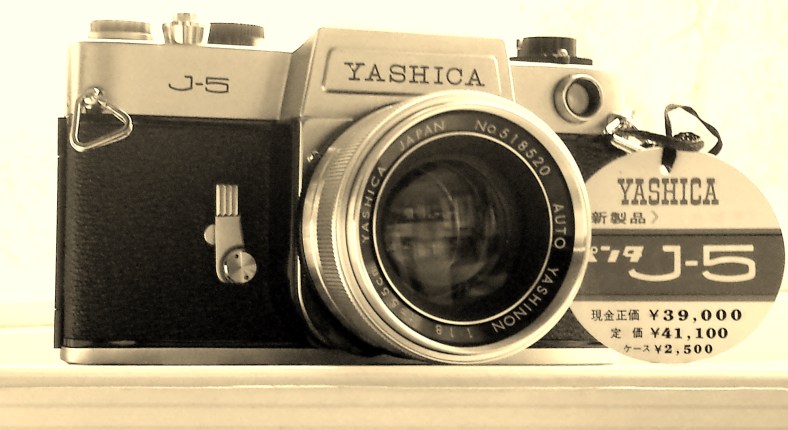
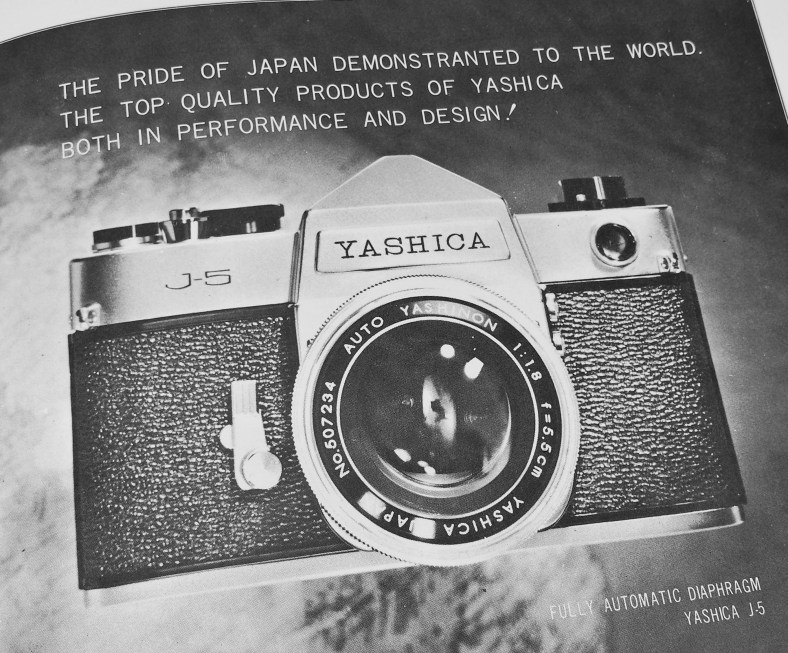
Yashica’s latest in their popular line of SLRs. As it would have appeared in 1964.
The world was coming to Japan for the Olympics and Japan was ready to show the world its best technology and design. The Tokaido Shinkansen made its inaugural run from Tokyo on October 1st and Japan and its technology never looked back.

Fantasy image of our 1964 Yashica J-5 as it would have looked in the camera dealer’s window.

Wonderful souvenir of the Olympic Games.

Yashica proudly shows off its new J-5

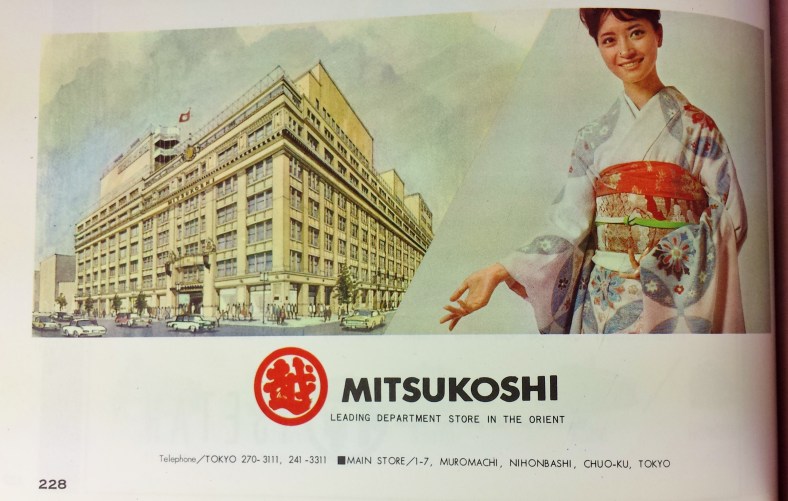
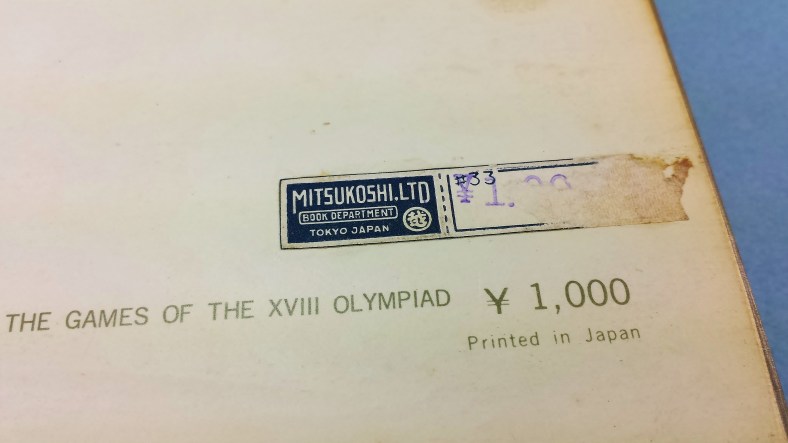
If you’ve been to Tokyo chances are you visited Mitsukoshi (there’s one at EPCOT at WDW, Orlando).

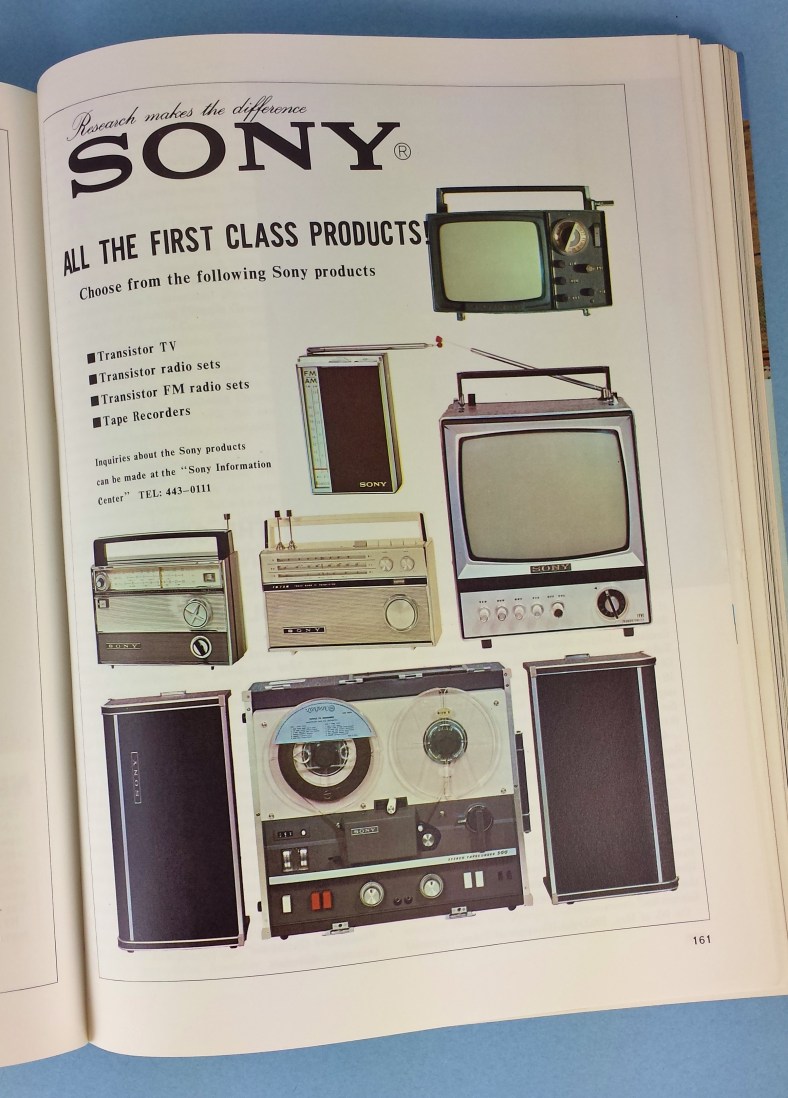
Who hasn’t owned or wanted a SONY!!!

A trip back in time. A time when Japan showed the world what it was capable of.
Thanks for your visit!
Chris

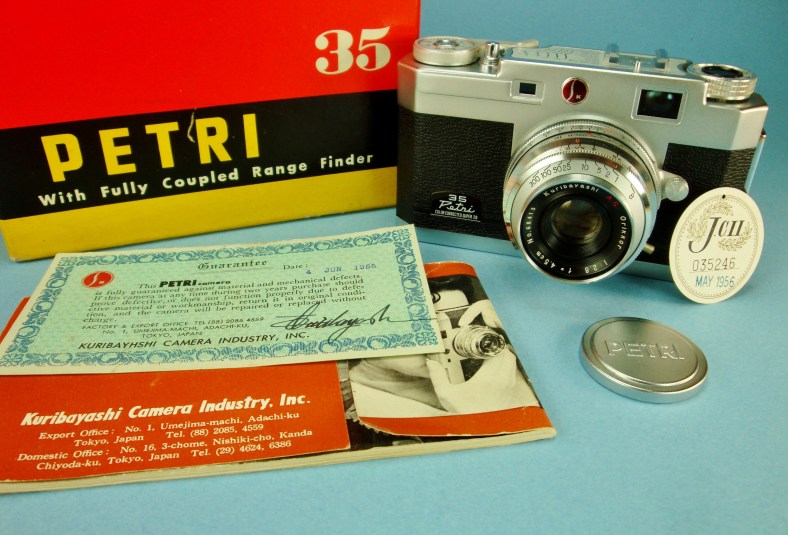
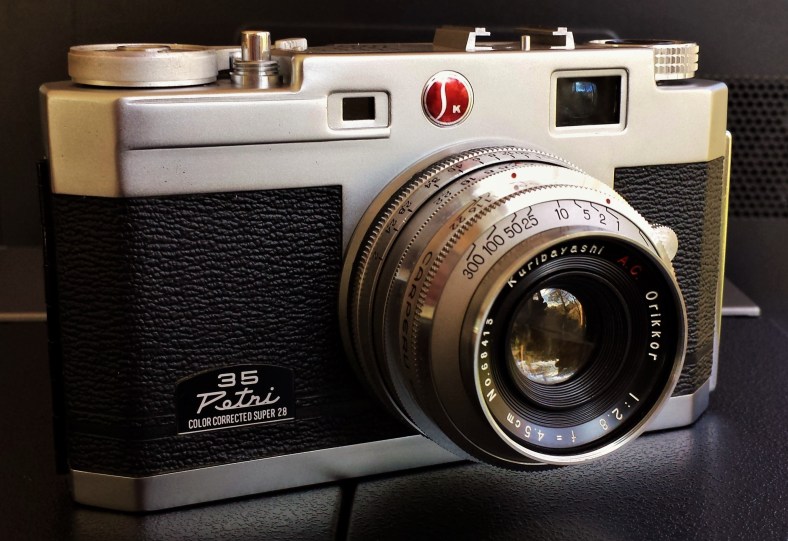
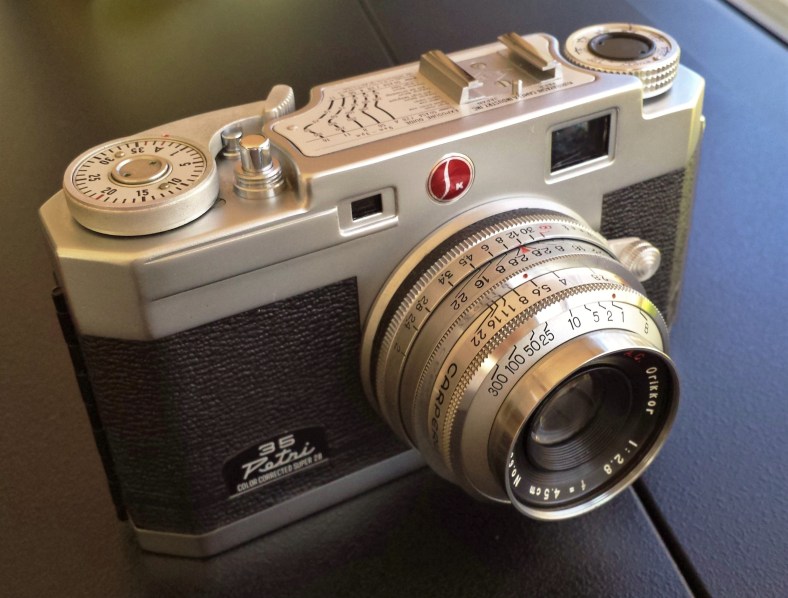
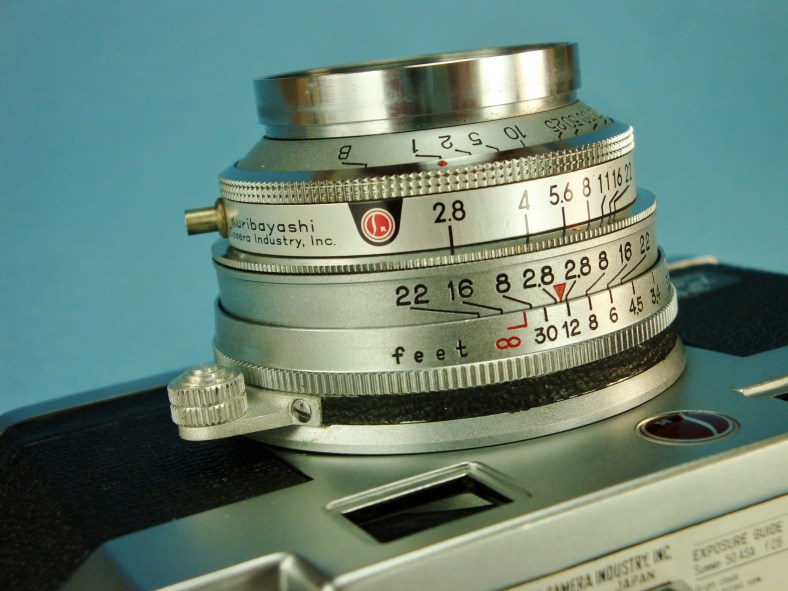
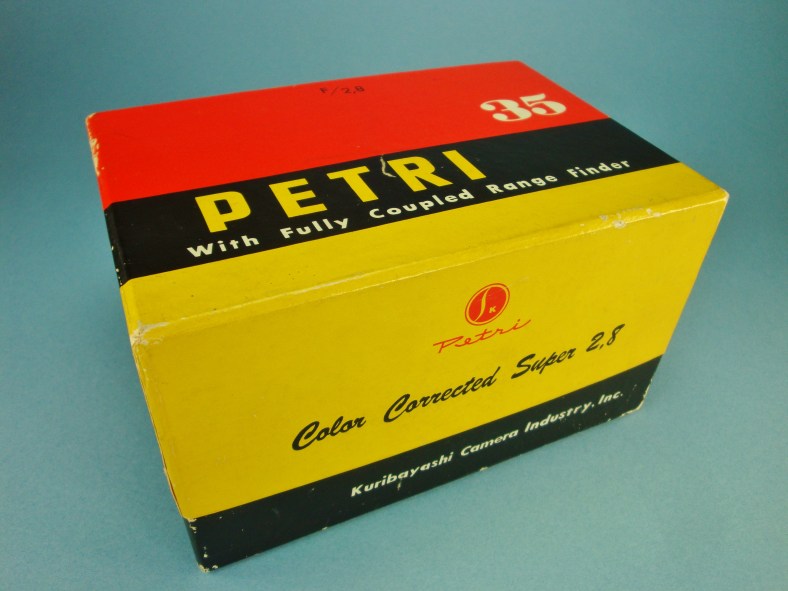
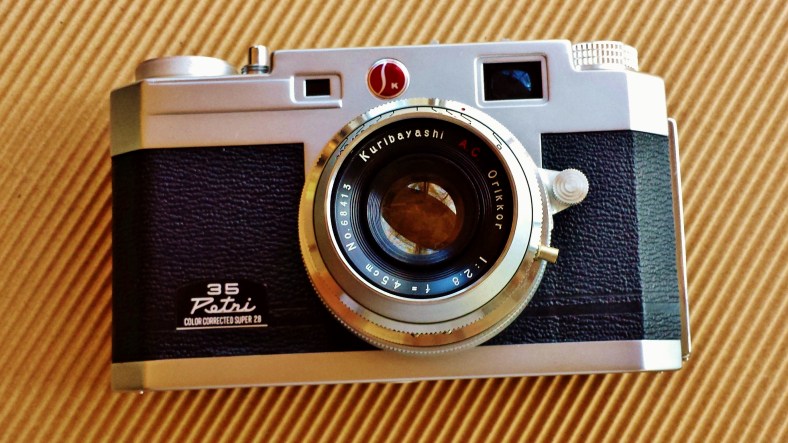
This Petri 35mm rangefinder was purchased in June 1956 at a U.S. military facility in Japan. It came with excellent documentation – sales receipt (not shown), instruction booklet, guarantee card (dated 4 June 1956), a JCII hang tag (May 1956), original metal lens cap, the leather case (not pictured) and the original box. It was nice to see that all of these items stayed with the camera after all these years.

We don’t normally collect rangefinder cameras – this one was included with a Yashica TLR from the same year (and purchased by the original owner at the same time). After some initial cleaning and inspection it was discovered that the lens (last element inside) was ripe with fungus. I had a feeling it would (most of this era do) as it still had a roll of film inside with a light white haze on it. Not a good sign. Everything worked on the camera but there was no point in testing it with a fresh roll of film – way too much fungus. I don’t try to clean the lenses on these types of cameras. My one and only attempt resulted in a completely clouded lens.


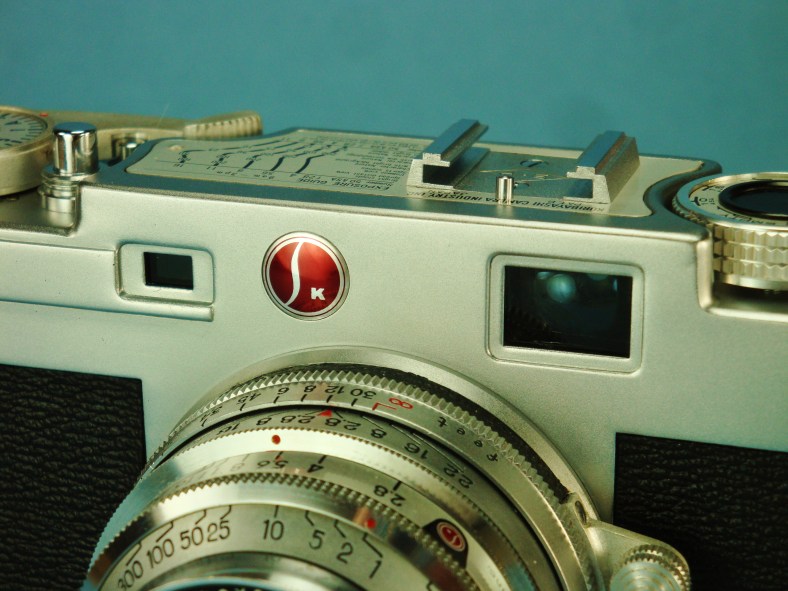
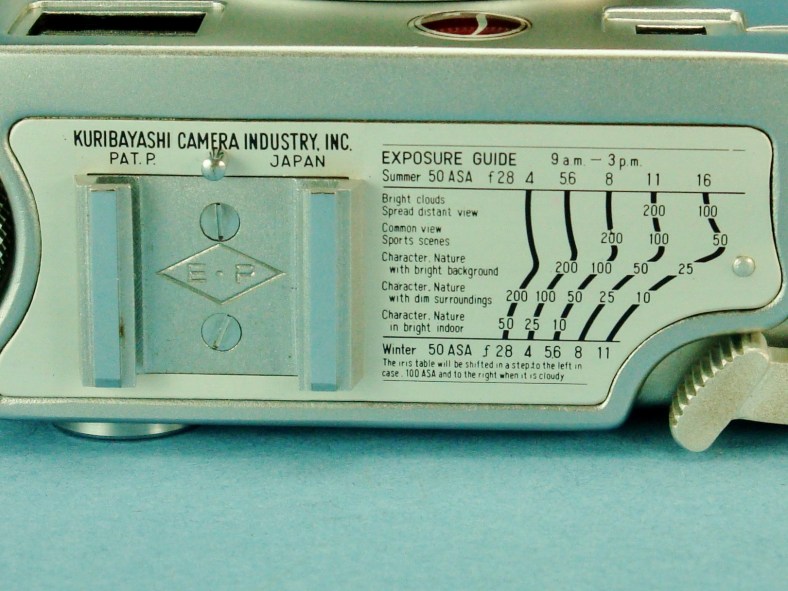
In our opinion, this mark identifies mostly cameras and camera equipment and sometimes electronics like stereos, that were sold in Japan for export. The <E.P> stands for ‘Exempt Product or Exempt Purchase’ to let customs officials know that fees (taxes and the like) were not paid. This allowed foreigners living in Japan to buy high quality products and not pay taxes as long as it was purchased for personal use. Mostly available at U.S. military facilities (Navy Exchange and the like). May have also been available for diplomats and their families and tourists that shopped in the duty free shops. Notice that the symbol is on the camera’s cold shoe (accessory shoe). The camera maker could easily change the shoe for a camera made for sale in the domestic market.
This lovely set is now proudly owned by a collector in Italy. He purchased it with full disclosure on our part that the lens had fungus. Some of our more collectible Yashima-Yashica twin-lens reflex (TLR) cameras have some fungus and mold spots. They have all been exposed to strong sunlight and are stored properly to prevent further fungus and mold growth.


So there you have it – a short photo essay on a very attractive camera and set from Petri. We wish that it could have stayed in our collection since it was so complete – but our true focus is Yashica 35mm SLRs and Yashica TLRs with an occasional rangefinder thrown in for fun!
Camera(s): Sony DSC-W170 and Samsung Galaxy S4
Many thanks for your visit – comments are always welcome. Chris & Carol ^.^
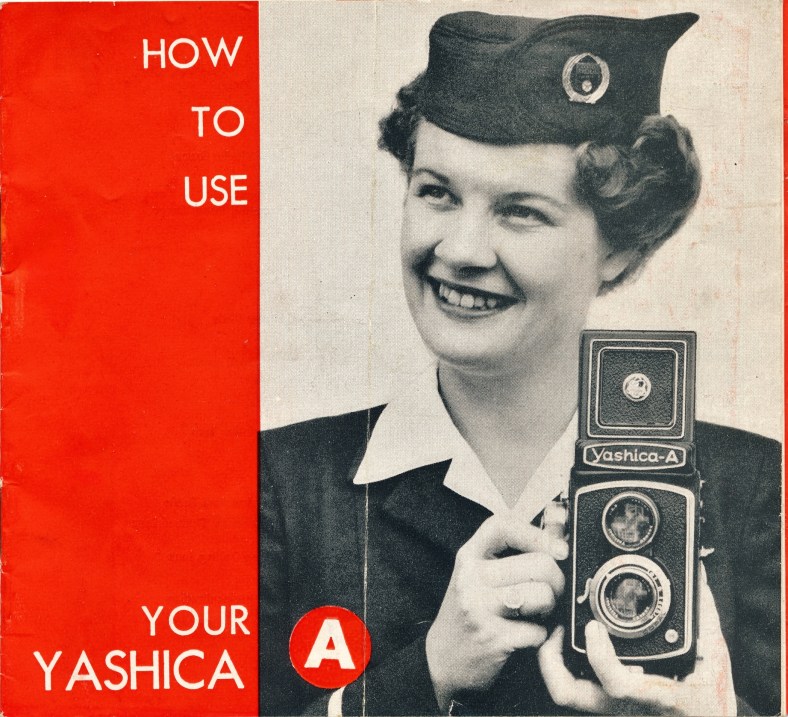
Help! She’s been driving us crazy for years trying to identify what type of uniform she’s wearing.

Is she a stewardess, cruise ship officer, tour bus guide, train hostess? The uniform is certainly not a military uniform (but could be). This instruction booklet is from the late 1950s. Her cap is keeping with the style of the airlines at the time but definitely not JAL. Take note, she has a gold stripe on her right sleeve which wasn’t consistent with airlines unless you were in the cockpit. There is a hint of what looks like a pin (wings ?) on the left side of her jacket and of course there’s the emblem (logo) on her cap.
We’ve tried to place her by her looks. She doesn’t appear to be Asian… we think she looks northern European or from the UK… just don’t know.
We’re open to any and all ideas… just for fun since this is the only time Yashica used an image with a model wearing a uniform on the cover of their booklets. It was replaced rather quickly with a plain cover on later booklets.
Many thanks! We’ll take any and all guesses too.
Chris and Carol

At a Glance
The Fujifilm GF670 Professional 6×7/6×6 dual-format folding camera is another shining example of Fujifilm’s unwavering commitment to preserving and nurturing the culture of photography. Designed with the traveling professional in mind, the GF670 is lightweight and sports a Gauss-type EBC Fujinon lens allowing the photographer to not compromise quality for ease of travel.

It’s amazing to think that Fujifilm USA recently found an undisclosed amount of these beautiful cameras in their warehouse. They were then sold (as best as I can tell) to B&H in New York for sale to the public. It looks like the first guess pricing was around $1899 then quickly up to $1999 and now on B&H’s site they’re at $2199 or so. They’re taking pre-orders now with availability in February. Released in early 2009? and discontinued in 2014. I would love to be able to put one of these in our collection – but it’s not gonna happen!
Maybe for you? Check out B&H’s site for more.
Chris

Escape the hustle of the big city – Sankei-en is Yokohama’s beautiful gem.

Soon the sakura and azalea will bloom. Photographers will come. School children and couples. Families love Sankei-en.

It was a pleasant ride to Sankei-en from our house so we went often.

Admission – 100 yen. All smiles.

Sakura from long ago. Avenue D in Naka-ku, Honmoku. 1979


Spring returns to Sankei-en soon. The blossoms will be everywhere. Come to this spot and enjoy!
Images from 1978 and 1979. Canon F-1 and Canon AE-1. Kodak Kodachrome film.
Thank you for your visit.
Chris & Carol ^.^
Just back from the Fujica’s first photo assignment in the US. What a simple and fun camera to use! The viewfinder (rangefinder) is super bright and big! It made it easy to compose my images and focus.
Yeah the leaf shutter going off isn’t going to get a bunch of oohs and ahhs from the crowd – it works and that’s what matters. The shutter sounds just like our Fujipet from 1958. Stay with what you know Fuji Photo!

It took up the entire camera bag! I only had room for some lens wipes and the lens cap. Just back from its test shots.
The camera did draw some attention from the tourists that were downtown. It’s fun to answer their questions about film vs. digital (we love both) and the most common question – why would you take pictures with such an old camera? The weather was gorgeous too today – bright blue sky and and plenty of strong Florida sunshine. It took no time for me to burn through the 8 exposures!
When I advanced the film after exposure number 8, it took only 5 strokes (maybe only 4) of the film advance lever to free the film fully from the supply roll. Thinking that I’d better be cautious, I decided to remove the film in my dark bag at home.

All went well in the dark bag. The roll had properly wound itself.


We wish Fujifilm still made Neopan 400.
Now that the first part of the test is done, time to send off the roll to ‘The Darkroom’ for processing and digital scans. We should see something online from them by late Friday afternoon (it’s Tuesday now). Time to head to the post office!

Check back soon to see the finished results. Thanks for your visit!
C&C ^.^
Fuji Photo Film Co., Ltd. – Tokyo
Fujica GW690 Professional – 1978 version. Yes it’s big. Yes it’s a bit heavy too. But who doesn’t love big 6x9cm negatives! We had an Asahi Pentax 6×7 SLR for a while in our active collection and thoroughly enjoyed the images it produced. The 6×7 and 6×9 in our opinion are great formats. We still shoot in squares though – it’s fun to compose a 6×6 frame on a twin-lens reflex. If anything will slow your photography down it’s that.

This camera arrived yesterday and it’s all cleaned up and ready to go. This is a heavily used (think venerable workhorse) GW690 with all sorts of dings, dents and scrapes to show for it’s almost four decades of use. We imagine it’s seen more than a few tour groups in its time – now it’s time to slow down a bit. We purchased it to be a user camera for some fine art prints we want to create and sell on our online site. We normally print on 8.5 x 11 inch Canon paper with an occasional bump to 13 x 19 inches and the 6×9 format is perfect.

We’re big fans of Fuji cameras and this one will earn its keep in our studio. I’m headed out this afternoon with a roll of Fujifilm Neopan 100 Acros loaded to test it out.

It’s a simple camera – completely analog. No onboard exposure meter, no auto film advance, no auto focus – just what we wanted.
We chose the GW690 vice the “newer” models (II and III) because I’m not a big fan of the built-in lens hood on the later models (gets in the way). The shutter settings (leaf shutter) and aperture settings are right next to one another which makes it super easy to see the relationship each has on the other. Focusing is quick on this model and the rangefinder window is bright and easy to see.

A 35mm box of film gives you a comparison to just how big the Fujica is. By the way, this model was the last to be called a Fujica.

Ready to rock some Neopan!

We thought it would look good with some vintage Fuji Film beside it. The film expired in 1964!
We’ll have the results next week as we send our film out to ‘The Darkroom’ for their professional development and scans. 6×9 on 120 roll film produces only 8 exposures so I should be able to shoot in one afternoon. Let’s see… with the purchase of the film, processing and shipping it’s going to cost about $25 per 8 images. Yikes!
Thanks for your visit. Chris & Carol ^.^

Oil refinery as seen from the hill behind our house in Naka-ku, Honmoku, Yokohama. Canon F-1 (1978 version) with Canon FD 80-200mm f/4 zoom lens on Kodak Ektachrome at about 5 seconds at f/16. As best as we can tell, the refinery is still there today.
Chris and Carol ^.^