Yashima-Yashica Leather

A misleading title? We’re not sure. It’s doubtful that in Yashima’s early days of camera manufacturing, that they made their own leather case goods. They had plenty on their plate already – lens production (mostly testing), machining parts, pouring cast aluminum bodies, stamping out metal pieces and of course, putting it all together in a box and shipping it off to various Trading Companies and camera dealers around Japan and the world. Oh did we mention, inventing new camera designs too.

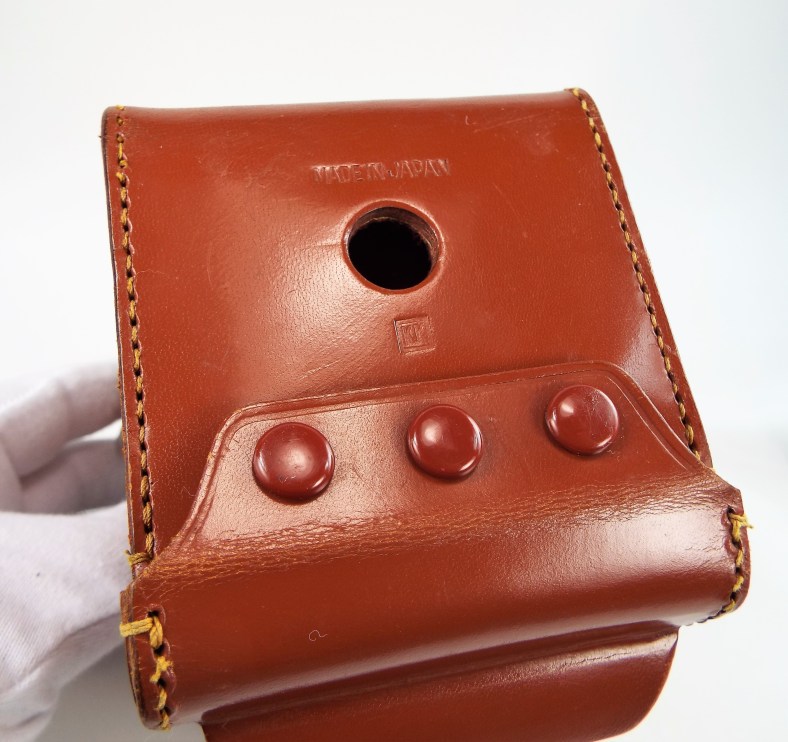
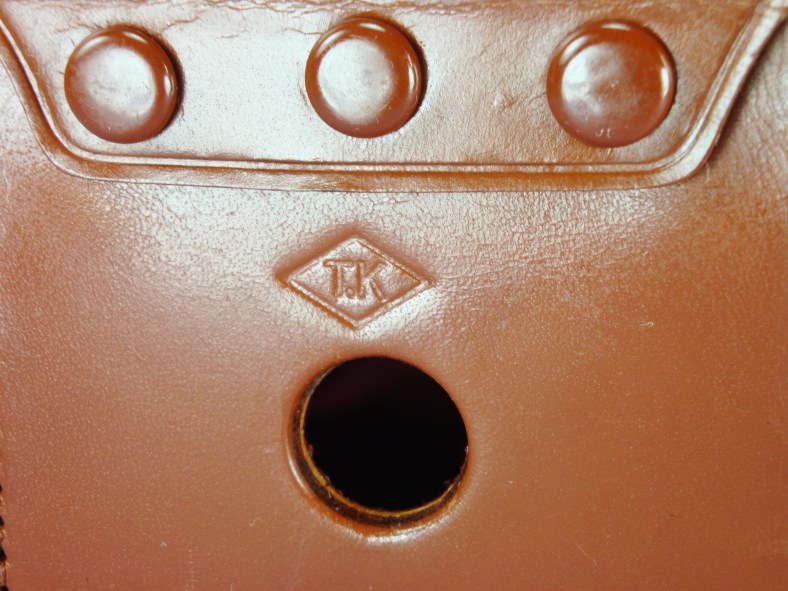
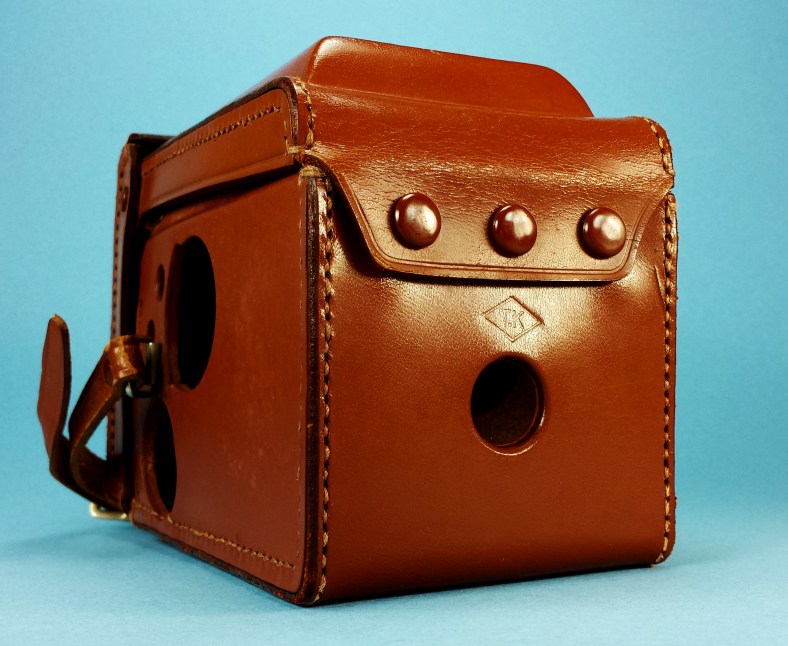
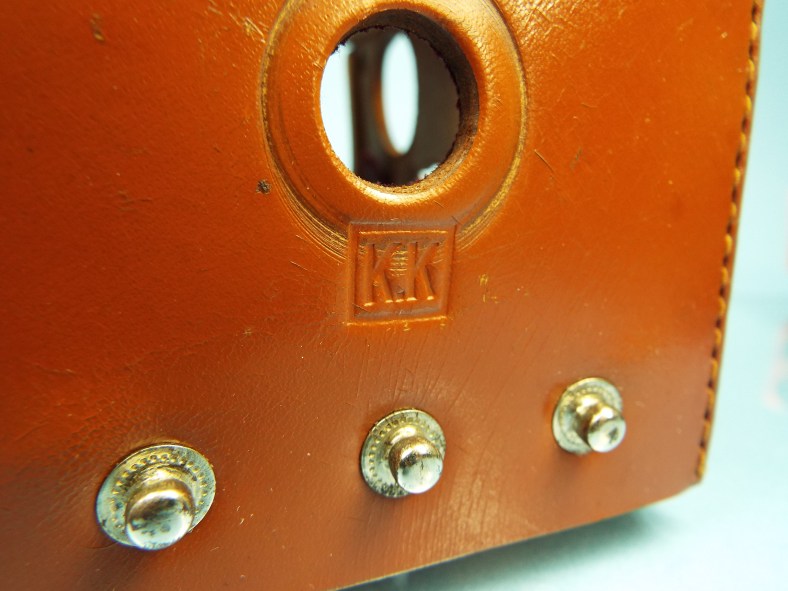
We believe that Yashima-Yashica had their leather case goods made by at least 4 different suppliers – each with their own maker’s marks stamped on the bottom of the case.

dscf3573

14946607129_6c99cdd8f3_o

16194486489_f9eb368a5a_o

Could the trademark be ‘Tomioka Kogaku’? In the early days of Yashima/Yashica, did they use leather cases made by outside companies? More than likely since they would not have had the facilities or skills to produce quality leather products in large quantities IMO.

26525674923_ebcb6d771f_o

This image is of the bottom of our Yashicaflex Rookie’s leather camera case. Some of the 1950s era Yashima-Yashica cases have similar marks. With an occasional exception, most 1960s era cases do not carry these marks.

The mystery… we believe that these are ‘maker’s marks’ or trademarks of the company that manufactured the case for Yashima-Yashica. The marks are similar to marks found on Japanese tin toys from the same period. Our theory is that Yashica did not have the facilities or skills to make leather cases on their own in the early days of production and that outside leather crafters added their individual trademarks to the cases.

Other marks that we’ve seen… T.K , NT , GSS and another K.K but in a diamond shaped box.

If you know of the origins of these type of marks on Japanese leather goods please add your comments. We would love to know for sure.

Thanks… C&C ^.^


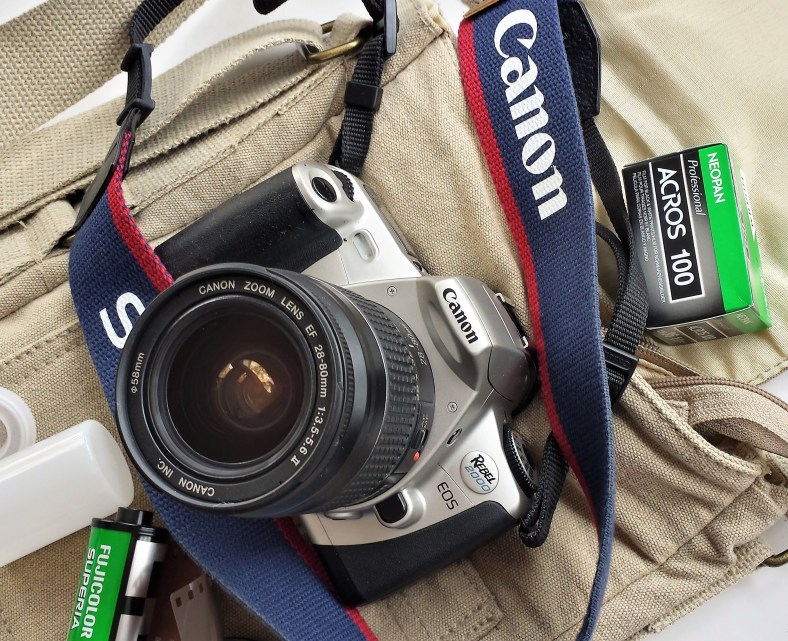
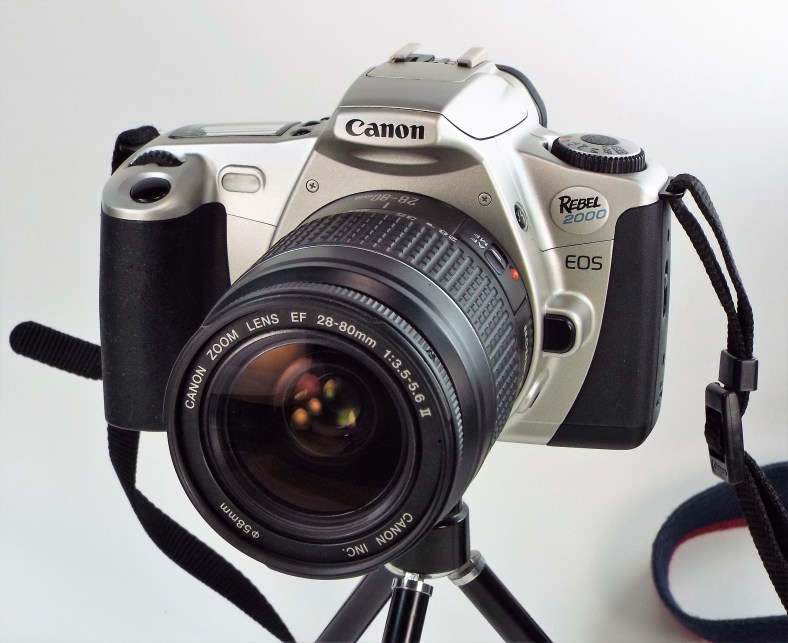
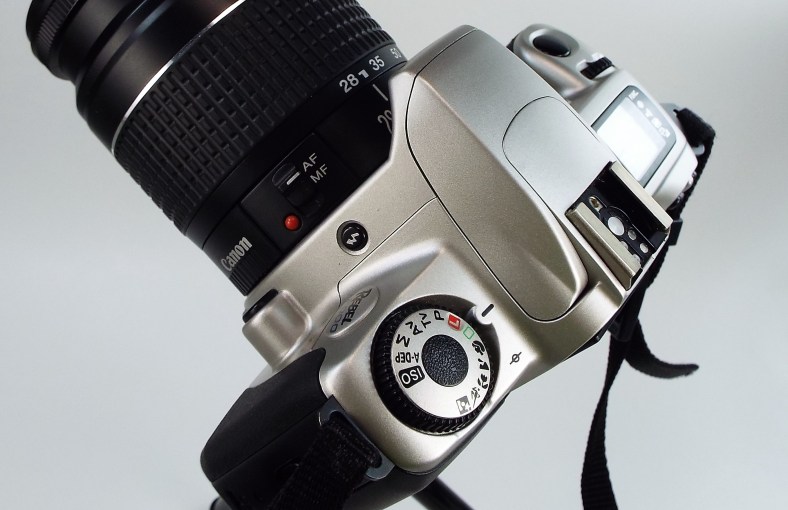
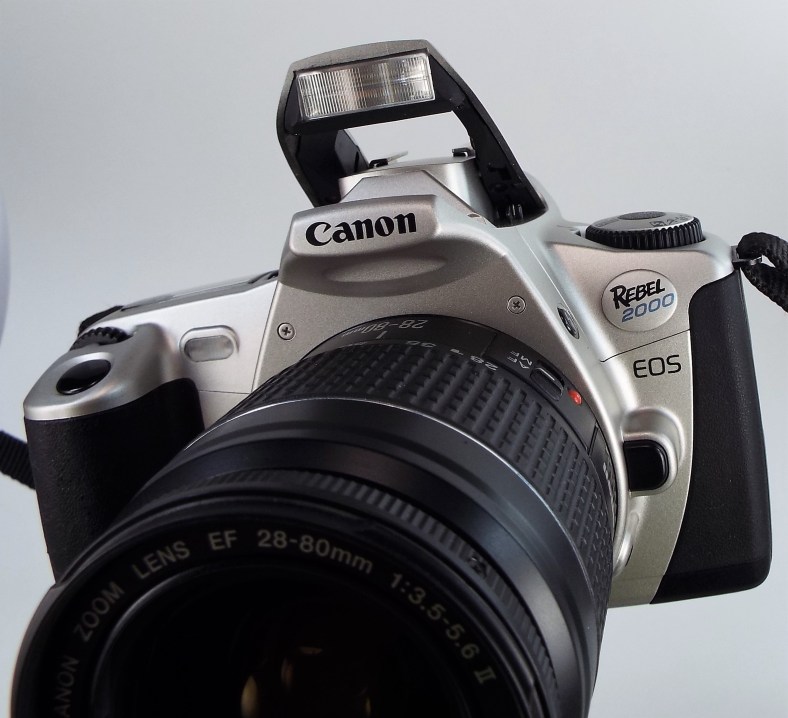
Taking an old friend out and about… Canon EOS Rebel 2000

I know – what a goofy name! Rebel 2000? WTFO! (a nautical term often heard aboard U.S. Navy ships at sea).

Silly names aside, it’s been a good little Canon and has done pretty much everything I’ve asked it to do over the years. No outstanding features – just  sharp images and as close to a point and shoot analog SLR as there was in the late 1990s. I believe Carol gave me this one for Christmas 2003.

Since we’ve decided to pare down our collection of cameras, this one will be listed for sale soon. We like to test our cameras with film first so that we can state that the camera and lens works as advertised -plus we get to shoot some film with an old friend one last time.

It takes two CR2 batteries which we found for under $10 (with shipping) on eBay. We’ve loaded a fresh roll of Fujifilm Fujicolor Superia X-TRA 400 and now all we need is a sunny day. The Acros 100 is for another day and another camera.

20170214_134724_richtonehdr

The camera and lens weigh next to nothing – a breeze to carry around places like Walt Disney World and it did well when we used it on our trip to Disneyland and Yosemite back in 2004. After years of carrying around a heavy Canon F-1 with equally heavy lenses, this camera and lens set me free to concentrate on composition and not the gear (and the pain in my neck). It’s a camera that’s had enough versions made over the years and in enough quantities that finding additional lenses for it would not be a problem if we were keeping it. The next owner will get a very well taken care of SLR that should be trouble free for years to come.

Standard issue EOS Rebel 2000 with the 28-80mm zoom lens.  ⇓

dscf3536

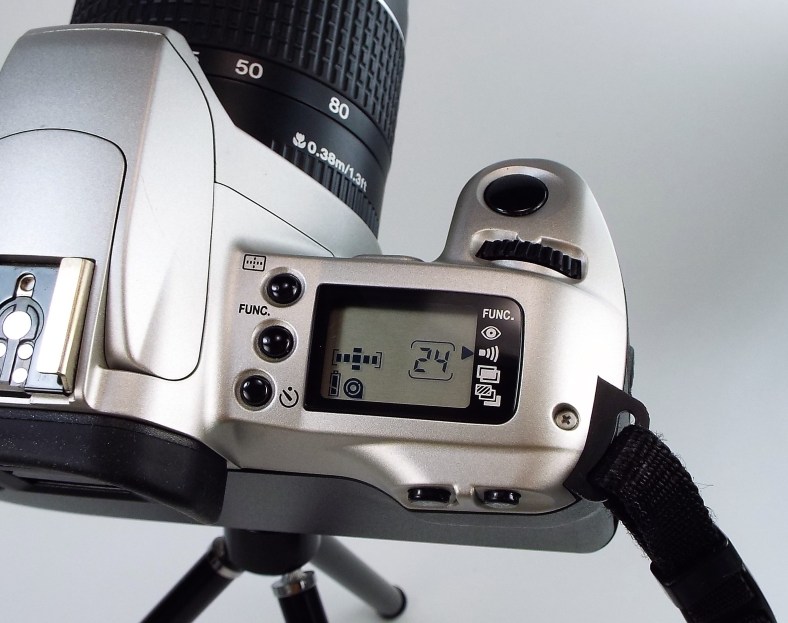
Super clear and easy to understand LCD with just the right amount of info. ⇓

dscf3543

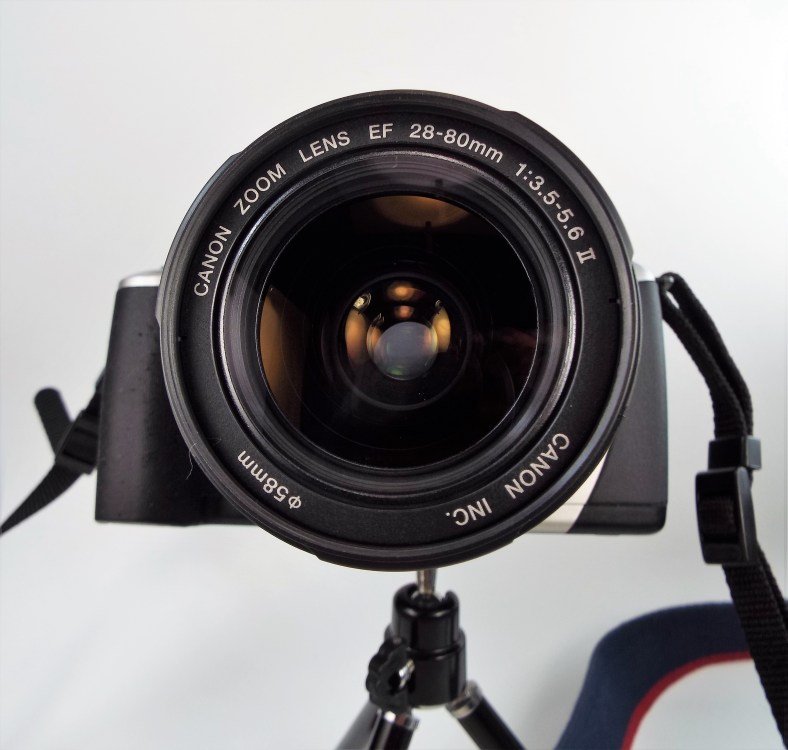
It takes 58mm screw-in filters. ⇓

dscf3540

dscf3542

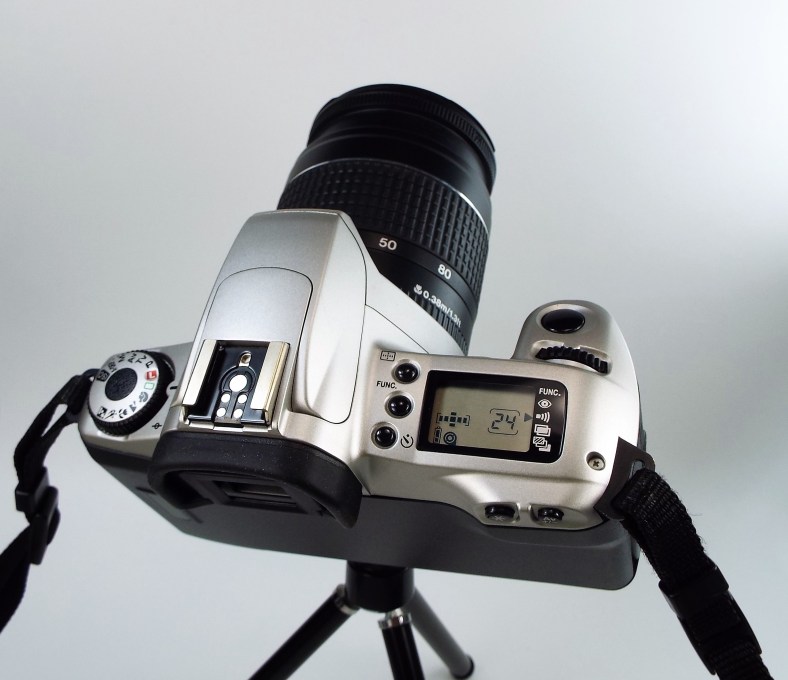
It’s a good looking camera with an easy to keep clean surface. ⇑ ⇓

dscf3544

Nice fill-in flash when needed. ⇓

dscf3545

So there you have it. A simple Canon that’s very capable of delivering sharp, well exposed images. Lightweight – easy to pack. It makes it easy to concentrate on composition and not the camera. Just what you want when venturing out with an old friend.

Thanks for stopping by!

Chris


Super Yashinon-R 400mm Lens

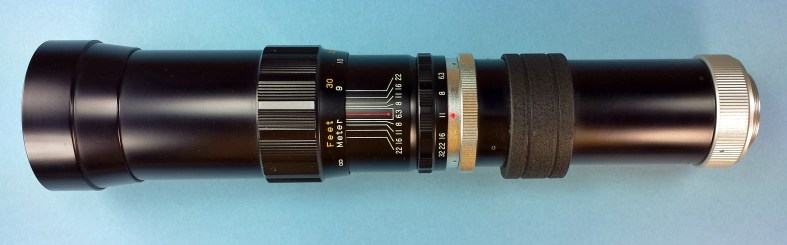
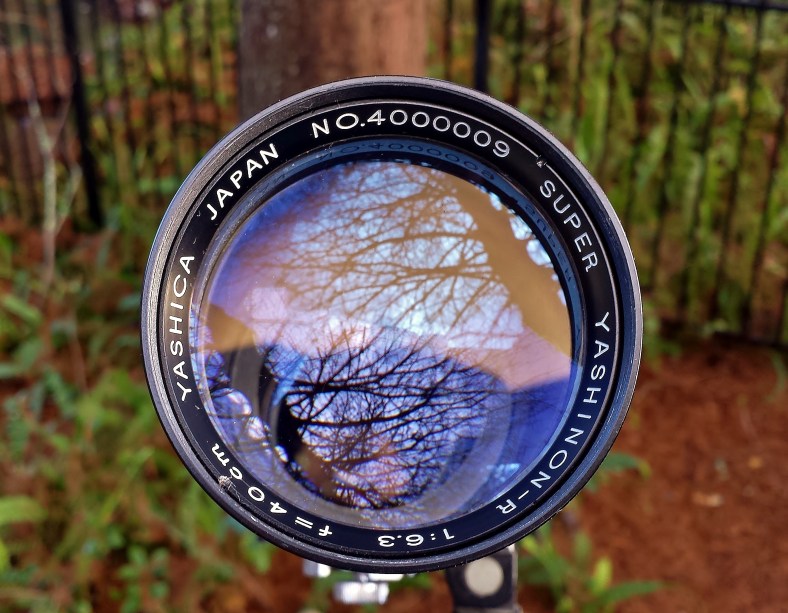
One of Yashica’s big boys – 1961 model. Super Yashinon-R 40cm f6.3 telephoto lens with the M42 mount. A very early M42 mount from Yashica-Tomioka.

15938175336_be4b71e383_o

Front view of this interesting lens…

15340210054_0b11765f72_o

One of the first long focal length lenses for Yashica’s M42 screw mount 35mm SLR camera bodies. I would guess from the extremely low serial number that this lens was made in late 1961 or very early 1962. I have never seen a lens from Yashica “in the wild” with such a low number. 400 = focal length and the next 4 numbers are the production number 0009 meaning the 9th one made after the prototype.

Thanks for your visit! Comments are always welcome.

Chris & Carol ^.^

Yashica L AF – Field Test v2.0 – Can this Yashica hold its own against the T* Series?

A fun little point and shoot camera from Yashica-Kyocera (1986). This lovely camera was kindly donated to us from a blogger friend and photographer who lives in Japan. She tests cameras that strike her fancy and often processes her film at home. We think her test shots are extremely interesting – and always well composed too. You can find her at https://cameragocamera.wordpress.com/

Field test v1.0 was done in Japan.

She typically hunts around in second hand shops and picks up cameras for well under $10 (I think this one was only $3).
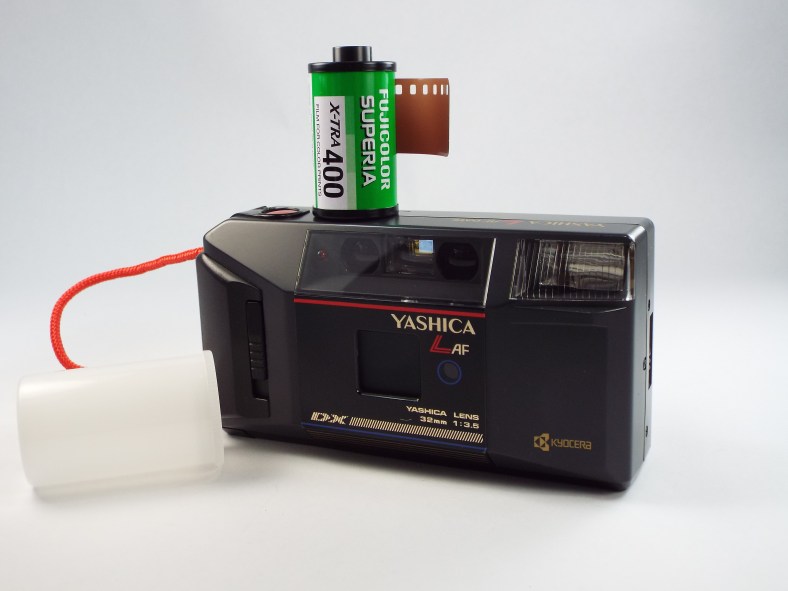
dscf3464

The Yashica gets a fresh roll of Fujicolor Superia X-TRA 400 and a new finger strap (in almost matching red).
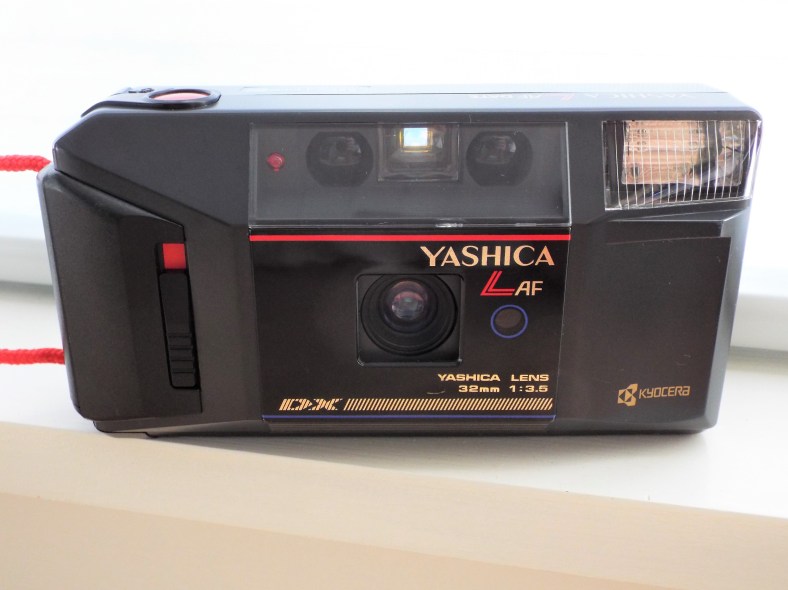
dscf3481

This Yashica uses a 32mm f3.5 lens. The camera features a simple drop and go (well almost) film loading. It is a DX coded camera so it sets the ASA (sorry, old school). It produced 26 exposures from a 24 exposure roll.
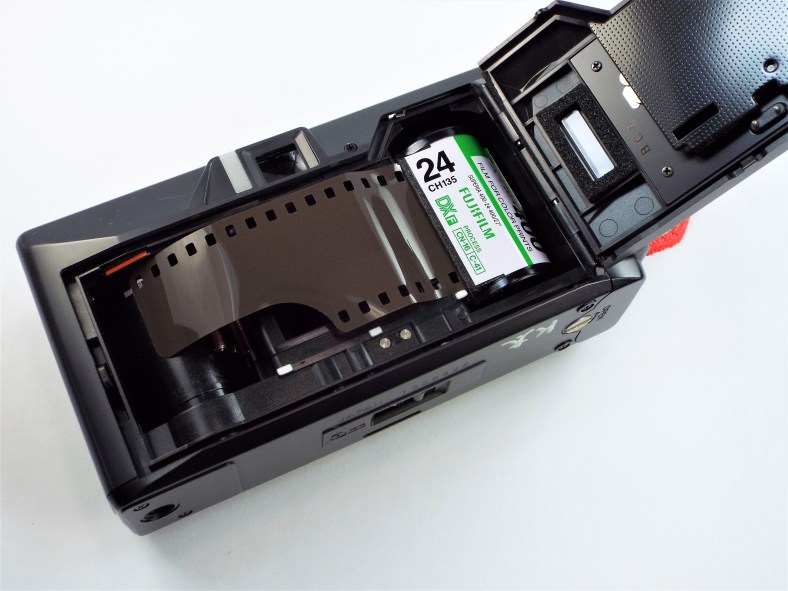
dscf3466

Pull the film leader to mid point on the orange line and between the white marks.

The real test – can this inexpensive Yashica L AF deliver the same image quality as its highly regarded cousins – the Yashica T3 Super with Zeiss T* 35mm f2.8 lens or the more closely related Yashica T AF?
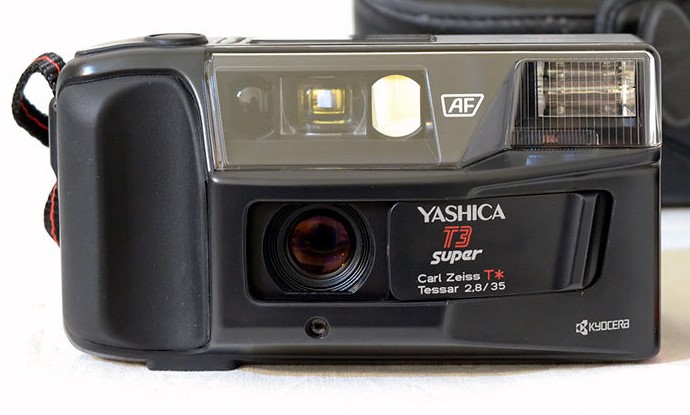
s-l1600-33

The T3 – often sells for over $200 on eBay. The L AF – well under $20!

yashica t af

Yashica T AF. Yashica’s first in the T* Series of cameras (1985). Probably the most closely related to the L AF.

I won’t post all 26 images here. I will pick a broad representation of the photographic challenges that I threw at the Yashica L AF.
78690001

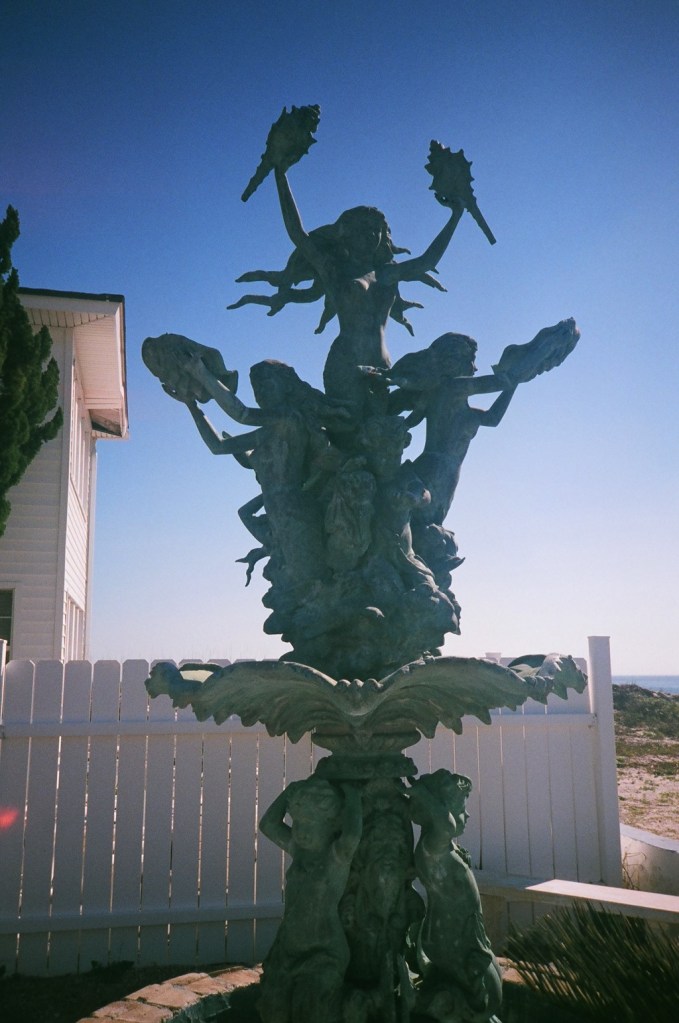
First image overall – strong back lighting. A challenge for any simple AE camera. First sign of a red spot (far left).

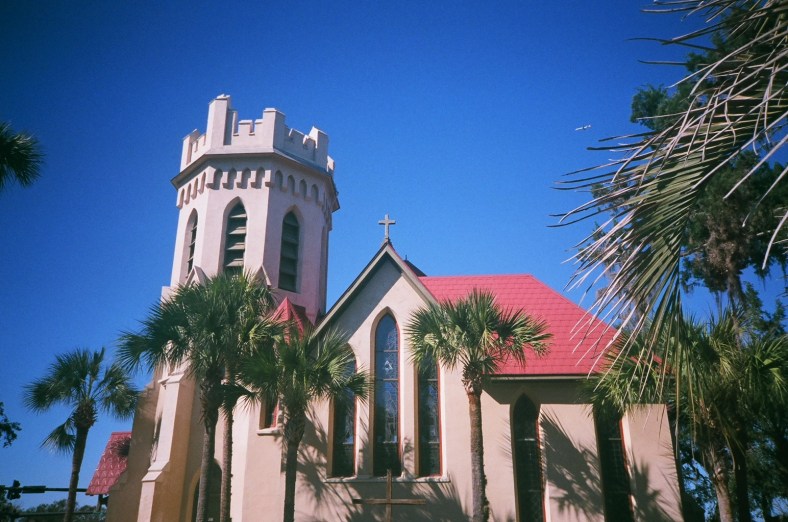
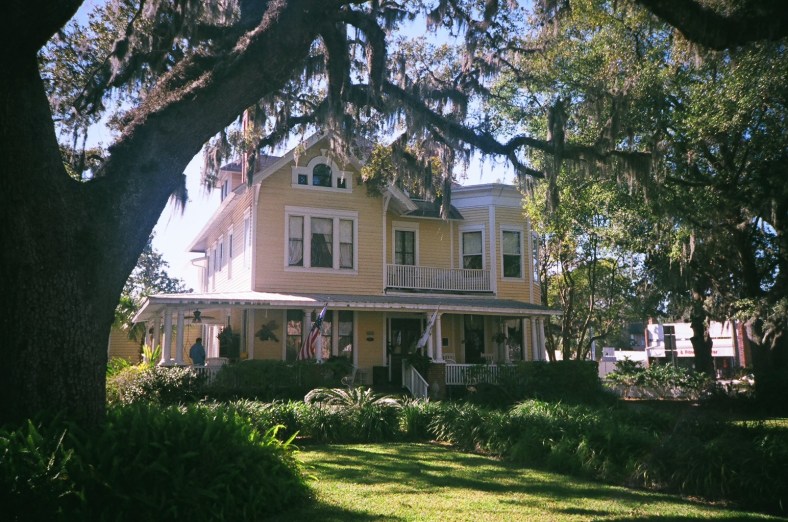
These next two images were focused at infinity. Strong mid day lighting so deep shadows. The Fujicolor rocks some nice vivid colors and contrast!
78690002

78690005

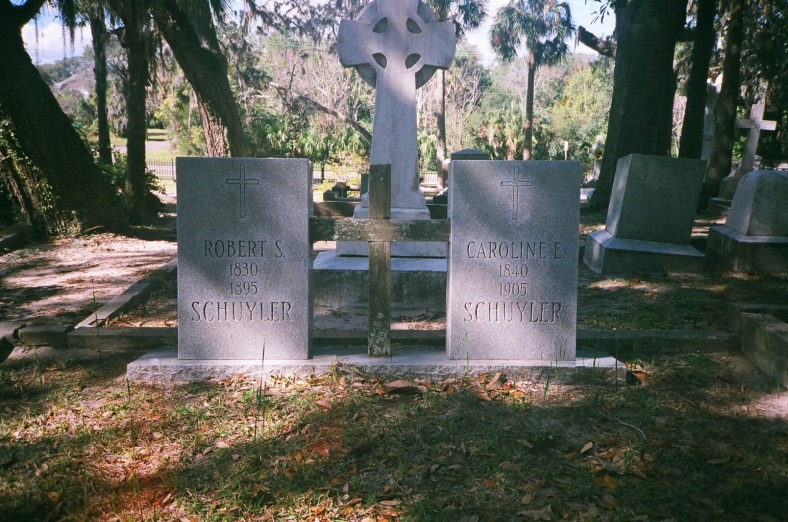
First real test of the auto-focus and AE in dim lighting below. It did well considering the strong sunlight in the background.
78690008

I know right – crazy dark blue sky! No filters, just Superia X-TRA 400 and a contrasty lens.
78690012

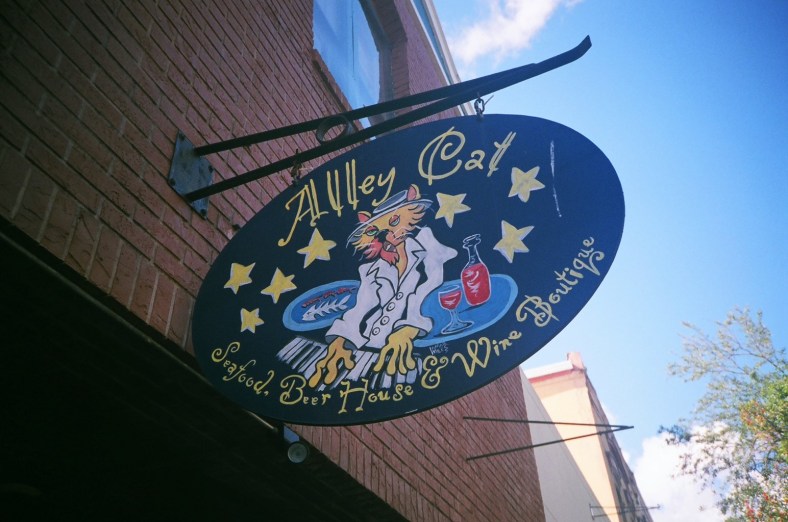
Nice detail. Sharp focus too on this sign below. The Yashica employs center weighted metering. Most AE cameras would be thrown off by the bright sky.
78690013

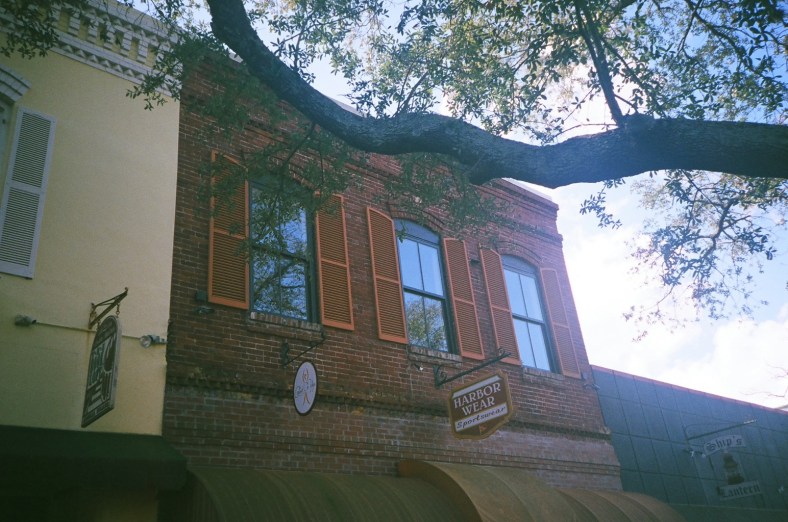
Tough AE situation for a simple point and shoot (deep shade below). Post production would help but I like it as it is.
78690016

Back in the bright Florida sun!

78690020

78690021

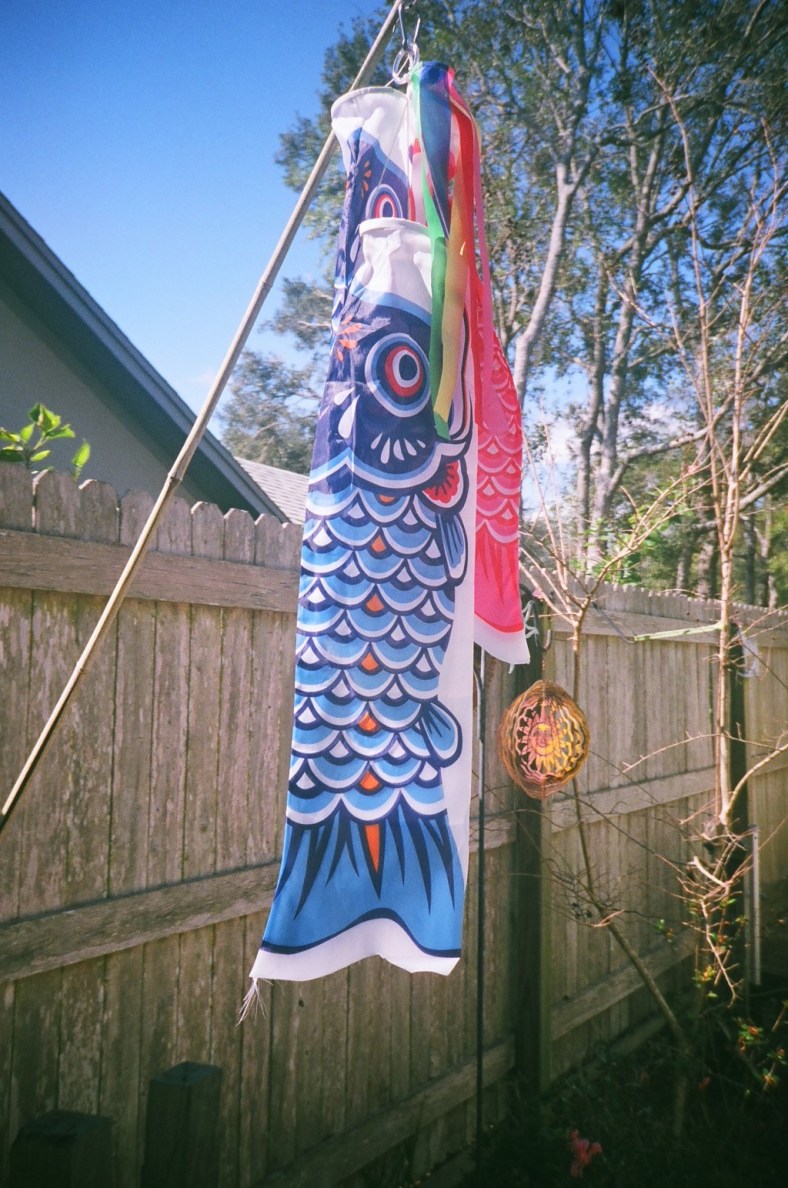
Day 2 below at home. I was about 3 feet from the carp. Looks good.
78690023

78690024

The attack of the red bar! Not sure the why of it.
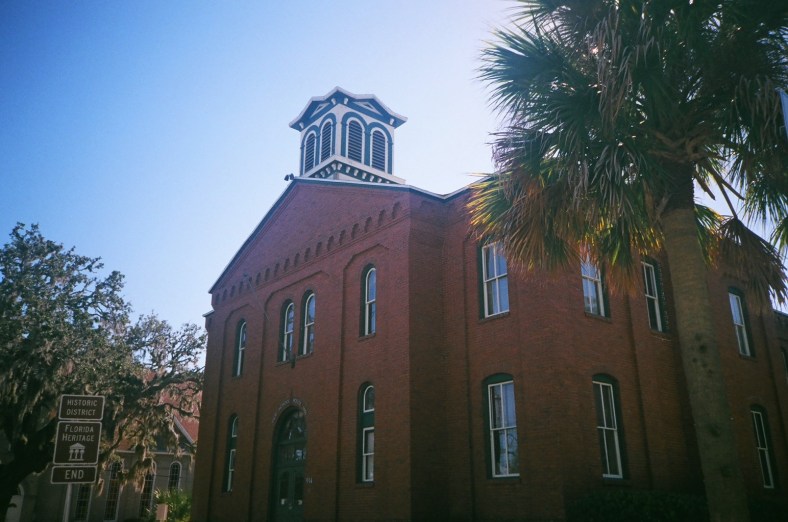
78690006

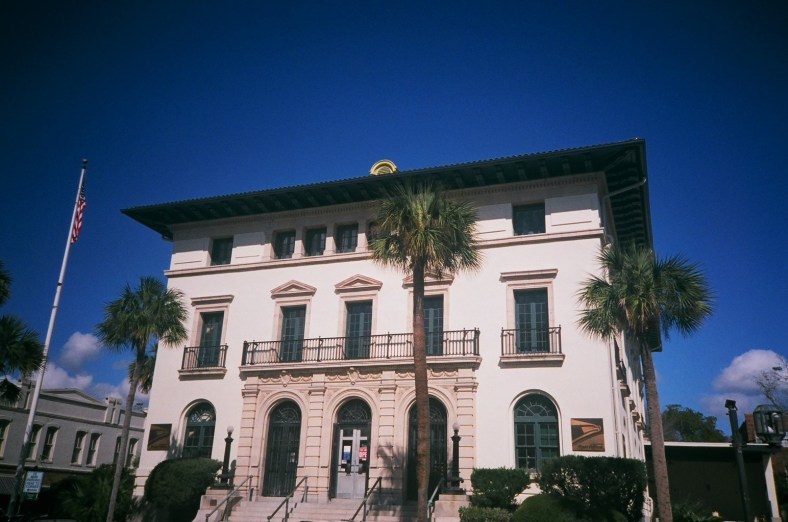
The AE handled this situation well – I blocked out the sun with the palm tree which allowed the Yashica to get a good reading on the building.

As I said at the top. All 26 images were excellent with about 4 experiencing the mystery red spots and bars.  I’m thinking that the red marks are from a processing error – it’s way too random to be a light leak. No post production on any of these images. They’re presented just as they were scanned by the processing lab. Maybe the CD will be even sharper.

We’re impressed! The camera has a solid feel – it has some weight and is actually as big as our Fujifilm FinePix S9900W.

So does this inexpensive Yashica L AF beat the Yashica T* Series? Don’t know yet – now all we need is someone to donate a T3 or T4 to test it!!! ^.^

For the money, if you can find a decent Yashica L AF and want a great point and shoot 35mm camera that produces better than expected images – the L AF more than delivers and at a price that won’t break the bank!

Camera(s): Yashica L AF Date, Fujifilm FinePix S9900W and Samsung Galaxy S4

Final shout out goes to the City of Fernandina Beach, Florida! Thanks for never messing with the Historic District – it looks the same (for the most part) as it did 120 years ago! 

Many thanks for your visit! Comments – please do. Donating a T3 or T4? – email us ASAP!

Chris & Carol
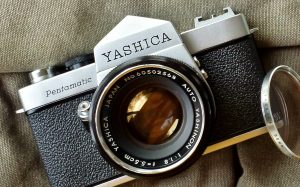
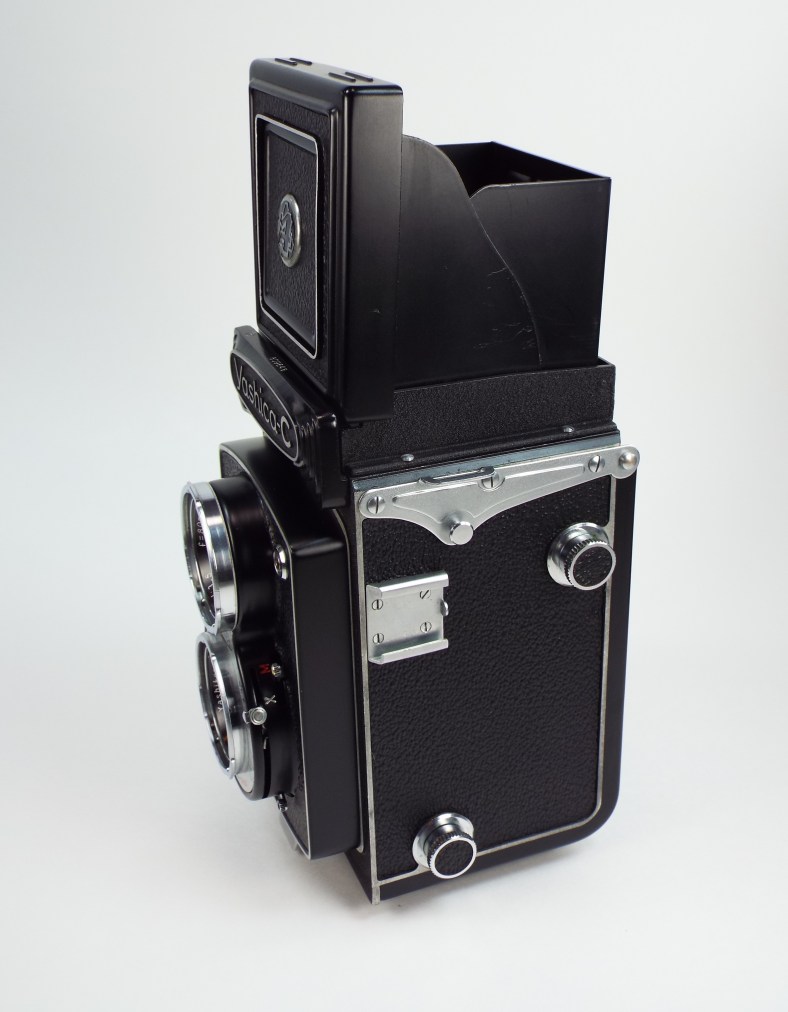
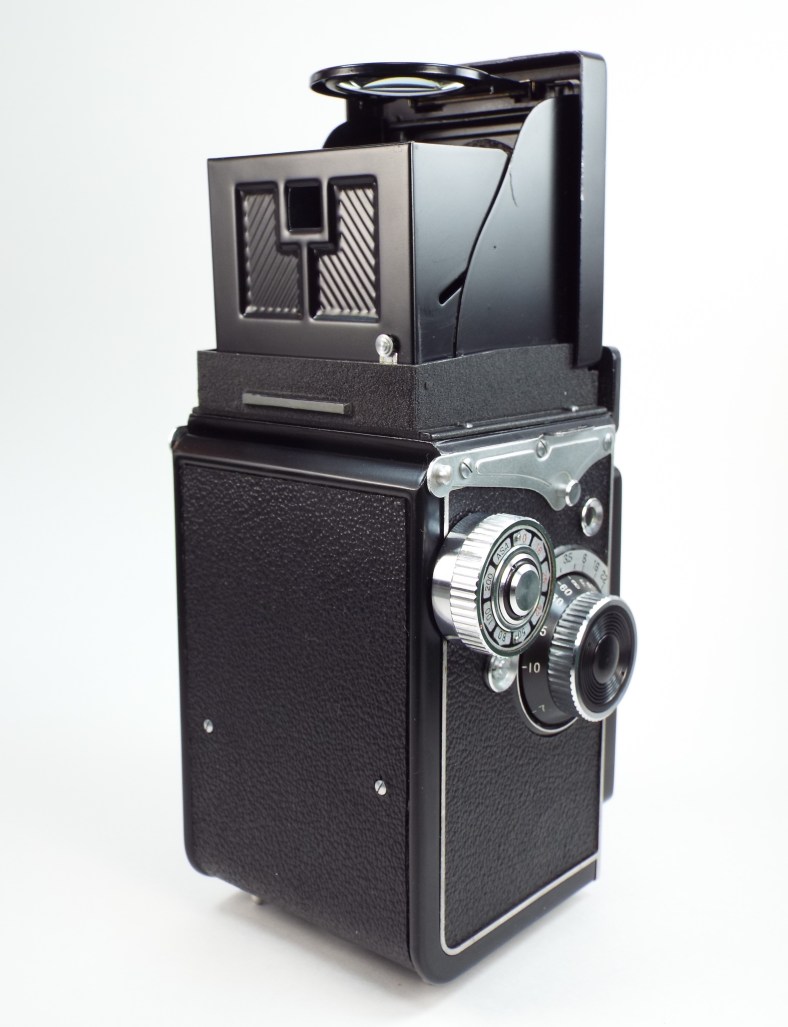
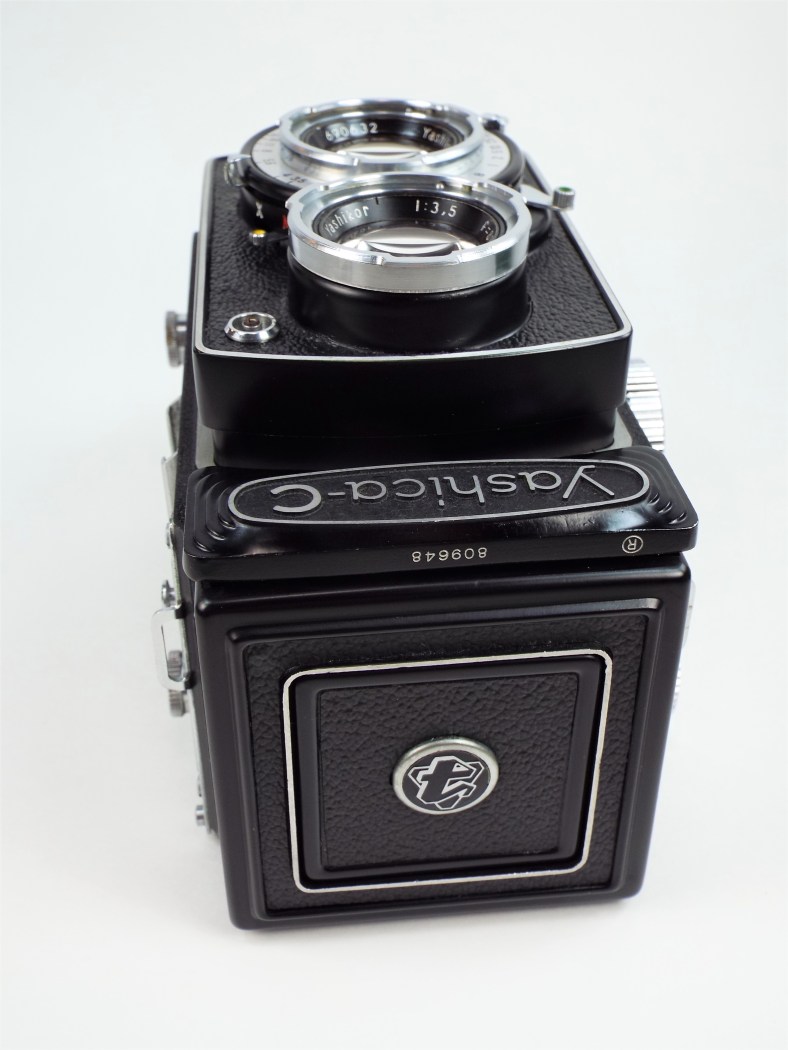
1957 Yashica-C

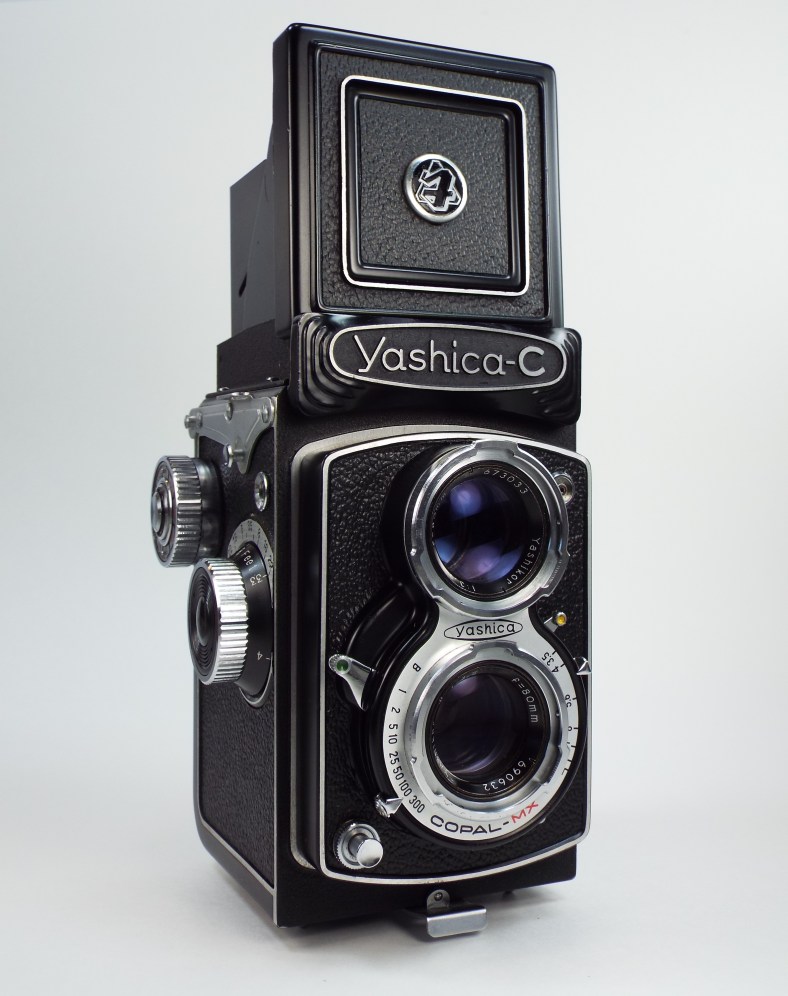
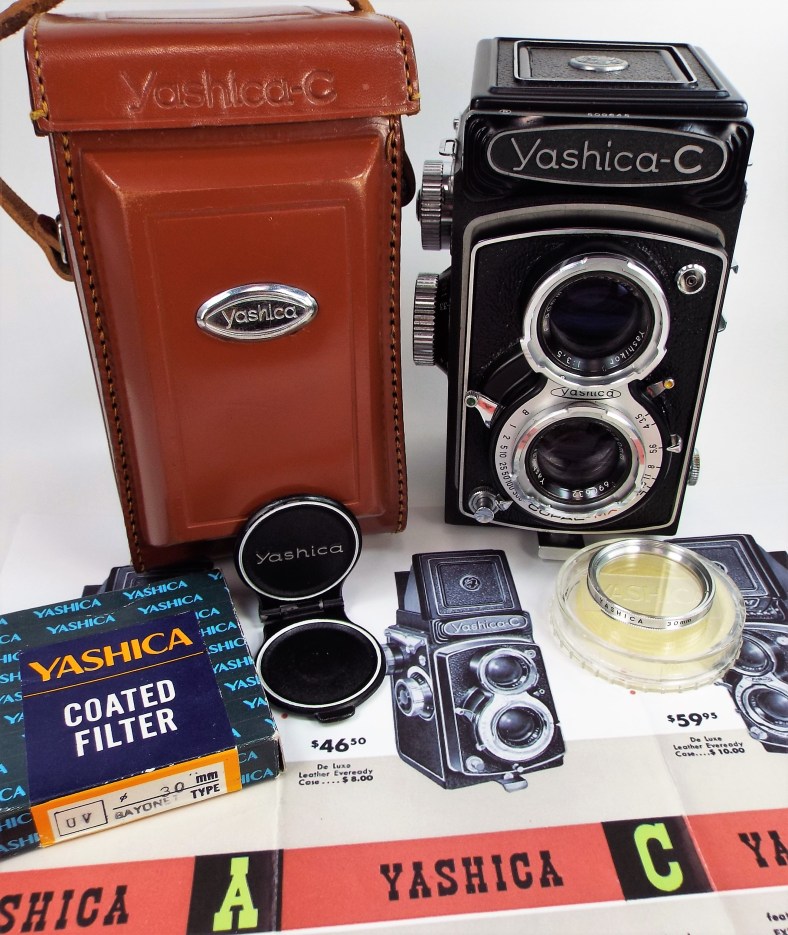
The Yashica-C made by Yashima, was part of the new wave of Yashicas that were released in late 1956 for sale in the world markets (focus scale is only in feet). It was listed at $46.50 plus $8.00 for the “De Luxe Leather Eveready Case”. The other models released at the same time were the Yashica-A ($29.95) and the Yashica LM ($59.95) which featured a built-in exposure meter!

dscf3511

dscf3512

dscf3513

dscf3514

This handsome camera came to us recently with all features fully working – even after six decades of use, no issues. Our guess would be this camera saw maybe 1 or 2 rolls of film in its life. It is in factory new condition.

Features: Semi-automatic film wind, 80mm Yashikor f: 3.5 taking and viewing lenses (hard coated and color corrected), Copal shutter with speeds at 1, 1/2, 1/5, 1/10, 1/25, 1/50, 1/100, 1/300 second and Bulb, self-timer, flash sync (M-x) built-in, bayonet lens mount and flash gun shoe with standard PC flash terminal.

If you’re looking to try medium format photography, the Yashica-C is a great camera and a great value. It can often be had for significantly less money then a Yashica-D.

A word of caution about 6 decade old TLRs. Corrosion of the black metal parts is common as is fungus and mold in and on the lenses. If the camera you’re interested in shows some exterior rust (and other forms of corrosion), then ask the seller a bunch of questions. Cameras like these that come from humid environments are often left in their organic leather cases (and in the dark) – fertile grounds for growing mold and fungus. Fungus filaments can completely destroy a lens or at the very least, etch parts of the coating for good.

dscf3516

All the goodies!

On a more happy note – this beauty has no mold or fungus and was purchased from a seller in Michigan. Probably a one owner camera – it came with a roll of Kodak Tri-X film loaded inside (at least from the mid 1960s).

Studio Camera: Fujifilm FinePix S9900W

Thanks for your visit and comments are always welcome. C&C ^.^

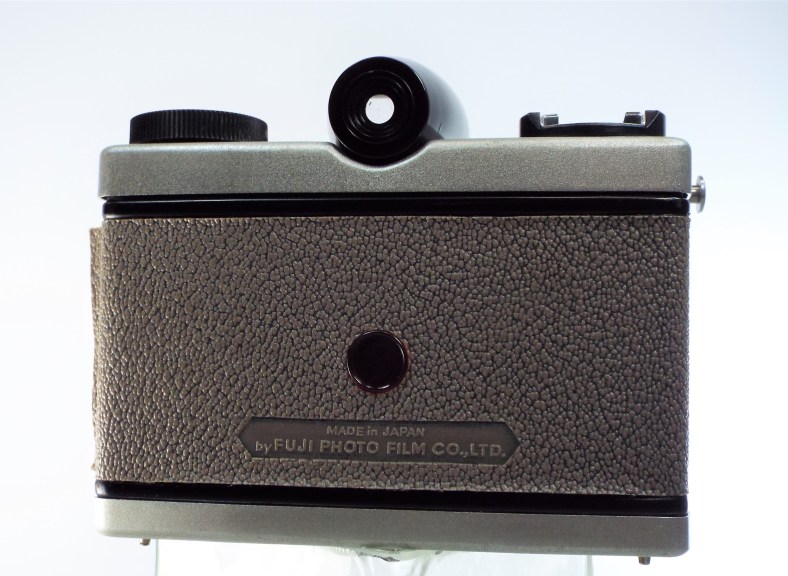
New Arrival – Fuji Photo Film Fujipet!

Another new (to us) Fujipet has arrived! This one is in gray and came with its original gray leather Pet case. It’s hard to tell exactly when this one was made – guessing it’s a 1959 or 1960 version.

dscf3506

dscf3497

We just love all the quirky knobs and numbered levers – sweeping curves and that crazy viewfinder.

dscf3499

A true medium format 6x6cm film camera – as simple to use as falling out of bed. Takes 12 exposures on 120 roll film.

dscf3502

Simple and then simple some more.

The Fabulous Fuji Foto Photo Film Fujipet!

Thanks for your visit!

C&C ^.^

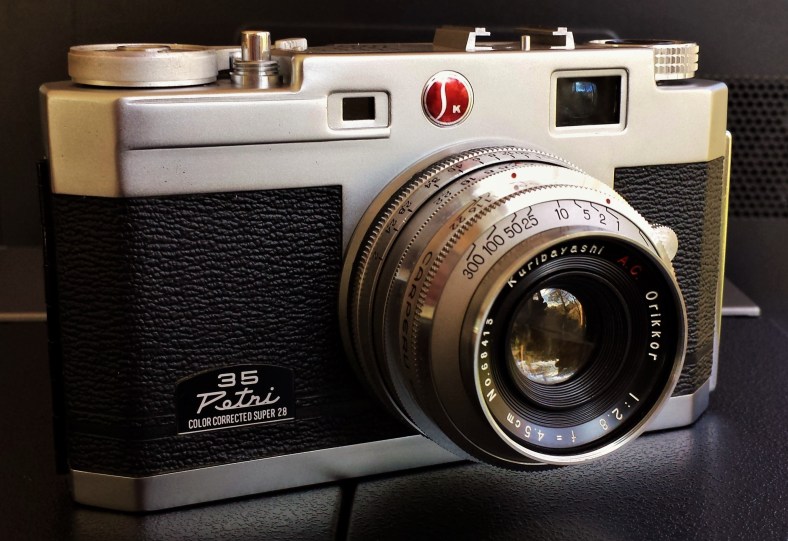
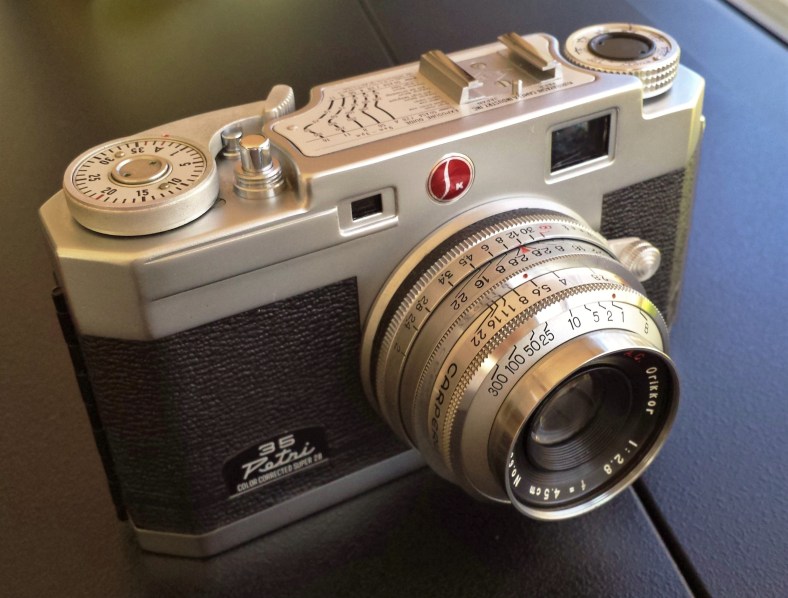
Petri 35 Super 28 – 1956 – A little gem with a serious flaw.

15798348994_ef472e783c_o

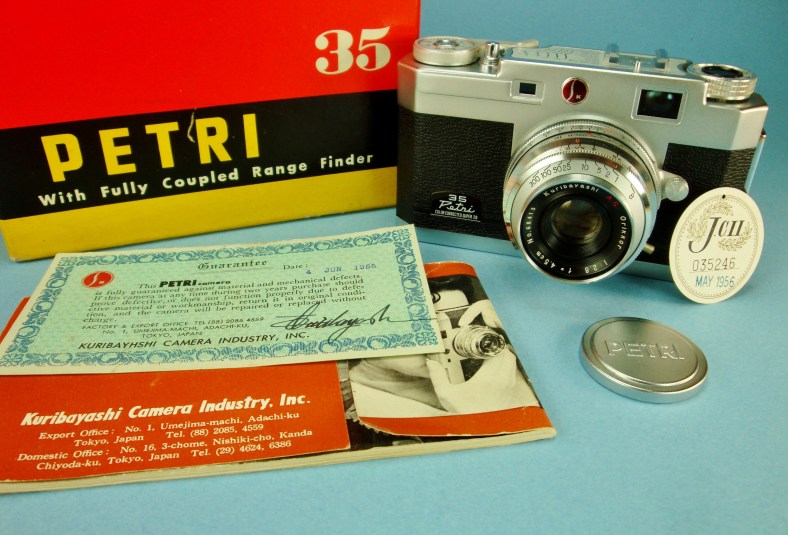
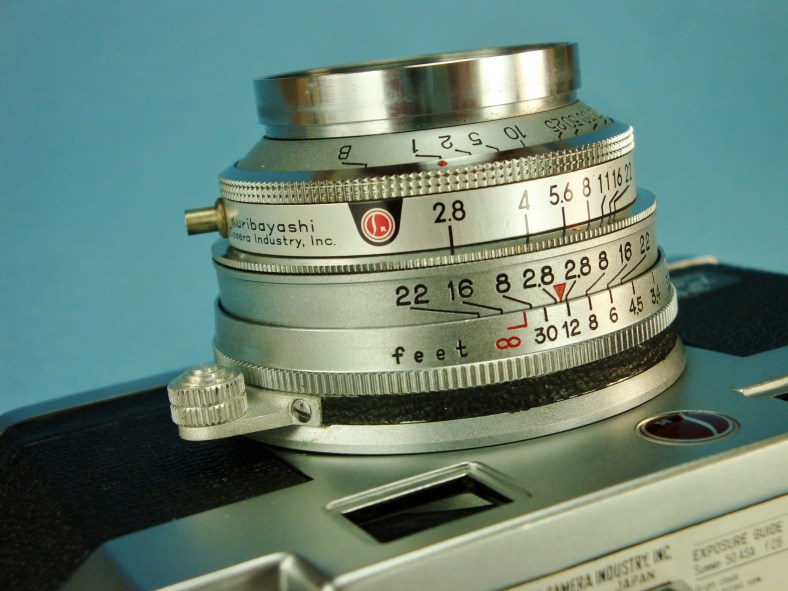
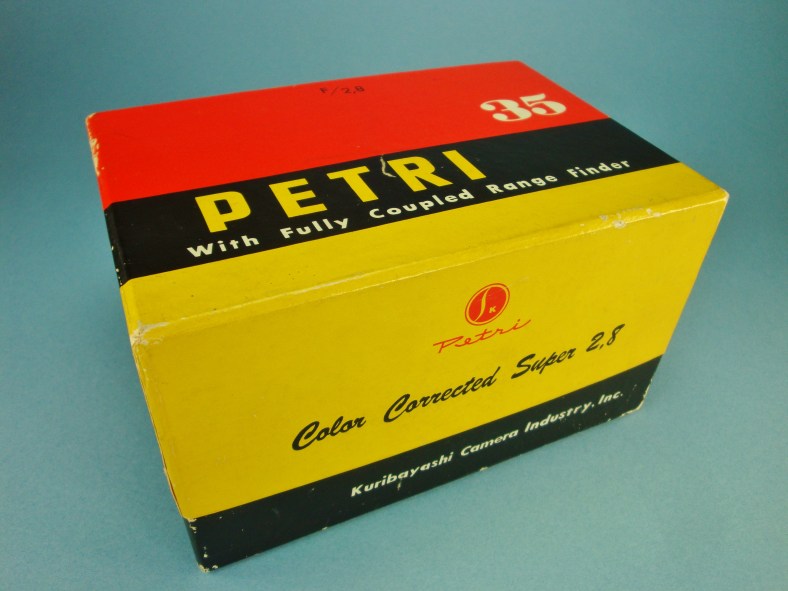
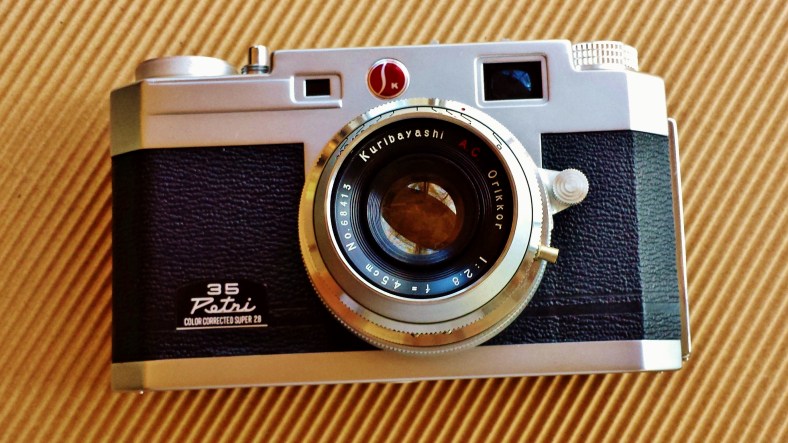
This Petri 35mm rangefinder was purchased in June 1956 at a U.S. military facility in Japan. It came with excellent documentation – sales receipt (not shown), instruction booklet, guarantee card (dated 4 June 1956), a JCII hang tag (May 1956), original metal lens cap, the leather case (not pictured) and the original box. It was nice to see that all of these items stayed with the camera after all these years.

16420431011_be464b9c9d_o-1

We don’t normally collect rangefinder cameras – this one was included with a Yashica TLR from the same year (and purchased by the original owner at the same time). After some initial cleaning and inspection it was discovered that the lens (last element inside) was ripe with fungus. I had a feeling it would (most of this era do) as it still had a roll of film inside with a light white haze on it. Not a good sign. Everything worked on the camera but there was no point in testing it with a fresh roll of film – way too much fungus. I don’t try to clean the lenses on these types of cameras. My one and only attempt resulted in a completely clouded lens.

16234960717_d73e79839e_o

16234409528_f15500ab29_o

16234975687_f6f1e6bd6e_o

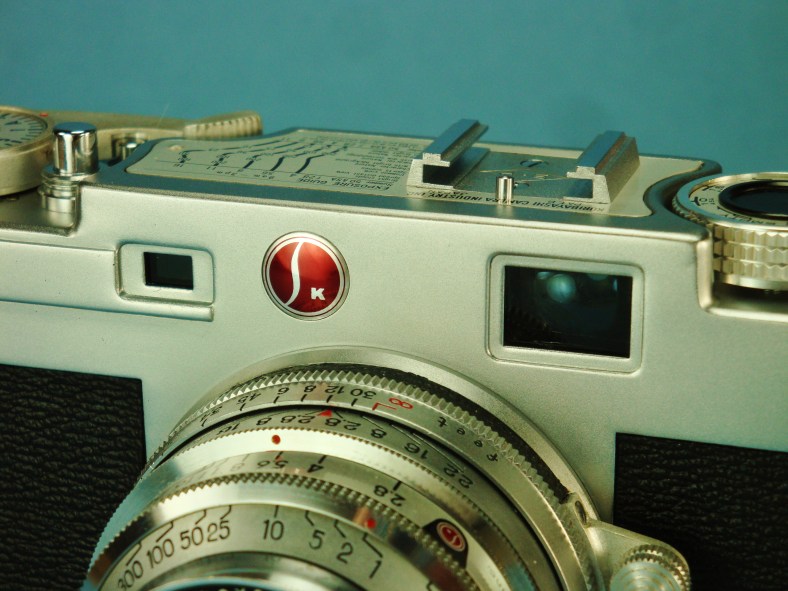
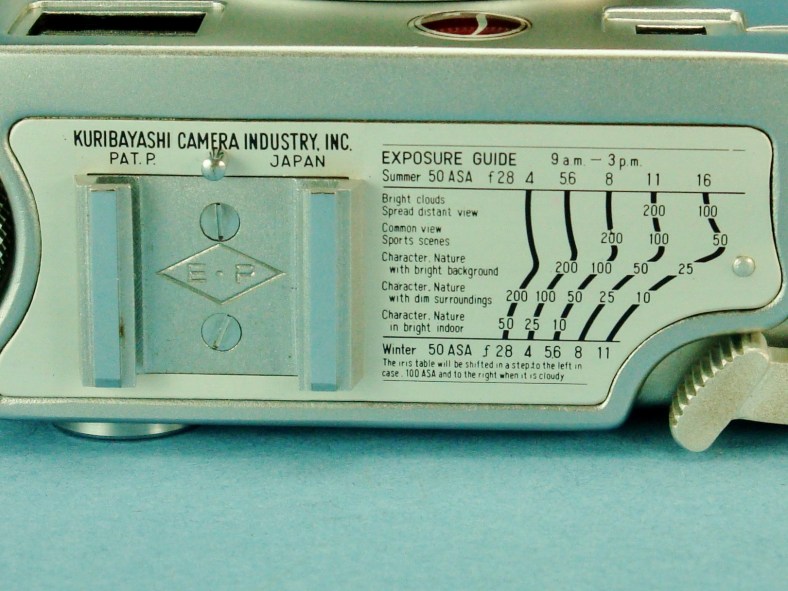
In our opinion, this mark identifies mostly cameras and camera equipment and sometimes electronics like stereos, that were sold in Japan for export. The <E.P> stands for ‘Exempt Product or Exempt Purchase’ to let customs officials know that fees (taxes and the like) were not paid. This allowed foreigners living in Japan to buy high quality products and not pay taxes as long as it was purchased for personal use. Mostly available at U.S. military facilities (Navy Exchange and the like). May have also been available for diplomats and their families and tourists that shopped in the duty free shops. Notice that the symbol is on the camera’s cold shoe (accessory shoe). The camera maker could easily change the shoe for a camera made for sale in the domestic market.

This lovely set is now proudly owned by a collector in Italy. He purchased it with full disclosure on our part that the lens had fungus. Some of our more collectible Yashima-Yashica twin-lens reflex (TLR) cameras have some fungus and mold spots. They have all been exposed to strong sunlight and are stored properly to prevent further fungus and mold growth.

16380073987_e944d6f69f_o

16421815085_c4b6dc1107_o

16564472901_61ca4c15fb_o

So there you have it – a short photo essay on a very attractive camera and set from Petri. We wish that it could have stayed in our collection since it was so complete – but our true focus is Yashica 35mm SLRs and Yashica TLRs with an occasional rangefinder thrown in for fun!

Camera(s): Sony DSC-W170 and Samsung Galaxy S4

Many thanks for your visit – comments are always welcome. Chris & Carol ^.^
Neat Little Find

This camera cleaning cloth with an advertisement on it was with a Minolta camera we just acquired from a seller in Mie Prefecture, Japan.

A machine translation tells us that it is for a camera shop in Tokyo – Sakaecho – Tama 多摩ニュータウン.

Neat find from about 1963 or so… especially with the Contax camera depicted.  It’s 15 x 15cm square. We love the 4 digit telephone number! Just before the 1964 Tokyo Olympics.

img_20170207_0002

Thanks for your visit!

C&C