Costly Mistake…

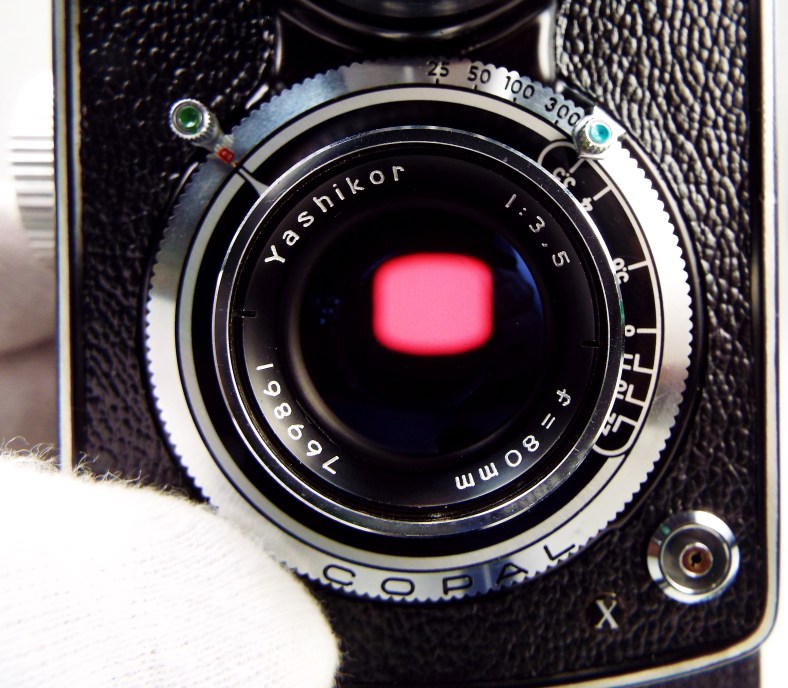
It’s the best looking non-working Yashica TLR in our collection! There. Got that out of the way. This Yashica-Mat medium format camera is from 1968 and is in mint condition. The Mat had a super long run for Yashica – 1957 to 1973. Lots of pretty Mats out there to be had. Lots of dogs too. Sometimes the dogs work great and sometimes the pretty ones are dead in the water (DIW).

This one is DIW (nautical term meaning not moving). In my haste to add a good looking Mat to our collection, I overlooked a fatal flaw that often happens with these cameras…
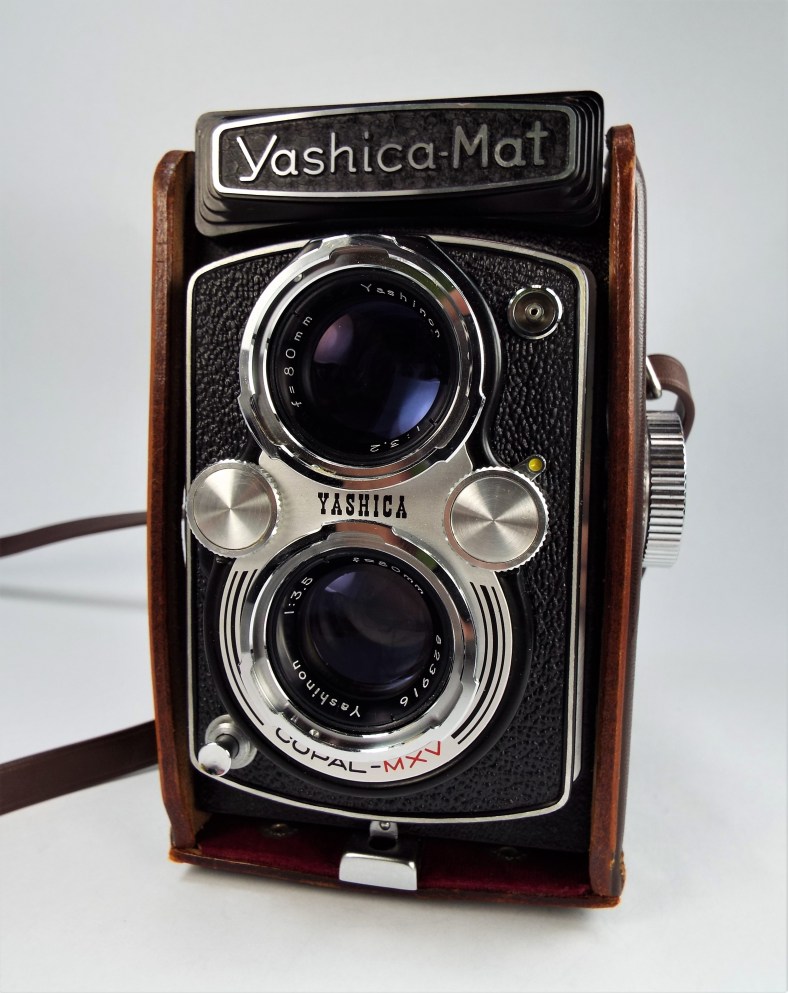
dscf3332

Do you see the flaw that I missed?

How about now?

dscf3331

Look closely… do you see it yet?

How about more of a hint?
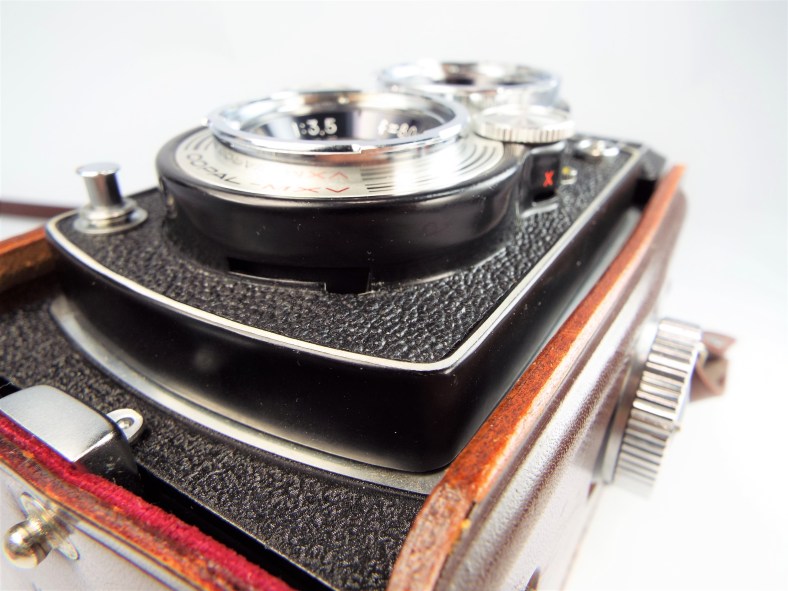
dscf3333

Okay, I’ll point it out.

dscf3334

Missing self timer lever. Did you see it right away? Pat yourself on the back if you did.

As I mentioned in the beginning of this post, in my haste to add a nice Mat to our collection, I failed to notice that the self timer lever was missing. No big deal right? It is and I know better. The lever is a small thingy with a little red dot of paint on the end of it. When it’s there, it should be all the way to the right (when looking straight on at the camera’s face). If it’s missing (as in this case) don’t buy it unless you enjoy repairing cameras. If it’s all the way to the left then ask questions of the seller. What happens is that the self timer lever should not be missing and should not be engaged to the left. In the instruction booklet, Yashica clearly cautions – “Be sure to move the synchro selector to the X position when using the Self-timer”.

The synchro selector lever is the little thingy sticking out just above the right thumb wheel as seen in image 1 (it has a little yellow dot of paint on it). The X position is pushing the level down (you can just make out the red X in the image above).

dscf3332-2

Syncro selector lever (yellow dot thingy) in the up M position (M is in yellow on the camera body).

Remember, yellow dot thingy lever up is in the M position. Yellow dot lever pointing down is in the red X position. A review: no self timer lever = run! Usually someone has forced the lever one way or another because the lever is stuck to the left. If the lever is in the left position and the yellow dot lever is in the up or M position then ask the seller a bunch of questions. Please ask if the shutter button trips the shutter when pressed. More then likely the answer will be no.

In closing, if the camera you’re interested in is photographed slightly turned as in this example below, it’s easy to overlook the missing self timer lever. Ask questions before purchasing it.
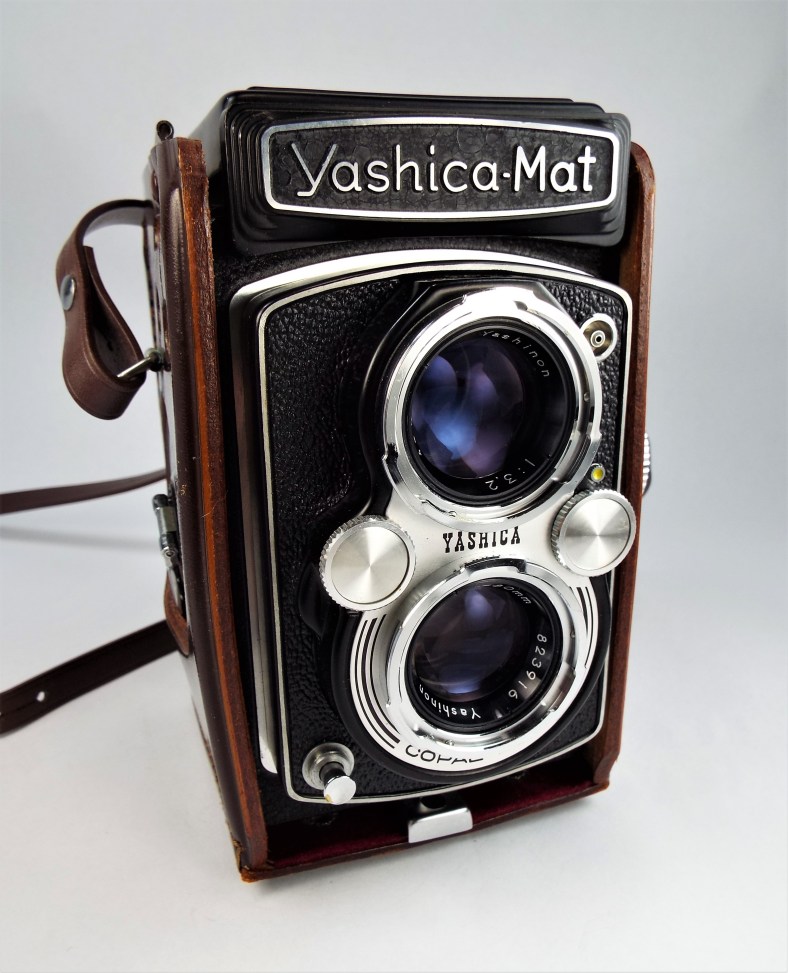
dscf3335

s-l1600-27

Here is an example of a Yashica-Mat with the self timer lever almost all the way to the left. I checked another image of this camera and the syncro selector lever is on M (which is in the up position). This is a classic case of what I’ve been talking about. You need to ask the seller if the shutter fires. More likely it does not. Run!

Completely my fault for not checking the lever and not asking questions of the seller.

Thanks for your visit… comments are always appreciated.

Chris

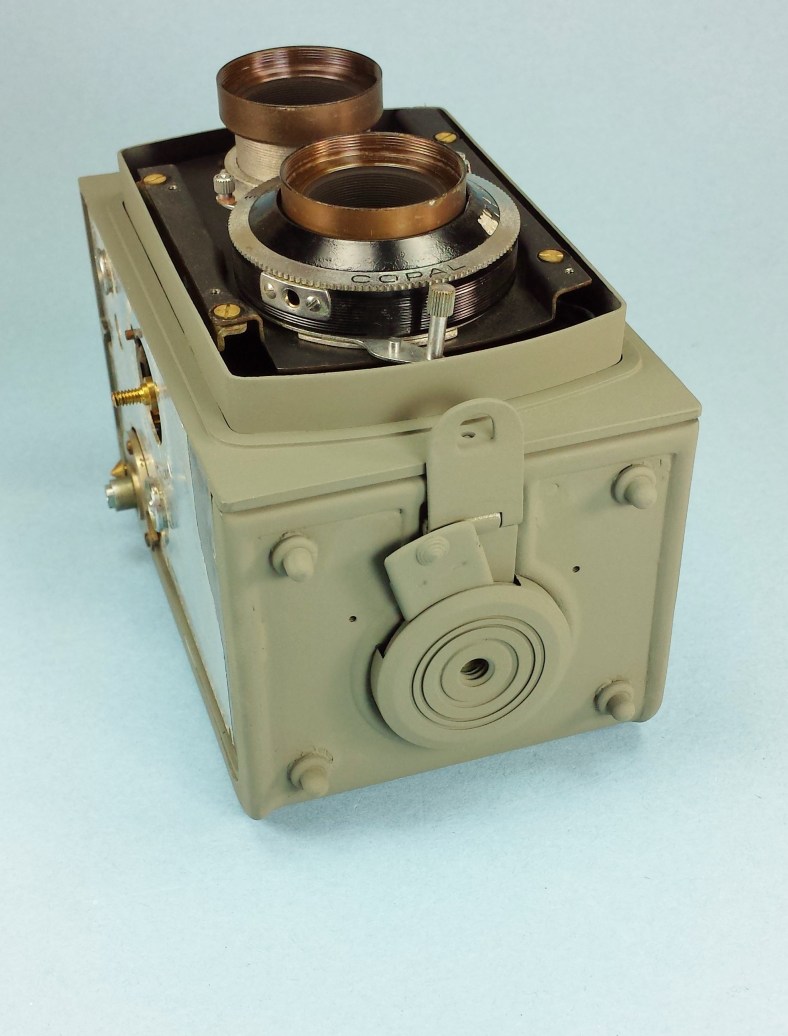
Yashima Yashicaflex A-II

Our Yashicaflex A-II is headed for the finish line – soon! These images were from day one and day 100 (just kidding about the 100). There have been so many issues to deal with restoring this 63 year old camera that it’s been a slow go. While this restoration has been an ongoing process for us, we’ve used some of our time to address some of the other cameras in our collection that needed only small repairs and a good cleaning.

Day one is pictured below. After prying the camera from its leather case (literally), the rust and corrosion were widespread and had eaten deep into the metal. Dirt everywhere! But the camera functioned! Glass was mold and fungus free but dirty and the shutter was accurate.

22024859392_8ffe58f0a3_o

The die cast aluminum body and back door were corroded big time. The thin metal parts were rusty and pitted. The leatherette was dry and brittle with many missing pieces.

Below the same area after 3 coats of etching primer and filler putty to “replace” the missing aluminum due to the depth of the corrosion.

22555908617_27904de611_o

By this point some of the final finish coats of primer and filler could be applied. Lots of sanding between coats. At least the corrosion was gone and something of a finish could be imagined.

The camera will be re-imagined and restored. Since it’s not a rare Yashica model, Carol and I feel free to express some creativity in the re-build. Stay with us as I believe we’ll be able to have the finished product ready to show by early spring. The Yashima Yashicaflex A-II ‘Sakura’.

Thanks for your visit!

Chris and Carol

Yashica Pentamatic

We haven’t had the opportunity to focus our attention on the Pentamatic lately. Carol is still working and I’m the retired one. I keep the home business rolling in our studios and lately most of my free time has been spent “rescuing vintage film cameras” – cameras that most people would probably throw away rather than restoring them. We just can’t bring ourselves to do that. Now let me be clear, restoring old cameras is as close to the most crazy thing one can do with their spare time. The amount of hours spent stripping old paint, chasing away rust and corrosion, cleaning lenses and restoring leather cases never equals a smart return on the hours and dollars spent. But we love re-imagining a 60 year old camera into a useful machine again and at the same time make it a work of art.

Anyway, we hope to be able to showcase one of our TLR restorations soon here in on blog. In the meantime, I ran across a few forgotten images of one of our Pentamatics today and I thought I would share them. They haven’t been posted elsewhere – when I first downloaded them I wasn’t sure that I liked them so they sat and sat. Today (after a few tweaks) here they are.

20150106_145916

20150106_150056

Both images were taken on the same day in our ca. 1911 post office building here in town. The one hundred year old windowsill provided a nice setting for the modern lines of the 1960 Yashica. Strong light flooded the space via the very dirty windows which in turn diffused the light nicely. I reflected some light back at the Yashica via a white shirt I was wearing. The bottom image is the same camera placed on the floor about 10 feet away from the windows. I liked the color and grain of the wood (fir or southern yellow pine) and again the 100 year old wood provided a nice contrast to the Pentamatic.

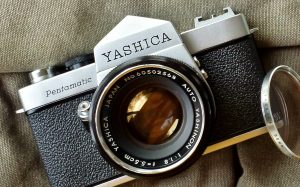
The Pentamatic remains one of the most invisible of Yashica’s SLRs. I’m drawn to it because of its rather unique styling – a clean pentaprism design, front mounted shutter release button and of course its crazy big lenses.

Thanks for your visit and please feel free to share your comments with us.

Chris & Carol ^.^

The often underappreciated Canon T70

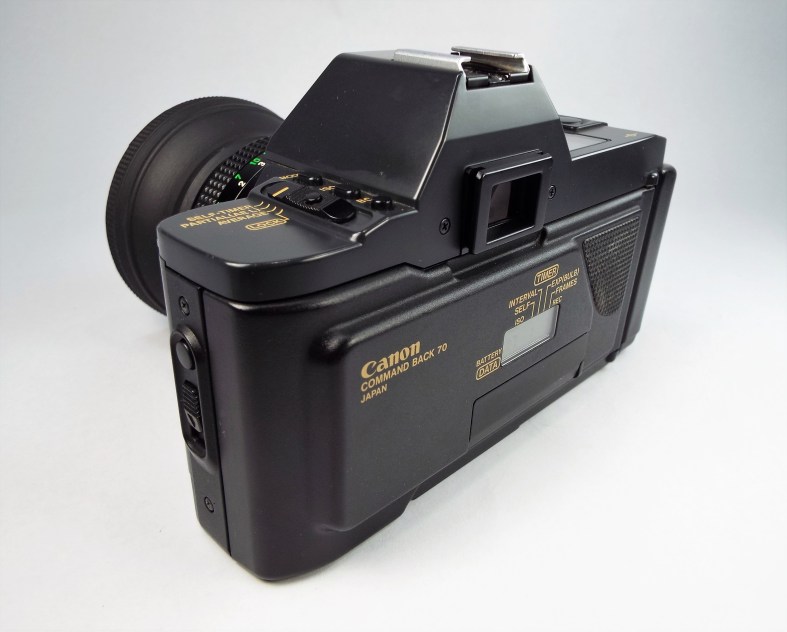
One of Canon’s little gems! The T70 (1984) was a giant leap forward for Canon and for the entire 35mm camera industry. Coming off the success of the Canon ‘A Series’, the T70 (yes there was a T50 first but the T70 blew it away) was a giant departure from the norms established by Canon. Firstly, it didn’t look like any previous Canon SLR – distinctive style and color, built-in winder, multiple program AE exposure and two metering modes. If you wanted to add a data back, then Canon had a Command Back 70 ready to go.

dscf3255

This one is from April 1984… still, in our opinion, one of the neatest Canons of all time!

The rubberized right hand grip made the body super easy to hold and the incorporated power winder made manually advancing film a thing of the past. The ‘T’ bodies accepted all of Canon’s FD lenses without exception. Mated with the Canon FD (N) 50mm f/ 1.8 lens made the T70 a rather compact and user friendly camera.

dscf3262

Simple layout and clean design.

dscf3263

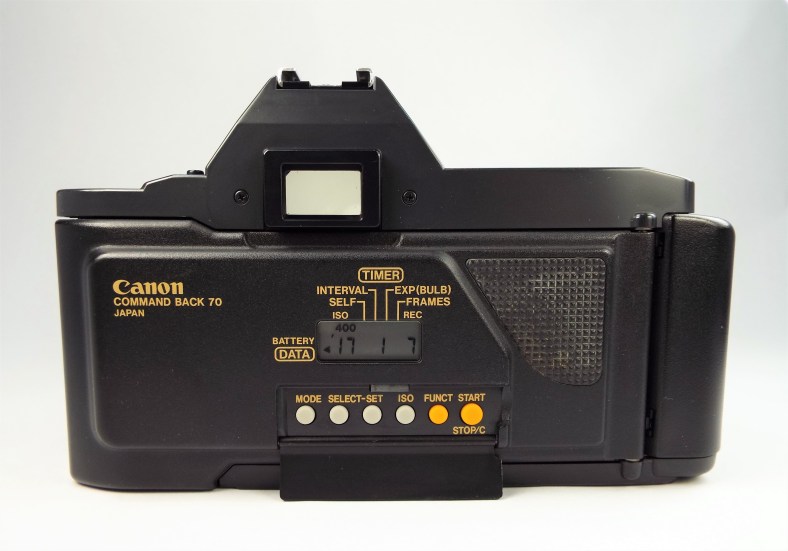
Optional accessory – the Command Back 70 replaced the often bulky data backs found on the F-1 and A-1. This one can date images until the year 2029! Of note – the common fault with these data backs are you’ll often find that the LCD will sometimes “bleed” the LC in the display. This one, for whatever reason, has escaped that fault.

If you want a great, and we mean great 35mm film camera to use, then by all means find a good T70 and fire away.

dscf3265

One of our all time favorites from Canon.

Thanks for your visit… your comments are always welcomed and so are your questions.

Chris and Carol ^.^


Canon F-1

dscf3313

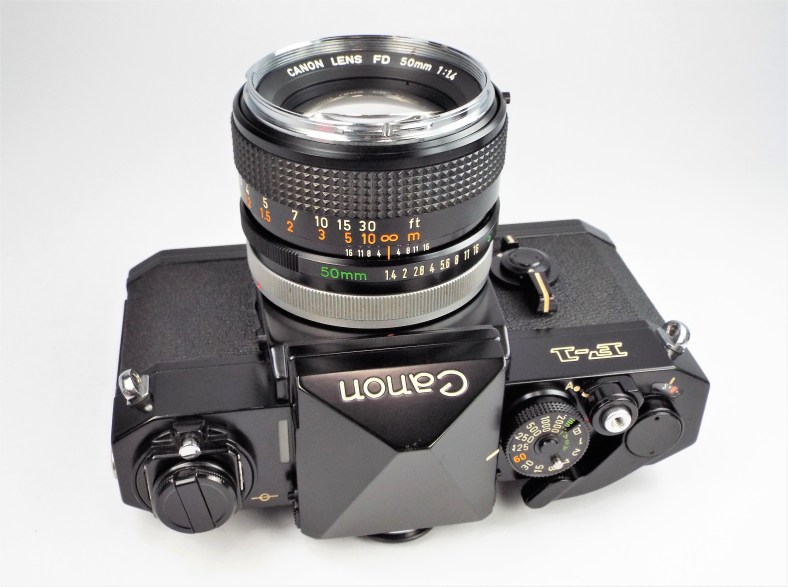
First version Canon F-1 with its gorgeous chrome nosed FD 50mm f/ 1.4 lens.

Canon F-1 from April 1972. This was the first version of the F-1 and it sports a rather low serial number. We’ve held this one back all these years with just occasional use (mainly in the studio). Our field tested F-1 (not pictured) was acquired new in 1978 (2nd version F-1) and it’s the one that’s traveled the world – getting seriously wet in Hong Kong, Japan and the US- dropped in a photographic safari bus in Kenya – slid off a train seat in Tokyo – and was briefly “lost” in Diego Garcia!

dscf3304

All original stuff from 1972.

dscf3318

Note that this super early FD lens does not have the SC or SSC markings on the lens ring.

I started 35mm SLR photography with a Nikonos II and then purchased my first Yashica (TL Electro-X) and then into Canon we went. We need to find some time to take this one out and put that classic glass to good use! Nothing like holding an old friend again.

Thanks for stopping by!

Chris

Custom Presentation Box for the Tower Type-3… 1953

dscf3291

1953 Tower (Nicca Camera Co.) Type-3 35mm Rangefinder with custom box.

This custom designed box is based on original Tower (Nicca) designed presentation boxes of the early to mid 1950s. The leather case, which is the original from 1953 was reconditioned – the leather was gently cleaned with saddle soap, some loose stitches were properly glued to prevent further separation and the felt interior of the case was also gently cleaned and refreshed. The case hinged flap had become separated so another piece of leather was attached and it’s as good as new. The entire case was conditioned to bring out the vintage patina.

dscf3302

The 64 year old leather looking great with a wonderful brown color.

dscf3296

Looking fine after six decades.

As collectors, Carol and I enjoy restoring vintage cameras and when necessary, reconditioning the often neglected leather cases. We love camera sets that include the original boxes, but when they’re not available we like designing custom boxes based on original designs and colors.

Thanks for your visit! We love comments so feel free to share yours!

Chris and Carol

Hit the Road 2016! Hello 2017!

Thank goodness 2016 is almost history! I’ve heard from friends in Australia that 2017 is going well (so far). Let’s not muck it up!

On a positive note – here on our blog, we’ve seen a significant increase in activity over last year (2015). Visitors to the site and views are through the roof! We (Carol and I) are thrilled that what started out as a repository of bits and tidbits of Yashima-Yashica information would gain the traction that it’s had. We thank you!

We enjoy the feedback we get and I can say that I’ve learned more than a few things from it. We’ve met some super talented people – photographers and bloggers that are out of this world amazing! We hope our readers got a little something special in return too. That was the goal of the ‘Yashica Pentamatic Fanatic’ -a sharing of knowledge about a silly camera that Yashica invented in 1959 that most people have never heard of.

29926651073_d141fae764_o

This year’s favorite.

In looking through the hundreds of film and digital images that we shot in 2016, this one turns out to be our favorite. We believe that every vintage camera is worth preserving (in some way or another) – we think of cameras as holding the heartbeats of all who may have gazed through its lenses, pressed its buttons and then anxiously awaited the results. We can imagine the thousands of faces and smiles that were captured and the thousands of important events in people’s lives that were saved for the future. Classic cameras do that for us.

Don’t get us wrong… we love the  world of digital photography but we also embrace the beautiful, often awkward analog machines of our past. We hope that photographers in the future will remember (every now and then) to pick up a classic camera, load some film into it and then set out to capture images with a camera older than yourself. Enjoy!

Happy New Year… we wish only the best for all!

Chris and Carol ^.^


(Nicca) Tower Type-3 35 mm Rangefinder Camera… 1953

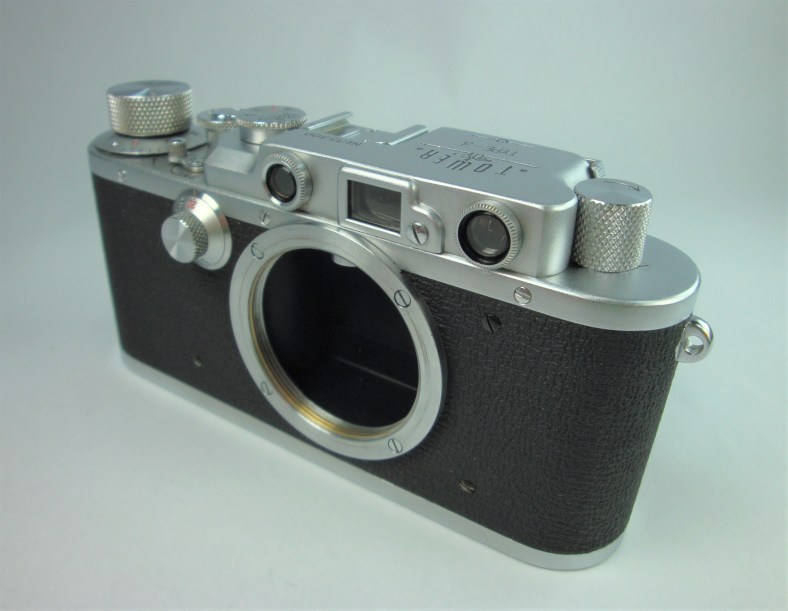
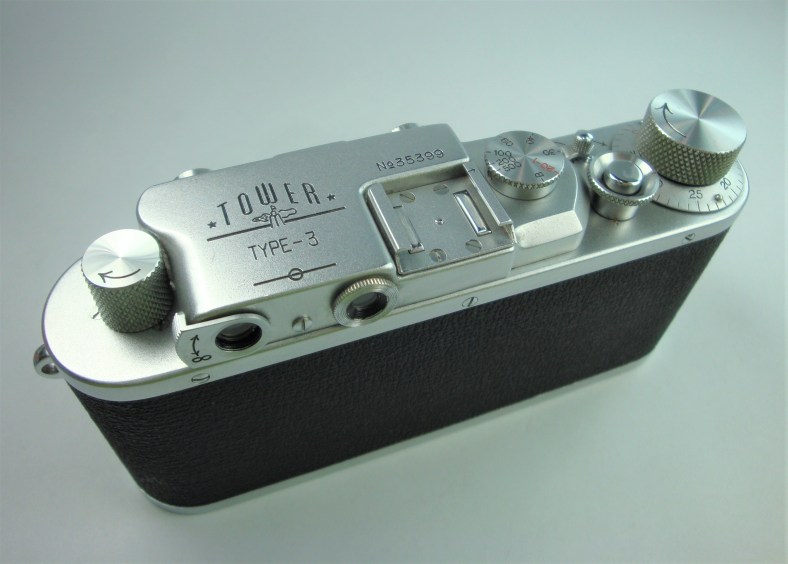
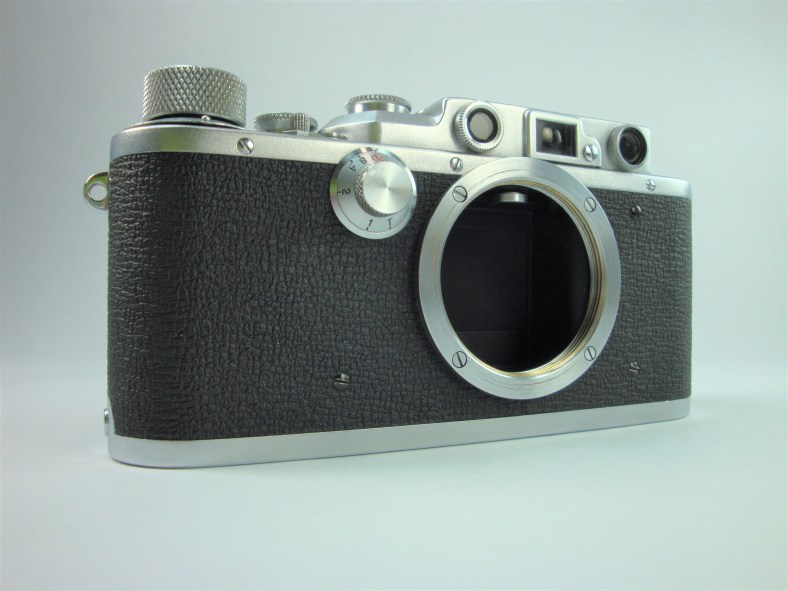
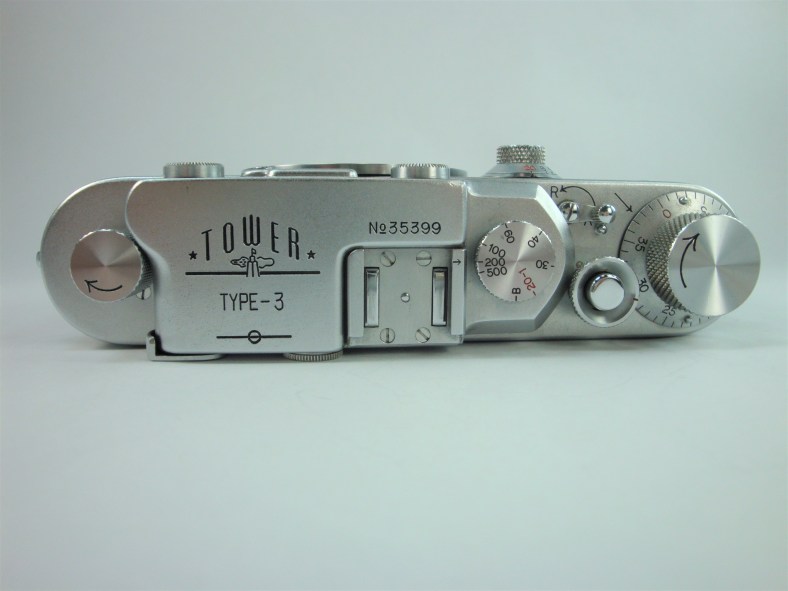
Nice little Tower Type-3 (or Type III) 35 mm rangefinder film camera from the early 1950s – made by Nicca Camera for the Sears, Roebuck and Company catalog. The build quality of the Tower branded cameras are no different from the quality of the Nicca camera as best as we can tell. It appears that Sears didn’t ask Nicca to lessen the quality like one might imagine – Sears was known for good value but not necessarily the best quality in our opinion.

By the way, these images were taken with our Sony Cyber-shot  (model DSC-W170) from 2008. It’s a basic point and shoot but sports a Carl Zeiss Vario-Tessar lens and 10.1 megapixels. It adds a nice “softness” to our studio shots especially of vintage gear and it’s fun (and simple) to use.

dsc08154

The Tower Type-3 (made by Nicca) is one of the best of the Japanese made Leica copies.

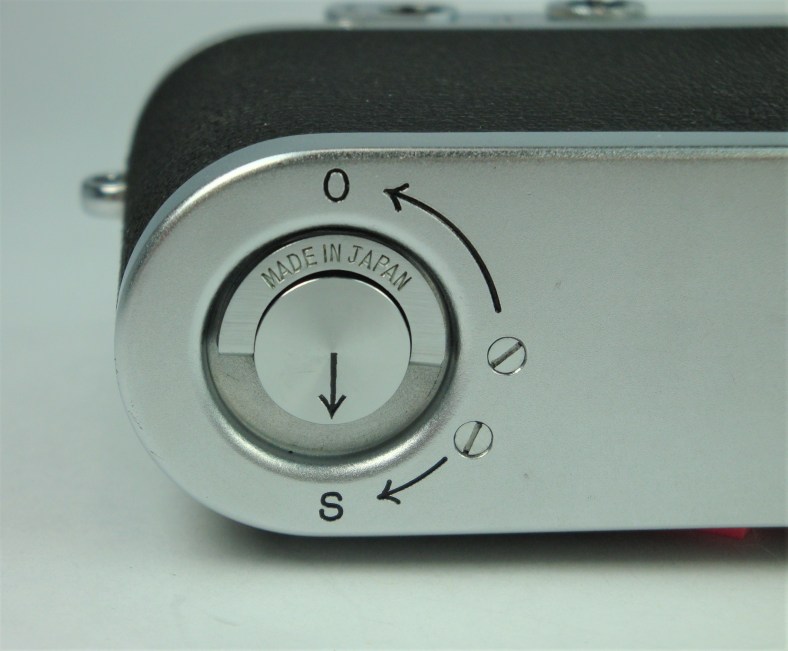
This camera appears to have been made in around 1953 – the serial number places it as a mid production model and the fact that the open-shut latch simply has ‘Made in Japan’ vice ‘Made in Occupied Japan’ engraved on it. The occupation of Japan ended with the adoption of the Peace Treaty signed in April 1952.

dsc08156

Open shut latch.

This camera works perfectly – the shutter appears to be spot on and the rangefinder-viewfinder is clear and accurate. We hope to be able to run a roll of film through it soon.

dsc08157

Super clean and free of significant signs of past use. A gem!

dsc08150

Designed to take the L39 screw-in lenses made by any number of lens manufacturers of the period.

dsc08151

Actually it’s an interesting logo – quite detailed and almost a retro look to it even for the early 1950s. 

As we’ve stated before, if you’re looking for a nice camera to experience the joy of using a vintage 35 mm rangefinder, then the Nicca and Tower cameras fit the bill nicely. Excellent fit and finish and they’re built like a tanks. You should be able to find well preserved models on various online auction sites for reasonable prices. If you see signs of corrosion or missing leatherette… run! Avoid these and buy the best you can afford. You’ll be happy you did.

Chris