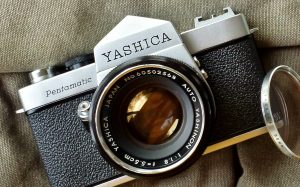
A little fun in the studio while this Yashica Pentamatic S gets a rebuild.
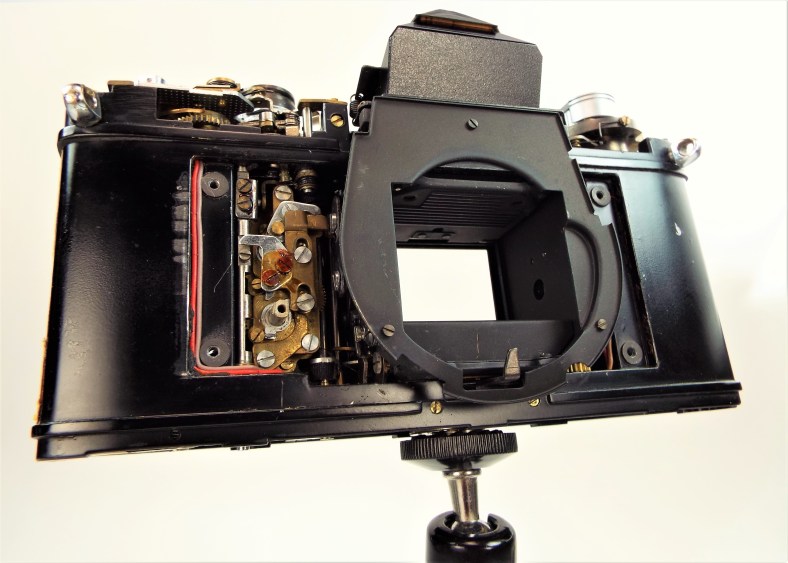
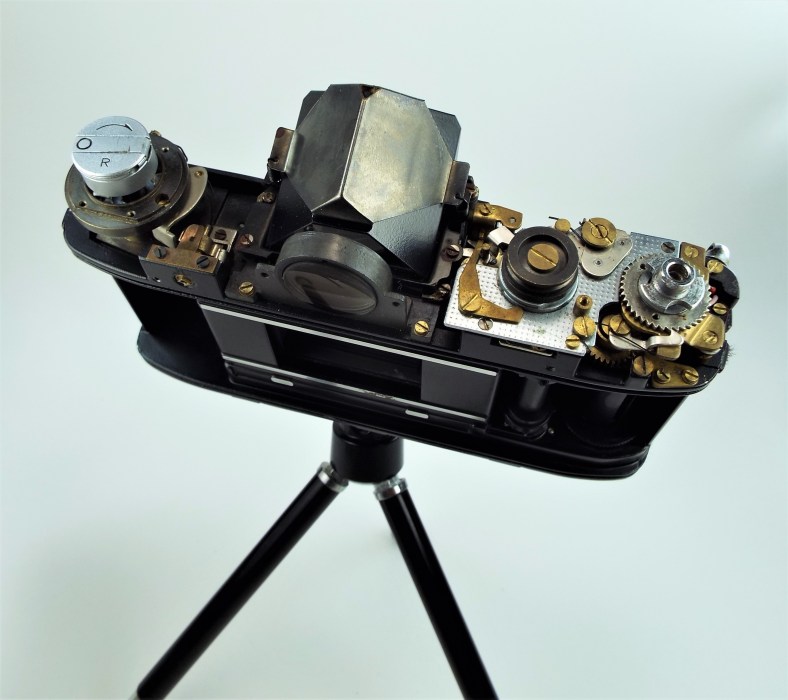
1960s tech ready for a restoration… lots of work ahead for this one.
Camera: Fujifilm FinePix S9900W
Chris
A little fun in the studio while this Yashica Pentamatic S gets a rebuild.
1960s tech ready for a restoration… lots of work ahead for this one.
Camera: Fujifilm FinePix S9900W
Chris
Nice little addition to our Pentamatic family of lenses. Purchased in Japan and was with an early model Pentamatic’35’ set in “well used” but stable working condition. It came with the original Yashica brown leather case, unbranded plastic rear lens cap, Yashica front metal 52mm push-on lens cap, unbranded lens hood, and a very nice looking Walz chrome metal and glass Skylight C. (cloudy) 52mm filter.

Pentamatic bayonet mount 13.5cm short telephoto lens… f/3.5 with rather low serial number. Early Yashica lenses were often given a serial number that starts with the focal length of the lens. In this example, ‘135 0722’ shows it to be a 135mm lens with a sequential production number of 722. Best guess is that this lens was made in early to mid-1960. We have another Super Yashinon-R 13.5cm lens with a serial number of ‘135 0927’.
The above image shows the lens partially disassembled for cleaning and inspection. No fungus or mold, but I’ve found some funky streaks on the face of the first removable lens element (large lens element to the right).

The chrome nose removed.

The main lens group removed. If you look closely, you may see the funky streaks across the face of the lens.

Aperture blades set at f/ 22. No oil and no problems (looking into the lens barrel from the front of the lens). Note the 12 aperture blades.
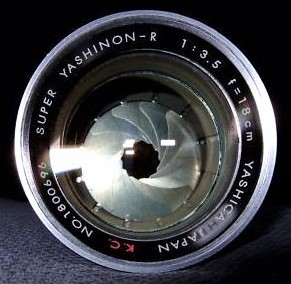
Here is a similar lens with the 12 blades that was for sale recently. The seller identified the lens as having been made by Kyoei Optical Co., Ltd. using the brand name “Acall” Kyoei was also abbreviated as “KOC” which may be the reason for the red “K.C.”
New info as of Feb 5, 2020 – At first, I guessed that my lens was made by Tomioka Optical as they were responsible for most of Yashica’s lenses. A reader has pointed out the similarities between my lens and the design of the Acall lenses with both Pentamatic and M42 mounts. I must say that I agree with them upon further review. Thank you for your input!
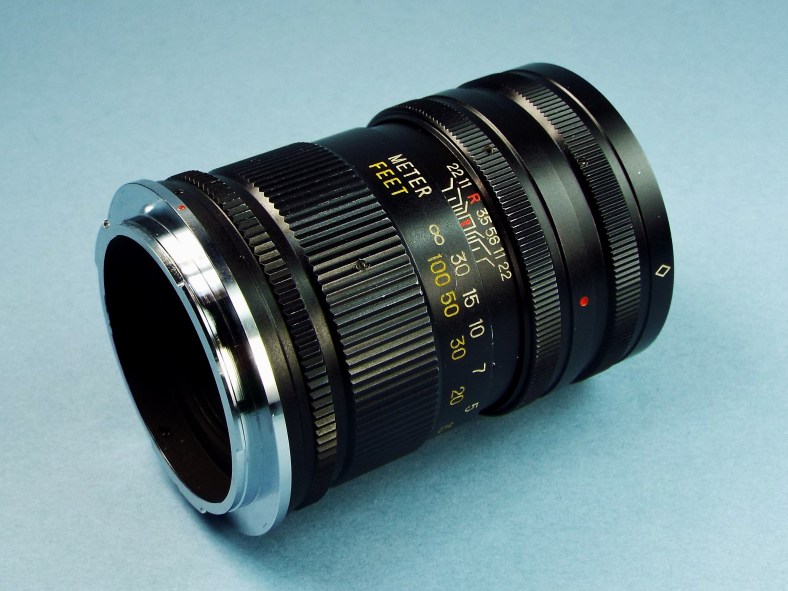
Partially assembled body. Nice clear markings and solid-looking bayonet mount.
These first Pentamatic lenses were pre-set and not automatic and were the kings of the heavyweight division. Lots of metal and glass here! When properly stored they were not prone to fungus… but almost all classic lenses will have some sort of mold, dust or fungal issues when left in the dark and in their leather cases.
Thanks for the visit!
Chris and Carol
You’re invited to visit our online store at https://www.ccstudio2380.com for some great vintage and collectible cameras, lenses, and accessories.

It would appear that this Pigeon may be a rather rare version. From late 1952 to early 1953… is this a Model IIA? It doesn’t match completely with the other known Pigeon models.
The Shinano Pigeon 35 was not a groundbreaking camera during its run… it was just a solidly built 35mm viewfinder camera that still works like a charm even after 6 decades of use. Shinano, which had its roots in Suwa, Nagano Prefecture in the early 1950s, would cross paths with another start-up manufacturer from Nagano… Yashima. Yashima would go on to make its first TLR and call it a ‘Pigeonflex’. Shinano faded and Yashima eventually changed its name to Yashica (1958) and the name Pigeon essentially dropped from sight and memory.

Complete filter set and lens shade from Shinano for the Pigeon 35.

Vintage view of the Pigeon 35 Model IIA.
More images soon… from the camera! If you would like to know more about the Shinano Pigeon and all things related to Yashima-Yashica twin-lens reflex cameras, please stop by my friend Paul’s amazing website http://www.yashicatlr.com/Pigeonflex.html#pigeon35
Thanks for the visit… Chris and Carol
Why show a 35mm viewfinder camera on a blog about the Yashica Pentamatic? Well, Shinano and Yashima-Yashica share a common history. The first camera that carried the Yashima name was the Pigeonflex… a twin-lens reflex (TLR) camera!
Anyway here’s a nice example of a gorgeous 35 mm viewfinder camera that we acquired recently. The lens is made by Tomioka… a sharp (we hope) Tri-Lausar f/ 3.5 4.5 cm lens. NKS shutter B – 1/200.
It’s a nice heavyweight camera that has a good feel to it. In our opinion, it’s far from being a cheaply built camera as some would say. In fact, it still functions as intended after 6 decades of use. Most leather cases would be a complete mess after this amount of time but the leather is nice and the stitching is intact.

1952 Pigeon 35 by Shinano.
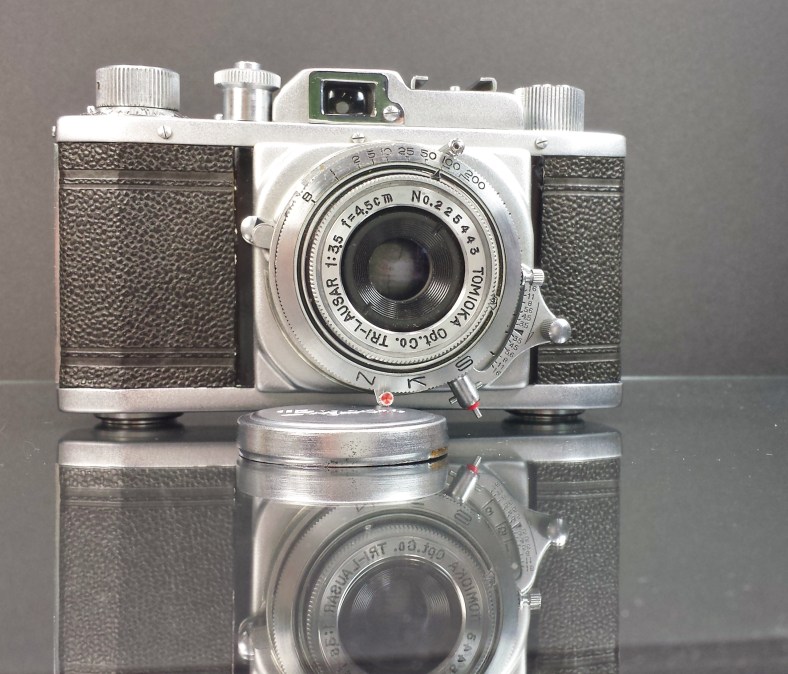
Nice view of the Tomioka lens.
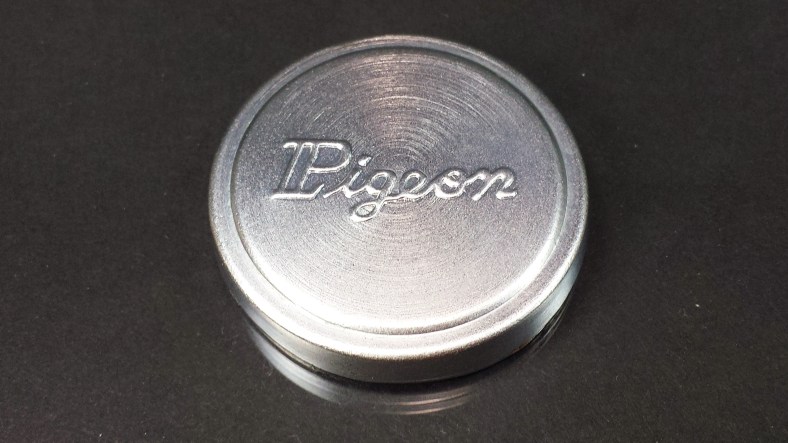
Beautiful logo on this metal cap.

Classic style. The top plate of the Pigeon 35.

After 6 decades of use, the case has held up nicely.

Interesting bottom plate
More to come! By the way, everything works just fine! Can’t wait to run a roll of film through it. Images of the leather case to follow too!
Thanks for stopping by! – Chris
My camera shop is always open at http://www.ccstudio2380.com
Yashica’s first 35mm single-lens reflex camera with the Praktica-thread (M42) mount lenses was the Yashica Penta J… at least here in the United States and in Japan. Elsewhere (most of the world) the camera was known as either the Yashica Reflex 35 or Reflex J (Australia and possibly the U.K.). As best we can tell, they were all the same cameras with different top plates to accommodate the different names (logos).
Part of the demise (lack of sales success) of the well-built Pentamatic series of cameras that preceded the Penta J, was that Yashica decided to go with a Pentamatic exclusive bayonet mount lens system. Sturdy and well designed to be sure, but being unique limited the available lenses that could be swapped between cameras. The Praktica design M42 screw thread mounting system was in widespread use at the time and Yashica’s bayonet design just went against the flow.
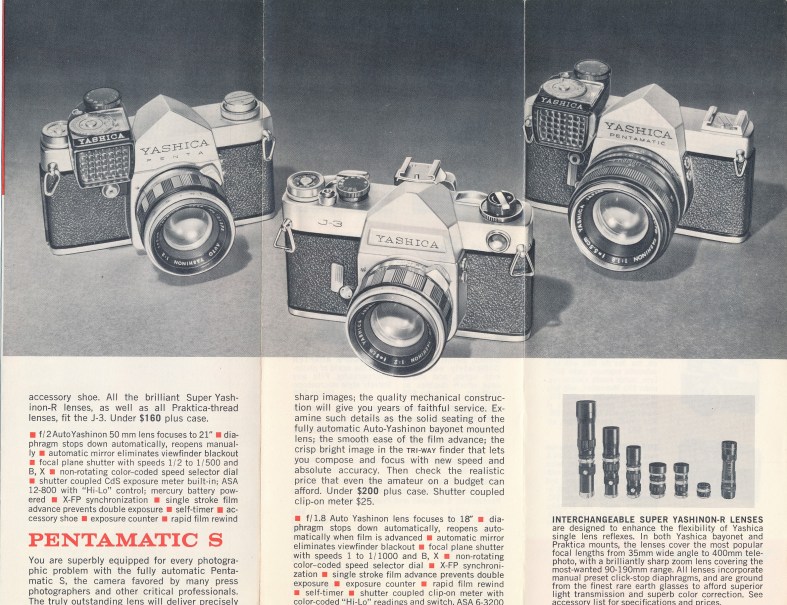
No date on this sales brochure but our guess would be early 1962. The J-3 is the newest camera featured as it had all the goodies one would want in a modern SLR. The Penta J (upper left) had just come out in 1961 and it was Yashica’s first 35mm SLR with screw thread mounted lenses. The Pentamatic S arrived in early 1961 but used bayonet mounting for its exclusive design. Notice that the pentaprisms on the Penta J and Pentamatic S share the same design while the J-3 breaks with the previous cameras and ushers in the style that would carry through the remainder of Yashica’s SLR run of M42 cameras.
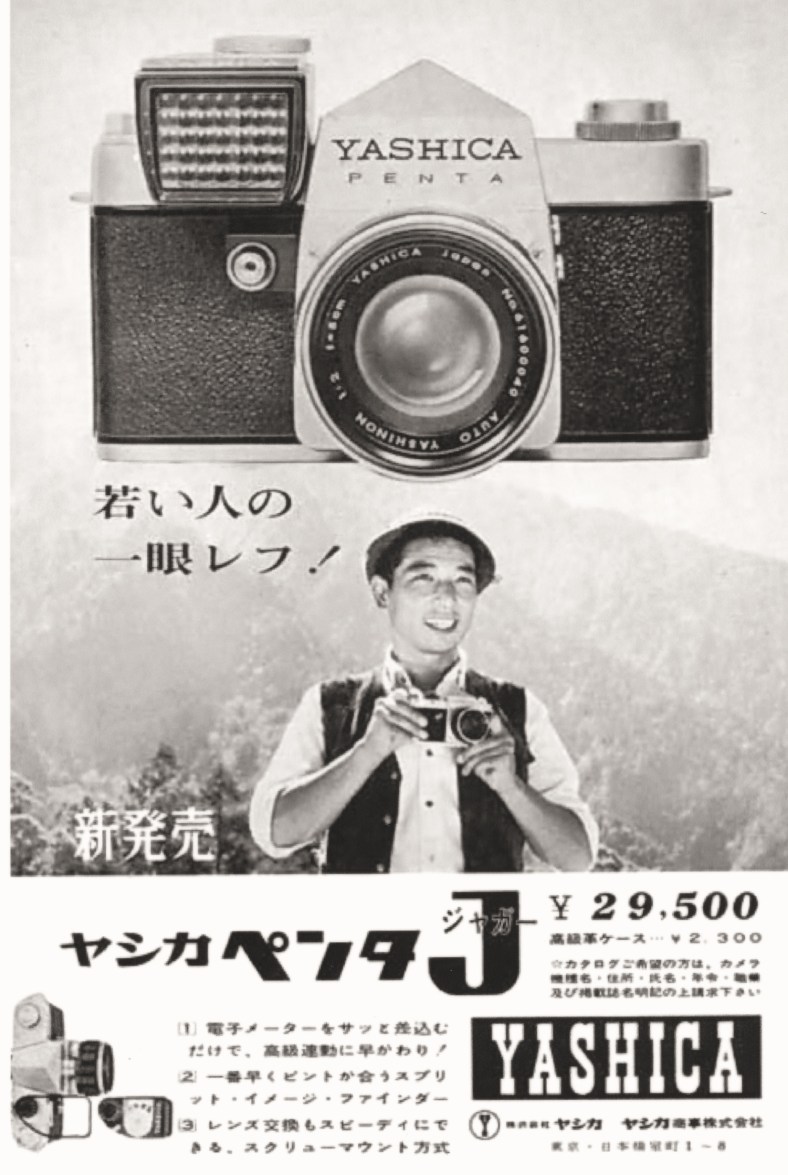
Yashica Penta J.
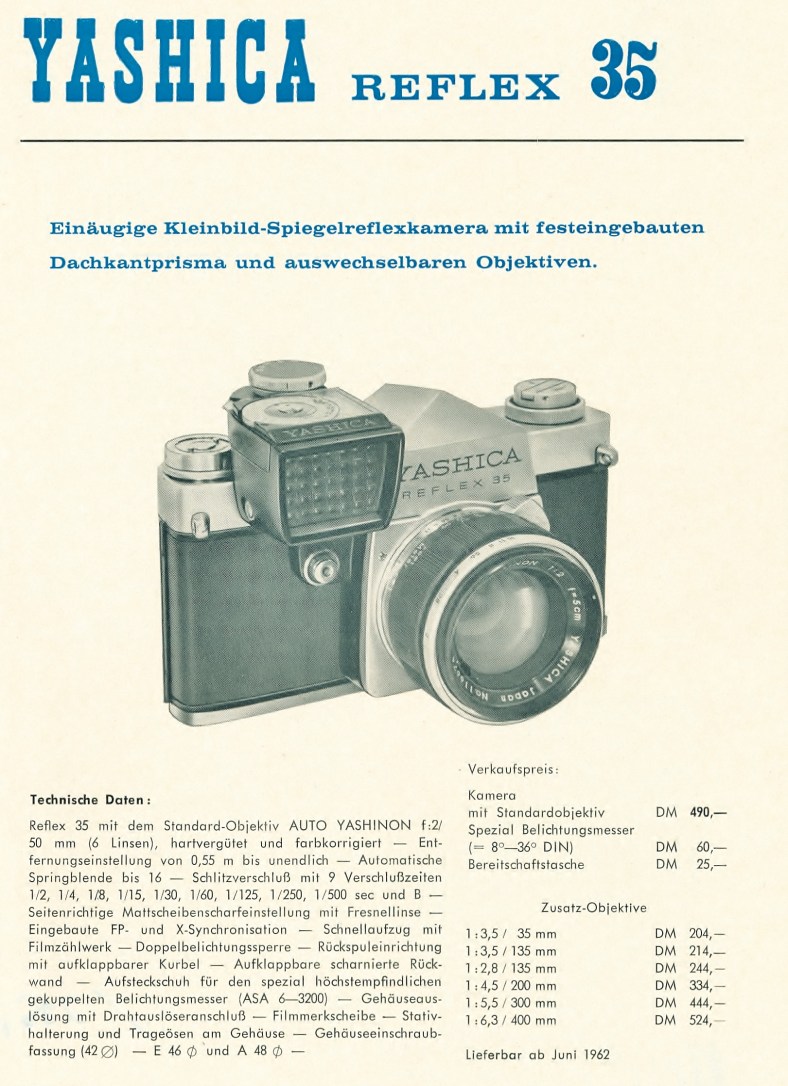
Yashica Reflex 35 in Germany.
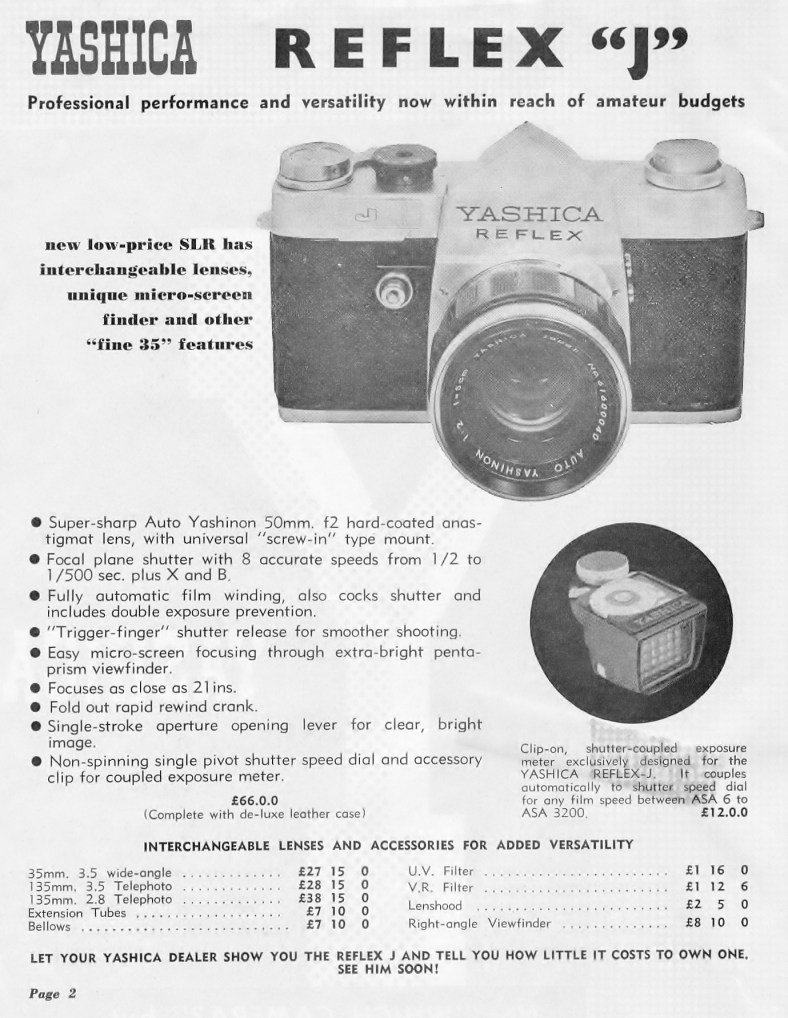
Australian Reflex J sales brochure.
Now fast forward to 1965 ish… Yashica introduces the new J-5 AND the J-P! In between those years Yashica had introduced the J-3 and J-4. Why would Yashica go back in time and bring out another 35mm SLR in 1965 that was the cousin to the 1961 Penta J? Notice we say cousins… not brothers. They shared the same platform with one another but as you can see in the image below the top plates were of a different design.
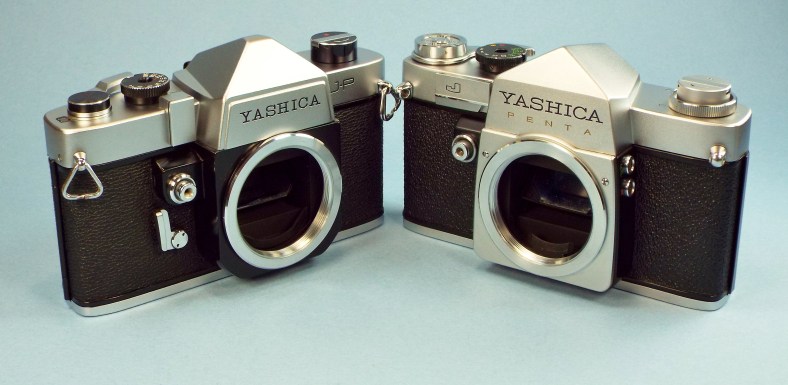
1965 J-P on the left and the 1961 Penta J on the right. Cousins but not brothers. The shutter release button is on the right front on both cameras… Yashica added a self timer on the J-P and of course the top plates are different (most noticeably the design of the pentaprism). Some small changes to the design of the mirror box. Unseen from this view is that the J-P does not have a ASA/DIN dial like the Penta J had on the camera’s bottom left. Small note about weight… Penta J weighs in at 656 grams and the J-P weighs only 619 grams. No built-in exposure meters but accessory exposure meters were available at additional cost.
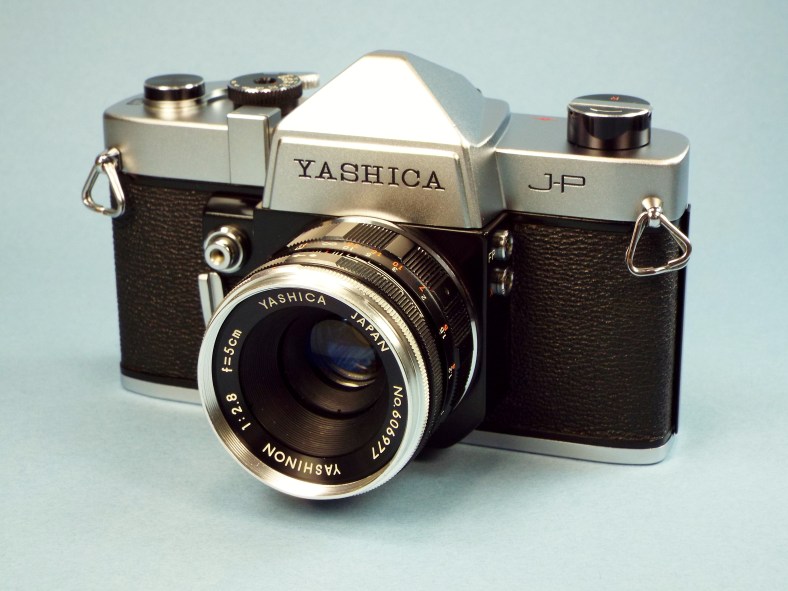
The J-P with a rather unique 5cm f/ 2.8 lens. The lens has to be the smallest of the M42 mount lenses and certainly it’s one of the lightest at only 136 grams!
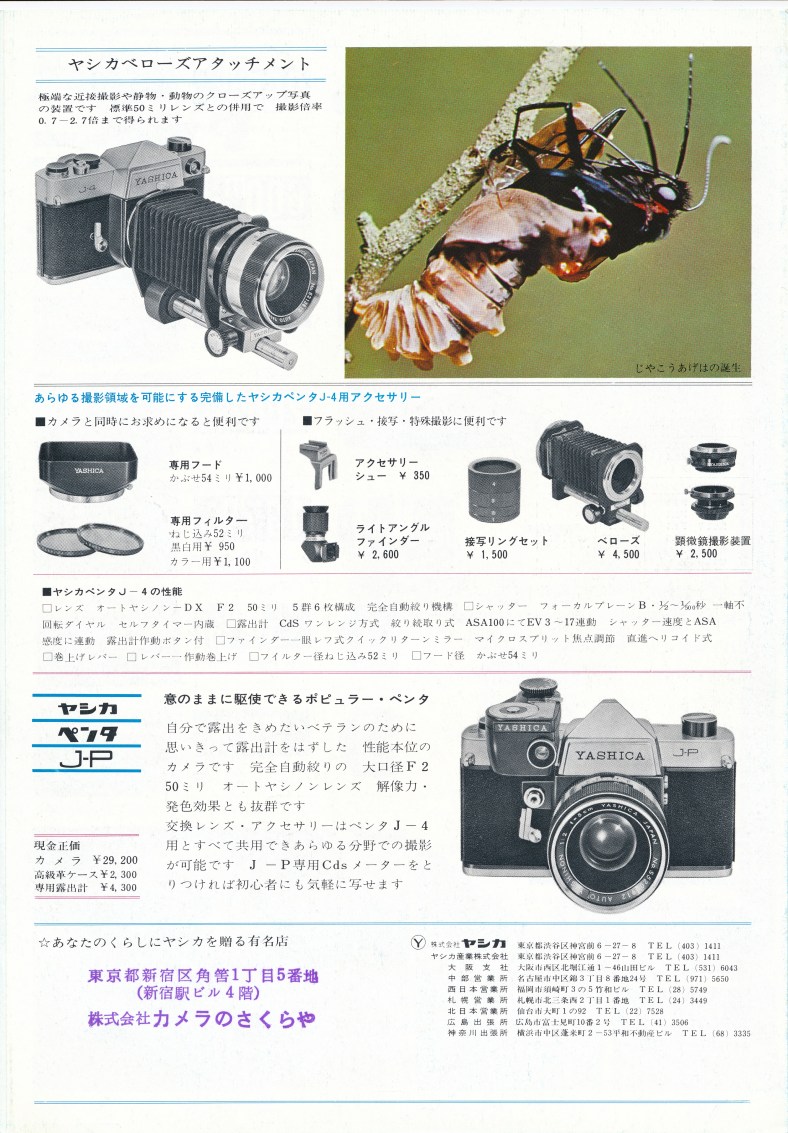
The J-P advertised together with the J-4.
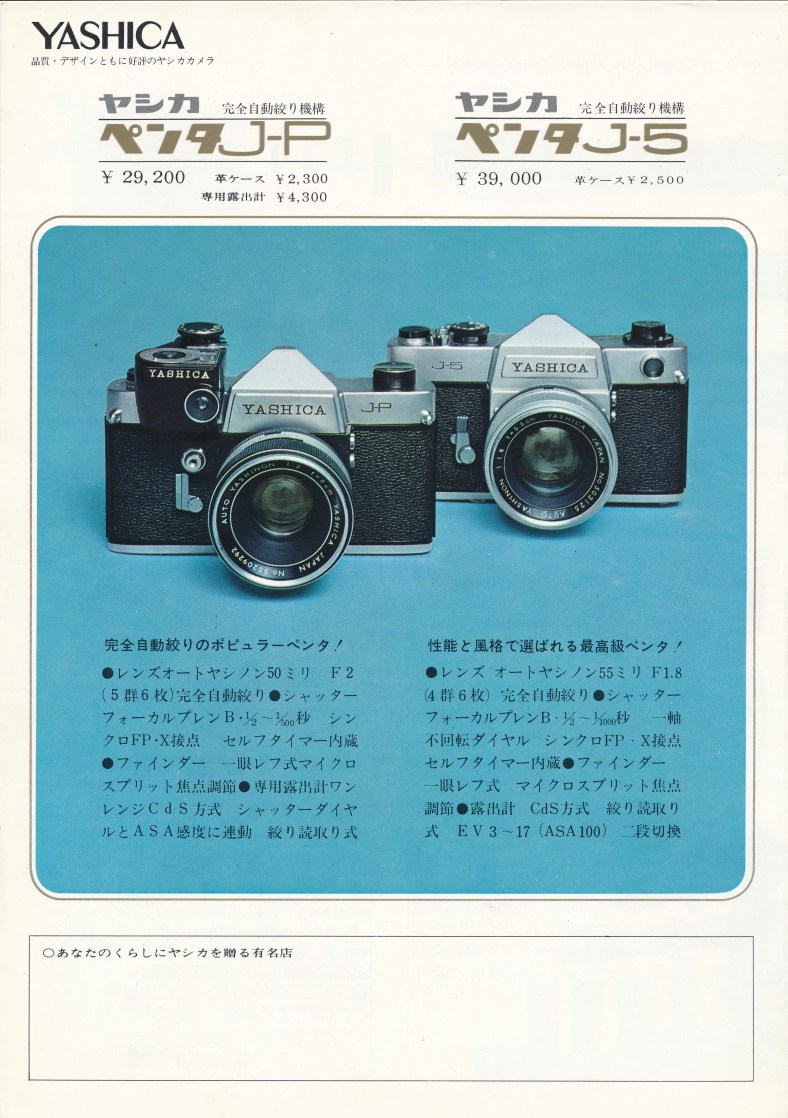
The J-P advertised with the new J-5.
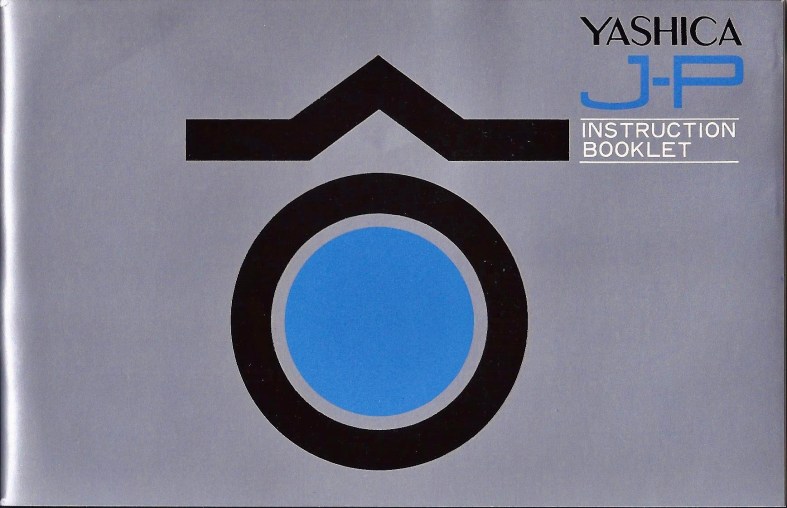
J-P instruction booklet from 1965 (in mint condition too).
Stay tuned… more to come on these Yashica classics.
Many thanks, Chris and Carol
We were finally able to assemble our Yashicaflex Rookie ‘stuff’ for some studio shots. We’re still missing some items to make the set complete but so far the collection is looking good.
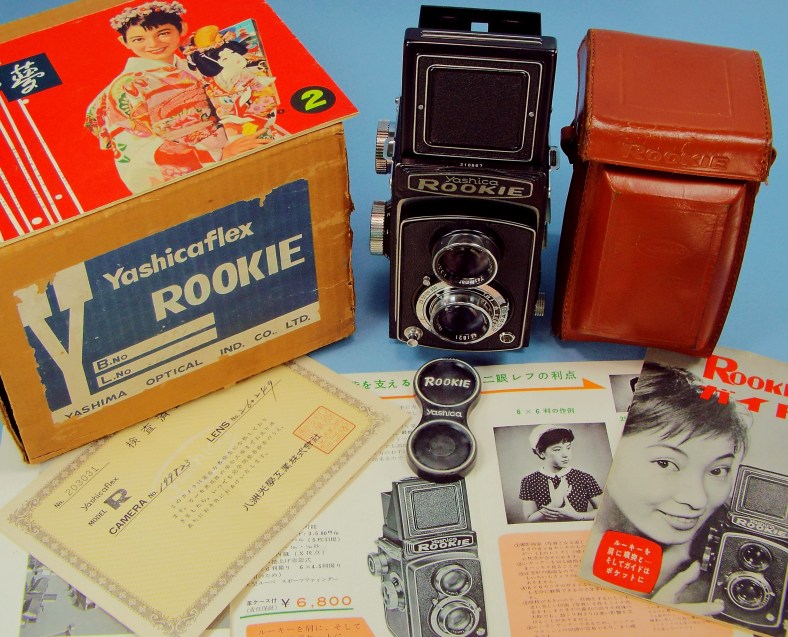
The outer box (or shipping box) for the camera and its leather case is on the left. Of course the camera is in the center with the Rookie leather case to its right. The Rookie instruction booklet is in the lower right of this image and a colorful Rookie sales brochure is just below the lens cap. A warranty (service certificate) card identifying that this camera is a Yashicaflex Model R is just below the box and finally another sales brochure that features the Rookie is on top of the box.
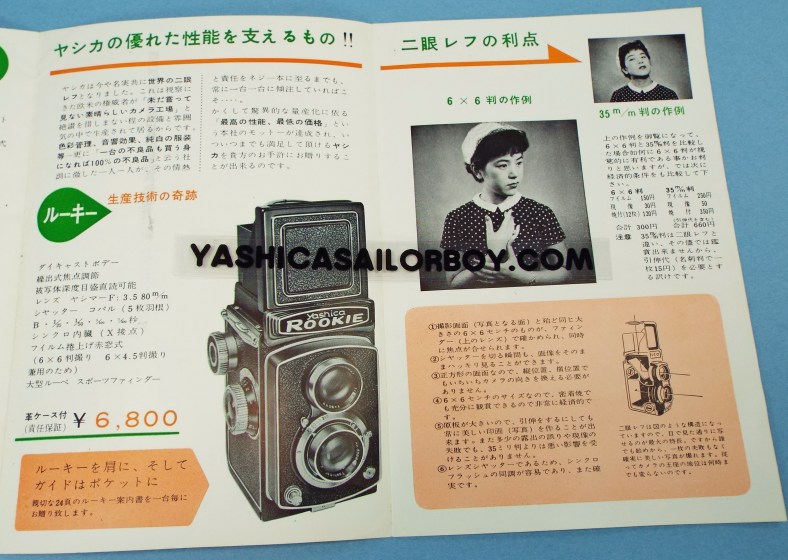
Original 1956 sales brochure.
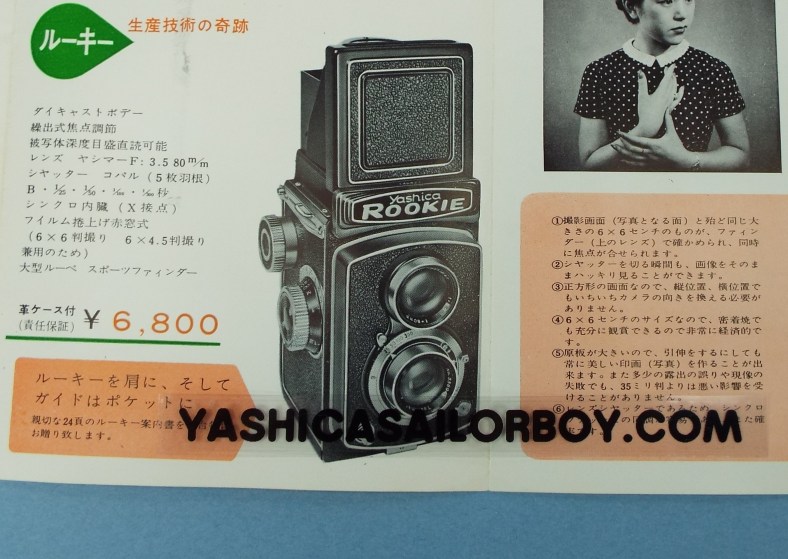
Sales brochure from 1956.
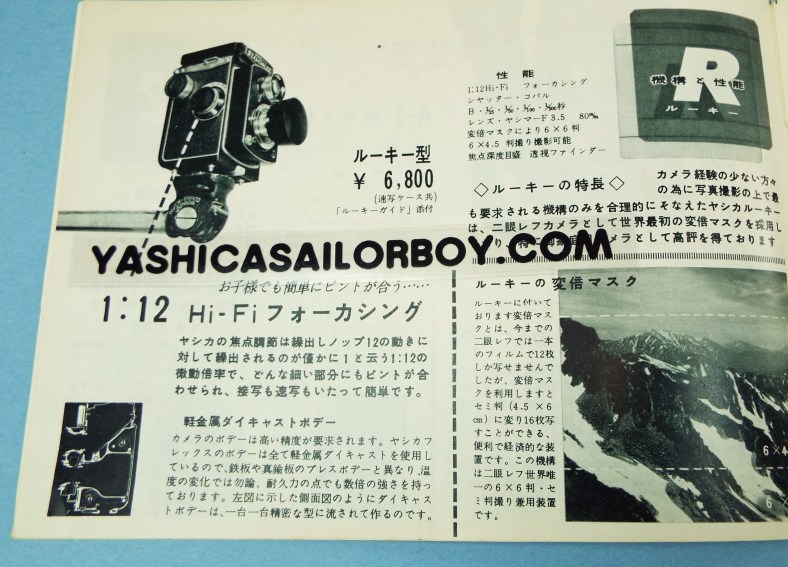
Certainly an entry level twin-lens reflex camera with some nice features.
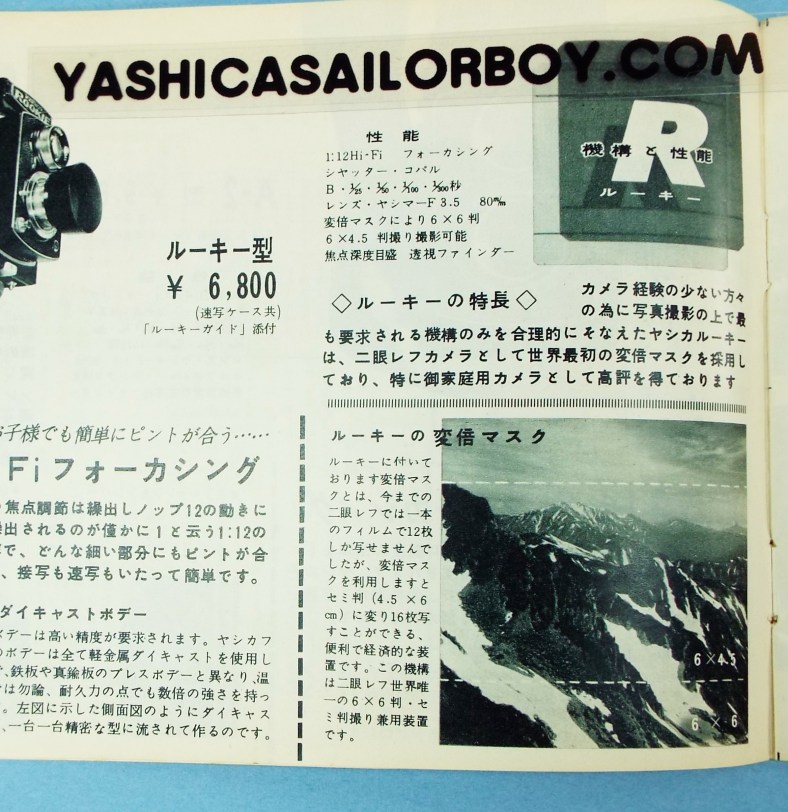
The Rookie could take standard 6×6 cm images or with a accessory kit take 3 more images on standard 120 film and produce 6×4.5 cm negatives.
The Rookie wasn’t popular in Japan and Yashima-Yashica gave it a very limited run. I suspect that some popularity exists today just because it’s seldom seen here in the U.S. and it’s rather hard to acquire a really nice example. We like the camera, the name is goofy and didn’t play well in the marketplace.
As always… we appreciate your visit! Thanks, C&C
As Yashica was designing their first 35mm single-lens reflex camera during the Summer of 1959 (with help more than likely from the newly acquired Nicca Company) they faced another challenge… since it was decided to use an exclusive lens mounting system (Pentamatic bayonet mount) and not go with the more common M42 screw-in mount, they put Tomioka Optical Company in a bit of a spot.
Tomioka was their exclusive lens supplier through the 1950s but Tomioka also supplied a wide variety of lenses to other manufacturers as well. That meant that Tomioka would have to start building a new lens series with an exclusive mount very quickly in order to have enough lenses available to meet the demands of a new camera hitting the marketplace by the Spring of 1960.
Here is but a small collection of Pentamatic lenses that were available in the early 1960 time period.
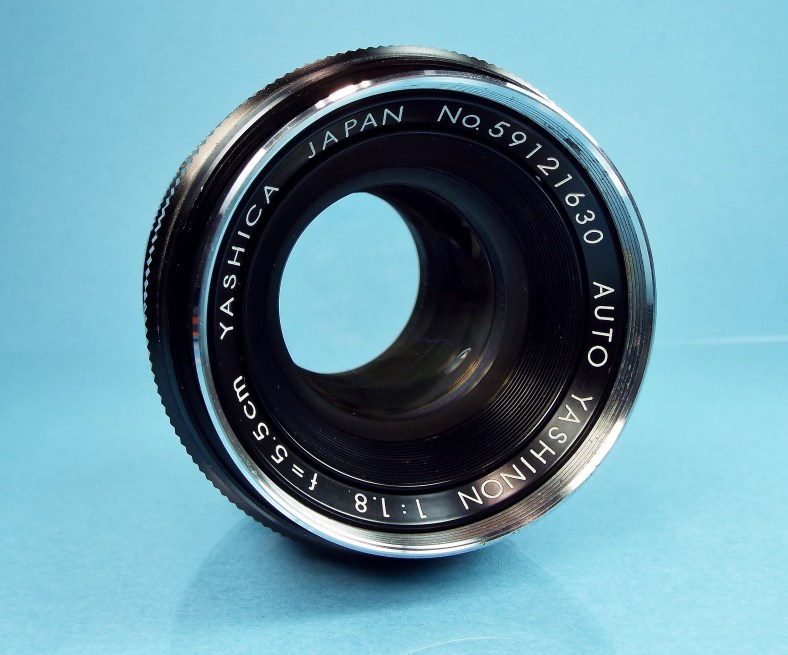
One of the earliest examples in our collection of the standard lens supplied with the Pentamatic ’35’ starting in 1959. We interpret the serial number to read: 1959, December and the 1,630th lens made by Tomioka.
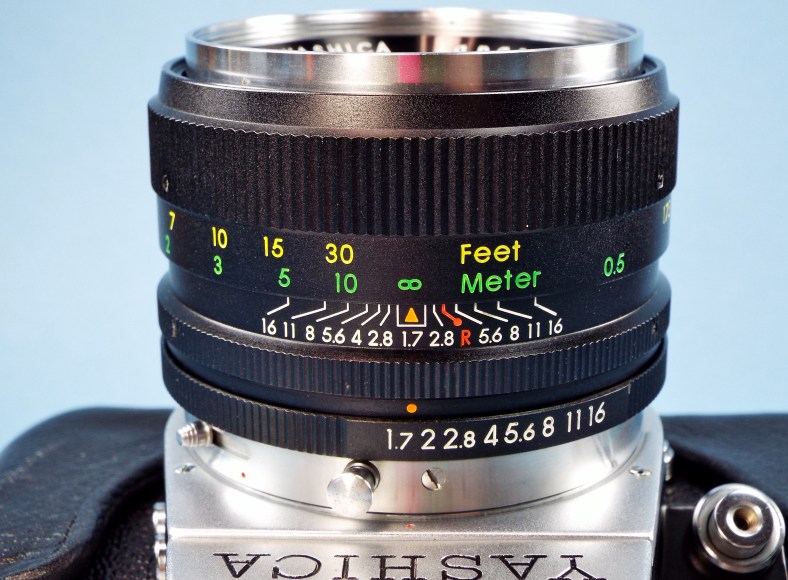
This lens is the standard lens for the Pentamatic II which came out in August 1960 (Yashica was still building and selling the Pentamatic I at that time. It was a rather odd lens to use as the normal focal length… 5.8cm (58mm) but with a slightly faster f/ 1.7 aperture.
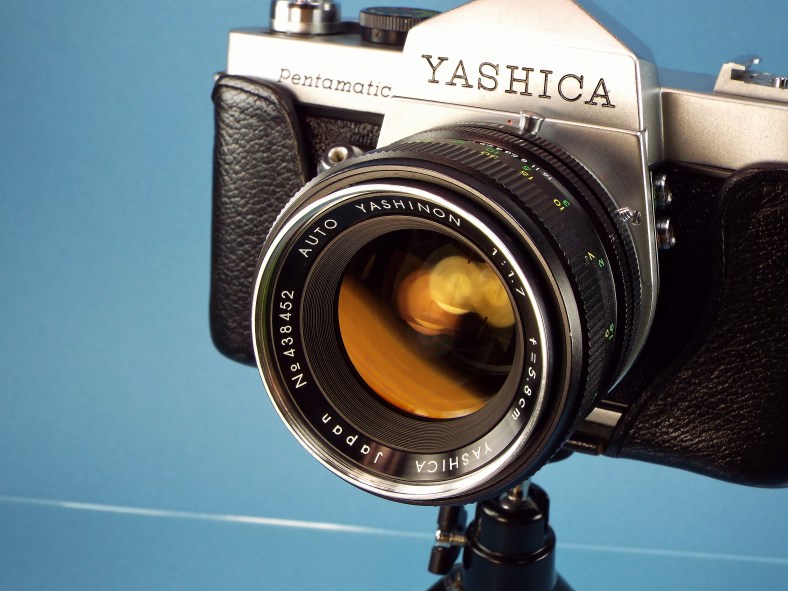
Front view of the standard lens for the Pentamatic II. It is a very beautiful lens and it does provide a bright clear view wide open. Here it’s mounted on the Pentamatic I.
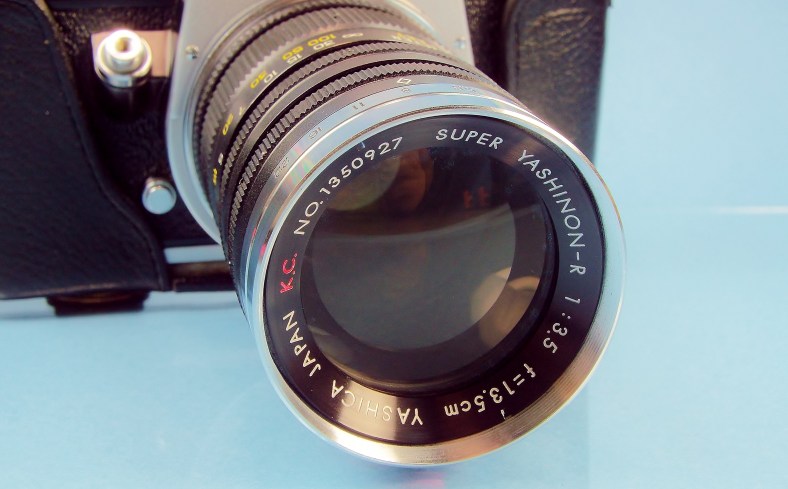
One of the earliest medium telephoto lenses for the Pentamatic. We don’t know what the ‘K.C.’ stands for… our guess would be that it applies to the coating on the surface of the lens. The serial number decodes to 135mm and the 927th made in the production run. We feel that this lens was made in 1959.
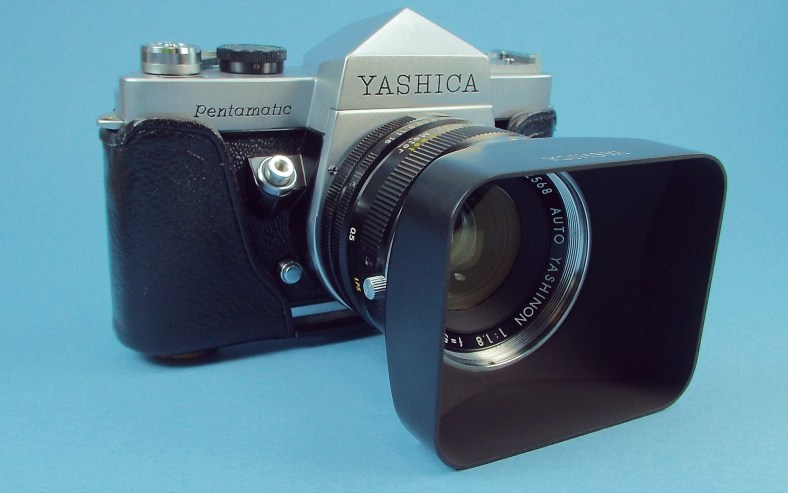
Original lens shade (as Yashica calls them) from the early days of production. The lens is the standard f/ 1.8 5.5cm lens for the Pentamatic I and S. From about mid year 1960.
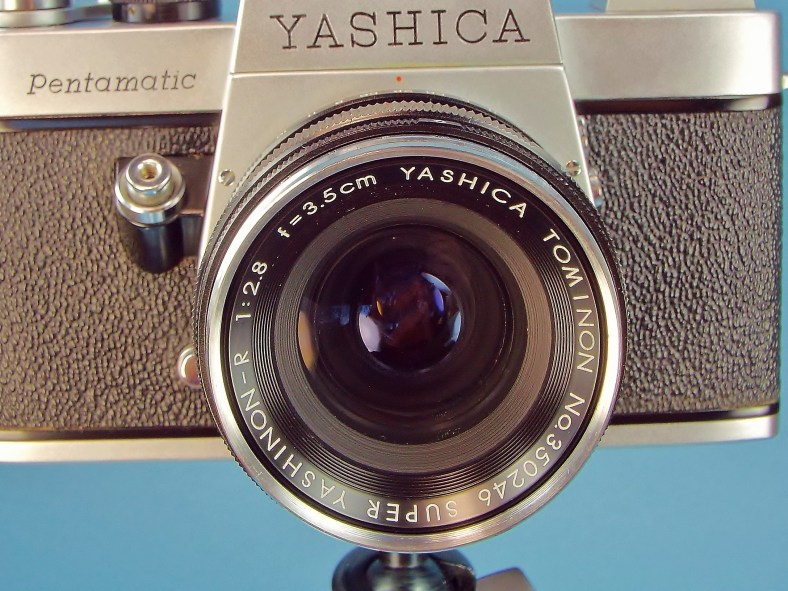
A highly desirable early Tomioka branded lens for the Pentamatic. Another issue from 1959… the serial number 35 = 35mm and 246 indicates the production sequence. This lens is super bright and sharp. An excellent wide-angle lens for general photography.
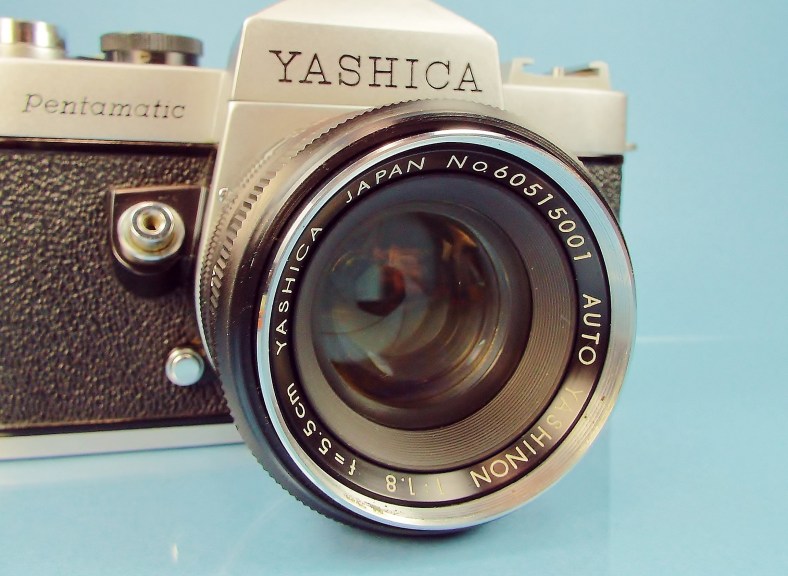
The latest lens of the original production run that we now have is No. 60521000. The lens (above) shows that it is number 15,001 in the run which would put the lens into early 1961 production.
We hope to expand on more details of the early Pentamatic lenses in the near future. Stay tuned and thanks for reading our little blog!
Chris & Carol
Yashica’s ‘Sailor Boy’ advertising doll made by Modern Plastics of Japan in 1962. This guy is the large 20cm Yashica dealer store display model.

Beautifully detailed by talented craftspeople.
Thanks for stopping by!
Chris
Please note that this is a “dynamic timeline” and it will be updated as we discover new dates and developments…
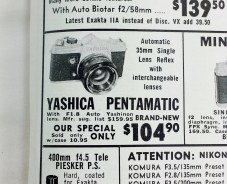
By January 1961, some pretty strong discounts on the original Pentamatic I. No Pentamatic S advertised.
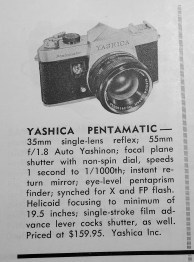
First look at the new camera in the May 1960 issue of Modern Photography.
The exciting first look (in print) of the Pentamatic…
First official appearance of the Pentamatic occurs in the May 1960 issue of Modern Photography magazine. In the June 1960 issues of Modern Photography, U. S. Camera and Popular Photography, the first full-page ads appeared for the Pentamatic ’35’ reflex camera. The actual release date in the United States has almost always been considered by many to be March of 1960.
As of yet, I haven’t found evidence in print to support the March date. I do know that the Pentamatic was shown at the 36th annual ‘Master Photo DeaIers & Finishers Association’ trade show (MPDFA) held in St. Louis from March 21-25, 1960. I don’t know if the Pentamatic was released in Japan at an earlier date. From the progression of the serial numbers, by March 1960, about 1,500 cameras had been produced since production began in December 1959 at the Yashica Suwa factory. I doubt that there were enough cameras by March to support any widespread release in Japan or in Asia at that time. By June 1960, about 6,000 cameras had been built. There may have been enough to ship to the world markets starting in April and May. At their peak of production (summer 1960), it looks like Yashica was rolling out about 1,200 to 1,400 cameras each month.
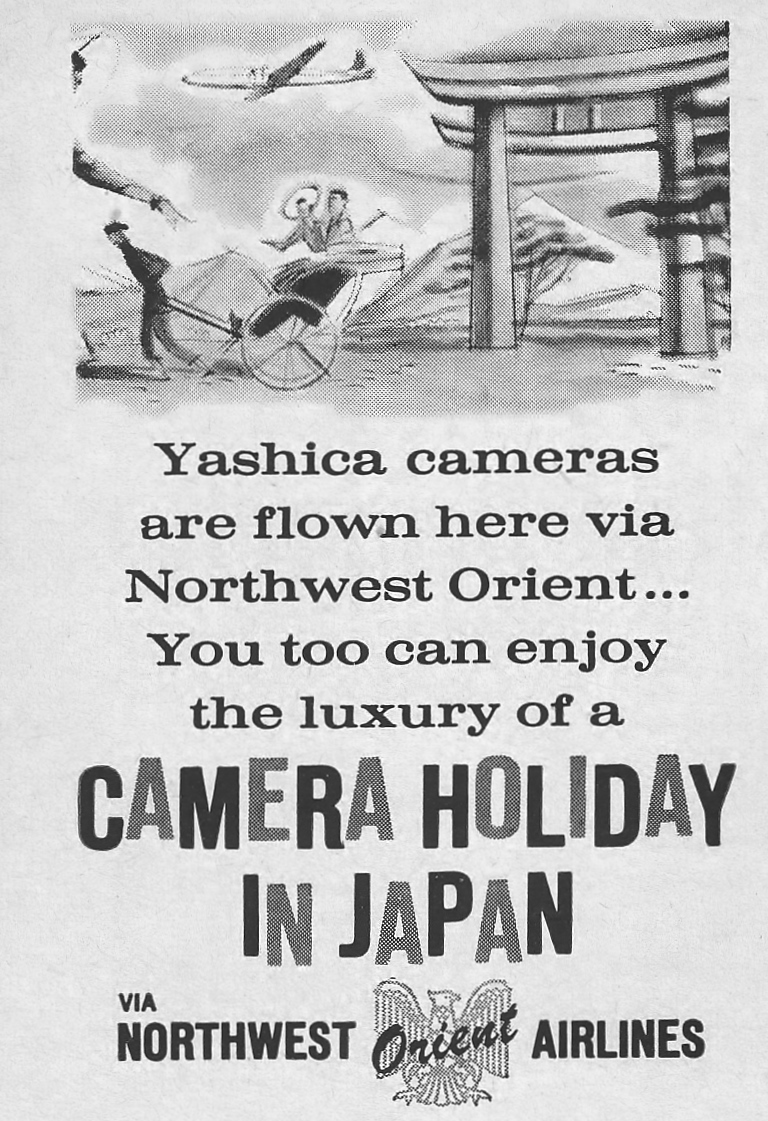
Have a “Camera Holiday” in Japan. May 1960 magazine ad.

Part two of the “Camera Holiday” in Japan promotion. Very nice mention of Yashica’s factory in Suwa and the wonders of Japan!
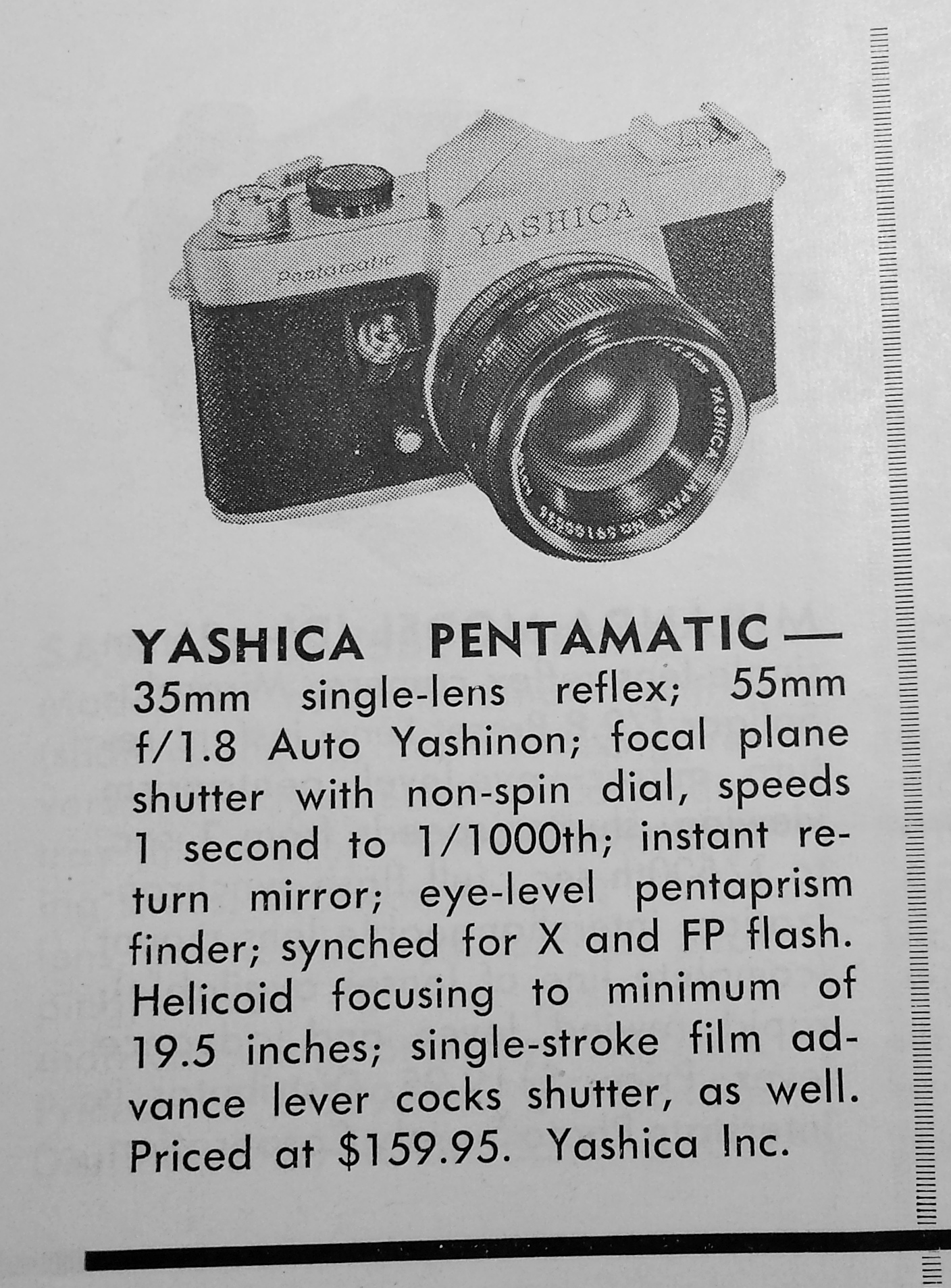
Yashica provided this first ever look at their new Pentamatic SLR at the March 1960 MPDFA trade show in St. Louis.
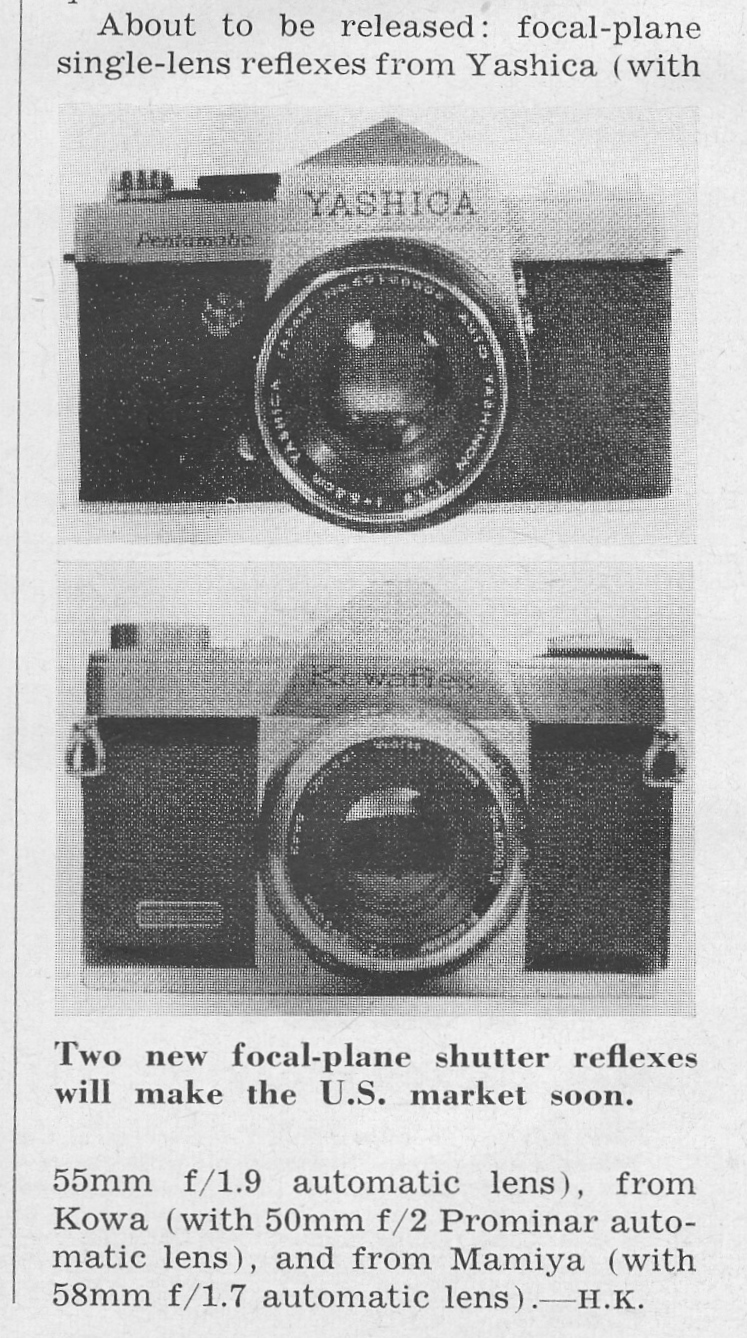
First published look at the new Pentamatic from Yashica. May 1960
 Chasing Classic Cameras with Chris