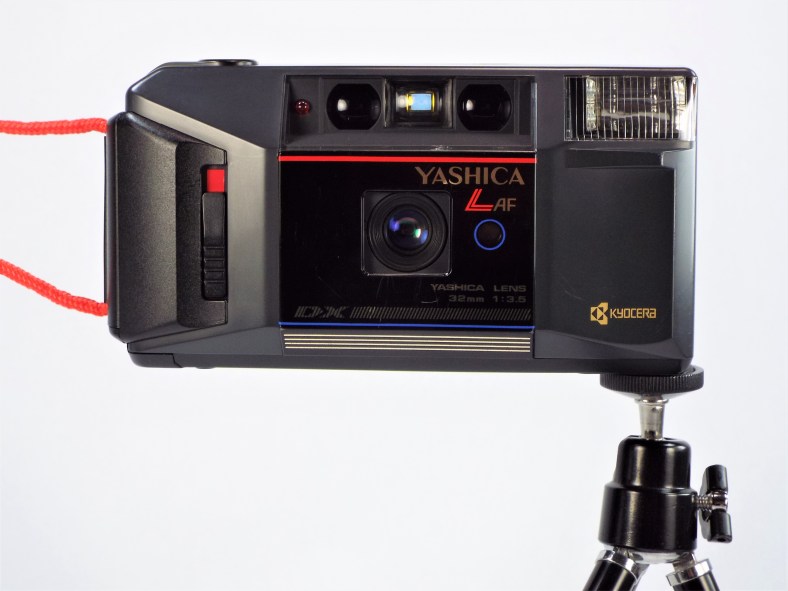
Yashica L AF – Field Test v2.0 – Can this Yashica hold its own against the T* Series?

A fun little point and shoot camera from Yashica-Kyocera (1986). This lovely camera was kindly donated to us from a blogger friend and photographer who lives in Japan. She tests cameras that strike her fancy and often processes her film at home. We think her test shots are extremely interesting – and always well composed too. You can find her at https://cameragocamera.wordpress.com/

Field test v1.0 was done in Japan.

She typically hunts around in second hand shops and picks up cameras for well under $10 (I think this one was only $3).
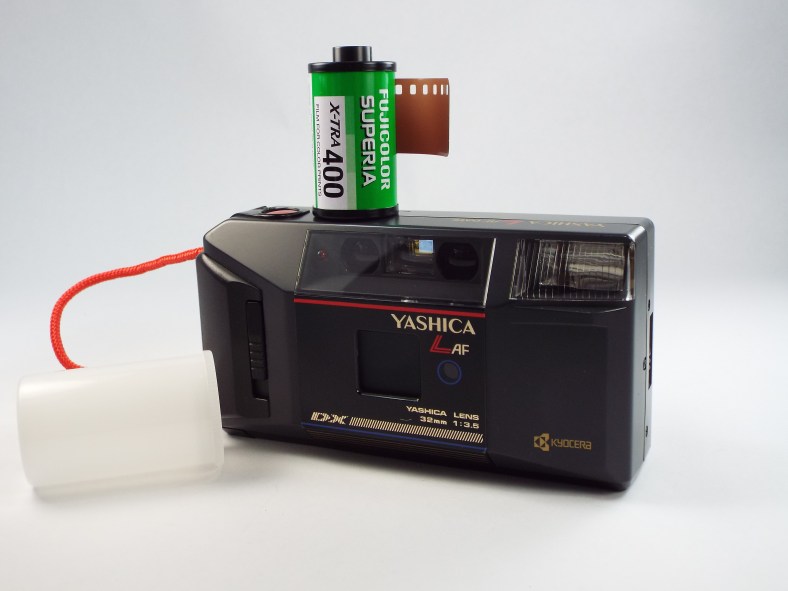
dscf3464

The Yashica gets a fresh roll of Fujicolor Superia X-TRA 400 and a new finger strap (in almost matching red).
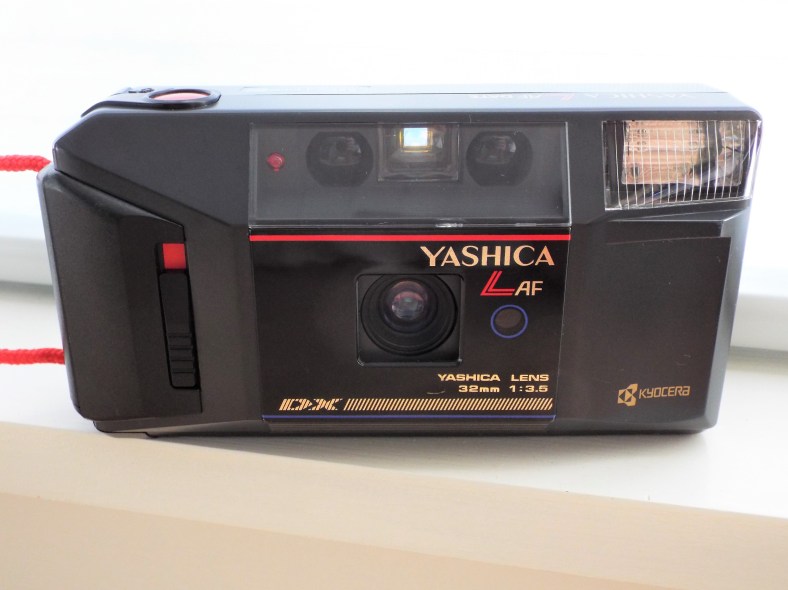
dscf3481

This Yashica uses a 32mm f3.5 lens. The camera features a simple drop and go (well almost) film loading. It is a DX coded camera so it sets the ASA (sorry, old school). It produced 26 exposures from a 24 exposure roll.
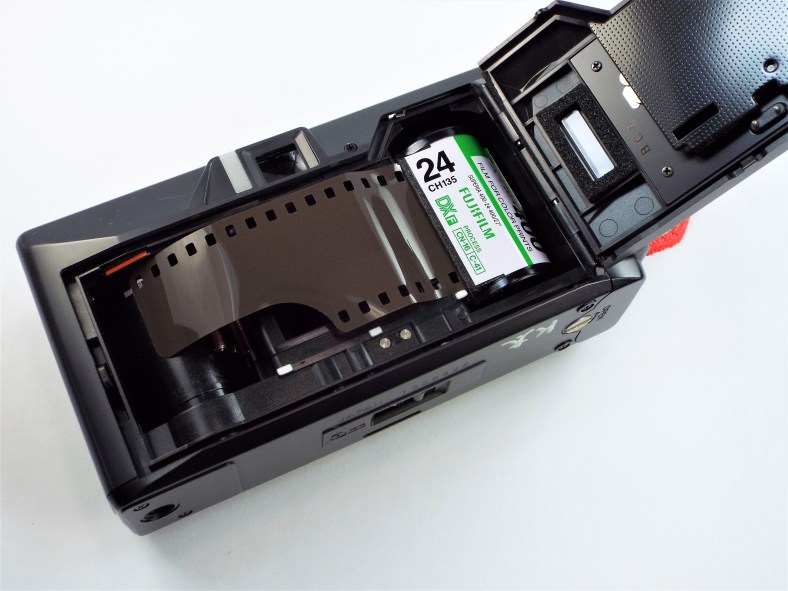
dscf3466

Pull the film leader to mid point on the orange line and between the white marks.

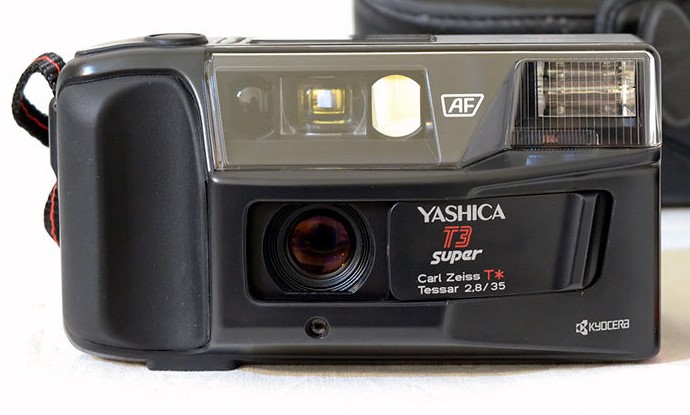
The real test – can this inexpensive Yashica L AF deliver the same image quality as its highly regarded cousins – the Yashica T3 Super with Zeiss T* 35mm f2.8 lens or the more closely related Yashica T AF?
s-l1600-33

The T3 – often sells for over $200 on eBay. The L AF – well under $20!

yashica t af

Yashica T AF. Yashica’s first in the T* Series of cameras (1985). Probably the most closely related to the L AF.

I won’t post all 26 images here. I will pick a broad representation of the photographic challenges that I threw at the Yashica L AF.
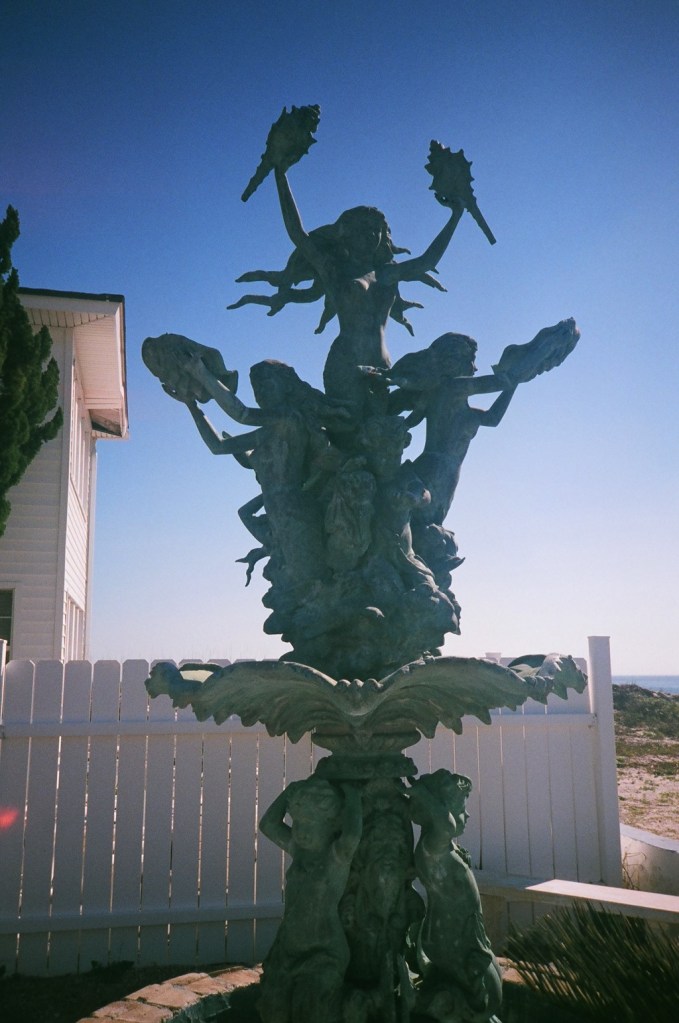
78690001

First image overall – strong back lighting. A challenge for any simple AE camera. First sign of a red spot (far left).

These next two images were focused at infinity. Strong mid day lighting so deep shadows. The Fujicolor rocks some nice vivid colors and contrast!
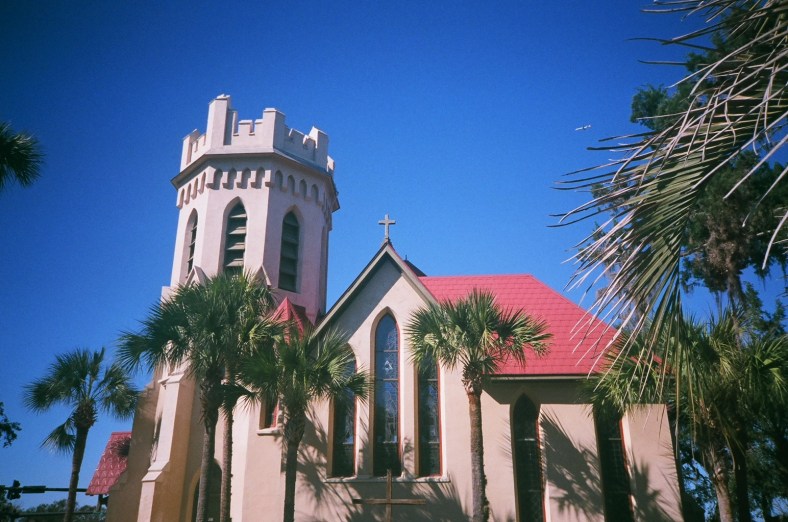
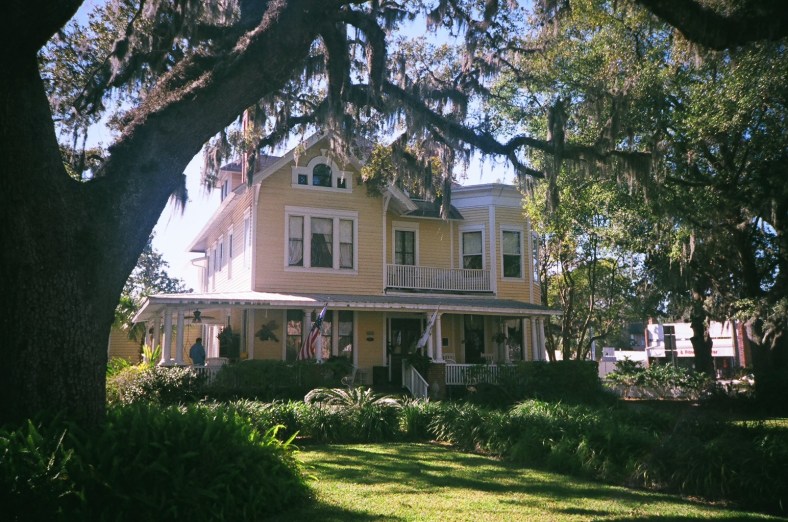
78690002

78690005

First real test of the auto-focus and AE in dim lighting below. It did well considering the strong sunlight in the background.
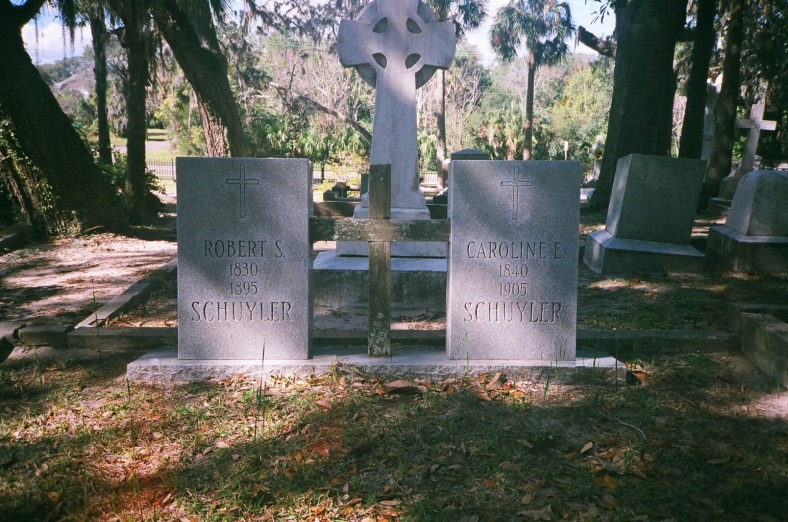
78690008

I know right – crazy dark blue sky! No filters, just Superia X-TRA 400 and a contrasty lens.
78690012

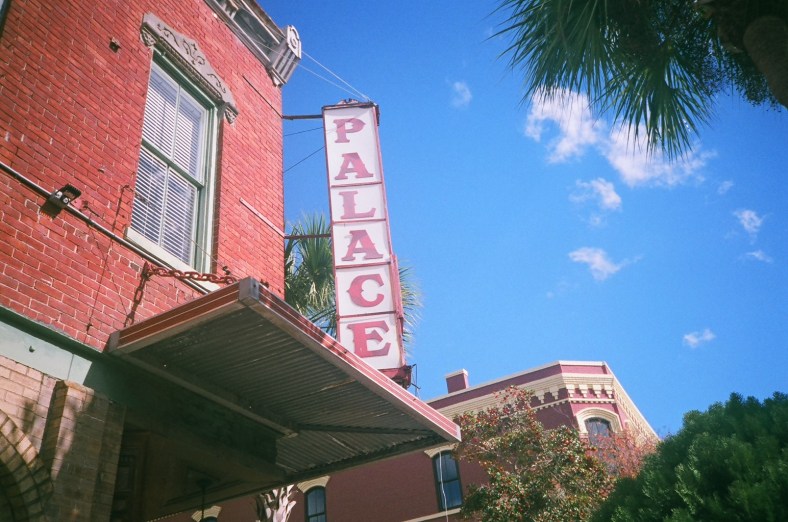
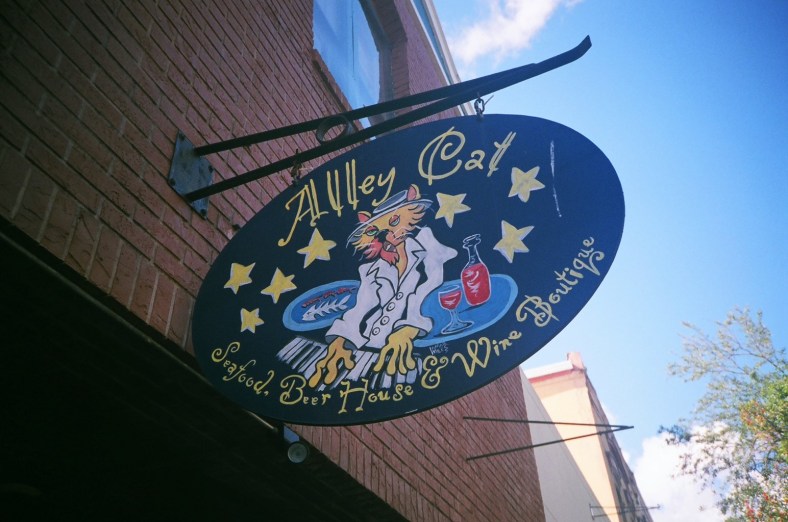
Nice detail. Sharp focus too on this sign below. The Yashica employs center weighted metering. Most AE cameras would be thrown off by the bright sky.
78690013

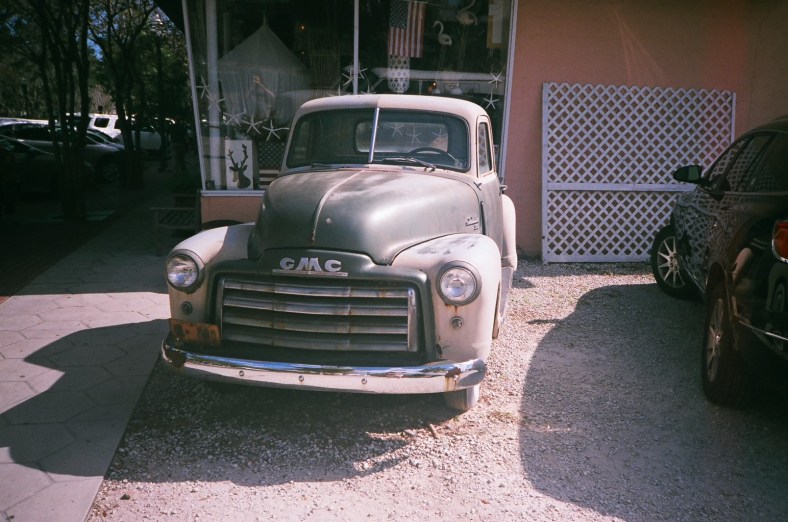
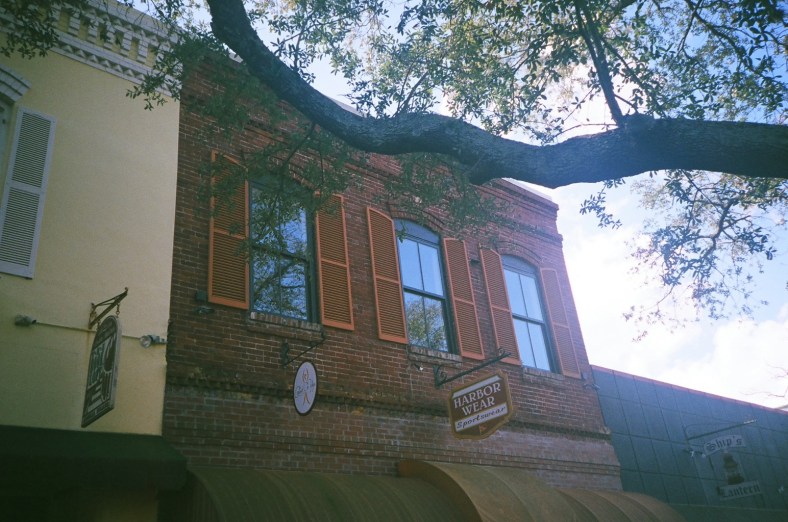
Tough AE situation for a simple point and shoot (deep shade below). Post production would help but I like it as it is.
78690016

Back in the bright Florida sun!

78690020

78690021

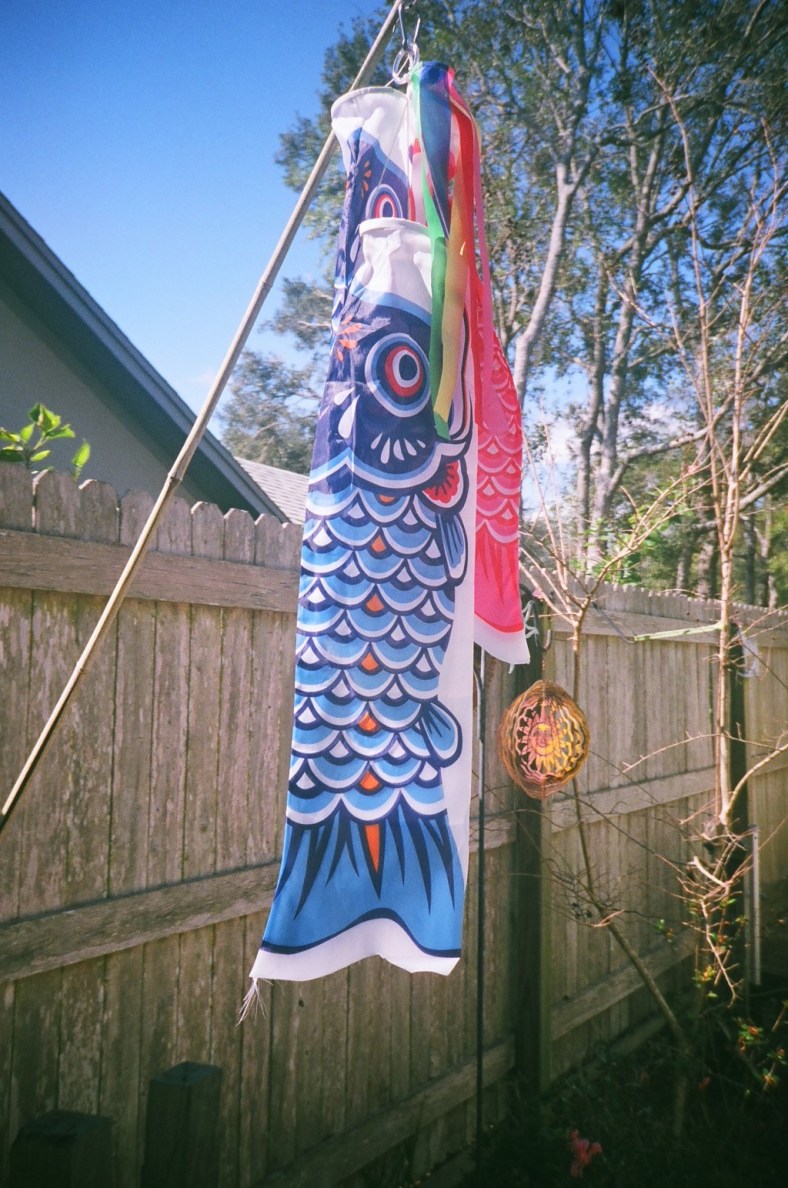
Day 2 below at home. I was about 3 feet from the carp. Looks good.
78690023

78690024

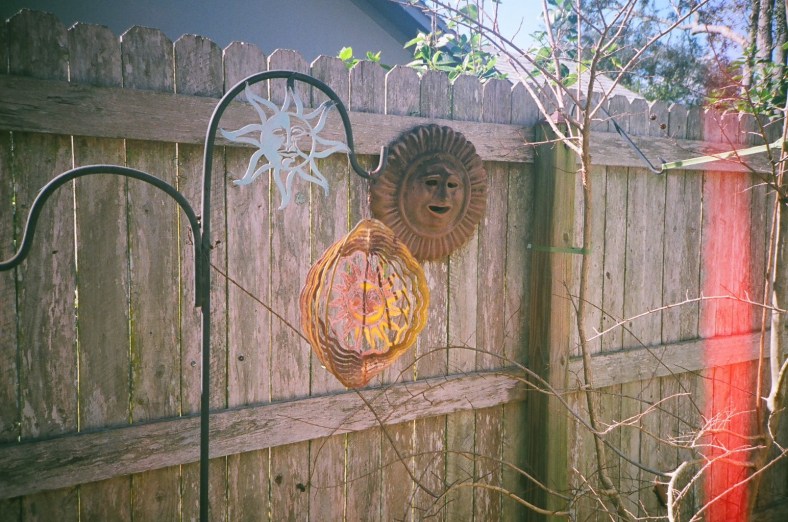
The attack of the red bar! Not sure the why of it.
78690006

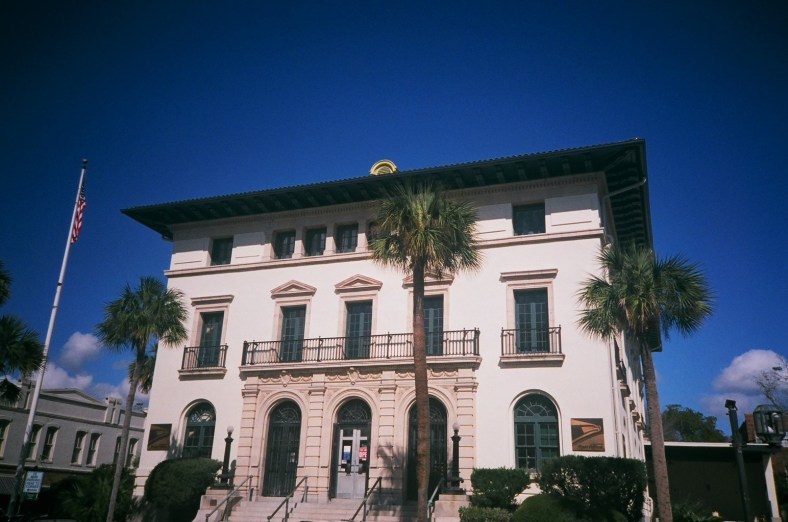
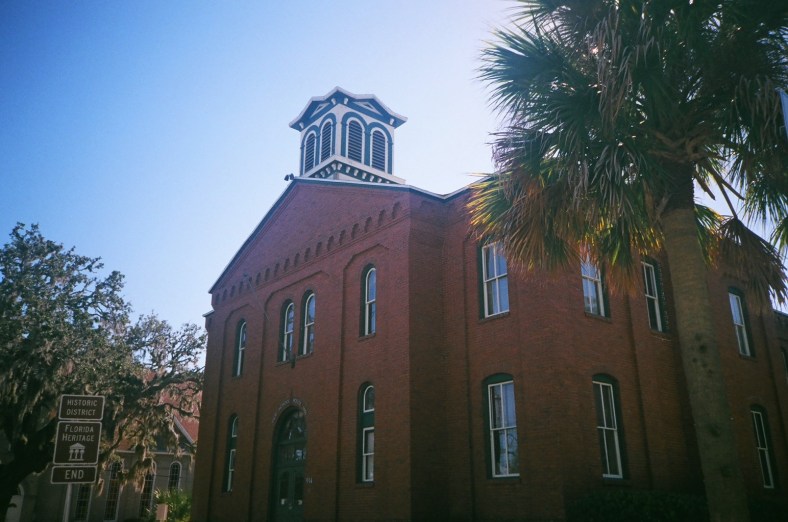
The AE handled this situation well – I blocked out the sun with the palm tree which allowed the Yashica to get a good reading on the building.

As I said at the top. All 26 images were excellent with about 4 experiencing the mystery red spots and bars.  I’m thinking that the red marks are from a processing error – it’s way too random to be a light leak. No post production on any of these images. They’re presented just as they were scanned by the processing lab. Maybe the CD will be even sharper.

We’re impressed! The camera has a solid feel – it has some weight and is actually as big as our Fujifilm FinePix S9900W.

So does this inexpensive Yashica L AF beat the Yashica T* Series? Don’t know yet – now all we need is someone to donate a T3 or T4 to test it!!! ^.^

For the money, if you can find a decent Yashica L AF and want a great point and shoot 35mm camera that produces better than expected images – the L AF more than delivers and at a price that won’t break the bank!

Camera(s): Yashica L AF Date, Fujifilm FinePix S9900W and Samsung Galaxy S4

Final shout out goes to the City of Fernandina Beach, Florida! Thanks for never messing with the Historic District – it looks the same (for the most part) as it did 120 years ago! 

Many thanks for your visit! Comments – please do. Donating a T3 or T4? – email us ASAP!

Chris & Carol

Mystery Models – v2.0

19362539791_09787a3105_o

1959 Yashica Model A twin-lens reflex camera instruction booklet cover.  

This dapper dude appears on at least two different Yashica brochures in the late 1950s and early 1960s. This cover shot is from a Yashica A III instruction book from 1959. He always appears with a “modern” pipe, fancy derby and is winking at the camera. My thought is that he is an actor who may have lived in or was super popular in Japan during that period. Any thoughts? Please see the back cover image below.

19171018190_a36a308a45_o

Here he is in a German language Yashica brochure from early 1960 (below).

19171477280_fcbf5949c1_o

Any help would be appreciated. As researchers of silly Yashica stuff, knowing who he is helps with some other silly stuff we’re interested in (Yashica-wise).

Thanks!

C&C


Pentamatic – Finally Found ‘in the wild’. Nerds heaven!

After many years of searching for proof that Yashica had in fact released its first production run (from December 1959) of the 5.5cm f1.8 Auto-Yashinon lenses for the Pentamatic ’35’ – we finally found one in the wild! Now it’s ours.

We stumbled upon this lens the other day on an online auction site. After some negotiations with the seller, we reached an accord. The camera this lens was mounted on was a pure dog… “Junk Treatment” as ‘Google Translates’ the kanji for crap (one would think) items. We took a chance that the lens was going to be OK. We’ve seen enough of these over the years to get a good feel – this one we just had to have even if it matched the condition of the camera body it was on. Man was it dirty – sooty and a tad yellow (the markings yellow over time). But it was a hidden gem. No mold – no fungus – no cleaning marks or haze – and, the best part, it focuses crisply and although the aperture blades are a bit worn, they move nicely (snappy as ‘they’ say).

The Pentamatic went into production at Yashica’s modern factory campus in Suwa, Nagano Prefecture in December 1959. At the same time, or just slightly before (maybe in October), Tomioka Optical started making the lenses for the first Pentamatics. We don’t know for certain if Tomioka delivered completed lenses to Yashica or only manufactured the optics for them and Yashica did the rest – we just don’t have that information yet.

dscf3477

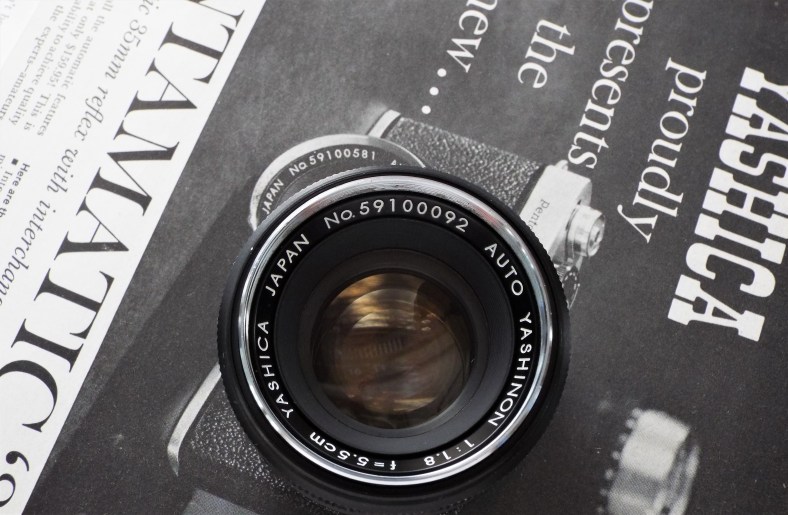
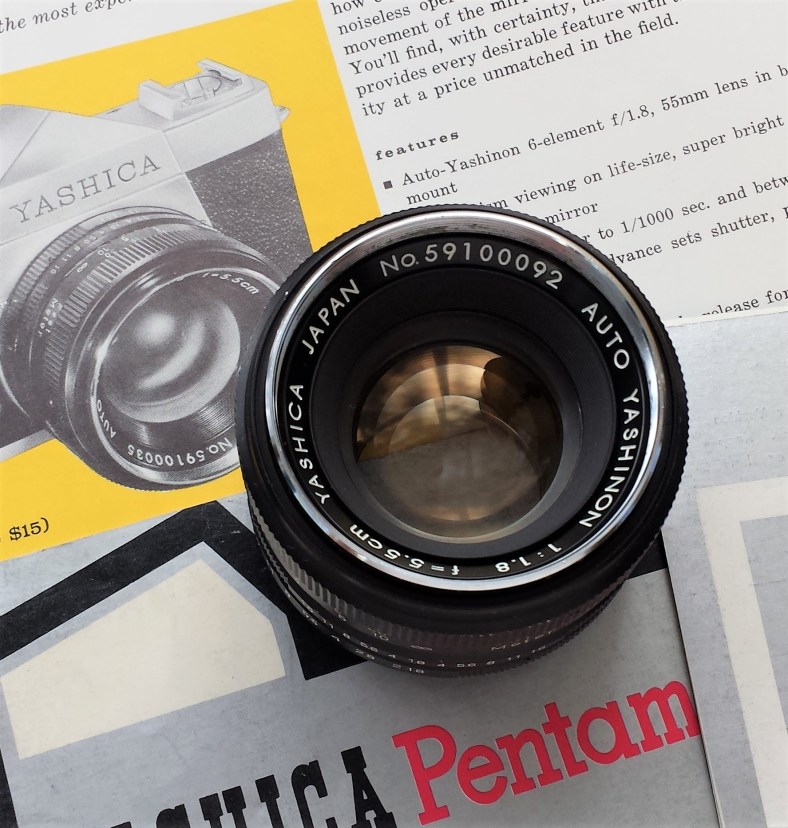
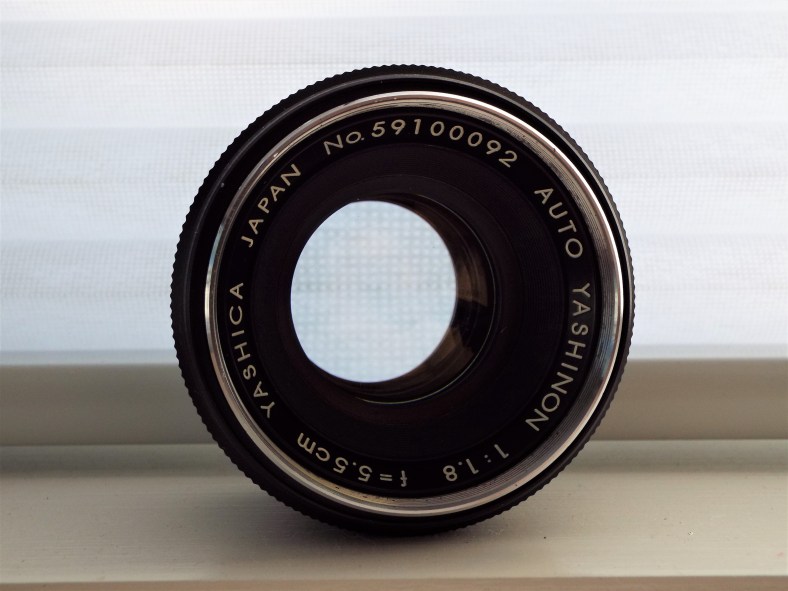
Here’s the lens we just acquired – Auto Yashinon 55mm (5.5cm) f1.8 which was the normal lens supplied with Yashica’s first Pentamatics. The background ad is from a ‘Popular Photography’ magazine – June 1960 issue. The ad lens serial number is – No. 59100581 – our lens serial number is – No. 59100092. Not often do you find a lens in the wild with a lower serial number than an ad. By the way, the advertisement was the first ever for the Pentamatic.

20170203_092654

The lens that is featured in one of the first sales brochures for the Pentamatic, is serial numbered – No. 59100036. Our lens was made just slightly after the lens in the brochure (same day?). We don’t know when the sales brochure came out. Our guess is March 1960. The photographs were probably taken by the marketing people in Yashica’s Shibuya headquarters sometime in late 1959 or early 1960.

We know – this is all super boring nerd stuff that only Yashica fanatics would find interesting – wait, that’s a great name for a blog… ‘Yashica Pentamatic Fanatic’. ^.^

So what does the serial numbers tell us? The SN No. 59100092 (our lens) translates to – made in 1959, the ’10’ is for October, and the 0092 is the sequential production number of the lens assembly. This means that Tomioka Optical started production of the new lenses for the Pentamatic as early as October 1959! Lenses made in 1960 are labeled No. 605xxxxx. The ‘5’ being a placekeeper or model number. The highest serial number we have in our collection is No. 60515157. That lens came with a Pentamatic body that was made in January 1961 and the lens was the 15,157th made up until that point.

The highest serial number seen in the wild is No. 60521460 which was mounted on a Pentamatic-S body.

dscf3483

Thanks for your visit and if you made it to this point in the post, pat yourself on the back! You may be a bit of a camera nerd – just like us!

Chris & Carol ^.^
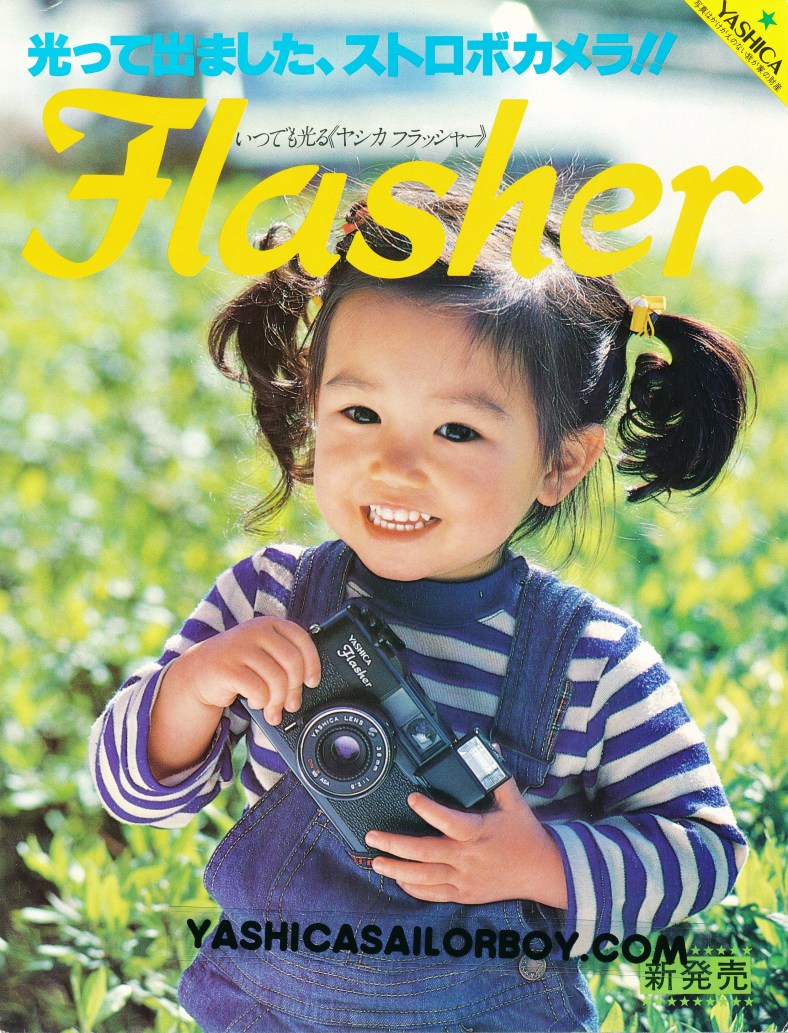
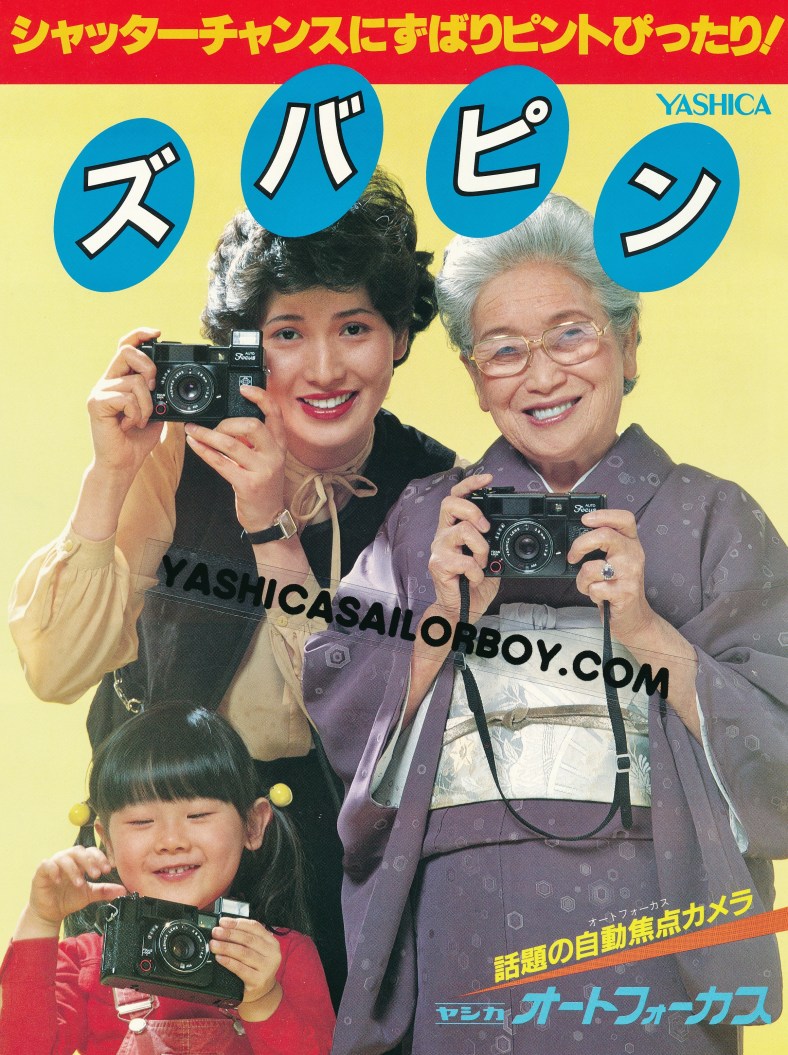
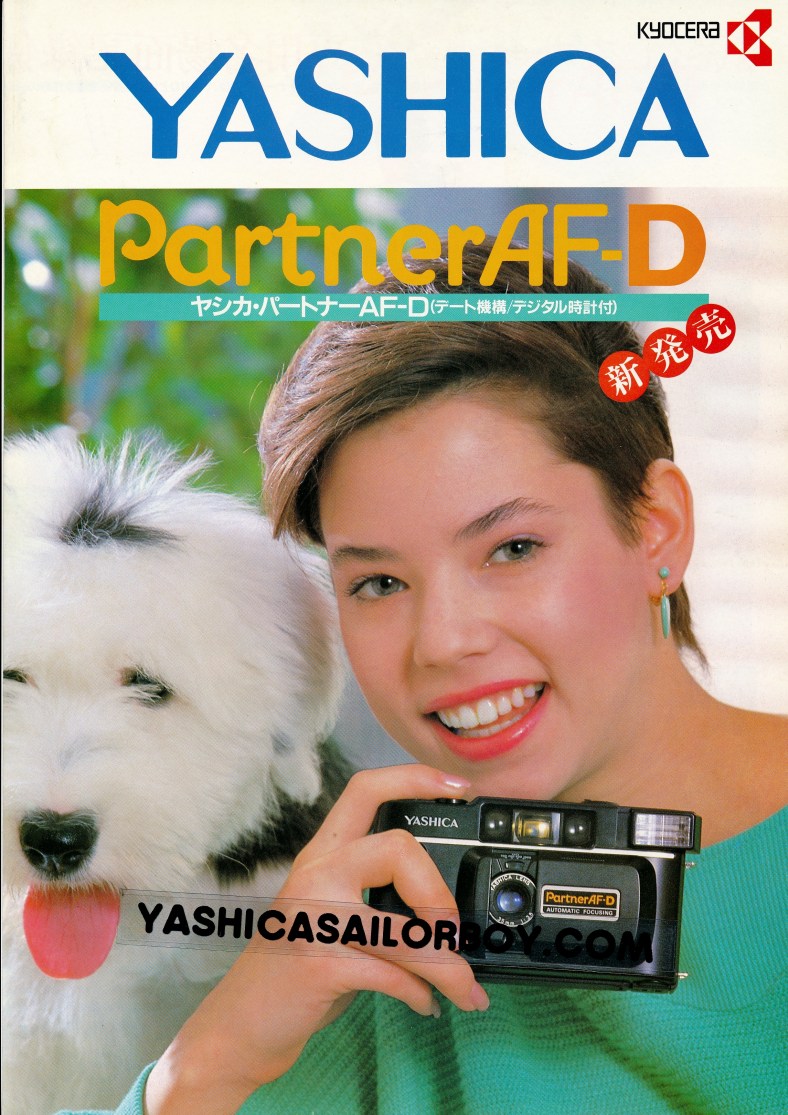
Colorful Yashica Brochures… 1980s

A small collection of some 1980s Yashica and the Yashica-Kyocera sales brochures. We enjoy collecting brochures as they usually capture a slice of life for that period (at least in the marketing folks view of things). Enjoy!

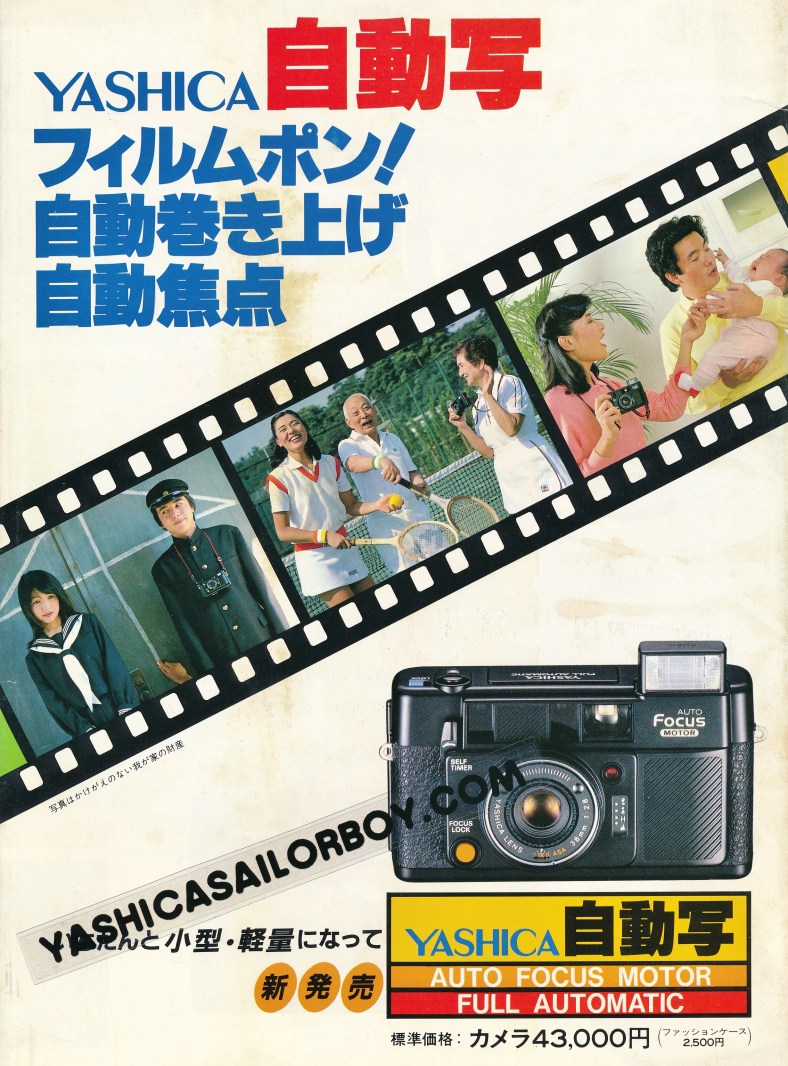
Cute brochure from around 1980 featuring the Yashica Auto Focus. Yashica’s home office was still in Shibuya-ku Tokyo at this time. Kyocera was in Yashica’s near future and it would signal the beginning of the end!

25896400900_c2437ce7ec_o

Another nice sales brochure from October 1981. The cameras featured in this brochure are the Diary, Flasher, Snap and the Auto Focus Motor.

25898856450_44fee70d1d_o

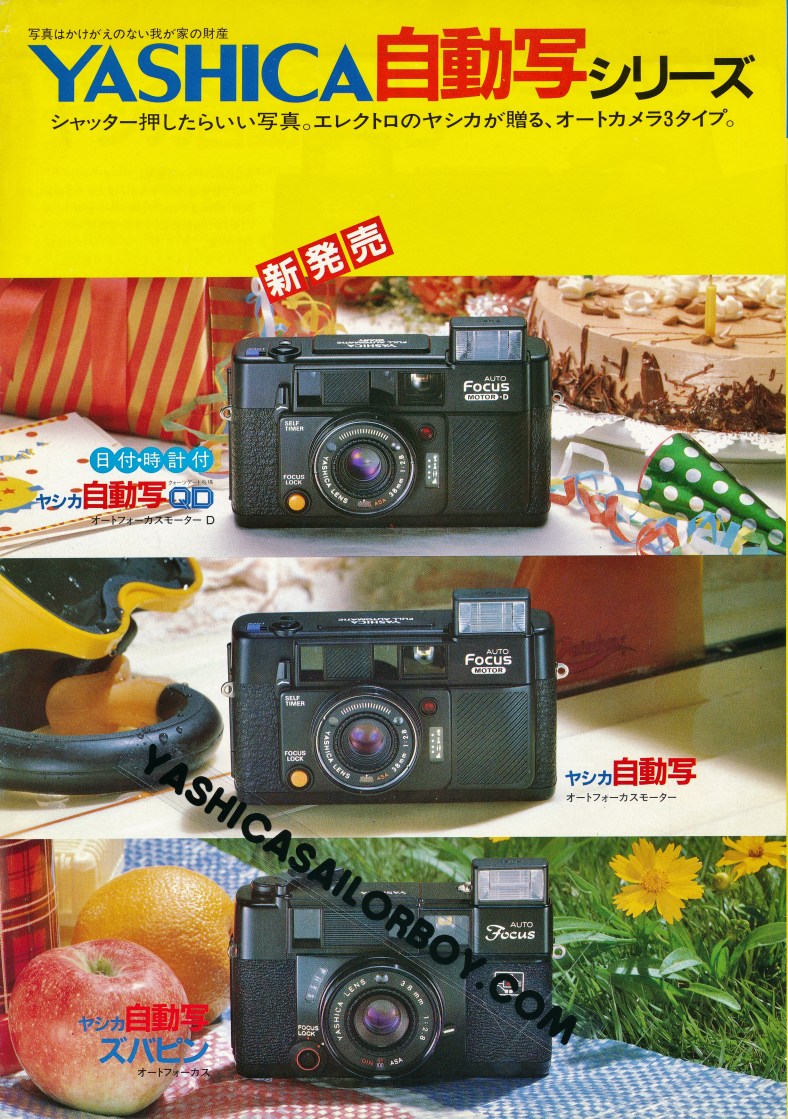
Yashica Auto Focus, Auto Focus Motor and Motor-D. These were technological breakthrough cameras for Yashica in the early 1980s. Of course at this same time, Canon had the A-1, AE-1, AE-1 Program and of course the Canon F-1. These cameras from Canon were all SLRs so not a fair comparison but Canon made similar compact rangefinder cameras. It was a tough go for Yashica at this time and a takeover was on the horizon.

25899033730_558e532eaf_o

What a cutie! Full color sales brochure from Yashica dated 1 March 1980. Features the Flasher, Auto Focus, Snap and the Diary.

26079349032_07ccb458cd_o

Neat sales brochure from September 1980. In the early 1980s Yashica promoted its auto focus and auto exposure cameras extensively. This brochure featured the Yashica Snap, Diary, Flasher and the Auto Focus which listed for ¥41,000.

26169339505_b055f64250_o

The dark days of Yashica begin with this very cute sales brochure from February 1984. Yashica by this time was taken over by the Kyocera Corporation which was headquartered in Kyoto. Yashica was now a just a division of Kyocera…Yashica was still in its long time office in Shibuya-ku. This move (Kyocera ownership) was the beginning of the end for the Yashica we knew.

When Kyocera killed Yashica (about 1991) they kept the optical portion of the company which was originally the Tomioka Optical Co., Ltd. of Tokyo. That division is still part of Kyocera and is now called Kyocera Optec Co., Ltd. and is still headquartered in Tokyo.

26103094971_52ab0e9630_o

There you have it. A nice collection of some of the best of the 1980s Yashica sales brochures. As we mentioned, the Kyocera ownership was just on the horizon and the final days of the once great Yashica were coming to an end. We do own a few cameras from the Kyocera (Kill-a-Yashica) period and some were received as excellent point and shoot compact wonders.

dscf3456

A lovely Yashica-Kyocera L AF Date from 1986. Very nice lines and we’ll be running a roll through it very soon!

This good looking camera (above) was sent to us from a blogger friend and photographer living in Japan. She was very kind to donate it to us for sharing it on our blog. You can see excellent reviews of all sorts of cameras and awesome photographs too at https://cameragocamera.wordpress.com/

Another donated camera comes to us from a friend in Virginia and a fellow Flickr poster.

26295606350_65700d54b4_o

25965272473_a80d24519c_o

We haven’t run film through this beauty yet – it’s on our “catch up” list of things to do. Thanks to Ken for sharing his lovely camera with us so that we could share it with y’all here on the blog.

By the way, if you’ve got a nice Yashica, Kyocera or Fujifilm camera from this period (1980s to mid 1990s) and would like to see it featured here, just contact us through WordPress and we’d be glad to do it.

Many thanks for your visit – comments are always welcomed.

Chris & Carol ^.^


Yashica ‘Sailor Boy’ & Friends

20141117_222025

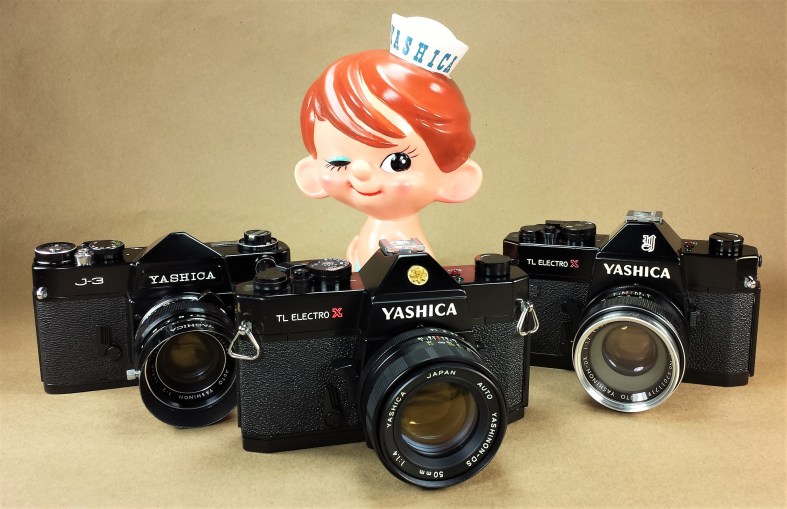
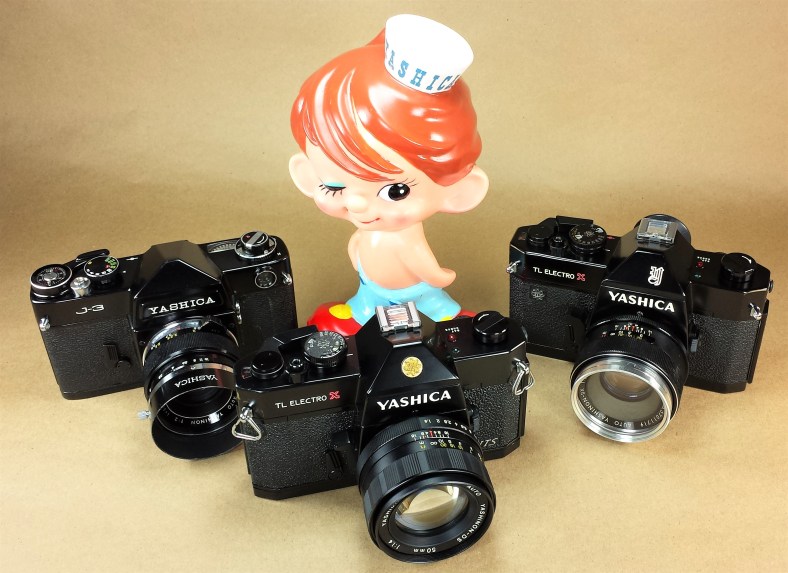
Yashica’s three finest cameras in black. The J-3 was the first truly modern 35mm SLR from Yashica and it was their first SLR to be made in pro-black with matching black lens. Only a small amount of the J-3s were black – most were the traditional silver top and black leatherette body. On the far right is the most successful SLR Yashica ever made. Fully loaded with electronic everything, all commanded by its ‘IC’ brain. The next step on the evolutionary ladder is the TL Electro X ‘ITS’ (center). A mostly marketing idea, the ITS was essentially the same camera as the TL Electro X with the added gold ‘Electron’ symbol on the front of the pentaprism and the stylized ITS emblazoned  on the camera’s left front (not seen here but can be seen below). The marketing folks at Yashica never said what the ‘ITS’ stood for (if anything). Our best guess is ‘Integrated Technology System’. Some say ‘Interval Timed Shutter’ as the shutter was electronically controlled and could fire at any speed. Later the Contax-Yashica ‘RTS’ was introduced and it was advertised as ‘Real Time System’ whatever the heck that meant.

We’ve used all three, and the TL Electro X with the white stylized ‘Y’ on the pentaprism is our favorite. It just feels perfect in your hand and the electronic over and under (exposure) arrows in red are easily visible in the viewfinder.

20141117_222139

By the way, the advertising icon (Yashica Sailor Boy) was never given a proper name by Yashica. He made his debut in 1962 and still could be found kicking around in sales brochures and ads into the late 1960s. This guy is the 20cm (10 inch) dealer display model and he was in his sealed bag and box from Modern Plastics of Japan when we acquired him. He comes in about 3 other sizes and different styles and colors.

Thanks for stopping by!

Chris ^.^

1955 Camera Case Mystery

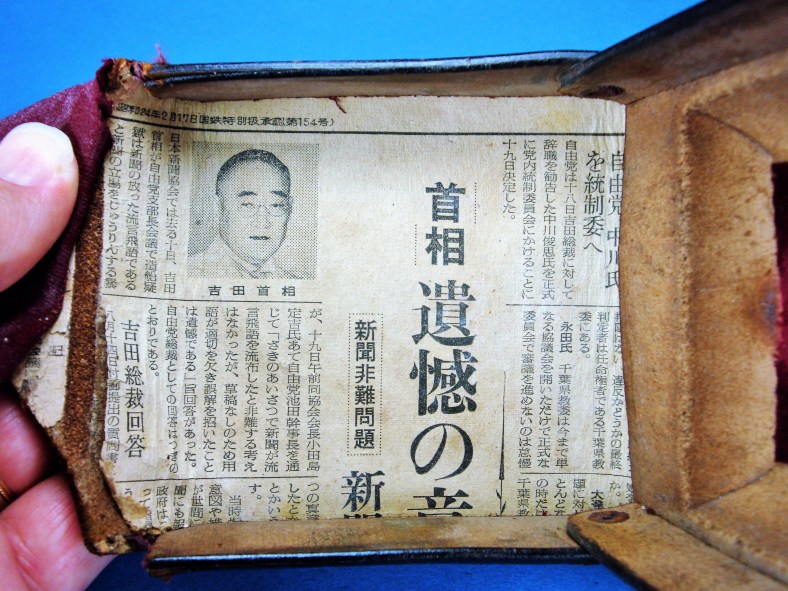
During a recent restoration of our 1955 Yashicaflex A-II twin-lens reflex camera, we discovered that the leather case held an interesting surprise!

15070722327_0d4b9e785b_o

The thread below is taken from our Flickr page (Yashica Sailor Boy).

Chris “As part of a restoration of my c1955 Yashima (Yashica) twin lens camera’s leather case, I discovered that the red felt material inside the case used backing made from Japanese newspapers! Leave it to the Japanese during the mid 1950’s to make good use of something that would normally have had one use and then thrown away here in the West. What really surprised me was how easy the felt pulled away from the newsprint without destroying the paper. I hope to get the writing translated… maybe some interesting clues as to where the case was made and when.”

Chris “The leather case was made for a Yashica Flex model A-II from 1955. The camera was purchased from a seller from Hiroshima, Japan. The camera was made in Tokyo and I am not sure if Yashima (Yashica) made their own leather cases or if they were made by a supplier. Maybe the newspaper will yield some clues as to where.”

Chris “I now know that it is a picture of Prime Minister Yoshida. This was a special edition newspaper made for (?) the Japanese National Railways (JNR). It appears that the paper is dated 17 February 1949. ‘Special Treated Approval Number 154 Issue’.”

Ken “The caption at the top actually records the newspaper’s national railways special handling permit #154, and does not identify the actual date of the issue in question. The article has to do with a controversy the prime minister created when he criticized a newspaper for allegedly spreading rumors about a political scandal concerning the shipbuilding industry. The scandal erupted in January 1954 and became one of the main causes of the fall of Yoshida’s government. It is not clear which newspaper this article comes from, but from the anti-government tone of the writing it is possibly the Asahi.”

Chris “Thank you so very much KenjiB_48. It helps to know this as it makes more sense for the Japanese company that made the leather case would have used a current (1955) newspaper for a camera made in 1955.”

15070781568_4fc3b2577b_o

The inside front of the leather case held a similar surprise. It would appear that in the mid 1950s, some Japanese manufacturers found ways of recycling almost everything produced. Used newspapers, I would think, could be had for free. Why not use them for backing the felt to the leather. Pretty smart!

Thanks for your visit!

Chris ^.^

Costly Mistake…

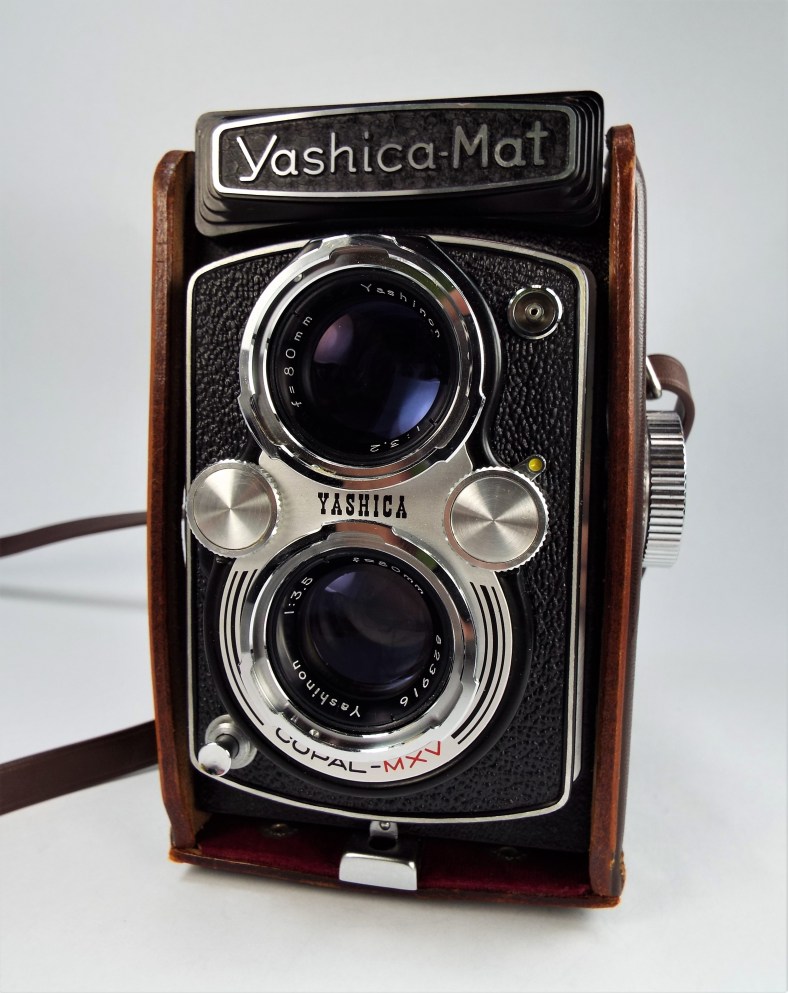
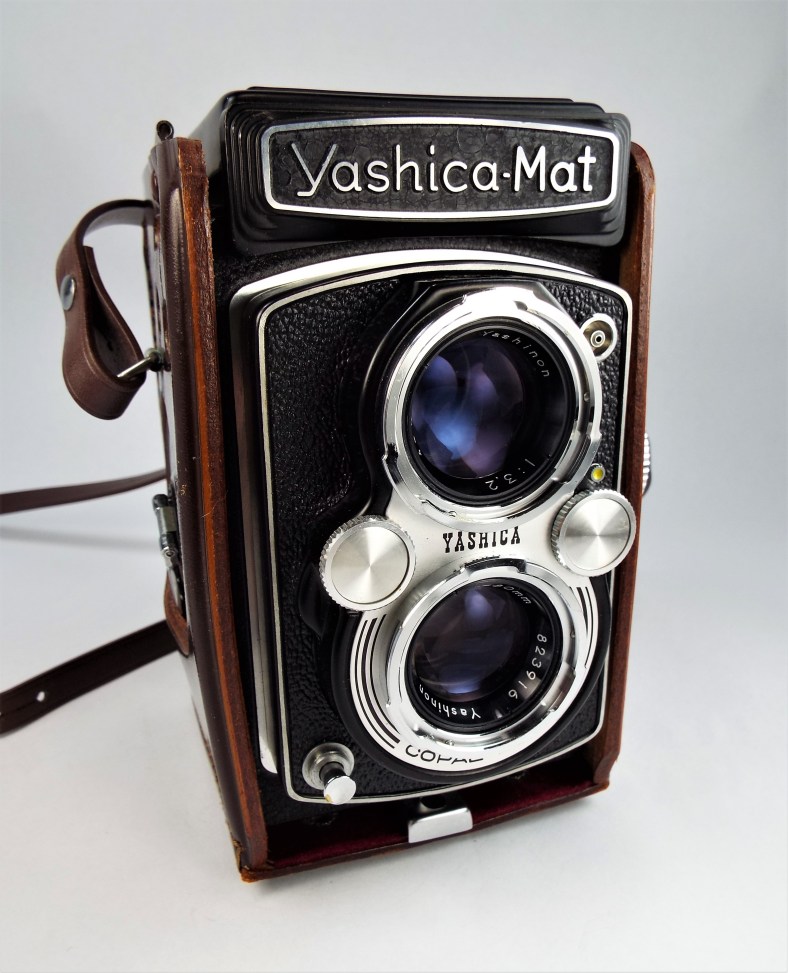
It’s the best looking non-working Yashica TLR in our collection! There. Got that out of the way. This Yashica-Mat medium format camera is from 1968 and is in mint condition. The Mat had a super long run for Yashica – 1957 to 1973. Lots of pretty Mats out there to be had. Lots of dogs too. Sometimes the dogs work great and sometimes the pretty ones are dead in the water (DIW).

This one is DIW (nautical term meaning not moving). In my haste to add a good looking Mat to our collection, I overlooked a fatal flaw that often happens with these cameras…

dscf3332

Do you see the flaw that I missed?

How about now?

dscf3331

Look closely… do you see it yet?

How about more of a hint?

dscf3333

Okay, I’ll point it out.

dscf3334

Missing self timer lever. Did you see it right away? Pat yourself on the back if you did.

As I mentioned in the beginning of this post, in my haste to add a nice Mat to our collection, I failed to notice that the self timer lever was missing. No big deal right? It is and I know better. The lever is a small thingy with a little red dot of paint on the end of it. When it’s there, it should be all the way to the right (when looking straight on at the camera’s face). If it’s missing (as in this case) don’t buy it unless you enjoy repairing cameras. If it’s all the way to the left then ask questions of the seller. What happens is that the self timer lever should not be missing and should not be engaged to the left. In the instruction booklet, Yashica clearly cautions – “Be sure to move the synchro selector to the X position when using the Self-timer”.

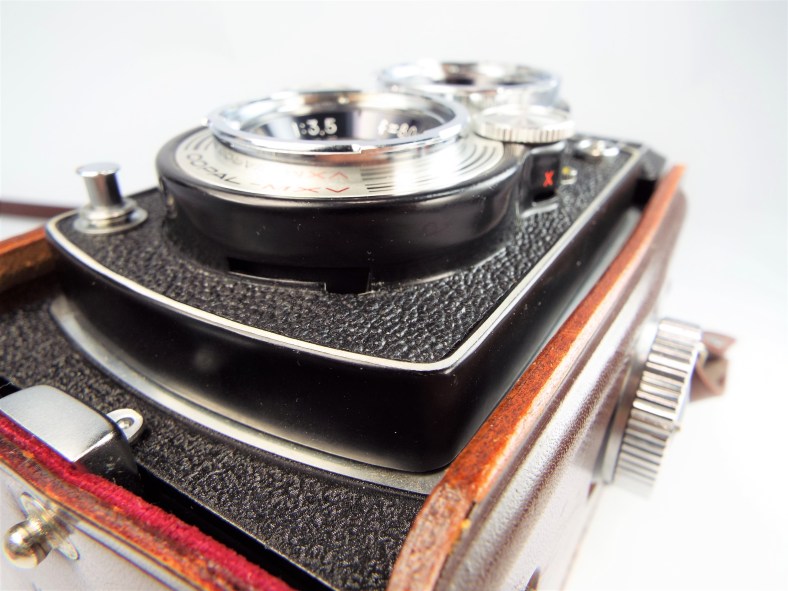
The synchro selector lever is the little thingy sticking out just above the right thumb wheel as seen in image 1 (it has a little yellow dot of paint on it). The X position is pushing the level down (you can just make out the red X in the image above).

dscf3332-2

Syncro selector lever (yellow dot thingy) in the up M position (M is in yellow on the camera body).

Remember, yellow dot thingy lever up is in the M position. Yellow dot lever pointing down is in the red X position. A review: no self timer lever = run! Usually someone has forced the lever one way or another because the lever is stuck to the left. If the lever is in the left position and the yellow dot lever is in the up or M position then ask the seller a bunch of questions. Please ask if the shutter button trips the shutter when pressed. More then likely the answer will be no.

In closing, if the camera you’re interested in is photographed slightly turned as in this example below, it’s easy to overlook the missing self timer lever. Ask questions before purchasing it.

dscf3335

s-l1600-27

Here is an example of a Yashica-Mat with the self timer lever almost all the way to the left. I checked another image of this camera and the syncro selector lever is on M (which is in the up position). This is a classic case of what I’ve been talking about. You need to ask the seller if the shutter fires. More likely it does not. Run!

Completely my fault for not checking the lever and not asking questions of the seller.

Thanks for your visit… comments are always appreciated.

Chris

Yashima Yashicaflex A-II

Our Yashicaflex A-II is headed for the finish line – soon! These images were from day one and day 100 (just kidding about the 100). There have been so many issues to deal with restoring this 63 year old camera that it’s been a slow go. While this restoration has been an ongoing process for us, we’ve used some of our time to address some of the other cameras in our collection that needed only small repairs and a good cleaning.

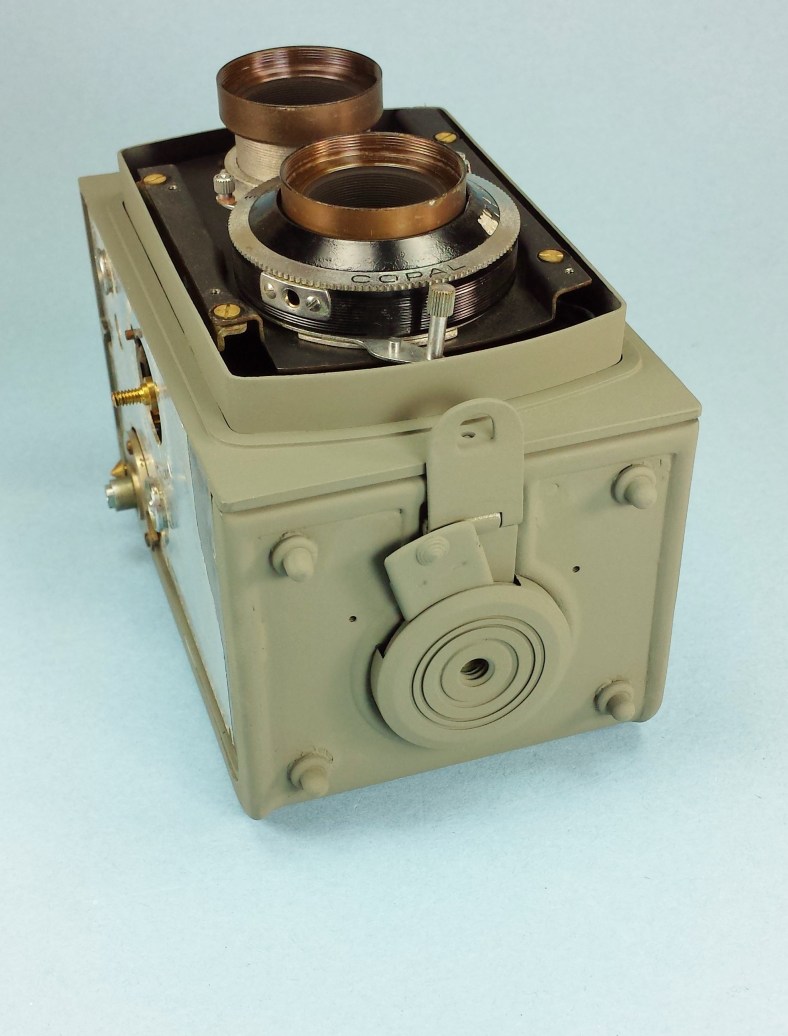
Day one is pictured below. After prying the camera from its leather case (literally), the rust and corrosion were widespread and had eaten deep into the metal. Dirt everywhere! But the camera functioned! Glass was mold and fungus free but dirty and the shutter was accurate.

22024859392_8ffe58f0a3_o

The die cast aluminum body and back door were corroded big time. The thin metal parts were rusty and pitted. The leatherette was dry and brittle with many missing pieces.

Below the same area after 3 coats of etching primer and filler putty to “replace” the missing aluminum due to the depth of the corrosion.

22555908617_27904de611_o

By this point some of the final finish coats of primer and filler could be applied. Lots of sanding between coats. At least the corrosion was gone and something of a finish could be imagined.

The camera will be re-imagined and restored. Since it’s not a rare Yashica model, Carol and I feel free to express some creativity in the re-build. Stay with us as I believe we’ll be able to have the finished product ready to show by early spring. The Yashima Yashicaflex A-II ‘Sakura’.

Thanks for your visit!

Chris and Carol

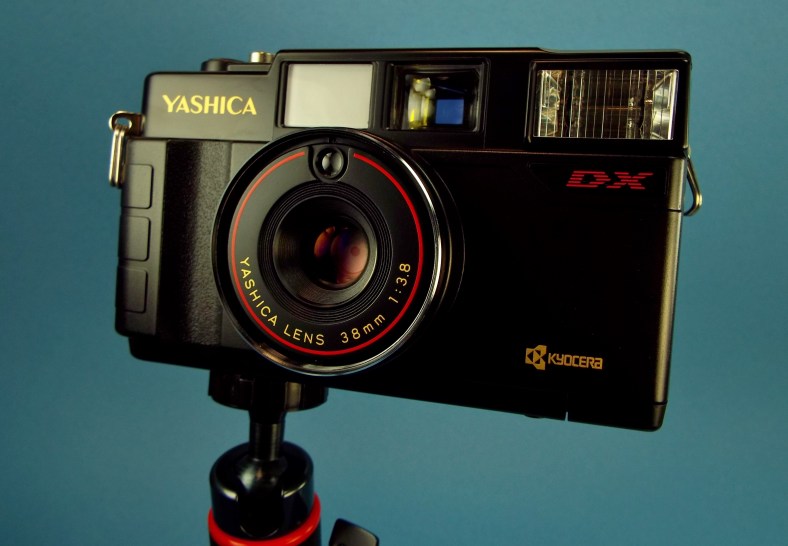
Yashica MF-2 Super… 1986

We don’t often collect modern Yashica cameras – especially during Yashica’s last days after Kyocera (Kill-a-Yashica) took over.

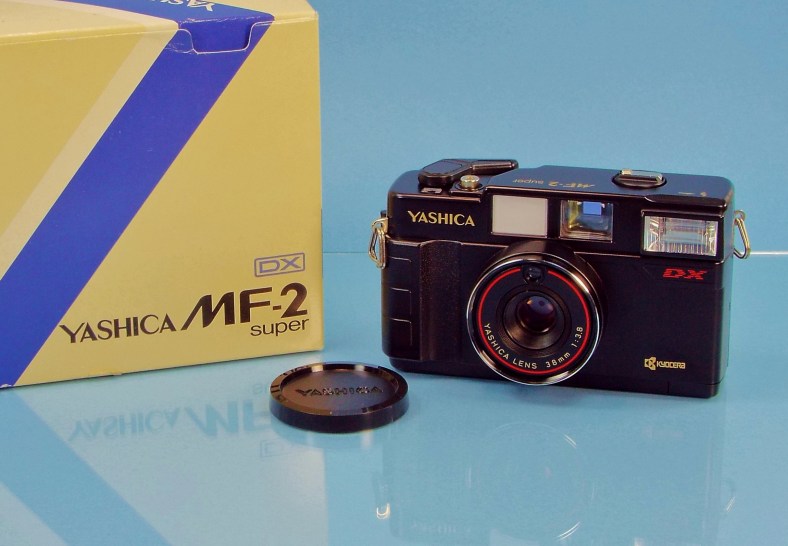
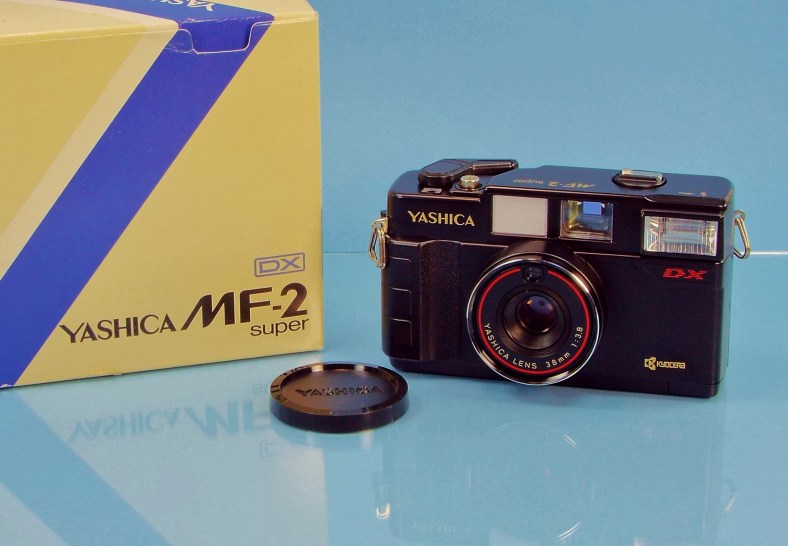
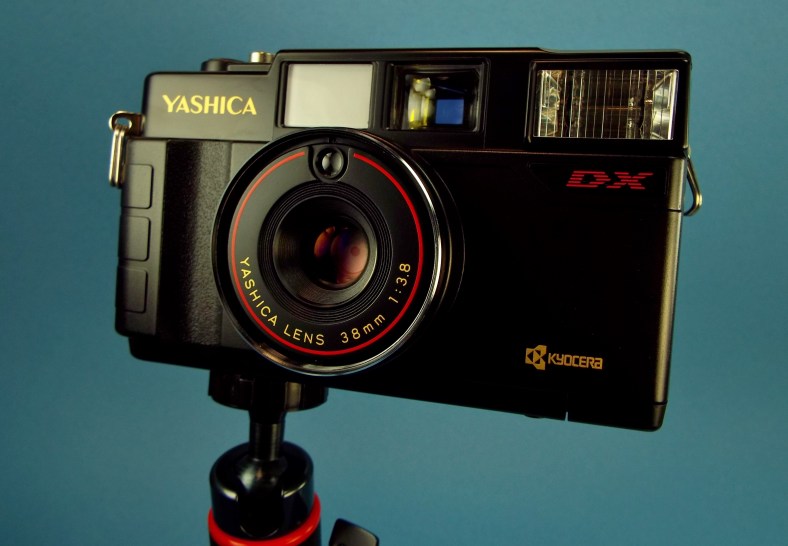
This one was sent to us by a Flickr friend and as you can see, it’s new in the original box. The MF-2 Super is a DX camera which sensed the DX code on the 35mm film canister and set the appropriate ASA / ISO / DIN.

25965272473_a80d24519c_o

Yashica MF-2 Super 35mm film camera set from 1986.

26295606350_65700d54b4_o

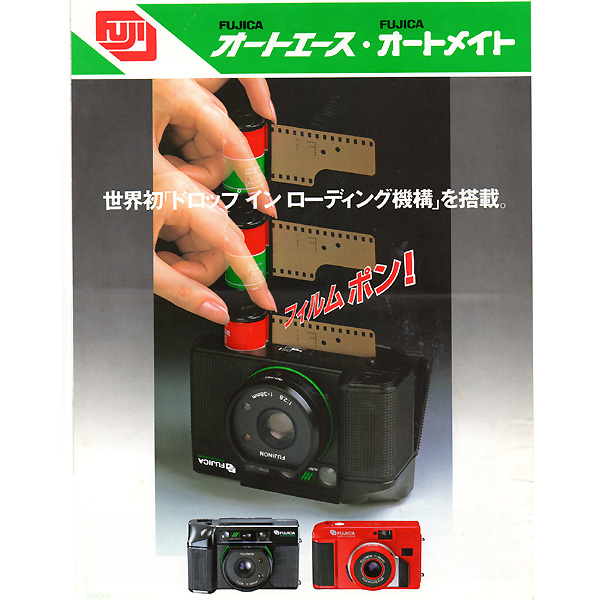
We haven’t found the time to load a roll of film and check out this little beauty… soon we hope. We like the black, red and gold details on the body and lens and the auto everything (almost) features. As a comparison, we also have the Fujica DL-20 as pictured below in the sales brochure.

%e2%97%8f%e3%83%81%e3%83%a9%e3%82%b7

DL-20 in black and red.

The DL-20 is a mid-1990s camera from Fujica. We have the red body model and it would be fun to take the two (Yashica MF-2 Super and the Fujica) out for a side by side photo shoot. Sounds like we’re going to be busy in 2018 shooting a bit more film.

Thanks for your visit!

Chris & Carol

Pentamatic in ‘Explore’

30889835606_871e994088_o

This simple studio shot made it to Flickr’s ‘Explore’ group recently. It may be the first and only Pentamatic in ‘Explore’.

Natural window light on an overcast Florida afternoon. Camera used? Samsung Galaxy 4S. No post production by me but the Galaxy may have been on HDR. Sometimes simple is better.

Yashica Pentamatic 35mm single-lens reflex from early 1960.

Chris