Yashima Yashicaflex A-II

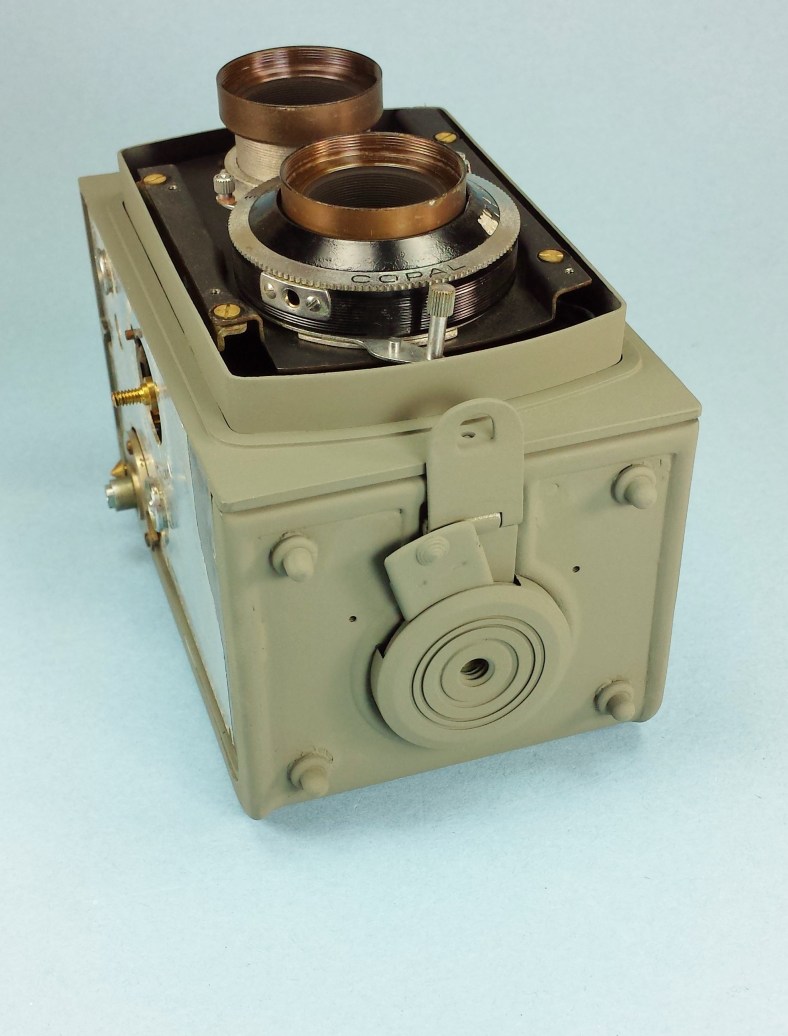
Our Yashicaflex A-II is headed for the finish line – soon! These images were from day one and day 100 (just kidding about the 100). There have been so many issues to deal with restoring this 63 year old camera that it’s been a slow go. While this restoration has been an ongoing process for us, we’ve used some of our time to address some of the other cameras in our collection that needed only small repairs and a good cleaning.

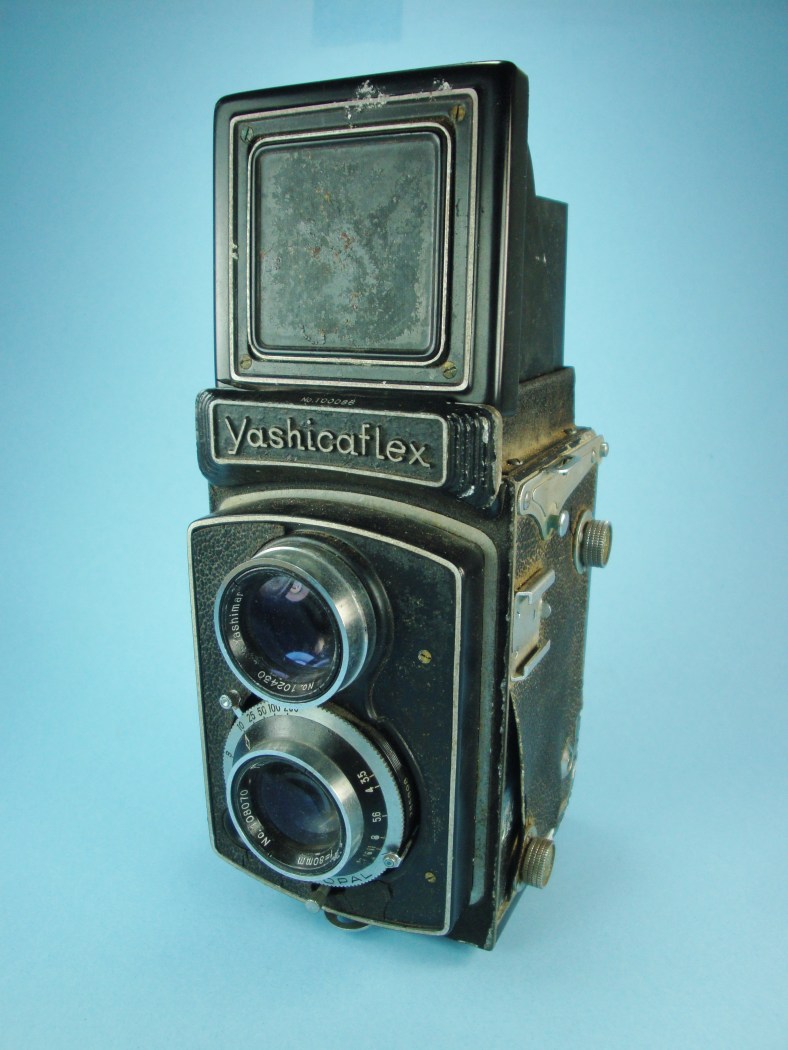
Day one is pictured below. After prying the camera from its leather case (literally), the rust and corrosion were widespread and had eaten deep into the metal. Dirt everywhere! But the camera functioned! Glass was mold and fungus free but dirty and the shutter was accurate.

22024859392_8ffe58f0a3_o

The die cast aluminum body and back door were corroded big time. The thin metal parts were rusty and pitted. The leatherette was dry and brittle with many missing pieces.

Below the same area after 3 coats of etching primer and filler putty to “replace” the missing aluminum due to the depth of the corrosion.

22555908617_27904de611_o

By this point some of the final finish coats of primer and filler could be applied. Lots of sanding between coats. At least the corrosion was gone and something of a finish could be imagined.

The camera will be re-imagined and restored. Since it’s not a rare Yashica model, Carol and I feel free to express some creativity in the re-build. Stay with us as I believe we’ll be able to have the finished product ready to show by early spring. The Yashima Yashicaflex A-II ‘Sakura’.

Thanks for your visit!

Chris and Carol

Hit the Road 2016! Hello 2017!

Thank goodness 2016 is almost history! I’ve heard from friends in Australia that 2017 is going well (so far). Let’s not muck it up!

On a positive note – here on our blog, we’ve seen a significant increase in activity over last year (2015). Visitors to the site and views are through the roof! We (Carol and I) are thrilled that what started out as a repository of bits and tidbits of Yashima-Yashica information would gain the traction that it’s had. We thank you!

We enjoy the feedback we get and I can say that I’ve learned more than a few things from it. We’ve met some super talented people – photographers and bloggers that are out of this world amazing! We hope our readers got a little something special in return too. That was the goal of the ‘Yashica Pentamatic Fanatic’ -a sharing of knowledge about a silly camera that Yashica invented in 1959 that most people have never heard of.

29926651073_d141fae764_o

This year’s favorite.

In looking through the hundreds of film and digital images that we shot in 2016, this one turns out to be our favorite. We believe that every vintage camera is worth preserving (in some way or another) – we think of cameras as holding the heartbeats of all who may have gazed through its lenses, pressed its buttons and then anxiously awaited the results. We can imagine the thousands of faces and smiles that were captured and the thousands of important events in people’s lives that were saved for the future. Classic cameras do that for us.

Don’t get us wrong… we love the  world of digital photography but we also embrace the beautiful, often awkward analog machines of our past. We hope that photographers in the future will remember (every now and then) to pick up a classic camera, load some film into it and then set out to capture images with a camera older than yourself. Enjoy!

Happy New Year… we wish only the best for all!

Chris and Carol ^.^


Yashima Yashicaflex A-II… 1955 – A restoration like no other!

21849128528_7702ca2714_o

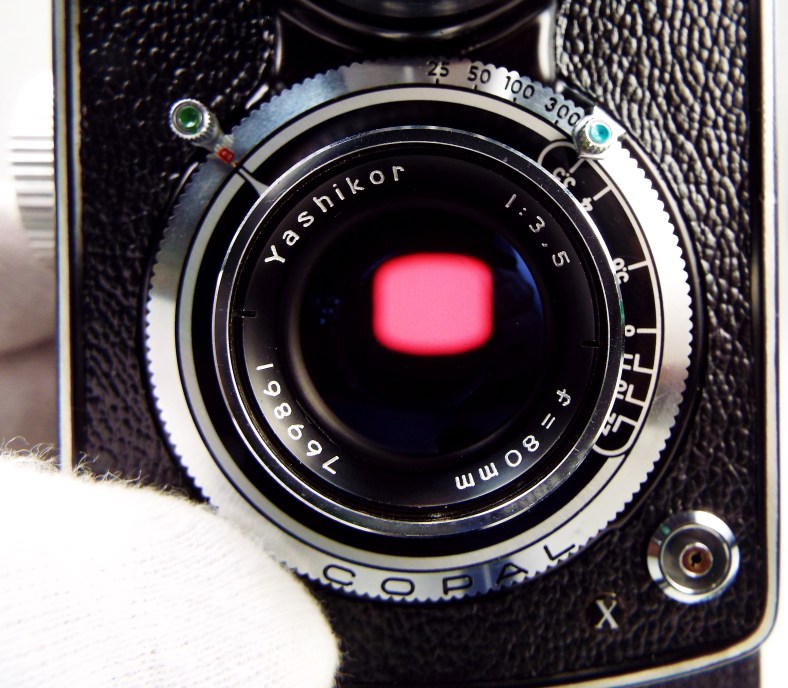
Restoration challenge! Six decades of dirt, grime, soot and corrosion have taken their toll on this once beautiful Yashicaflex. There isn’t a part that escaped the corrosion – except the workings. The glass is just fine, shutter works, aperture blades are problem free – film advance works as does the focus. 

I’m finally on the home stretch of this year plus project. My desire to re-imagine this camera into the modern age has been the biggest holdup. Actually I’m calling it an “interpretative restoration” – that allows the artist and designer in me to reconcile with the fussy photographer that I am.

Watch the blog over the next two weeks or so as I bring it all together for the final reveal.

Thanks – Chris

Yashica 44… a ladies camera?

Any doubts that Yashima-Yashica was marketing to women for their new smaller 4×4 cm twin-lens reflex camera are erased once you see the cover to the sales flyer.

img_20161129_0026

In a male dominated society, Yashima-Yashica needed to leave no doubts as to who these new smaller and lighter cameras were for.

Normally sales flyers and brochures in the late 1950s were geared to and appealed to the male buyer. In all fairness, it was likely that’s who took most of the photographs during that period. Yashima-Yashica’s direct pitch to Japanese women was an attempt to tap the vast market of female buyers.

img_20161129_0027

As we understand it, the 44 model came in at least 7 or 8 colors!

Even though the front of the flyer was simple and left no doubt as to who the buyer would be – the reverse of the flyer was still detailed and quite technical. It’s possible that the camera was designed for the wife to use for taking pictures of the children (while the husband was off at work all day) but still detailed enough for the husband to feel comfortable purchasing. Just our take on things.

Thanks again for your visit – as always we appreciate any and all comments. In the interest of fair play, we ask that you do not copy the images and include them in your blog or post without asking for permission – thanks! ^.^

Yashima Sales Brochure… 1956

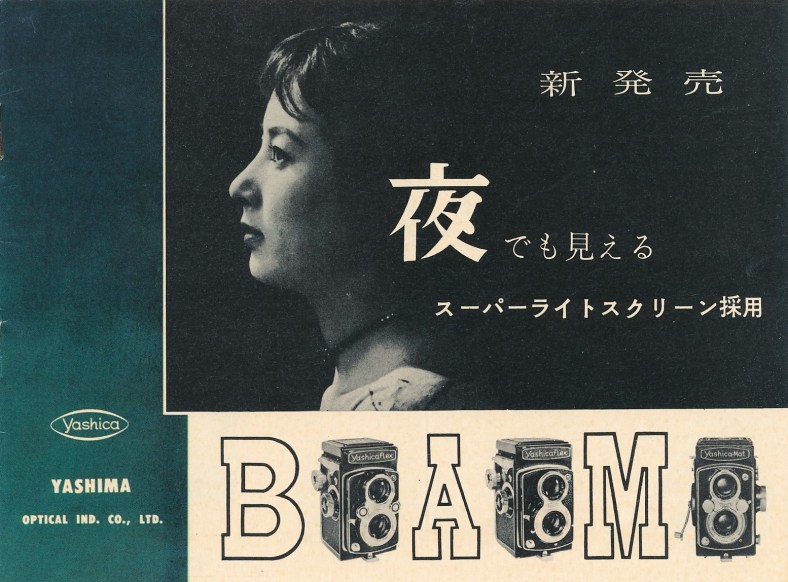
In just 3 short years, Yashima beat the odds and became a Japanese camera company that lasted long enough to produce multiple models. In the case of this sales brochure from 1956 – the Yashica Flex B, A and Yashica-Mat twin-lens reflex cameras.

img_20161129_0015

Well designed sales brochure from the little company that became Yashica.

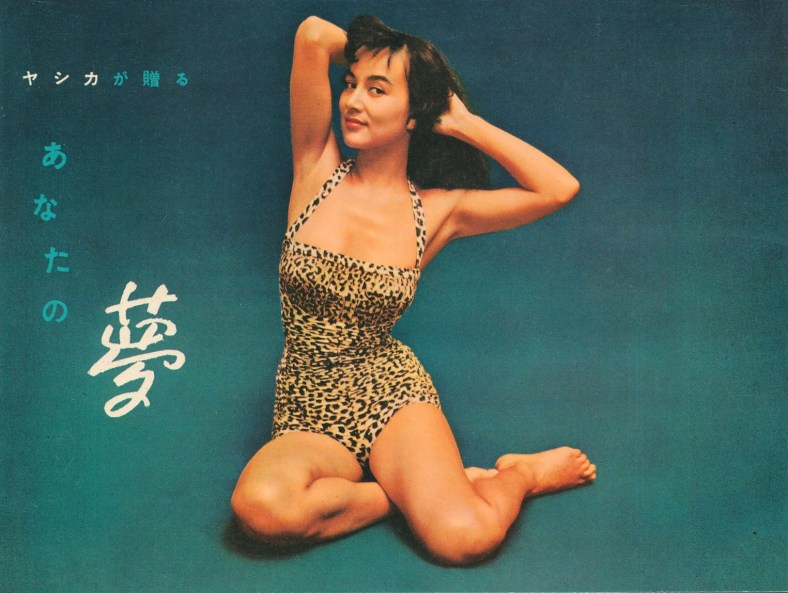
Not that we’ve seen a ton of sales brochures from other Japanese camera manufacturers from this era, but we think this was rather provocative for the mid 1950s (at least in the US we would think). This brochure was intended for the home market and the culture of Japan is a tad less uptight about things like this.

img_20161129_0016

Lovely model on the back cover of the brochure.

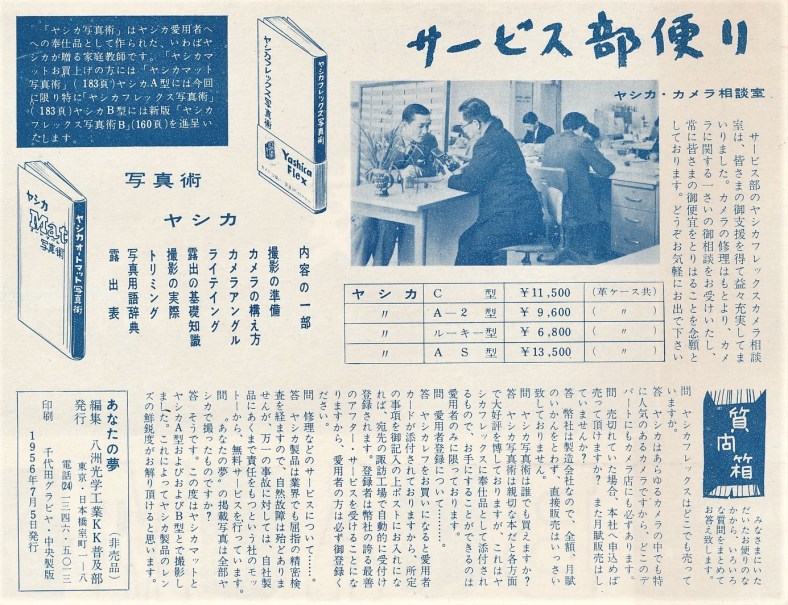
The first page inside the brochure in packed with information not typically found in a brochure. Yashima was, in our opinion, marketing itself beyond what such a young company would normally look like. These series of Yashica Flex Photography books were excellent creations that went far beyond a simple owner’s guide.

img_20161129_0011

You’ve got the year (1956), two examples of the Yashica Flex Photography books and some prices of the cameras.

img_20161129_0025

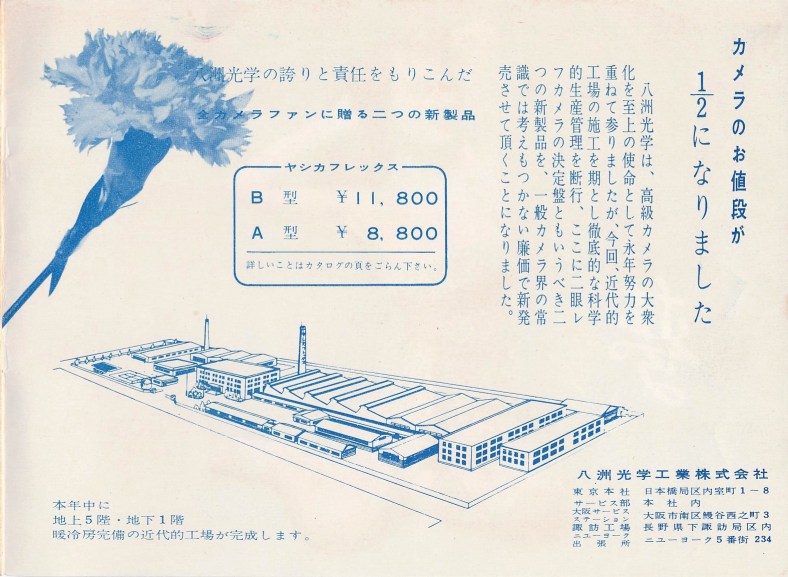
Last inside page of the brochure depicting Yashima’s new modern factory in Suwa, Nagano Prefecture, Japan.

Yashima was a very proud company and they were eager to show how much they grew since 1953.

Thanks so much for your visit. The goal of our blog is to stimulate discussion and further the knowledge of all things Yashima-Yashica. Please share your comments with us… we’d be happy to read them. One final thought, we share our brochures with others and ask that you do not copy or post our images into your blog or post without permission. Thanks!

Chris & Carol

1954… Yashica Flex Model S

When Yashima started making twin-lens reflex cameras in a small factory along the shores of Lake Suwa in Nagano Prefecture, they were but one of hundreds of “start-ups” entering the already crowded Japanese camera manufacturing business. Many would fail – and fail quickly they did. But little Yashima, with two brothers from Nagano at the helm, managed to take a big step – to make a second and then third camera.

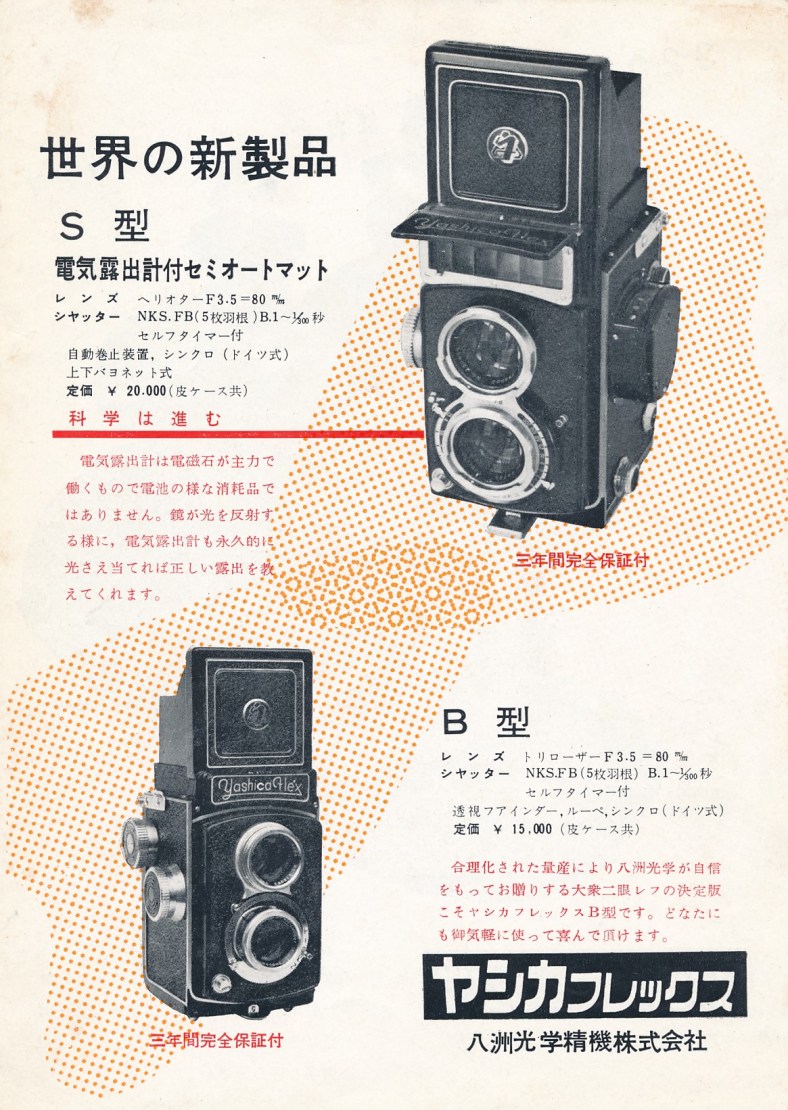
The first was the Pigeonflex (great name but how do you grow with a name like that), then came the Yashima Flex and Yashica Flex B. In 1954 (late) they built the now famous Yashica Flex Model S. The first TLR in the world with an attached exposure meter! Yep, in the world! None of the already established players had produced one like that. The meter was supplied by Sekonic and screwed to the side of the body and hidden light sensors under the name flap sent electricity to the meter. Bingo. Meter and camera merged! 1954

img_20161129_0004

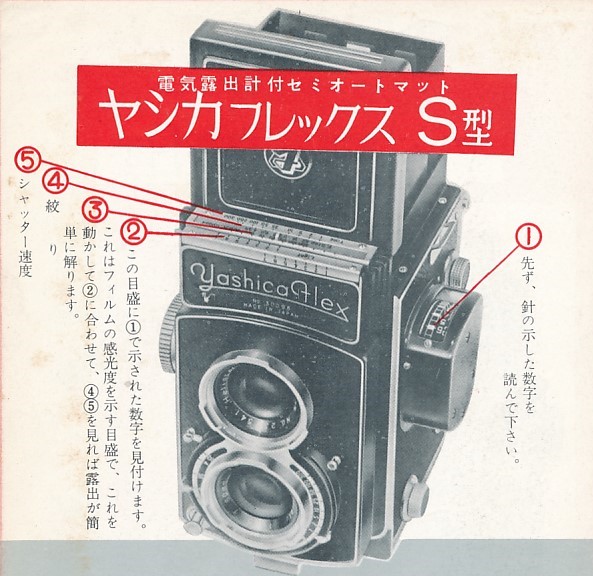
Cropped scan from a rather rare (in the US) Yashima sales flyer for the Yashica Flex Model S. It’s one of the earliest pamphlets around for this camera.

The light sensing cells were built-in under the flap that was the nameplate. You would open the flap and the maximum amount of light would strike the cells and send an electrical signal to the meter  (#1 above). You then used # 2, 3, 4, and 5 to “compute” your exposure settings. Simple except that you needed the eyesight of an eagle to actually see the numbers on the scale. It it was real sunny out, you didn’t need to lift the flap to get an accurate reading – there were 12 holes in the flap that would let in enough light to set the exposure.

In a testament to the designers, many of these early exposure meters still function even after 6 decades of use. But, many have fail too mostly caused by a failure of the wire to meter connection. The cells are fine (no batteries, sun powered).

As always we appreciate your visit. We’re glad to share some of our collection of early sales material and of course to chat up our Yashima-Yashicas. In the spirit of fair play, we ask that you do not copy or post our images in your blog or post without our permission. Thanks.

Chris & Carol

Super Rare Yashica Flex S Brochure… 1954

We’ve recently acquired a super rare (here in the US) Yashima sales flyer (pamphlet) that covers one of Yashima’s most advanced cameras at the time. The Yashica Flex S was the first TLR with an attached exposure meter in the world! The meter was made and supplied by Sekonic. And if you had great eyesight and were good with sliding scales, you could actually set the proper aperture and shutter speed for your film. Cool! Yashima-Yashica was the first to do it! One of our Yashica Flex S models has a working exposure meter even after six decades! Double cool!

img_20161129_0014

From 1954.

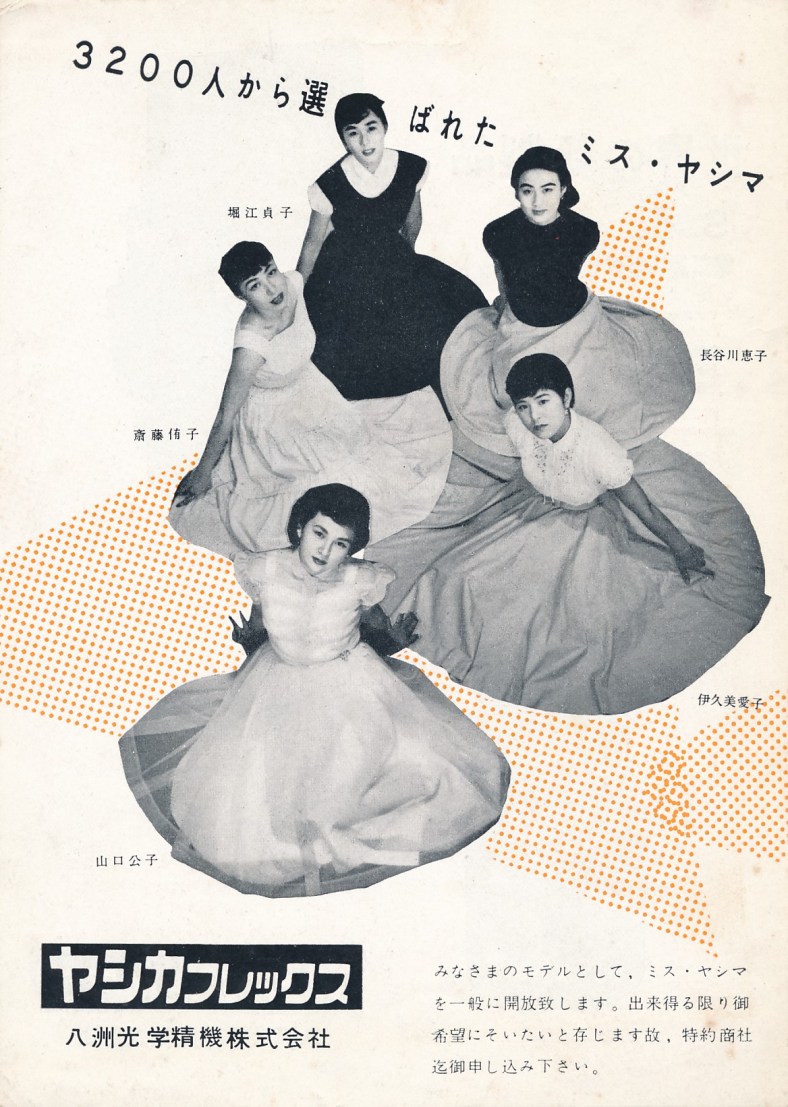
The next scan is the reverse side of the flyer and featured a contest!

img_20161129_0012

Out of 3,200 entrants these ladies were chosen to vie for the title of “Miss Yashima”. All you had to do was vote at your favorite trading company (camera store). We chose Miss Kimiko Yamaguchi (front left) as our Miss Yashima.

We hope you enjoyed these glimpses into Yashima-Yashica’s past. We like that we can share them. In the spirit of all things fair, we ask that you do not copy them or use them in another blog or post without asking for permission first.

Many thanks for your visit! Chris & Carol

A little Fujicolor to brighten our day!

I’ve always been a fan of Kodak film. Living in the United States it was hard to find anything else to buy at the corner stores – even in New York. Every now and again I’d pick up a roll of Fujifilm and was always impressed with the results.  I’ve always liked the little green boxes too… they catch my eye.

While our main collecting focus has been Yashima-Yashica cameras and gear, there’s always been a little offshoot into the world of Fuji. Partly because we lived in Japan – Yokohama to be exact, and Fujifilm was more available and there were labs nearby to process the film. Kodak processing was via handy but slow mail back to Palo Alto, California if I remember correctly.

So on this end of the week Friday, we thought a little Fujicolor was in order.

dscf2924

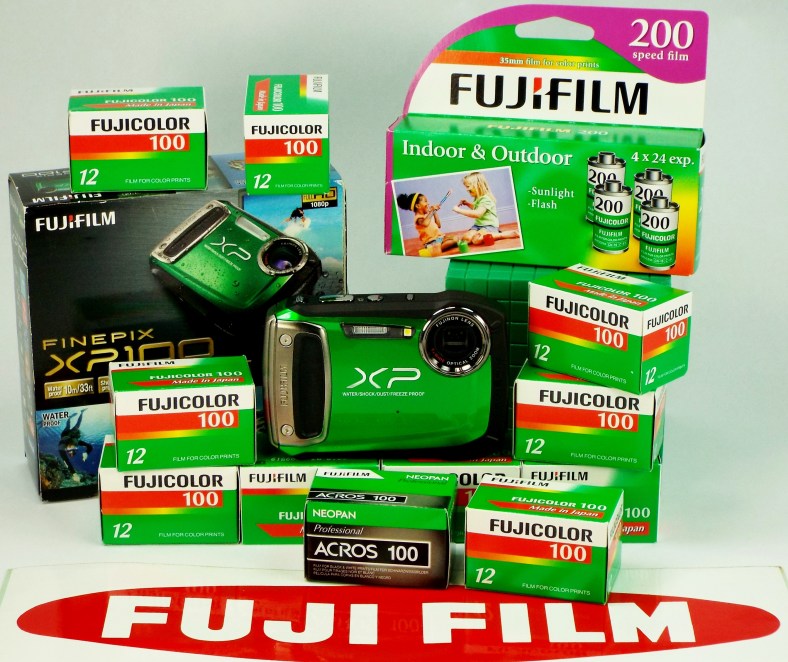
We’re thinking of a color. Can you guess?

The 12 exposure Fujicolor 100 rolls are all expired (2010) but they usually produce good results if you treat them like they’re ASA50. The Acros 100 is a fresh roll and you can’t beat it for good looking black and white prints. The little XP100 is our go to all weather camera. It has a bright screen (for the beach) and is great in the surf for some wave pics. 1080p video and stereo sound too.

We’ve added a nice Fujica ST701 and Fujipet to our collection but I think were done. Oh, I almost forgot – my primary digital camera is a Fujifilm FinePix S9900W so that’s another Fuji. Oh and I bought my daughter a Fujifilm XP too. Okay, but that’s it. No more Fuji Photo Film Company cameras for us die hard Yashica fans. Well except for a nice Fujicaflex TLR, and the Fuji Photo GS6x9 sure looks great. I’d better stop now!

Thanks for your visit! Comments and likes are always appreciated.

Chris & Carol

Nicca 3-F… Nicca Camera Co., Ltd. & Yashica

What connection could this attractive 35 mm rangefinder camera have with Yashica? And why on earth is it in a blog about the Yashica Pentamatic???
dscf2631

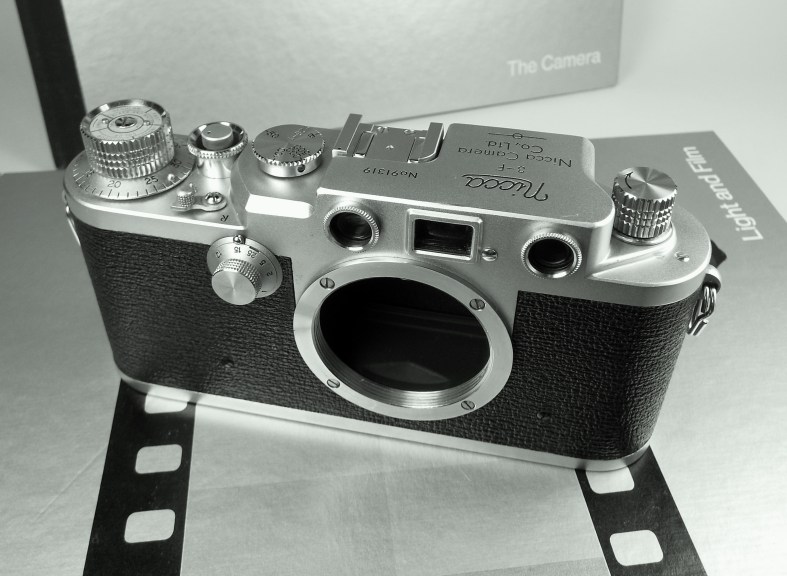
Nicca 3-F from early 1957 (maybe late 1956). Obviously, it is one of many Leica copy cameras that were built during the 1950s and beyond.

First a little bit about Nicca. Nicca was one of the literally hundreds of camera manufacturers in Japan during the late 1940s and through the 1950s. Production appears to have been, on average, anywhere from just a few hundred units per year to nearly 5,000 per year by 1958. Nicca made what many consider to be one of the better Leica copy cameras. The fit and finish of this particular 3-F are extraordinary. After six decades of use, the camera still functions perfectly and the finish is beautiful. Of note, the leatherette is some of the finest we’ve seen from this period. It is still tight and complete and is a joy to hold this camera.

To keep things in perspective, it is a rather simple camera… focal plane shutter, highest speed 1/500th of a second, no built-in exposure meter, no mirror, no self-timer and a straightforward film advance knob vice single stroke lever (later model did add the lever). Simple but executed well.
dscf2635

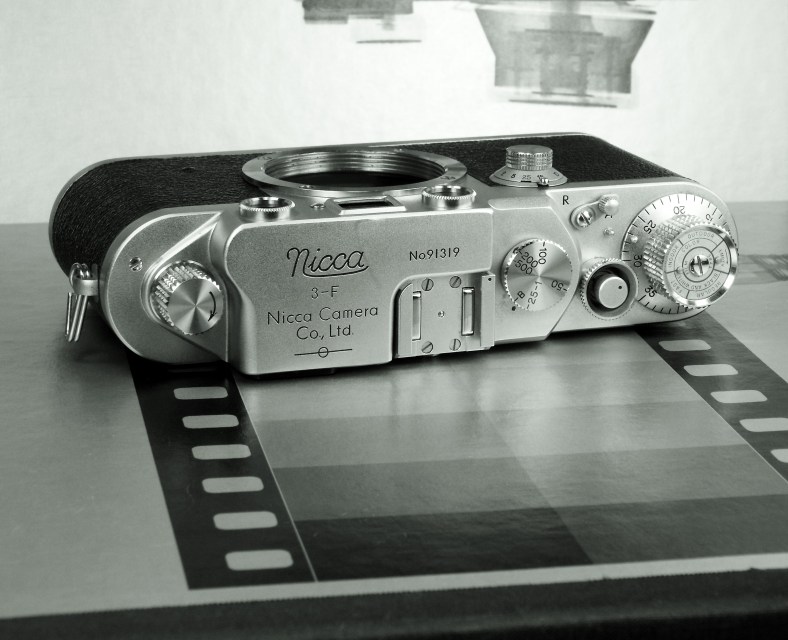
The business side of the 3-F. Traditional layout of the controls… this was Nicca’s last model with the knob film advance (they did produce this model with a film advance lever in late 1957).

Where’s the connection with Yashica? In May 1958, Yashima (pre-Yashica) purchased the Nicca Camera Company which by some accounts was struggling and near bankruptcy. We’ve yet to find proof of the bankruptcy part of this narrative but we will continue to pursue it. Yashima, soon to be Yashica, wanted access to Nicca’s technology, design and small camera manufacturing abilities as Yashima lacked experience in 35 mm camera production. We’re sure there was some desire to acquire Nicca’s focal plane shutter technology as Yashima for the most part only made TLRs (just released an 8 mm movie camera and the Yashica 35). Nicca produced two more models(?) under its own name before Yashica released the Nicca-Yashica YF in 1959. Yashica quickly stopped making rangefinder cameras with interchangeable lenses by 1960. We have always found it to be a bit odd but rangefinders with interchangeable lenses were quickly being pushed aside by 35 mm SLRs for all angles… including Yashica with its Pentamatic ’35’.

What’s the relationship with the Pentamatic? The Pentamatic was more than likely designed in the early part of 1959 and may have been originally a Nicca design (more of that later). Distribution of the Pentamatic occurred in the spring of 1960 with a widescale release and advertising by June 1960 (in the US). The Pentamatic was Yashica’s first 35 mm single-lens reflex (SLR) camera. If featured a focal plane shutter with a top speed of 1/1000th of a second. Nicca’s knowledge was directly used in the Pentamatic.
dscf2636

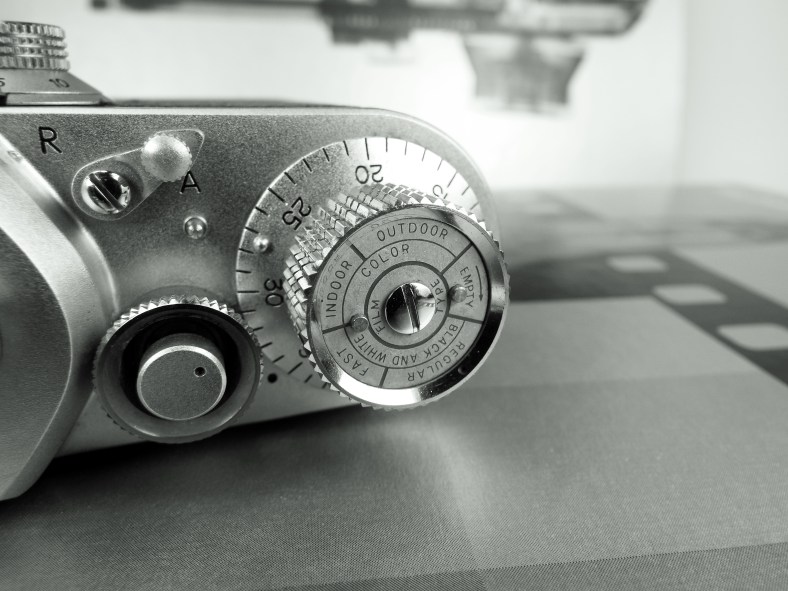
Exposure counter and film reminder dial.
dscf2632

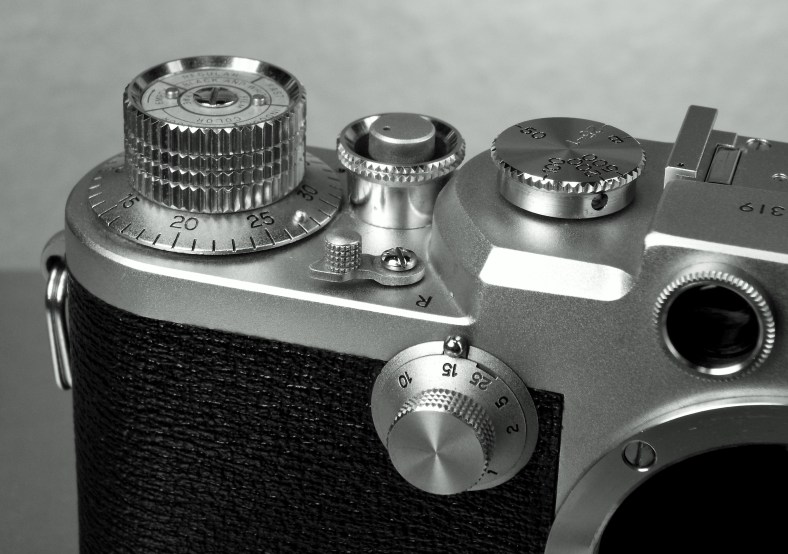
Close-up of the slow speed knob.

It appears that when Yashima purchased Nicca in 1958, there wasn’t an immediate transfer of the company’s assets to Yashima. Instead, Nicca Camera Company became Taiho Optics (or Optical) a subsidiary or new company of the Nicca-Yashica amalgamation. Mr. Ushiyama, founder, and president of Yashica received council that it was not in Yashica’s best interest to proceed with the merger (as the decision to acquire Nicca was made in haste). Instead, Taiho Optics would go on to produce some of its own lenses and lend support and design experience (and personnel) to Yashica. Why? Yashica wanted to build a 35 mm SLR and Nicca was an important stepping stone on that path.

Thanks for your visit… please feel free to leave comments.

Chris & Carol
Yashima-Yashica Rookie

014

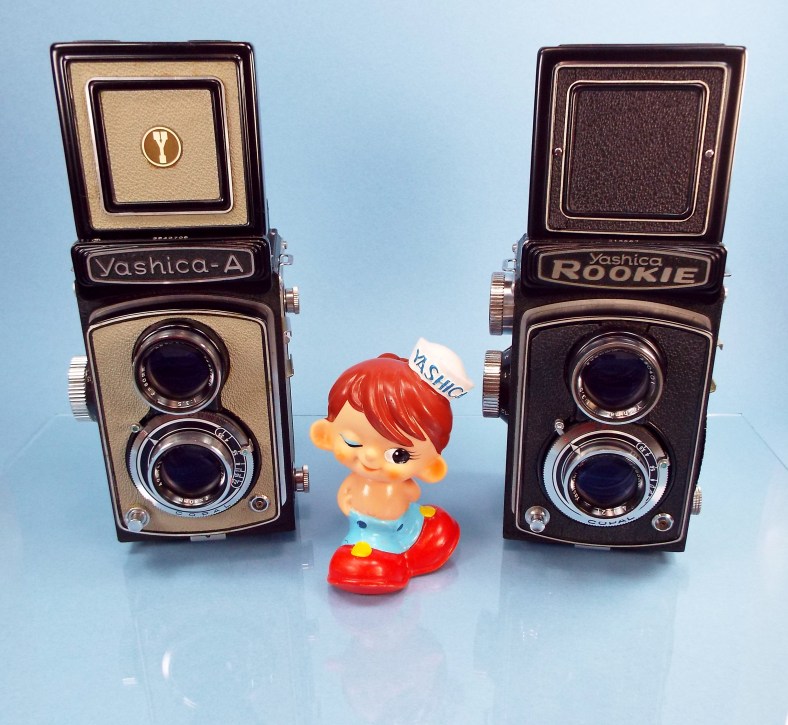
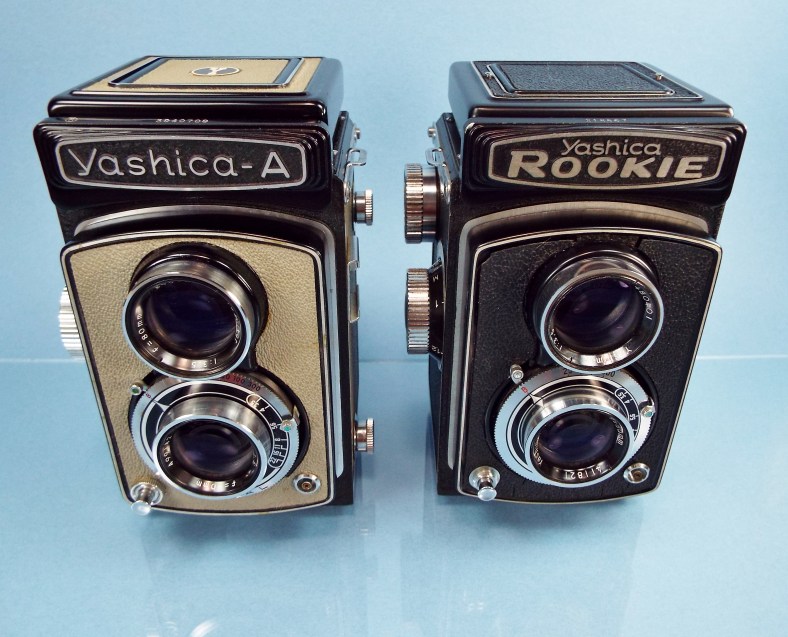
Yashica-A in gray leatherette on left from 1959. The Yashica Rookie (on right) was a Japanese domestic market only model introduced in early 1956. In Japanese brochures and on the outer shipping box, the Rookie is also known as the Yashicaflex Rookie or simply the Yashicaflex Model R.

022

The Yashica A and the Rookie share many of the same features and specs. The Copal shutters were the same and the Tomioka Optical made lenses were also the same in the beginning. Later models of the A (including this one) upgraded to a slightly different lens configuration.

005

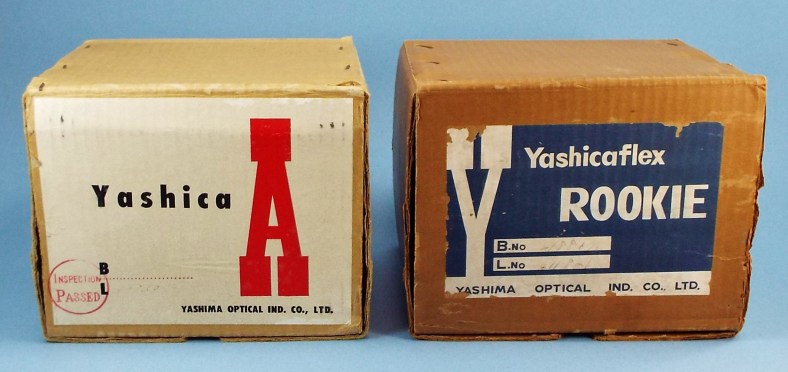
These outer shipping boxes are roughly from the same period. The Rookie is from mid 1956 while the A box is from early 1957 (or so). There are slight differences in the two boxes… the Rookie box is bigger but weighs less than the A box.